








Modern thatched-roof house: indoor-outdoor kitchen
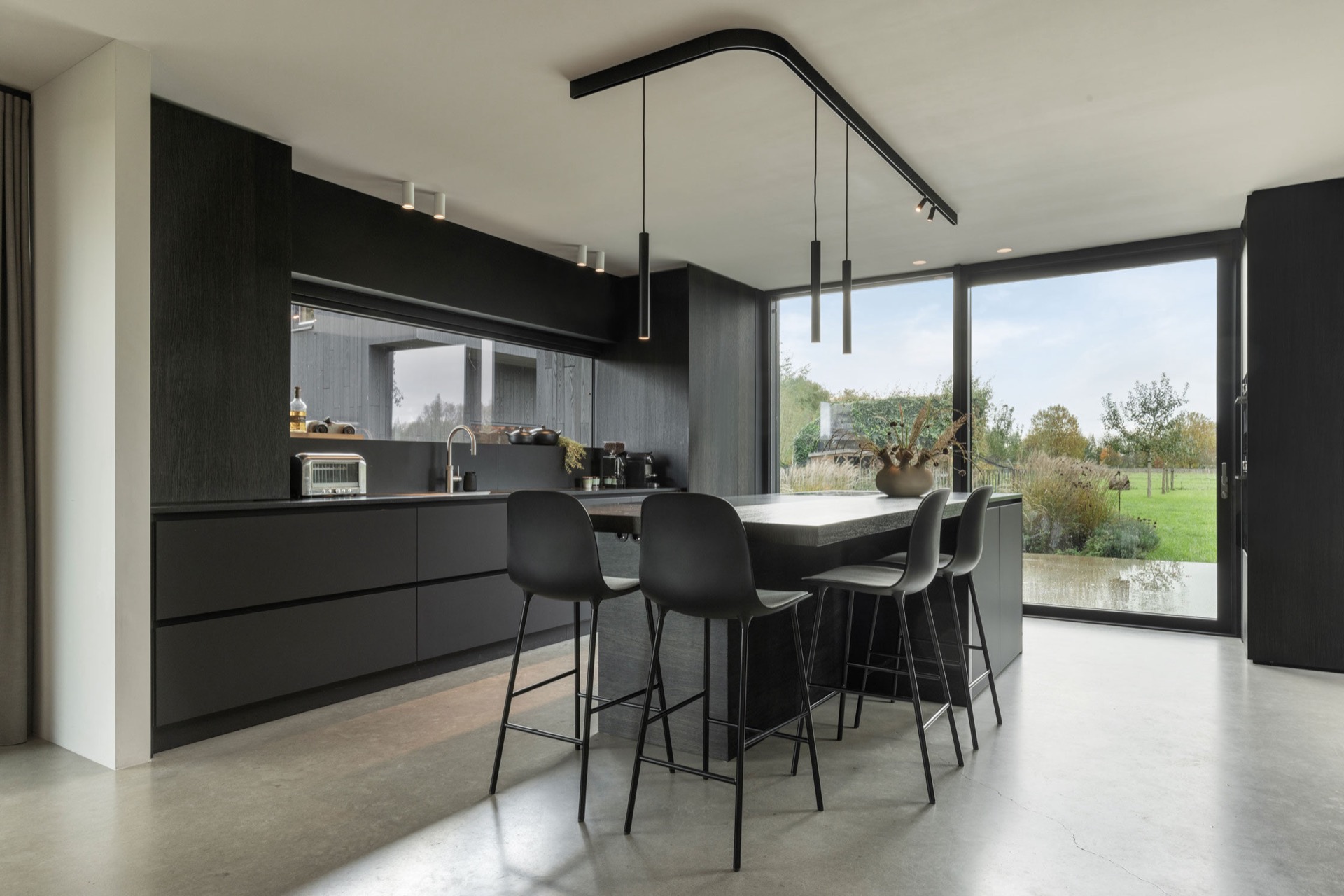
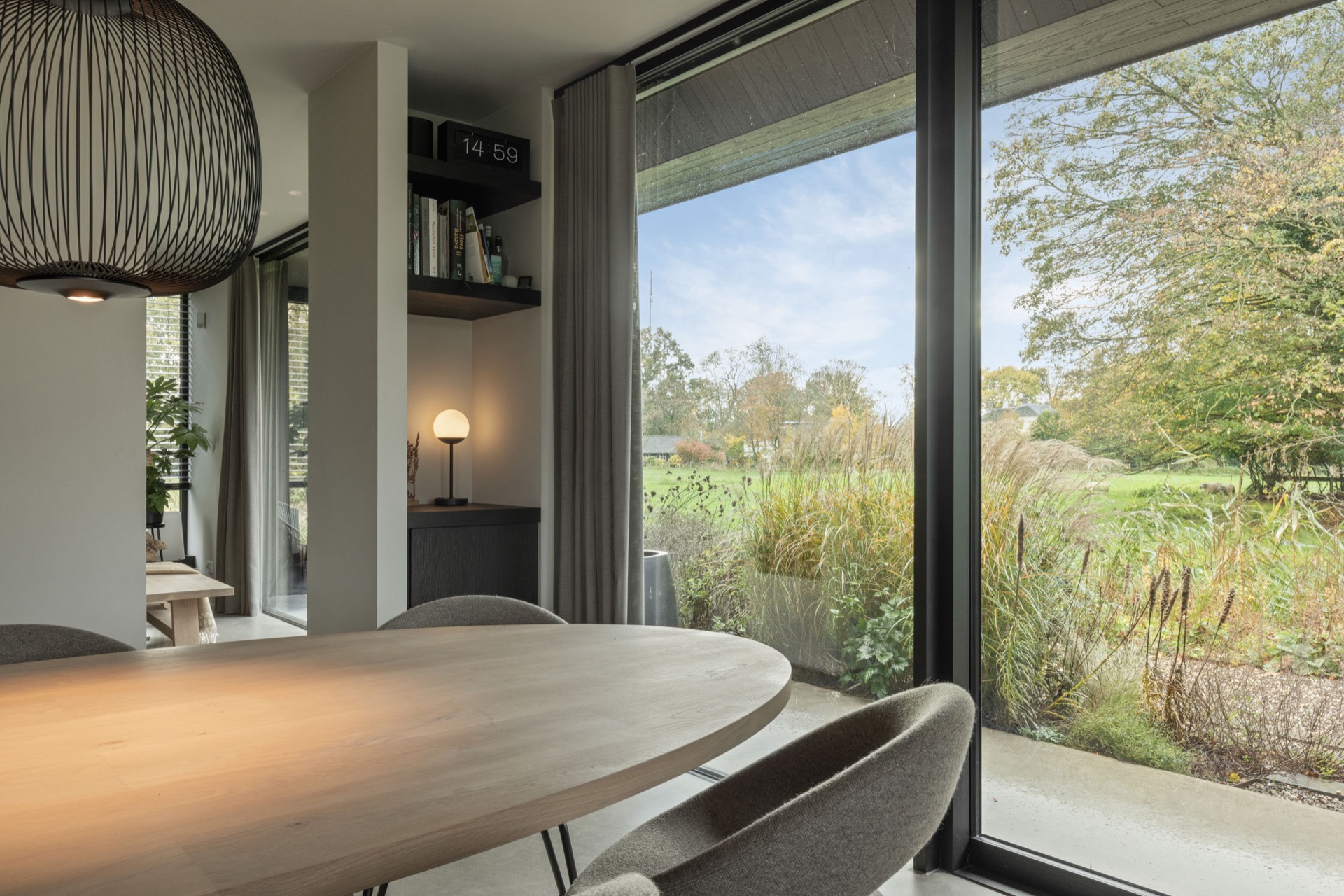
The first thing you notice is the kitchen opening up toward the garden. In this modern thatched-roof house, the indoor-outdoor kitchen almost reads as a single space, with the window line treated so quietly that the room seems to continue beyond it. Ceiling and floor take the frame into their own plane, while the wall around the kitchen holds back and leaves the furniture and views to do the work.
Indoor-outdoor kitchen as a spatial starting point
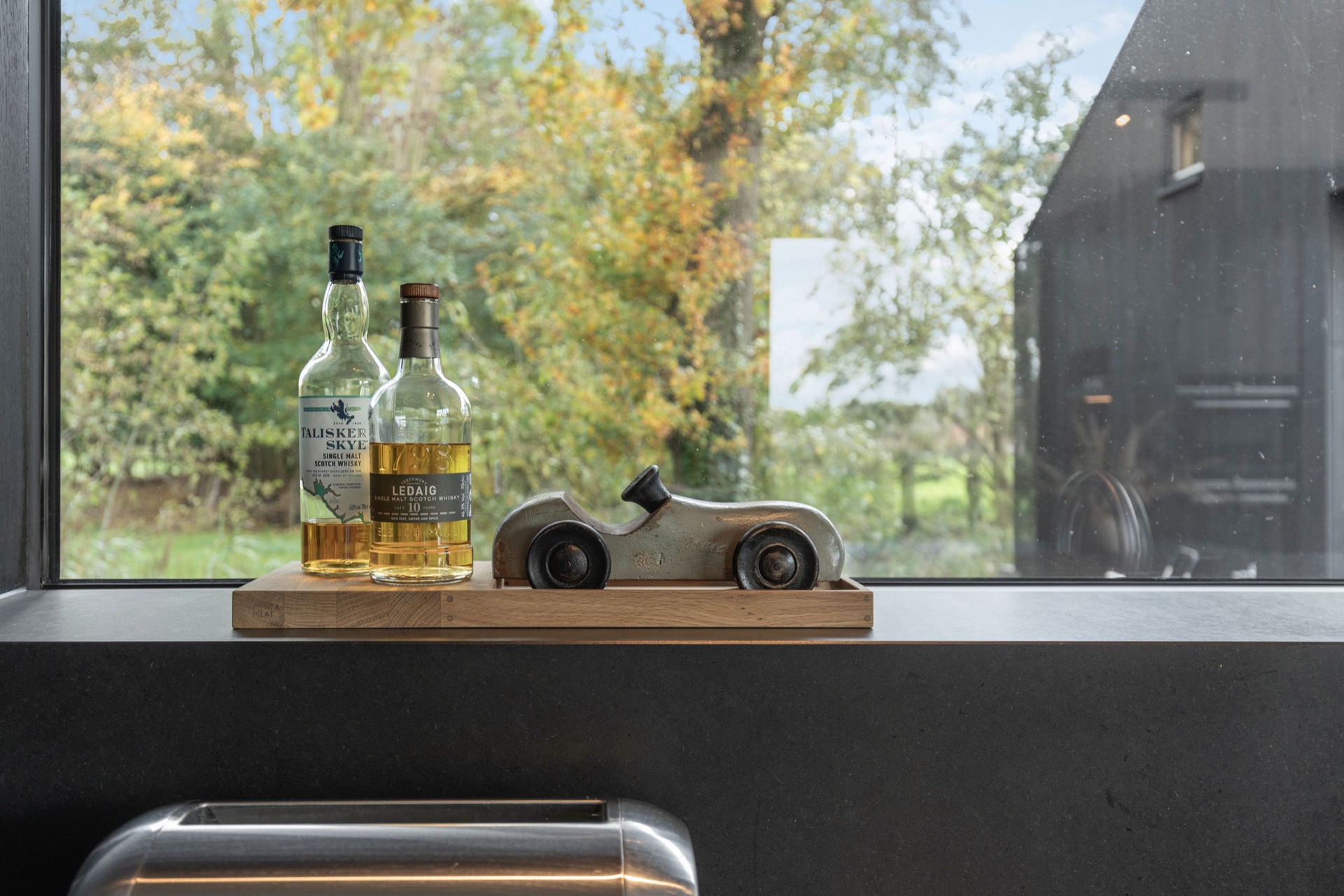
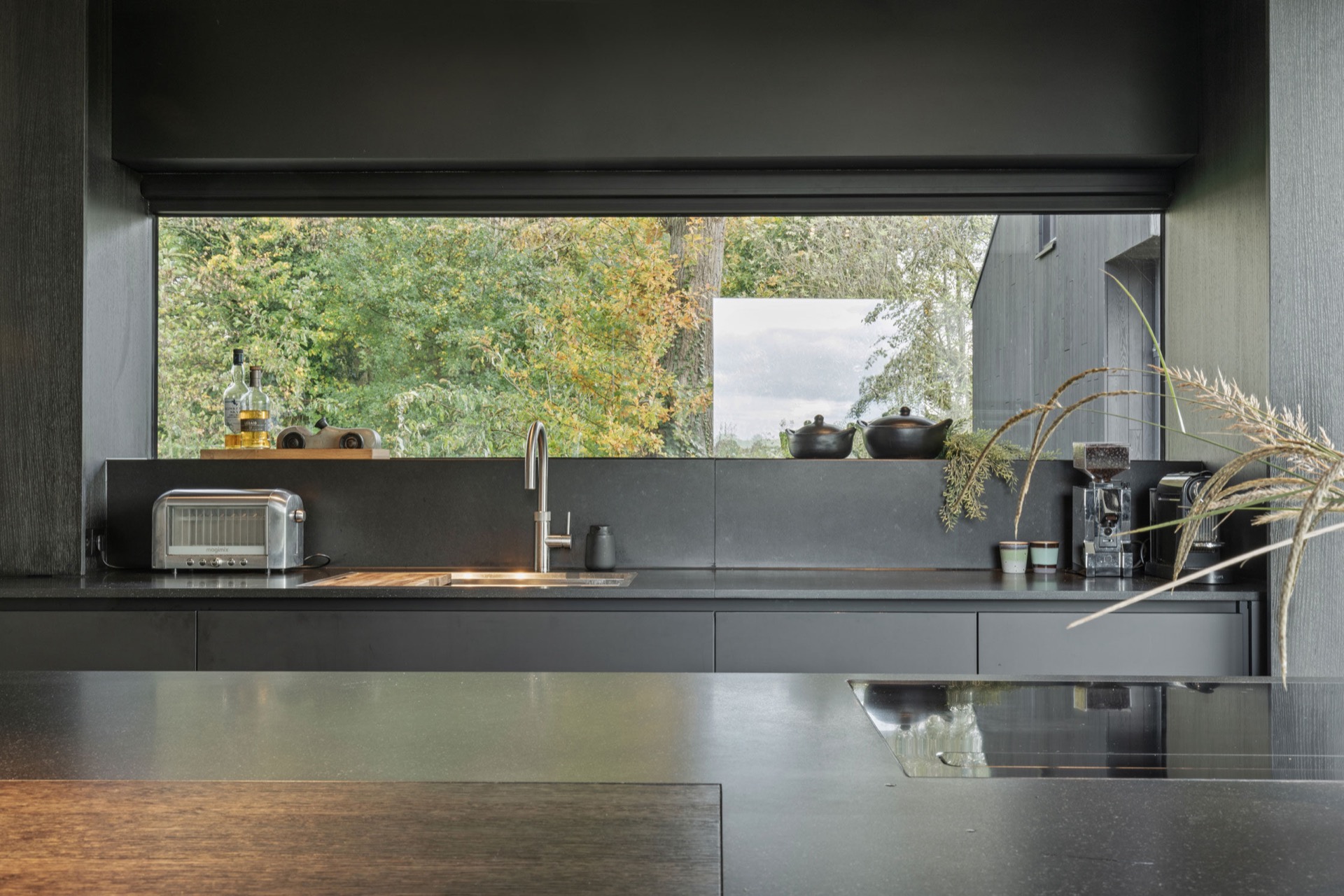
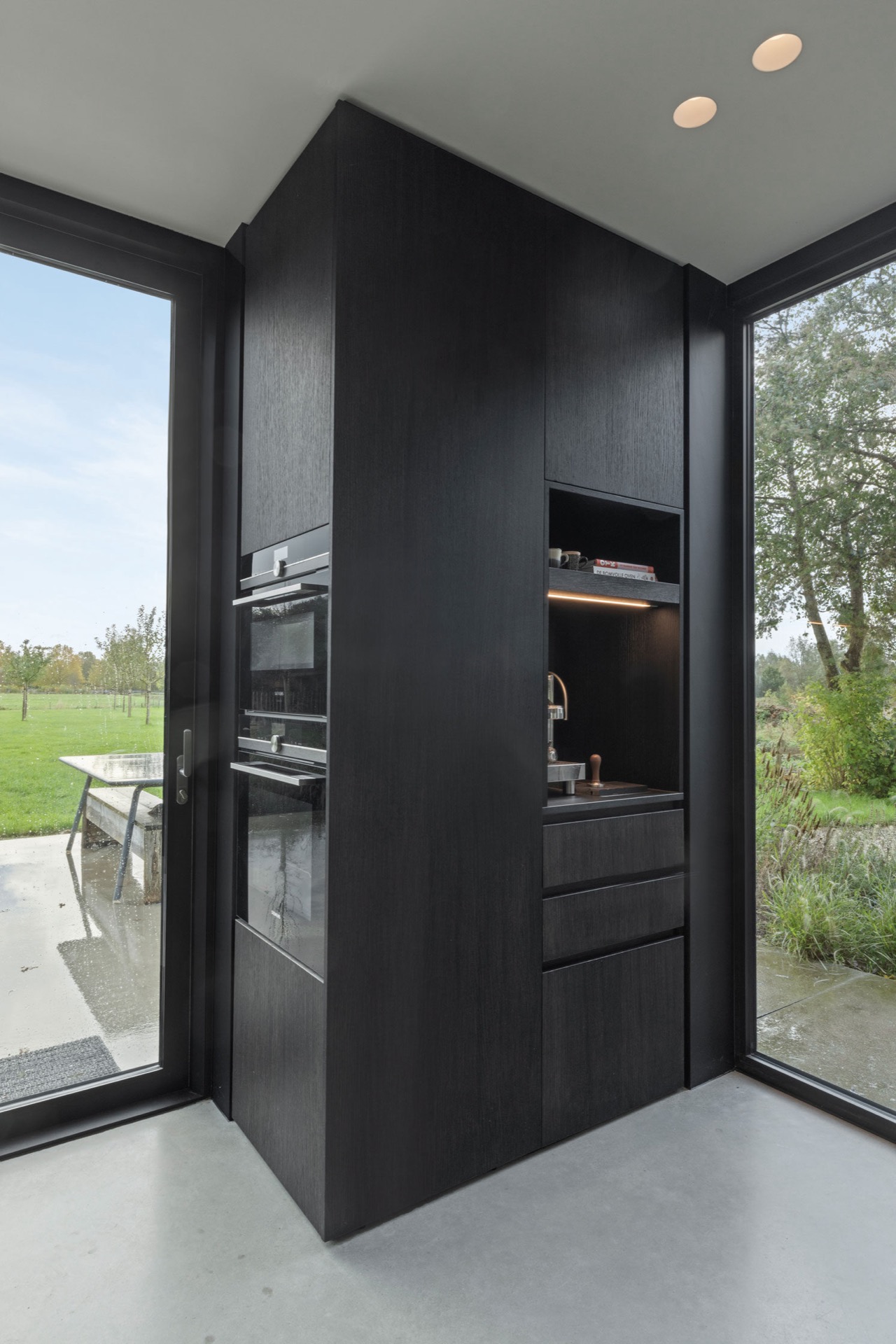
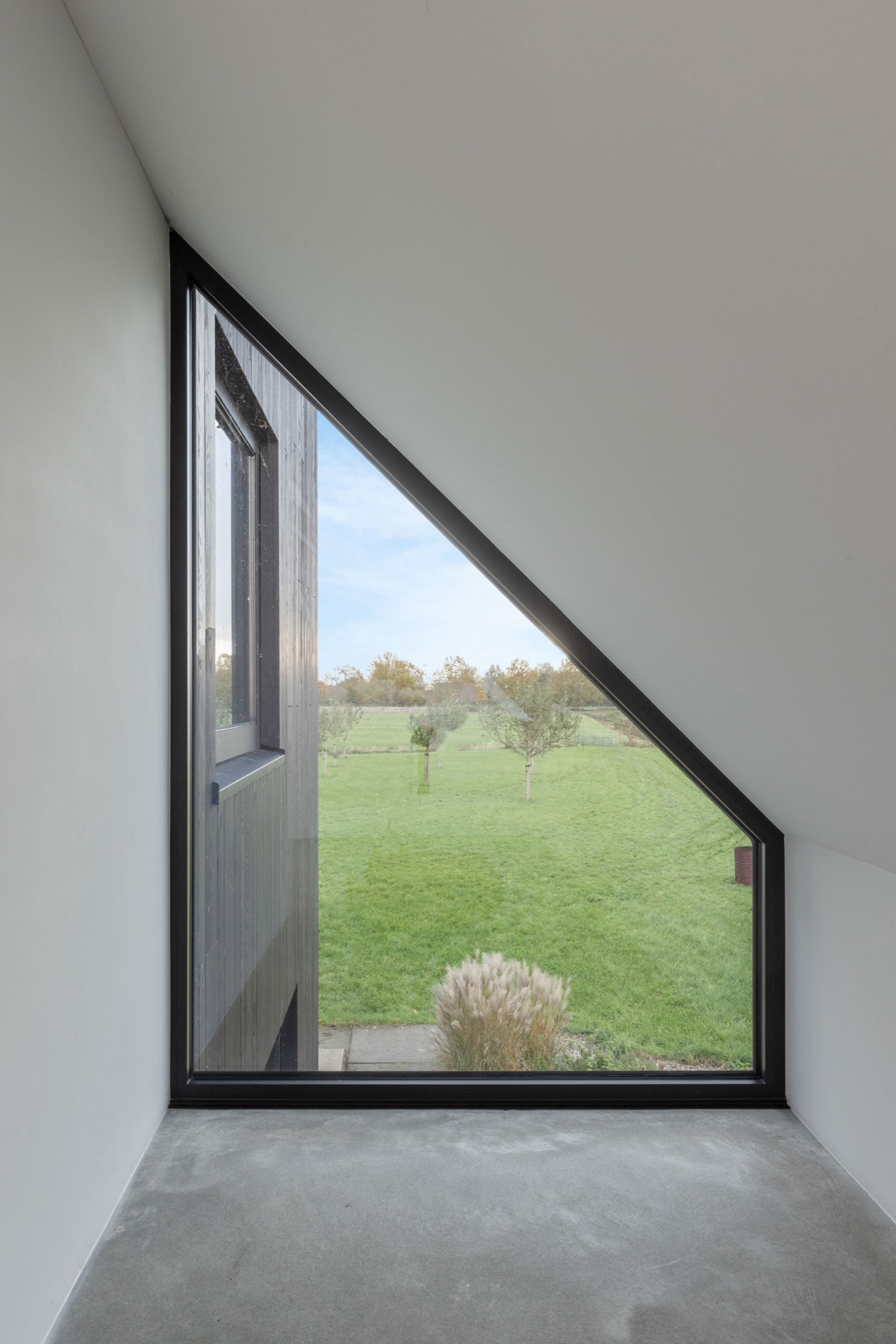
The kitchen wall is not used as a back panel in the usual way. Here it becomes a surface with a view outside, and the hidden window frame in the kitchen block keeps that opening visually light. Dark cabinet fronts sit against a pale ceiling, so the eye moves straight to the glass and the green beyond it. The result is not a dramatic gesture, but a careful reduction of everything that might interrupt the sightline.
That sense of openness is strengthened by the way the integrated window frames in ceiling and floor are handled. Where a frame would normally announce itself, it is absorbed into the construction. Dragging the structure into the background lets the room feel more like a sequence of aligned planes: worktop, wall, opening, exterior. The kitchen with large window then becomes less about a single object and more about how light, depth, and furniture sit together in one field of view.
From cooking zone to living zone
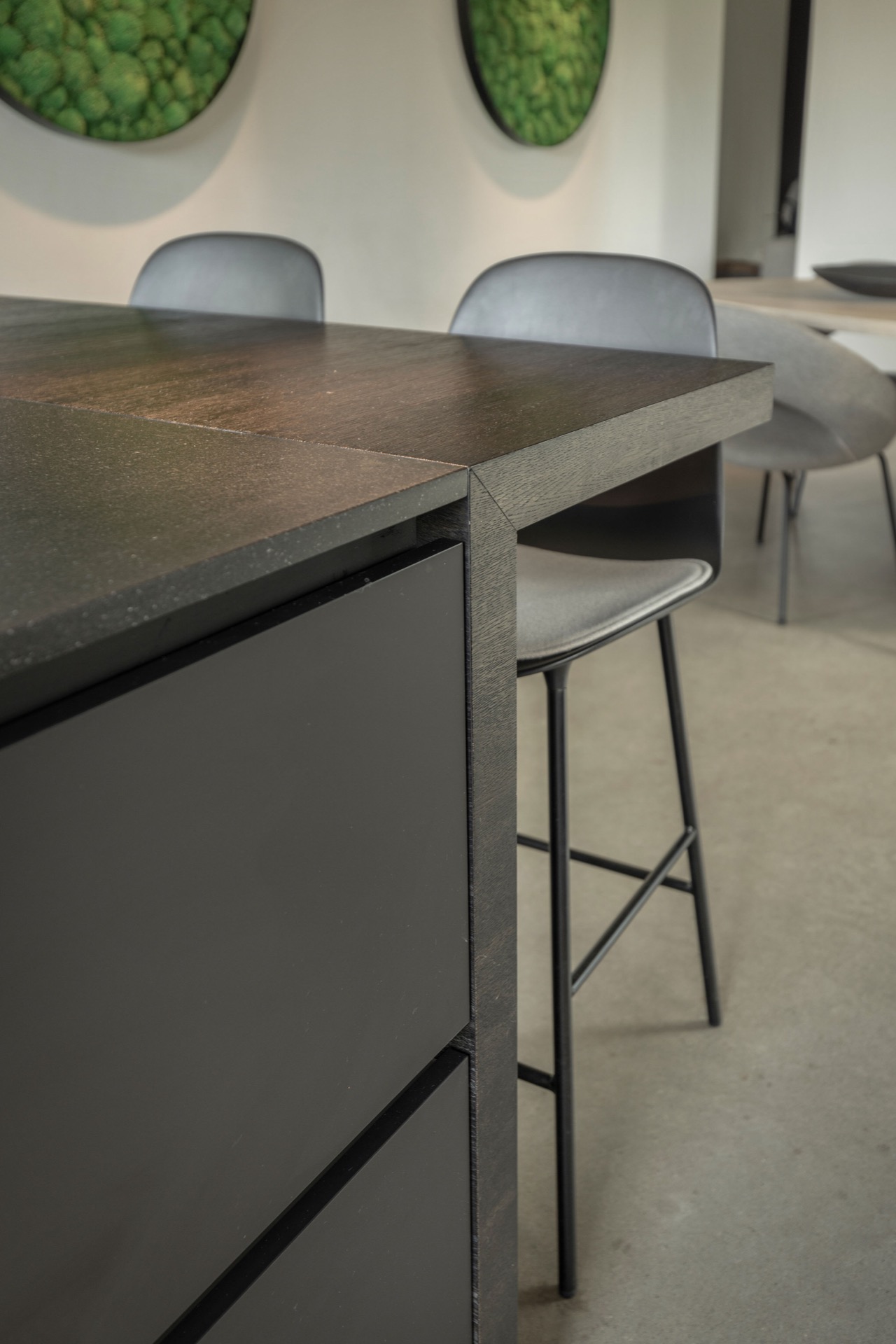
The modular kitchen layout supports that transition. The cooking area and the living space do not feel separated by hard boundaries, because the plan keeps the room open while still giving each element a clear place. A dark kitchen wall with light interior surfaces frames the room without weighing it down. Bar stools at the island and the long lines of the cabinetry keep the focus on movement across the space rather than on decorative effect.
Small details make the kitchen read as one continuous interior. The worktop edge is crisp, the fronts are vertical, and the opening to outside sits recessed into the kitchen block rather than protruding from it. That hidden frame in the kitchen block is one of the clearest moves in the project: it lets the view claim the background while the cabinetry stays orderly in the foreground. The indoor-outdoor kitchen is therefore not just open; it is edited.
Light, volume, and the sanitary core
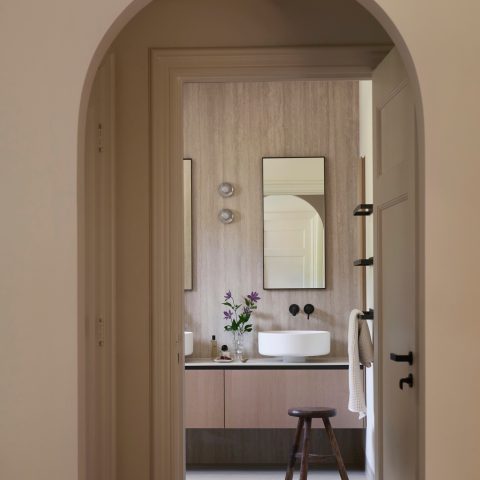
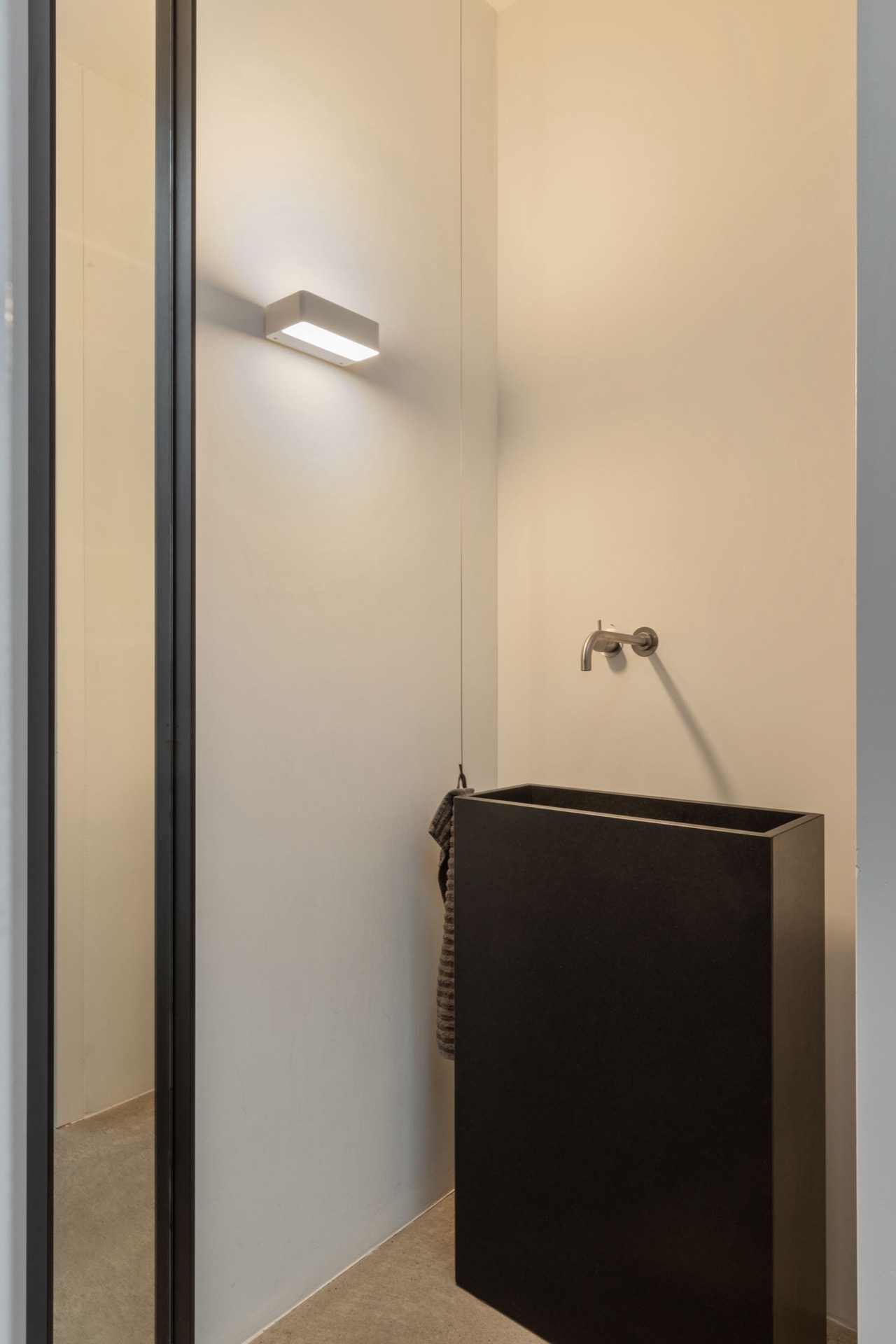
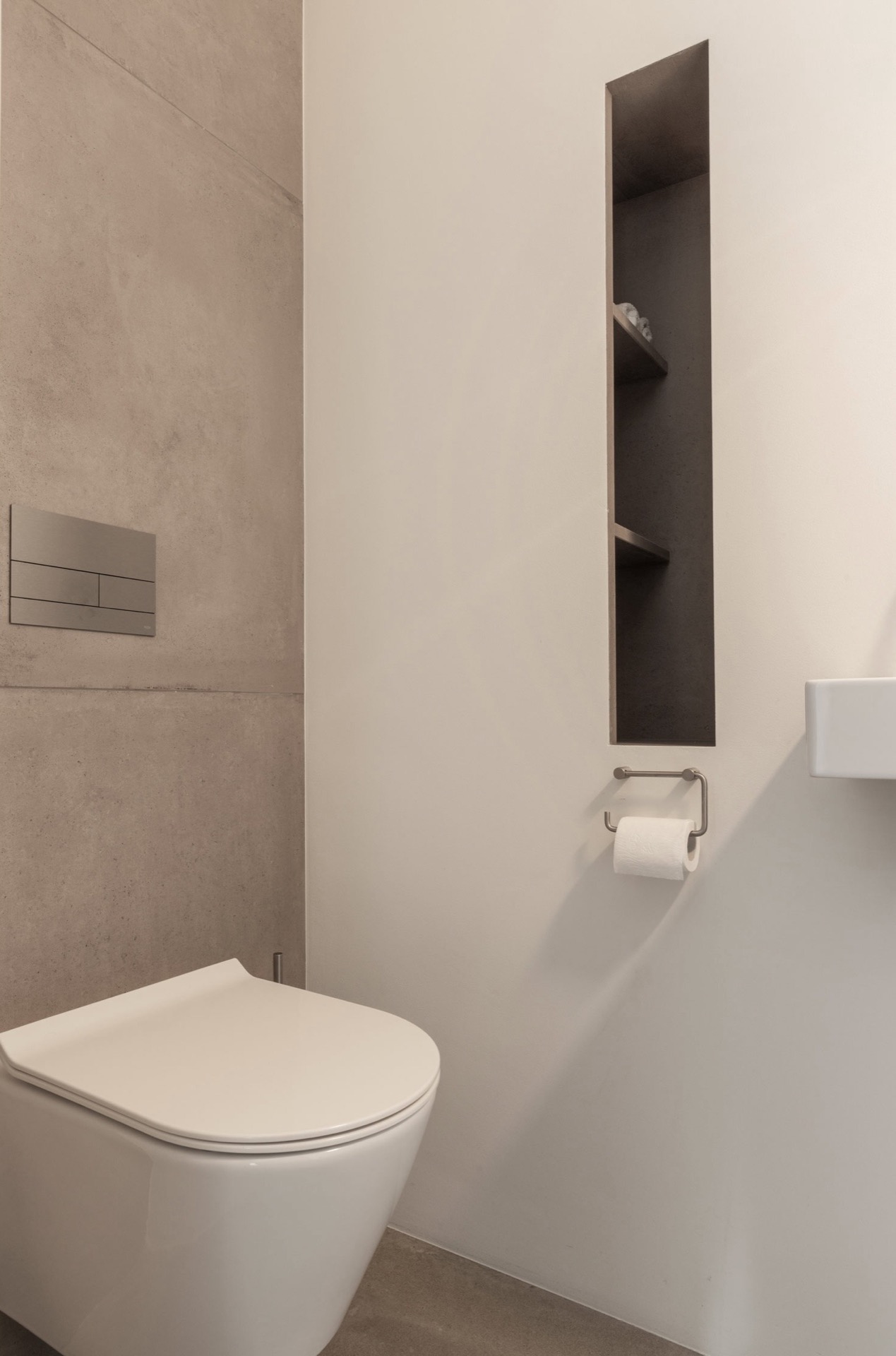
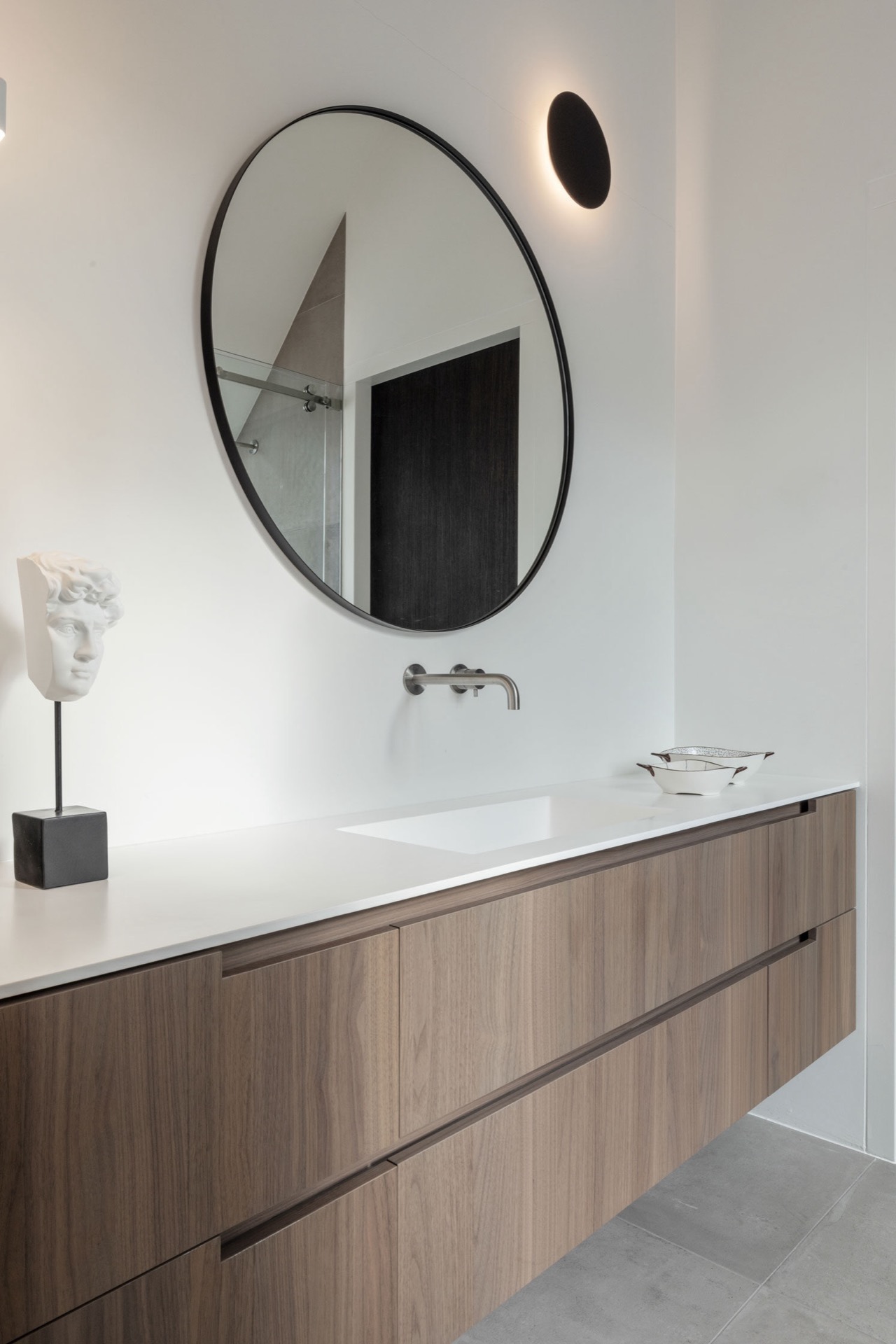
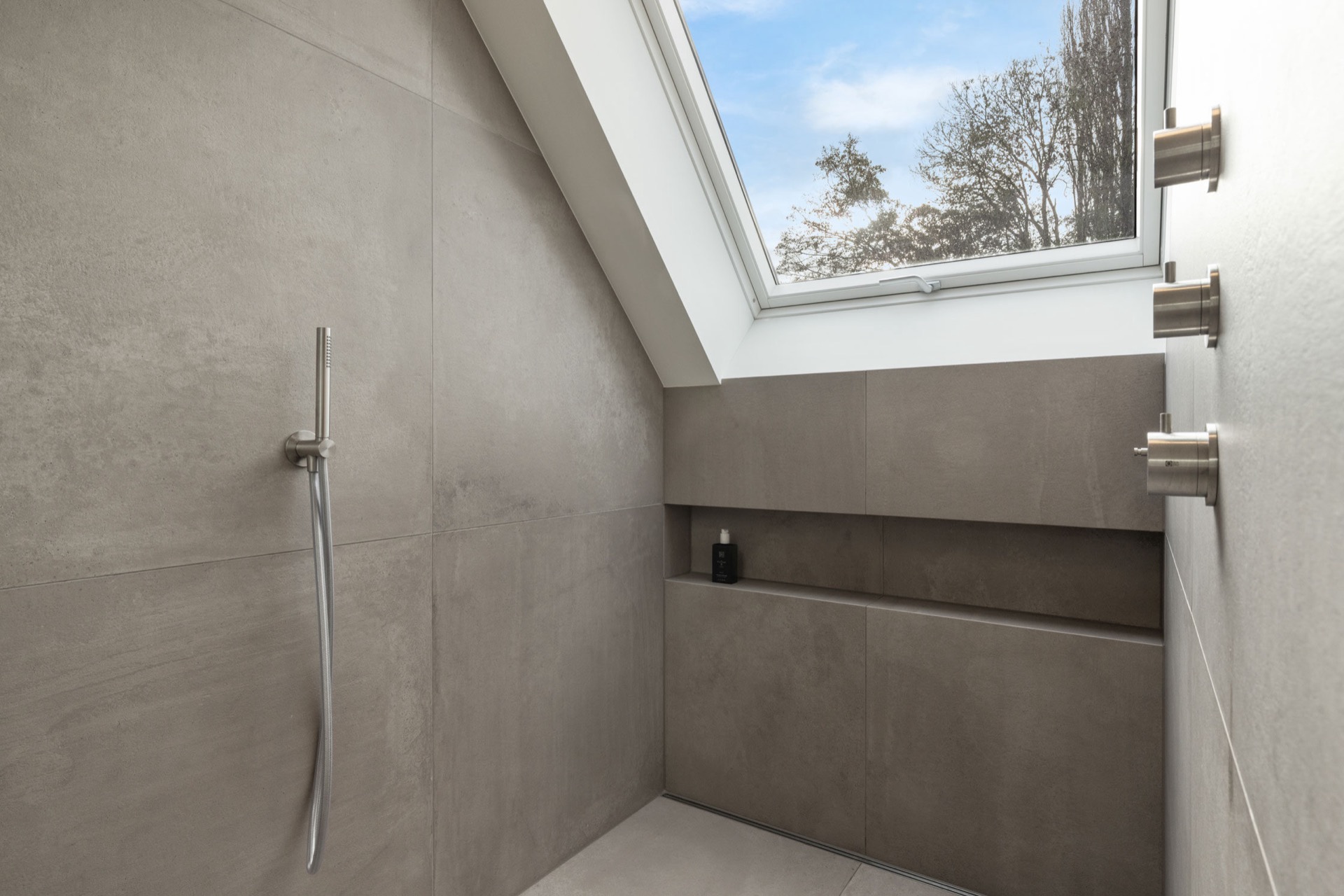
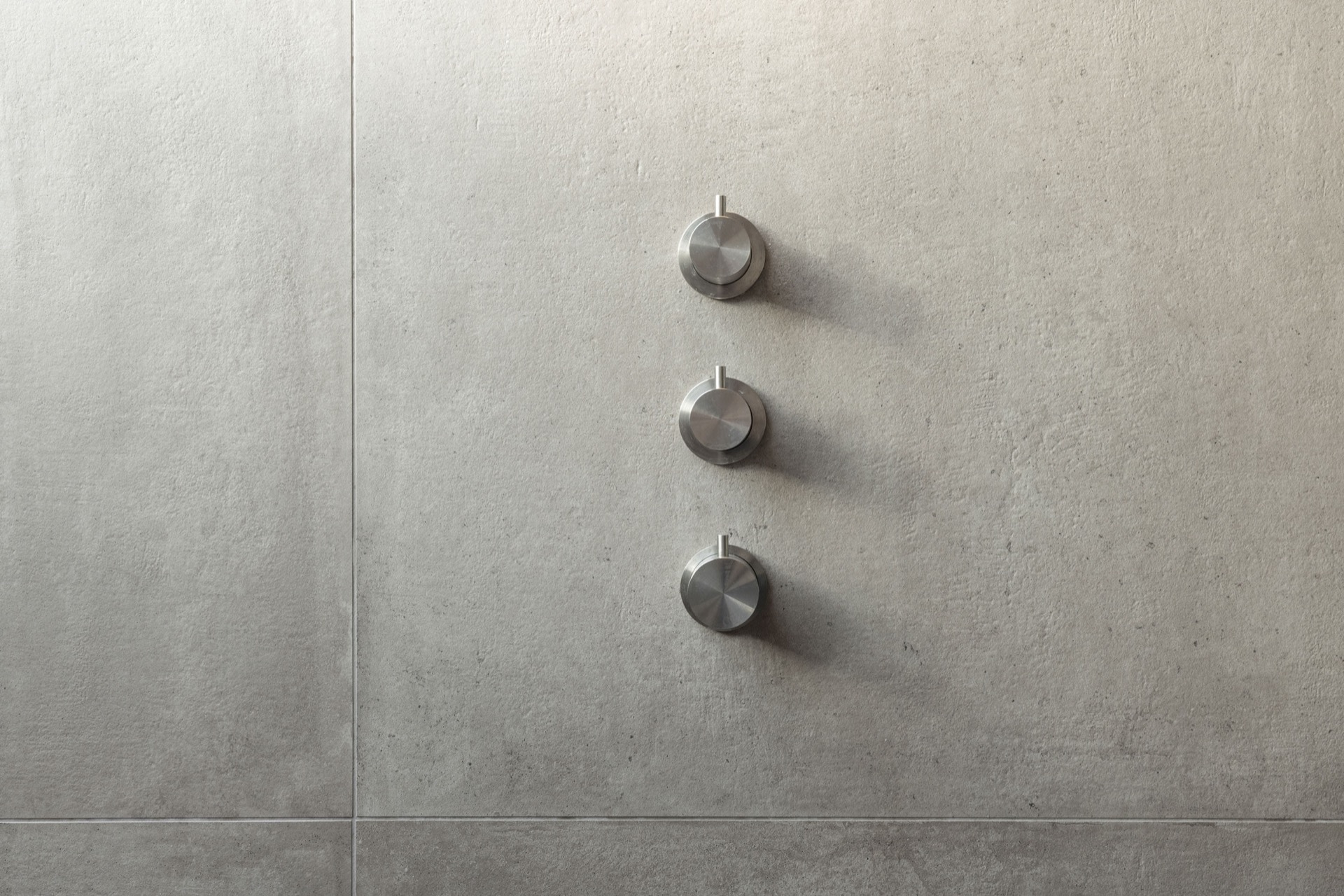
Elsewhere in the house, the same restraint appears in the sanitary block. Daylight reaches even the smallest WC, which is fitted with a floating toilet niche with tiles. Large wall surfaces keep the volume legible, while the niche and tiled surfaces add a precise interruption. The bathroom follows the same logic, with large-format tiles, a rain shower, and a round mirror above the vanity. Nothing is overdrawn; the surfaces are left to show their scale and joints.
The bathroom’s long, continuous tile fields give the room a calm surface, but the fittings break that surface just enough to define use. The vanity sits under the round mirror as a simple horizontal line, and the shower hardware is fixed against the tiled wall with clear technical precision. In the WC, the dark recess of the niche cuts into the pale plane, making the wall look thinner than it is. It is a small move, yet it changes how the room holds light. Indoor-outdoor kitchen remains connected to the layout, materials and daily use of the home.
A straight solid wood staircase in a white shell
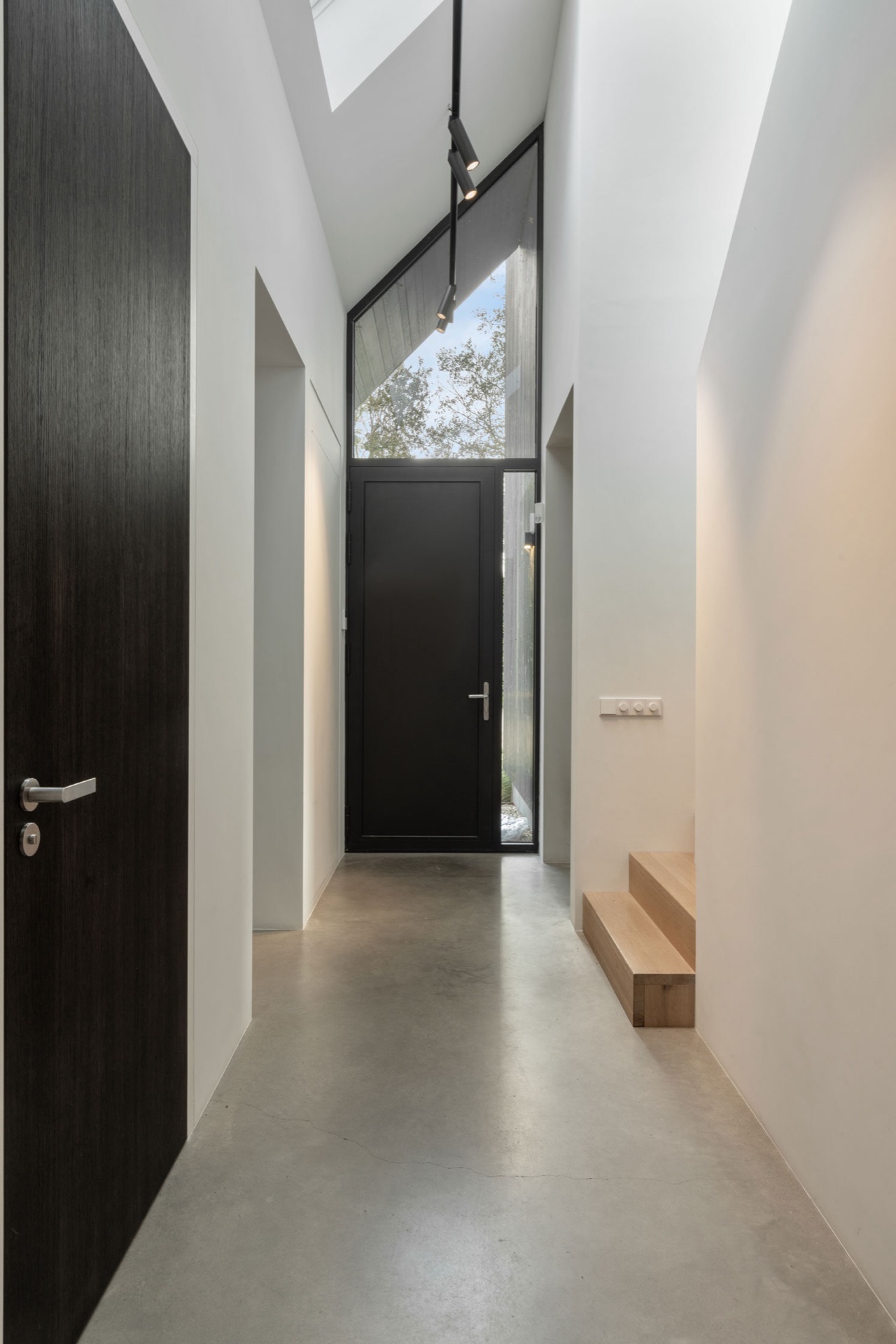
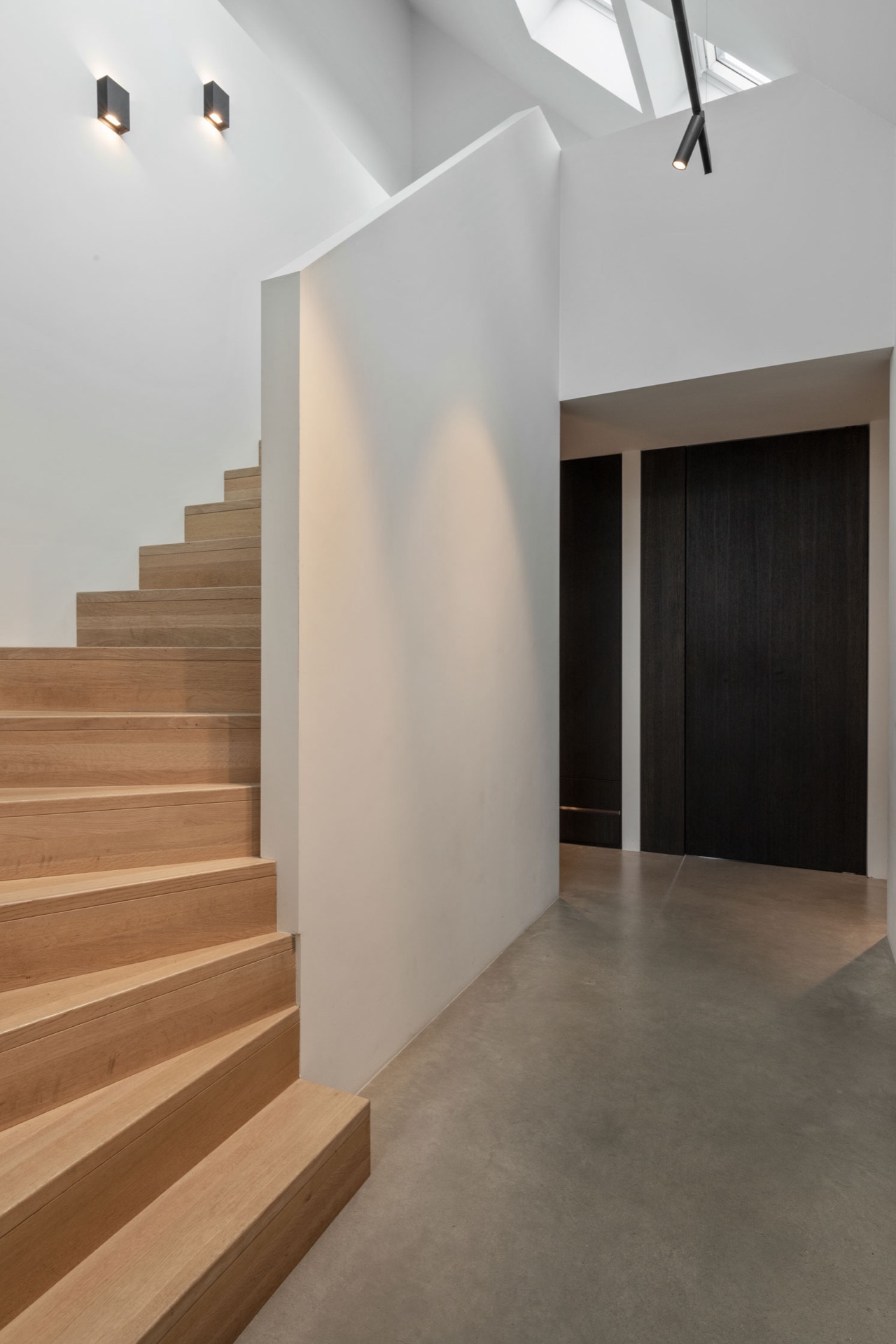
The central staircase introduces the strongest material contrast in the house. Made in solid wood, the straight solid wood staircase stands against the white walls with a clear, almost graphic presence. The grain reads immediately, especially beside the smooth painted surfaces and the dark paneling that frames parts of the stair volume. One tread extends slightly beyond the wall plane, a subtle offset that gives the stair edge a deliberate note without adding ornament.
One step outside the wall line
That single projection is enough to change the rhythm of the wall. Instead of sitting flush and disappearing, the stair edge marks the transition between levels. The move is small, but it is visible from the corridor and from the adjacent white surfaces, where the stair’s mass and the open volume around it are both easy to read. In a house shaped by hidden frames and quiet openings, the staircase is one of the few elements allowed to speak in a fuller material voice.
The open volume around the stair also keeps the interior from feeling boxed in. Light touches the white walls, the dark panels absorb some of the contrast, and the timber treads give the route upward a clear line. It is a practical piece of circulation, but the detailing makes it part of the spatial composition. The same discipline that hides window frames in the kitchen also appears here, only in reverse: the staircase is made visible by holding everything around it in check.
What the details leave behind
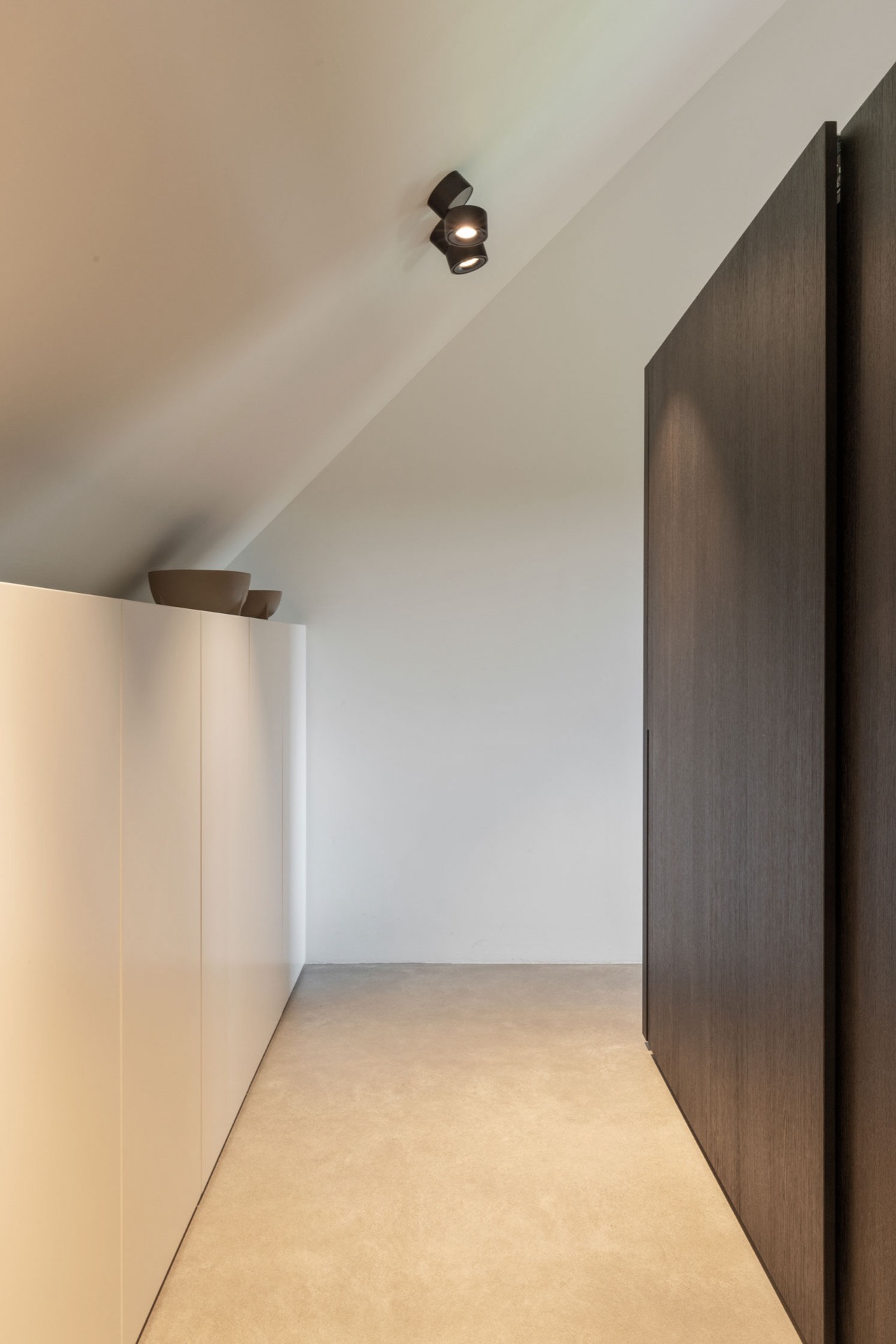
Across the house, free-standing walls are used to preserve the volume of the space, and the technical detailing of hinges and handles stays quietly in view. These are not features that demand attention at first glance, yet they shape how the rooms are read. Surfaces stay clean. Openings remain precise. The kitchen wall with view outside, the aligned frames, and the measured stair all point to the same approach: keep the structure clear, and let the interior carry the weight of the composition.
The project succeeds through that discipline. In the indoor-outdoor kitchen, the view seems to begin inside the room and finish somewhere beyond the glass. In the sanitary core, daylight reaches into the smaller spaces without needing a large gesture. And in the staircase, solid wood cuts across the pale interior with just one slight step beyond the wall line. Together they create a house where the details are not decorative extras, but the mechanism that makes the space read the way it does.
Contributors: Byos, De Elementen Interieur Platform, Modulnova Mijdrecht, Piba Marmi, Vink Interieurbouw, Total Wellness, Quadro Indoor-outdoor kitchen remains connected to the layout, materials and daily use of the home.
Wil je meer zien van Jos van Zijl Interieur Ontwerp? Bekijk de pagina van Jos van Zijl Interieur Ontwerp voor meer projecten en bedrijfsinformatie.


.png)
NEW 2026 Jubileum Edition The Best Interior Designers Benelux
Nu Bestellen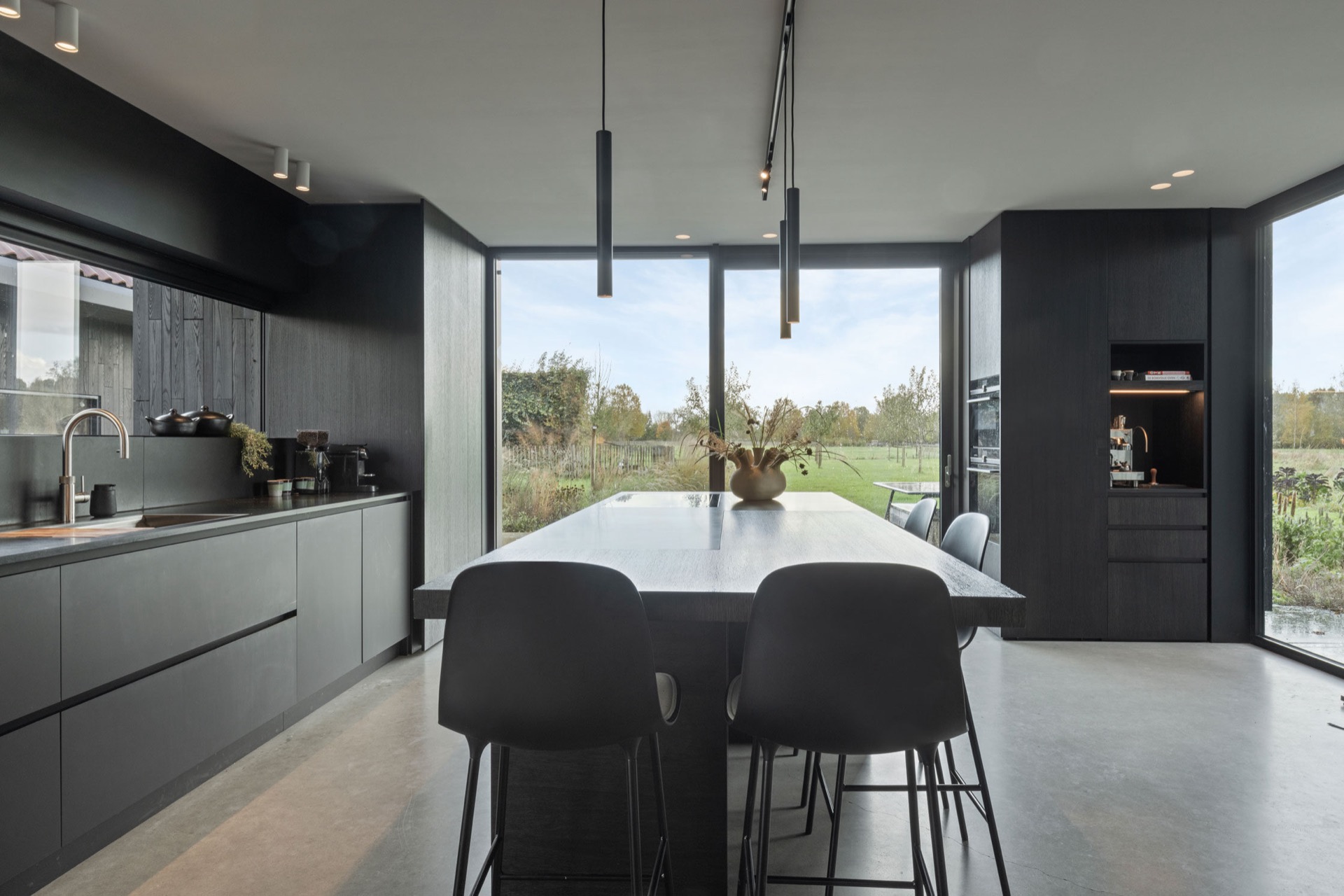
NEW 2026 Jubileum Edition The Best Interior Designers Benelux
Nu Bestellen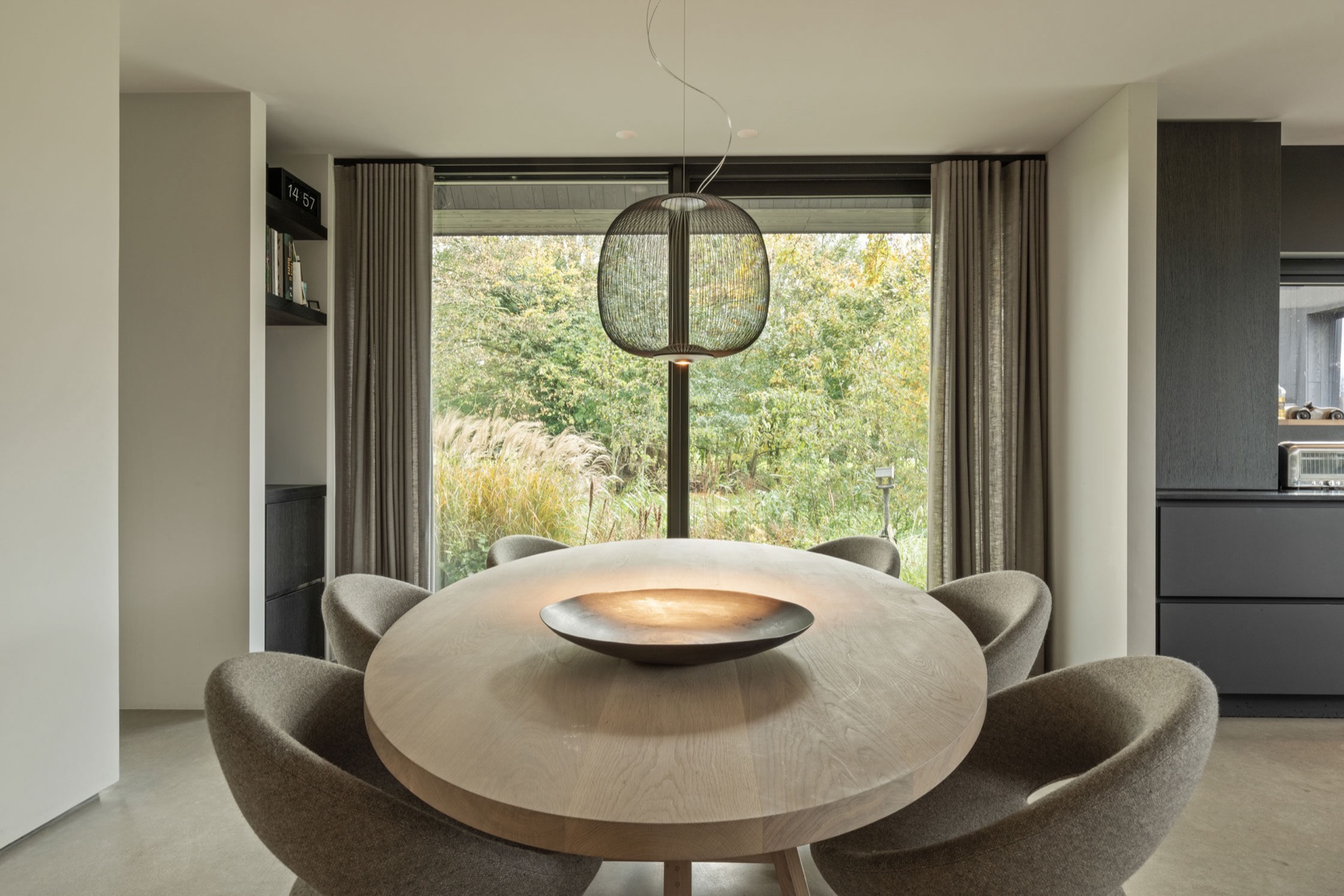
NEW 2026 Jubileum Edition The Best Interior Designers Benelux
Nu Bestellen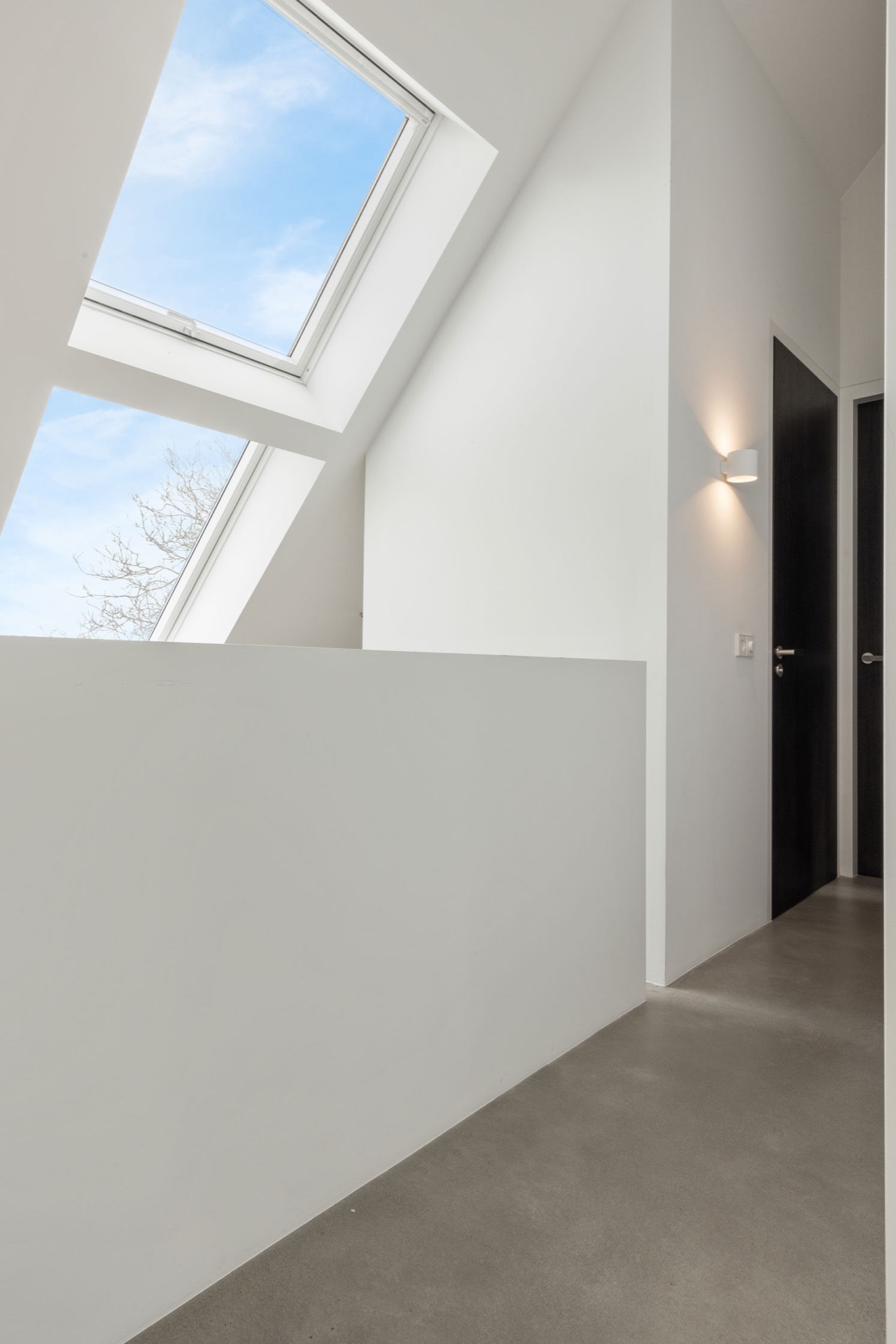
NEW 2026 Jubileum Edition The Best Interior Designers Benelux
Nu Bestellen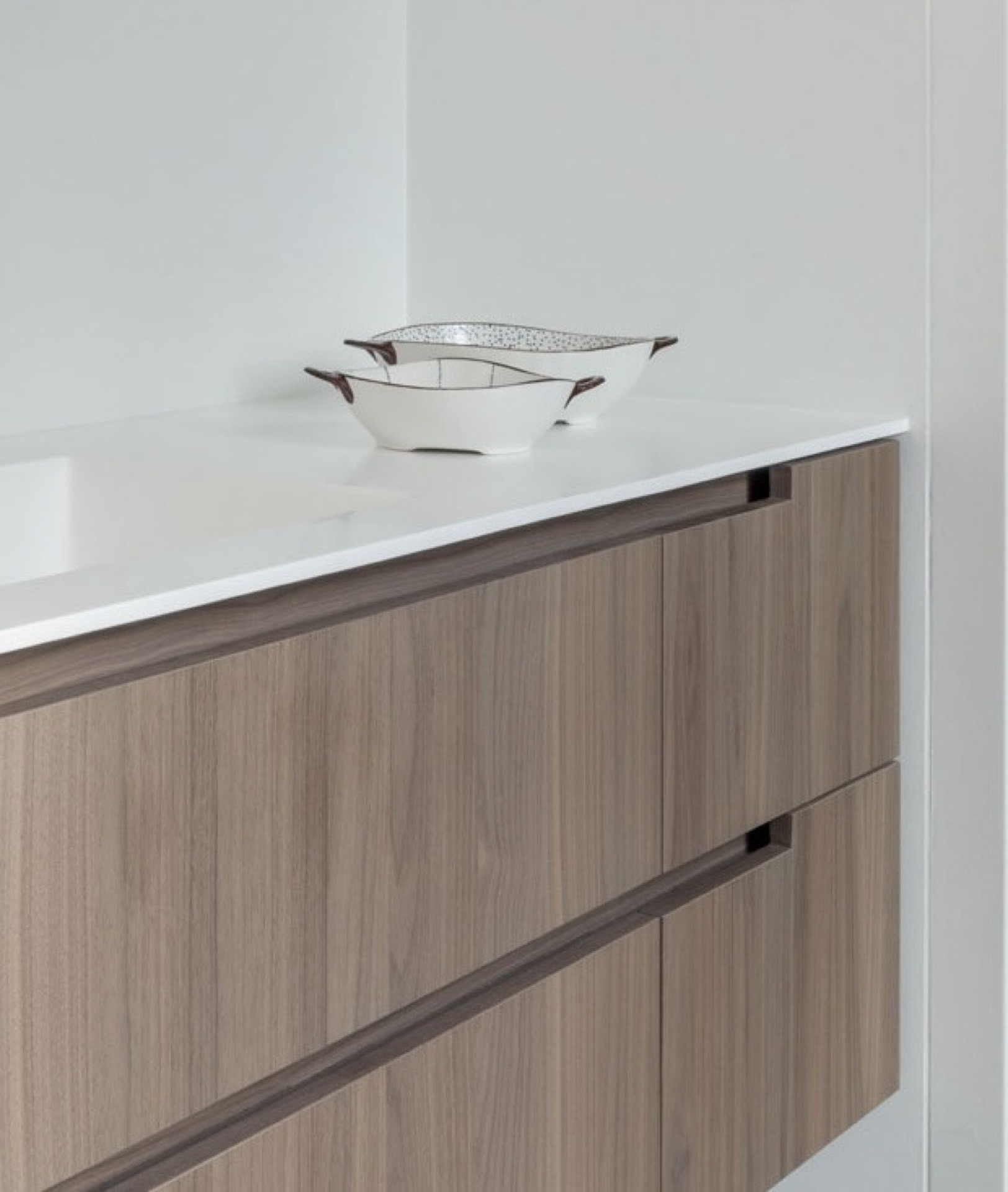
NEW 2026 Jubileum Edition The Best Interior Designers Benelux
Nu Bestellen