








Natural light and a mediterranean-inspired atmosphere with exposed wooden beams
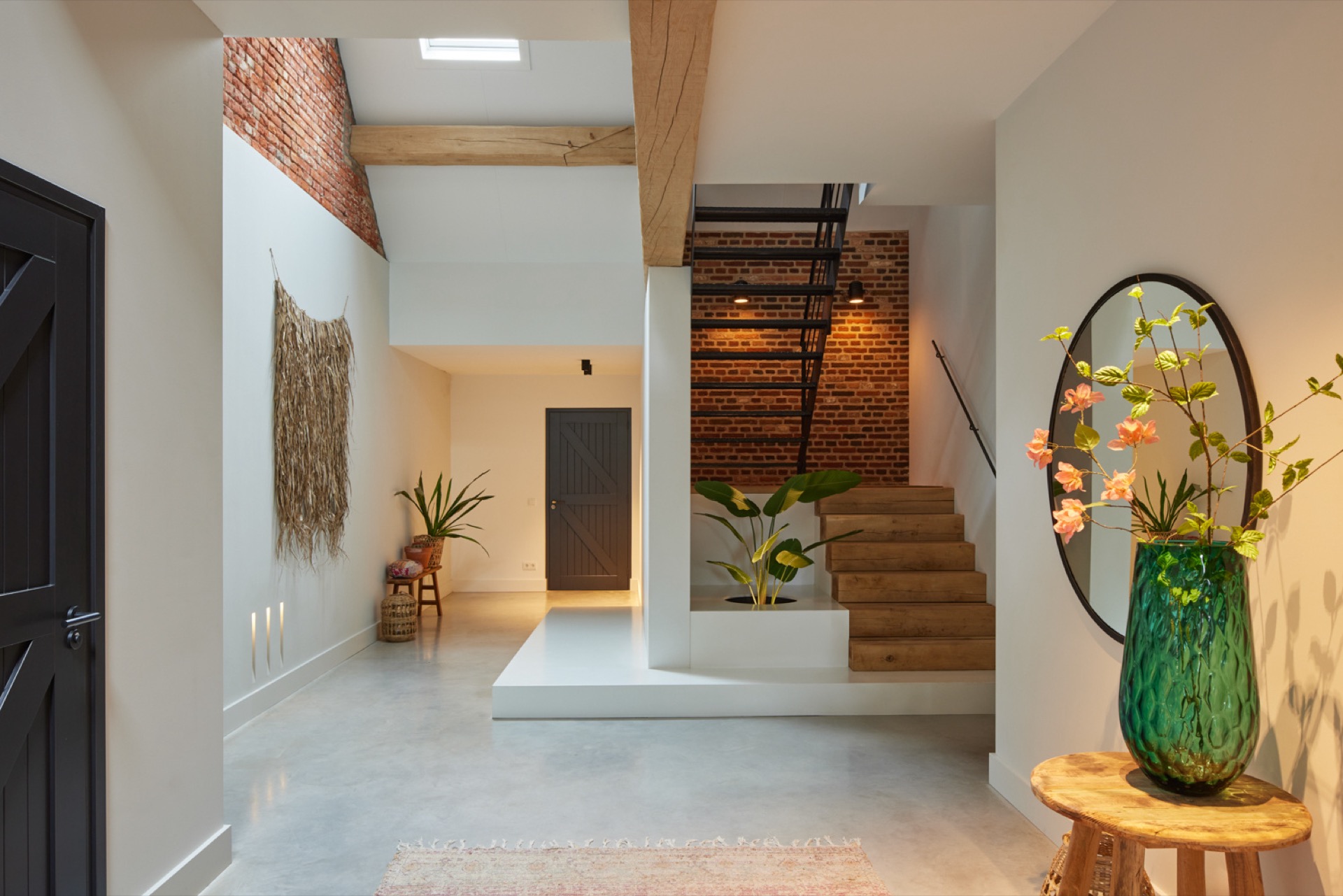
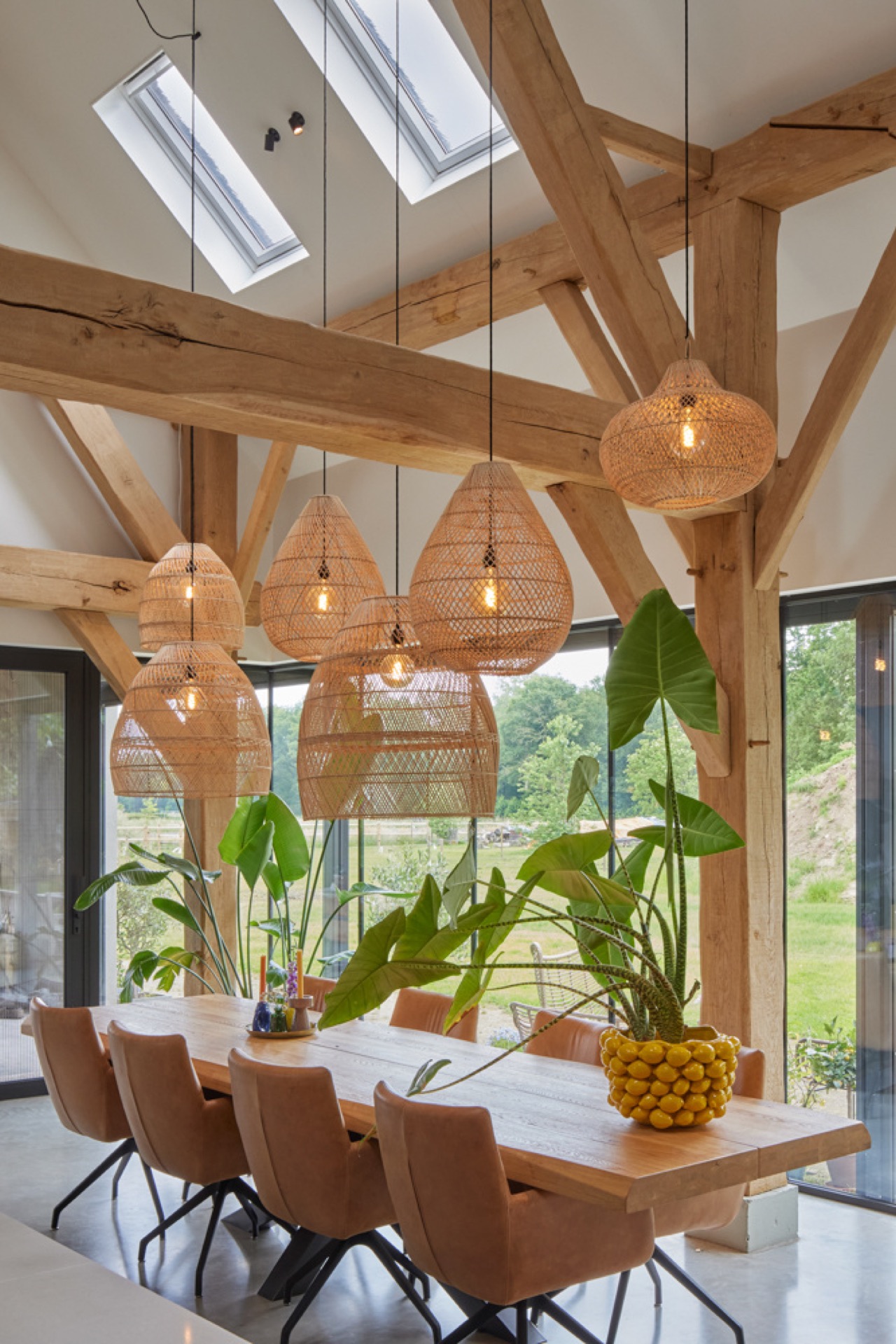
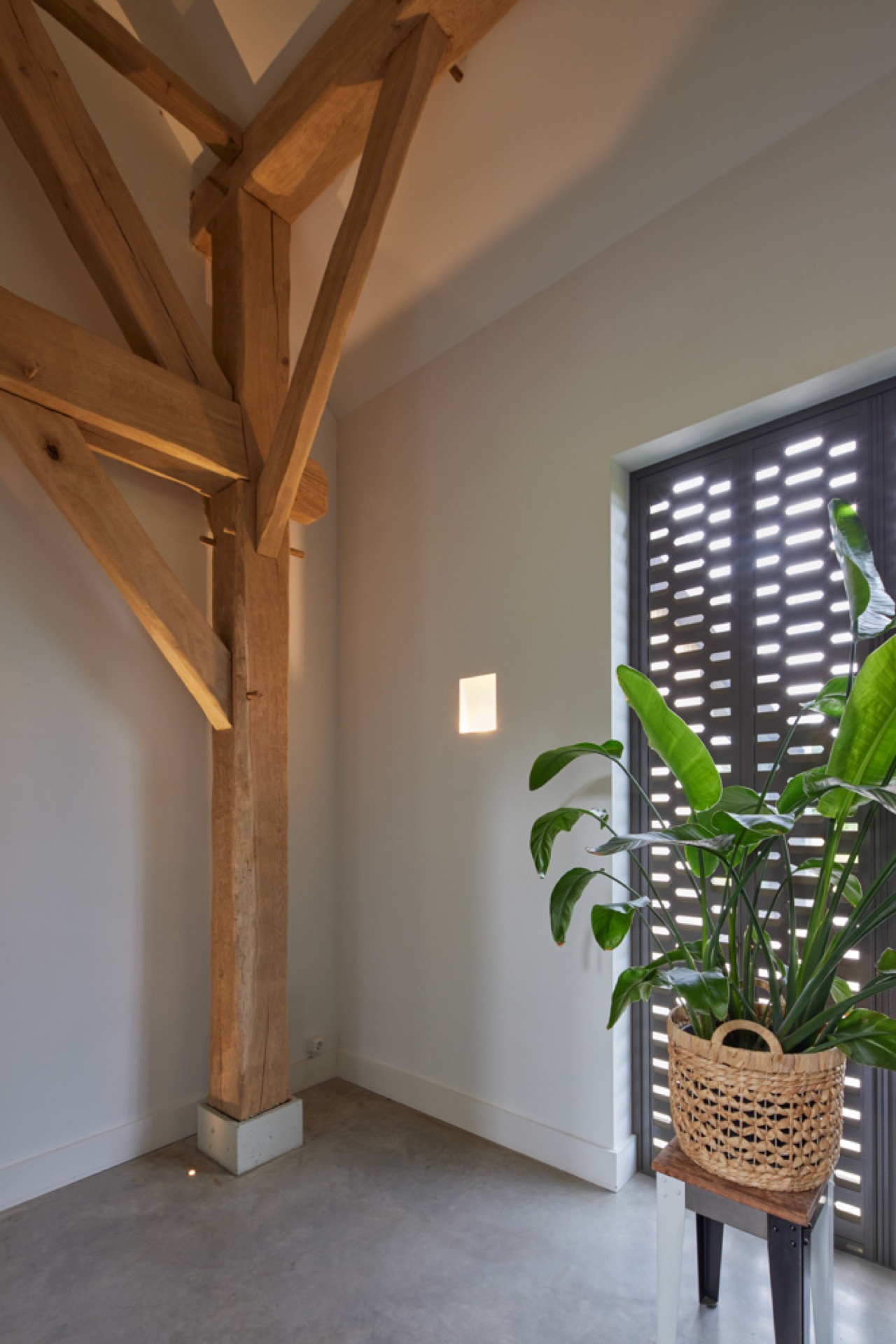
Natural light lands first on the wood. It runs across the open roof structure, catches the exposed beams, and leaves the ceiling frame visible instead of hiding it. That clear view of structure sets the tone throughout the house, where a Mediterranean-inspired interior with natural light and exposed wooden beams combines a rural base with materials that feel rooted in use: wood, stone, brick, and rattan. Large windows and roof windows pull daylight deep inside, so the rooms never read as closed or heavy.
Mediterranean-inspired interior with natural light and exposed wooden beams as a spatial starting point
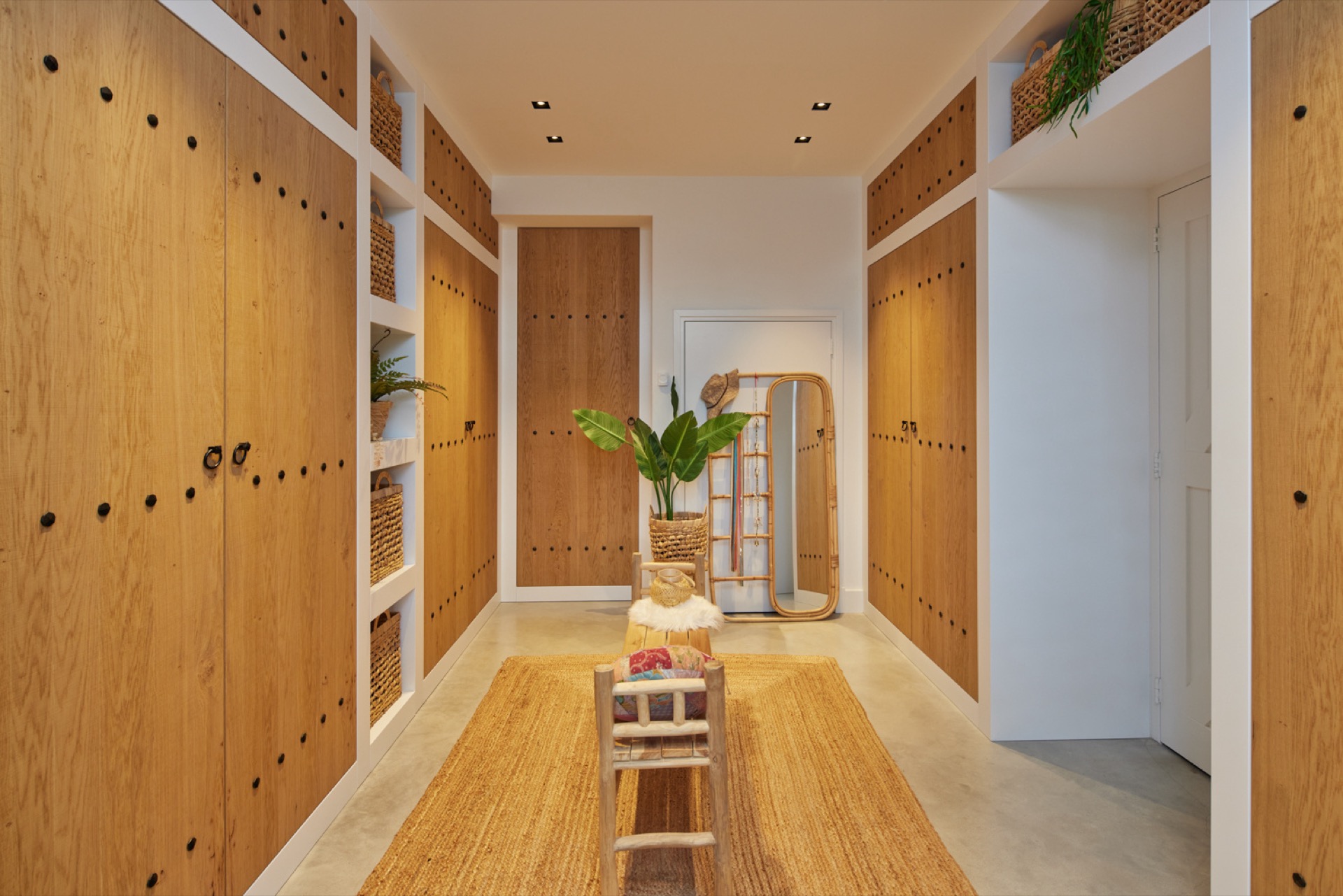
Rattan baskets, woven rugs, stone surfaces, and timber elements give the rooms their texture. None of these materials appears as decoration only; each one breaks up the hard lines of the house and softens the white walls and dark structural pieces. Handcrafted accessories and small color accents are used sparingly, but they matter because they sit against the larger materials and make the rooms feel lived in. In this Mediterranean-inspired interior with natural light and exposed wooden beams, the material story is what holds the image together.
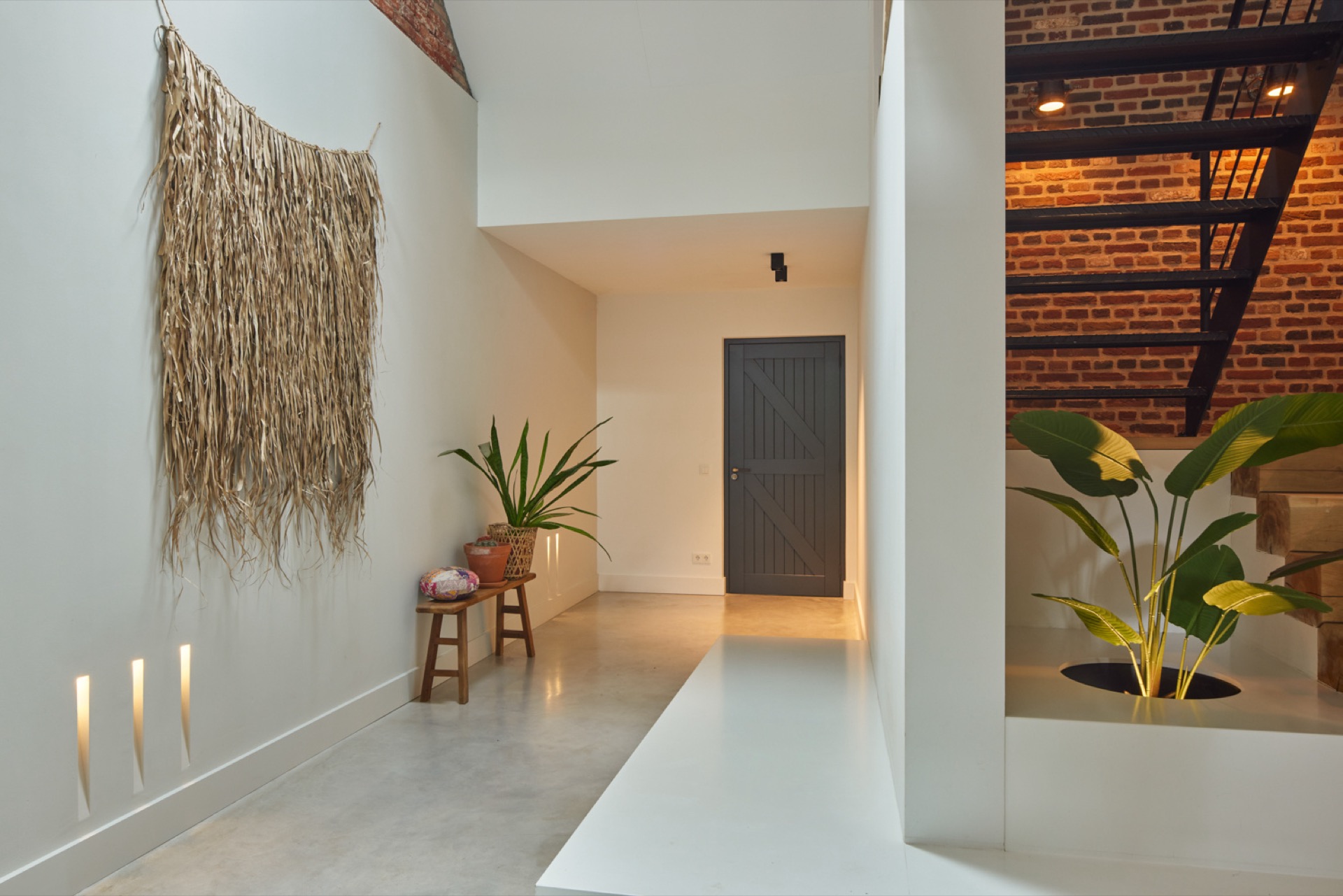
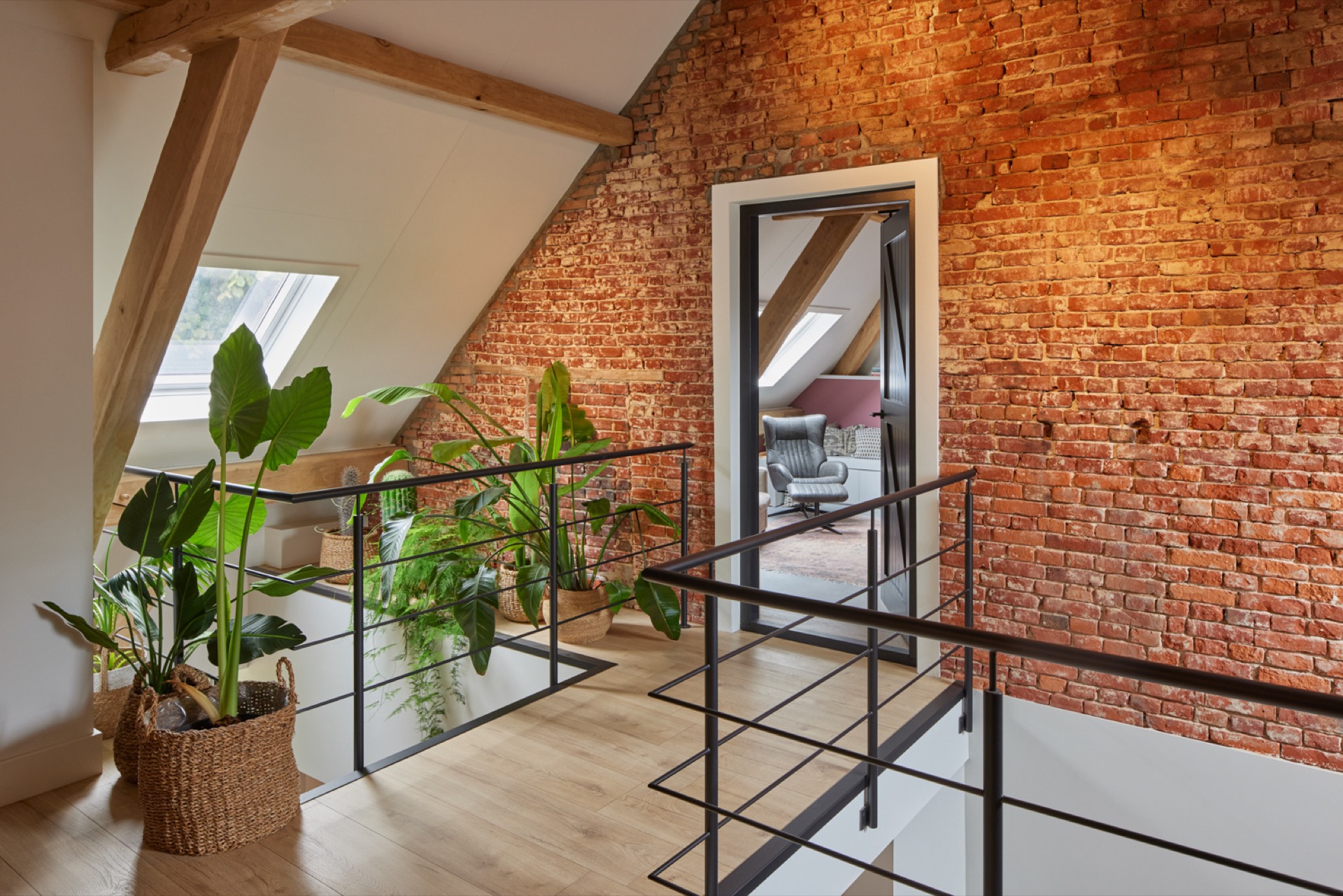
The contrast between brick and wood appears in more than one space. A brick wall beside dark structural elements, or a timber surface next to a pale wall, keeps the interior from becoming flat. The visual rhythm comes from those changes in texture. Even where the palette stays restrained, the surfaces do not repeat themselves. That is what makes the house read as both calm and active: the eye keeps moving from woven fiber to rough masonry to planed wood.
An open roof structure that stays visible
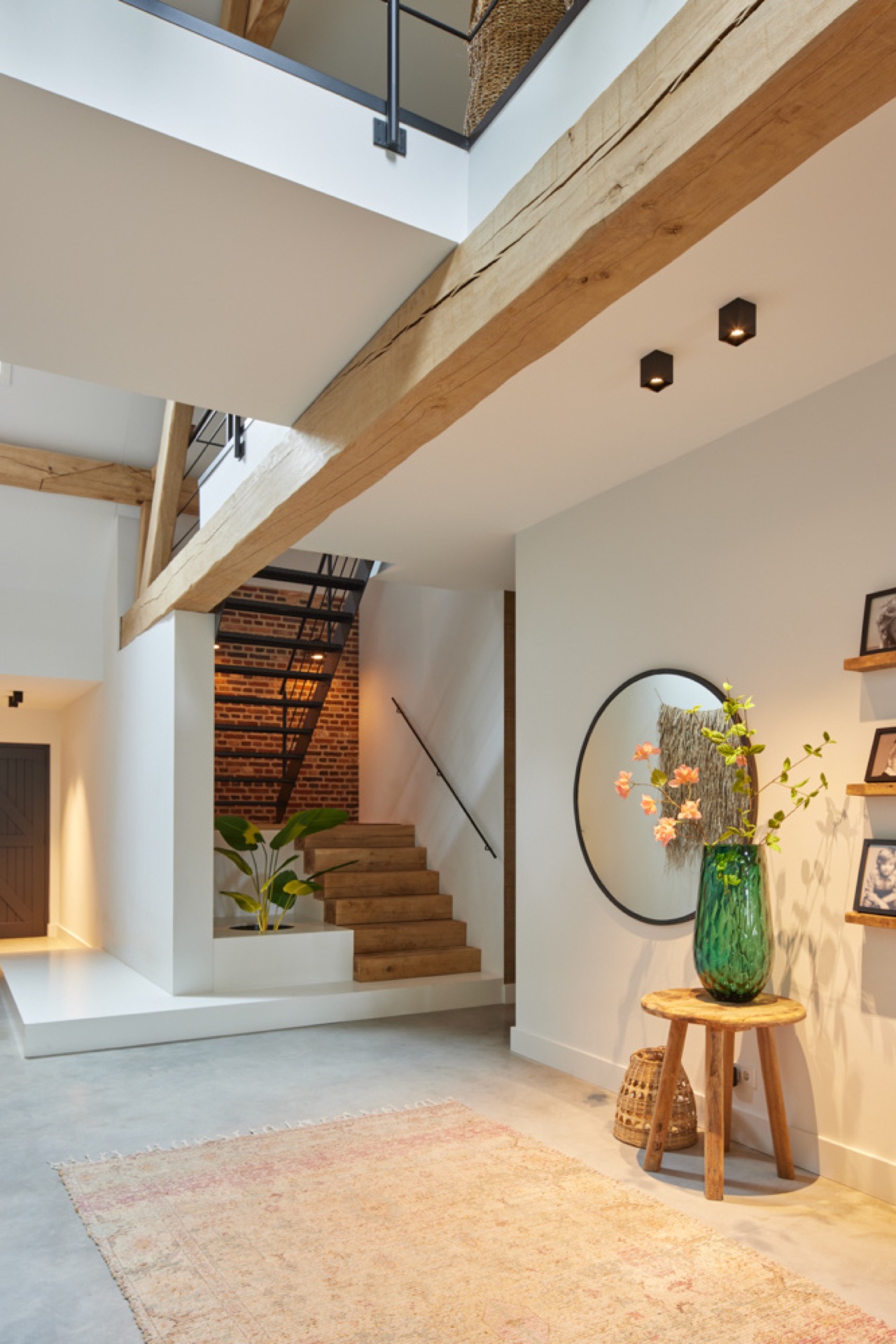
The open roof structure interior is one of the strongest parts of the project. The beams and trusses are not enclosed behind finishes, so the construction remains part of the room’s identity. In the main spaces, the height of the ceiling and the exposed framework create a direct sense of volume. The house vide interior strengthens that effect by linking the upper and lower floors, allowing light and sightlines to pass between levels instead of stopping at a ceiling line.
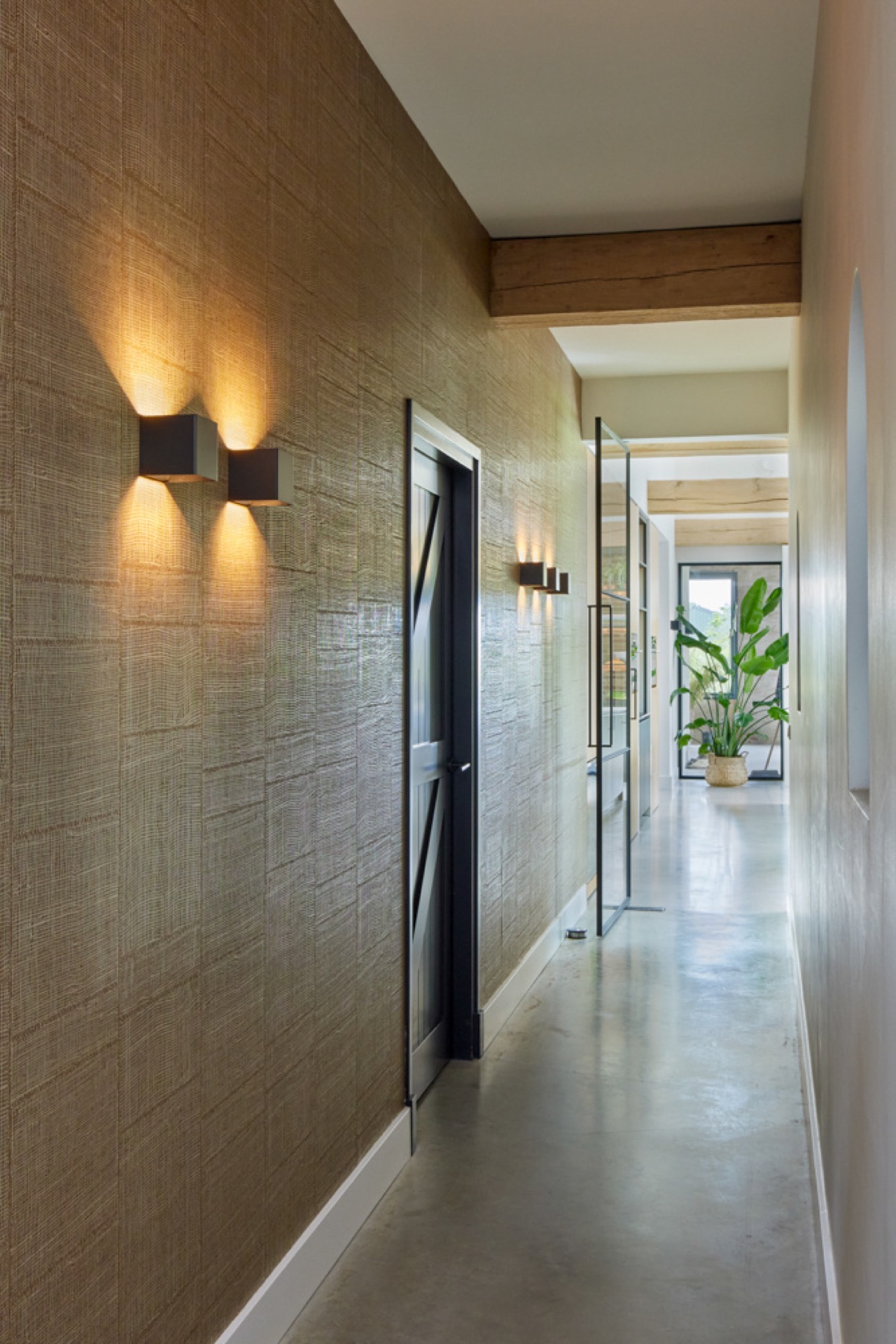
That vertical connection matters in the hall and stair areas as much as in the living zones. Looking upward, the viewer sees the roof structure, the openings across the vide, and the route light takes through the house. It is a spatial move as much as a visual one. The result is a layout that feels open without relying on emptiness: the structure stays present, and the circulation around it gives the interior its shape.
Light that follows the beams
At ground level, minimal recessed spots wash the supporting beams from below. The upward beam lighting is subtle, but it changes how the wood reads after dark. Instead of flattening the structure, the light traces the edges and creates faint shadows between the members. Those shadows add depth, especially where the beams cross or meet the wall line. The wood takes on a softer tone in the evening, and the roof frame becomes a visible feature rather than background structure.
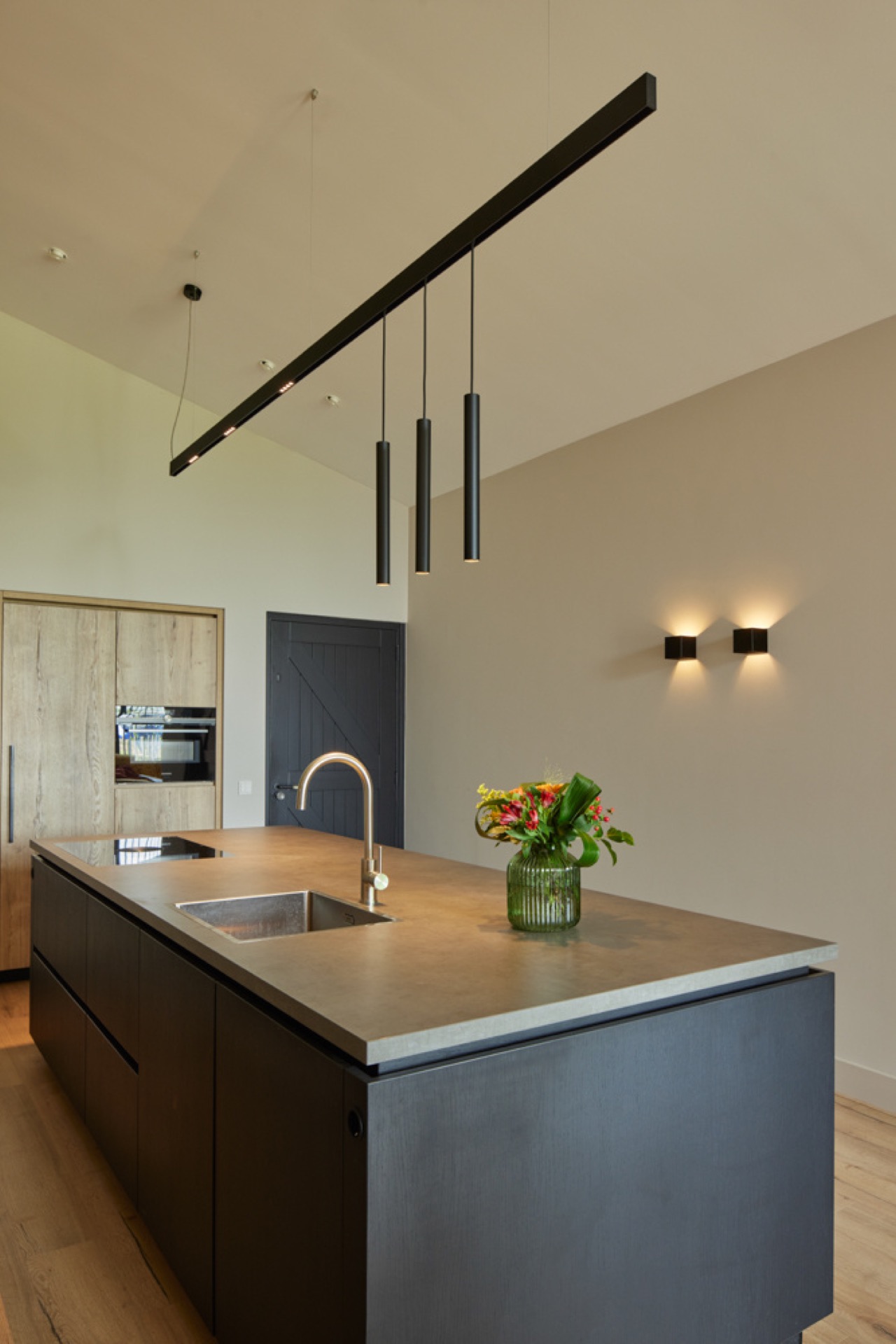
Warm ambient lighting is used with the same restraint. Wall lamps, ceiling spots, and pendants do not compete with the daylight; they extend it. In the living areas, the lighting sits low enough to support the room without turning it theatrical. On white surfaces the glow stays gentle, while on timber and brick it draws out texture. The rooms gain definition after sunset, but they keep the same clear reading of lines and volume.
Kitchen light focused over the island
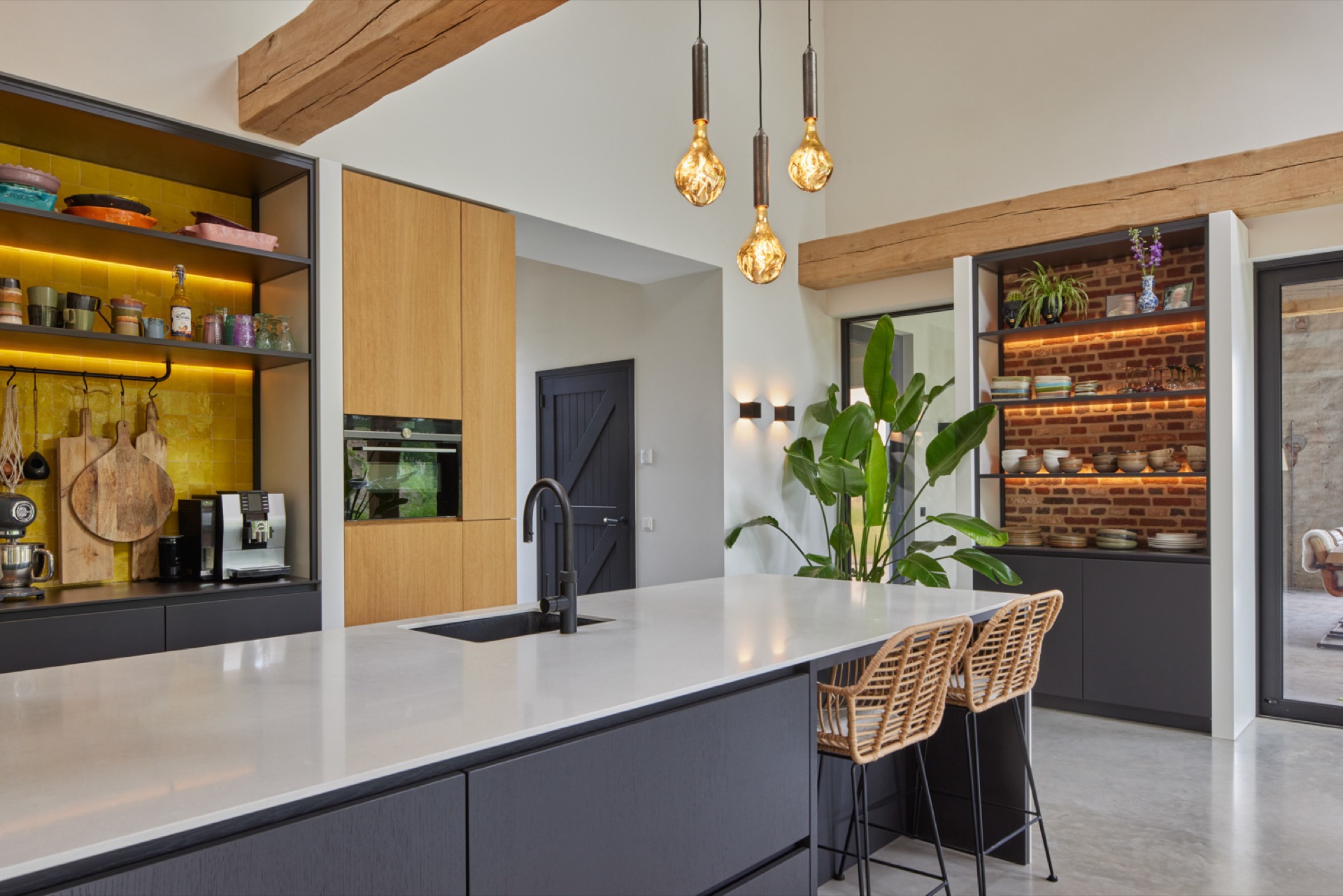
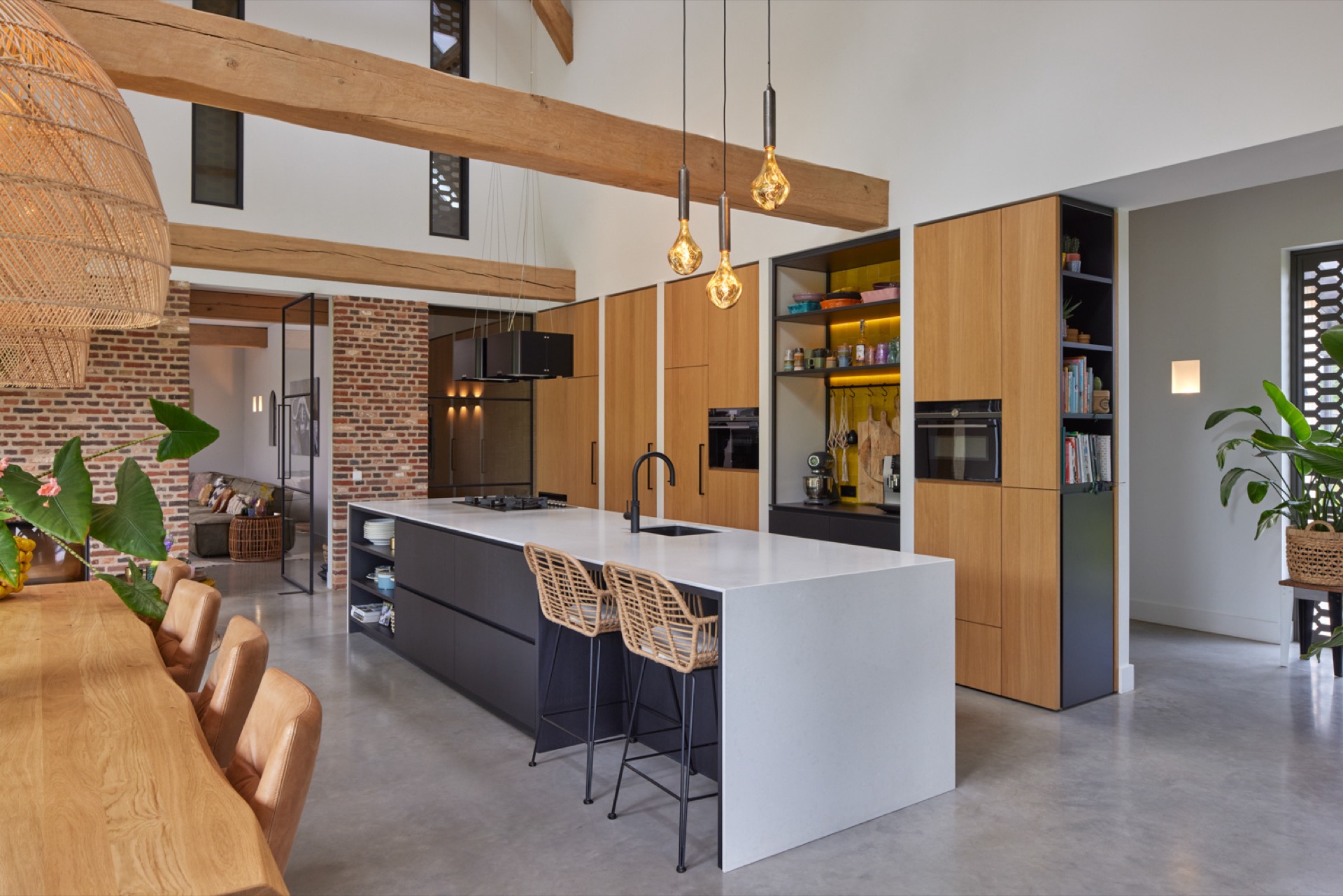
The kitchen brings the project’s lighting strategy into a tighter frame. Pendant lights hang above the island and mark the working surface with a warmer pool of light. Around them, wood cabinetry and darker storage fronts keep the background grounded, while a brick surface and inset niches introduce a rougher note. The kitchen island pendant lights do more than illuminate the counter; they give the kitchen a fixed centre and make the ceiling height feel more tangible. Mediterranean-inspired interior with natural light and exposed wooden beams remains connected to the layout, materials and daily use of the home.
Along the back wall, niche lighting picks out shelves and recesses without flooding the whole space. That smaller scale of light works well with the material mix, because the timber grain, the brickwork, and the darker joinery each catch it differently. The kitchen remains tied to the larger open-plan interior, but it also has its own visual tempo. The fixtures are small, yet they shape how the room is read: one zone for cooking, one for display, one for circulation.
Brick, wood, and a quieter backdrop
The brick and wood contrast interior shows up clearly in the kitchen and nearby transitions. Brick introduces irregular texture; wood brings a more measured grain; white walls keep both from feeling too dense. The contrast is especially effective where the ceiling stays high and the openings remain large, because the materials then have room to breathe visually. A dark beam line, a pale wall, and a brick inset can occupy the same frame without competing for attention.
That same balance appears in the living and dining zones, where hanging lamps float above the table and daylight continues to enter through large openings. The room does not depend on one statement piece. Instead, it is built from aligned parts: structure, light, and material. The Mediterranean-inspired interior with natural light and exposed wooden beams stays coherent through those parts, not through repetition of the same finish.
Rooms shaped by height, view, and crossing light
The house vide interior also changes how the stair and hall areas feel. From one level, you can see into the other, and that openness keeps the circulation legible. In the images, the staircase sits beside brick walls and black structural elements, while daylight enters from the nearby windows. The combination gives the route a clear direction. It is a passage, but not a leftover one; the structure and light give it a visible role in the composition of the house.
Elsewhere, the large window openings do much of the work. They are broad enough to bring in a strong wash of daylight, but they also frame the timber ceiling and the furnishings below. That framing matters because it keeps the rooms from feeling overexposed. The daylight lands on the tabletop, the floor, the beams, and the edges of the walls, so each surface reads slightly differently. The interior stays open while still holding shape.
Bathroom details kept quiet and close to the wall
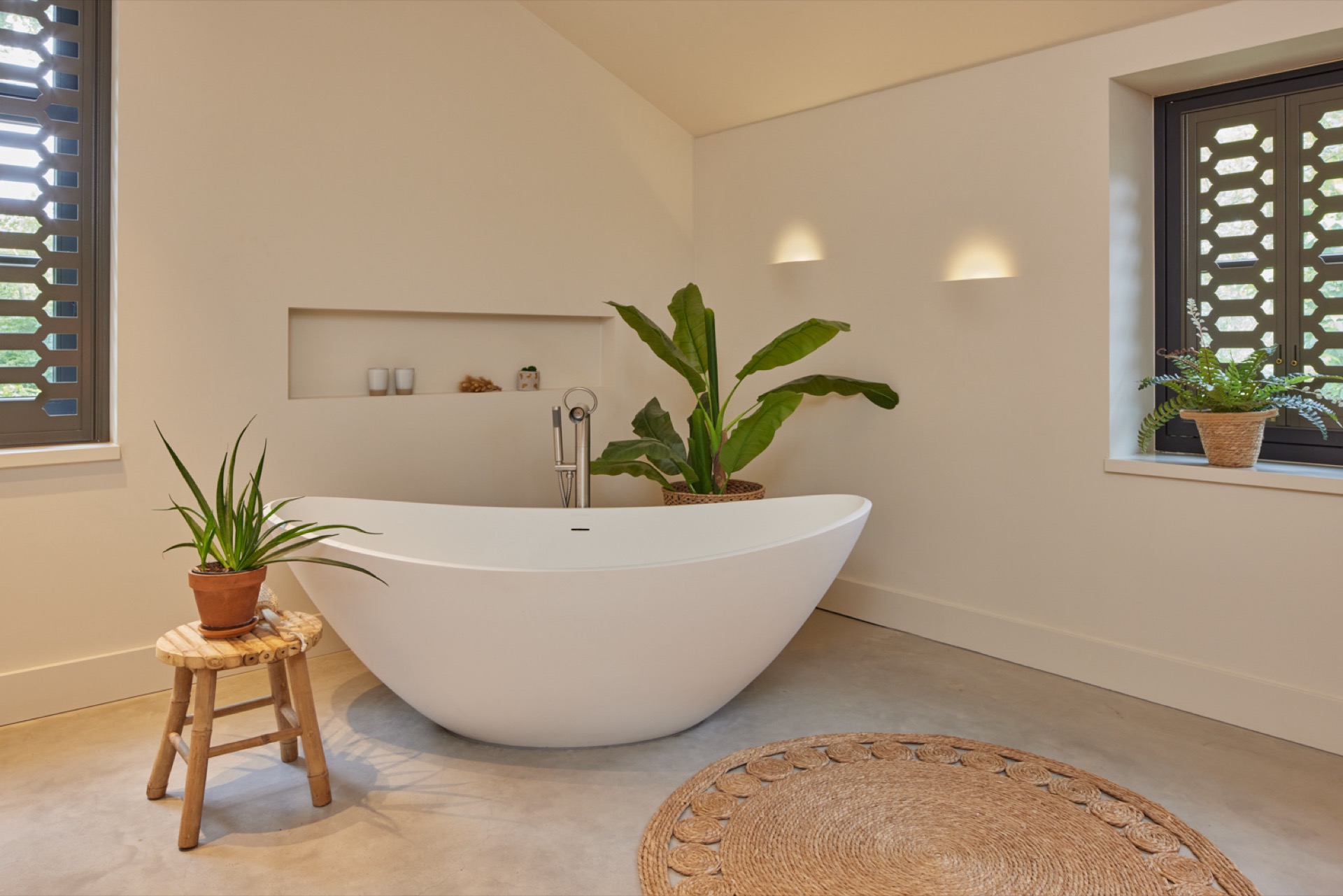
In the bathroom, the lighting steps back and becomes more specific. Niche lighting picks out the basin area and the built-in recesses, while the surfaces stay restrained in tone. A freestanding bathtub in a niche-like wall setting appears as a compact focal point, set into the room rather than placed theatrically in front of it. The effect depends on the wall around it: the recess gives the bath a defined edge and keeps the composition calm.
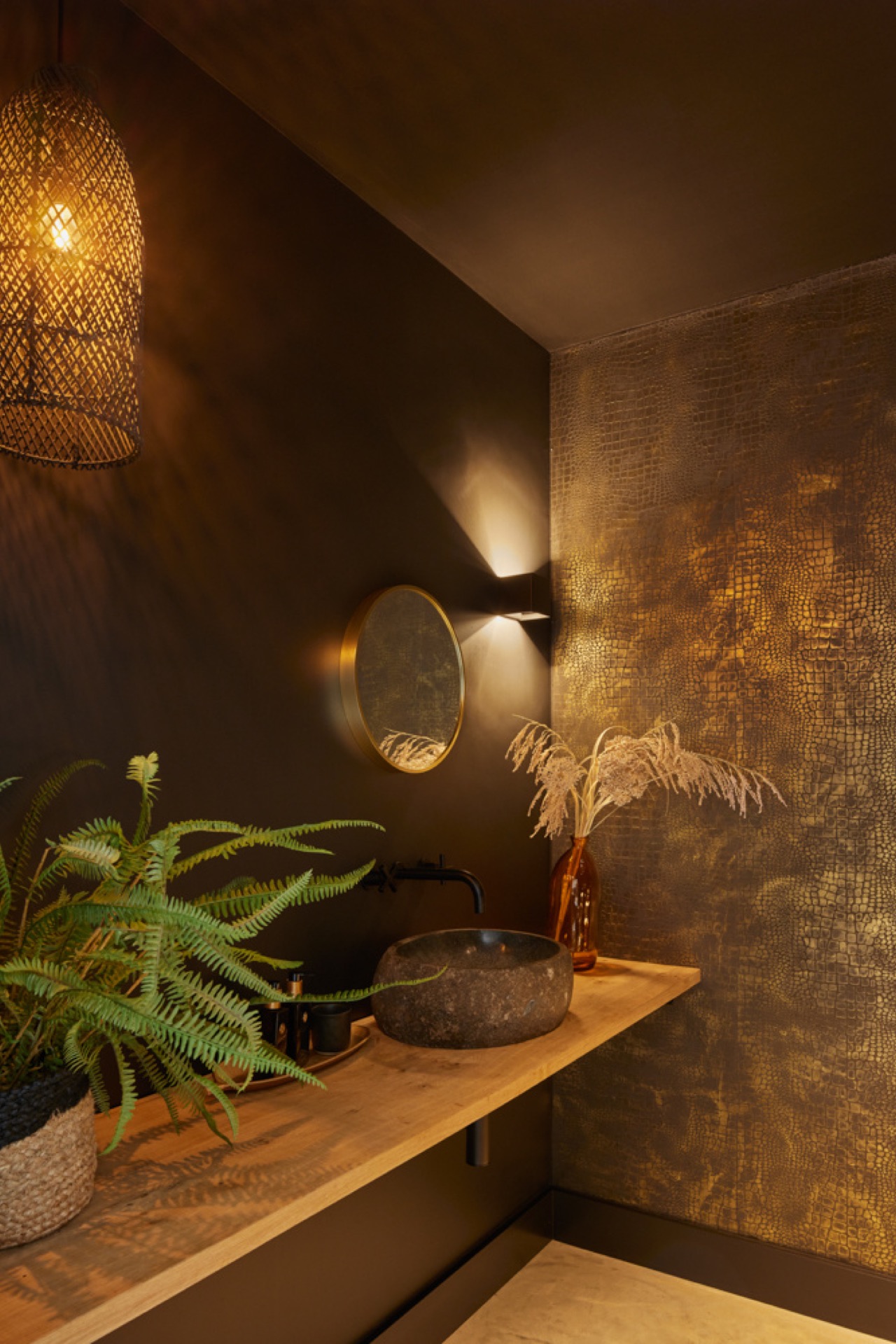
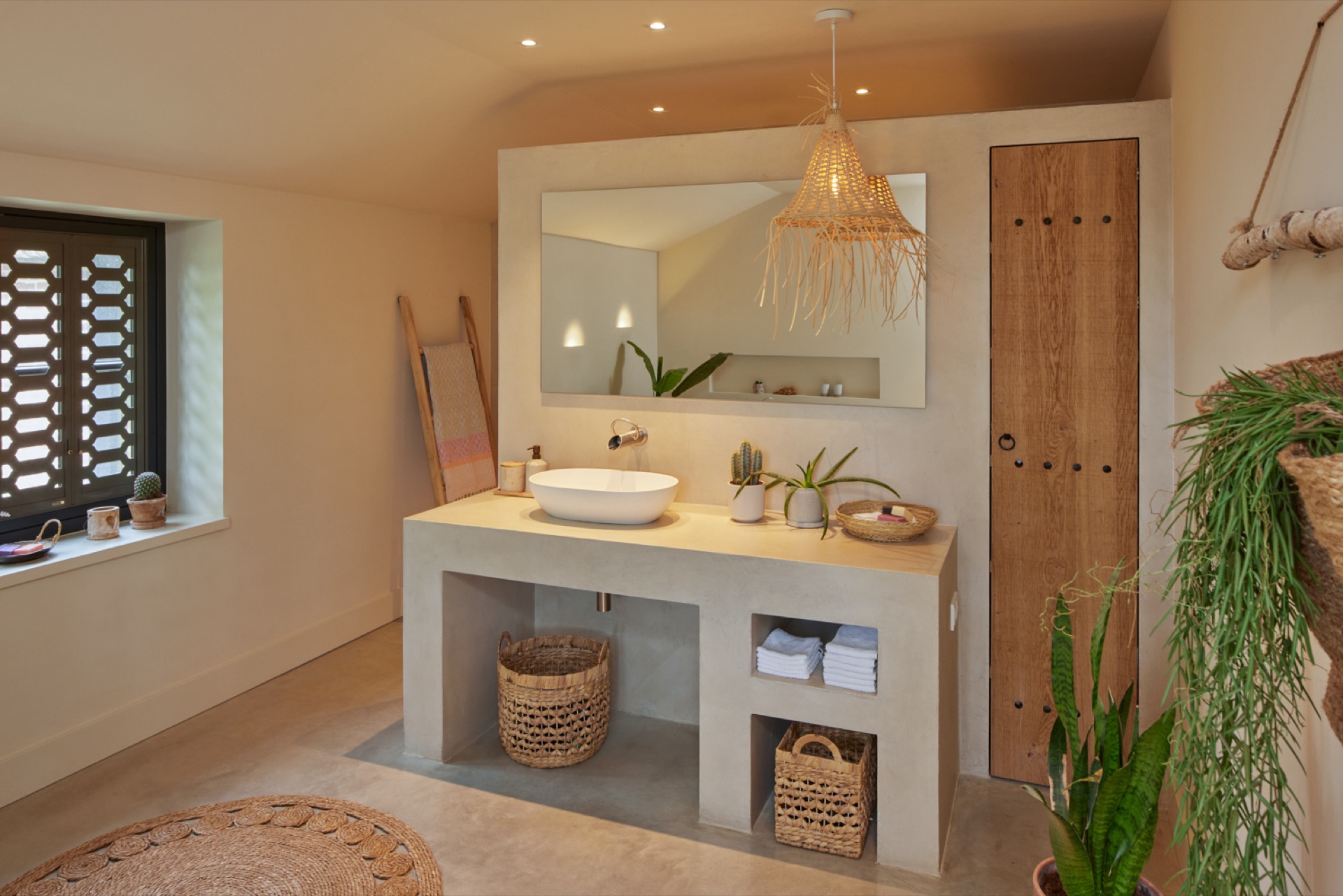
A second bathroom detail shows the same approach through a vanity with a stone-like finish, a round basin, and a warm hanging light above. Here too, the light is not used to flood the whole room. It sits where the eye needs it, on the basin, the niche, and the surface below. That choice keeps the bathroom connected to the rest of the house: quiet materials, clear lines, and lighting that respects the form of the room.
What holds this project together is the way daylight and artificial light share the same task. One reveals the height of the open roof structure interior; the other draws attention to the beams, the brick, and the smaller recesses around the house. Together they make the Mediterranean-inspired interior with natural light and exposed wooden beams read as a place built from structure first, with material and light layered on top. The result is readable from the first view in the hall to the smaller details in the kitchen and bathroom.
Wil je meer zien van INlicht? Bekijk de pagina van INlicht voor meer projecten en bedrijfsinformatie.


.png)
NEW 2026 Jubileum Edition The Best Interior Designers Benelux
Nu Bestellen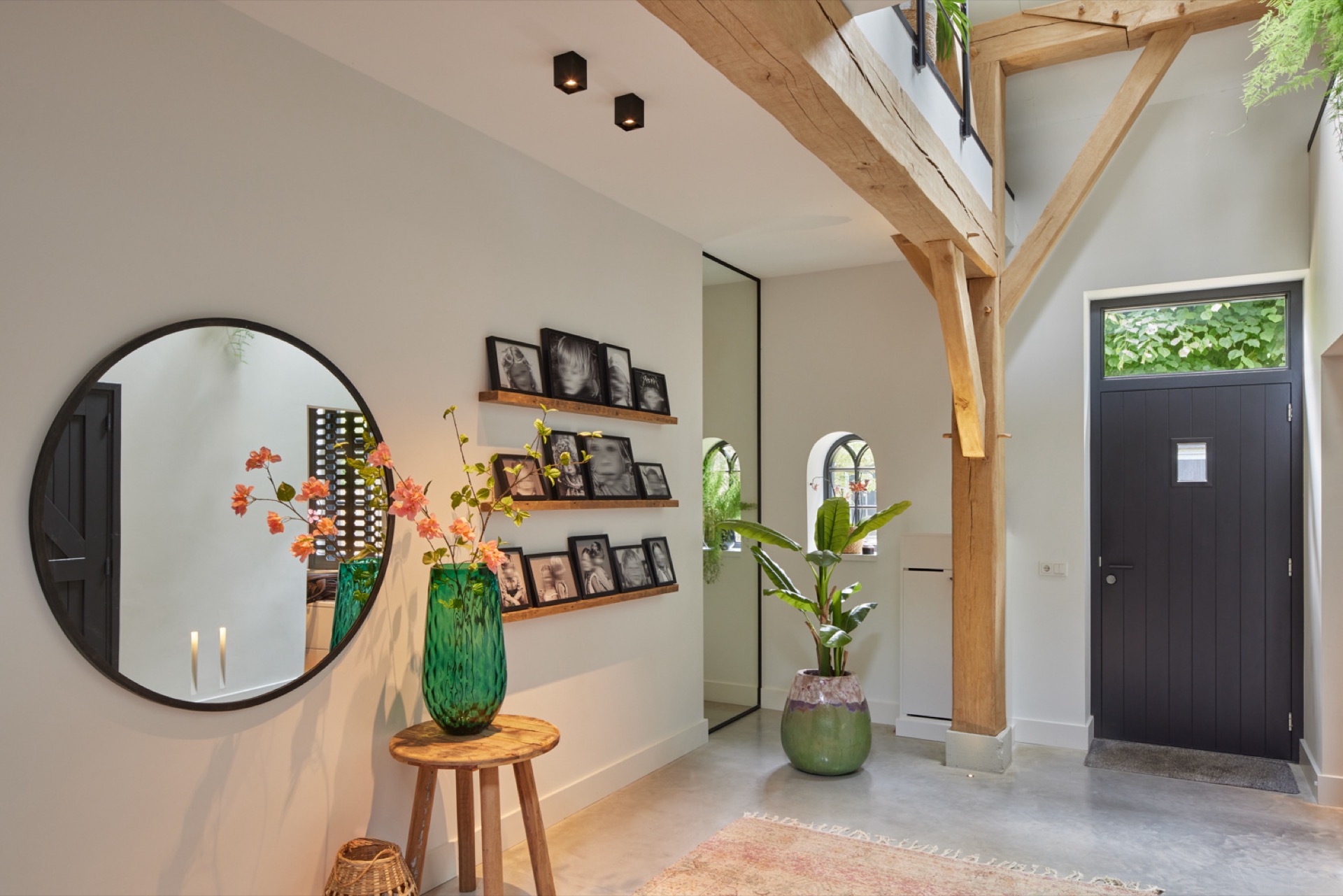
NEW 2026 Jubileum Edition The Best Interior Designers Benelux
Nu Bestellen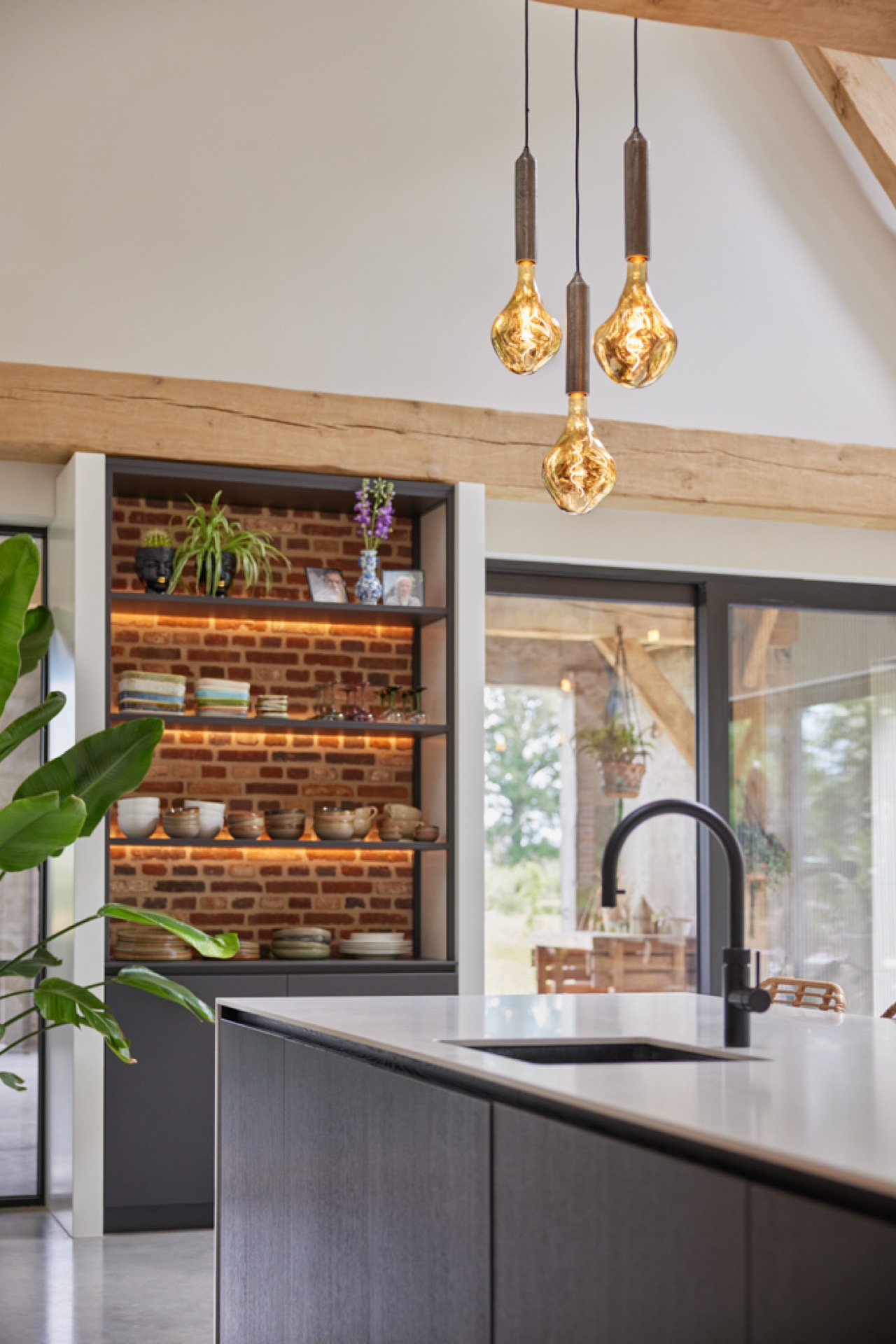
NEW 2026 Jubileum Edition The Best Interior Designers Benelux
Nu Bestellen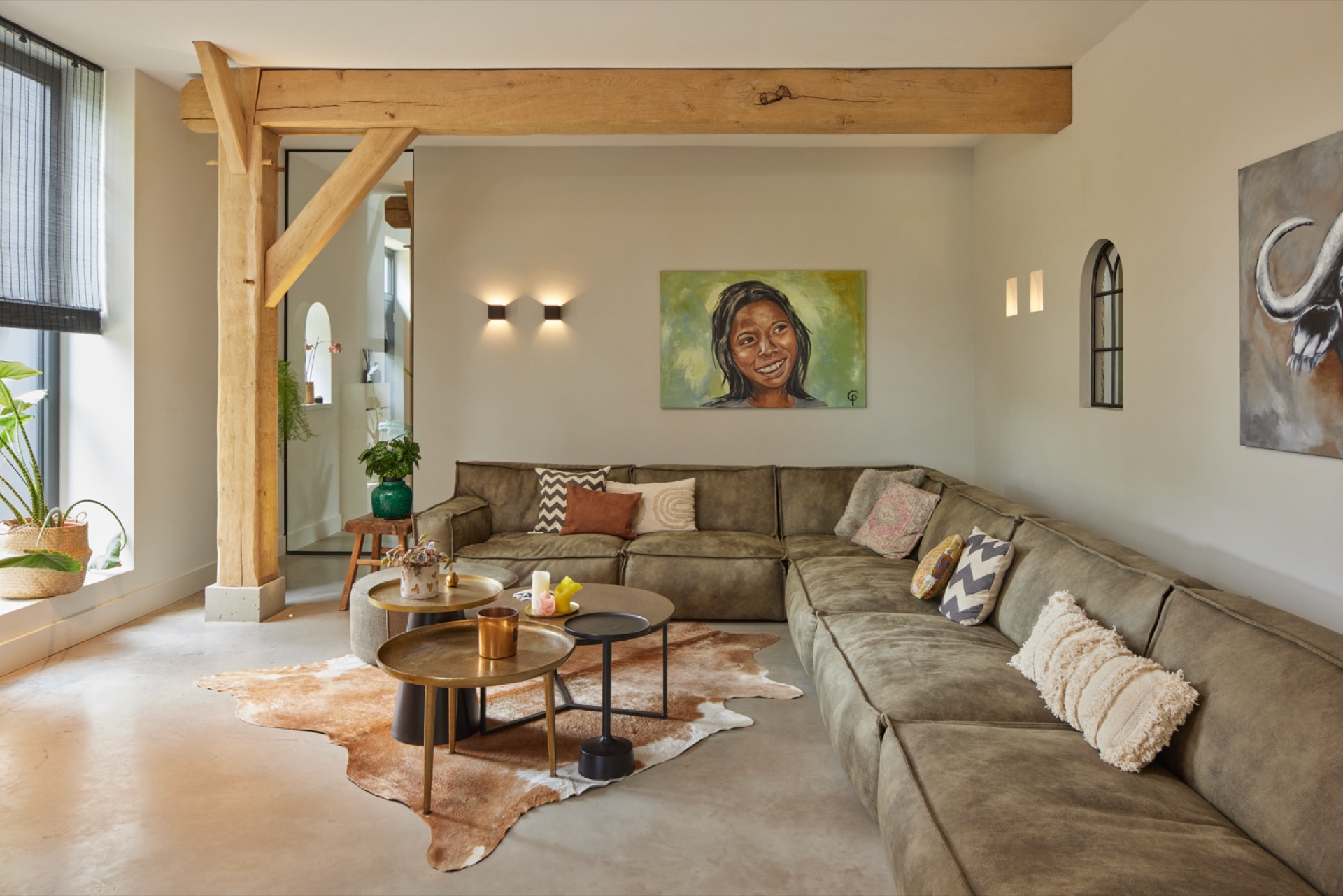
NEW 2026 Jubileum Edition The Best Interior Designers Benelux
Nu Bestellen