






Modern villa with bright open living spaces and luxurious natural-stone and wood finishes
The first impression comes from the light. Large panes, white walls and a deep entrance overhang pull daylight into the house before the interior details take over. The result is a modern villa with plenty of natural light and luxurious interior finishes that reads as calm and precise rather than showy. Every zone shown in the project keeps that same clear line: glass at the threshold, stone-look surfaces underfoot, and wood used where the eye needs a warmer edge.
Modern villa with plenty of natural light and luxurious interior finishes as a spatial starting point
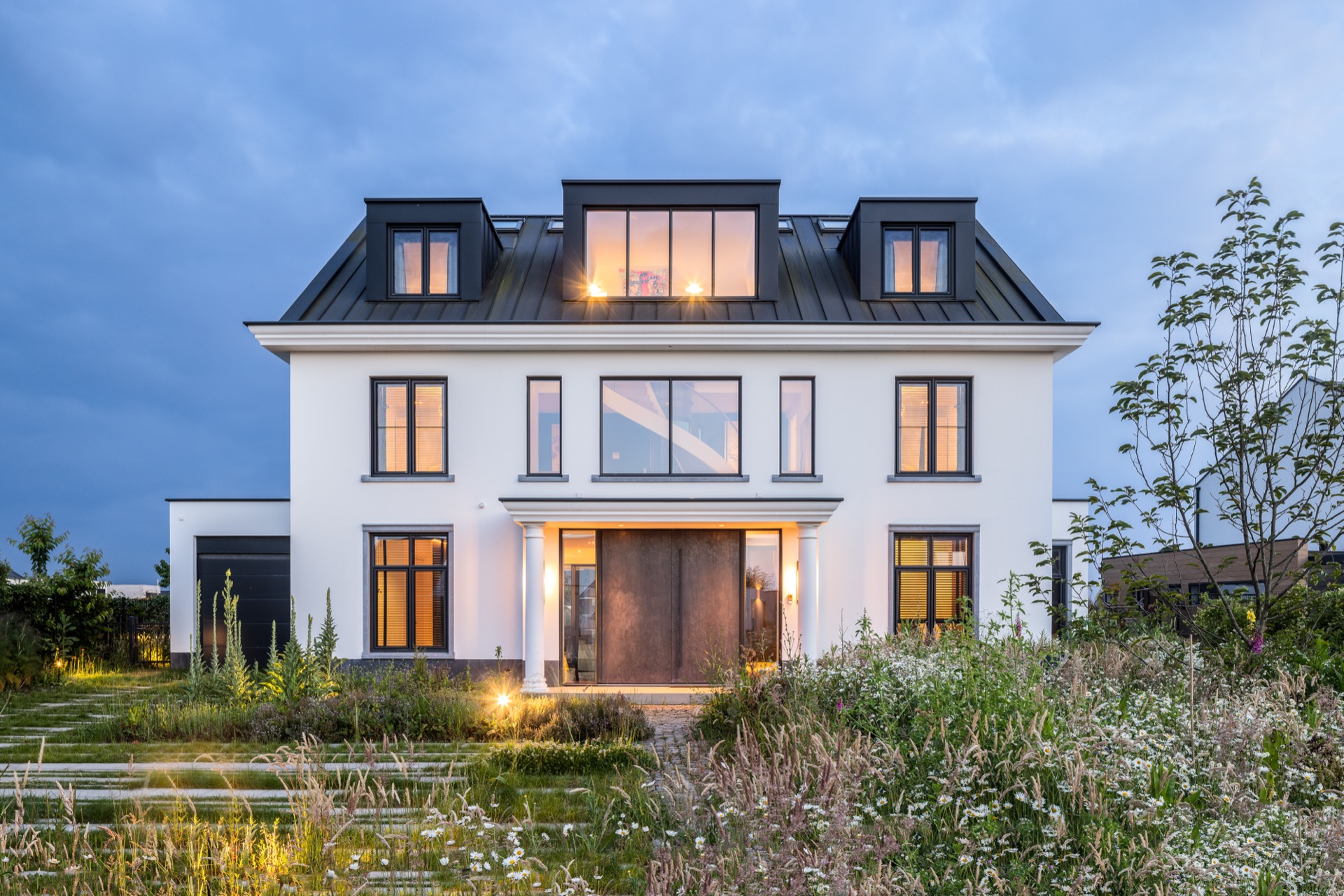
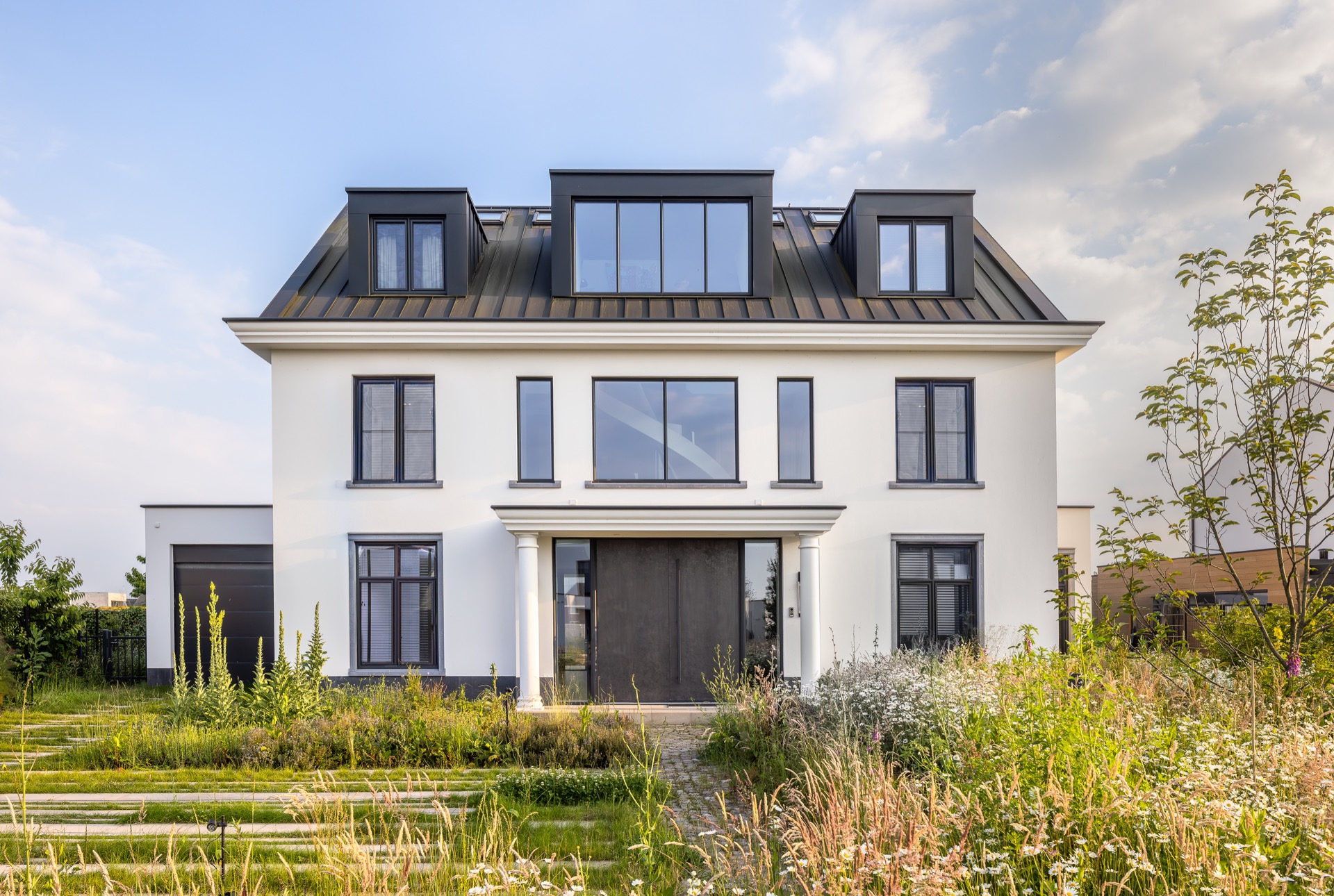
The entry sequence starts outside, where the white volume is cut by dark window frames and broad glass openings. A sheltered porch marks the front door, and the overhang gives the facade a sharper profile. Along the path, garden lighting picks out the route at ground level, so the approach feels measured even before the doors open. In the context of a modern villa large windows become more than an architectural gesture; they frame the transition from exterior to interior and make the entrance read as part of the living space, not a separate zone.
Inside the porch, double glass doors sit between column-like supports, with a floor in marble-look tiles stretching straight ahead. The reflection on that surface pulls the light deeper into the hall. It is a restrained move, but an effective one. The opening is generous without becoming dramatic for its own sake, and the materials do the work: glass for transparency, a pale stone-look floor for continuity, and dark base details that keep the composition grounded.
Small shifts in material, big changes in perception
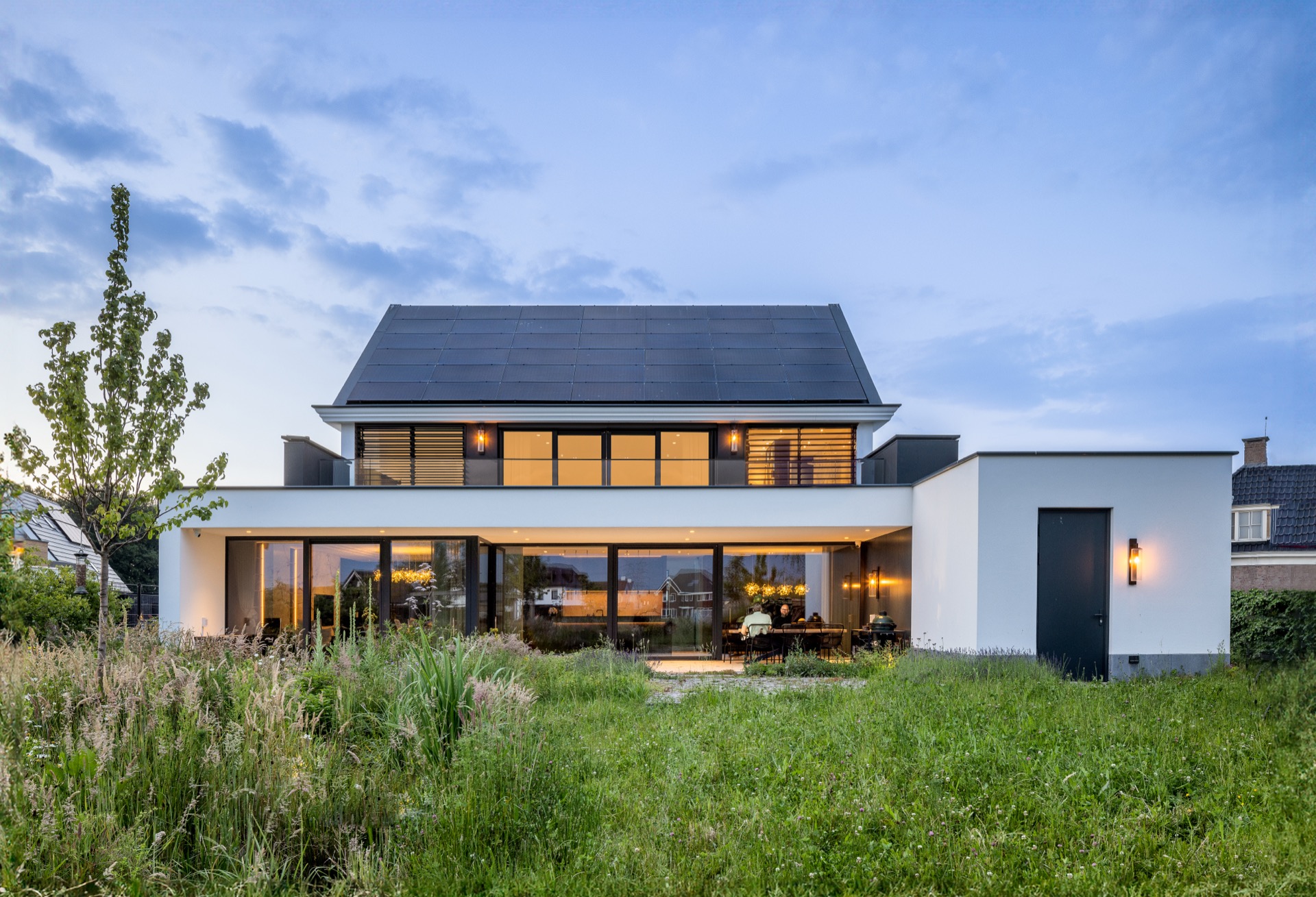
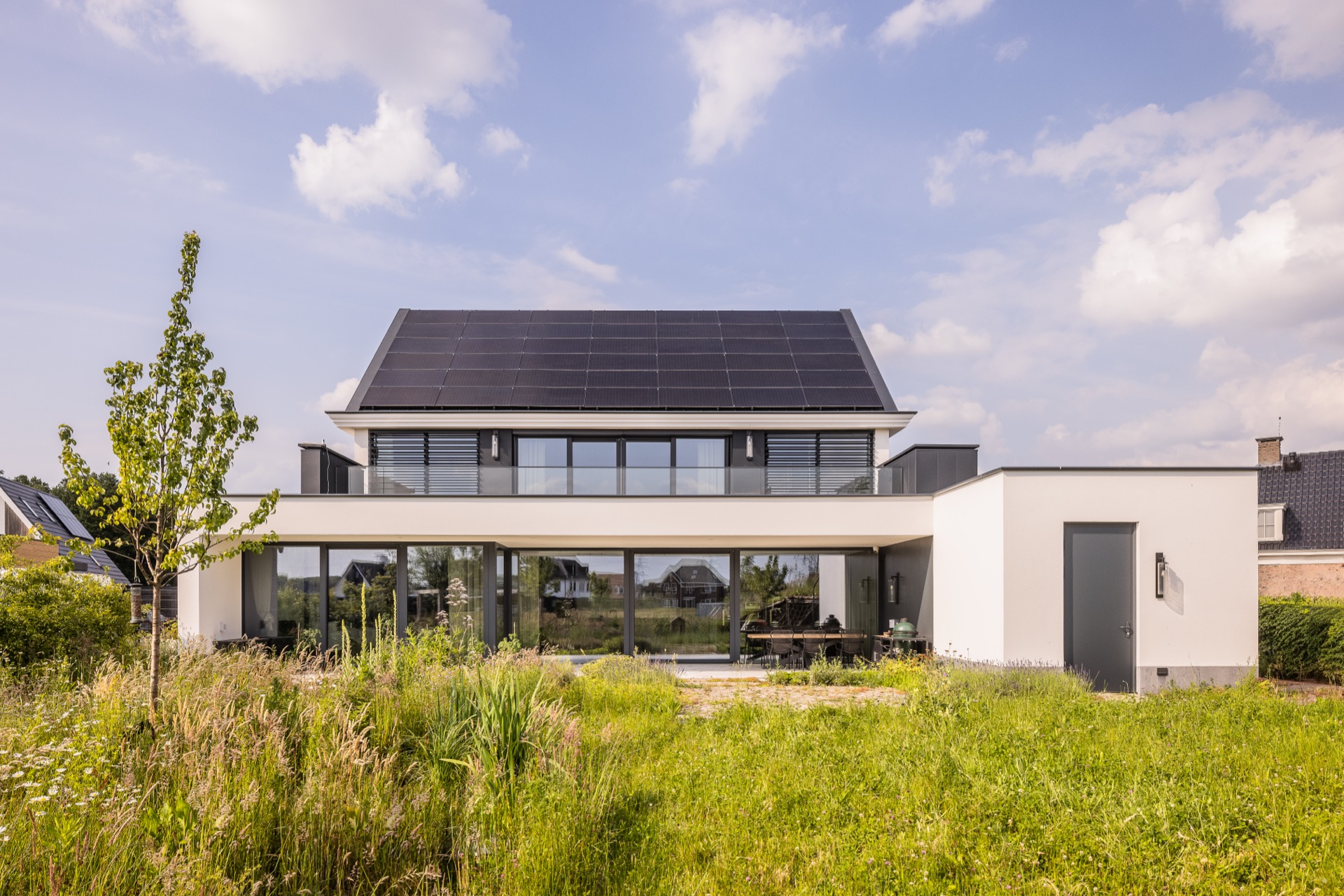
The front elevation keeps the same discipline. Narrow window divisions break up the white surface, while the darker roof plane and visible solar panels draw the eye upward. On the rear or side view, the glazing expands into wide openings that almost dissolve the wall line. That contrast matters. It shows how the house can look controlled from one angle and open from another, with the sun reaching farther into the plan through those broad glass sections. In that sense, the exterior already explains the interior: light is not an accent here, it is part of the layout.
The living room uses stone-look surfaces to anchor the room
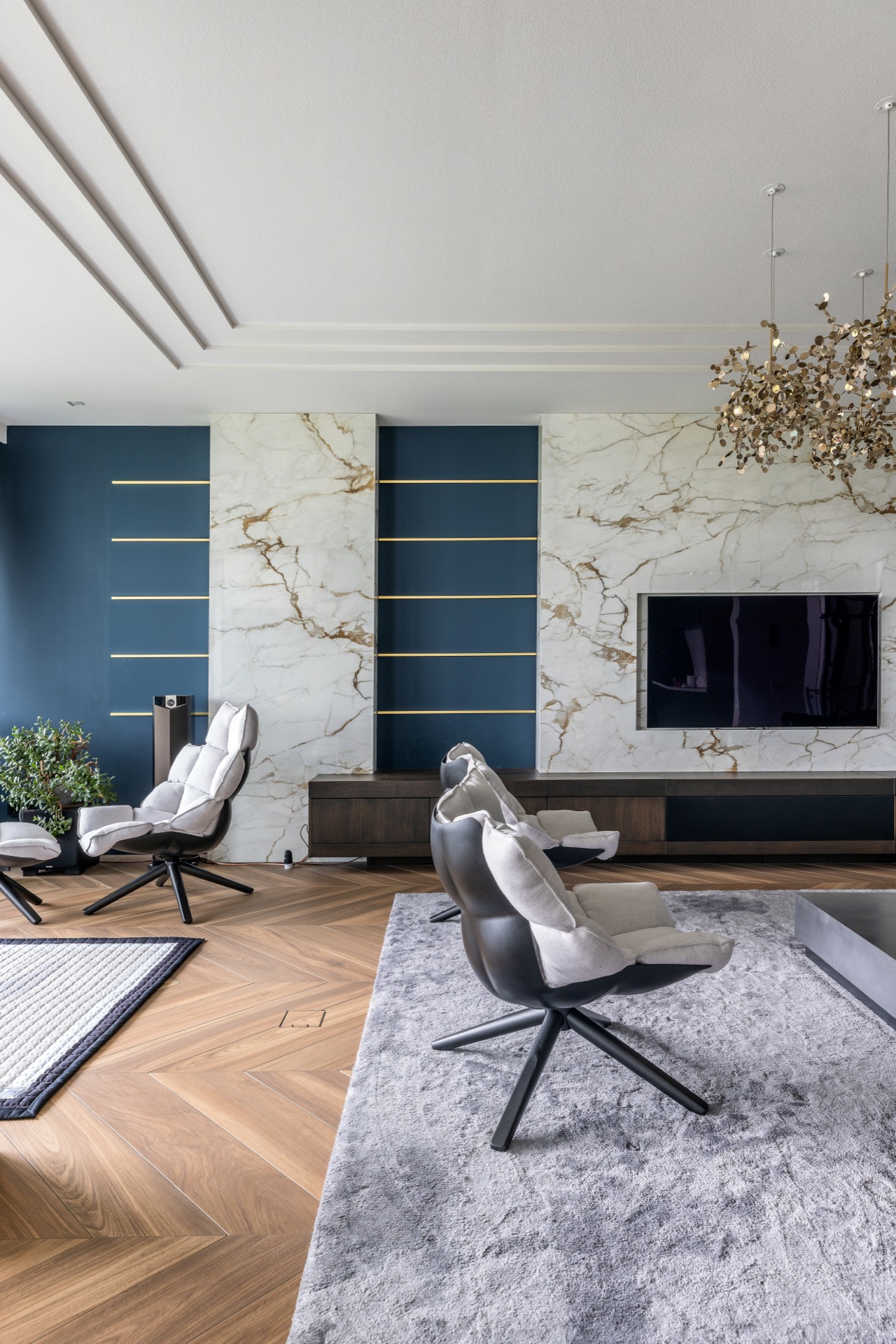
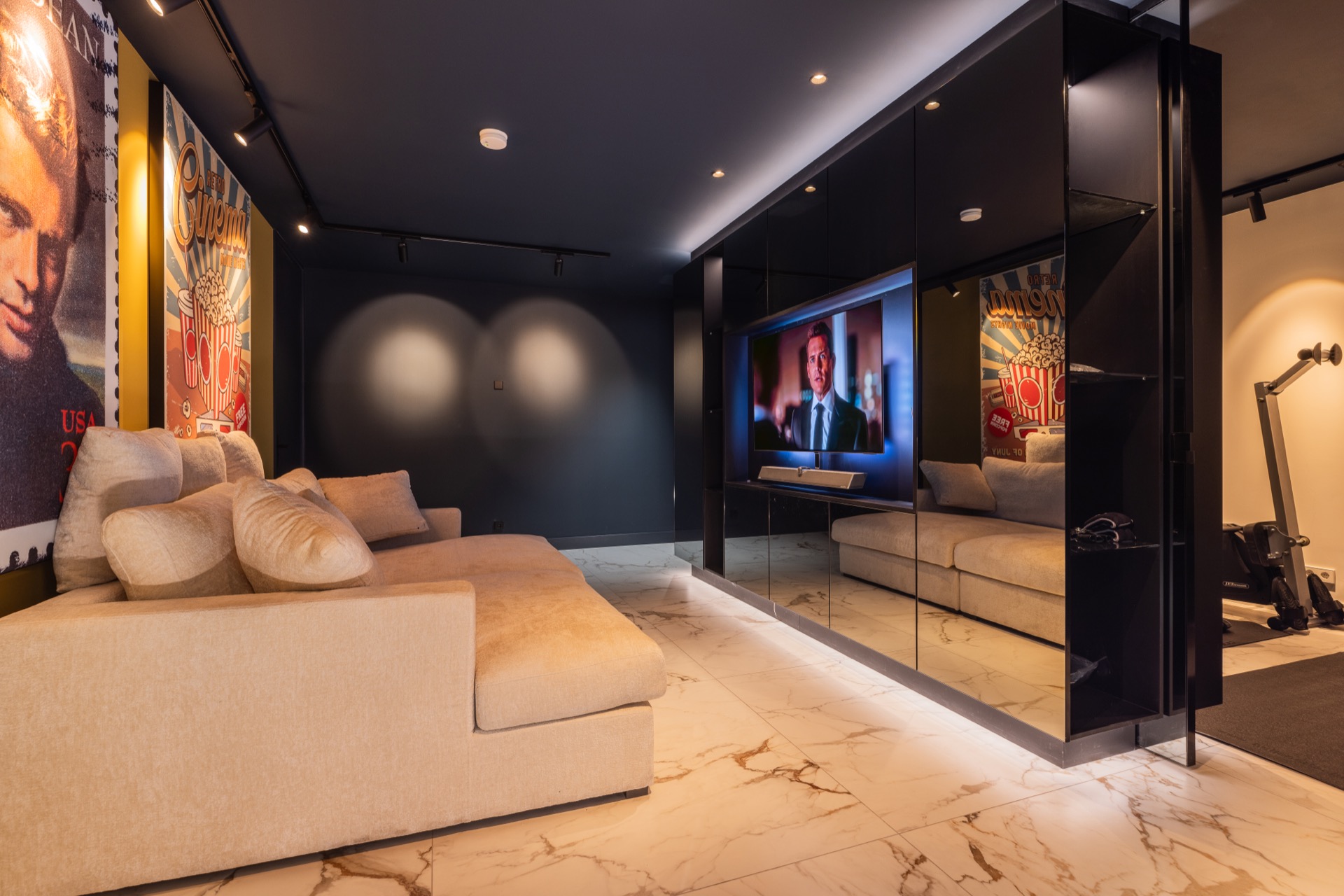
In the living room, the eye goes straight to the TV wall. A marble-look surface wraps the screen area and is broken by dark insets, blue wall panels and thin linear accents. Those details keep the wall from becoming flat. They create depth, especially when the light falls across the edges and the recessed niches. The room gains its center of gravity from that composition, while the surrounding finishes stay quieter. This is where the living room marble-look TV wall becomes the room’s main architectural element instead of a decorative add-on.
The contrast between stone-look planes and softer wood flooring helps the living area feel settled without slipping into visual noise. Gold-toned line details appear in close-up, but they are used sparingly, almost as drawn lines across the wall rather than ornament. That restraint keeps the room focused on proportion and surface. The built-in niche work also matters: it breaks the mass of the wall and gives the room a layered reading, with each recessed section catching a different amount of light.
A kitchen where the island carries the room
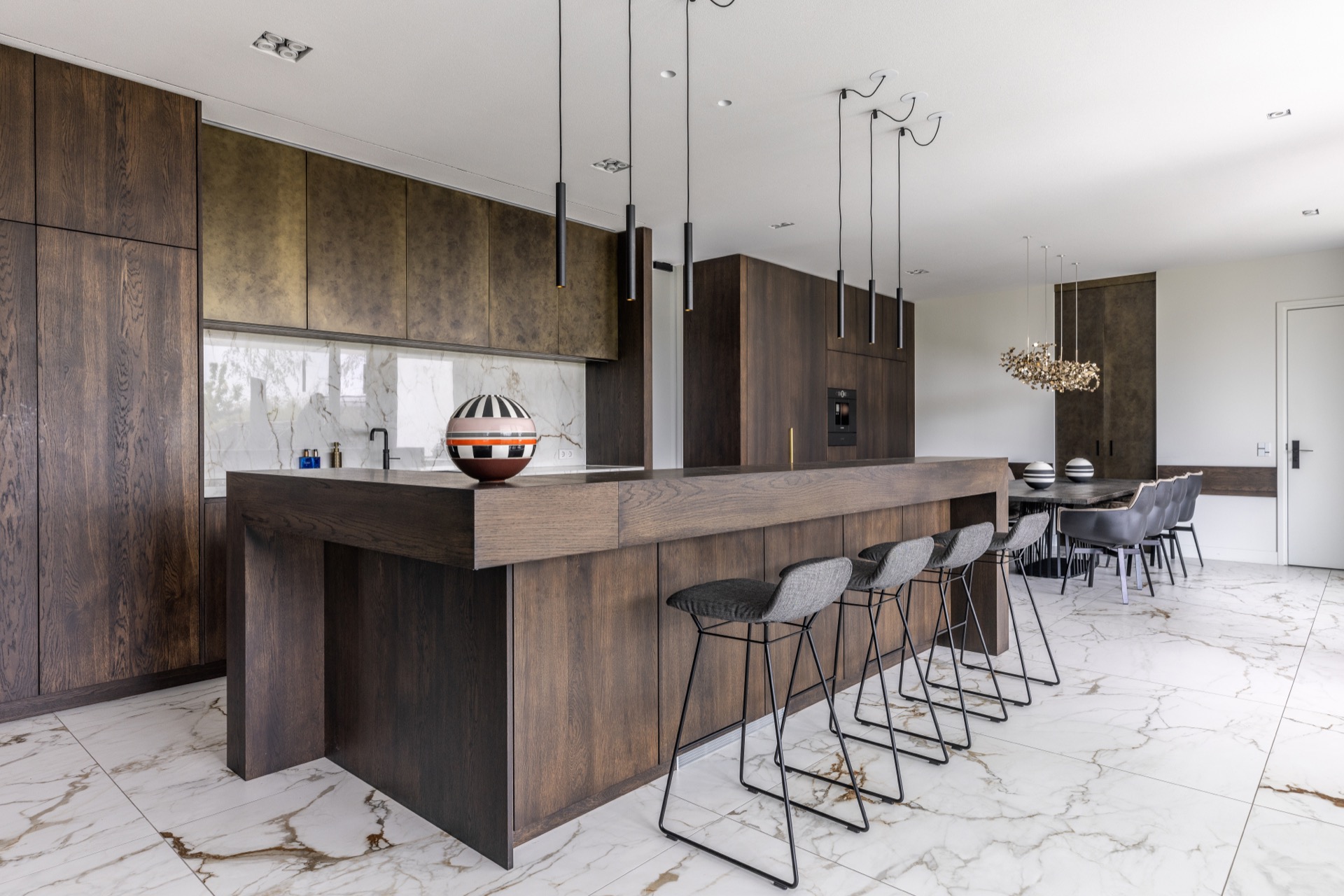
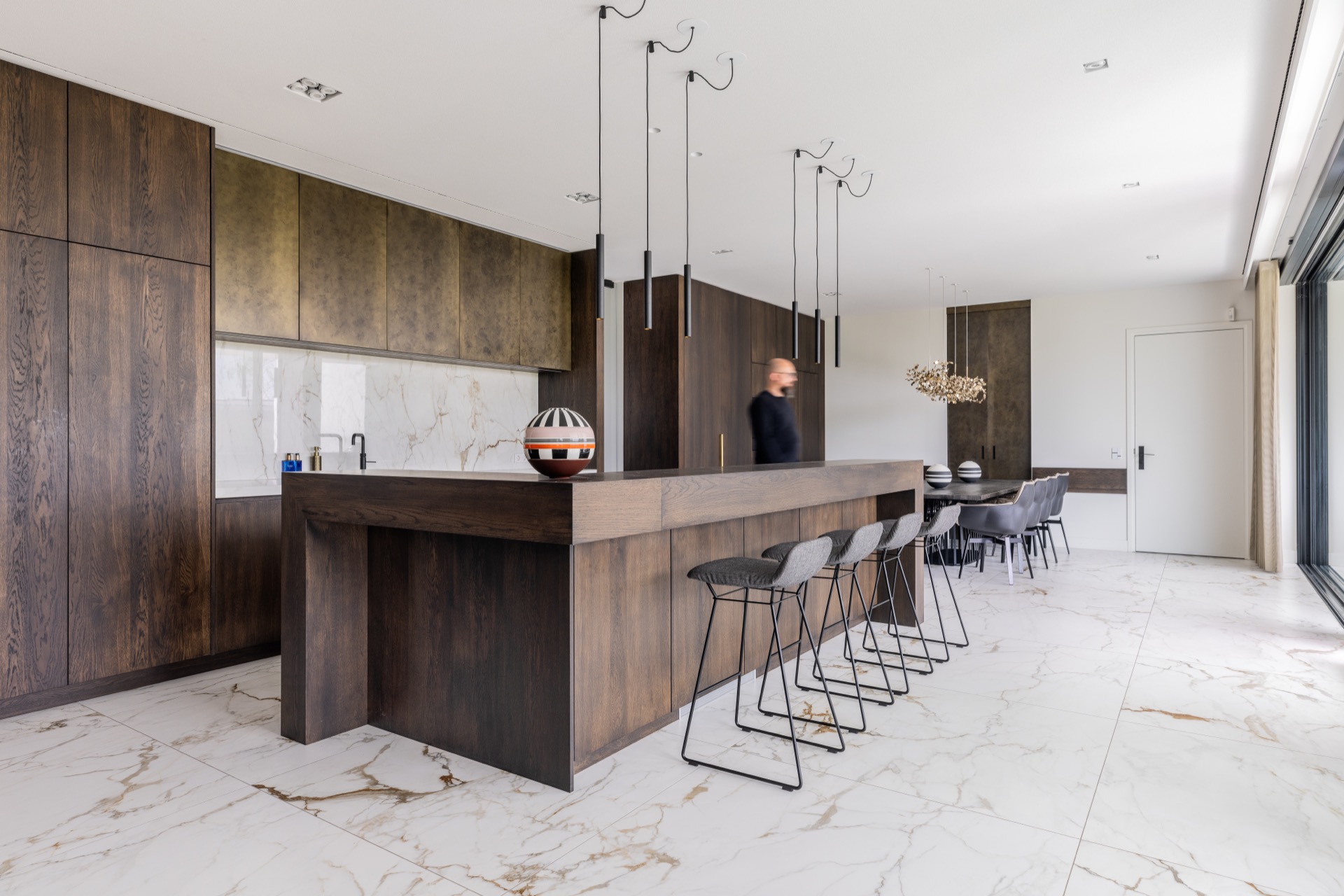
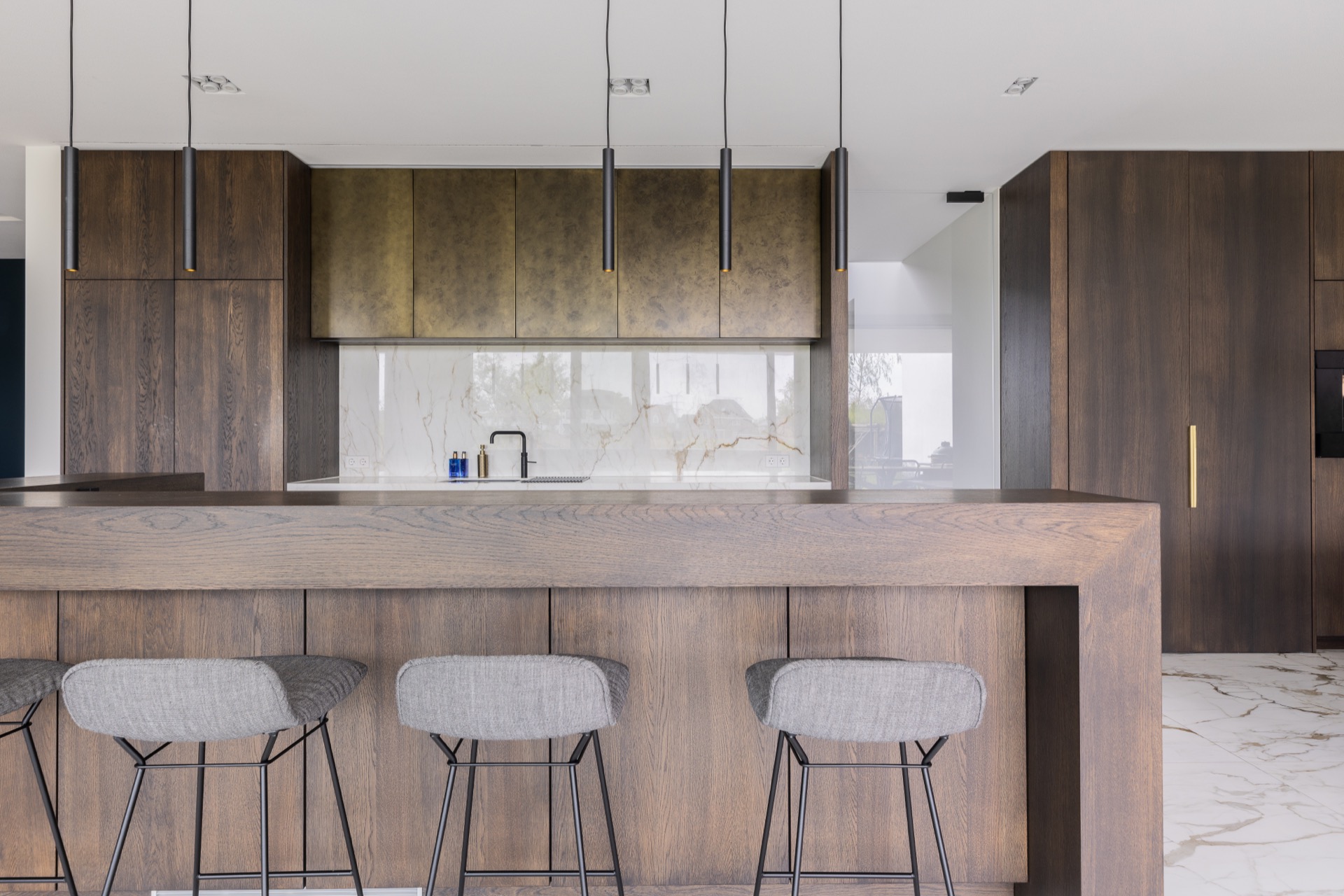
The kitchen is arranged around an island with a marble-look countertop and wood-fronted panels. It is the kind of element that immediately organizes the room. Light-colored floor tiles extend beneath it, so the island stands out as a clear horizontal block rather than blending into the background. Above, slim pendant lights draw a line through the space and echo the straight edges of the cabinetry. The balance between stone-look and timber is direct and legible, which is why the marble-look kitchen island feels so central to the room.
Wall treatment adds another layer. Wood paneling runs beside a marbled backsplash area, and a continuous strip of integrated light traces the work surface. The effect is more architectural than decorative. You can see how the kitchen was composed in bands: floor, cabinet, backsplash, light. In one image, the open layout makes that layering especially clear, with the island serving as a bridge between the cooking zone and the rest of the house. Nothing is overdrawn, yet the room still holds detail in every plane. Modern villa with plenty of natural light and luxurious interior finishes remains connected to the layout, materials and daily use of the home.
Dark edges, light surfaces, clear geometry
What keeps the kitchen from feeling heavy is the way the darker elements stay thin. The wood panels are rich in tone but flat in profile, and the marbled surfaces are used in controlled areas rather than across every wall. That makes the room read as open, even with a strong material palette. The composition also aligns well with the rest of the house: glass at the entrance, stone-look underfoot, wood in the cabinet fronts, and precise lines everywhere else. It is a consistent language, but each room speaks it differently.
The stair hall uses glass to keep the volume open
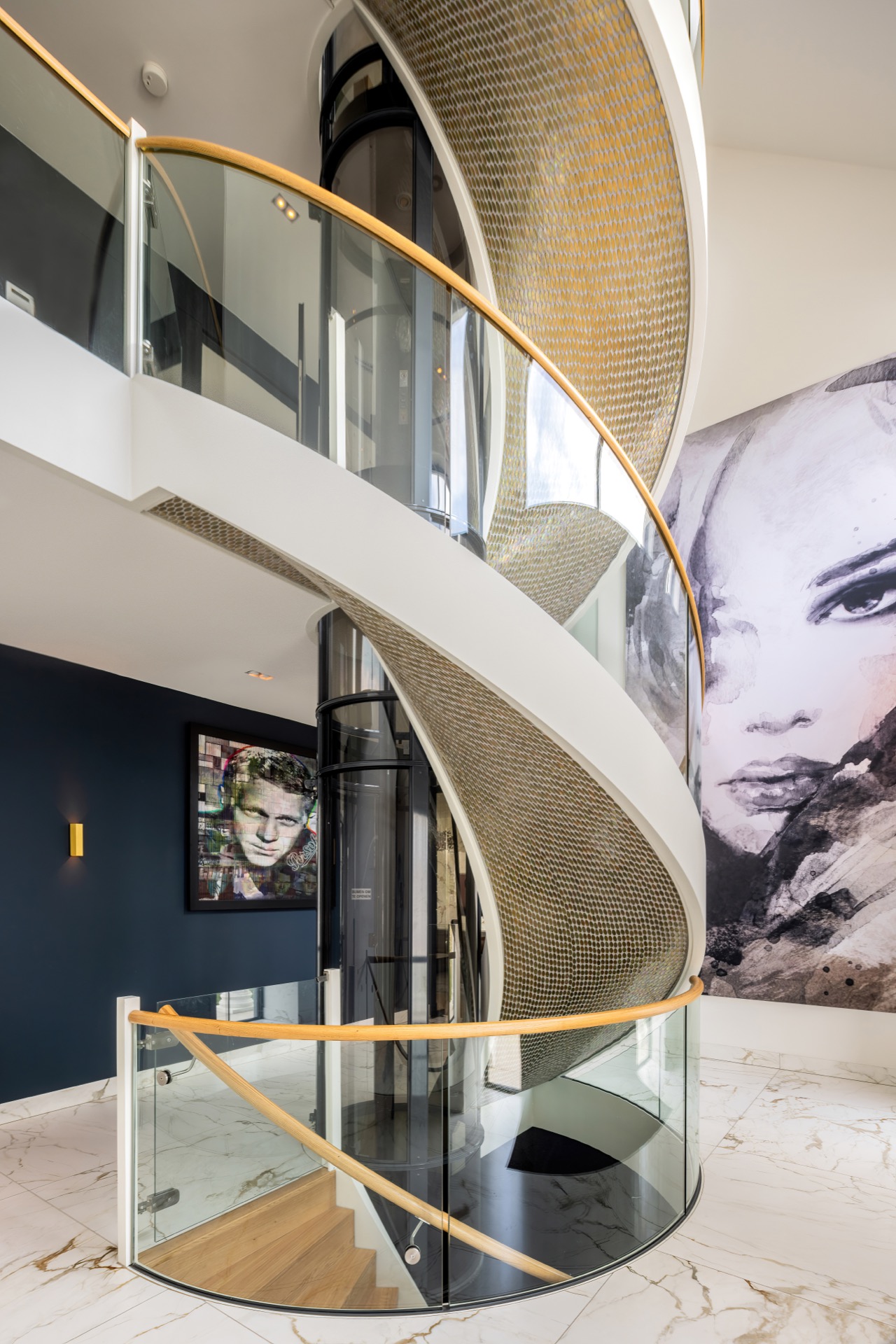
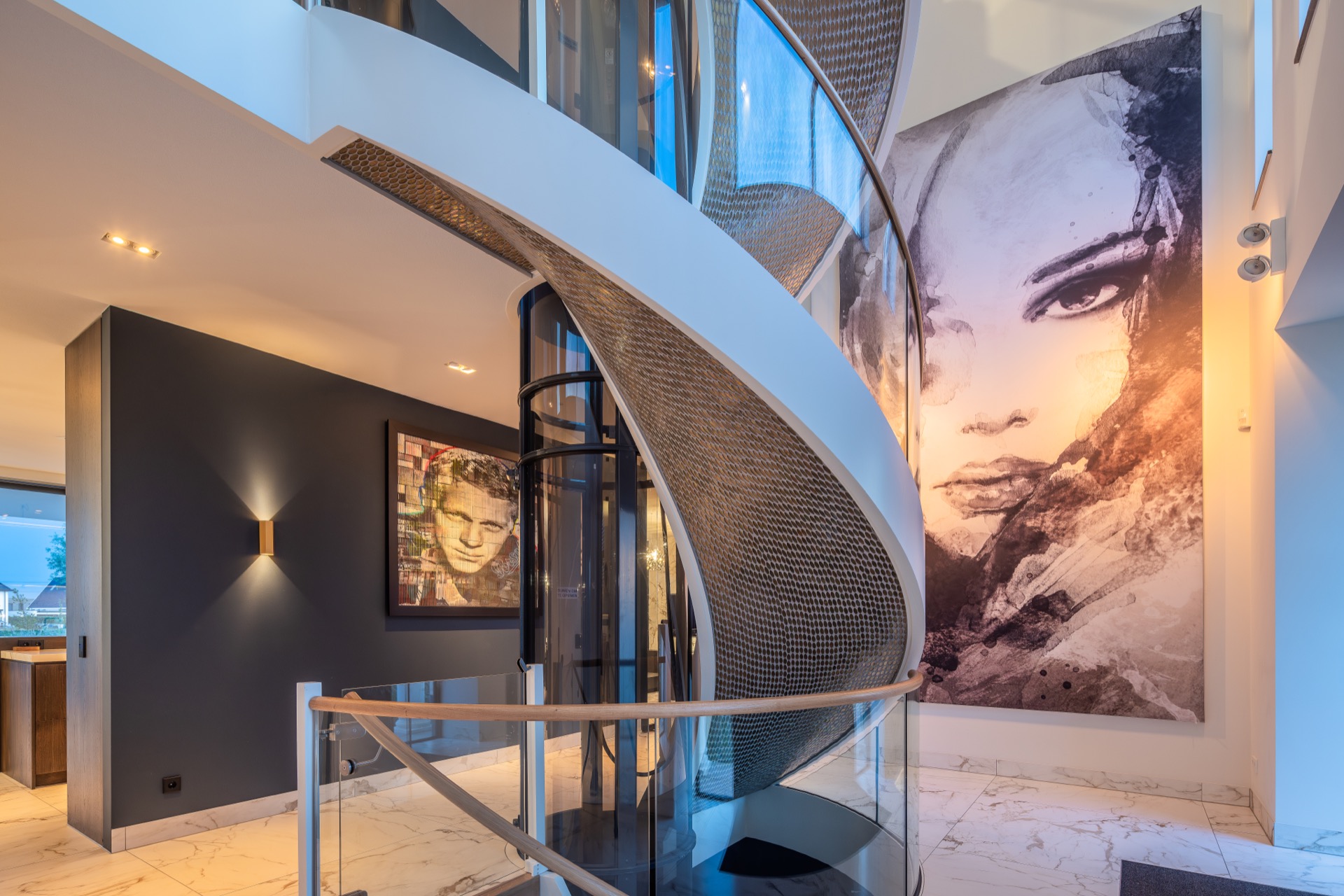
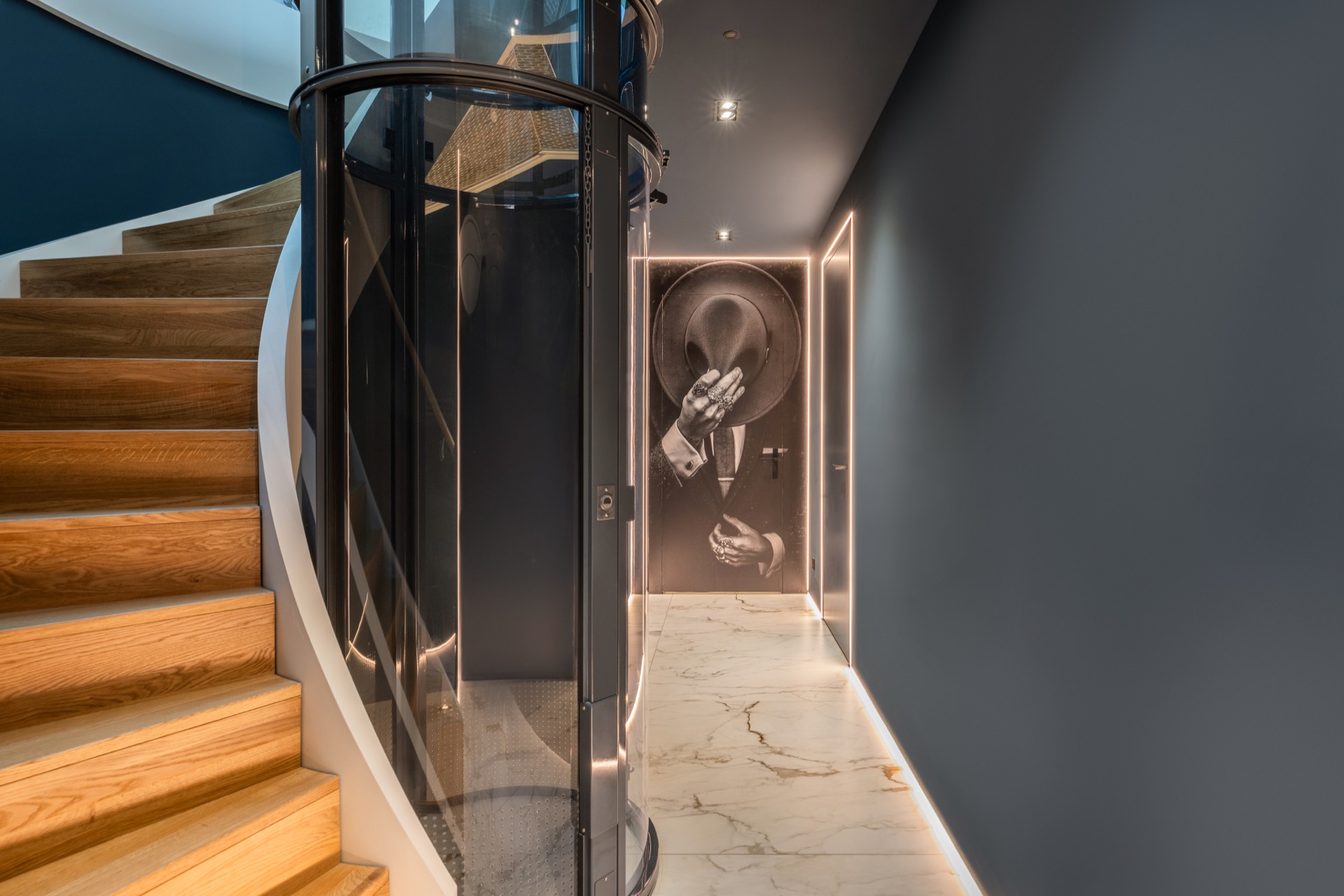
Between the main rooms, the stair and hall area introduces a lighter structural note. A glass balustrade runs along the edge, allowing the view to continue across the level changes instead of stopping at a solid wall. Curved glass elements add a softer line to the otherwise crisp geometry, and the marbled floor tiles keep the space visually linked to the entrance. This is where the staircase glass balustrade becomes more than a safety detail; it preserves sightlines through the hall and makes the vertical movement feel open.
Subtle lighting follows the edges of the ceiling and lower walls, catching the curve of the glazing and the polished look of the floor. A framed artwork or wall graphic appears in one view, but the setting around it stays disciplined enough that it does not compete with the architecture. The stair treads and adjacent surfaces are shown in a mix of wood and stone-look finishes, which keeps the transition between levels grounded. The volume feels tall, but not empty. Glass does that work here, with the light helping define each turn of the route.
The bathroom keeps the palette quiet and reflective
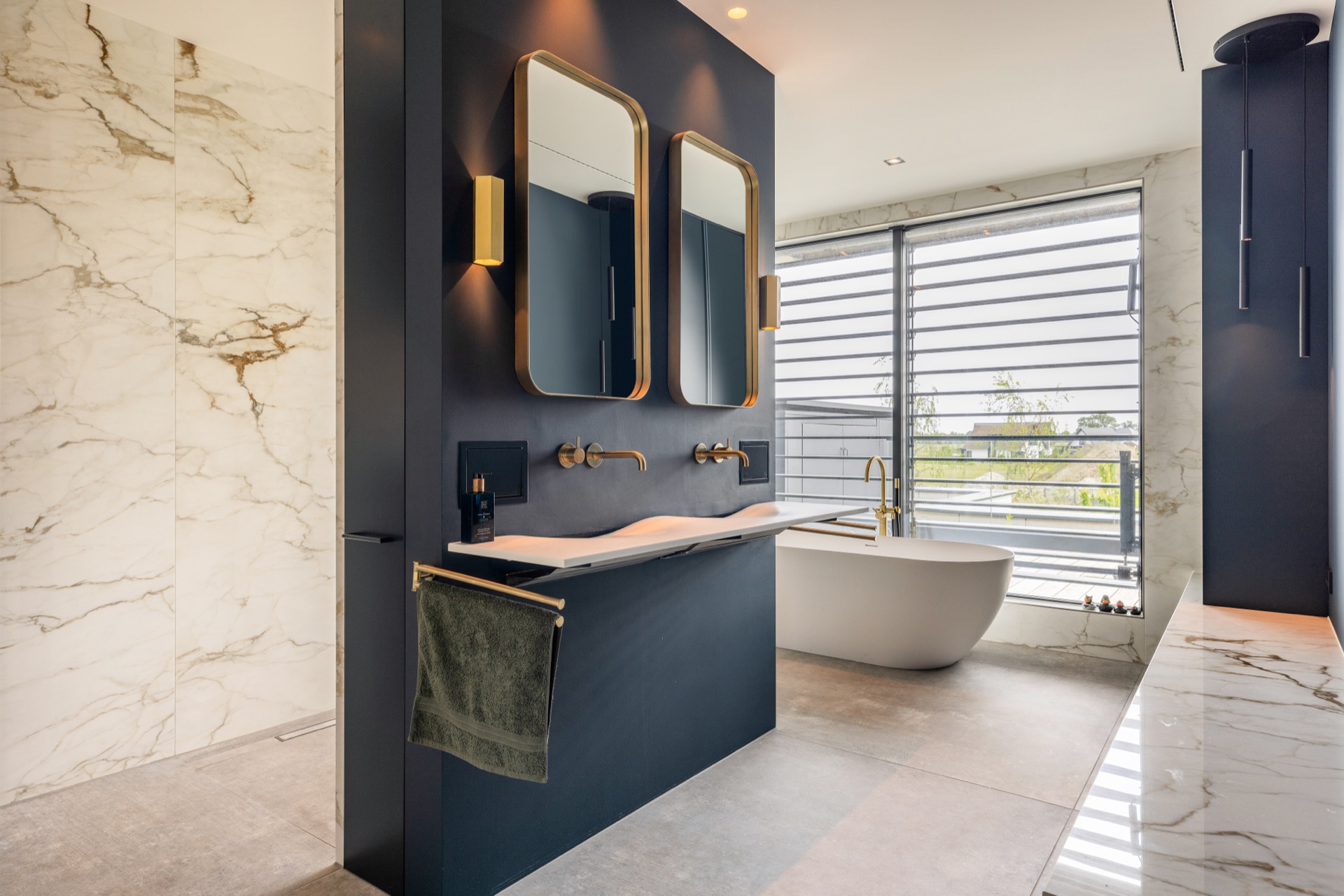
The bathroom shifts to a more compact arrangement, but the same material logic remains visible. A double vanity sits against a wall finished in marble-look tiles, and the basin area is framed by a large mirror and a clean counter line. The surfaces reflect daylight from the window zone, which helps the room feel brighter without adding visual clutter. In a space like this, the bathroom double vanity does not need elaborate detailing. The strength comes from the broad surfaces, the symmetry of the basins, and the way the stone-look wall wraps the room.
A freestanding bathtub appears near the window, set so the outside light lands across its edge. That placement gives the room a slower rhythm than the kitchen or living room, but the material vocabulary stays linked to the rest of the house. Pale stone-look tiles, glass, and restrained metal fixtures keep the focus on the surfaces themselves. Even the ceiling light is unobtrusive. It leaves the vanity and the wall finish to carry the composition, which suits a project where detail is expressed through proportion rather than decoration.
Solar panels complete the roofline without breaking it
The roof view shows another practical layer of the design: solar panels sit on the dark plane without interrupting the clean silhouette. From the ground, they are only one part of the wider composition of white walls, dark frames and large glazing. Seen together, these elements give the villa a controlled profile, especially where the roof overhang and the upper windows meet. The house reads as carefully edited, but not overworked. The surfaces are direct, the openings are generous, and the roof continues that same straightforward logic.
That consistency is what ties the project together. The entrance uses glass and shelter to create a strong first pause. The living room centers itself around a marble-look TV wall. The kitchen uses a stone-look island and wood paneling to define the room. The stair hall keeps the volume open with a glass balustrade, and the bathroom repeats the quiet stone-and-glass combination in a more intimate setting. Across all of it, the idea of a modern villa with plenty of natural light and luxurious interior finishes is carried by visible choices, not by broad statements.
For viewers looking through a portfolio of contemporary houses, this project offers a clear reading of how large windows, reflective stone-look surfaces and restrained timber accents can shape the atmosphere of a home. The rooms are not overloaded, and nothing relies on a single dramatic gesture. Instead, the project builds its identity through repeated material cues: glass at the threshold, marble-look finishes where light can catch them, and wood where the eye needs relief. That is what stays with you after the last image. Modern villa with plenty of natural light and luxurious interior finishes remains connected to the layout, materials and daily use of the home.
Wil je meer zien van BAAS architecten? Bekijk de pagina van BAAS architecten voor meer projecten en bedrijfsinformatie.


.png)
NEW 2026 Jubileum Edition The Best Interior Designers Benelux
Nu Bestellen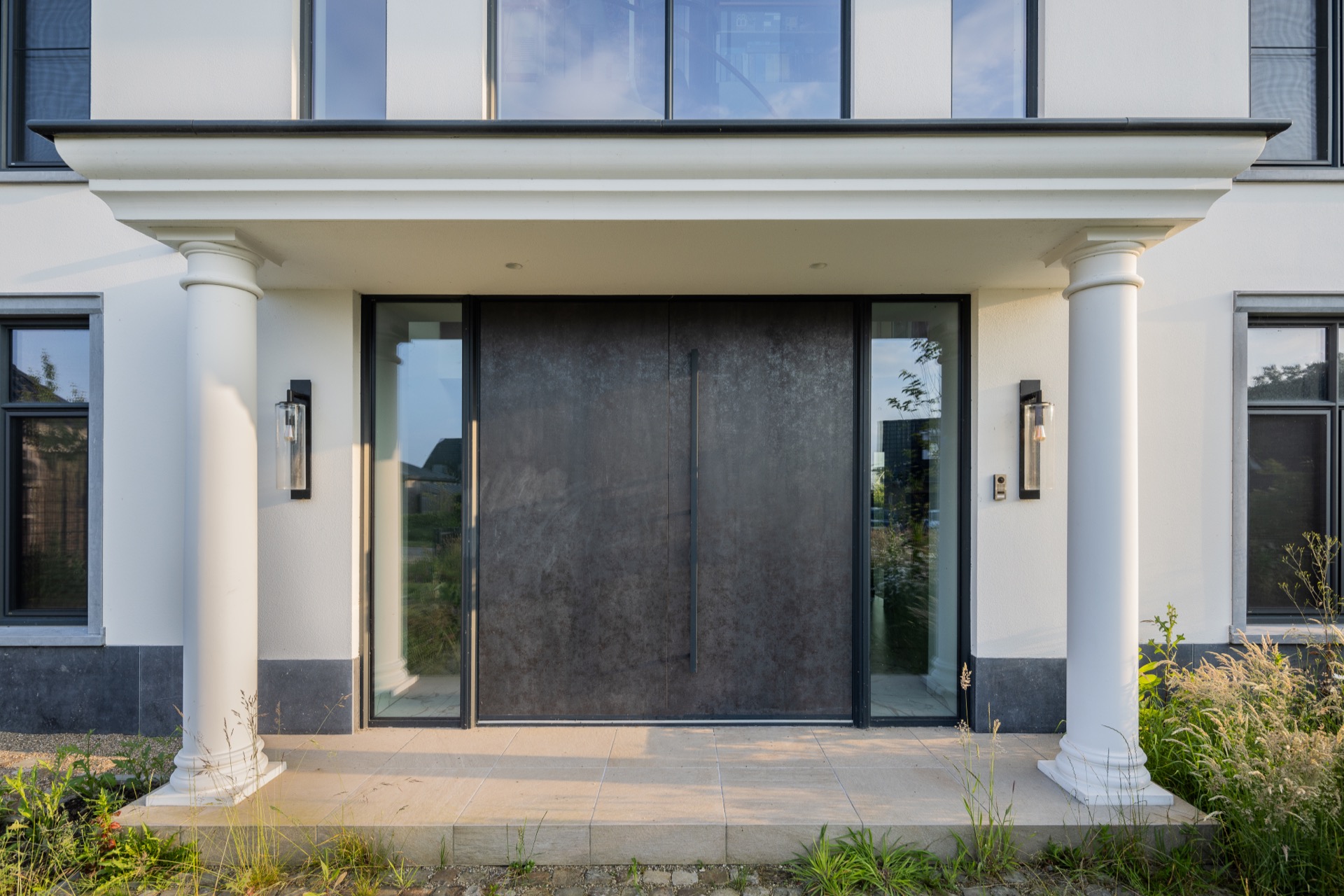
NEW 2026 Jubileum Edition The Best Interior Designers Benelux
Nu Bestellen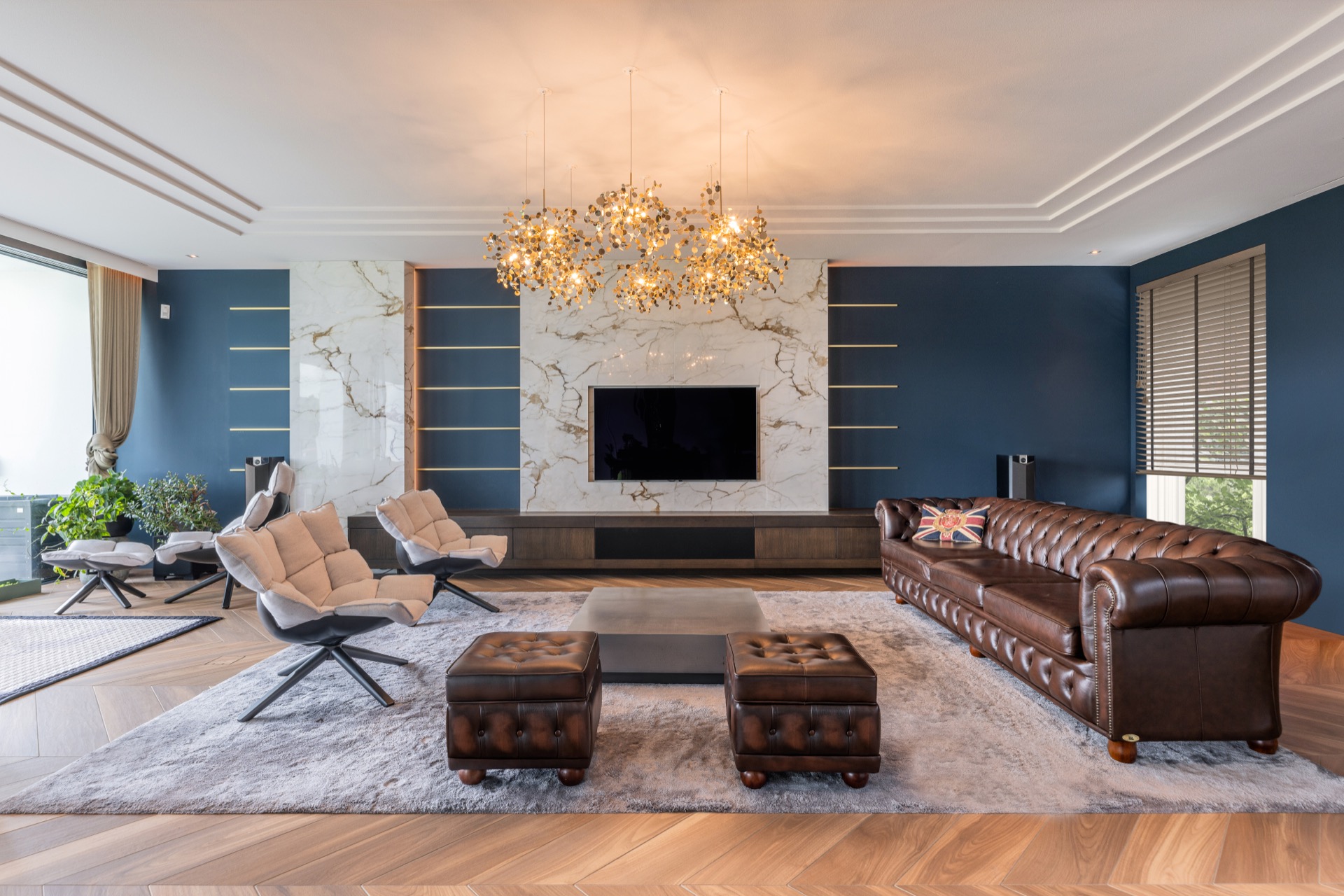
NEW 2026 Jubileum Edition The Best Interior Designers Benelux
Nu Bestellen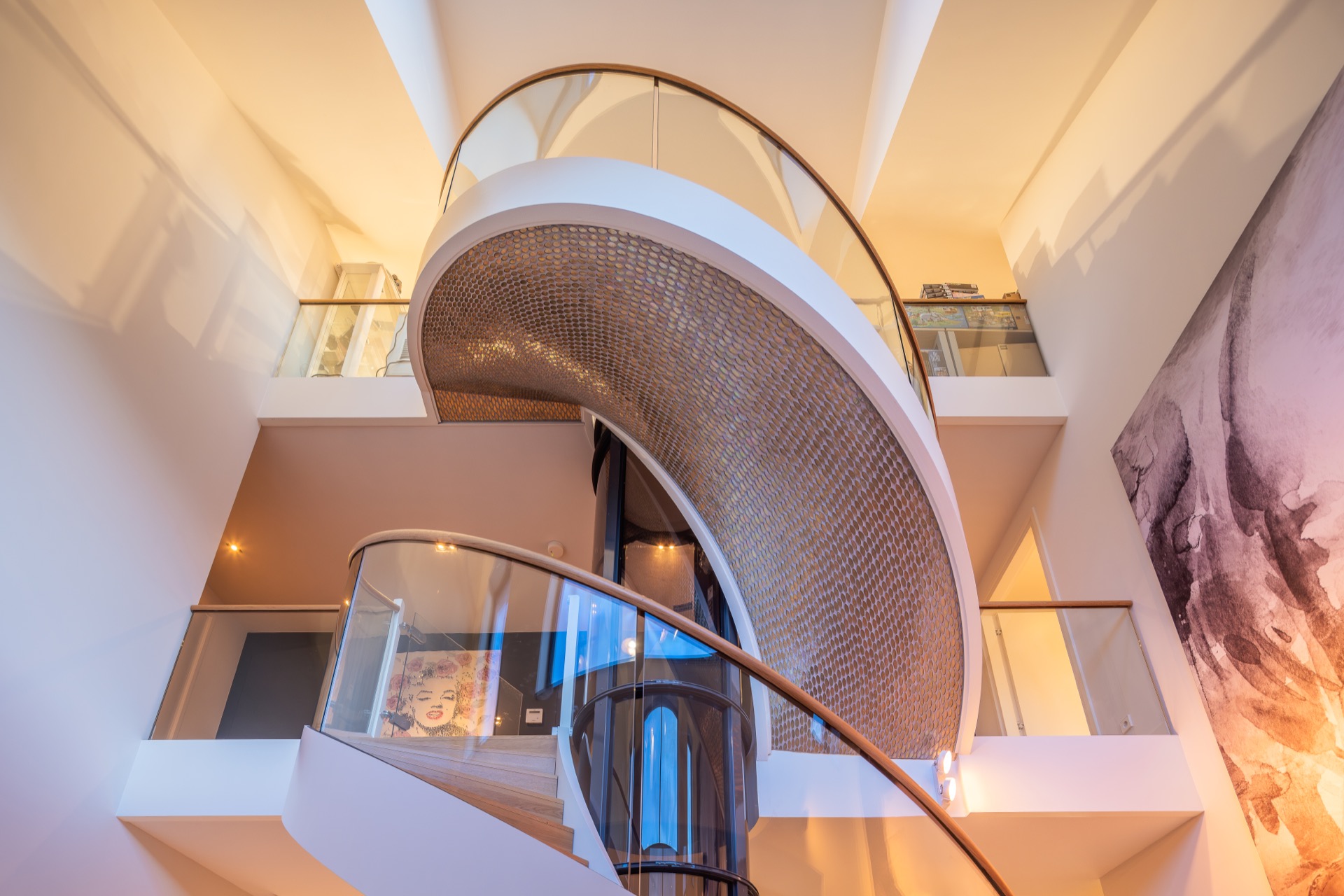
NEW 2026 Jubileum Edition The Best Interior Designers Benelux
Nu Bestellen