








Handleless walnut kitchen with concrete island and a minimal bathroom
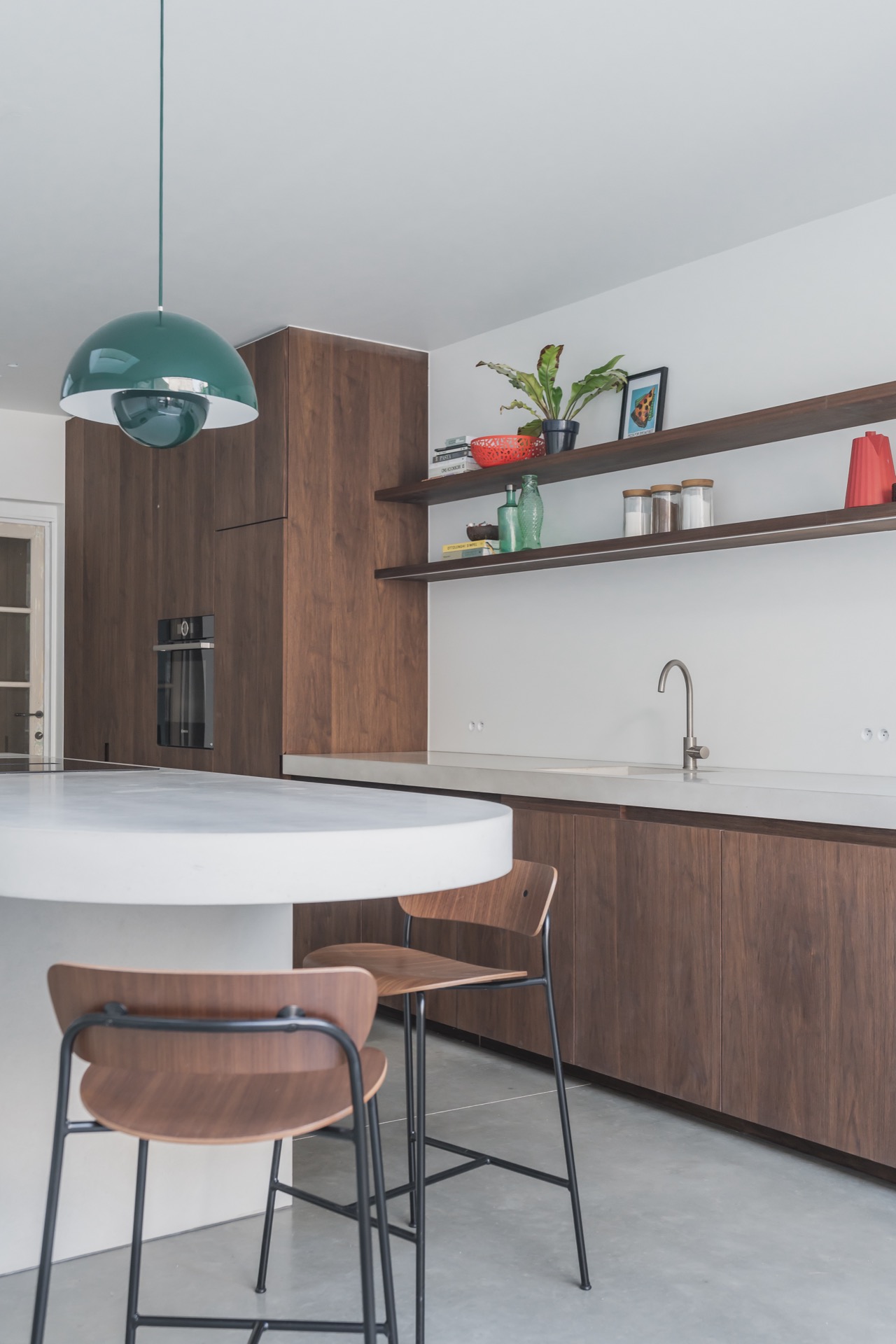
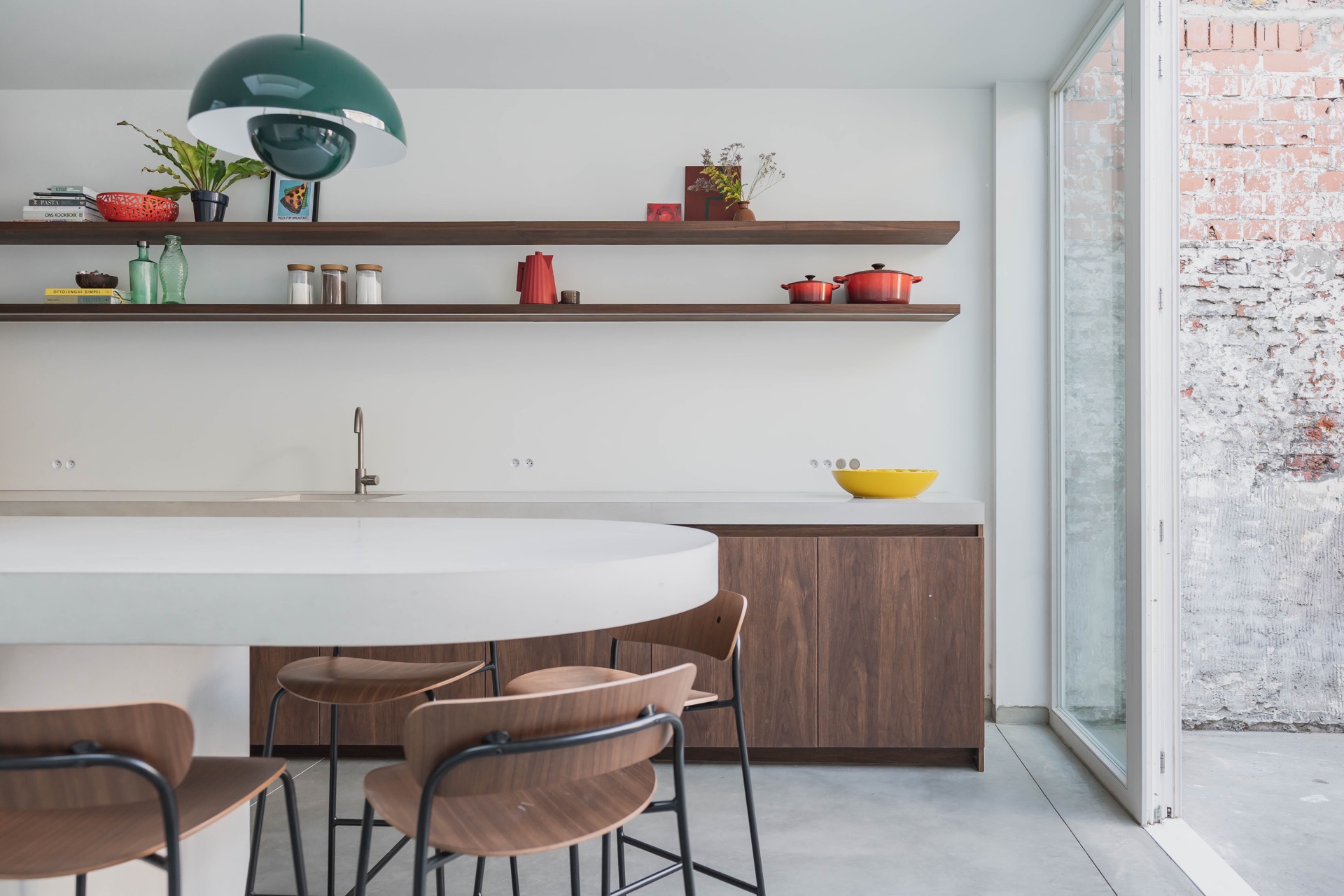
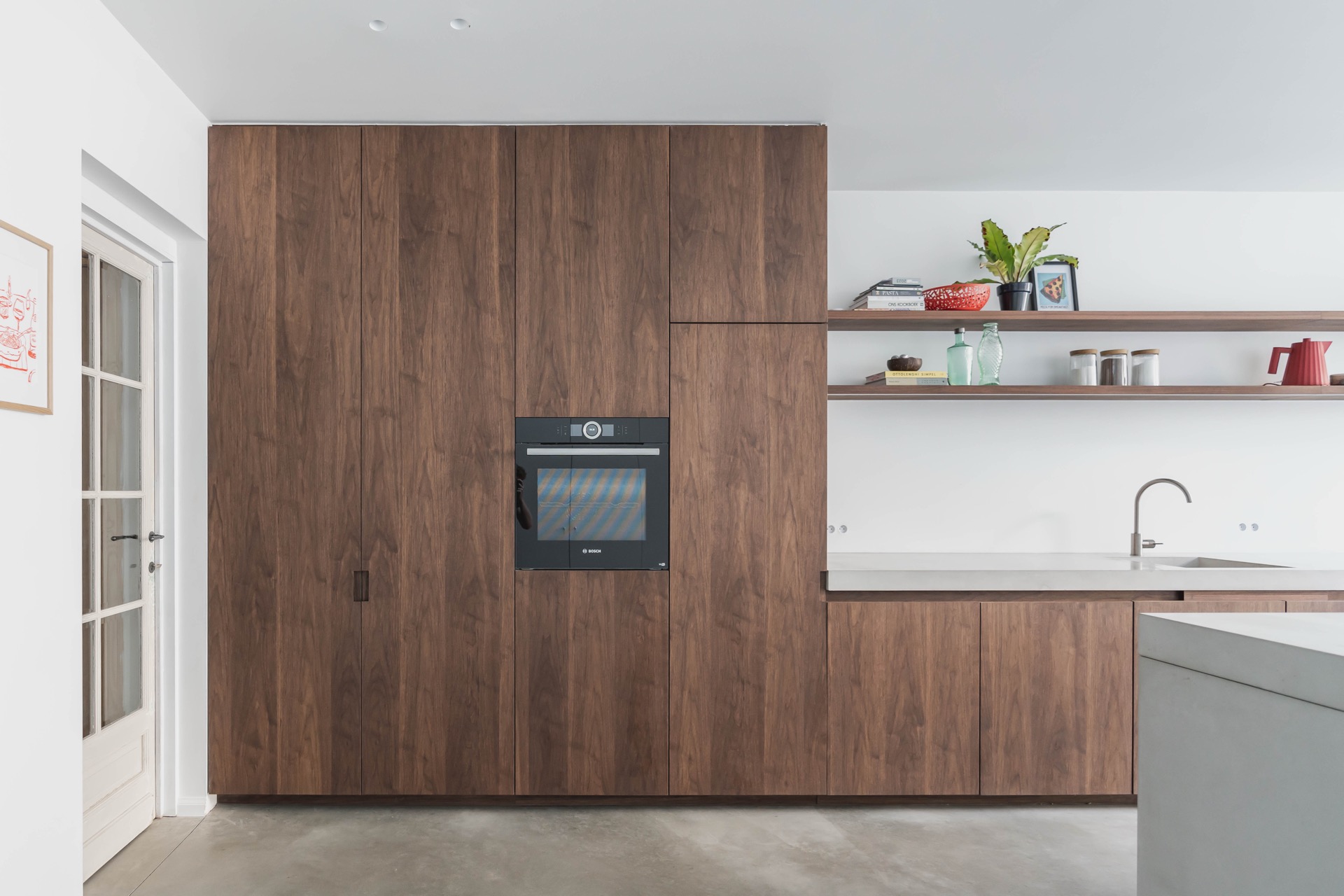
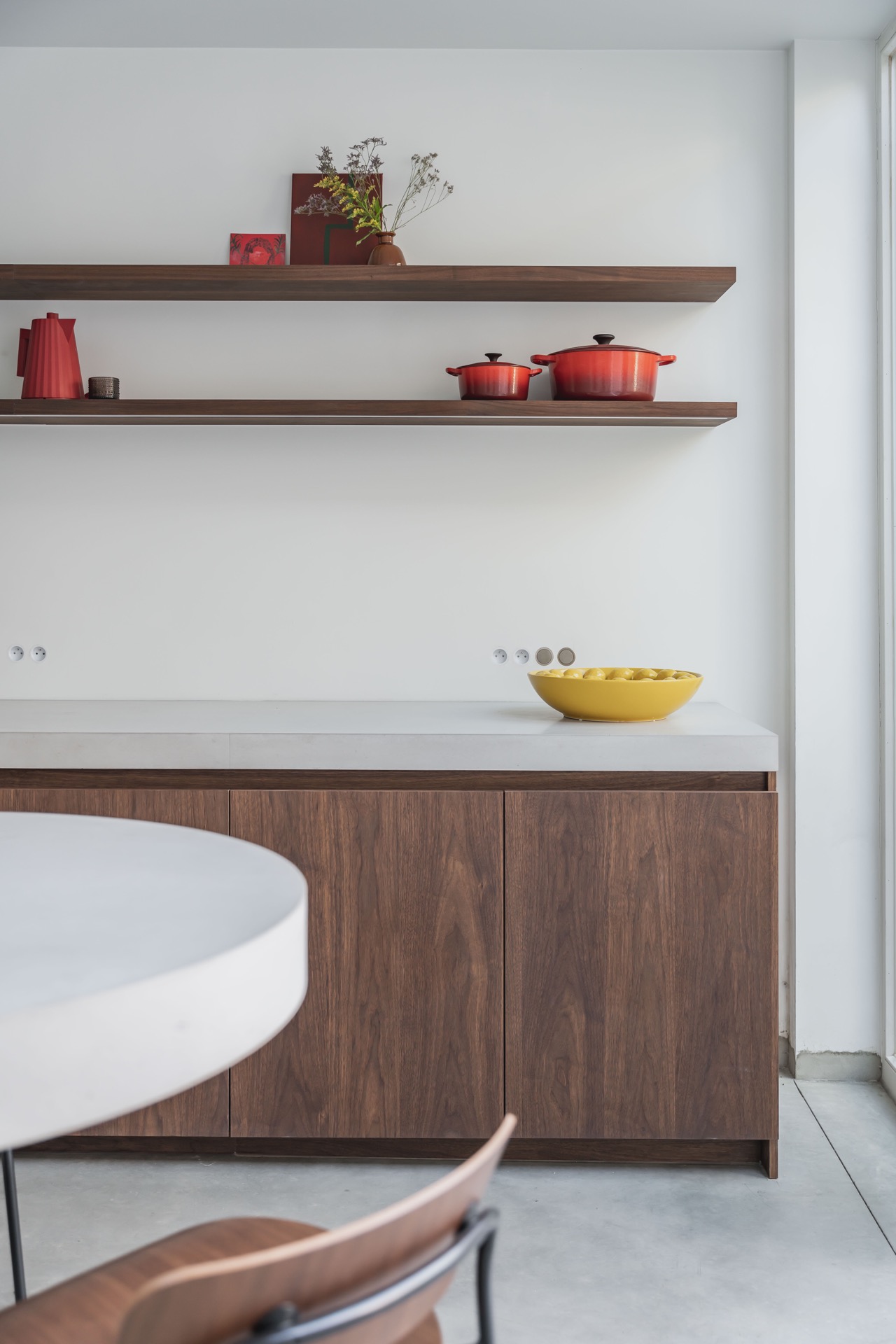
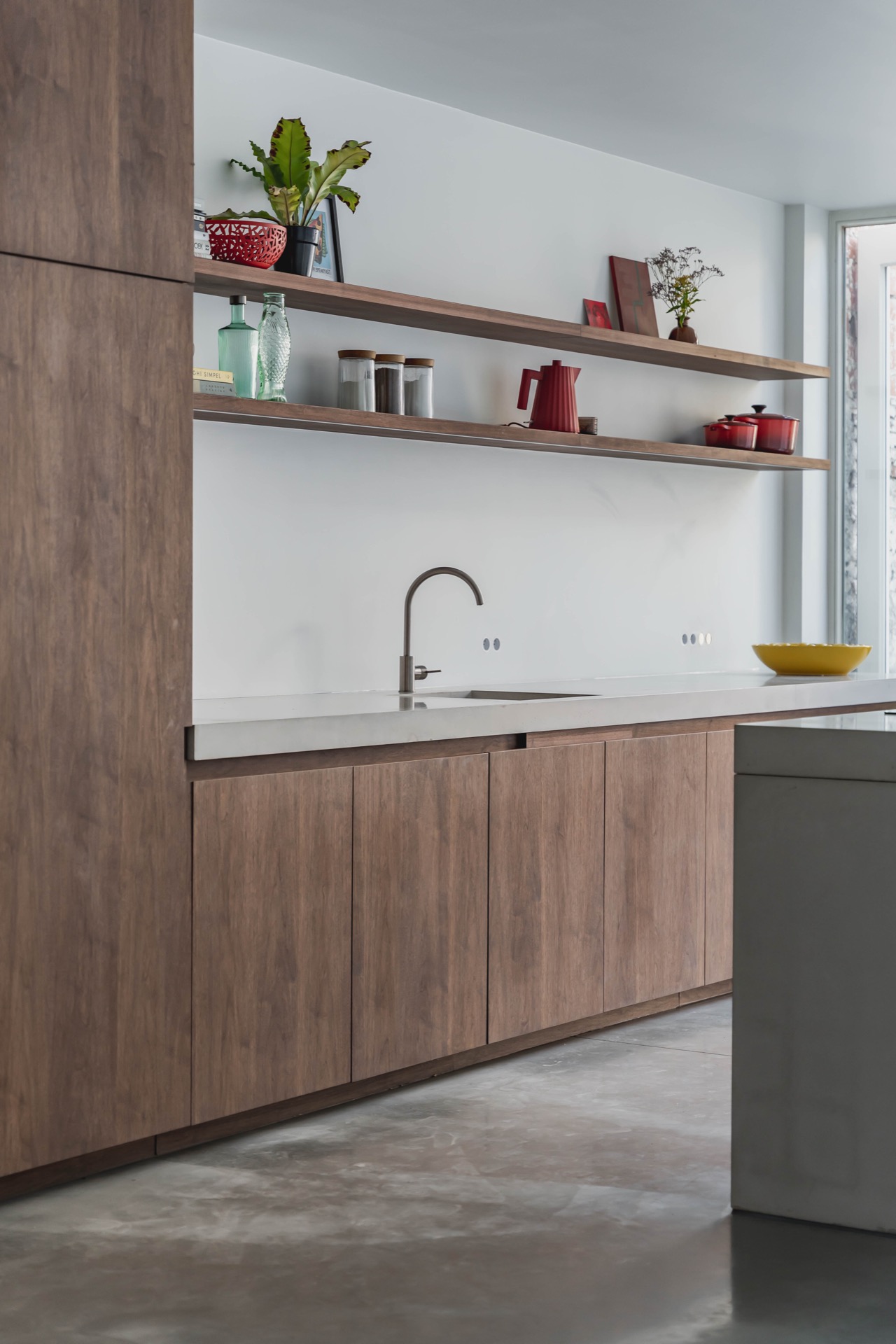
Handleless walnut kitchen shapes the way the rooms are organized and described. Walnut veneer sets the tone in the kitchen, but the room is defined just as much by what is kept visually quiet: handleless kitchen fronts, a concrete-topped island, and a white sink zone that interrupts the darker wood with a clean horizontal plane. The joinery runs in straight lines, with built-in cabinetry absorbing appliances and storage into the wall. Open shelving breaks up the larger volumes and leaves a few everyday items in sight without crowding the room.
Handleless walnut kitchen as a spatial starting point
The walnut veneer kitchen reads as one long sequence of panels and recesses rather than separate units. Tall fronts rise in a continuous wall, while the lower run stays level and restrained. A built-in oven sits inside the cabinetry, keeping the line of the wall intact. The visible grain softens the strict geometry, but the overall impression stays controlled: closed volumes, precise edges, and only a few openings where the eye needs a pause.
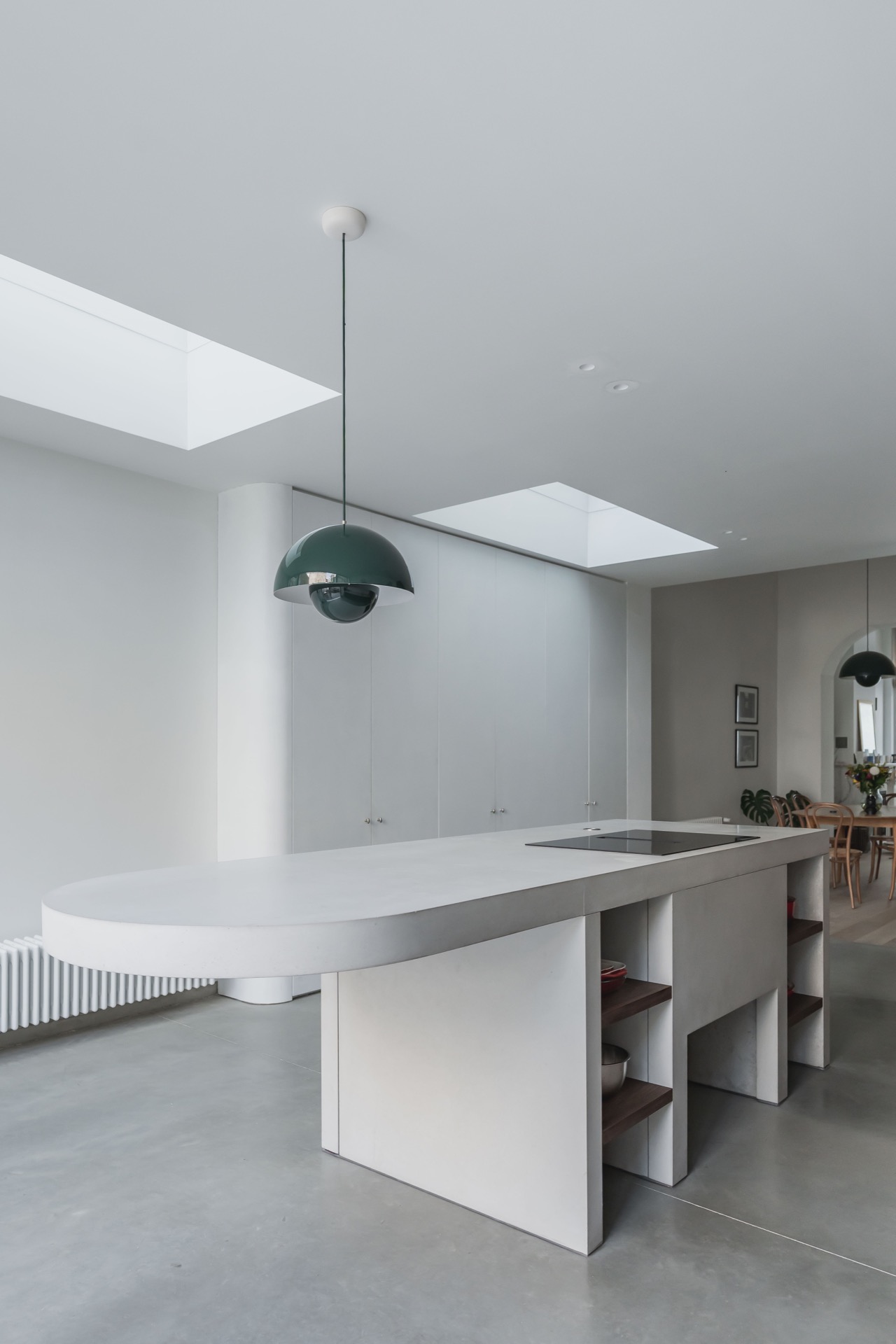
At the center, the kitchen island concrete countertop changes the mood immediately. Its darker surface grounds the room and gives the island a heavier presence than the surrounding wood. The edge is crisp, and the slab reads as a clear counterpoint to the veneer. Above the island, the lighting is kept simple, so the material contrast remains the main event. The result is a kitchen that uses fewer gestures and lets the surfaces do the work.
Open shelving and a white sink zone
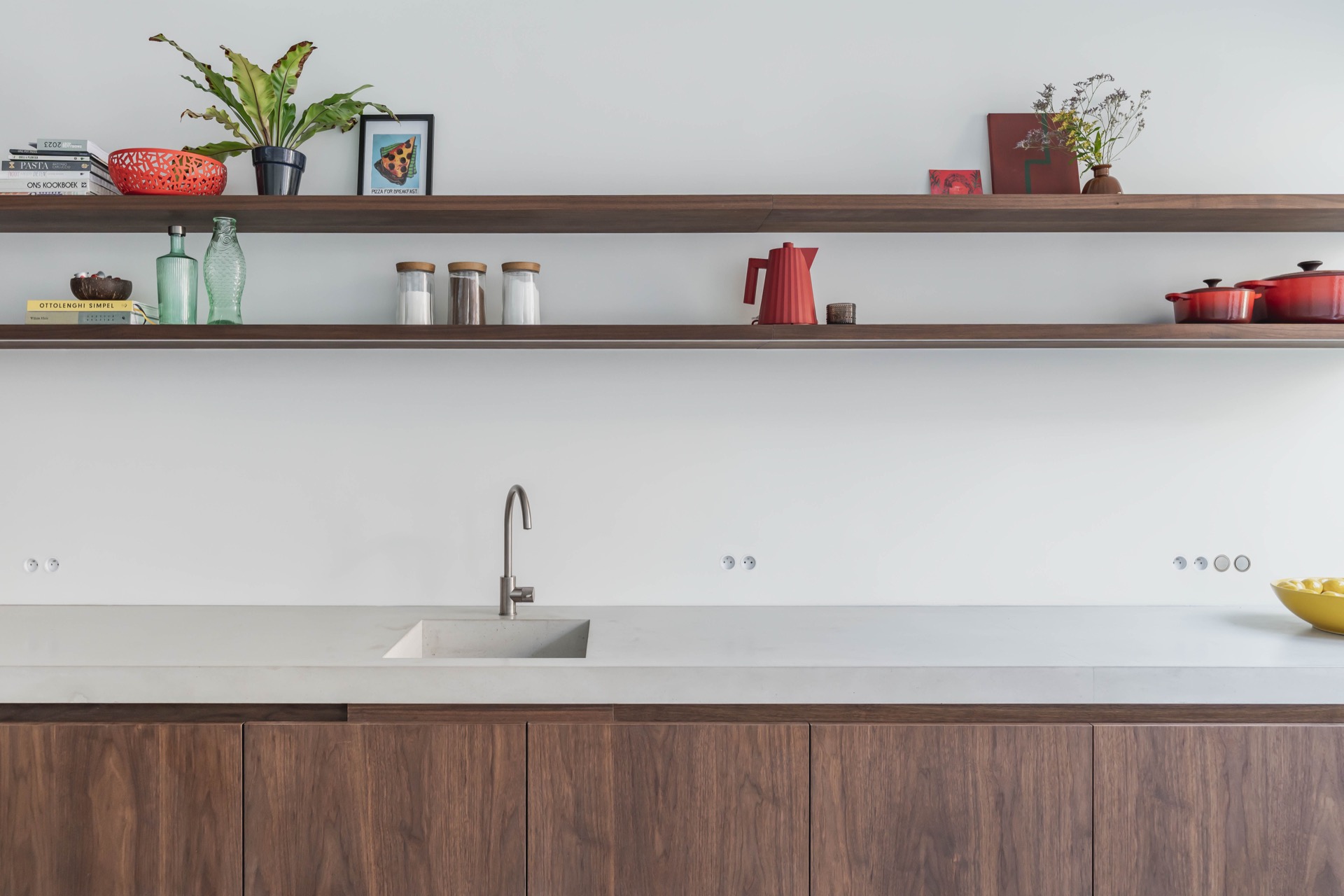
The white sink zone shifts the composition into a lighter register. It sits against a pale surface and includes an integrated basin and a curved mixer tap, which gives the working area a more precise, technical feel. Nearby, open shelving in wood introduces open storage without turning the wall into display. The shelves sit in a measured stack, leaving space between objects and the surrounding cabinetry. That spacing matters here: it keeps the kitchen from feeling overfilled.
Several details show how the storage was distributed across the room. Open niches appear beside the closed fronts, and in the wider wall composition they work as small interruptions between solid blocks. The handleless kitchen fronts keep the cabinetry calm, while the white working surface and the open shelves make the wall easier to read. It is a layout built from contrast rather than decoration: walnut, white, and concrete each occupy their own zone.
The green glass pendant above the island adds one more layer, but it does not take over the room. It hangs where the eye naturally lands, above the central work surface, and picks up the clean lines of the ceiling and the cabinet fronts. Around it, the kitchen remains disciplined. The corners stay sharp, the fronts stay flat, and the transitions between wood and white are handled with restraint.
A bathroom reduced to a few clear surfaces
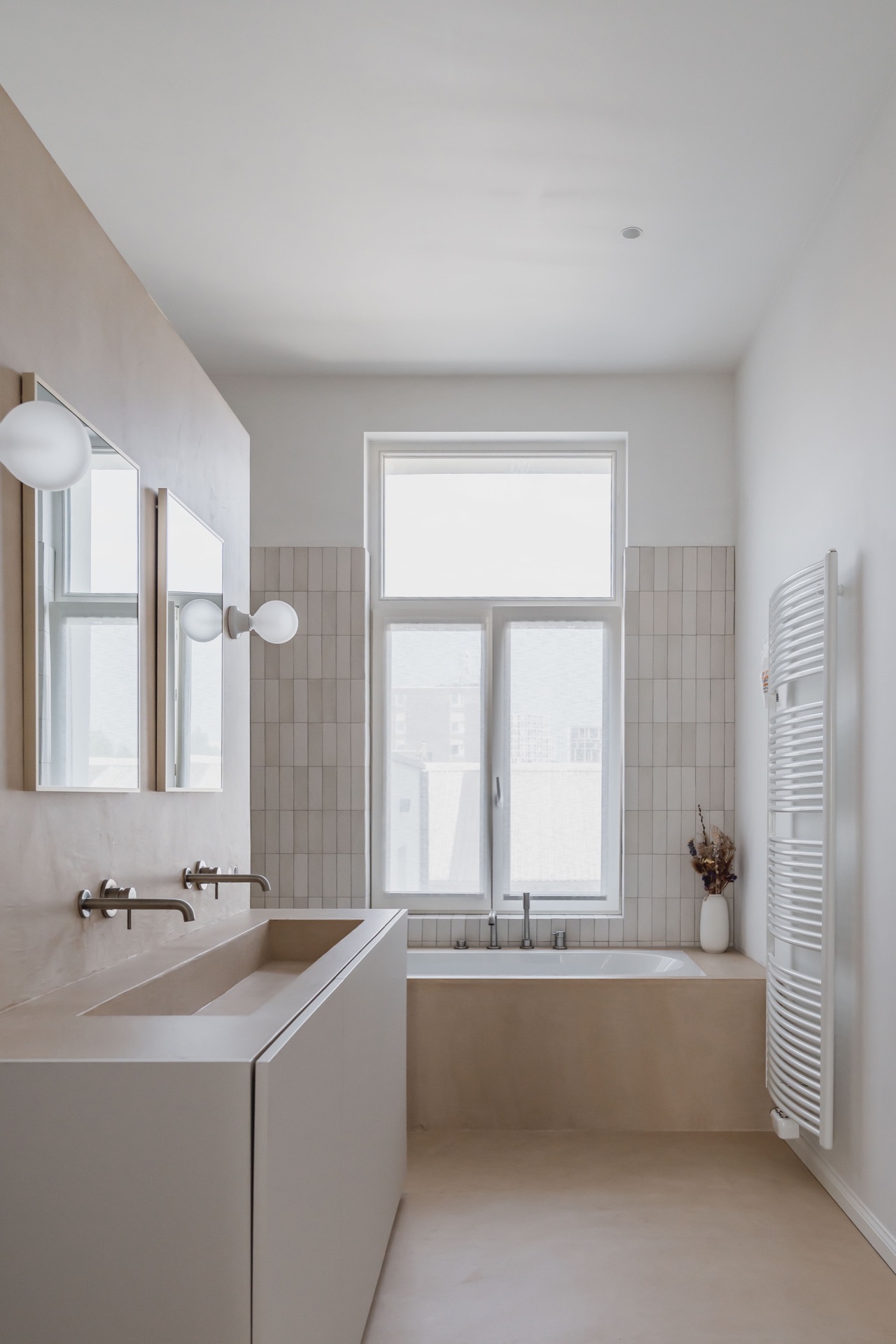
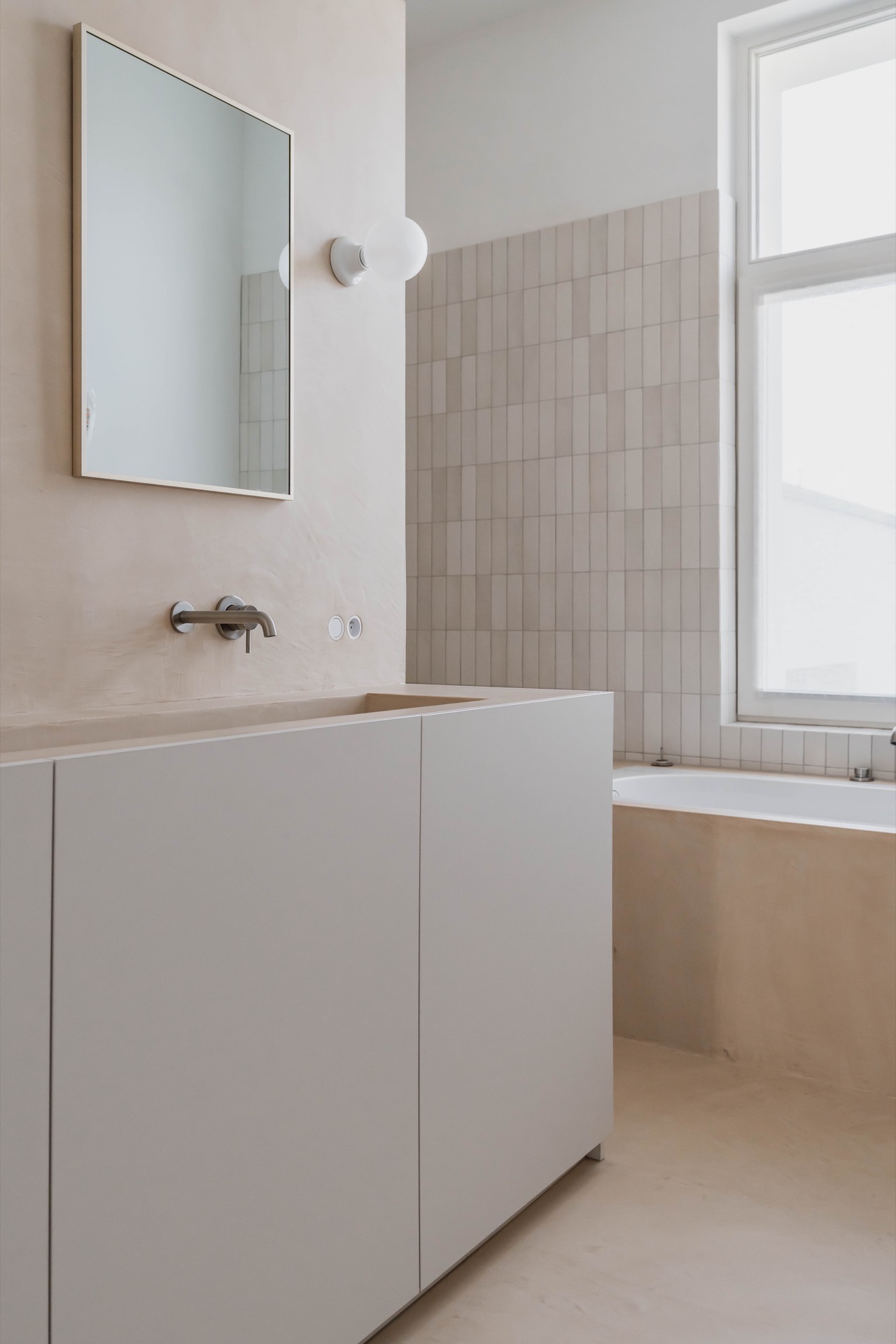
The bathroom moves away from the kitchen’s darker wood and works with a white HPL bathroom vanity, a minimal tiled wall, and a vanity top finished with microtopping by a third party. The cabinet doors are handleless, so the front remains uninterrupted. Above the basin, two mirrors extend the wall visually and make the wash zone feel wider than its footprint. Nothing is overdrawn; the room is built from simple planes and a few carefully placed reflections. Handleless walnut kitchen remains connected to the layout, materials and daily use of the home.
Microtopping, tile, and mirror reflections
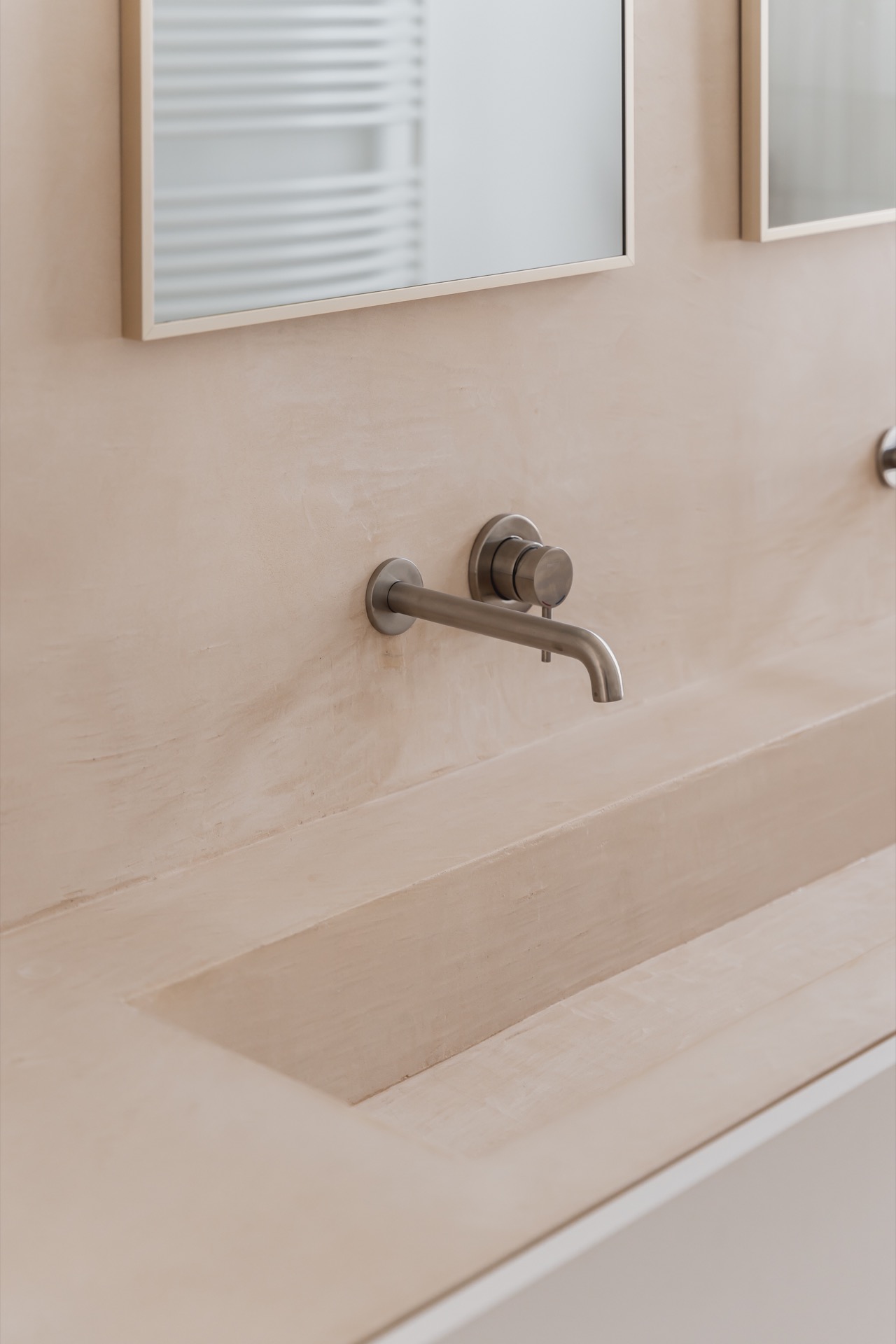
Here the microtopping bathroom vanity sits within a compact composition that is read more through texture than through ornament. The tiled wall behind it forms a tight grid, visible enough to give the room structure, but quiet enough not to compete with the mirror surface. The wash zone is crisp at the edges, and the round mixer tap introduces a small curve against the straight cabinet lines. That contrast keeps the bathroom from becoming static.
The two mirror views matter because they multiply the light and cut the room into layers. You see the vanity, the tile joints, and the wall surfaces from slightly different angles, which gives the bathroom a more open reading without adding volume. The white HPL bathroom vanity keeps the palette light, while the microtopping finish adds a softer, more tactile plane on top. Together they create a wash area that looks composed through material restraint rather than through excess detail.
Across the project, the same logic returns in different forms: closed storage where the room needs order, open shelving where objects can be left visible, and a limited range of surfaces that stay legible from one space to the next. The kitchen uses walnut veneer, concrete, and white work zones to build contrast. The bathroom pares that back to white cabinetry, tile, and mirrored planes. Both rooms rely on clear lines, but each uses them differently.
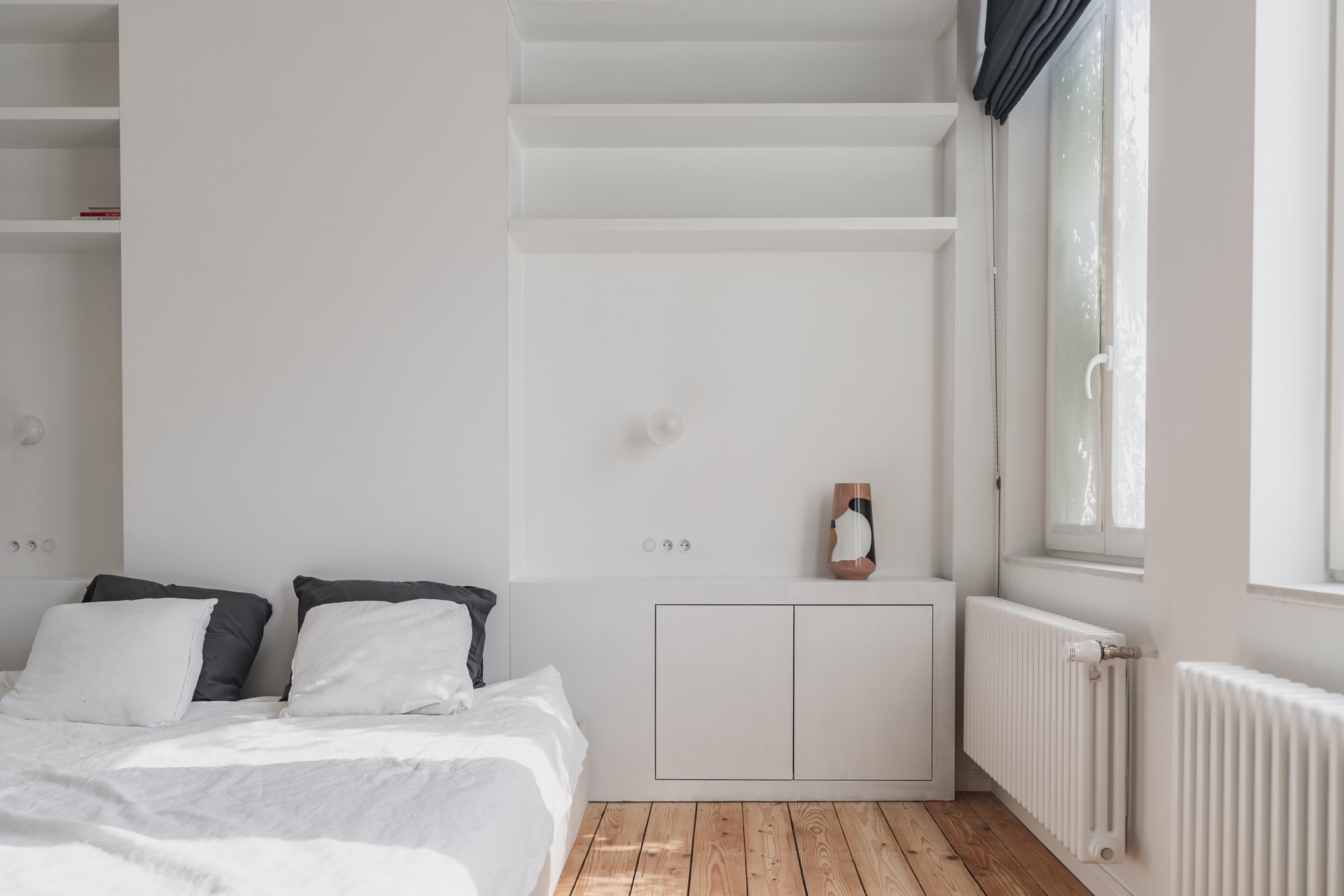
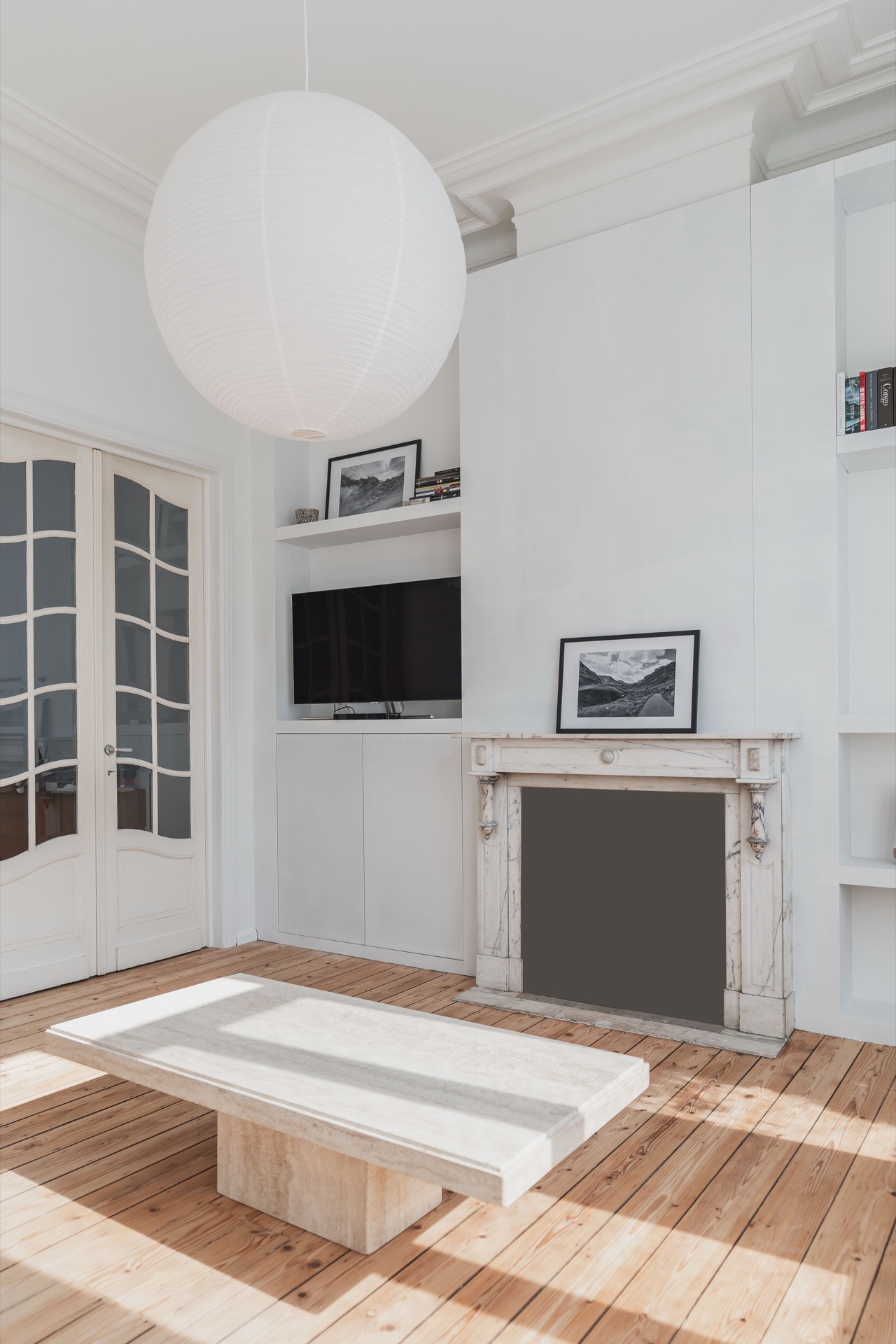
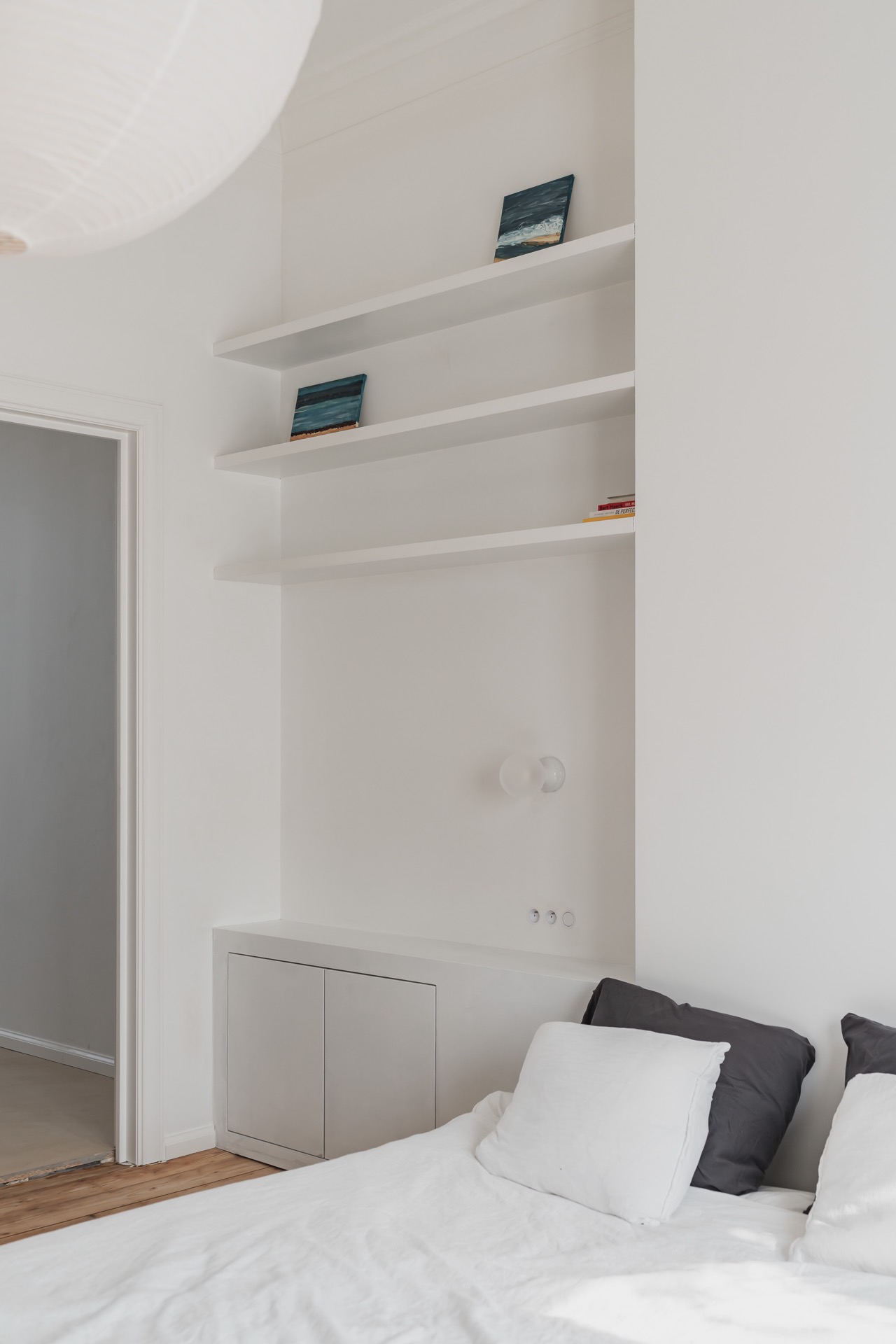
Other built-in cupboards in the project were made from MDF WR and delivered ready for painting, which supports the same tailored approach seen in the main rooms. The visual language stays consistent in the details: flush fronts, embedded storage, and narrow transitions between materials. Even where the image set shows additional rooms, the strongest thread remains the same. Surfaces are kept plain, openings are measured, and the joinery is drawn to the wall rather than projected outward.
That approach gives the interior a disciplined character without turning it rigid. The walnut veneer kitchen feels grounded by the concrete island and opened up by the white sink zone. The bathroom answers with a lighter palette and a tiled backdrop that holds the mirror and basin in place. Seen together, the spaces show how handleless kitchen fronts, open shelving, and a minimal bathroom tiled wall can carry a project with little more than material contrast and careful proportion.
Photography: Matthias Vanhoutteghem Handleless walnut kitchen remains connected to the layout, materials and daily use of the home.
Wil je meer zien van Interieur Schrijnwerkerij Verrelst? Bekijk de pagina van Interieur Schrijnwerkerij Verrelst voor meer projecten en bedrijfsinformatie.


.png)
NEW 2026 Jubileum Edition The Best Interior Designers Benelux
Nu Bestellen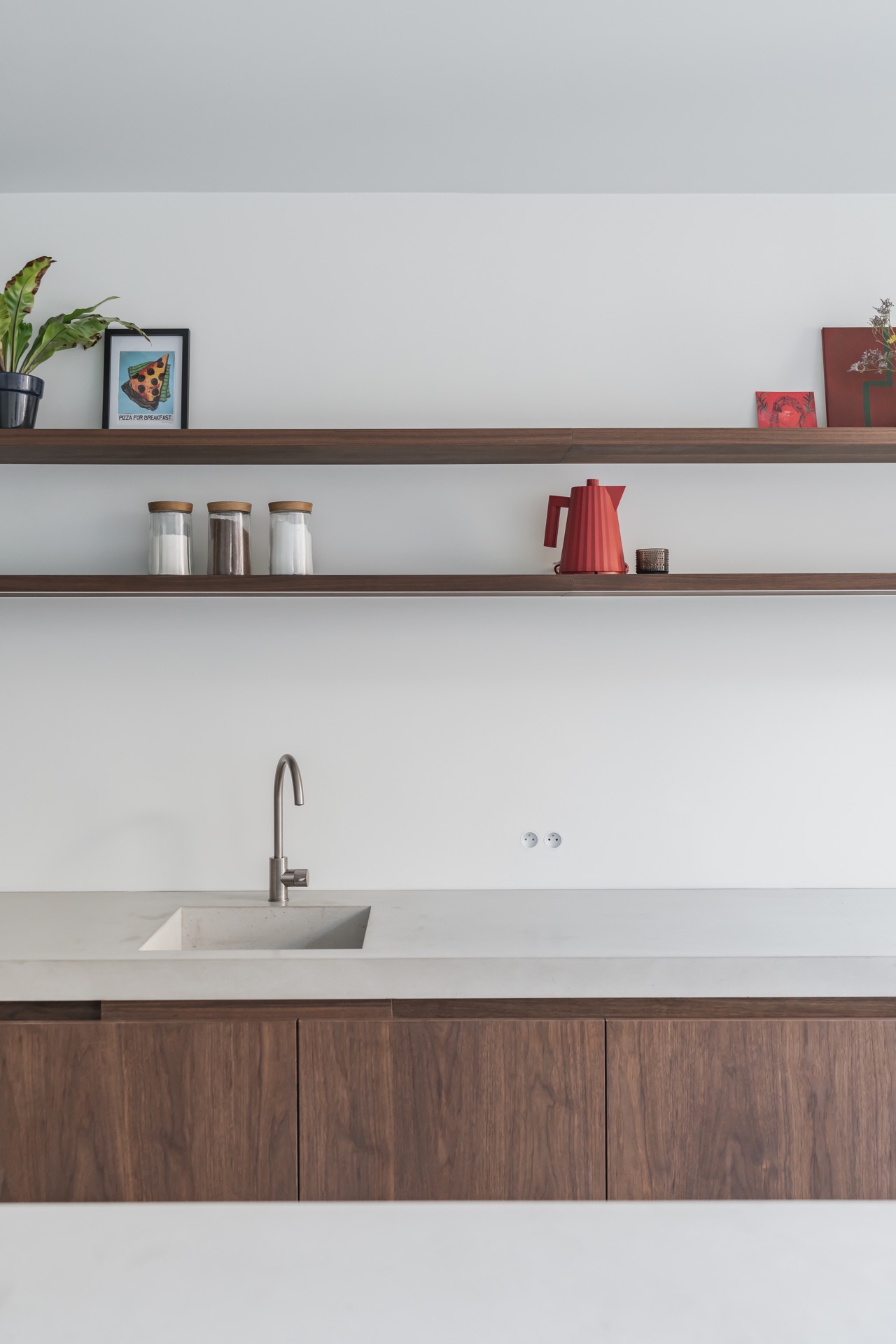
NEW 2026 Jubileum Edition The Best Interior Designers Benelux
Nu Bestellen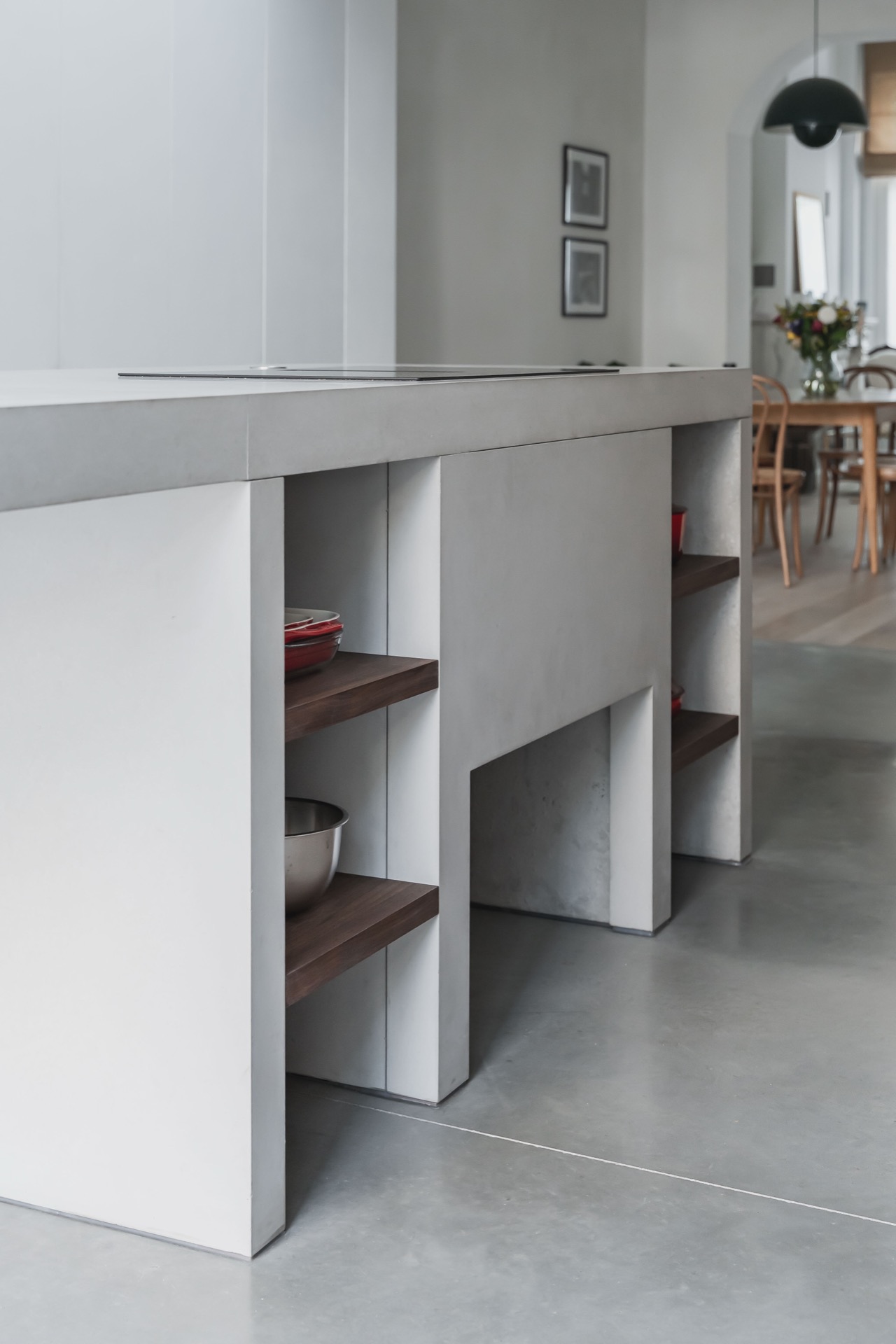
NEW 2026 Jubileum Edition The Best Interior Designers Benelux
Nu Bestellen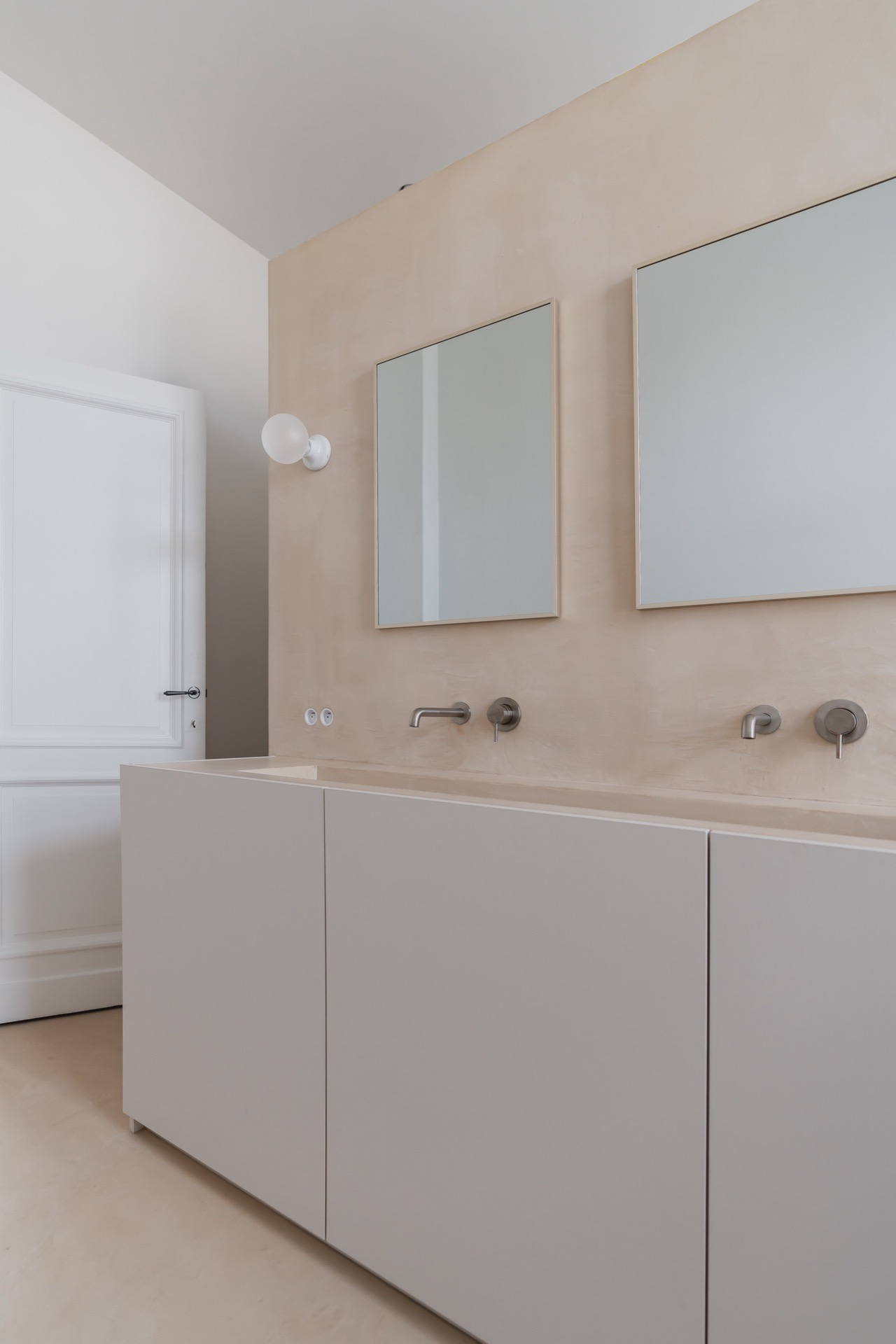
NEW 2026 Jubileum Edition The Best Interior Designers Benelux
Nu Bestellen