









Wabi-sabi interior with natural stone and walnut custom kitchen (quartzite)
A muted surface palette sets the pace here: floors, doors, cabinets, walls, and ceilings sit within the same color range, so the eye stays on texture rather than contrast. That calm base gives the wabi-sabi interior with natural stone its character. The kitchen becomes the clearest gesture in the house, with quartzite drawing attention as soon as you enter, while walnut softens the larger joinery elements and keeps the room from feeling too rigid.
Wabi-sabi interior with natural stone as a spatial starting point
The strongest impression comes from continuity. Instead of breaking each room apart with separate finishes, the design extends one color tone across multiple surfaces, from the floors up to the ceilings. Doors and cabinets follow the same restraint, so the rooms read as connected even when the materials change. In a project that leans into wabi-sabi interior design, that approach gives the stone and wood room to speak without competing with each other.
That quiet backdrop also makes the details easier to read. A panel edge, a shadow line, or the shift from plaster to joinery becomes visible because nothing is overworked. The result is not decorative in the obvious sense; it is more measured. Every surface seems to sit where it should, which is exactly why the kitchen and the niche lighting stand out so clearly once you move through the house.
The kitchen as the first focal point
Designed in collaboration with Studio Voi, the kitchen is placed where it catches the eye on arrival. The natural stone quartzite kitchen surface is the most immediate material signal, with Nacarado quartzite forming the main focal point across the worktop and backsplash. Its pattern is active enough to register from a distance, yet restrained enough to sit comfortably against the deeper tone of the wood.
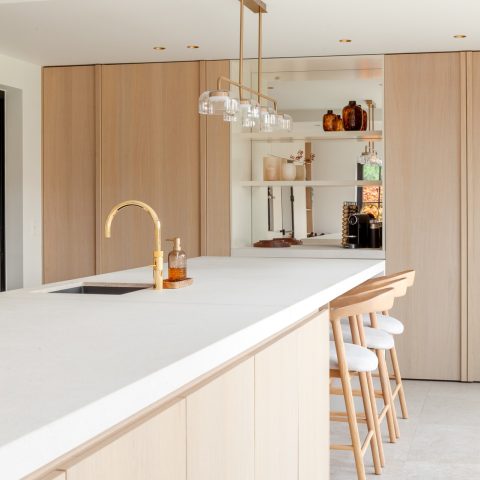
Walnut kitchen cabinets and the island bring warmth through grain rather than color alone. The wood softens the stone’s sharper movement and gives the cabinetry a grounded presence. Because the fronts stay visually calm, the quartzite can do the more expressive work. Seen together, the stone and walnut create a kitchen that feels built from a small number of deliberate decisions, not from layers of competing finishes.
Stone, wood, and the edge between them
The natural stone kitchen backsplash and the surrounding joinery are handled with close attention to junctions. Stone meets wood without flashy transitions, and that restraint is part of the appeal. The island reads as a solid volume, while the cabinet fronts keep their line clean. In the images, warm pendant light lands on the worktop and makes the quartzite surface look deeper, almost layered, especially where the veining shifts near the sink and tap.
A tall cabinet with a glazed insert adds another note to the composition. It breaks up the run of walnut without interrupting the overall calm, and it gives the kitchen a point of reflection that catches nearby light. The project depends on this kind of measured contrast: glass against wood, stone against timber, sheen against matte. Nothing is loud, but nothing disappears either.
Light placed where the eye pauses
Warm lighting is used in small, useful pockets rather than as a general effect. Built-in niches with warm lighting appear in different parts of the interior, and they keep shelves, wall openings, and recessed areas from going flat. In the living spaces, the illuminated niches turn a simple wall opening into a visible pause in the plan. The same strategy works in the kitchen, where a lit recess behind the cabinetry adds depth without adding clutter. Wabi-sabi interior with natural stone remains connected to the layout, materials and daily use of the home.
These lighted moments matter because the rest of the interior is so controlled. A narrow wall lamp, a hidden strip in a niche, or a pendant above the table becomes a way to separate surfaces without changing the palette. The rooms feel quieter for it. Light does not decorate the architecture here; it draws attention to edges, cutouts, and the points where the material story shifts.
Details that make the layout read clearly
One of the more striking visual moves is the glass door with a black frame. It marks a threshold without blocking the view, and the frame gives the passage a slim graphic outline against the lighter wall finishes. Nearby, wall panels and small recessed openings keep the circulation spaces from feeling plain. Even the stair and upper landing carry this approach, with a skylight and round wall lamps that bring daylight and warm artificial light into the same field.
The interior depends on this kind of clear routing. You see a glazed opening, then a niche, then a panel, and each element tells you where the space is going. There is no overstatement in the architecture of the plan. The effect comes from repeated restraint, from choosing a limited set of materials and allowing them to continue across rooms.
Bathroom surfaces shown in the visual set
The bathroom images extend the same material language in a different register. Marmerlook bathroom walls wrap the room in veined surfaces that feel consistent with the broader stone-led interior, while a freestanding bath sits against them as a clean, simple volume. In the shower area, the rain shower bathroom setup is visible as a direct, functional element, with dark fittings cutting through the pale wall surface.
Because the wall finish carries so much pattern, the fixtures stay visually quiet. The shower zone reads as a separate area without needing heavy framing, and the surfaces around it do most of the work. That keeps the bathroom tied to the rest of the project: one calm color tone, a clear material choice, and a preference for surfaces that show their texture rather than decoration.
What stays with you after the walk-through
What lingers is not one isolated gesture but the way the rooms keep referring back to each other. The quartzite kitchen, the walnut cabinetry, the consistent tone across doors and ceilings, and the built-in niche warm lighting all point to the same idea: reduce the number of decisions, then let the chosen materials carry the room. The project never relies on spectacle. It relies on surfaces that fit their place and on details that hold together when you look twice.
Photographer: Eliza Zara Photography
Contributors:
– Studio Voi
– Jan reek
– Dofine
– Interior Elements
– Marfred Moes
– Antique Mirrors Wabi-sabi interior with natural stone remains connected to the layout, materials and daily use of the home.
Wil je meer zien van MV Interior Design? Bekijk de pagina van MV Interior Design voor meer projecten en bedrijfsinformatie.


Bijdragers


.png)
NEW 2026 Jubileum Edition The Best Interior Designers Benelux
Nu Bestellen


NEW 2026 Jubileum Edition The Best Interior Designers Benelux
Nu Bestellen


NEW 2026 Jubileum Edition The Best Interior Designers Benelux
Nu Bestellen



%20-%20)
%20-%20)
%20-%20)
%20-%20)
%20-%20)
%20-%20)
%20-%20)
%20-%20)
%20-%20)
%20-%20)
%20-%20)
%20-%20)
%20-%20)