







Custom interior with marble accents and built-in wall lighting
Marble catches the eye first, then the line of light tucked into the wall build-out. The interior is tailored around that contrast: stone-like surfaces, warm wood panels, and a sequence of details that feel selected rather than added later. The custom interior with marble accents was shaped for a client whose interest in vintage, design, and art informed the rooms as a whole. That influence appears in the furniture choices, the wall art, and the way each surface is allowed to register on its own.
Custom interior with marble accents as a spatial starting point
The custom interior with marble accents moves through kitchen, living, bedroom, and bathroom without changing its language. Wood runs in vertical panels and cabinet fronts. Marble-like surfaces appear as worktops, wall cladding, and stone details around the island and shower. The palette stays close to white, brown, gold, black, and green, which keeps the eye on the surfaces and the joinery instead of on decoration. It is a room-by-room composition, but the material thread stays visible everywhere.
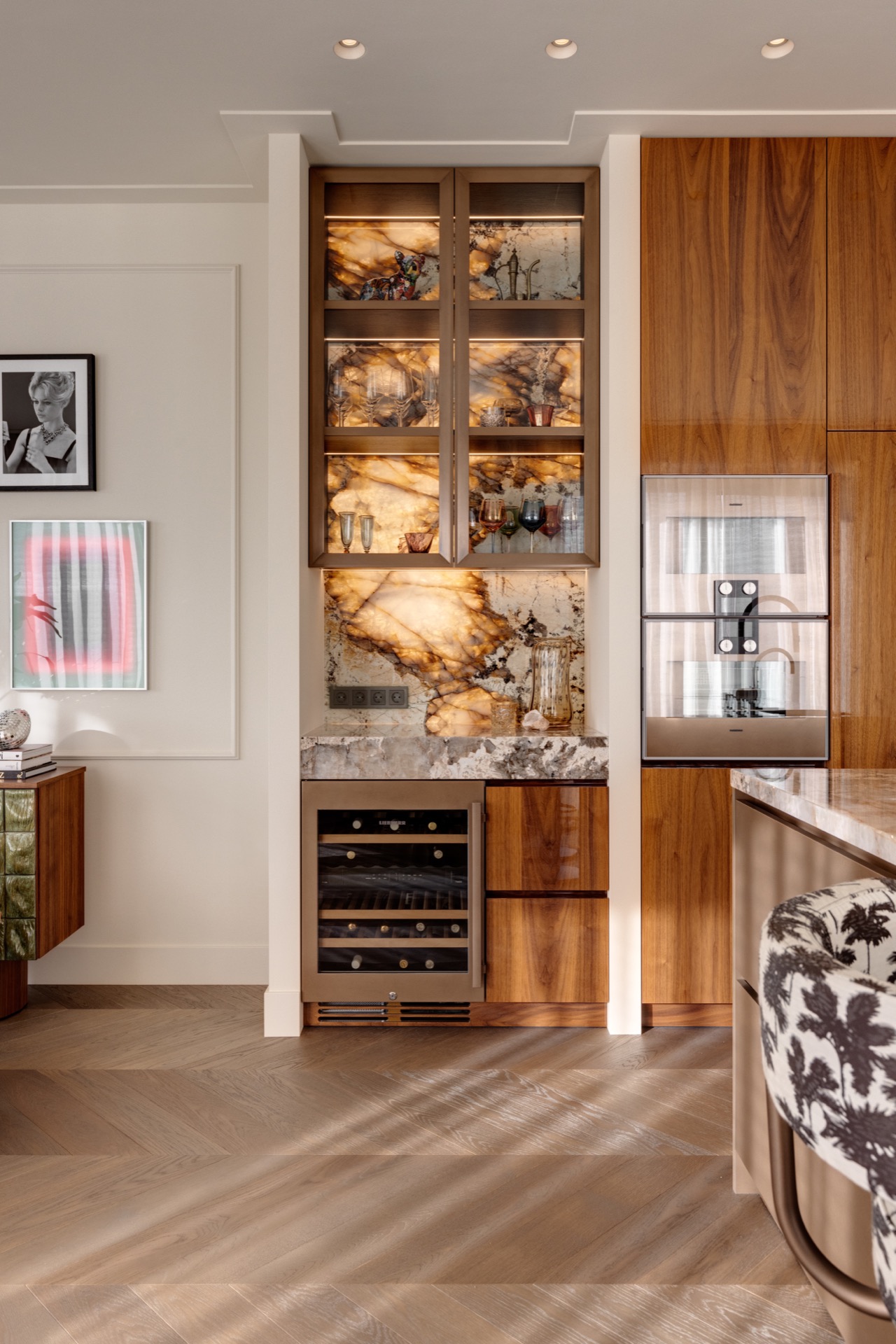
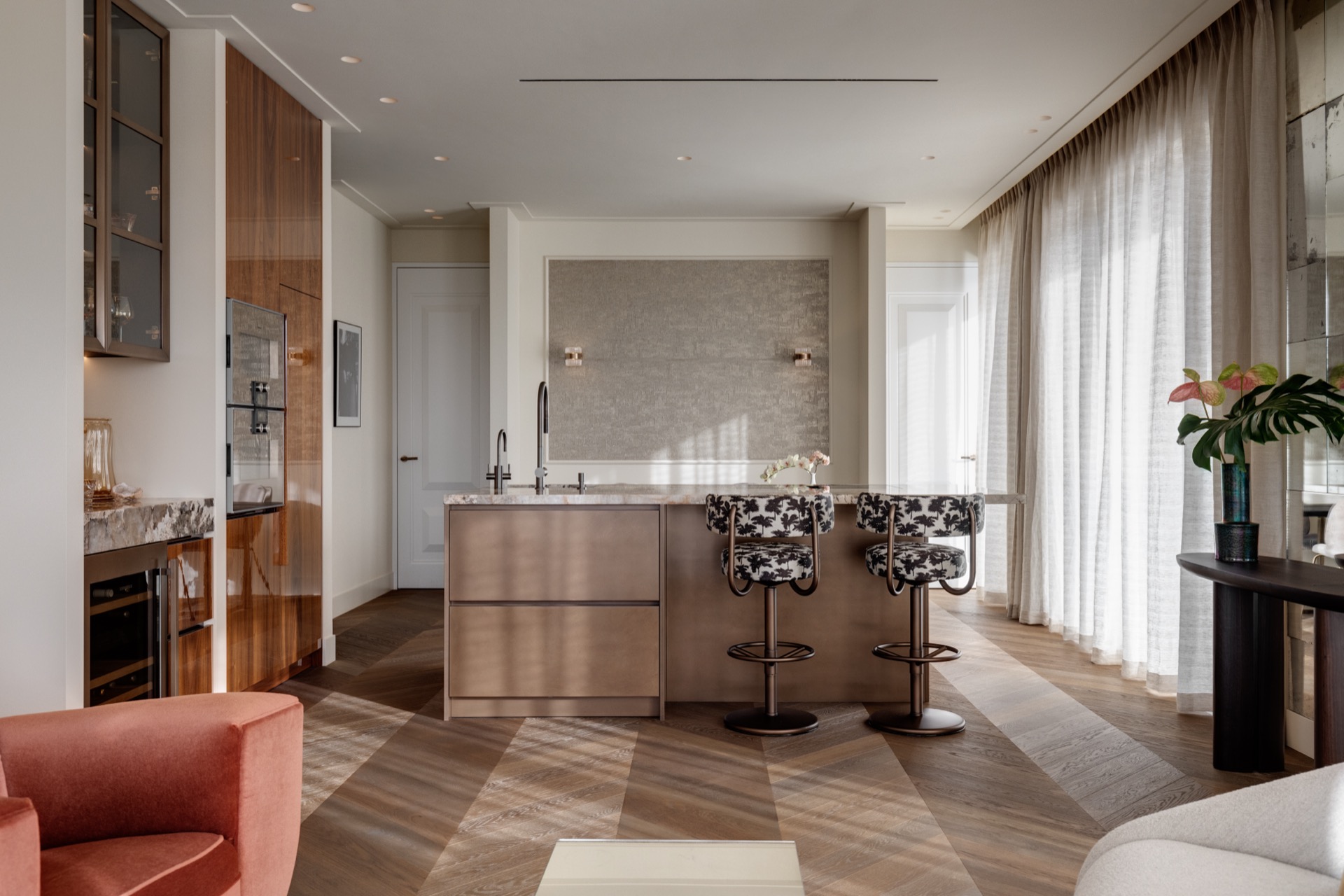
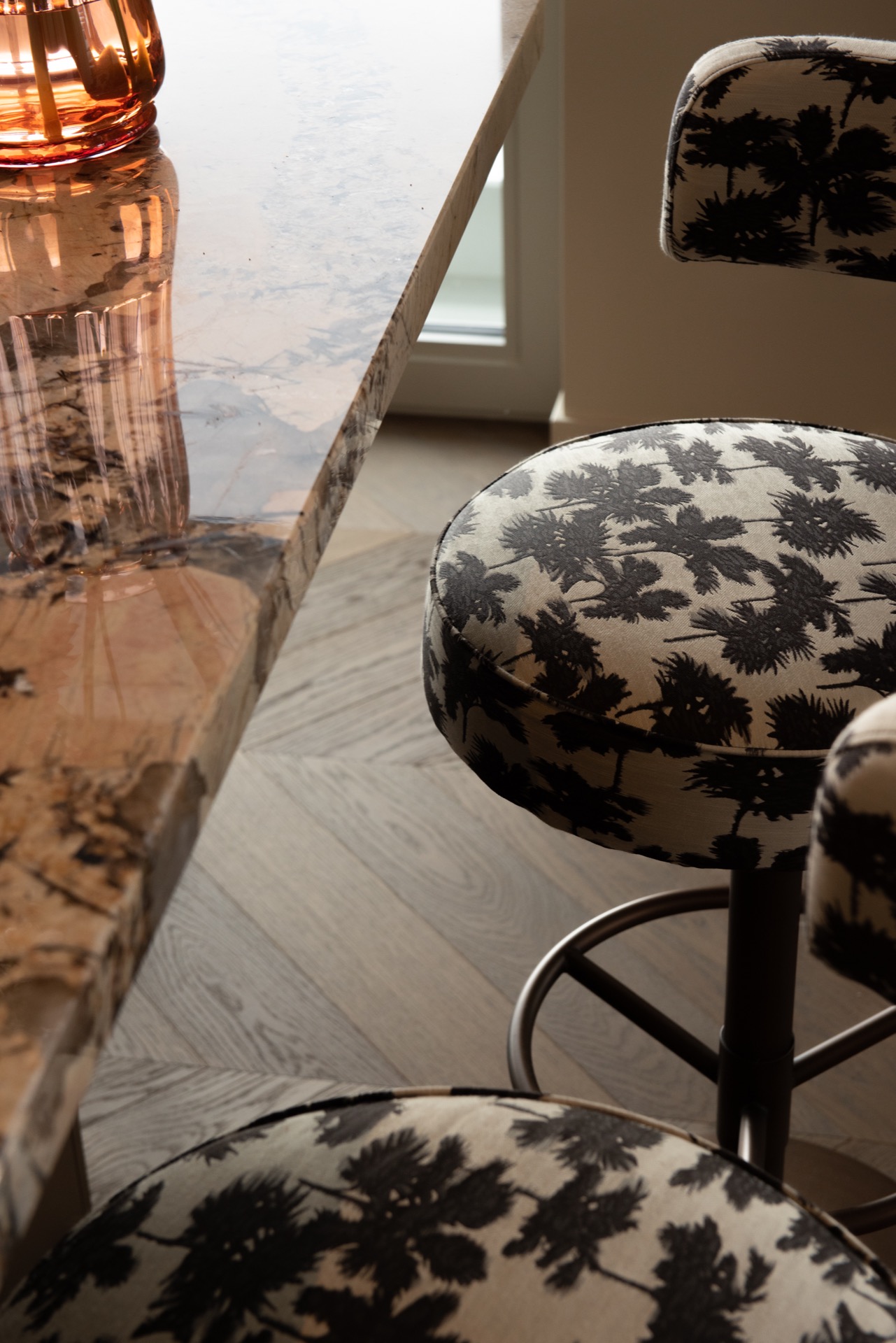
In the kitchen, a central island with a marble-like finish gives the space its clearest horizontal line. Around it, custom cabinetry carries the same disciplined rhythm seen in the wall units: long panels, clean edges, and narrow reveals. In one of the wall build-outs, built-in niche lighting cuts into the surface and gives depth to the shelving. The light does not flood the room; it traces the object itself, making the joinery read more clearly.
Light held inside the wall
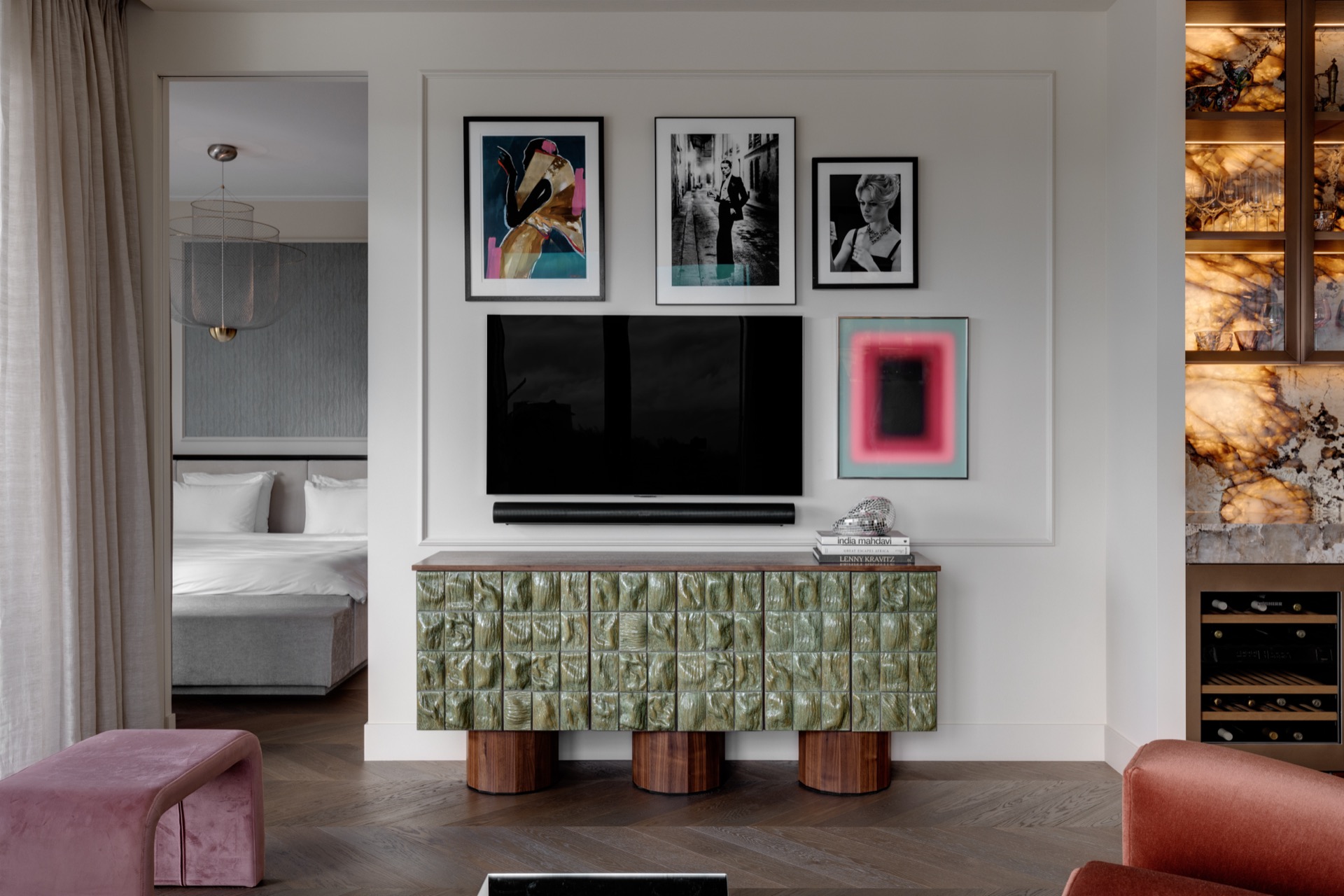
Several zones rely on built-in niche lighting rather than loose fixtures. That choice matters because it turns storage and display into part of the architecture. The custom wall unit with integrated lighting works as a backdrop, but it also creates smaller moments inside its frame: bottles, books, and objects appear in separate pockets of light. In another room, the same approach softens a media niche, where the television wall is treated as a recessed element instead of a flat screen wall.
The effect is most visible in the larger built-in compositions, where a marble-like panel sits next to wood and illuminated recesses. The contrast is measured, not loud. Vertical lines in the timber give the walls height, while the inset lighting breaks the surface into usable bays. As a result, the joinery reads like part of the room’s structure, not furniture pushed against it. That is where the custom interior with marble accents becomes most legible.
Storage and display in the same frame
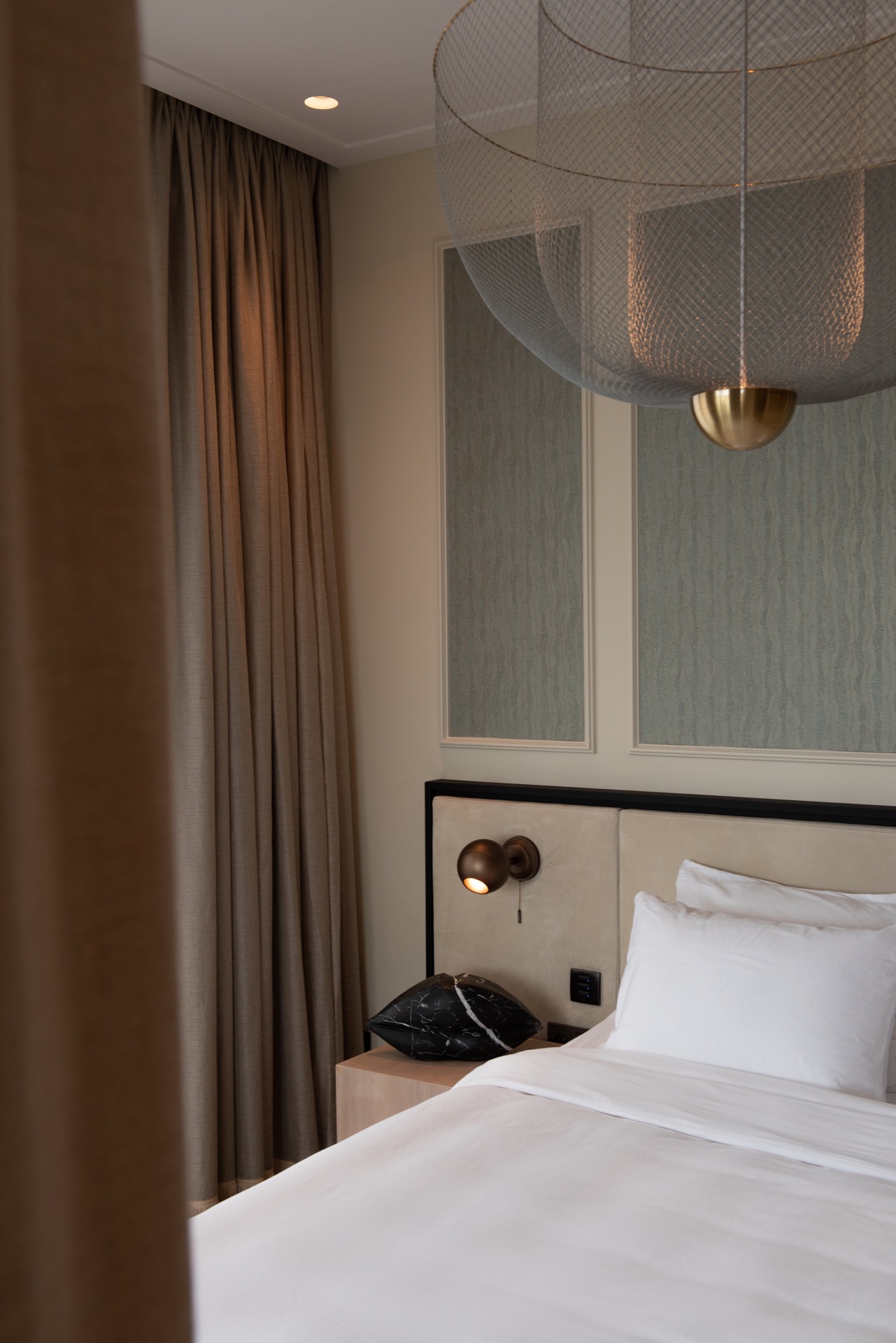
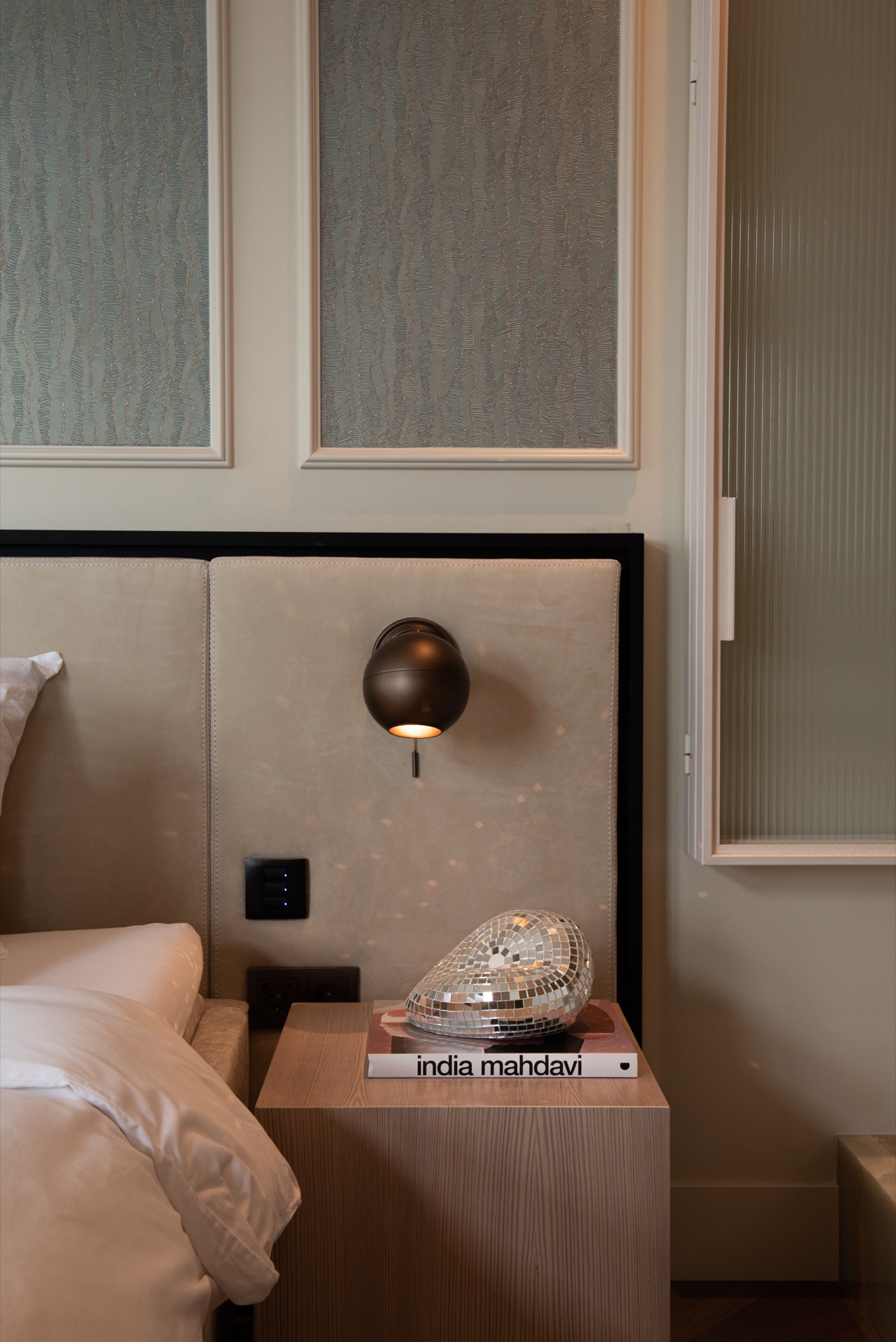
The wall units do more than hold objects. They also establish how the room is read from one end to the other. A niche can carry glassware, another can hold books or a decorative piece, and the lighting keeps each opening distinct. In the bedroom, this principle returns through framed openings and upholstered wall sections that sit beside a window line with textured glass. The room stays quiet, but the surfaces still have enough variation to catch attention.
These details give the project its editorial rhythm. A paneled door here, a soft headboard there, a ledge of stone, a strip of light. Nothing is isolated from the rest. Even the smallest recess belongs to the larger custom interior with marble accents, because the same restraint guides every room.
A shower enclosed in glass and stone
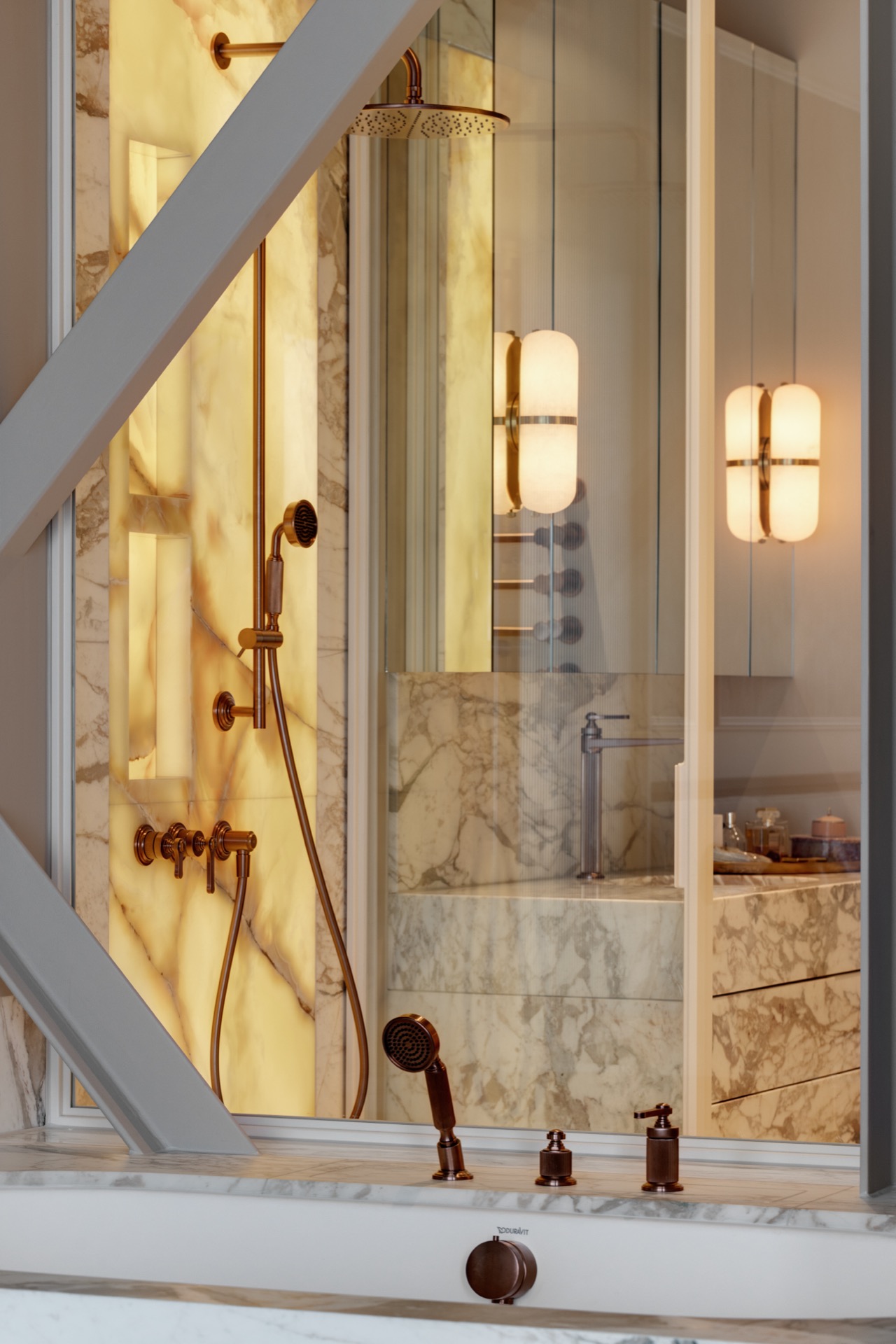
The bathroom uses the same material pairing in a more direct way. A glass shower enclosure keeps the shower visually open, while marble-like wall tiles wrap the enclosure and reflect light across the surface. The edges are crisp, and the fixtures sit within that frame without distracting from it. Here, the stone look is not decorative noise; it is the backdrop that lets the glass line and the reflections do their work. Custom interior with marble accents remains connected to the layout, materials and daily use of the home.
The bathroom reads differently from the kitchen, but the logic stays consistent. Surfaces are clear and legible. The shower wall tiles carry the marble-like pattern without overwhelming the space, and the transparency of the glass enclosure keeps the room from feeling broken up. It is a small zone, yet it still belongs to the larger custom interior with marble accents through material repetition and the same controlled use of light.
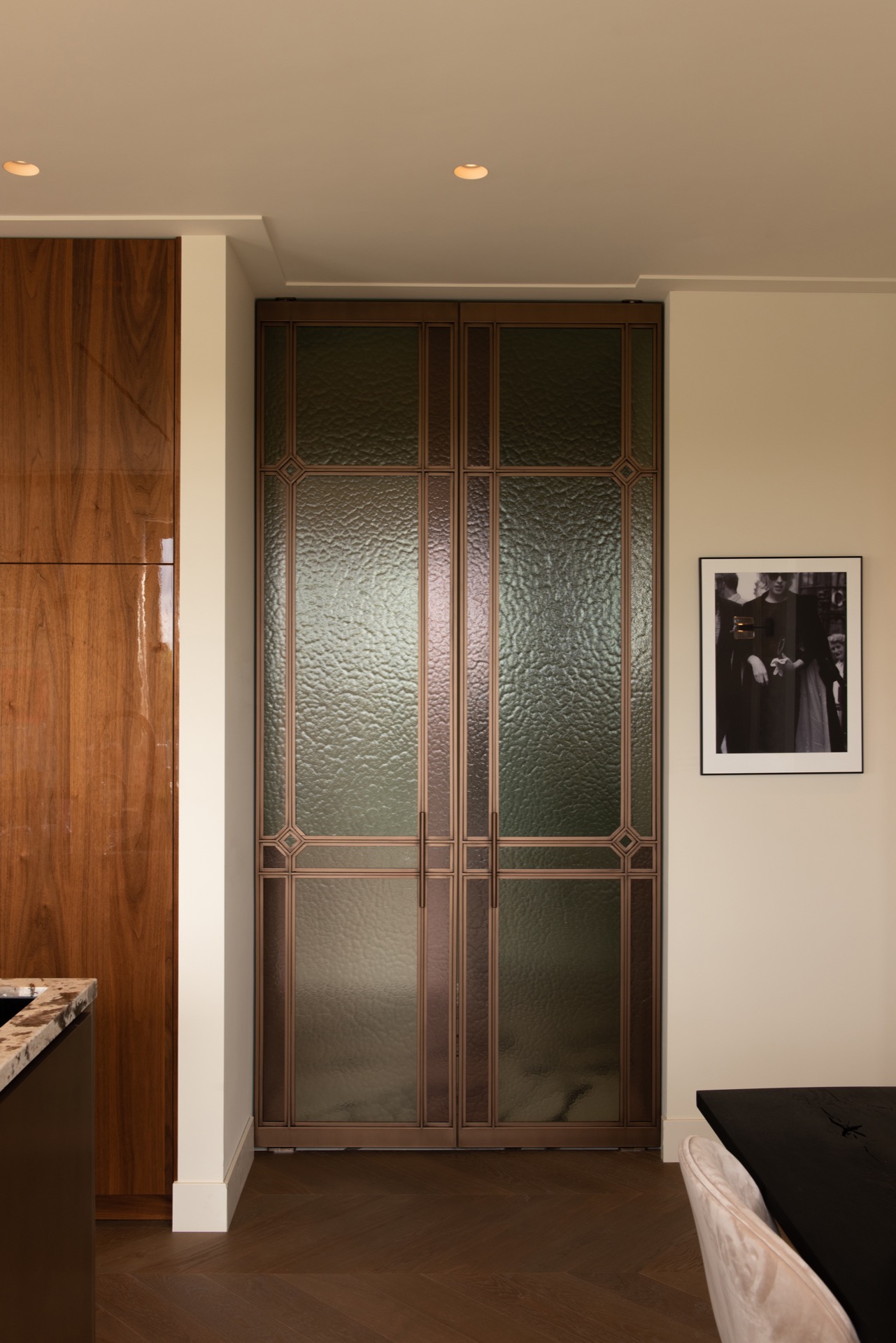
A stained-glass style detail at the entrance
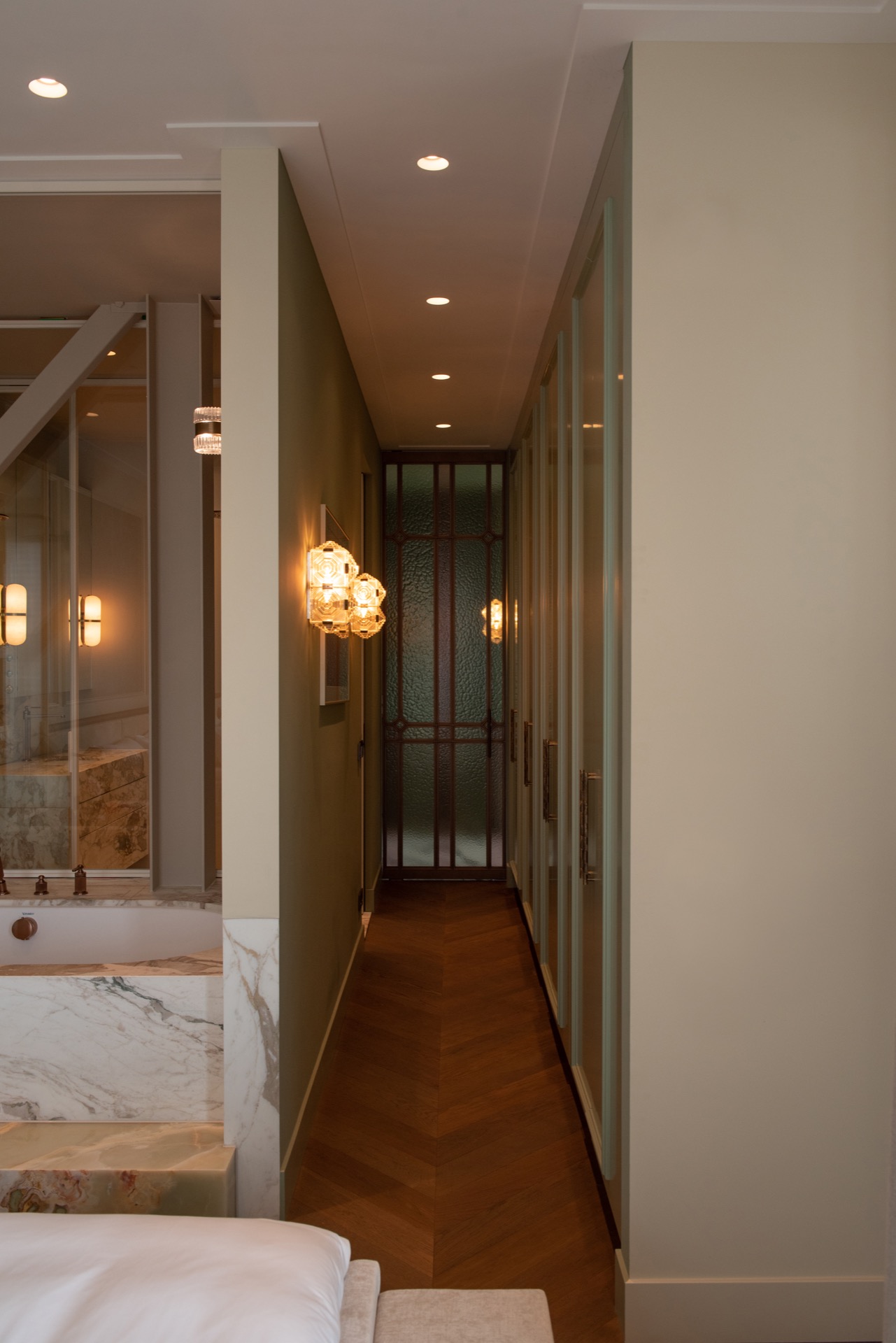
At the entrance, the tone changes through a small but memorable insert: a stained-glass style interior detail set into a wooden frame. The piece has a diamond-like pattern and a greenish tint, which stands out against the white wall finish nearby. It is a modest intervention, but it changes the way the corridor feels as you move through it. The corridor ceiling carries a row of recessed spots, and the light draws a clean line above the door openings.
That kind of detail links back to the client’s interest in vintage and art. It does not copy a period room; it borrows one fragment of pattern and lets it sit inside a contemporary joinery setting. The result is more interesting than a themed interior. It is a custom interior with marble accents that leaves room for a few precise references rather than filling every wall with them.
Furniture, art, and the pace of the rooms
The source brief makes clear that the furniture selection and wall art were part of the composition from the start. That shows in how the rooms are paced. A patterned armchair, a dark art image, a soft upholstered headboard, or a green-toned panel can occupy a wall without fighting the architecture around it. The objects are not treated as extra decoration. They sit within the same measured field as the cabinetry, the stone, and the glass.
That approach gives the project its calm. Not because it is empty, but because every room has a readable hierarchy. The custom wall unit with integrated lighting carries storage. The kitchen island anchors the plan. The bathroom uses glass and tile to keep the volume open. The bedroom shifts to fabric, framed openings, and warmer tones. Across all of it, the custom interior with marble accents remains the common thread.
Small transitions that shape the whole interior
What stays in memory is not one statement room, but the sequence of transitions: wood to stone, opaque to transparent, framed to open, lit to shadowed. The marbling in the surfaces, the niche lighting, and the glass details all work as markers in that sequence. They guide the eye from one zone to another without relying on large gestures. The project feels assembled through decisions about edges, openings, and the way light lands on a panel.
That is why the interior reads as tailored rather than simply furnished. The rooms carry the client’s interest in vintage, design, and art through the choice of materials and the handling of detail. A custom interior with marble accents can become vague if it leans only on surface effect. Here, the marble-like finishes, the built-in lighting, and the stained-glass style insert give the rooms enough structure to stay specific.
Wil je meer zien van MV Interior Design? Bekijk de pagina van MV Interior Design voor meer projecten en bedrijfsinformatie.


.png)
NEW 2026 Jubileum Edition The Best Interior Designers Benelux
Nu Bestellen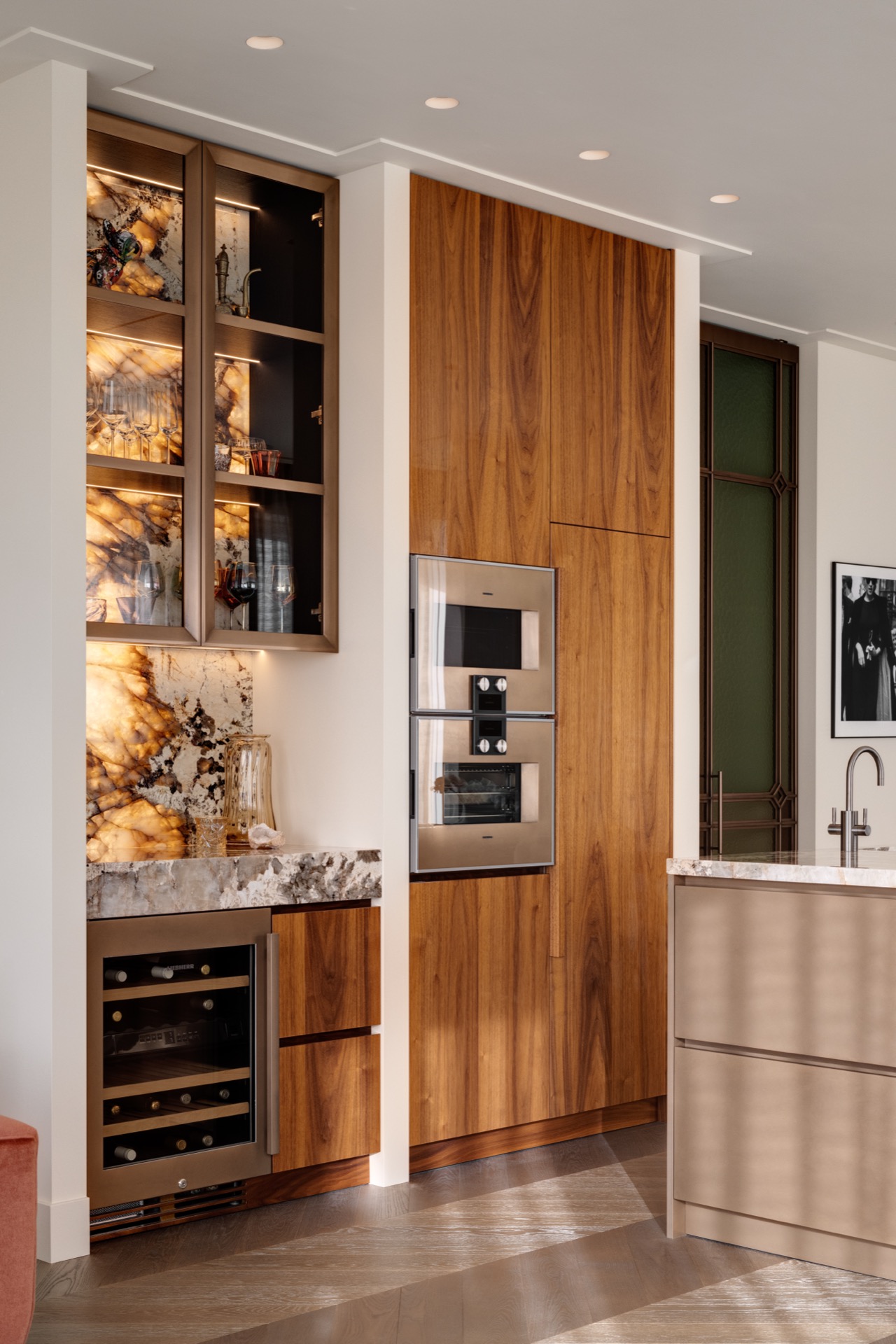
NEW 2026 Jubileum Edition The Best Interior Designers Benelux
Nu Bestellen