







Rooftop terraces with louvered roof canopy and glass balustrades
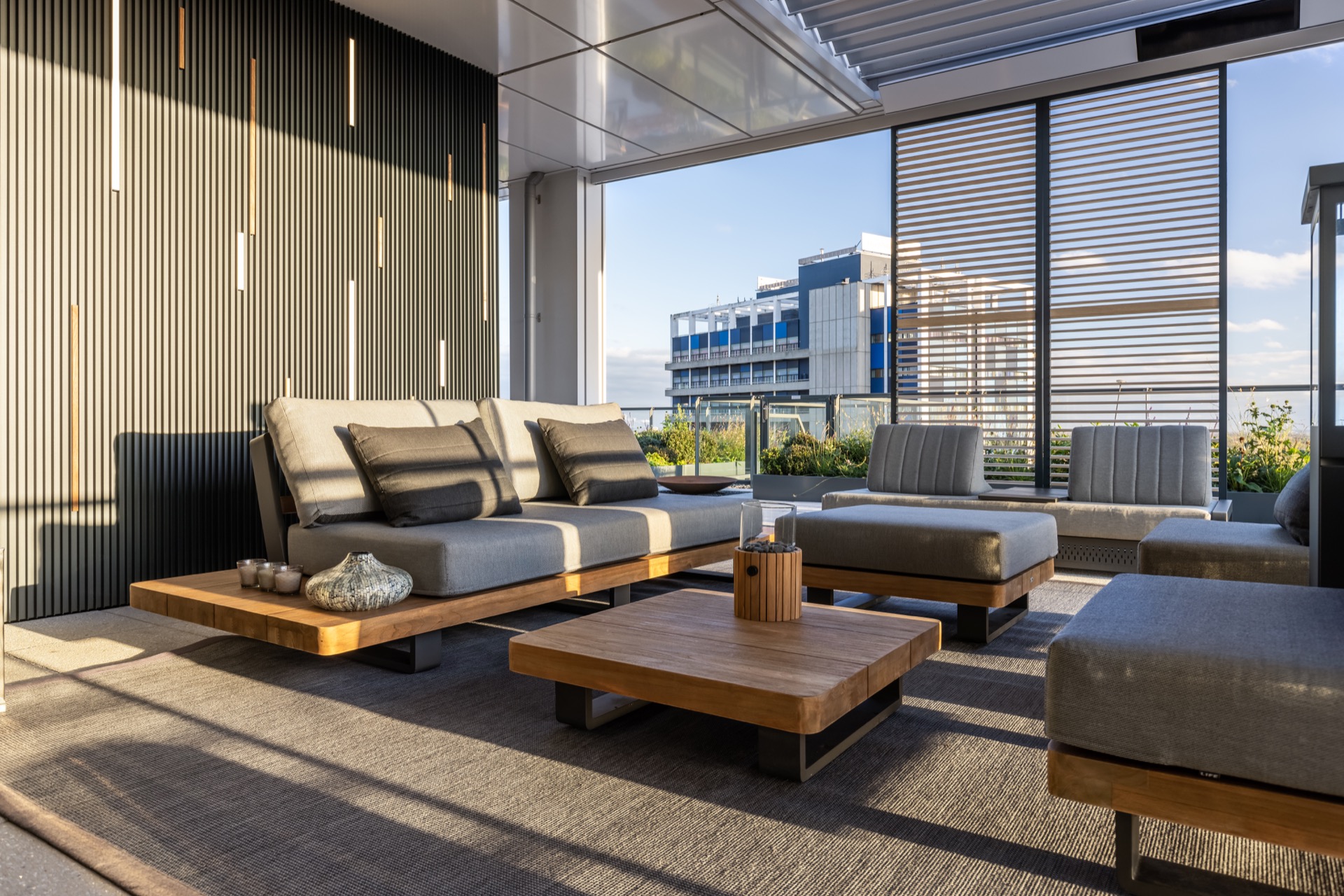
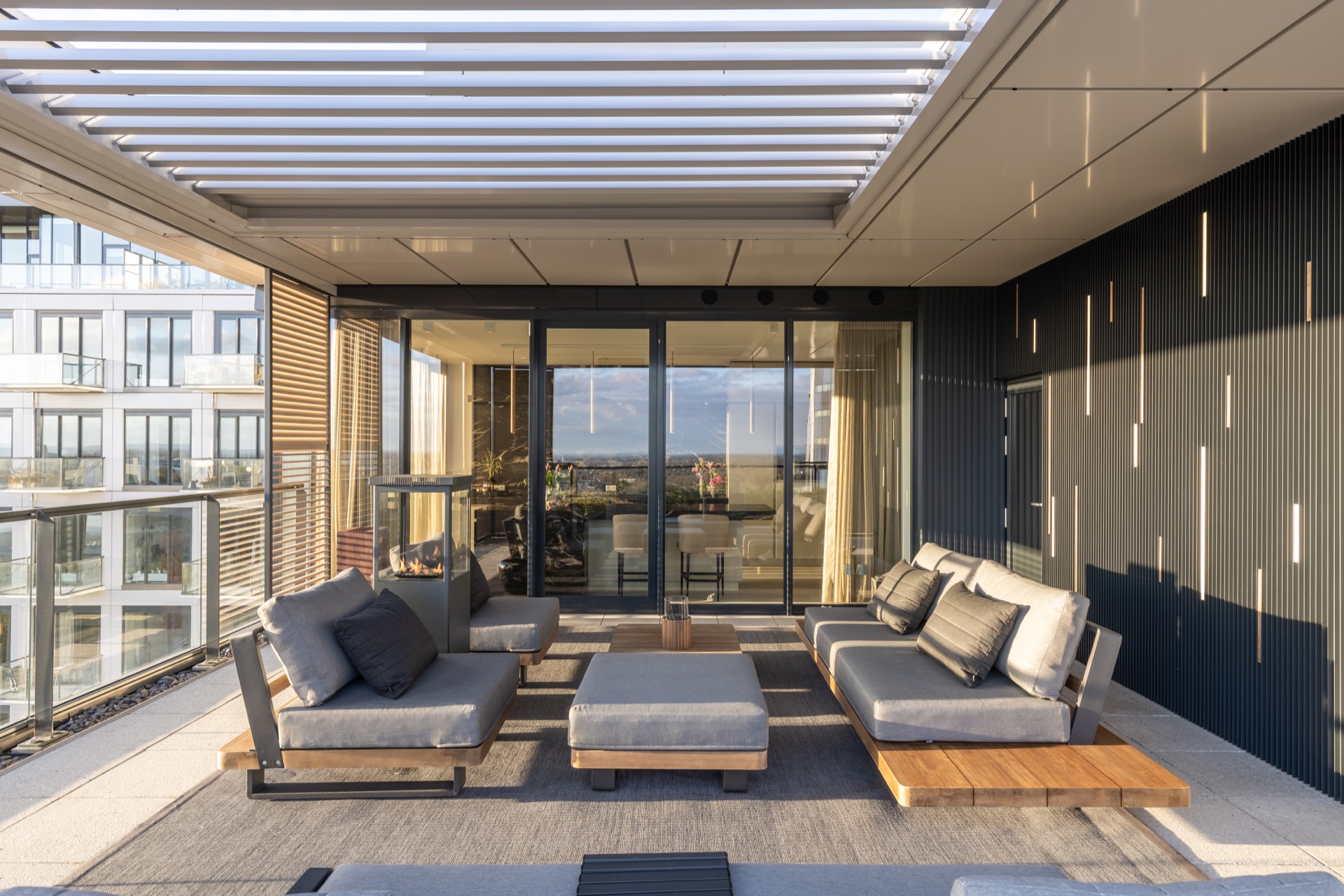
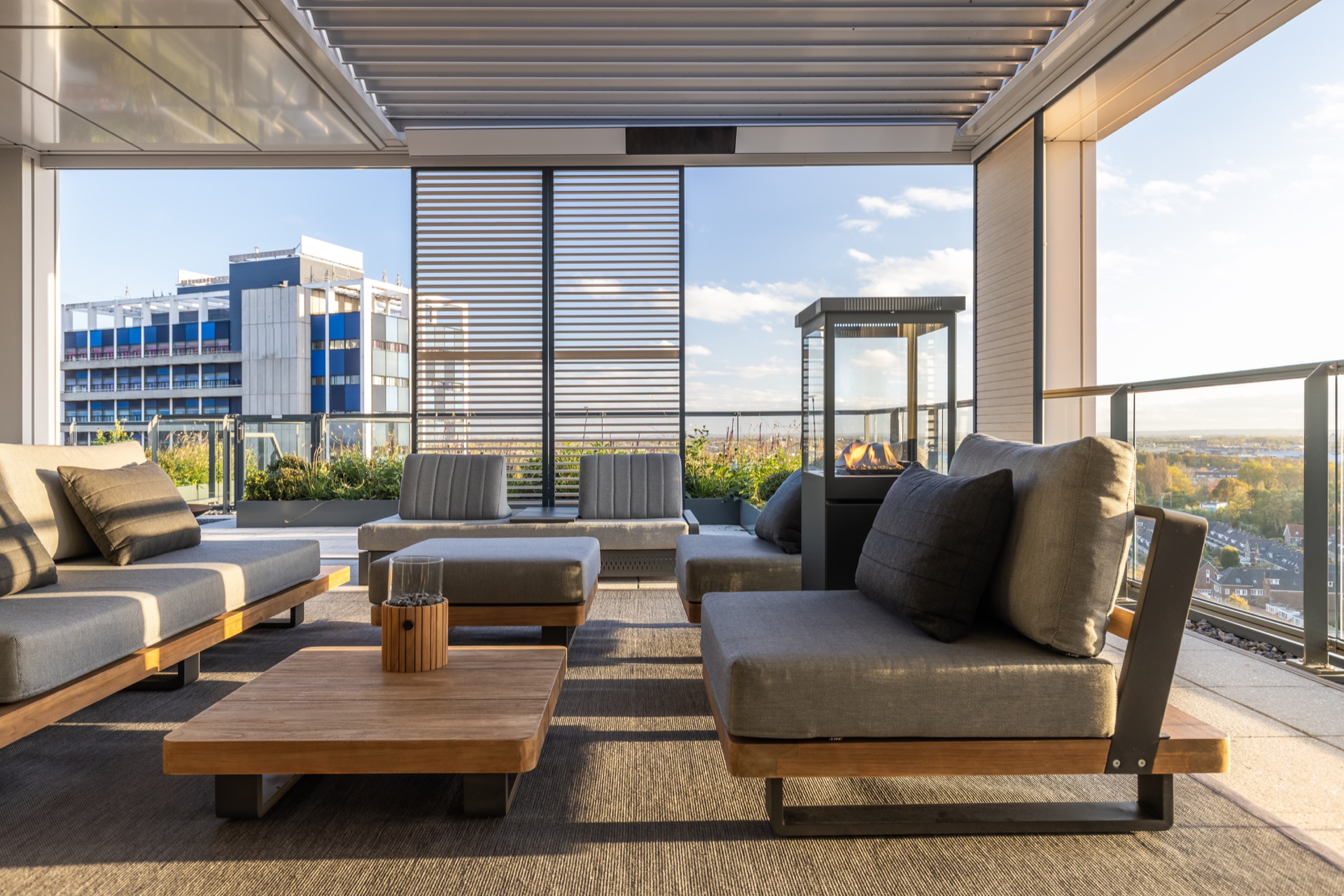
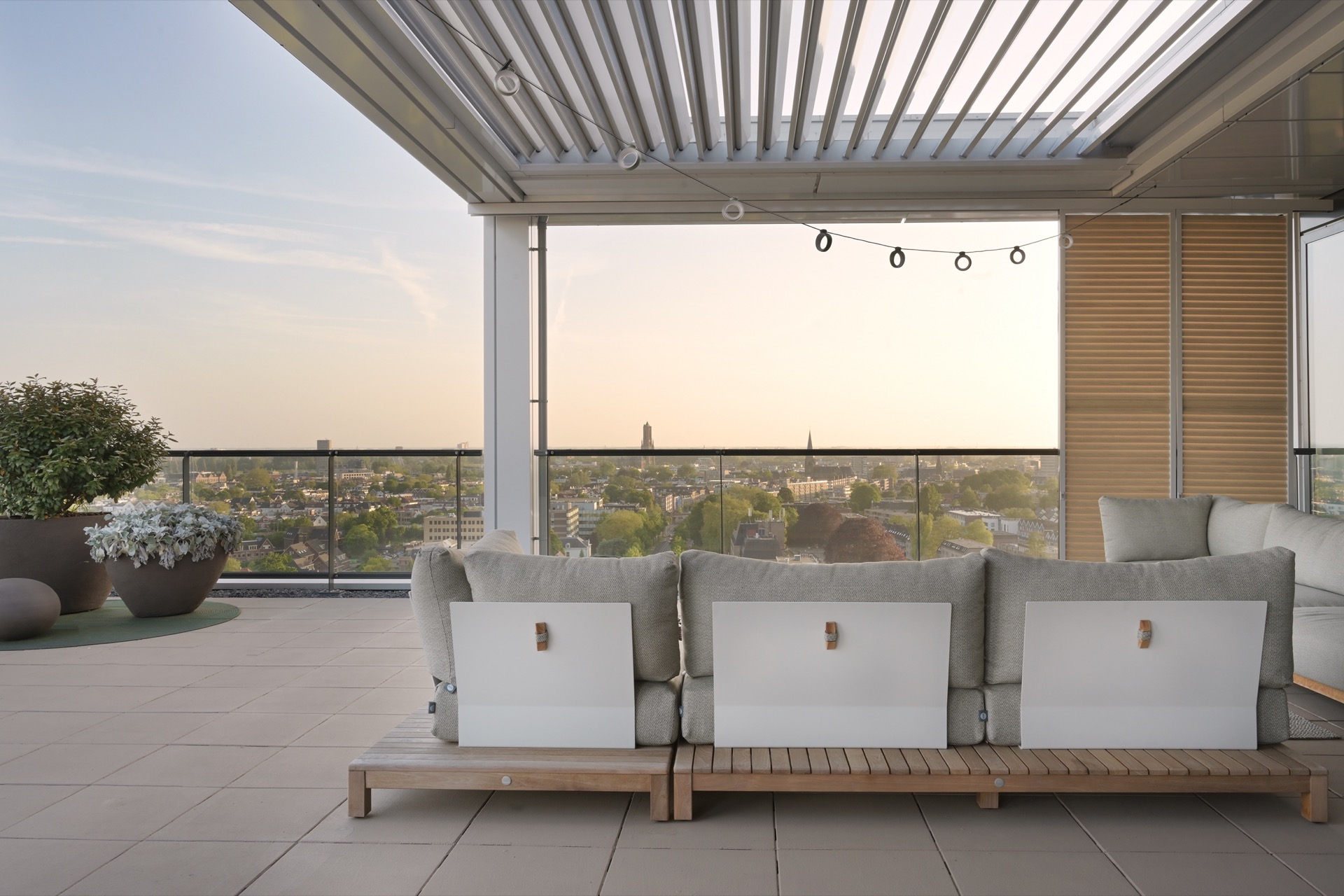
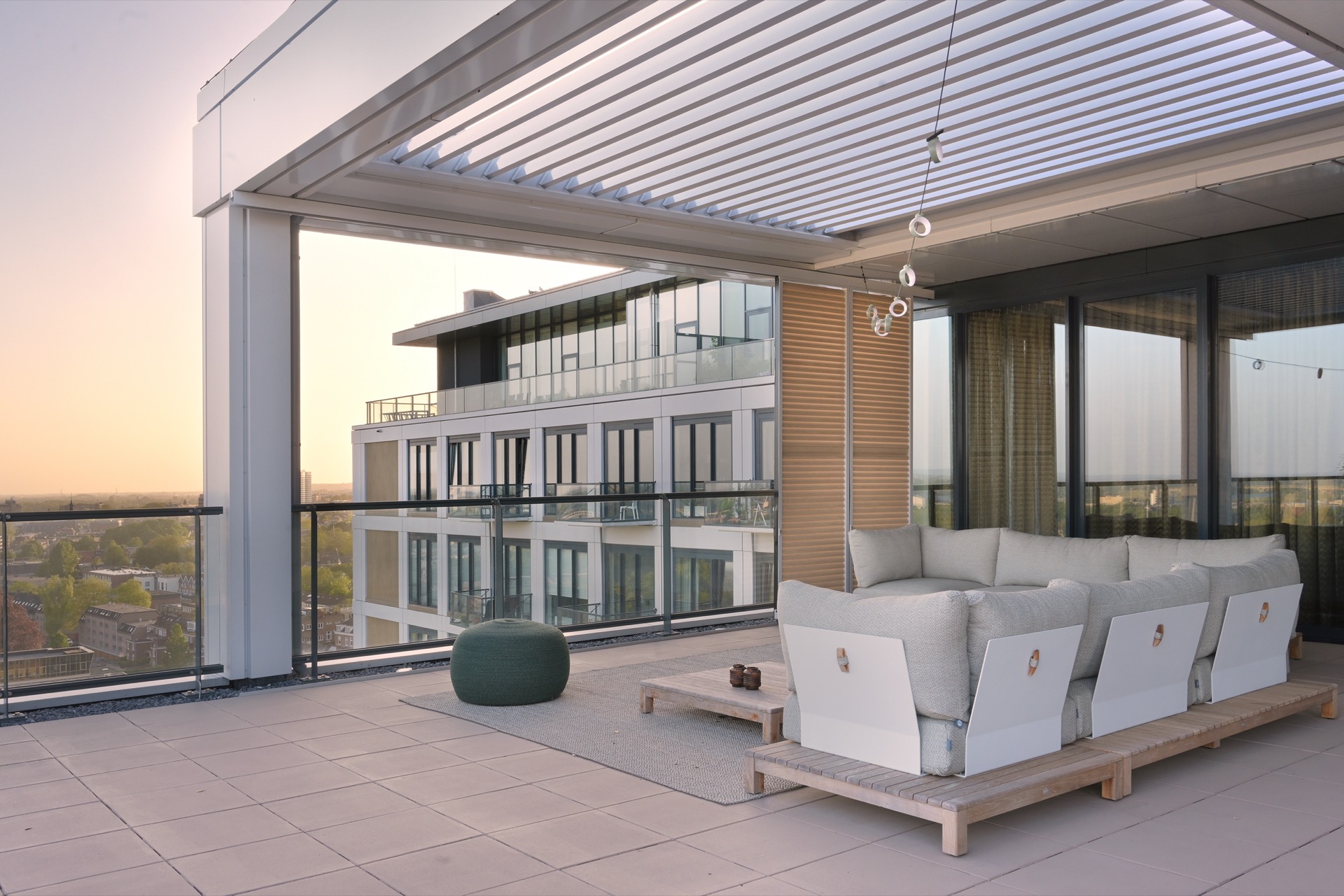
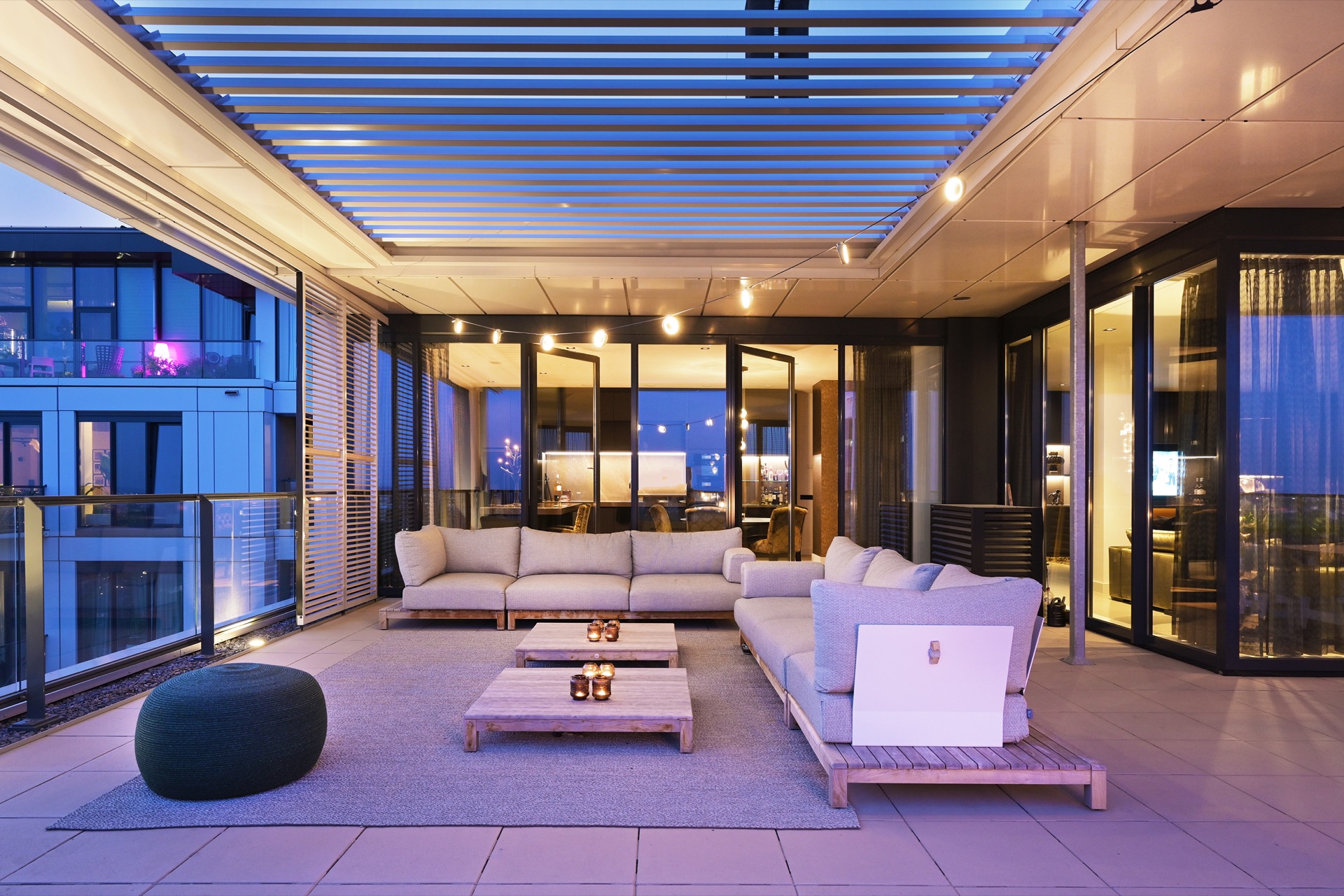
Louvered roof rooftop terrace shapes the way the rooms are organized and described. A line of parallel slats sets the tone before the view does. On two rooftop terraces above connected penthouse levels, the roof structure filters sunlight while leaving the sky open at the edges. Glass balustrades keep the perimeter visually light, and the terrace floor stays calm and straight-lined beneath the seating areas. The result is not one repeated outdoor room, but two spaces that share the same design language and still read differently once you step inside each loggia.
Louvered roof rooftop terrace as a spatial starting point
The first reading is consistency. Both outdoor spaces follow a uniform plan, built from the same elements: a louvered roof rooftop terrace, glass balustrades, wooden slat screens, and loggias that mediate between inside and outside. That repetition matters here because the penthouses sit one above the other. By keeping the structure legible from terrace to terrace, the project ties the stacked homes together without flattening their individual character. Small shifts in layout and colour accents give each level its own rhythm.
Nothing feels overloaded. The terrace surfaces remain restrained, so the slats overhead and the glass at the edge can do the visual work. On one level, the outdoor lounge sits directly against the balustrade, drawing the eye outward. On the other, the seating moves closer to the sheltered part of the loggia, where the enclosure feels more present. In both cases, the louvered roof rooftop terrace frames daily use rather than decorating it.
Inside tones carried out onto the terrace
The upper penthouse, on the 11th floor, was paired with an outdoor area that picks up the warm, refined colours of the interior. That connection is visible in the surfaces and in the restrained palette of the terrace details, which keeps the transition from living room to roof level easy to read. The interior project behind it was shaped together with the client and the interior designers, and that collaboration shows in the way the exterior stops short of making a separate statement. It extends the atmosphere already present indoors.
What makes the transition convincing is the way the materials stay in dialogue. Wood appears in the rotatable louver panels, glass keeps the edges open, and the terrace flooring remains calm enough for the furniture to sit without visual noise. A louvered roof rooftop terrace can become heavy if every surface competes for attention. Here, the structure is measured, and the eye moves from the sheltered seating area to the clouds and tree line beyond the balustrade without interruption.
Loggias with rotatable louver panels
The loggias are more than sheltered thresholds. They act as adjustable rooms, using rotatable louver panels to shape light, privacy and outlook. In the daytime, the wooden slats break up glare and soften the direct sun. In the evening, they turn into a darker frame around the lit seating area. Because the panels can be opened or angled, each rooftop terrace can respond to changing weather while keeping the view present. That gives the loggia a practical role without turning it into a closed enclosure.
Wood is the strongest visual counterpoint to the glass balustrade. The vertical slats add depth where the perimeter otherwise stays thin and transparent. Seen from across the terrace, the screens create a clear edge; seen from within, they filter the surrounding trees and the moving sky into narrower slices. The rooftop terrace with loggia becomes a place where the outside world is edited rather than blocked.
Light, wind and the changing view
The source material mentions sun, clouds, wind and trees, and those elements are not treated as background. They shape how the terraces are read. The louvered roof rooftop terrace catches the changing light from above, while the open balustrade lets the view remain wide and uninterrupted. When the wind moves through the height of the building, the slats and loggias give the terraces a sense of shelter without sealing them off. The project uses architecture to hold that tension between exposure and protection.
At night, the terrace changes again. Integrated outdoor lounge lighting traces the seating zones and the underside of the roof structure, so the slats become visible as a pattern rather than just a cover. The light does not flood the space. It stays close to the furniture, the edges, and the lines of the terrace, which helps the roof canopy read clearly after dark. In the second penthouse especially, this lighting gives the sheltered area a quiet outline against the darker sky.
Glass balustrades and a clear edge to the sky
The glass balustrade is one of the quietest parts of the design and also one of the most important. It holds the boundary of each terrace without creating a visual barrier, so the open outlook remains the main event. From the seating area, the edge almost disappears. From outside, it keeps the roof level sharp and uncluttered. That transparency suits the penthouse setting, where the view has to stay part of the room rather than become something beyond it.
Because the balustrade is so visually light, the other elements can work harder. The wooden slat screens gain depth, the roof canopy reads more clearly, and the terrace furniture sits against a calm perimeter. The louvered roof rooftop terrace gains its character from that contrast: a solid overhead structure, a thin edge, and an open field of sky and trees beyond.
Two penthouses, two ways of using the same structure
The second penthouse, one level higher, repeats the same architectural ingredients but shifts them into a different arrangement. The lamellendak, loggia and screen elements remain, yet the composition changes enough to produce another mood. Colour accents are adjusted, and the relationship between sheltered and open space shifts slightly. That is what keeps the project from feeling repetitive. The design is consistent, but the terraces are not copies. Each one reads in relation to its own interior and its own view.
Seen together, the two terraces show how a rooftop terrace with loggia can be tuned for different levels within one building. The lower terrace connects closely to the interior colours and the furniture arrangement. The upper one leans more into the panorama and the shelter of the roof structure. Both depend on the same framework of slats, glass and controlled light, yet the experience changes as soon as the proportions and colour accents move. That is where the project’s strength sits: in small, deliberate differences.
Material choices that keep the rooms readable
Wood, glass and stone do most of the work here. The wooden slats bring texture to the roof canopy and the loggia screens. The glass balustrades keep the terraces open to the surroundings. The stone-like terrace flooring grounds everything beneath it and gives the furniture a stable base. Together they form a clear sequence from ceiling to edge to floor, which makes the rooftop terrace easy to read even when the light changes.
The furniture placement follows that same logic. Seating clusters stay close to the sheltered areas, while the open perimeter remains available to the view. In the evening, the linear lighting underlines that layout and picks out the roof slats, the screen edges and the lounge zones. The project does not rely on ornament. It works through proportion, through the interval between slats, and through the way the loggia softens the boundary between indoor living and the roof level outside.
Photography: Jaro van Meerten & Jurrit van der Waal
Contributors: Renson Louvered roof rooftop terrace remains connected to the layout, materials and daily use of the home.
Wil je meer zien van Veraluxe | Luxury Outdoor? Bekijk de pagina van Veraluxe | Luxury Outdoor voor meer projecten en bedrijfsinformatie.


Bijdragers
.png)
NEW 2026 Jubileum Edition The Best Interior Designers Benelux
Nu Bestellen