




Rooftop garden met verstelbaar lamellendak
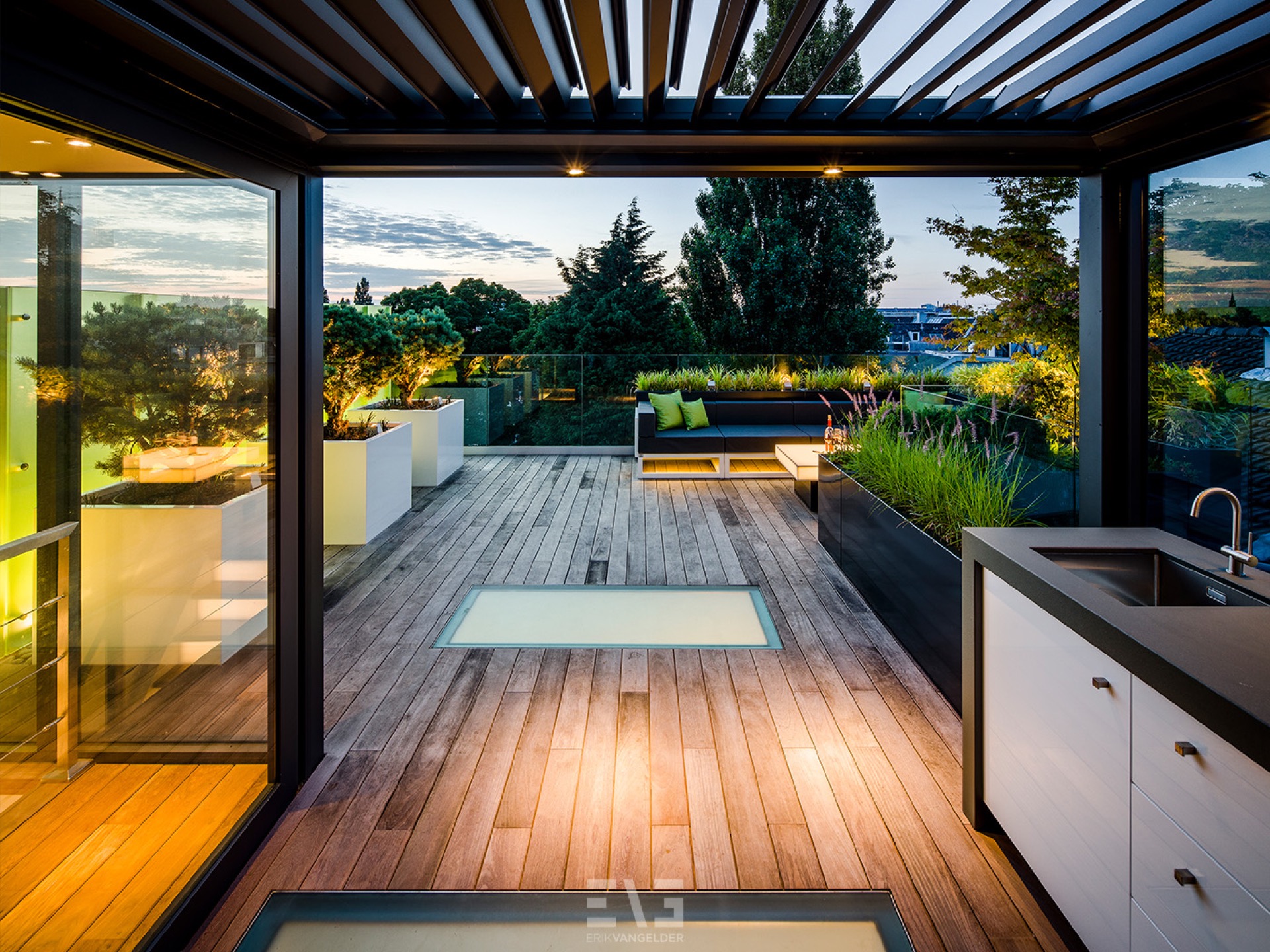
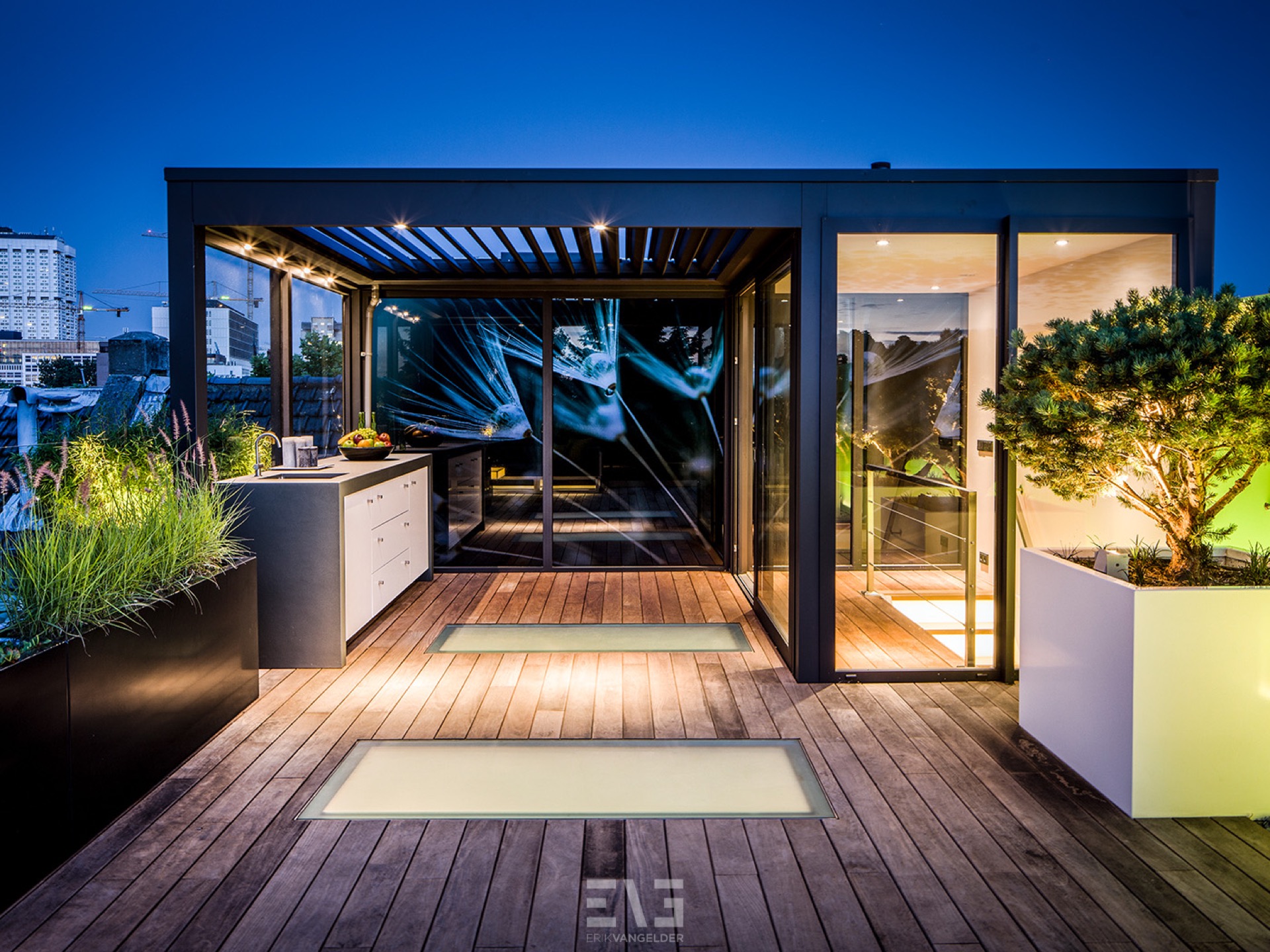
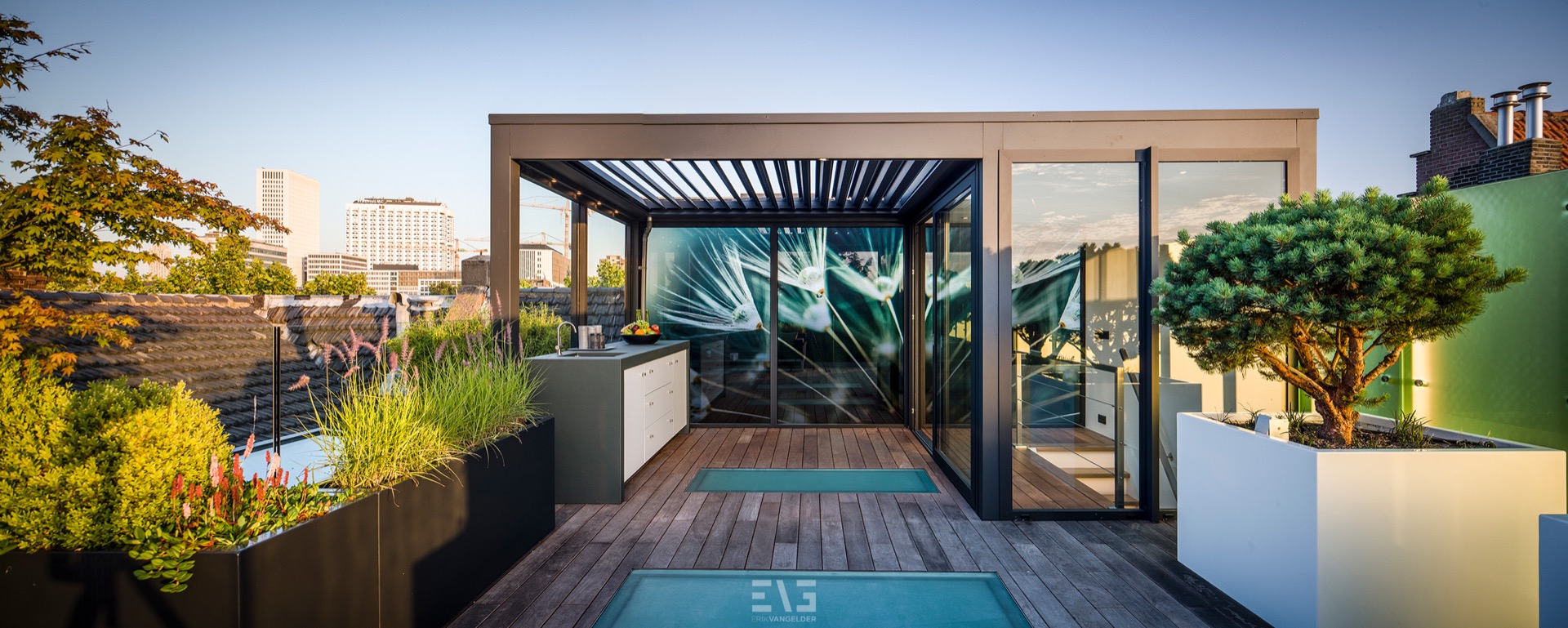
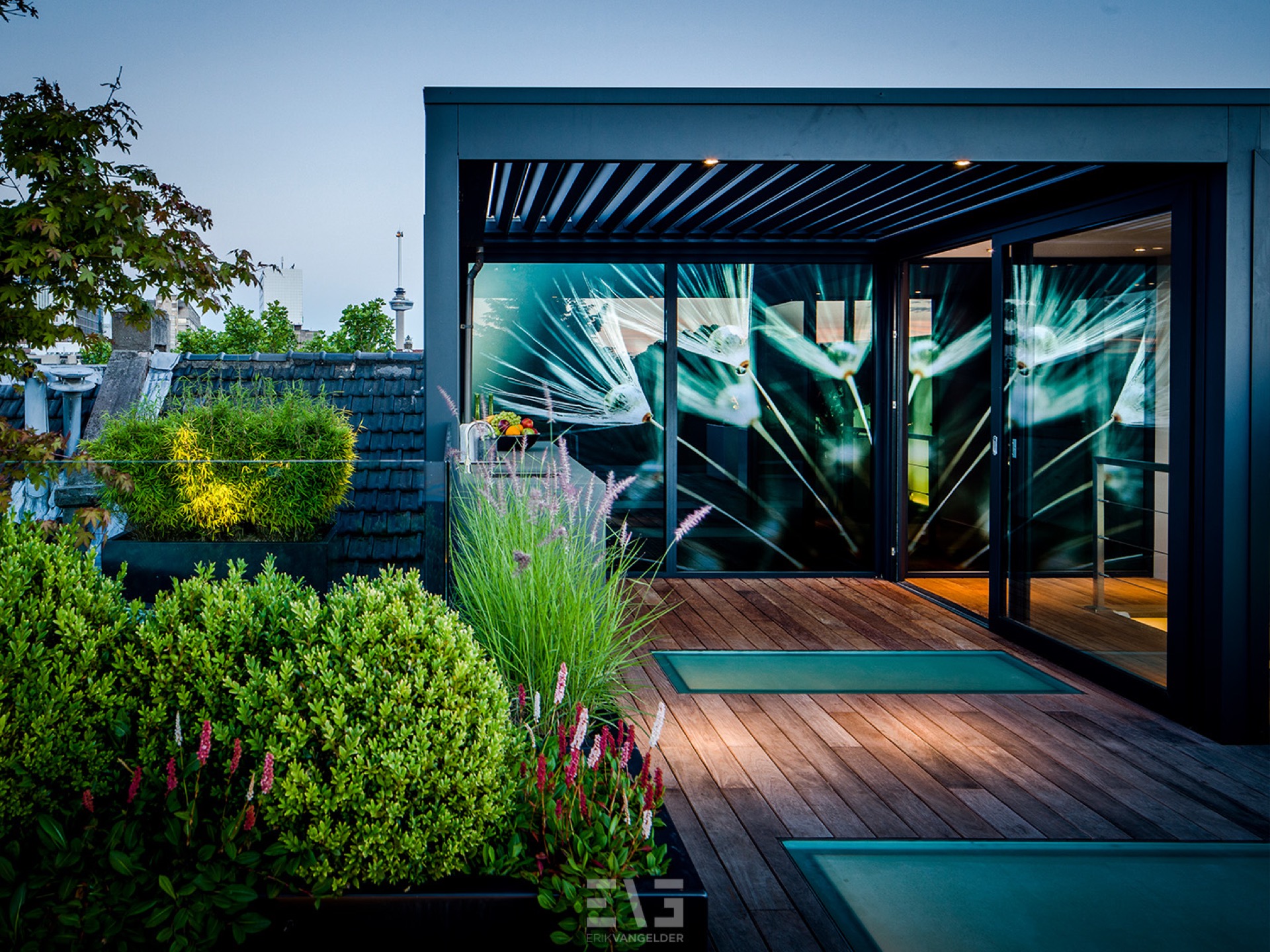
The rooftop garden design is immediately visible in the way the project is framed. Aluminum louvers extend overhead, their slender blades arranged within a robust metal framework, shading a rooftop garden that balances open-air exposure with shelter. The louver roof swivels to align with the changing sun, adjusting light and airflow throughout the day, a defining element of this outdoor space.
rooftop garden design as the architectural starting point
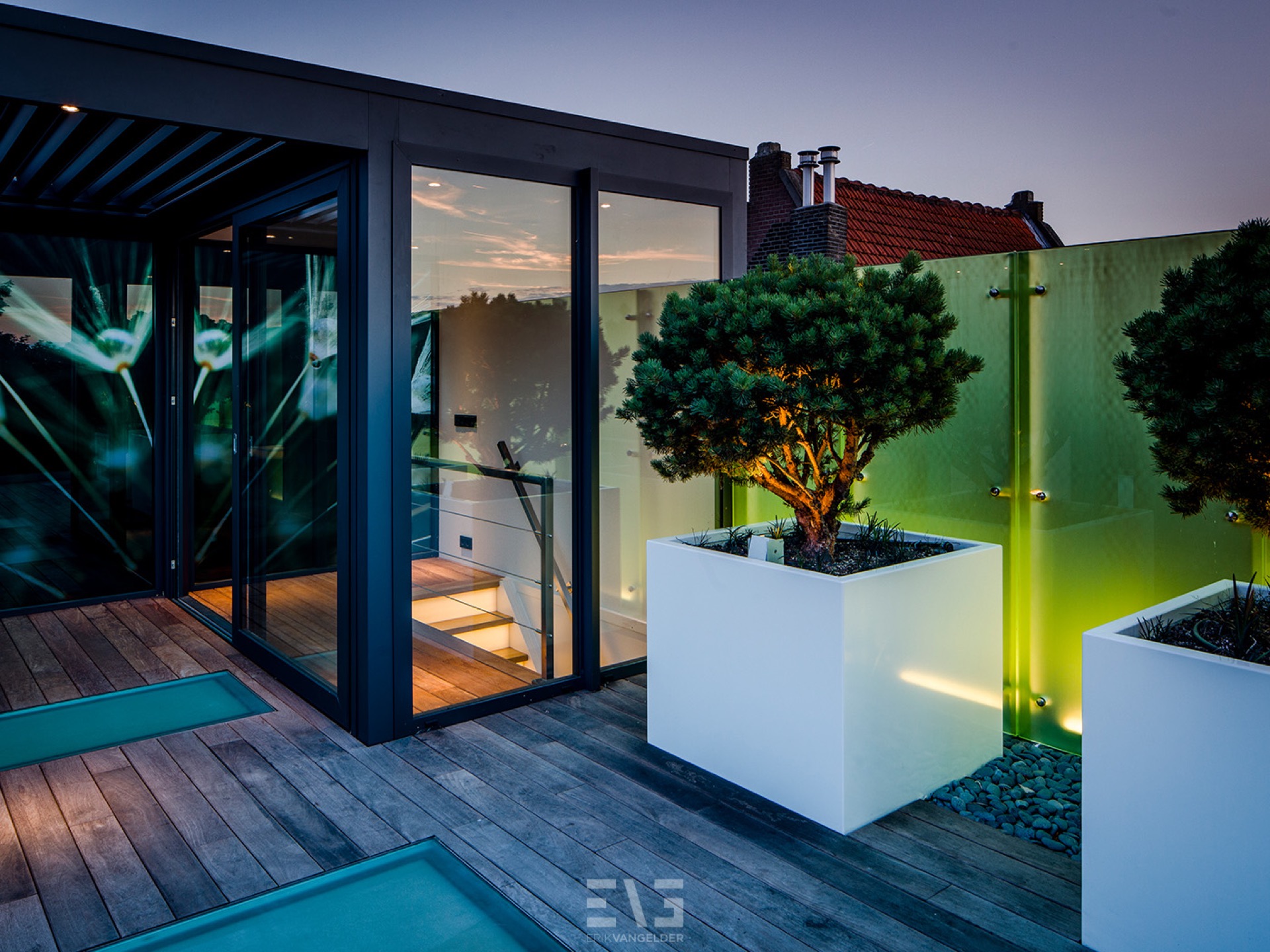
The roof’s metal framework pairs with warm wooden flooring beneath, constructing a contrast of cold industrial and organic textures. The wood planks run lengthwise across the terrace, anchoring the space and emphasizing its elongated proportions. Glass balustrades border the platform, providing unobstructed views while maintaining safety and visual continuity.
Functional Zones within the Outdoor Space
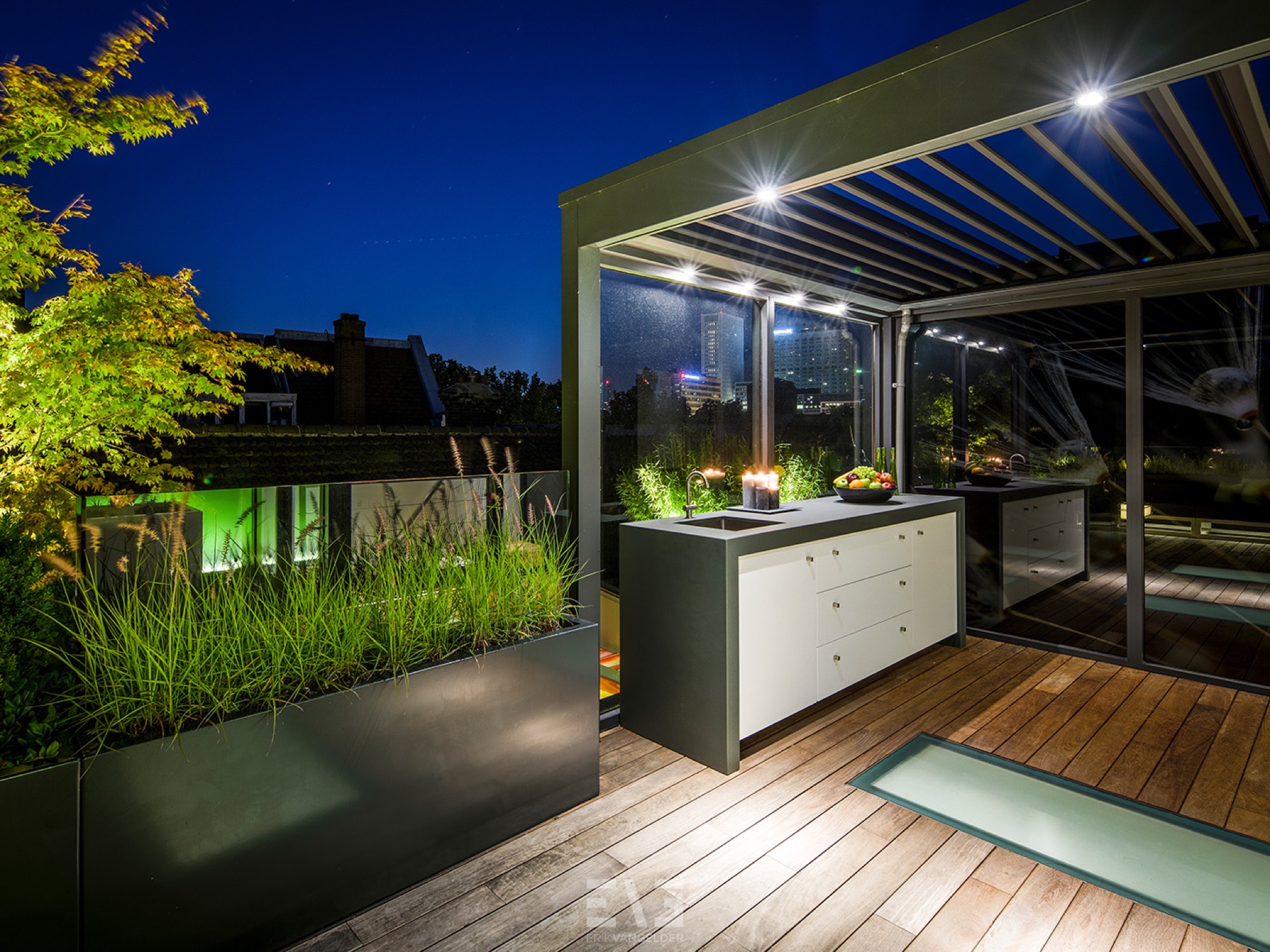
Near one corner, a compact outdoor kitchen stands framed by sleek panels and metal countertops. Stainless steel fixtures reflect ambient light while offering durable surfaces resistant to weather elements. Adjacent built-in planters incorporate vertical and horizontal lines, hosting a variety of greenery that softens the hard edges of the metal and wood.
Adaptability through the Adjustable Louver Roof
The aluminum louvers adjust with ease, enabling control over sun exposure and ventilation. When open, they admit sunlight and a gentle breeze; closed, they form a protective canopy, sheltering the terrace from rain. This mechanism enhances the rooftop’s utility across seasons, making the area suitable for gatherings regardless of the weather.
Evening Ambiance and Lighting Composition
Strategically placed lighting fixtures outline pathways and illuminate plant containers, casting soft glows onto wooden surfaces. Low-slung fixtures beneath the roof beams create subtle contrasts between light and shadow, emphasizing the texture of materials and adding depth to the night-time environment.
Plant Containers as Architectural Elements
Rectangular planters, finished in muted tones resonating with the metal and wood, are positioned to delineate space without obstructing views. Their contents include varied foliage, chosen for structural form and seasonal texture, contributing visual rhythm and a natural touch to the terrace’s geometry.
Spatial Flow and Views
The arrangement encourages movement from the kitchen area to seating zones, framed by the adjustable roof overhead. Open sides create seamless indoor-outdoor transitions, leading to city views just beyond the glass balustrades, enhancing the sense of openness within the compact rooftop footprint. That makes the rooftop garden design part of the architectural character rather than a loose finish.
Weather Considerations in the Design
The sturdy metal structure supports the louver roof’s weight and operation, ensuring durability against wind loads and precipitation. The aluminum lamellae’s corrosion resistance factors into long-term usability. This functional design addresses environmental factors with architectural responses, securing the rooftop’s year-round viability.
Material Palette and Tactile Experience
Wood surfaces reveal grain and warmth underfoot, contrasting with cooler smooth metals elsewhere. Glass elements add transparency and lightness. The combination of these materials establishes variety in texture and finish, appealing not only visually but also through physical experience.
Design Coherence and Custom Solutions
Each architectural element appears calibrated to complement the others, from the precise angles of the louvers to the alignment of flooring boards and the placement of planters. This bespoke arrangement demonstrates meticulous tailoring to the rooftop’s dimensions, optimizing use and comfort.
Outdoor Kitchen and Social Use
The kitchen unit’s layout caters to efficient food preparation outdoors while maintaining clean lines. Positioning near circulation paths allows hosts to engage with guests while working, supporting social interaction. Durable surfaces withstand frequent use, integrating utility with the terrace’s aesthetic.
Lighting as a Design Tool
Evening illumination does more than provide visibility; it sculpts the terrace’s character at dusk. Lighting underlines shapes and materials, bringing attention to key features like plants and structural lines without overwhelming the space.
Summary of Space Experience
This rooftop garden combines structural precision with organic softness to create an outdoor living area that responds dynamically to natural elements through its adjustable roof and material selection. The result is an environment conducive to seasonal enjoyment, framed by thoughtful details in construction and landscaping. That makes the rooftop garden design part of the architectural character rather than a loose finish.
Want to see more of Livium? View the page of Livium for even more great projects and company information.


.png)