






Covered Indoor Pool with LED Light Lines and Modern Spa Finishes
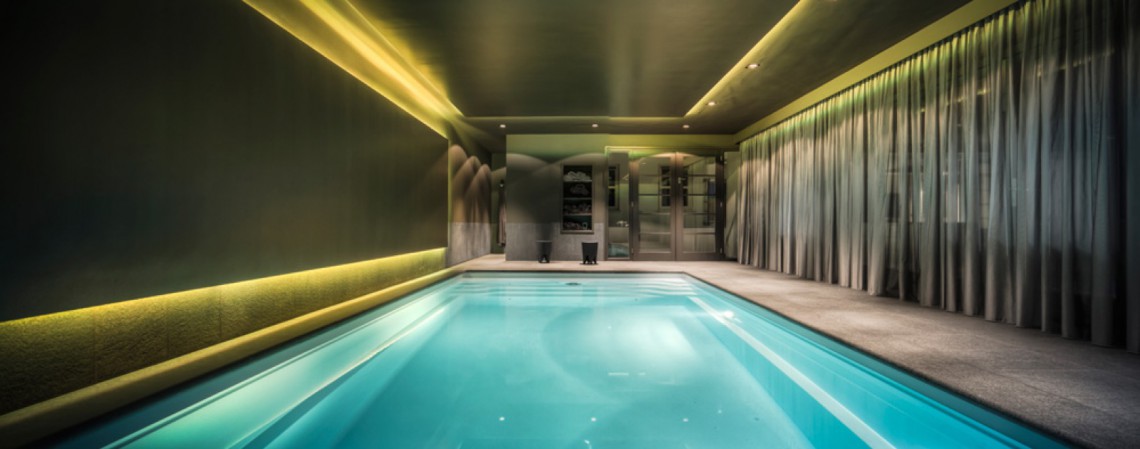
A rectangular pool sets the pace here, edged by light that traces the waterline instead of hiding it. Around it, LED strips run along the ceiling edges and wall corners, so the room is drawn in clear lines rather than broad gestures. The result is a covered indoor pool with LED lighting that reads as a sequence of illuminated surfaces: dark walls, ceramic tiles, glass, and water reflecting color back into the space.
Waterline light that stays visible
The pool border lighting is one of the strongest elements in the room. Turquoise, blue, orange, and yellow tones pick out the perimeter of the basin and change the mood without changing the layout. Because the pool remains rectangular and restrained, the light does most of the visual work. It marks the edge of the water, then repeats on the surrounding wall and ceiling lines, keeping the eye moving through the space.
Those light bands do more than add color. They sharpen the junctions between planes, especially where the dark wall cladding meets the ceiling and where the tile surface meets the pool edge. In a covered indoor pool with LED lighting, that kind of detail matters: the room is not decorated with objects, but defined by line, reflection, and surface. The basin becomes the anchor, while the light gives the entire area its direction.
Dark surfaces and ceramic tile under low light
Dark wall cladding gives the pool room a measured backdrop. It absorbs part of the light and makes the brighter LED tones stand out more clearly, especially along the water border and the wall corners. Ceramic flooring and adjacent tile surfaces keep the finish clean and hard-wearing in appearance, but the visual effect is not clinical. The contrast between dark panels and the lit pool edge creates a calm, enclosed setting that still feels active.
Recessed wall niches and grille-like details break up the larger wall planes. They keep the room from becoming a flat box of dark material. Instead, the walls carry small interruptions that catch light and shadow in different ways. That is where the modern spa style becomes visible: not in decoration, but in how the surfaces are arranged, how the lines are placed, and how the room avoids any unnecessary bulk.
Light lines at the ceiling and wall corners
Blue light lines run along the ceiling edges and into the wall transitions, giving the covered indoor pool its clearest outline. The effect is architectural rather than theatrical. Even when the color shifts, the room remains legible because the lighting follows the geometry of the space. The ceiling does not disappear; it is framed. The wall corners are not hidden; they are underlined. This keeps the composition precise while still allowing the color changes to register.
From several angles, the light bands seem to pull the pool room outward toward the glass, then back again to the basin. That push and pull gives the space depth. It also makes the pool border waterline lighting easier to read in photographs, where the illuminated edge catches on the glossy surface and repeats in the glass reflections. The result is a room that feels organized by light rather than by furniture or loose decor.
Glass, curtains, and the edge of the room
Large windows with curtains bring a soft vertical element into a room otherwise ruled by horizontal lines. The curtains sit close to the glazing and break the reflection of the pool surface. They also add a visual pause between the hard finishes and the outside light behind the glass. Because the openings are large, the room does not close in on itself. Instead, the pool area keeps a direct relation to the glazing line and the spaces beyond it.
The glass doors and windows sharpen the contrast with the darker finishes. During the day, they lift the room with natural light; after dark, they become reflective surfaces that catch the LED bands and the colored waterline. In a covered indoor pool with LED lighting, this is where the room gains scale. The glazing does not dominate, but it gives the basin a frame and makes the light feel deeper.
Bathroom details in stone-look tiles and glass
An adjacent bathroom brings the same material language into a smaller setting. Stone-look bathroom tiles cover the surfaces in a darker tone, with the shower area enclosed by a glass screen. The shower itself has a rounded, arched feel, which softens the sharper geometry of the pool room. Built-in lighting and the darker tile finish keep the space visually quiet, but the glass makes the shower zone read clearly.
The walk-in shower glass screen is the main divider here. It keeps the shower open to the room while still separating water from the rest of the floor. A recessed niche is set into the wall, and that small cut-out does practical work without adding clutter. In a project where light lines and reflections matter, even the bathroom detail follows the same logic: clear edges, simple volumes, and materials that show light rather than hide it.
A second room, same visual language
What links the bathroom to the pool area is not decoration but repetition of surface. Ceramic and stone-look finishes, glass, and dark wall treatment appear again in a tighter arrangement. The scale changes, yet the reading stays consistent. The shower niche, the glass screen, and the rounded enclosure echo the curved glow of the pool’s illuminated edge. That quiet continuity gives the interior its strength without leaning on any single showpiece.
Seen as a sequence, the rooms are built around light moving across material. The pool border lighting, the blue ceiling accents, and the colored lines in turquoise, orange, and yellow make the water room feel active, while the bathroom brings that same clarity into a more enclosed setting. It is a straightforward idea, handled with care in the details: keep the lines visible, keep the finishes legible, and let the light define the atmosphere around the basin.
Want to see more of Stephen Versteegh? View the page of Stephen Versteegh for even more great projects and company information.





NEW 2026 Jubileum Edition The Best Interior Designers Benelux
Order Now €125


NEW 2026 Jubileum Edition The Best Interior Designers Benelux
Order Now €125