




Afrormosia wood joinery with large window openings and driveway gate
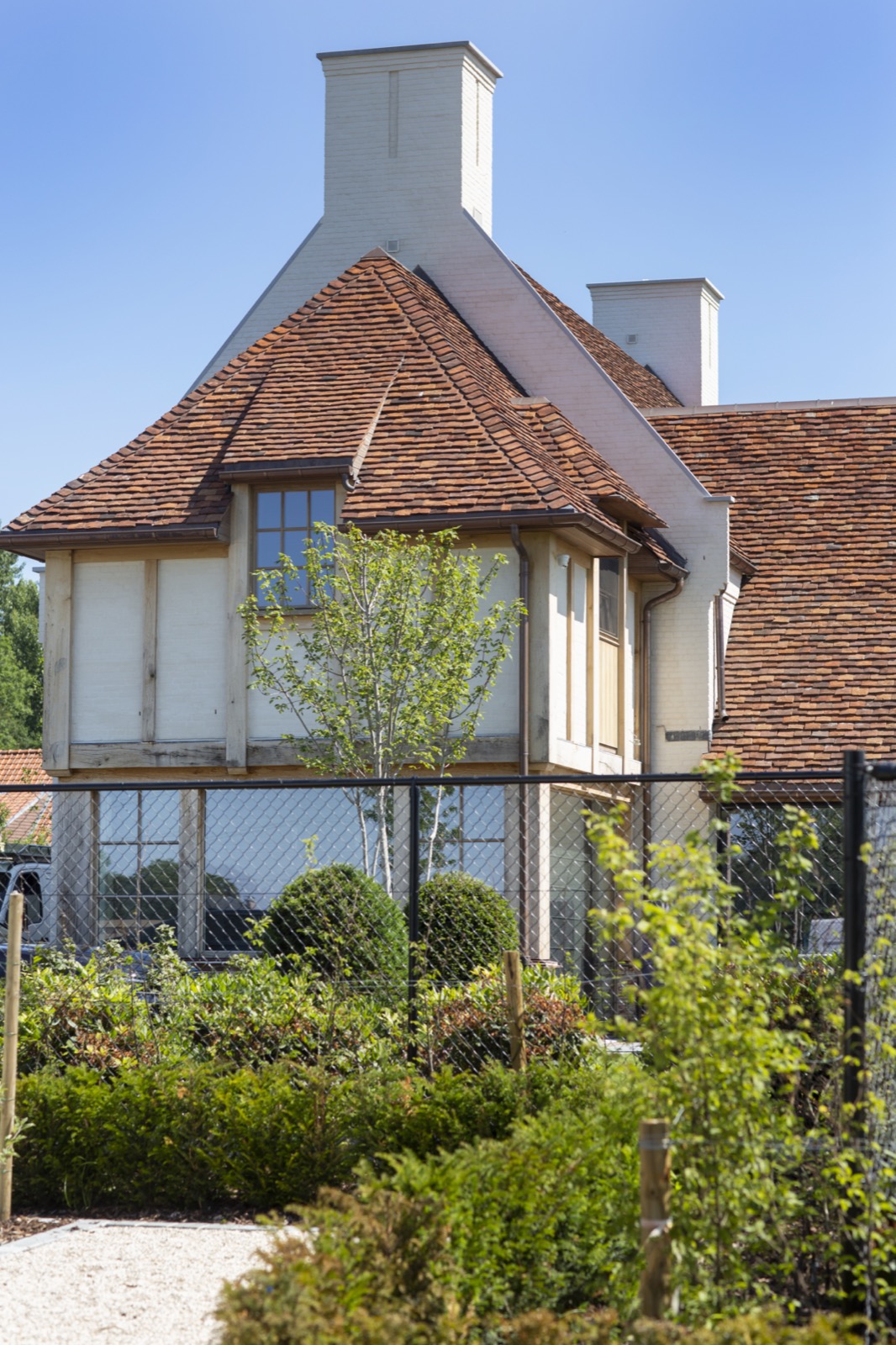
Afrormosia wood joinery project shapes the way the rooms are organized and described. Afrormosia runs through the project from the driveway gate to the window frames, door leaves and farm-style gates. The wood’s grain stays visible, even where a black lacquer finish is used on select elements such as the bay window and an upper-floor window. Against the brickwork and steep tiled roof, the material reads clearly: brown tones, dark hardware, and generous openings that pull light deep into the house.
Afrormosia wood joinery project as a spatial starting point
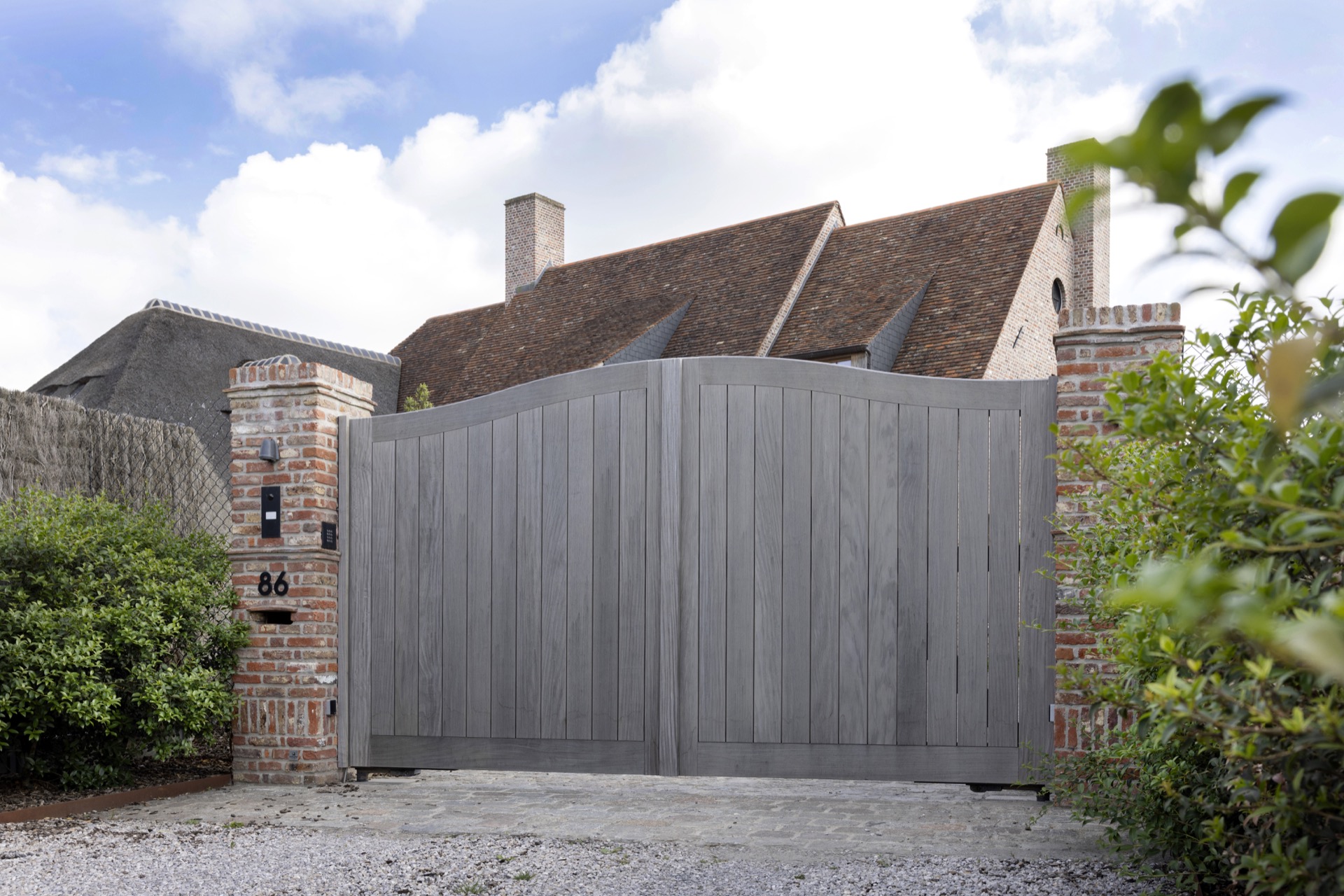
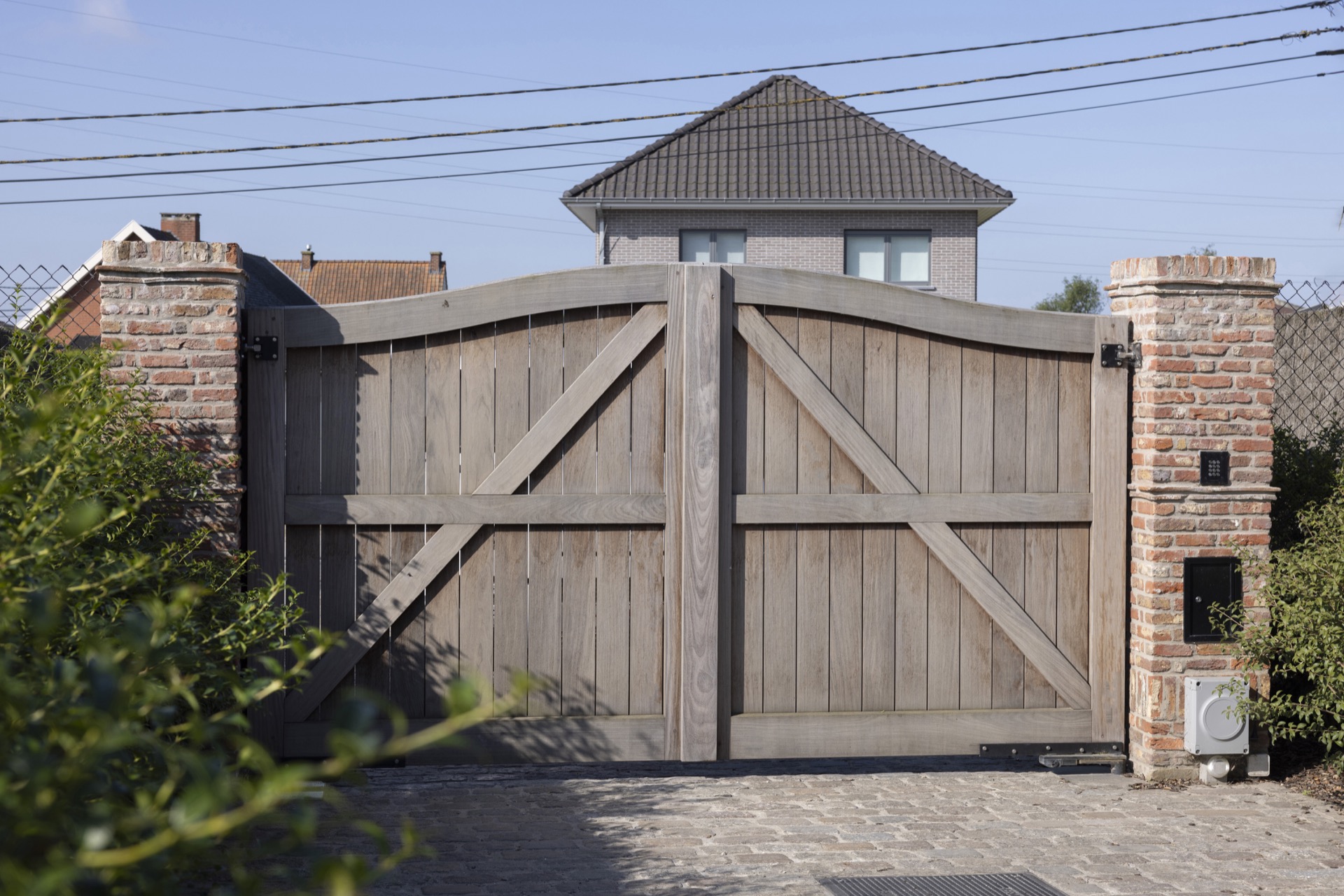
At the entrance, a natural Afrormosia swing gate sits between brick pillars. The arch-shaped opening above the gate gives the fence line a marked profile, while black hinges and fittings sharpen the detail. It is a small sequence of parts, but it already shows the project’s method: wood used not as decoration, but as the main surface for doors, gates and frames across the property.
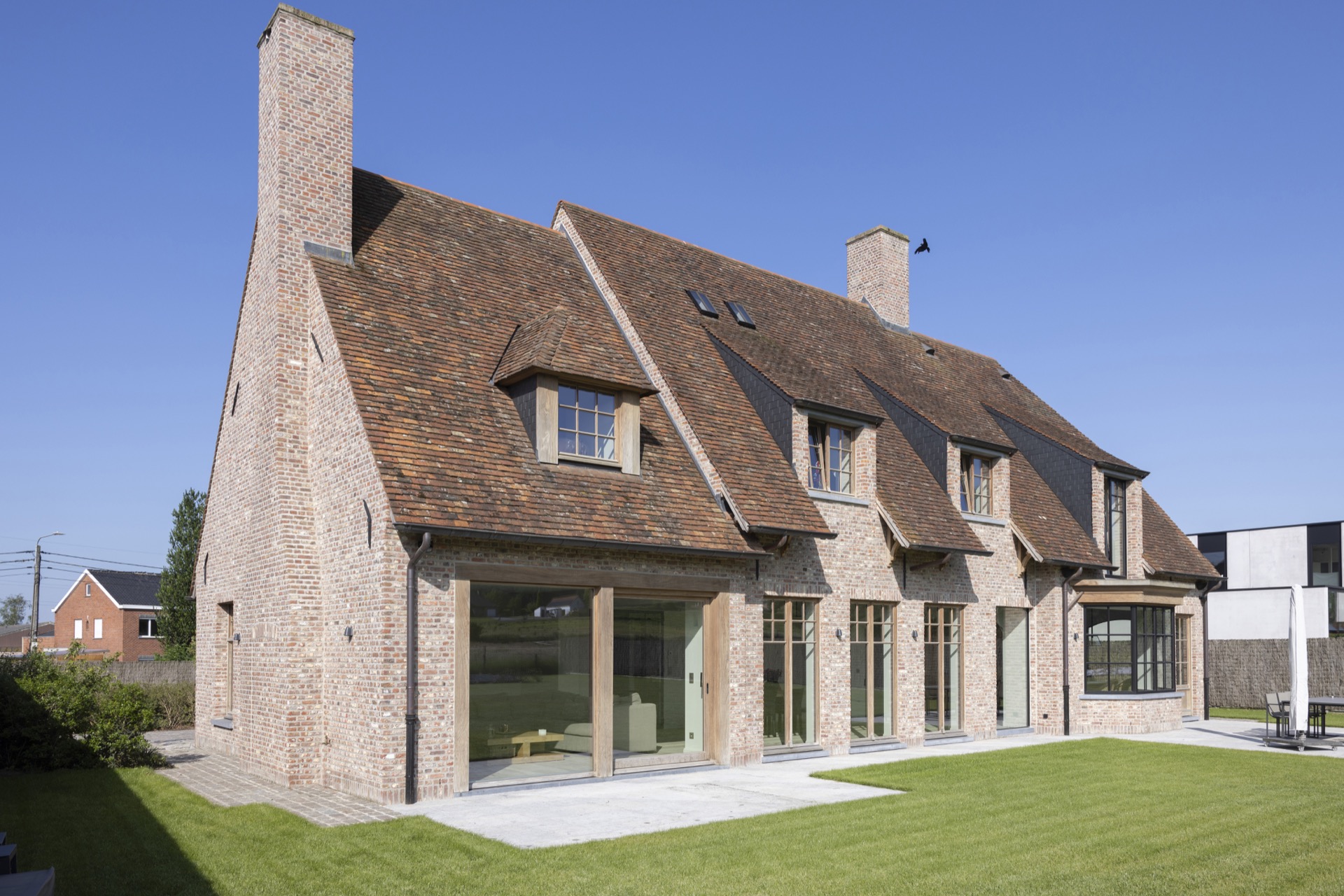
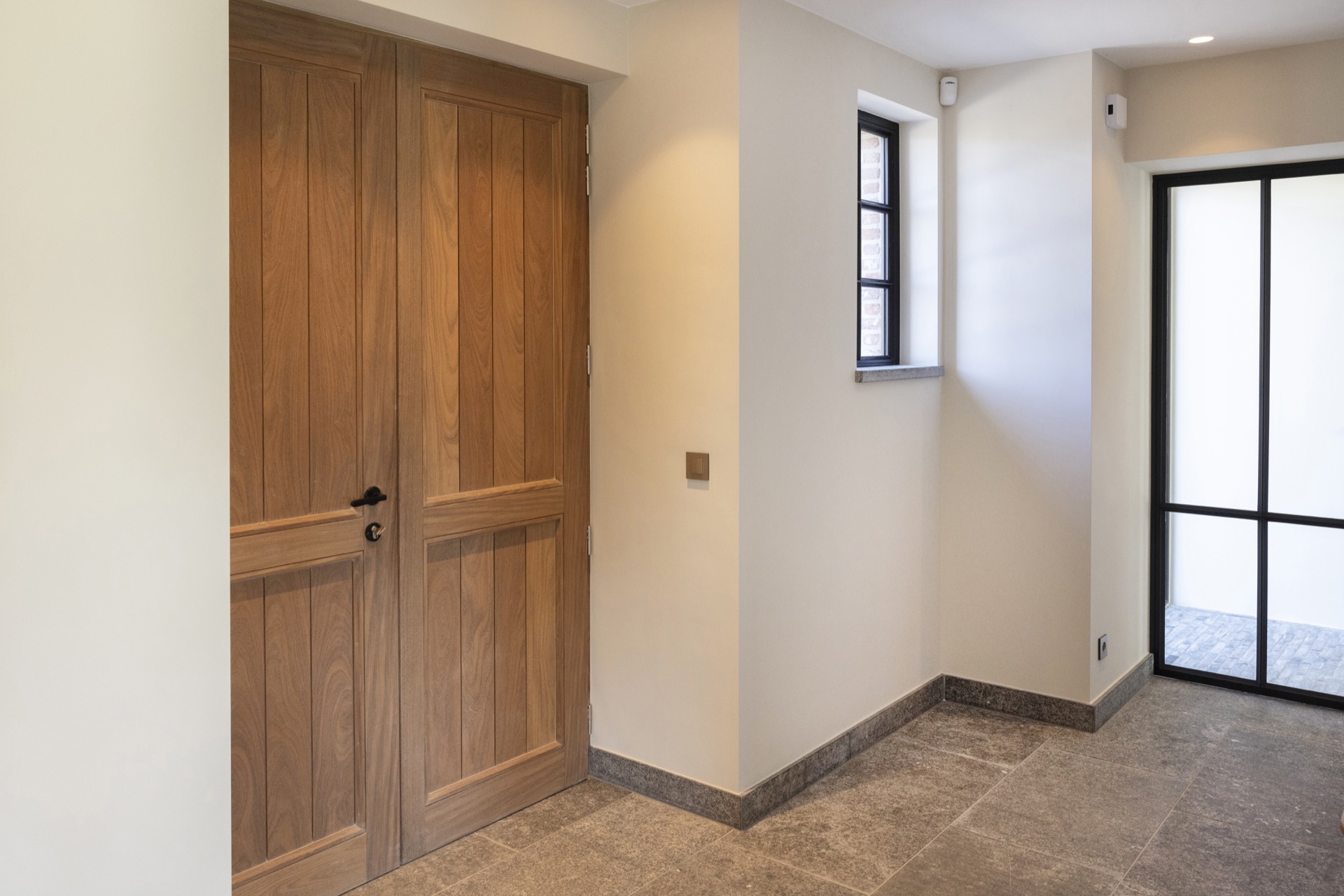
The same wood continues in the house itself, where windows, doors and farm-style gates are all made in natural Afrormosia. That continuity is visible from the driveway to the rear of the building. The material does not disappear into the background; it stays legible in the frame depth, the door leaves and the larger glazed elements. The result is a project where one timber species carries several functions without losing its own texture.
Large window openings without muntins bring the front elevation forward
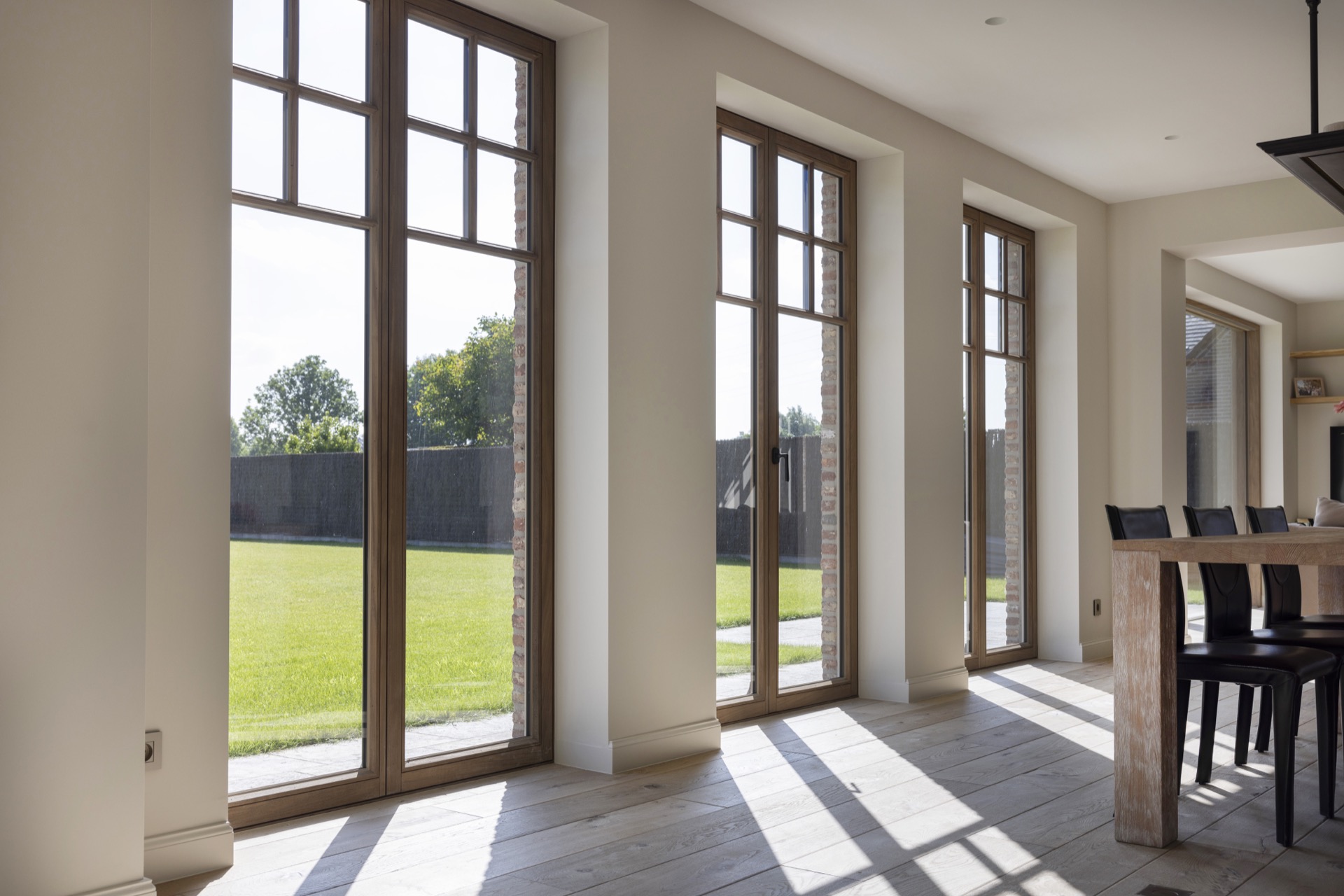
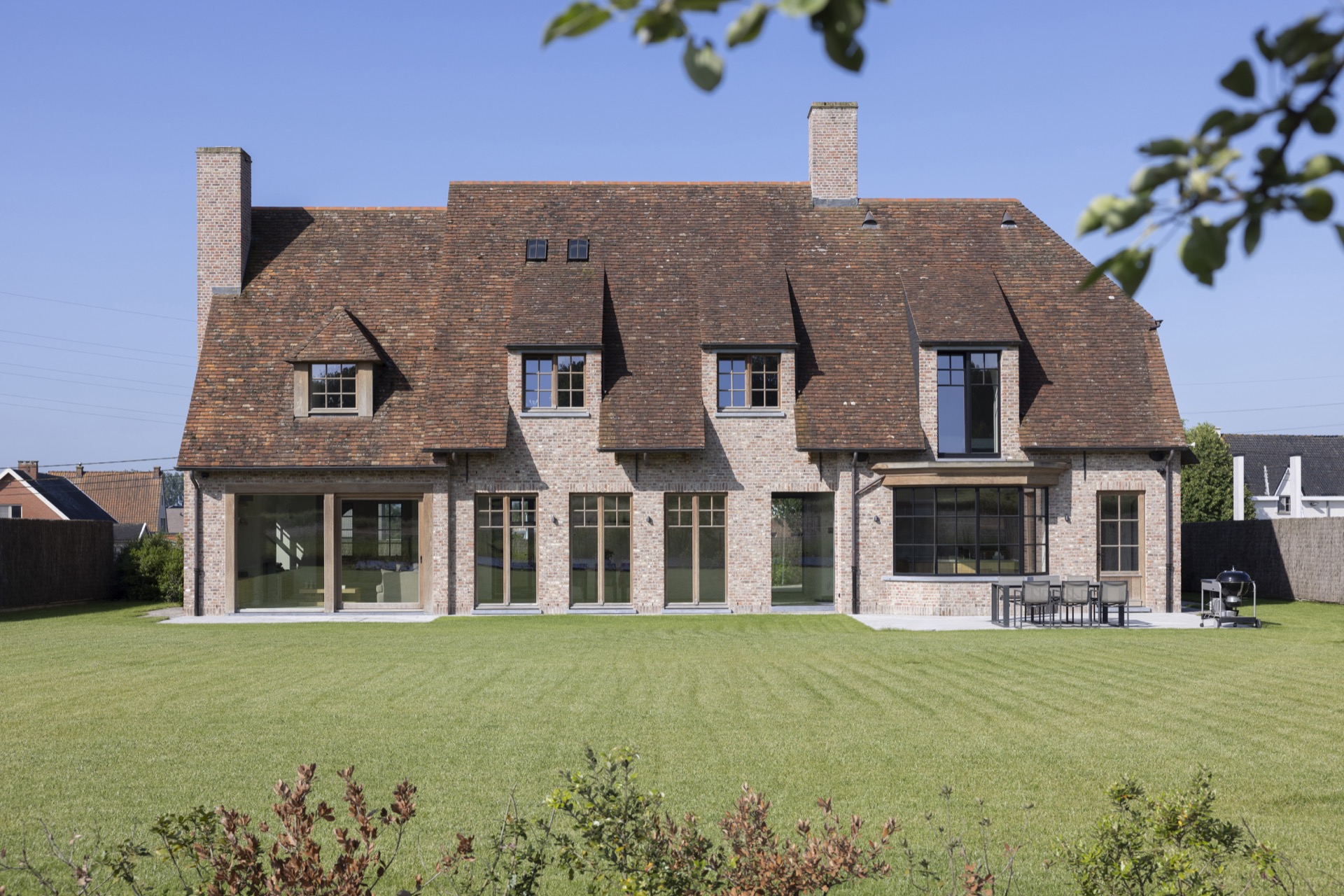
On the front side, the window openings are kept large and free of muntins. That choice gives the façade a calmer rhythm and opens the view outward instead of breaking it into smaller panes. The brick walls and steep roofline frame those openings, while the wood around them keeps the composition grounded. Light enters through broad glass surfaces rather than through a pattern of subdivisions.
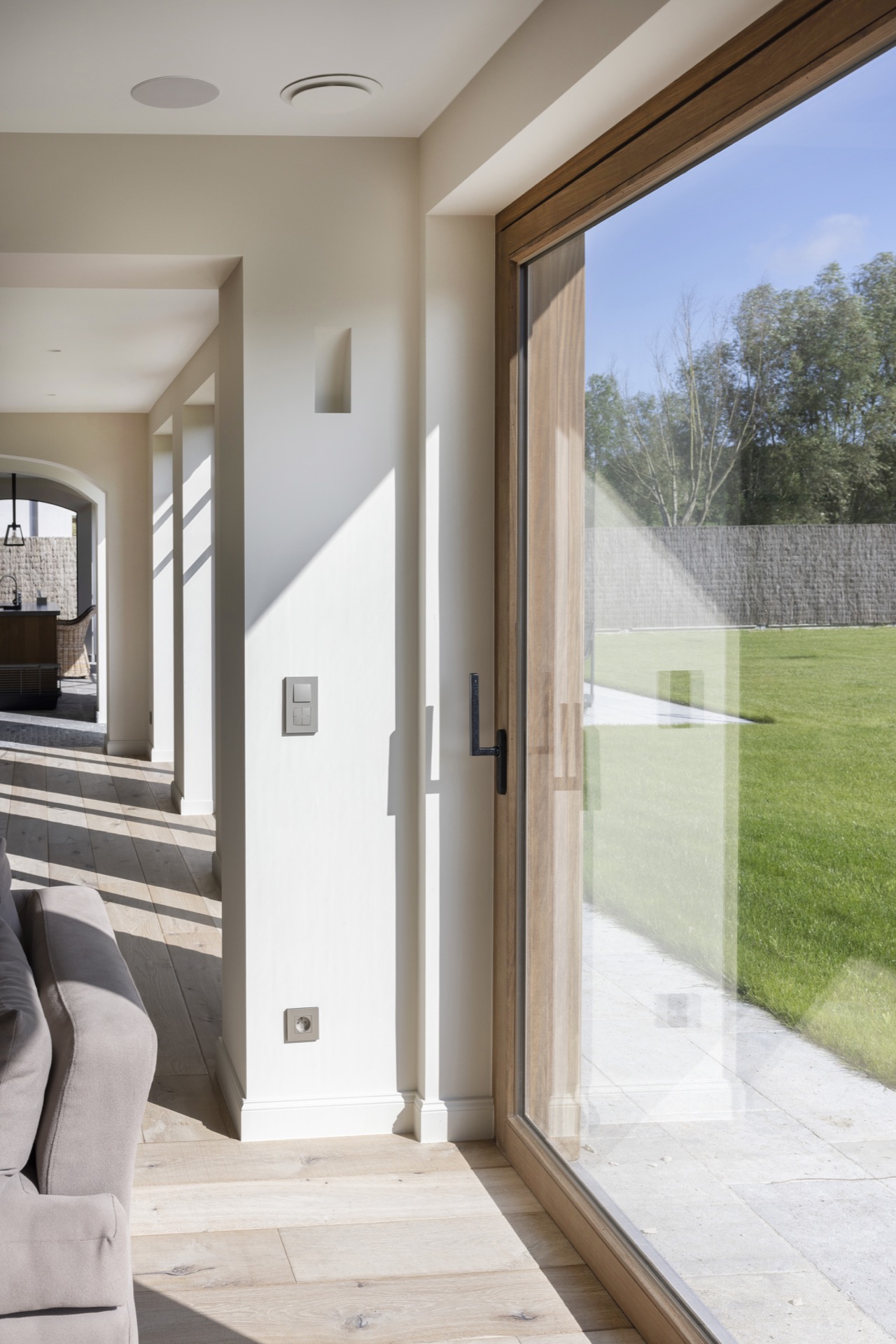
These proportions matter inside as much as outside. The larger panes allow the rooms to look straight toward the garden, and the window frames do not interrupt that line. In the exterior photographs, the front lawn, brickwork and tiled roof sit behind the glazing; in the interior views, the same openings define the relation between the living spaces and the outside. It is a direct visual link, built with very little interruption.
Black lacquer leaves the grain visible
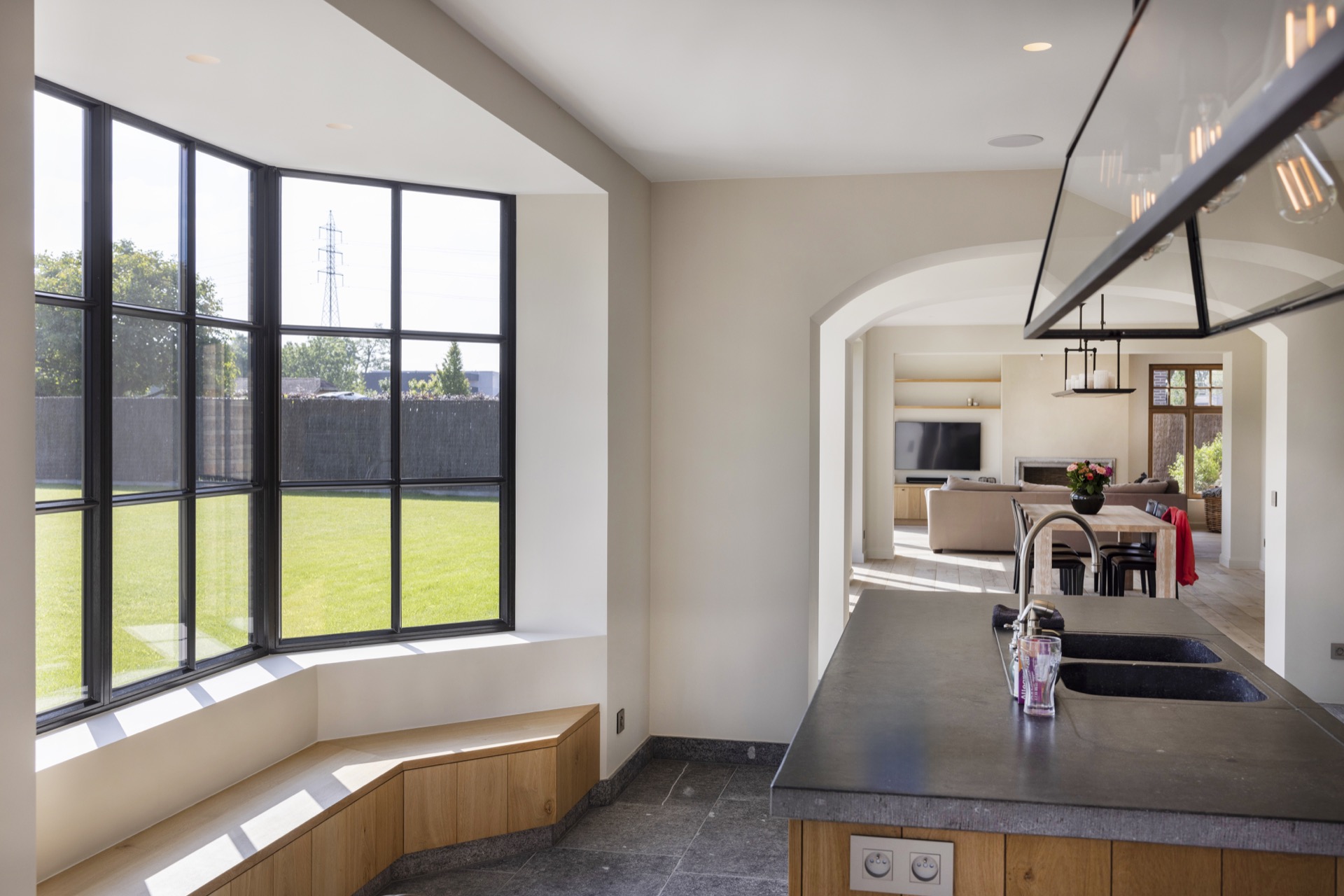
Not every part of the joinery is kept in natural wood tone. The bay window in the kitchen area and an upstairs window are finished in black lacquer, but the grain remains visible under the coating. That detail changes the reading of the façade without hiding the material underneath. The darker finish sharpens the edges of those openings and contrasts with the warmer brown timber used elsewhere.
Seen beside the natural Afrormosia, the black-lacquered parts work like punctuation. They are smaller gestures than the gate or the main frames, yet they matter because they show how the same material can shift character through finish alone. The wood stays present in both versions; only the surface tone changes.
At the rear, glazing carries the same material language through the house
The back of the house repeats the same timber in sliding windows, a rear door and additional windows. Here the emphasis falls on openings that connect interior rooms directly to the garden. The glazed surfaces are broad and plain, which lets the Afrormosia frames and door leaves stand out. Nothing is overloaded. The construction depends on the size of the openings and the way the wood outlines them.
Interiors picked up in the photographs make that link readable from within. A glazed door opens the view to the garden, and the surrounding walls remain light so the frame lines stay visible. The kitchen and dining area continue the same approach, with large glazing and a natural stone floor that grounds the room. The stone surface changes the pace underfoot, while the glass keeps the attention on the outside. Afrormosia wood joinery project remains connected to the layout, materials and daily use of the home.
Kitchen light, stone and timber in one line of sight
In the kitchen area, a natural stone worktop and floor surface appear beside the large windows. The material shift is clear: stone below, timber around the openings, and glass at the edge of the room. The bay window near the kitchen pulls extra light across the space, while the black lacquer on that element creates a darker outline against the lighter interior. This is where the project’s detailing becomes most readable.
The room does not rely on ornament. Its structure comes from the depth of the frames, the size of the openings and the way the stone finish anchors the space. From the interior angle, the house reads as a sequence of surfaces rather than a single image: wood, glass, stone and light each occupy their own place.
Porch, entry and fence details keep the material story consistent
The entry sequence is not limited to a single gate. A wooden door with visible hardware, brick pillars and adjoining fence elements appear again in the rear and side views. The same timber species recurs in these parts, but the details shift from open swing gate to enclosed fence segment. That variation keeps the project from feeling repetitive. It shows how one material can be adapted to different thresholds and routes around the house.
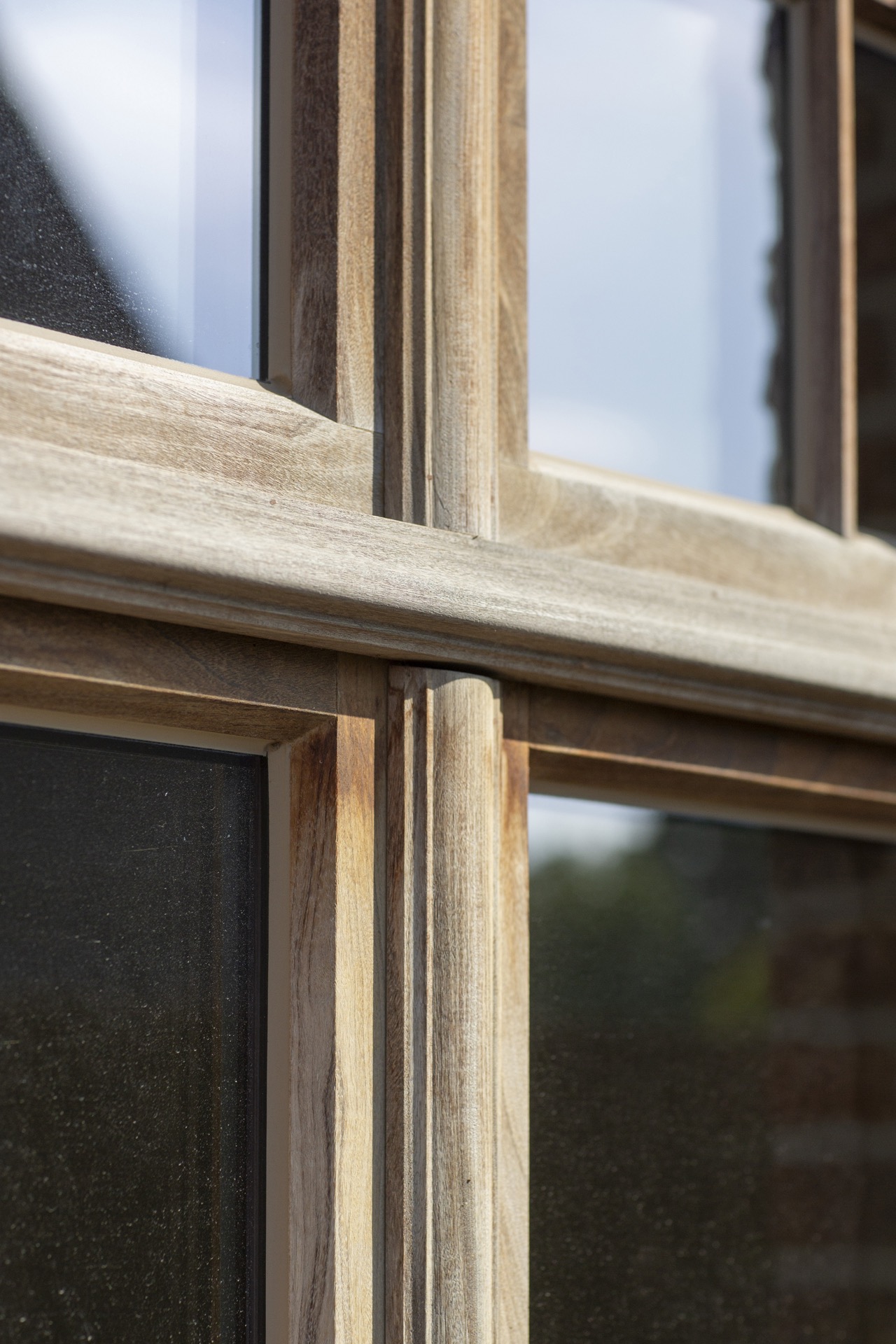
Close-up photographs underline the craftsmanship in the joints, hinges and top rails. Black fittings sit against the wood, and the grain remains easy to read. Even in the smallest detail, the project keeps the relationship between material and finish visible. The timber is not covered over; it is left to do the visual work itself.
A project built around visible joins, clear openings and a stable material palette
What gives the whole ensemble its coherence is the repetition of the same few materials: brick, glass, natural stone and Afrormosia. The roofline stays steep and tiled, the chimneys mark the silhouette, and the wood joinery carries the openings through the house. The front windows, rear sliders, doors and gate all follow the same logic, which makes the project easy to read from outside and inside.
Seen as a portfolio example, this Afrormosia wood joinery project is strongest where the details remain specific: large windows without muntins, a wood driveway gate with brick pillars, and black lacquer on wood used only where it adds contrast. The interior views extend that story with glazed doors and a natural stone floor in the kitchen area. Every part stays tied to the same material language, from the driveway to the back of the house.
Photography: Gerald Van Rafelghem
Contributor: Natural Afrormosia Afrormosia wood joinery project remains connected to the layout, materials and daily use of the home.
Wil je meer zien van Pouleyn? Bekijk de pagina van Pouleyn voor meer projecten en bedrijfsinformatie.

.png)
NEW 2026 Jubileum Edition The Best Interior Designers Benelux
Nu Bestellen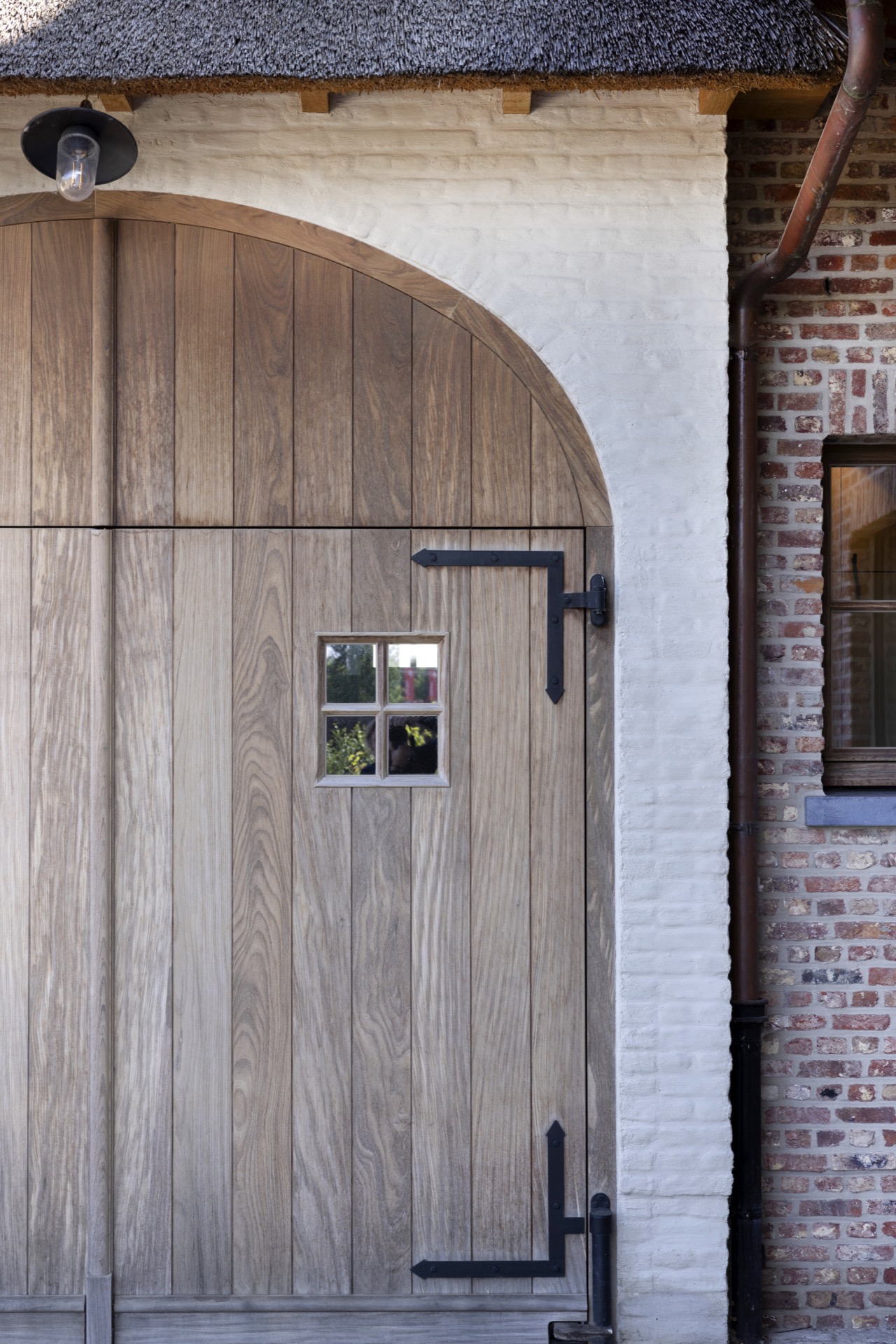
NEW 2026 Jubileum Edition The Best Interior Designers Benelux
Nu Bestellen