









Walk-on glass by the water (4 meters)
A high ceiling was letting heat drift away, so the floor line needed a different answer. The solution became walk-on glass by the water: 4 metres of glass set into the interior as a clear, measured strip beside the windows. It keeps the room open to the view while changing the way the floor meets the light.
walk-on glass by the water as the architectural starting point
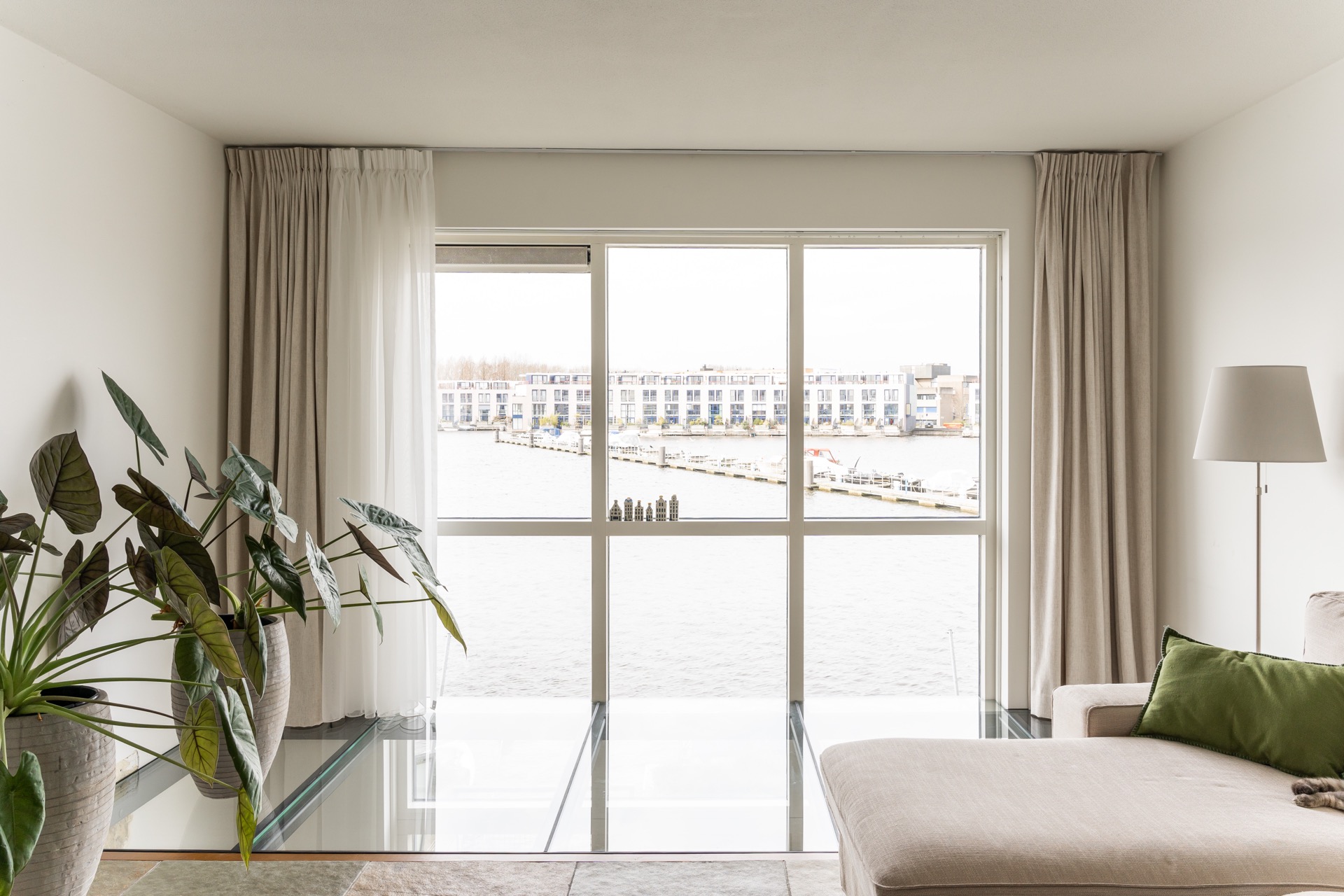
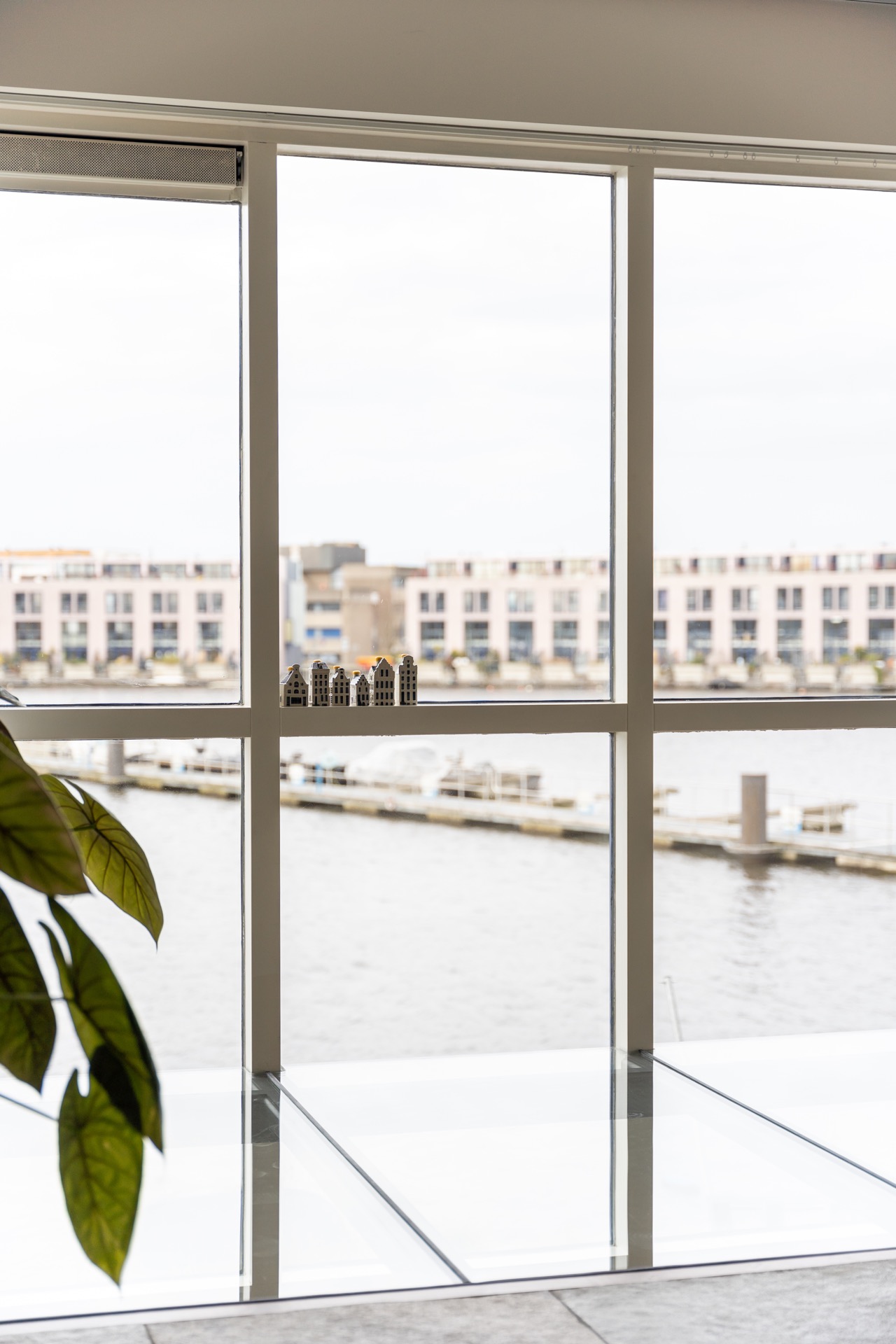
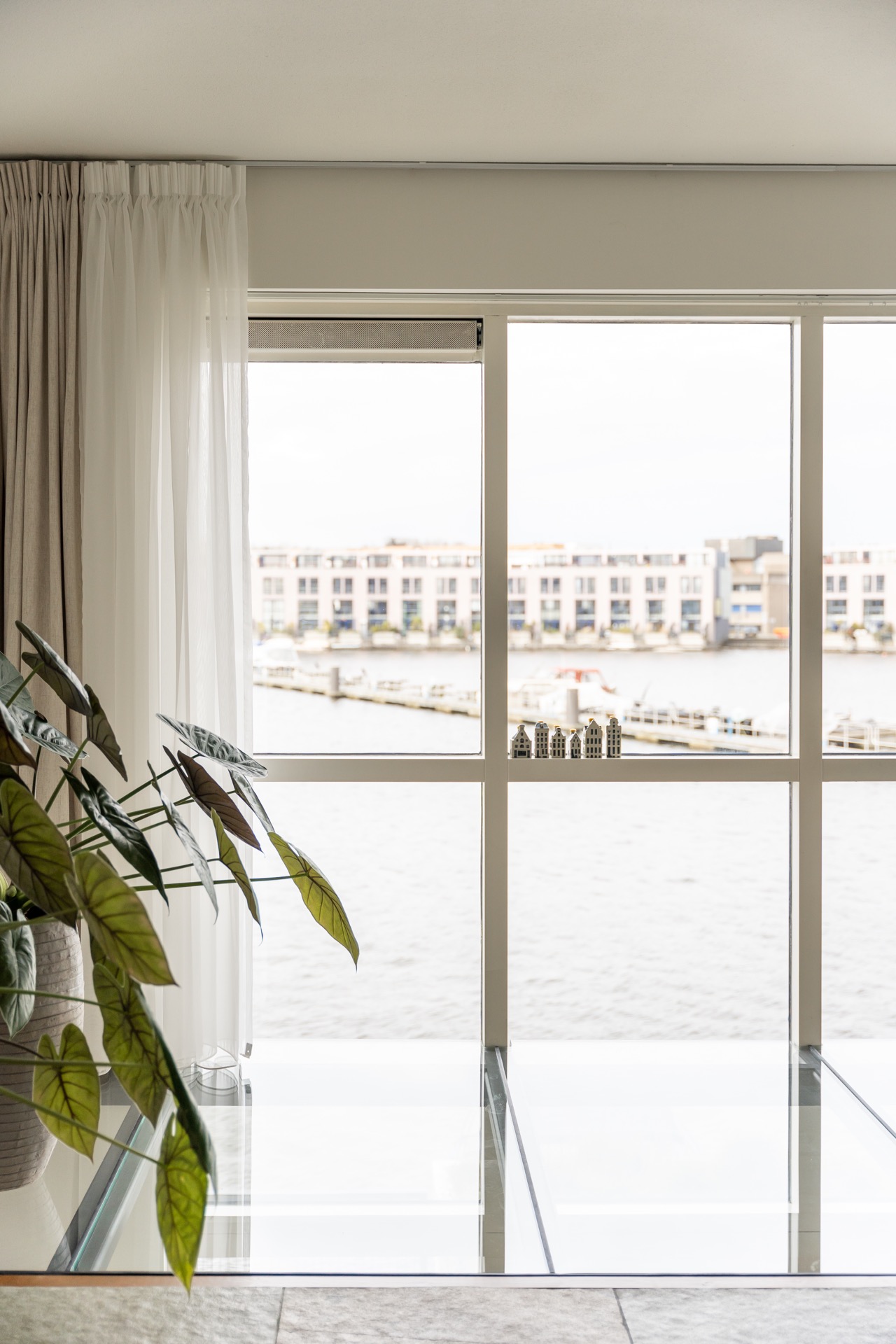
The most immediate thing you notice is the way the glass runs straight against the window area. There is no loose edge or awkward gap. The walk-on glass window frame alignment has been handled with care, and the transition follows the existing frames rather than fighting them. That makes the surface read as one long plane, broken into five glass sections, instead of a patchwork of separate parts. The view beyond stays visible, and the light continues to move across the interior.
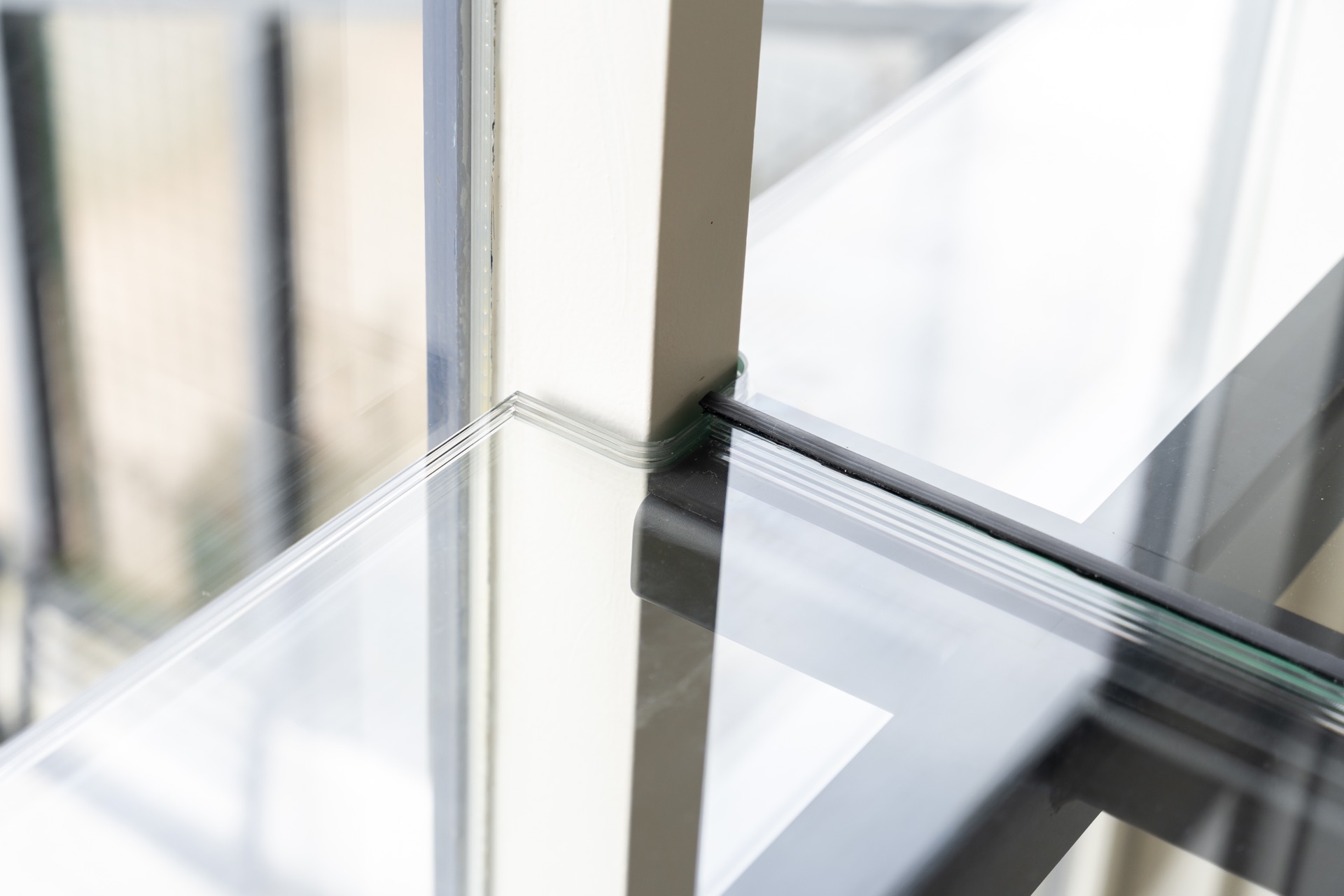
Underneath, the construction is visible in black steel. The glass rests on steel tubes and is anchored into the wall, so the supporting parts remain part of the composition rather than disappearing. In the photos, those dark lines trace the edge of the opening and give the glass a clear border. The result is not decorative in a soft sense; it is direct, almost drawn with a ruler, with the structure visible where the glass meets the room.
Five panels, one continuous reading
Although the total length reaches 4 metres, the surface is divided into five glass parts. That division becomes easier to read in the close-up images, where the joints form thin lines across the plane. The walk-on glass 4 meters span feels long without becoming heavy. Each section holds its place inside the larger strip, and the rhythm of the joints adds structure to an otherwise transparent element.
The corners are where the detailing becomes most legible. In the walk-on glass corner detail, the black steel edging frames the glass with a precise outline, while the clear panels meet at sharp angles. The connection does not try to disappear. It stays visible, and that visibility gives the system its clarity. Rubber is part of the material list as well, helping the assembly sit cleanly against the other elements without adding visual noise.
Black steel against clear glass
The finish is deep black powder coating, noted in the project information as RAL 9005. On the steel supports, that colour reads as a solid line next to the transparent panels. The effect is strongest where the construction turns at a corner or meets the frame: the dark profile cuts across the lighter room and keeps the glass edge readable. These black powder-coated steel supports are not hidden; they shape the view of the opening and give the detail a firm outline. That makes the walk-on glass by the water part of the architectural character rather than a loose finish.
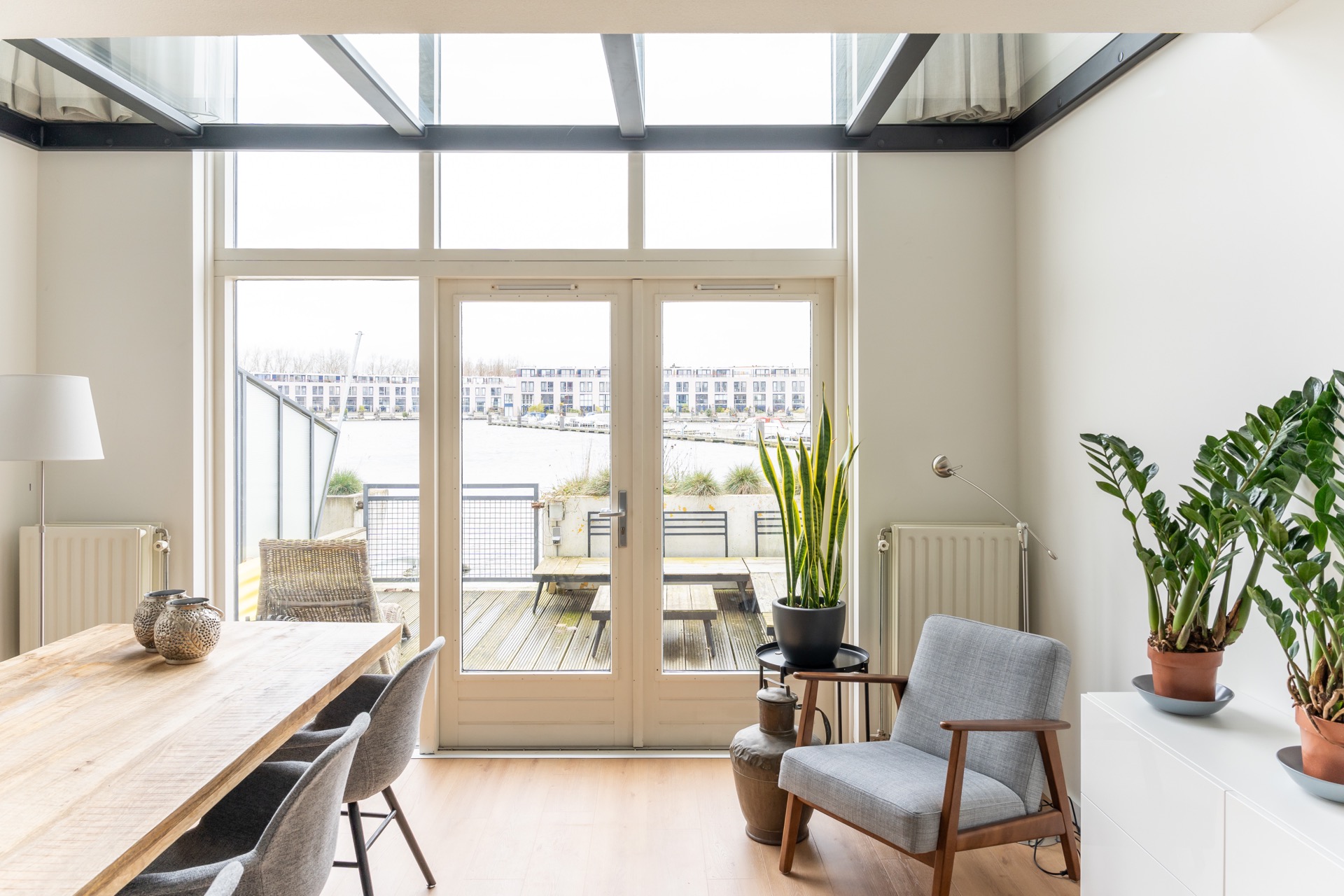
In the wider interior shots, the black finish also helps the walk-on glass hold its place beside the white walls and large glazing. It prevents the opening from fading into the background. Instead, the line of the glass is easy to follow from one end to the other. That matters in a room where the view to the water already pulls the eye outward. The steel simply gives that direction a clear boundary.
The window edge and the room beyond
The project sits where floor, frame and light meet. Along the window area, the glass lies close to the frames and accounts for the window trim, so the join reads as considered rather than improvised. The photographs show a tidy edge at the window opening, including a visible ventilation grille in the upper part of one frame. Those details make the setting feel real and specific; this is not a generic glass insert but a piece adjusted to the existing opening.
From inside, the water view remains part of the room’s composition. The transparent surface keeps the sightline open, and the walk-on glass by the water becomes a quiet threshold between the interior and the edge outside. Curtains appear in some images, softening the larger window field, but the glass itself stays sharp and measured. The contrast between the textile folds, the clear panel, and the black steel line gives the whole area its character.
How the detail works in close-up
The close-up images are the most revealing. One shows the corner meeting of glass and black steel; another shows the frame zone where the opening is trimmed with care. These details are where the project settles into its material logic. Steel tubes carry the load, wall anchoring fixes the system in place, and the glass sits flush beside the windows. Nothing is overdescribed. The interest comes from the alignment, the contrast of colours, and the way the pieces meet.
Seen as a whole, the project answers a practical problem with a composed intervention. The loss of heat through the tall ceiling set the brief, but what remains visible is the geometry of the solution: 4 metres of walk-on glass, five sections, black steel, and a precise relationship to the windows and frames. In a room already shaped by light and water, that geometry becomes the main feature. It is a floor element, yes, but also a line that edits the space around it. That makes the walk-on glass by the water part of the architectural character rather than a loose finish.
Wil je meer zien van Metaal-Art? Bekijk de pagina van Metaal-Art voor meer projecten en bedrijfsinformatie.



NEW 2026 Jubileum Edition The Best Interior Designers Benelux
Nu Bestellen €125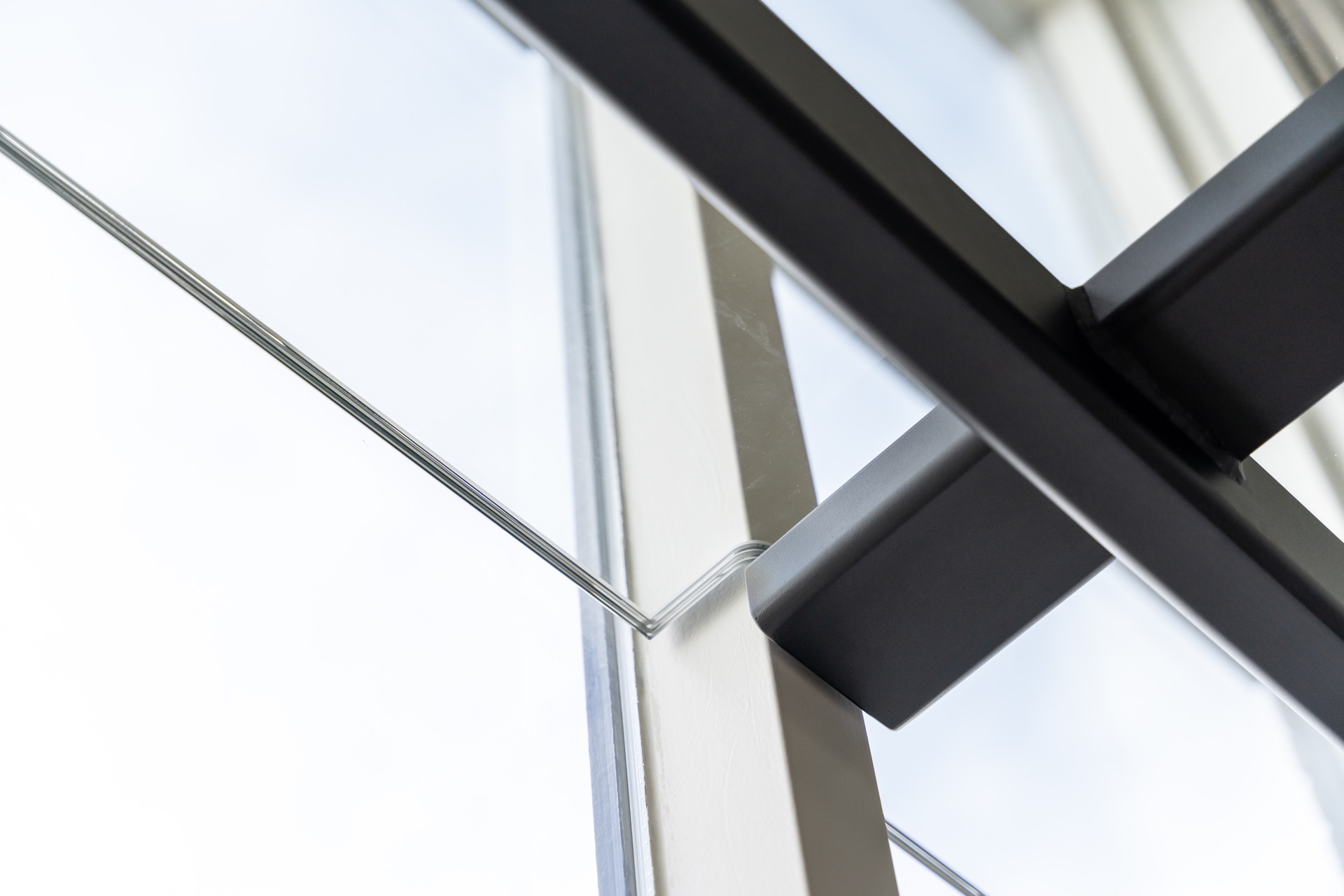



%20-%20)
%20-%20)
%20-%20)
%20-%20)
%20-%20)
%20-%20)