








Country Style and Light Sculptures
A sculptural chandelier above the room
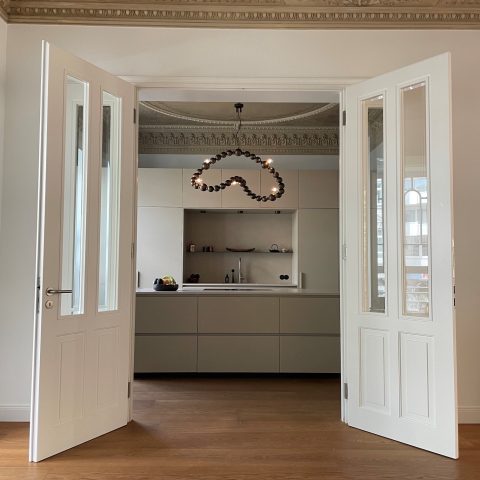
A country style light sculpture changes the room before anything else does. In the images, the ceiling piece is not treated as background lighting but as the main shape in the space, suspended above a dining table or a seating area where black chairs, pale walls and large windows frame it clearly. The result is a piece that reads almost like handmade light art: part object, part source of light, with its metal structure and glowing glass elements carrying the eye across the room.
The project shows how statement lighting in country interiors can sit naturally among wood, stone and light wall finishes without disappearing into them. One interior uses the sculpture above a kitchen island, where the bright work surface and vertical wood detailing make the fixture stand out even more. Another image places a chandelier with glass globes near timber beams, so the contrast between the warm glow and the rougher structure of the ceiling becomes part of the composition rather than a conflict.
Glass, metal and a warm line of light
The most direct visual cue is the material mix. Glass and metal lighting appears throughout the project, either as clear spherical forms or as darker, drawn metal arms that hold the light in place. In the detail shots, the glass catches a soft filament glow, while gold and black frames give the pieces weight and direction. These are not plain ceiling fittings; they are built like small constructions, with every branch, ring or diagonal bar visible in the image.
That material clarity is what makes the pieces work in a country setting. Wood beams and lighting can easily compete for attention, yet here the sculpture sits against them with enough presence to hold its own. In the rooms with white timber cladding or exposed rafters, the fixture reads as a deliberate interruption of the horizontal and vertical lines. It brings a different rhythm to the space, especially when the warm glowing pendant light is seen against pale surfaces and daylight from nearby windows.
Handmade light art with visible structure
William Brand describes these light sculptures as characterful, surprising and slightly sensual, and the project visuals support that reading. The forms are expressive without becoming decorative in a light-handed way. Some versions spread outward in organic branches with small illuminated ends; others cluster round glass globes into a tighter hanging form. The handbuilt character remains visible in the joins, the curves and the repetition of elements, which makes the work feel closer to handmade light art than to standard decorative lighting.
That handcrafted quality matters in the country style rooms shown here. A room with a simple table, a matte stone floor and a large open span of ceiling needs one strong vertical gesture to break the calm planes. The sculpture does that without adding clutter. It is present in the room as a single defined object, yet the reflections in the glass and the outline of the metal frame keep changing as the viewer moves through the space.
Dining spaces that rely on one clear focal point
Several images place the country style light sculpture directly above a dining table, where it acts as the visual anchor in a modern country dining setting. Black seating, pale upholstery and broad windows keep the rest of the room quiet, so the fixture can carry the atmosphere on its own. In one interior, the greenery outside the windows softens the room, while inside the chandelier’s multiple light sources create a dense cluster of points overhead. The scene feels measured, but not empty.
In the kitchen view, the sculpture works in a different way. A central island, a sink and vertical wood detailing define the room’s geometry, and the lighting sits just above that field of use. The piece is not hidden by the practical side of the kitchen. Instead, it marks the zone where movement and gathering meet. That is where statement lighting in country interiors becomes most convincing: when a piece can guide the room without turning it into a display.
Why the sculptural form suits a country interior
The project does not rely on rustic nostalgia. It uses clean walls, dark chairs, pale finishes and visible timber, then introduces sculptural lighting to sharpen the contrast. The ceiling pieces bring a more graphic line into rooms that might otherwise lean too soft or too plain. With glass and metal lighting, the balance shifts through reflection and outline rather than through ornament. The result is a room that feels defined by one central gesture instead of by a long list of finishes.
That approach also explains why the collection names in the source material matter less than the visual language itself. Whether the piece appears as a chandelier with glass globes, a pendant with fringed detailing or a more organic branch-like form, the common thread is the same: a strong shape, clear materials and light that reads as part of the object. The room gains a focal point that can hold a dining area, a kitchen or a lounge without needing extra emphasis.
Detail views that show the hand of the maker
The studio-style images against a black background make the structure easier to read. One version shows a dark metal frame with diagonal bars and cylindrical glass elements. Another uses gold-toned arms that turn outward like branches and end in small illuminated globes. The warm light inside the glass creates a soft core, while the outer frame remains crisp. These close views explain why the pieces carry so much presence when seen in a room: the structure is open, but it never feels thin.
A fringe-like pendant shown in another image adds a different texture, with metal cords and layered edges catching light in a more decorative way. Even there, the object remains sculptural rather than purely ornamental. The handwork is readable in the shape of the pieces and in the way the materials meet. As handmade light art, the fixtures depend on that visible construction. They are not trying to disappear into the ceiling; they are meant to be seen from the table, from the sofa and from across the room.
Light that holds the room together
What ties the project together is the relationship between the sculpture and the surrounding architecture. Timber beams, white cladding, stone or tiled floors and large windows form a quiet framework. Into that framework comes a country style light sculpture with a stronger outline and a more active surface. The effect is not about decoration for its own sake. It is about giving the room a single object with enough presence to organize the view, whether the setting is a kitchen, a dining area or a larger open interior.
Brand van Egmond’s approach here is consistent with the source text: light as character, light as an object, light as something with a physical edge. The materials stay honest, the forms stay readable and the glow stays warm rather than theatrical. In these country-style interiors, that is enough. The sculpture takes its place above the room, and the rest of the setting settles around it.
Want to see more of Brand van Egmond – Light Sculptures? View the page of Brand van Egmond – Light Sculptures for even more great projects and company information.




NEW 2026 Jubileum Edition The Best Interior Designers Benelux
Order Now €125


NEW 2026 Jubileum Edition The Best Interior Designers Benelux
Order Now €125


NEW 2026 Jubileum Edition The Best Interior Designers Benelux
Order Now €125