





Green garden with atmospheric lighting
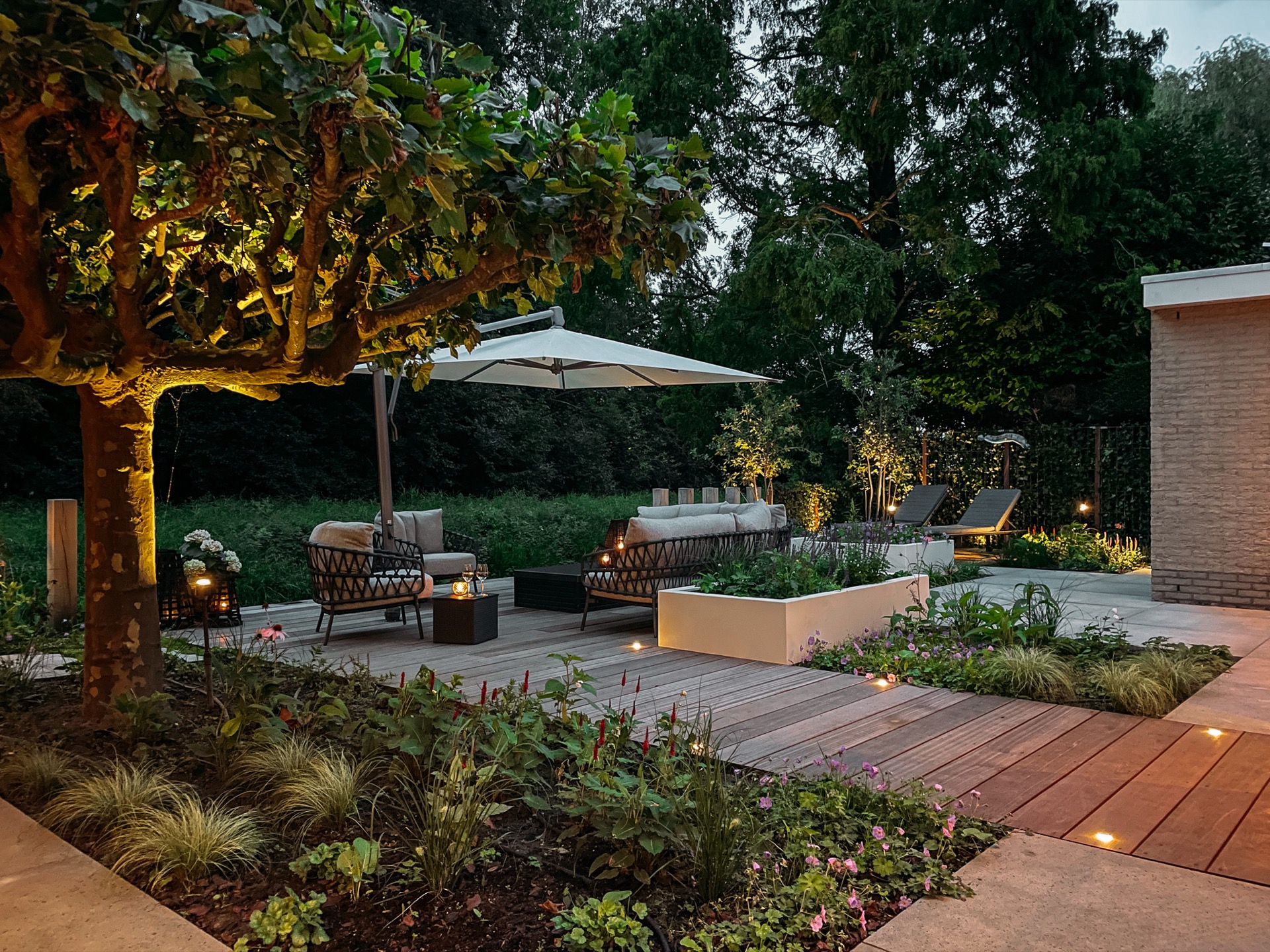
Garden lighting takes the lead here, but it is the planting that gives the scene its weight. A large tree marks the centre of the garden, while layers of green soften the edges around terraces, paths and seating areas. The result is a green garden that reads as a lived-in outdoor space rather than a display piece. Light traces the outlines at dusk, picking out the path, the terrace and the darker mass of the planting behind them.
Garden lighting as a spatial starting point
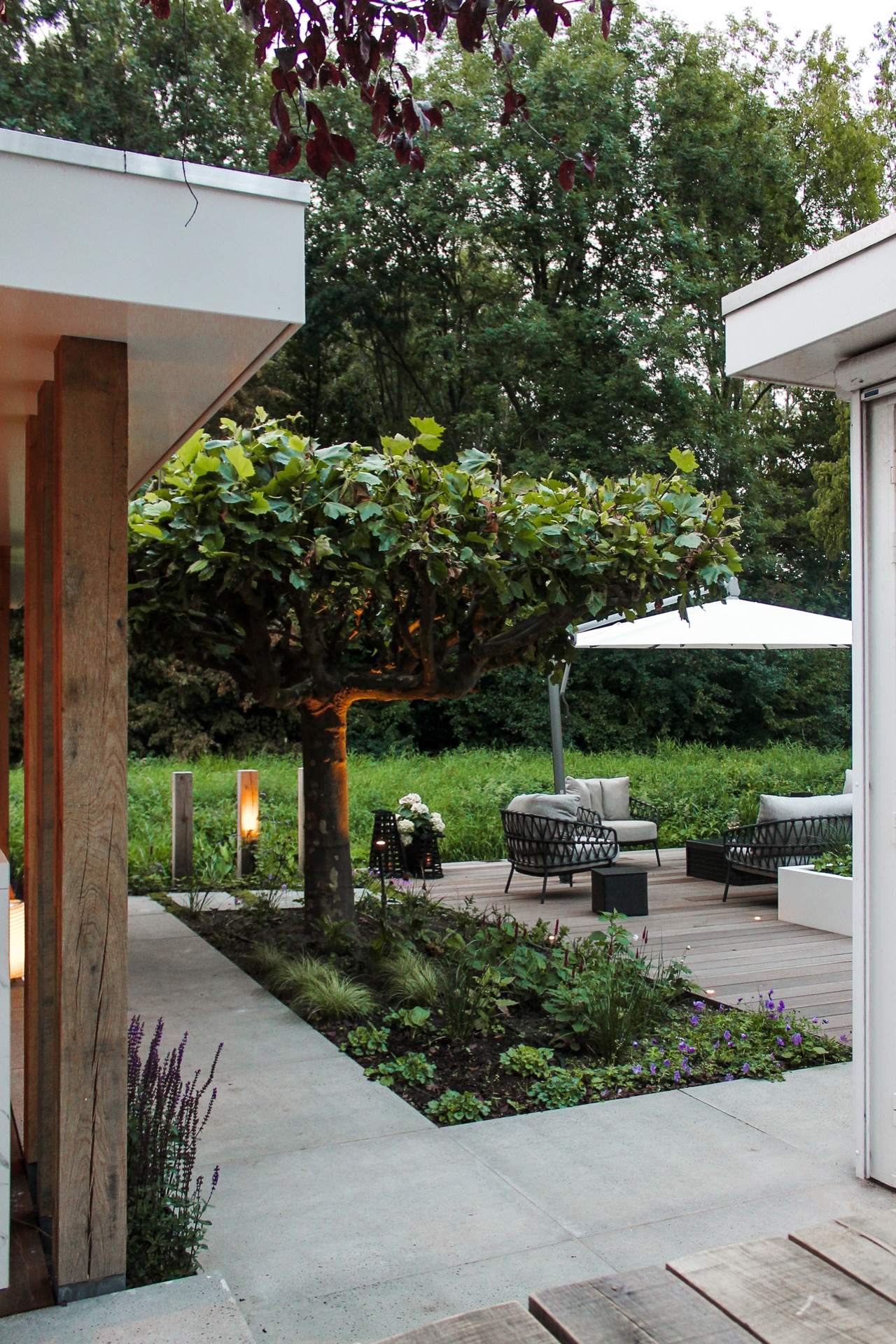
The garden is built from visible zones. A terrace sits close to the seating area, and the stepping stone garden path connects the different parts without turning the route into a hard line across the space. Around those elements, the planting remains dominant: shrubs, grasses and a large tree hold the composition together. That mix keeps the modern outdoor space from feeling overly rigid, because the greenery interrupts the harder surfaces of concrete and metal.
What stands out first is the way the tree is used. It is not treated as background, but as a vertical element that shapes the view and gives the garden a clear centre. Around it, smaller plants fill the lower layers, so the eye moves from canopy to border to paving. In several views, flowers and more colourful planting appear as accents, breaking up the stronger greens with pockets of lighter and brighter tones.
Garden lighting that follows the contours
At night, garden lighting outlines the structure instead of flooding everything evenly. The contours of the garden are visible in the dark, and the light sits low enough to catch paths, seating zones and the edge of the terrace. This makes the lighting for gardens feel integrated into the layout. It is easy to read where one zone ends and another begins, even when the surrounding planting turns deep green and almost black.
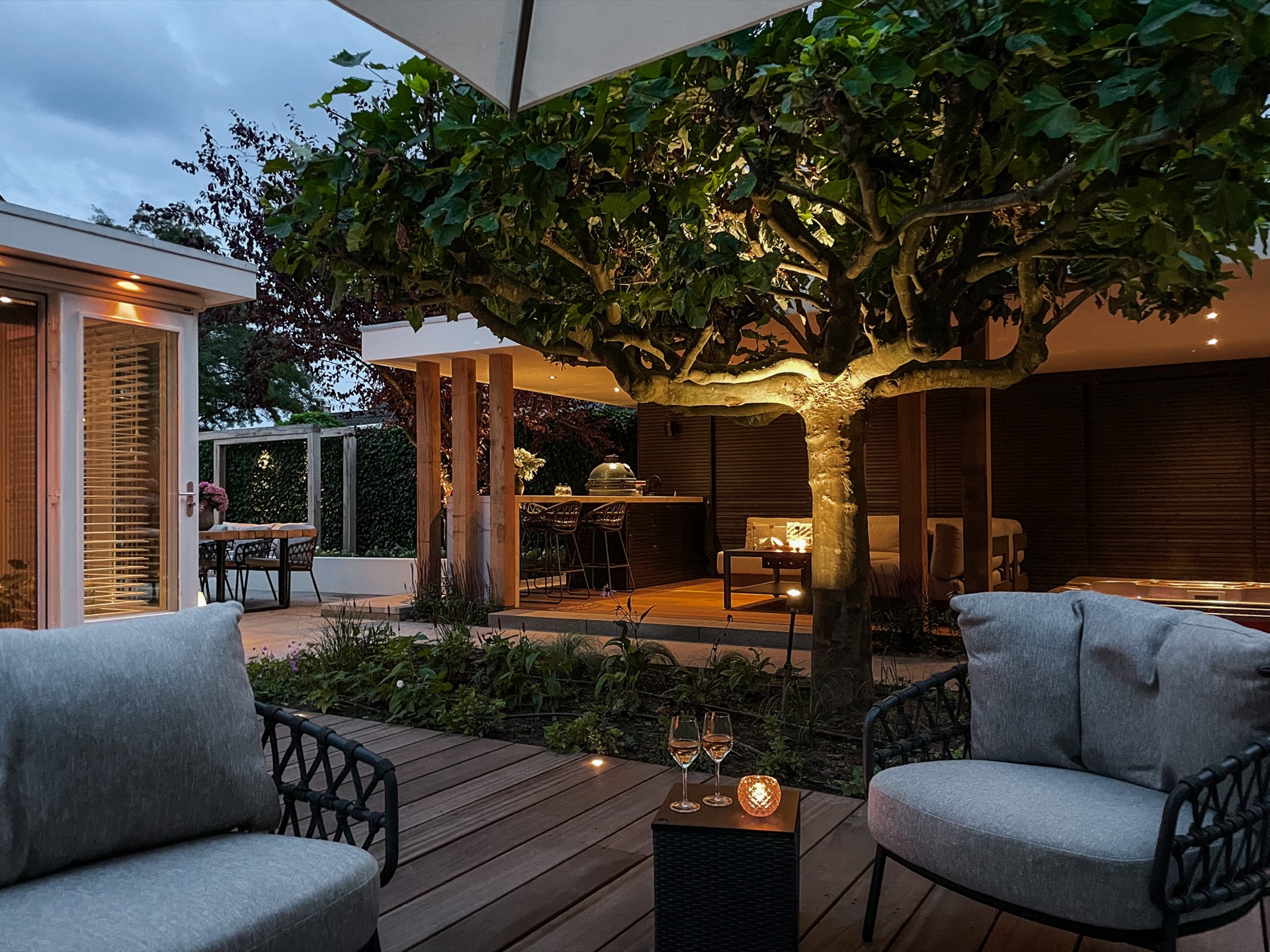
Several fixtures are visible across the garden, each used to mark a point rather than dominate the scene. Near the seating area, the light catches the furniture and the nearby planting. By the tree, the illumination emphasises height and texture, while along the path it helps the stepping stones stand out from the darker ground around them. The effect is practical in the simplest sense: it shows how the garden can be used after sunset without flattening its depth.
A terrace and outdoor seating area with room to pause
The outdoor seating area sits beside the terrace, with furniture arranged so the space reads as a place to stay, not just pass through. Chairs and a table sit on a hard surface that contrasts with the softer planting nearby. In the images, the terrace is modest in line and open in view, so it remains connected to the rest of the garden. Garden lighting reaches this zone as well, giving the seating area a defined edge once daylight fades.
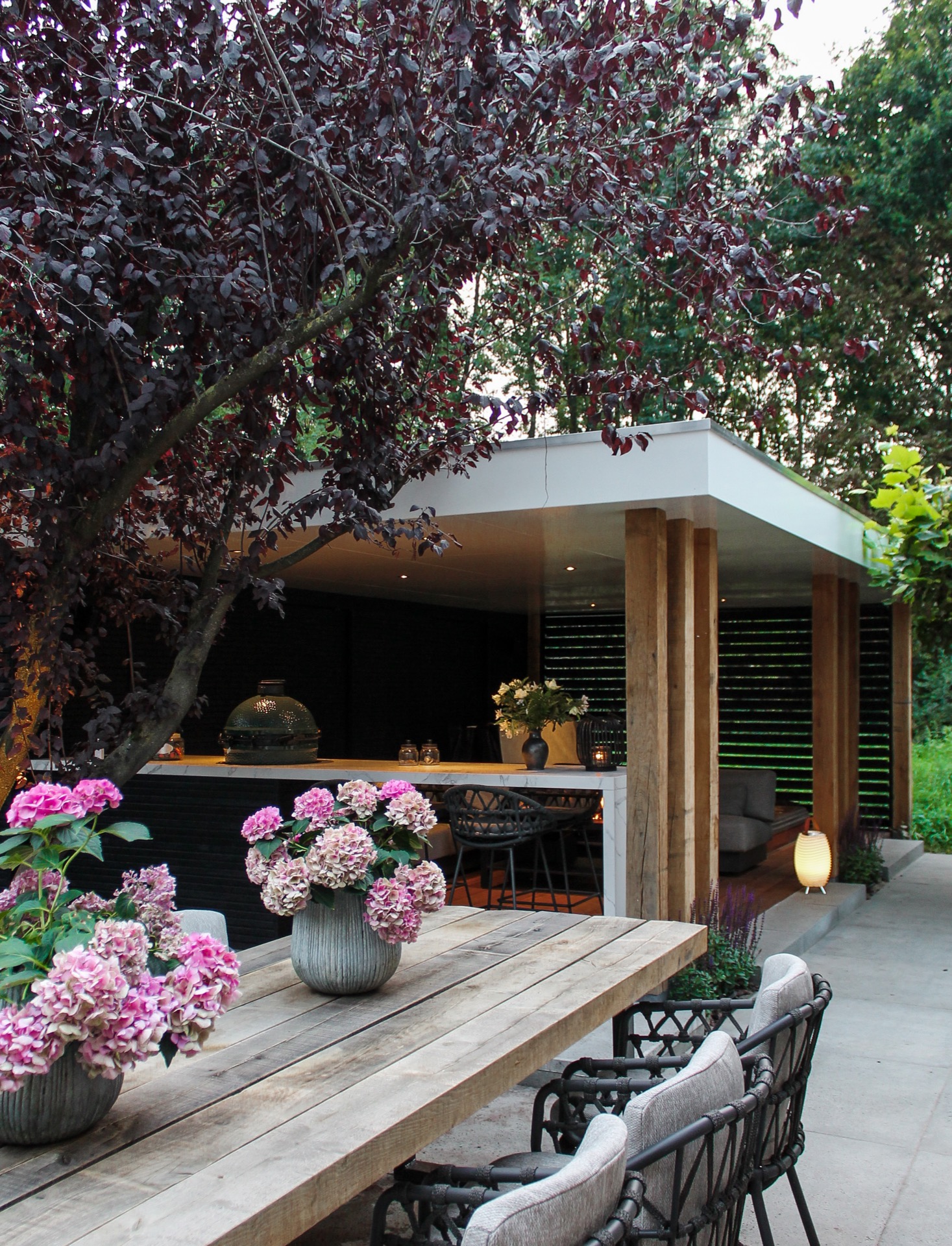
Material contrast is important here. Wood, concrete and metal appear together, each doing a different job in the frame. Wood softens the scene, concrete gives the terrace and path a firmer base, and metal appears in the detailing and fixtures. None of these materials takes over. Instead, they keep the modern outdoor space grounded while the surrounding greenery prevents it from feeling hard or closed in.
Light, furniture and planting in the same view
One of the strongest images in the set places the seating area, the planting and the illuminated tree in a single line of sight. That overlap matters. It shows how the garden lighting does not sit apart from the furniture or the greenery; it works through them. A chair becomes part of the evening scene because the light touches it, and the planting behind it becomes more layered once the shadows are visible. The garden feels edited through light, not decorated with it.
Stepping stones that slow the movement
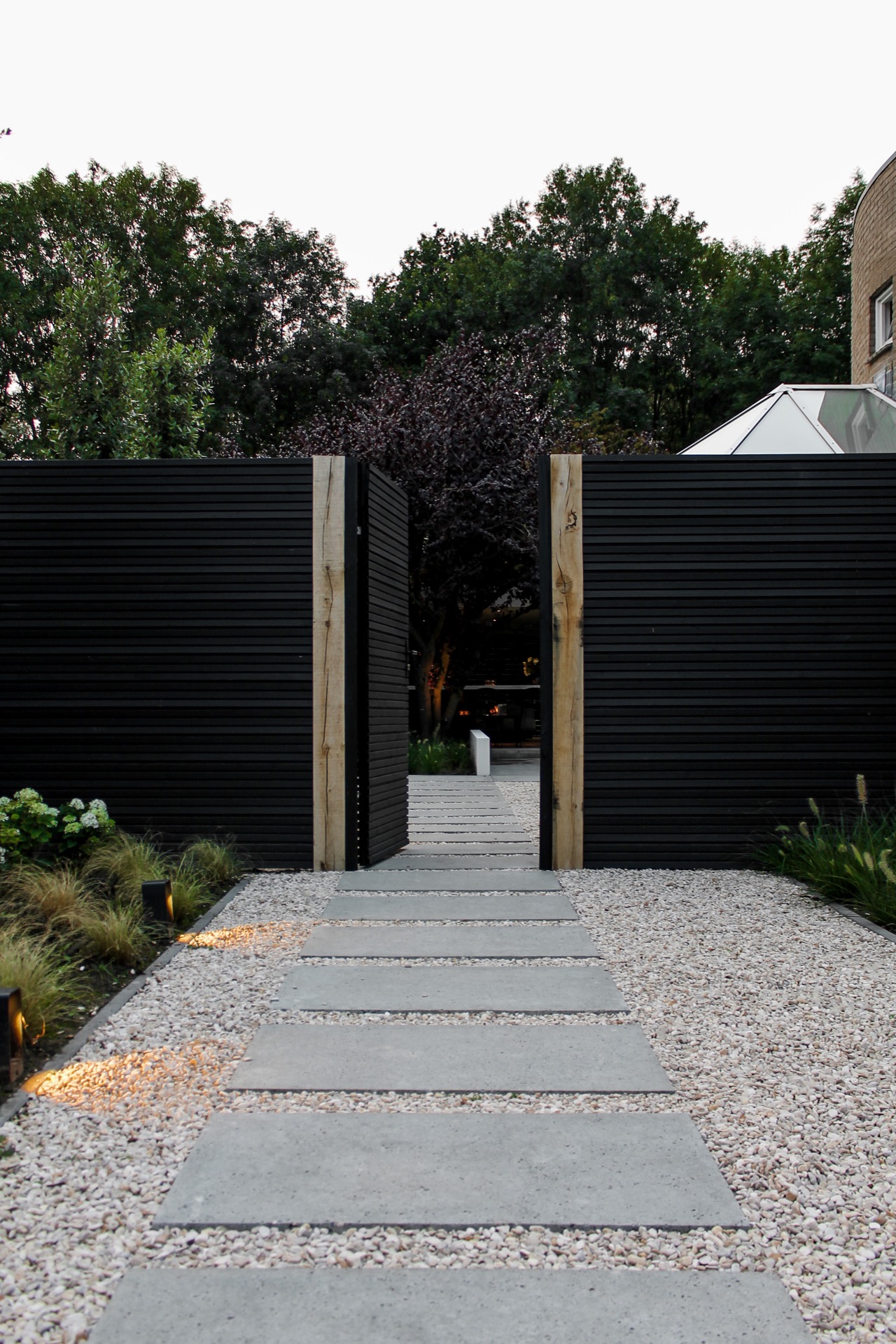
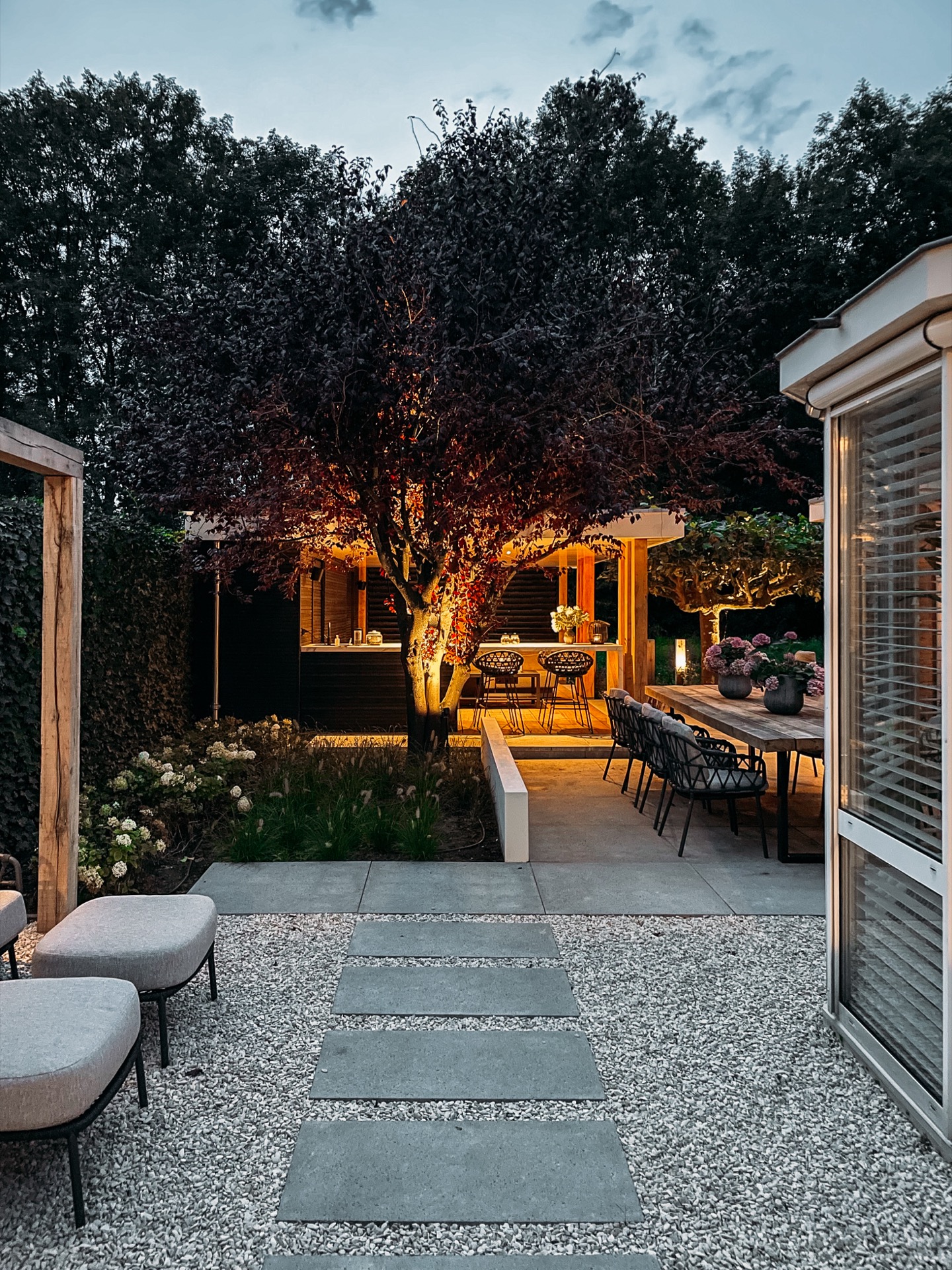
The stepping stone garden path adds a measured rhythm to the layout. Large stones sit apart from one another, which keeps the route open and allows the planting to remain visible between them. Rather than drawing a straight line, the path breaks movement into short steps. That approach suits the natural modern landscaping of the project: the route is clearly planned, but it still leaves room for soil, greenery and the changing texture of the ground around it.
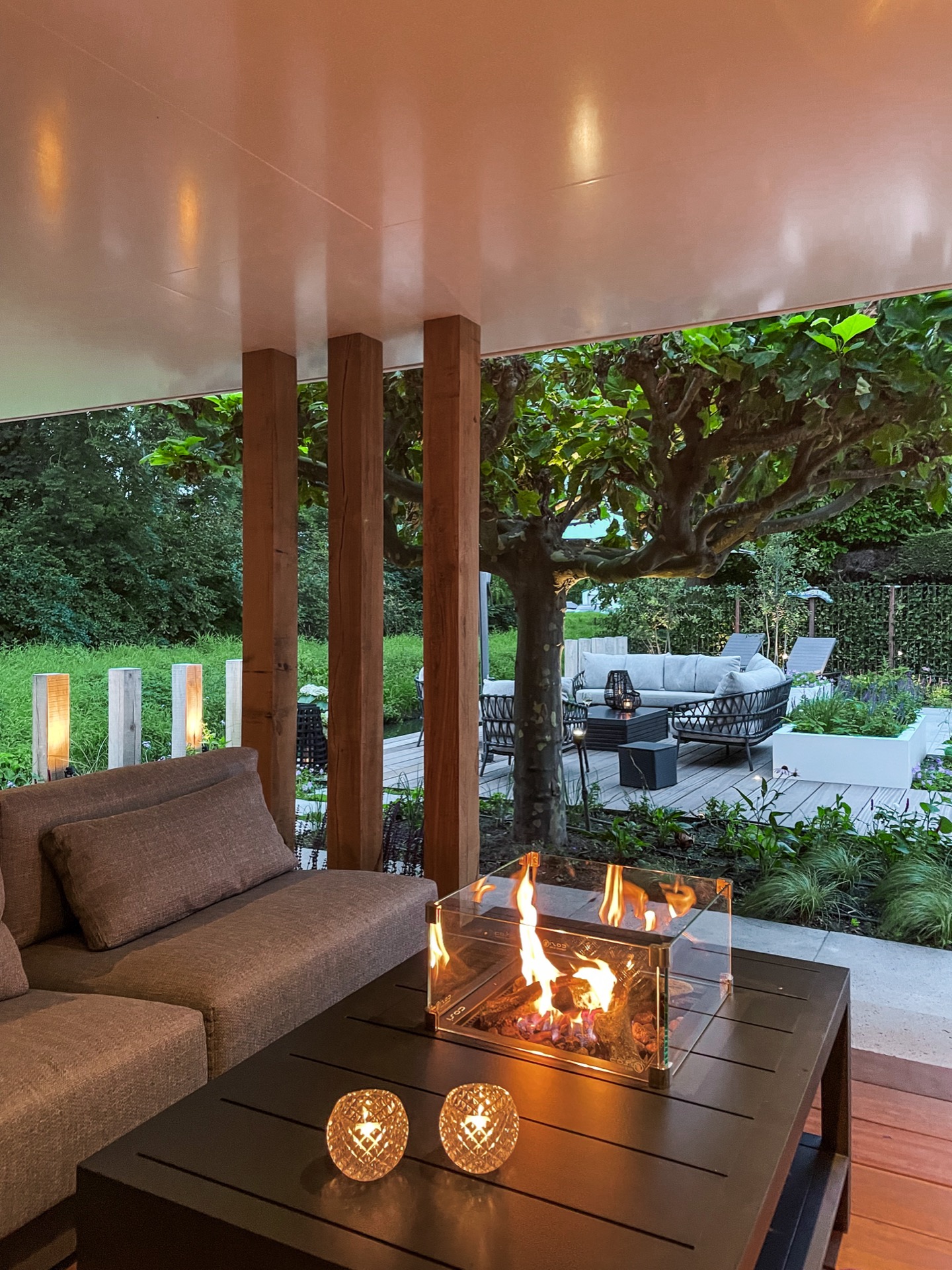
From one image to the next, the path shifts from a guiding element to a visual pause. In the more colourful views, flowers and low planting grow around the stones, making the path feel embedded in the garden instead of placed on top of it. The same idea appears near the lounge and pavilion area, where the route and the surrounding planting work as a soft border between sitting, walking and looking out across the garden.
Garden lighting as a spatial starting point
Wood, concrete and metal appear throughout the project, but they are never used as isolated statements. They form the frame that lets the planting and lighting take over visually. Concrete surfaces support the terrace and path. Metal appears in the lighting elements and garden details. Wood brings a lighter note to the seating area and nearby structures. Together they keep the palette controlled, which makes the green, grey, black and white tones in the garden easier to read.
The colour range is part of the project’s character. The greens are dense and layered, while the greys and blacks give the paving, furniture and fixtures a sharper outline. White appears more sparingly, often as a visual pause in the arrangement. This mixture does not chase contrast for its own sake. It simply helps the different zones of the garden stay legible, from the illuminated tree to the terrace and the stepping-stone route.
A pavilion edge in greenery and light
One of the more sheltered views shows a pavilion with lighting surrounded by green planting. The structure sits in a pocket of vegetation, so the light does not float in isolation. Leaves and shadows gather around the edges, which makes the pavilion feel tied to the rest of the garden rather than separated from it. In that setting, garden lighting becomes a structural tool: it defines the pavilion, the adjacent lounge area and the transition back to the open garden.
A green garden seen through evening and daytime details
Across the full set of images, the garden changes with the light but keeps the same structure. In daylight, the planting, flowers and stepping stones are easy to read. After dark, the illuminated contours, tree and seating area take over. That shift gives the project its strongest quality. The layout remains clear in both conditions, and the combination of garden lighting, terraces and planting makes the outdoor space work as a sequence of connected scenes rather than a single fixed view.
The overall impression is defined by what is visible, not by excess. A large tree, layered greenery, low lighting, a terrace, an outdoor seating area and a path of stepping stones form the core of the garden. Materials stay restrained, the planting stays present, and the lighting moves quietly through the composition. That is what gives this green garden with atmospheric lighting its clarity: each element can be seen on its own, but none of them is left without a role in the wider layout. Garden lighting remains connected to the layout, materials and daily use of the home.
Want to see more of RUYG Tuinen? View the page of RUYG Tuinen for even more great projects and company information.


.png)