








Loft renovation with custom interior design (light–dark contrast)
Dark wall finishes pull the eye toward the windows, where daylight settles across marble, glass and softened upholstery. In this loft renovation with custom interior design, the contrast is direct rather than decorative: deep tones frame the rooms, while lighter surfaces and transparent elements keep the open plan from feeling heavy. The result is a space that can shift from social to quiet without changing its basic shape.
loft renovation with custom interior design as the architectural starting point
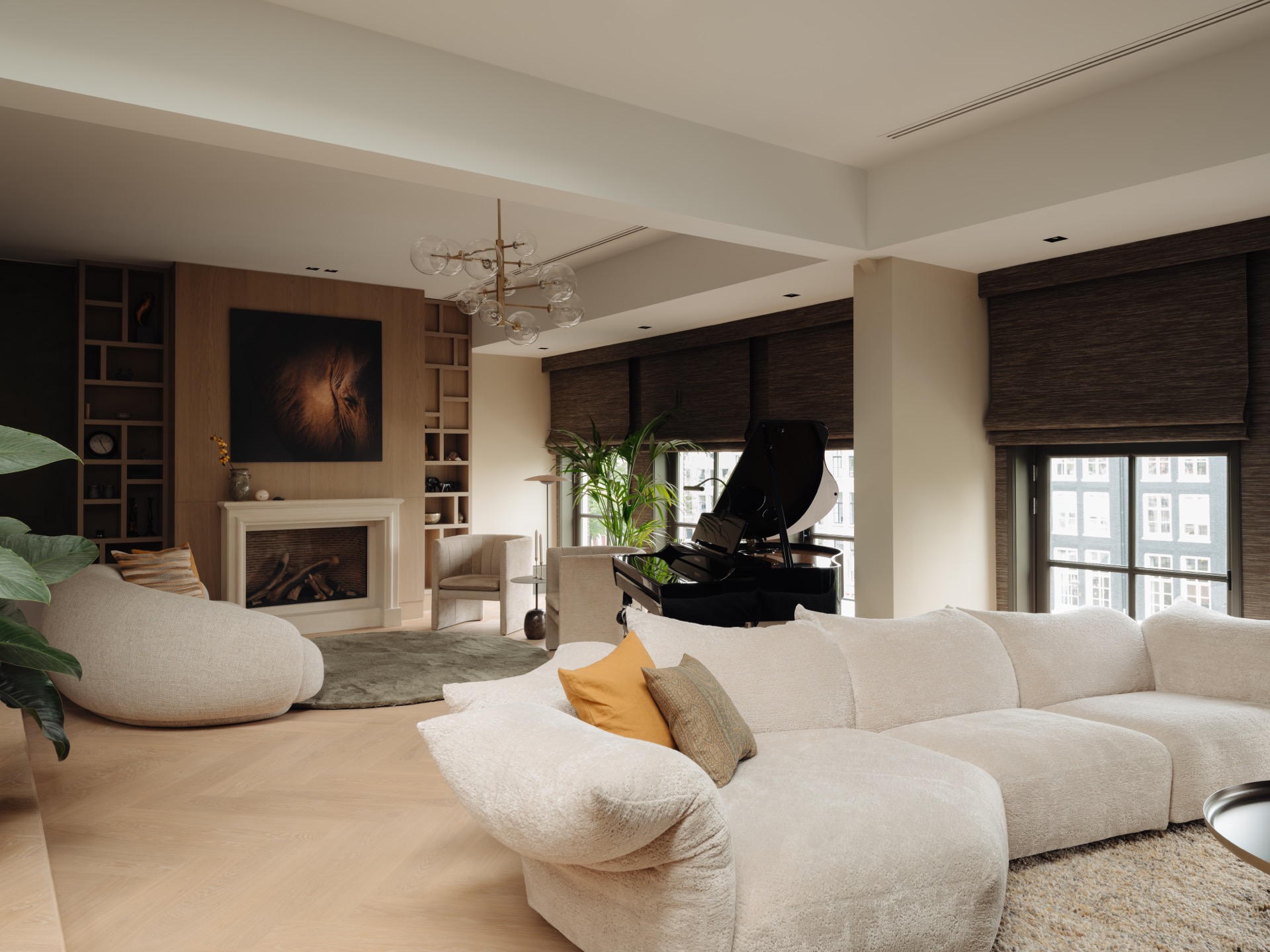
The interior renovation for loft living starts with a clear idea of use. The resident wanted a place to receive guests, work in peace and look out toward the water, all from different points in the home. That request shaped an open layout with contact between the zones, yet enough enclosure to give each corner its own pause. You can read that intention in the way the living area, dining zone and work area remain connected through long views and low visual barriers.
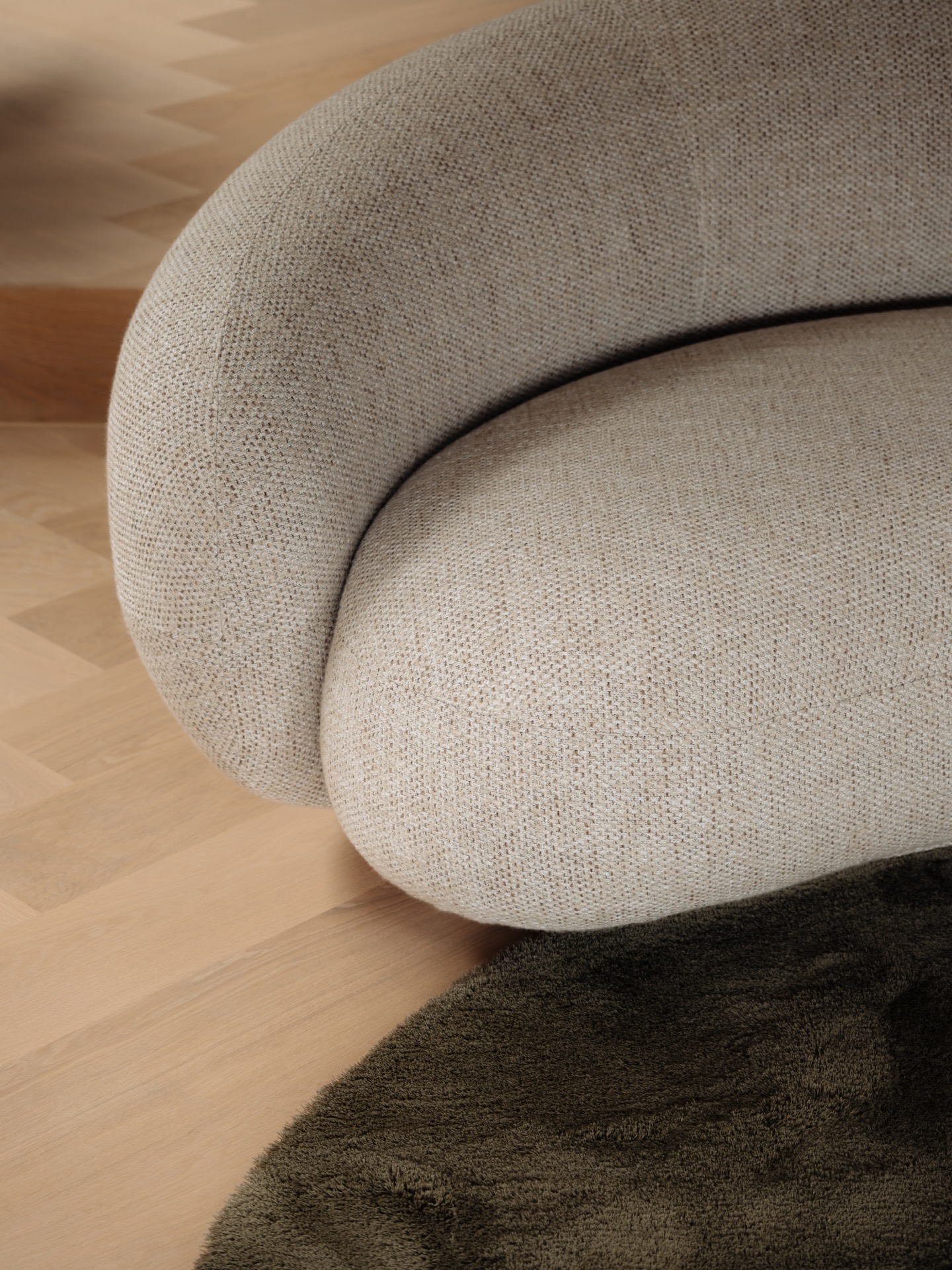
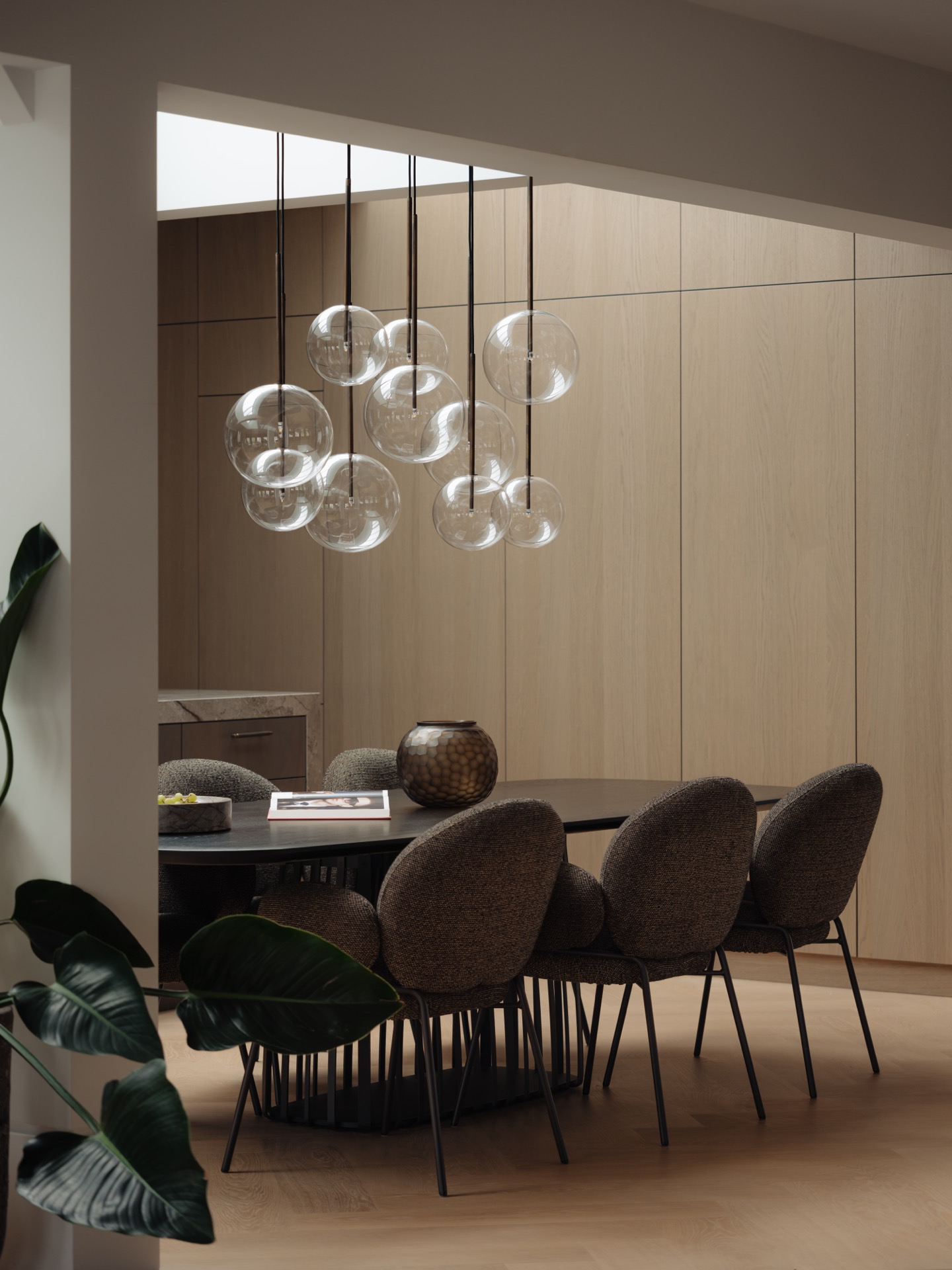
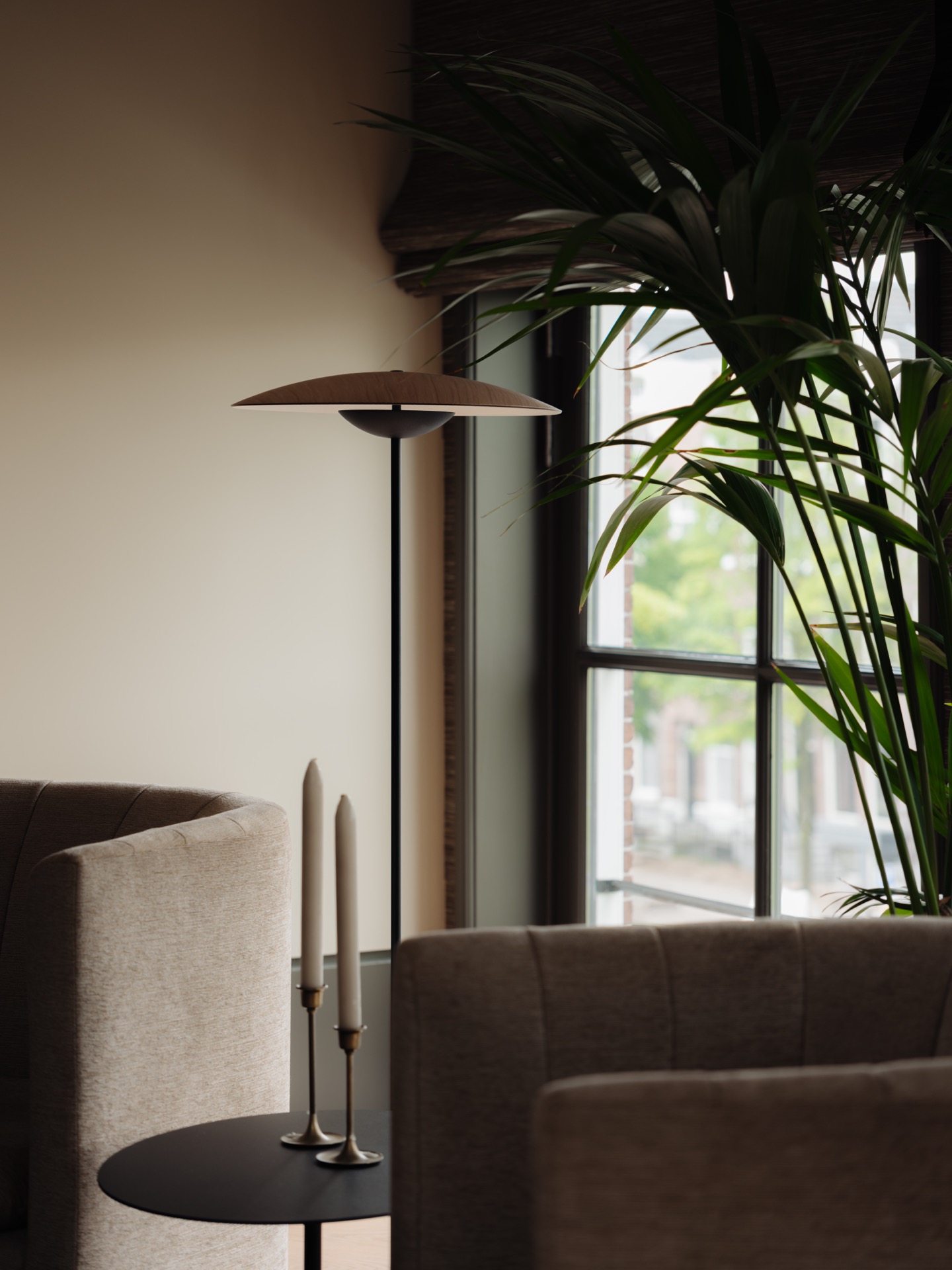
Stronger lines run through the apartment, but they are softened by rounded furniture forms and lighting with a gentler profile. A curved sofa, a rounded armchair and globe-like pendants interrupt the straight edges of the architecture. They do not fight the room. Instead, they slow it down. In a plan with many direct sightlines, those shapes make the transitions between the rooms feel less abrupt.
Marble and earthy tones across the main rooms
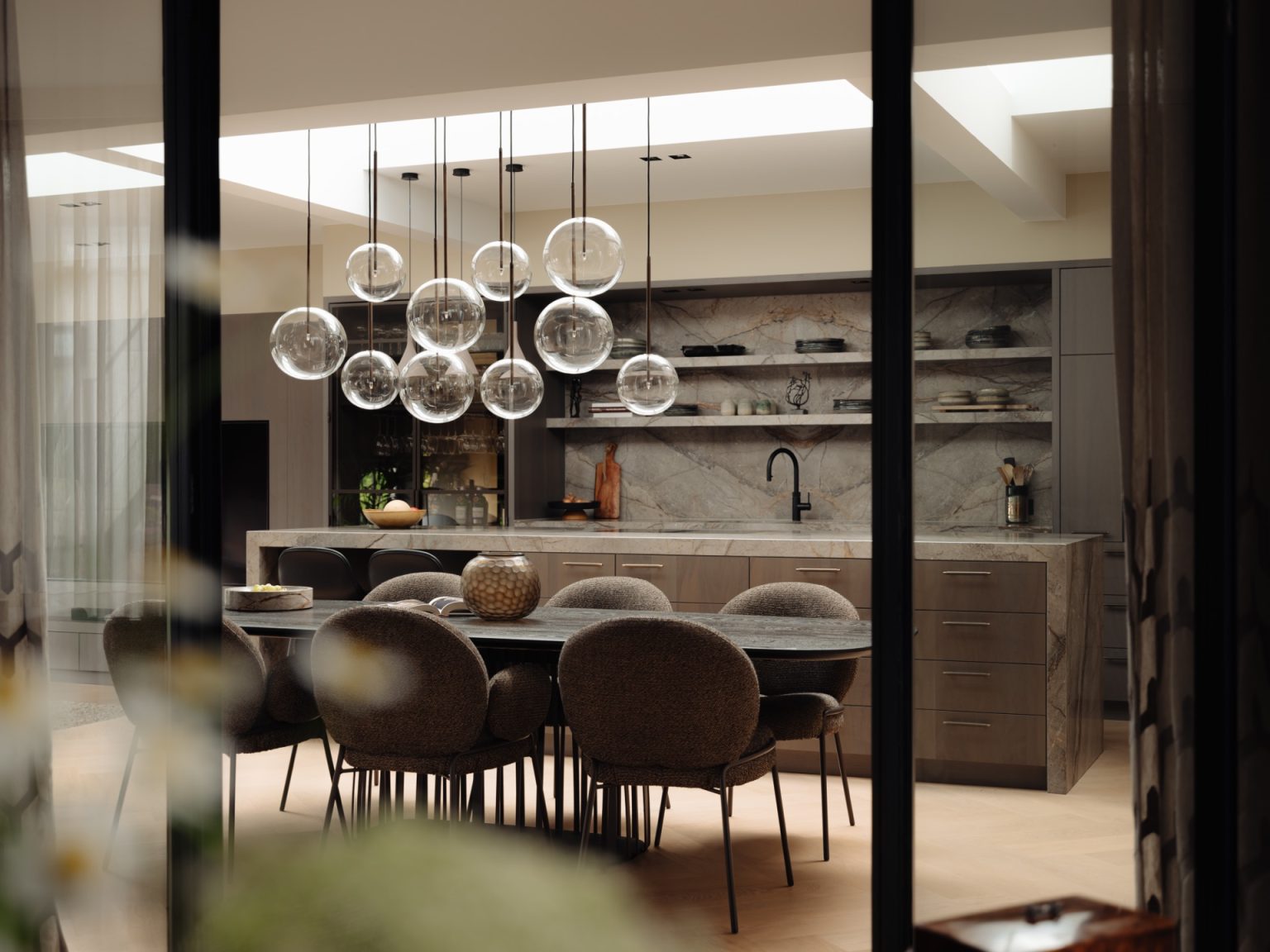
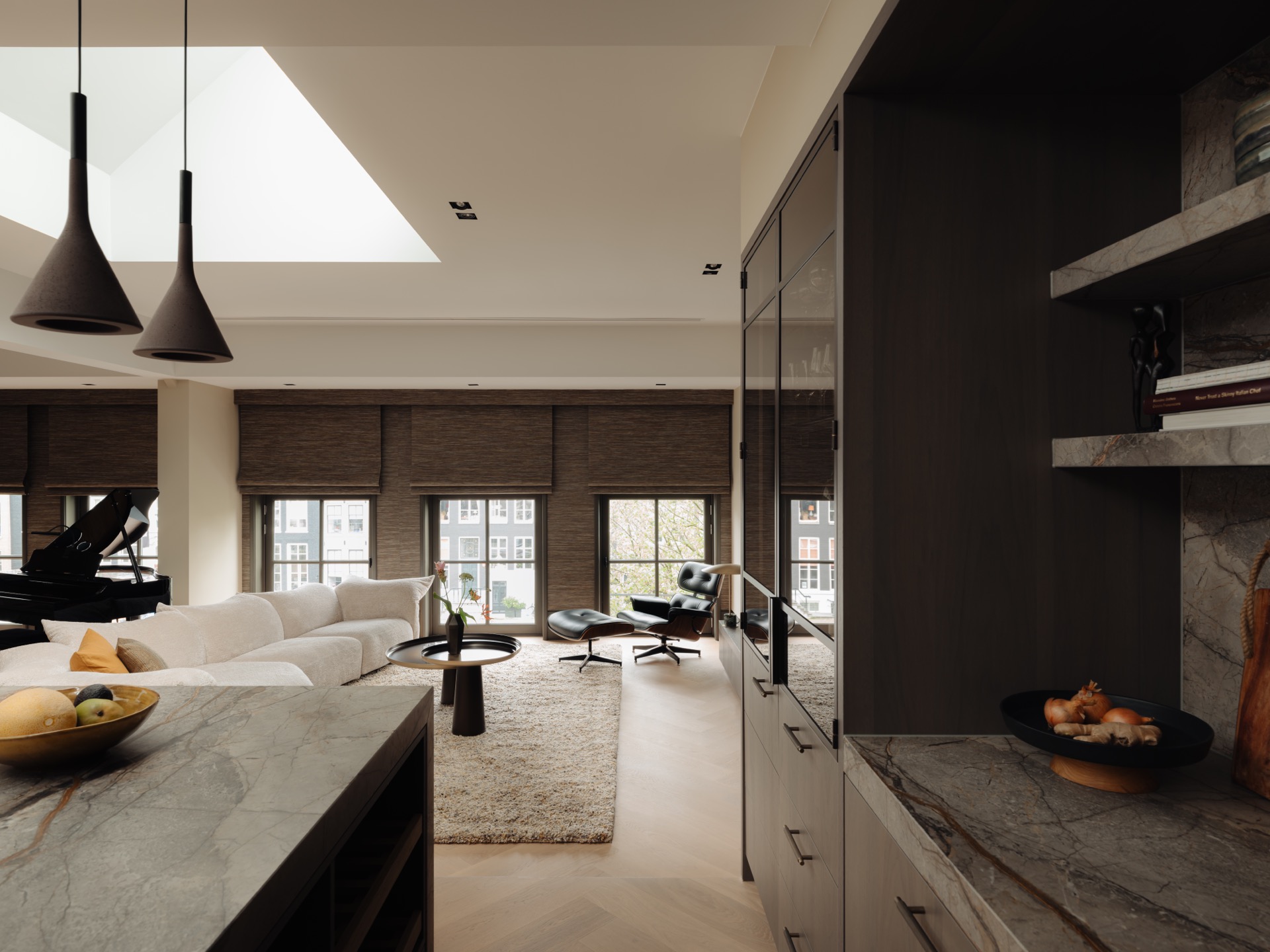
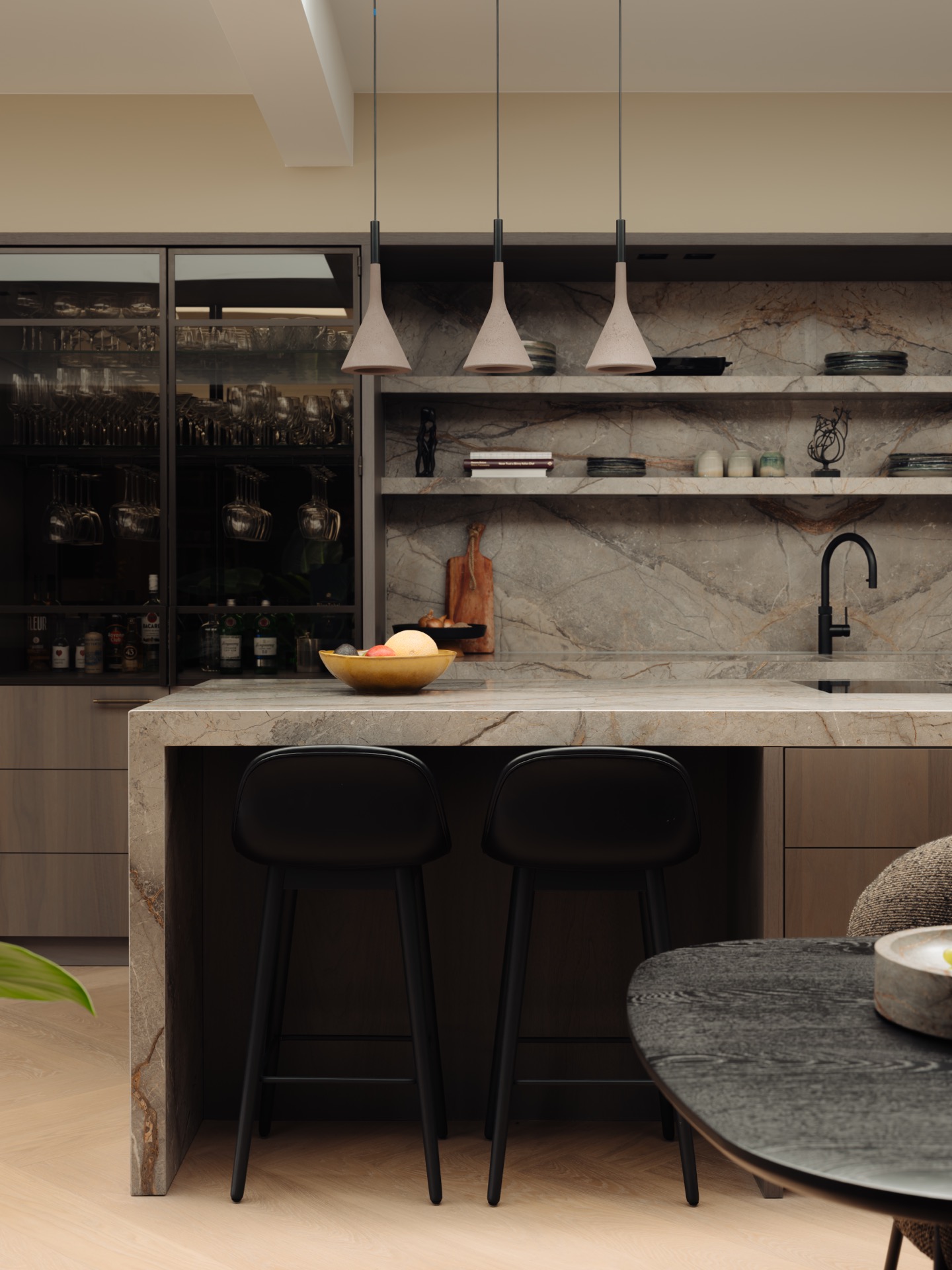
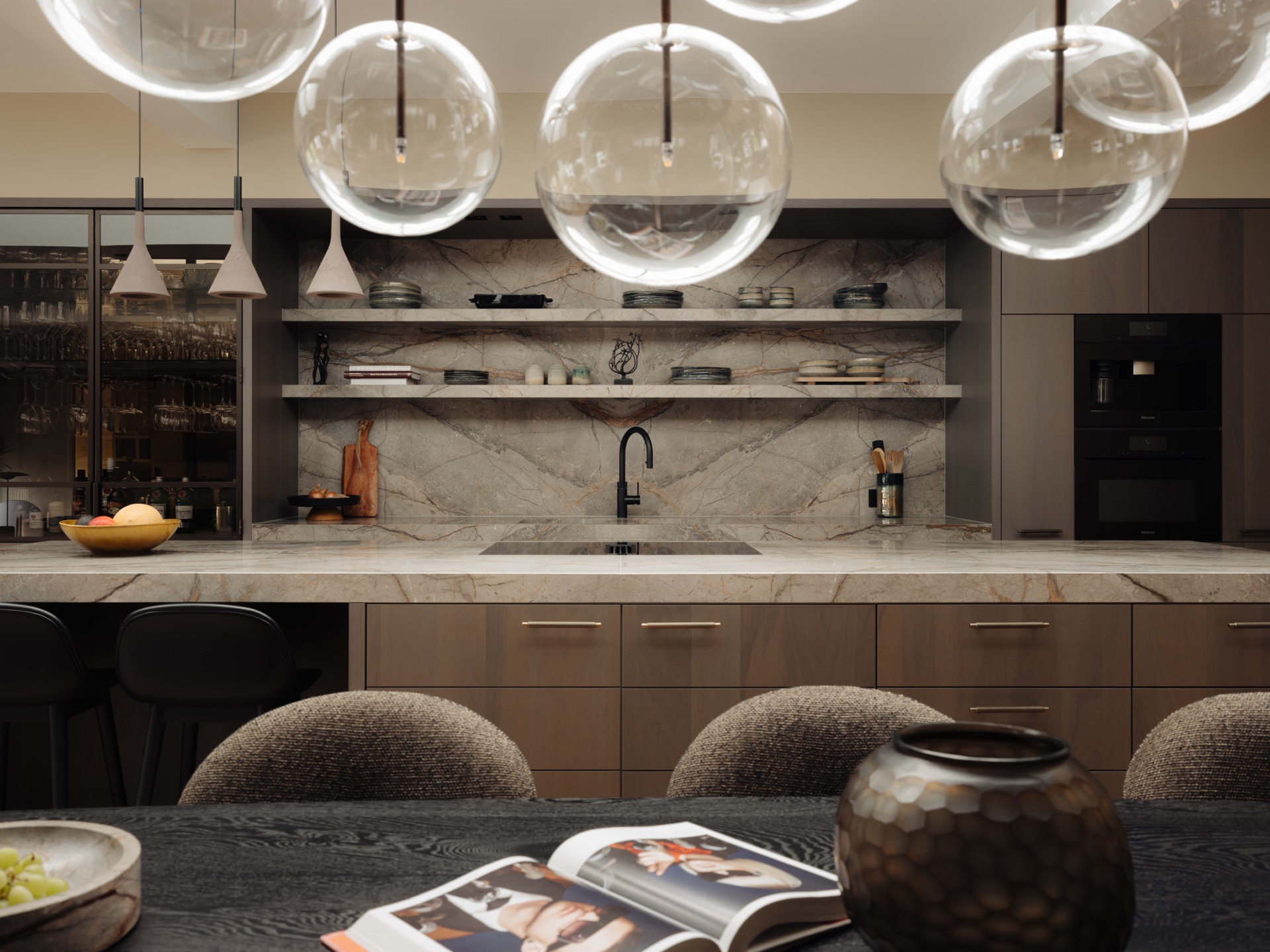
The material palette begins with stone that has visible movement in it. The marble kitchen worktop and related natural stone surfaces carry earthy tones that reappear in the textiles and finishes around the loft. That repetition is quiet, but it ties the kitchen, dining area and seating zone together without relying on a single dominant colour. The stone reads as solid and slightly rugged, while the upholstery absorbs those tones in a softer way.
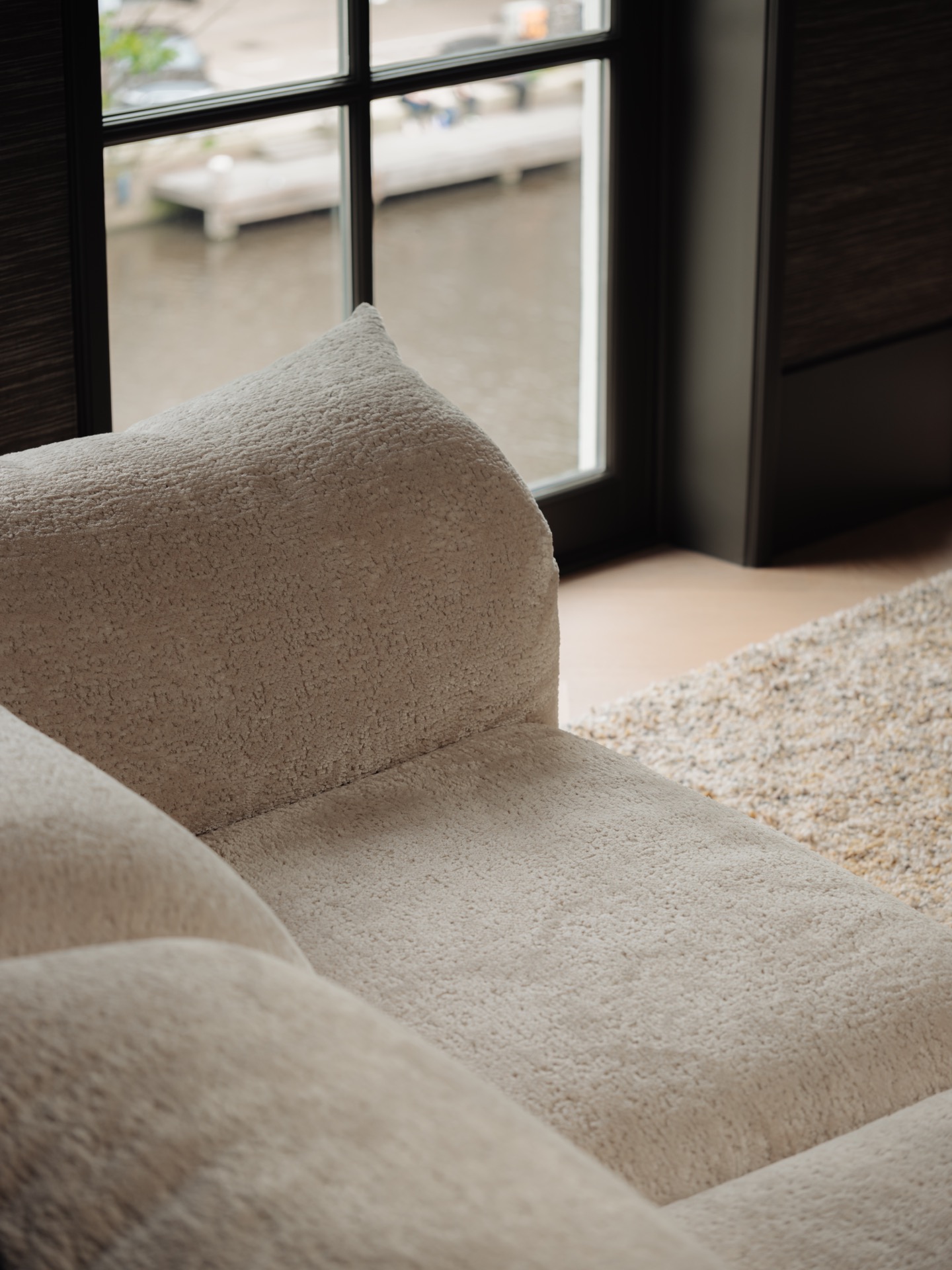
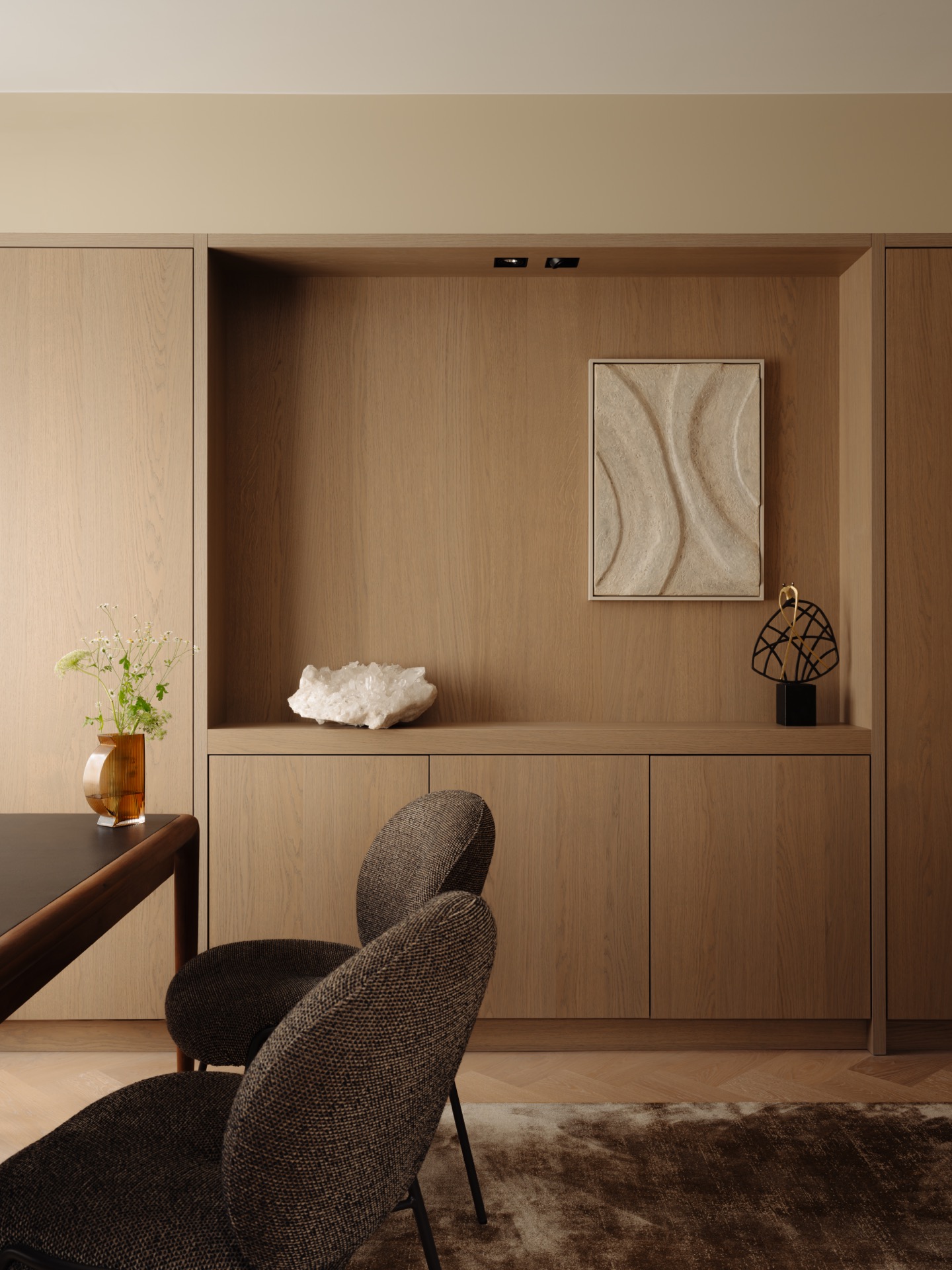
Close to the seating areas, tactile fabric and stone sit against wood and glass. The upholstery does not simply act as a neutral backdrop; it bridges the harder surfaces and the straight architectural lines. In the images, that matters as much as the larger room layout. The eye moves from a marble plane to a woven texture, then to a dark wall and back toward the windows. This interior renovation for loft living depends on those shifts in surface more than on ornament.
Rounded furniture forms beside clear edges
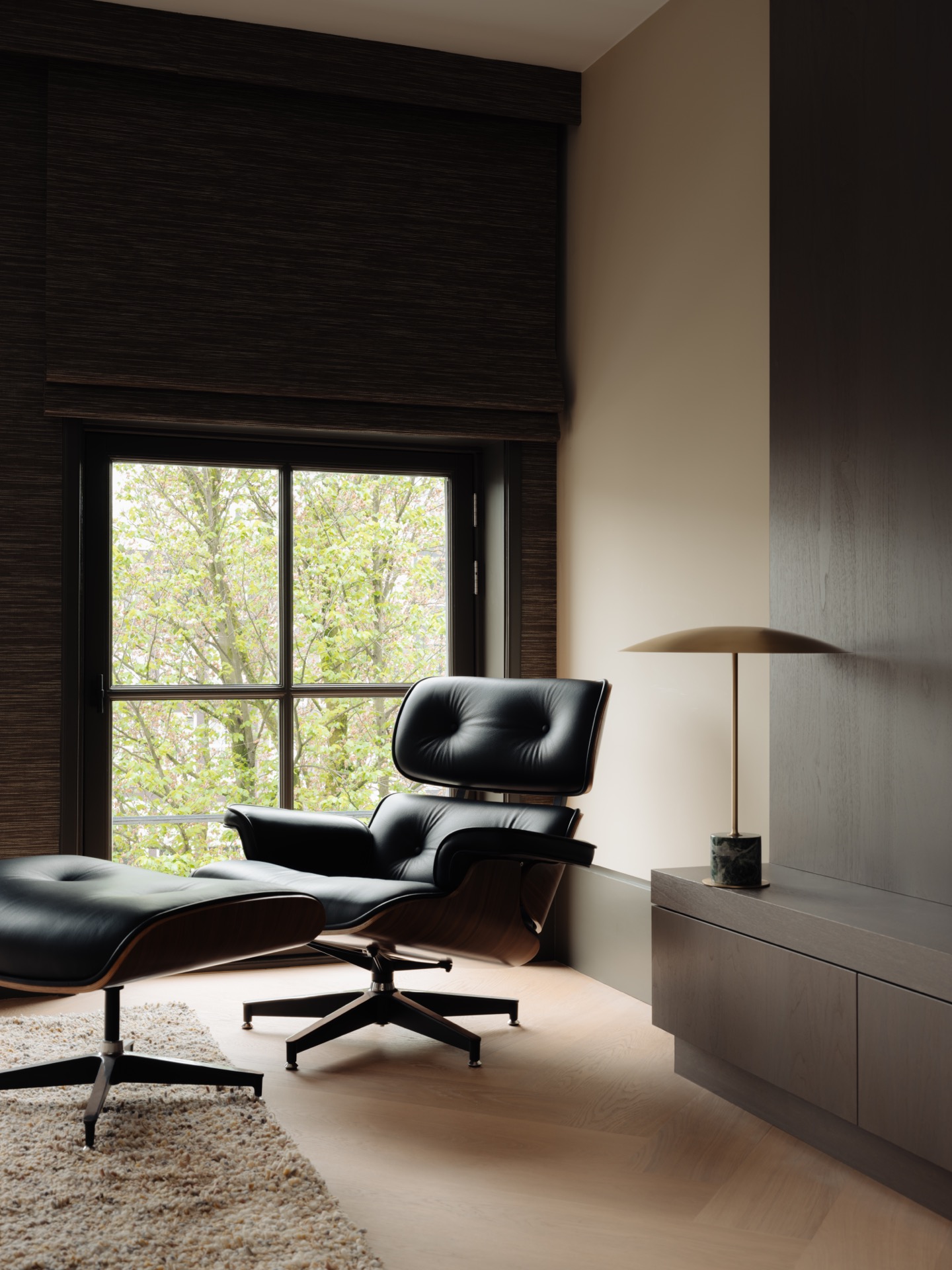
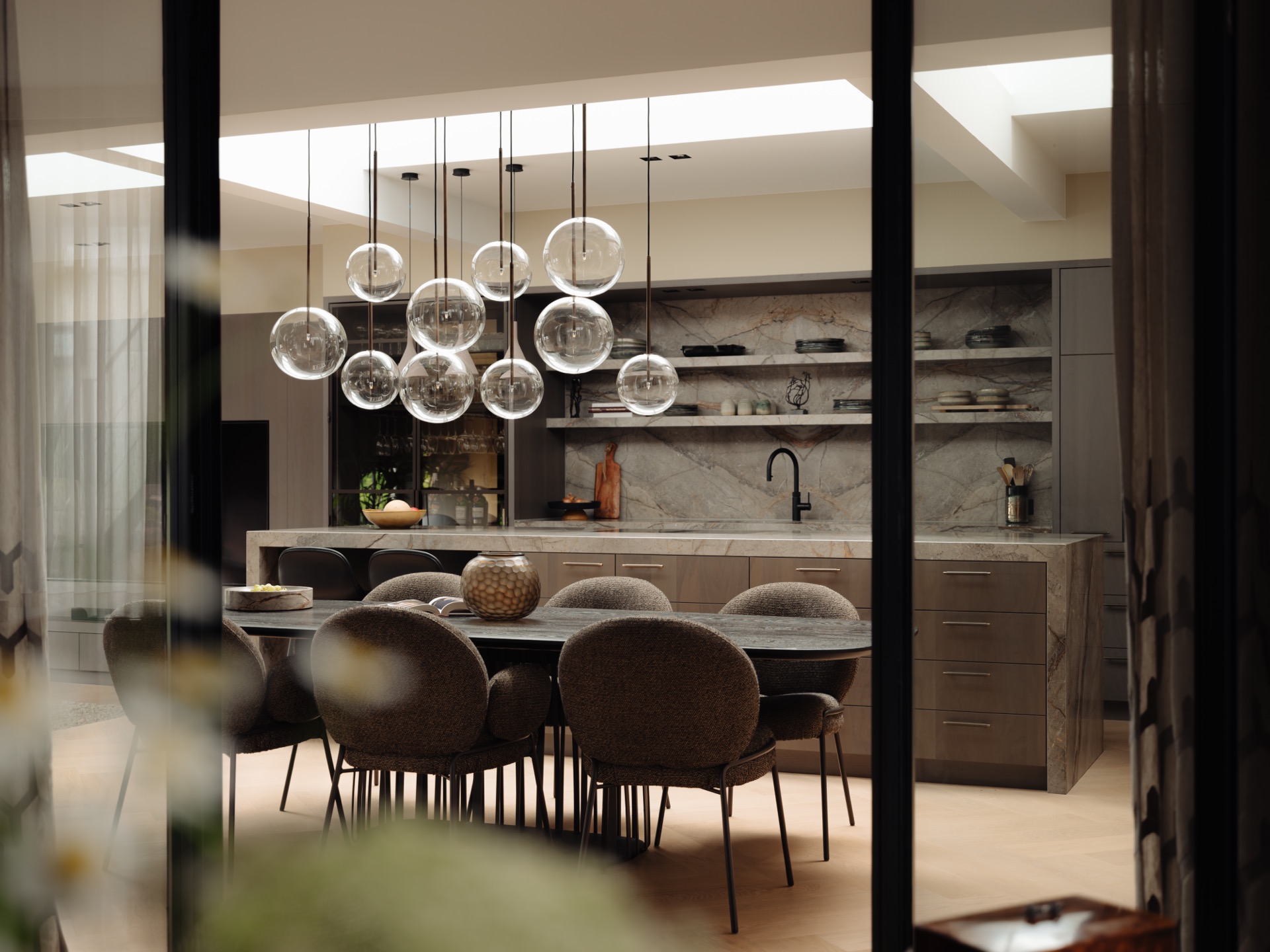
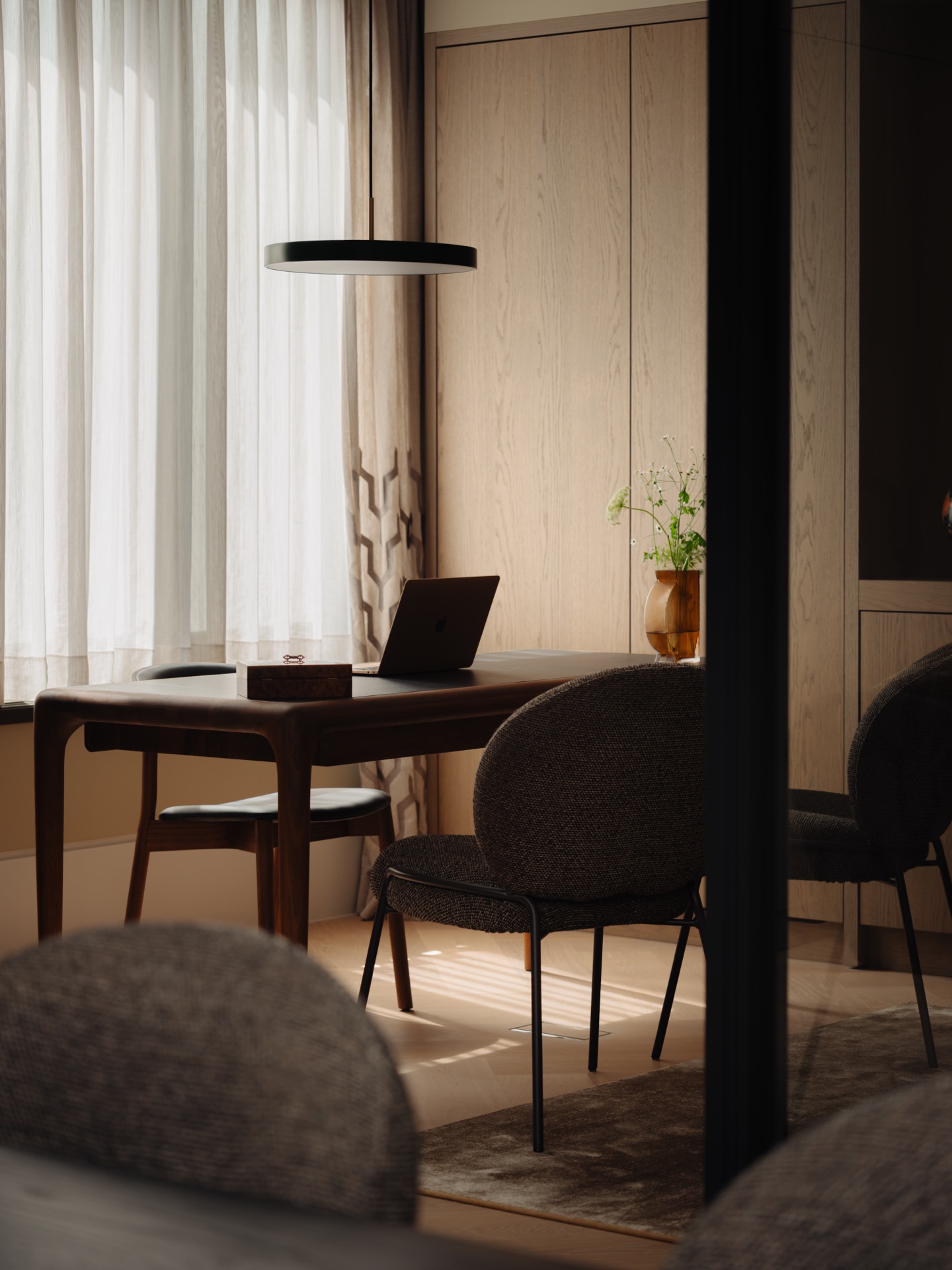
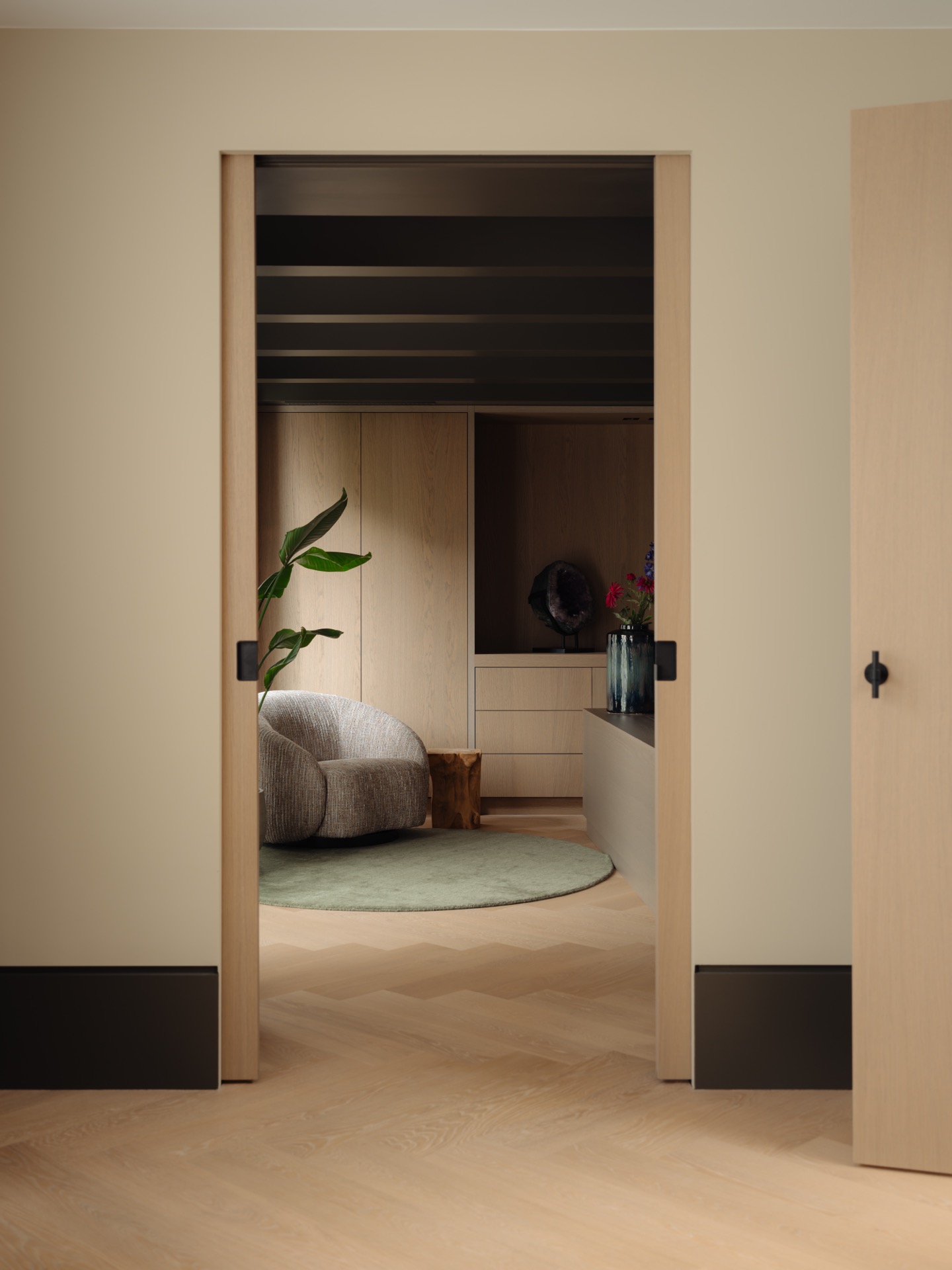
The strongest visual rhythm comes from the contrast between the built structure and the furniture. Cabinet fronts and wall planes stay crisp, while chairs, sofas and lamps bring in rounded furniture forms. That softness is not applied everywhere. It appears where the room needs relief: around the dining table, in the lounge, and in details that carry the hand rather than the eye. Because the apartment is open, those rounded pieces also help define smaller moments inside the larger volume.
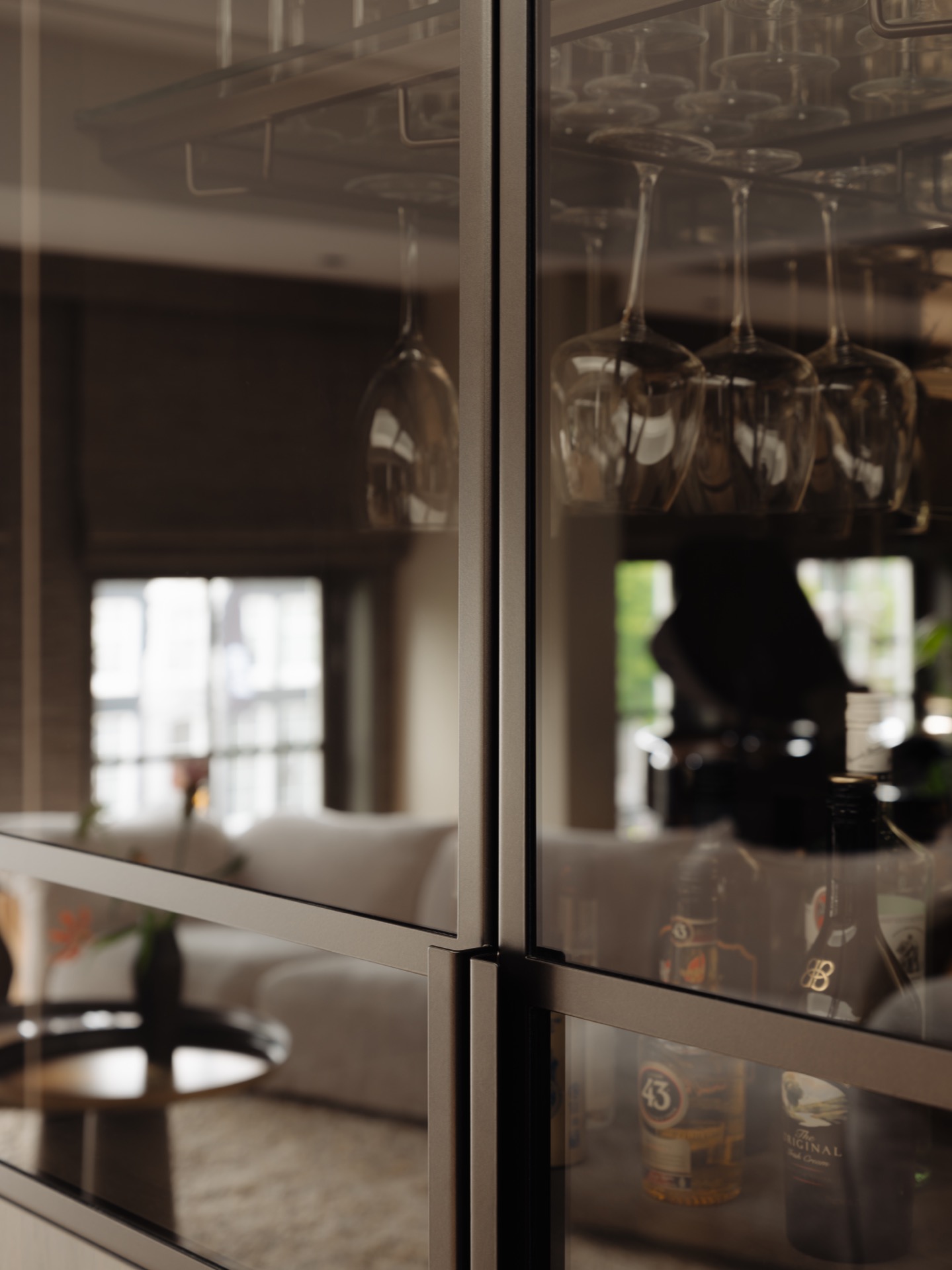
One of the custom elements is the glass cabinet at the bar area, which introduces transparency into a zone that could easily have become dense. The shelves, framing and reflective surfaces allow the contents to sit lightly against the darker background. Nearby, custom wall niches built-ins repeat that idea in a more architectural way. They create pockets for objects and light, and they break up the longer wall runs without closing them off. That makes the loft renovation with custom interior design part of the architectural character rather than a loose finish.
Light that works as structure
Above the dining table, glass globe pendant lights gather the eye without blocking the room. The fixture is designed as a clear focal point, but its transparency keeps the view open across the loft. It frames the dining zone rather than enclosing it. That matters in a room where the kitchen, table and living area all stay within one field of vision. The light becomes part of the layout, not just an addition above it.
At the windows, the dark blinds and the wall covering use the same material. That decision does two things at once. It pulls attention toward the glazed edge of the loft, and it creates the impression of taller windows than the room may actually have. The darker finish makes the daylight read brighter by comparison. In the living area, this is one of the clearest examples of how the light and dark contrast interior strategy shapes perception.
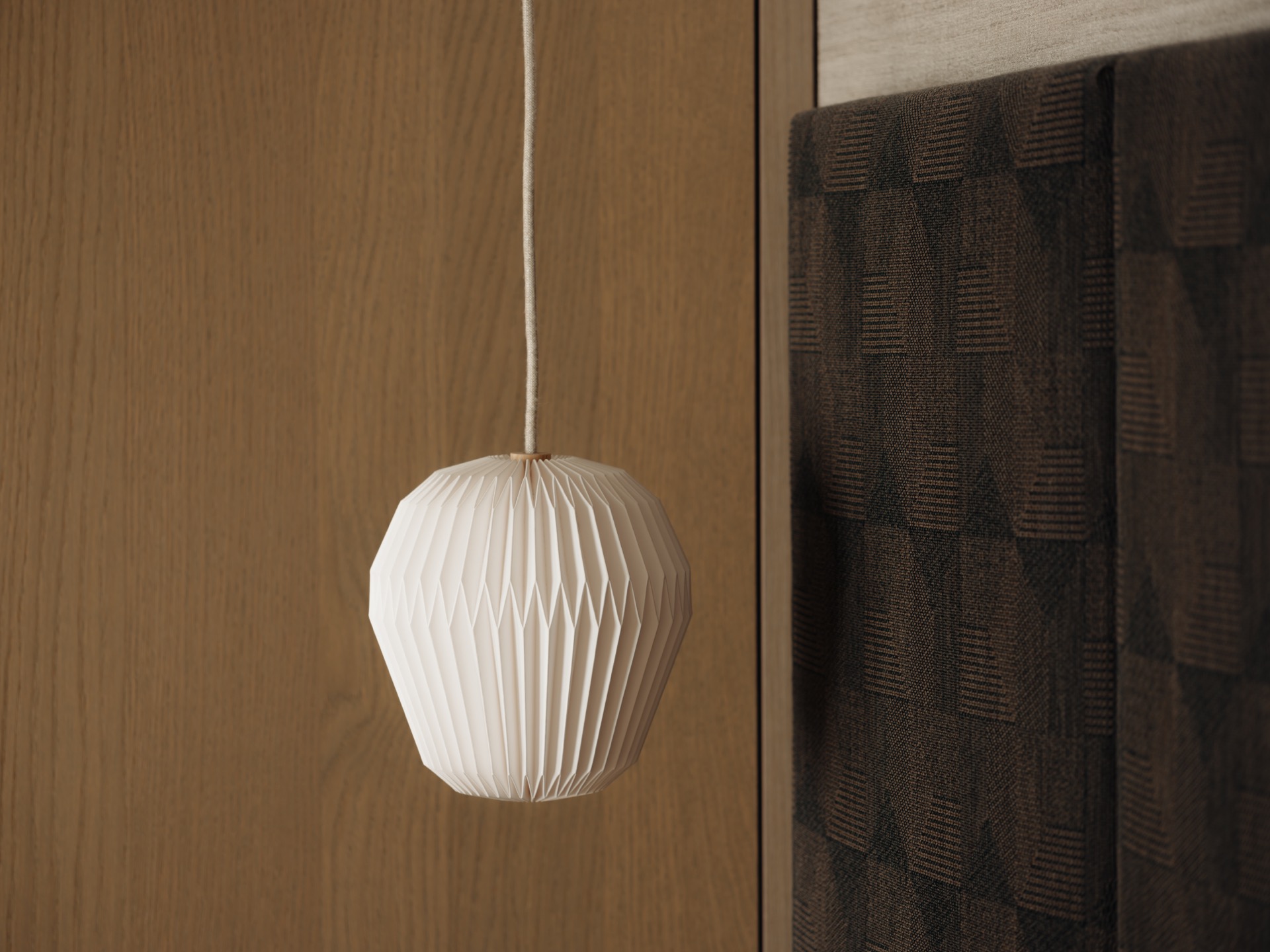
Elsewhere, the lighting keeps the atmosphere visually open. Pendant clusters, small spots and translucent shades leave enough negative space around them for the ceiling to remain legible. The room never feels overloaded with fixtures. Instead, the lamps mark the key points of use: dining, reading, working and moving through the plan. That restraint supports the open loft layout more effectively than a single dramatic gesture would.
Rooms that carry the same material language
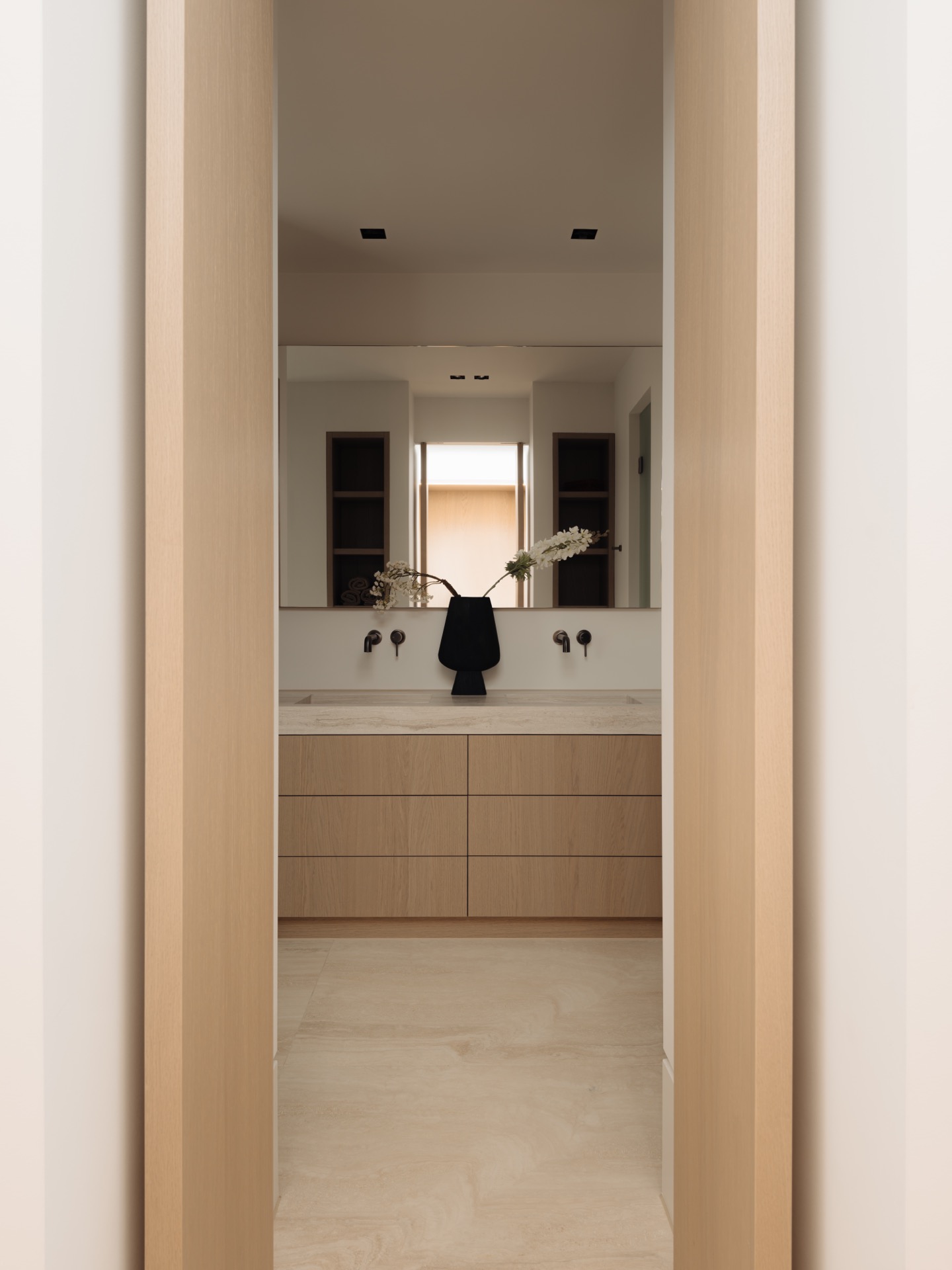
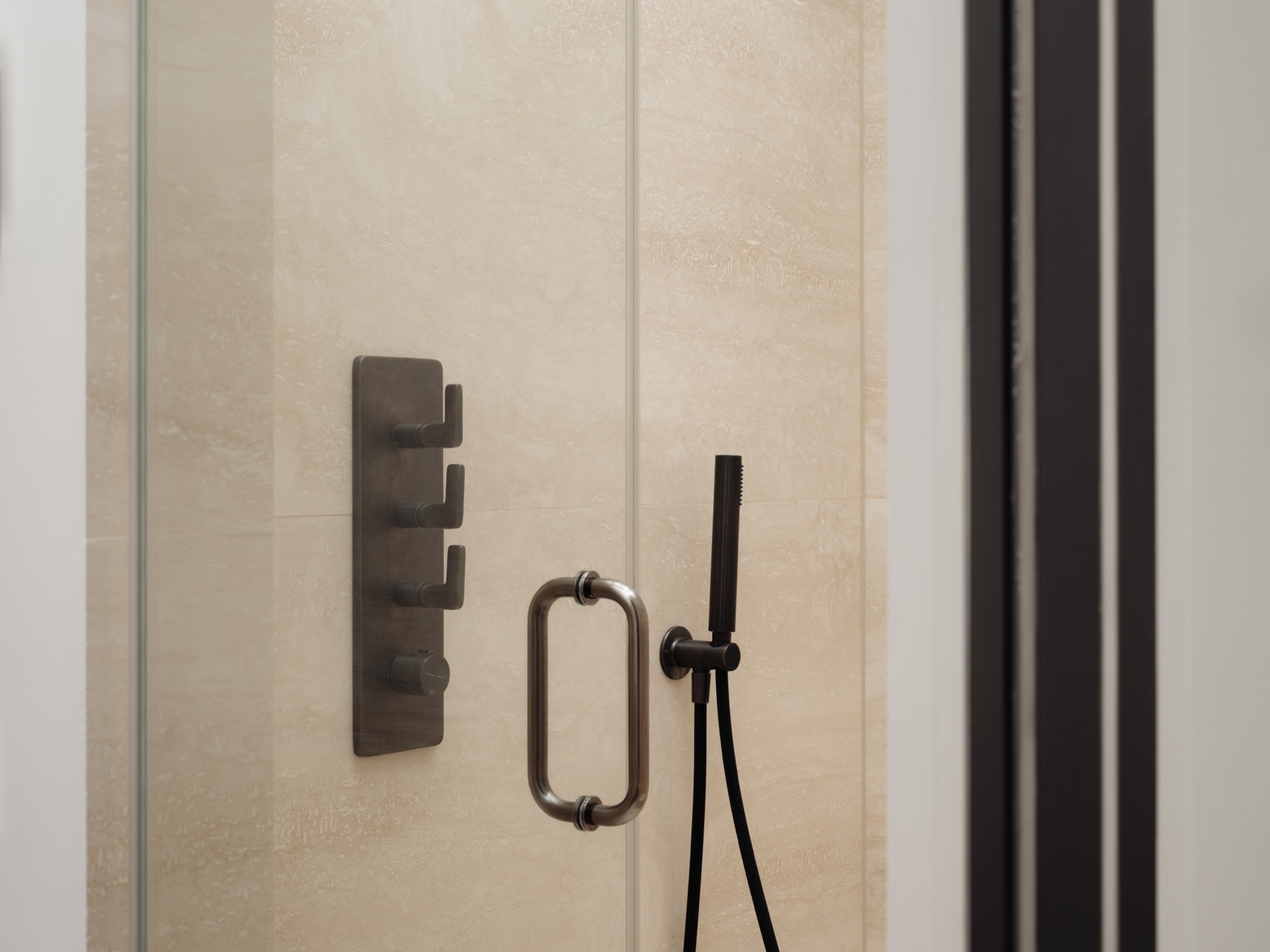
The project extends the same approach into the bathroom and wellness spaces. Natural stone meets glass in the shower area, where the enclosure stays visually light against the heavier mineral surfaces. A stone vanity block gives the room weight at the base, while the transparent screen lets the space remain readable in one glance. The contrast is practical, but it also keeps the bathroom connected to the rest of the interior language.
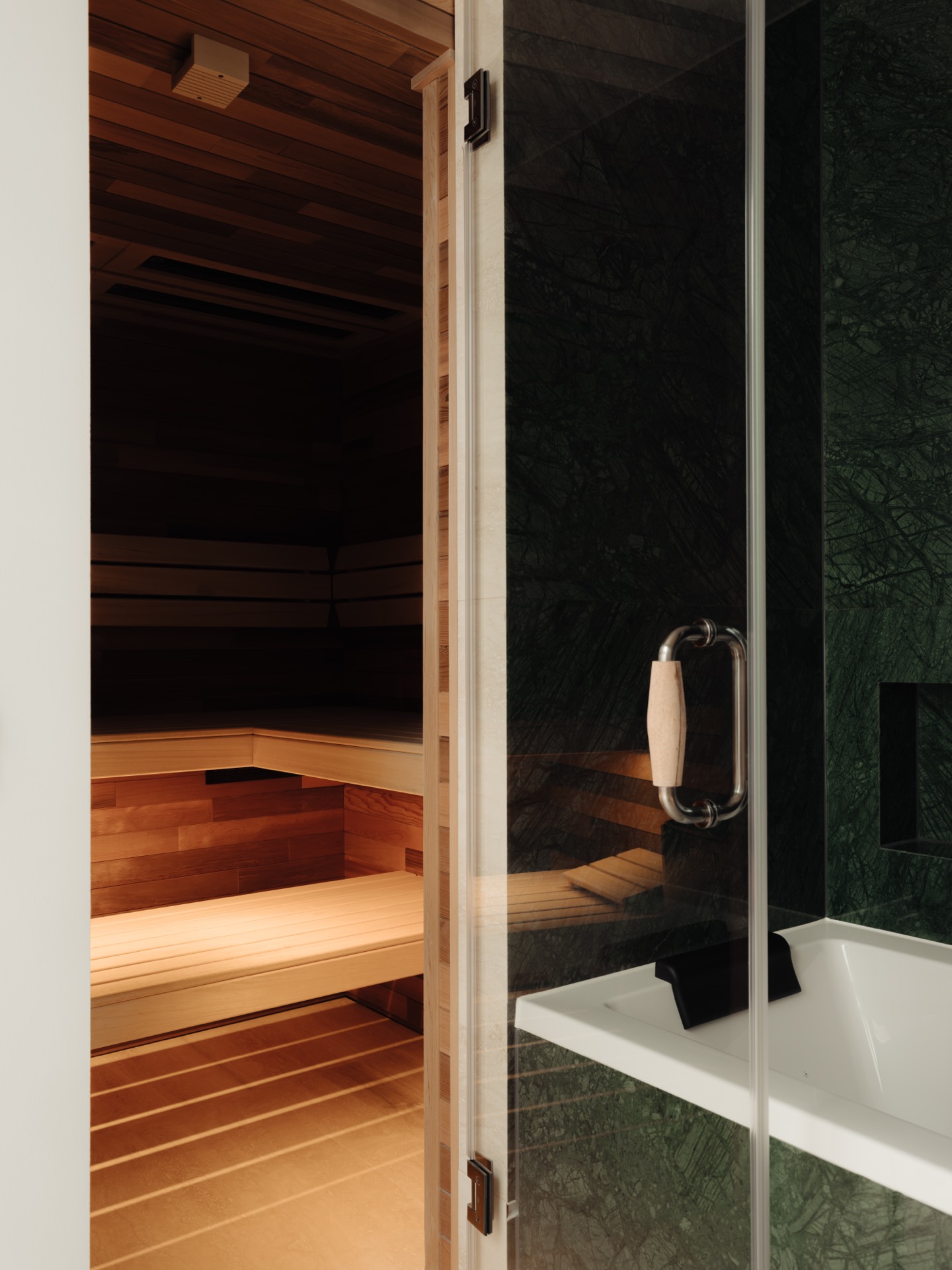
The wellness area continues with wood and glass: warm timber surfaces on one side, a glazed partition on the other. That pairing introduces another version of the project’s main theme. Solid and transparent, closed and open, dark and light. Because the loft already uses these oppositions in the living spaces, the sauna reads as part of the same design family rather than as a separate insert. The material choices stay disciplined, and the room keeps its focus on surface and enclosure.
Energy, placement and the final layer of detail
Beyond the visible finishes, the project also included an energy scan and the placement of crystals in selected parts of the home. Amethyst, rock crystal and agate were placed where they could support the flow of the house. Whether seen as a symbolic layer or a spatial one, the gesture adds another level of attention to the renovation. It belongs to the same mindset as the material choices: objects are not scattered at random, but placed with regard to how the eye and body move through the rooms.
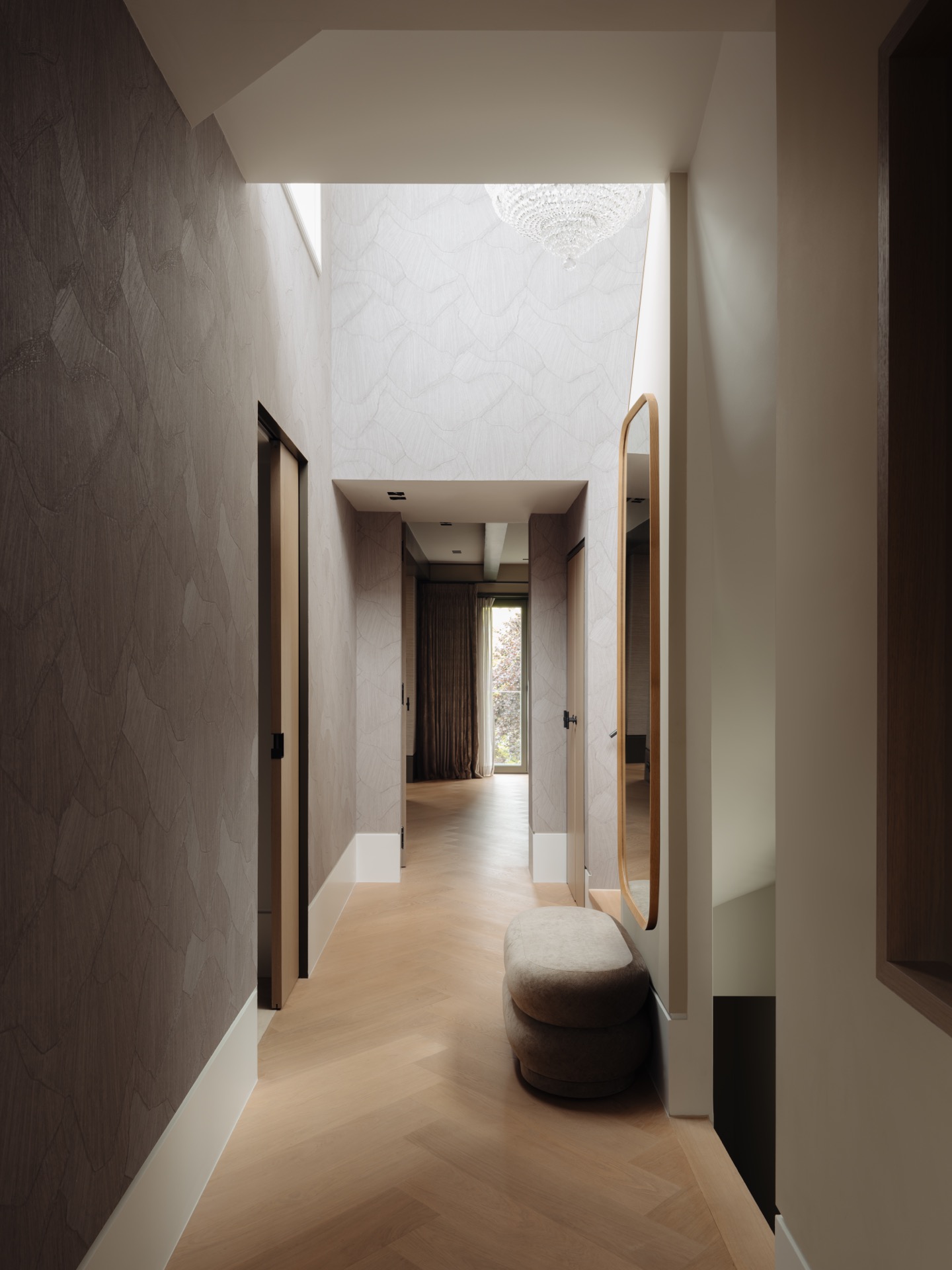
The final impression comes from accumulation rather than excess. Marble, dark wall panels, glass, rounded seating and carefully placed light all stay in conversation across the loft. Each part does a specific job. The stone anchors, the glass opens, the upholstery softens, and the dark finishes direct the view. In a fully renovated loft like this, the value lies in how those parts hold together from one room to the next, while still leaving each zone distinct enough to read on its own. That makes the loft renovation with custom interior design part of the architectural character rather than a loose finish.
Want to see more of Holistic Interiors? View the page of Holistic Interiors for even more great projects and company information.

.png)
NEW 2026 Jubileum Edition The Best Interior Designers Benelux
Order Now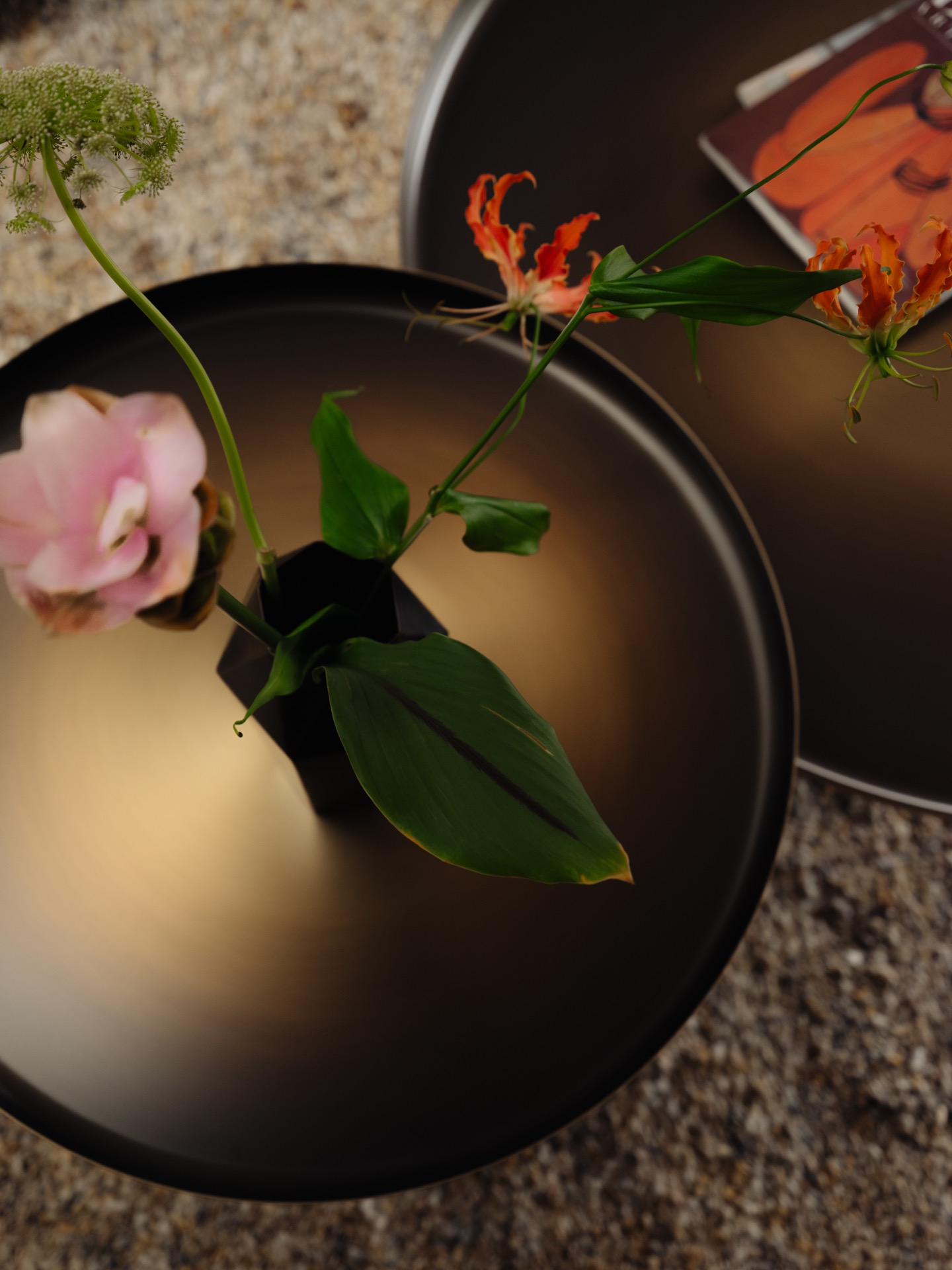
NEW 2026 Jubileum Edition The Best Interior Designers Benelux
Order Now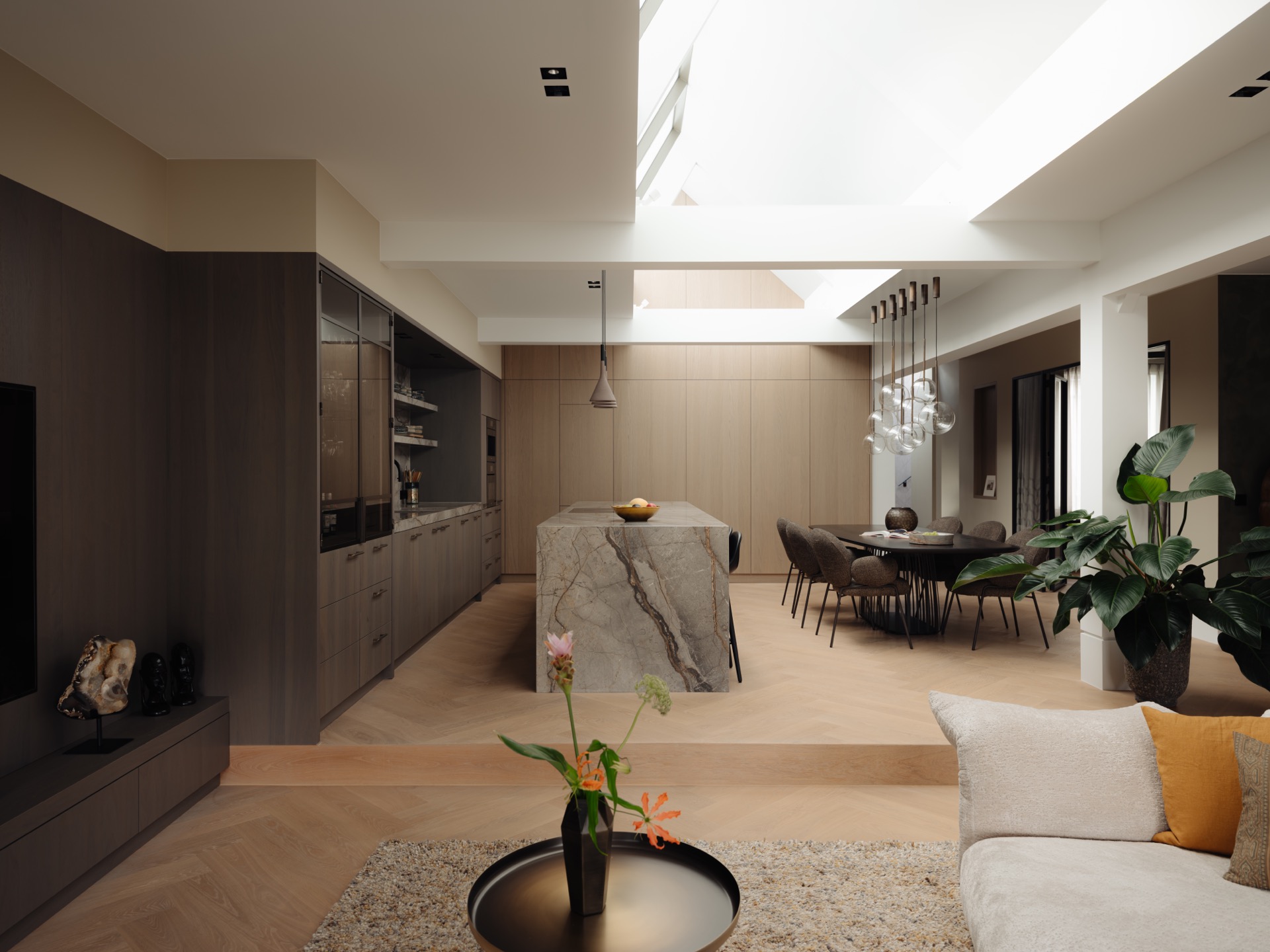
NEW 2026 Jubileum Edition The Best Interior Designers Benelux
Order Now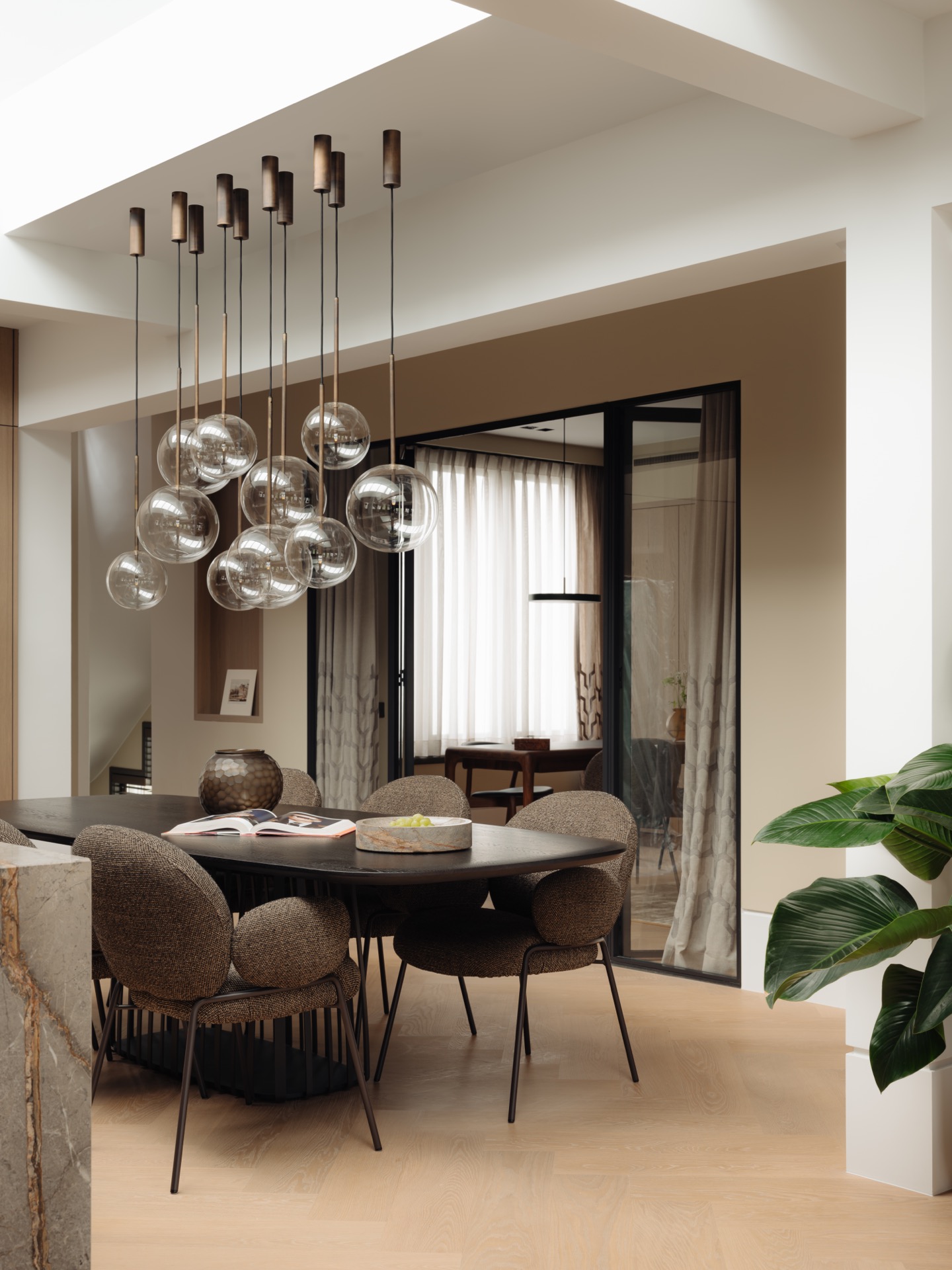
NEW 2026 Jubileum Edition The Best Interior Designers Benelux
Order Now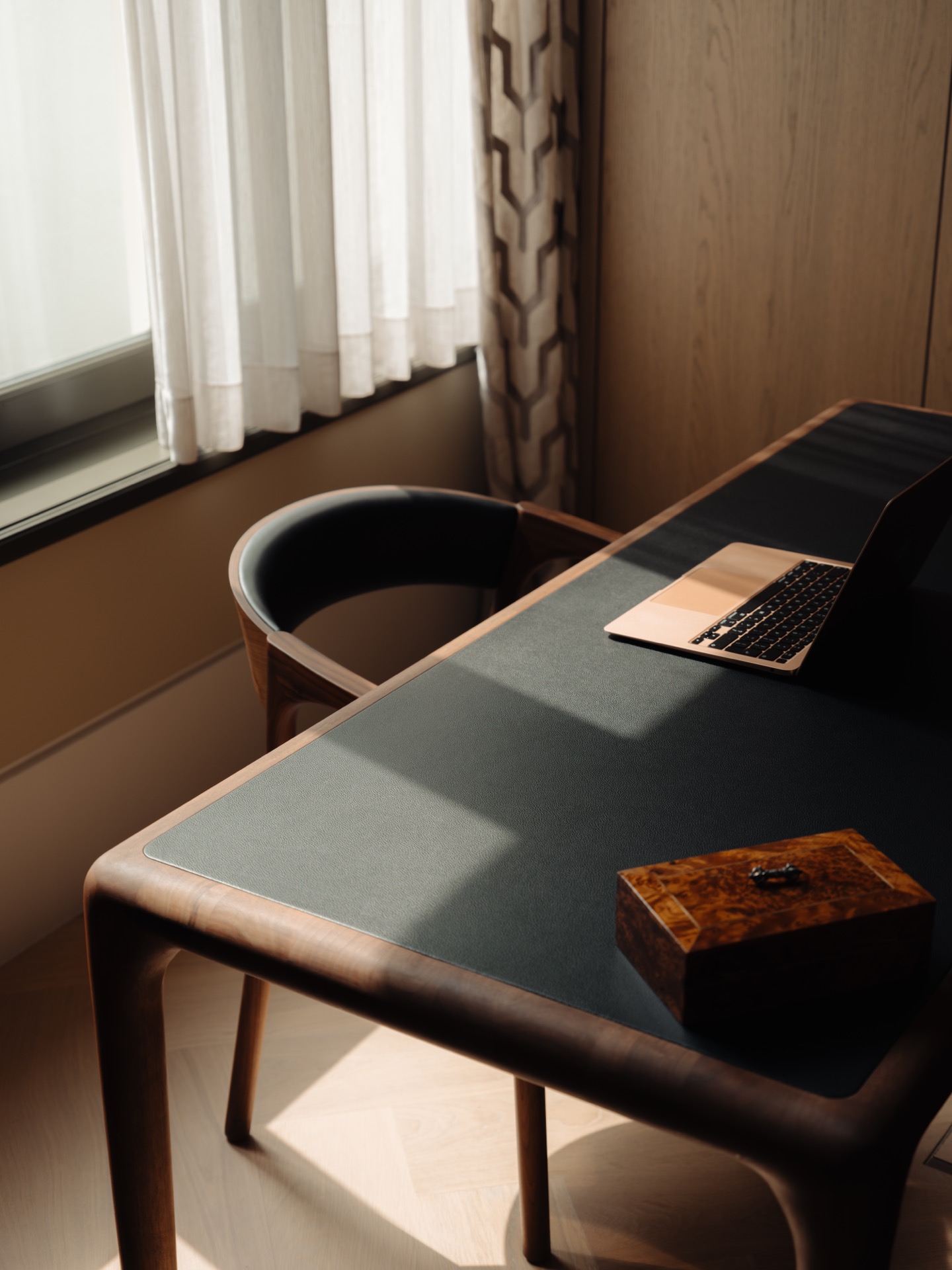
NEW 2026 Jubileum Edition The Best Interior Designers Benelux
Order Now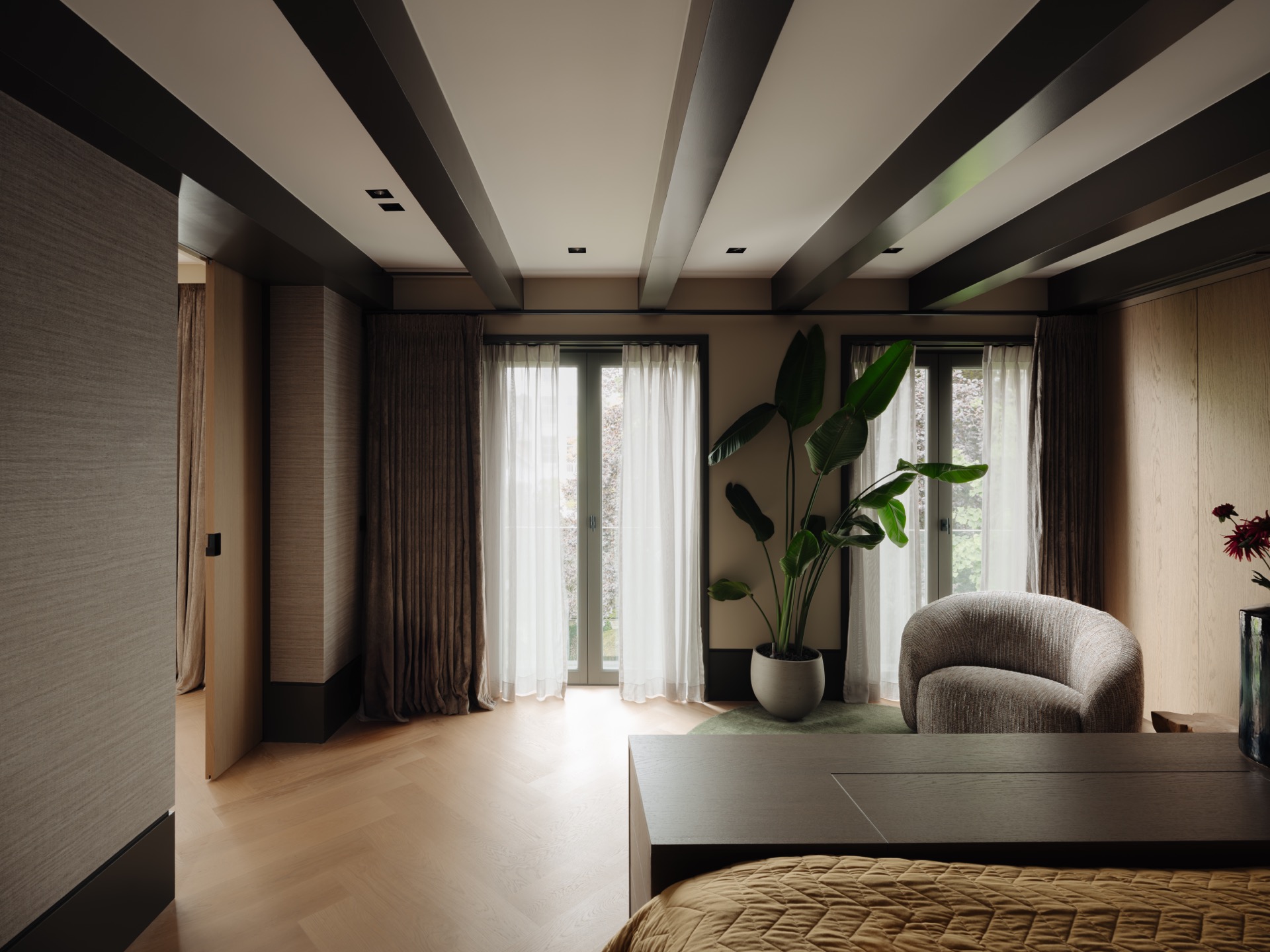
NEW 2026 Jubileum Edition The Best Interior Designers Benelux
Order Now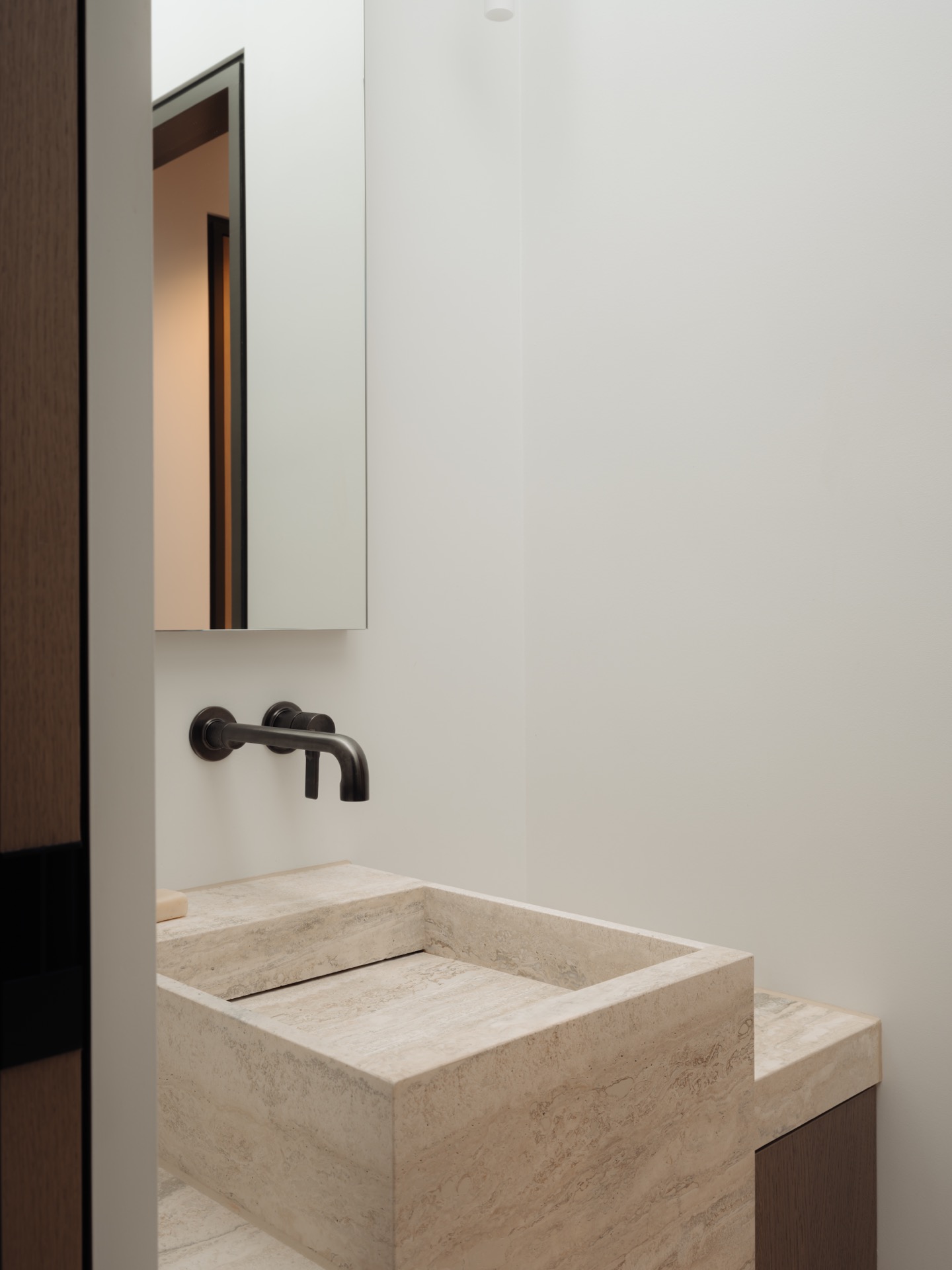


%20-%20)
%20-%20)
%20-%20)
%20-%20)
%20-%20)
%20-%20)
%20-%20)
%20-%20)
%20-%20)
%20-%20)
%20-%20)
%20-%20)
%20-%20)
%20-%20)
%20-%20)
%20-%20)
%20-%20)
%20-%20)
%20-%20)
%20-%20)
%20-%20)
%20-%20)
%20-%20)
%20-%20)
%20-%20)
%20-%20)