





Elegant interior concept for a modern residence
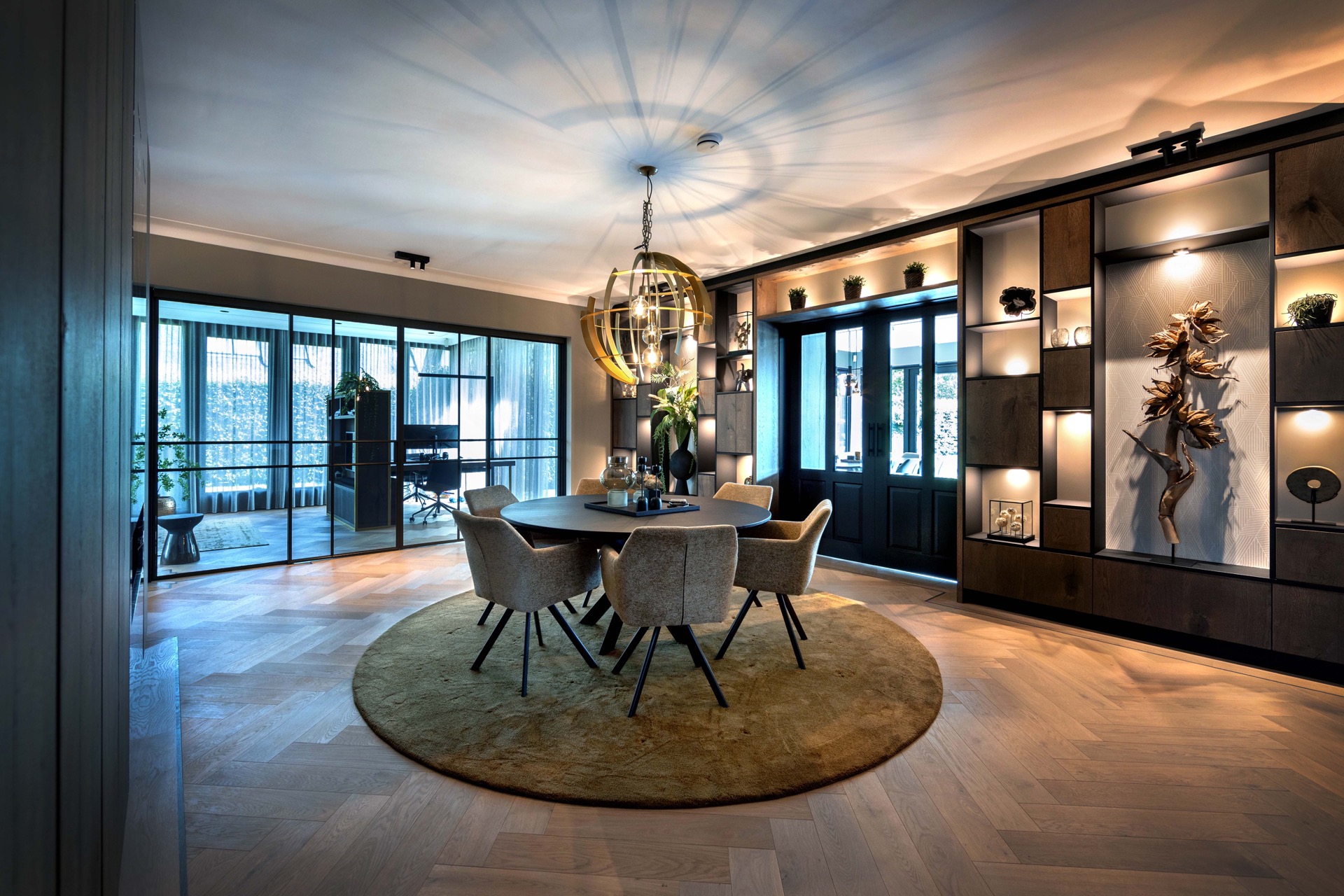
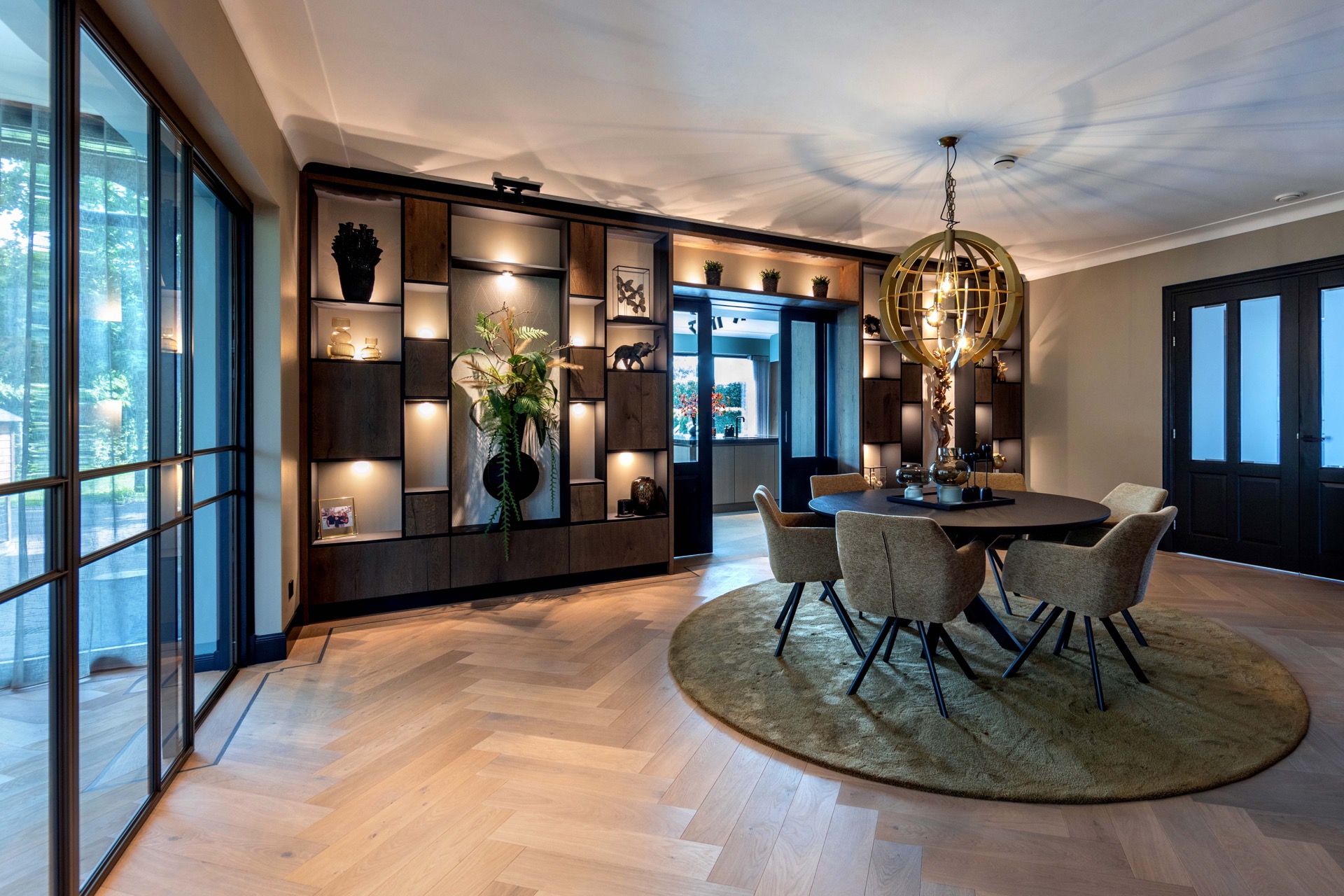
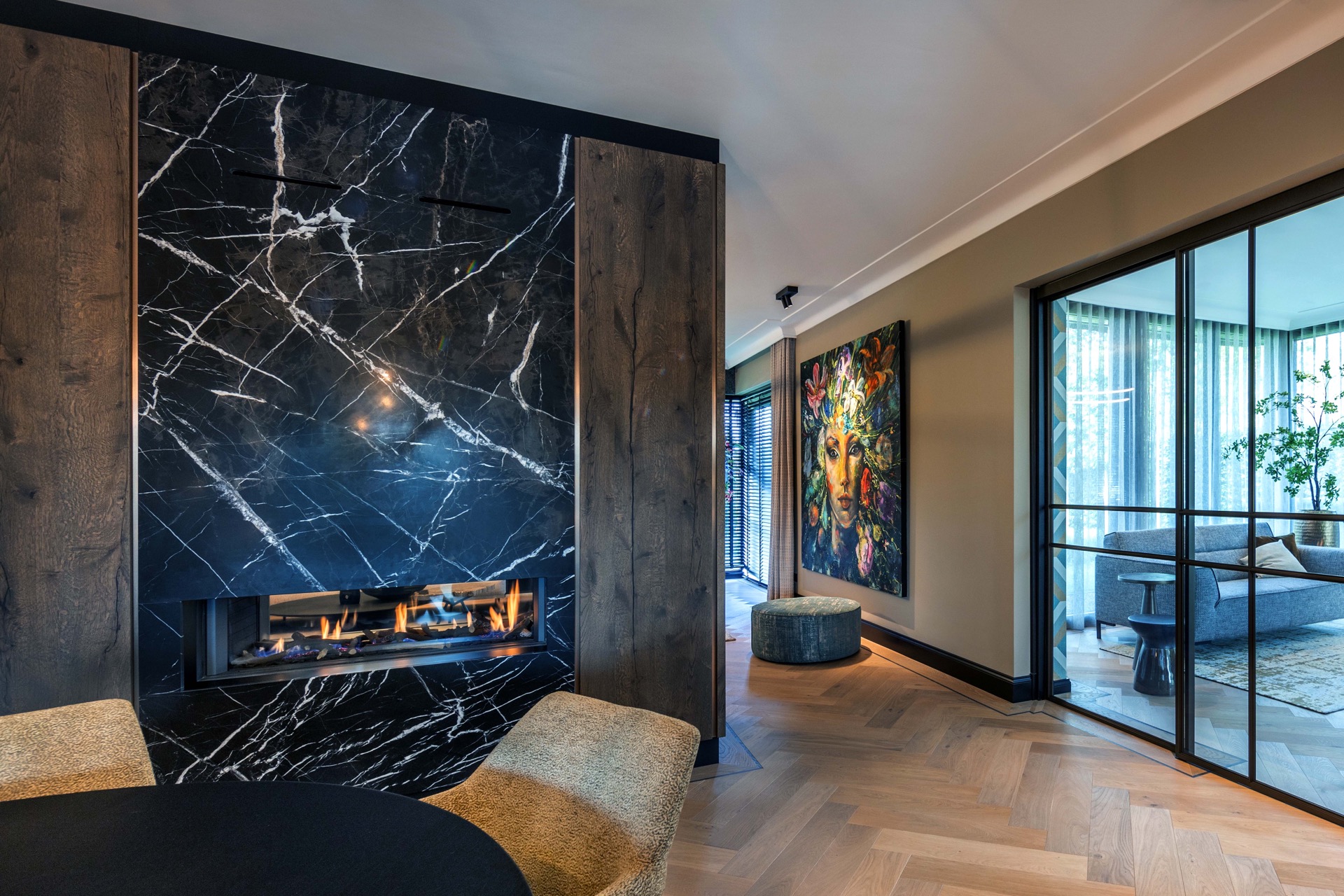
Luxury home interior shapes the way the rooms are organized and described. Sunlight pours through expansive windows, casting angular patterns on warm wooden floors arranged in chevron herringbone. This interplay of light and material highlights a careful selection of surfaces that shape the interior atmosphere, setting the tone for a space where natural materials and contemporary forms converge.
Luxury home interior as a spatial starting point
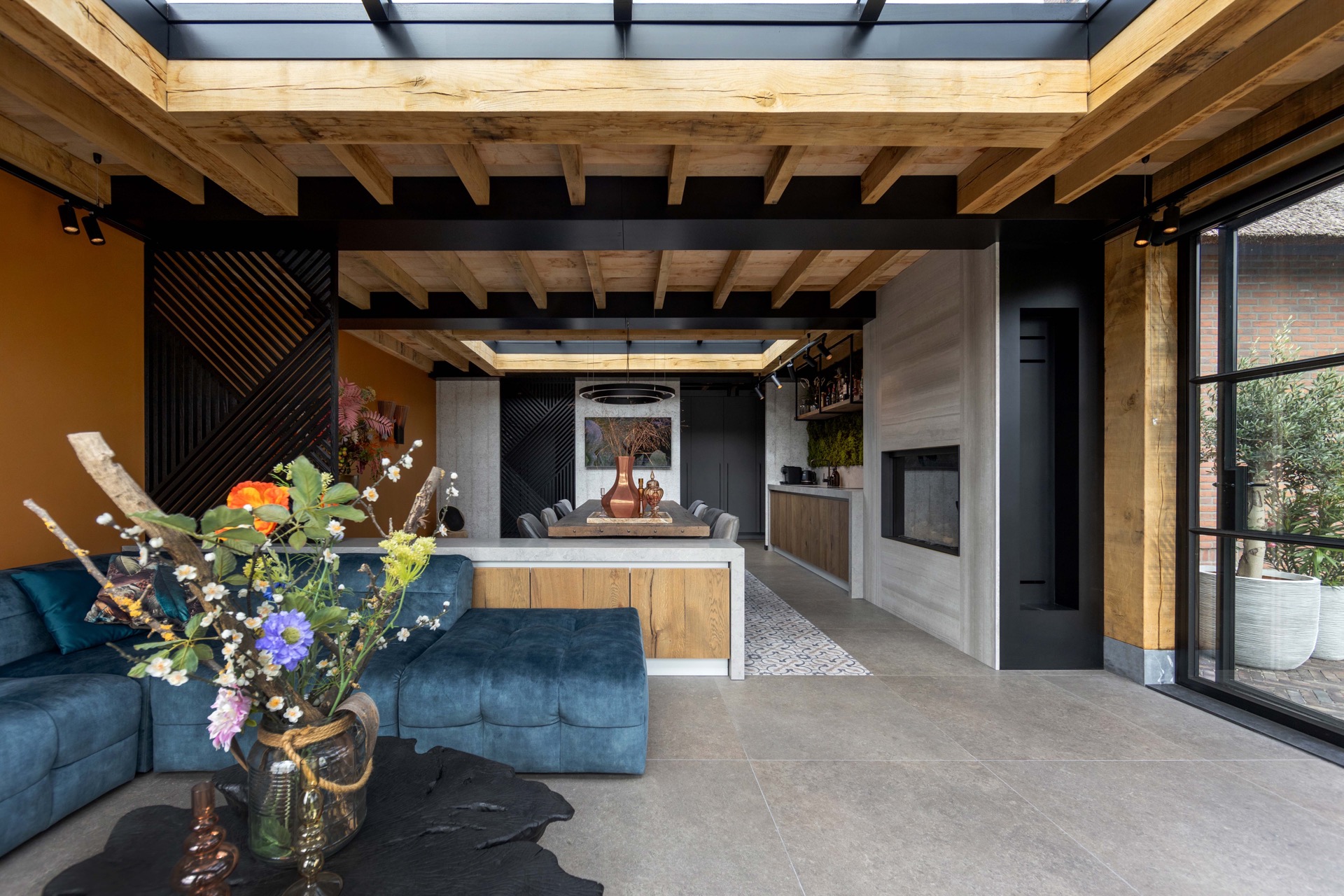
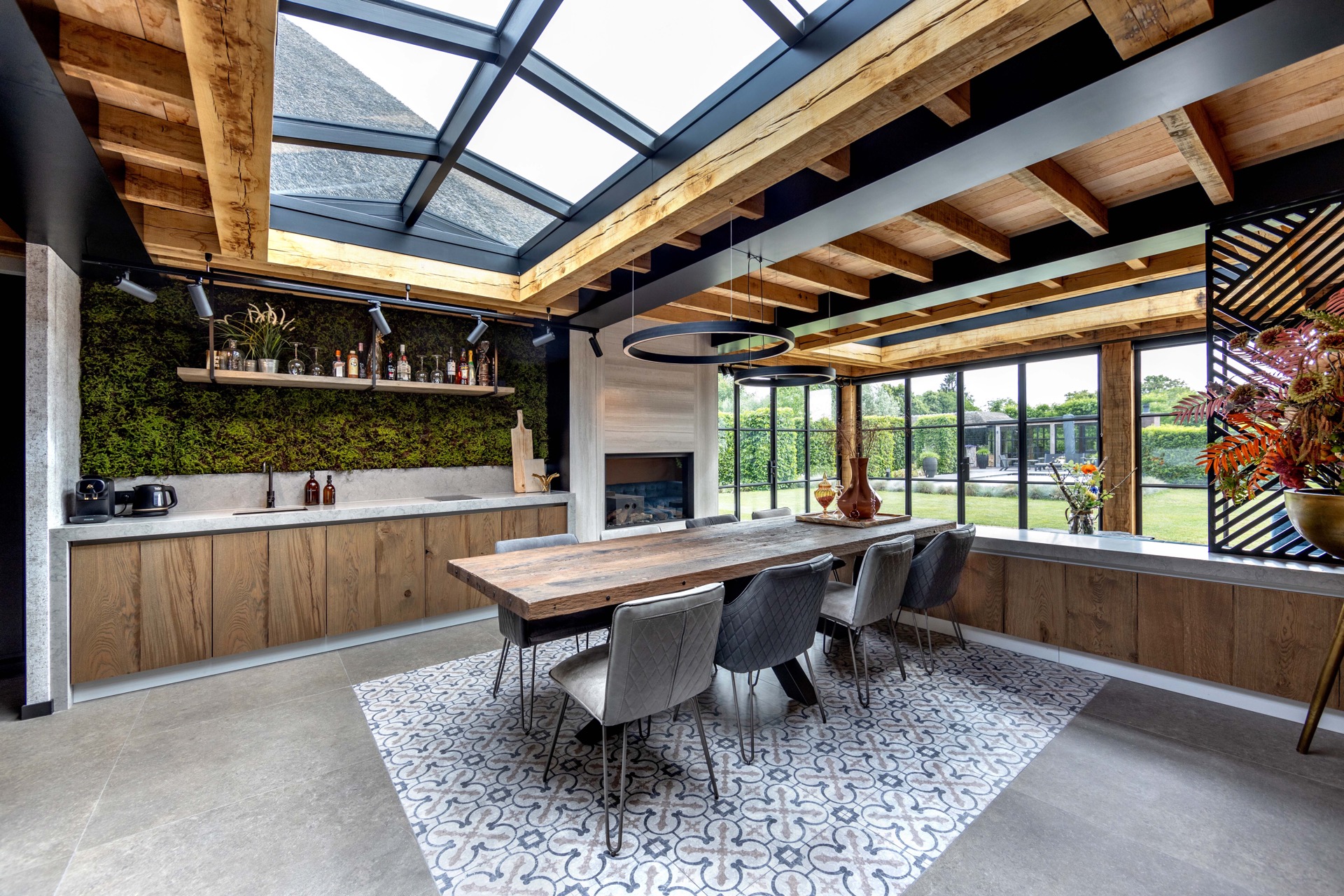
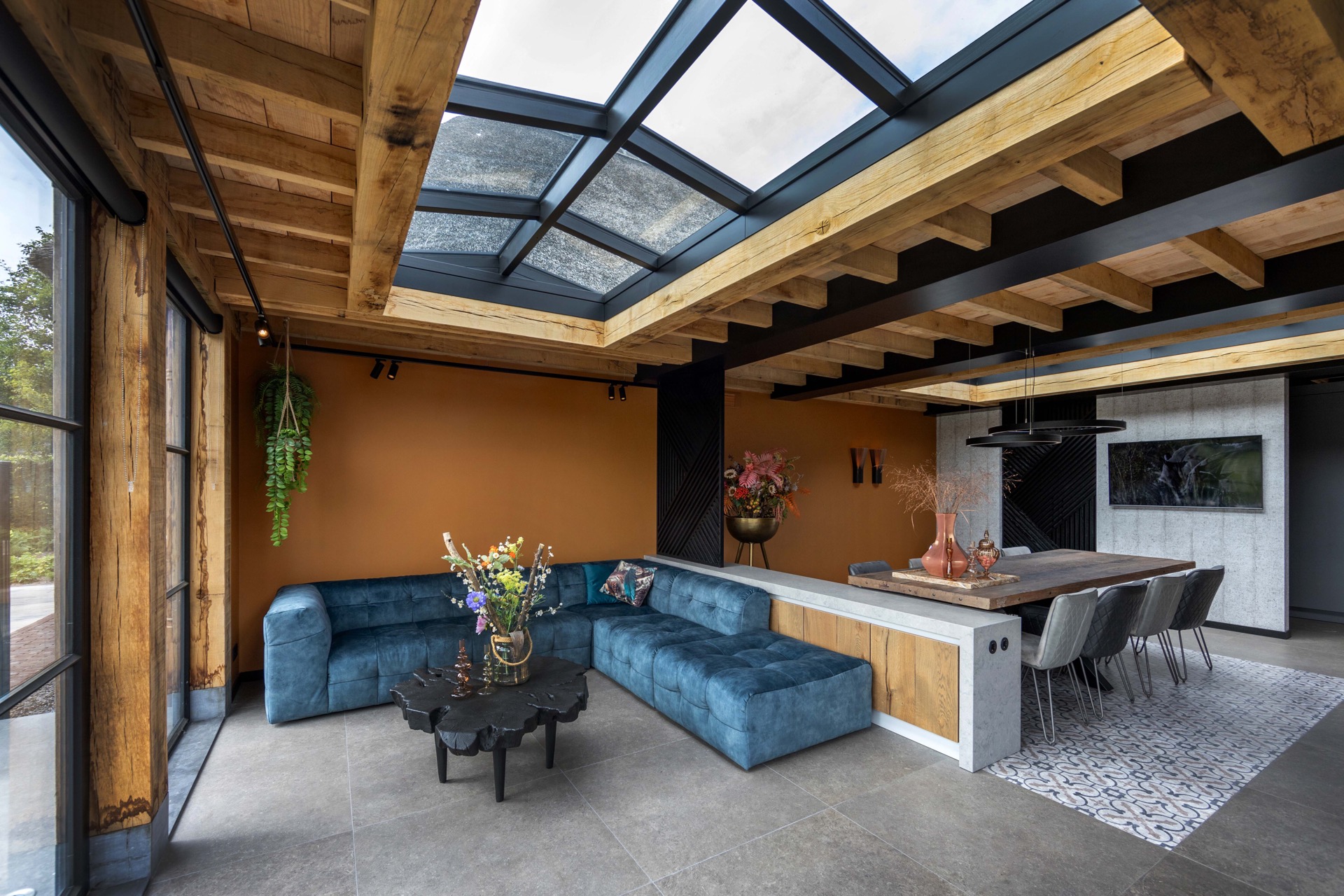
An extension links the main living area with the garage, creating a bright garden room framed by tall glass panels that invite outdoor views and abundant daylight. This space acts as a visual and physical bridge, dissolving boundaries between nature and shelter. The garden room flows seamlessly beneath cantilevered canopy structures, with open air seating areas beneath them extending the living experience outdoors for shared meals or quiet moments.
Layered Living Areas Around a Central Kitchen
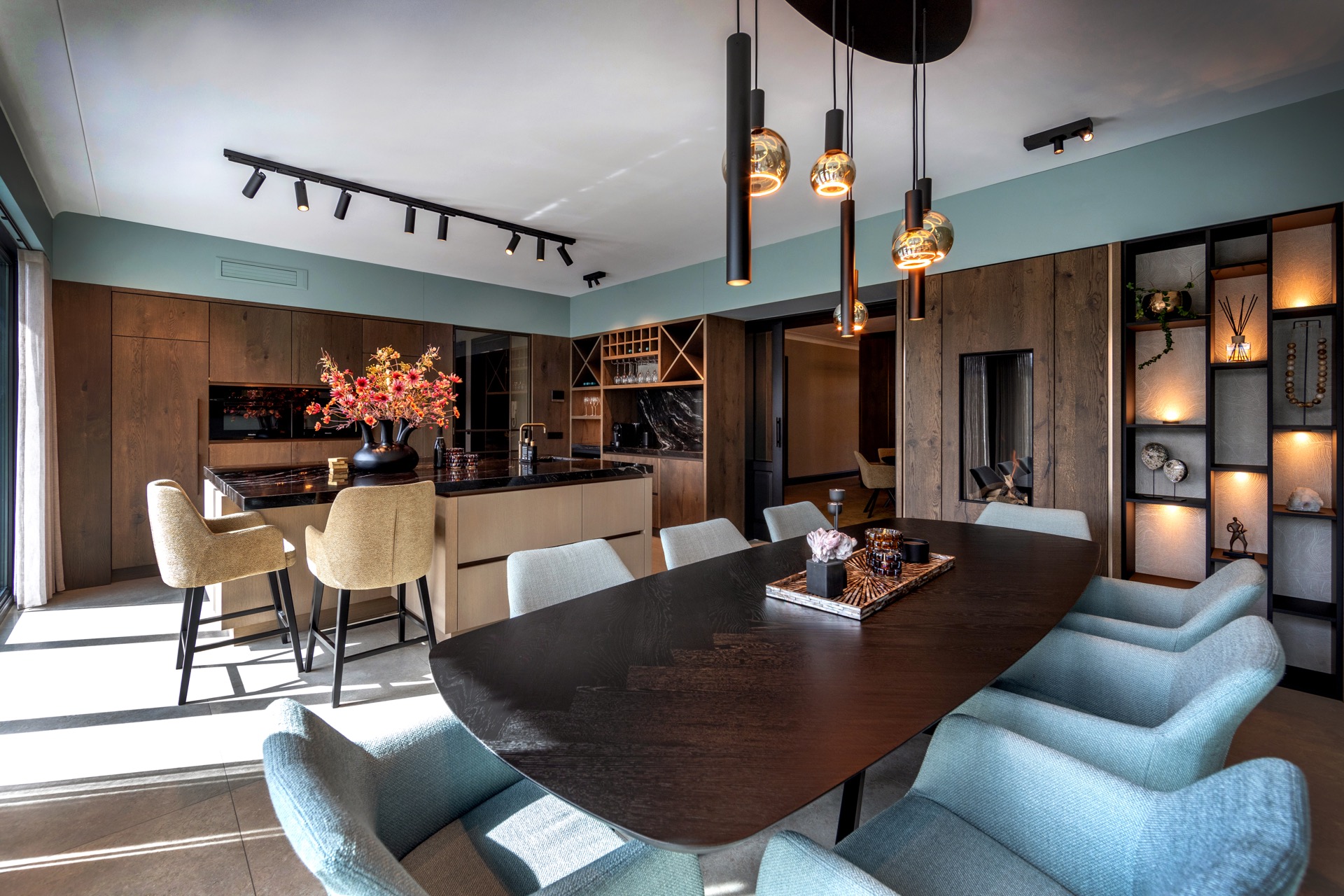
The open-plan layout situates the kitchen as the heart, with a sturdy wooden island featuring a smooth marble countertop inviting casual gatherings. Adjacent dining and sitting niches each serve distinct activities: a cozy corner for watching television contrasts with a more formal dining zone where evening meals unfold beneath suspended lamps. Varied seating arrangements highlight the multifunctional use of the space without disrupting clarity.
Kitchen Surfaces and Craftsmanship Details
The kitchen balances tactile warmth and solidity, using dark woods forming cabinets and shelves that provide both function and visual weight. The marble adds cool refinement, contrasting with the wood’s texture while maintaining a natural palette. Such material choices ground the kitchen space and subtly reference artisanal craft in their detailing.
Visual Dialogue Between Materials and Patterns
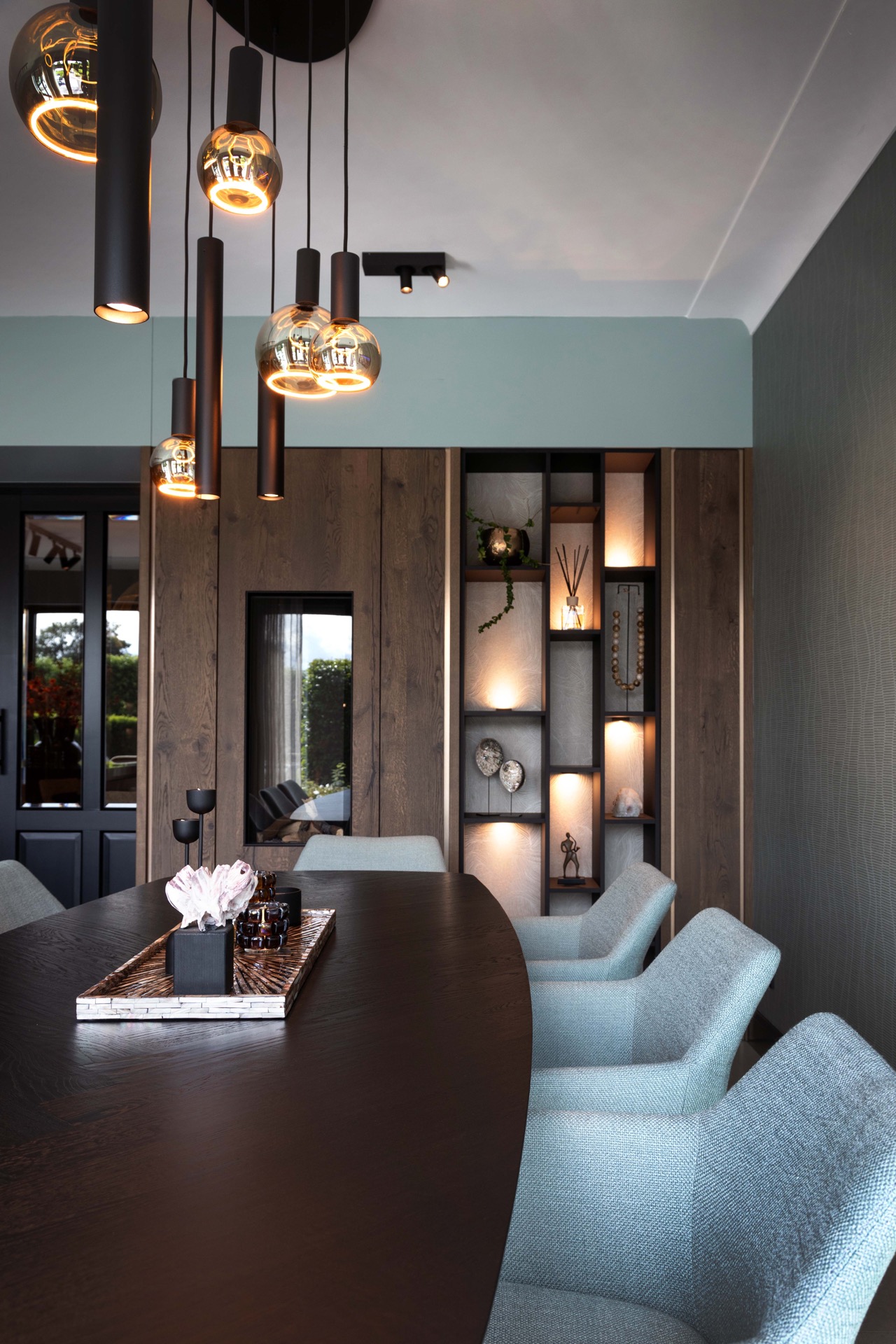
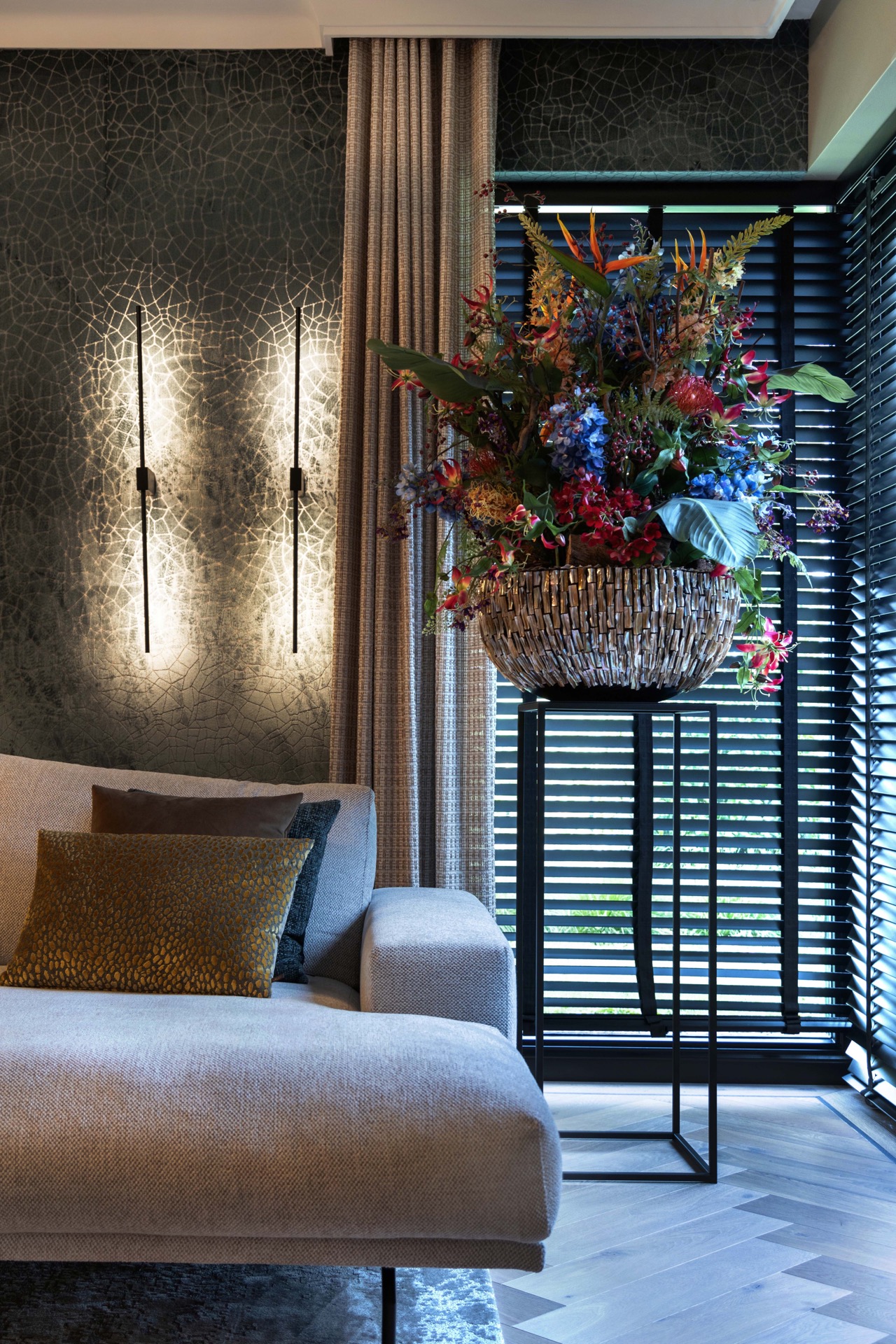
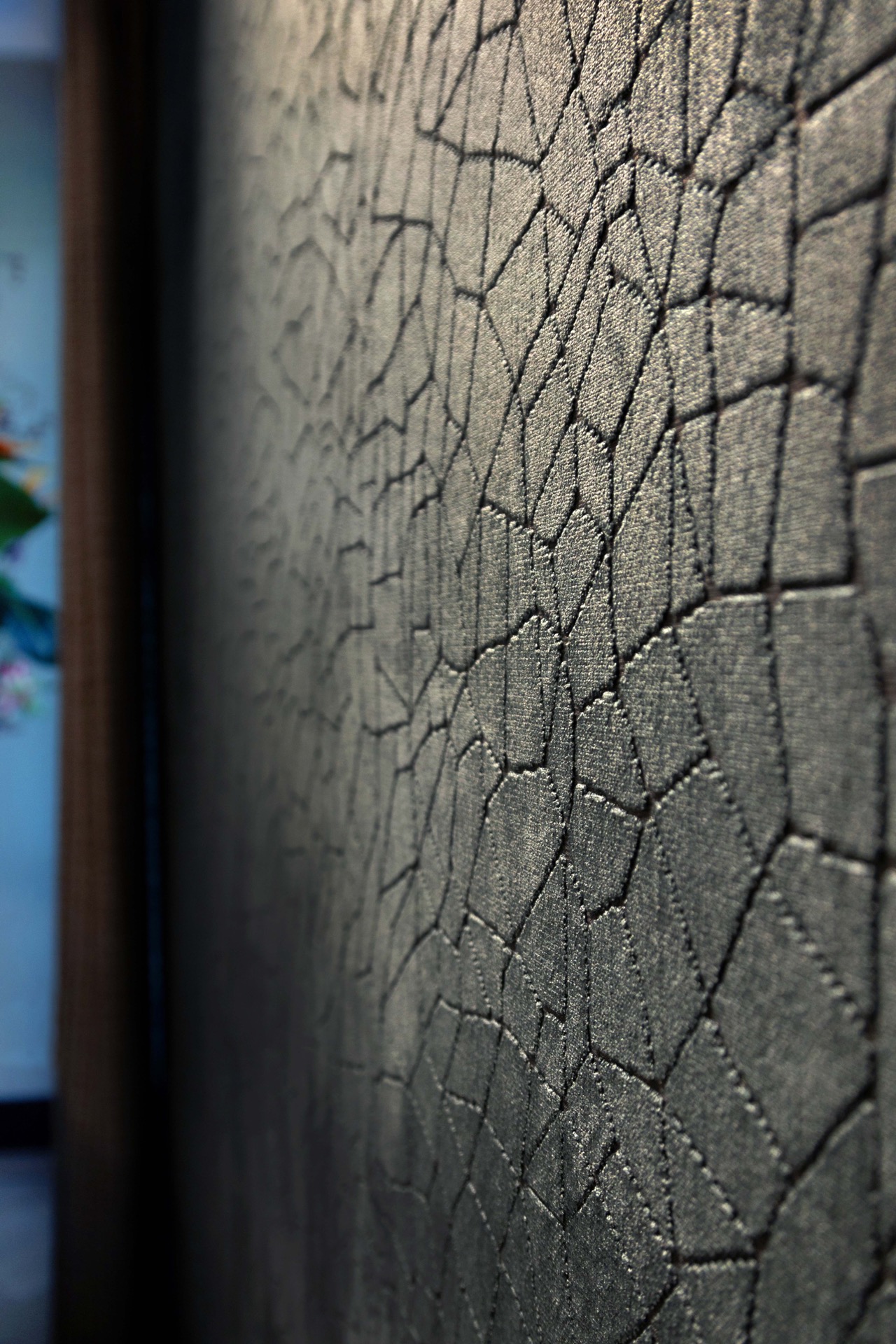
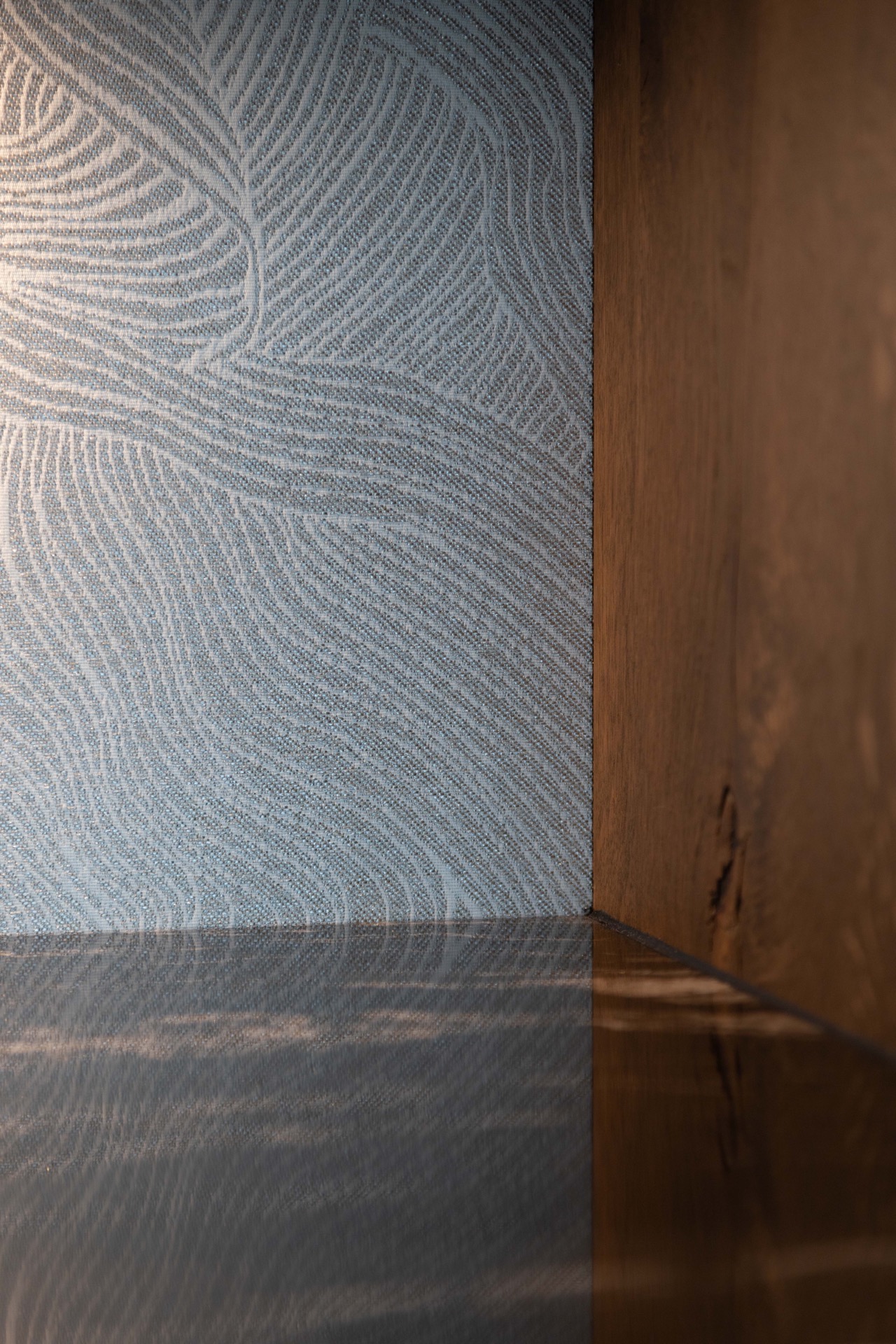
Throughout the home, layered finishes enrich the experience. Steel-framed doors with smoked glass add depth and muted reflections; stone elements clad the fireplace, forming a sculptural focal point. Walls combine textured wallpaper with refined colors to complement the composite materials, creating an interior that evolves visually from corridor to lounge.
Inviting Comfort in the Sitting Areas
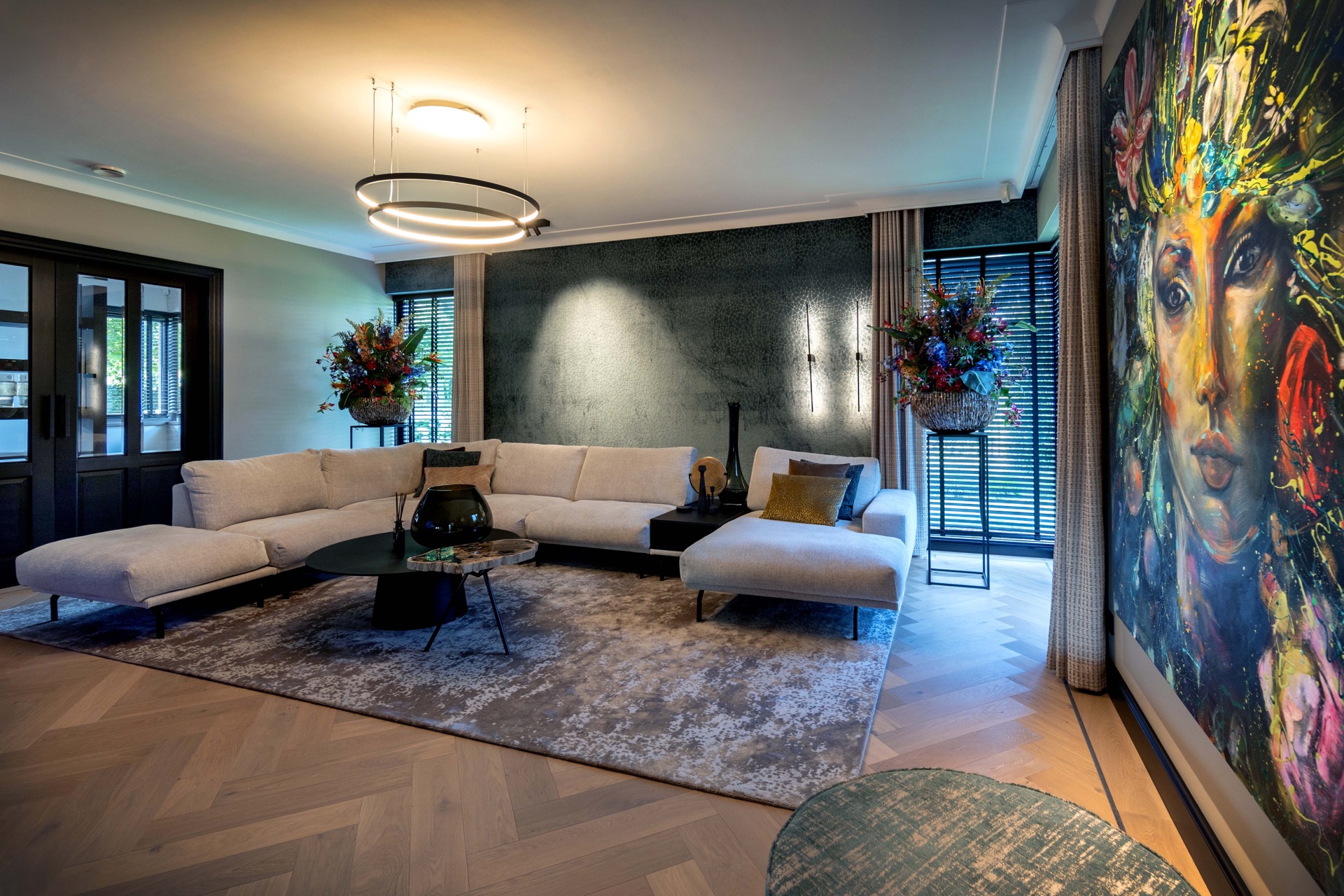
Each seating zone adopts a distinct identity shaped by furniture arrangement and lighting. Oversized sofas face linear fireplaces, while niches admit natural elements like plants. The intentional use of herringbone wooden floors throughout these areas ties them together with a quieter rhythm, conjuring warmth without overt description.
Natural Materials as a Unifying Theme
Wood, marble, and stone reappear consistently, selected not for uniformity but to generate spatial contrasts and ambient shifts. Their tactile qualities and tones respond dynamically to daylight and artificial illumination, anchoring the residence’s aesthetic sense in material authenticity. Luxury home interior remains connected to the layout, materials and daily use of the home.
Architectural Light and Spatial Flow
The volume benefits from abundant daylight through generously sized windows, which accentuate verticality and open spatial sequences. These architectural elements complement the interior’s calm proportions, inviting movement through interconnected zones without barriers or abrupt transitions.
Decor Elements Enhancing the Interior
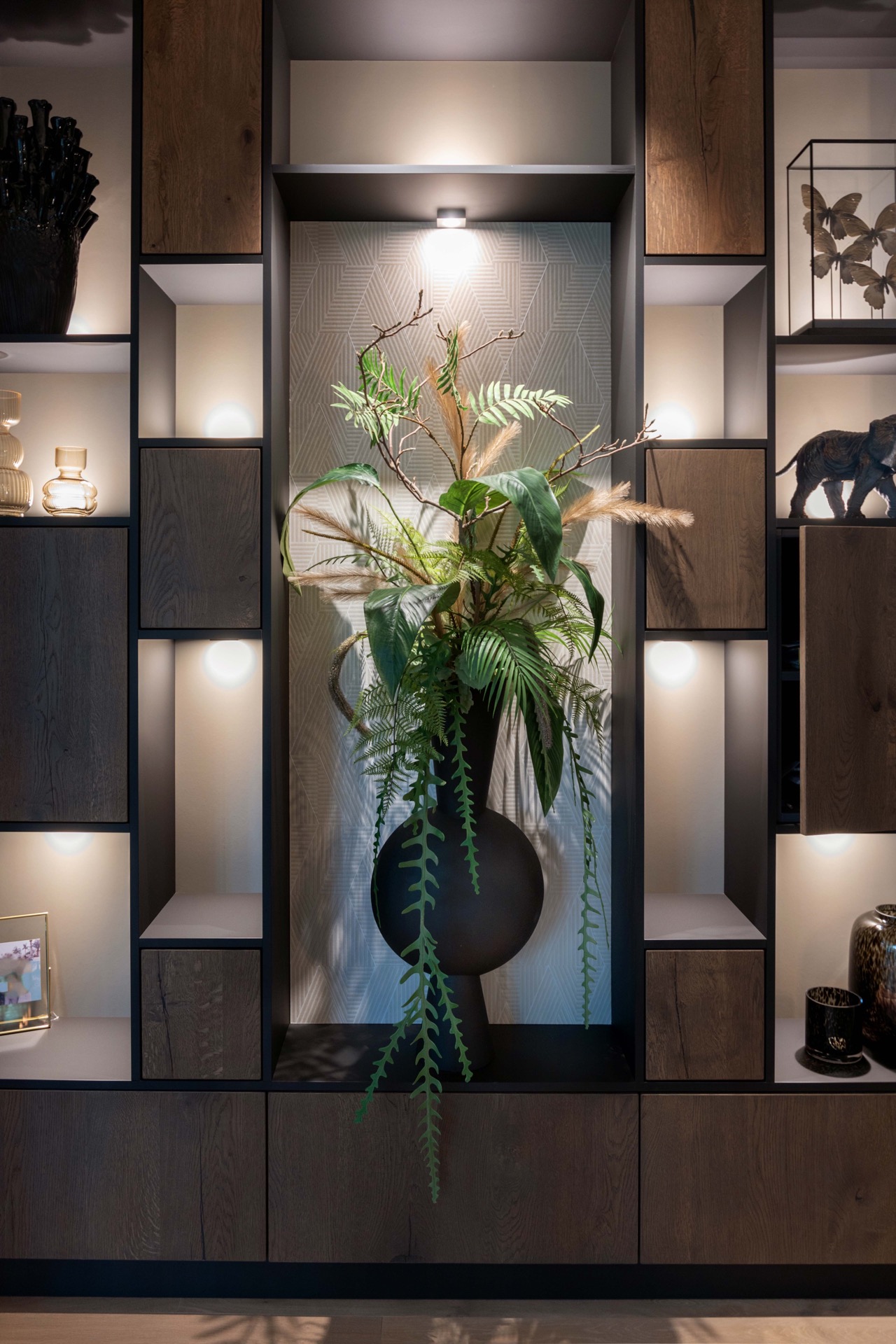
Artworks positioned on clean walls dialogue with furniture forms, while floral arrangements add transient color accents that contrast with the earthy palettes. Pendant lights above dining tables cast subtle shadows, articulating ceiling height and adding texture to the overhead space.
Careful Balance of Function and Spatial Experience
The home’s layout responds to daily living patterns without rigid compartmentalization. Functional requirements—cooking, dining, entertainment—are addressed through spatial zones arranged for ease of use, while the visual continuity preserves an overall compositional clarity.
Integration of Modern and Natural Elements
Industrial touches like steel-framed glazed doors are softened by natural textures, establishing a dialogue where rigidity meets organic fluidity. This approach grounds the design’s modernity without forsaking tactile engagement with the natural world.
Material Textures in Private and Communal Spaces
In bedrooms, flooring and wall treatments employ similar wood tones and subtle patterning, extending the material language inward. The continuity of this texture palette reinforces spatial cohesion from public rooms to private retreats.
A Reflective Journey Through Layers of Design
Each fragment of the interior contributes to an overall narrative constructed from texture, light, and spatial arrangement. The result is a residence where materials shape ambiance, and where design invites inhabitants to inhabit spaces rich with tangible qualities and thoughtful details.
Discover further inspiration and interior style ideas through curated collections of interior inspiration and explore detailed insights on natural interior materials and style advice for interiors. Luxury home interior remains connected to the layout, materials and daily use of the home.
Want to see more of PINX? View the page of PINX for even more great projects and company information.


.png)
NEW 2026 Jubileum Edition The Best Interior Designers Benelux
Order Now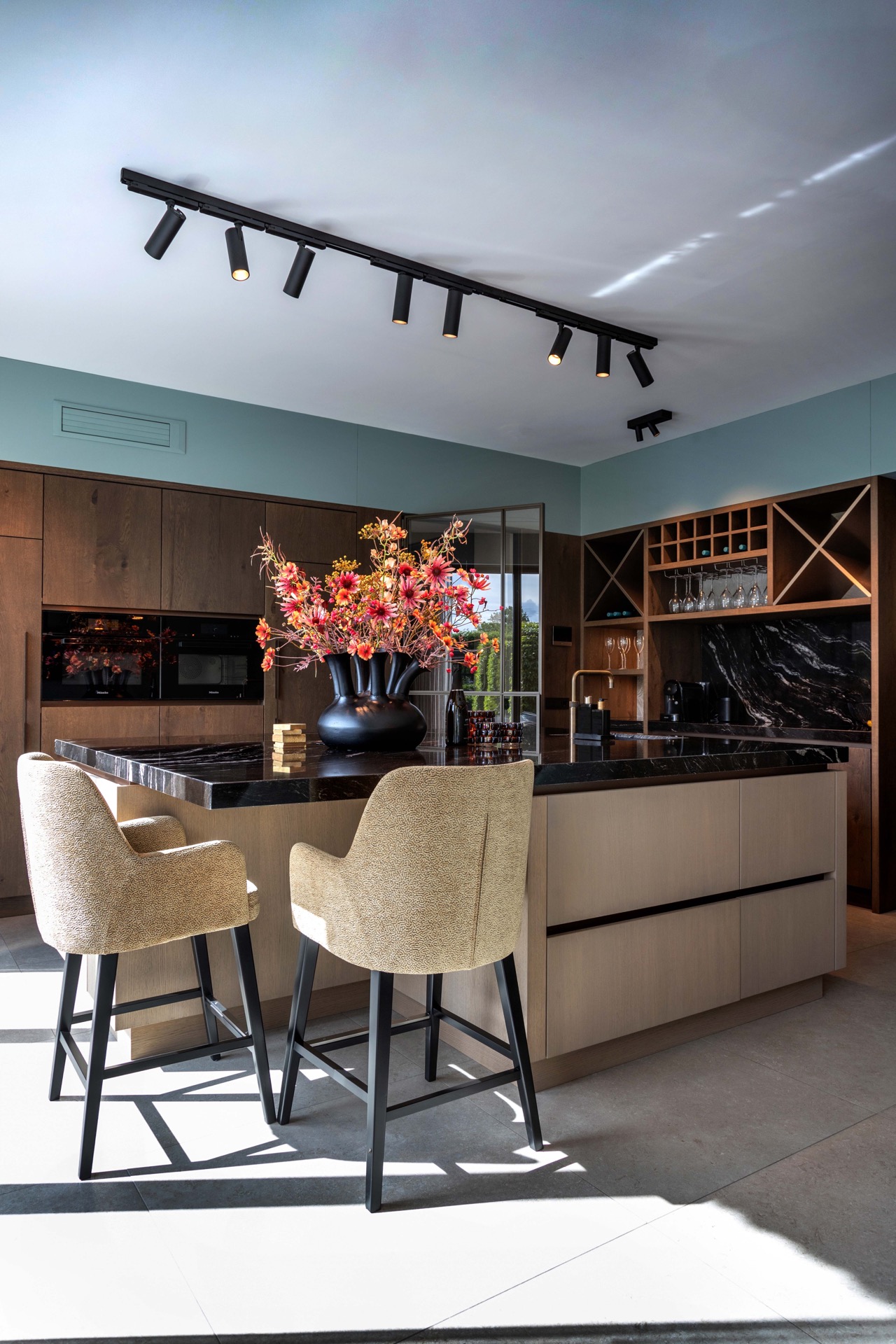
NEW 2026 Jubileum Edition The Best Interior Designers Benelux
Order Now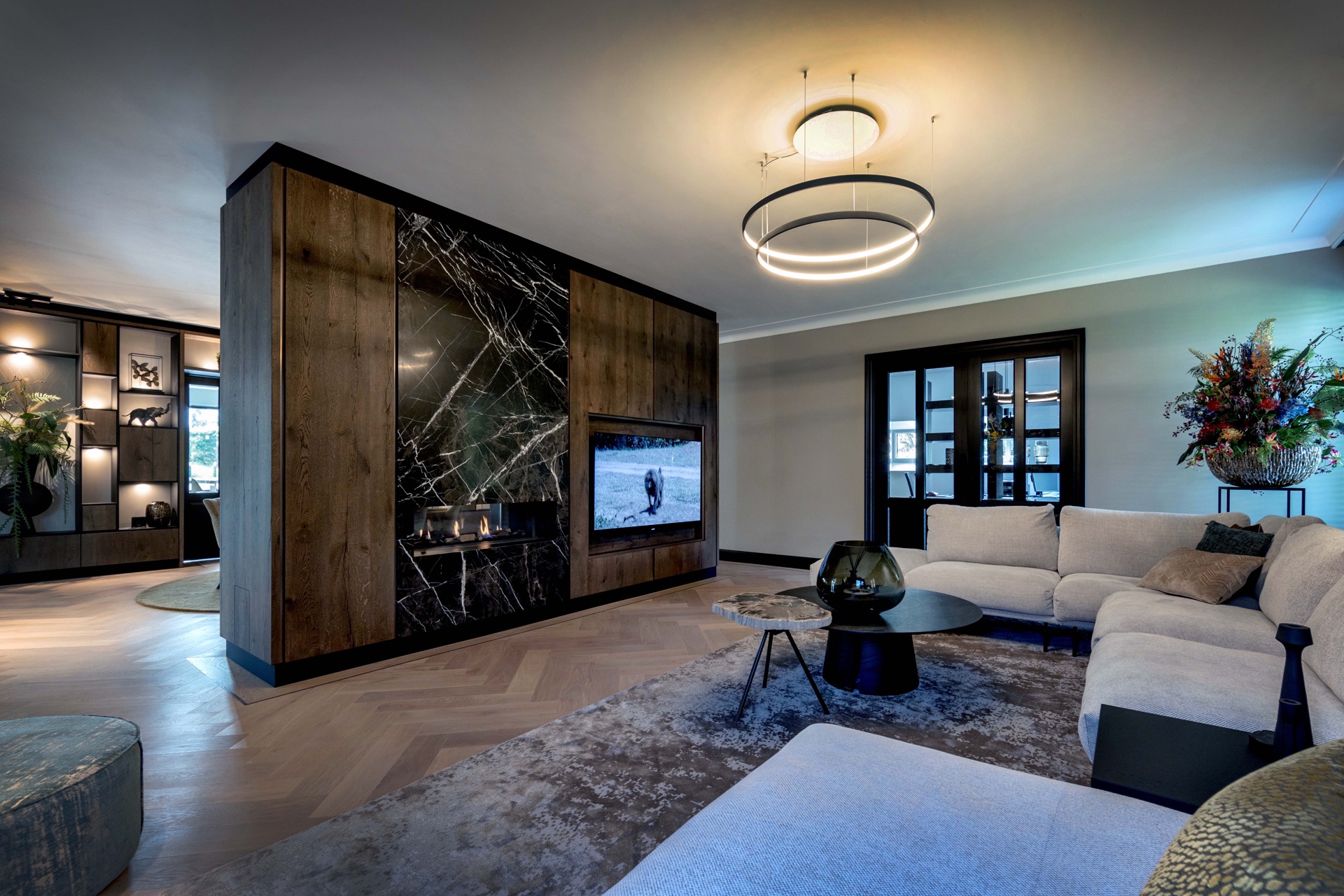
NEW 2026 Jubileum Edition The Best Interior Designers Benelux
Order Now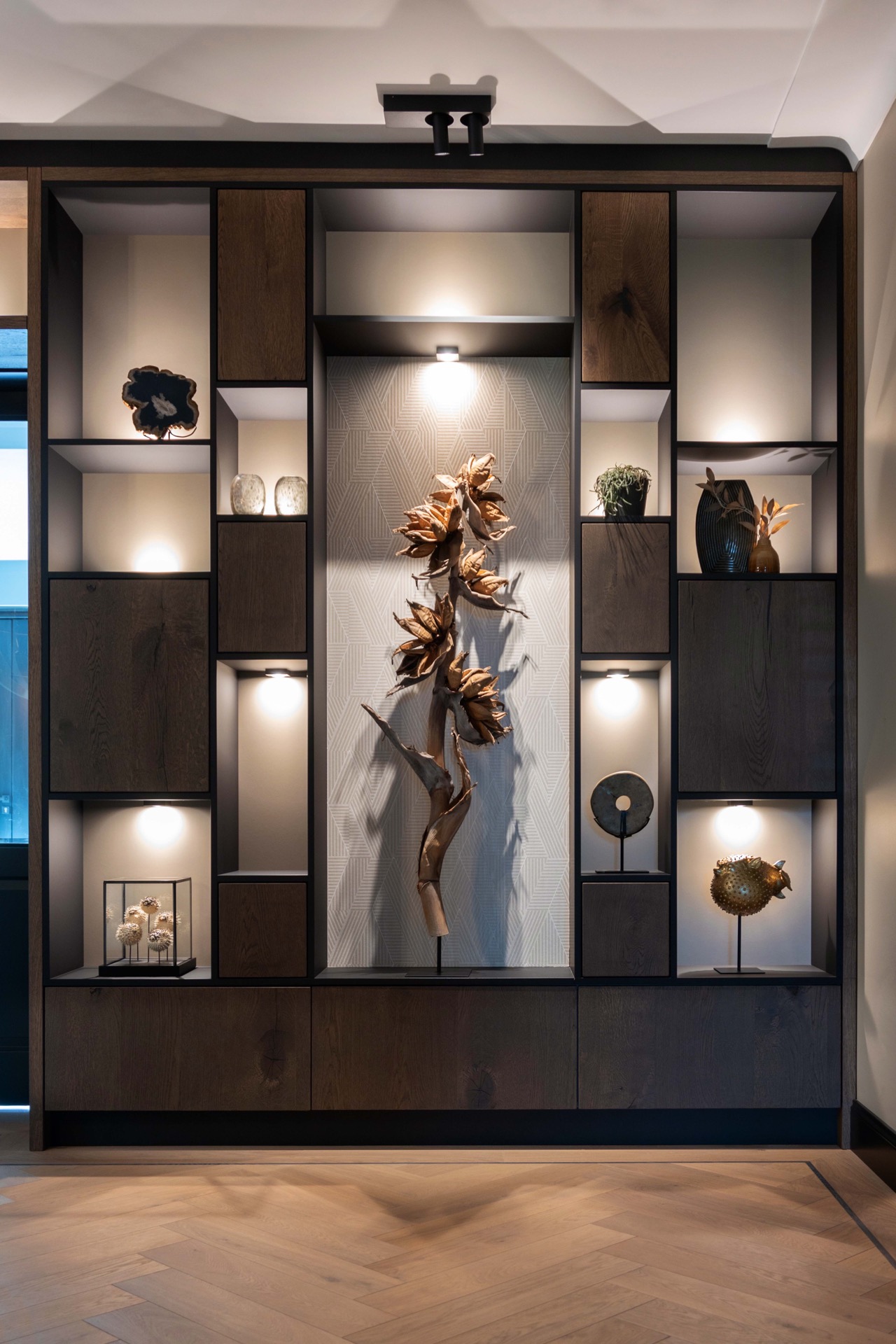
NEW 2026 Jubileum Edition The Best Interior Designers Benelux
Order Now