







Luxury home cinema integrated with home automation
Audio, video, climate, lighting and security are brought together in one luxury home cinema integrated with home automation setup, so the controls stay close to the way the family actually uses the house. The system was chosen to be futureproof and easy to operate, which matters when different rooms and settings need to work without fuss. In practice, that means one environment handling picture, sound and lighting while the rest of the home follows the same logic.
The interface is only part of the story. A Lutron control system is used for operation, while the wider automation setup relies on Crestron equipment. Those choices support a house where the user does not have to think through separate systems every time the lights change, the climate shifts or the cinema comes on. It is a straightforward approach, but one that depends on careful integration behind the scenes.
A home automation system that keeps the house in step
What stands out first is not a panel or a wall of equipment, but the way the functions are grouped. Audio and video sit alongside climate control, lighting and security, so the home automation audio video package reads as a single layer instead of a set of separate add-ons. That makes the system easier to navigate in daily use. The brief called for a future-ready solution, and the result reflects that: controls are limited to what is needed, with no visual noise around them.
That restraint continues in the lighting. Integrated home lighting appears in the cinema and in the adjacent interior views, where spotlights are tucked into curved ceiling edges and small pools of light define the room. Rather than flattening the space, the lighting shifts attention toward surfaces, seating and the route into the screen area. It is the kind of setup that only becomes noticeable when it is switched off.
Simple operation without losing control
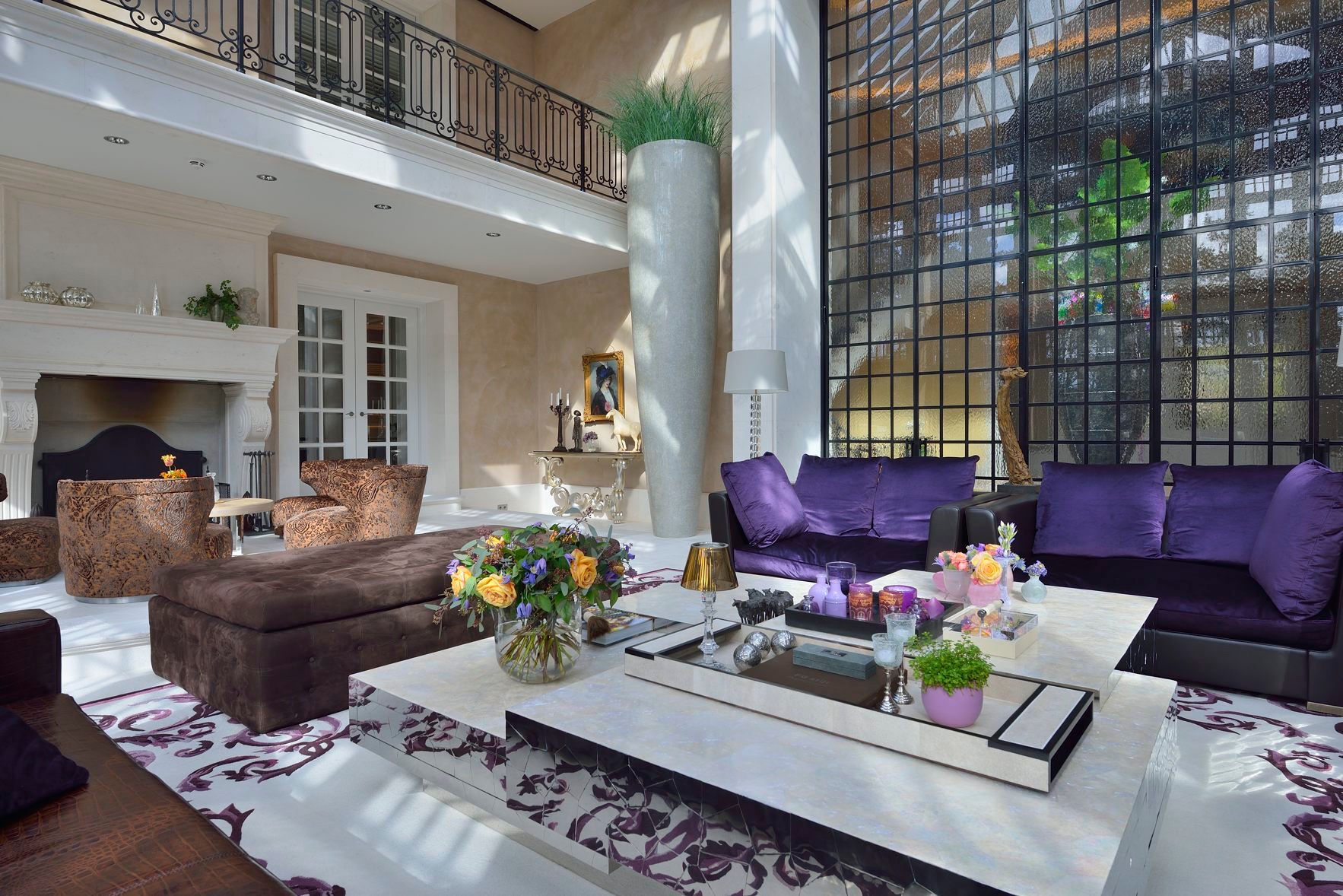
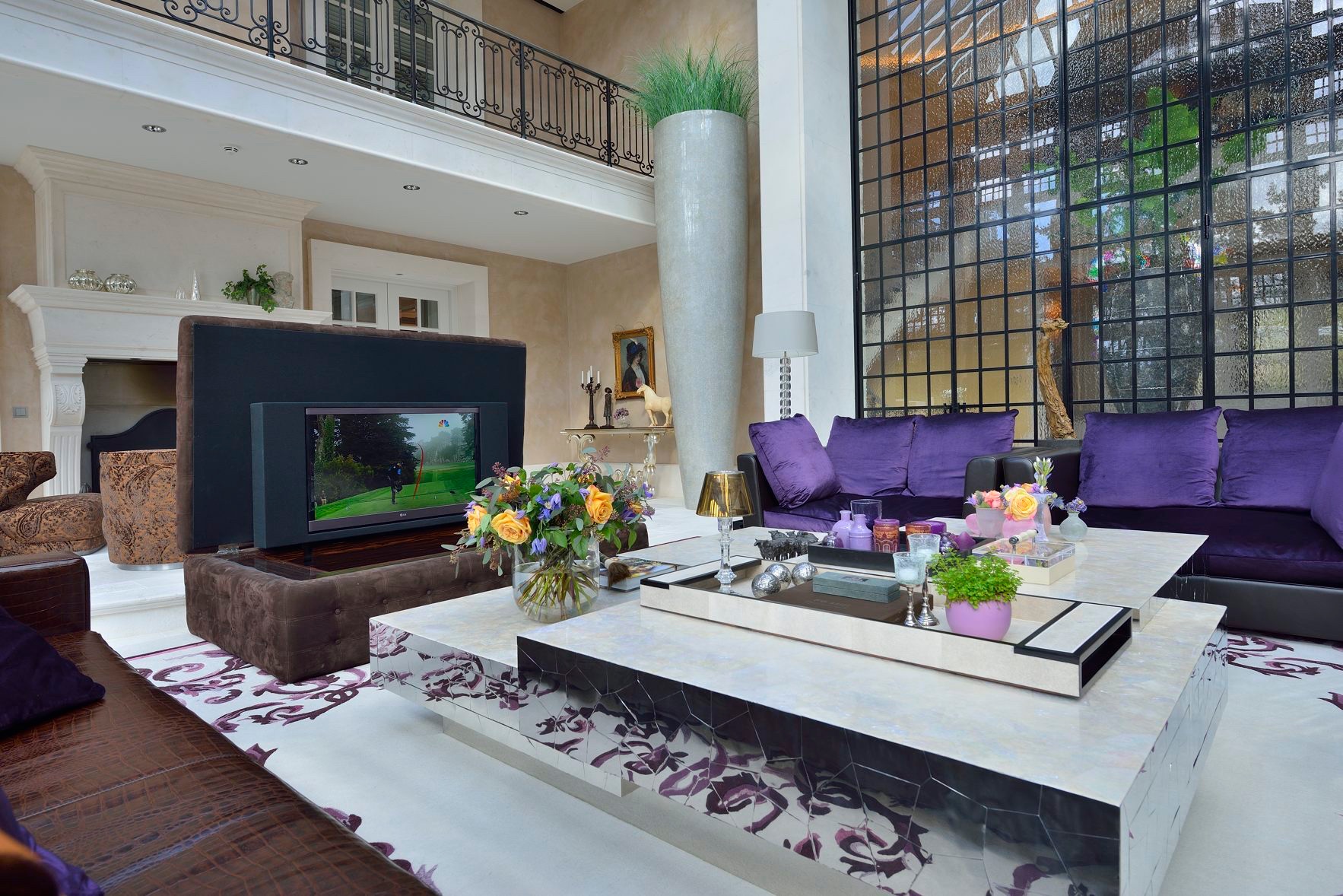
Easy to operate home automation is not a slogan here; it is the visible outcome of combining several functions into one system. The family can move from living room conditions to cinema mode without dealing with separate sequences for sound, light and picture. In a house like this, where the public rooms already include large glazing, a fireplace and mirrored surfaces, that clarity matters. The system keeps the room changes readable, even when daylight and artificial light are working at the same time.
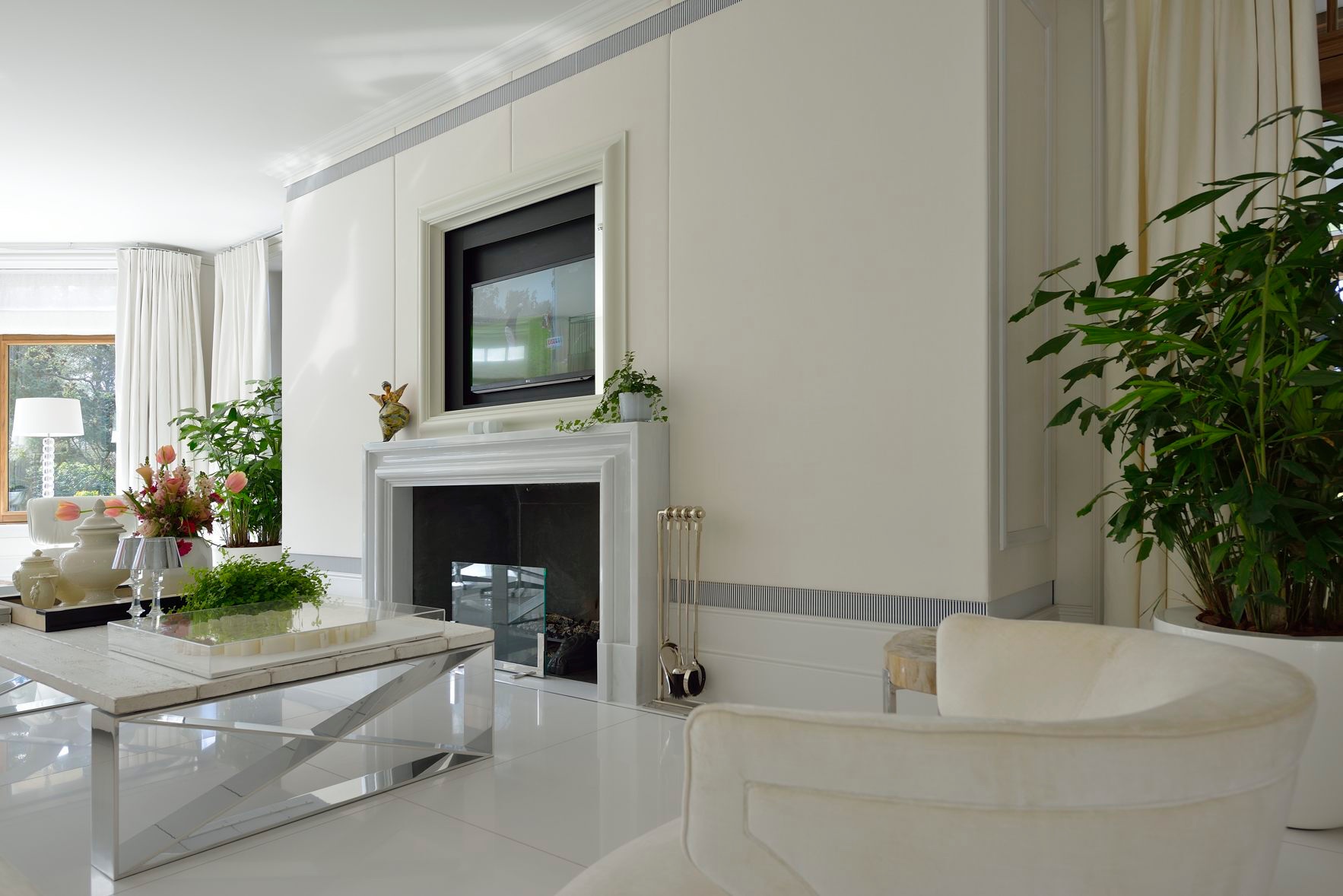
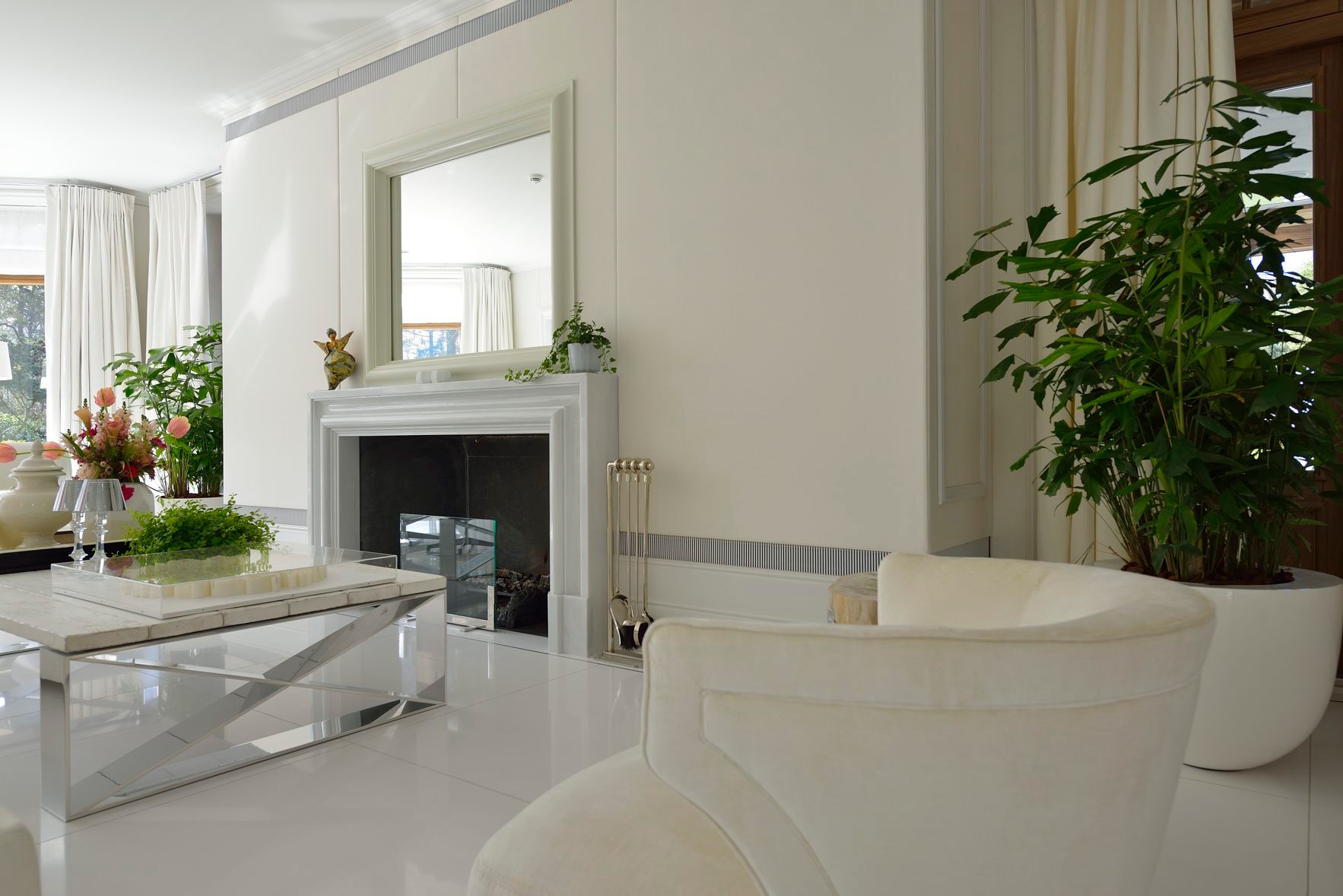
The living room context gives that idea more weight. Large windows bring in strong daylight, while the fireplace surround with mirror gives the wall a reflective centre. The contrast between glass, stone-looking finishes and lighter painted surfaces makes the automation less abstract: the house has different light levels and different focal points, and the controls need to respond to them. That is where a well-set home automation audio video system earns its place.
The cinema room is built around the image
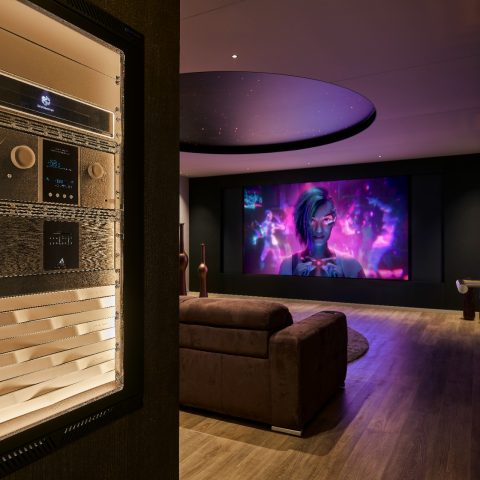
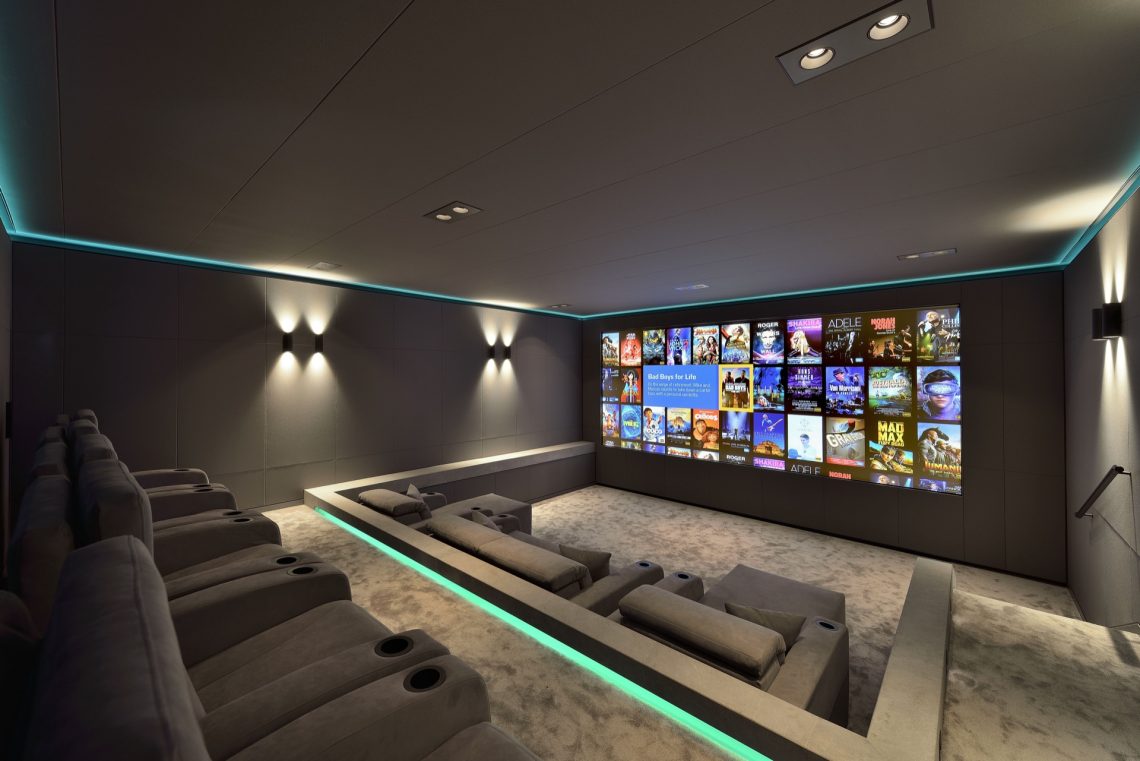
At the core of the project is an acoustically designed home theatre that looks planned from the first line of the room. Dark wall finishes absorb attention, curved ceiling edges carry spotlights, and the seating is arranged with the screen as the fixed point. A fully masking screen sits in that composition, so the picture area can change to suit the content without leaving the wall visually unsettled. The room does not rely on decoration to create impact; it relies on proportion, darkness and controlled light.
Projection is handled by a 3D projector home cinema setup, with the image thrown across the masking screen rather than onto a loose surface. That is one of the reasons the room reads so clearly in the photographs. The screen zone stays tight, the surrounding wall remains calm, and the viewer’s eye is pulled forward. Sound is carried by a system using Wisdom audio, which fits the same logic: the equipment serves the room rather than calling attention to itself.
Light, platform and seating define the cinema zone
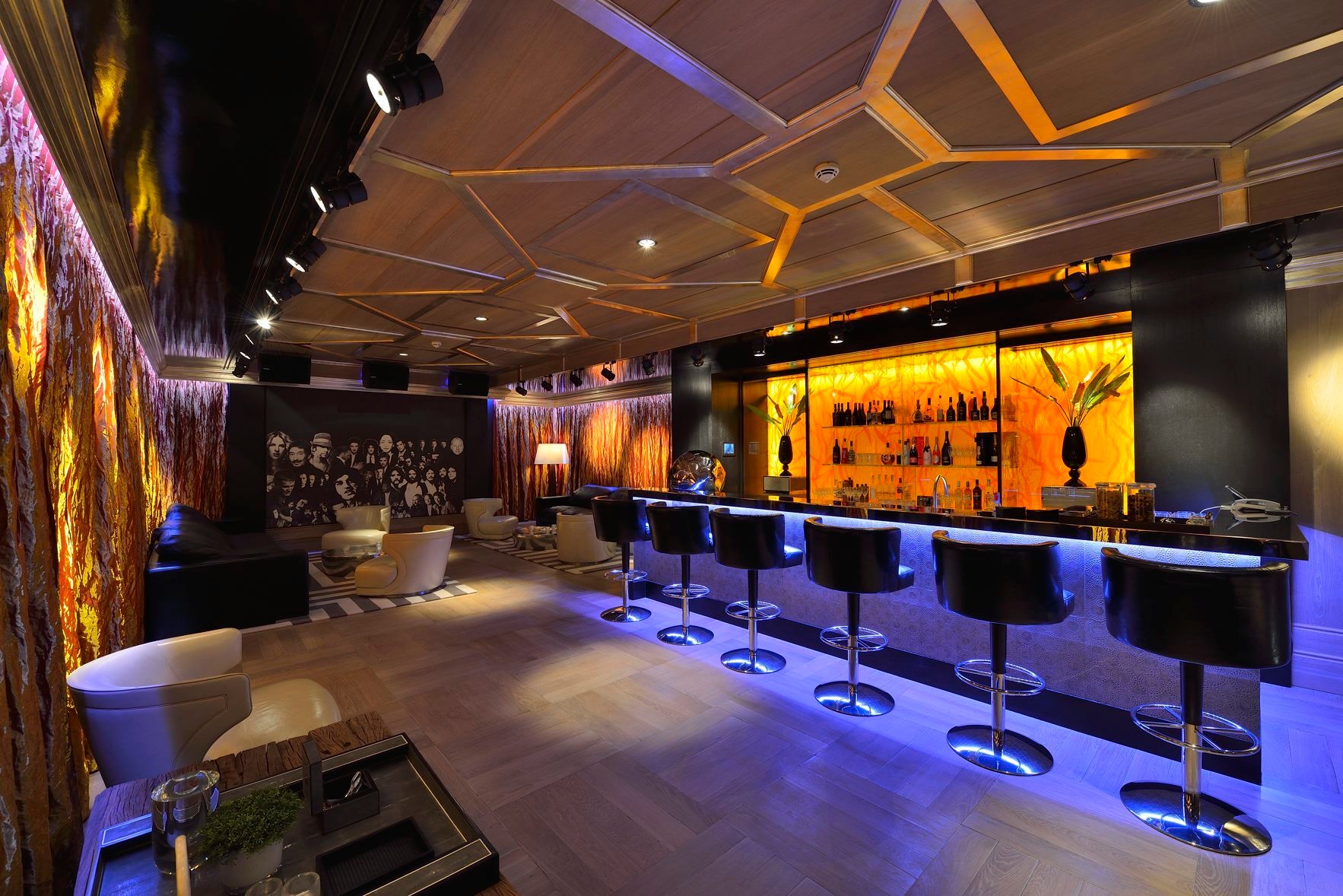
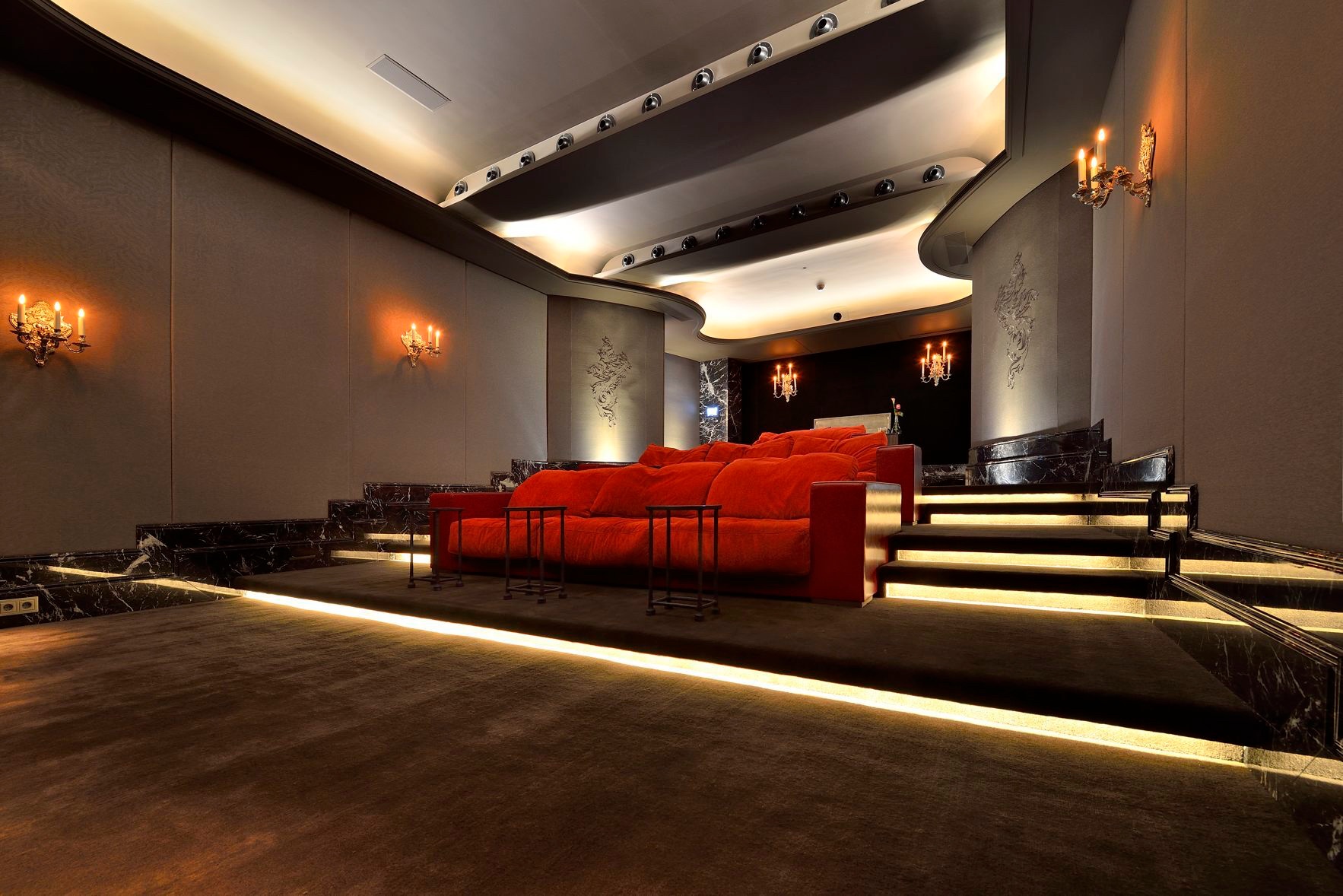
One of the strongest visual moments is the red sofa platform lighting. The sofa sits on a raised base, and the line lighting under the platform picks out the edge without overexposing it. Red upholstery against dark walls is a firm visual move, but the platform keeps it grounded. Nearby, a home cinema bar area appears with a lit front and stools set in front of the counter, so the room can move from screening space to social space without changing identity.
Ambient lighting home cinema details are tucked into the architecture rather than attached as extras. In the ceiling, curved runs of spots trace the room’s shape. Along the edges of the seating and bar zones, small lines of light separate steps, platforms and circulation paths. That gives the room a clear reading at night. It also matches the overall luxury home cinema integrated with home automation approach: each function has a place, and each place is easy to find.
Materials, mirrors and daylight around the screen room
The cinema does not sit apart from the rest of the house. Elsewhere in the interior, the photographs show a bright living room with a fireplace, white surround and mirror, plus tall glazing with curtains drawn to one side. The materials change from one room to another—glass, plaster, stone-looking surfaces and wood in the ceiling—yet the same attention to light remains. Those rooms help explain the cinema more clearly, because they show the contrast the automation system has to manage.
Stone and mirror also appear as a visual counterpoint to the darker cinema finishes. In the living areas, the fireplace surround with mirror reflects the room rather than closing it off, while the plaster walls keep the background quiet. The result is a domestic setting that can shift from bright daytime use to controlled evening viewing. The home automation audio video system supports that shift without needing to be visible in every frame.
The photographs also reveal how the cinema room uses darkness with purpose. Black wall planes, curved detailing and accent light keep the screen zone disciplined, while the bar front and seating platform introduce a clearer social layer. That combination is important in a family home: the room can be used as a place to watch, but also as a place to sit before or after the film. The visual transitions do the work that signage or decoration would otherwise do.
A screened picture, a controlled room and a clear result
This project shows how luxury home cinema integrated with home automation can be handled as one interior system instead of two separate stories. The controls manage the house, the screen room delivers the viewing experience, and the lighting keeps both legible. A masking screen solution, a 3D projector home cinema setup and integrated home lighting give the cinema its structure, while the living spaces around it show how the system fits into everyday use. The result is disciplined, but never rigid.
The project is also a reminder that the most visible part of a smart home is not always a screen or a touch panel. Sometimes it is the way a room dims, the way a platform is outlined, or the way a fireplace wall holds a mirror against daylight. In this house, those details are what connect the quieter living areas to the more focused cinema room. The automation sits underneath that flow and keeps it moving.
Want to see more of De Opera Domotica? View the page of De Opera Domotica for even more great projects and company information.


NEW 2026 Jubileum Edition The Best Interior Designers Benelux
Order Now €125