






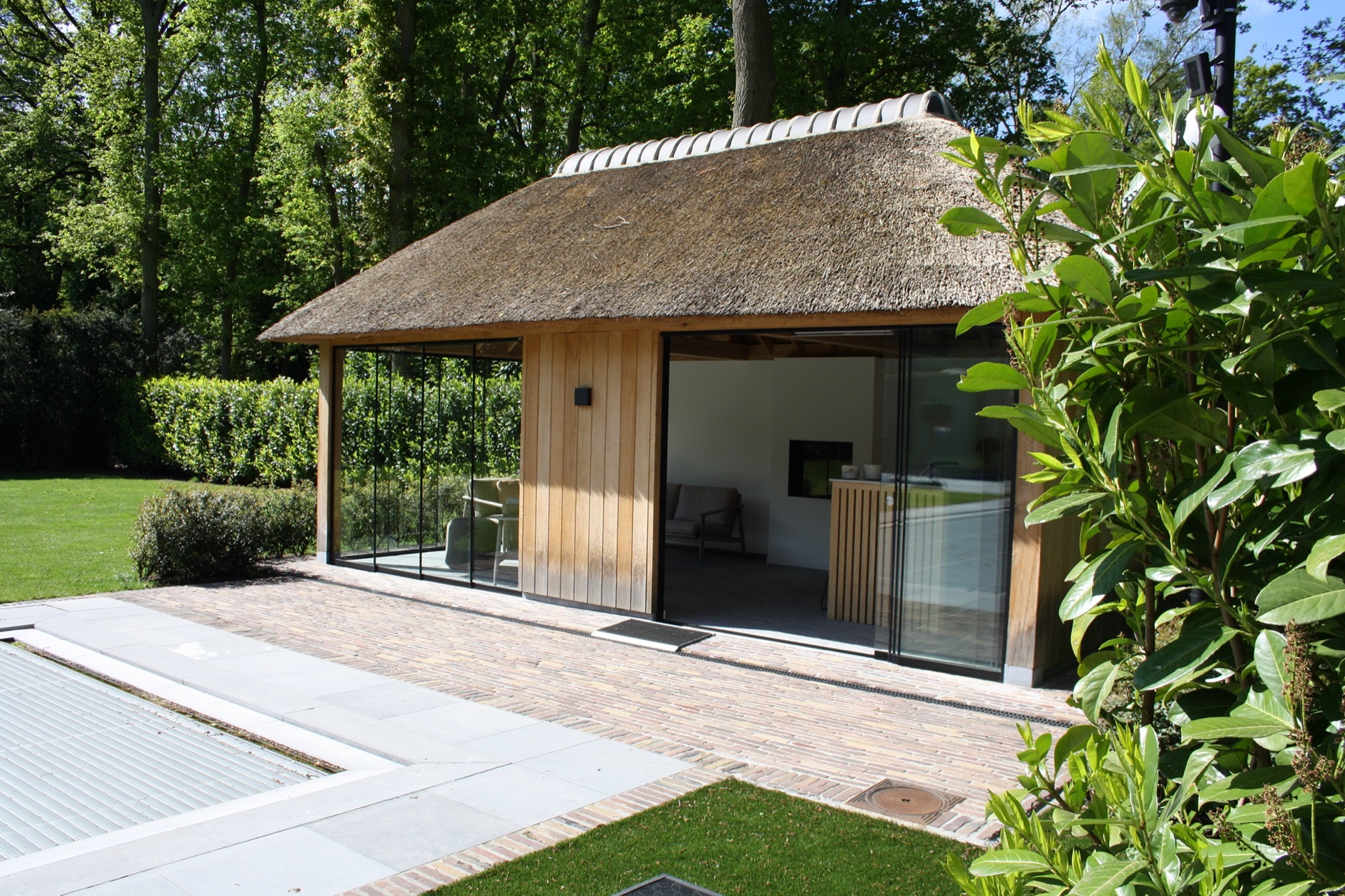
Traditional oak garden outbuilding with thatched roof
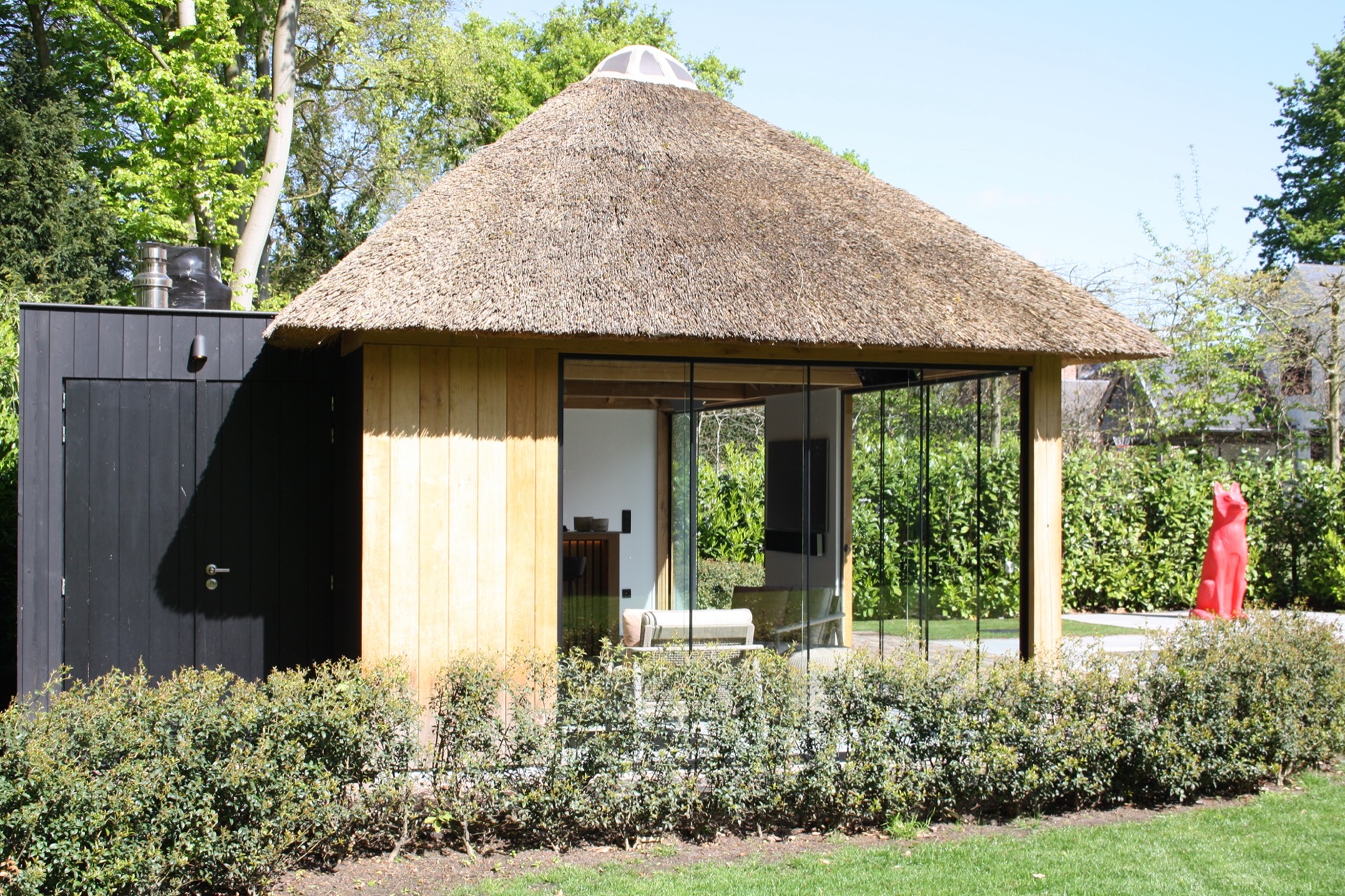
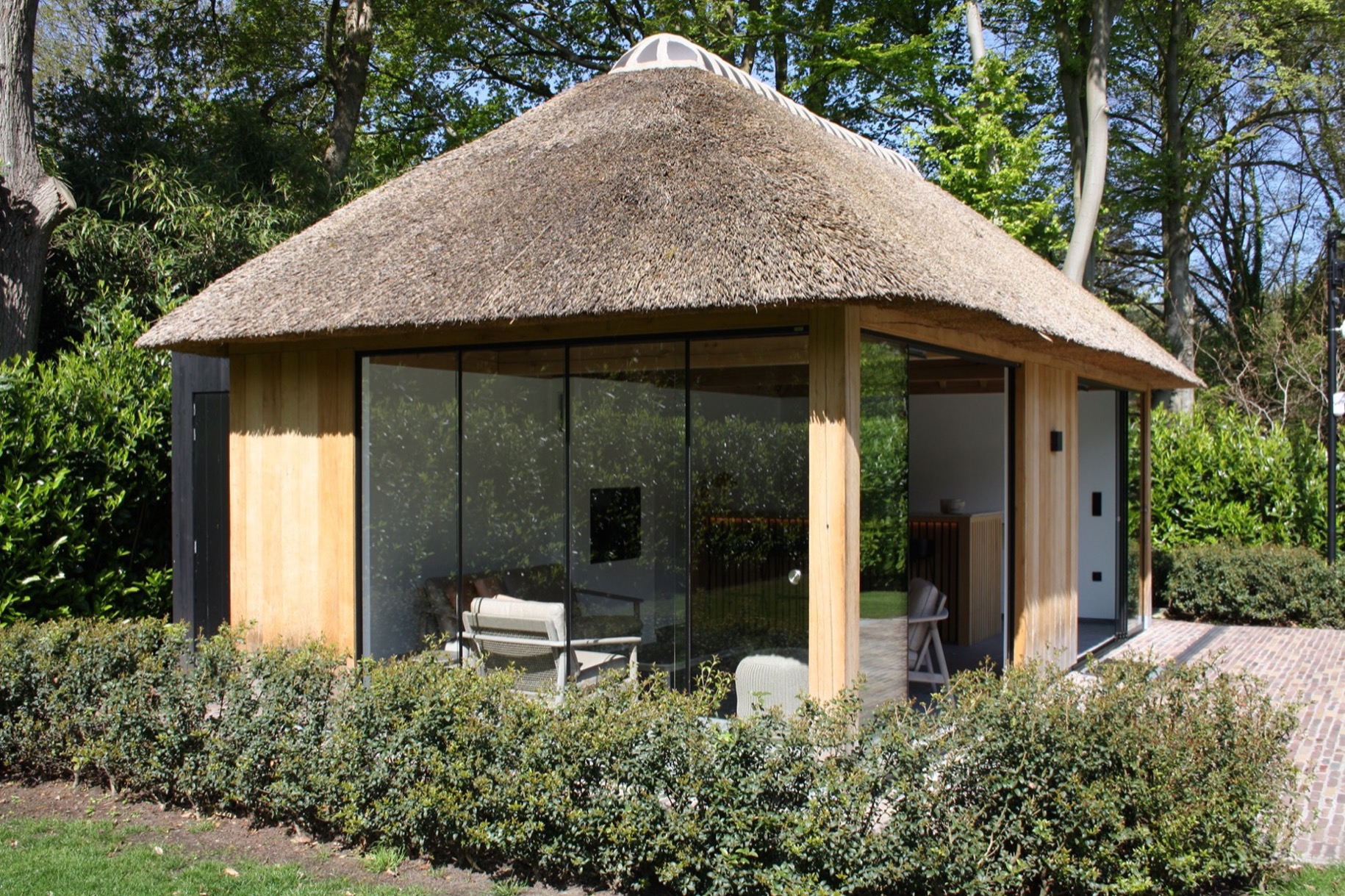
Garden outbuilding shapes the way the rooms are organized and described. Sunlight filters through expansive glass sliding doors that stretch across the southern facade, casting shifting patterns on the vertical oak panels lining the interior walls. Above, heavy oak beams cross the ceiling in a measured rhythm, their grain rich and tactile, underscoring the building’s wooden framework. Through the transparent walls, the garden unfolds—shrubs, grasses, and lawn converge gently with the interior, blurring boundaries. Crowning the structure, a gently curved thatched reed roof softens the silhouette while offering shelter beneath its insulating layers.
Garden outbuilding as a spatial starting point
The interior emphasizes solid oak construction, with wide vertical boards forming walls in tones from pale honey to deeper brown. Exposed beams segment the ceiling into bays, providing a clear structural logic without disrupting the warmth of the timber surfaces. These natural textures help draw the eye across the space, where light meets wood grain differently throughout the day. The oak’s irregularities and knots speak of traditional joinery and material authenticity, grounding the building within its country garden setting.
Curved Thatched Roof Offers Shelter and Texture
The thatched roof of tightly packed reeds presents a thick, insulating layer that extends beyond the oak frame at the eaves. Its soft, undulating edges contrast with the straight lines of timber, introducing a tactile relief to the silhouette and modulating light and shadow on the exterior surfaces. In cross-section, the depth of the thatching is apparent, its natural thickness helping moderate temperature fluctuations and lending a quiet presence to the building’s profile amidst the greenery.
Sliding Glass Doors Open to Natural Stone Terrace
The building’s southern face is dominated by sliding glass panels that open onto a terrace paved with irregular natural stone. The stones bear muted shades that reflect those found in surrounding planting beds, creating subtle visual links between the built surface and garden textures. This accessible outdoor zone invites movement between inside and out, serving as a flexible stage for social gatherings or quiet reflection. Layered plantings nearby add tactile variety and encourage a continuous dialogue with the landscape.
Interior Layout Balances Leisure and Equipment Needs
Within, spatial zoning integrates a compact bar constructed from sitar wood, its darker streaks adding contrast against the lighter oak surroundings. Seating areas gather near the glass frontage, facing the pool and garden beyond, designed for relaxation and informal interaction. Along one side wall, a discreet bathroom and a technical room house pool equipment, their placement and low profiles preserving uninterrupted views while maintaining practical functionality.
Garden outbuilding as a spatial starting point
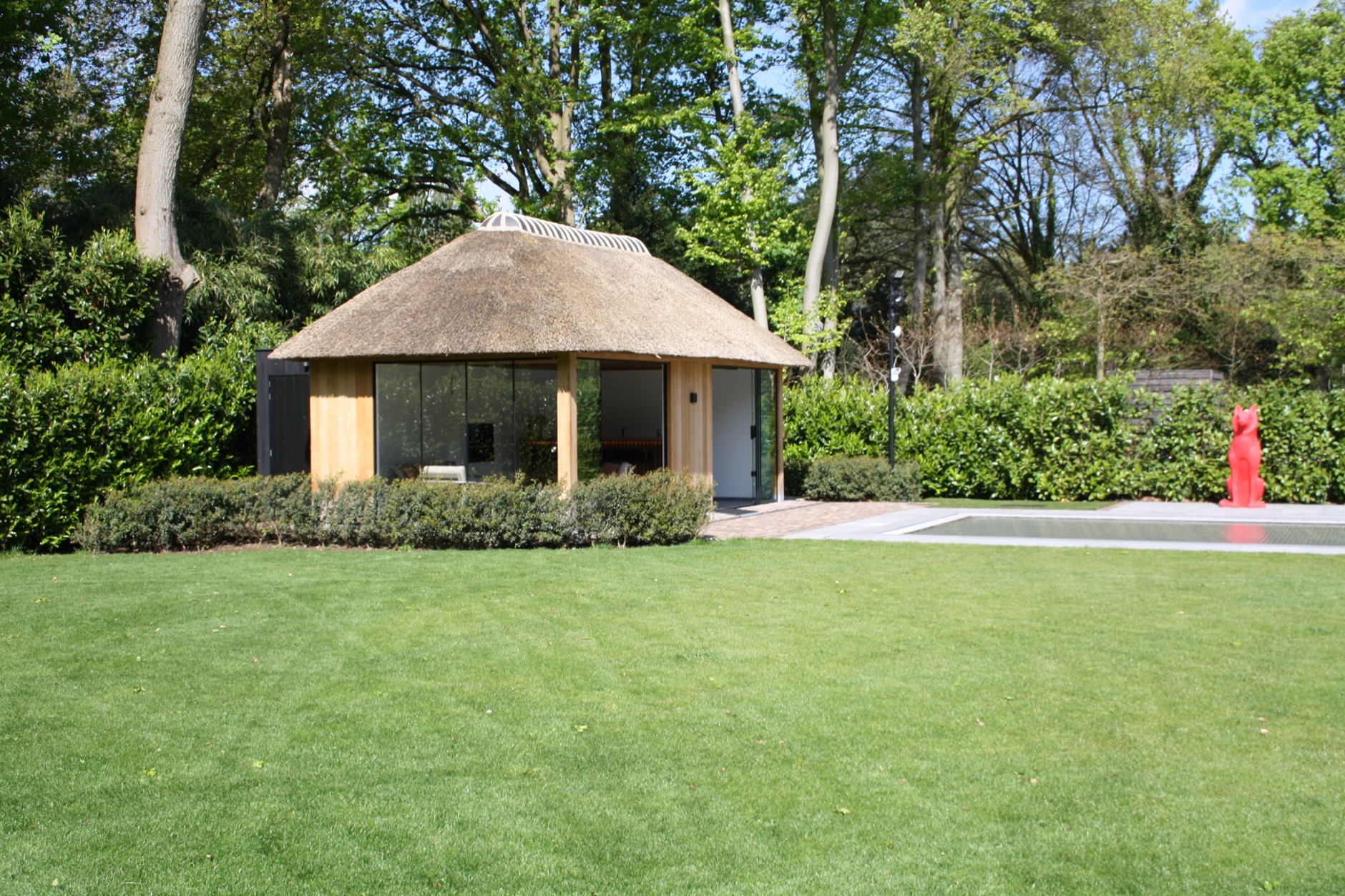
Positioned as a transitional element, the wooden poolhouse sits between open lawns and dense planting clusters. Its materials resonate with the natural earth tones of soil and vegetation, enabling the structure to blend subtly yet clearly within the space. Around it, formal hedges and pruned shrubs stand beside more spontaneous perennial groupings, with plant heights and shapes thoughtfully aligned to respect daylight flow and sightlines through the glass walls.
Joinery and Finishing Highlight Craftsmanship
Details reveal precise woodworking, from clean timber joints to concealed fixings, ensuring both durability and visual neatness. Window openings are proportioned to capture ample daylight without overwhelming the structure’s simplicity. Thresholds between stone terrace and oak flooring are carefully crafted, with a gentle change of material rather than an abrupt shift, allowing indoor and outdoor surfaces to resonate. Equipment stays accessible but out of view, maintaining the uncluttered interior volume.
Natural Light Enhances Material Qualities
Daylight penetrates deep into the outbuilding, highlighting oak grain patterns and the subtle layers within the thatched eaves. The glass reflects movements of plants swaying outside, animating the room with shifting greens and dappled light. The spatial configuration ensures a bright environment during the day, reducing reliance on artificial lighting and strengthening the sensory link between interior finishes and the garden beyond. Garden outbuilding remains connected to the layout, materials and daily use of the home.
Stone Terrace Extends the Usable Space
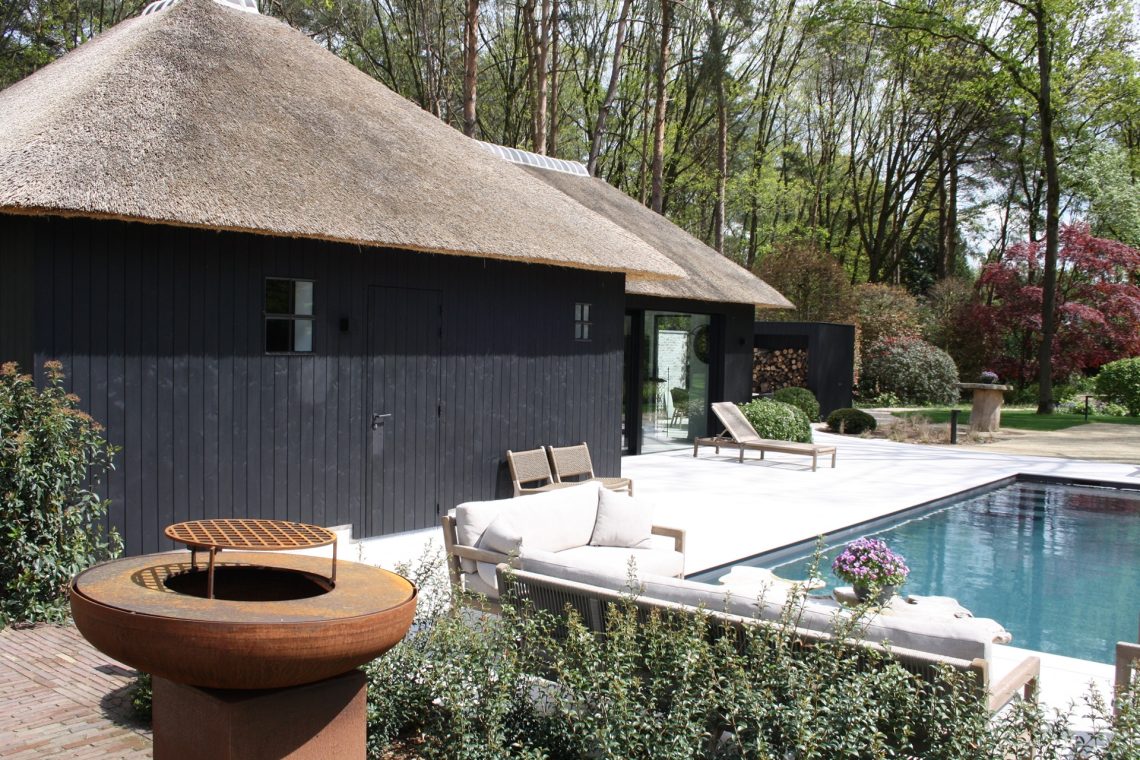
The terrace stone exhibits weathered edges and softly varied colors that respond to the surrounding greenery. This outdoor platform accommodates seating with textile cushions crafted from natural fibers and simple geometry, echoing the building’s material palette. Its placement beside both pool and garden offers a multipurpose area where activities move fluidly between covered interior and open air, encouraging prolonged engagement with the landscape.
Spatial Flow Designed for Shared and Private Use
This garden outbuilding caters to moments of social interaction as well as privacy. The seating arrangements face pool and garden views, encouraging conviviality without rigid divisions. The wooden bar occupies a practical yet understated position, gathering the room’s functions without obstructing openness. Utility spaces remain unobtrusively sited, ensuring that technical functions do not detract from the spatial clarity or user experience.
Material Palette Reflects Environmental Sensitivity
Comprising oak, reed, glass, and stone, the materials form a tactile and visual composition rooted in the surrounding environment. Their textures evolve subtly with weather and time, linking the building to the garden ecosystem. Rather than concealing these surfaces, the design celebrates their natural quality and structure, fostering a built form that resonates with its setting and invites close inspection.
Photography – Assymo
Functional Spaces Within the Oak Outbuilding
The interior layout thoughtfully separates areas for various uses. A compact bar and seating arrangement define the social corner, while utility components like the bathroom and technical pool room are tucked toward the back. This division ensures guests can relax without interference from operational needs, yet everything remains within easy reach.
Garden outbuilding as a spatial starting point
Large sliding glass doors run along one side of the building, flooding the interior with daylight and framing views of the garden’s natural stone terrace. When opened, the threshold smoothly merges indoor living with the outdoor environment, inviting fresh air and allowing the garden’s textures and colors to complement the wooden structure inside.
Details in Materials and Finishing
The choice of sustainable oak for framing and paneling introduces a warm tone and tactile grain throughout the space. This is balanced by cool surfaces such as the glass doors and stone terrace, accentuating contrast without disrupting the overall calm palette. The thatched roof’s deep texture adds a rustic layer, reflected subtly in the irregular surfaces of the surrounding paved outdoor areas.
Integration of Lighting and Airflow
Natural light is maximized through the extensive glazing, reducing reliance on artificial lighting during the day. Combined with operable sections in the sliding doors, this allows for natural ventilation that helps maintain a comfortable atmosphere in warmer conditions. The open ceiling beams and wooden slats also contribute to air circulation while reinforcing the structural logic of the oak framework. Garden outbuilding remains connected to the layout, materials and daily use of the home.
Want to see more of Assymo? View the page of Assymo for even more great projects and company information.



.png)