








Modern driveway gate
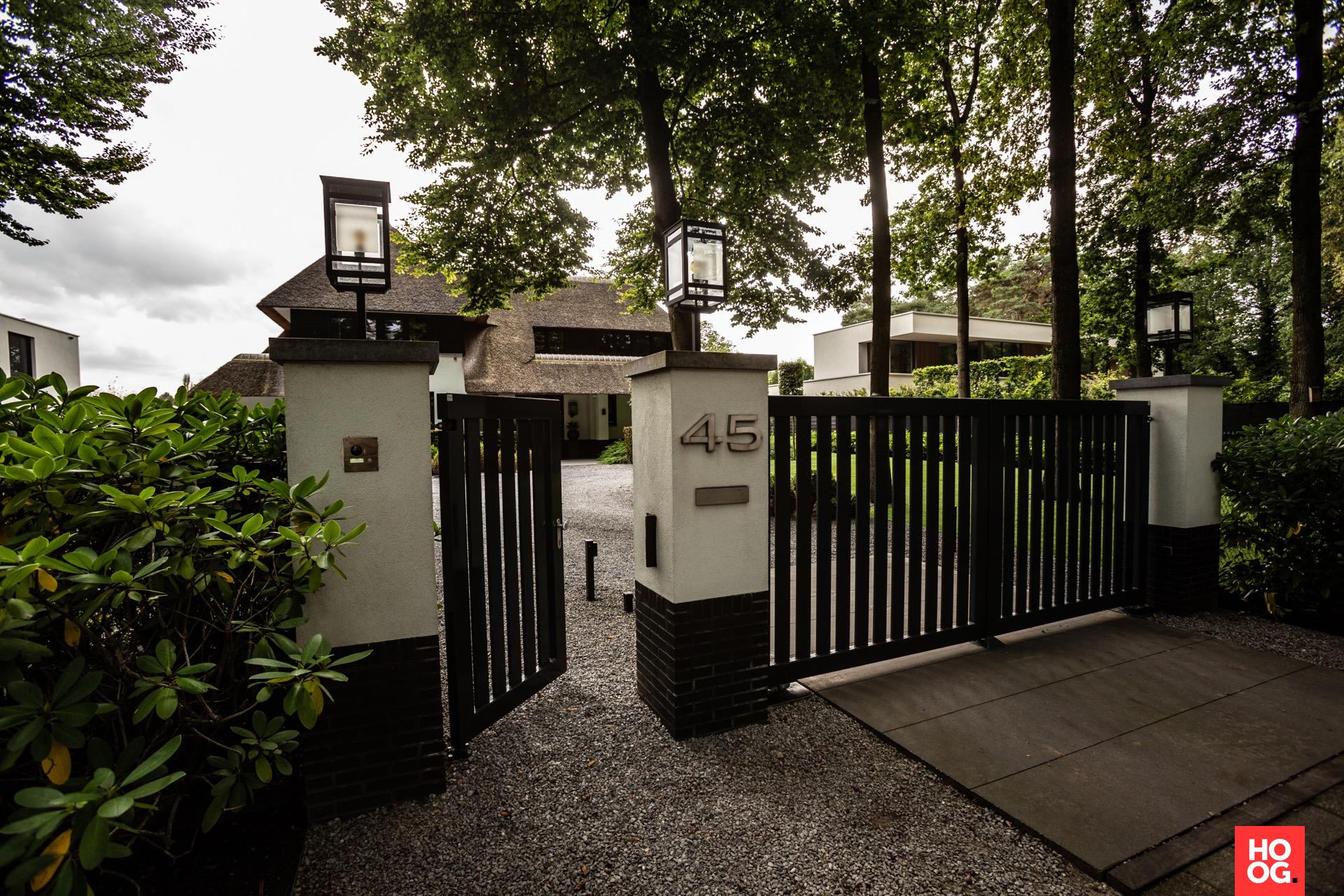
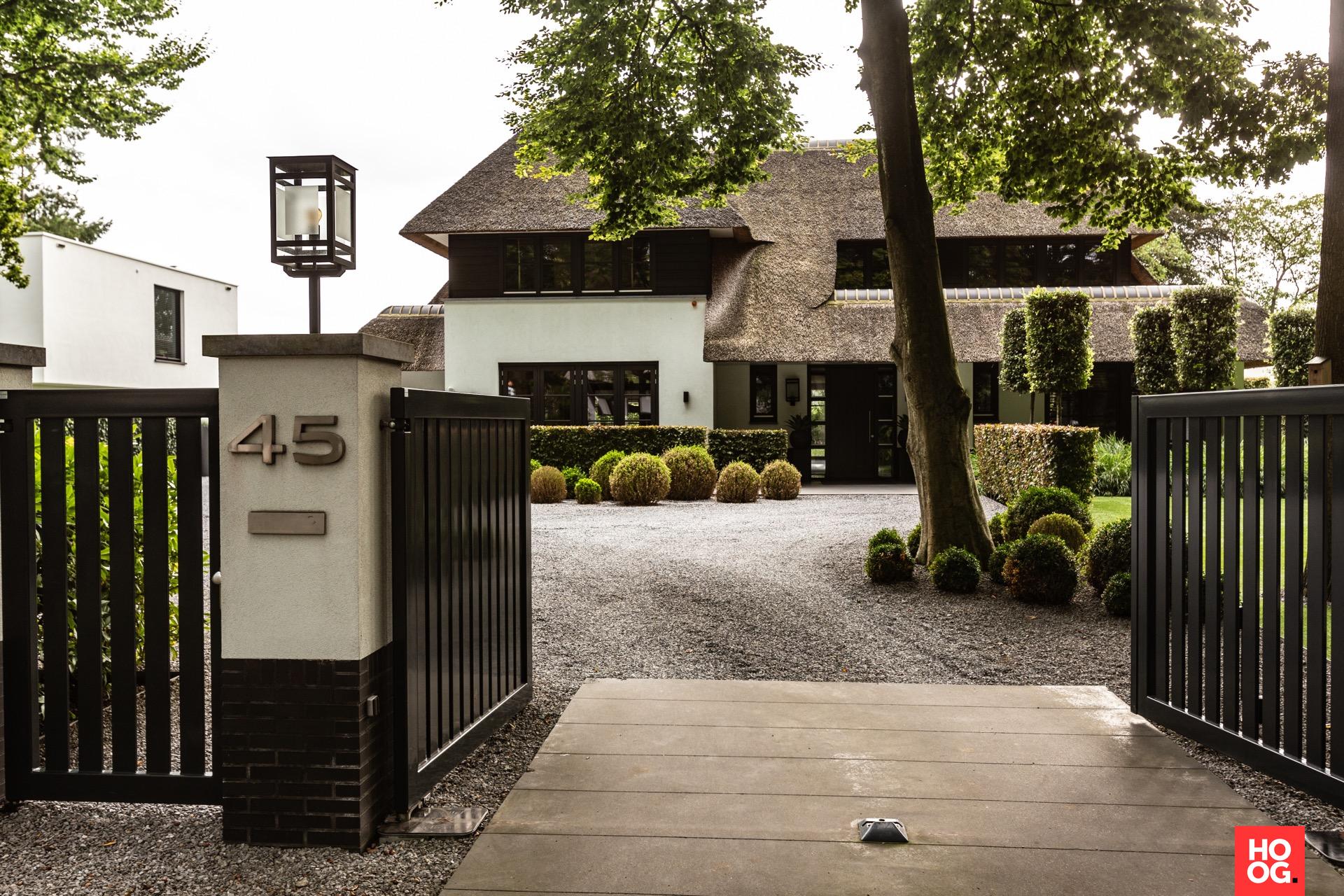
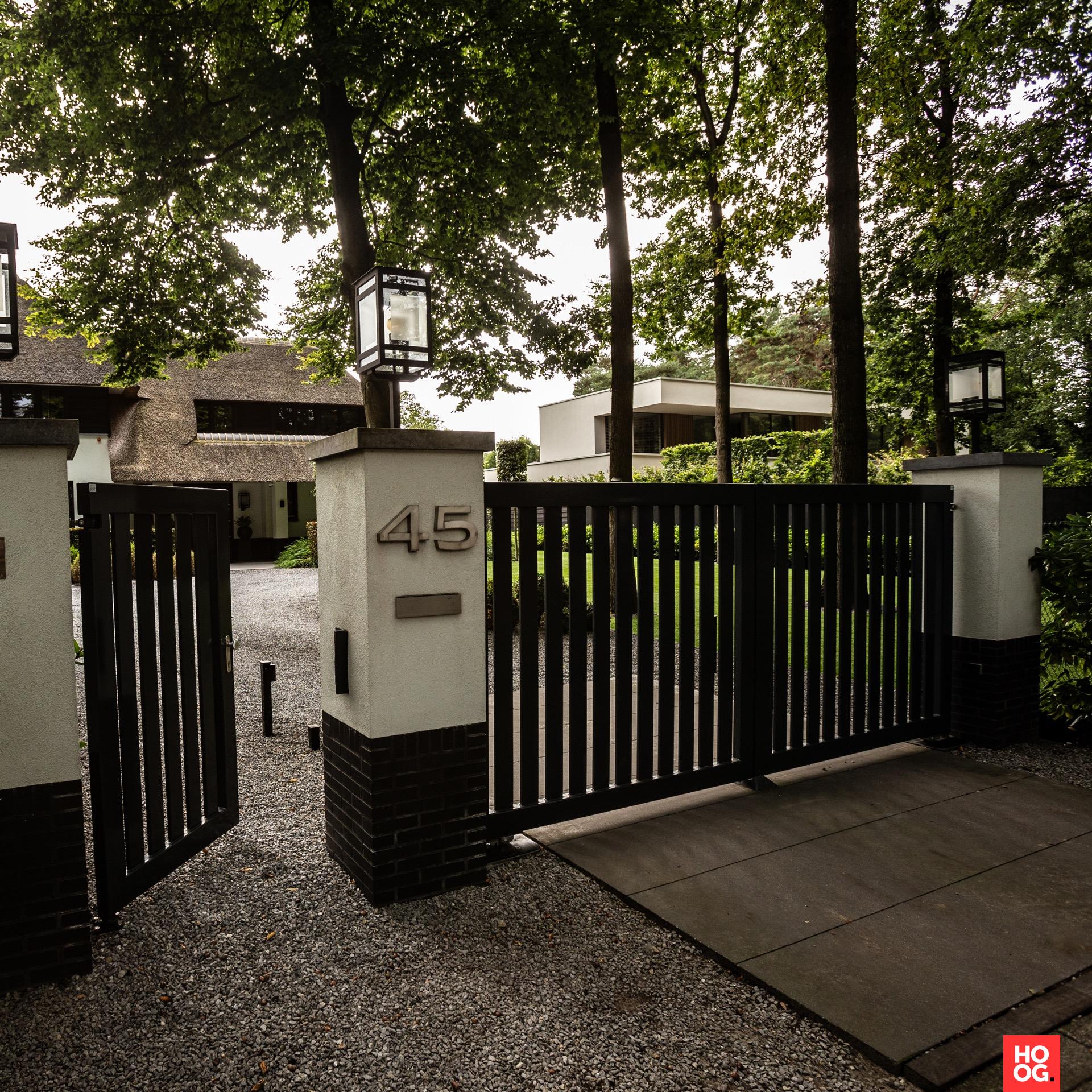
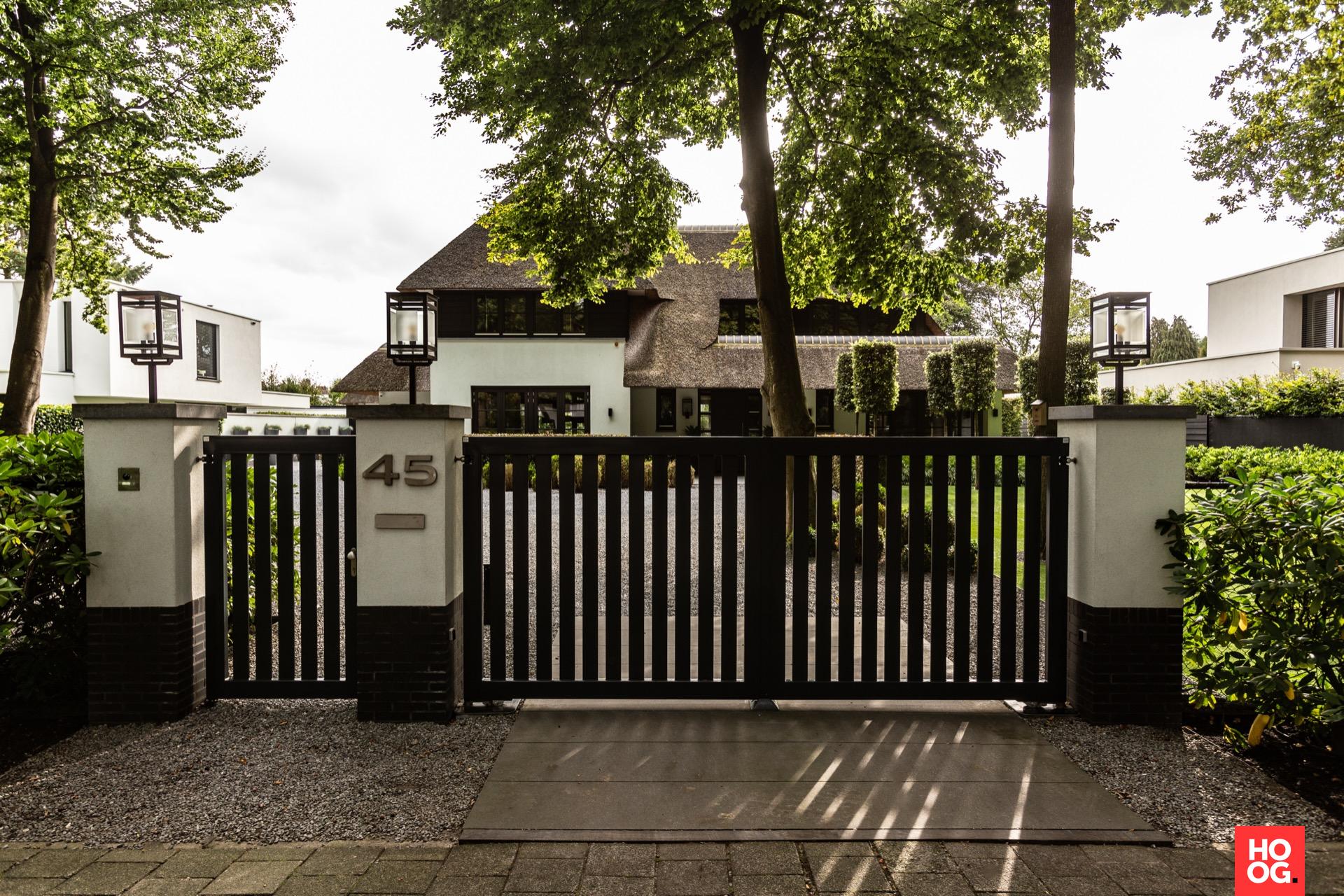
The black frame lands first: a modern driveway gate with slim vertical bars set between tall plastered pillars. The opening is clear and direct, with the house number 45 fixed into one pillar and a gravel path leading the eye inward. It is a controlled entrance, but not a closed one. The view still moves through the black metal and toward the house beyond, where the roofline and garden sit quietly in the background.
Black vertical bars set the rhythm
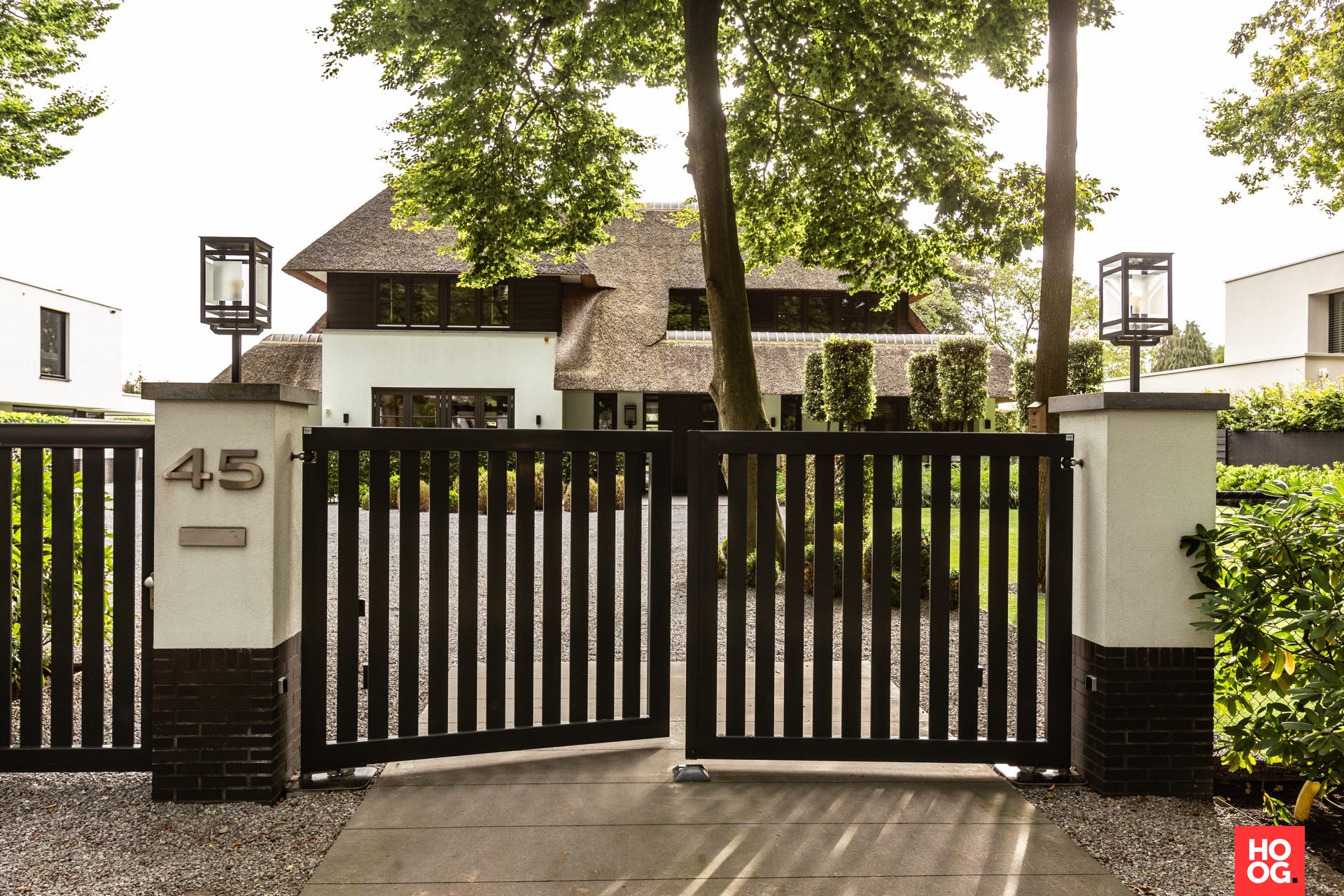
The gate is built from narrow vertical bars, spaced closely enough to read as a screen, open enough to let light and depth pass through. That structure gives the modern driveway gate a measured presence at the front of the property. From the street, the black metal sits against the pale pillars with a strong contrast. From inside, the same lines frame the approach and keep the entrance legible without turning it into a wall.
The double-leaf format makes the opening feel balanced and practical in use. Each leaf follows the same vertical pattern, so the whole front reads as one composed piece rather than separate parts. The metal driveway gate does not rely on ornament; the shape, the spacing of the bars, and the dark finish do the work. In the open position, the leaves draw the path into the property and reveal more of the garden route.
Plastered gate pillars carry the entrance
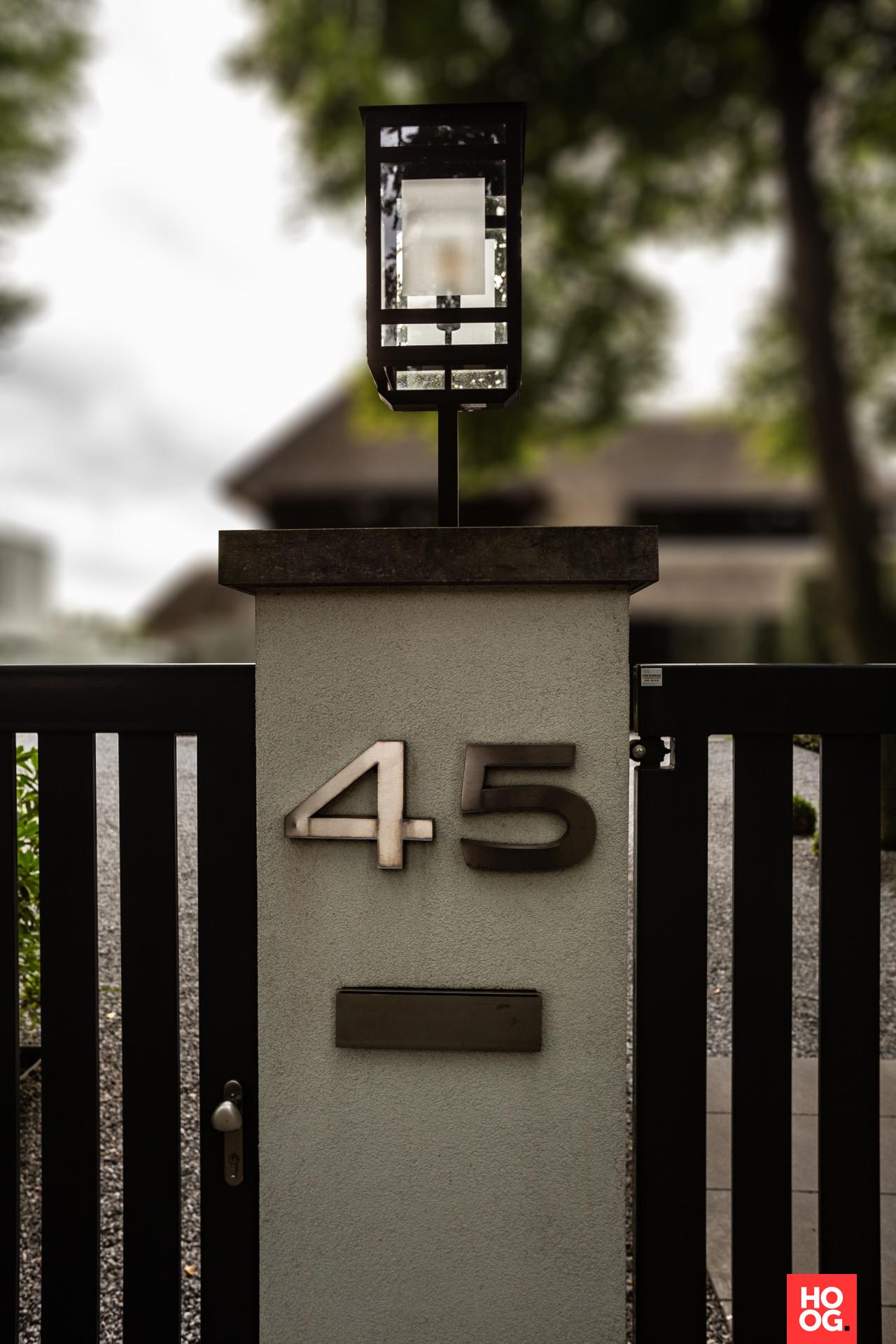
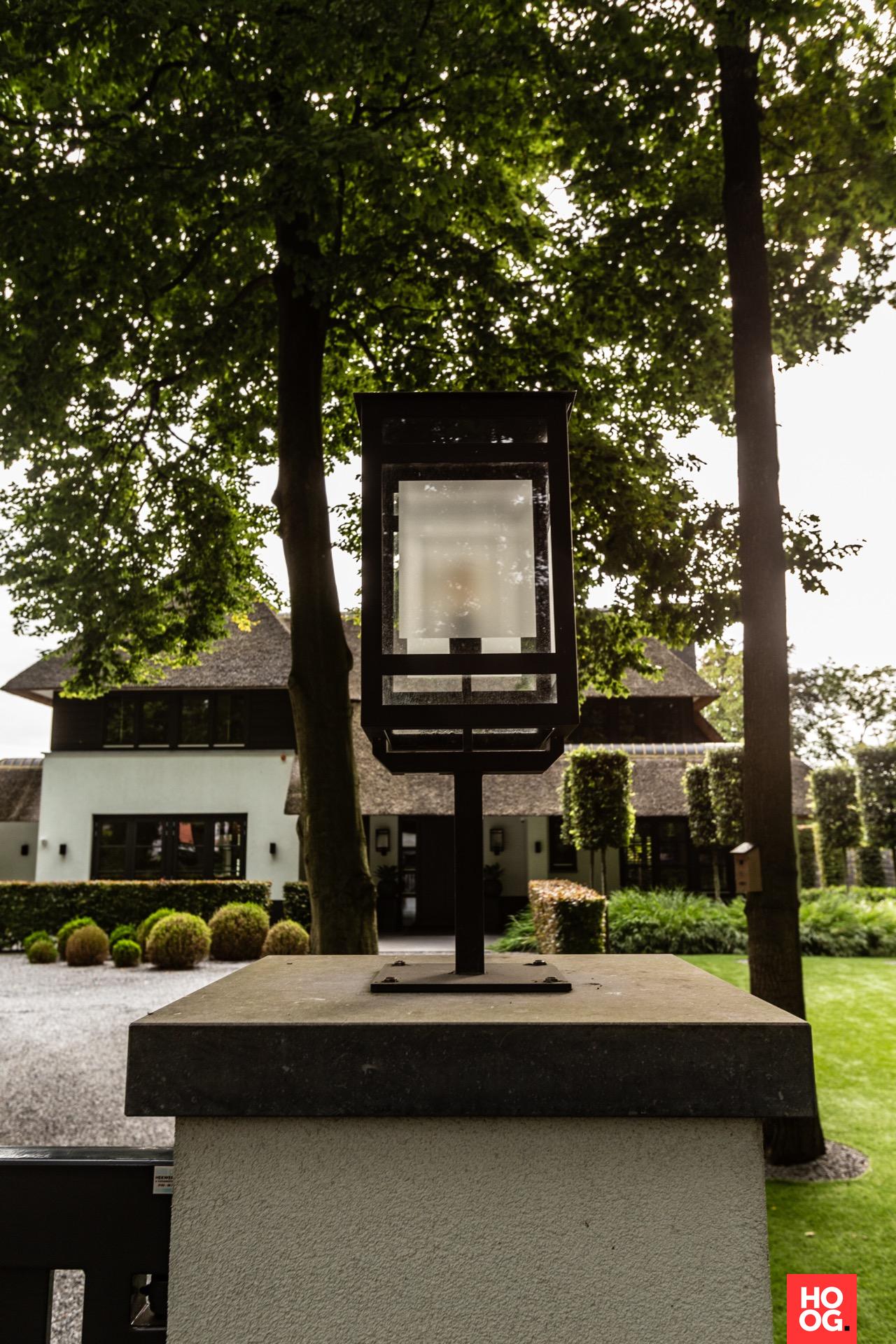
Two tall plastered gate pillars anchor the composition. Their light surface lifts the entrance above the darker gate, and their capped tops give the opening a finished edge. One pillar carries the house number on pillar detail, set neatly in view rather than hidden away. It is a small feature, but it changes how the entrance reads: the eye lands on the number first, then follows the line of the gate and the path beyond.
The pillars also widen the sense of arrival. They create a clear threshold between street and plot, with enough height to mark the boundary without crowding the view. At the base, the paving meets the gravel path in a restrained palette of grey tones. That surface combination keeps the entrance grounded and gives the driveway entrance gate a firm setting instead of letting it float in the landscape.
A house number placed where visitors can see it
The number 45 is integrated into the pillar itself, not added as an afterthought. That placement matters because the pillar is already part of the entrance sequence. It is the first solid surface beside the opening, and the number sits at eye level where it can be read immediately. In a scene with black metal, pale plaster, and grey paving, the small numeric detail adds clarity without disturbing the front elevation.
Gravel, paving, and the approach to the house
The ground surface does more than fill the foreground. A gravel path runs toward the gate, with adjacent paving creating a cleaner edge beside it. That shift from loose stone to laid surface gives the entrance a subtle change in texture. The gravel gate with gravel path image reads as a lived-in approach rather than a decorative set piece, because the route is visible and the surface has a clear function.
Beyond the gate, the garden stays controlled and calm. Green planting softens the edges around the entry, while the house sits back enough for the gate to remain the focus. In the background, the roofline and facade elements of the home appear in muted tones, which keeps attention on the entrance itself. The result is a front boundary that organizes the first few meters of the property instead of merely enclosing them.
A front view that still leaves room for depth
Seen front-on, the modern driveway gate reads as a strong horizontal span interrupted by slender verticals. That combination gives the entrance clarity from the street. Yet the open spacing between bars also allows a view through the property, so the gate frames rather than blocks the approach. This is where the project feels carefully set up: the black vertical bars gate establishes a limit, but the opening still pulls the eye further in.
Other angles show how the entrance works in depth. Through the open leaf, the route toward the house becomes visible, with the gravel path and paving guiding movement inward. The gate does not sit as an isolated object. It connects the pillars, the ground, and the view beyond into one readable sequence, which is exactly what a driveway entrance gate needs to do in a residential setting.
What the entrance communicates before anyone rings the bell
The composition is restrained, but it says enough. Black steel, plastered pillars, a visible house number, and a clear path create an entrance that feels deliberate from the first glance. The visual order is easy to read: boundary, number, opening, route. That makes the modern driveway gate effective as a front-of-house element, because it organizes arrival without relying on excess detail. The design speaks through proportion and placement rather than decoration.
Designed, made, and installed with long experience
The project text notes more than 25 years of experience in designing, making, and installing luxury driveway gates. That background matters here because the finished entrance depends on precise alignment: the gate leaves sit between the pillars, the number is positioned cleanly, and the proportions feel resolved. The work combines design sense with technical know-how, which shows in the way the metal, masonry, and ground surfaces meet.
Across the page, the focus stays on a complete entrance rather than a single product element. The metal driveway gate, plastered gate pillars, and gravel path are all part of the same front sequence. Together they create a clear threshold for the property, with enough openness to keep the approach visible and enough structure to make the boundary unmistakable.
Seen from the side and from the front, the entrance keeps its character. The black gate lines up with the pale pillars, the house number remains easy to read, and the route toward the home stays clear. It is a compact project, but the details are arranged with care: vertical bars, capped masonry, gravel underfoot, and a view that leads inward instead of stopping at the fence line.
Want to see more of DJS Hekwerken? View the page of DJS Hekwerken for even more great projects and company information.



NEW 2026 Jubileum Edition The Best Interior Designers Benelux
Order Now €125