






Custom classic wooden staircase with majestic balustrade corners
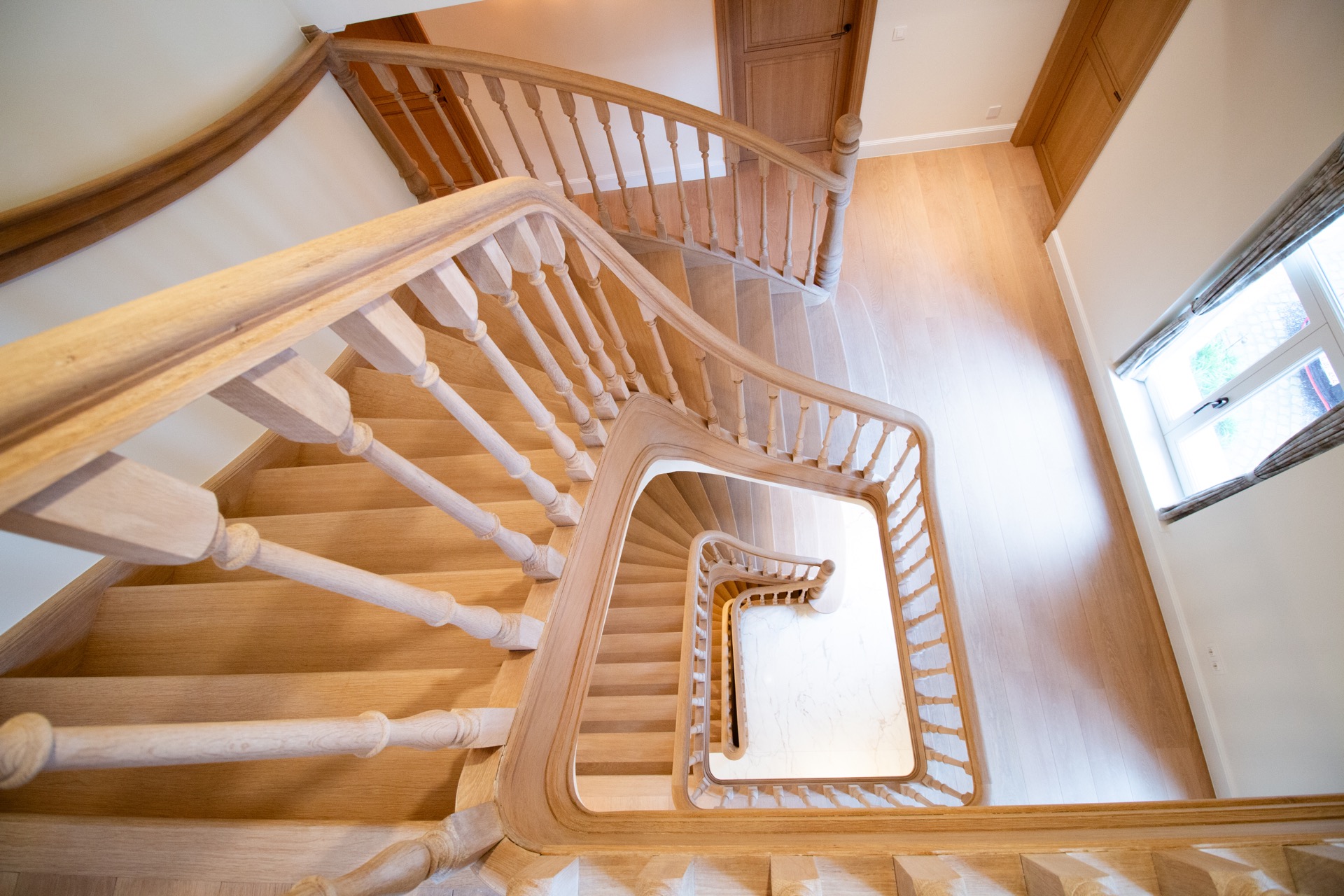
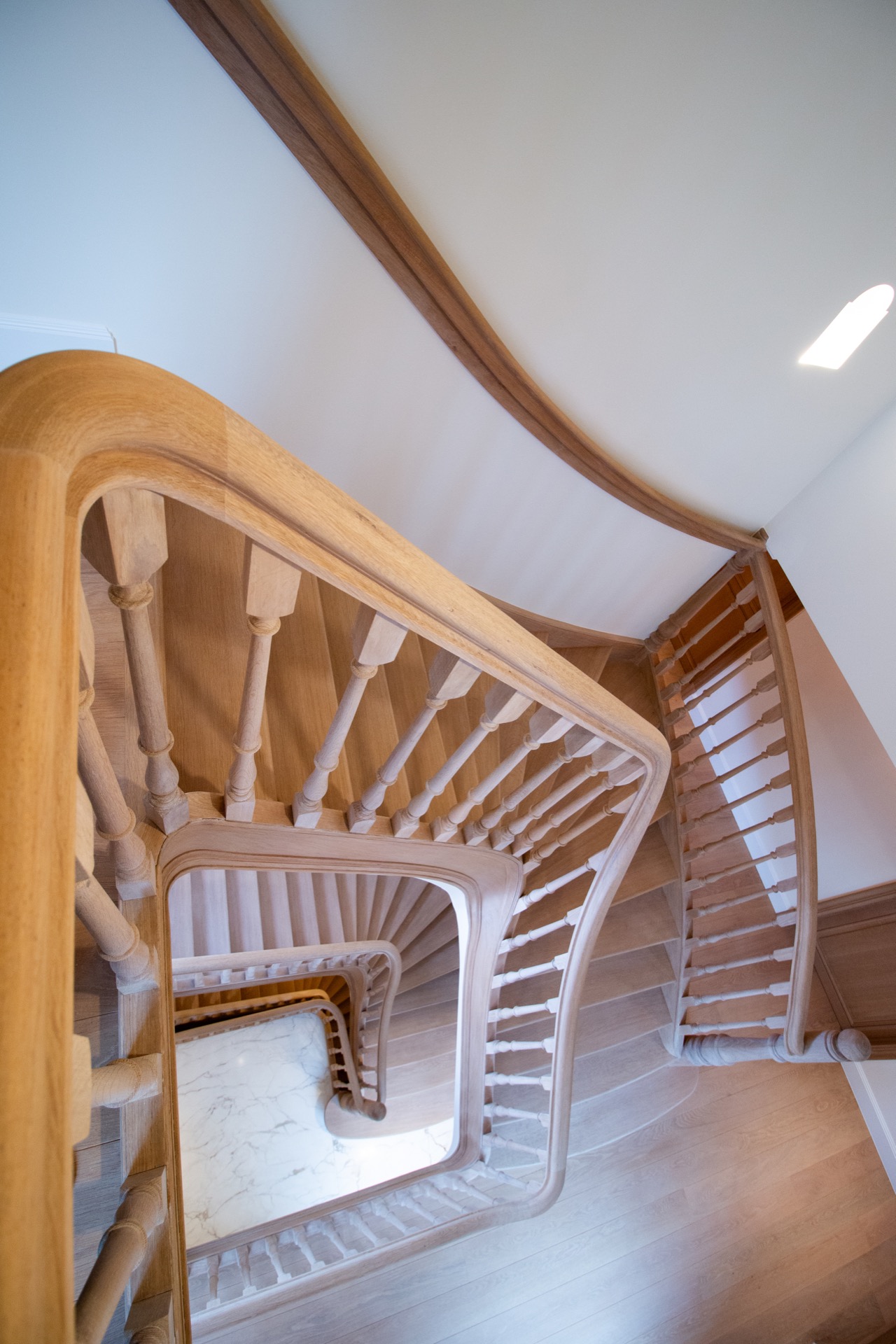
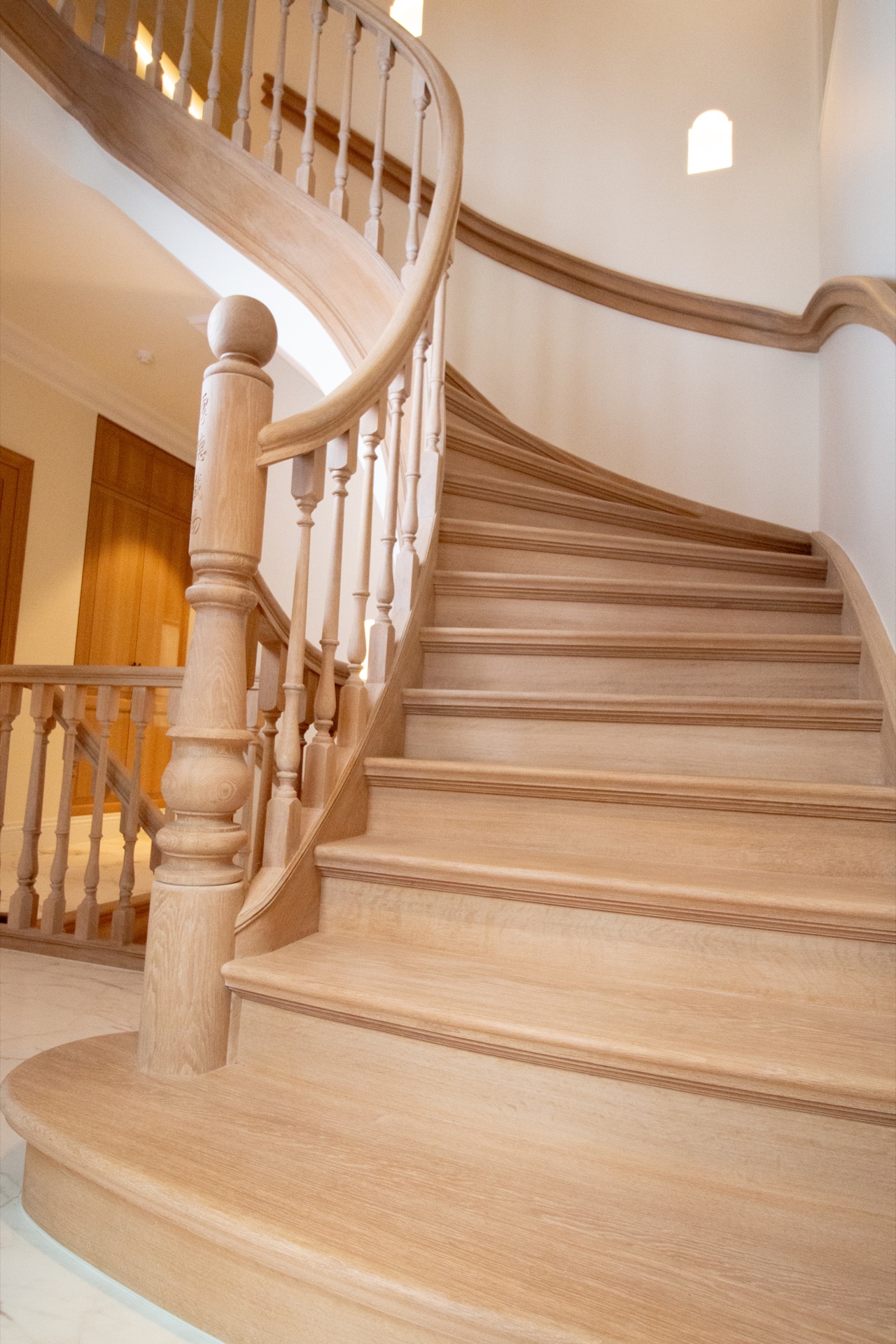
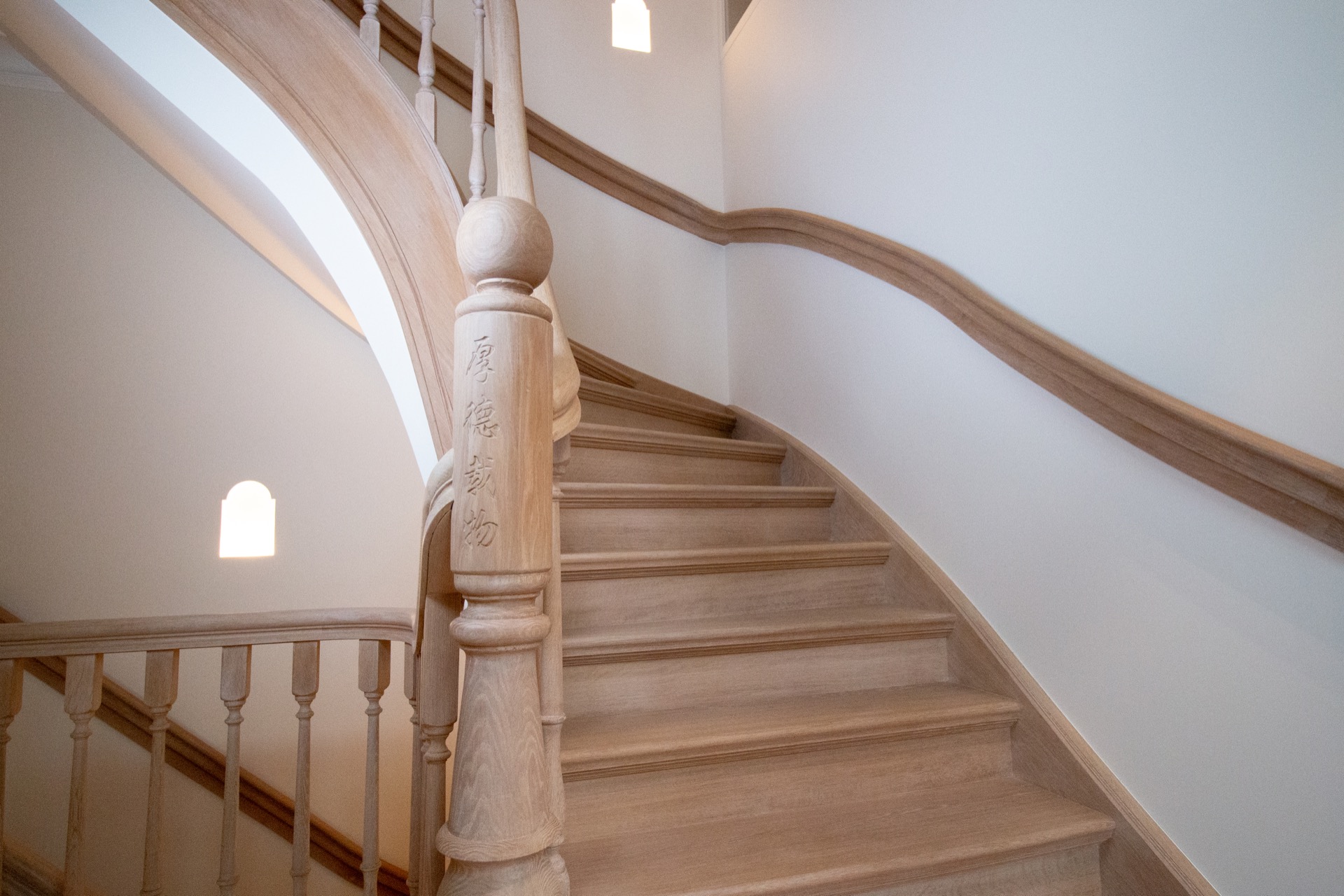
Seen from below and across two turns, the custom classic wooden staircase rises through three levels with a clear, measured rhythm. Light timber treads catch the room’s warm light, while the white balusters repeat in a tight line that turns cleanly at each landing. The curved handrail detail guides the eye upward before the stairs disappear around the corner, and the stair newel post detail gives the whole composition its strongest vertical point.
Turned balusters, carved movement, and a handrail that follows the line
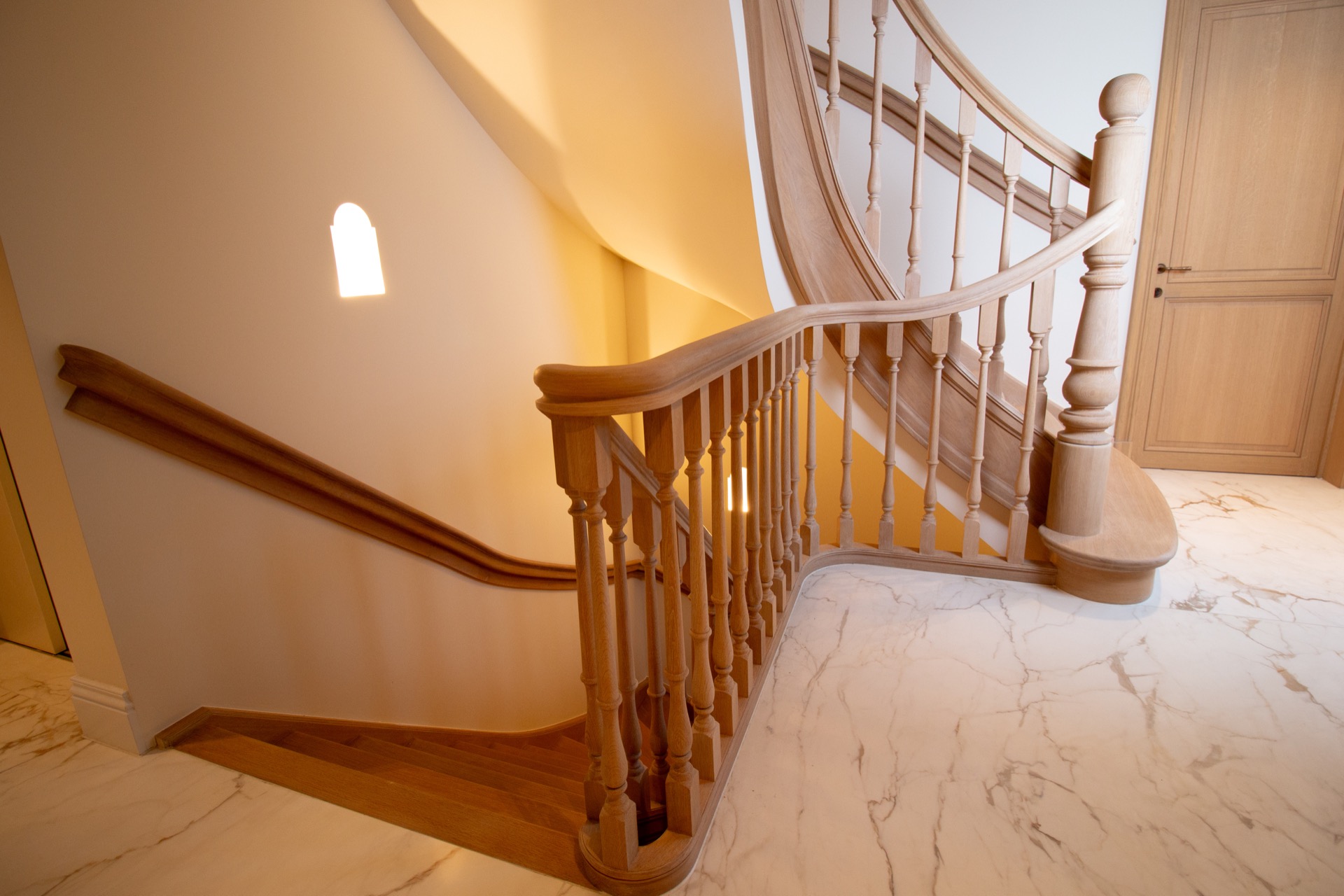
The staircase reads as a piece of joinery rather than a collection of parts. Turned balusters staircase sections run beneath the rail with a precise spacing, and the balustrade does not stop at the turn; it carries on through the corner, where the profile bends and the handrail keeps its line. That curve matters in the image. It softens the change in direction and lets the stair keep its visual pace from one flight to the next.
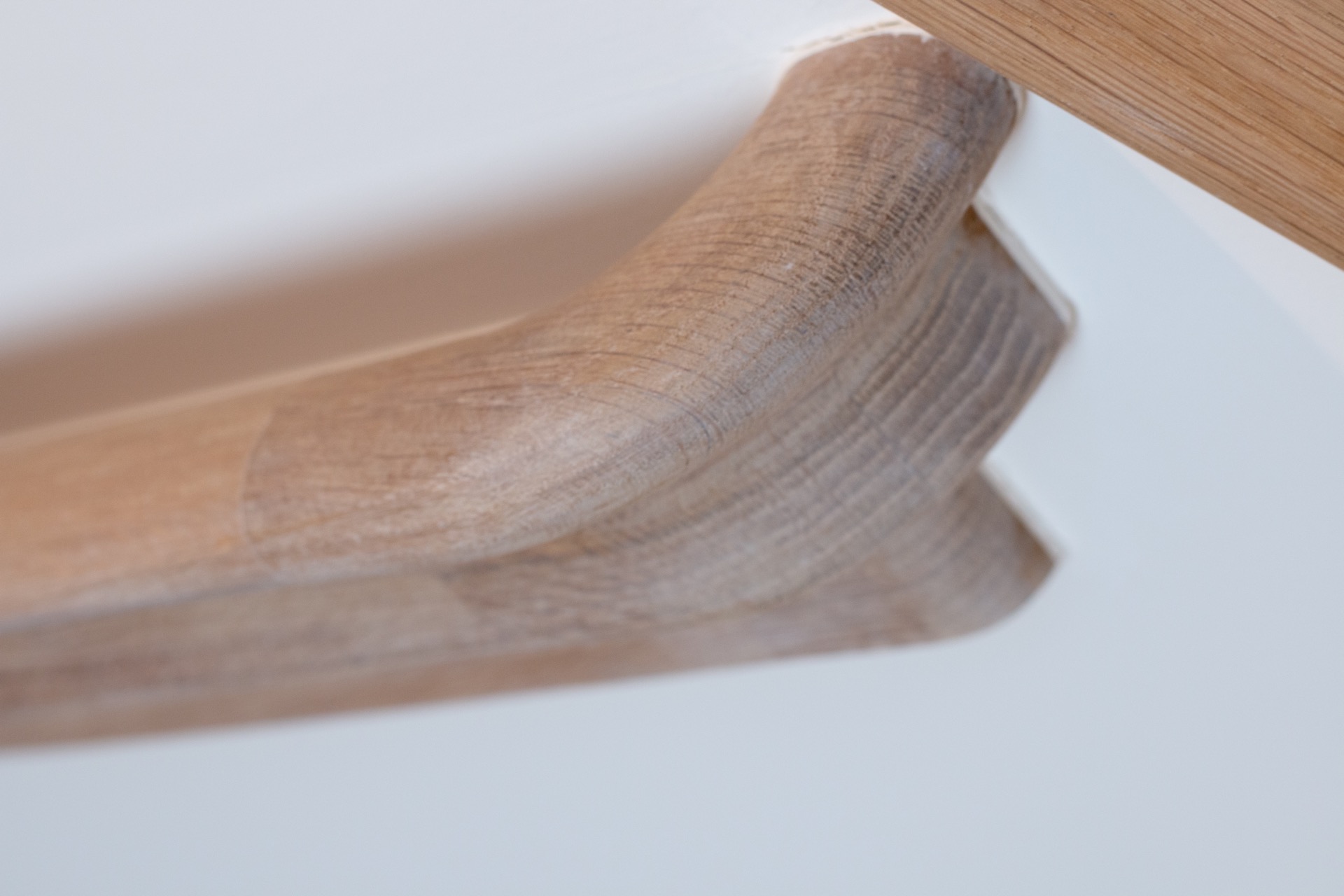
At closer range, the wood grain in the rail and the rounded tops of the balusters show the amount of handwork involved. The profile is not flat or mechanical. It has depth, with small transitions where the rail meets the post and where the balusters meet the lower rail. This custom staircase balustrade was clearly built to handle those changes, not hide them.
A staircase made to cross several levels without losing its rhythm
Across the full height, the stair moves through straight runs and quarter turns. That arrangement gives the hall a stacked, vertical structure, and the pale wood keeps the mass from feeling heavy. The treads are wide enough to read as proper walking surfaces, while the white balustrade elements pull the composition into a neat edge. From the lower landing, the staircase feels continuous, even though it changes direction several times.
The most visible craft is in the way the corner is handled. A classic balustrade corner can easily become awkward if the transition is forced, but here the rail, balusters, and side elements meet in a way that keeps the geometry legible. The staircase does not rely on decoration to make its point; the shape of the turn, the flow of the rail, and the repeated turned spindles do the work.
The newel post as a place for custom work
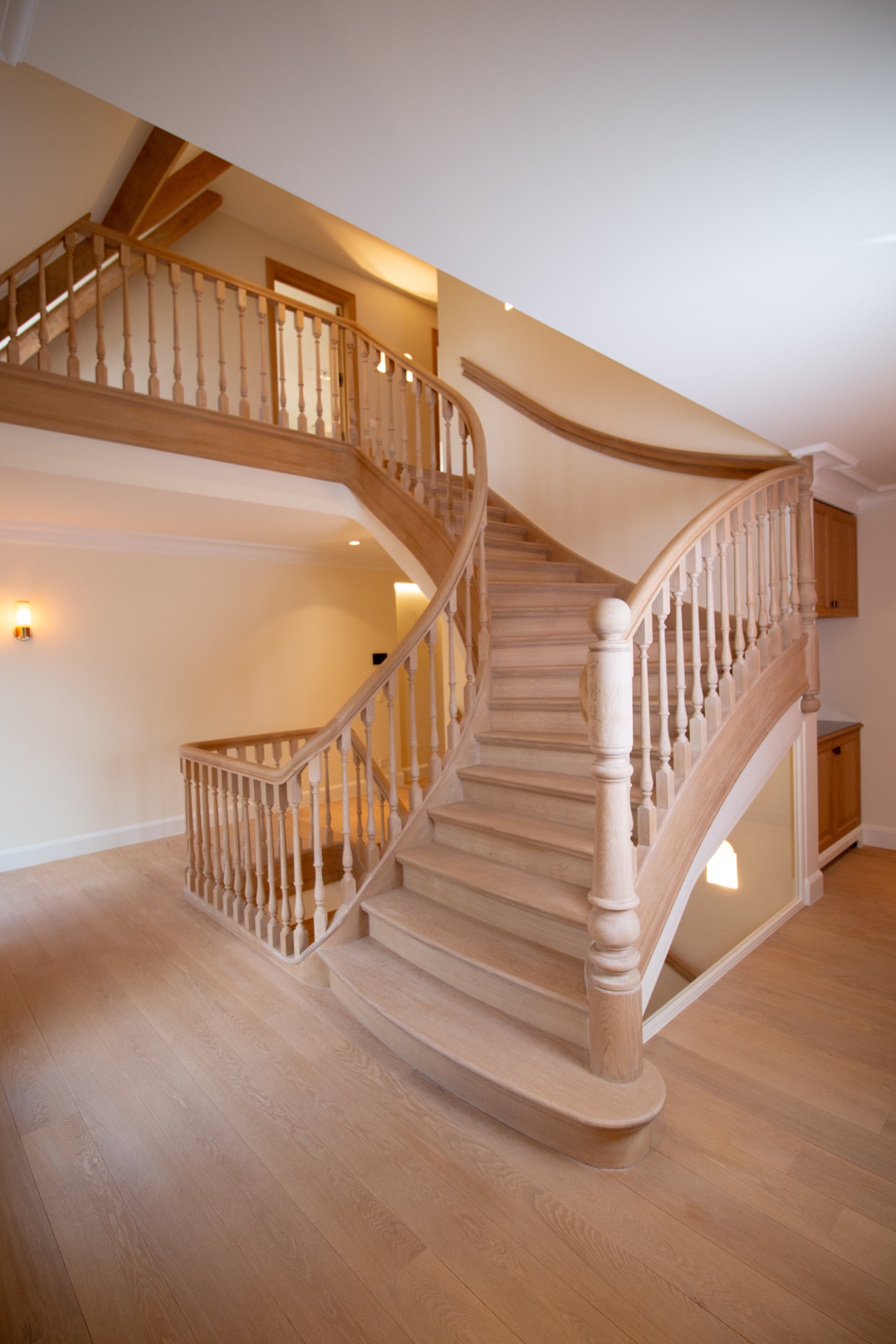
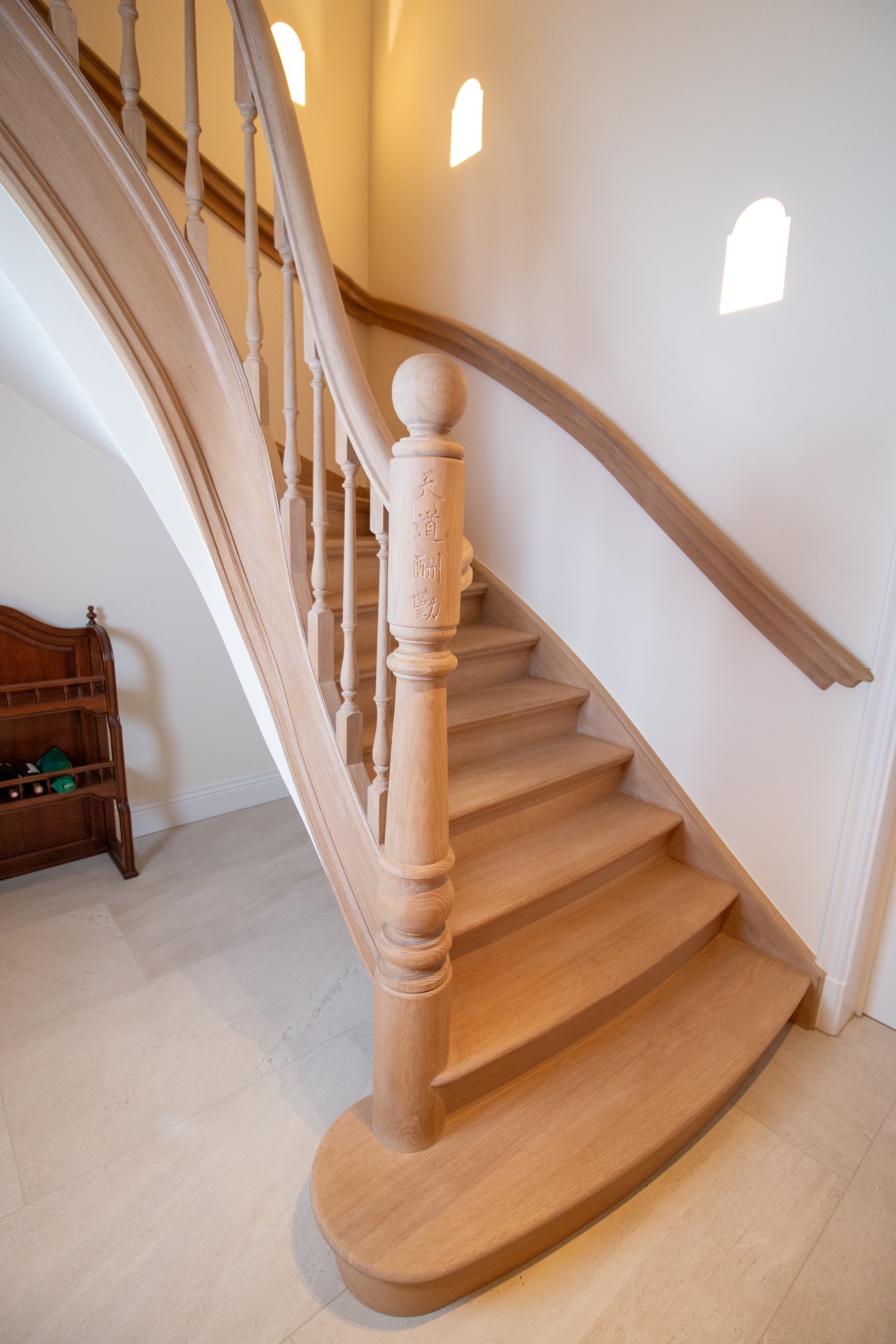
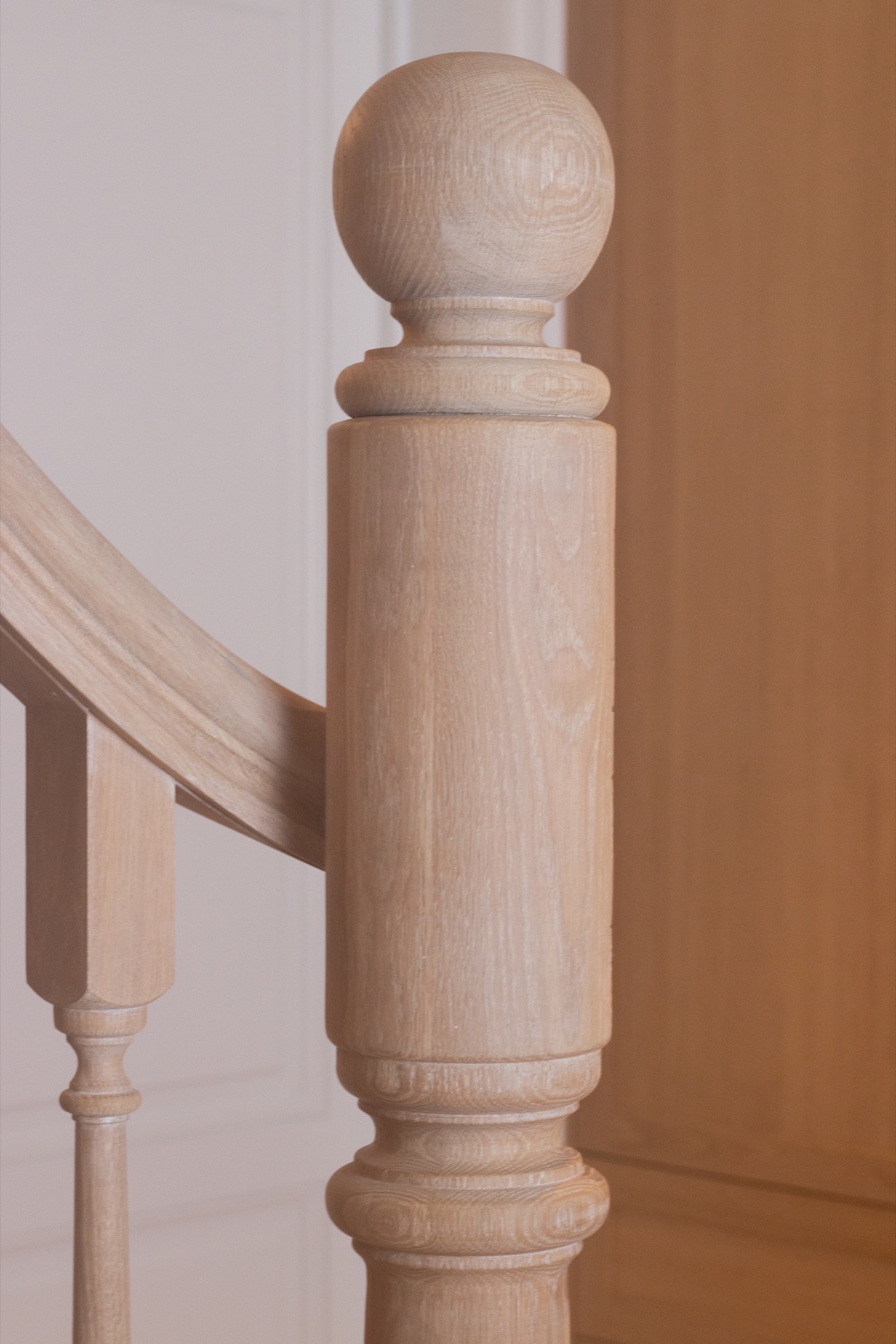
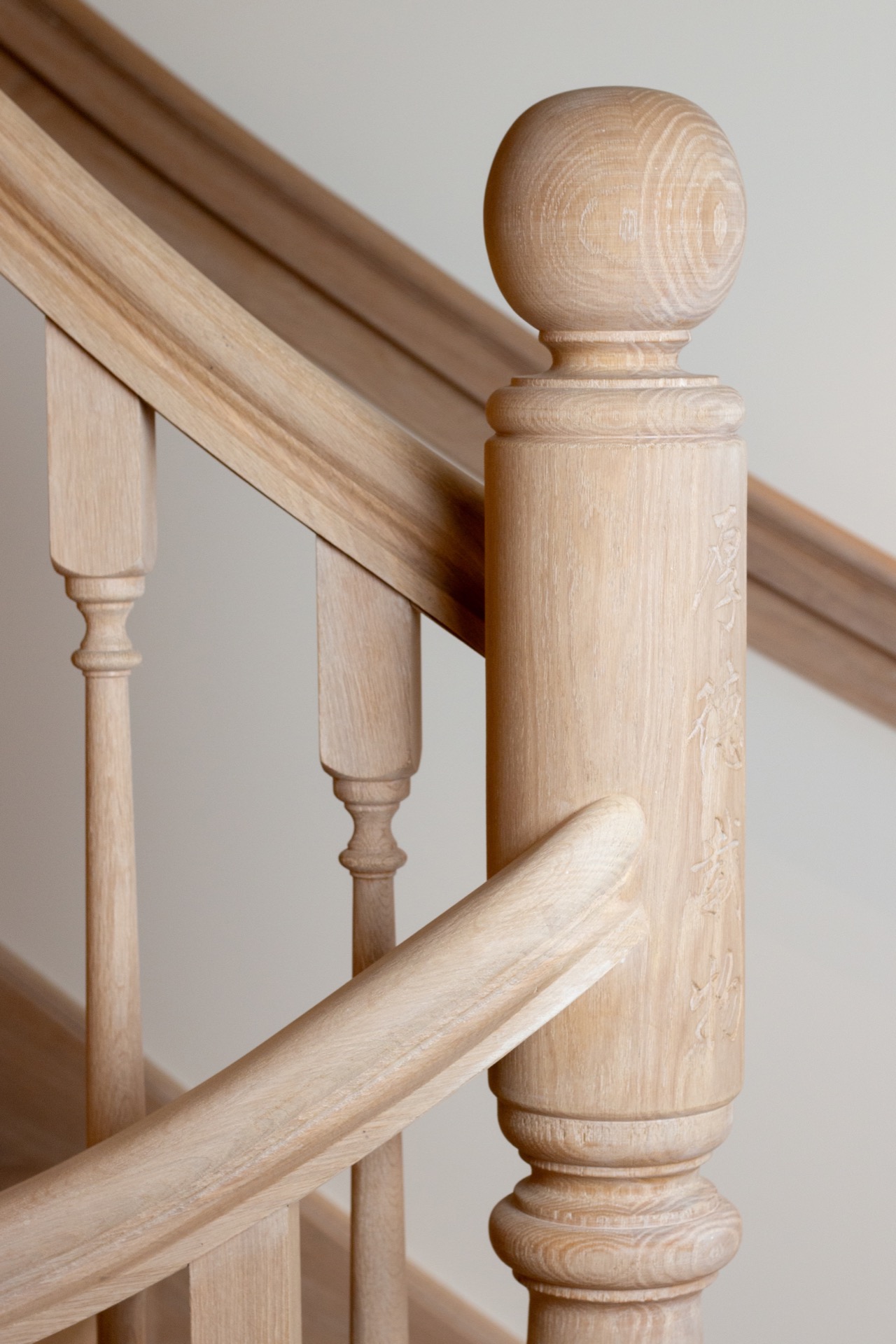
The stair newel post detail stands out because it is treated as more than a structural end point. It is a custom-made piece, and the source material notes that individual specifications can be carried into this part of the staircase, including engraved text if requested. In the photos, the post reads as a deliberate anchor between flights, with its round top and vertical body marking the transition from one direction to the next.
That attention to the post gives the whole staircase a stronger sense of intention. Instead of disappearing into the background, it becomes one of the few places where the eye stops before moving on. The surrounding balusters and handrail then take over again, continuing the line upward with the same measured spacing.
How the tread line is redistributed
The technical approach described for this project is about redistributing the tread line across the staircase rather than concentrating the change at one point. In practical terms, that means the turn near the newel area does not produce the narrow wedge shapes that often appear in a standard solution. The steps stay broader over the length of the stair, and the walking route follows a more even path through the bend.
That is visible in the way the staircase reads as a whole. The turn does not tighten into a sharp pinch. Instead, the movement is spread out, which supports a steadier walk and reduces abrupt changes in step geometry at the corner. The source text describes this as a more comfortable way of walking the stair, and the visual result supports that reading: the line flows, the turn stays open, and the tread surfaces keep their presence.
A corner detail that stays open
Where the balustrade turns, the classic balustrade corner remains readable rather than crowded. The handrail bends in one continuous motion, and the turned balusters continue the sequence without breaking the pattern. From the side, that means the corner keeps its shape; from below, it means the stair still feels like one continuous object rather than two flights joined by a compromise.
Small signs of a fully custom build
The photos also show how much can be carried in a single component. One close-up reveals a post surface with engraved marks, confirming that personal specifications can be worked directly into the timber. Another frame focuses on the rounded baluster heads, where the turned forms catch light differently from the straighter parts below. These are not decorative extras added at the end. They are part of the staircase’s structure and finish from the start.
The contrast between the light wood and the painted white elements sharpens those details. It lets the profiles stand out against the wall and ceiling, especially where the rail curves and the balusters step down toward the landing. In that setting, the custom classic wooden staircase becomes easy to read from afar and worth slowing down for up close.
What the eye picks up first
First comes the vertical rise over several levels. Then the curved handrail detail pulls attention toward the turn, followed by the repeated turned balusters staircase rhythm beneath it. The final note is the post itself, which marks the corner and holds the composition together. Nothing here is oversized for effect. The strength comes from the way the parts are shaped to meet each other, and from the fact that each visible change in direction has been handled in timber rather than left to chance.
In the lower part of the image sequence, the stair meets a pale floor with a stone-like surface, which gives the timber an even clearer edge. Warm light above the stair softens the shadows between balusters and along the rail. The result is a staircase that shows its making plainly: carved, turned, joined, and followed through every turn.
Want to see more of Trappenmakerij Wim Van Loon? View the page of Trappenmakerij Wim Van Loon for even more great projects and company information.



NEW 2026 Jubileum Edition The Best Interior Designers Benelux
Order Now €125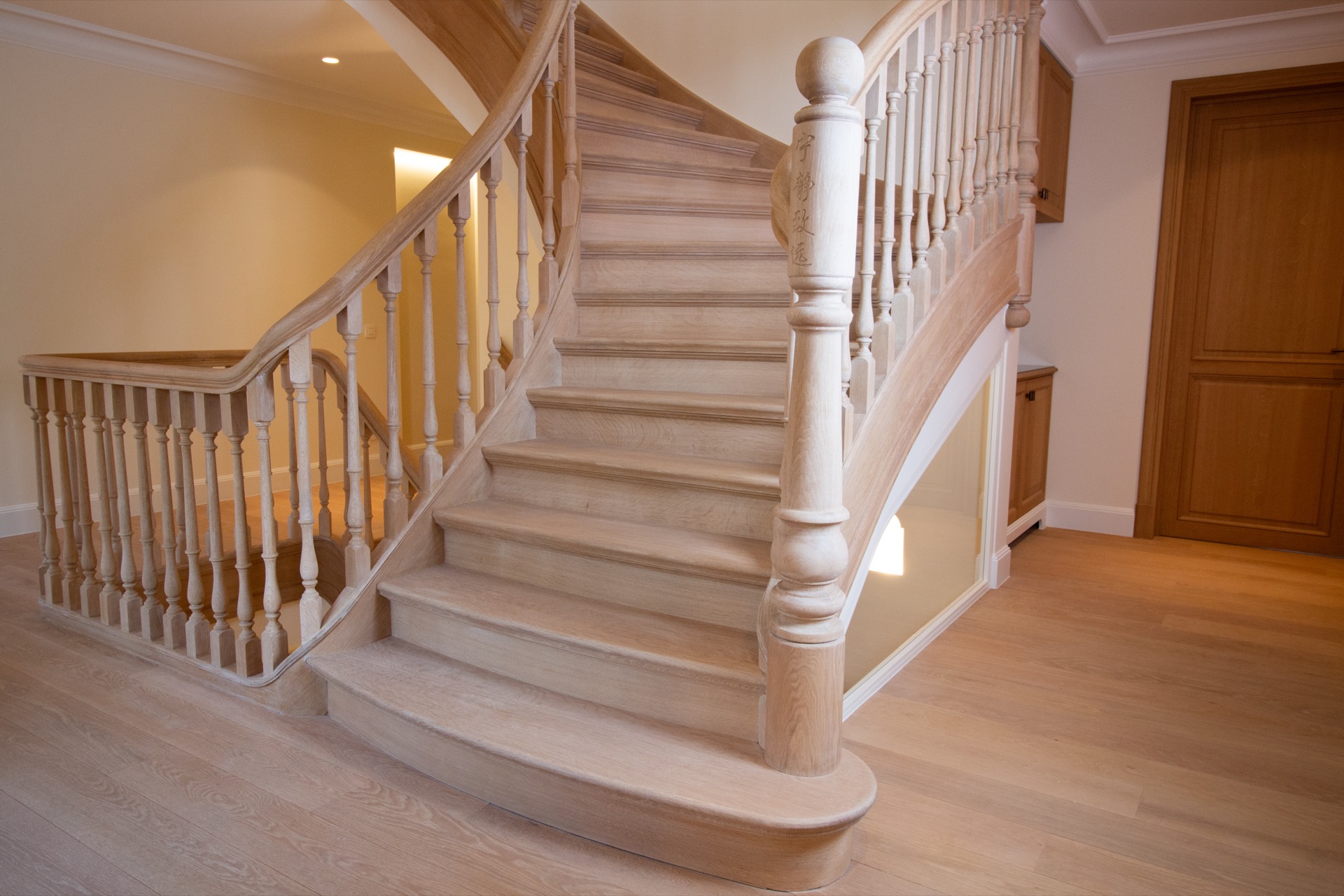
NEW 2026 Jubileum Edition The Best Interior Designers Benelux
Order Now €125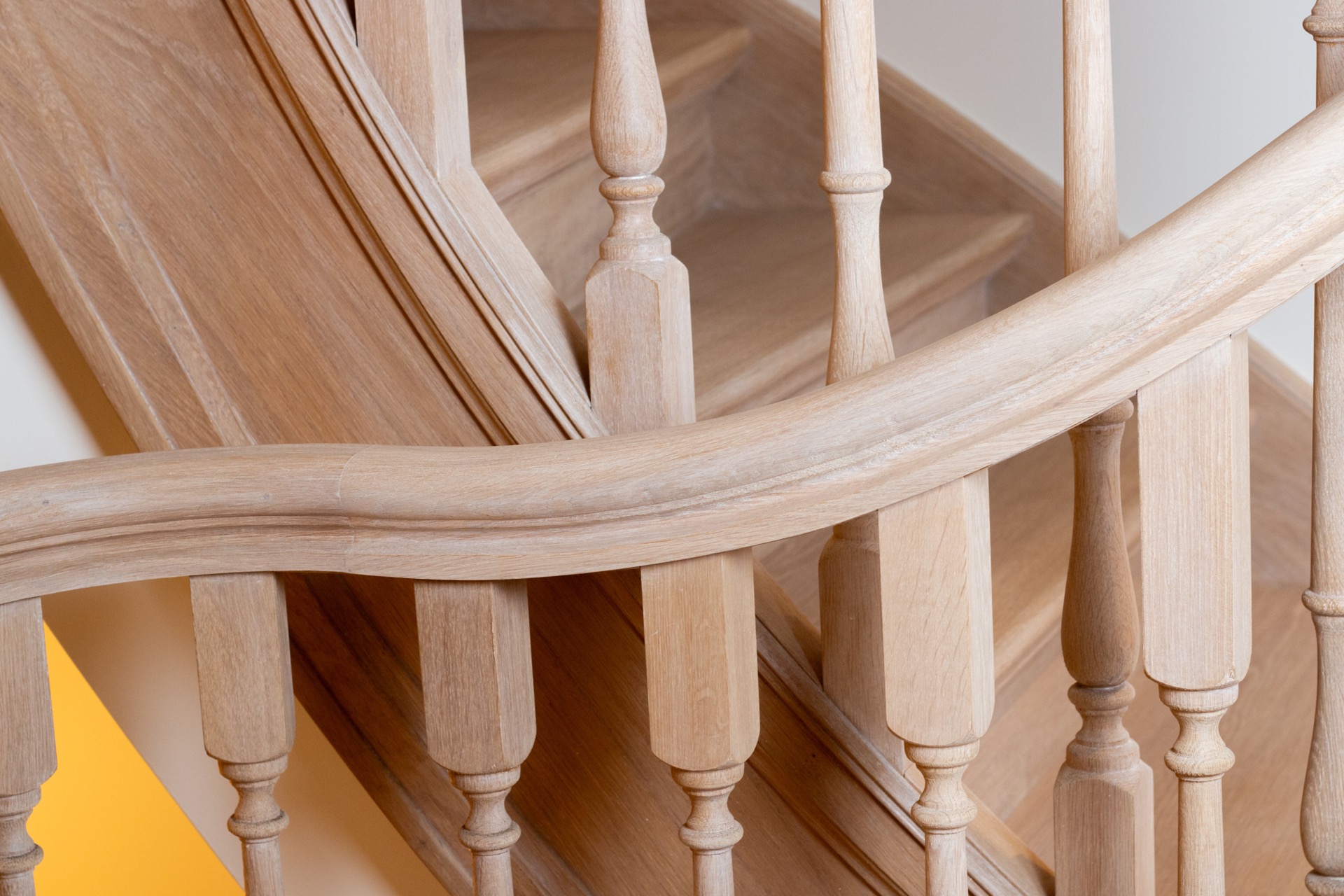
NEW 2026 Jubileum Edition The Best Interior Designers Benelux
Order Now €125