








Classic wooden staircase with turned balusters, wrong pieces, and refined rail detailing
The handrail catches the light first, then the turned balusters below it. Their repeated profiles set the pace of this classic wooden staircase, while the closed construction keeps the side surfaces crisp and contained. Wrong pieces guide the rail through the bends, so the curve reads as one continuous movement instead of a break in the line. It is a staircase built on visible joinery, shaped to be read from the hall as much as used every day.
A classic wooden staircase shaped by profile and rhythm
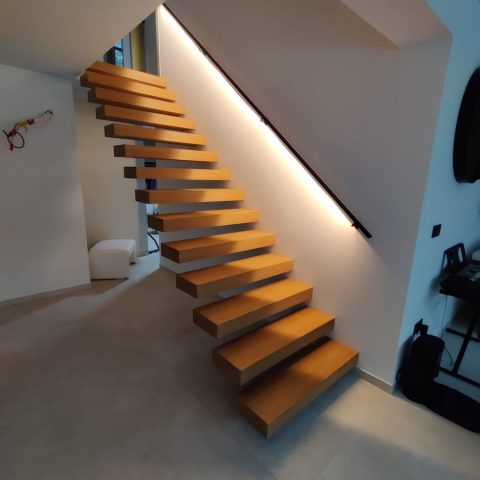
The massed wooden treads give the staircase its weight, and the profiled stringers reinforce that sense of order. Each edge is traced with classical moulding, the kind of detail that becomes clearer as you move up or down. The effect is not loud. It comes from repetition: tread, rail, baluster, post. Together they form a staircase with wrong pieces that keeps its curve steady through the turning point and avoids any abrupt transition in the handrail.
From a distance, the construction reads as a closed staircase design with a clean, enclosed side profile. Up close, the woodwork shows more information. The stringers carry fine profiling, the rail has the same language, and the newel post repeats it with a capped top. That consistency gives the staircase a measured appearance, but the details still stay warm to the eye because the grain and the turned forms remain visible.
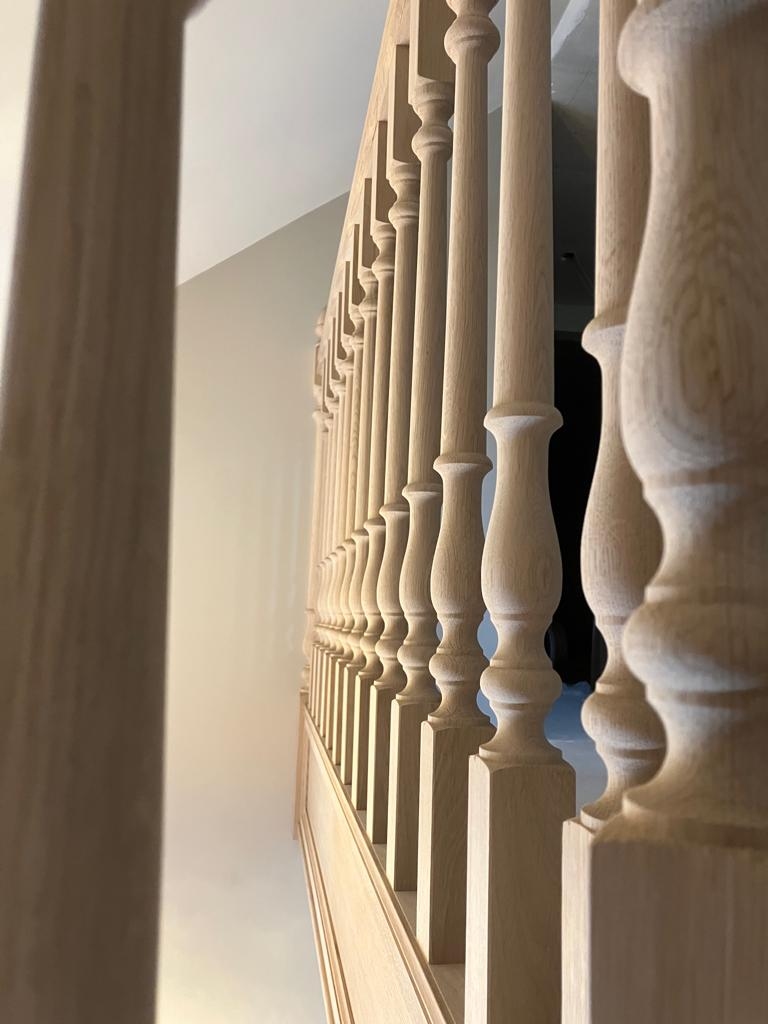
Turned balusters and rail detailing at the centre
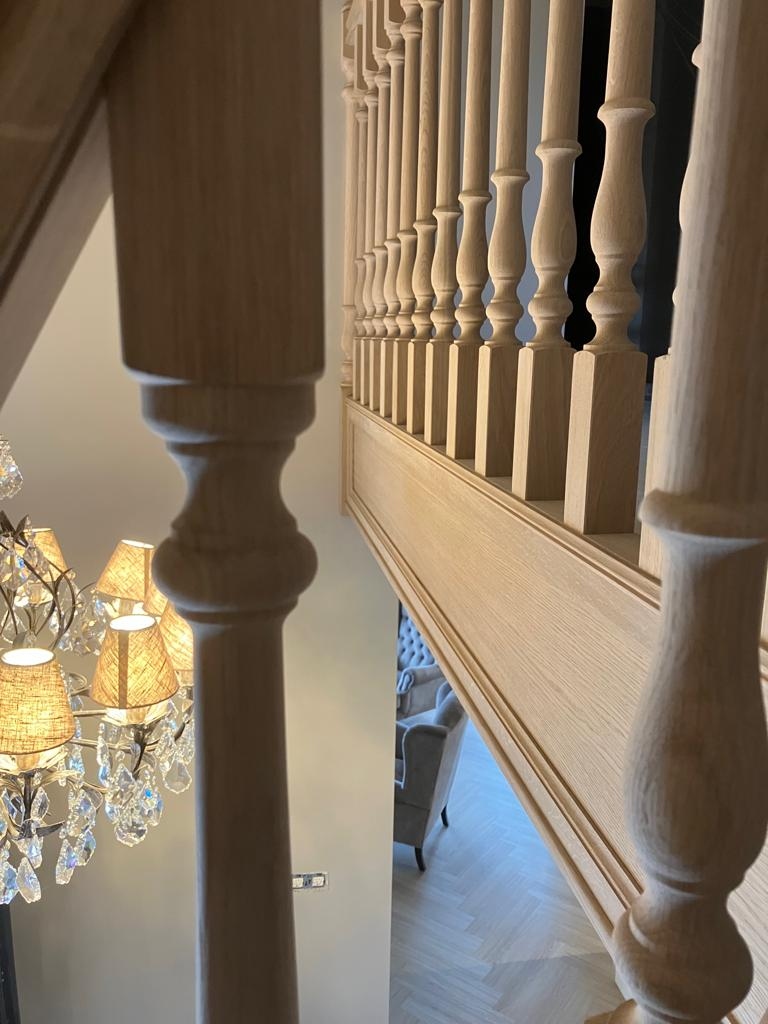
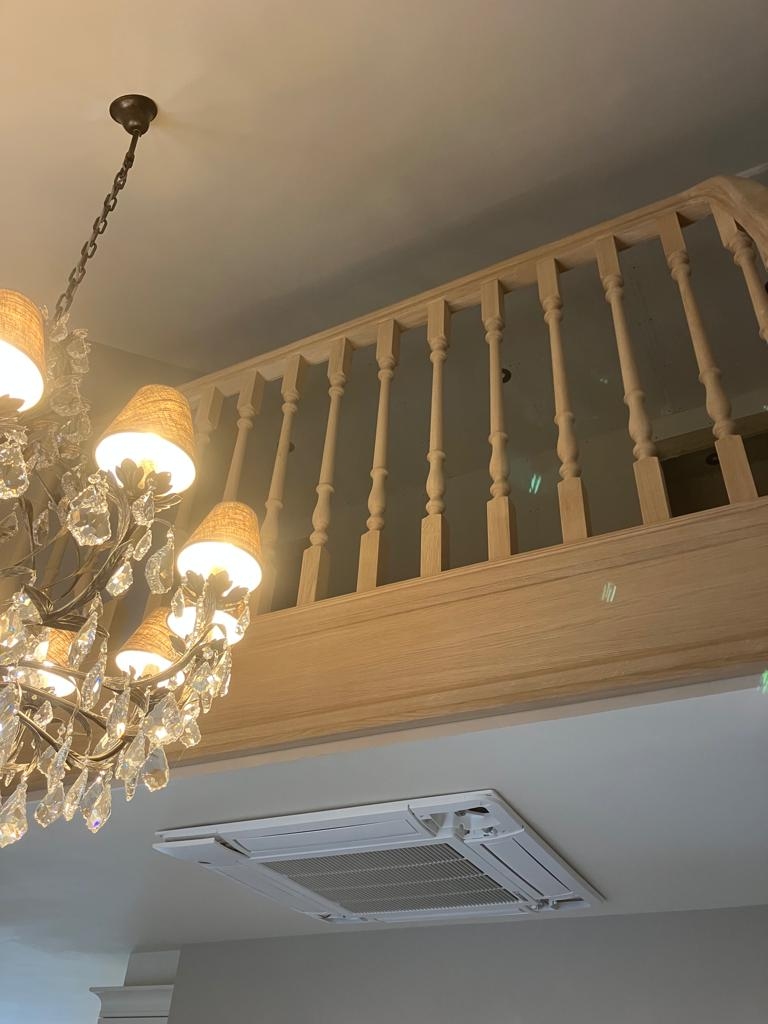
The balustrade is where the craft becomes easiest to read. Turned balusters stand in a regular sequence, each one echoing the next without feeling mechanical. Their rounded sections catch shadow along the shaft, while the handrail above them keeps a firmer line. This classic stair balustrade with turned balusters is not treated as a separate element; it is integrated into the whole stair assembly, with the same profile repeated in the handrail and newel post detailing.
Wrong pieces that let the rail turn cleanly
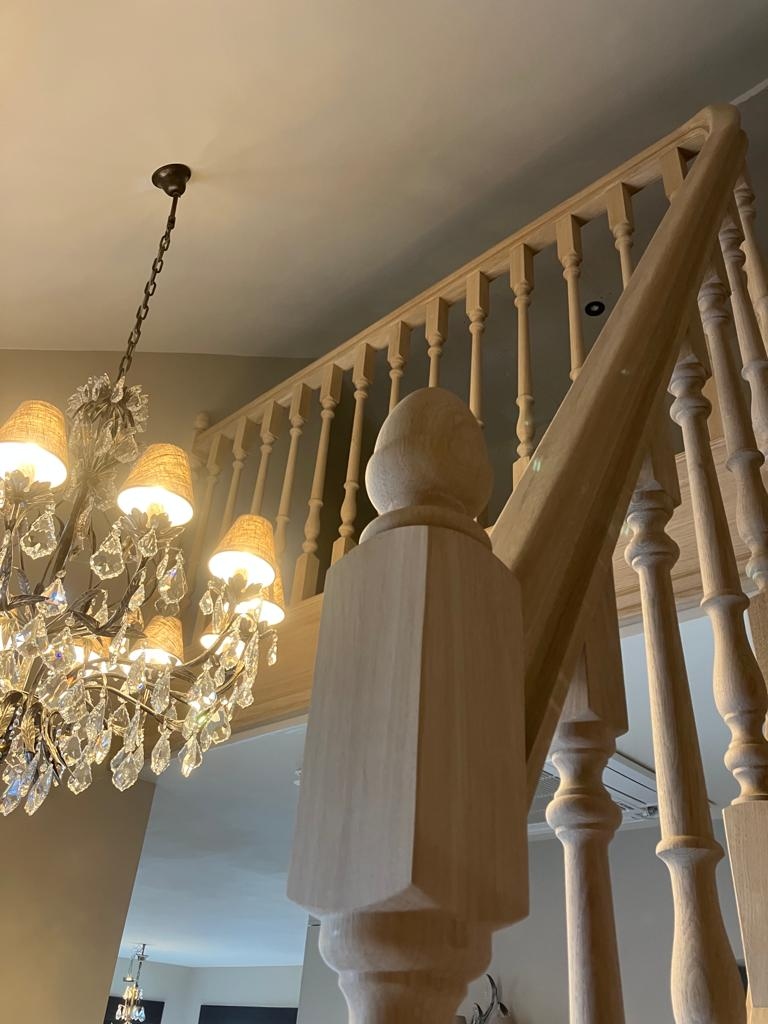
The wrong pieces are the small but telling parts of the staircase. They allow the handrail to continue through the bend and follow the geometry of the stair without a visible interruption. In this project, that connection is part of the visual interest. The turning sections are not hidden. They are shaped to be seen, and their curved form gives the handrail a more precise transition where the staircase changes direction.
That same attention to the rail line is visible in the newel post. The post carries a sculpted top and the same classical detailing as the balustrade, so the junctions feel deliberate rather than added later. It is the sort of woodwork that depends on proportion more than decoration. A slight shift in profile, a rounded shoulder, a carved edge: these are the details that hold the composition together without overstatement.
Material, light, and the stair hall as a setting
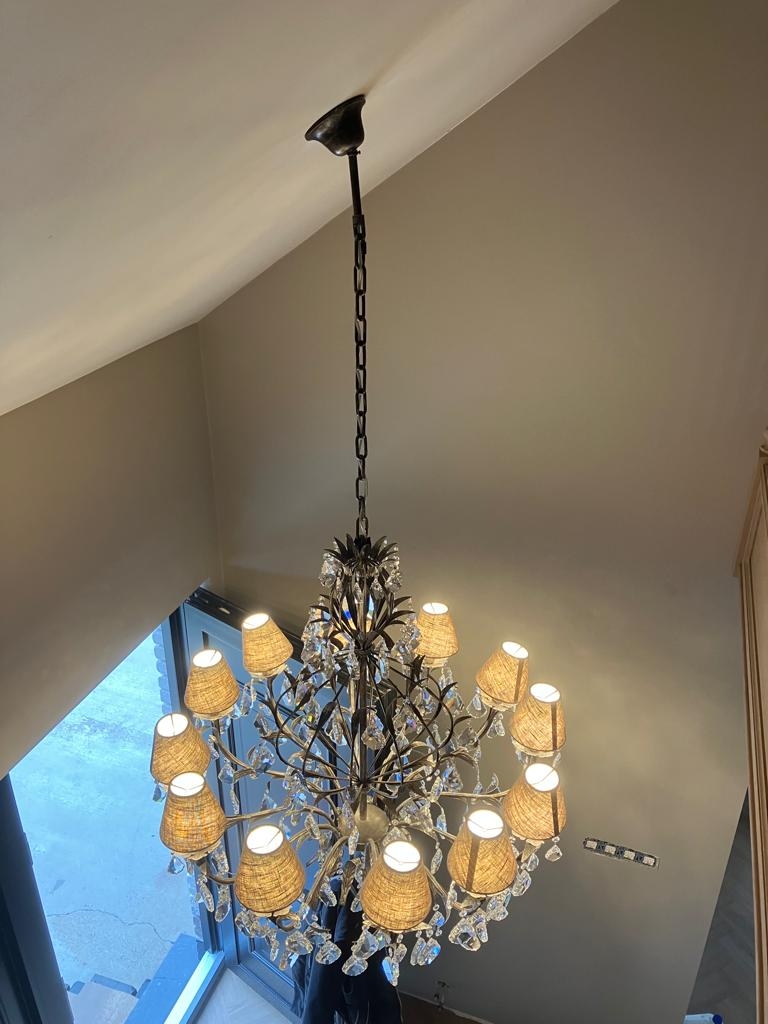
The stair hall adds another layer through the chandelier in stair hall lighting. Its glass elements and metal suspension bring a vertical point of brightness above the wooden structure. Seen against light walls and a restrained ceiling, the fixture draws the eye upward and gives the stair void a clear centre. The result is theatrical in the best sense: not staged, but framed by the staircase itself and by the way the light falls across the rail.
The chandelier does not compete with the timber. Instead, it sharpens the reading of the staircase. Reflections in the glass sit above the matte surfaces of the wood, and that contrast helps define the hall’s depth. The closed side panels, the turned balusters, and the upper run of the rail all become easier to follow because the fixture gives the eye a point of reference in the space.
A staircase that stays practical while carrying detail
Even with its classical profile work, the staircase remains straightforward to use. The treads are solid, the rise is regular, and the rail gives a clear grip along the route. Nothing about the detailing interferes with the daily movement up and down. That is where the project is strongest: the classic wooden staircase carries ornament through structure, not around it. The craftsmanship is visible, but it also supports the way the stair is used.
Looking along the balustrade, the repetition of the turned spindles and the profile on the stringer create a steady reading line from bottom to top. It is a controlled composition, built from wood, shadow, and a series of well-fitted joints. The staircase with wrong pieces turns that corner without losing its line, and the handrail and newel post detailing keep the whole assembly coherent in form rather than in effect.
In the stair hall, the combination of wood, glass, and metal is enough to carry the room. The chandelier hangs above the flight like a marker, while the staircase below remains the main figure. Every visible part — the balusters, the curved rail connections, the profiled side panels, the massed treads — contributes to one clear reading: a classic wooden staircase made to be seen from the hall and experienced one step at a time.
Staircases portfolio
Classic interior woodworking projects
Balustrades and handrail details
Want to see more of Trappenmakerij Wim Van Loon? View the page of Trappenmakerij Wim Van Loon for even more great projects and company information.



NEW 2026 Jubileum Edition The Best Interior Designers Benelux
Order Now €125