






Black classic staircase in a monumental stairwell
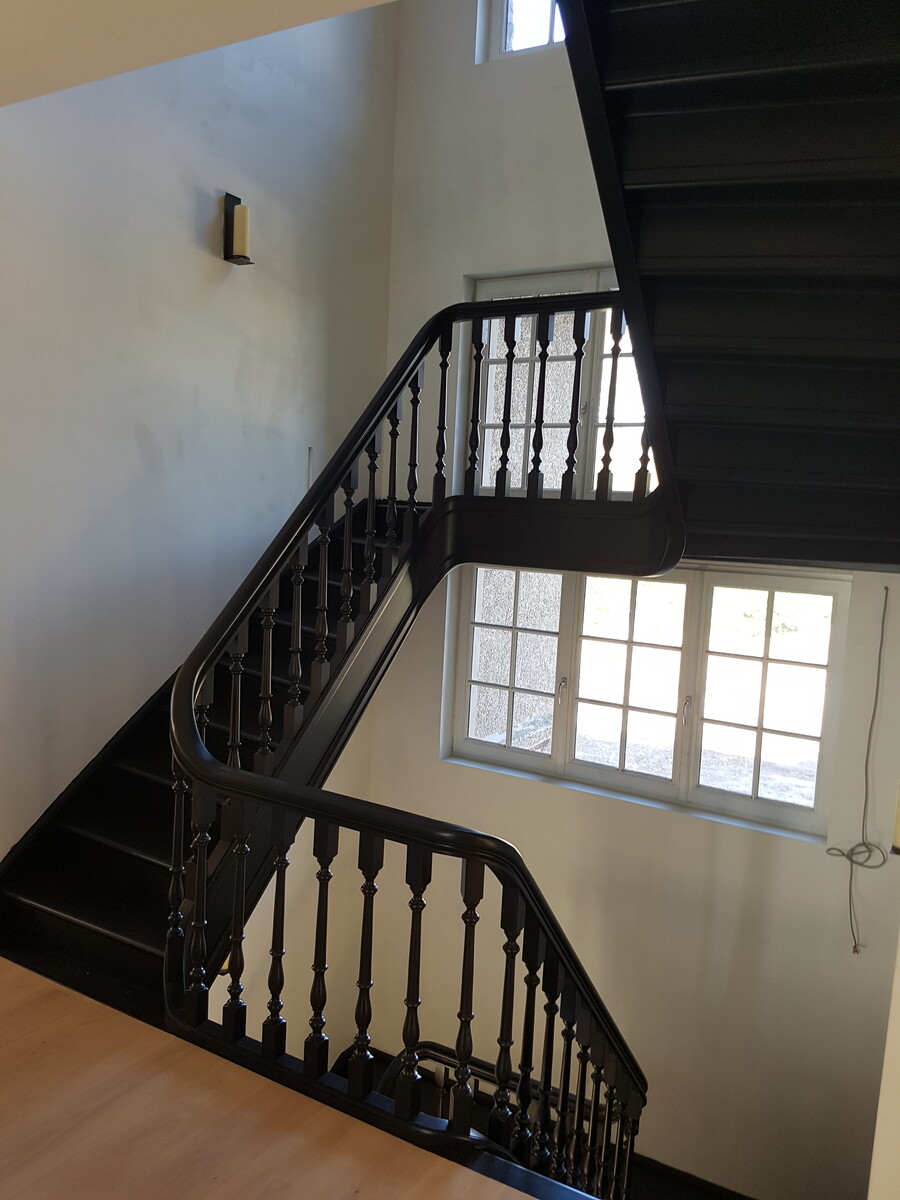
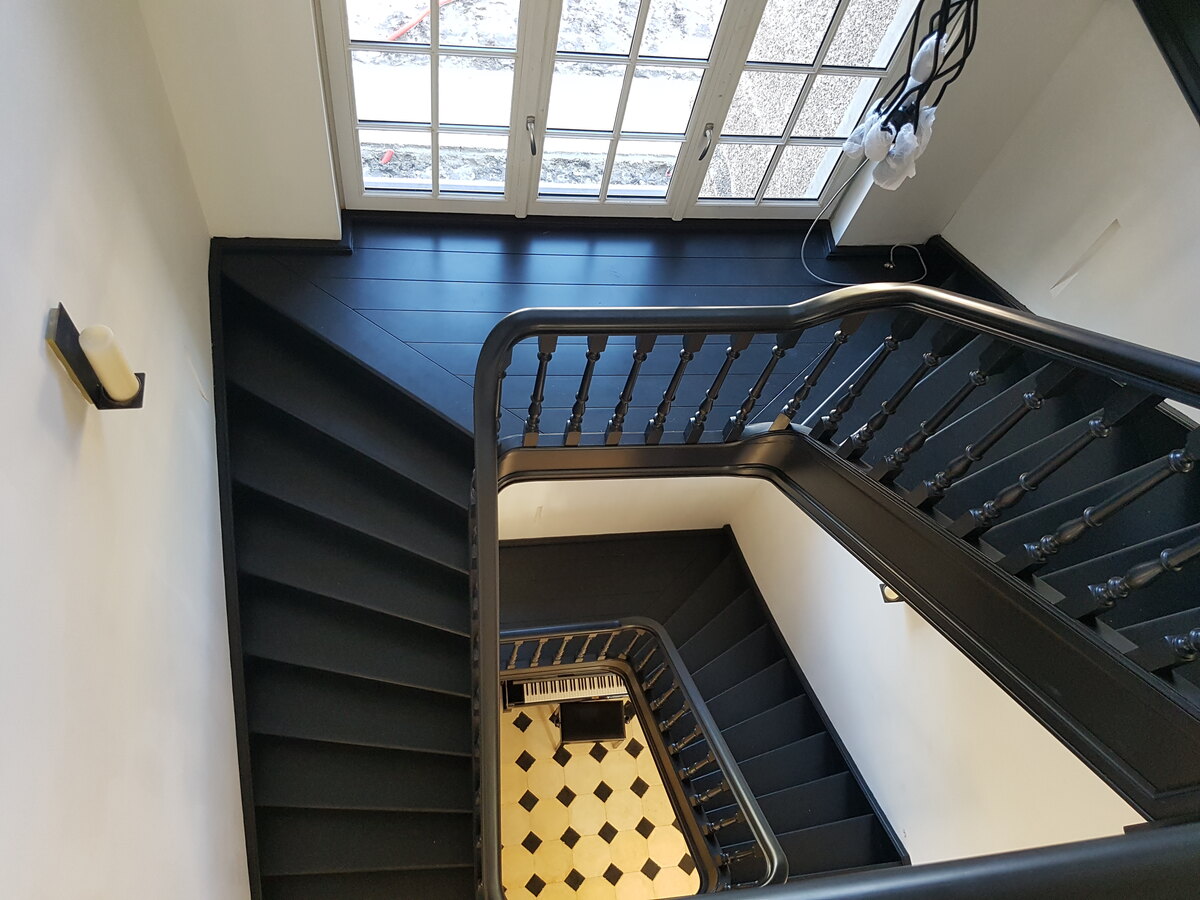
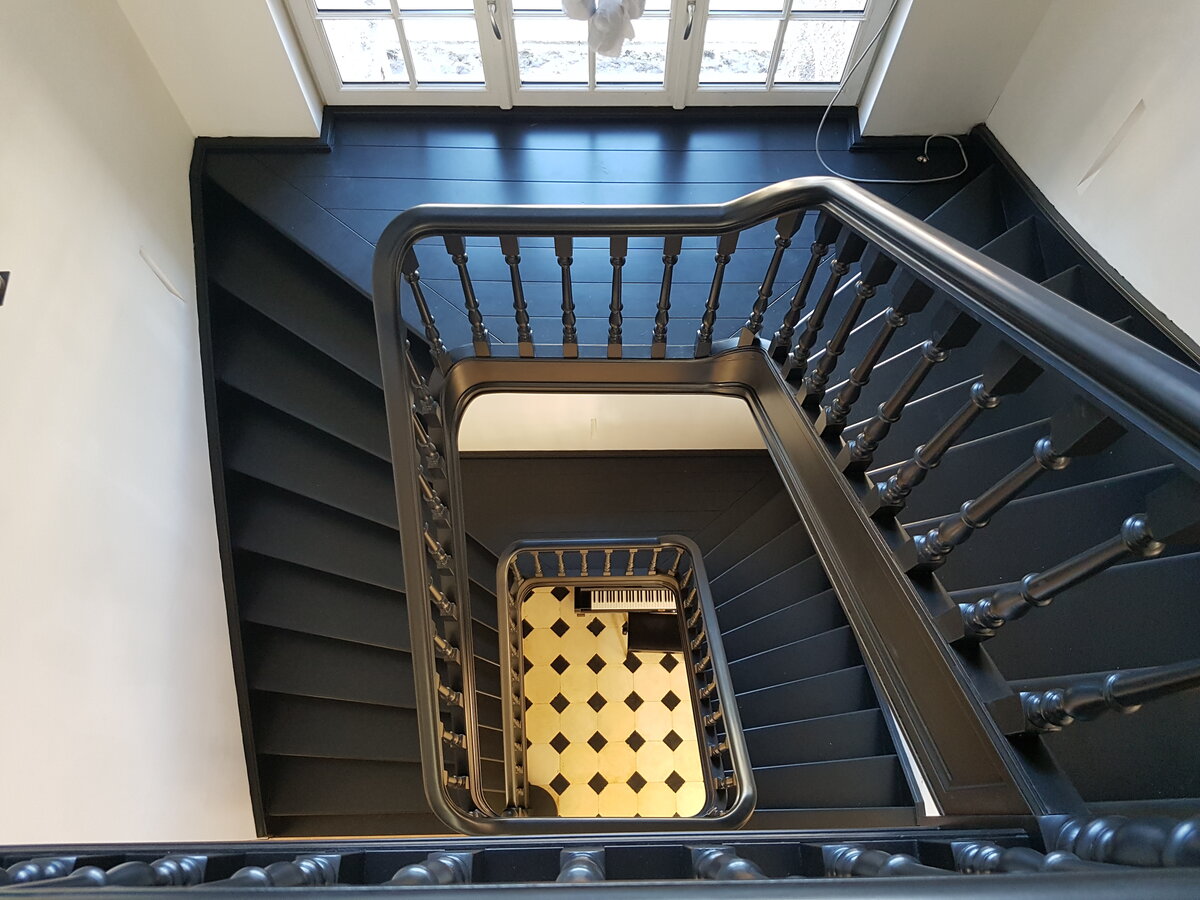
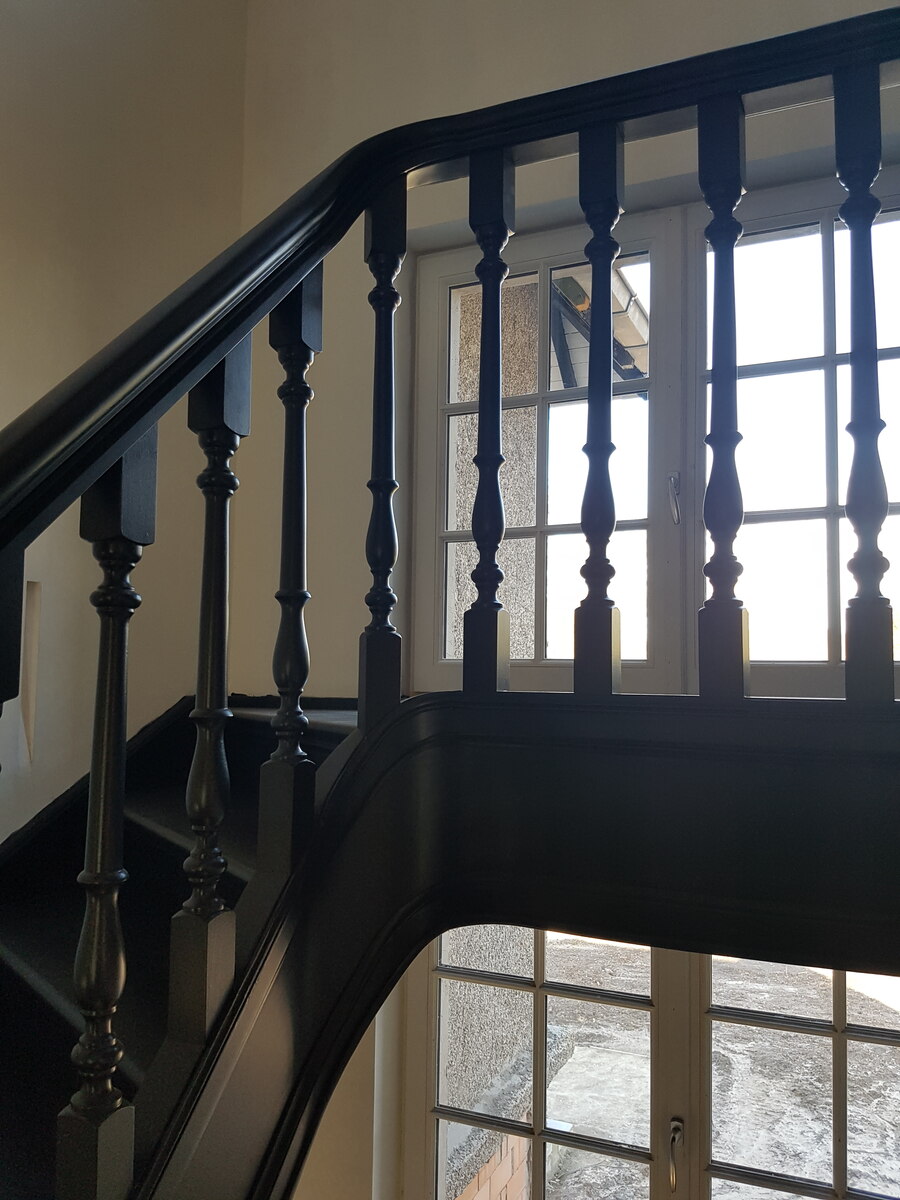
A black classic staircase sets the tone as soon as the eye enters the stairwell. The dark finish pulls the eye upward, past the curved handrail and the turned balusters, toward the upper levels of the house. In the wide opening, the staircase reads as one continuous route rather than a single flight, and the daylight around it keeps the heavy profile from feeling closed in.
A staircase that carries through several levels
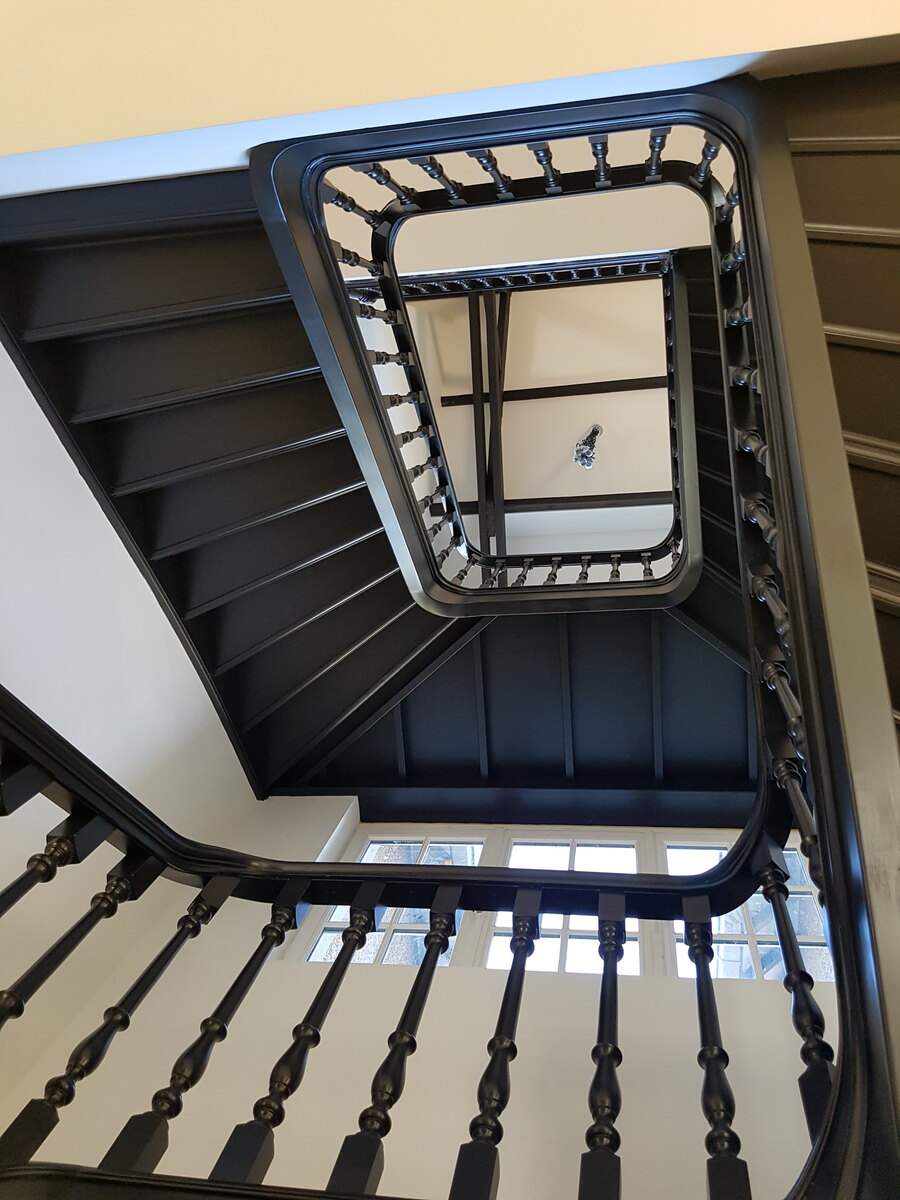
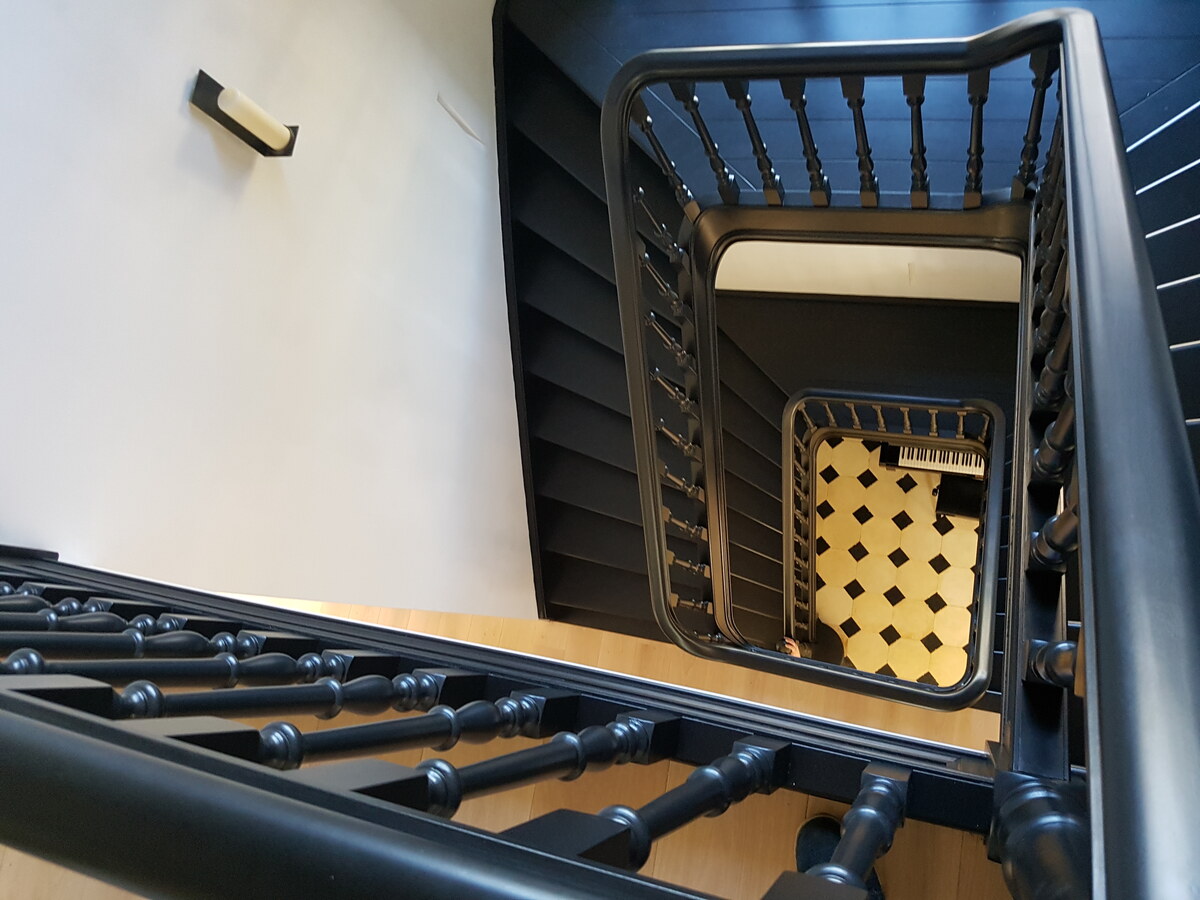
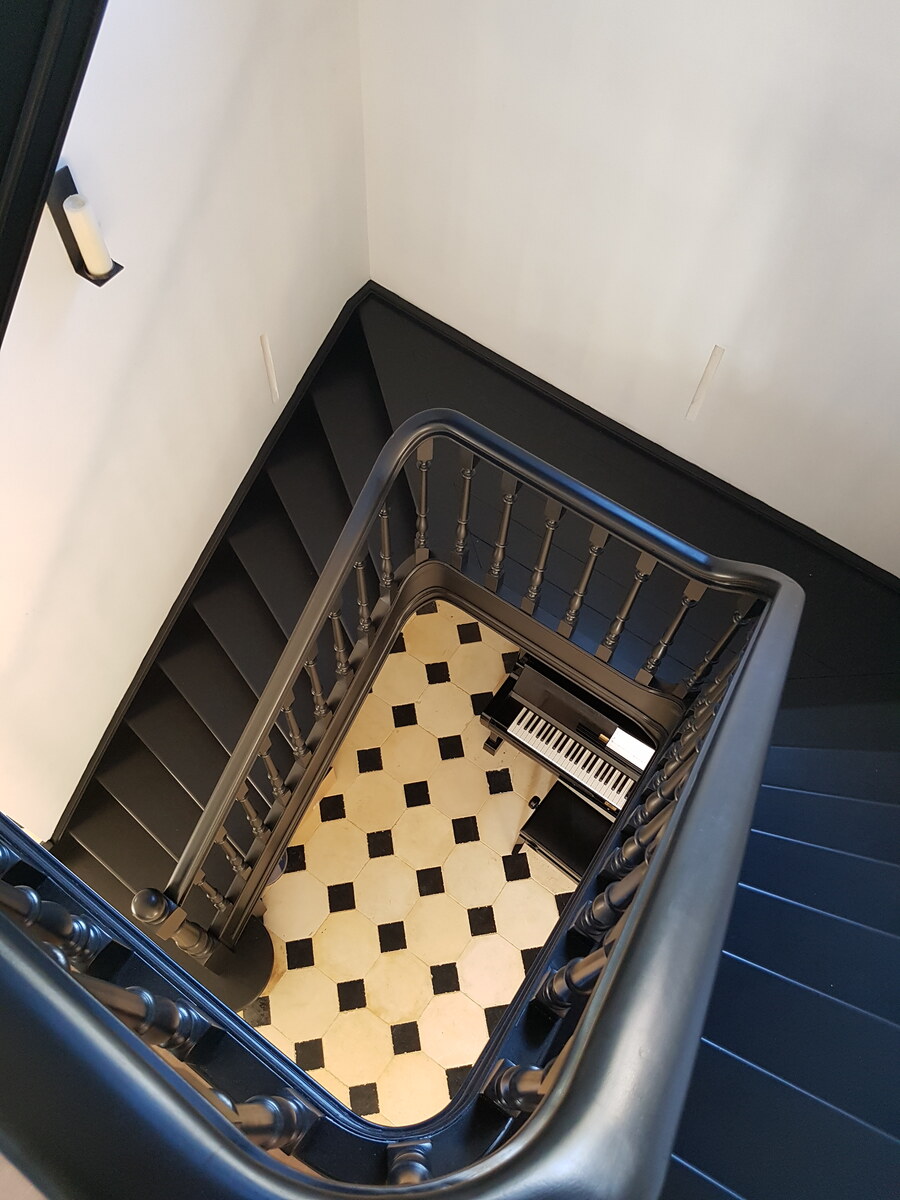
The staircase was designed for a monumental stairwell that spans multiple floors. Seen from different angles, its line changes from a broad overview to a tighter reading of the handrail and spindles. The black classic staircase works with the height of the space rather than against it. Its dark painted surface gives the timber a defined edge, while the open view through the stairwell lets light reach the steps from above and behind.
From the lower level, the staircase appears almost framed by the opening around it. A diamond pattern floor near the staircase opening adds another layer underfoot, catching the light in small shifts of tone. That pattern sits close to the stair void and strengthens the sense of transition between floor and stair. The result is a classic wooden staircase that feels anchored in the room without flattening the volume around it.
Design details shaped by hand
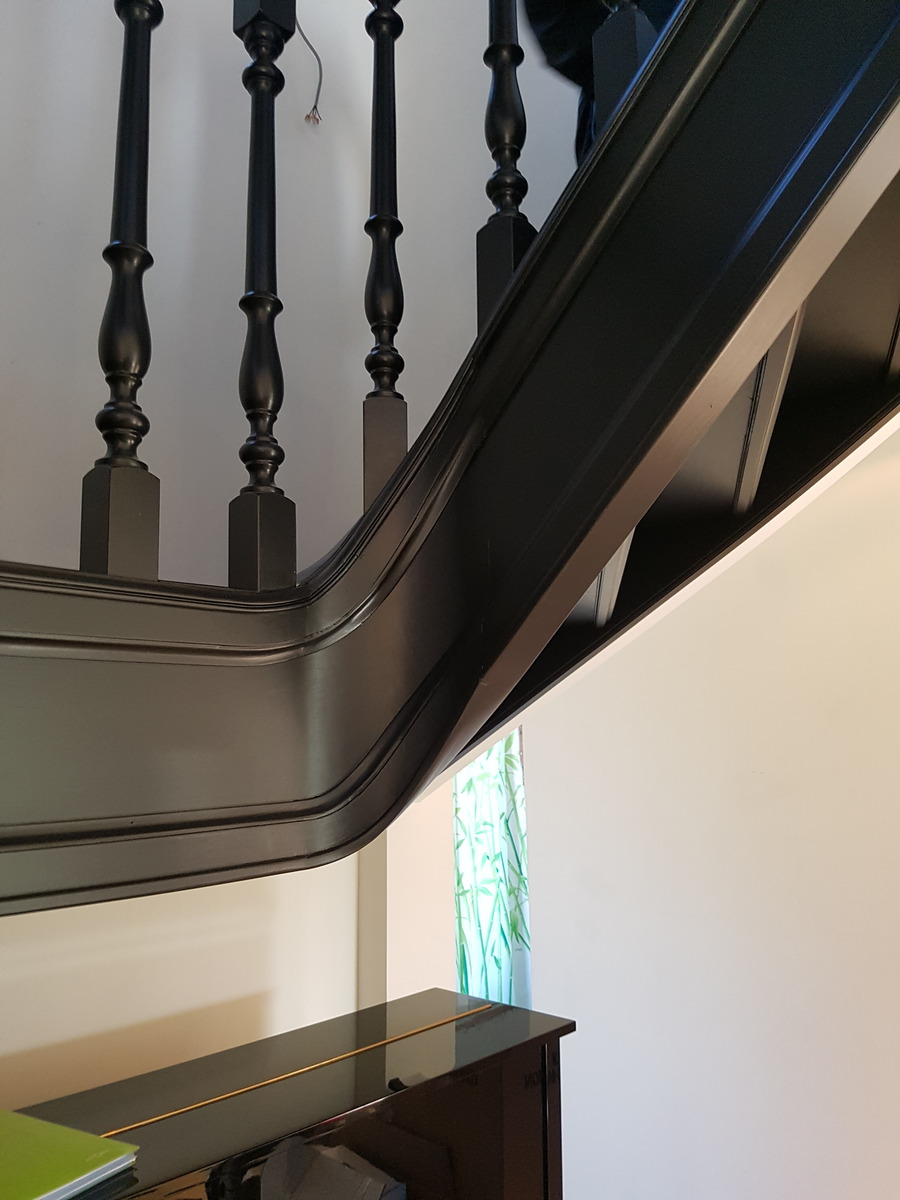
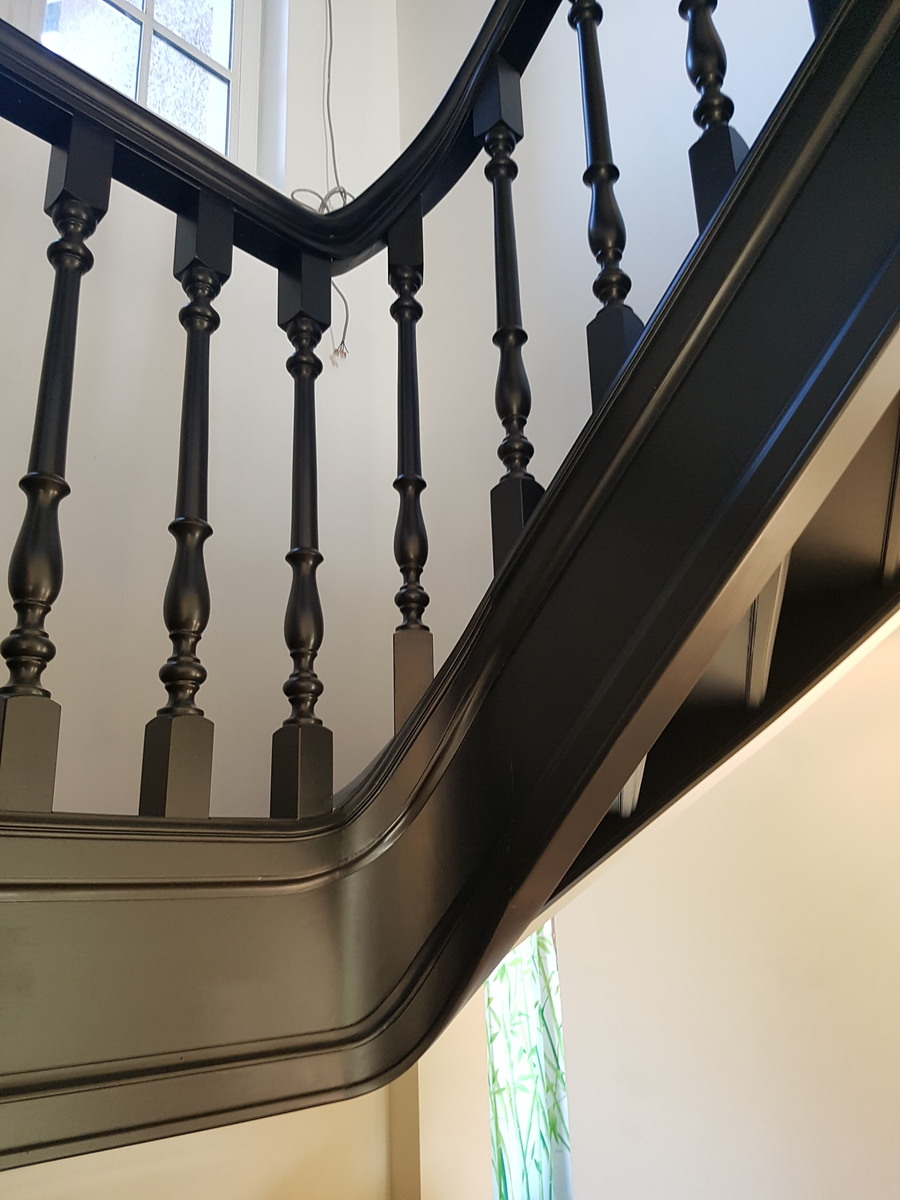
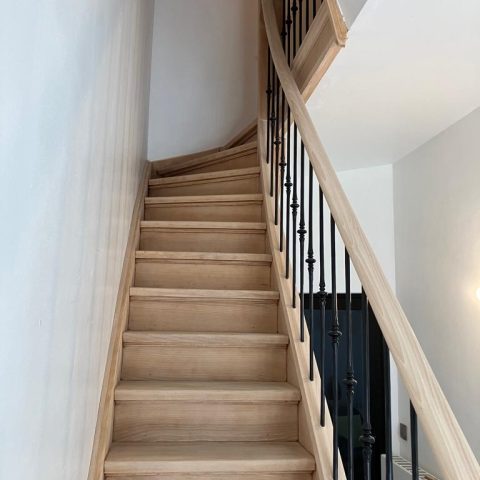
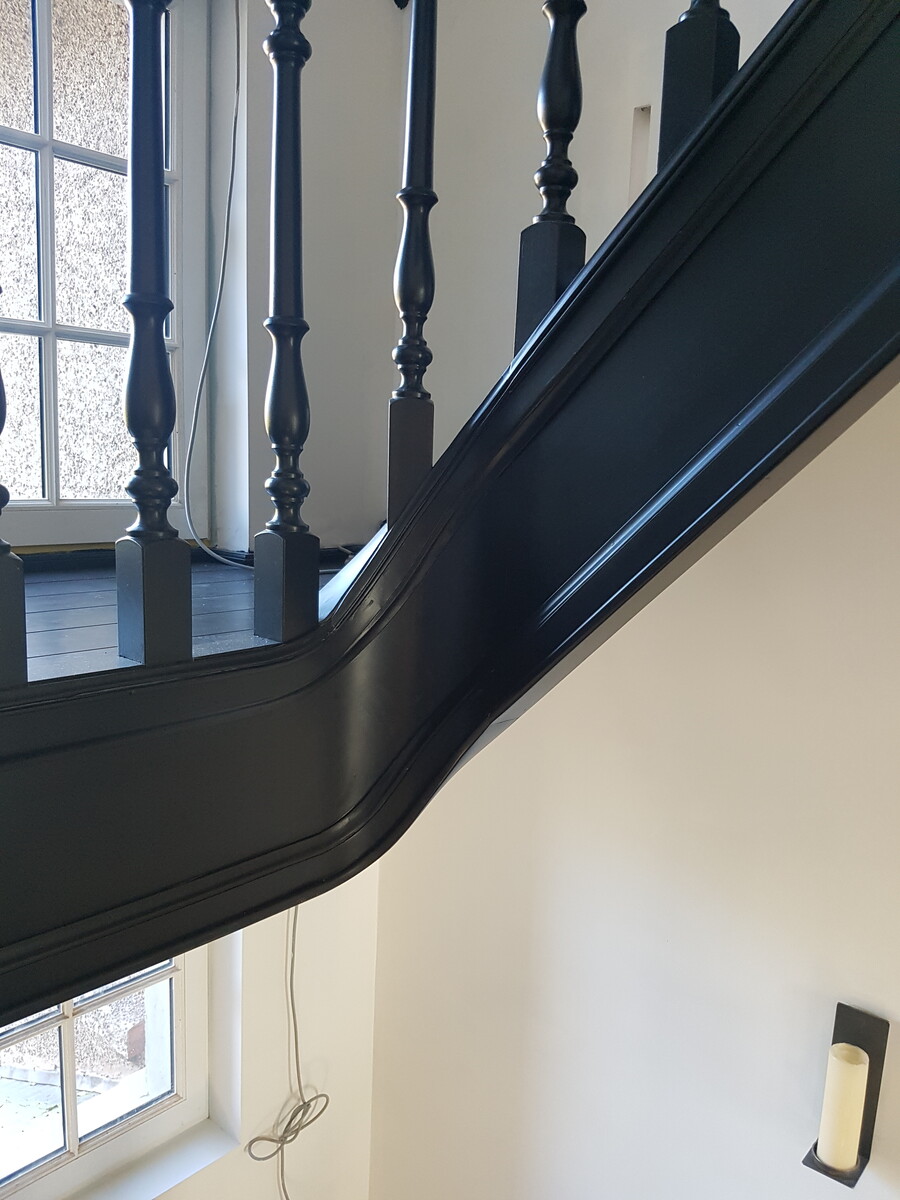
The construction is where the piece becomes especially specific. The stair sides are decorated with applied mouldings, which give the long runs a more articulated edge. Hand-turned balusters bring a clear rhythm to the railing, and the curved handrail follows the movement of the stair with a steady line. Nothing is left as a straight repetition; the handrail bends, the balusters turn, and the whole composition keeps moving upward with the space.
Black finish, beech and classic proportions
The source material notes beech as the wood species, painted in a black finish. That choice gives the classic wooden staircase a dense visual presence, especially against the lighter daylight in the stairwell. The model is listed as Classic Plus, but what stands out first is the way the proportions are handled: the darker timber, the turned balusters, and the curved handrail all work together to keep the staircase readable from both close range and across the hall.
One of the most distinctive aspects is how the turning pieces follow the stair movement. The turning sections move with the stair itself, so the railing never feels cut off at the landings. On the close-up views, the balusters show their turned profile clearly, while the handrail carries a smooth arc above them. This is where the black classic staircase feels most crafted: in the transitions between straight run, curve, and landing.
Light, openings and the space around the stair
Daylight plays an active role here. The stairwell with natural light is visible in several views, with windows placed high enough to wash the upper parts of the stair zone. Light falls across the dark railing and picks out the curves in the handrail. It also softens the contrast between the black finish and the surrounding walls, which are kept dark enough to let the staircase remain the visual centre of the hall.
The opening around the stair is as important as the stair itself. A dark metal frame appears at the stair void in some views, and the rectangular outline helps define the gap in the floor. Seen together with the diamond pattern floor near the staircase opening, the frame gives the hall a layered reading: floor, opening, railing and upper light are all legible at once. That clarity suits the scale of the space and makes the staircase easier to read from afar.
What the eye notices first, and what stays after
The first impression is usually the contrast: black timber against daylight, curved railing against straight wall lines, turned balusters against the broad stair opening. But the longer the staircase is observed, the more its details start to separate themselves. The applied mouldings on the stair sides, the hand-turned balusters, and the way the curved handrail runs through the levels all give the piece its character. It is a black classic staircase that relies on proportion, movement and surface rather than decoration for its effect.
Because the stairwell is so open, each element has room to register. A close view of the balustrade shows the turning of the spindles; a wider view shows how the staircase holds the vertical space together; a higher viewpoint reveals the route across multiple levels. Those shifts matter. They allow the classic wooden staircase to be read as architecture, not just joinery, and they make the painted finish part of the spatial composition rather than a surface applied at the end.
Specifications
Model: Classic Plus
Style: classic staircase
Type: wooden staircase
Wood species: beech
Finish: painted black
Setting: monumental stairwell over multiple floors
Want to see more of Trappenmakerij Wim Van Loon? View the page of Trappenmakerij Wim Van Loon for even more great projects and company information.



NEW 2026 Jubileum Edition The Best Interior Designers Benelux
Order Now €125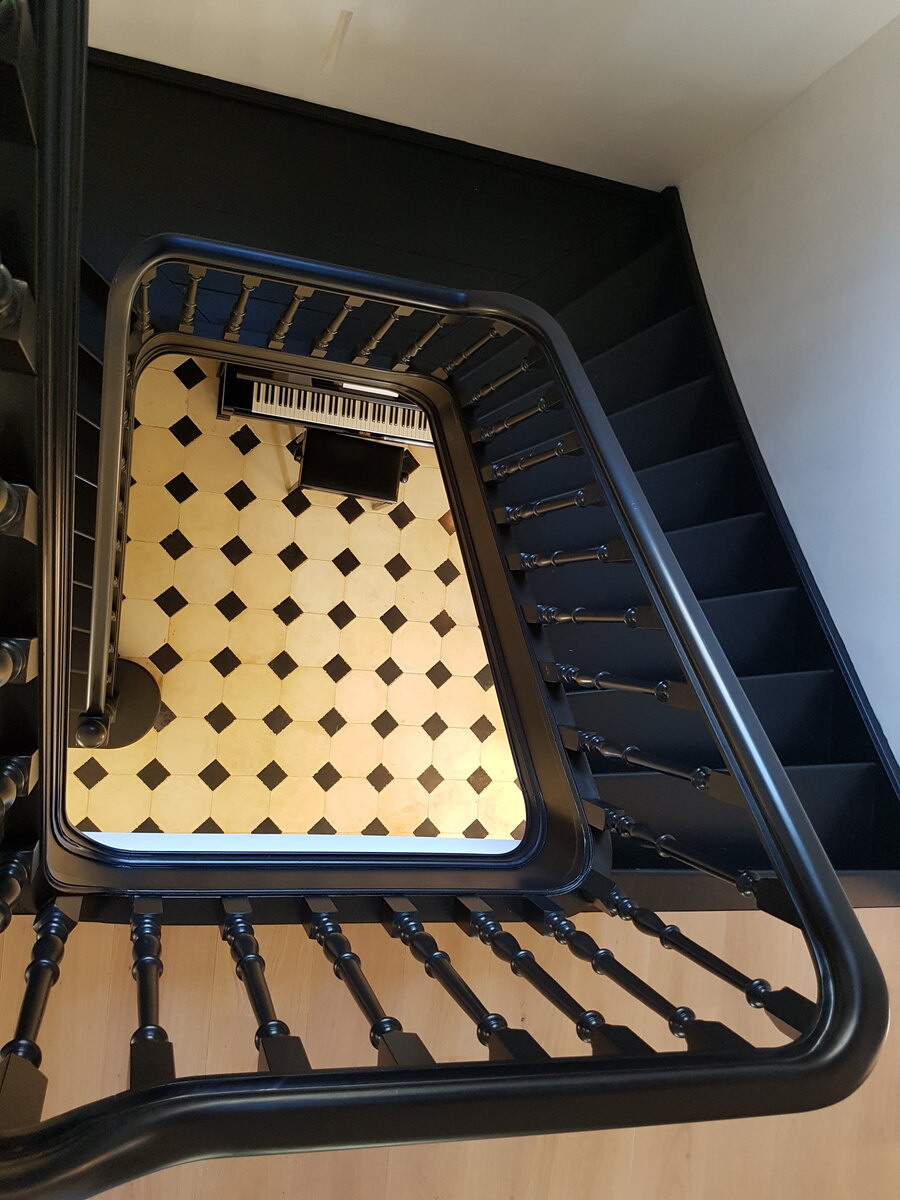
NEW 2026 Jubileum Edition The Best Interior Designers Benelux
Order Now €125