







Organic round dining table
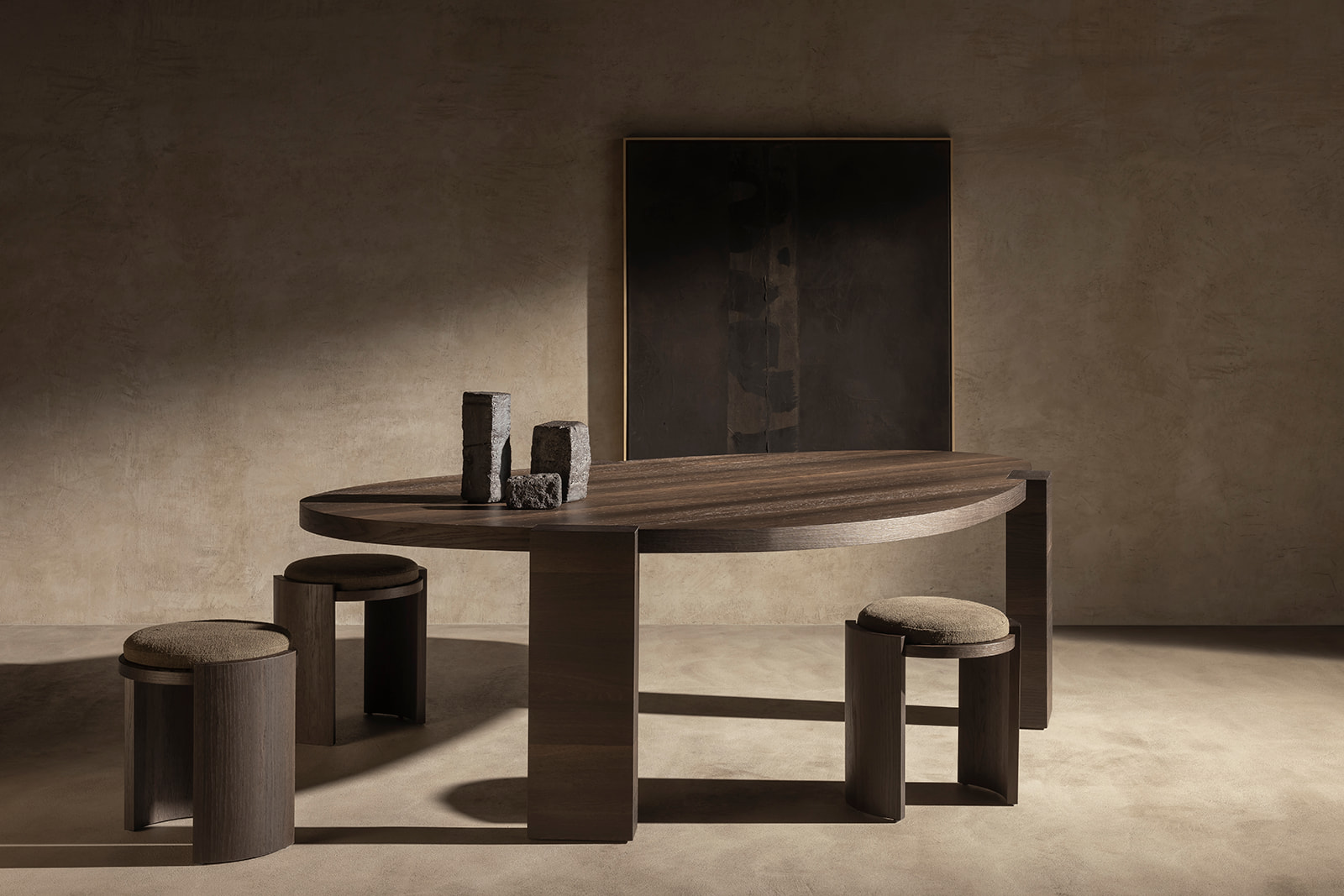
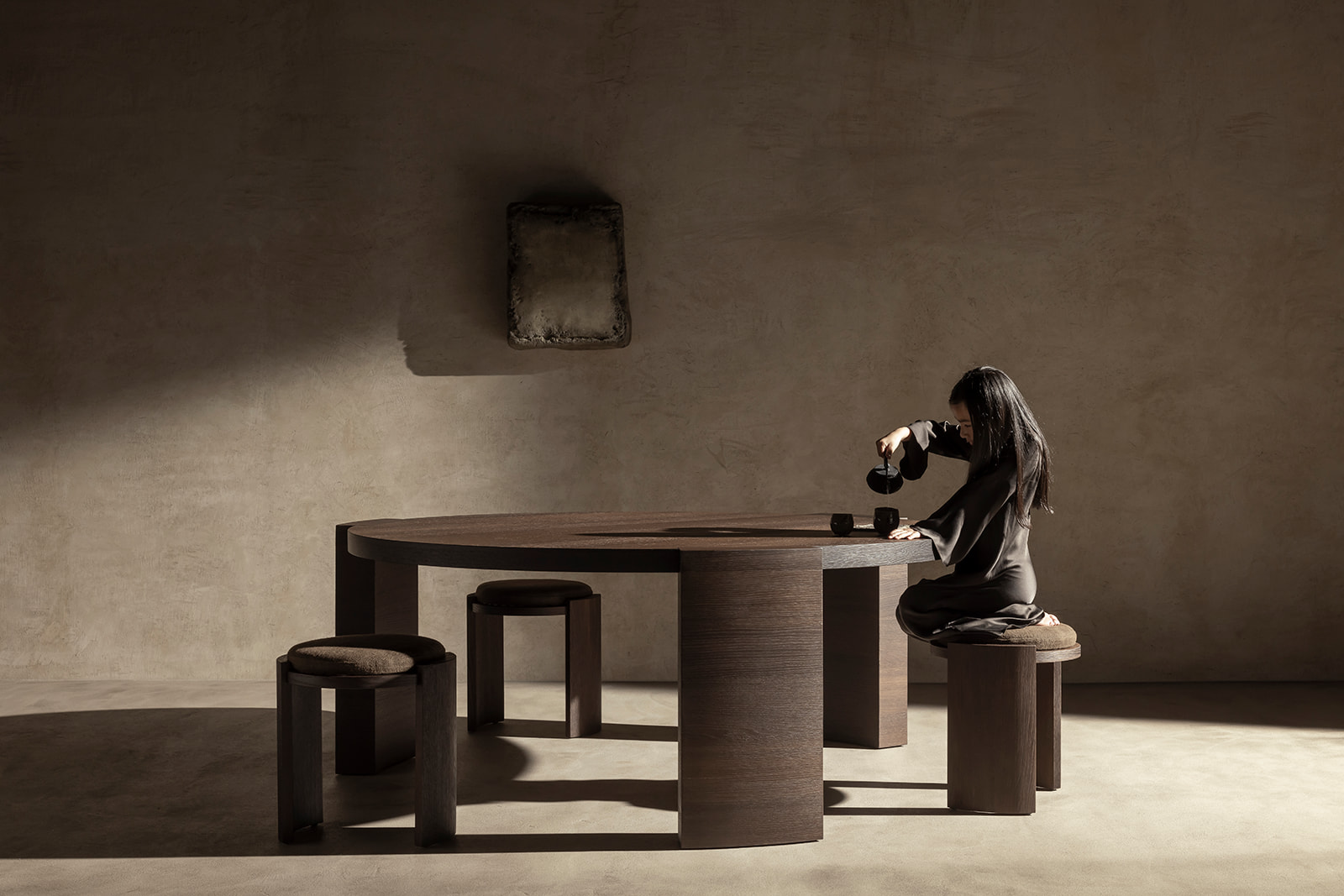
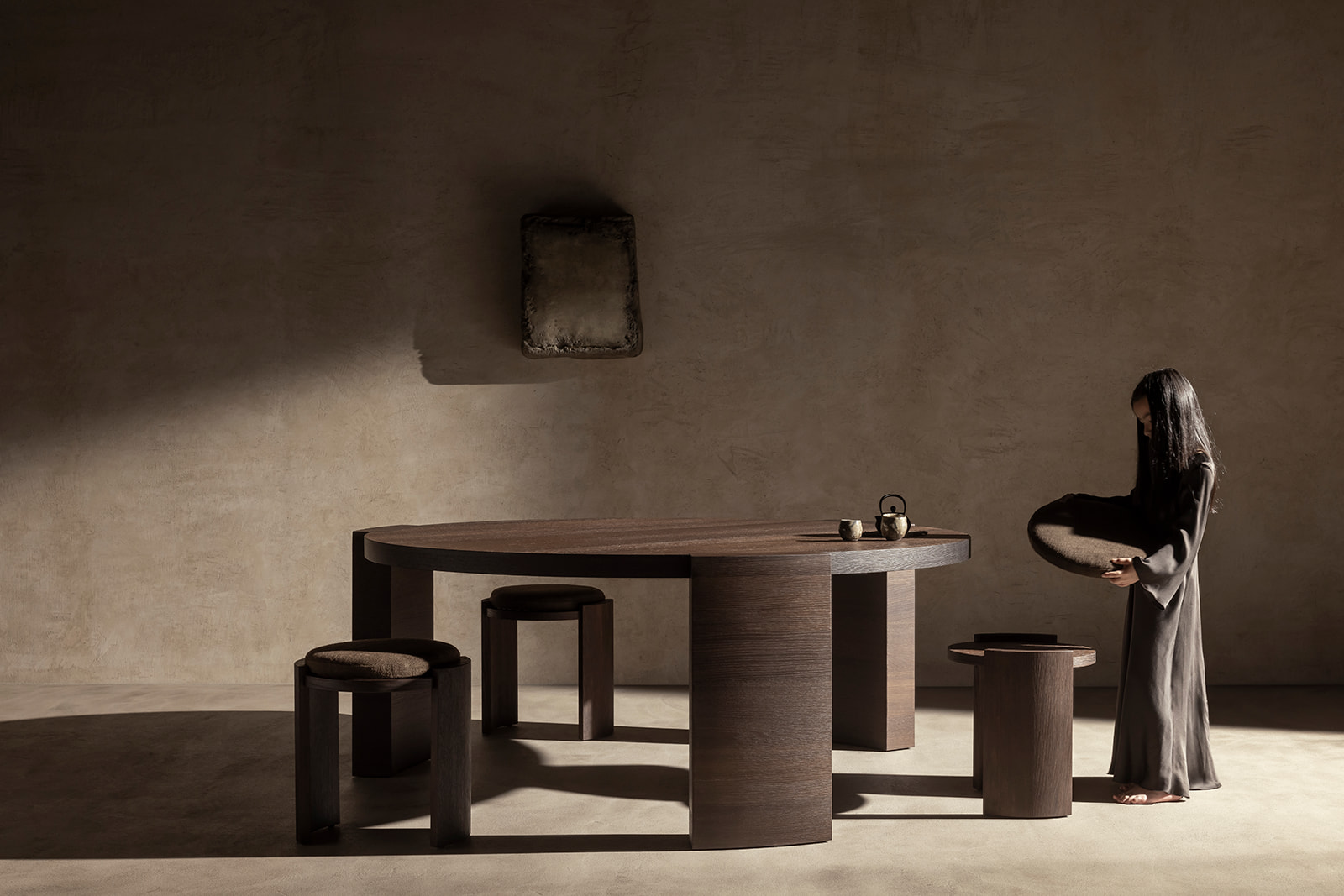
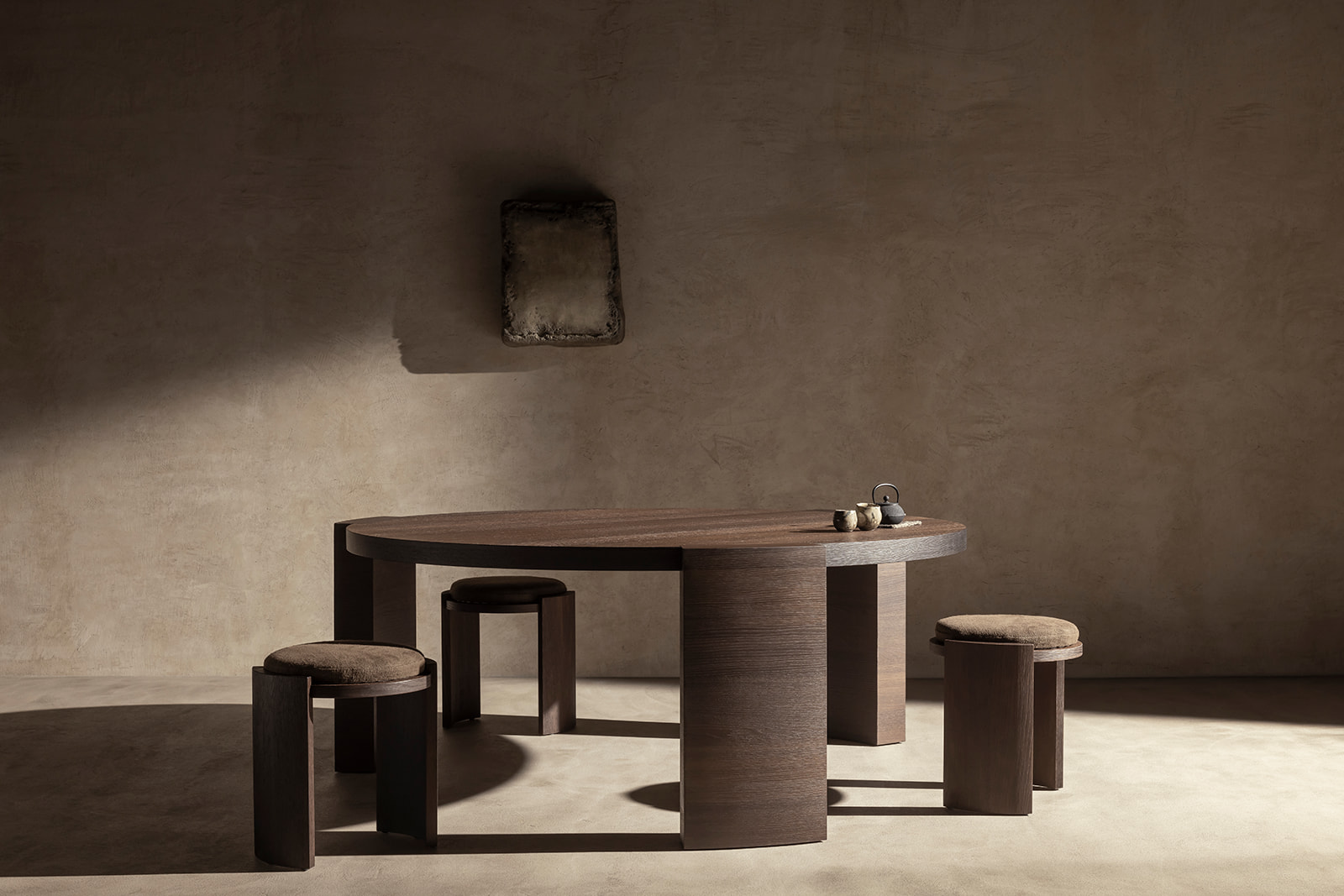
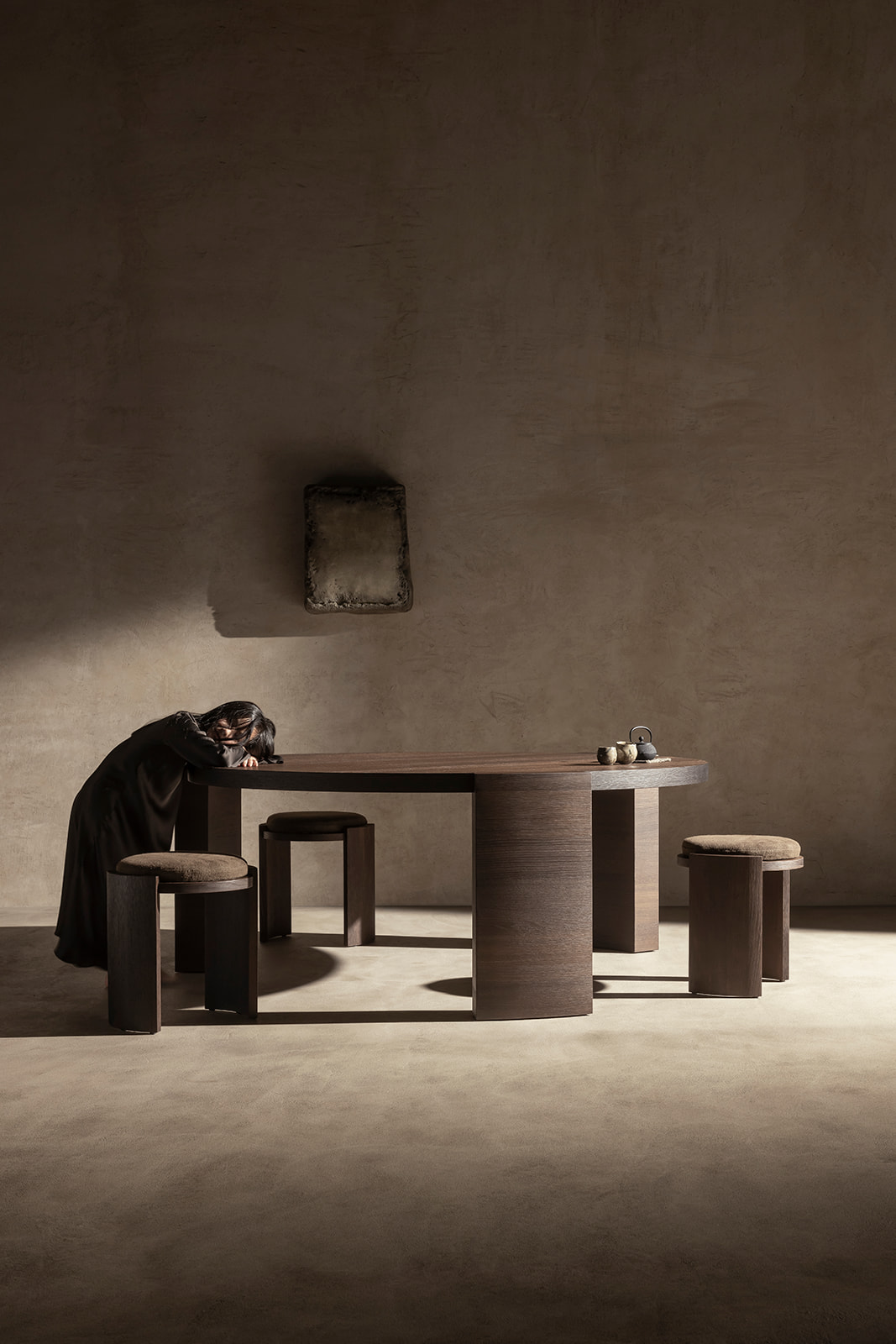
The organic round dining table sets the tone before the room has even settled. Its outline shifts between round and leaf-like, so the surface reads as soft rather than rigid, while the wood grain stays visible across the top and edge. In the images, the table sits in a concrete-look interior with strong shadows, and the open base keeps the form light on the floor. The same series can be combined across different heights and materials.
The surface does more than hold the eye
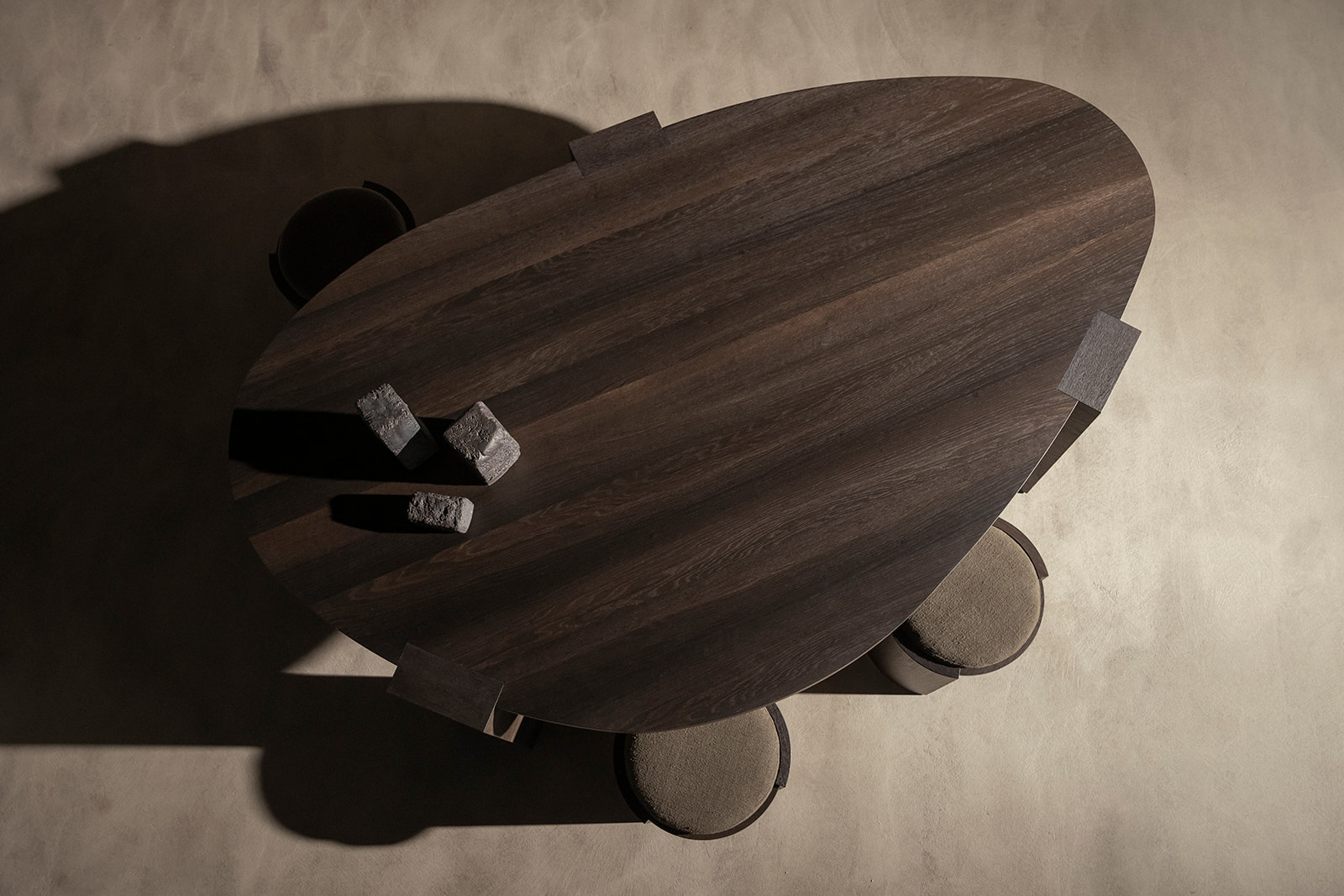
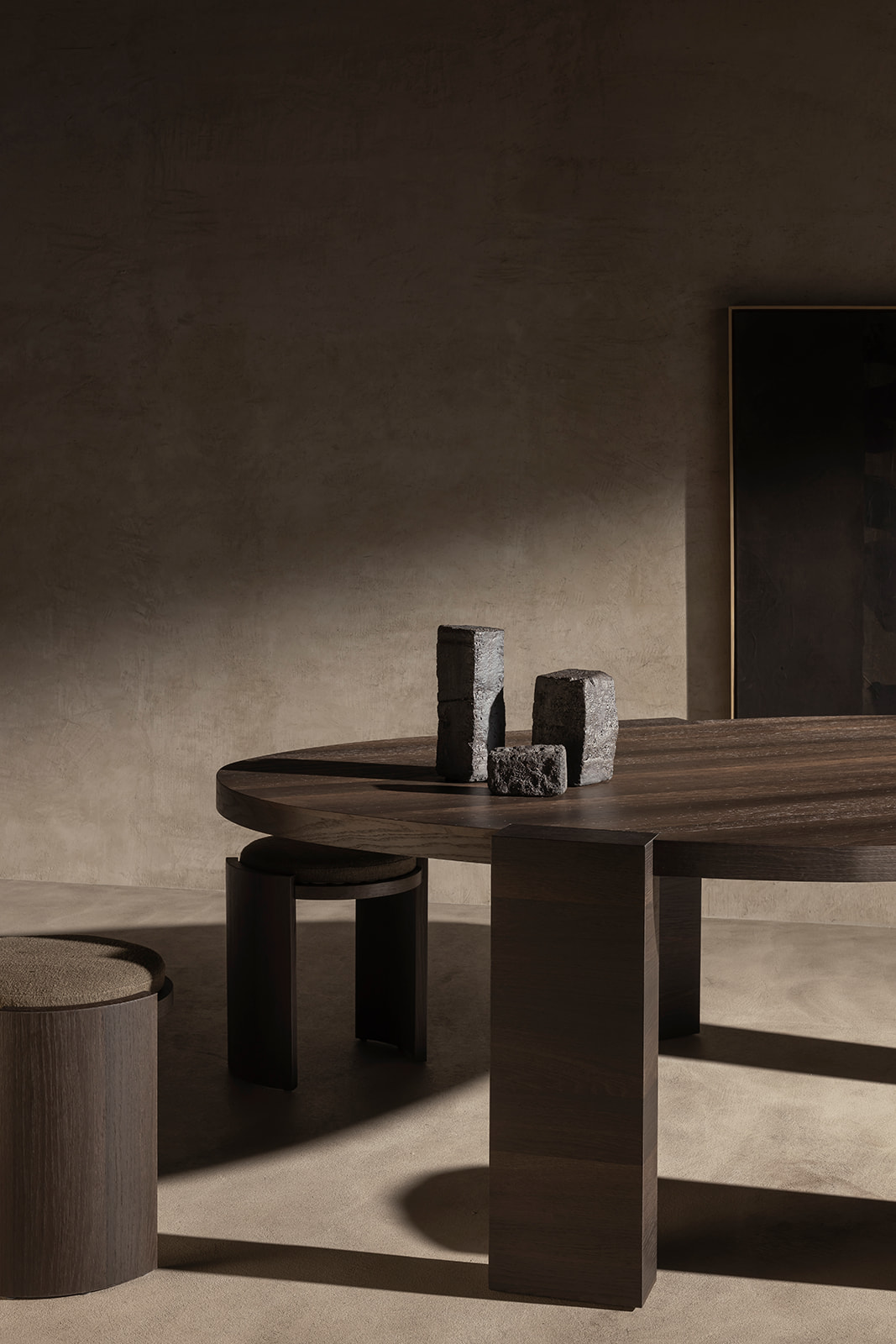
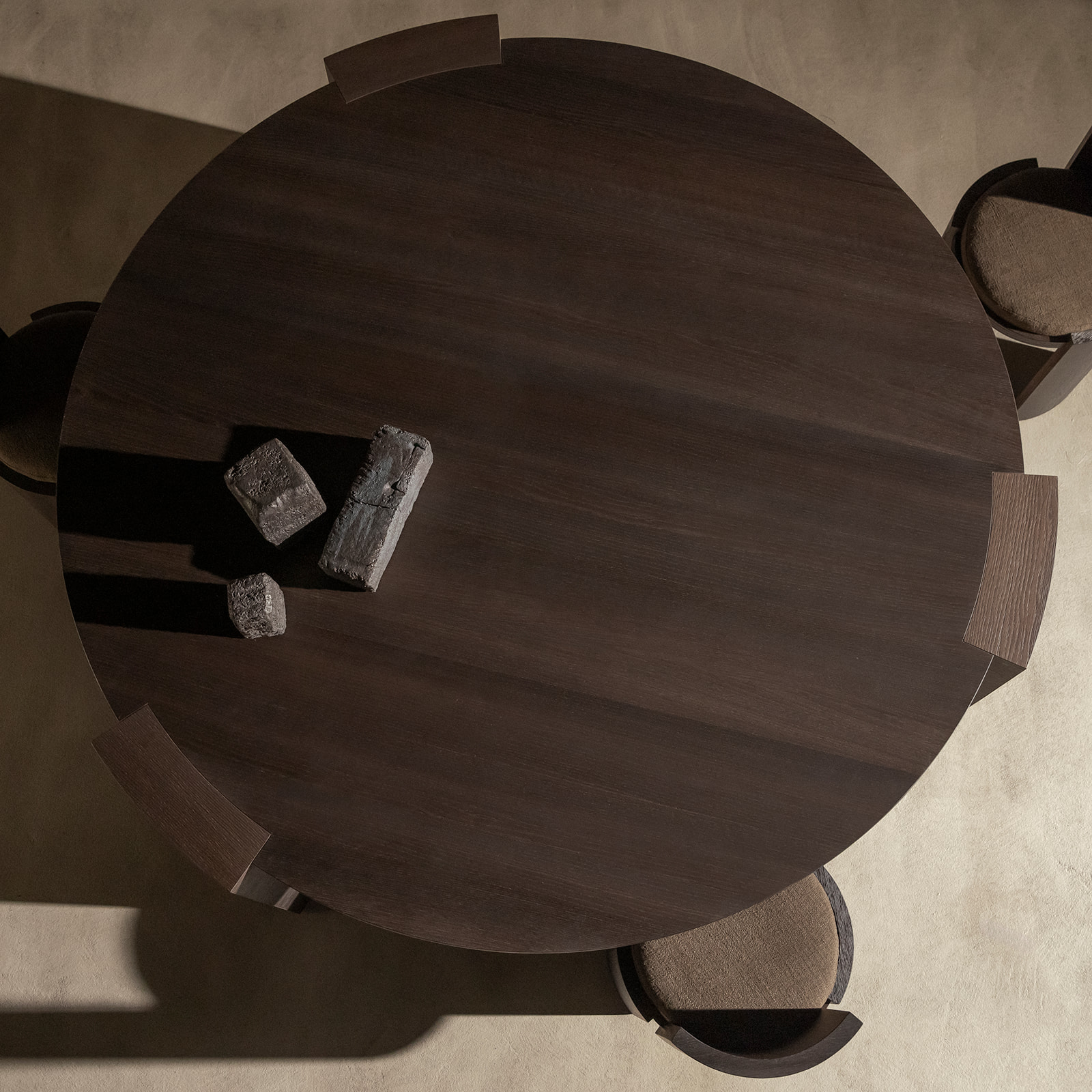
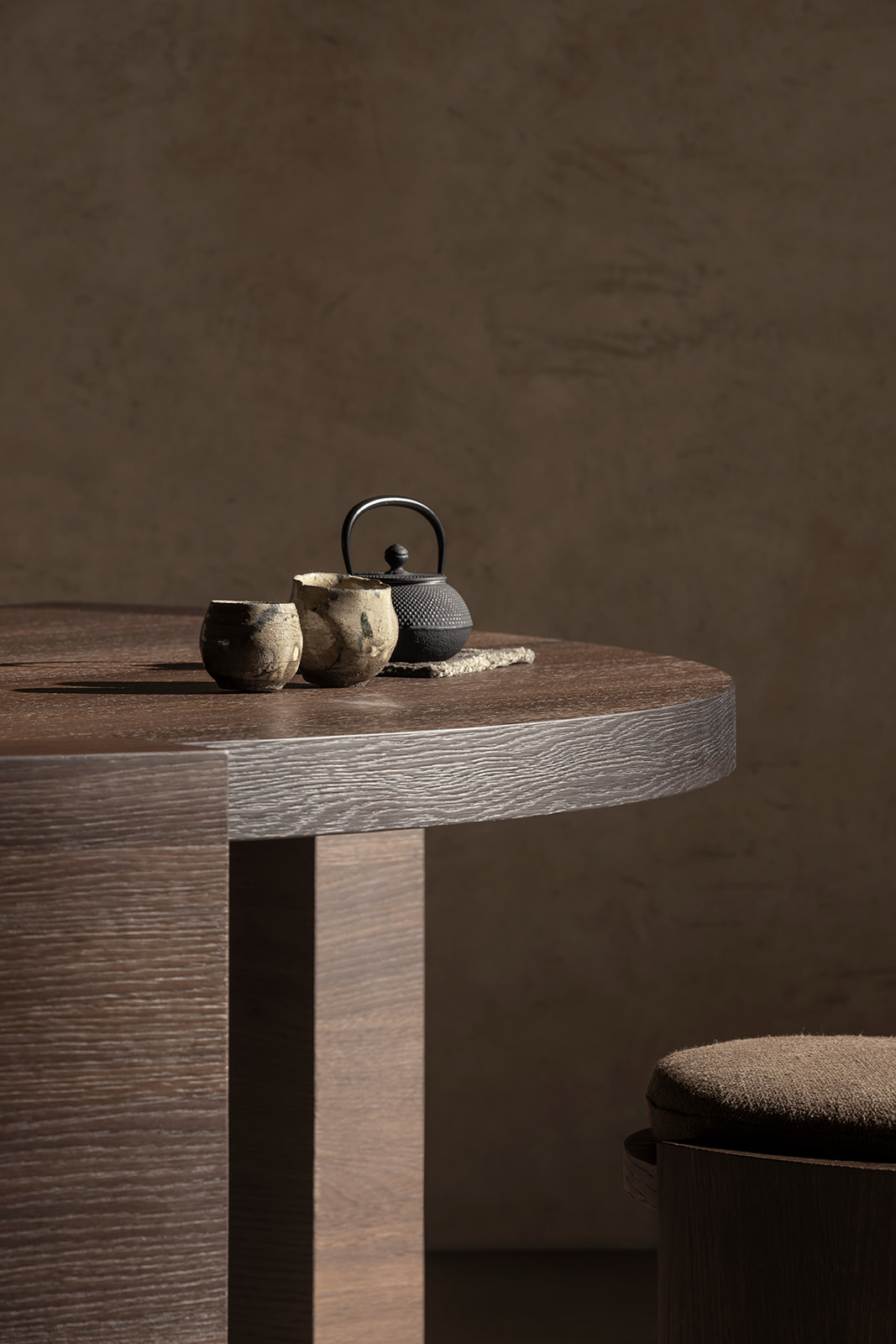
From above, the tabletop appears calm and measured, but the edge tells a different story. Close-ups show a layered perimeter, a matte finish, and a grain pattern that remains readable even where the curve turns. That detail matters in a wood dining table, because the finish is not used to hide the material. It lets the texture stay present, especially in the tighter views where a plate, a cup or a stool edge cuts into the frame.
The table series is offered in several wood types and dimensions, which gives the form room to shift without losing its identity. One version may feel broader, another more compact, yet the same profile runs through them: rounded corners, a clear tabletop edge and a base that opens the space beneath. For projects that need a made-to-order table series, the format can be adapted on request rather than forced into one fixed size.
Open base, clear shadows
The underside is where the structure becomes visible. Instead of a closed block, the base uses openings and cut-outs that break up the volume and let light pass through. In the studio-like setting, those voids leave distinct shadows on the floor, which makes the table read almost sculpturally. The result is less about ornament and more about how the parts meet: top, support and negative space each keep their own line.
That clarity continues in the profile. The organic dining table does not rely on heavy mass to make an impression; the shape is drawn through the edge, the joinery and the way the support lands below. In one image the tabletop is seen from the side, in another the base is more dominant. Together they show a piece that can sit quietly in a room or anchor a larger dining arrangement without needing extra visual weight.
Detail at the edge
The closest images are the most revealing. They show the wood dining table as a sequence of segments, with a visible seam or lamella-like rhythm near the rim. The handbrushed surface of the light swamp oak keeps the finish from looking glossy or sealed off. It has enough variation to catch the light, especially where the edge turns and the grain shifts direction. Those small changes give the table its reading from a distance as well as up close.
Because the table series is meant to be combined with different heights and materials, the design works as a system rather than a single object. One table can sit beside another, or pair with a lower piece, without losing the calm line of the top. That makes the organic round dining table suitable for settings where layout matters as much as the object itself. The form can lead, but it does not need to dominate every view.
Stools with round seats and soft material contrast
The matching stools bring a second layer to the project. Their round seats repeat the table’s curves, while the wooden legs keep the silhouette slender. In one of the source texts, the optional seat surfaces are described in plant-dyed vintage hemp, which changes the feel of the stool without adding visual noise. The fabric sits between the grain of the timber and the plain concrete-look background, so the contrast stays restrained and readable.
Seen together, the stool and table work through proportion rather than repetition. The round seat stool is simple in profile, but it extends the language of the series: curved top, clear support, no unnecessary bulk. In the wider shots, the stools gather around the table as small forms with enough presence to register, yet they do not compete with the tabletop. The whole arrangement stays open, with space left visible between each leg and the floor.
Built for variation on request
What makes the series practical is not a fixed recipe but the number of ways it can shift. Different wood types, different dimensions and the option of made-to-order work mean the same design can answer different rooms and layouts. The shape remains recognisable, but the proportions can move. That is especially useful when a dining table has to sit beside other furniture, or when the table height needs to align with a particular stool or seating setup.
The images suggest that flexibility without turning the design generic. The organic round dining table keeps its rounded outline, its visible grain and its open construction, whether seen in full or in close detail. The matte surface, the cut-outs below and the optional hemp seat give the series a clear material logic. It is a table family that reads through form, wood and structure, with each part doing a distinct job in the composition.
Want to see more of Inge Lagae Design Studio? View the page of Inge Lagae Design Studio for even more great projects and company information.



NEW 2026 Jubileum Edition The Best Interior Designers Benelux
Order Now €125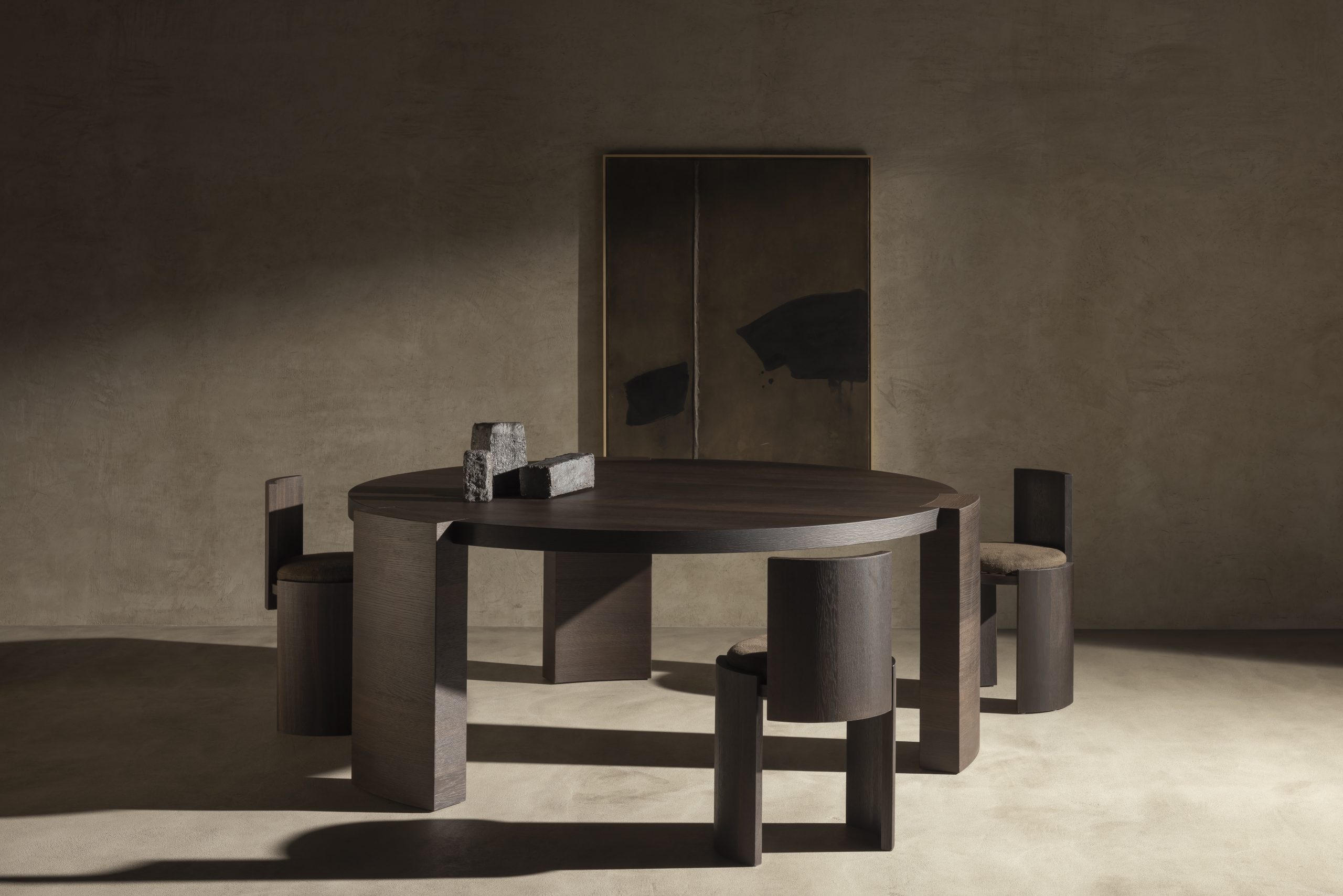
NEW 2026 Jubileum Edition The Best Interior Designers Benelux
Order Now €125