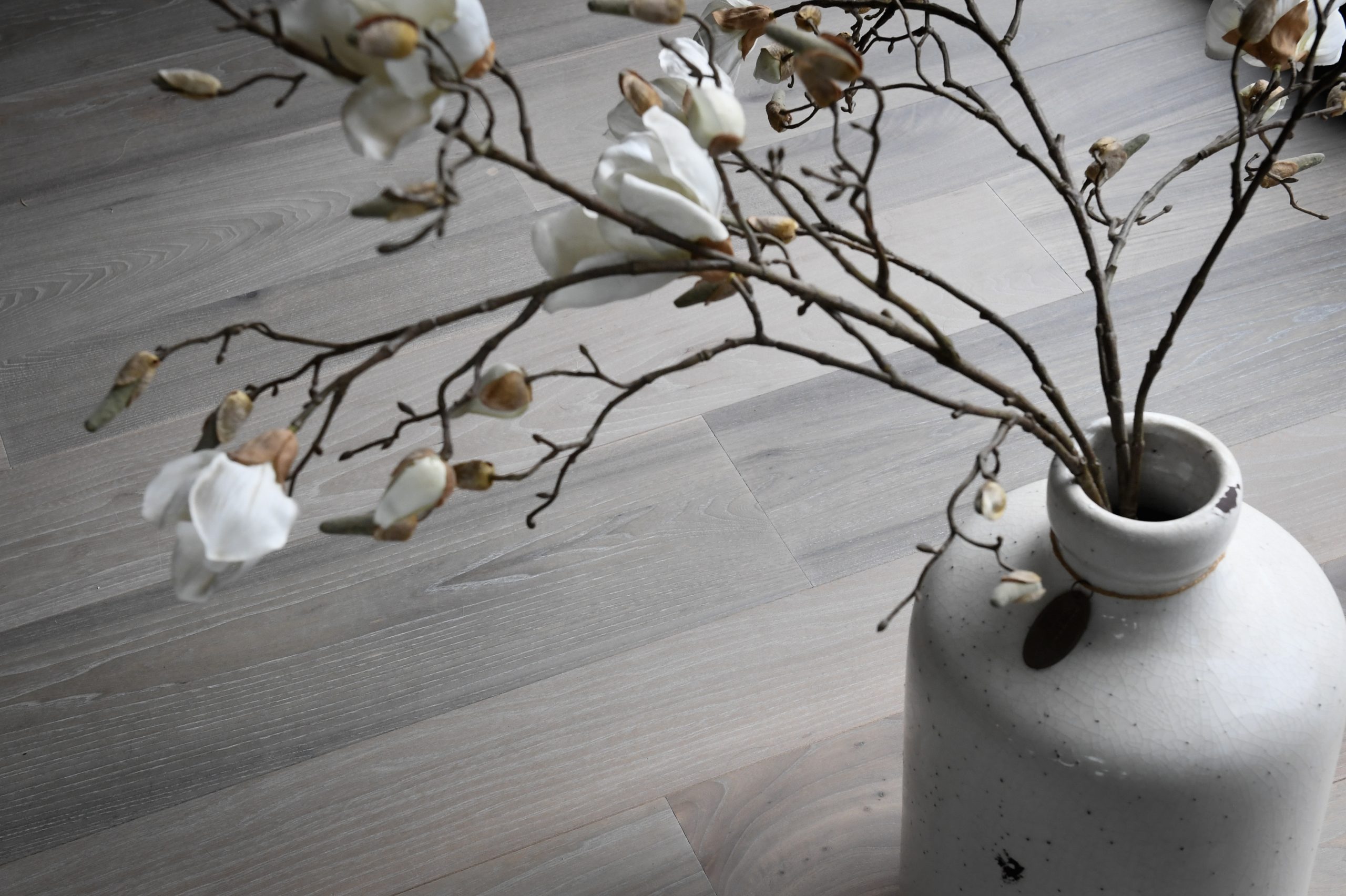









Rare and beautiful elm plank flooring
Grey elm plank flooring sets the tone before the room has even fully revealed itself. The boards run long across the living space, their grain visible from a distance and their colour shifting from plank to plank. That unevenness is part of the appeal here: European elm is a rare wood, supplied in random widths and with natural colour variation that keeps the surface from looking flat. The result is a wood floor with visible grain that reads as material first, finish second.
Wide planks, shifting tones
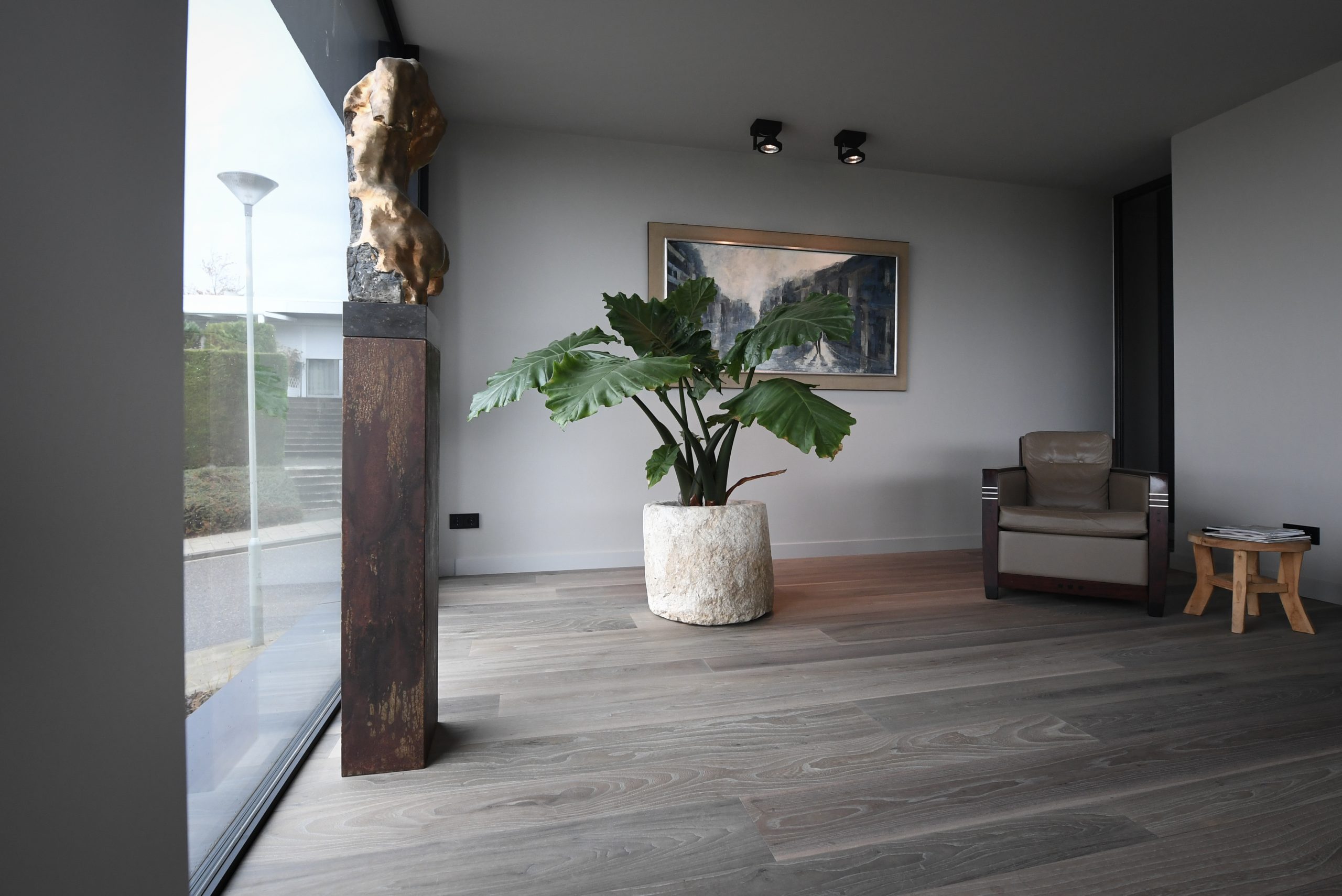
The floor brings together the best-known qualities of elm wood grain and makes them work in a restrained interior. Some planks lean lighter, others darker, and the difference is easiest to read where daylight lands near the window. Instead of a uniform field, the surface moves in bands and marks. The wide plank flooring gives the room a steady rhythm, while the grey oil finish softens the contrast and pulls the tones toward a cooler register.
That grey oiled wooden floor was chosen with a clear brief in mind: rough, characterful, and made from natural materials. Those words show in the surface. The boards do not hide their texture, and the grain keeps appearing through the grey treatment. In close view, the floor feels more layered than decorative. It is the kind of finish that rewards a slower glance, especially where one board changes tone against the next.
A grey elm plank flooring that carries the room
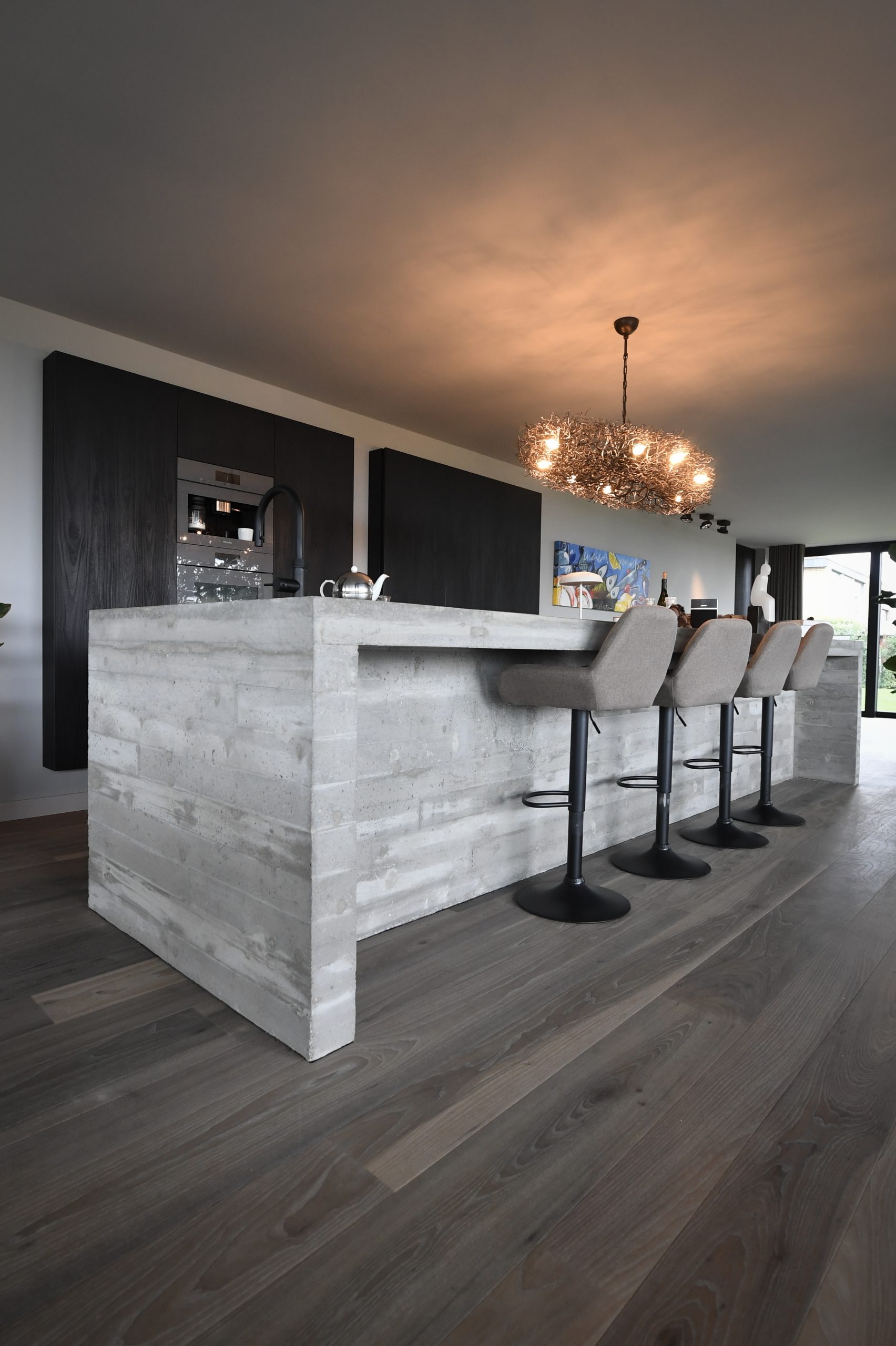
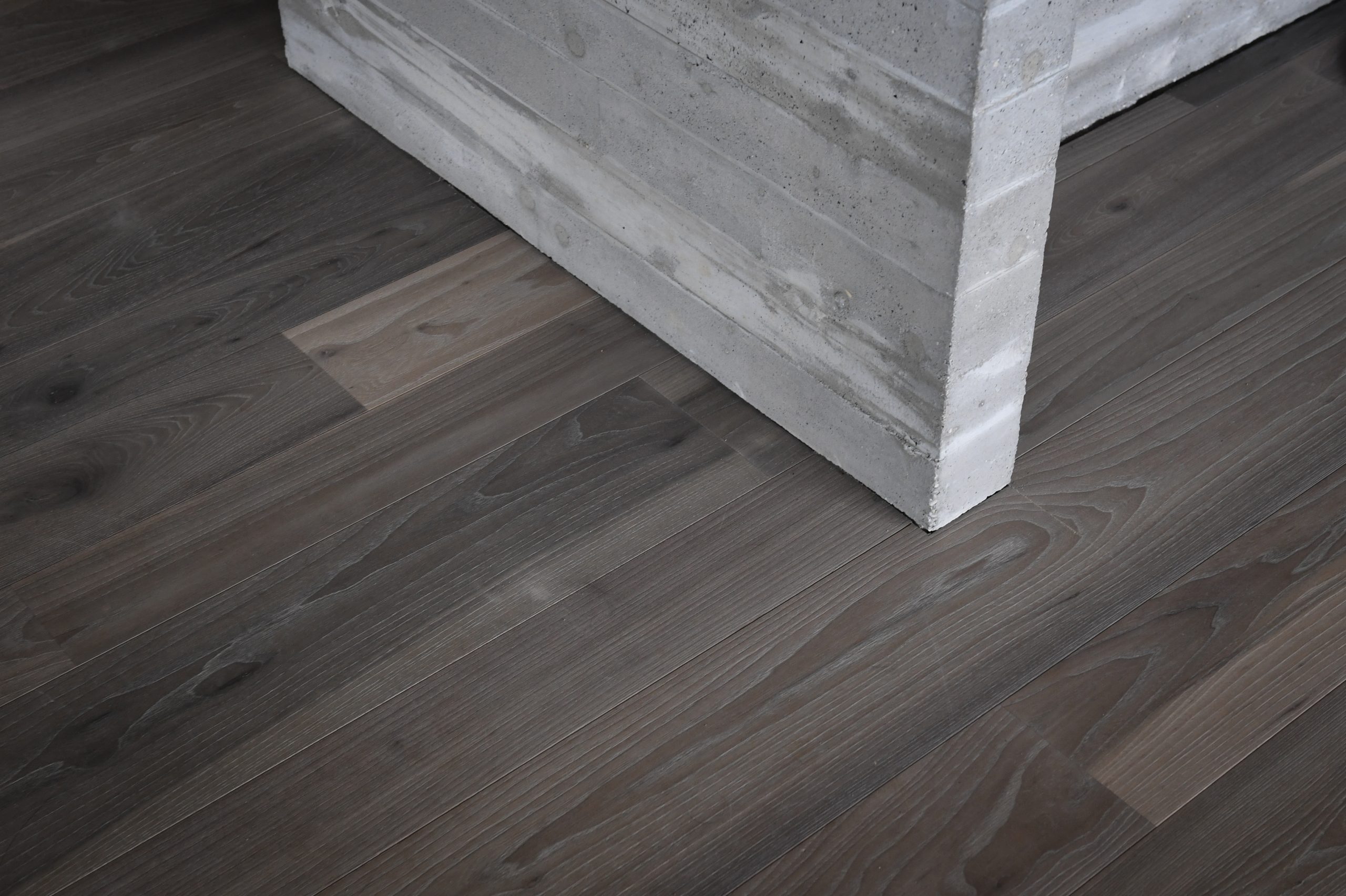
In the living area, grey elm plank flooring sits beneath a strong contrast of light and dark walls. The palette is spare, which makes the wood surface even more legible. A concrete-look kitchen island cuts into the space like a solid block, its matte face and sharp edge meeting the grain of the floor at a clear seam. That meeting point is one of the strongest details in the project: rough timber below, mineral mass above.
The kitchen bar does not hide its weight. Its pale, stone-like surface gives the floor something firm to lean against visually, while the elm keeps the room from feeling severe. The grey oiled wooden floor works as a bridge between those materials without disappearing into the background. You notice the plank rhythm first, then the texture, then the way the grey tone changes under different light.
Grain, edge and joint
Seen up close, the floor’s edge lines and joints matter as much as the overall field. The planks are laid in long runs, so the eye follows them through the room before returning to the finer marks in the wood. On the close-up images, the grain appears open and expressive, with darker streaks breaking through the grey treatment. This is where the floor’s character becomes most evident: not in a polished effect, but in the way the material shows its own structure.
The random widths strengthen that effect. They prevent the surface from becoming too even and give the room a more measured pulse. In a project with dark wall panels, pale surfaces and a concrete-look kitchen element, that variation keeps the floor active. It is a subtle shift, but an important one. A wood floor with visible grain can hold an interior together without flattening the rest of the materials around it.
Light across the boards
Daylight from the window picks up the grey colour variation in the planks and lets the finish read differently across the room. In some areas the wood looks cooler; in others the grain warms slightly against the surrounding surfaces. Ceiling spots add a second layer of light, and the hanging lamp marks the central zone without competing with the floor. The boards stay visible under both light conditions, which gives the room a calm but not static presence.
That mix of daylight and directed light also sharpens the floor’s texture. The grey oiled wooden floor shows a different face under each source: softer near the window, more graphic beneath the spots. The effect is especially clear where the floor meets the dark wall planes and the lighter kitchen block. Each surface keeps its own character, but the elm remains the most tactile element in the room.
Why elm works in this setting
European elm is not the kind of wood that disappears into a background role. Its grain asks to be seen, and here it has enough space to do that. The broad boards and natural colour variation in wood make the floor feel collected rather than repeated. Nothing about it is mechanical. Even the grey oil finish, in the shade called Trout, leaves room for the timber beneath it to remain readable.
That is what gives this interior its quiet tension. The concrete-look kitchen island is crisp and matte; the wall surfaces are darker and flatter; the floor keeps moving. Grey elm plank flooring does the work of linking those parts without smoothing them out. It carries the eye from one zone to the next, but it never loses its own texture. For readers looking at wood flooring projects, this is a strong example of how elm can anchor a room through grain, width and tone alone.
The project also shows why grey oiled wooden floor finishes remain so effective when the material itself is already expressive. The oil does not mute the timber into sameness. Instead, it lets the irregular widths and colour changes remain visible while setting them within a cooler palette. The surface stays rooted in the material story of the room, and that is what makes it memorable at first glance and again at closer range.
For anyone studying elm flooring or searching for a wood floor with visible grain, this interior offers a clear reference point. The floor is not treated as a backdrop; it is the main surface from which the room’s contrasts are read. Across the boards, the grain, the grey finish and the natural variation keep shifting under the light. That movement is what gives the space its edge.
Want to see more of Bloemen Parket? View the page of Bloemen Parket for even more great projects and company information.



NEW 2026 Jubileum Edition The Best Interior Designers Benelux
Order Now €125