







Custom wooden interior doors with arched tops
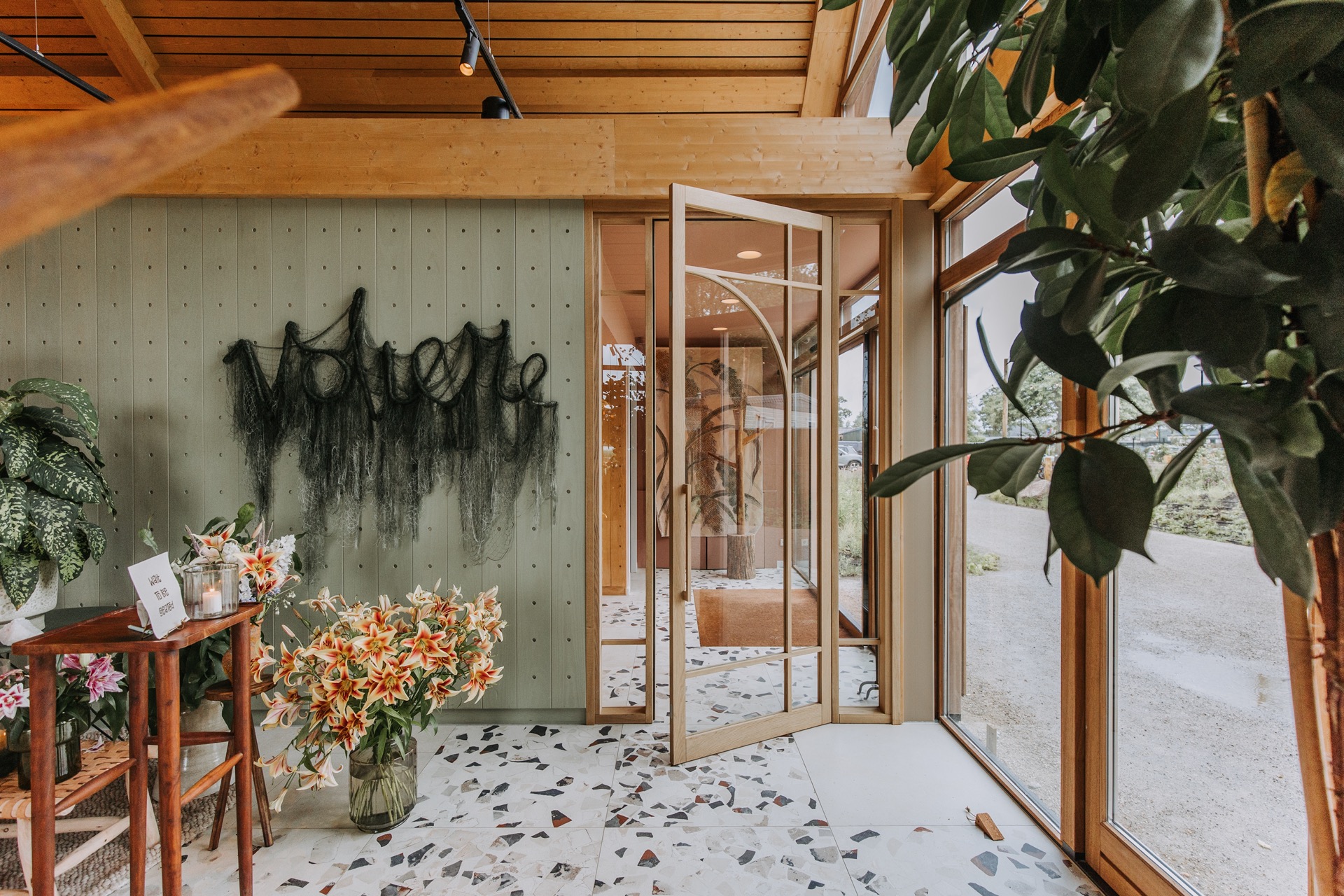
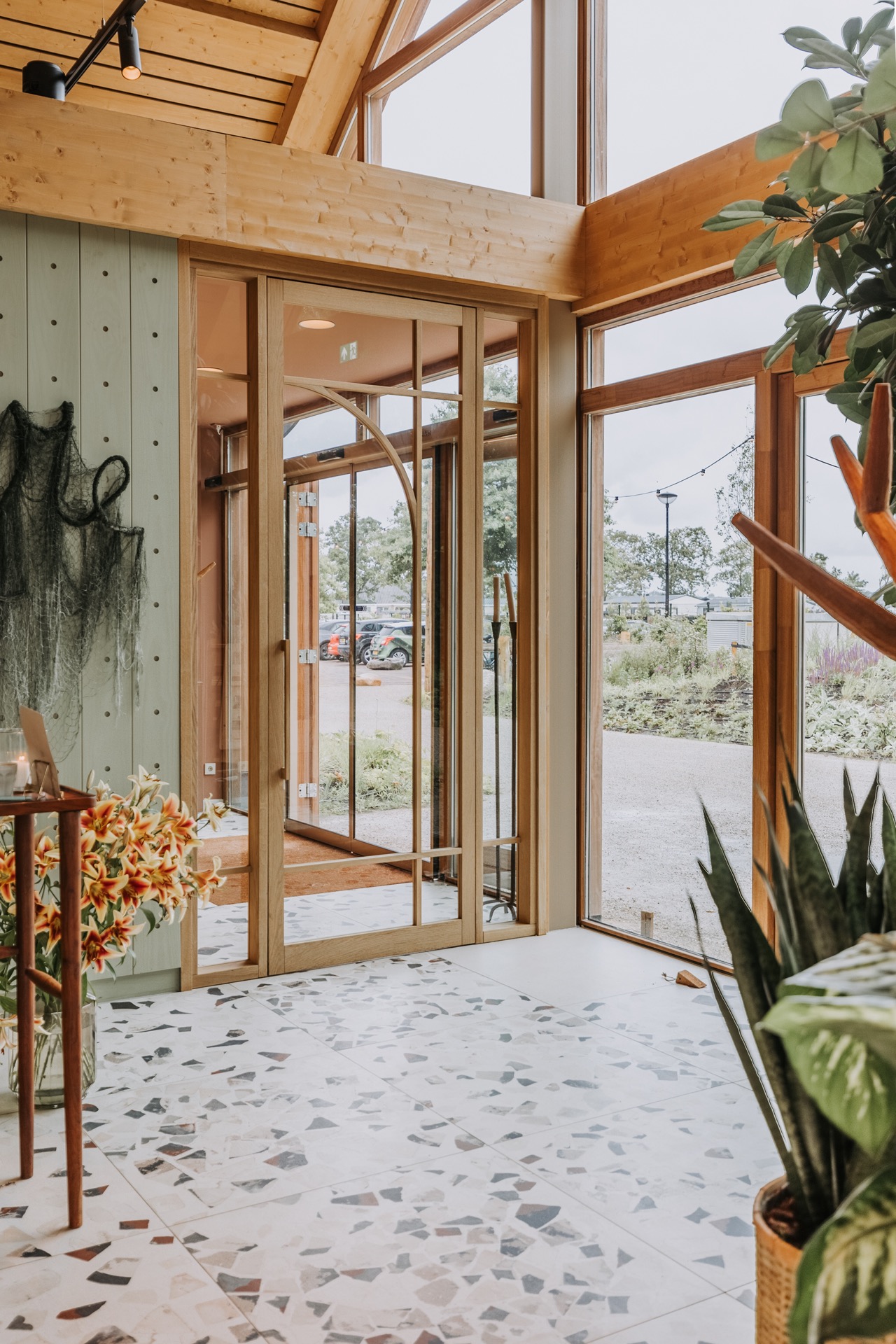
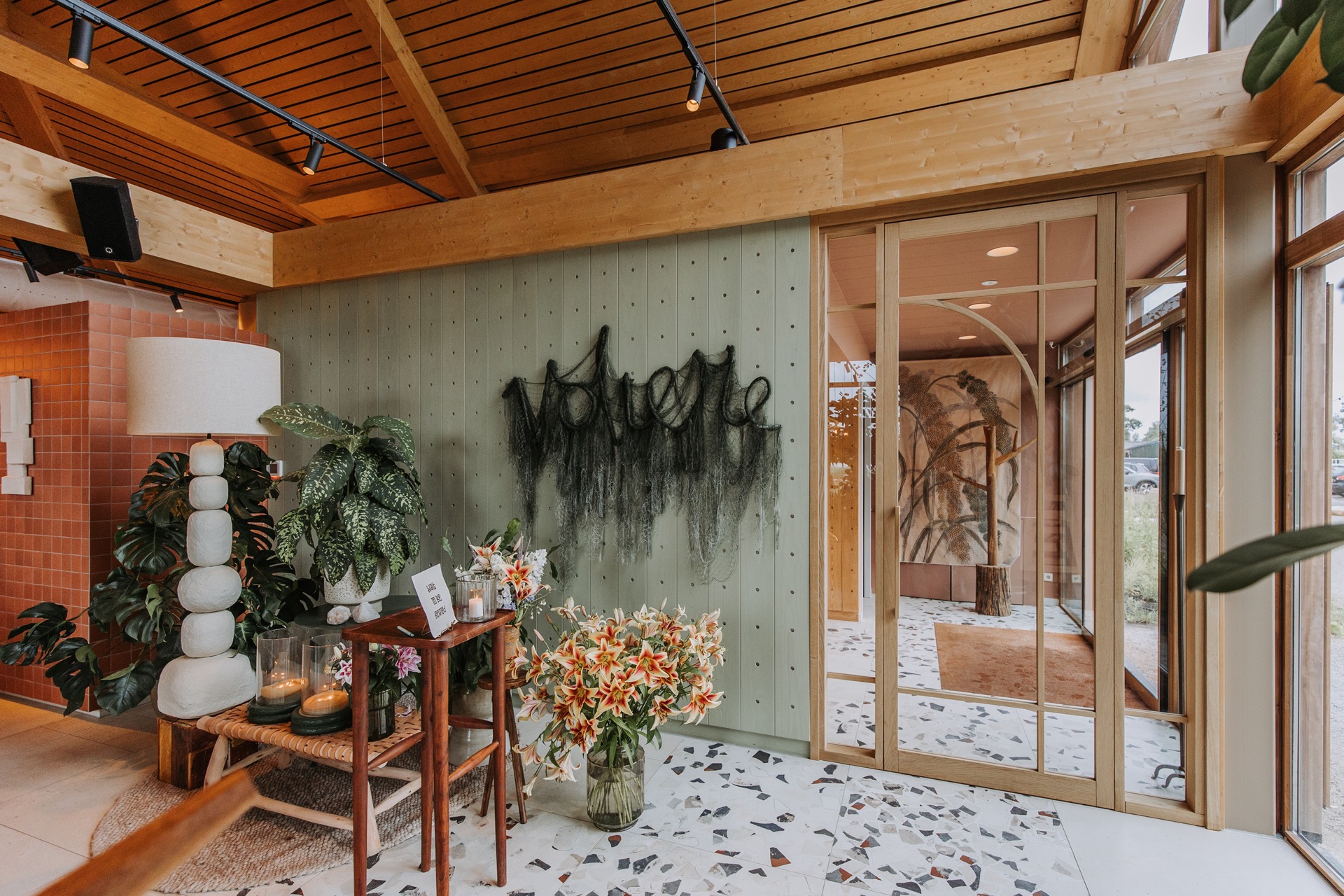
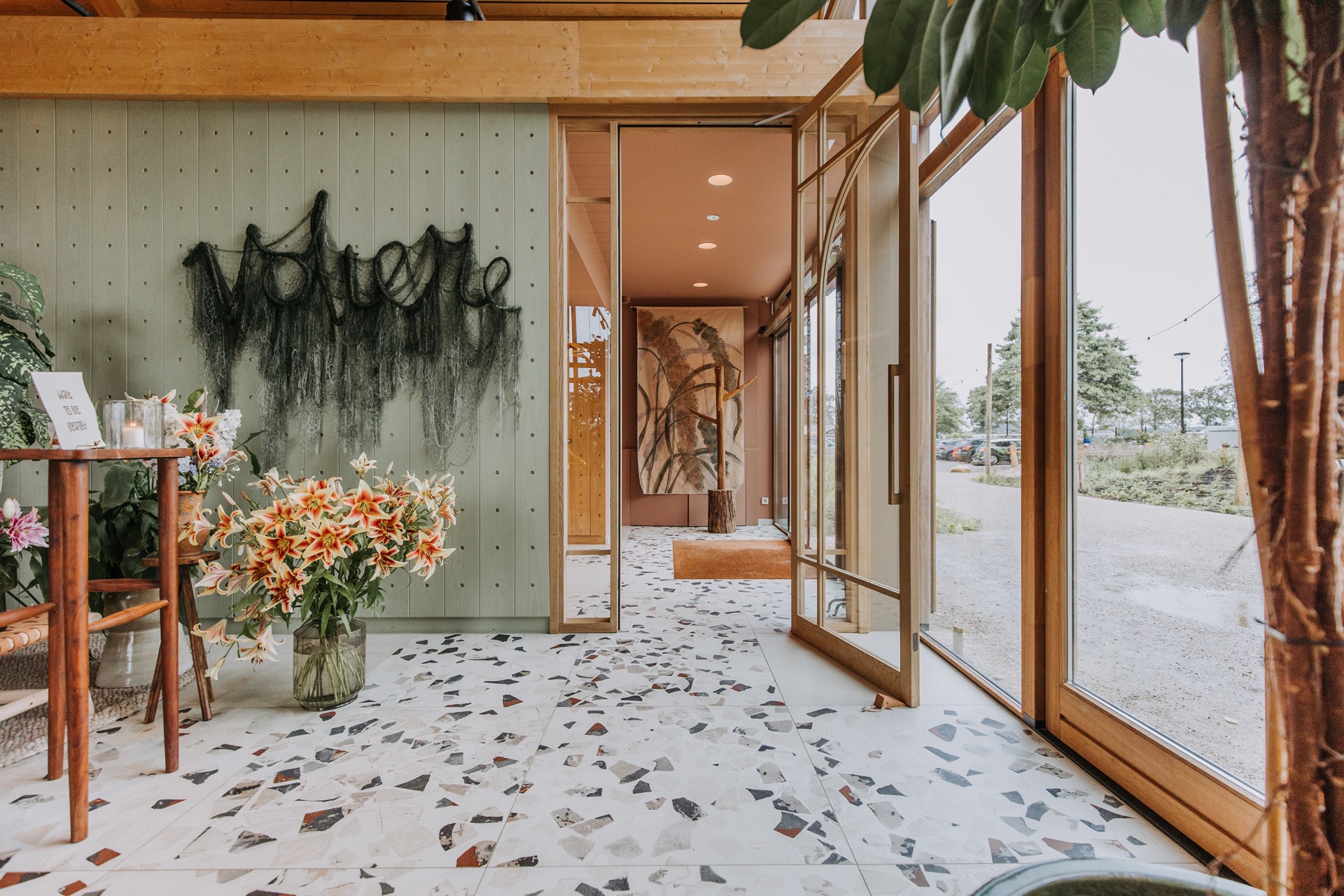
Wood grain, arched lines and clear glass set the tone as soon as you enter. The custom wooden interior doors frame the route through the space, while the adjoining wall sections continue the same language in oak. Light moves through the glazed parts and softens the darker timber tones, so the joinery reads as part of the room rather than as separate inserts.
Arched forms that guide the eye
The arched interior doors are the first detail that catches attention. Their rounded tops break the usual straight line of a door opening and give the partitions a slower rhythm. That curve appears again in the wall elements, which lets the composition continue across the interior instead of stopping at one opening. The result is easy to read: timber, glass and arc-shaped frames working through the same line.
In the wider views, the door and wall parts sit against a background of large panes, a light tiled floor and visible ceiling beams. Those elements keep the setting open, even where the wood framing is substantial. The glazed sections let sightlines pass through, so the custom wooden interior doors do not block the room. They act as transitions, marking one zone from the next while still keeping the interior visually connected.
Glass panels inside the timber frames
The wooden doors with glass bring a different tempo to the project. Instead of closed surfaces, the upper and central parts open the view and let daylight reach deeper into the plan. The glass sits inside slim oak frames, where the vertical stiles and horizontal rails are still clearly visible. That contrast between transparency and timber gives the joinery more depth without adding decoration.
Seen from another angle, the glazed door parts also reflect the surrounding materials. The glass picks up the pale floor and the darker line of the structural beams overhead. In the images, the frames remain calm and precise, with narrow margins around each pane. Those details matter here, because the project depends on the relationship between filled and open sections, not on one oversized gesture.
Oak surfaces with visible grain
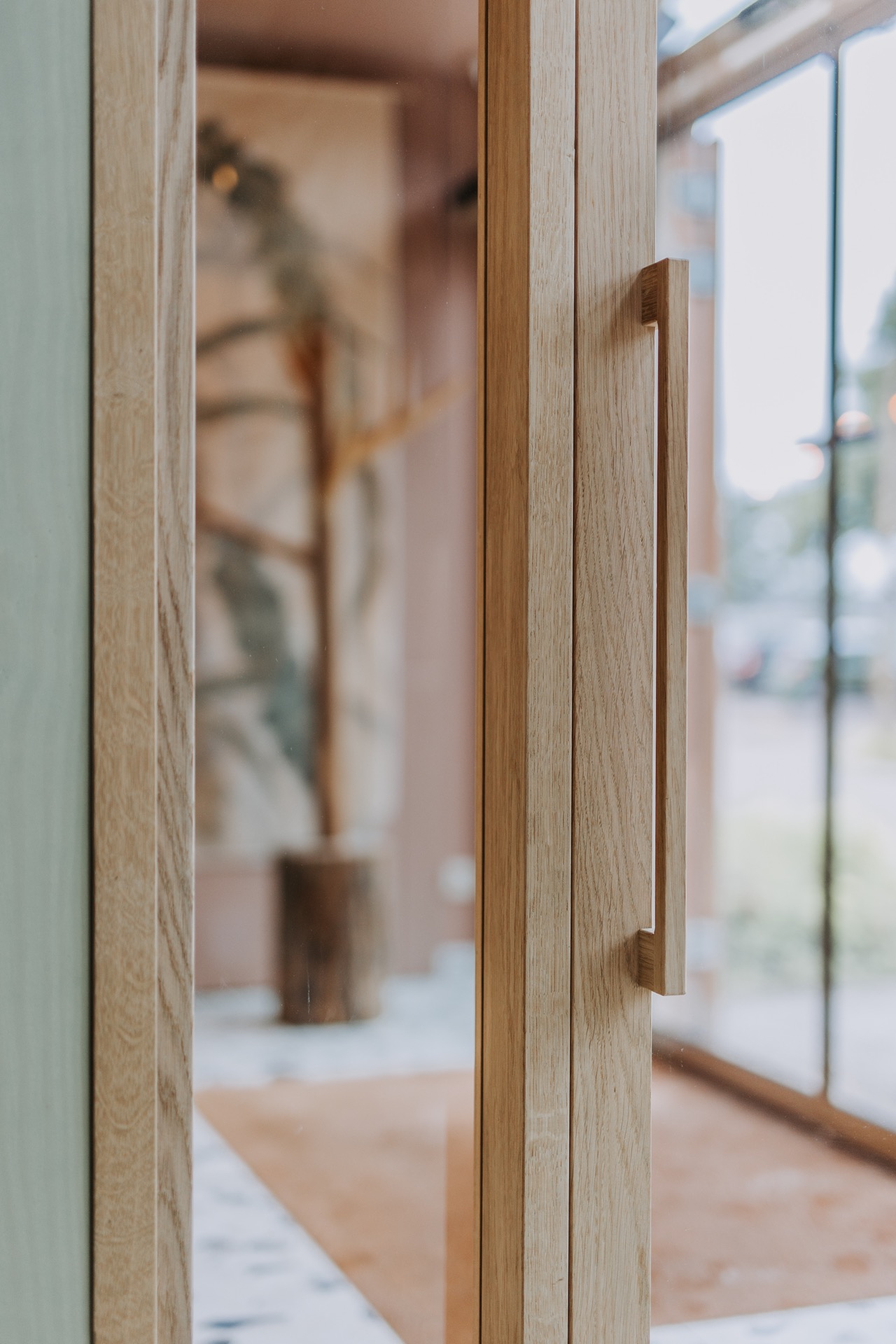
The solid oak interior doors bring texture to the composition. Their surface is not hidden under a heavy finish; the grain remains readable, especially in the close-up shots where the edge of the stile and the join between parts can be seen clearly. The wood tone is warm but restrained, and it works against the pale tile floor and the green accent wall in the background.
That accent wall, with its regular perforations, adds another layer of pattern without competing with the joinery. Because the oak is used across doors and wall sections, the room keeps a consistent material register. The visible grain, the straight cuts and the arching tops all belong to the same family of elements. This is where custom wooden interior doors do their best work: not as isolated objects, but as part of the architecture of the room.
Hardware details that stay in the same language
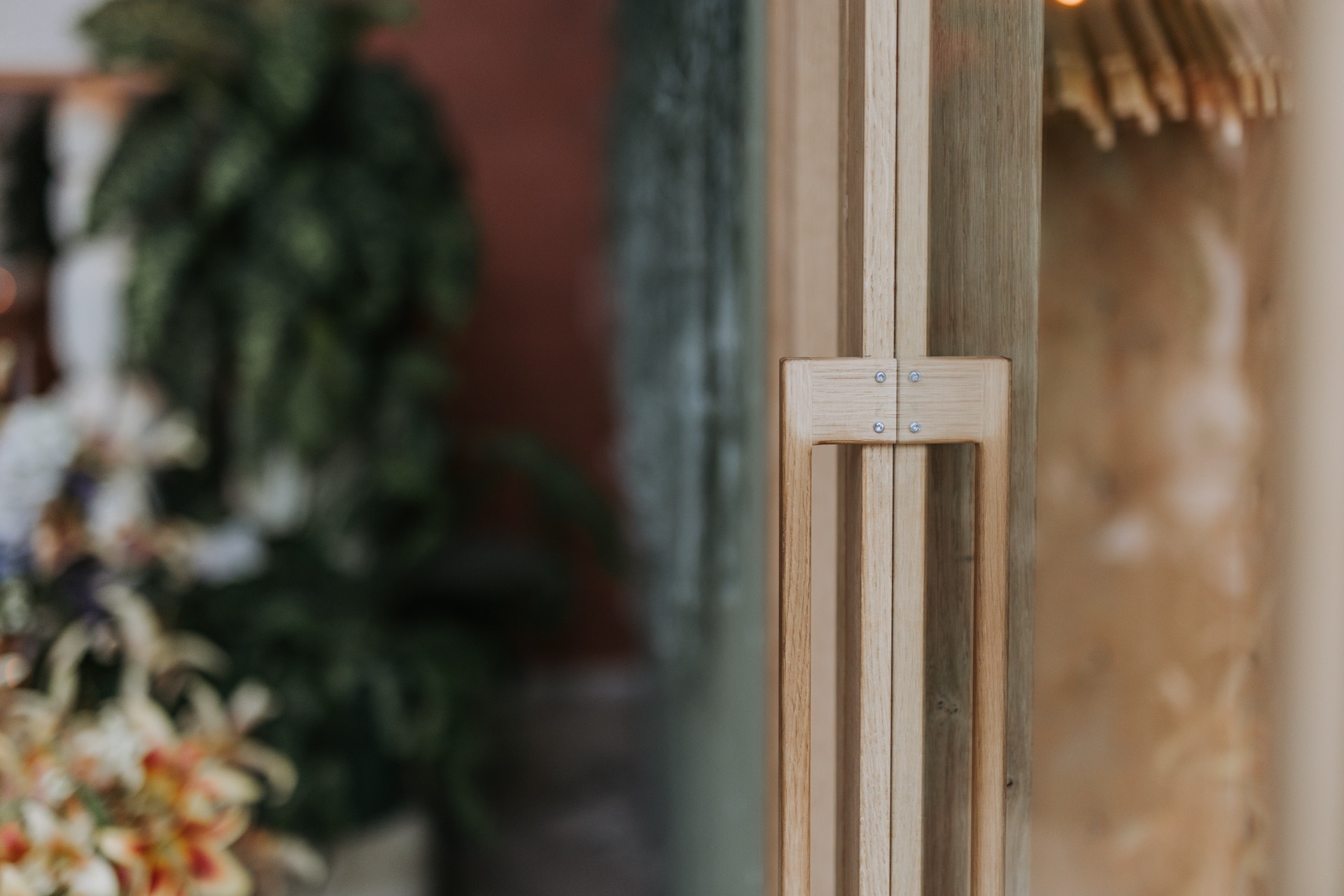
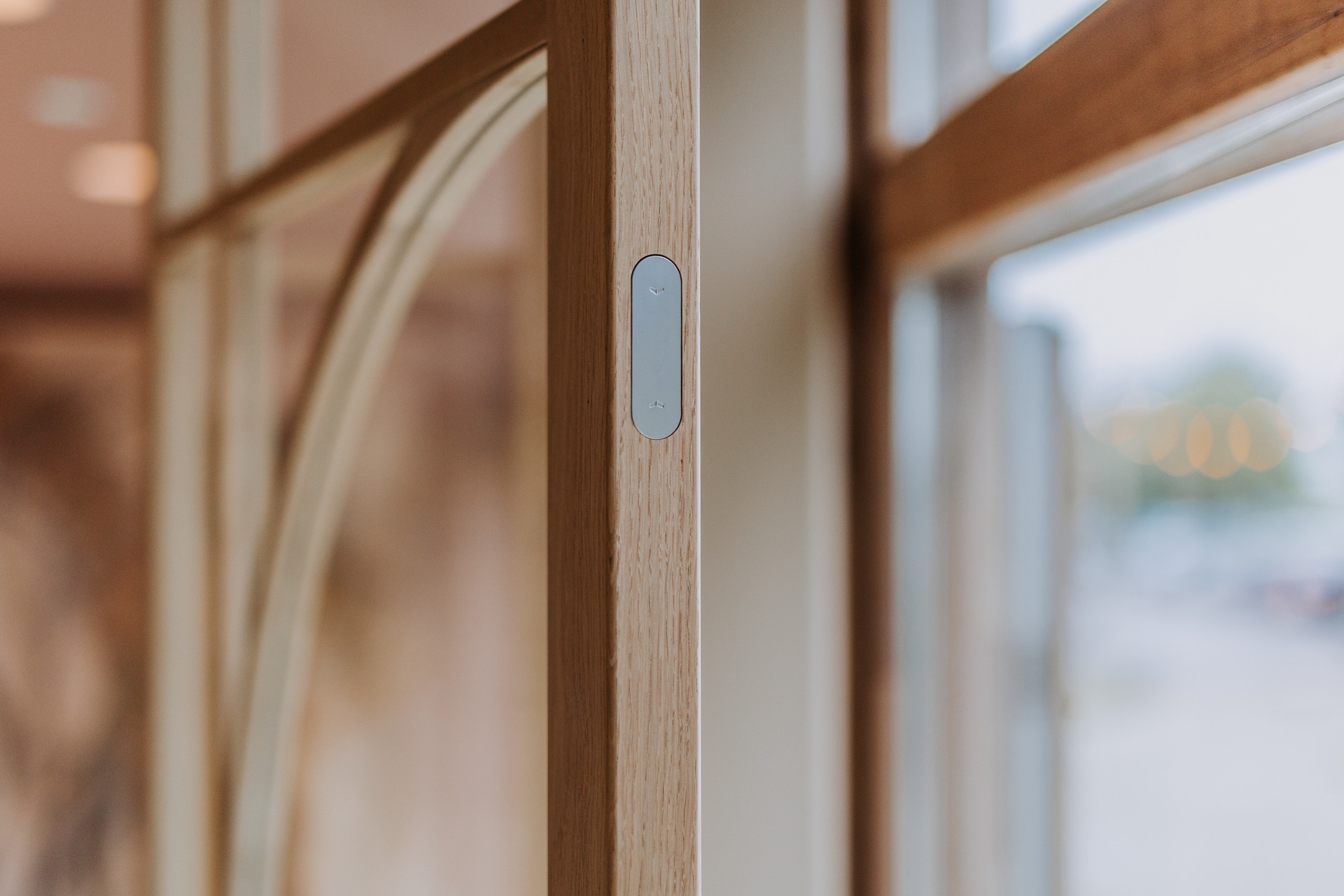
The matching door handles are small, but they carry the project’s logic through to the touchpoint. They were designed to sit beside the oak surfaces rather than interrupt them. In the detail photographs, the handle and plate sit flush against the door stile, with a shape that follows the same measured approach as the rest of the joinery. Nothing feels added after the fact.
Oak hardware details in close-up
The oak hardware details are visible in the close shots of the handle zones and door edges. One image shows a rectangular fitting with two fixing points; another shows a softer oval form set into the eiken surface. Those pieces are not treated as ornaments. They are part of the door’s construction logic, sized to the timber and aligned with the vertical lines of the frame. Even in a small crop, the grain and the clean edge finishing remain part of the composition.
Because the handles repeat the same material logic as the doors, they keep the eye on the wood rather than on the mechanism. That is especially clear where the light catches the edge of the fitting and the surrounding oak. The handle becomes a short interruption in a long line of timber, not a separate object. In a project built around precision joinery, that restraint is exactly what makes the detail readable.
How the joinery settles into the interior
Across the wider interior views, the doors, walls and glazing are arranged like a measured sequence. The arched interior doors bring softness to the geometry; the glass panels keep the passage open; the oak frames anchor everything with visible depth. Overhead, timber beams and linear lighting extend the same material seriousness, while the light floor prevents the room from becoming heavy.
The project works because each part is doing a clear job. The custom wooden interior doors define movement, the wall sections extend the language, and the matching door handles finish the composition at hand level. Nothing relies on statement for its own sake. Instead, the detail, the curve and the grain carry the interest through the space, one opening at a time.
Want to see more of Indu Doors®? View the page of Indu Doors® for even more great projects and company information.



NEW 2026 Jubileum Edition The Best Interior Designers Benelux
Order Now €125