






Organic oak kitchen with rounded forms
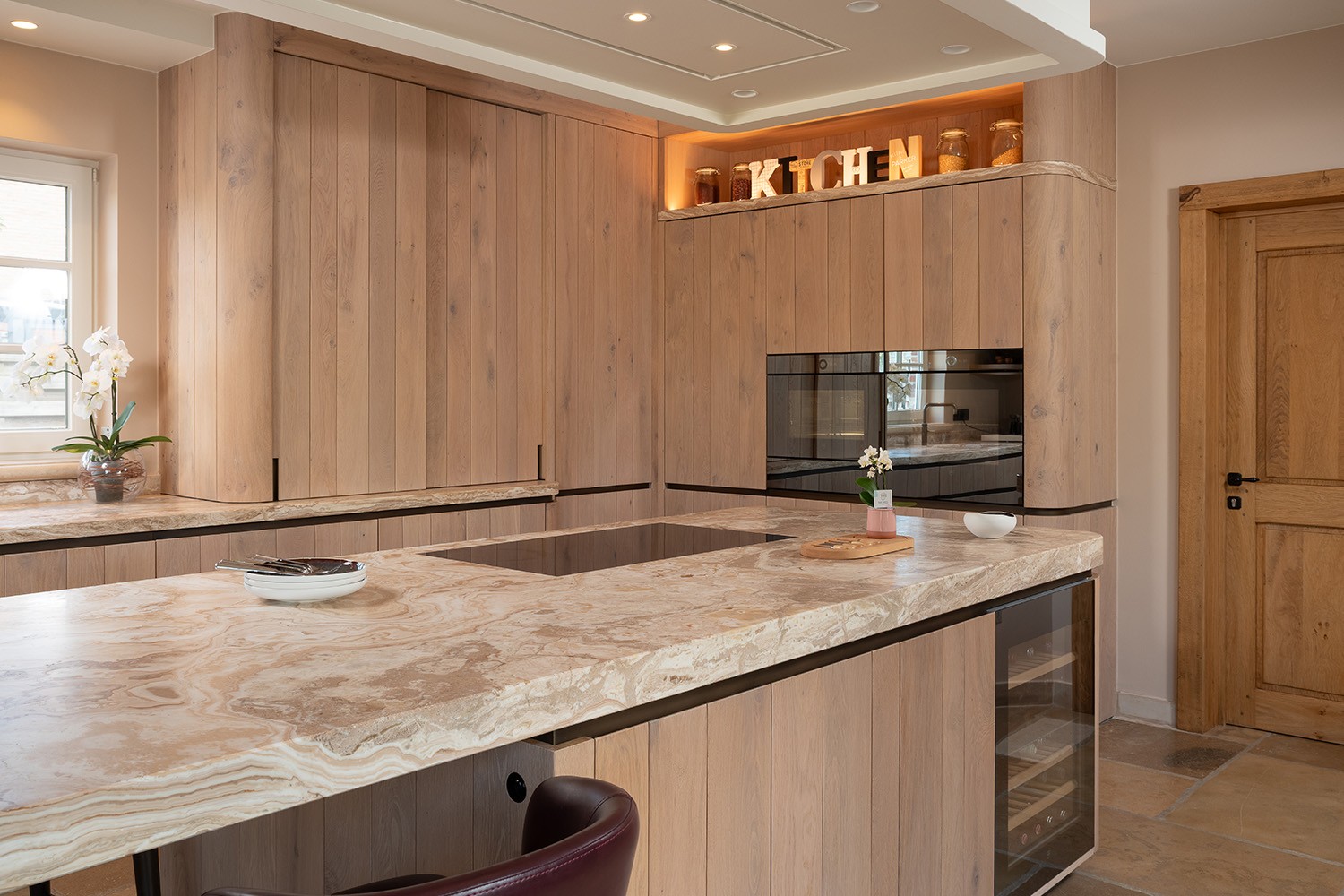
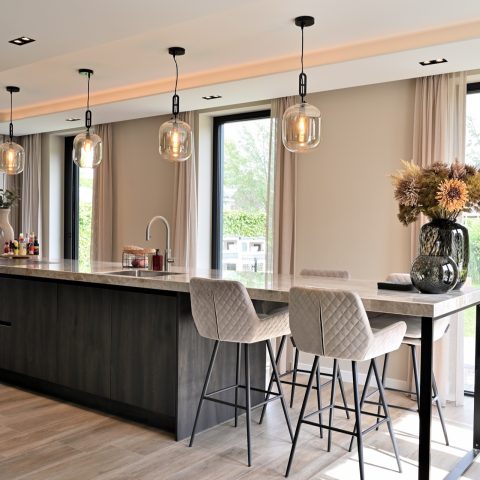
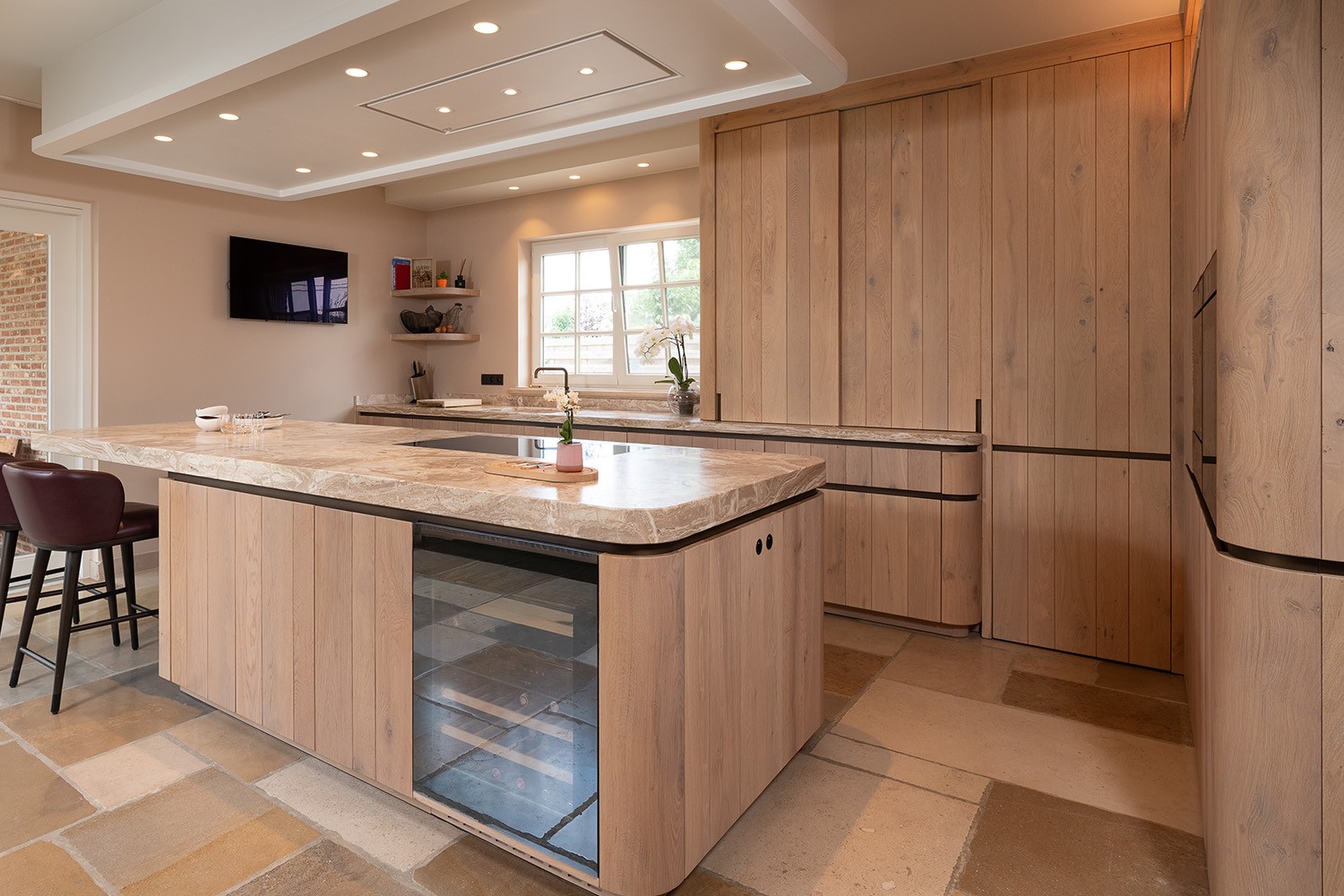
Light oak sets the tone from the first view. The grain runs across the cabinets and around the island in broad, readable lines, while the stone-look worktop cuts a pale counterpoint through the timber. In this organic oak kitchen, the rounded edges are doing more than softening the profile: they guide the eye from one surface to the next and keep the room visually calm.
Rounded island and cabinetry edges
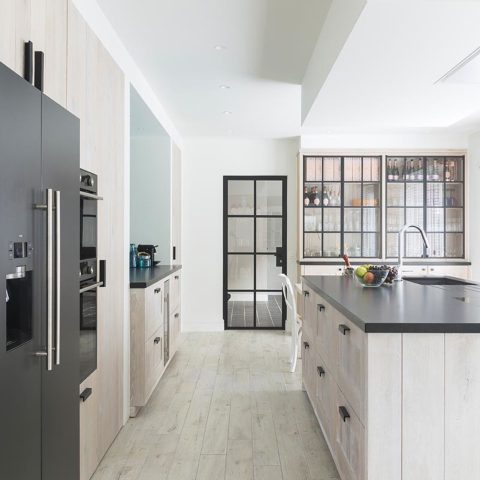
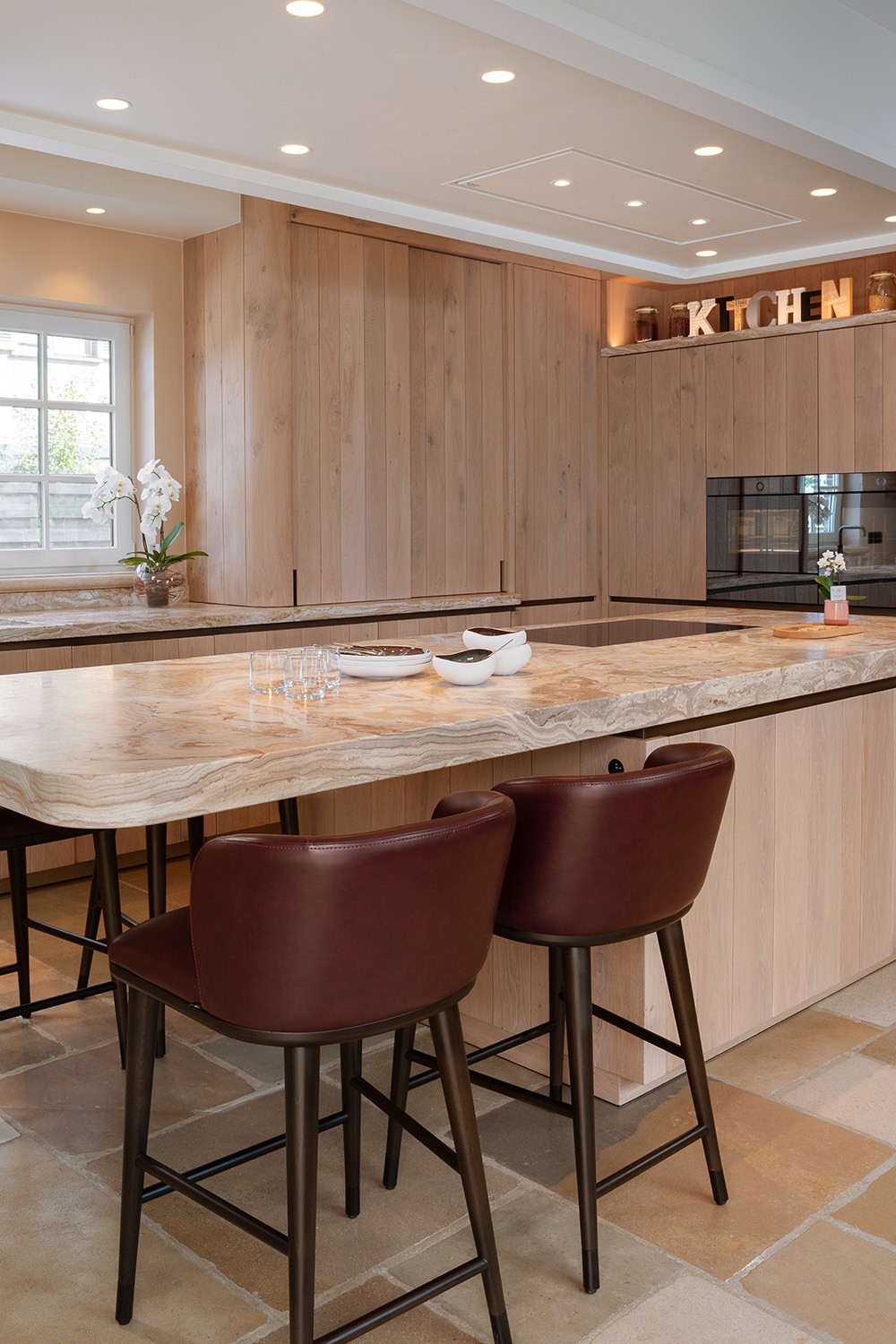
The island sits at the centre of the room with softened corners and a worktop that follows the same curve. Its shape feels deliberate rather than decorative. Along the cabinet wall, the fronts continue in long vertical panels, and the transitions between wood and stone stay gentle. That gives this oak kitchen with rounded edges a quiet rhythm, especially where the cabinetry turns past the opening and keeps its line intact.
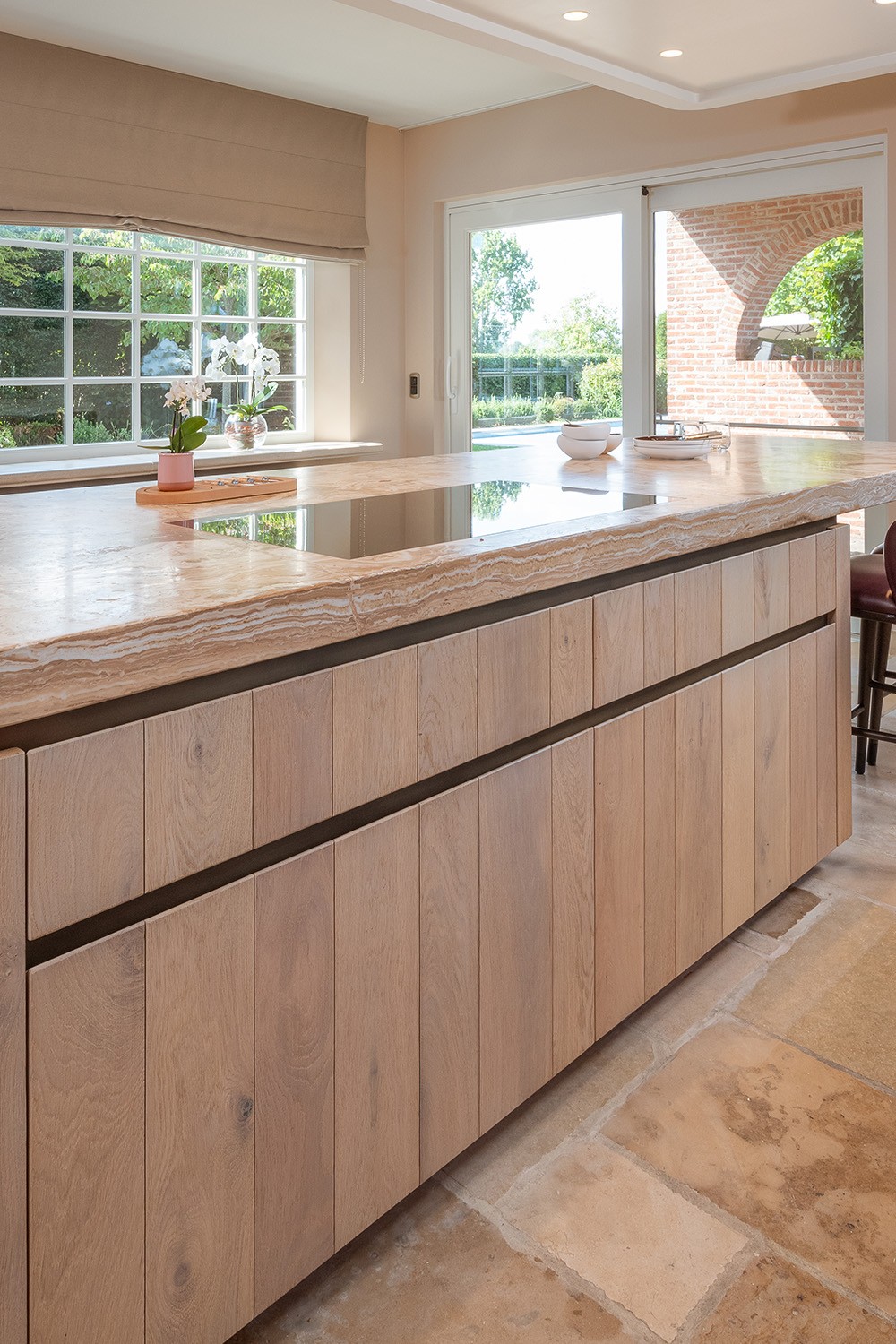
From different angles, the geometry changes only slightly. A dark strip appears between panel zones, adding a fine line that breaks up the pale oak without interrupting it. The result is a modern oak kitchen that reads as one continuous composition, but never feels rigid. The rounded island and the wall units carry the same language, so the kitchen moves as a single arrangement around the central volume.
Oak grain, panel lines and the way the wall reads
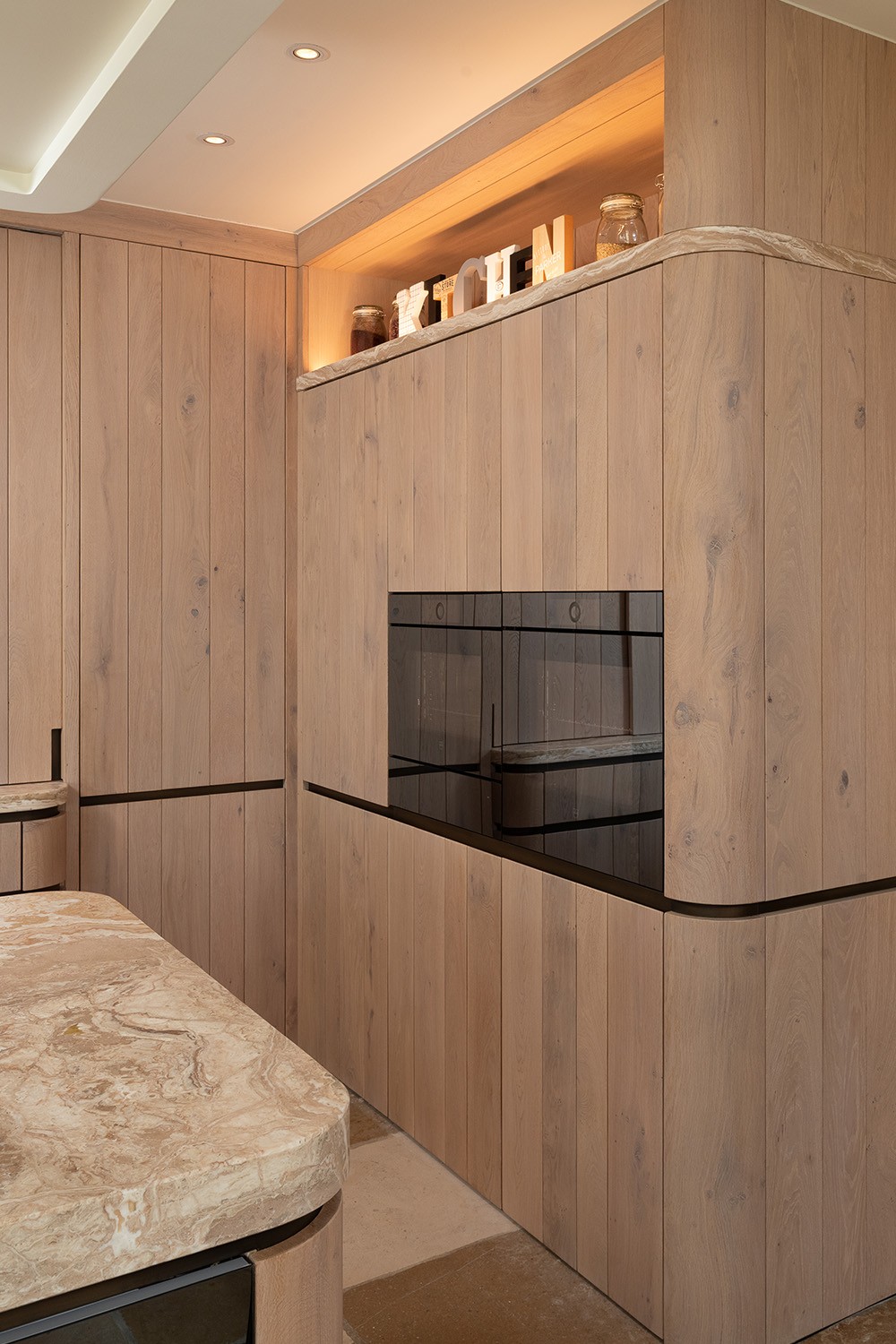
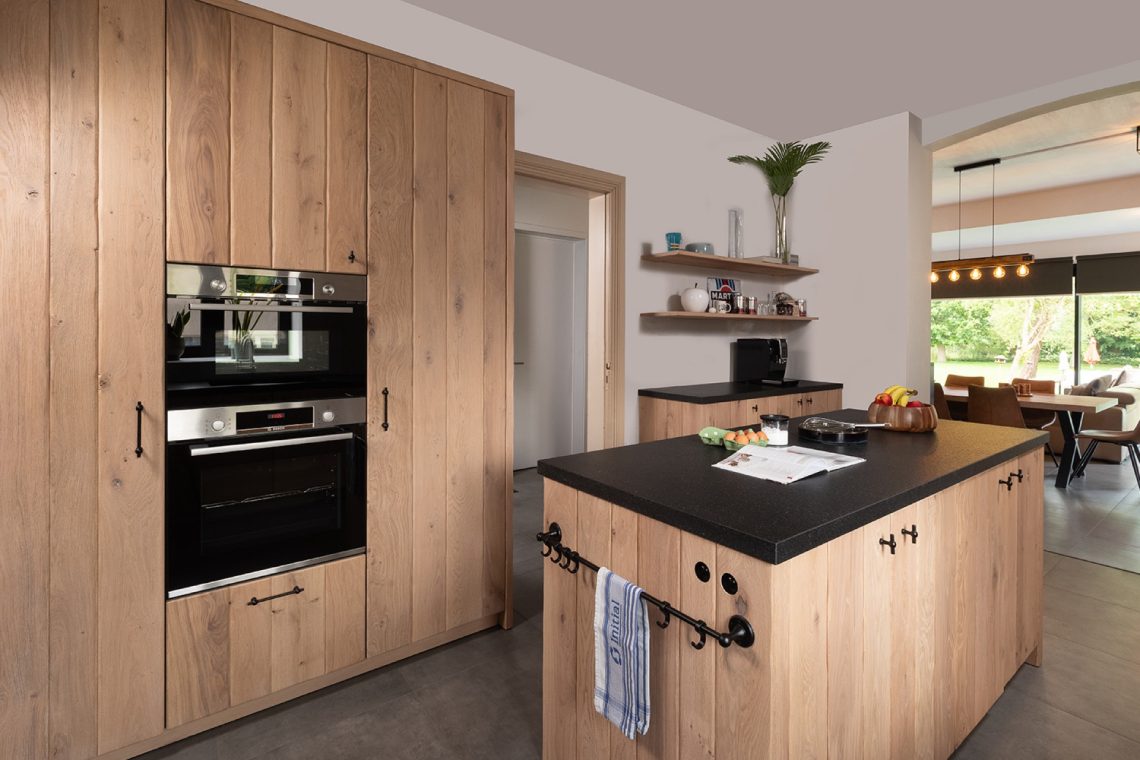
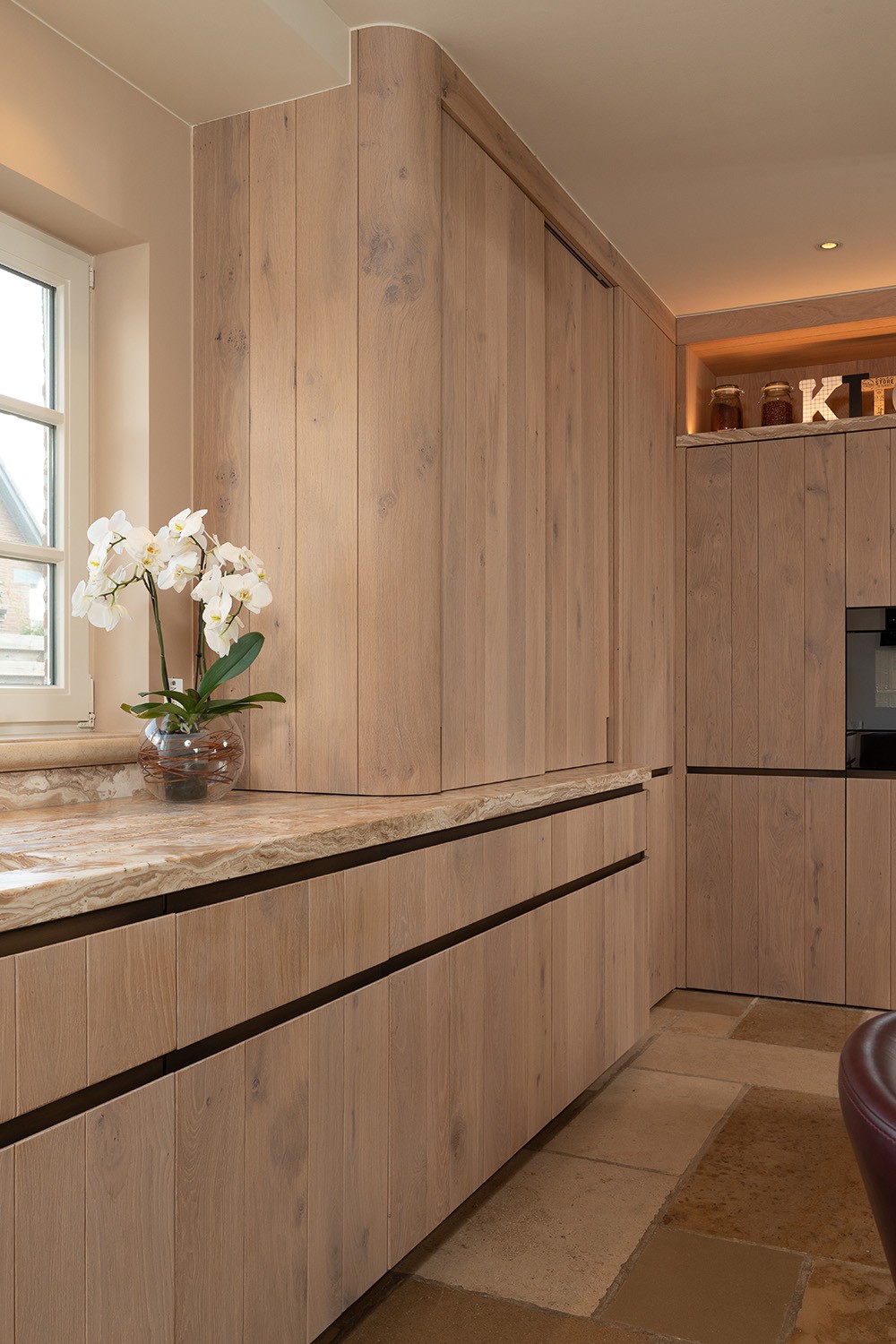
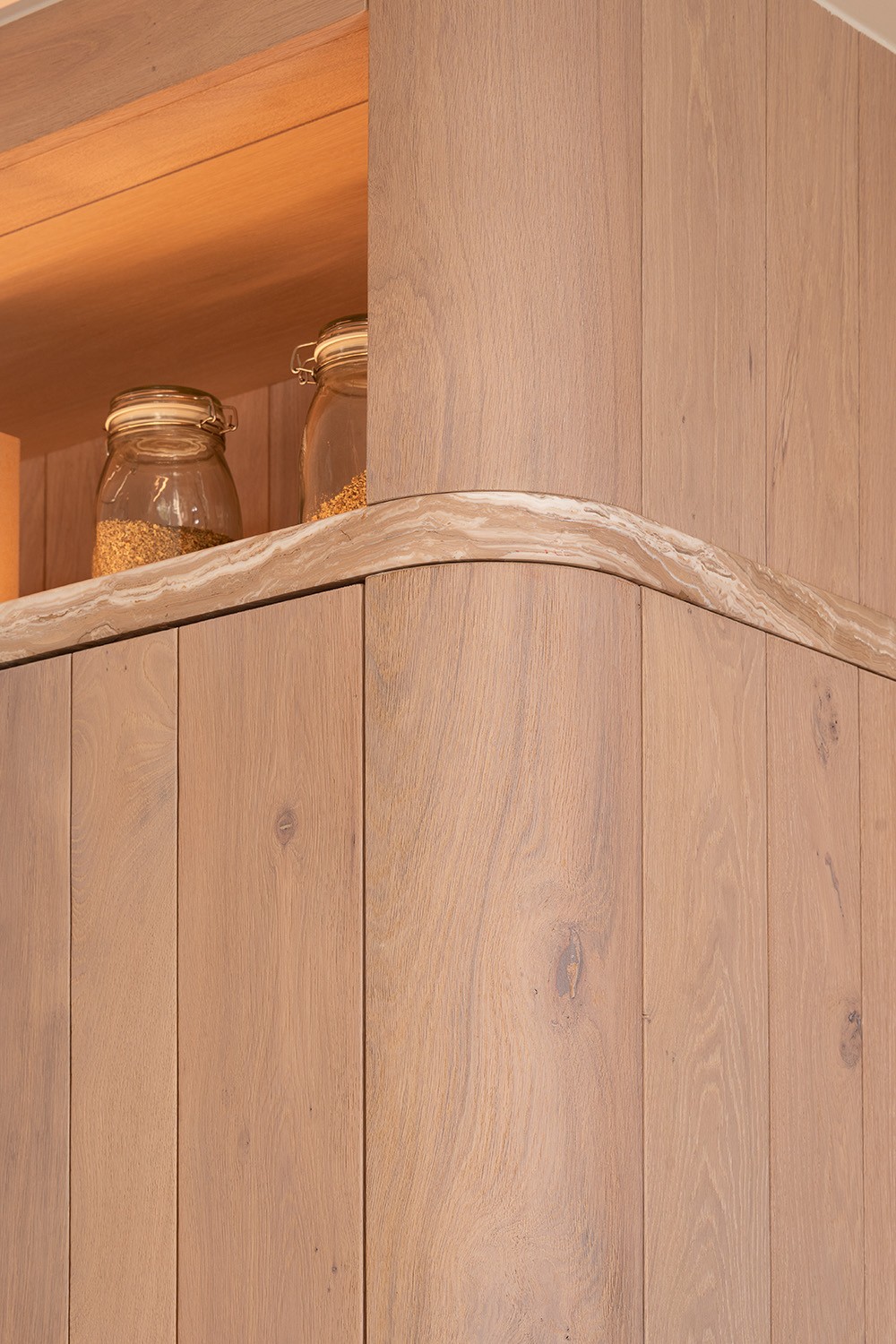
Close up, the wood shows its character. The oak is light, but not flat; the grain shifts across the fronts and gives the cabinetry depth even when the doors are closed. Vertical paneling reinforces that effect. It draws the eye upward and makes the wall feel taller, while the darker joints between sections create a measured pause. In the daylight, these details become clearer, especially where the fronts meet the surrounding opening.
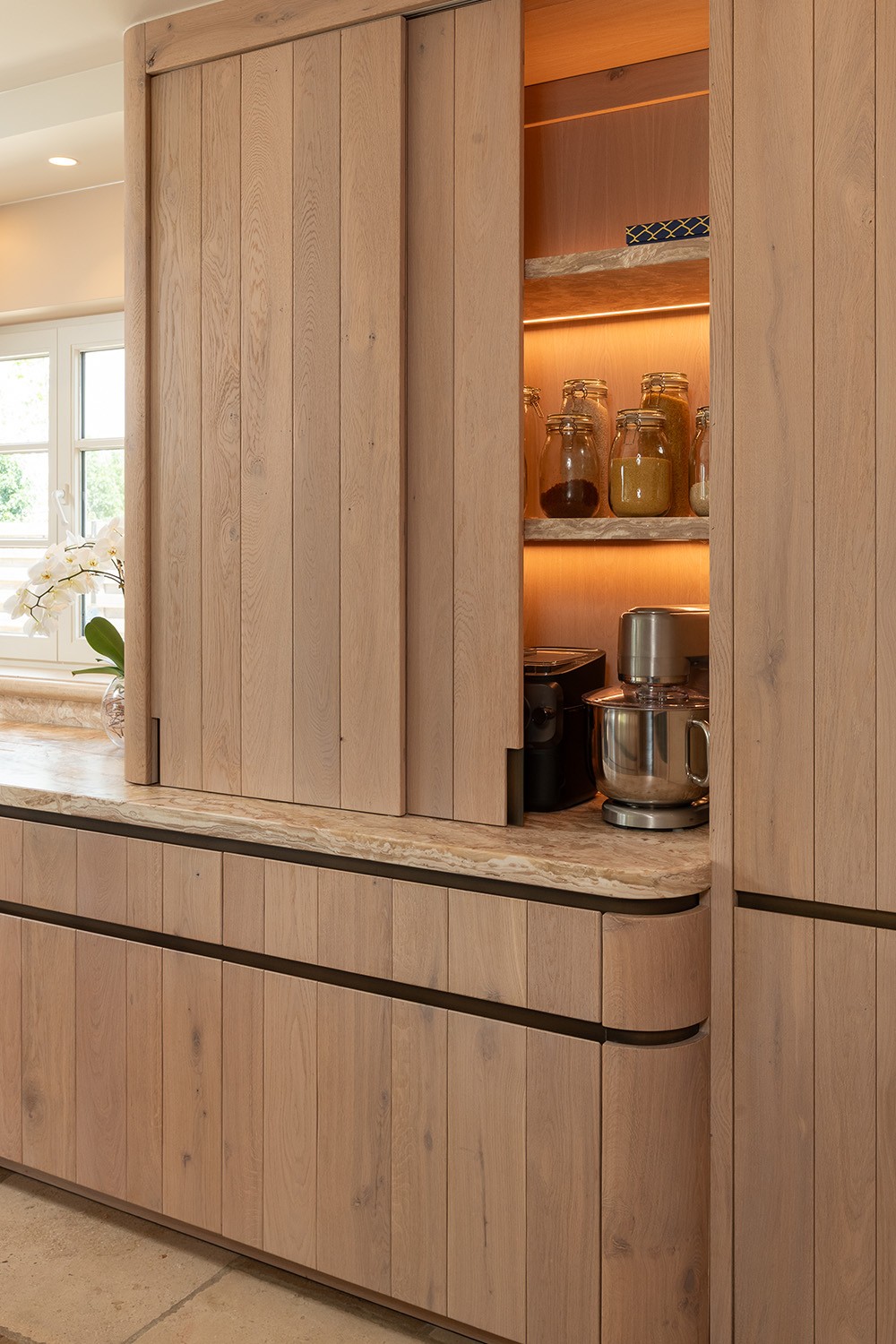
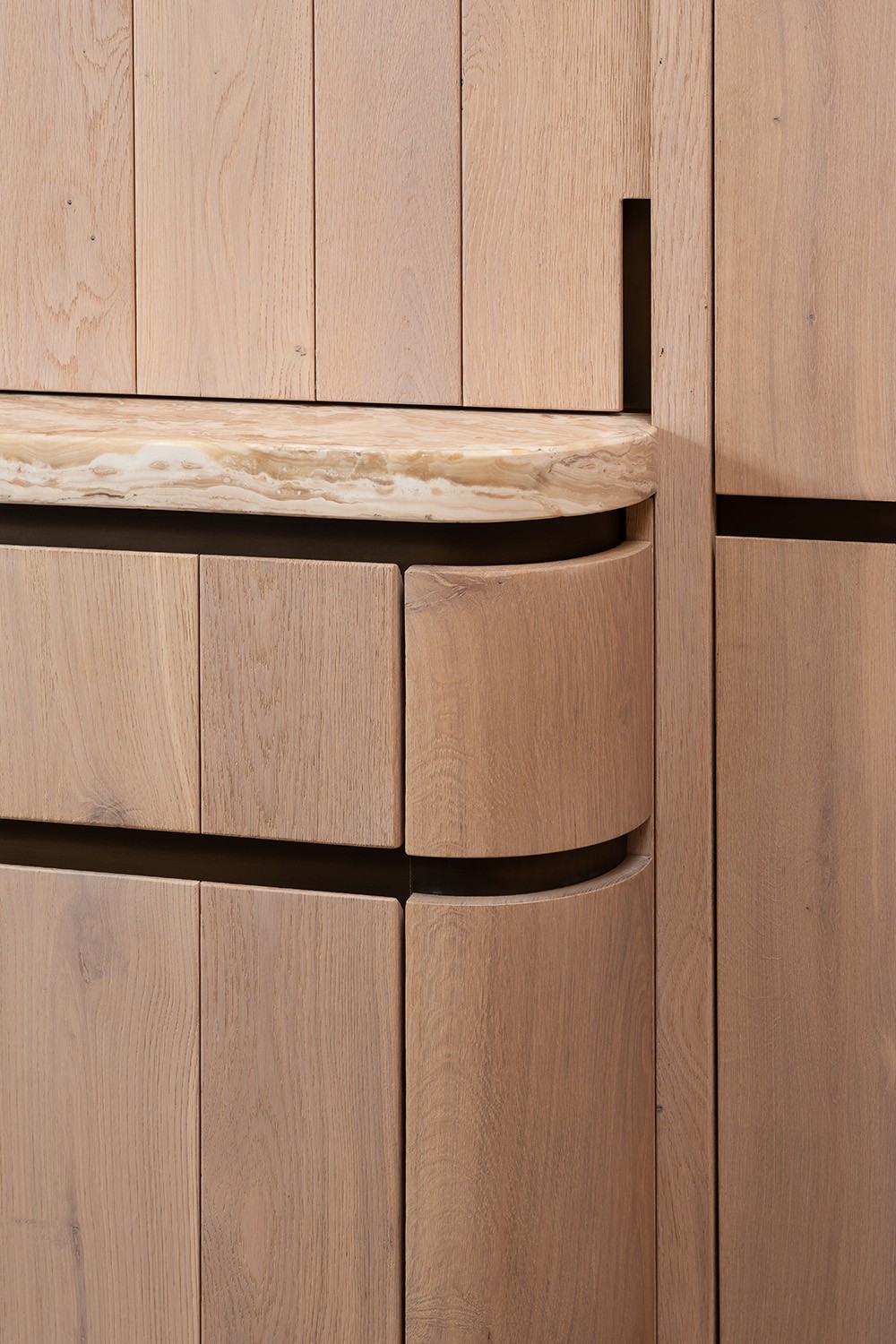
The cabinet wall also includes nooks and cut-throughs that interrupt the run of timber in a controlled way. They prevent the storage wall from becoming heavy. Instead, the surface alternates between solid planes and open breaks, which lets the organic oak kitchen keep its visual lightness. The material is doing the work here: oak carries the structure, while the joined lines keep it from becoming too flat or repetitive.
The centre island as a working surface
The island is not treated as a block. Its rounded perimeter and open edges make it read more like a piece of built-in furniture than a fixed mass. The stone-look worktop follows the shape closely, and the veining gives the surface a slightly unsettled pattern against the straighter oak fronts below. In the images, the island holds both the room and the routine of the kitchen: prep, conversation, movement around the edge.
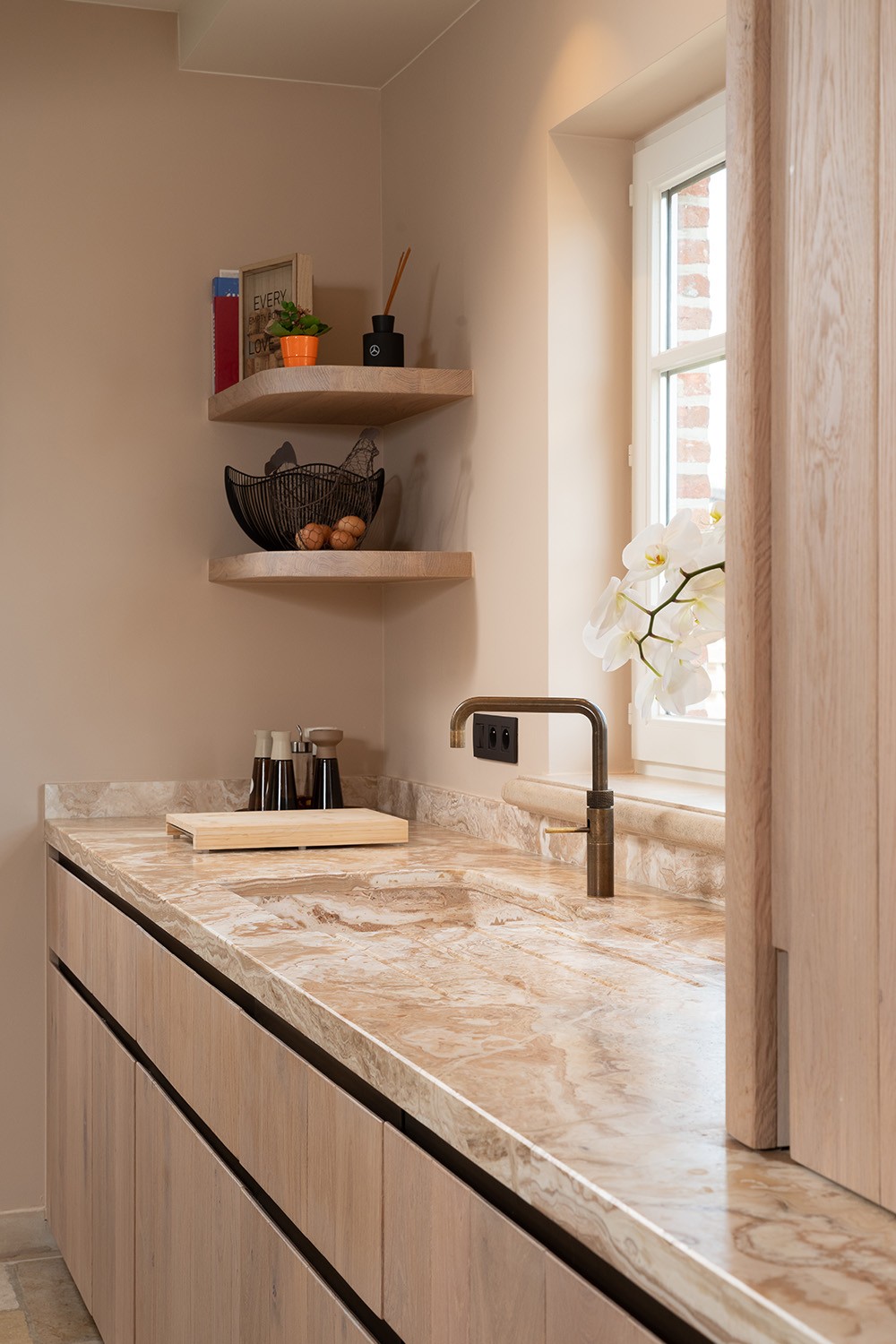
A bronze-toned tap and the inset sink zone add a darker note to the lighter materials. That detail matters because it keeps the work area from disappearing into the background. Around the sink, the curved opening and the surface cut-out are handled with precision, so the worktop remains calm even where it is used most. This is where the kitchen island with soft curves becomes the clearest expression of the whole project.
Stone-look surface against pale oak
The contrast between oak and stone is understated but constant. The worktop has a natural stone look that reads almost like marble in some views, with veining that moves across the surface rather than sitting in one place. Against the pale timber, that pattern brings a cooler note without shifting the kitchen away from its wooden base. The two materials meet at the edges of the island and along the wall run, where the joint stays clean and compact.
This material pairing gives the room a measured calm. The oak adds texture; the stone-look worktop adds a harder plane with more reflection and traceable lines. In the wider shots, the floor follows the same restrained palette, so the kitchen sits comfortably within the room instead of standing apart from it. The natural stone look worktop also strengthens the sculptural reading of the island, especially where the rounded corners catch the light.
Warm kitchen lighting and softer reflections
Warm light falls from the ceiling in small, even points, and that softness changes the way the surfaces read. The oak does not flash; it holds the light quietly. The stone-look worktop reflects a little more, enough to show its veining without turning glossy. In the evening views, the indirect lighting in the niches and along the cabinetry gives the wall depth and keeps the shadows gentle.
Because the lighting stays discreet, the shapes remain visible. The rounded island edge, the dark line accents, and the vertical grain all come forward in the same frame. This is what gives the room its sense of pause. The light does not decorate the kitchen; it lets the materials speak. In an organic oak kitchen, that restraint matters more than spectacle.
Details that hold the composition together
The finer points are where the project feels most resolved. A curved opening in the cabinetry, an internal niche with a soft LED line, and the precise meeting of worktop and front all keep the room from becoming a simple wood box. The dark linear accents appear again in these details, tying the larger wall composition to the close-up finish around the sink and edge zones.
Seen in sequence, the images show a kitchen built from repeats and small shifts rather than abrupt gestures. Rounded corners reappear on the island, then on the worktop, then in the wall details. The oak remains the constant, but it is never treated as a single flat field. This organic oak kitchen uses material, curve and line to make the room feel composed without pushing it into a strict form.
The final impression comes from the way the surfaces hold together under light. Oak, stone-look worktop, dark joints and bronze-toned hardware each keep their own place. Nothing is overworked. The island stays central, the wall stays readable, and the rounded shapes continue to soften the route through the room. It is an interior where the grain, the curve and the light are all allowed to remain visible.
Materials: oak was used for this project. De Bosbeke has a passion for oak.
Photographer: Stephan Bontick
Want to see more of De Bosbeke? View the page of De Bosbeke for even more great projects and company information.

NEW 2026 Jubileum Edition The Best Interior Designers Benelux
Order Now €125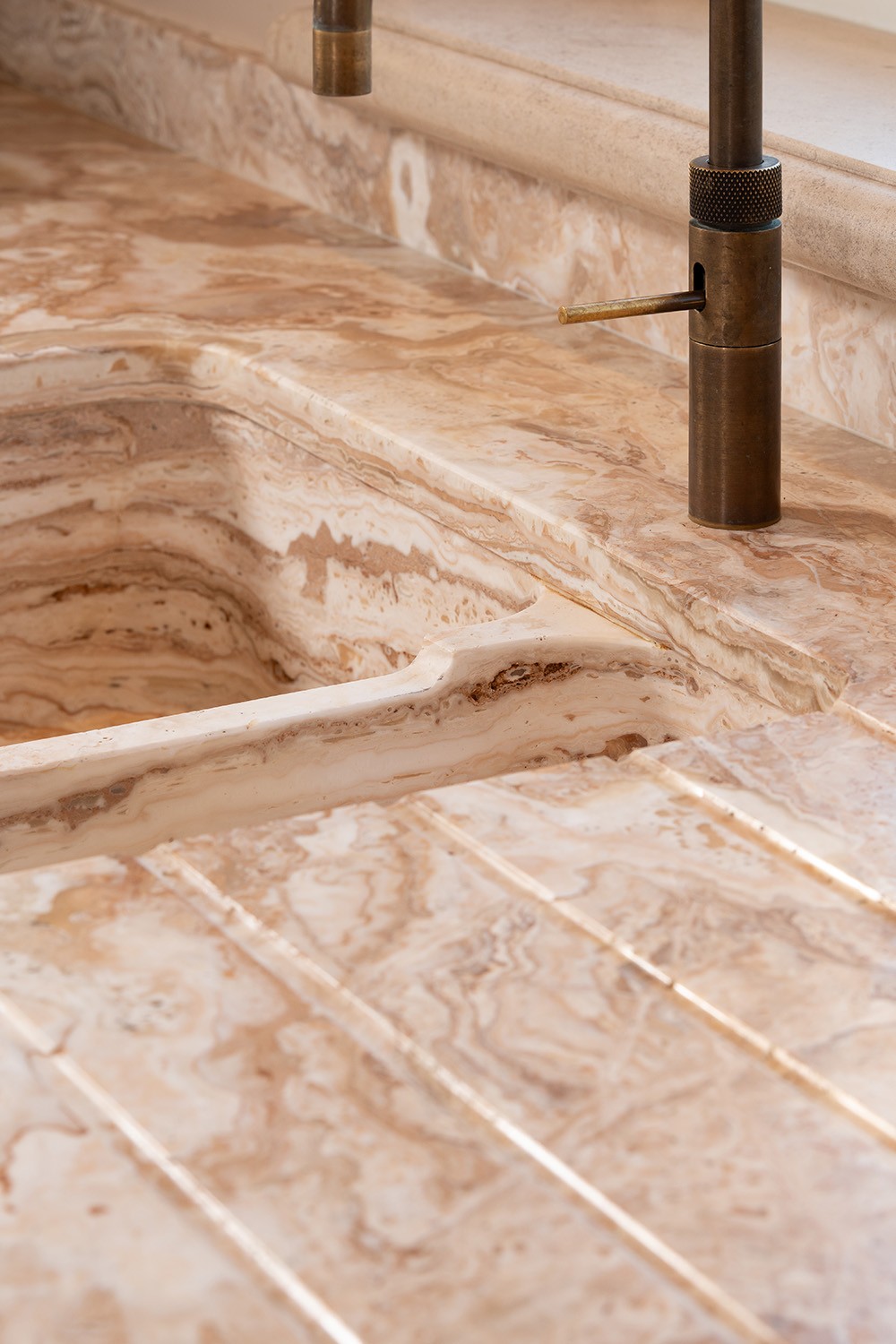
NEW 2026 Jubileum Edition The Best Interior Designers Benelux
Order Now €125