






Black wooden sliding gate
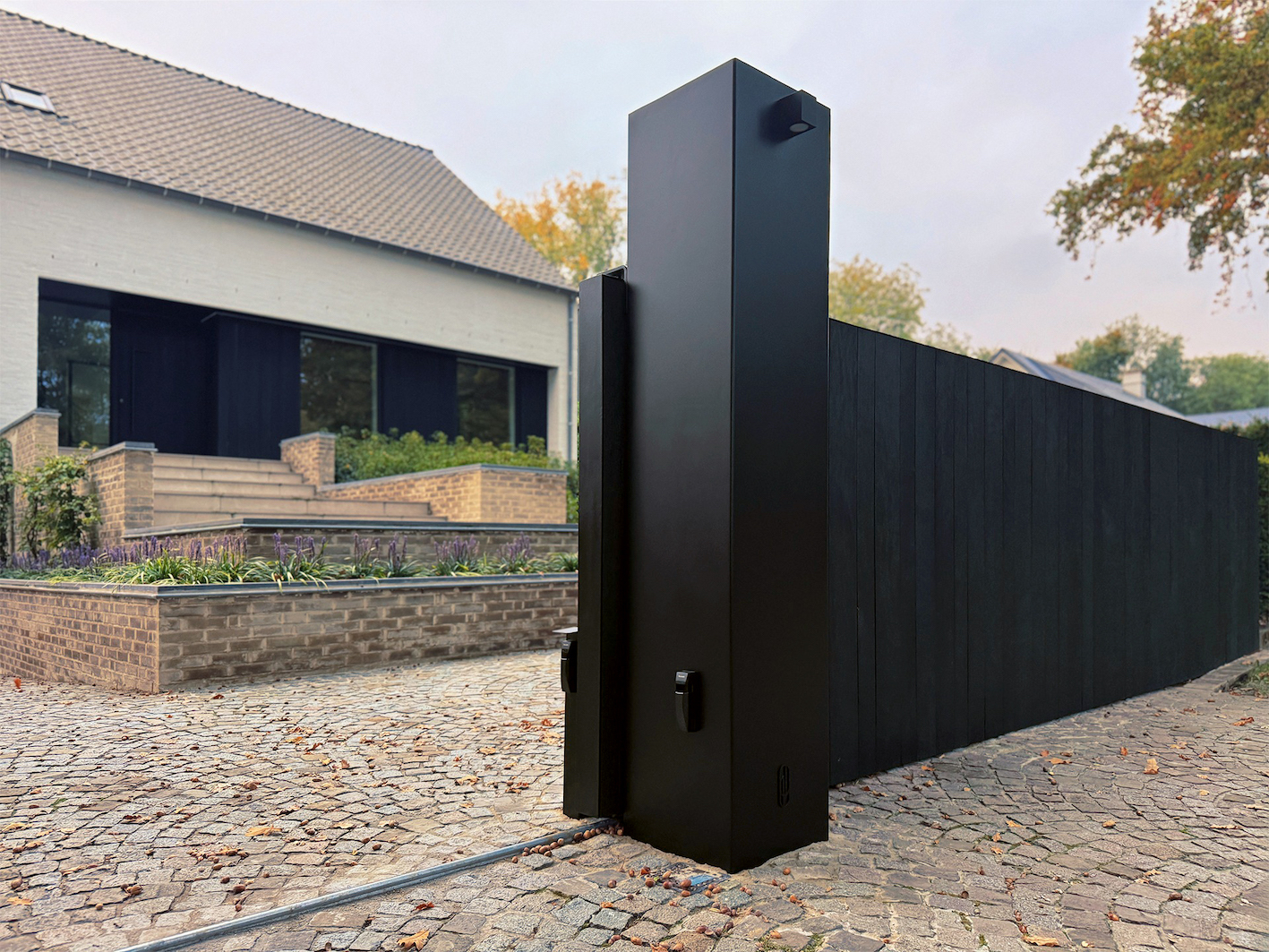
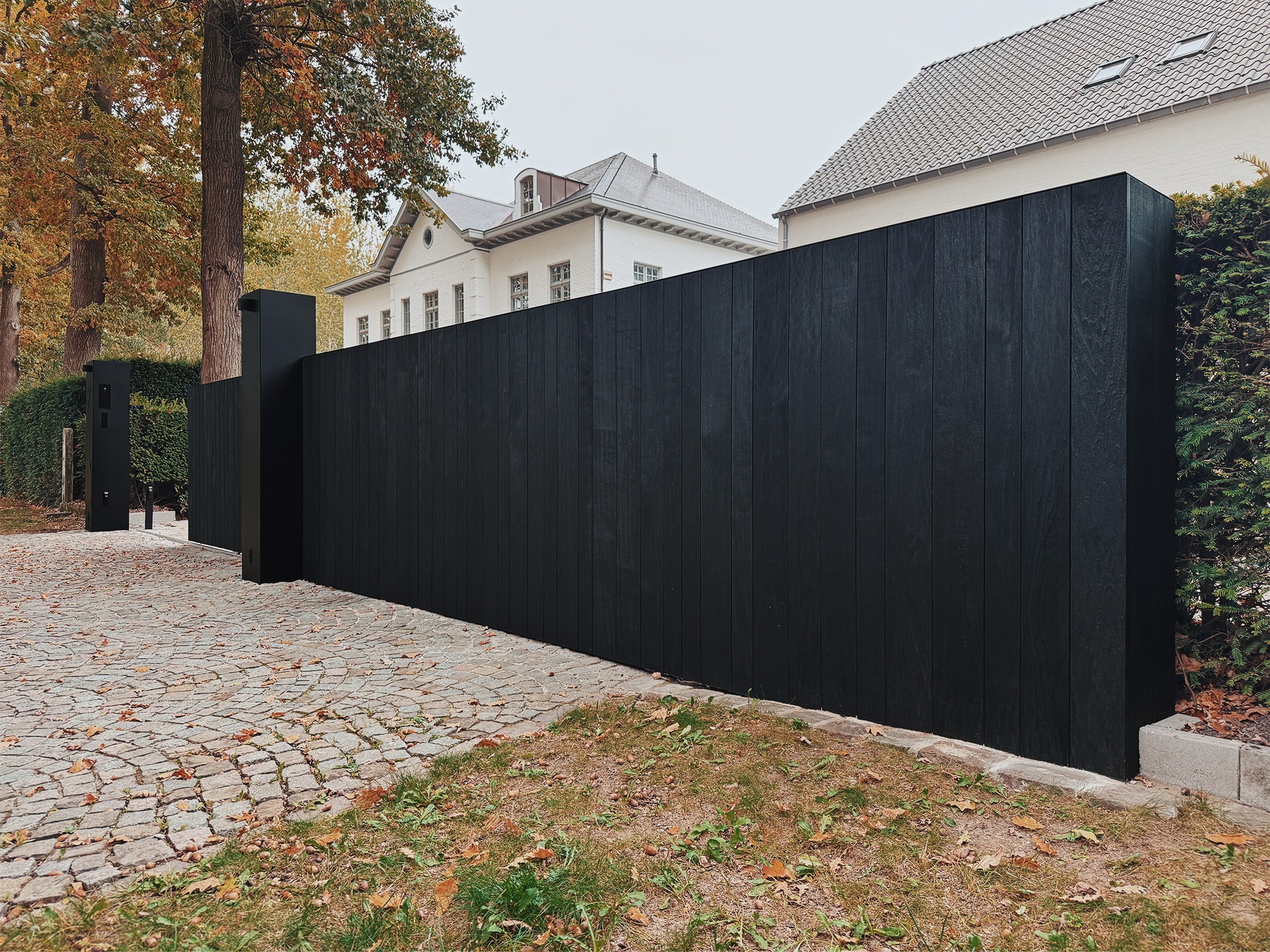
Black brushed wood sets the tone before the boundary line even registers. The black wooden sliding gate stretches across the frontage with an 11-metre span, including a fixed panel, and its vertical slats pull the eye upward in a steady rhythm. The boards alternate in width, which keeps the surface from reading as flat. Instead, the gate sits against the house with the same restraint as the surrounding masonry and paving.
A wide gate that follows the line of the house
The scale is the first thing you notice. At 11 metres wide, the gate has the presence of a major architectural element, yet the dark finish keeps it from overwhelming the setting. The brushed ThermoFraké surface softens the grain just enough to show movement in the wood, while the black treatment gives the slats a dense, even tone. The result is less about display and more about definition: a clear edge, a measured opening, a calm surface.
That reading is strengthened by the fixed panel, which extends the composition and lets the sliding section remain visually consistent. The modern sliding gate does not interrupt the house; it continues the language of the building. Across the width, the alternating plank sizes create a slow change in cadence, echoing the rhythm of the cladding behind it without copying it directly.
Vertical slats and brushed grain in close view
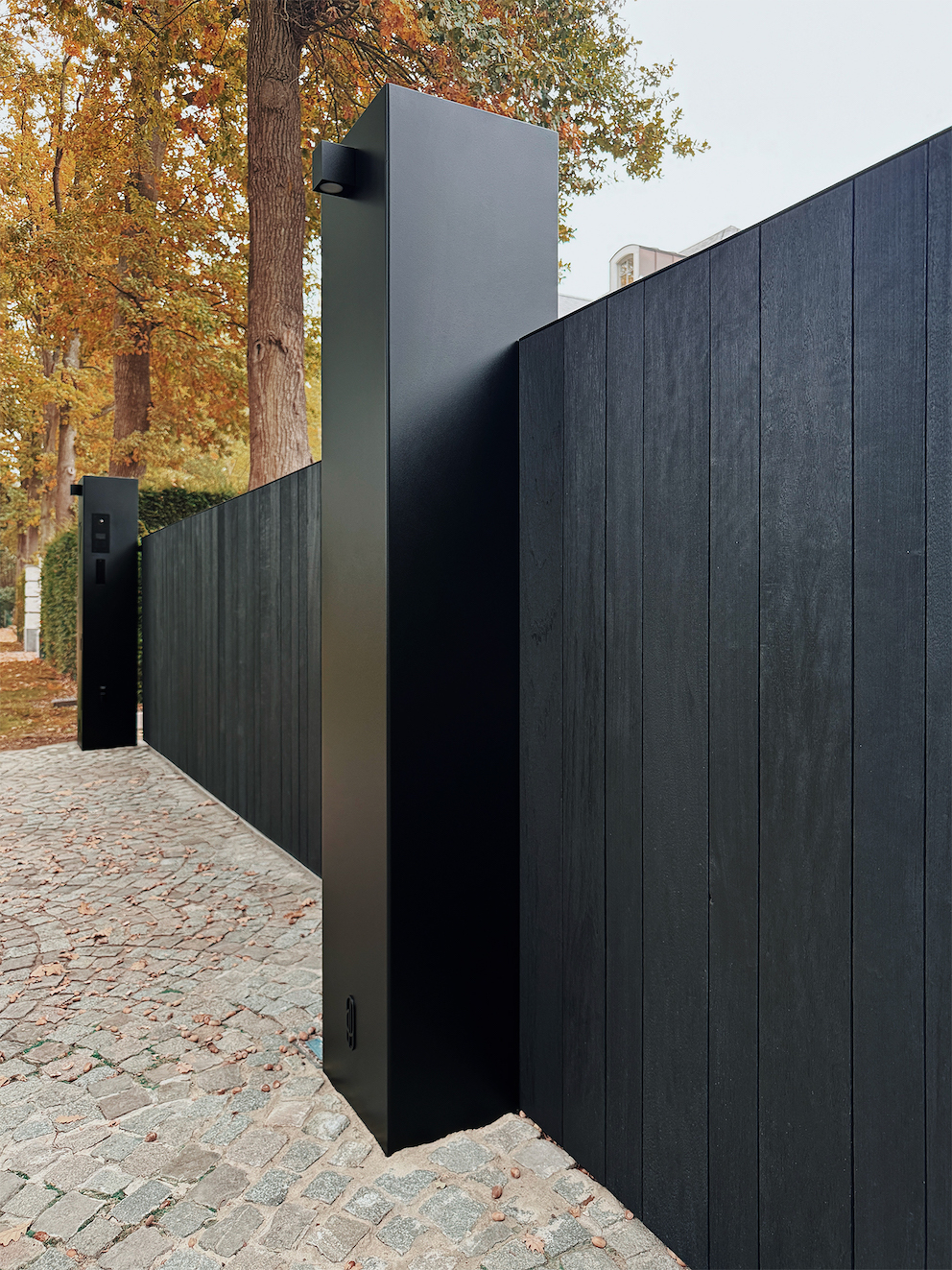
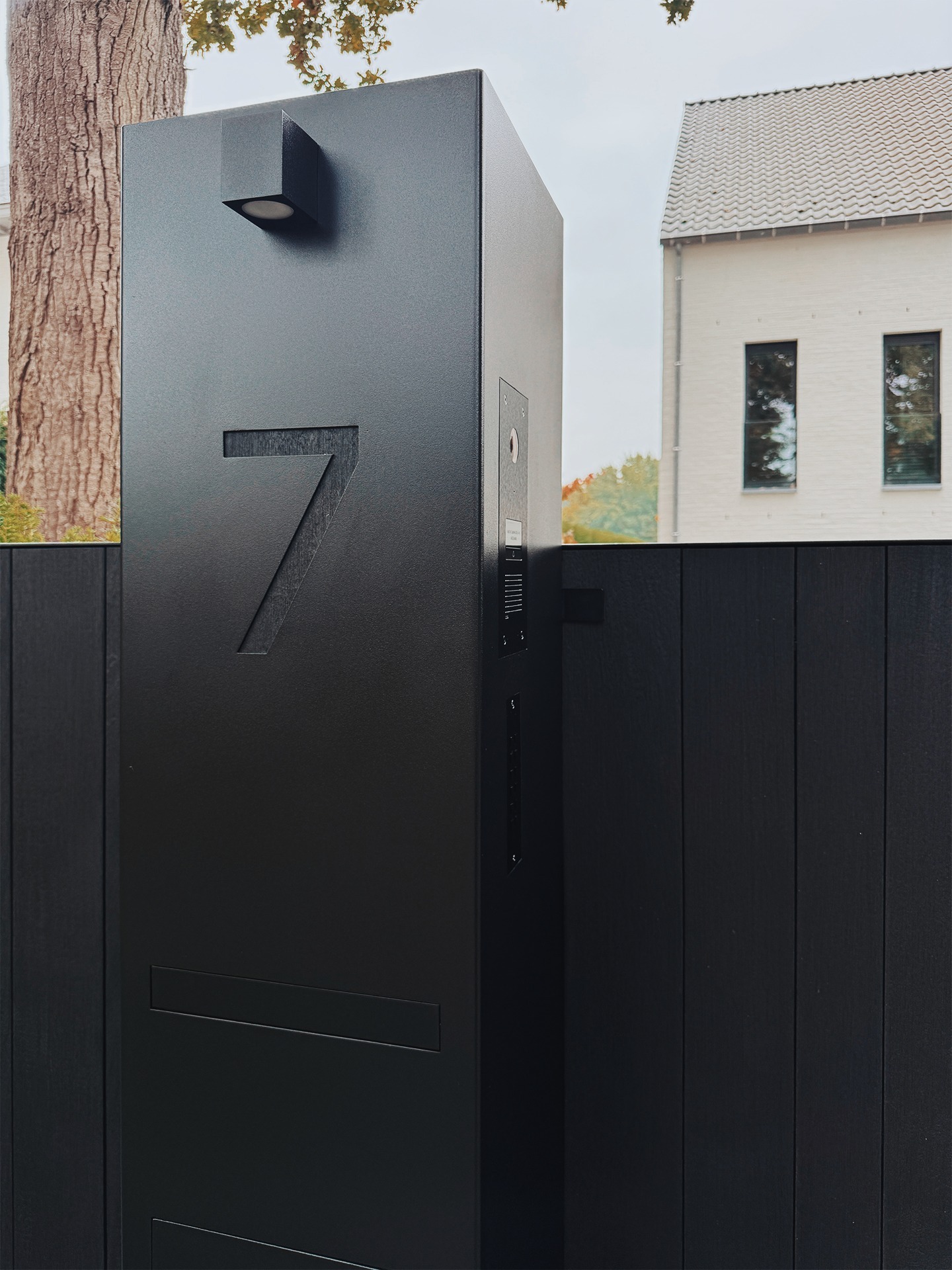
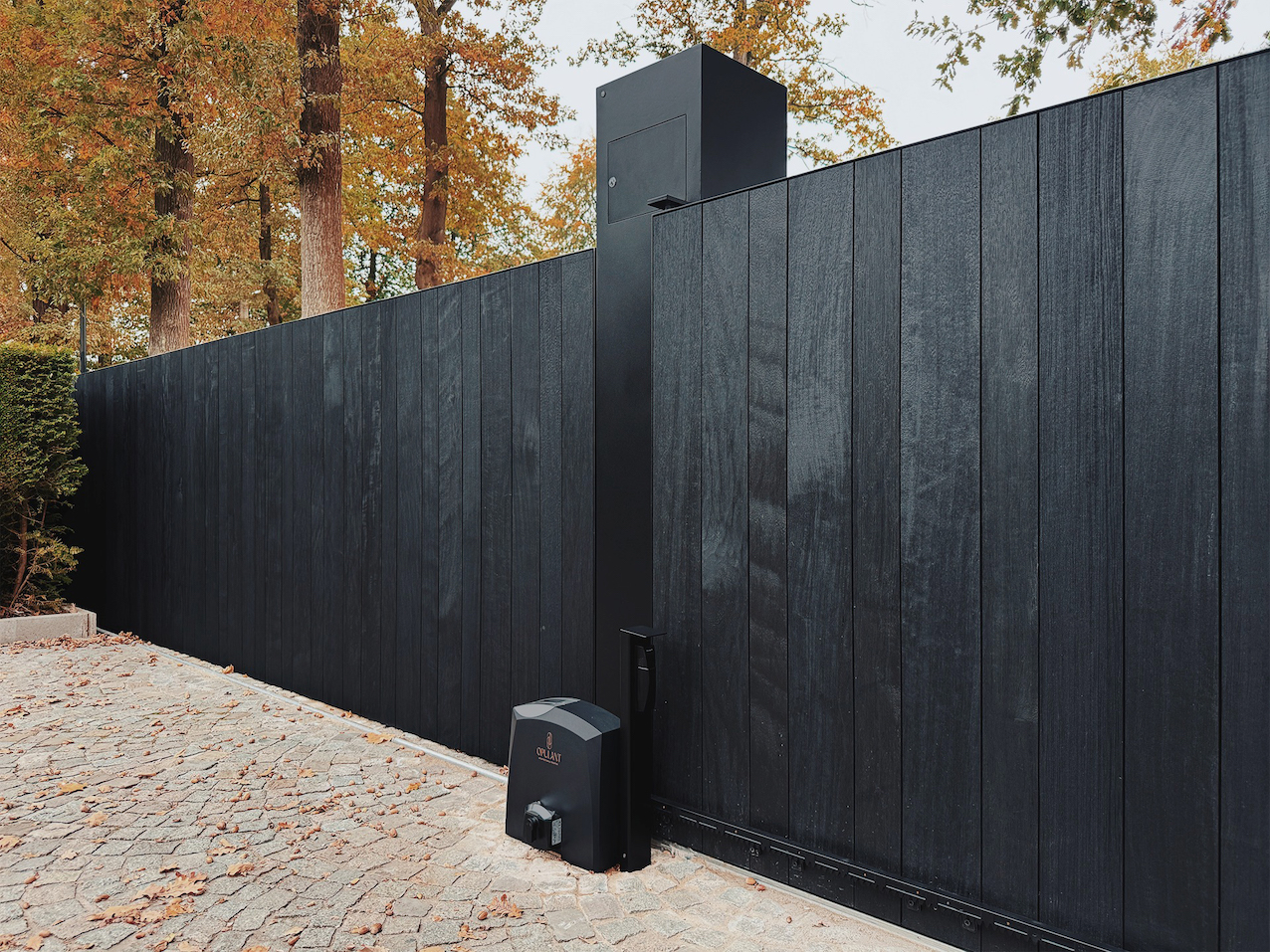
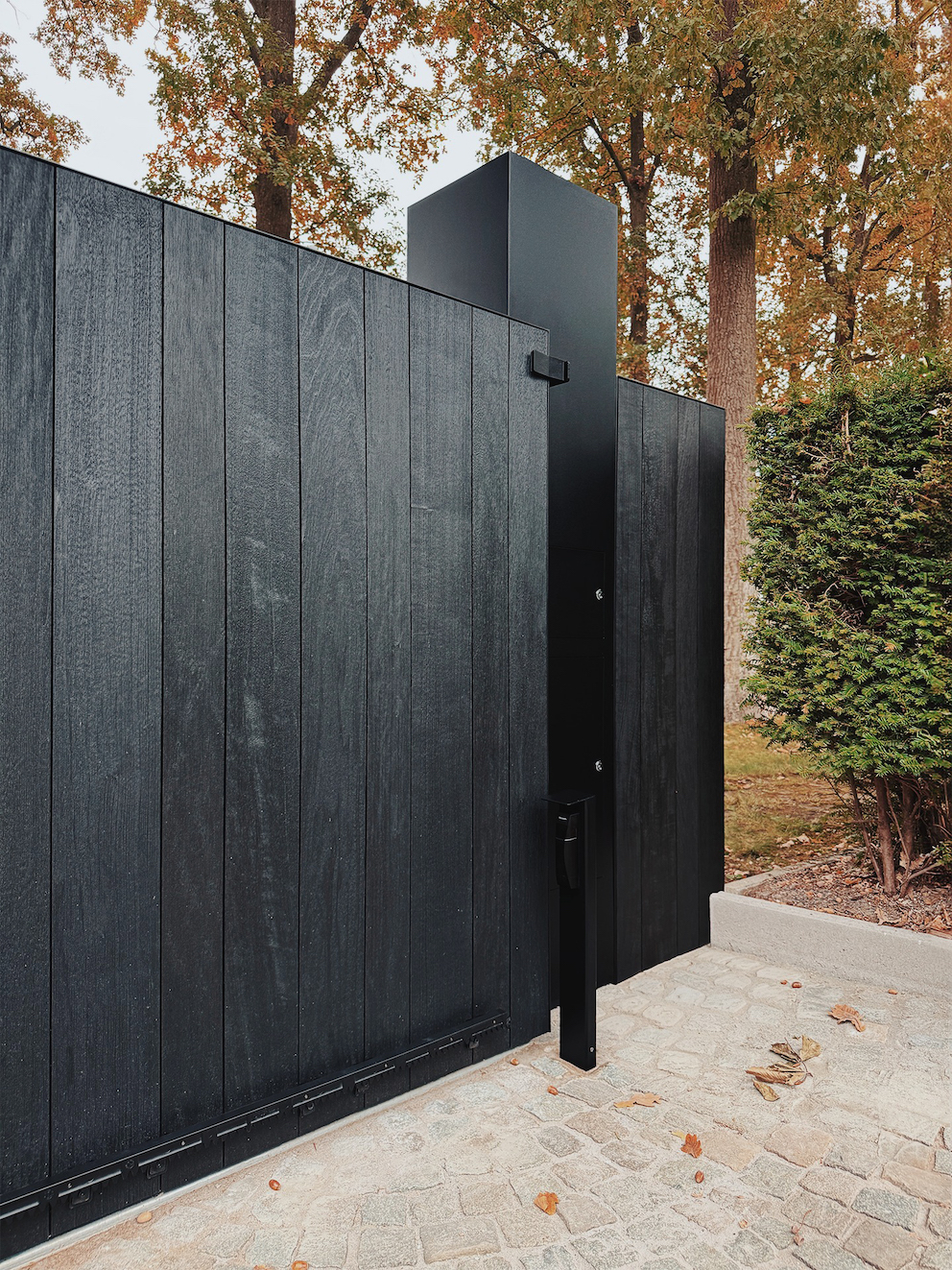
Seen up close, the black wood gate has a dry, tactile surface. The brushed finish leaves the grain visible, so the dark tone never turns completely opaque. Narrow joints separate the vertical slats, and those slim gaps sharpen the outline of each board. The effect is precise but not rigid. Light catches the edges differently as it moves across the surface, especially where the boards vary in width.
This is where the project becomes more than a straightforward black wood gate. The material choice does the work of both screening and composing. From one angle, the slat rhythm feels compact and closed. From another, the changes in board width break the repetition and give the surface a quieter depth. The gate reads as a single plane, but it is built from parts that stay visible.
A wooden driveway gate with a fixed panel
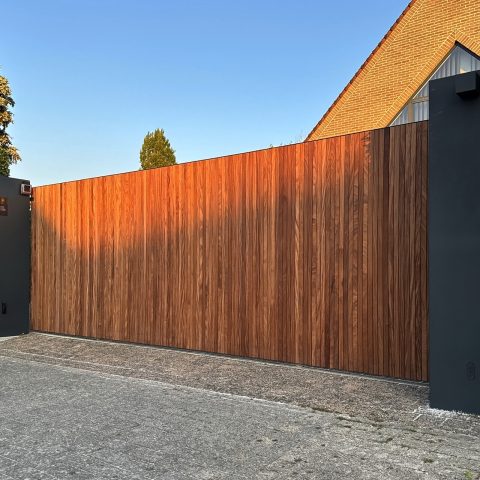
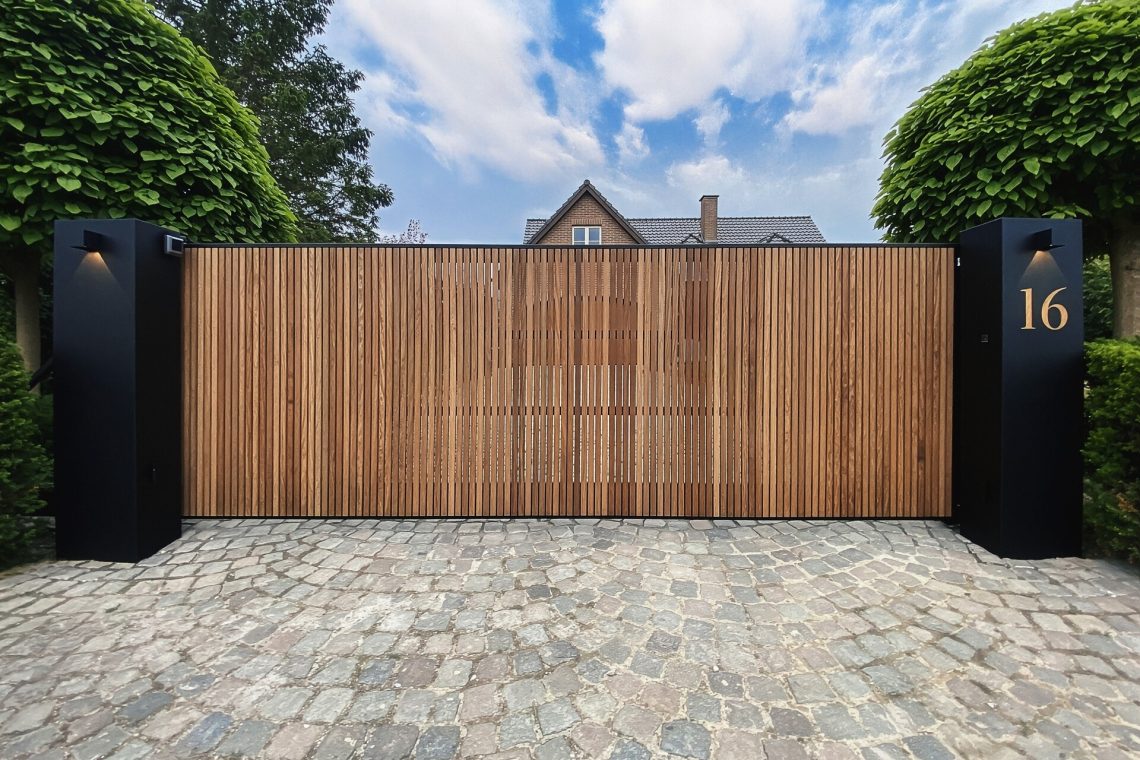
The fixed panel keeps the composition anchored at one side and gives the entrance a more deliberate outline. As a wooden driveway gate, it uses length rather than ornament to make its point. There are no decorative inserts or abrupt contrasts. The long horizontal run is controlled by the vertical slats, and that tension between direction and rhythm is what gives the project its clarity. The opening feels measured, not oversized for its own sake.
From the street side, the gate and panel work as one continuous boundary. The dark wood holds the line, while the lighter masonry nearby and the cobblestone path below give the scene a grounded frame. The setting does not compete with the gate. It leaves room for the surface to be read in full, from the post details to the far end of the span.
Technical elements kept in view, then tucked back
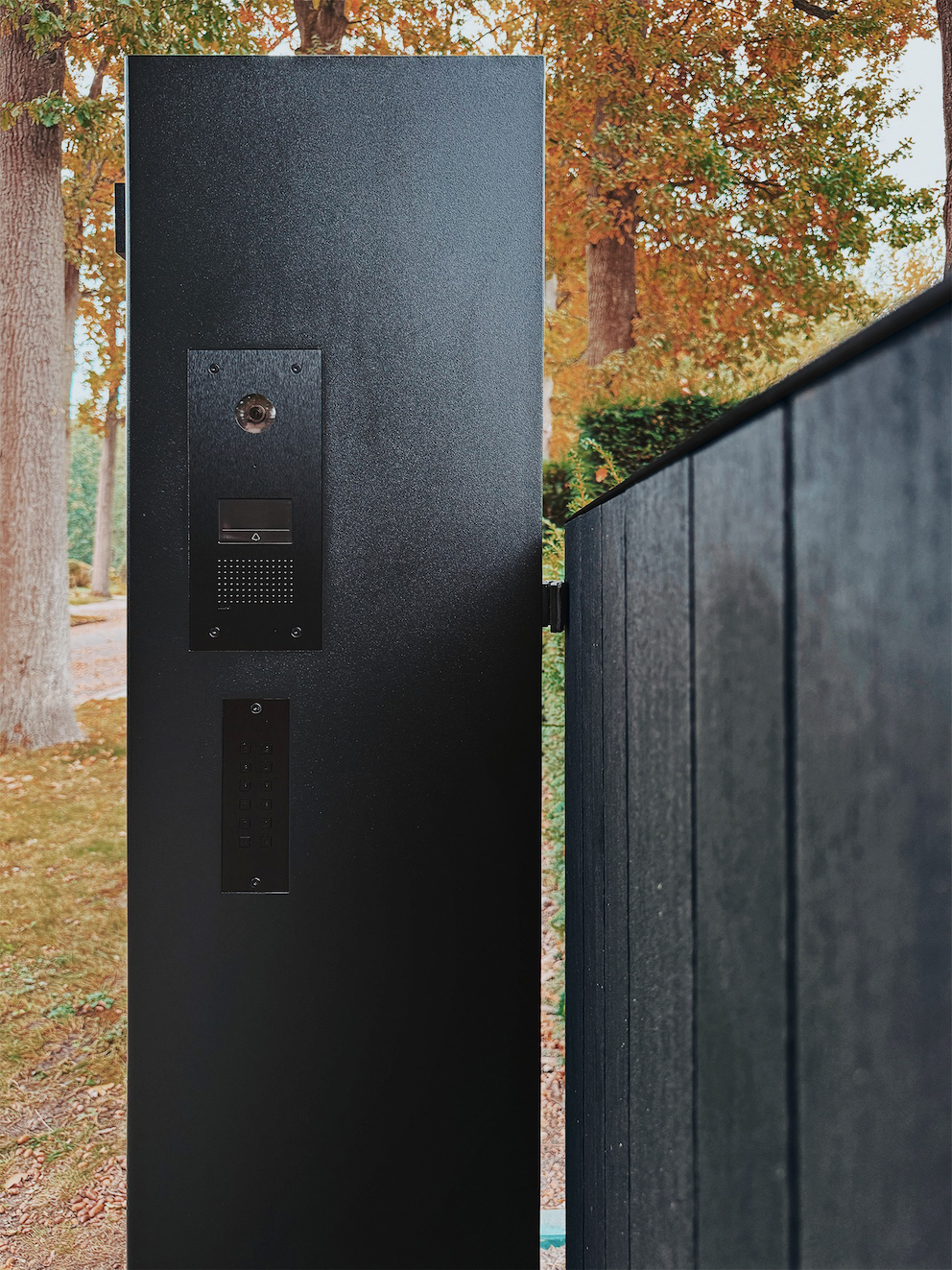
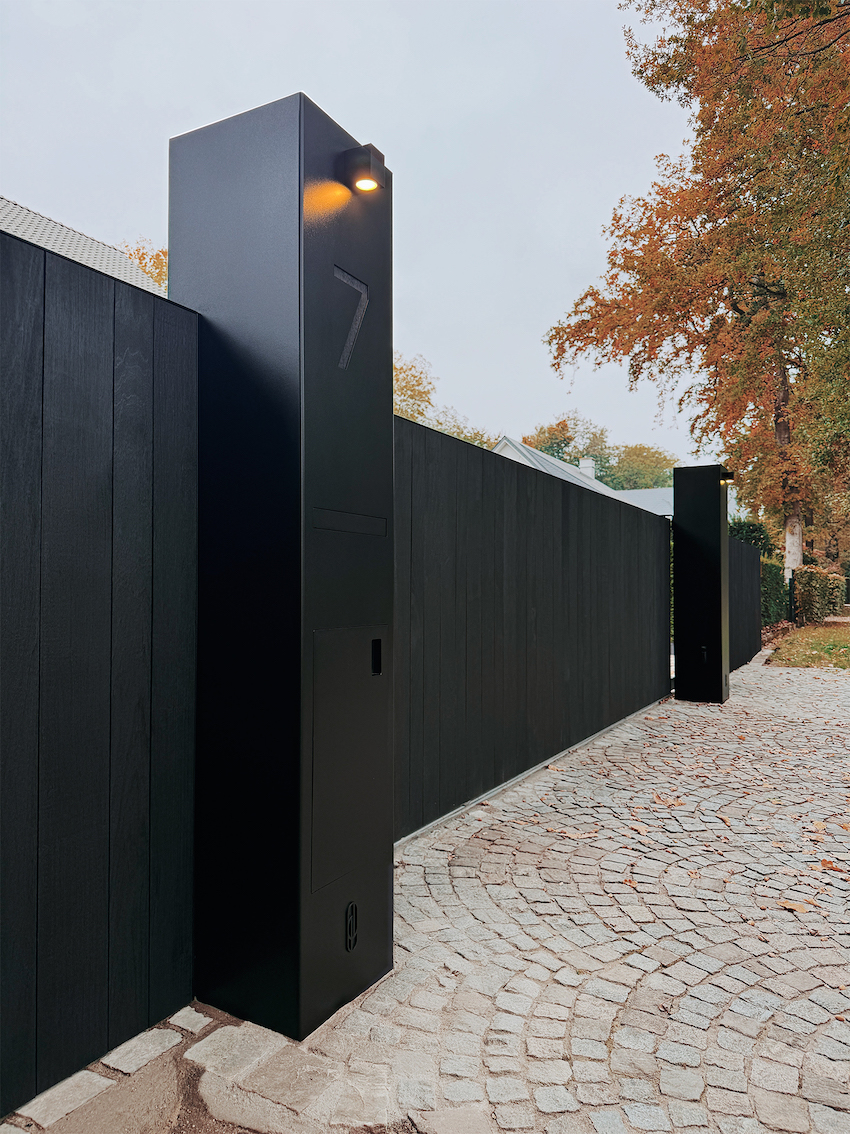
Near the gate post, the practical parts are integrated rather than announced. The intercom and control zone sit flush within the post, and a small exterior light is placed above or close to that point. Because these elements are built into the post face, they do not break the surface into fragments. They sit in the margin of the composition, exactly where access needs to happen. The gate remains the main visual line.
That detail matters for a gate with intercom. The device is present, but it is not allowed to dominate the frame. The same is true of the light on the post: it marks the threshold without turning the entrance into a technical display. In the wider view, those additions are small, almost quiet, against the dark plane of the gate.
Light on the post, shadow on the boards
The exterior light adds a small point of contrast to the post, especially in the darker stretches of the wood. Its placement gives the boundary a clear reading after dusk, while the matte surface of the boards keeps reflections low. That combination makes the gate feel composed even in partial light. Nothing is glossy. Nothing interrupts the vertical order of the slats.
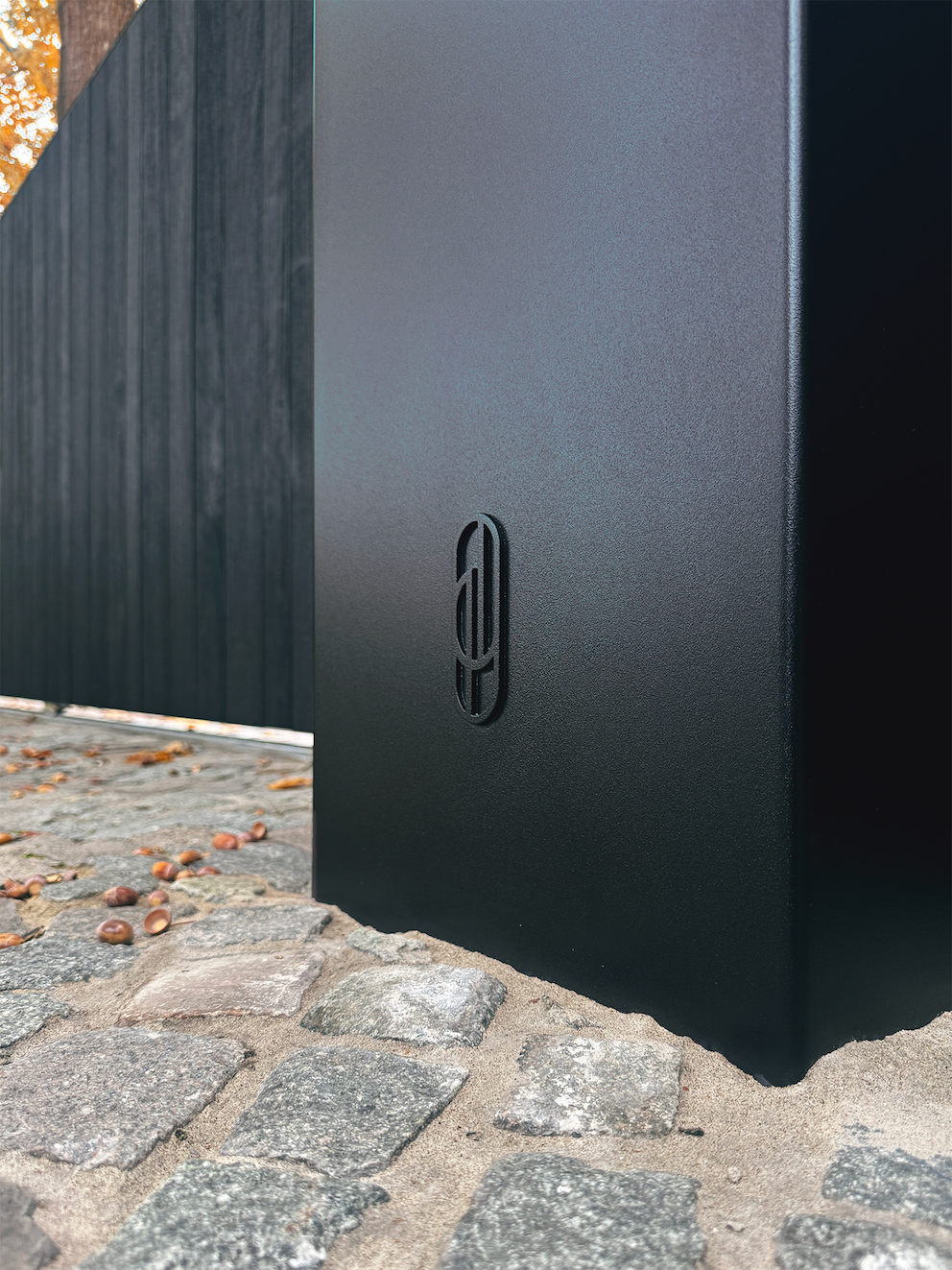
Close views also reveal how the hardware remains subordinate to the timber. The post face is clean, with the control zone recessed into the structure rather than mounted on top. It is a practical decision, but it also preserves the surface language of the black wooden sliding gate. The eye returns to the grain, the joints, and the long run of the panel rather than to the mechanism.
A boundary that fits the paving and planting
The surrounding scene is modest and specific: cobblestones underfoot, masonry at the edge, planting along the line of the gate. Those materials keep the entrance connected to the ground plane. The black wood then works as a darker counterpoint, especially beside the pale paving and the garden greenery. In one image, autumn leaves add a copper note that briefly warms the frame, but the gate remains the fixed element that holds the view together.
That is what gives this sliding gate with fixed panel its strength. It does not try to announce the property from afar. Instead, it gives the boundary a clear, disciplined reading, one that sits naturally between house, wall, and path. The variable plank widths, the brushed finish, and the long uninterrupted span all serve that single purpose: to turn an access point into a measured architectural line.
Model Visus in black brushed ThermoFraké
The project is identified as the Visus model, clad in black brushed ThermoFraké. That note is useful because it explains the material logic behind the surface: a timber skin with visible grain, treated to read as dark and compact while still keeping some texture alive. In the photographs, that texture is most legible at close range, where the vertical slats show slight tonal shifts and the brushed finish catches light at the edges.
As a vertical slat gate, the design relies on repetition, proportion, and restraint. The changes in plank width stop the surface from becoming mechanical, while the length of the gate keeps it grounded in the architecture of the property. The final impression is straightforward: a contemporary boundary made from wood, steel structure, and a few carefully placed technical details, all set into a calm outdoor edge.
Want to see more of Opulant? View the page of Opulant for even more great projects and company information.

NEW 2026 Jubileum Edition The Best Interior Designers Benelux
Order Now €125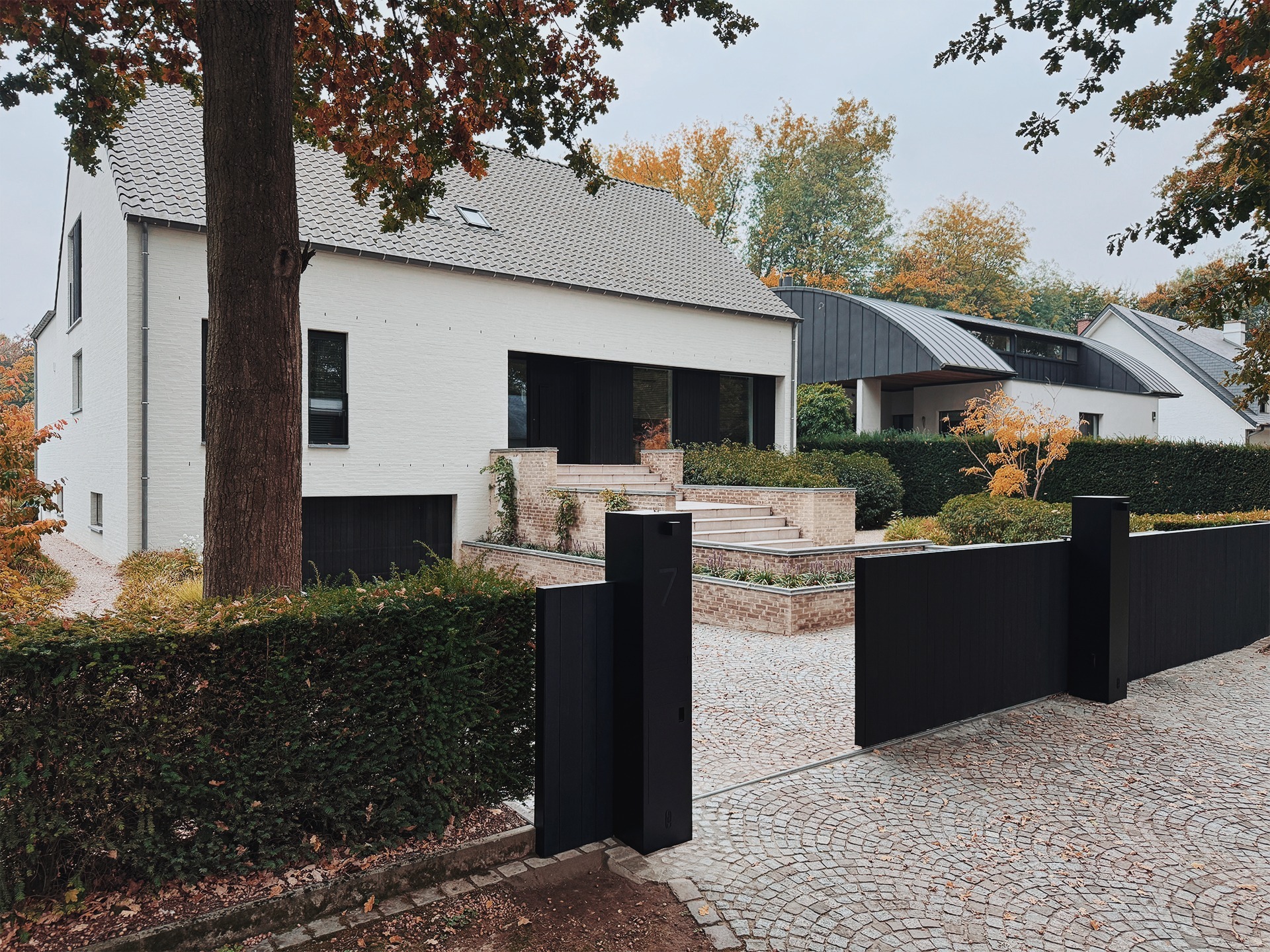
NEW 2026 Jubileum Edition The Best Interior Designers Benelux
Order Now €125