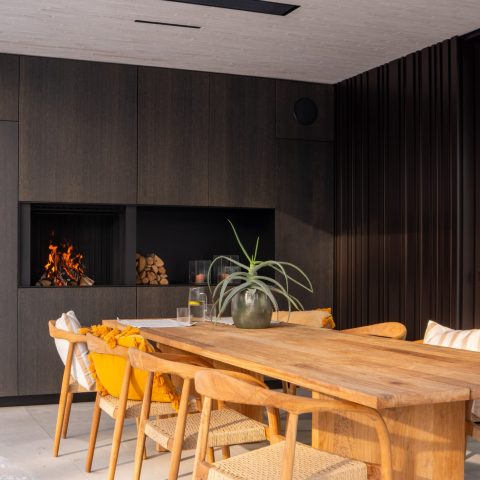









Built-in wood fireplace in wooden wall panels
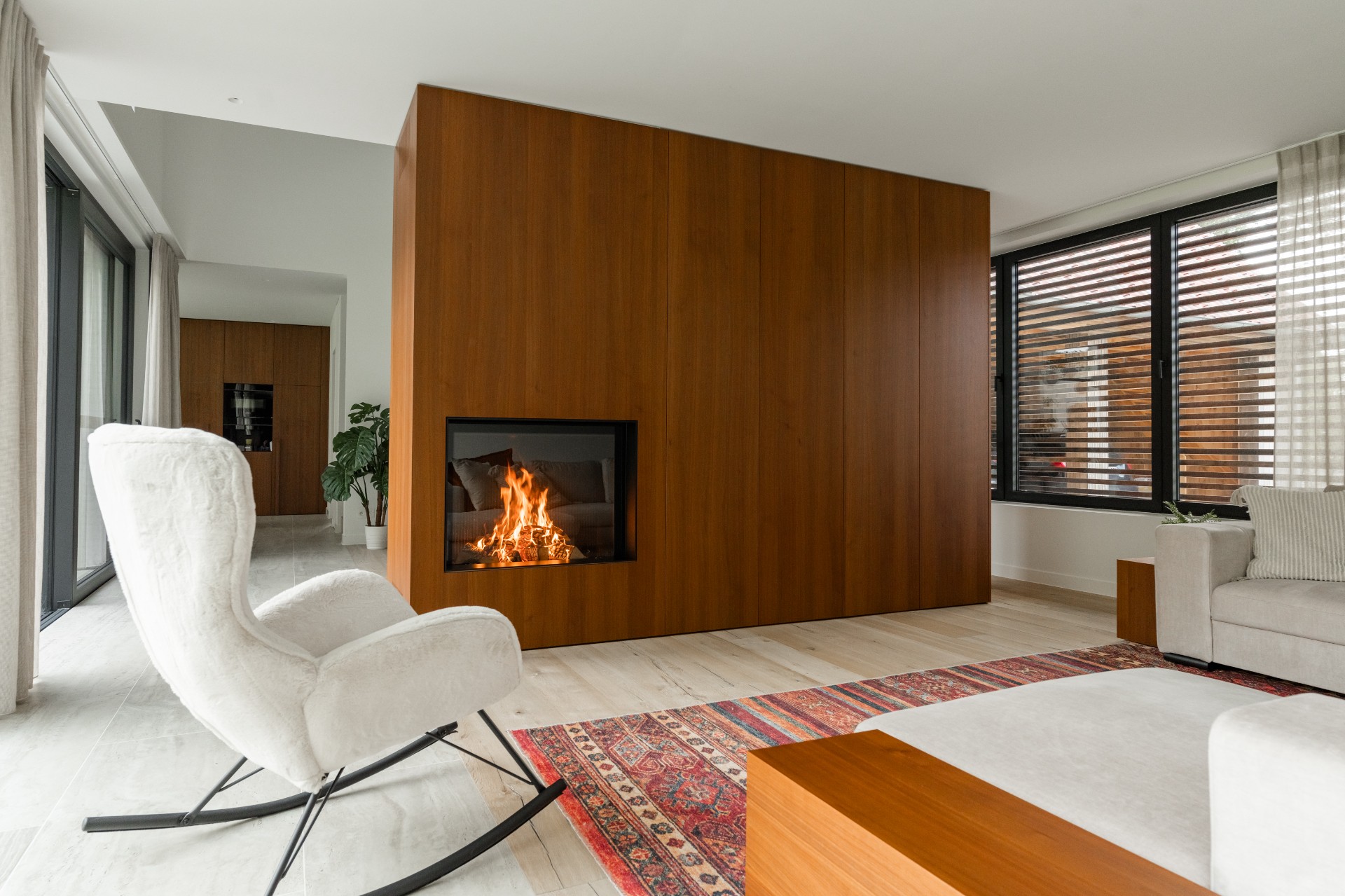
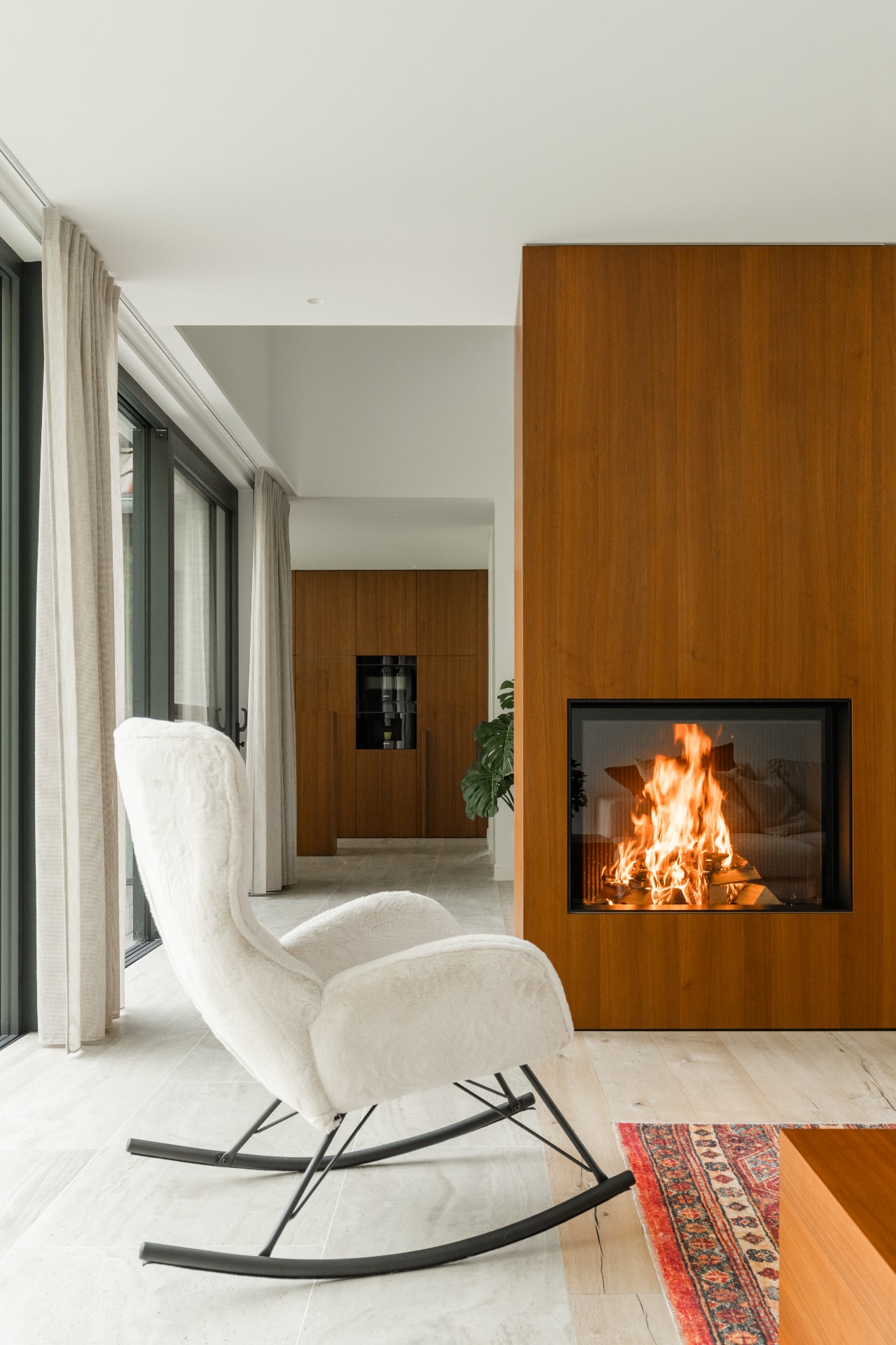
The black glass front sits squarely inside the wood paneling, and the fire reads as a vertical line rather than a wide hearth. That tight composition gives the built-in wood fireplace a clear role in the room: it holds the eye without breaking the calm of the surrounding joinery. The horizontal grain of the wall panels and the tall flame view work against each other in a way that feels deliberate, while the light from the large windows keeps the whole setting open.
A fireplace framed by joinery, not hidden by it
The most striking part of this built-in wood fireplace is how closely it follows the geometry of the wall. The opening is cut into wooden panels that form a niche around the fire, so the fireplace does not read as a separate object placed against the wall. Instead, it settles into the surface. The dark outline around the glass strengthens that effect, and the fire appears even sharper against the warm wood. It is an approach that turns the wall itself into part of the composition.
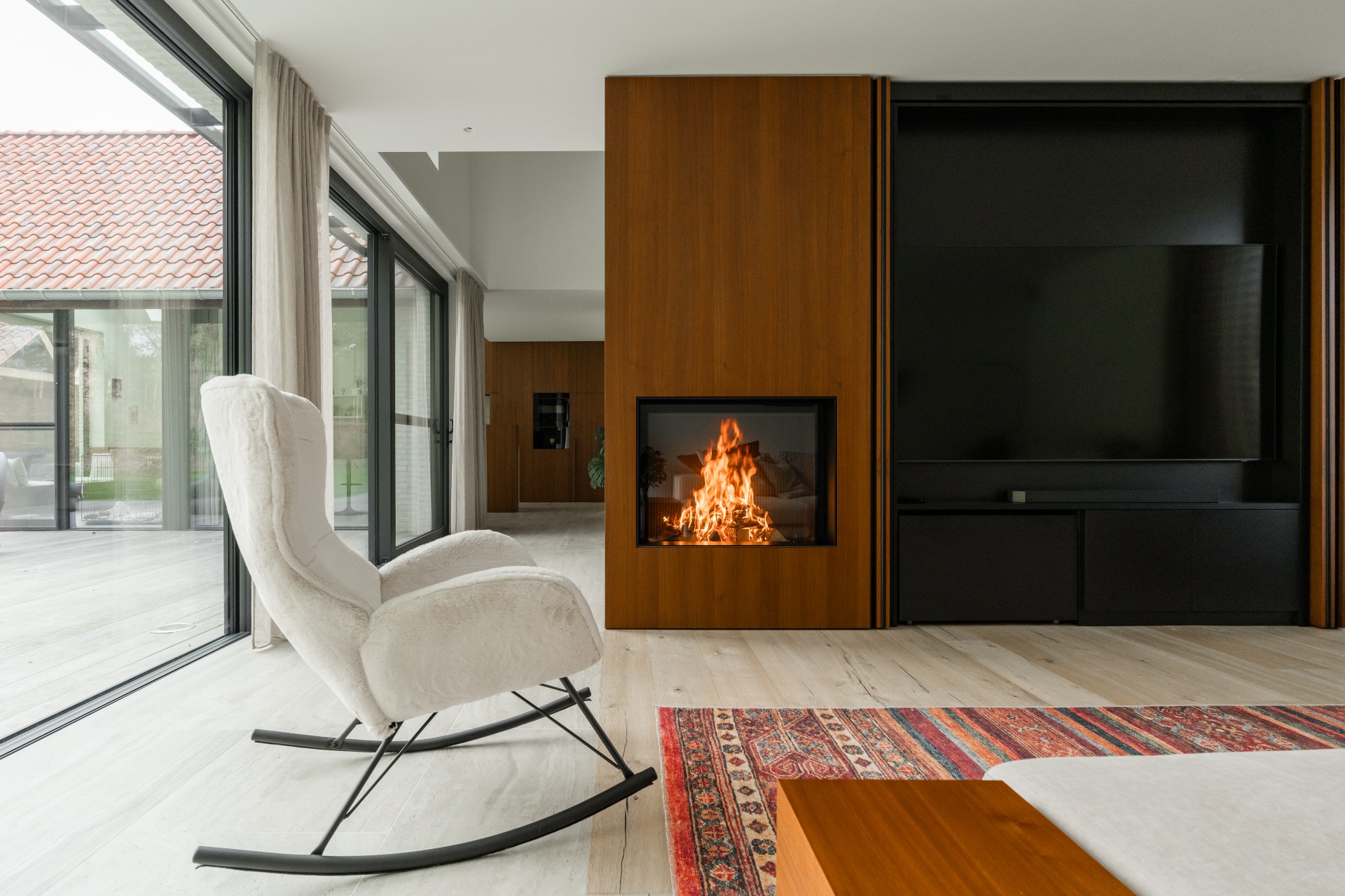
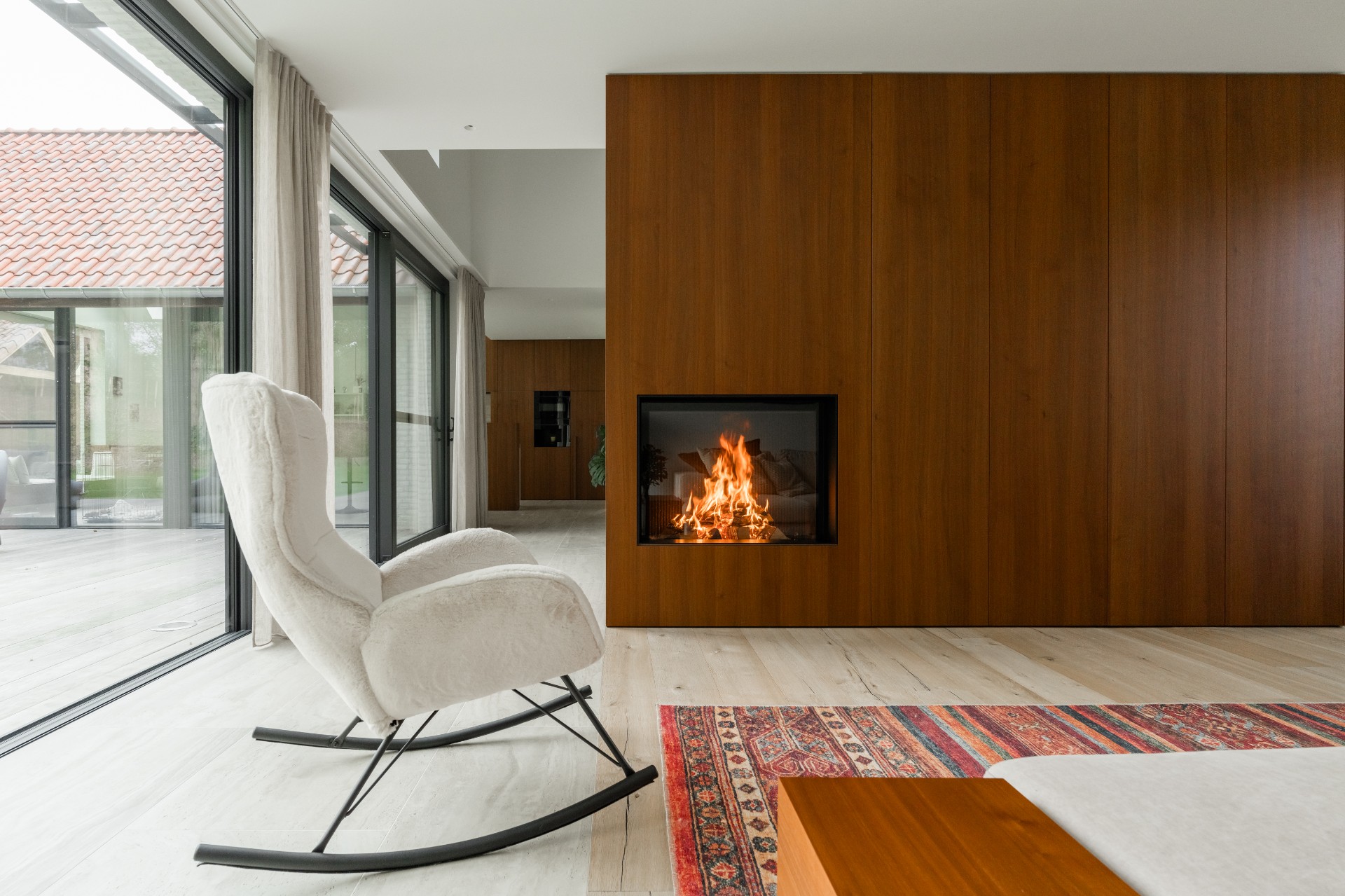
Seen from a wider angle, the room stays bright and measured. Large panes bring in daylight, while pale flooring and restrained furnishings keep attention on the fireplace wall. The result is not a crowded interior, but a modern living built-in fireplace setting where the fire can sit quietly in the center of the view. The wood wall niche fireplace is visible from across the space, yet it never overwhelms the room.
Vertical flame view and a tall glass front
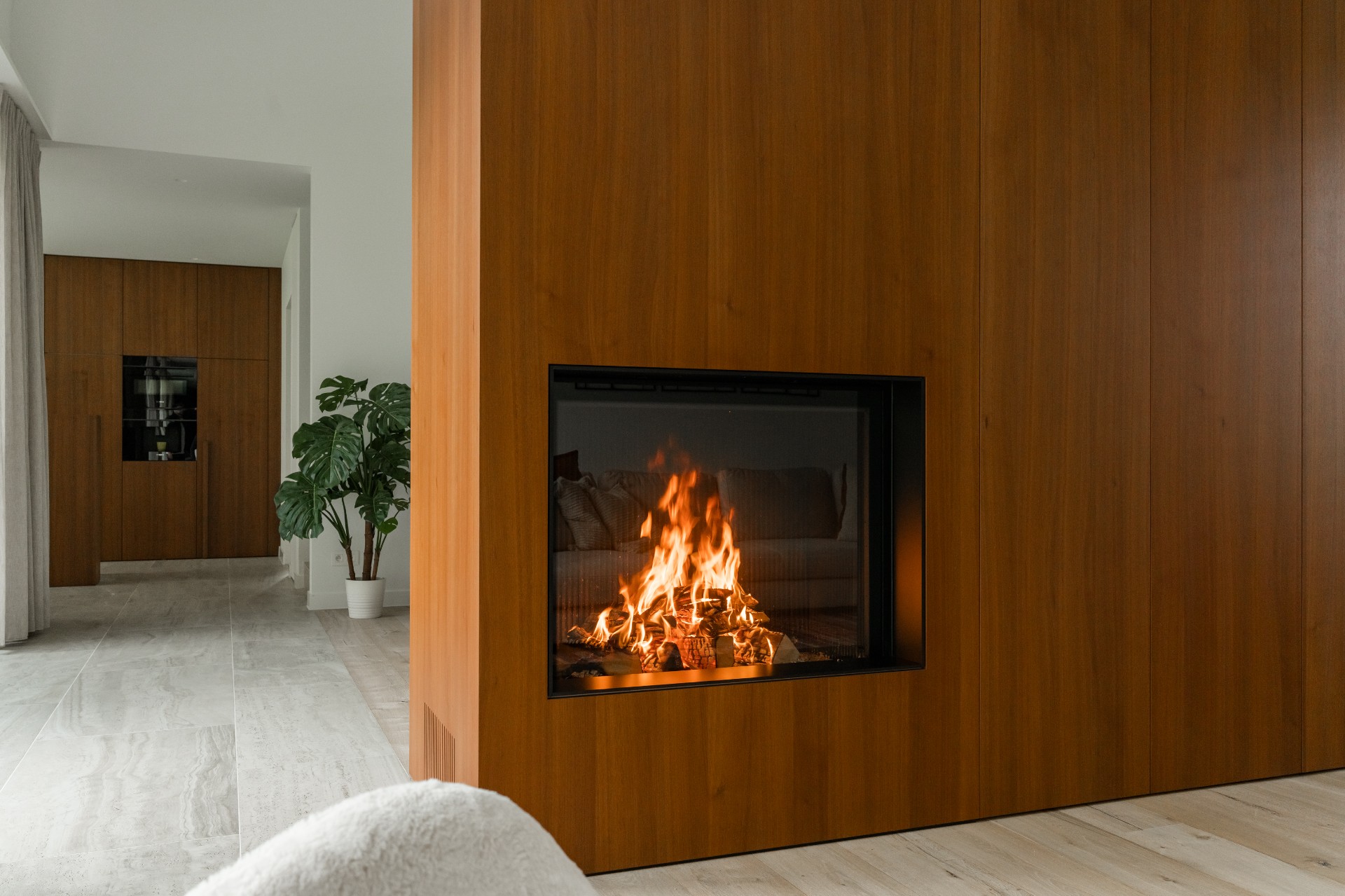
The vertical flame view changes how the fire is read. Rather than spreading sideways, it rises in a narrow field that echoes the straight lines in the woodwork. That vertical movement gives the fireplace a stronger architectural presence, especially in combination with the large glass front fireplace design. The glass reads almost like a framed opening, with the flame held in a tall, precise window.
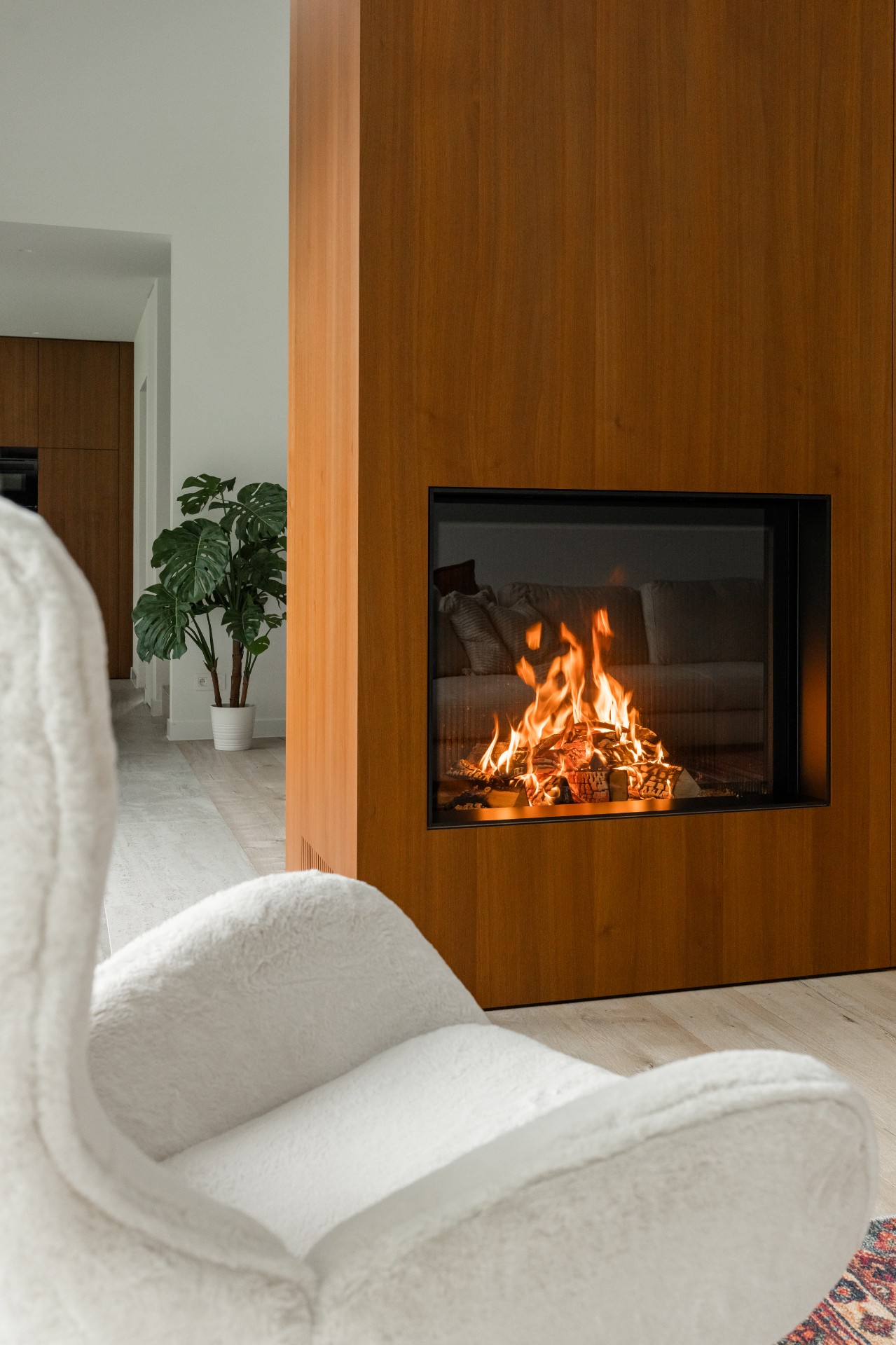
Because the fire is enclosed behind such a broad pane, the surface of the glass becomes part of the visual rhythm. It catches reflections from the room and keeps the fire crisp against the darker frame. In close-up, the contrast between the black surround and the lighter wood panels is what stands out most. The built-in wood fireplace feels anchored, not added on, and that is exactly what gives the wall its calm structure.
The wall panels do the quiet work
The wooden wall panel fireplace is not only about the firebox. The paneling around it sets the pace for the entire wall. Slim vertical lines, larger rectangular fields and darker gaps between the boards create a measured backdrop for the flames. Those lines draw the eye upward, which is why the fireplace reads so clearly even in a room with generous glazing and multiple sightlines. The wall does more than frame the fire; it organizes the room around it.
There is also a subtle shift in material depth. The panels sit flush enough to keep the surface calm, yet they still give the niche a visible edge. That slight recess helps the fire stand forward, while the surrounding wood softens the black glass. It is a simple move, but an effective one, especially in a modern living built-in fireplace where too many added layers would only dilute the effect.
Fire, glass and the lighter room beyond
From another angle, the fireplace opens toward an adjoining space, and that view adds another layer to the project. The camera picks up a passage into a second room with the same wooden language visible again, so the fireplace wall reads as part of a larger interior sequence. You do not get a single isolated focal point. Instead, the built-in wood fireplace connects the rooms through material repetition and clear sightlines.
Natural light plays an important role here. The wide windows, blinds and curtains soften the brightness and prevent the dark fire surround from feeling heavy. A stone-like floor finish and a light rug underfoot keep the room visually grounded. Against that pale base, the fire becomes the warmest element in the frame without needing extra decoration. The effect is understated, but very clear in the images.
Plus features kept discreet
The project also includes the Plus version, with an automatic lift door, an integrated spark screen and SWIPE insight into energy use. Those functions stay in the background, which suits the overall read of the room. Nothing about the detailing asks for attention away from the wood wall panel fireplace. The technical elements are there, but they do not interrupt the clean front, the vertical flame view or the narrow framing around the glass.
That restraint is visible in the close details as well. The black border around the opening remains slim, and the timber surface around it stays uninterrupted by ornament. It is this discipline that lets the fireplace sit naturally within the architecture of the room. The modern living built-in fireplace is therefore not presented as a separate feature object, but as a fixed part of the wall composition.
A built-in fire that reads as part of the architecture
What stays with you is the relationship between the fire and the room proportions. The built-in wood fireplace is tall rather than wide, and that vertical format suits the surrounding wall divisions. The fireplace does not interrupt the architecture; it follows it. Even the reflections in the glass seem controlled, because the large glass front fireplace is set so neatly into the timber frame.
The project depends on contrast, but a quiet kind of contrast. Dark glass against pale daylight. Vertical flame against horizontal panel grain. A compact fire opening against a larger, open room. Those oppositions give the wall its clarity and keep the composition from becoming flat. In that sense, the wood wall niche fireplace does exactly what the images suggest: it turns a functional opening into the strongest line in the room.
Close by, the finish around the fire reveals the same attention to material presence. The interior in fine cast iron gives the fireplace a firmer edge, and that darker inner surface deepens the glow of the flames. It is a small detail, but one that matters in a room built on restraint. The built-in wood fireplace remains the focal point, yet the surrounding materials never fall silent.
The overall impression is of a space composed around one clear gesture: a fire set into wood, lifted vertically, and framed by light. That simple sequence carries the whole project. The result is a built-in wood fireplace that feels fully integrated into the wall panels, visible from across the room and convincing up close.
Want to see more of M-design Fireplaces? View the page of M-design Fireplaces for even more great projects and company information.


NEW 2026 Jubileum Edition The Best Interior Designers Benelux
Order Now €125