






Herringbone parquet with border in farmhouse
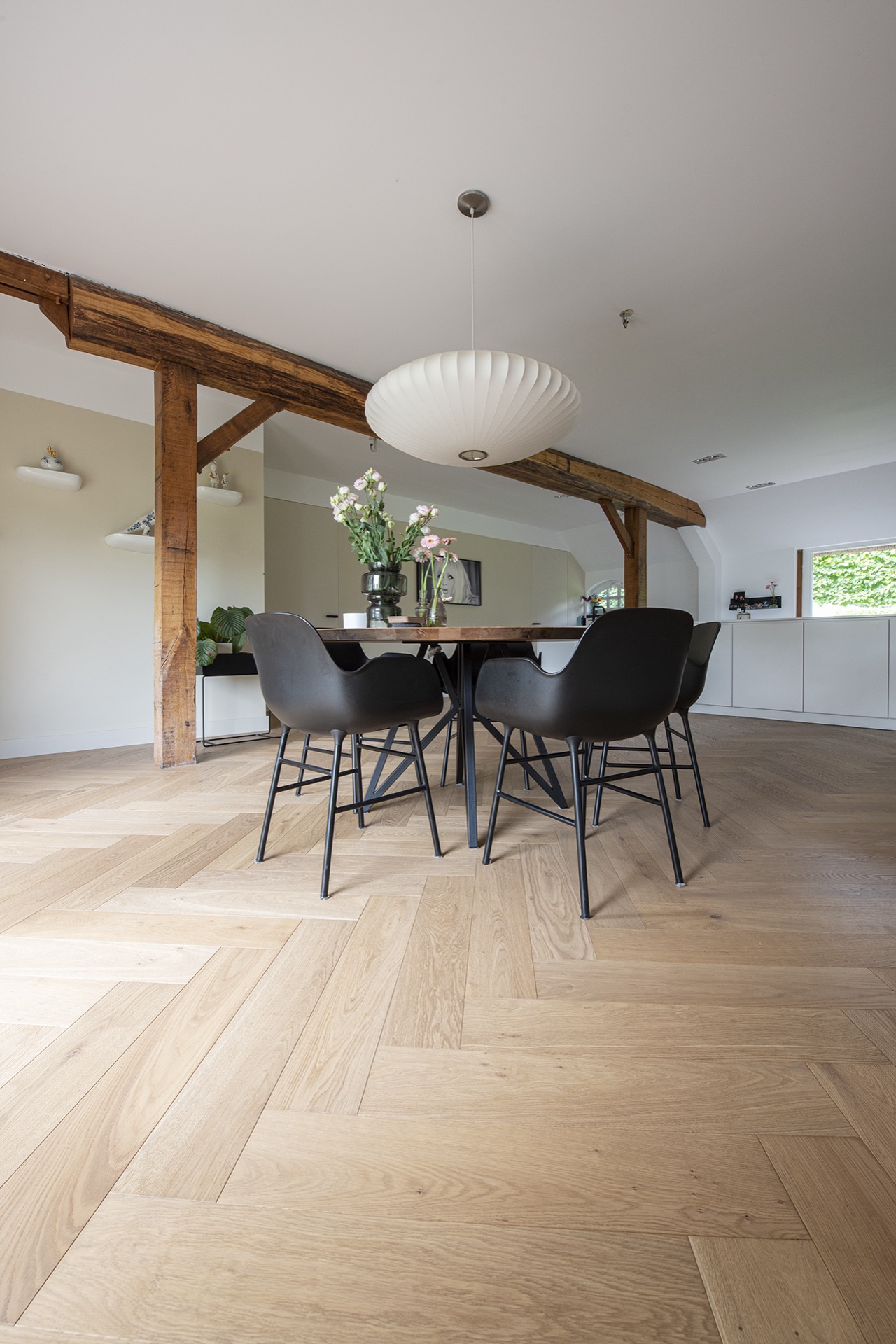
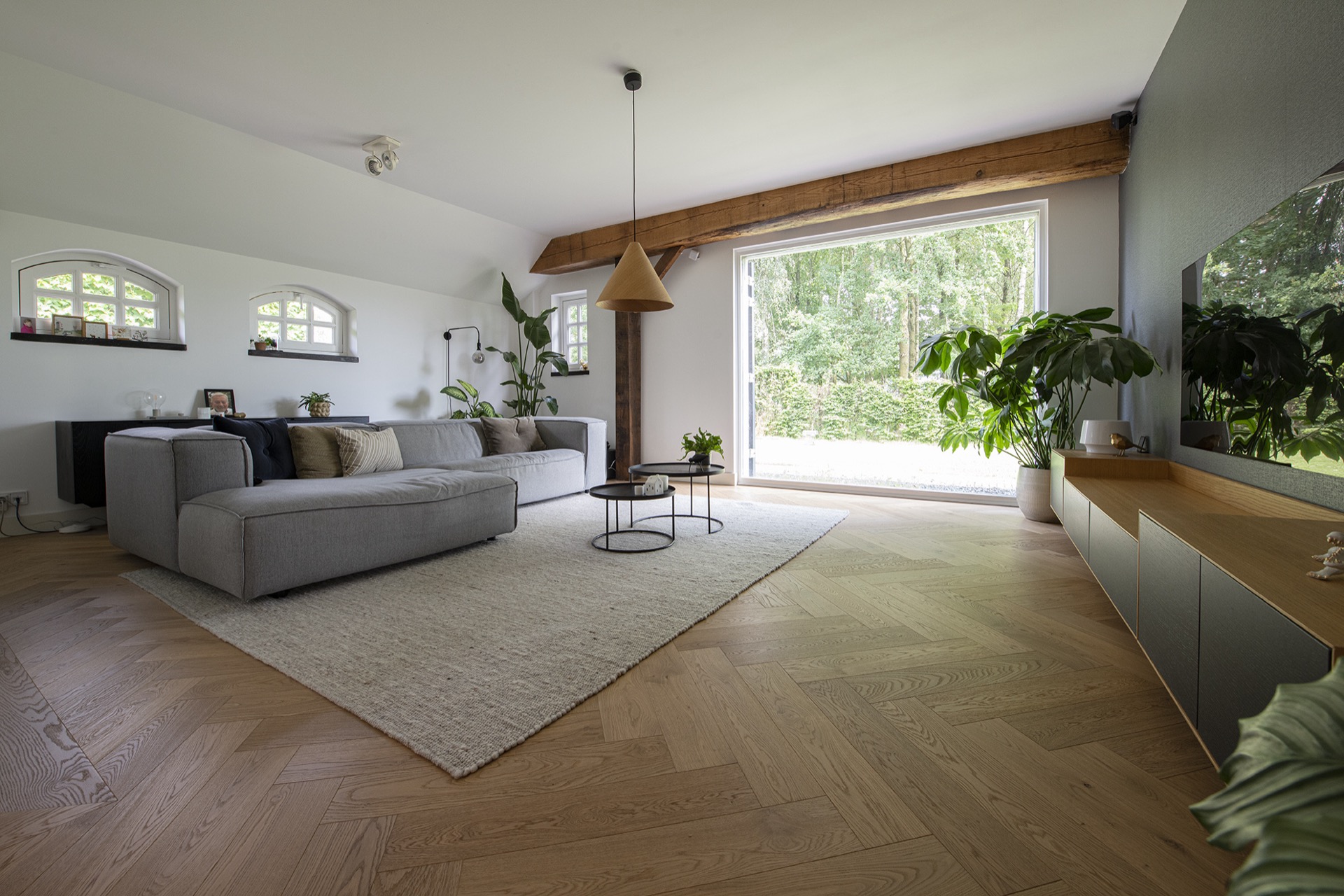
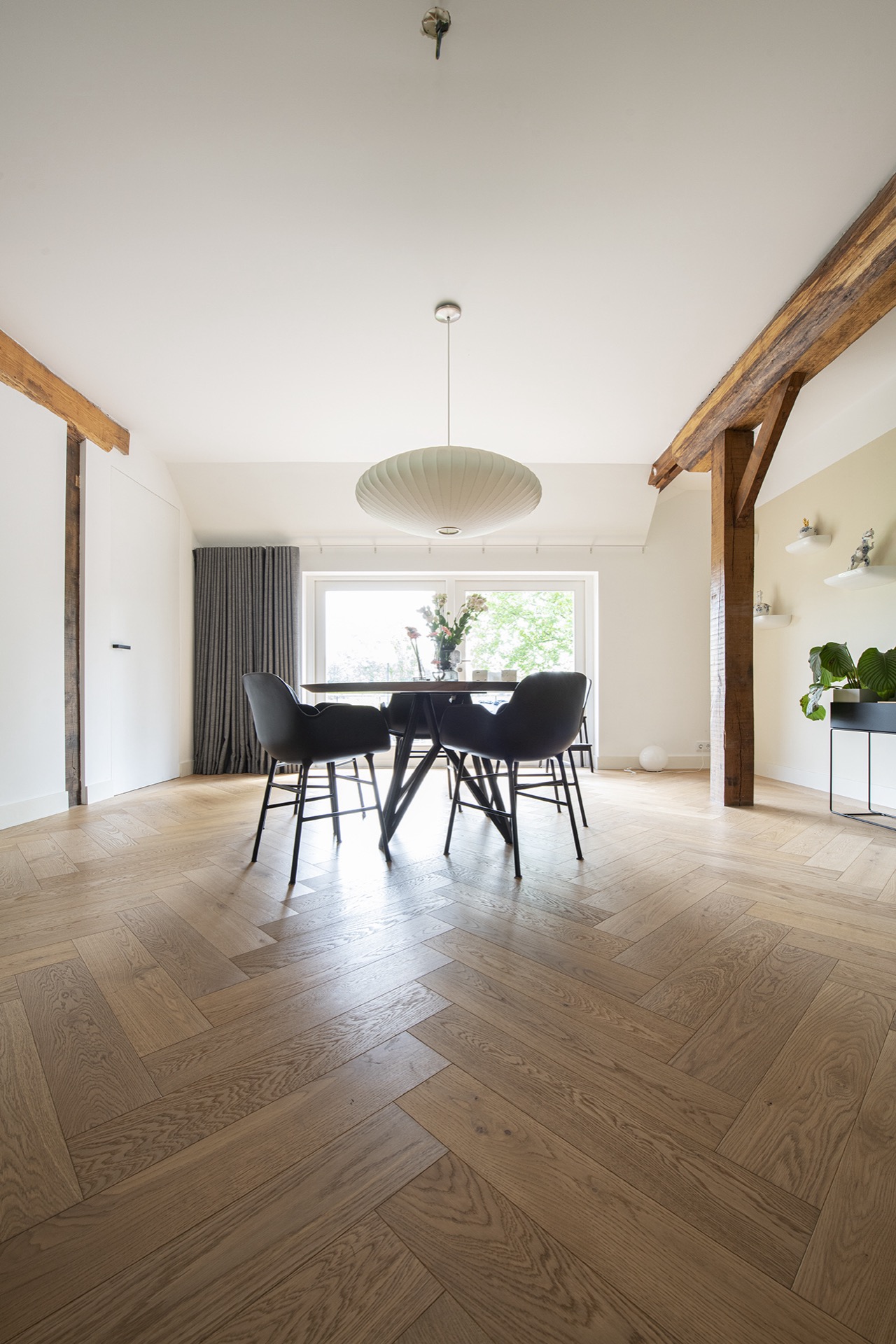
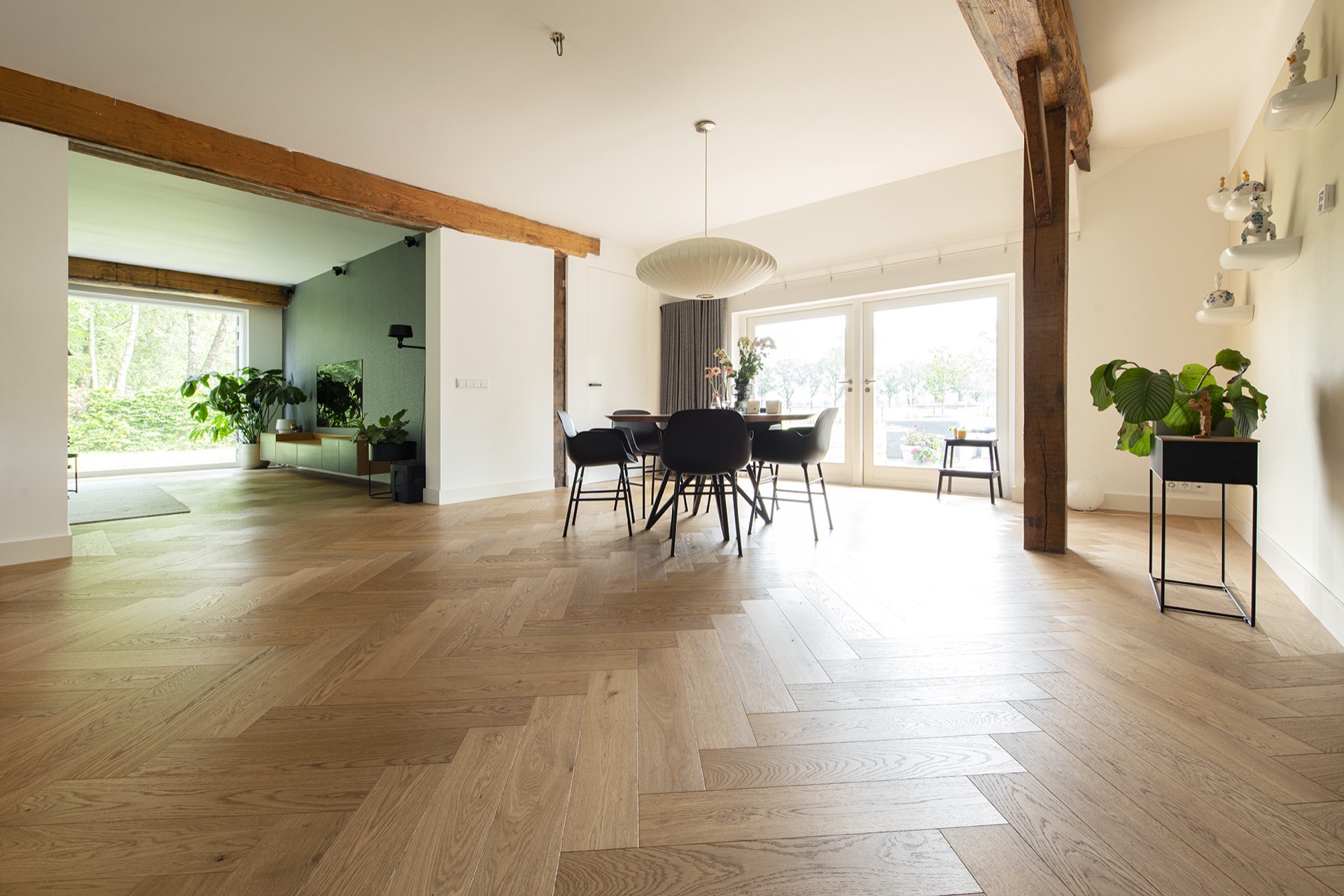
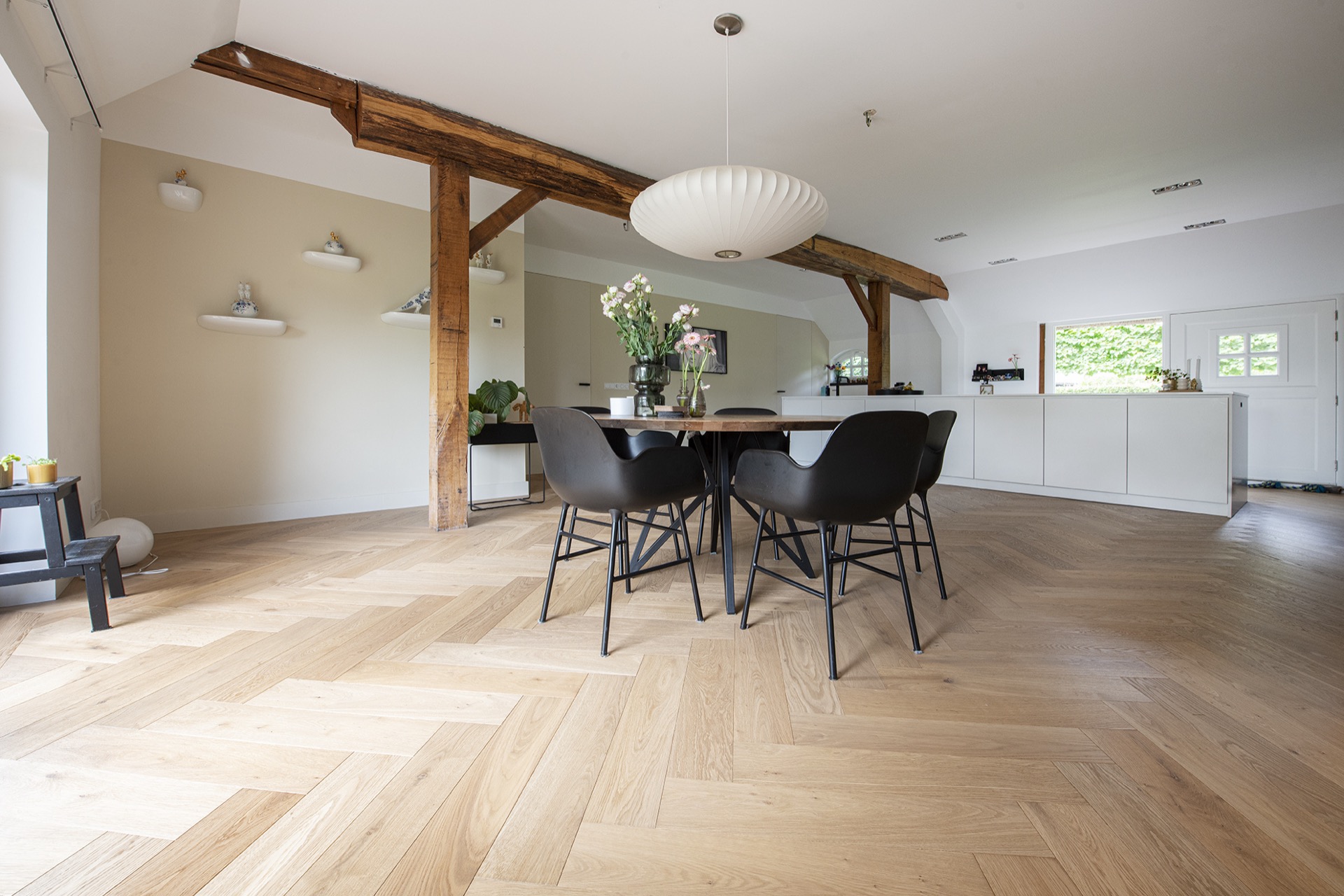
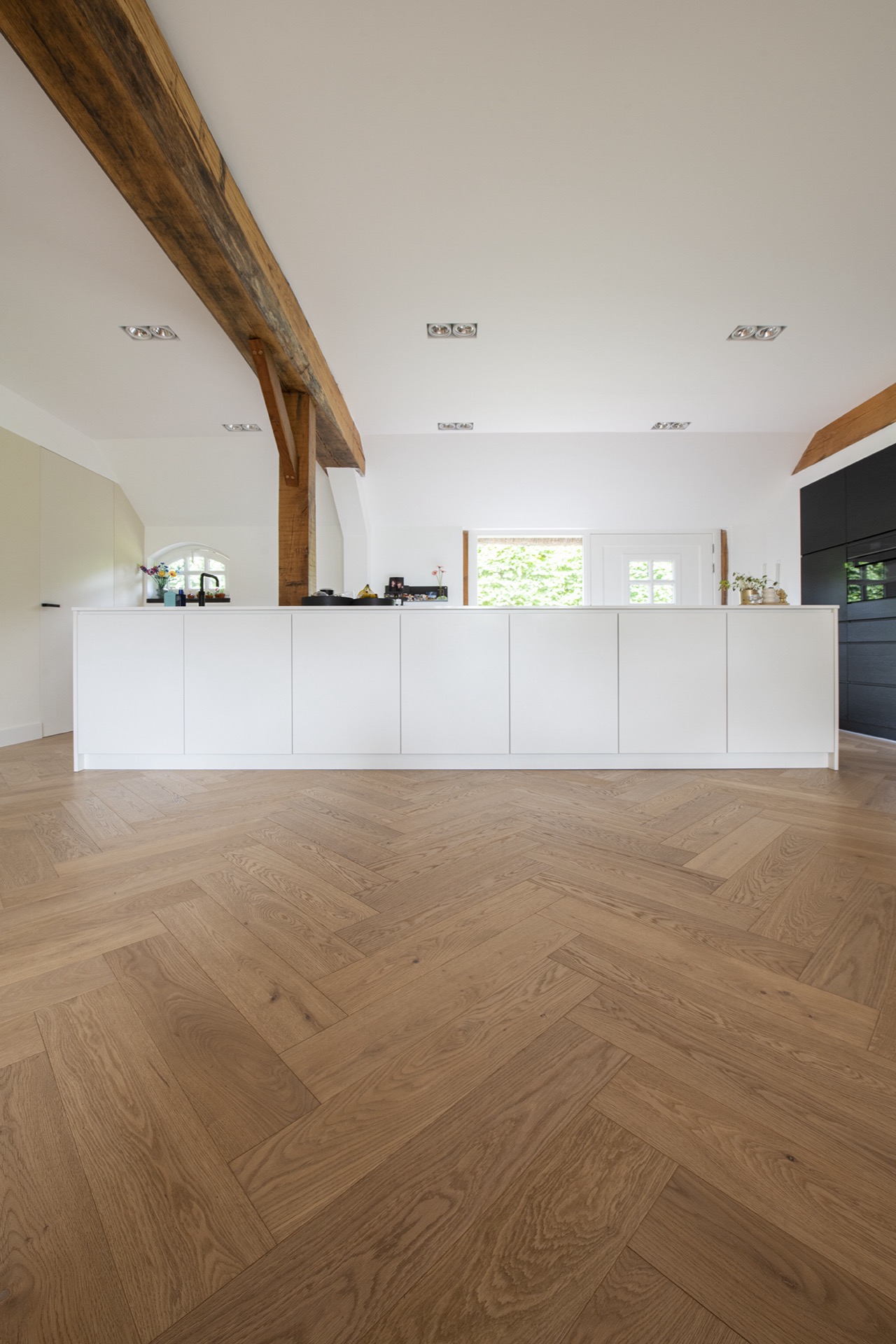
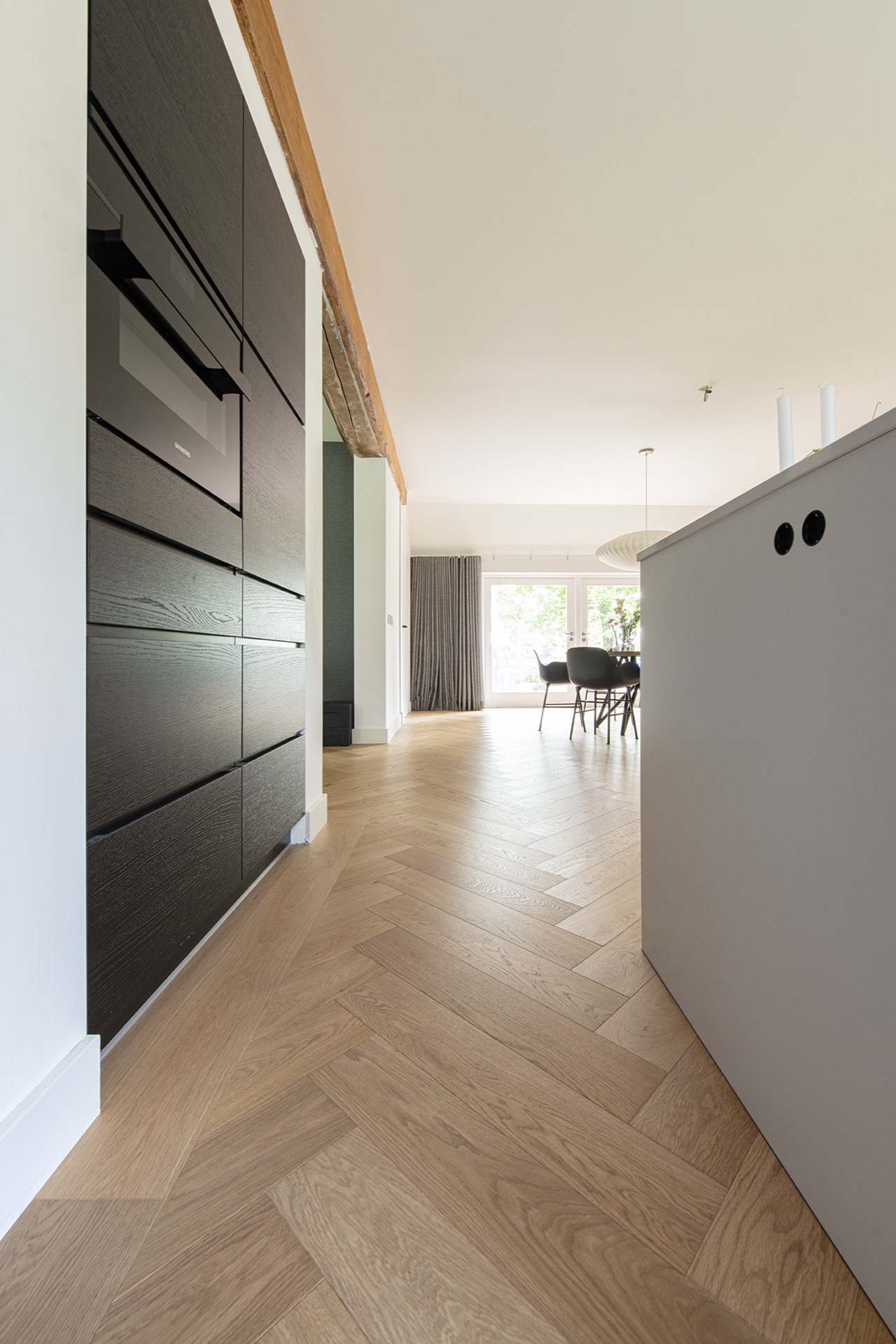
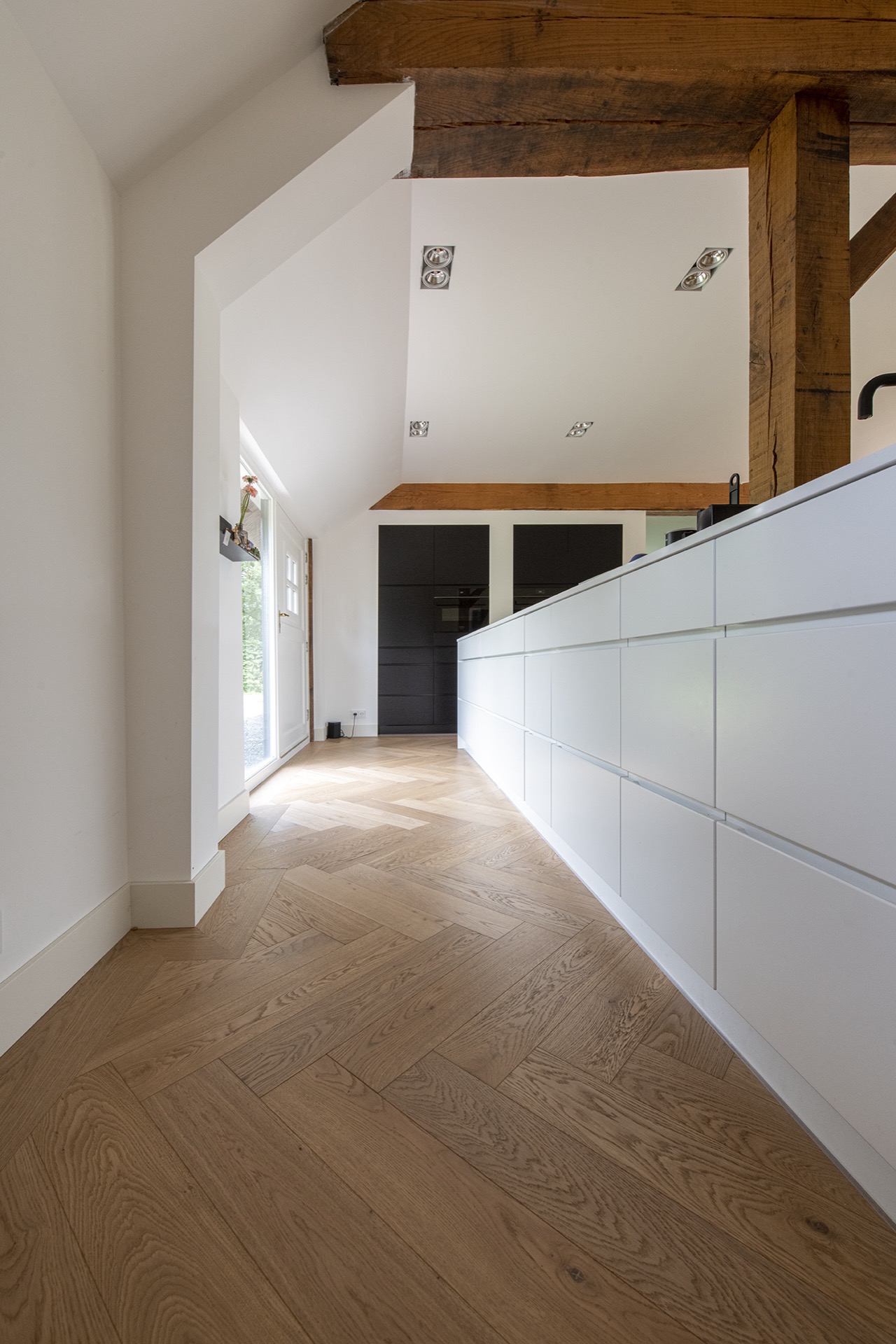
The oak herringbone parquet with border sets the pace as soon as you step into the farmhouse. Light wood runs in a clear geometric pattern across the floor, then pauses at the edge detail that frames the room. The warm oil finish softens the grain and gives the surface a deeper tone without hiding the texture. Under the exposed beams and daylight from large windows, the floor reads as the main line through the interior.
A floor that carries the room
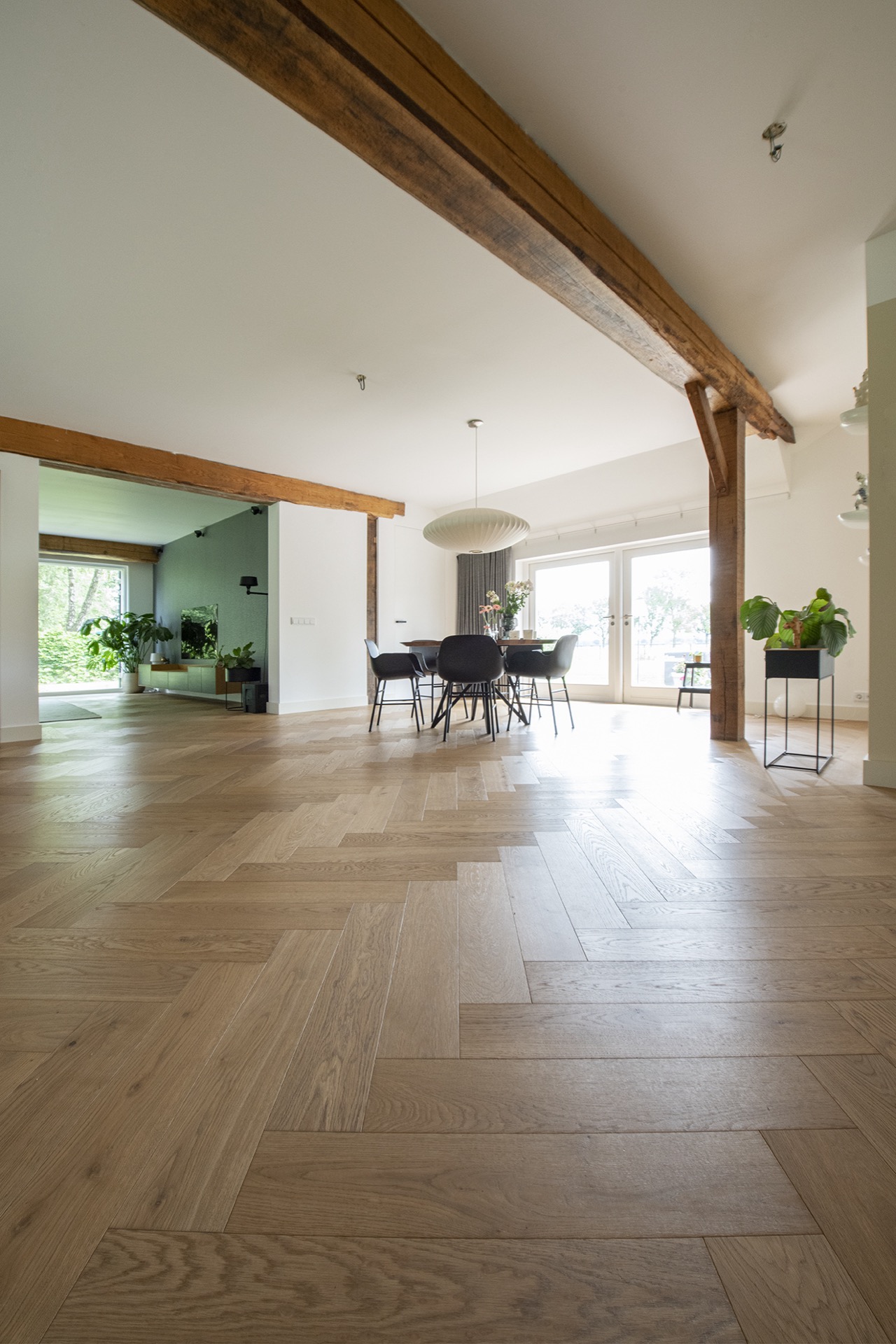
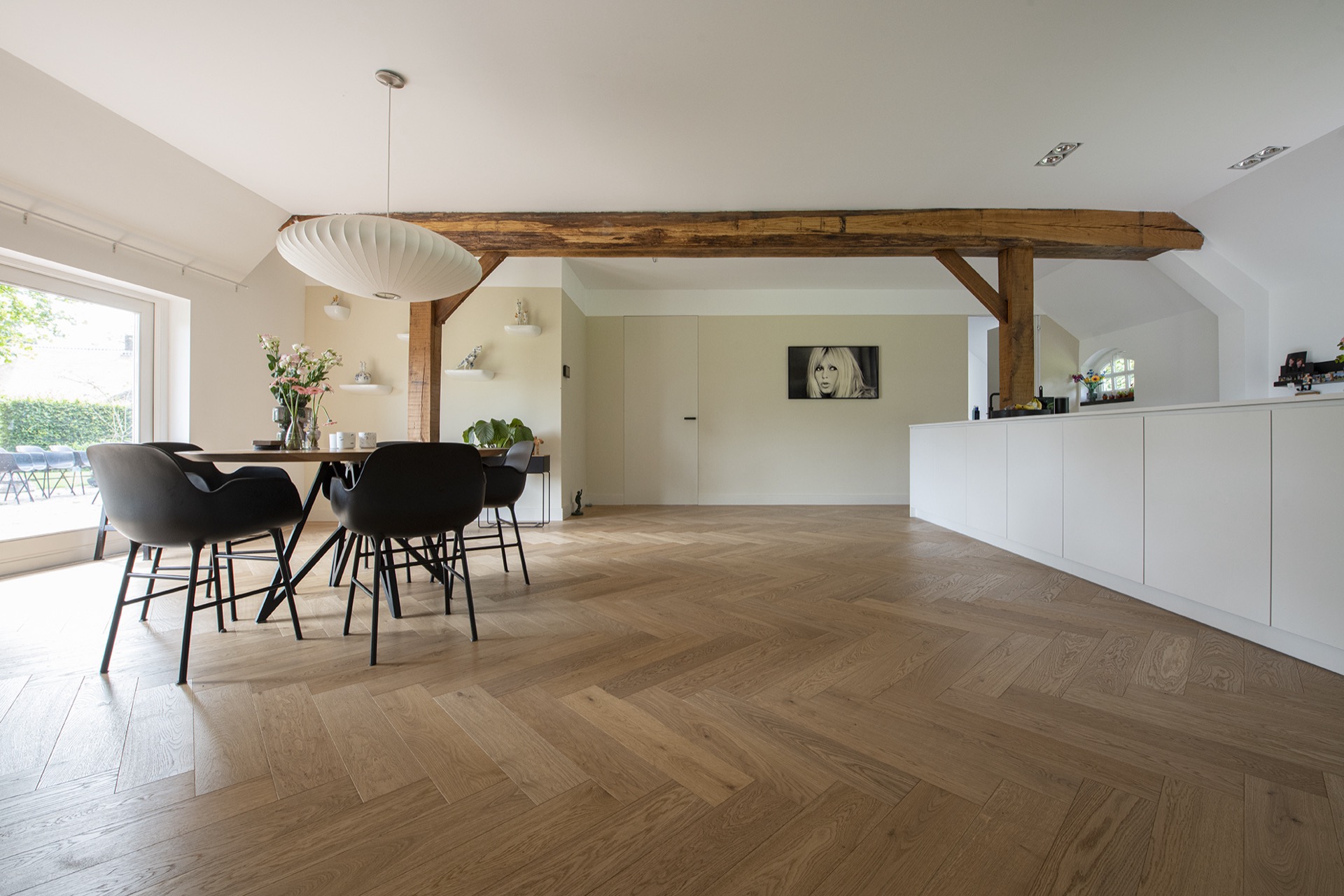
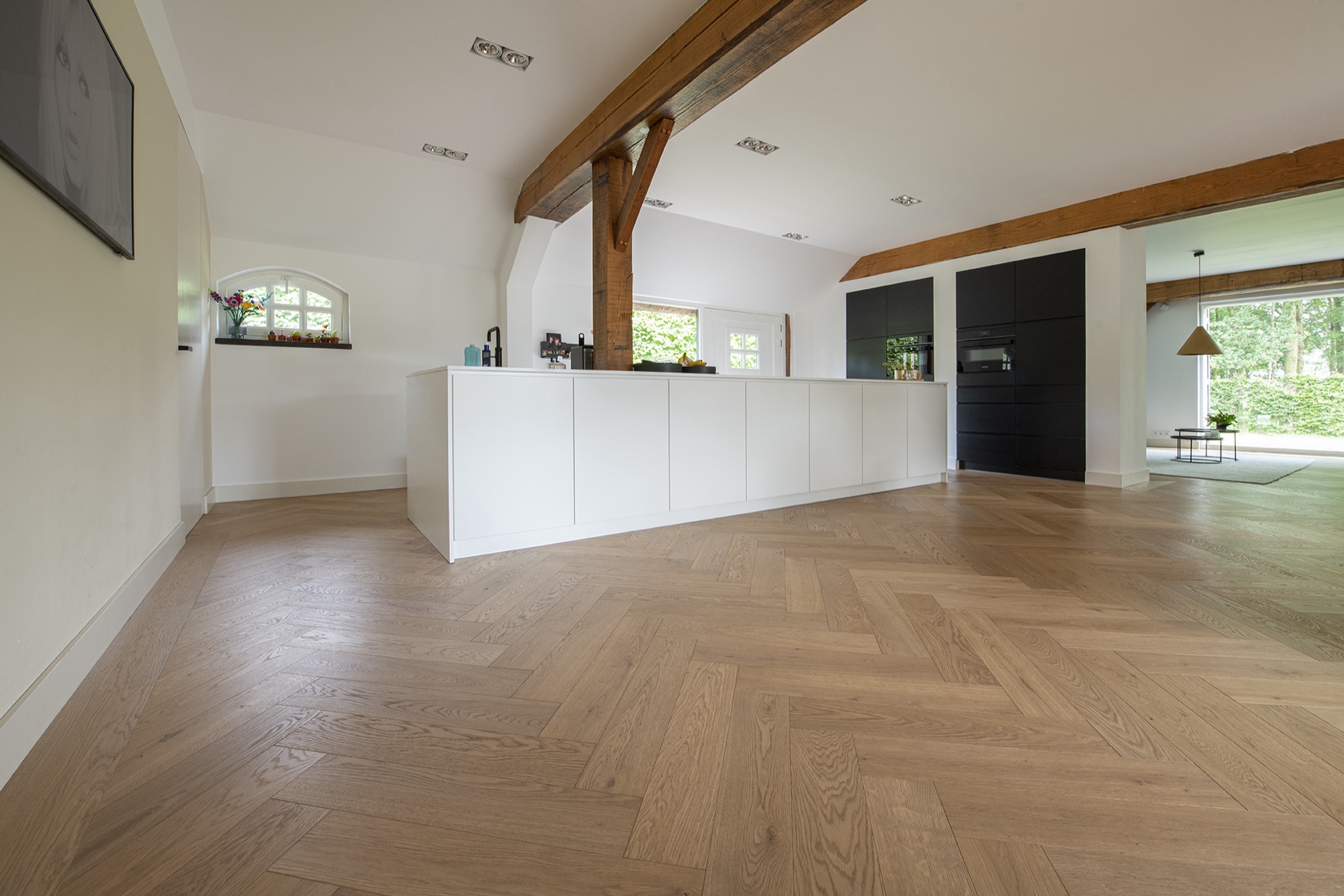
From the first wide view, the herringbone parquet with border does more than cover the ground. It organizes the open plan and pulls the kitchen and living areas into one continuous route. The herringbone pattern is easy to read in the broad spans of floor, while the border line marks the perimeter with a measured stop. That contrast between movement and edge is what gives the room its precision.
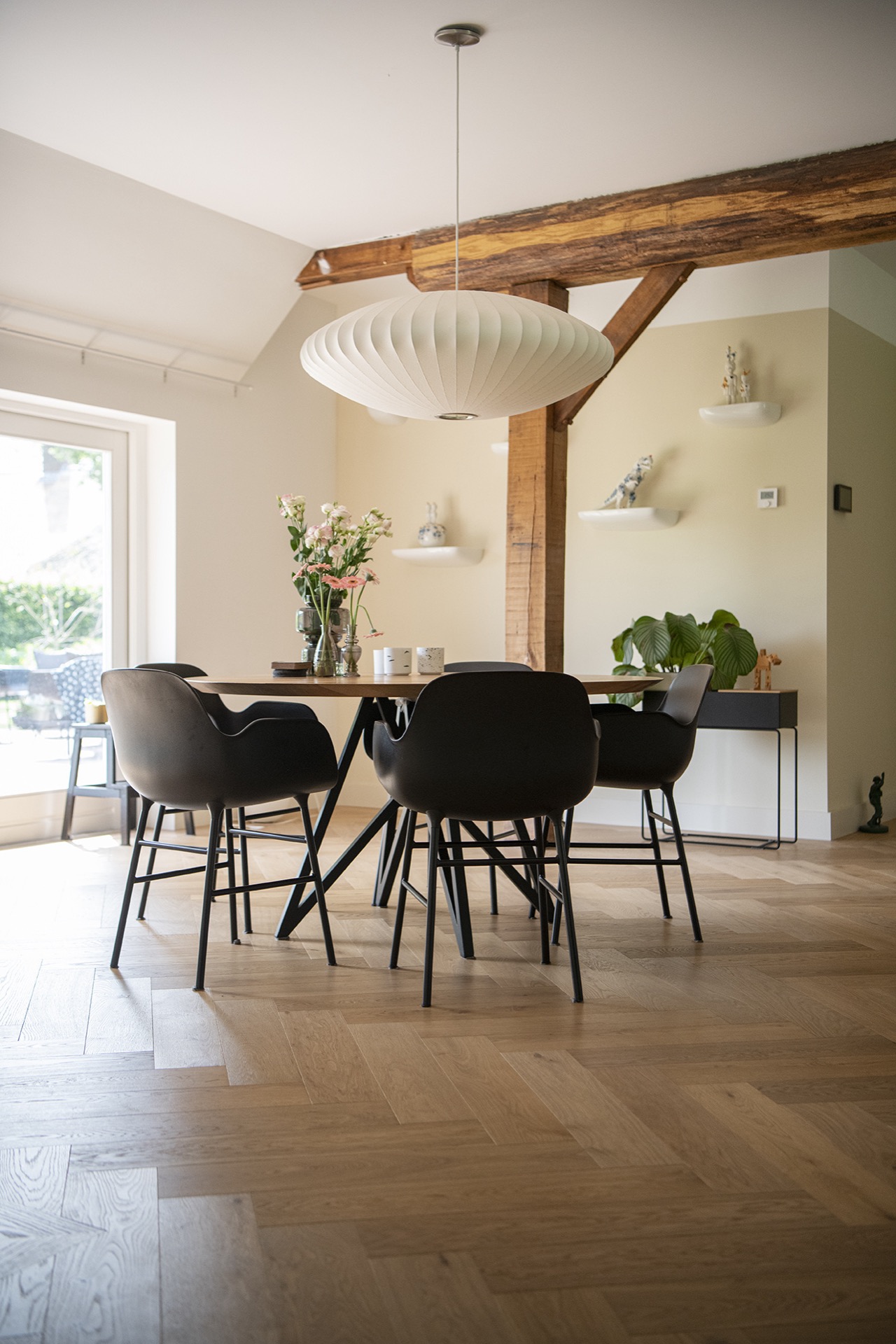
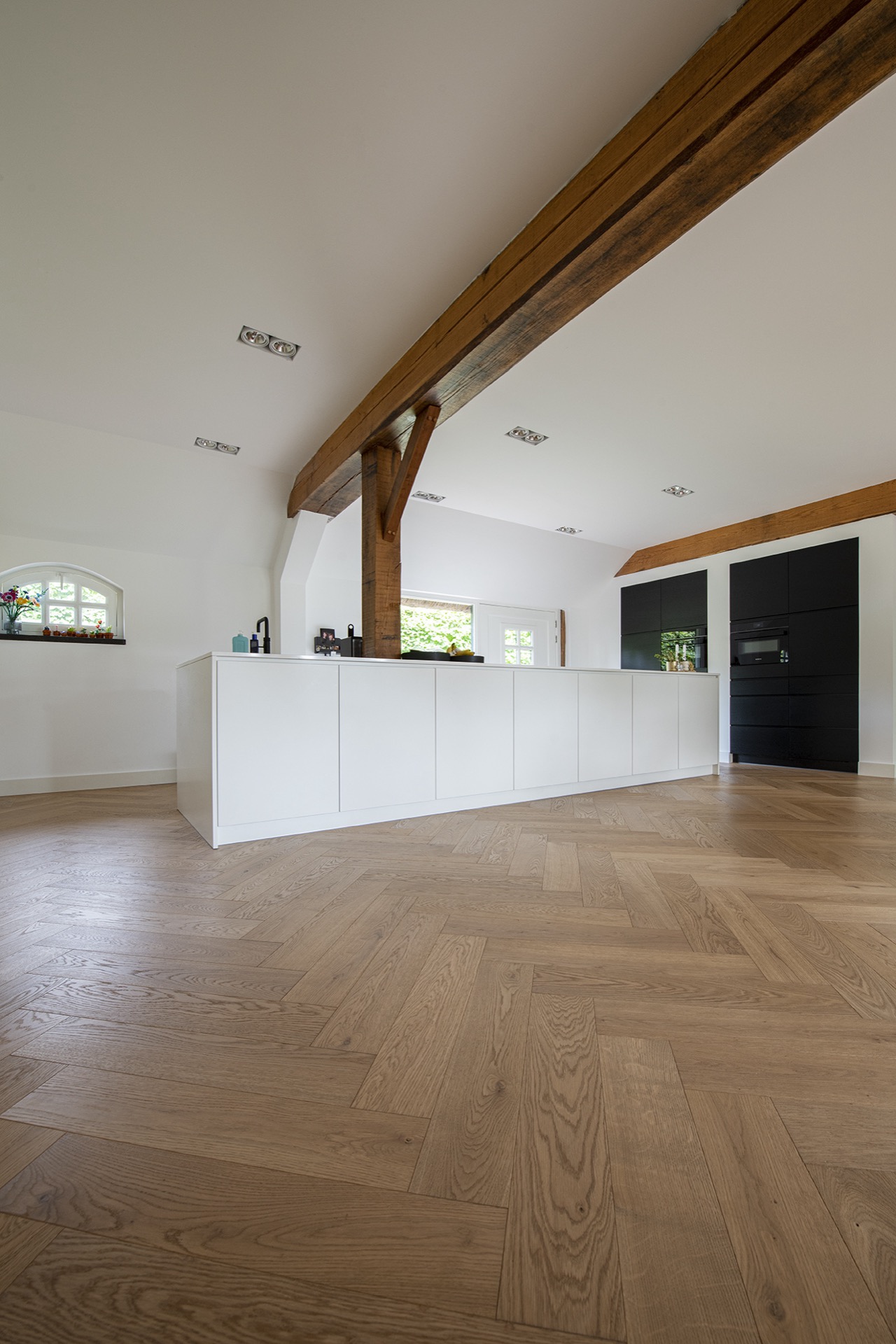
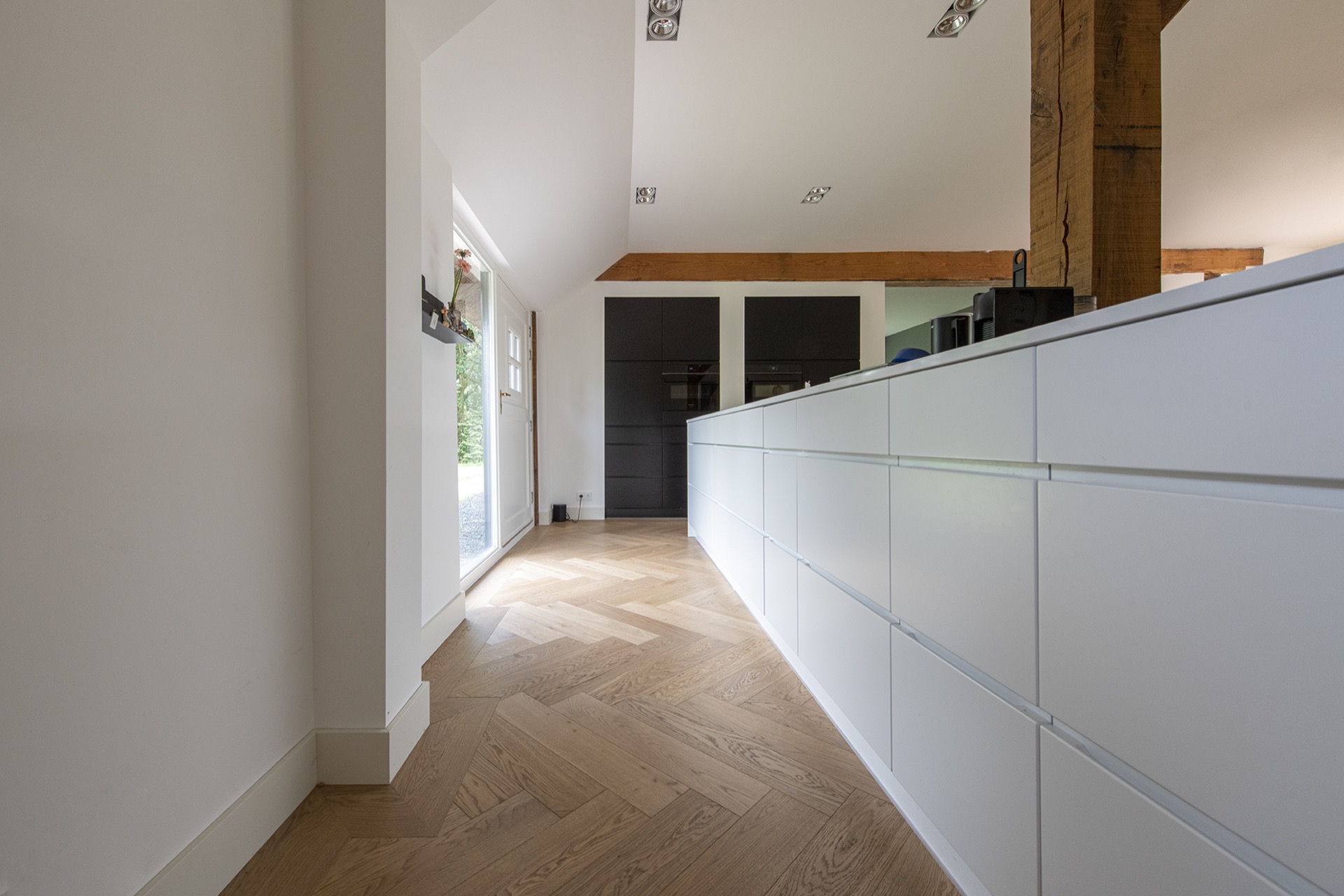
The oak herringbone floor sits comfortably against the rural structure of the house. Exposed timber beams cross the ceiling above, and the floor echoes that rhythm below, only in a tighter and more detailed grid. White cabinetry and darker wall sections keep the composition from becoming one-note. The wood takes on the job of linking those surfaces, especially where the light falls across the boards and exposes the pattern shift from row to row.
Warm oil on light oak
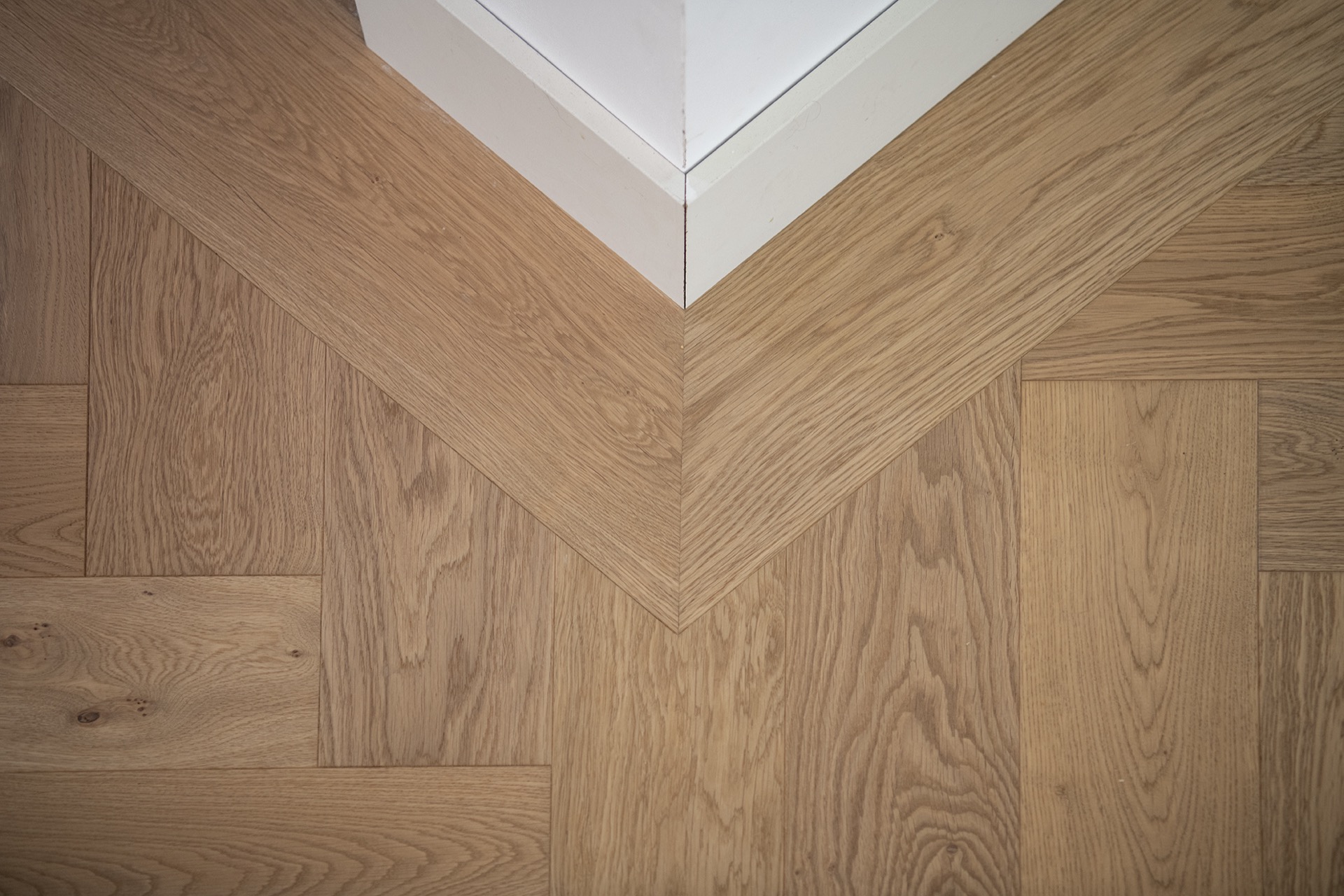
The warm oil finish deepens the pale oak without turning it heavy. It lets the surface hold on to a natural, matte sheen, so the grain remains visible even in softer corners of the room. In the close details, the joints and angled cuts of the herringbone pattern stay crisp. That matters here, because the floor relies on geometry as much as color. The finish supports that geometry instead of flattening it.
There is also a practical side to the treatment. The warm oil finish is described as offering protection against wear and making maintenance easier. In a room that connects kitchen, dining and living functions, that is not a minor point. The floor spans open areas, turns around cabinets, and continues through brighter and darker zones. A finish that helps the wood hold up to use belongs naturally in that kind of layout.
Edge lines and border detail
What makes this herringbone parquet with border especially legible is the way the outer band contains the pattern. The border runs as a deliberate frame, not as decoration for its own sake. It sharpens the outline of the room and gives the herringbone field a clear finish at the edges. In the wider shots, that border is visible as a separate band of structure, which keeps the floor from dissolving into the architecture around it.
Seen from the corner, the floor geometry becomes almost architectural. The angled cuts meet in repeated V-shapes, and the border catches the transition where the floor turns or meets another line in the room. Those small shifts matter in a farmhouse interior with open sightlines. They keep the eye moving, but they also give it somewhere to stop. The result feels measured rather than busy.
Daylight, beams and a kitchen-living setting
Large windows bring in a broad wash of daylight, which is important for a light oak herringbone floor. In direct light, the pale boards appear clearer and the border detail becomes easier to read. In softer light, the surface takes on a warmer cast from the oil finish. Above, the timber beams add weight to the ceiling and make the room feel grounded. The floor answers that structure with its own pattern, set flat and exact beneath it.
The kitchen area keeps the palette restrained. White fronts, dark wall sections and built-in elements leave room for the floor to lead. Where the cabinetry stops, the oak herringbone floor continues without interruption, tying the cooking zone to the living space. The composition is straightforward: light from the windows, dark accents at the walls, and a wood floor that runs through both. That is where the project finds its clarity.
Why the pattern works here
A herringbone floor in farmhouse interiors often succeeds when it can hold its own beside older structural elements. Here, the border detail gives the pattern enough definition to sit beside the beams and open volume without disappearing. At the same time, the warm oil finish keeps the oak from looking stark. The floor carries the atmosphere of the house through material, not through ornament.
This is also why the herringbone floor with beams reads so well in the photographs. The ceiling lines run in one direction, the floor pattern cuts across them, and the room gains depth from that crossing of angles. Even the rounder window shapes visible in parts of the interior feel more distinct against the straight border and repeated herringbone rhythm. The floor is not background here. It is the framework the rest of the room settles into.
The completed interior shows how a bordered herringbone layout can anchor a farmhouse renovation without losing its lightness. The oak surface, the warm oil finish, the visible beams and the daylight all work on the same scale: clear, material, and easy to read. The room never asks the floor to disappear. Instead, the floor sets the tone and lets the kitchen-living space build around it.
Project photography by Jeanette van Studio 1974.
Want to see more of Tida Parket? View the page of Tida Parket for even more great projects and company information.



NEW 2026 Jubileum Edition The Best Interior Designers Benelux
Order Now €125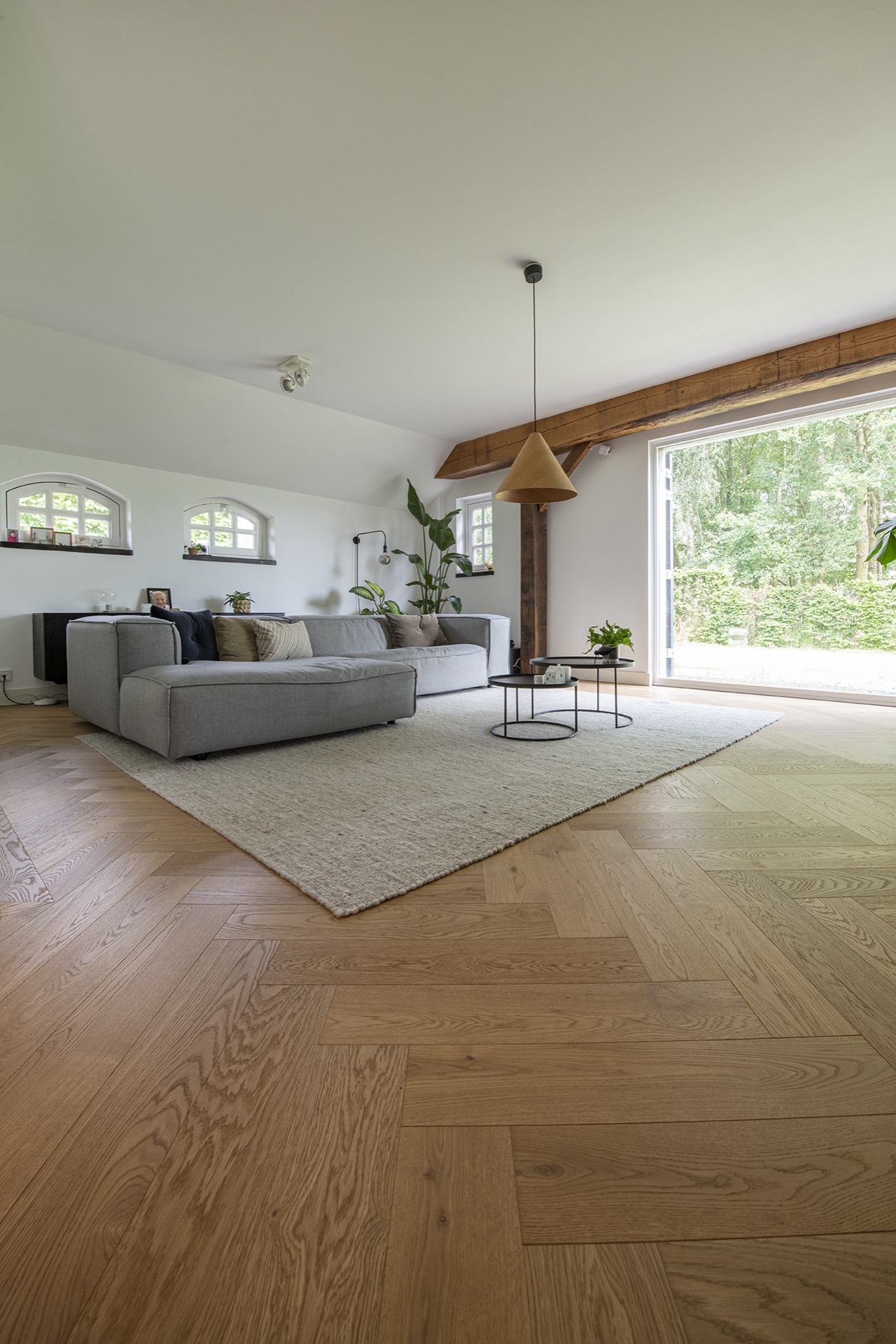
NEW 2026 Jubileum Edition The Best Interior Designers Benelux
Order Now €125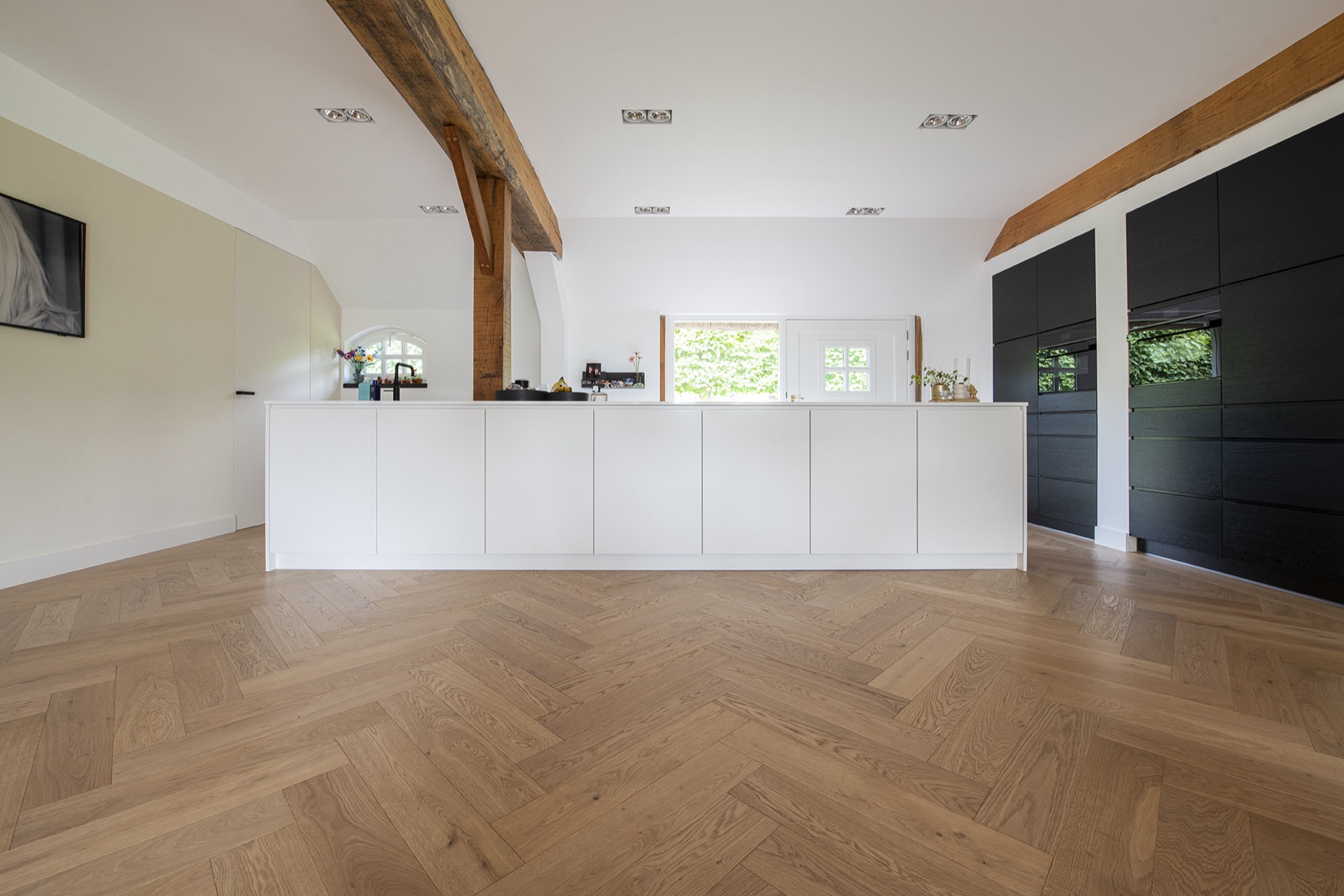
NEW 2026 Jubileum Edition The Best Interior Designers Benelux
Order Now €125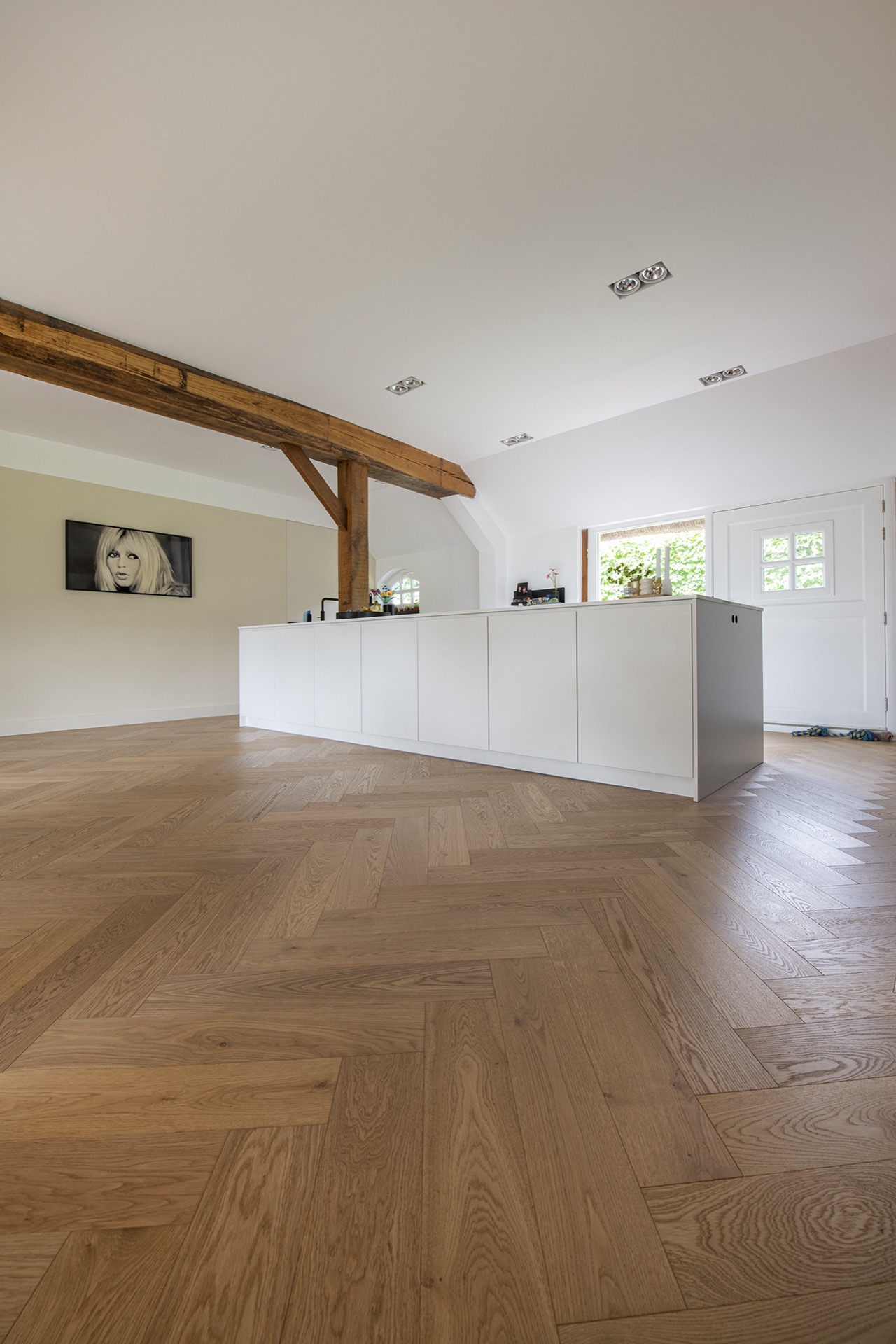
NEW 2026 Jubileum Edition The Best Interior Designers Benelux
Order Now €125