








Low-maintenance terrace decking as a connection to nature
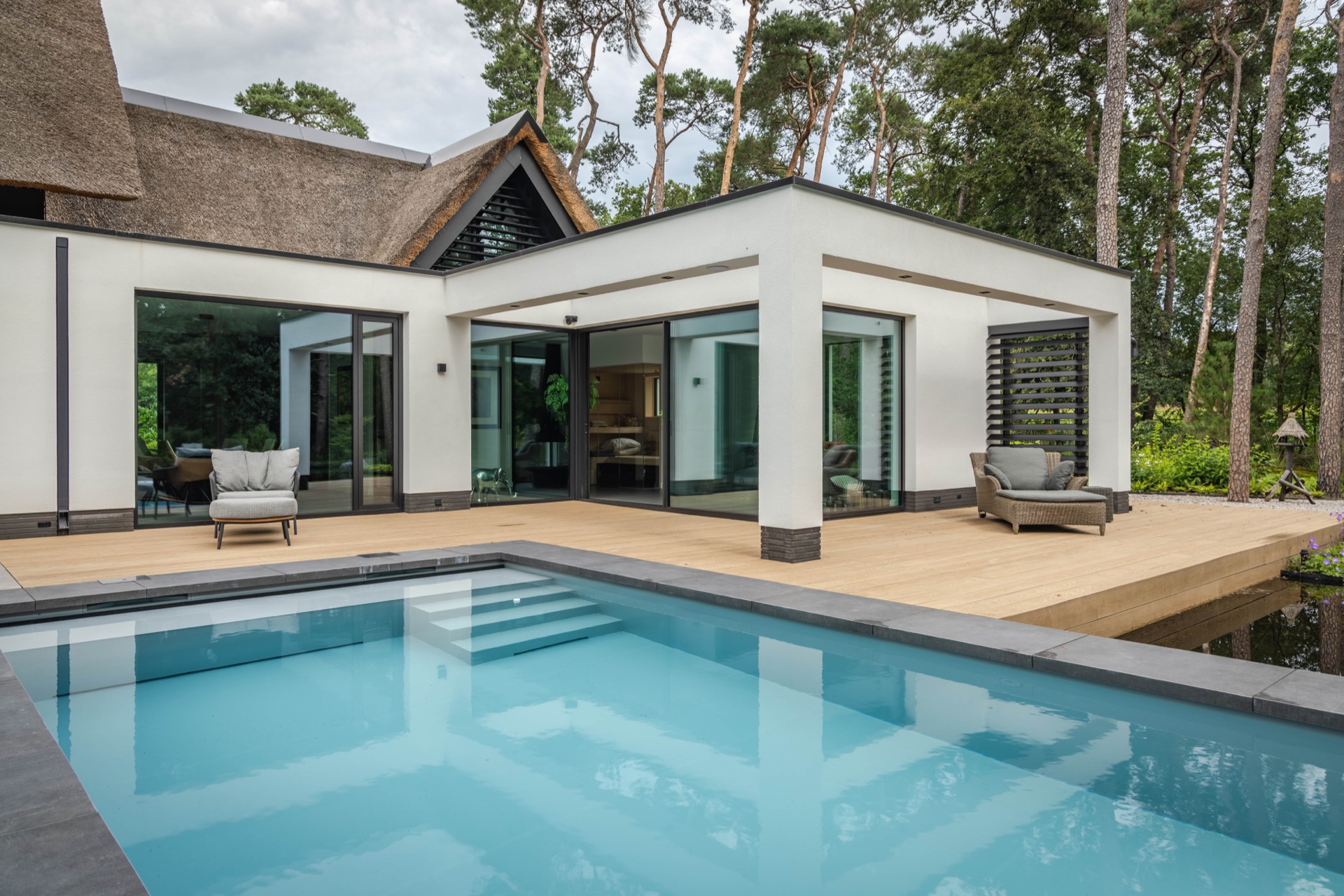
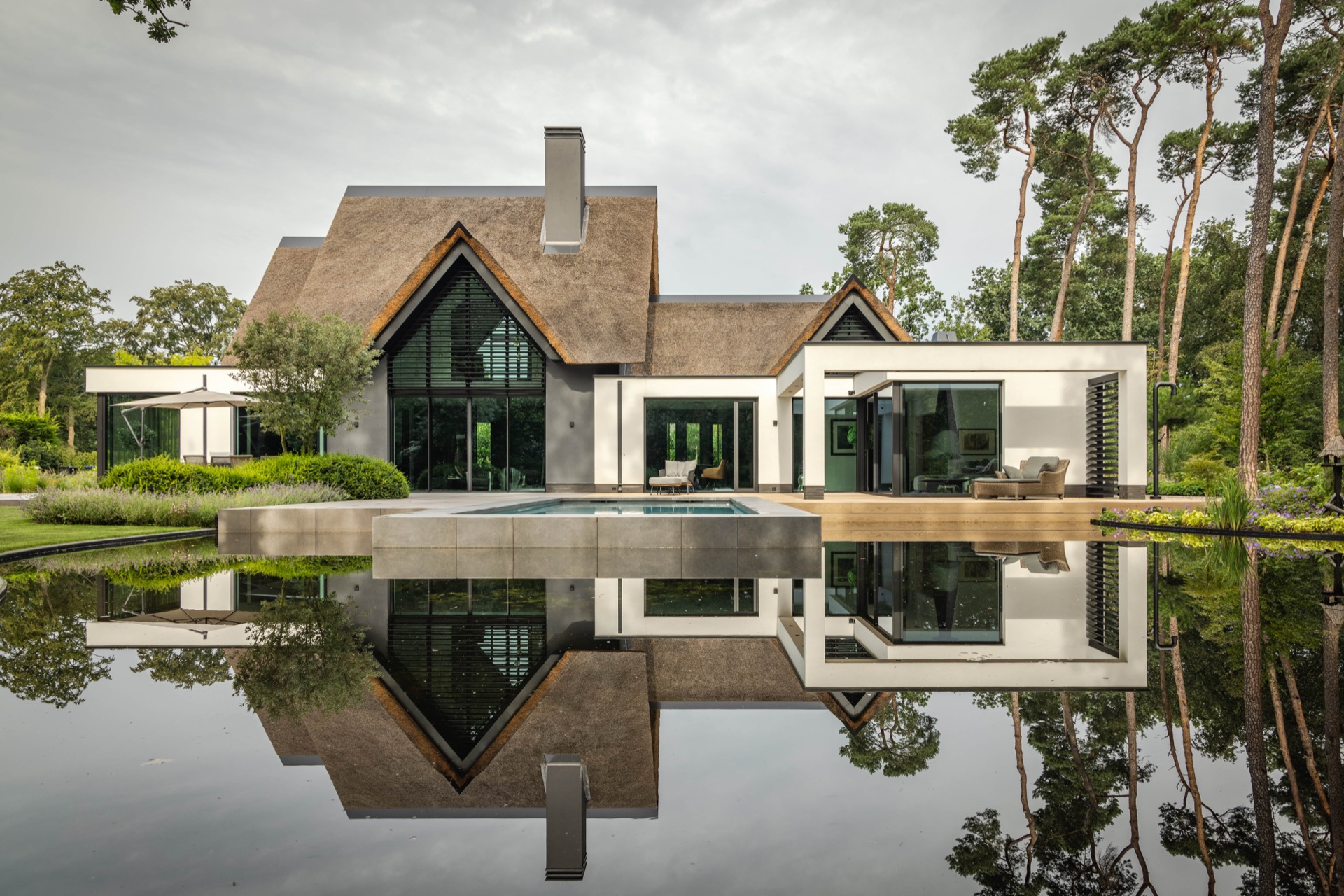
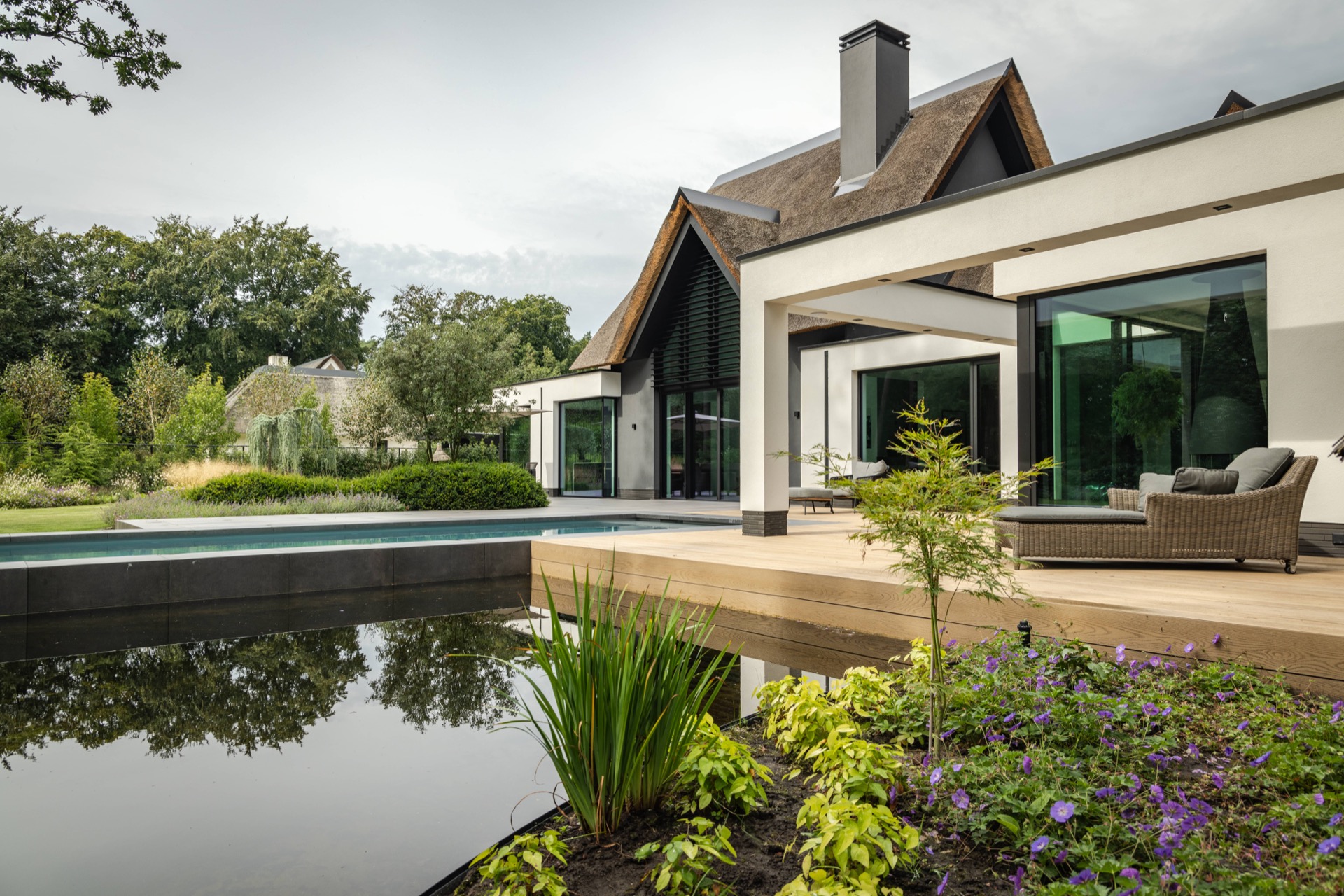
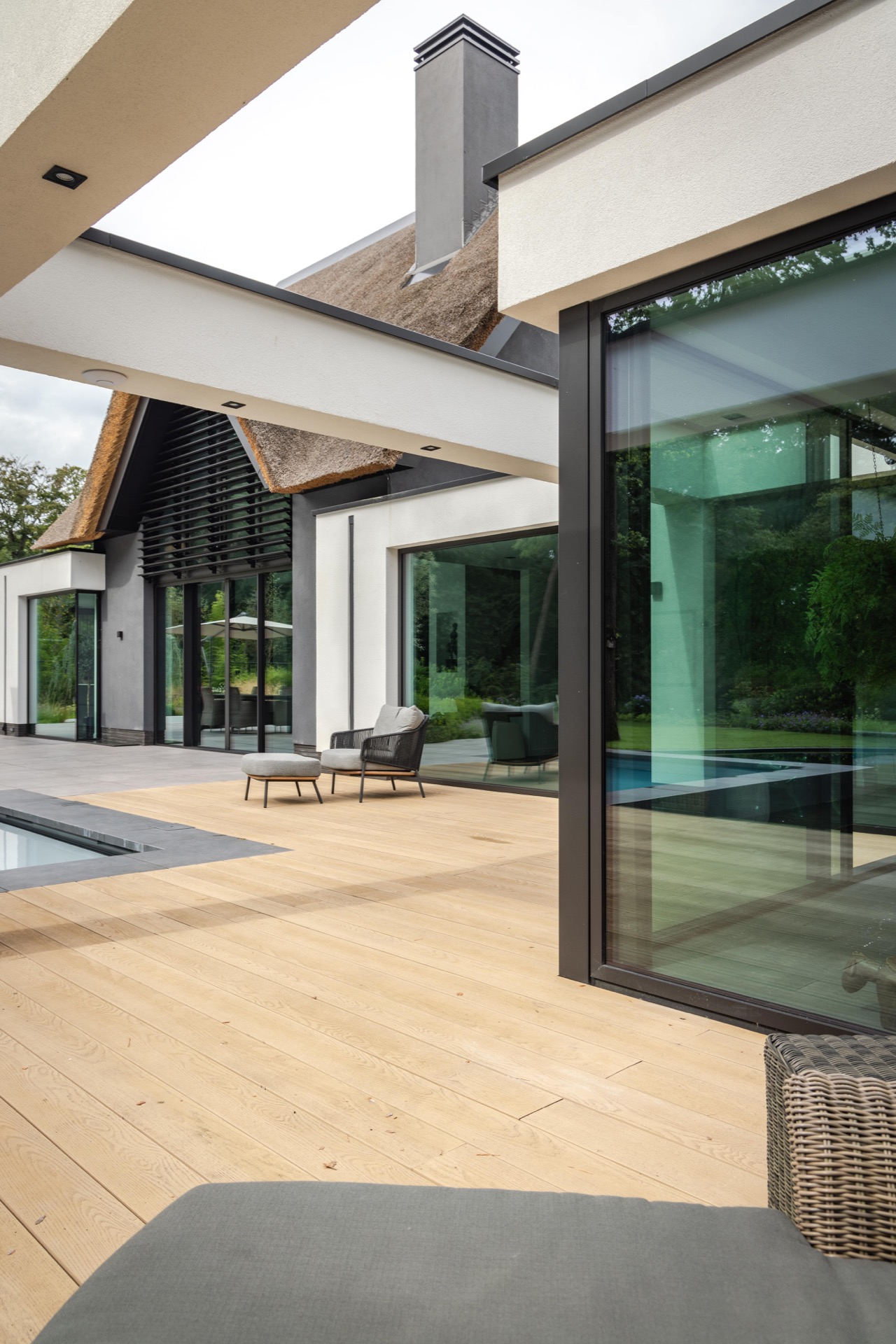
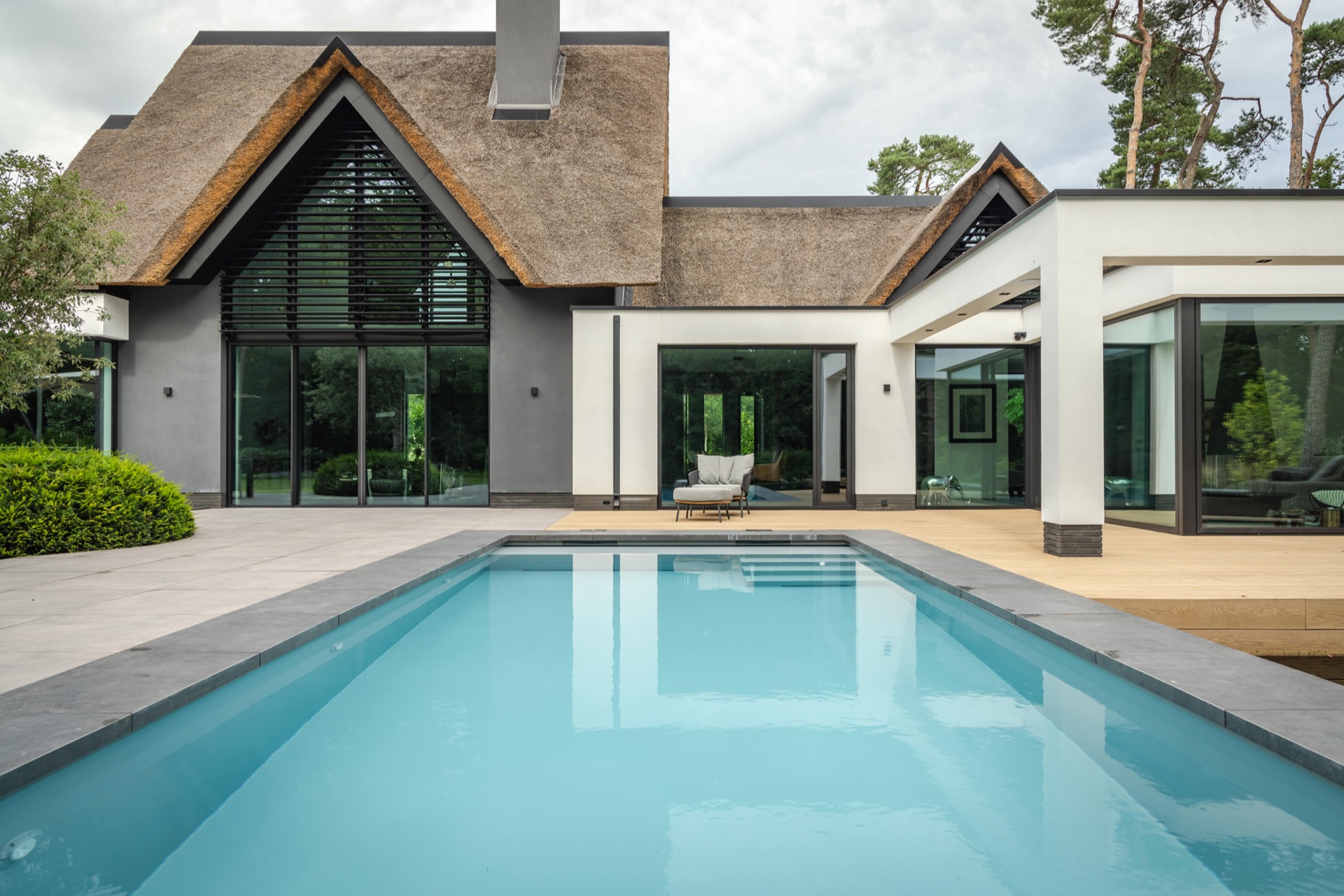
The deck terrace runs straight to the water’s edge, where the timber-look boards meet a dark pond rim and a strip of planting. The surface is calm in colour, with Golden Oak tones that sit easily beside stone, glass and deep green borders. In this outdoor villa garden design, the low-maintenance deck terrace does more than provide a place to sit; it draws the house, the swimming pond and the rest of the garden into one visible route.
Golden Oak boards beside water and planting
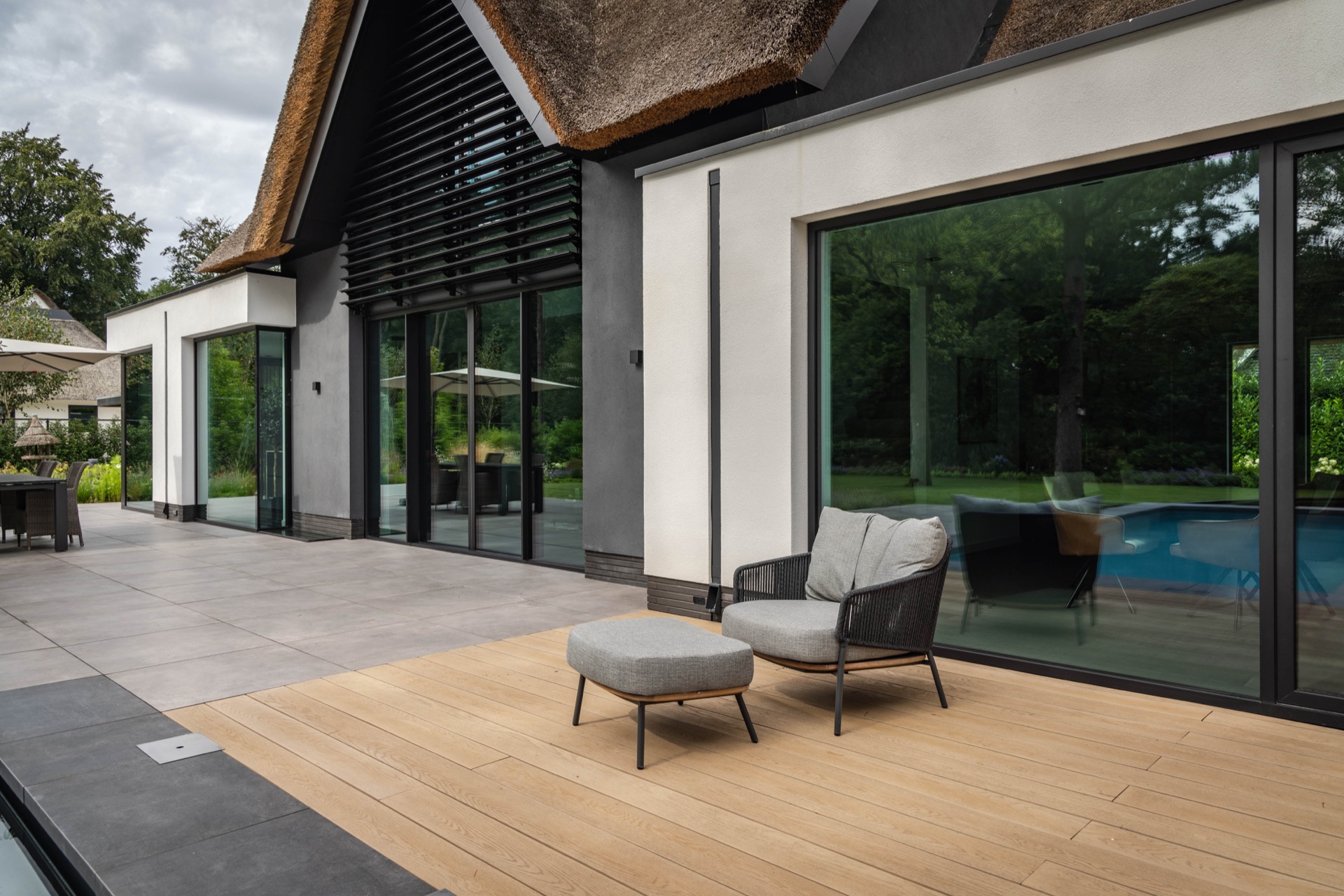
The terraces are built with Millboard boards from the Enhanced Grain collection in Golden Oak. That colour does a lot of quiet work here. It picks up the browns in the bark, softens the edge of the water and keeps the deck from reading as a hard insert. From the house side, the boards extend the line of the terrace; from the pond side, they form a clean frame that lets the reflections stay dominant. The result is a low-maintenance deck terrace that looks settled into the site rather than placed on top of it.
The material is described as wood-free, yet it reads like timber at first glance. That wood-look low-maintenance deck boards quality matters in a garden with shade, leaf fall and moisture. The boards are said to resist rot, moss growth, discolouration, splintering and warping, which suits a place where surfaces sit close to soil, water and dense planting. Their slip-resistant finish adds another layer of use, especially where the terrace meets the pond edge and the walking line changes underfoot.
A deck next to the swimming pond, not apart from it
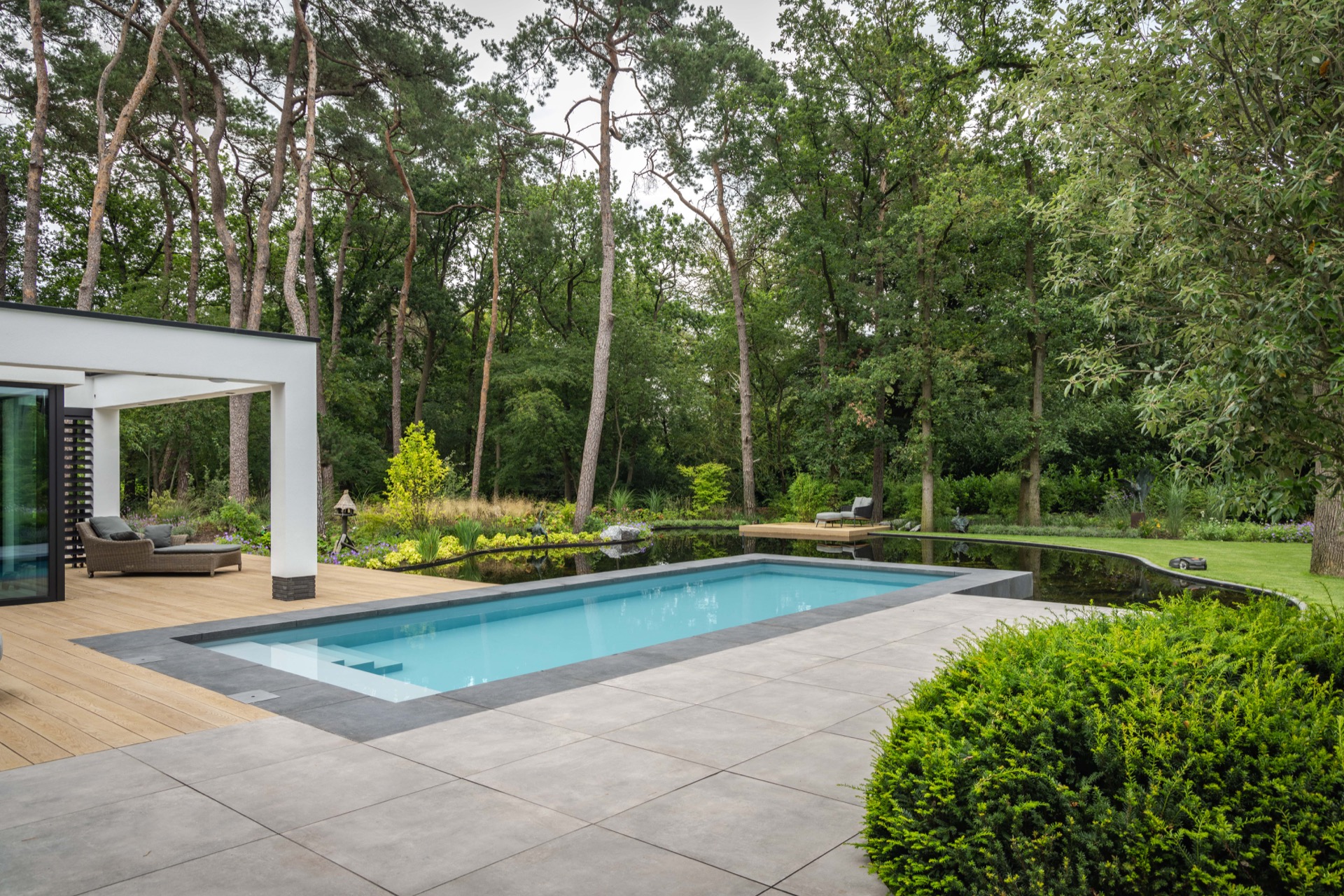
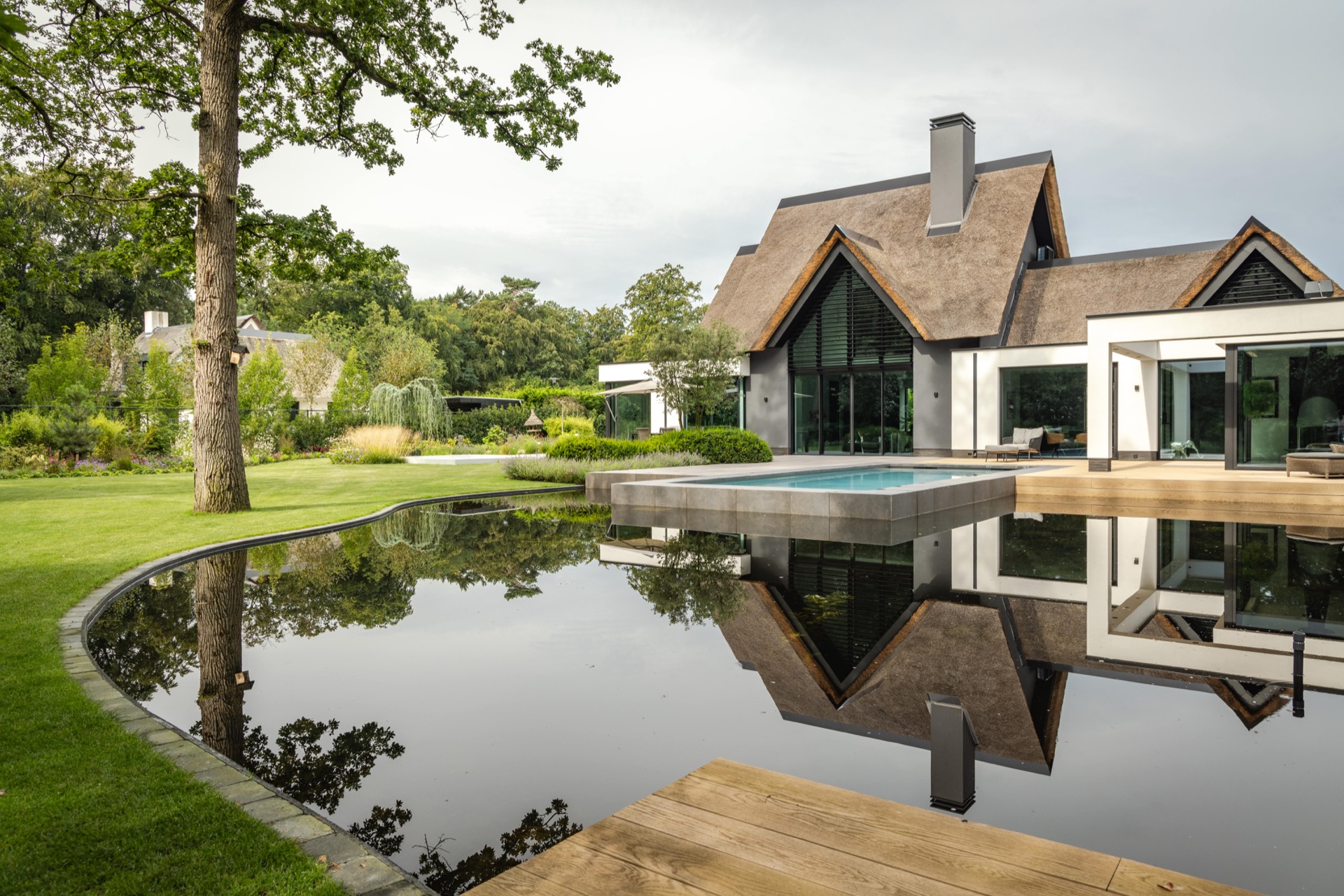
The strongest move in the project is the transition between terrace and water. The deck next to swimming pond is not a side note; it is the line that lets the whole garden read as one sequence. The boards run in long strips, while the pond edge stays dark and still. Between those two surfaces, the planting takes over in loose clusters, with grass, shrubs and trees softening the geometry. It is an outdoor villa garden design built on controlled contrasts: straight decking, rounded water, and foliage that breaks the edges.
That transition between terrace and water is reinforced by the other materials. Ceramic paving appears beside the boards, sometimes as a cleaner, harder zone, sometimes as a pause before the planting starts again. The shapes are organic rather than forced, so the deck does not feel separated from the rest of the plan. Instead, it becomes the linking piece between the swimming pond, the paved terraces and the larger garden structure around them.
How the terrace sits in the nature-inclusive garden
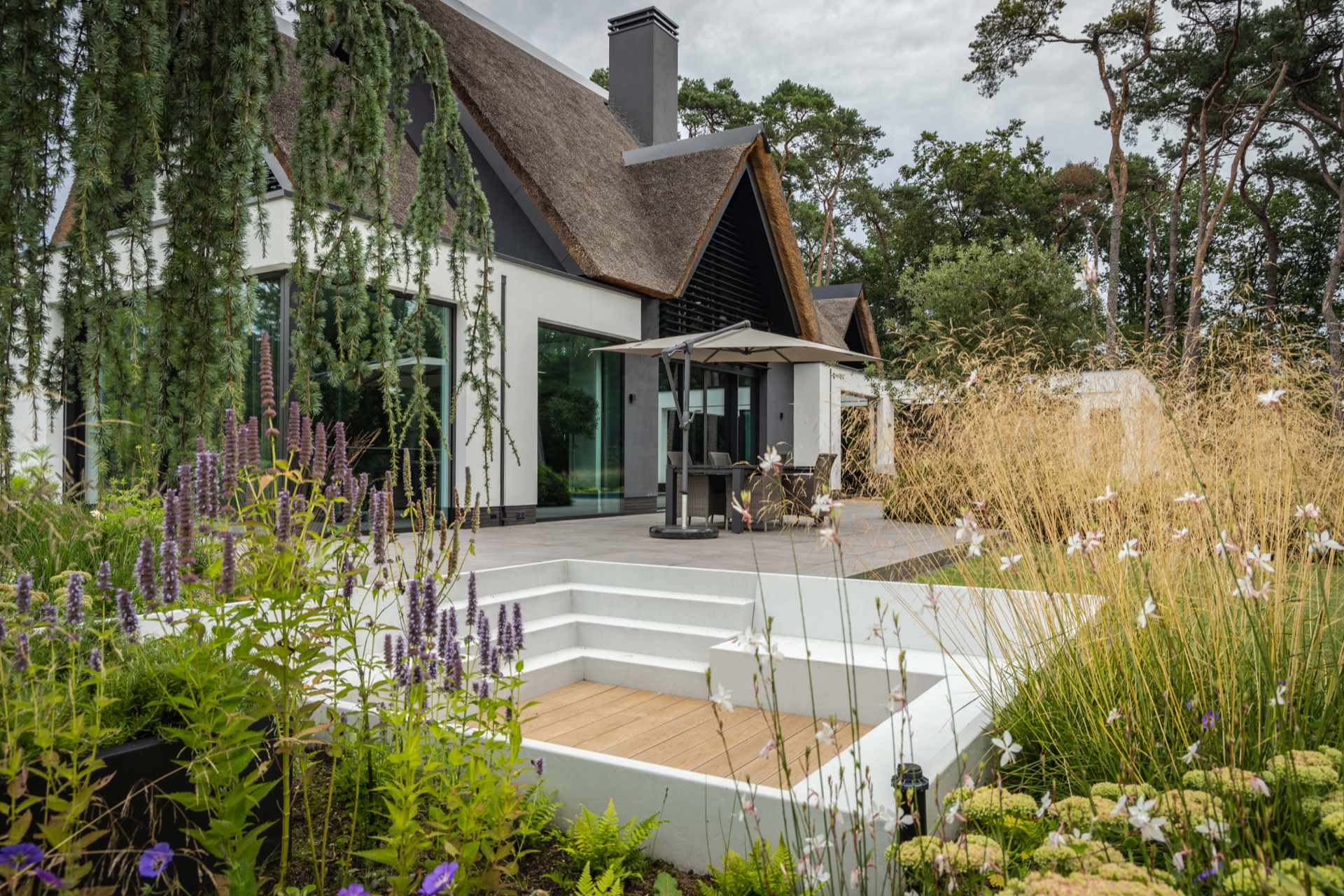
The nature-inclusive garden is visible in the way the planting is allowed to work close to the built parts. Large trees stay in place, borders are packed rather than sparse, and the lawn stops and starts around the water and the deck. Gently curving paths move through the site, avoiding a rigid grid. That makes the terrace feel like part of the route, not a separate platform. Even the glazed openings of the villa seem to point towards the same outdoor line, where wood-look deck boards and water meet in view.
Across the images, the deck terrace appears in different roles. In one view it reads as a broad strip beside the pond. In another it becomes a detail at the edge of the paving, where board joints and tile lines meet. The black railing near the terrace is a small but clear marker of use, while the large panes of glass behind it give scale to the whole setting. Nothing is overworked; the materials are left to define the space through their edges and their distance from one another.
Texture, light and the working surface
Close-up views show the grain pattern of the boards and the narrow joints between them. That texture keeps the surface from flattening out in the light. On overcast days, the Golden Oak finish holds its colour against the darker water and paving. In brighter conditions, the grain becomes more visible and the terrace reads as a continuous plane rather than a set of small parts. The slip-resistant terrace boards are not presented as a technical statement alone; they are part of how the surface looks and feels around the pond.
The low-maintenance deck terrace also gives the garden a practical edge that suits the setting. There is no need for the boards to shout. Their value lies in how they hold up visually near the water, where shadow, dampness and fallen leaves would quickly expose a weaker finish. Because the boards are wood-free and stated to resist common forms of wear, they help keep the focus on the planting, the reflections and the long horizontal lines of the terrace itself.
Materials that keep the sightline clear
Millboard’s Enhanced Grain boards are paired with ceramic paving and the darker pool-pond construction, and that combination keeps the view legible. The deck does not compete with the house or the water feature. It connects them. From the terrace, the eye moves from the board surface to the planted borders and then to the still water. From the indoor side, the same line continues outward, which is why the board colour and the straight laying pattern matter so much. They hold the route together without making it heavy.
Seen from wider angles, the deck terrace acts as the meeting point between the villa, the swimming pond and the garden structure around them. The tree canopy, the glass walls and the low horizontal deck all sit within the same frame. That is where the project finds its strongest rhythm: not in a single dramatic gesture, but in the way a low-maintenance deck terrace can shape movement, edge and view at once. The surface remains calm, the water stays reflective, and the garden keeps its own pace around both.
Detail shots that explain the project
The detail photographs are useful because they show how the terrace is actually put together. One image focuses on the border between decking and paving, where the change in material marks a shift in use. Another shows the black rail at the terrace edge, which anchors the composition and introduces a sharper line against the grain of the boards. These are small elements, but they reveal the discipline of the layout. The deck is not decorative trim; it is a working part of the garden’s circulation.
Across the full project, the same idea keeps returning: a low-maintenance deck terrace can be both quiet and structural. Here, the boards guide movement along the pond, support daily use in a shaded setting and connect the villa to the rest of the garden without breaking the landscape into separate zones. The material choice, the board colour and the transition to water all support that one clear reading.
Selected project credits
Photography: Hans Gorter
Realisation: Toptuinen hoveniers
Millboard: Enhanced Grain collection, Golden Oak
Want to see more of Wooddeck? View the page of Wooddeck for even more great projects and company information.


NEW 2026 Jubileum Edition The Best Interior Designers Benelux
Order Now €125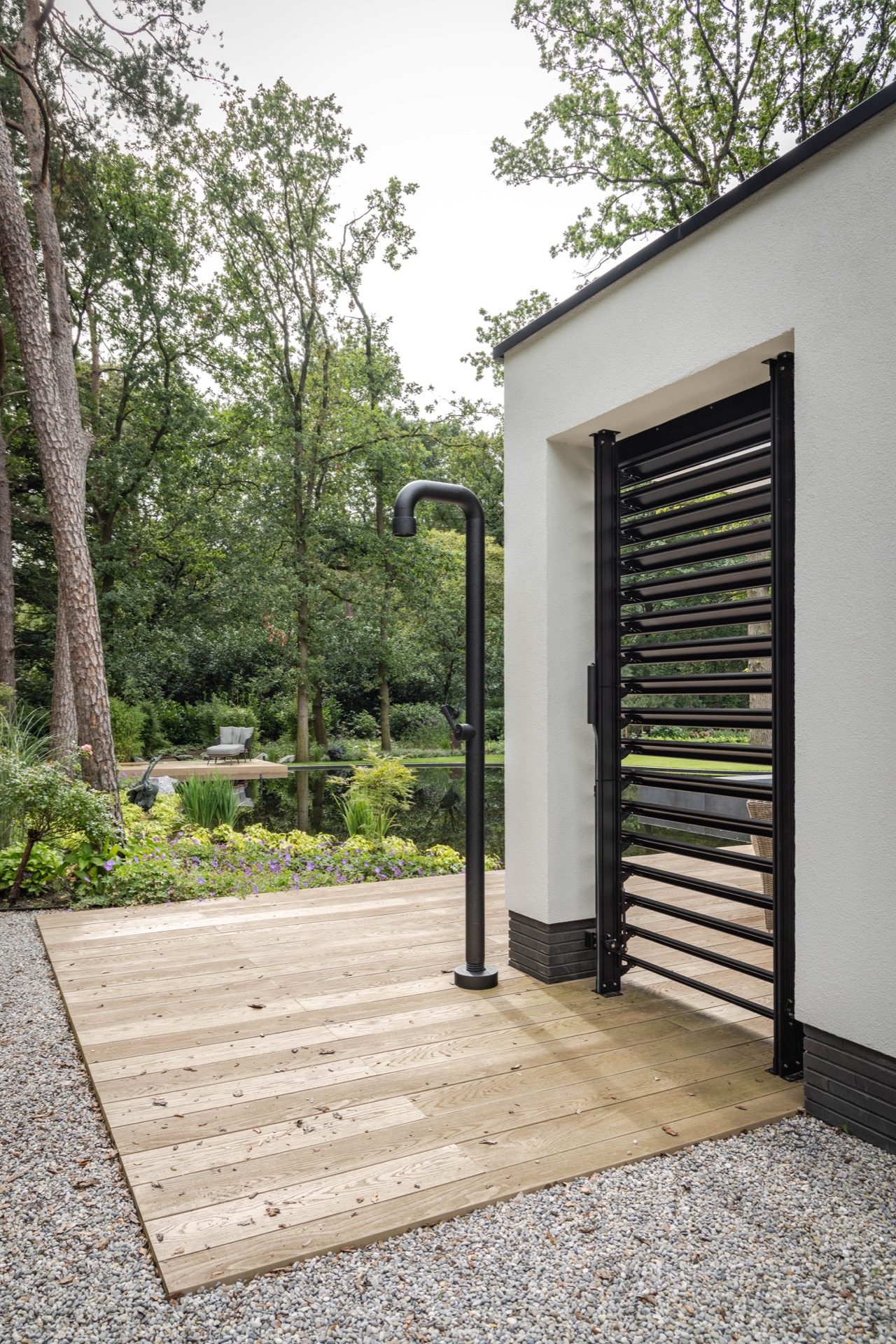
NEW 2026 Jubileum Edition The Best Interior Designers Benelux
Order Now €125