










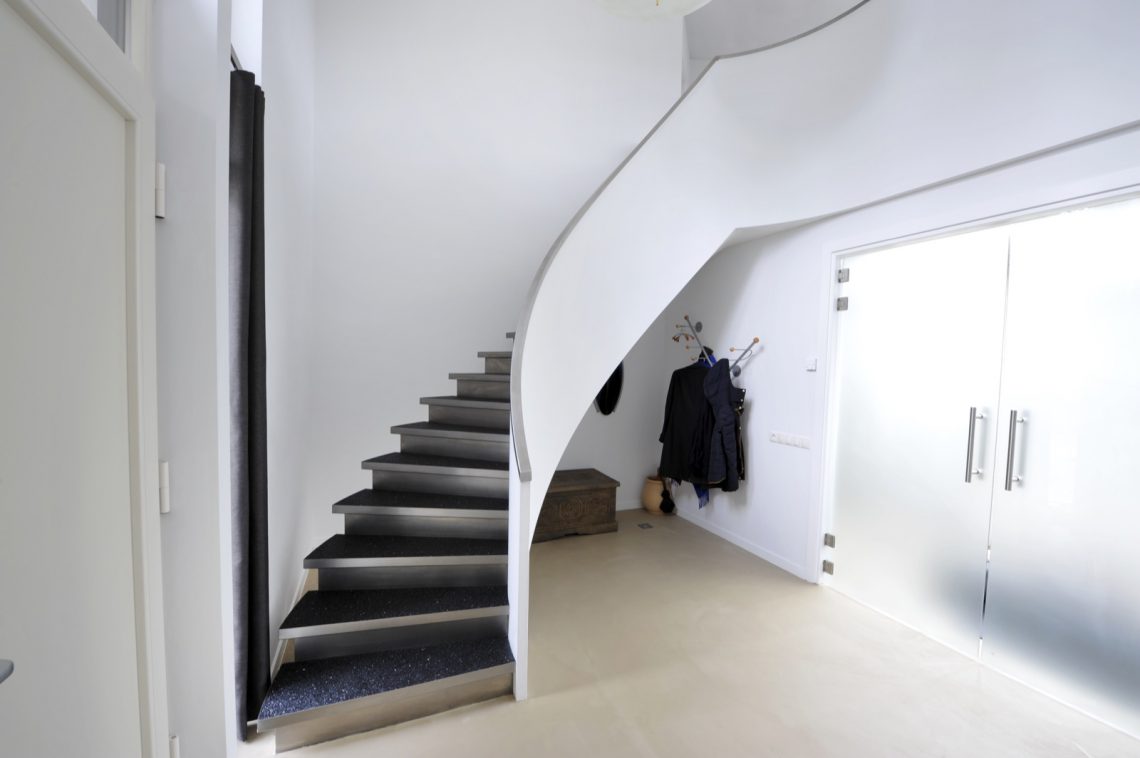
Country romantic staircase with a rounded white balustrade and dark wooden treads
The first step begins with a soft curve. In this country romantic staircase, the rounded front piece gives the entrance to the upper floor a gentler start, while the dark wooden treads draw the eye upward. White-painted sections keep the composition light, and the black decorative spindles add a sharper line between the handrail and the steps.
A rounded start that changes the pace
At the foot of the stair, the curve is what you notice first. The balustrade opens into the room with a rounded movement instead of a hard turn, so the staircase does not feel abrupt when you approach it. That first section, shaped by the curved front element, gives the ascent a quieter rhythm. It is a small detail, but it sets the tone before a single step is taken.
The dark wood treads contrast strongly with the painted surround. Their deeper tone anchors the staircase against the white walls and the pale balustrade, and the grain of the wood remains visible enough to read the steps as solid elements rather than a decorative line. The shape of the stair follows the room and the visible structure above, so the tread layout feels adapted rather than forced into place.
White balustrade, black spindles
The balustrade is painted white and rounded in profile, with a curved white handrail running along the turn. Between the rails sit black ornamental spindles, slender and visibly decorative, which give the stair its clear country romantic staircase character. The contrast is direct: white surfaces define the larger volume, while the black elements draw a fine graphic line through the middle of the composition.
This staircase with round balustrade works because the parts do not compete for attention. The white railing reflects the light from the room, and the darker spindles hold the eye at handrail height. Seen from a distance, the stair reads as a single gesture; up close, the individual parts become clearer, from the curved rail to the repeated verticals between each section.
Dark oak treads in a light room
The dark oak stair treads bring weight to the lower part of the staircase. They sit against the painted finish in a way that makes each step legible, especially where the stair turns. In a bright room with beams overhead, the darker wood keeps the staircase from disappearing into the white surroundings. Instead, the steps mark the route upward with a steady contrast.
The room itself stays calm in tone: white walls, clear edges, and exposed wooden beams above. That setting gives the staircase space to stand out without becoming heavy. The combination of pale surfaces and visible timber works well for this kind of interior, where the stair is not tucked away but placed in view. The vertical route is easy to read from below, and the curve at the base softens the transition from floor to upper level.
Where the curve meets the structure above
The staircase follows the room’s shape and the visible roof structure. The eiken treads are adjusted to the beams and the upper construction, which means the stair fits under the slope and between the elements above it. That relationship is visible in the way the staircase turns and rises under the ceiling, with the white balustrade tracing the movement while the dark treads remain grounded below.
Because the space is high and light, the stair does more than connect two floors. It also organizes the room around it. The curve, the repeated spindles, and the open view to the beam structure create a clear line of movement through the interior. Nothing feels overworked; the visual interest comes from the geometry of the stair itself and from the contrast between painted surfaces and wood.
A quiet white section that holds the composition
The white parts of the staircase do more than lighten the room. They frame the darker steps and keep the rounded start from becoming visually heavy. In the long view, the painted balustrade and the white wall surfaces help the staircase settle into the interior, while the black details prevent it from fading into the background. The result is a stair that reads clearly from every angle, whether you look at the curve, the spindle pattern, or the run of the treads.
Seen as a whole, the staircase combines a rounded balustrade, dark wooden steps, and a bright surrounding room with exposed beams. It is a straightforward arrangement, but the details give it presence: the curved start, the white-painted handrail, the black spindles, and the adapted tread line. Together they create a country romantic staircase that feels shaped by the room rather than simply placed inside it.
Details that guide the eye
From the side, the staircase shows how the curve softens the turn at the base, while the upper run keeps a cleaner line. The white balustrade carries that movement through the space, and the dark oak treads step away from it in a strong, even rhythm. The visual effect depends on contrast, but also on repetition: each spindle, each tread, each painted section reinforces the same route upward.
What makes this staircase with round balustrade convincing is the way the materials stay readable. Wood, paint, and metal each keep their own place. The stair does not rely on ornament alone; it uses shape, color, and proportion to give the interior a clear focal point. In the bright room with beams, that is enough to make the staircase the central line in the space.
Want to see more of Sonnemans Trappen? View the page of Sonnemans Trappen for even more great projects and company information.




NEW 2026 Jubileum Edition The Best Interior Designers Benelux
Order Now €125


