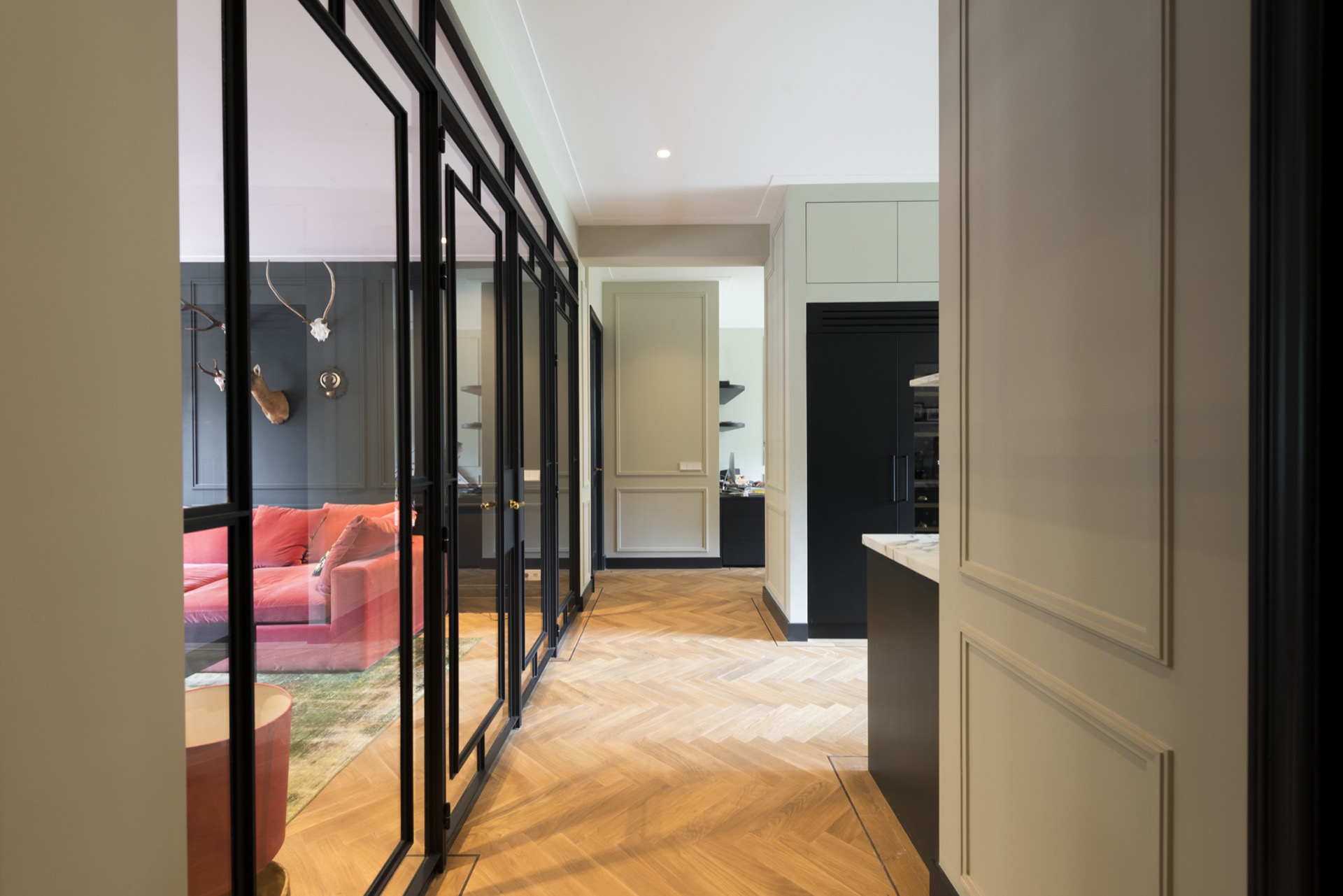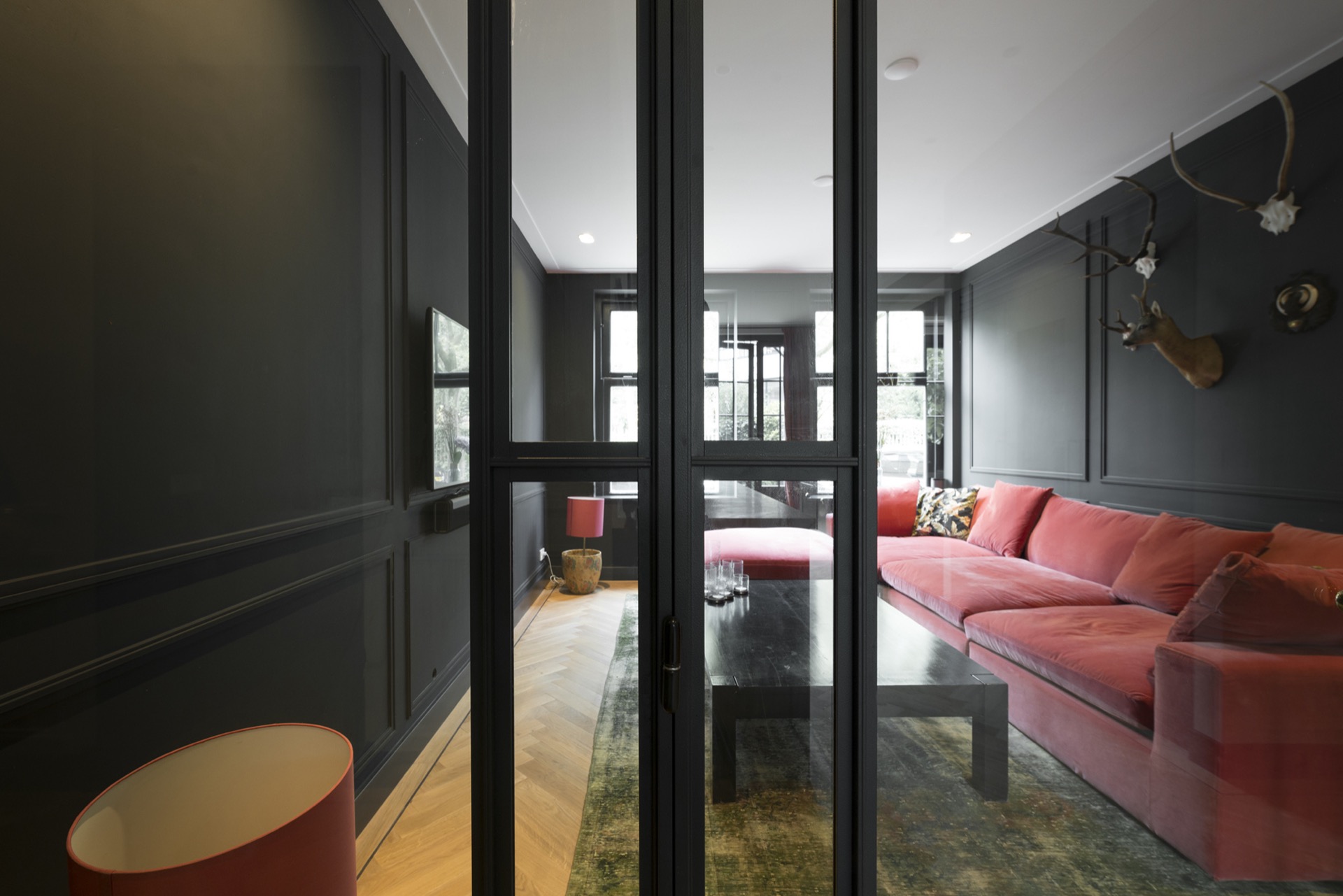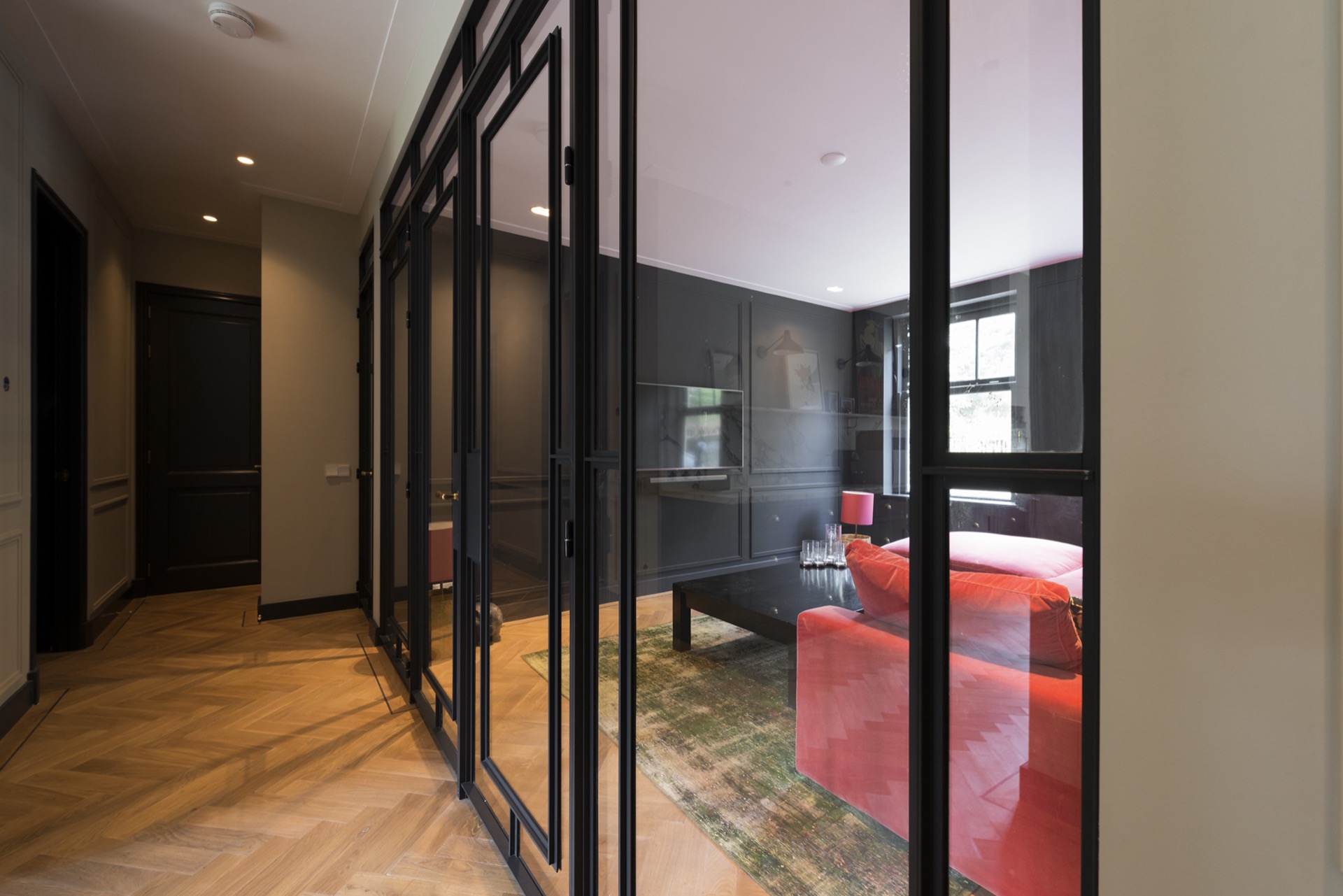




Glass wall swing doors shapes the way the rooms are organized and described. Black aluminum frames draw a clear grid across the room, and the swing doors sit inside that grid as part of the same glass wall. The glass is cut with a series of openings, so the surface reads less like a plain pane and more like a graphic screen that still lets light through. From one side to the other, the view stays open, but the structure remains precise and legible.
Glass wall swing doors built as one system
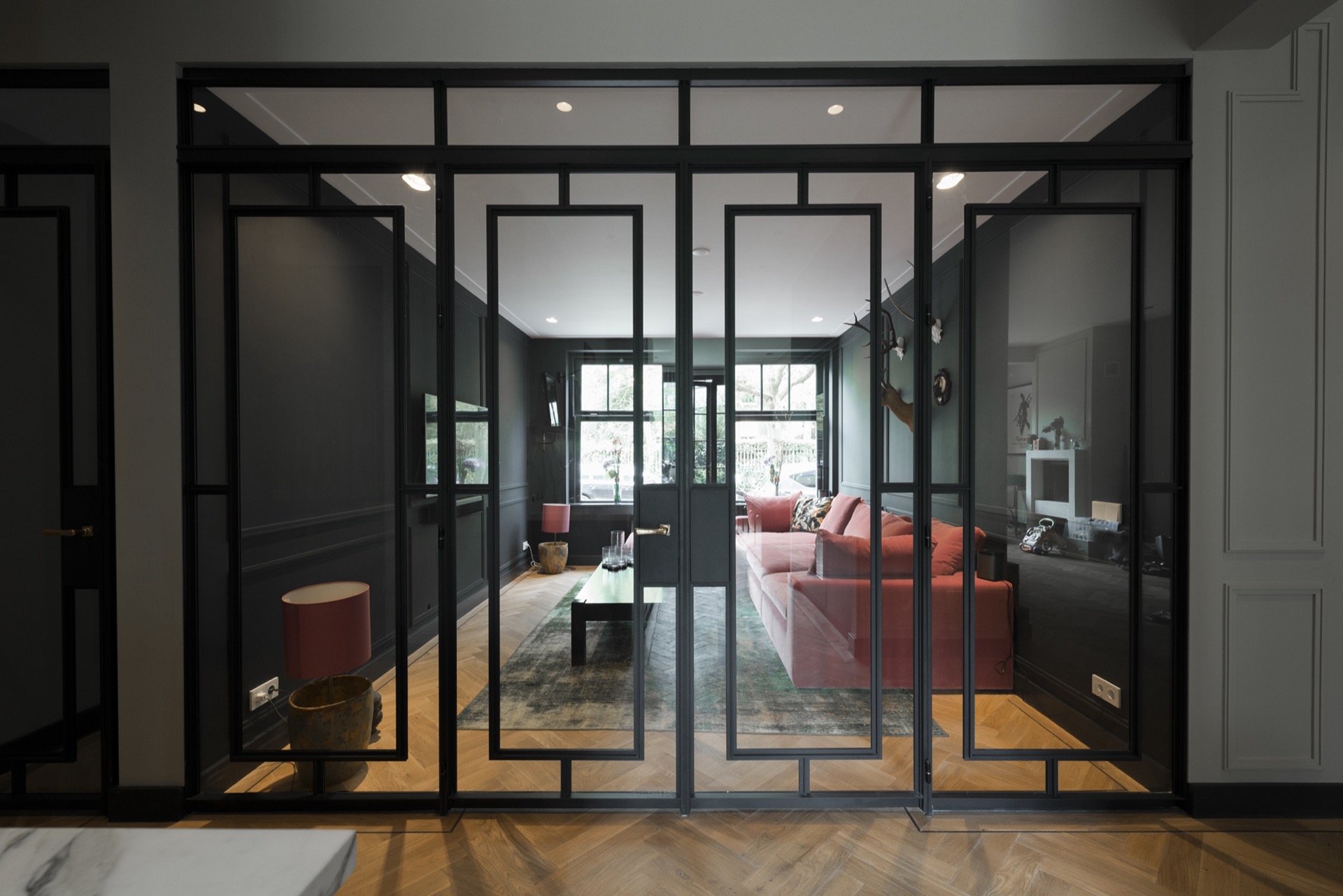
The project centers on a glass wall with swing doors, not as separate elements placed next to each other, but as one composition. Rectangular glass fields sit within slender black aluminum profiles, and the door leaves repeat that same language. The result is a black aluminum glass wall interior that keeps its rhythm even where the doors open. In the photos, the glazing breaks into measured panels, while the openings in the glass add a more graphic edge to the surface.
Seen from the room, the doors do not interrupt the wall so much as extend it. Their frames line up with the surrounding sections, and the straight profile edges keep the entire span visually calm. The glass with cut-out pattern is what gives the wall its most distinctive face: light passes through, yet the openings make the panels feel articulated rather than flat.
Safety glass in an aluminum frame, held between two sides
The technical side is visible in the profile itself. Safety glass in aluminum frame construction means the glass is clamped between a front and rear side of the profile, leaving the edge clean and controlled. That detail matters here, because the door leaf and the fixed sections are built from the same system. The frame does the visual work, but it also carries the glazing in a way that keeps the lines tight and readable.
Mitre-cut connections sharpen that effect. Instead of soft transitions, the aluminum profiles meet at angled joints that keep the corners crisp. Close up, the junctions read as exact lines rather than heavy intersections. In a project like this, those cuts shape the whole impression: the wall feels drawn rather than assembled, even though the parts are made to fit together on site.
Openings in the glass shape the wall
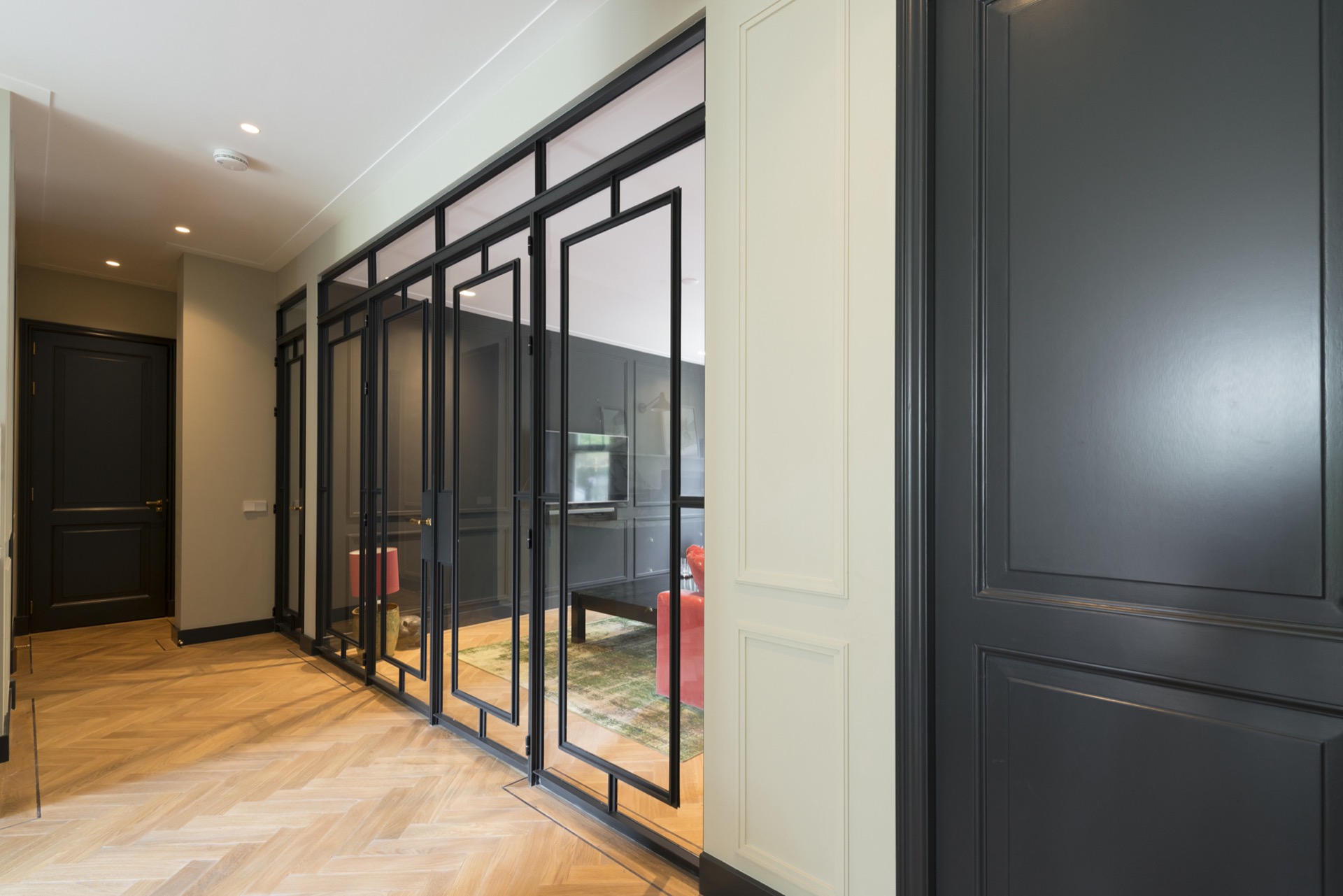
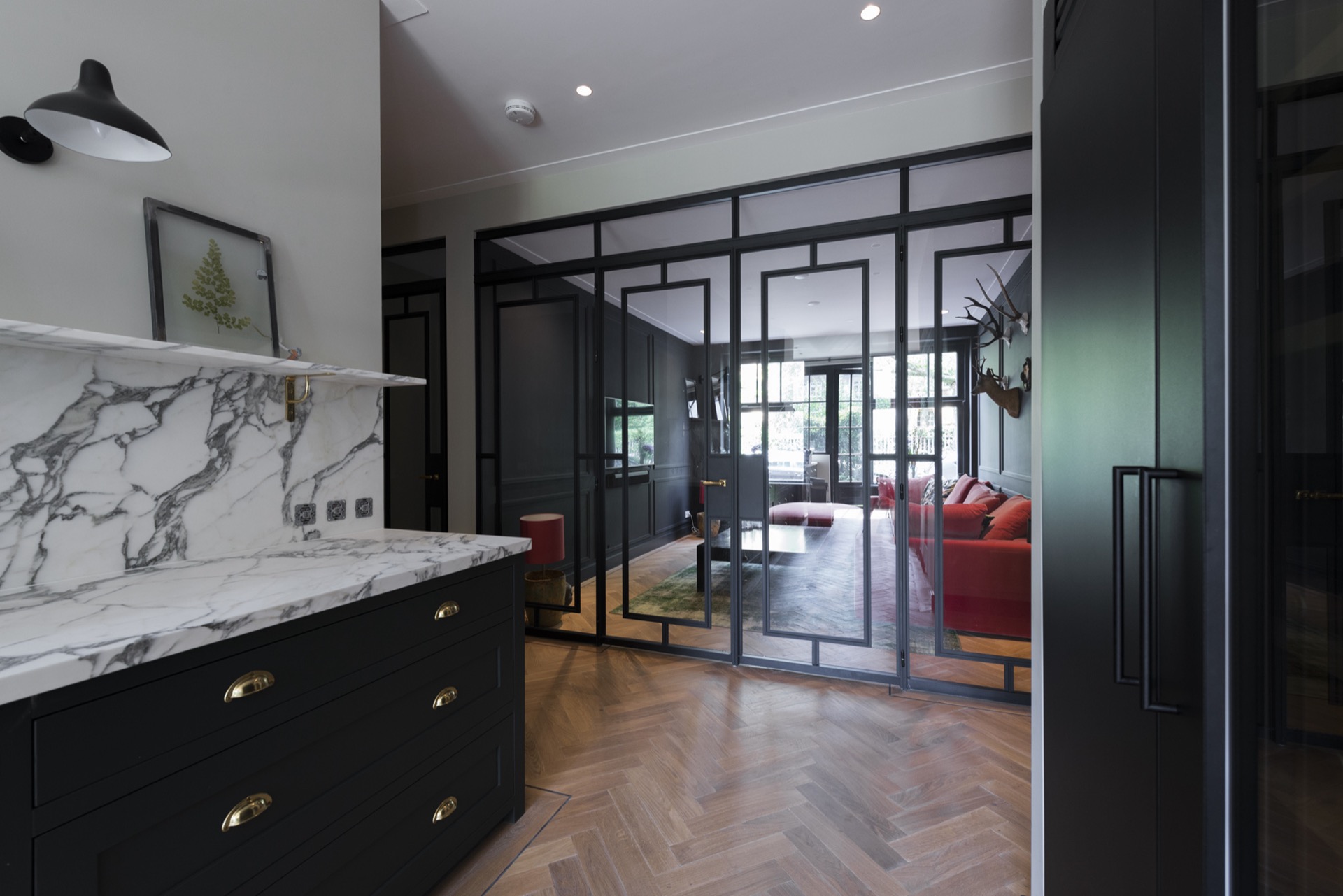
The glass doors with openings are more than a decorative variation. The cut-outs break the panes into smaller visual fields and create a pattern that changes with the angle of view. In one image, the rectangles are read against a lighter room with a wood floor; in another, the same black frame stands in front of paneled walls and darker finishes. The opening pattern gives the wall a measured opacity, so the eye can pass through it without losing the frame.
That balance between transparency and enclosure is strongest when the doors are shown partly open. The swing glass doors move away from the fixed sections and create a wider passage, but the frame language stays continuous. You still see a single system: repeated verticals, square and rectangular glazing fields, and the dark aluminum line holding everything in place. Glass wall swing doors remains connected to the layout, materials and daily use of the home.
Made in parts, packed for transport, assembled on site
The build method is practical and visible in the way the wall is explained. Individual parts can be assembled on location, which makes them easier to pack and transport. That approach suits a glass wall design with multiple panels and door leaves, where the frame sections need to arrive in manageable pieces before they are put together. The project text states that the doors come from the company’s own factory and are handmade there, which helps explain the measured fit of the profiles and the controlled repetition across the wall.
Because the structure is built from separate elements, the wall can be delivered without losing the precision of the final assembly. The profile sides, the glass, and the swing leaves all belong to the same construction logic. On the finished side, though, the joins recede and the black aluminum glass wall reads as a single surface broken by openings and door divisions.
Light, sightlines, and the room beyond
Visibility is one of the project’s strongest qualities. The glass keeps the adjoining room present, whether it is a living area, a hallway, or another interior zone. In the images, a marble-topped cabinet, panelled walls, ceiling spots, and a wooden floor appear around the glass wall, but they remain secondary to the black frame. What stands out is the way the wall filters the view: not fully open, not fully closed, but structured enough to guide movement through the interior.
The material contrast does most of the work. Black aluminum trims the edges, safety glass catches the light, and the surrounding finishes stay quiet enough to let the wall read clearly. Even when the doors are open, the rectangles in the glazing keep their order. That gives the project its character: a precise interior boundary that still allows the room behind it to stay visible.
A controlled frame for everyday passage
As a piece of interior architecture, the wall is built around movement. The swing doors open into the line of the glass wall, so passage happens without changing the visual structure of the room. In the photo set, the doors appear as segments within the larger grid, and that segmentation makes the wall feel measured rather than dominant. The black aluminum profile keeps the composition narrow, while the glass openings stop it from becoming visually heavy.
What remains after the practical details is a clear material sequence: aluminum, safety glass, mitre-cut corners, and on-site assembly. Those facts define the project more precisely than any general description could. It is a glass wall with swing doors, but it is also a careful study in how a frame can shape light, sightlines, and movement without adding visual noise.
For readers comparing glass wall systems, this project shows how swing doors, panel divisions, and a black aluminum finish can work as one interior element. The graphics of the cut-outs, the slim profile lines, and the visible connection details all stay readable from room to room. That clarity is what gives the wall its presence in the interior, whether viewed head-on or through an open doorway. Glass wall swing doors remains connected to the layout, materials and daily use of the home.
Want to see more of ? View the page of for even more great projects and company information.
.png)