






Color block kitchen with a striking yellow island
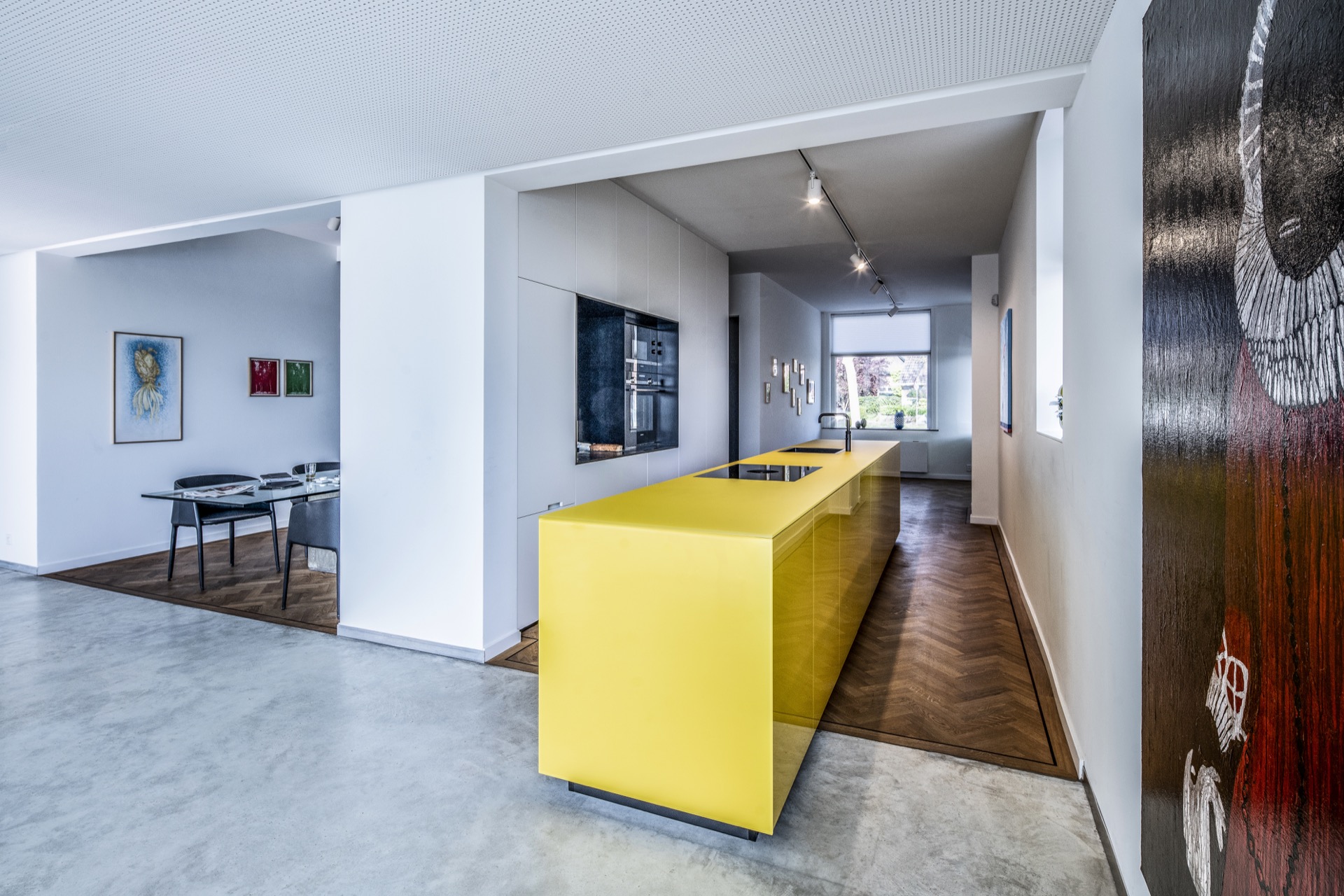
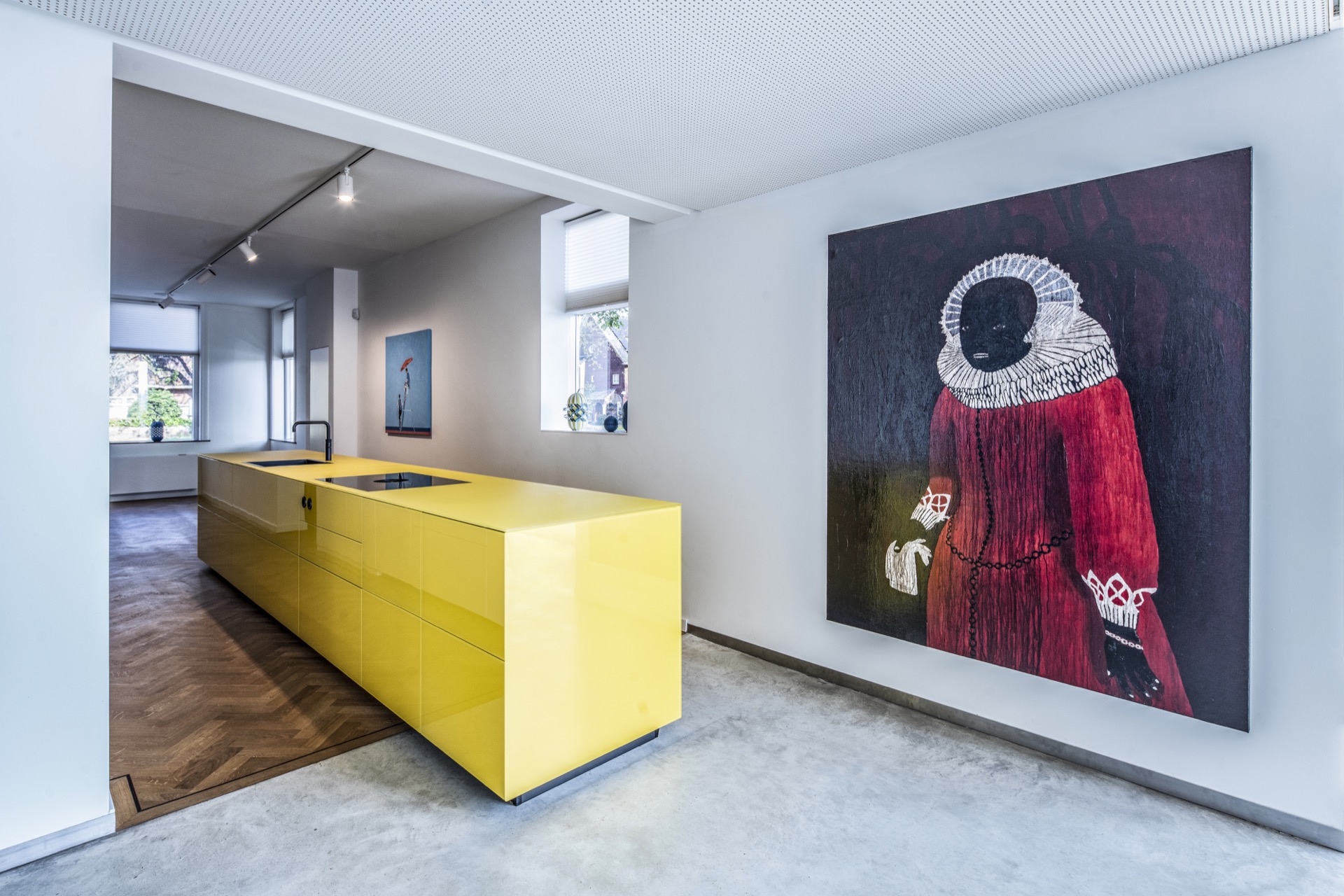
The yellow island lands in the room like a single painted stroke. Against the white walls and pale kitchen fronts, it sets the pace immediately, with the worktop and built-in cooking area turning the block into the main point of focus. The rest of the palette stays restrained, so the color block kitchen reads clearly from the first step into the space. Daylight from the large windows keeps the surfaces bright, while the black faucet and crisp edges sharpen the contrast.
Color block kitchen as a spatial starting point
The idea behind this kitchen is straightforward: keep the background quiet and let one element carry the composition. Here, that element is the yellow kitchen island, which sits in front of a white kitchen wall and stretches the eye across the room. The white kitchen with yellow accent works because nothing competes with the block. Cabinet lines stay slim, the wall surfaces are plain, and the yellow surface has enough space around it to stand on its own. That restraint gives the room its graphic clarity.
Seen from across the living area, the island reads almost like furniture rather than a fixed utility block. The shape is clean, the edges are sharp, and the underside keeps the volume visually grounded. A modern cooktop island like this does more than hold appliances; it becomes the central marker in an open plan, drawing the kitchen into the same visual field as the rest of the living space. The effect depends on proportion as much as color.
The floor change softens the transition
One of the quietest details is also one of the most effective. The kitchen extends slightly from the wooden floor onto the concrete side, so the shift between zones feels measured rather than abrupt. That subtle move helps the kitchen and living area relate to each other without using walls or heavy borders. In a color-blocked kitchen design, that kind of transition matters: the room needs a clear statement, but it also needs a route for the eye to travel beyond the island.
The visible floor change gives the kitchen a settled position in the plan. It anchors the yellow block while keeping the surrounding space open. Because the materials remain readable underfoot, the room does not flatten into one surface. Instead, the different zones can be understood at a glance: wood, concrete, white wall, yellow island. The composition stays calm because each part has its own place.
Light, reflections and a crisp edge
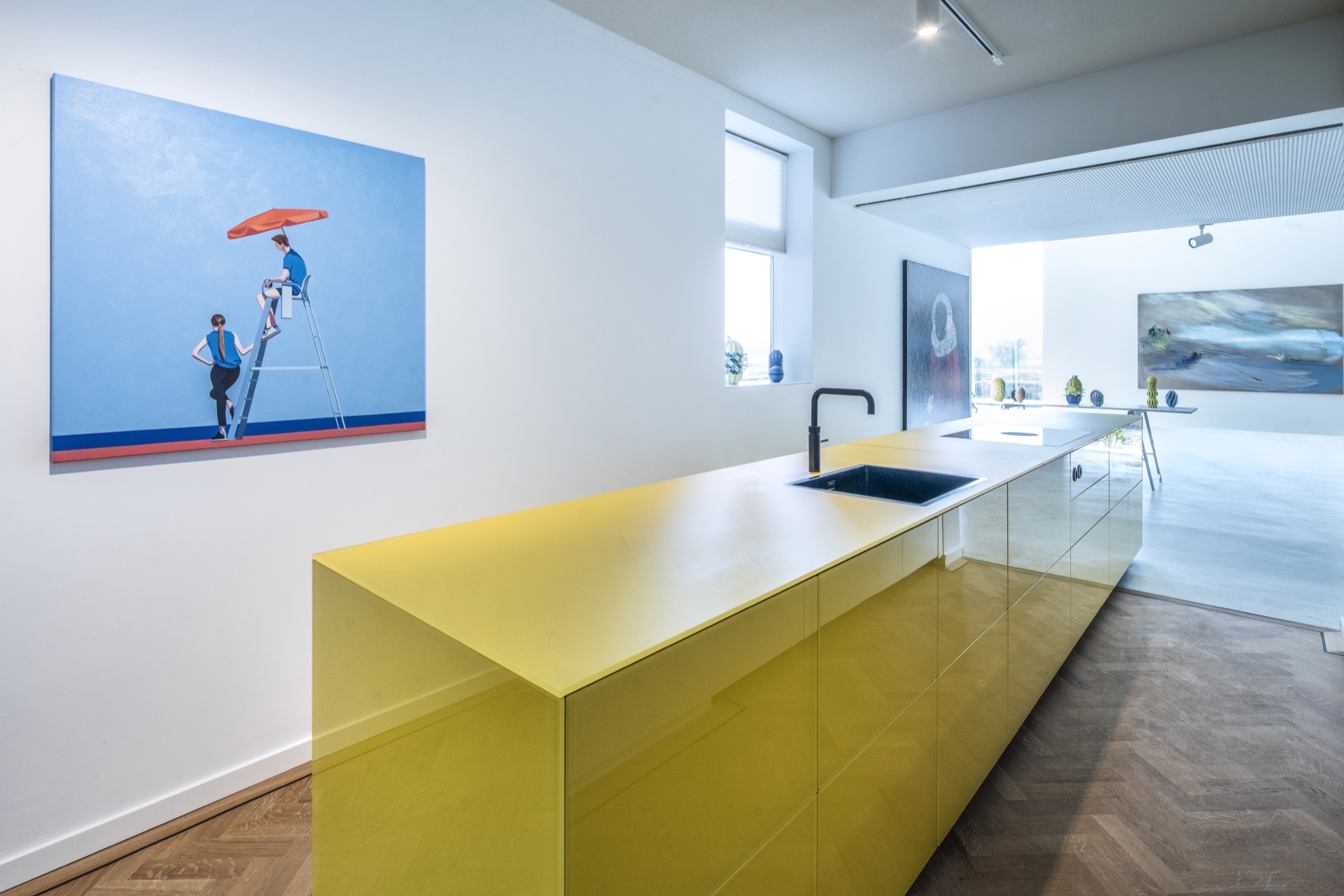
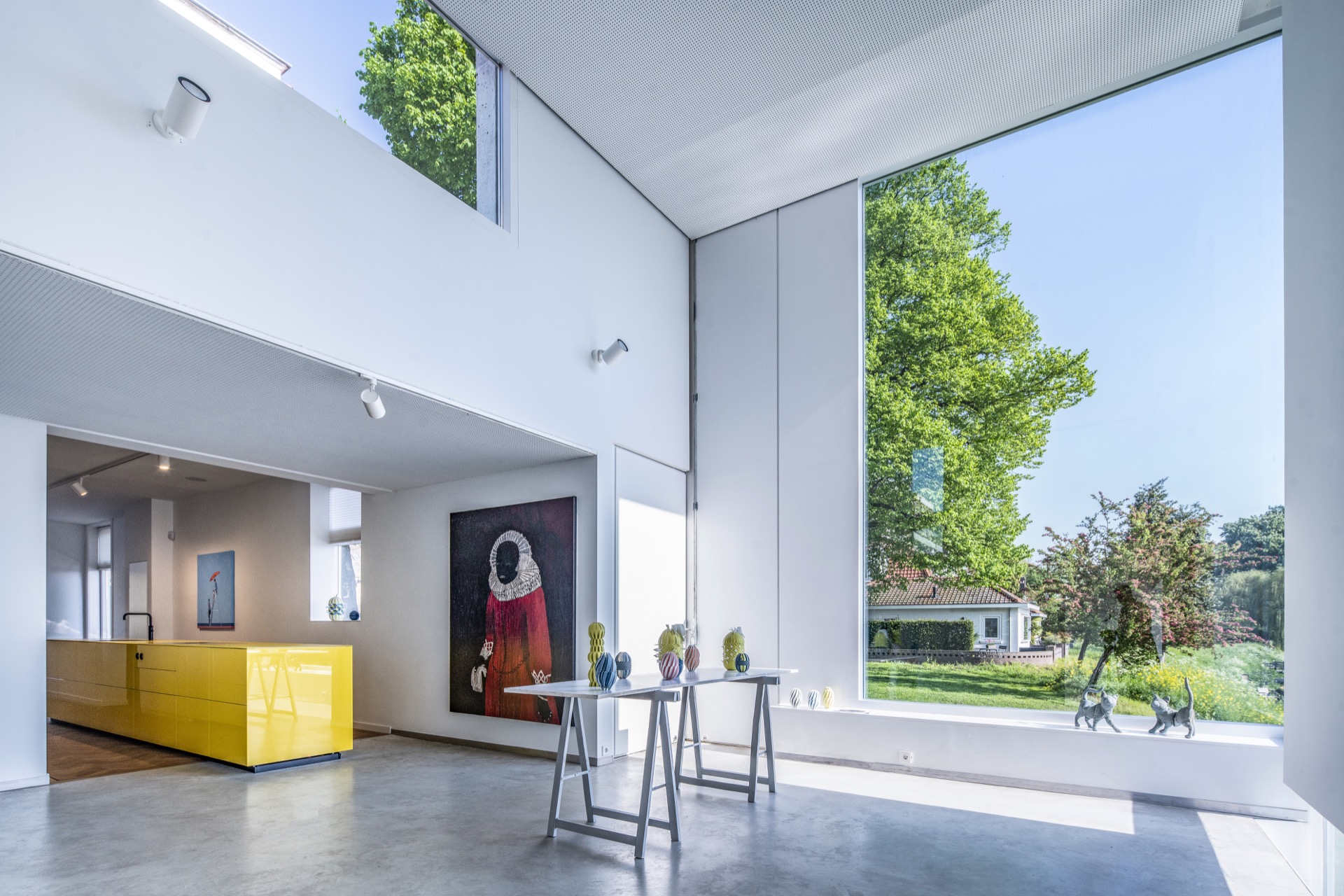
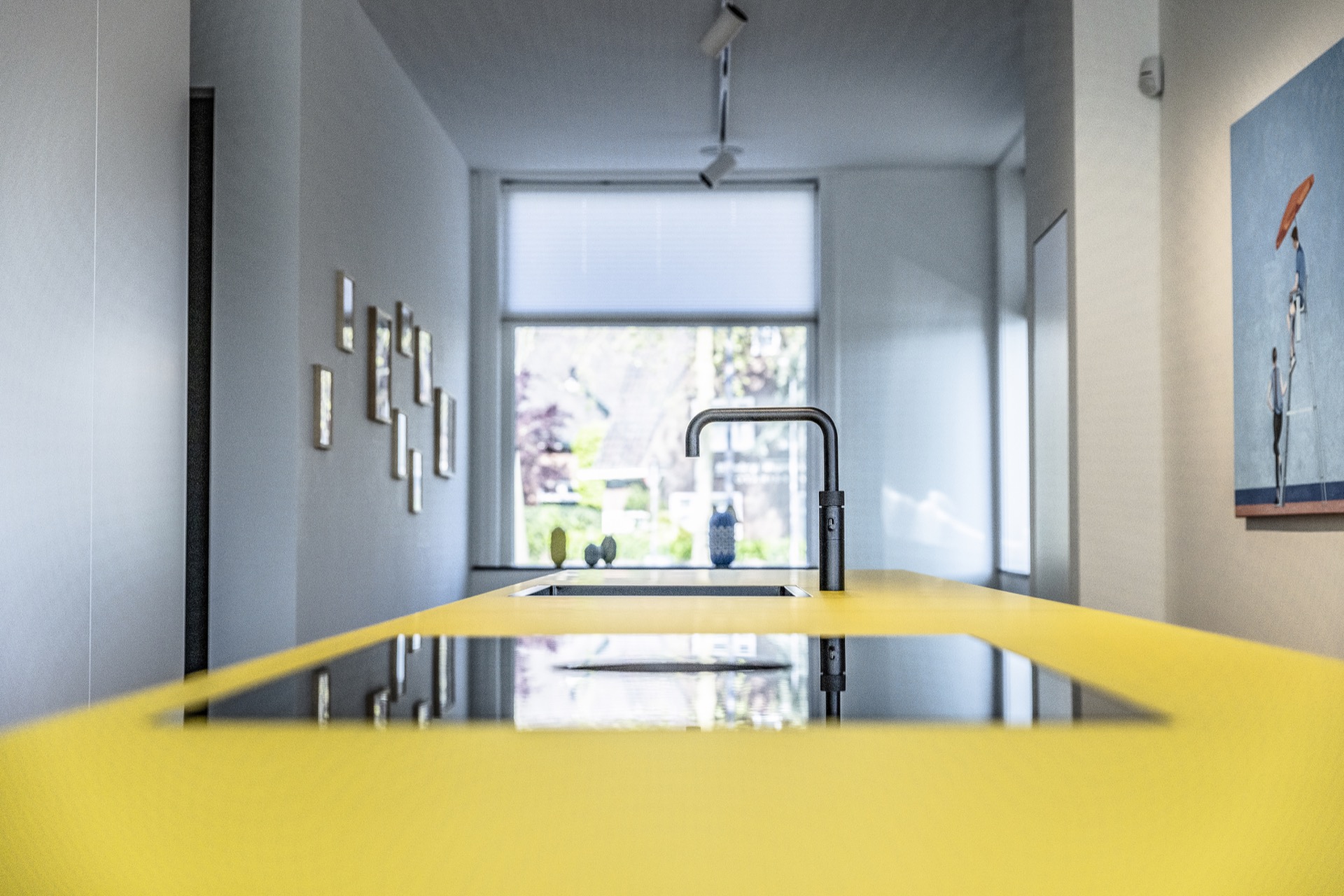
Large windows pull in daylight and place the island against a backdrop of greenery. That view matters, because it keeps the color from feeling sealed inside. The yellow surface picks up the changing light, while the white wall area reflects it back into the room. Above, the ceiling holds rail spots and small recessed lights, which reinforce the linear character of the kitchen without adding visual noise. Even the black faucet contributes to the reading of the room by cutting a narrow dark line across the yellow countertop.
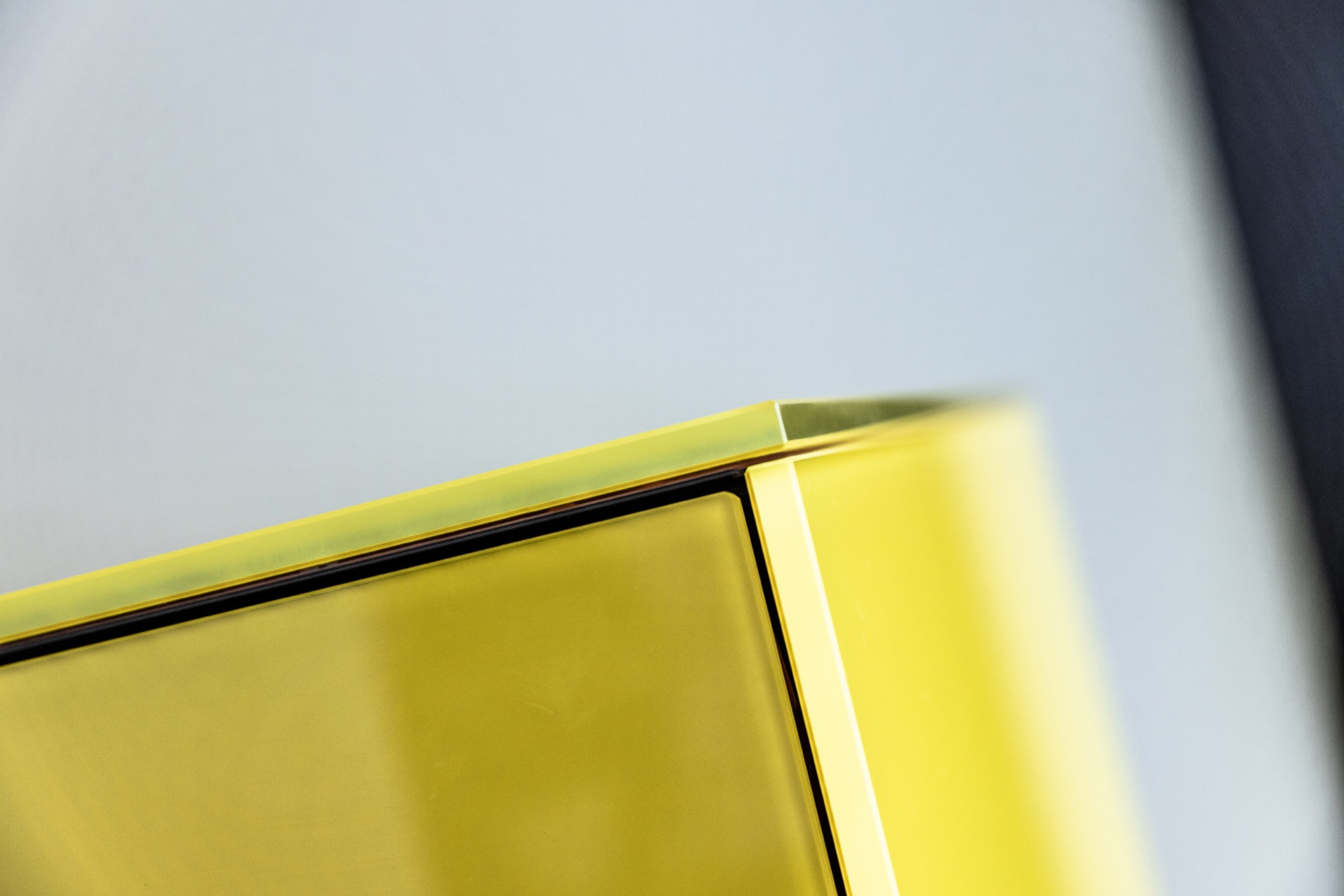
The detail shots make the material handling more legible. A close view of the worktop shows how the yellow surface meets the sink and tap with a precise edge. Another image focuses on the corner of the island, where a dark seam marks the transition and keeps the block defined. These smaller moments support the bigger composition. Without them, the yellow kitchen island would feel like a color choice alone. With them, it becomes a piece of spatial design. Color block kitchen remains connected to the layout, materials and daily use of the home.
What the walls leave unsaid
The white kitchen wall does not try to perform. It keeps storage, light and background in order, then steps back. That is exactly why the island can lead the room. The linear wall cabinets and pale surfaces work as a blank field, closer to a canvas than a busy fitted composition. The result is not a room filled with competing gestures; it is a room that lets one strong block carry the whole image. The color block kitchen concept depends on that discipline.
Seen in profile, the kitchen also gains energy from its relationship to the artwork on the wall and the open stretch of floor beside it. Those elements are not decorative extras. They help the room feel inhabited without crowding the yellow center. The eye moves from the art, to the island, to the windows, then back to the white cabinetry. Each part has a clear role, and none of them needs to shout.
A statement made with one color
Yellow does most of the talking here, but it is never used loosely. The tone is strong enough to define the room, yet it stays within a controlled composition of white, glass and pale surfaces. That is why the kitchen reads as a color-blocked kitchen design rather than a random accent scheme. The color is not scattered across stools, walls or accessories. It is concentrated in the island, where the geometry gives it weight and the surrounding space gives it room.
This concentration also explains why the kitchen feels animated without becoming busy. The island’s volume, the black tap, the straight lines of the wall units and the bright window openings all work on the same axis. Nothing is ornate. Nothing is overworked. The interest comes from the way the pieces are placed and how the color interrupts the white base at exactly one point.
Why the composition works from every angle
From the front, the island is the obvious focal point. From the side, its length and finish become more important, especially when the dark line at the edge catches the light. From deeper inside the room, the view opens toward the glass and the greenery outside, which gives the kitchen a second layer beyond the immediate color contrast. The project holds together because it has been composed as a sequence of views, not as a single front-facing image.
That sequence is what makes the room easy to read. The modern cooktop island is the anchor, but the white walls, the ceiling lighting and the floor transition keep shifting the perspective. The result is a kitchen that feels direct and measured at the same time. As a color block kitchen, it shows how one bold element can shape an entire interior when the surrounding surfaces are quiet enough to let it happen.
Want to see more of The Kitchen Art Studios? View the page of The Kitchen Art Studios for even more great projects and company information.

.png)