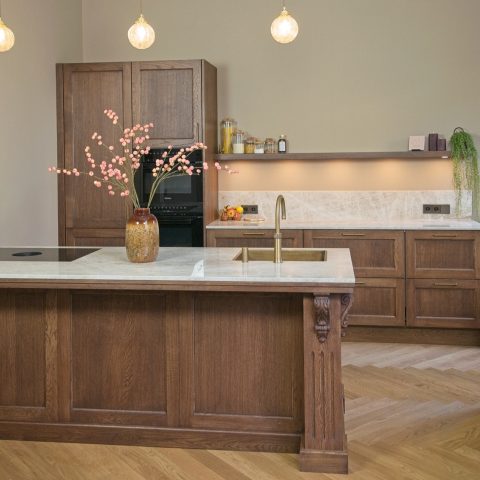





Kitchen island with glass display: optical zoning with wood-look and stone
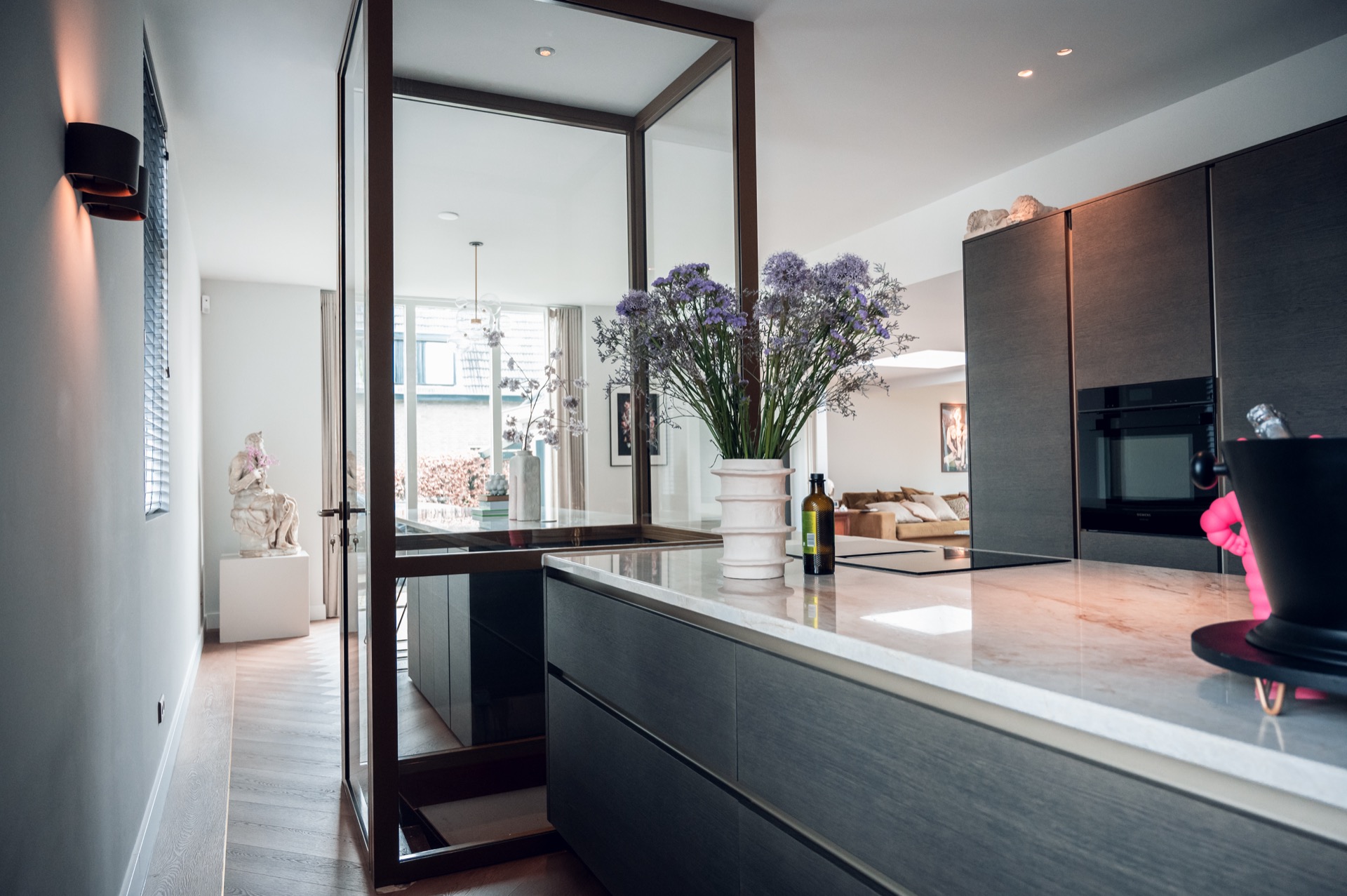
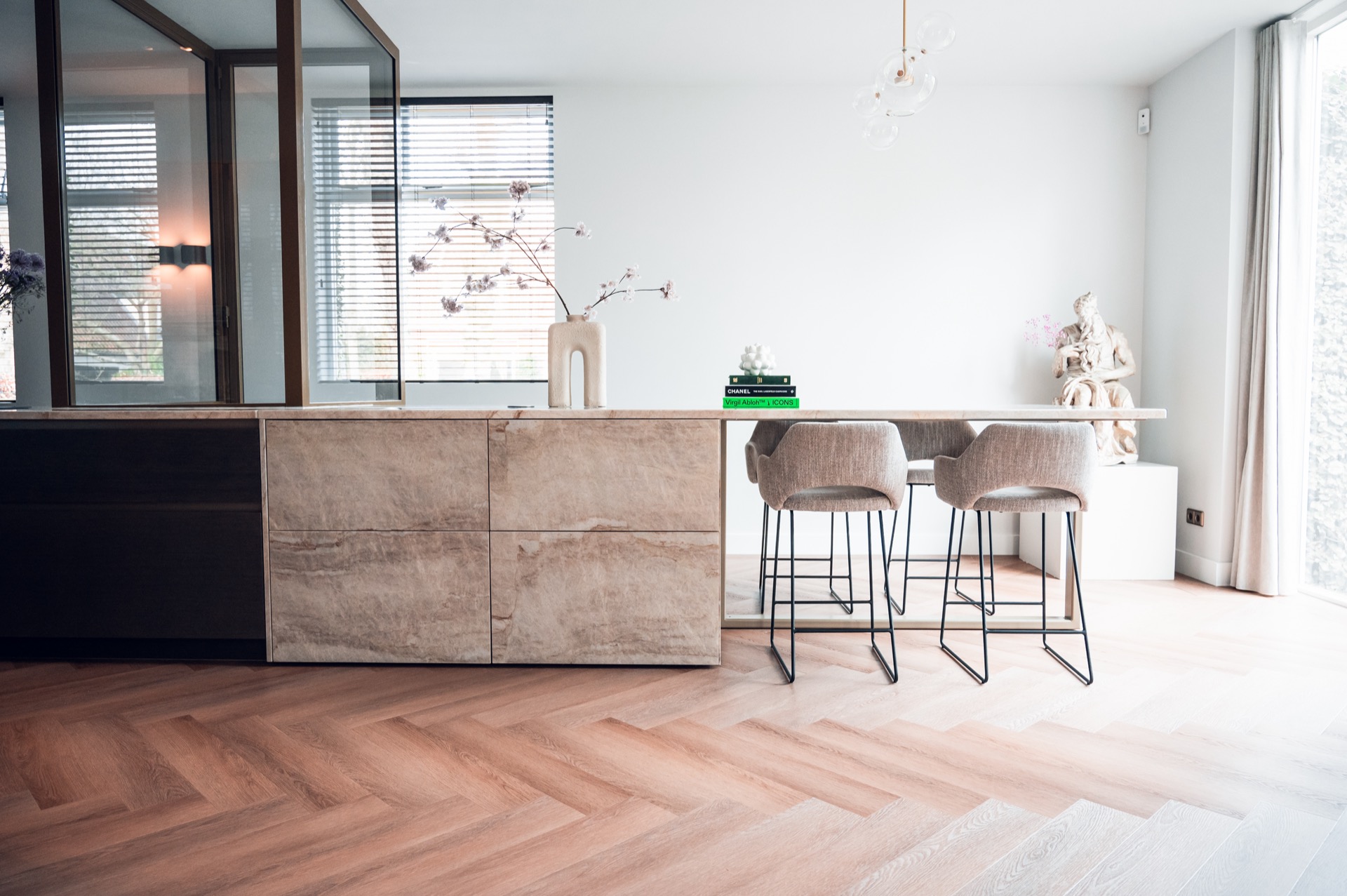
The long island is the first thing you read in this kitchen. It stretches across the room as one clear line, then breaks where a glass display zone is set into the volume. That opening changes the scale of the piece without interrupting the view through the space. The kitchen island with glass display and optical zoning makes the island feel less heavy, while the seating side stays open and easy to use.
Kitchen island with glass display and optical zoning as a spatial starting point
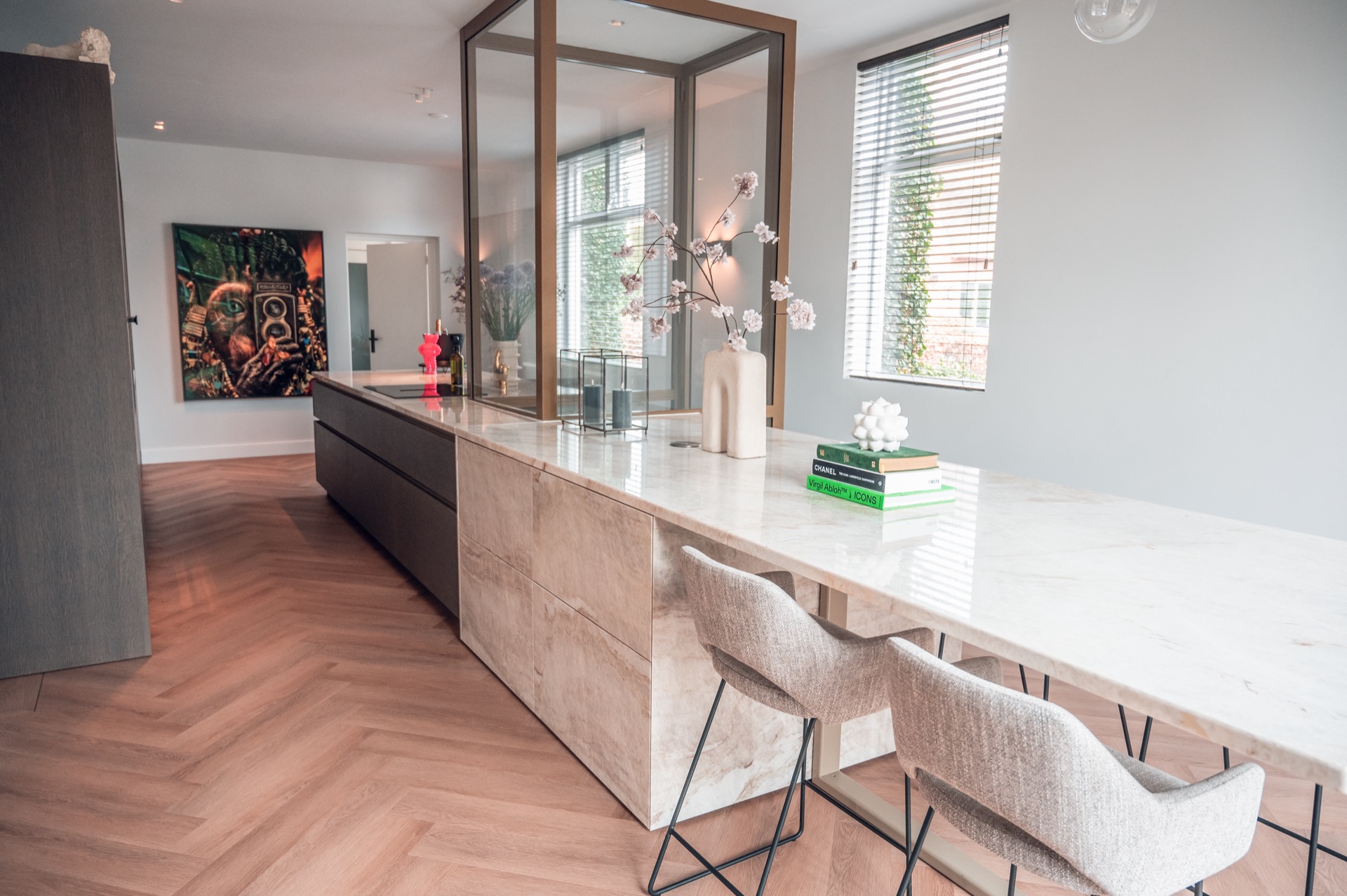
The glass zone works like a clear insert rather than a separate object. It sits inside the island and creates a visible pause in the length of the run. Because the glazing remains transparent, the sightlines stay intact. What changes is the reading of the space: the island no longer looks like one long block. Instead, the front edge is divided into two parts, and the kitchen gains a lighter rhythm.
A staircase is integrated into the island as well, and that detail adds another layer to the composition. It is not presented as a separate feature. It is folded into the furniture line, so the island keeps its calm profile. The glass display in island placement makes that integration visible, almost like a vitrine set into a piece of joinery. From the room, the effect is subtle but firm: one object, two spatial roles.
Optical zoning around the seating area
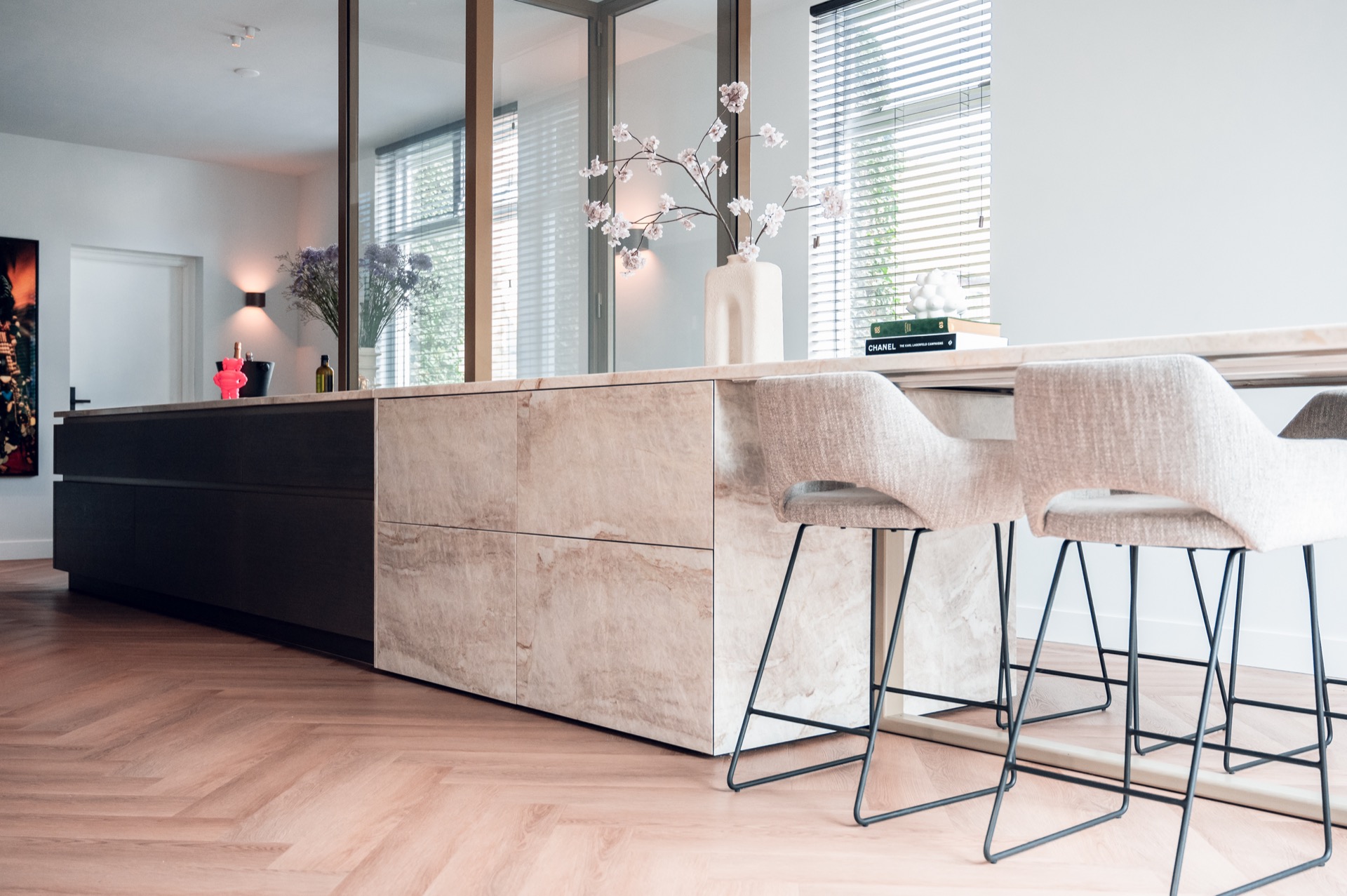
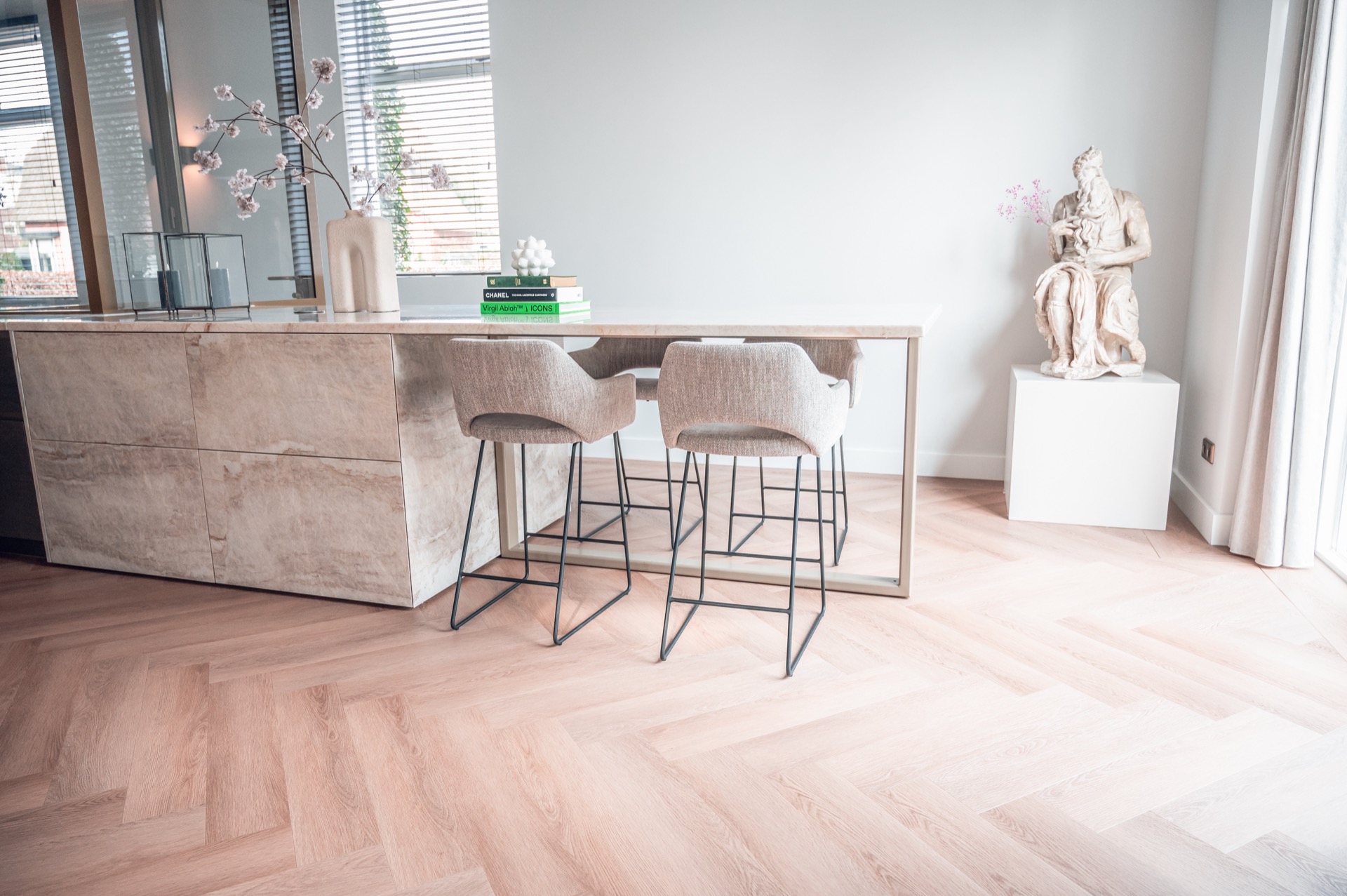
The seating area benefits from the split. By dividing the elongated island visually, the side with bar stools feels more intimate. The island still carries the same length, but the material change and the glass zone keep it from reading as a single, bulky mass. This is optical zoning kitchen island design in its most direct form: the room stays open, yet the seating side is given its own scale.
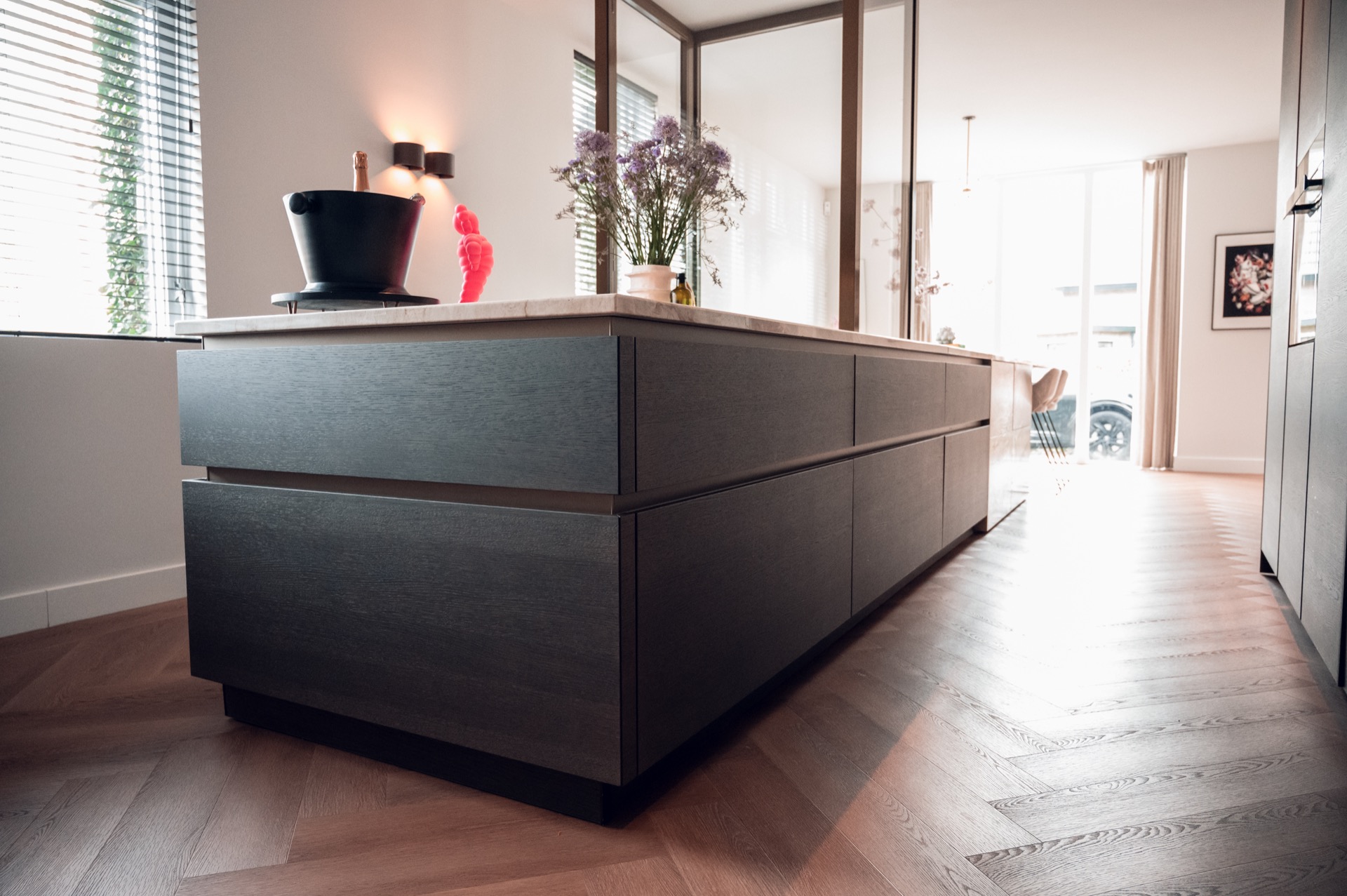
That reading is supported by the mix of wood-look and stone kitchen surfaces. The two materials do not compete. The wood-look section softens the composition, while the stone-look countertop island section brings weight and a sharper edge. Together they divide the island into distinct visual fields. The result is not decorative contrast for its own sake. It is a way of cutting length into parts the eye can take in more easily.
Wood-look and stone surfaces define the island
Close up, the material shift is what carries the project. The stone-look top shows a quiet veining, and the wood-look areas keep the island from feeling cold or overly hard. That pairing is visible across the full run of the furniture. It gives the island a clear front, a clear top, and a second reading at the seating side. The kitchen island seating area sits within that material change, so the place where people gather feels more grounded.
The kitchen with glass zone also connects to the surrounding room instead of shutting it off. Light passes through the glazed insert and across the adjacent space, which keeps the island from becoming a closed barrier. You can read the kitchen from more than one side. That matters in a layout where a central piece has to divide and connect at the same time. Here, the island does both through proportion, transparency and the change from wood-look to stone. Kitchen island with glass display and optical zoning remains connected to the layout, materials and daily use of the home.
Minimalist fronts and a tall cabinet wall
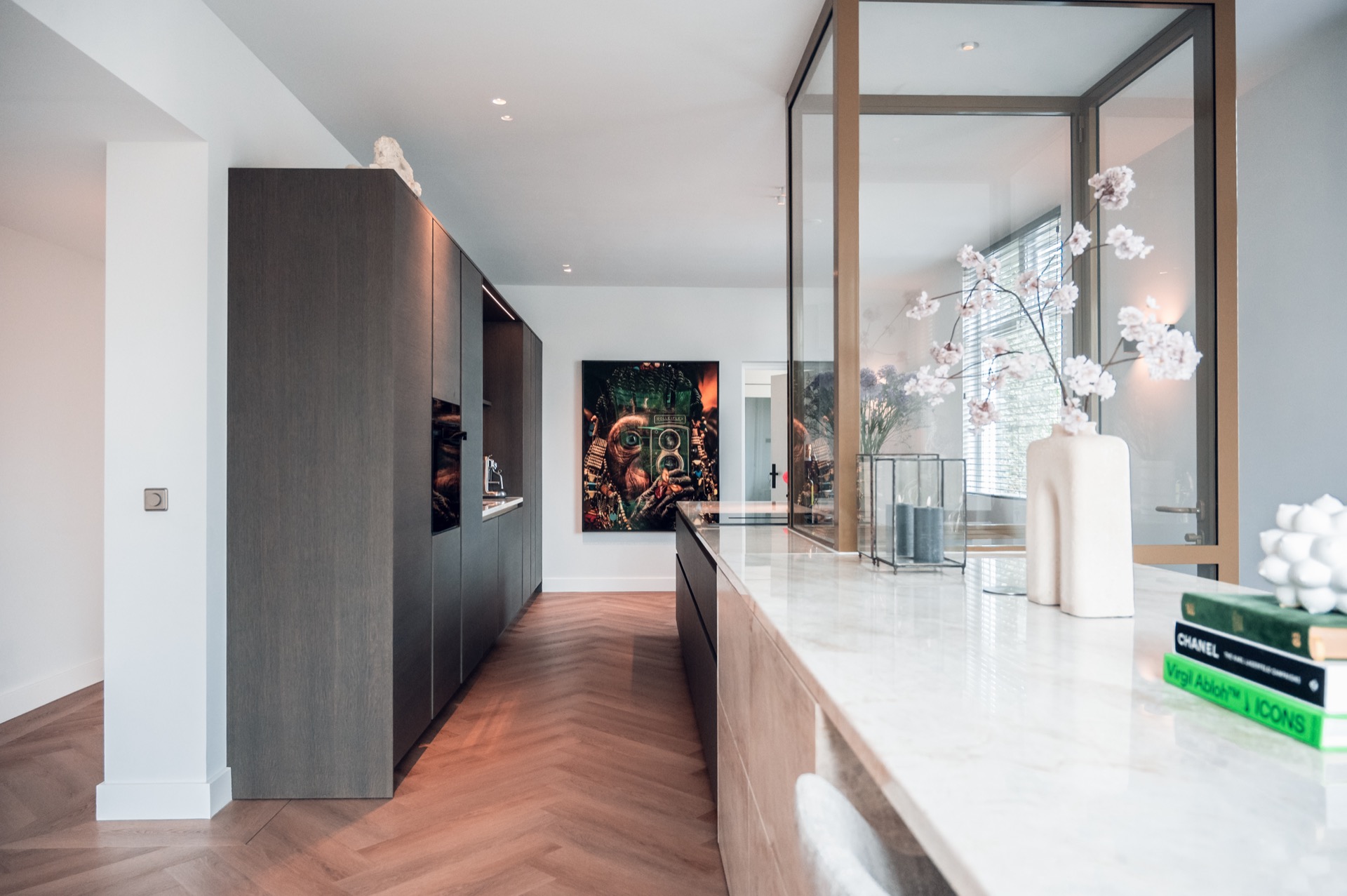
Behind the island, the tall cabinet wall holds the composition steady. The fronts are flat and minimal, with long vertical and horizontal lines that let the island remain the main gesture. There is no busy detailing to fight with the glazing or the mixed surfaces. Instead, the wall of storage acts as a quiet backdrop. The minimalist kitchen fronts sharpen the difference between the fixed wall and the more layered island in front of it.
That calm background also helps the lighter parts of the scheme read properly. The glass insert is not overwhelmed by pattern. The stone-look countertop island edge stays legible. And because the cabinet wall rises as a dark, measured block, the eye can understand where the room stores, prepares and gathers. The kitchen island with glass display and optical zoning becomes the centre point precisely because the rest of the joinery keeps its lines restrained.
Daylight, glazing and the room beyond
Daylight gives the kitchen another register. Large glazed openings and blinds are visible in the images, and the light settles across the island and the surrounding finishes rather than bouncing off them. That softness suits the materials. The wood-look sections hold the light differently from the stone-look surfaces, so the island changes tone as the day shifts. The glazed zone inside the island echoes that openness and ties the kitchen to the adjacent room through a clear visual link.
Seen from the side, the island reads as an object that has been edited, not decorated. Its length remains generous, but the glass display in island detail breaks the mass into readable parts. This is where the project feels most deliberate. The division is not loud. It is built into the furniture itself, using glass, wood-look and stone to make the kitchen easier to take in at a glance.
A kitchen that keeps its lines while changing scale
The strongest quality here is the way the kitchen adjusts scale without changing its overall language. The long island still anchors the room. The seating area still functions as a place to sit and look out across the space. Yet the optical zoning kitchen island strategy means that neither part has to carry the full visual weight alone. The glass, the stone-look top and the wood-look sections each take a share of that work.
That is why the project feels measured rather than mannered. The kitchen island with glass display and optical zoning creates a break in the volume, but it does not lose the clarity of the original form. The tall cabinet wall stays composed, the fronts stay straight, and the island remains the central piece. What changes is the reading: a long run becomes two visual moments, with more intimacy around the seating side and a cleaner flow through the room.
This kitchen was created by Kitchen Art Studio VET Kitchen Design. Kitchen island with glass display and optical zoning remains connected to the layout, materials and daily use of the home.
Want to see more of The Kitchen Art Studios? View the page of The Kitchen Art Studios for even more great projects and company information.

.png)