






Ornate wooden staircase with a black balustrade
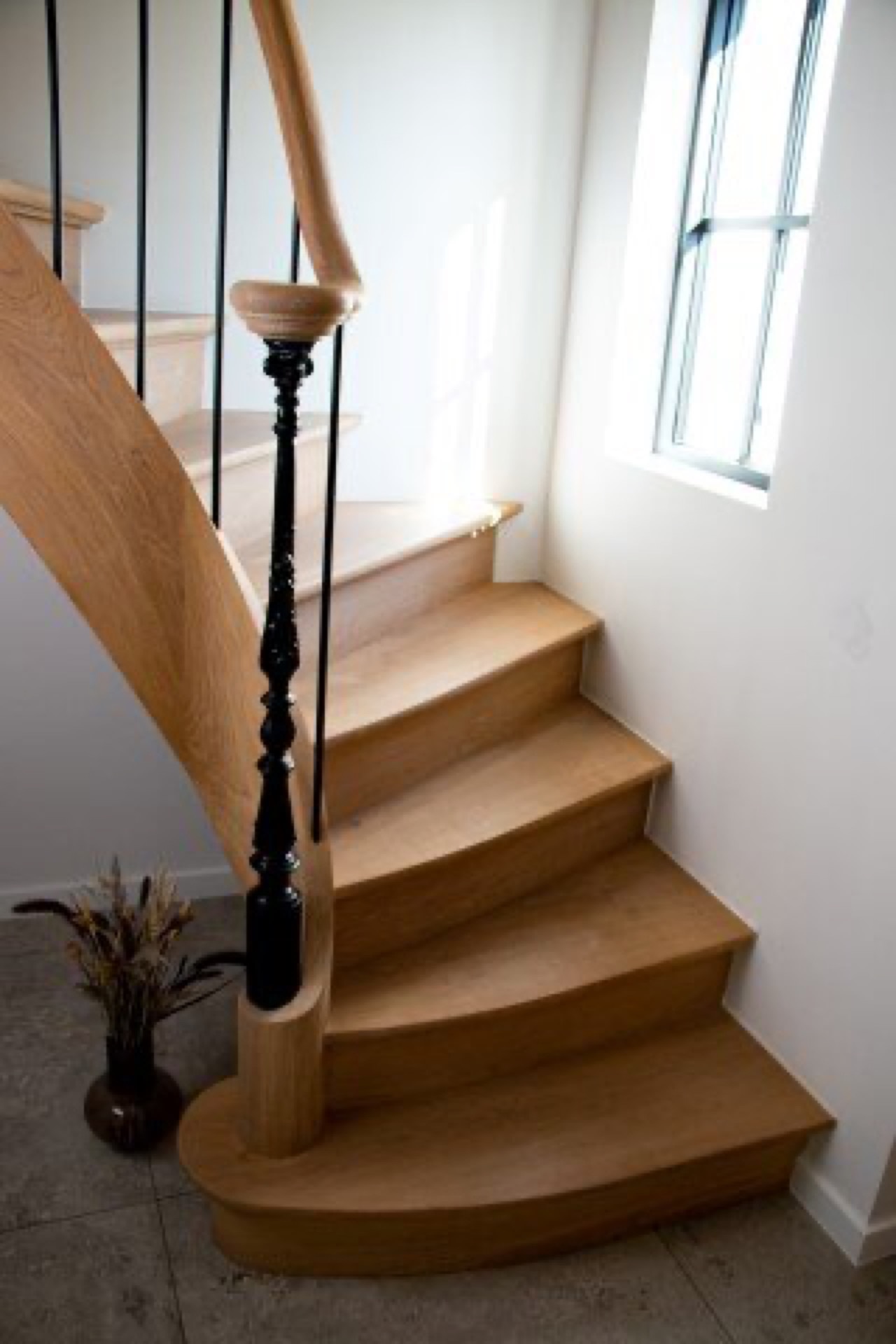
A light wood stair flight rises through the hallway, but the eye goes first to the black newel post. It anchors the whole composition, then lets the rest unfold: curved handrail sections, slim black balusters, and shaped wooden stringers that follow the turn of the stairs. The result is a wooden staircase with black balustrade details that feels made for a rural interior, where the hallway can carry a little more presence than a plain passage usually would.
Wooden staircase with black balustrade as a spatial starting point
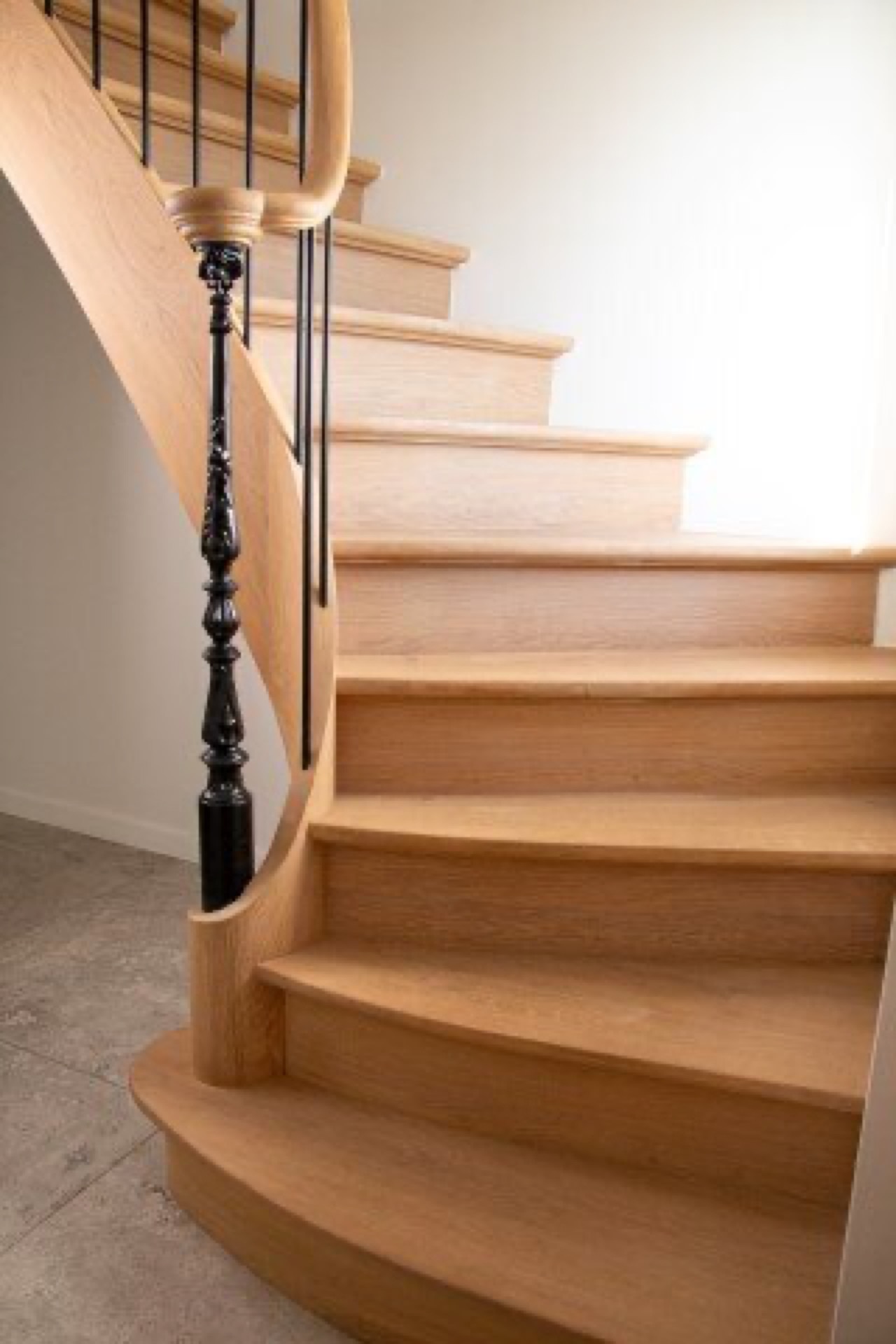
The staircase hallway interior is bright, with white plastered walls and a grey tiled floor that keeps the setting quiet. Against that pale background, the wood reads clearly. Each tread has a visible profile, and the side panels run in a measured line before curling with the stair. That movement gives the staircase its rural character without making it heavy. It stands like a built-in piece of furniture, but one that still leaves room for the wall, the landing and the light around it.
What makes the rustic wooden staircase interesting is the contrast in pace. The wood parts are broad and grounded; the black metal parts are thin and upright. Seen from the lower flight, the staircase leads the eye upward in a calm sequence of steps, then pauses at the newel post before continuing. That pause matters. It turns a functional route into a visual break in the hallway, where the black balustrade reads almost like line work against the white wall.
Black stair balusters with a lighter touch
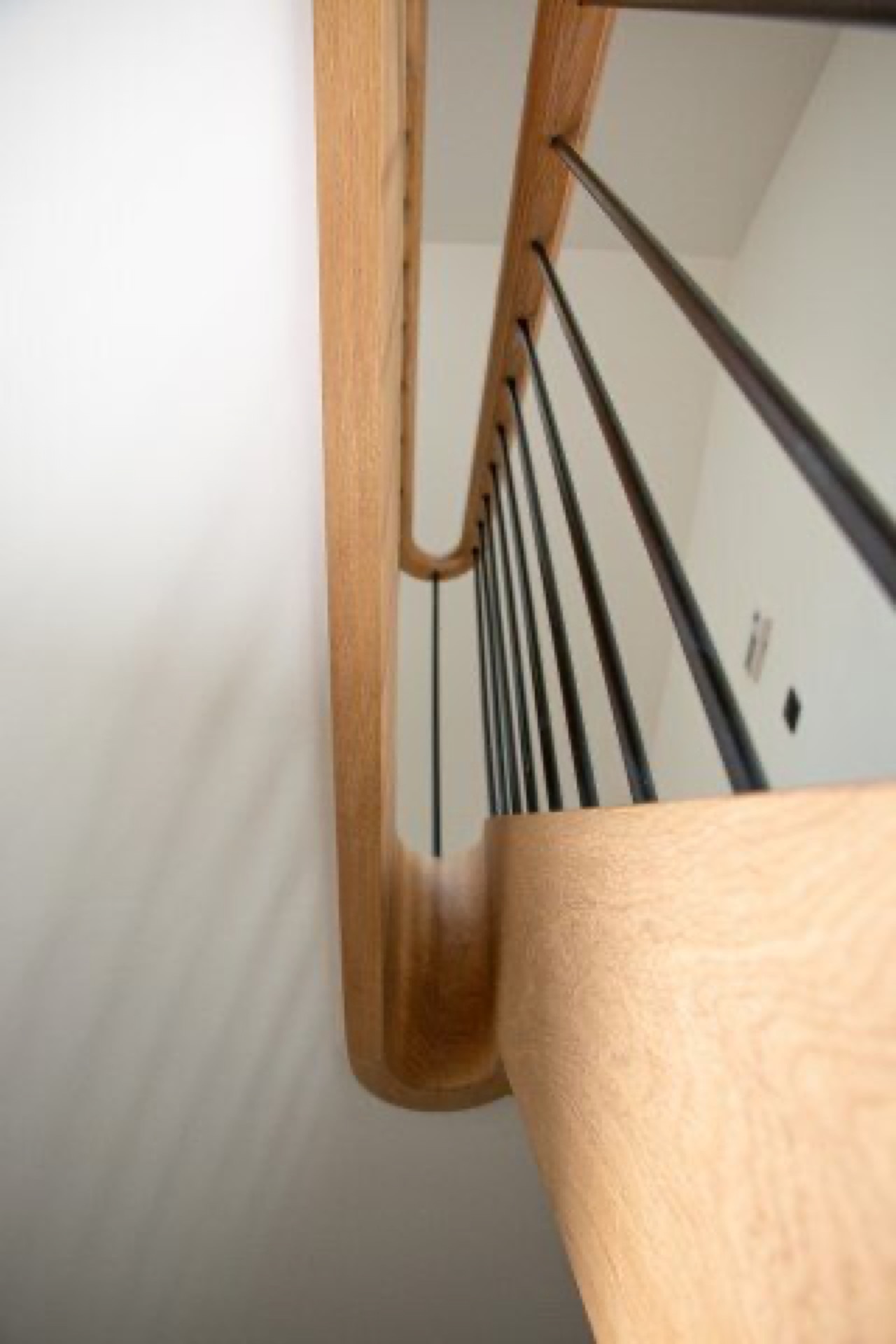
The black stair balusters are slender, closely spaced and clearly visible from several angles. They do not close in the stair; instead, they draw a fine rhythm between the handrail and the wood side panels. Their dark finish sharpens the outline of the staircase, especially where the light wood treads meet the black metal. This is where wood and black metal work best together: one brings mass, the other brings precision.
From the side, the balustrade also shows how the stair turns. The wanges follow the curve of the flight, and the handrail with curves softens the transition at each change in direction. Rather than forming a straight edge, the rail bends into the stair’s movement. That detail is small, but it changes the reading of the whole structure. The staircase no longer feels assembled from separate parts; it reads as one continuous route through the hallway.
Newel post details that hold the composition together
The black newel post is the most defined point in the staircase. It marks the start of the balustrade and gives the upper section a clear stop. In the images, that post carries the same dark tone as the balusters, so the eye reads it as the structural centre of the design. Around it, the wood remains visible and calm, which makes the contrast even more direct. The newel post details do not decorate the stair for the sake of it; they give the wood and metal combination a clear focus. Wooden staircase with black balustrade remains connected to the layout, materials and daily use of the home.
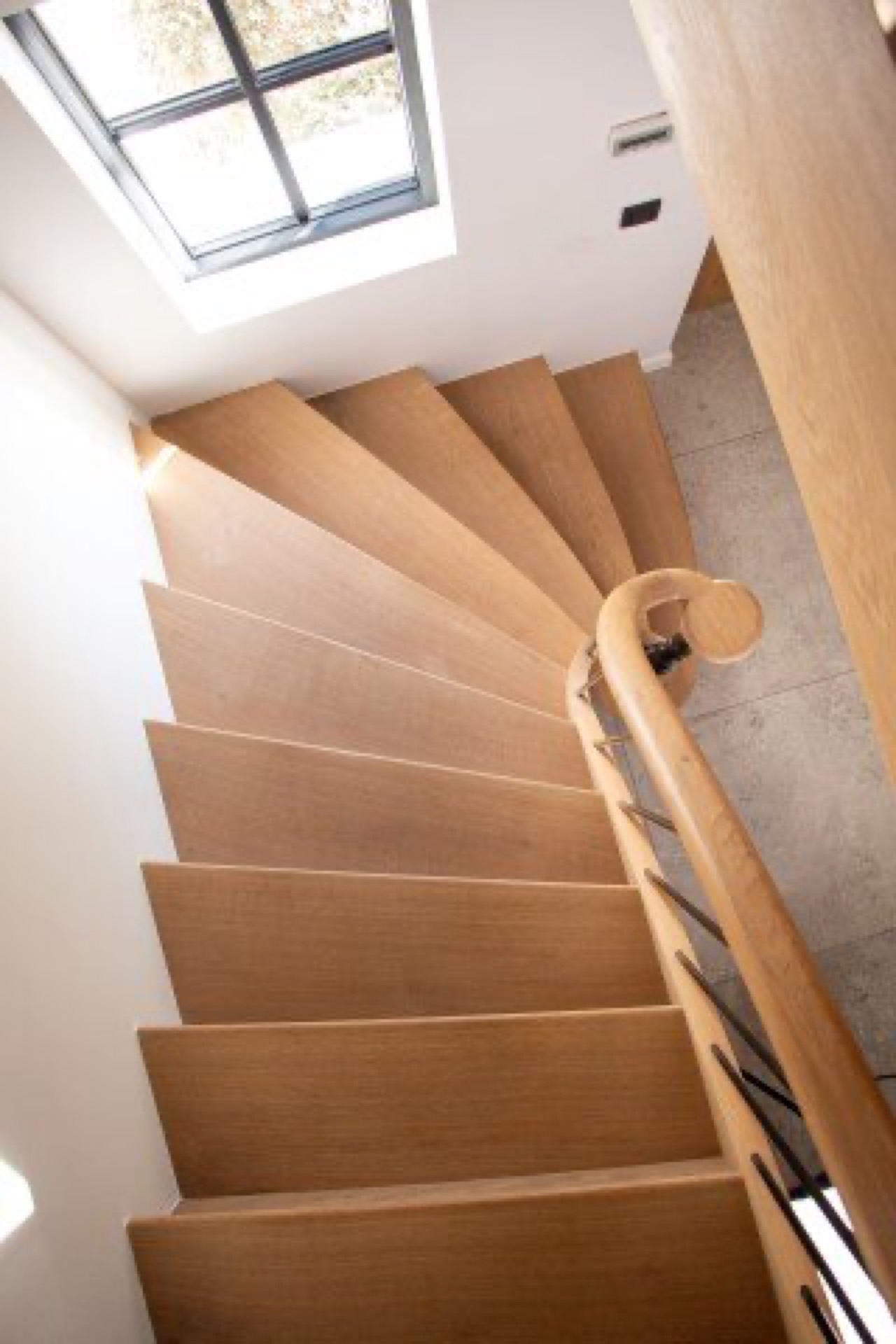
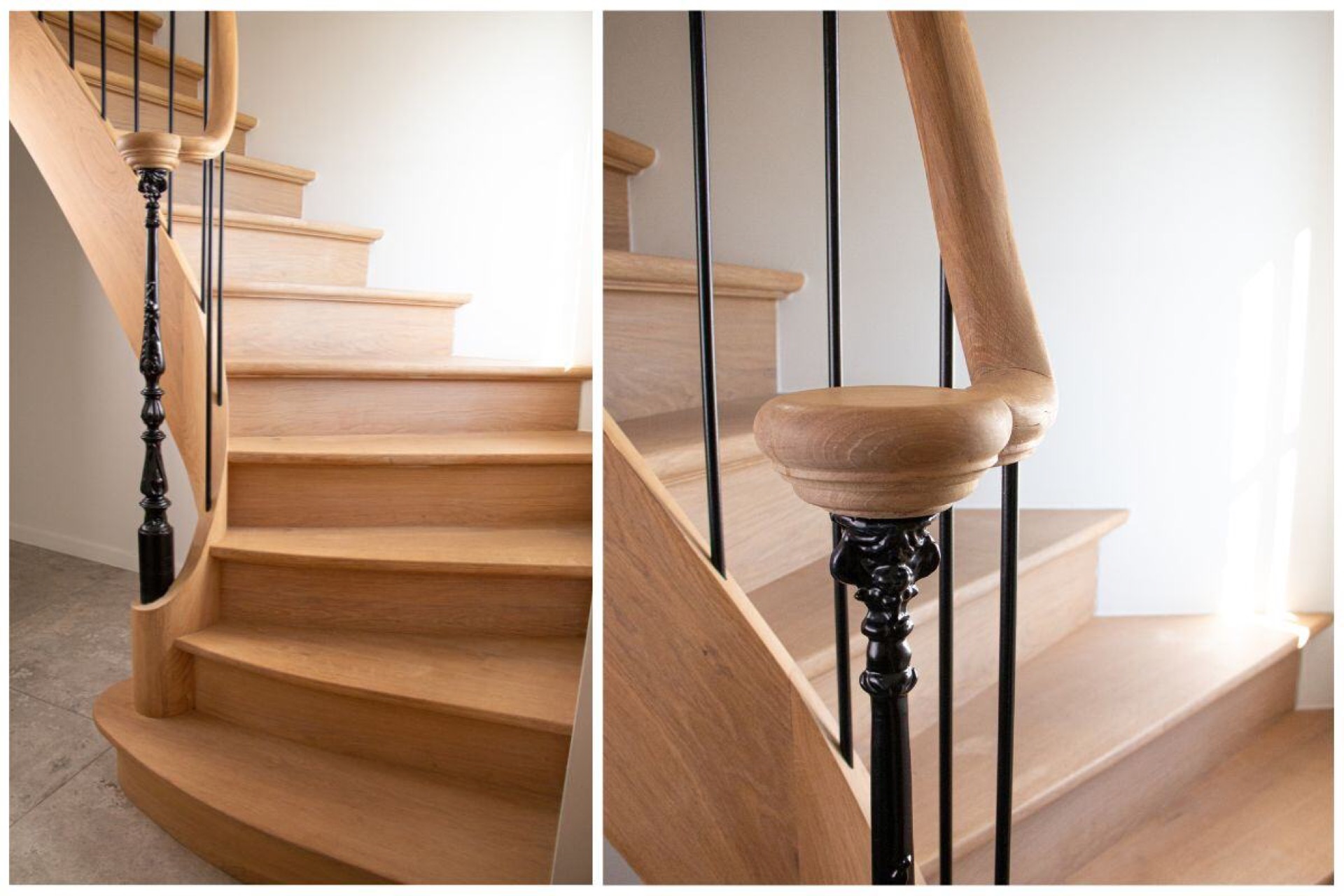
There is also a slight formal note in the way the handrail meets the post. The rounded transition and the ornamental curve at the connection are small gestures, yet they are the parts that stop the stair from becoming plain. They echo the more refined side of the design, while the timber treads and shaped stringers keep the composition grounded. In a hallway like this, those two attitudes need each other.
Ornate handrail curves and shaped woodwork
Close up, the ornate handrail curves are easy to read. The rail has a rounded profile that sits comfortably in the hand, but it also draws a soft line through the stair. That line is repeated in the turned edge of the side elements and in the way the stair follows the wall. Nothing here is overdrawn. The ornament comes from the shaping itself: the curve at the rail, the turn at the post, the steady rise of the steps.
The wooden staircase with black balustrade gains depth from those transitions. On one side, the wood panels keep the stair visually solid. On the other, the black balusters open it up and allow the hallway light to pass through. The grey floor below adds another quiet layer, so the stair sits within a restrained palette of wood, black metal and pale plaster. That limited palette gives each detail room to stand out.
Seen from below, the stair reads as one continuous line
From the lower landing, the staircase rises in a clear diagonal that takes advantage of the hallway’s height. The treads appear evenly spaced, and the black balustrade traces the ascent without breaking the view. White walls on either side keep the stair visually open, while the wood surfaces bring enough substance to keep it from feeling thin. The route upward is easy to follow because every element has a visible role.
That clarity is what gives the project its appeal. The rustic wooden staircase does not rely on decoration layered over the top; the shape of the stair itself provides the detail. The cast-iron style newel post, the black stair balusters and the curved handrail each do a different job. Together they turn a hallway connection into the most noticeable feature in the room, while still leaving the space light and legible.
If you are considering a wooden staircase with black balustrade details, this project shows how far a restrained material palette can go. Wood, black metal, a curved rail and a carefully placed newel post are enough to give a hallway a strong profile. The elements are simple, but the way they meet — at the post, at the turn, along the wall — gives the staircase its presence.
Want to see more of Trappenmakerij Wim Van Loon? View the page of Trappenmakerij Wim Van Loon for even more great projects and company information.


.png)