






New-build villa interior with a seamless floated concrete floor
Floated concrete floor in new-build villa shapes the way the rooms are organized and described. A floated concrete floor sets the tone as soon as you enter the house. The surface runs on without visible breaks, carrying the same material language through the basement, part of the ground floor, and the bathroom area. In a detached new-build villa, that continuity does more than link rooms: it keeps the focus on the floor’s texture, the warm light grazing the walls, and the shift between open passages and enclosed zones.
Floated concrete floor in new-build villa as a spatial starting point
The choice here is a true concrete floor, not a concrete-look finish and not a poured floor. The project text describes a floated concrete floor with a minimum thickness of 7 cm and no added plastics. That specification matters because it places the material in its own category. What you see is a solid surface with a slightly varied tone, used as the constant base beneath the more expressive wall finishes and lighting lines.
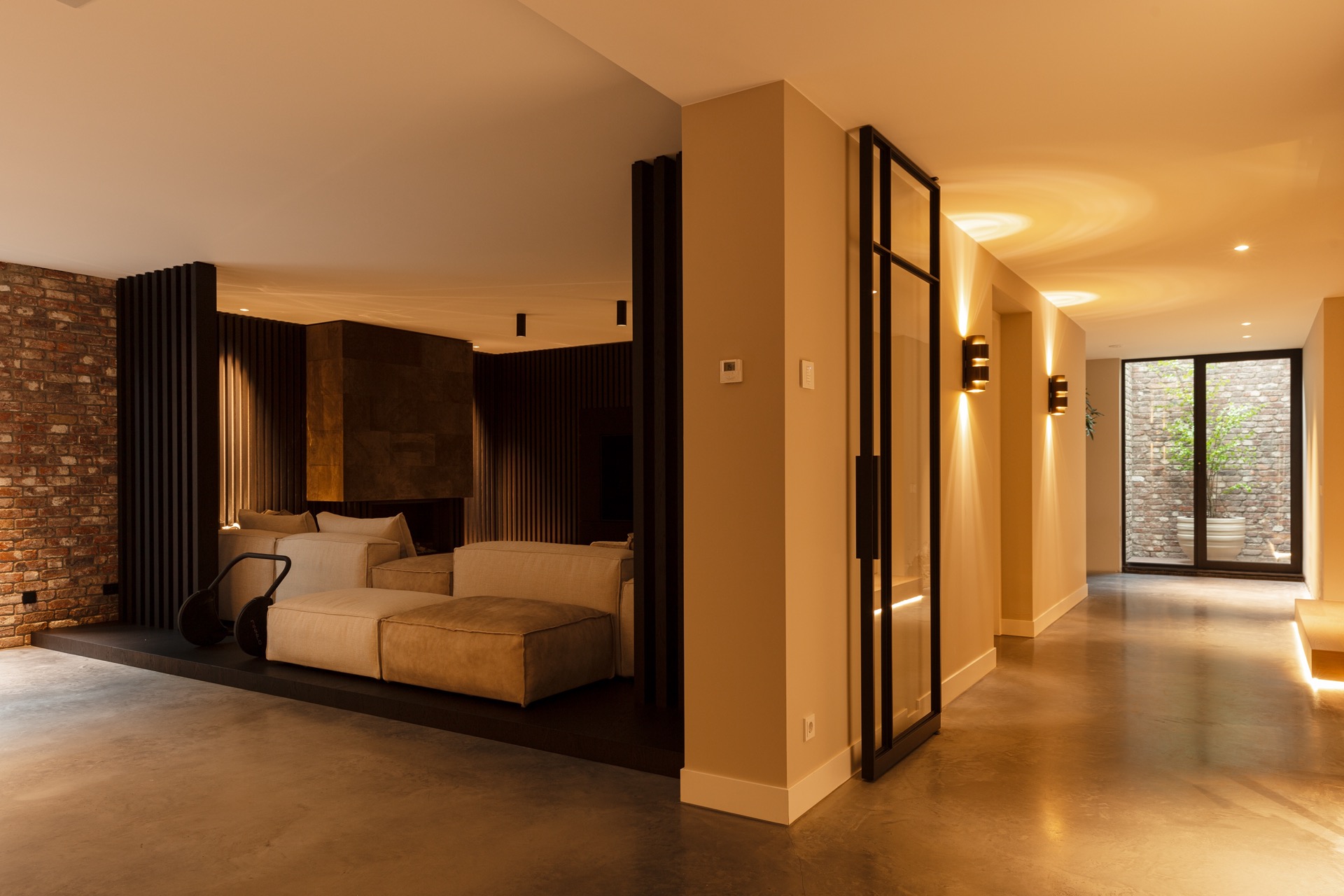
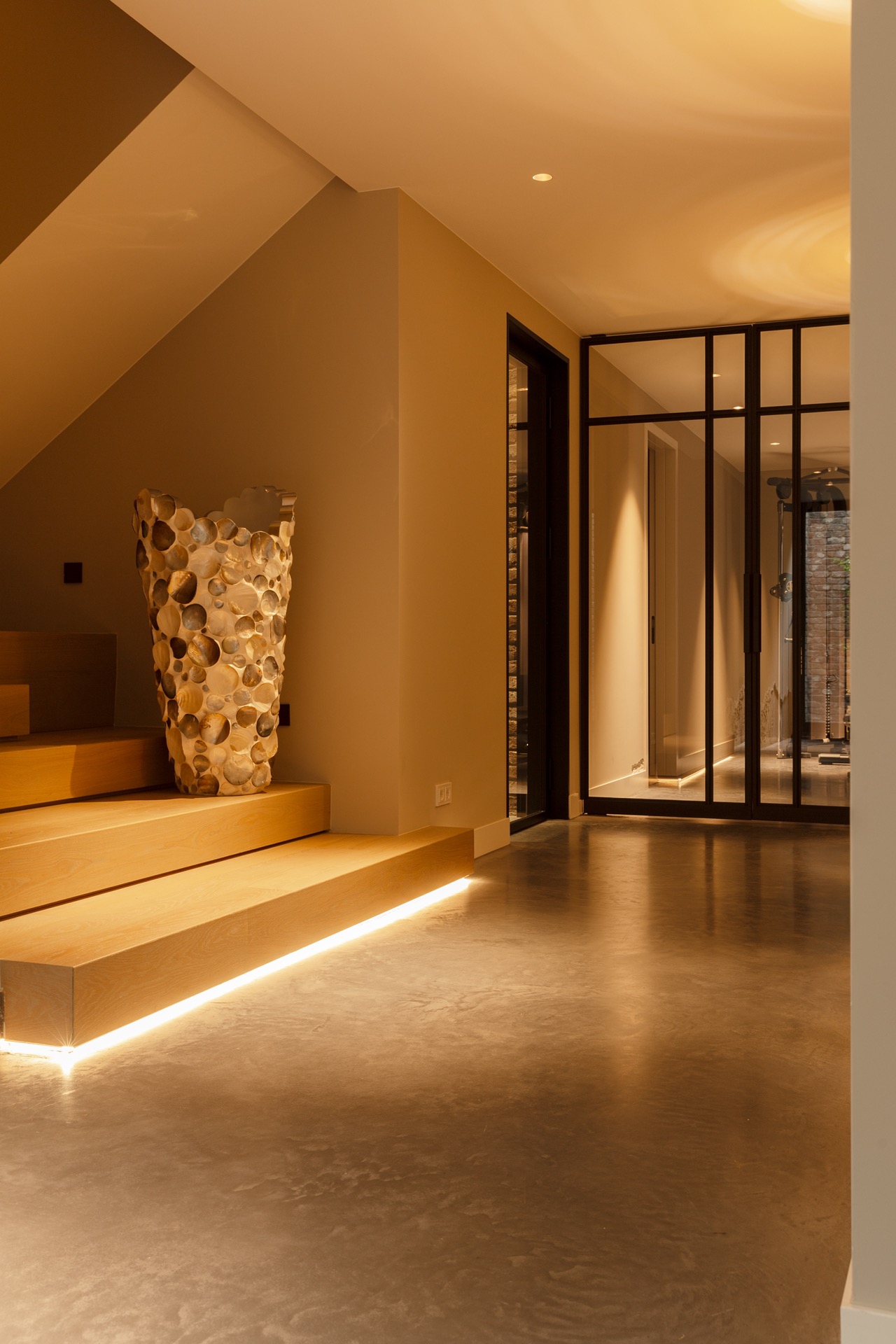
In the basement and across part of the ground floor, the floated concrete floor works like a visual line that connects different functions without changing language from room to room. The edge stays quiet. Door frames, openings, and furniture can shift, but the floor remains the same, which makes the route through the interior easy to read. The surface also supports the darker and lighter greys used elsewhere, especially where the bathroom takes a more specific colour split.
Grey tones in the bathroom, with the same material underfoot
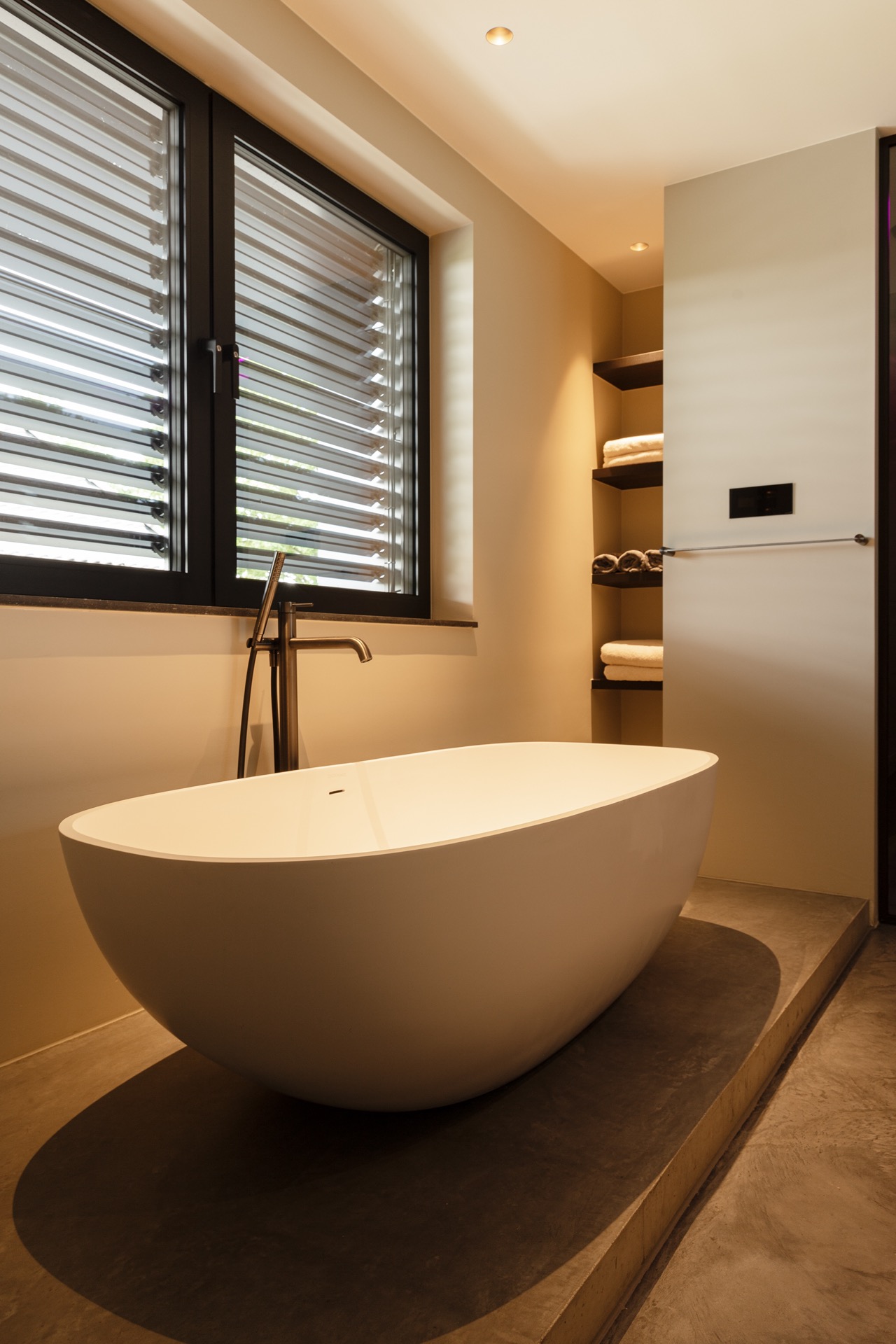
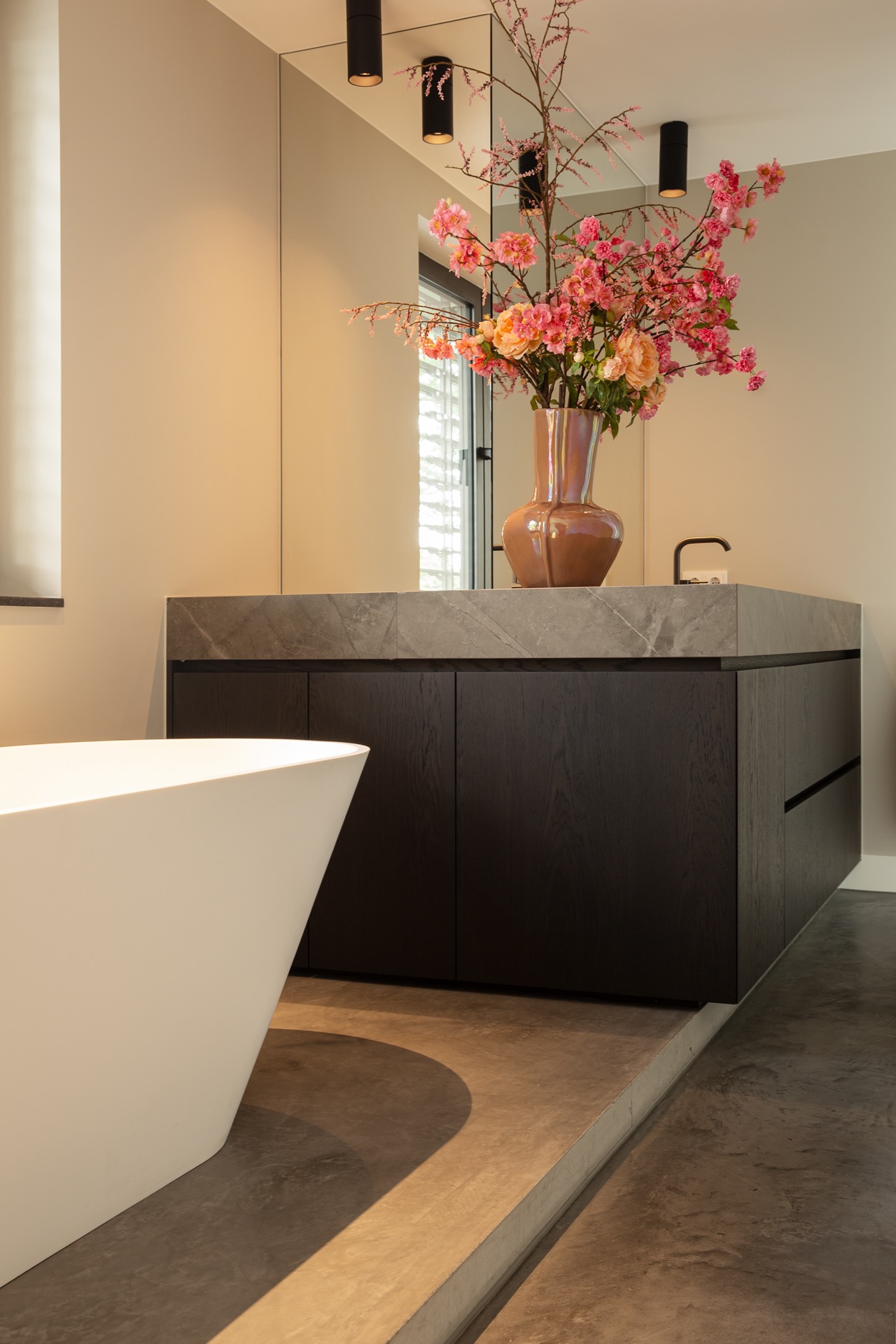
The bathroom area uses the floated concrete floor in a 50% mid-grey and 50% dark-grey mix. That split is visible in the tone of the surface rather than in pattern. A freestanding bath sits above the floor, and the material continues without a threshold that interrupts the view. Horizontal shutters on the window filter the daylight, while the concrete below keeps the room grounded and calm in its material reading.
Because the same floated concrete floor appears in the bathroom, the room feels tied to the rest of the villa instead of becoming an isolated wet zone. The concrete surface gives the sanitary space a firmer base than tiles would, and the grey variation softens the effect of the white bath and pale wall surfaces. It is a practical use of the material, but also a visual one: the room depends on the floor for much of its rhythm.
Floated concrete floor in bathroom areas
Using a floated concrete floor in bathroom spaces asks for a material that can carry moisture-prone rooms without losing its character in the picture. Here, the same floor finish is taken into the bathroom zone and kept visible beside the bath and under the window. The result is a room where the floor is not hidden by busy patterning. Instead, the surface remains legible, with the grey mix supporting the quieter palette around it.
Warm lighting follows the walls and plinths
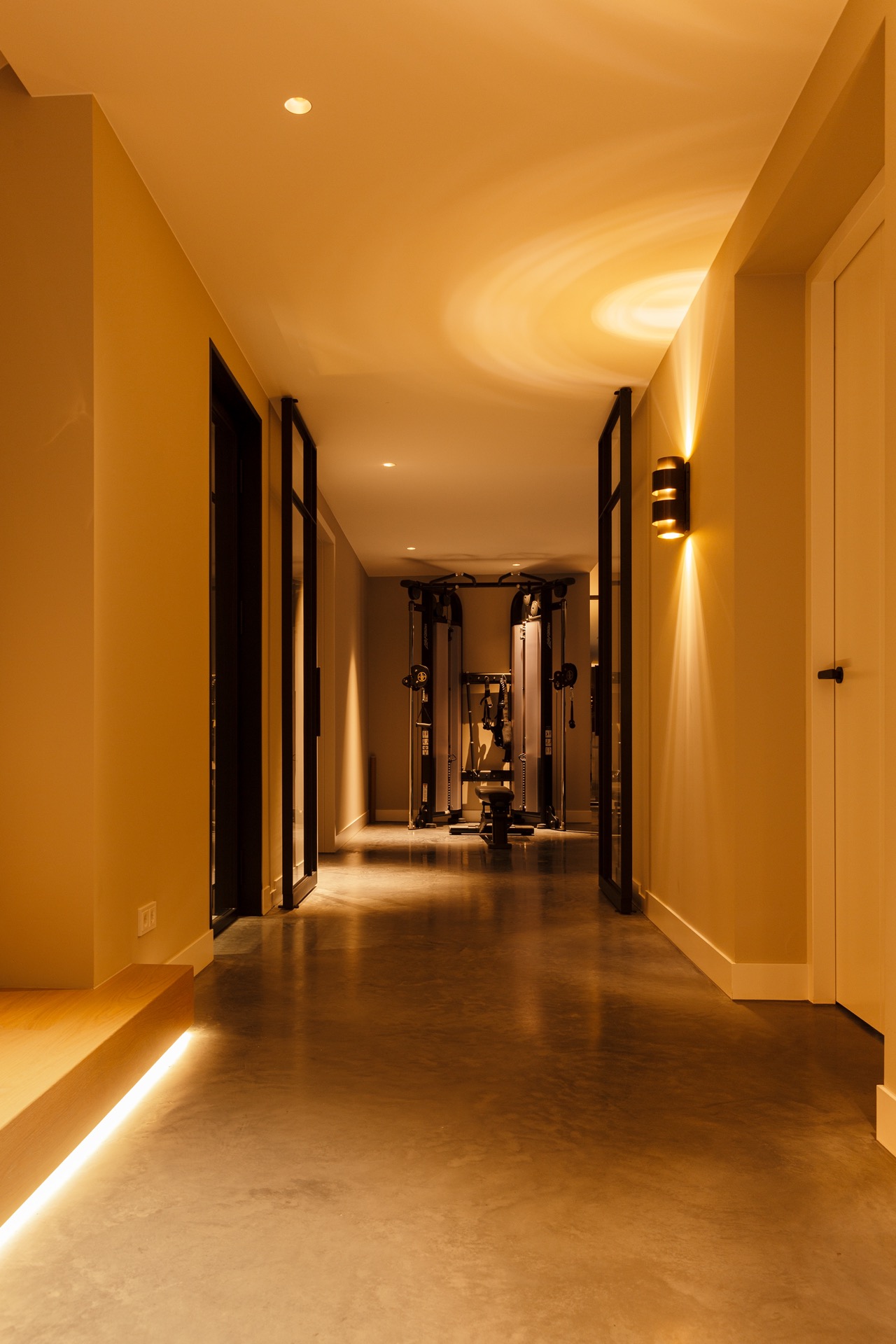
The lighting plan is a major part of how the interior reads. Warm light runs along wall plinths and low edges, and it catches the floor where the concrete meets the walls. In several views, the lighting is integrated rather than suspended as a separate feature, so the rooms are shaped by their lower edges as much as by their ceiling lines. This is especially clear in the longer passages, where the light guides the eye forward.
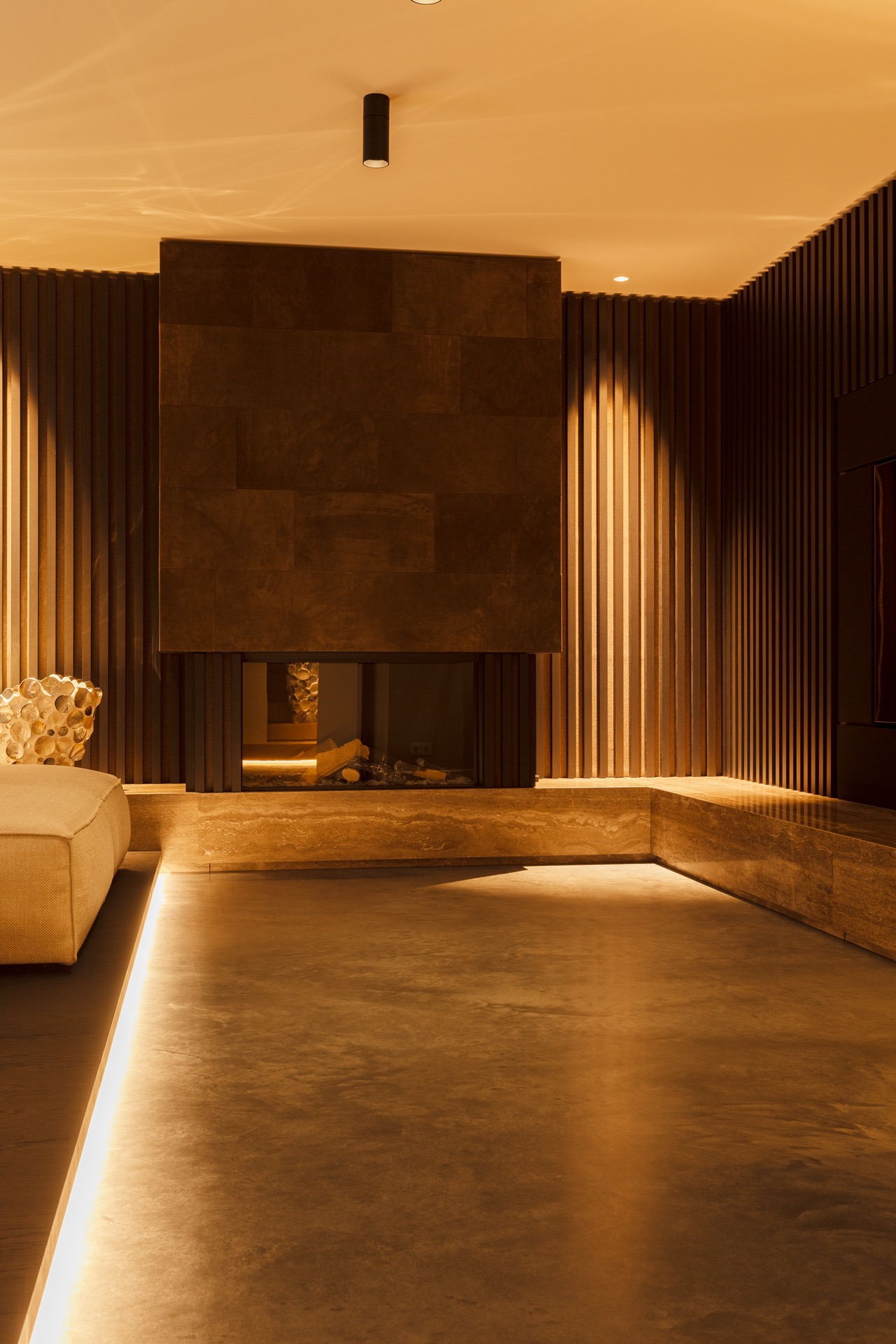
One room uses a low wall with light tucked into the base, while another shows light washing across the floor beside a dark opening frame. The effect is subtle but specific: the illumination reveals the surface of the floated concrete floor and gives the adjoining walls a clearer outline. Instead of drawing attention to a single lamp, the plan spreads light across the room in layers that follow the architecture. Floated concrete floor in new-build villa remains connected to the layout, materials and daily use of the home.
Wall plinth lighting and low-level light lines
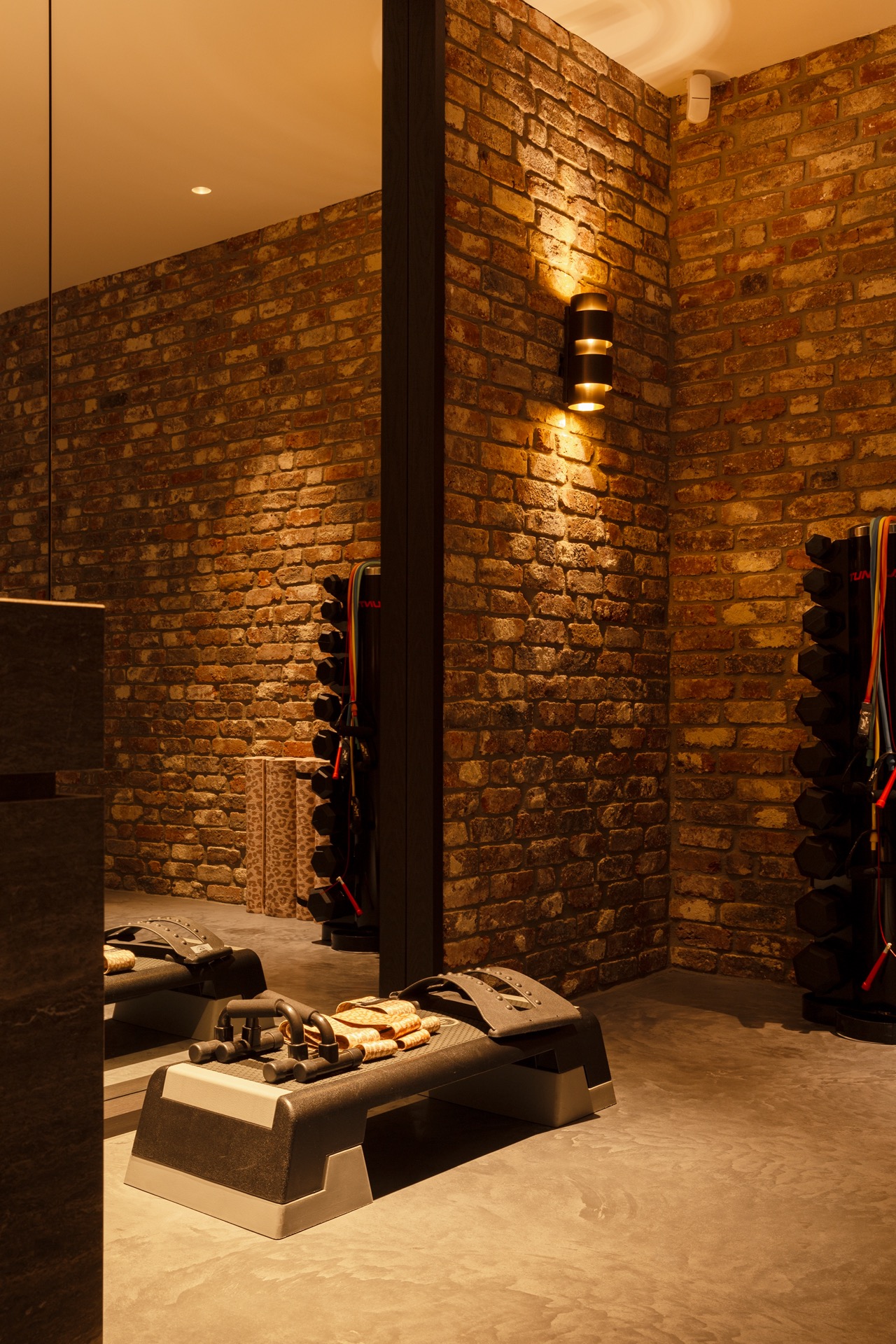
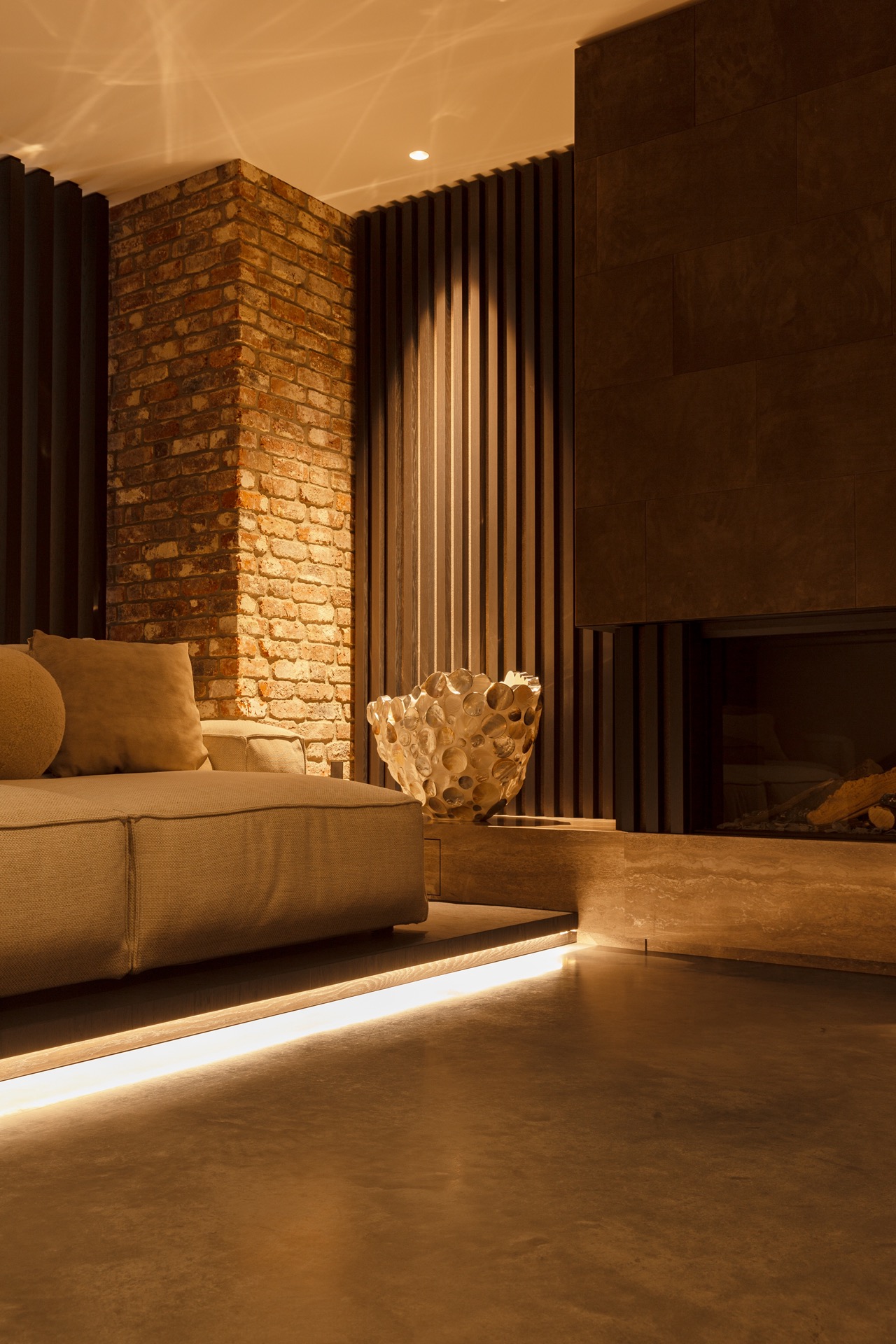
Wall plinth lighting helps the floated concrete floor stay visible after dark, because the floor reflects the warm tone without looking glossy or polished. That matters in a house where the material palette is already restrained. The light does not compete with the surface; it traces its edge. In the images, this is strongest near the seating and transition zones, where the floor, wall base, and opening all meet in one narrow band of light.
Brick and wood bring surface variation to the rooms
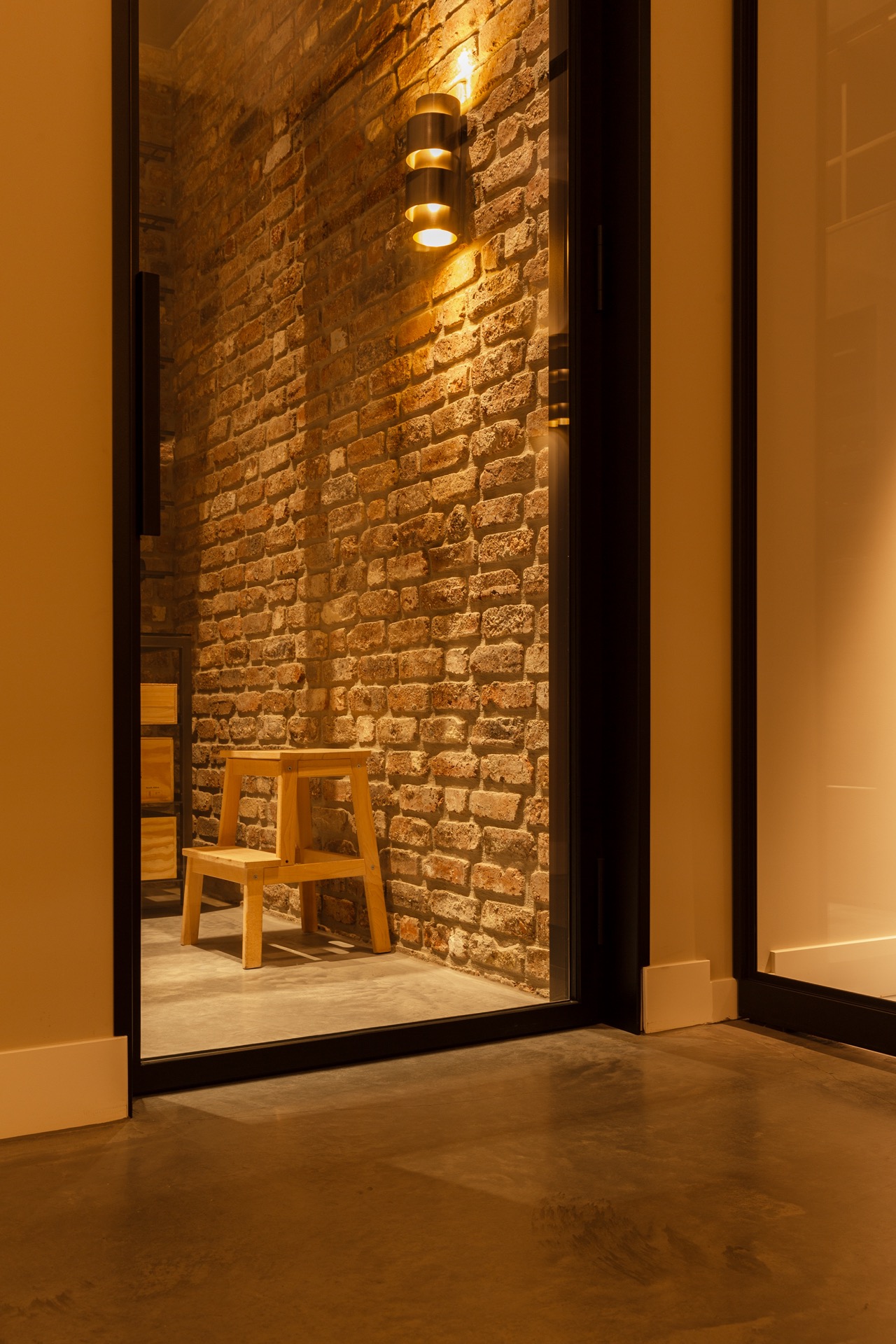
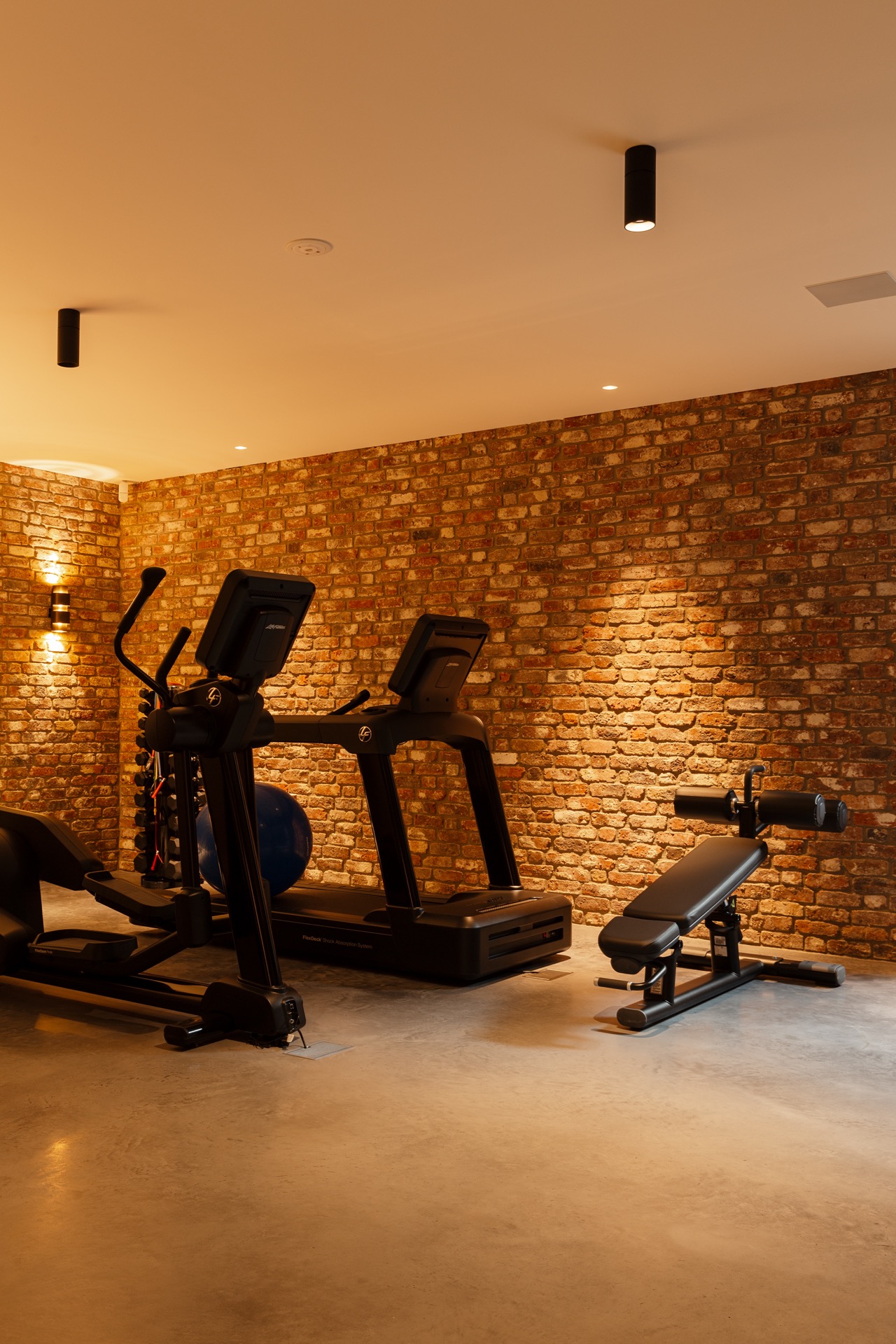
Against the concrete floor, the wall finishes do a lot of the visual work. A brick accent wall appears in more than one space, and it is often lit from nearby fixtures that pick up the mortar lines and rougher texture. Elsewhere, wood slat wall features introduce a more linear surface, especially around a fireplace niche. The contrast is plain to see: the floor remains continuous, while the walls carry the material shifts.
These wall treatments keep the interior from feeling flat. The brick reads as a solid backdrop in one area and as a close-up texture in another, while the wood slats catch light in narrow vertical bands. Both materials sit well with the floated concrete floor because they add relief without breaking the floor’s continuity. Glazed door frames with black profiles sharpen those transitions further, outlining the openings against the lighter and darker greys.
From open passage to sitting area
Several views show the floor moving through longer interior stretches, where the room opens into a sitting area or turns toward another part of the house. In those spaces, the floated concrete floor acts almost like a drawn line across the plan. The surface does not stop at decorative thresholds or separate the rooms visually. Instead, it carries the eye toward the brick walls, the fireplace niche, and the seating zones beyond. That makes the circulation easy to follow.
One image shows a raised seating zone with light along the edge, set against a brick wall and a wood-slat surface. Another shows a glass door with a black frame opening toward a space where the floor continues in a single plane. The details are modest but precise: a low wall, a light strip, a rough brick field, then the smoother concrete underfoot. The room composition depends on those differences.
A concrete floor with a clear specification
The project text is unusually direct about the floor itself. A floated concrete floor is described as at least 7 cm thick and finished without plastic additives. That detail separates it from lighter imitations and from poured alternatives. It also explains why the floor can be discussed as a material in its own right rather than as a surface treatment. The concrete is the floor, and that fact remains visible in the project’s rooms.
Seen across the basement, the ground-floor sections, and the bathroom, the floated concrete floor holds the interior together through tone, texture, and continuity. The warm lighting design for interiors, the wall plinth lighting, the brick accent interior surfaces, and the wood slat wall feature all work around it rather than over it. The material stays steady while the rooms shift, and that is what gives the villa its clear interior rhythm. Floated concrete floor in new-build villa remains connected to the layout, materials and daily use of the home.
Want to see more of Willem Designvloeren? View the page of Willem Designvloeren for even more great projects and company information.


.png)