






Villa with zinc-like facade accent and large windows
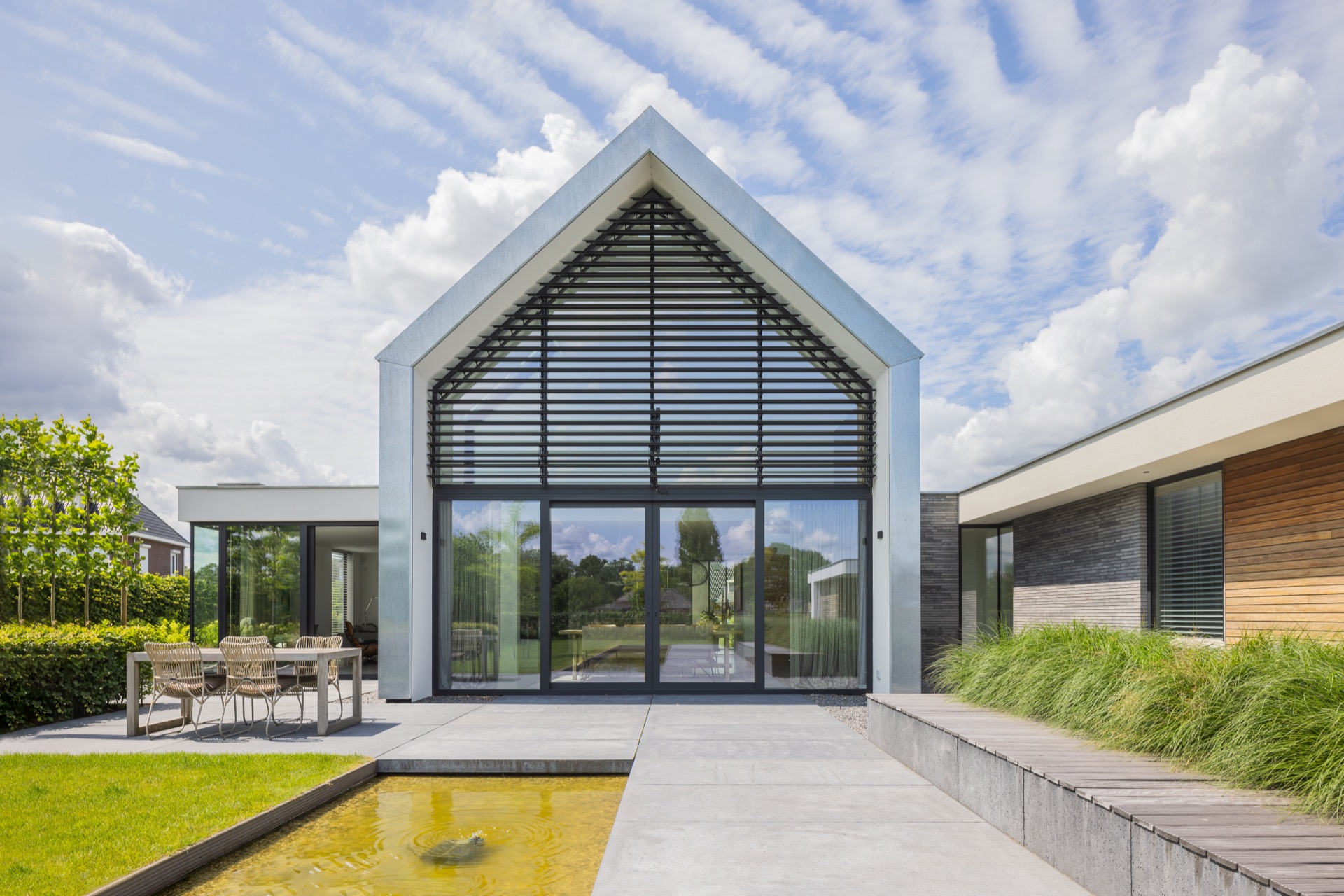
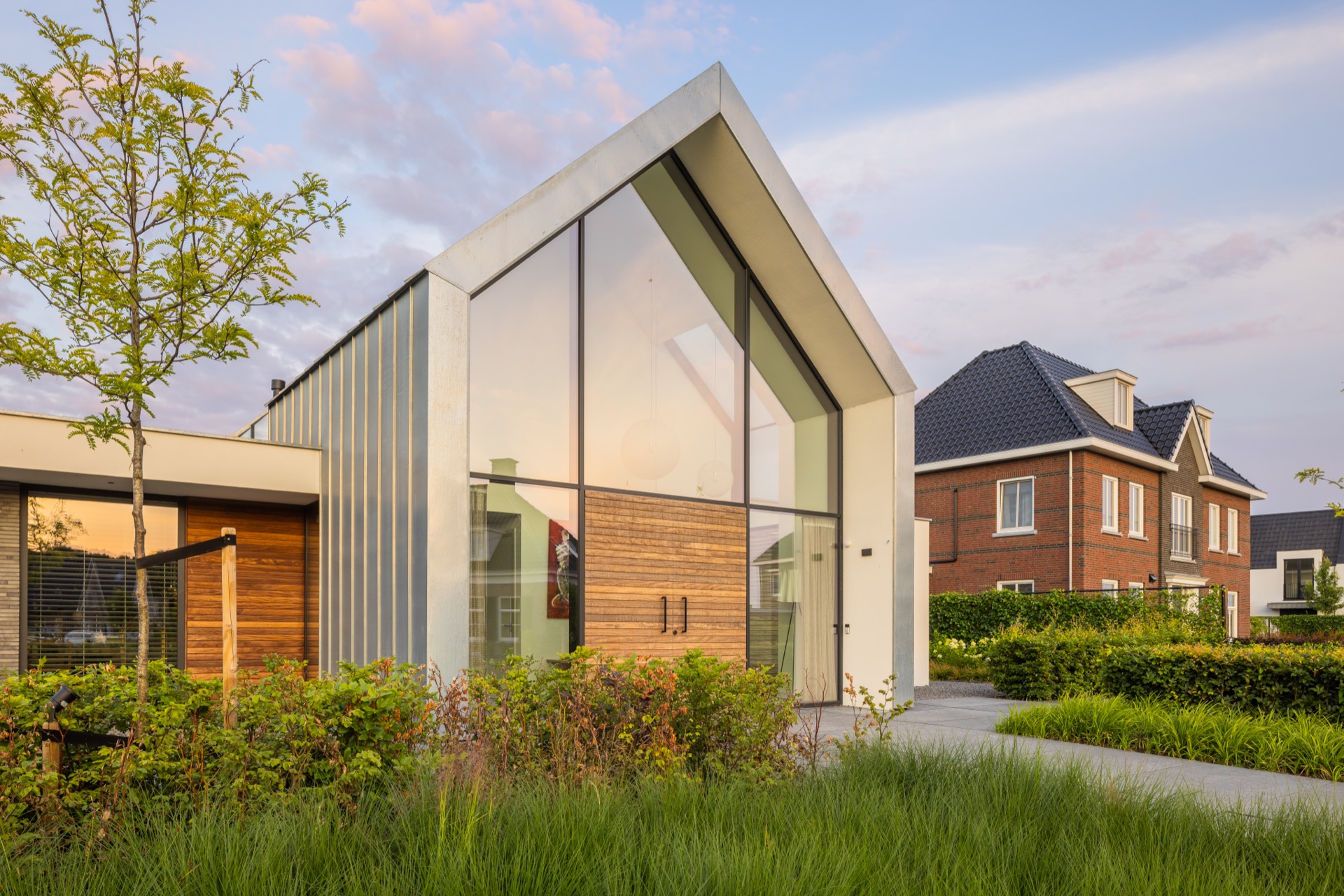
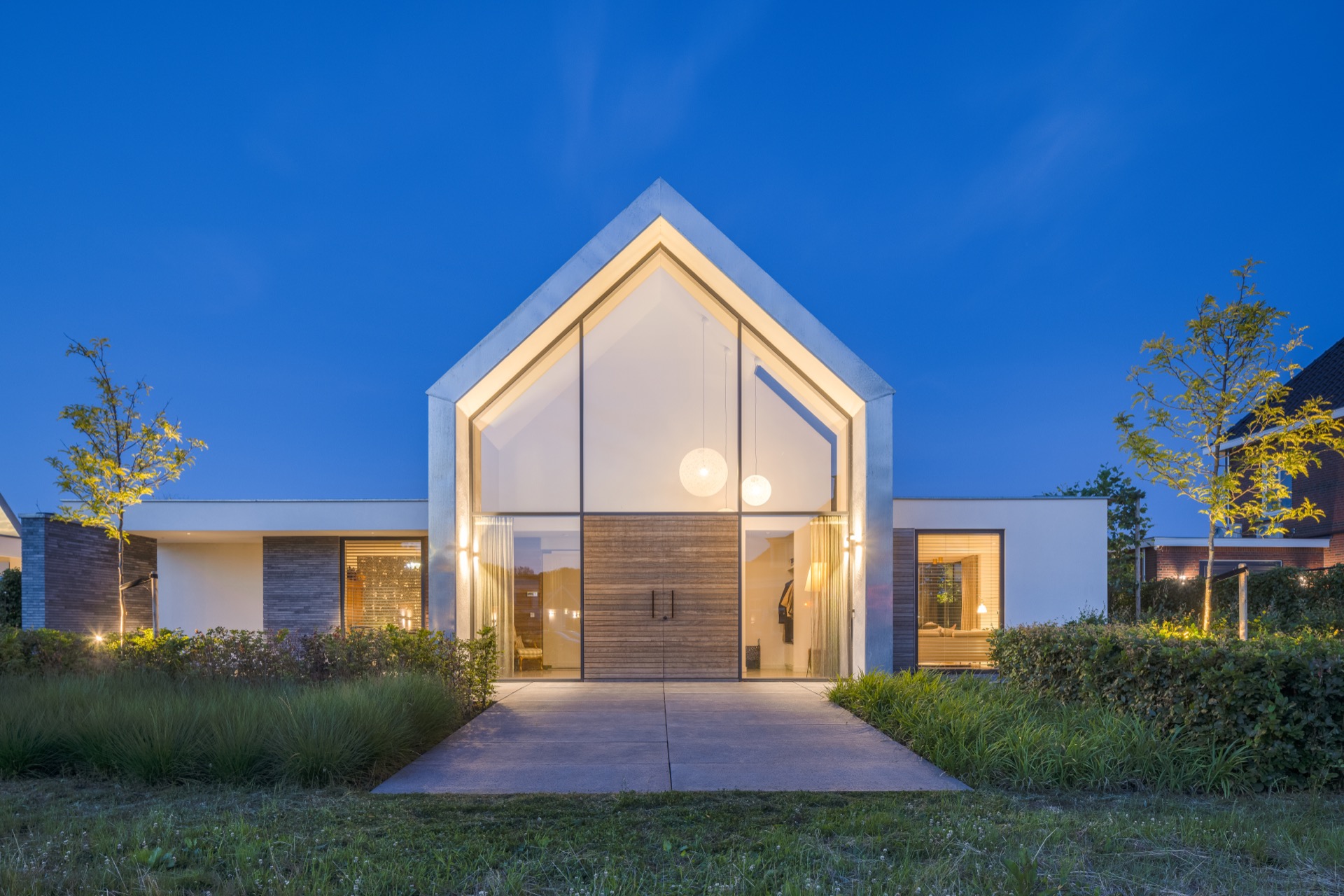
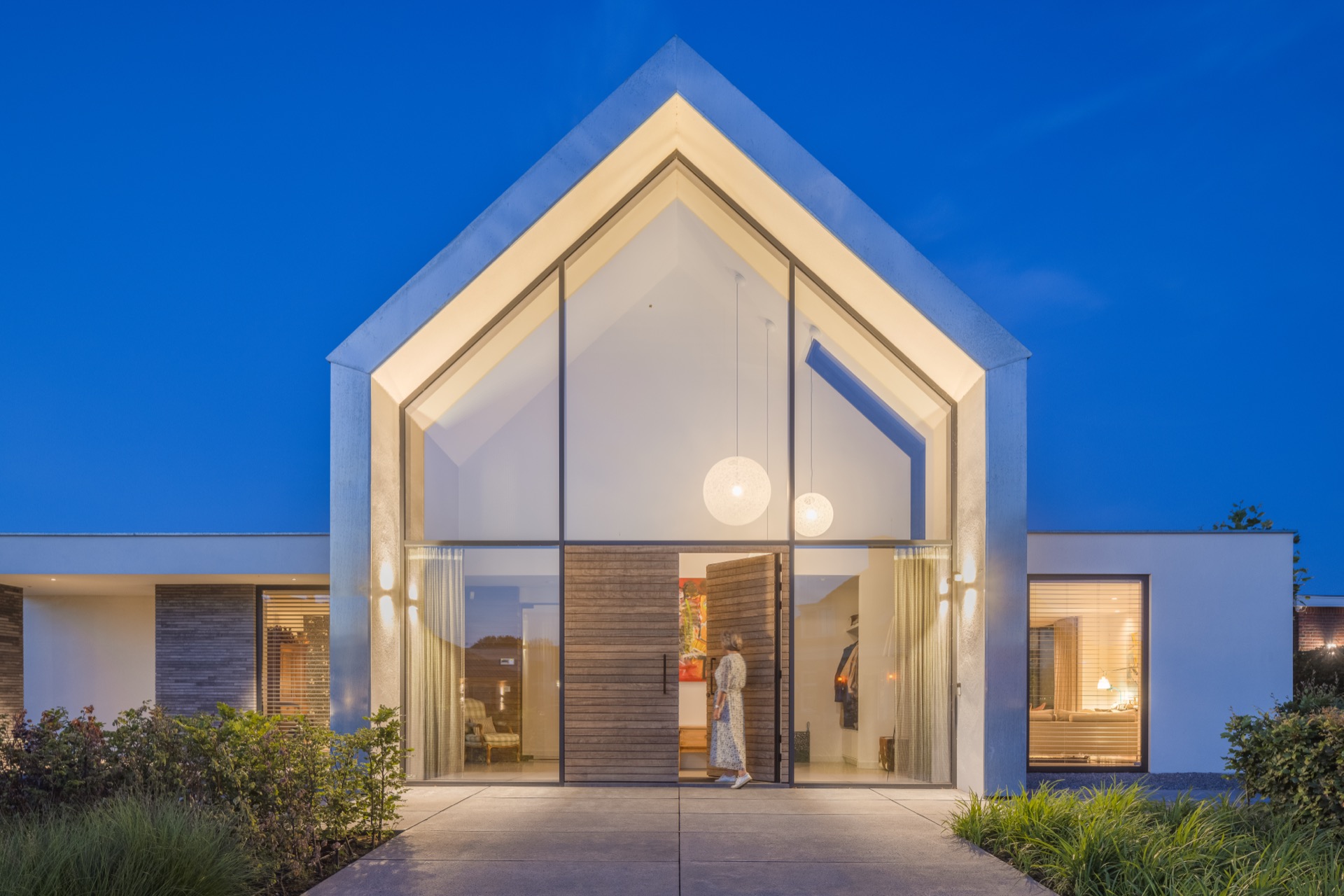
A zinc-like facade villa accent sets the tone before the interior even comes into view. The outer shell combines metal, glass, and darker frames with a measured rhythm that reads as modern classic villa design rather than a single-minded material exercise. Large windows pull daylight deep into the rooms and give the house a clear relationship with the garden, while the angled roofline and crisp volumes keep the composition restrained.
zinc-like facade villa accent as the architectural starting point
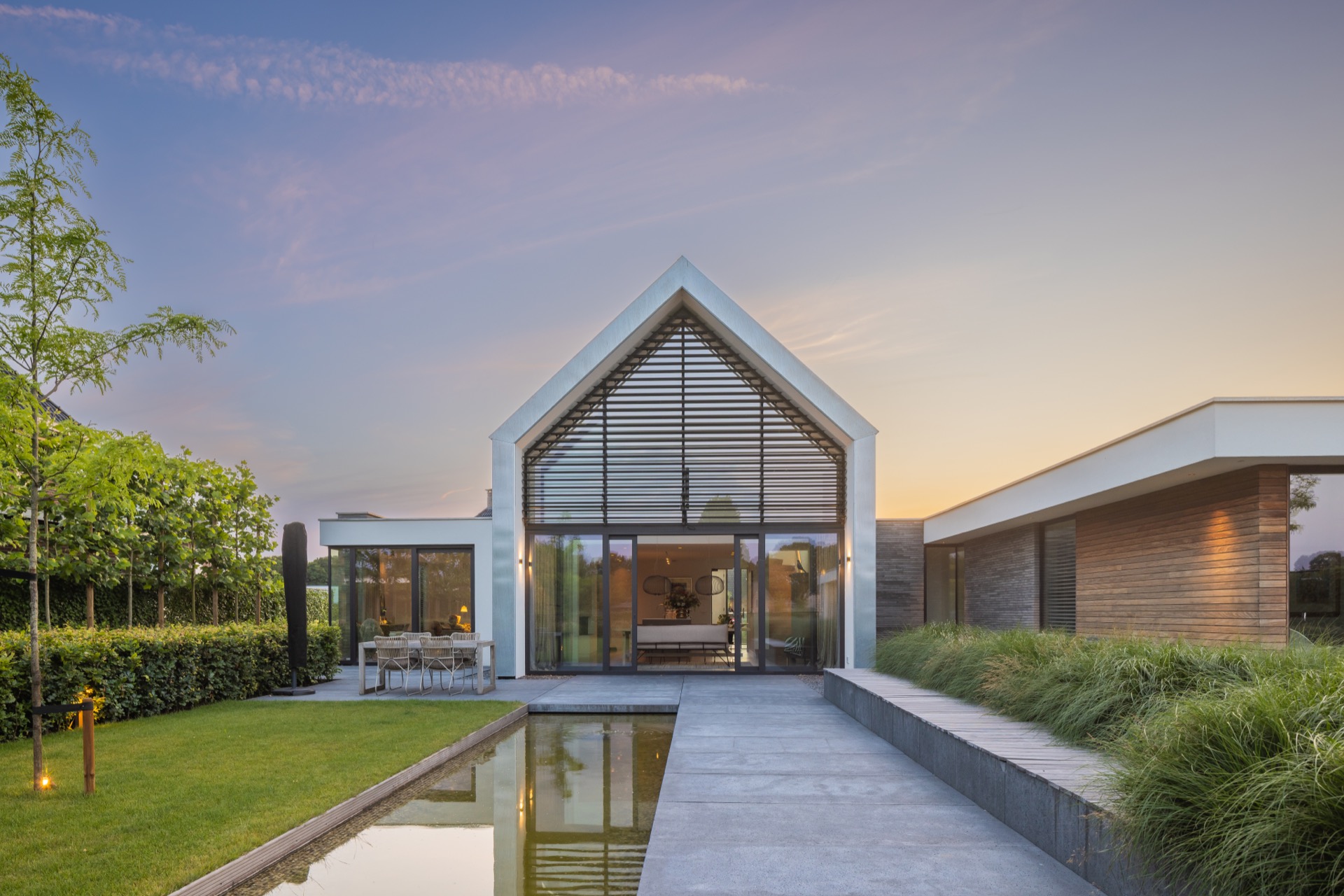
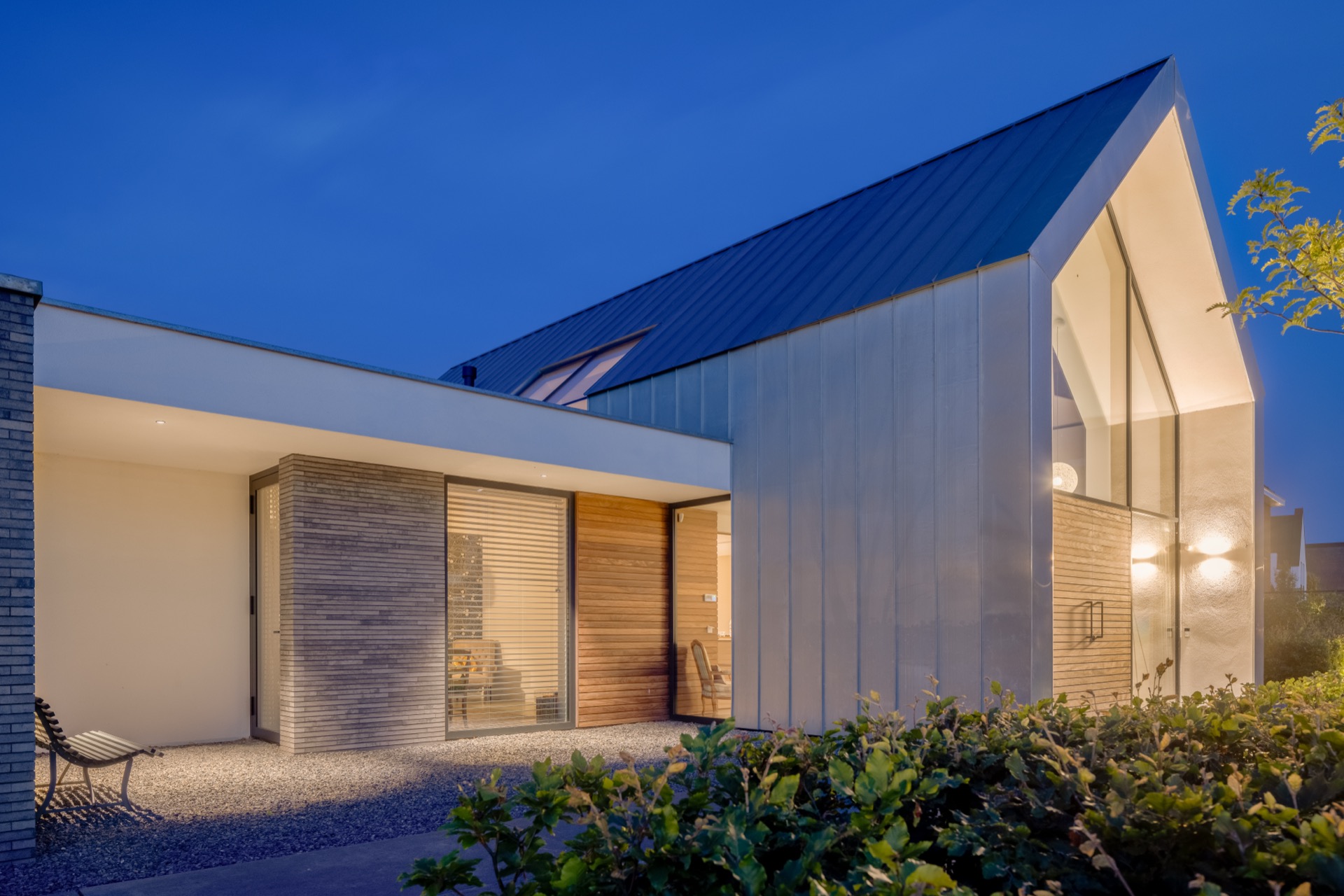
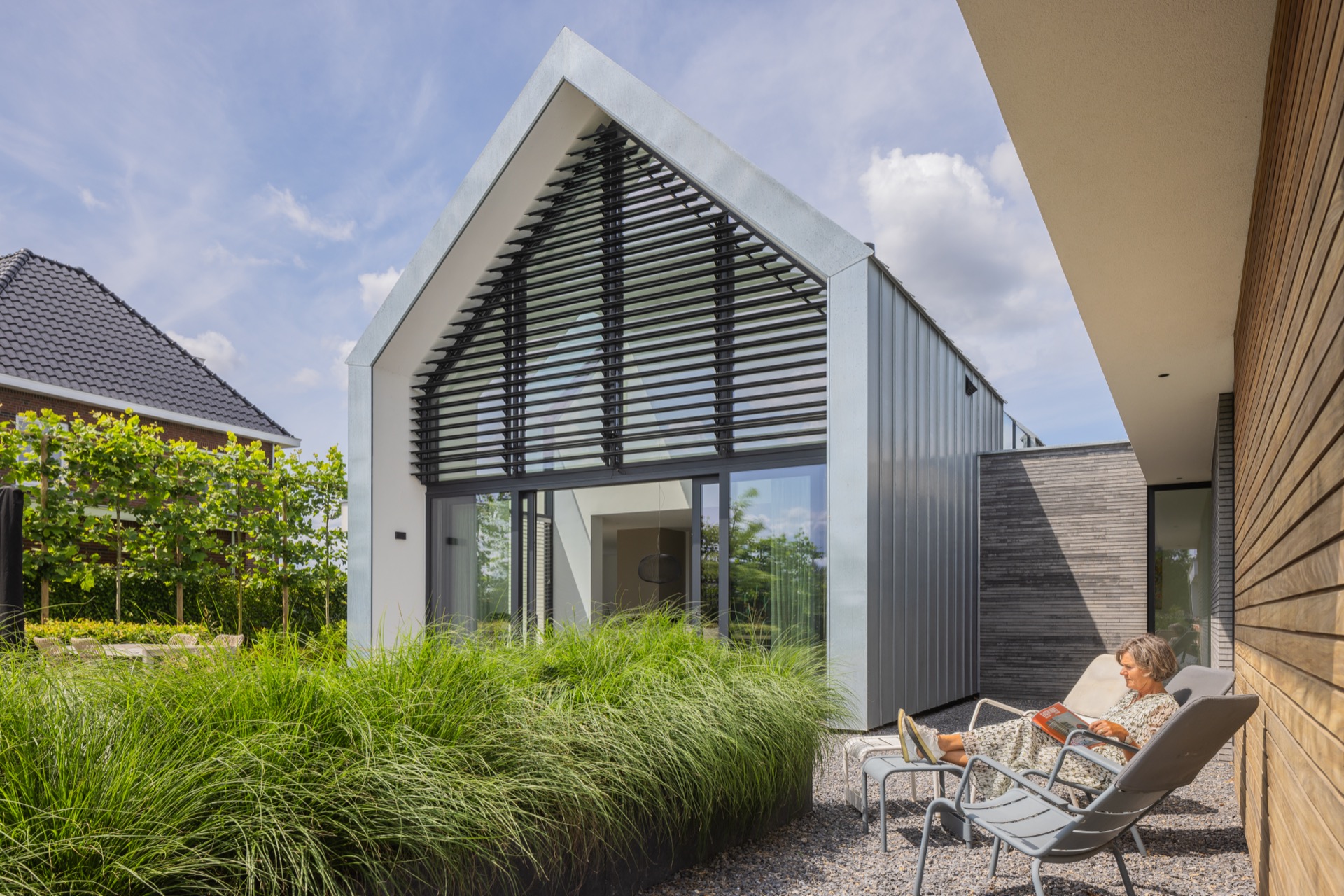
The exterior is strongest where surfaces meet. Metal cladding catches the light in narrow shifts, and the large glazing cuts into the mass with sharp, deliberate openings. Horizontal louvered sun screens sit in front of several windows, filtering sun without closing the rooms off from the terrace. In the evening images, the entrance lighting picks out these layers and makes the facade read as a sequence of planes rather than a flat front.
That mix of solid and transparent parts gives the house its pace. A dark frame around the glass adds contrast, while lighter masonry and adjacent timber elements soften the harder metal surface. The result is not a display of materials for their own sake. It is a controlled exterior where each part has a clear role: the zinc-like facade villa accent marks the composition, the louvers temper the glass, and the window rhythm keeps the elevation from becoming heavy.
Louvers, overhangs, and the edge of the terrace
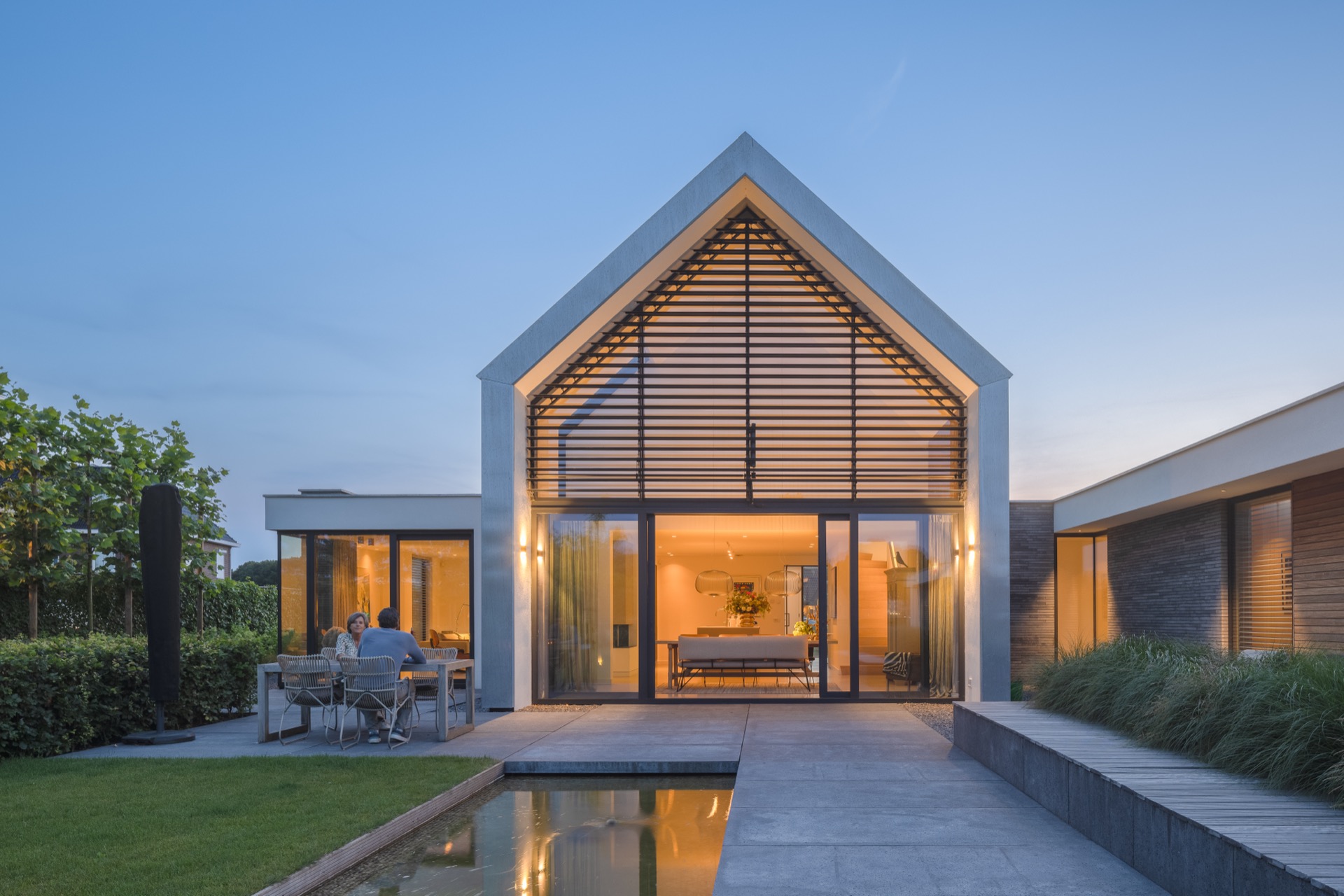
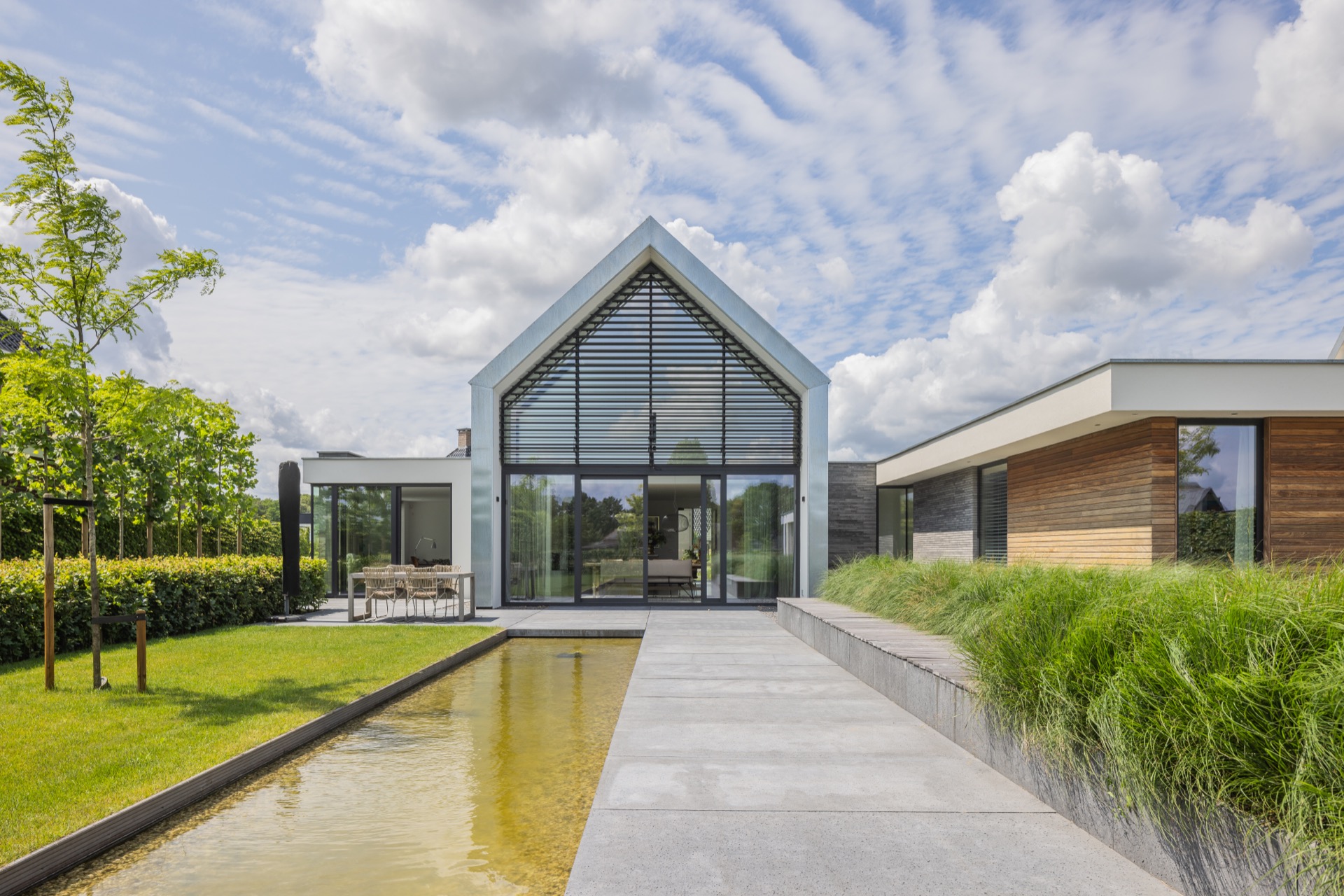
Under the overhang, the horizontal slats sit close to the glazing and create a narrow band of shade across the upper openings. This detail is visible in several views and helps define the threshold between house and terrace. The projecting roof edge gives the windows a sheltered line, while the paving below runs straight toward the garden. Even the low wall beside the terrace contributes to that order, keeping the exterior plan legible from the outside.
One of the clearest visual moments comes where the reflecting water feature garden runs alongside the paving. The water strip stretches in a straight line and picks up fragments of the facade, sky, and planting. It is a small move, but it changes how the approach is read. Instead of a simple path to a door, the garden becomes part of the view sequence, with the house mirrored in motionless water and framed by the hard edges of the terrace.
zinc-like facade villa accent as the architectural starting point
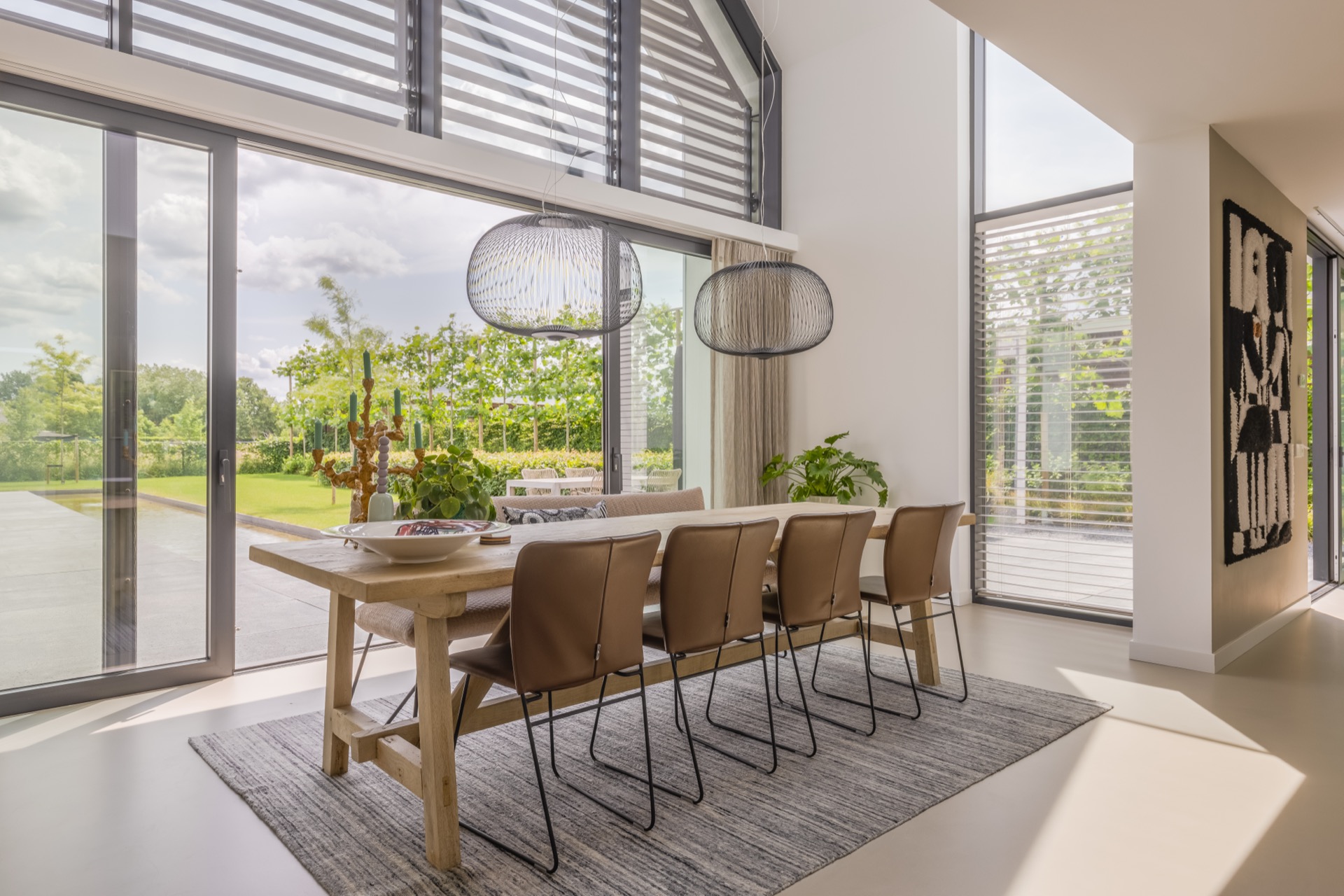
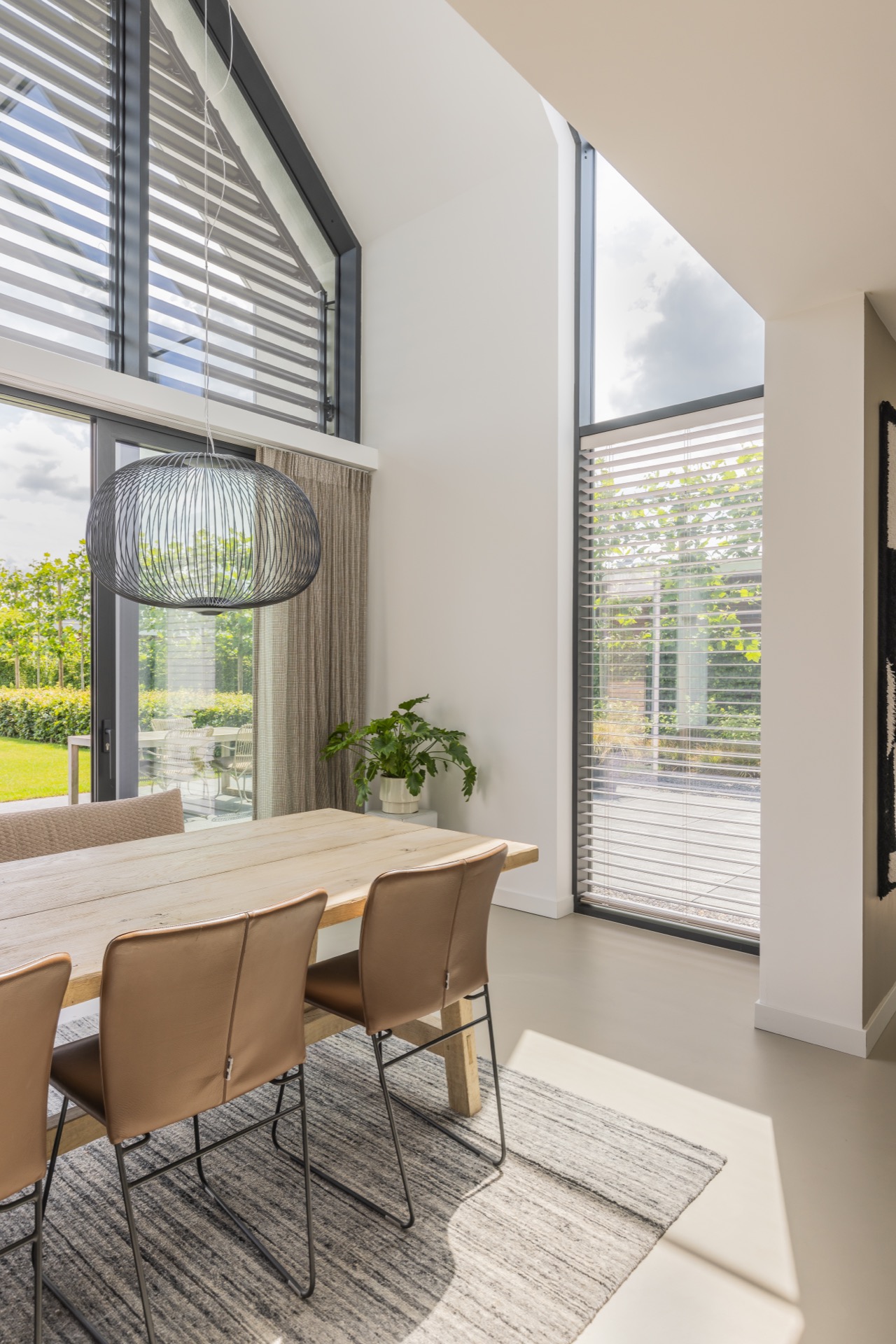
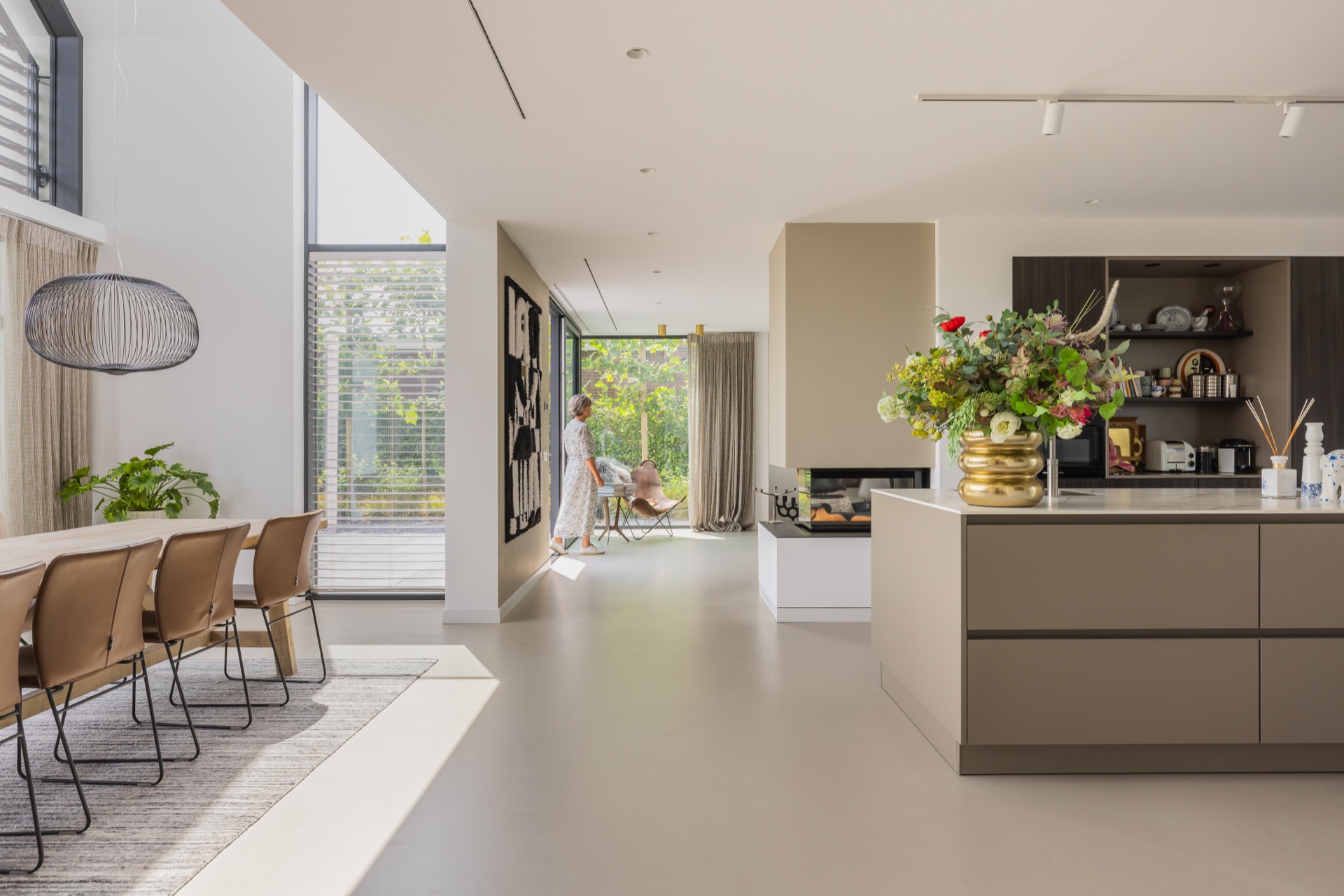
Inside, the plan opens out toward the glass. The open-plan living space is arranged so that the eye travels from the kitchen and dining zone to the terrace and planting outside. Large windows natural light is the first thing the interior seems to rely on; the rooms are lit through broad panes and sliding glass doors that take up much of the wall. The effect is not theatrical. It is practical in the best sense, because the views remain constant as you move through the room.
The interior palette stays quiet enough for that light to do the work. Pale surfaces, timber furniture, and dark frame details repeat the exterior’s contrast without copying it. In one image, the dining table sits beneath suspended lights, with the glass wall only a few steps away. In another, the kitchen block stays low and calm beside the opening to the garden. The rooms feel open because the boundaries are easy to read, not because they disappear. That makes the zinc-like facade villa accent part of the architectural character rather than a loose finish.
Sliding glass doors and a straight sightline
Sliding glass doors are the main hinge in the plan. They remove the awkwardness of a narrow exit and make the move to the terrace direct. You can see this in the way the floor finishes continue almost without interruption to the outside paving, where the terrace edge and garden planting sit at the same level of attention as the interior furniture. The indoor outdoor connection is therefore built from alignment: floor to terrace, table to garden, window to water.
That alignment also changes how the open-plan living space is used. The dining area is not tucked away from the view; it sits in front of it. Light lands on the tabletop, then shifts across the chairs and the low kitchen fronts behind. Because the openings are wide and tall, the room takes in the changing sky as much as the garden. The result is a space that works through long sightlines and repeated contact with the exterior, rather than through decorative separation.
What the photos reveal in close-up
The image set makes the project read most clearly through detail. A close exterior shot shows the metal skin meeting glass at a tight corner, while another image places the entrance under evening light so the louvers and frame lines stand out. The garden views add the reflecting water feature garden, which acts like a narrow mirror beside the path. Together these views show a villa that relies on proportion, not excess, to hold attention.
Inside, the sequence continues with the dining area and kitchen. The hanging lights above the table introduce a softer point of focus, but the room still belongs to the glazing and the view beyond it. Dark window frames outline the openings, and the sliding panels keep the connection to the terrace clear. The modern classic villa design becomes visible here in a different way: not as a mix of historical references, but as a calm pairing of measured forms, glass, timber, and metal.
Photography – Elroy Spelbos Fotografie
Contributors
Bouwpartner and supplier – Qbusbouw That makes the zinc-like facade villa accent part of the architectural character rather than a loose finish.
Want to see more of BAAS architecten? View the page of BAAS architecten for even more great projects and company information.


.png)