








Thatched roof home with large windows and nature views
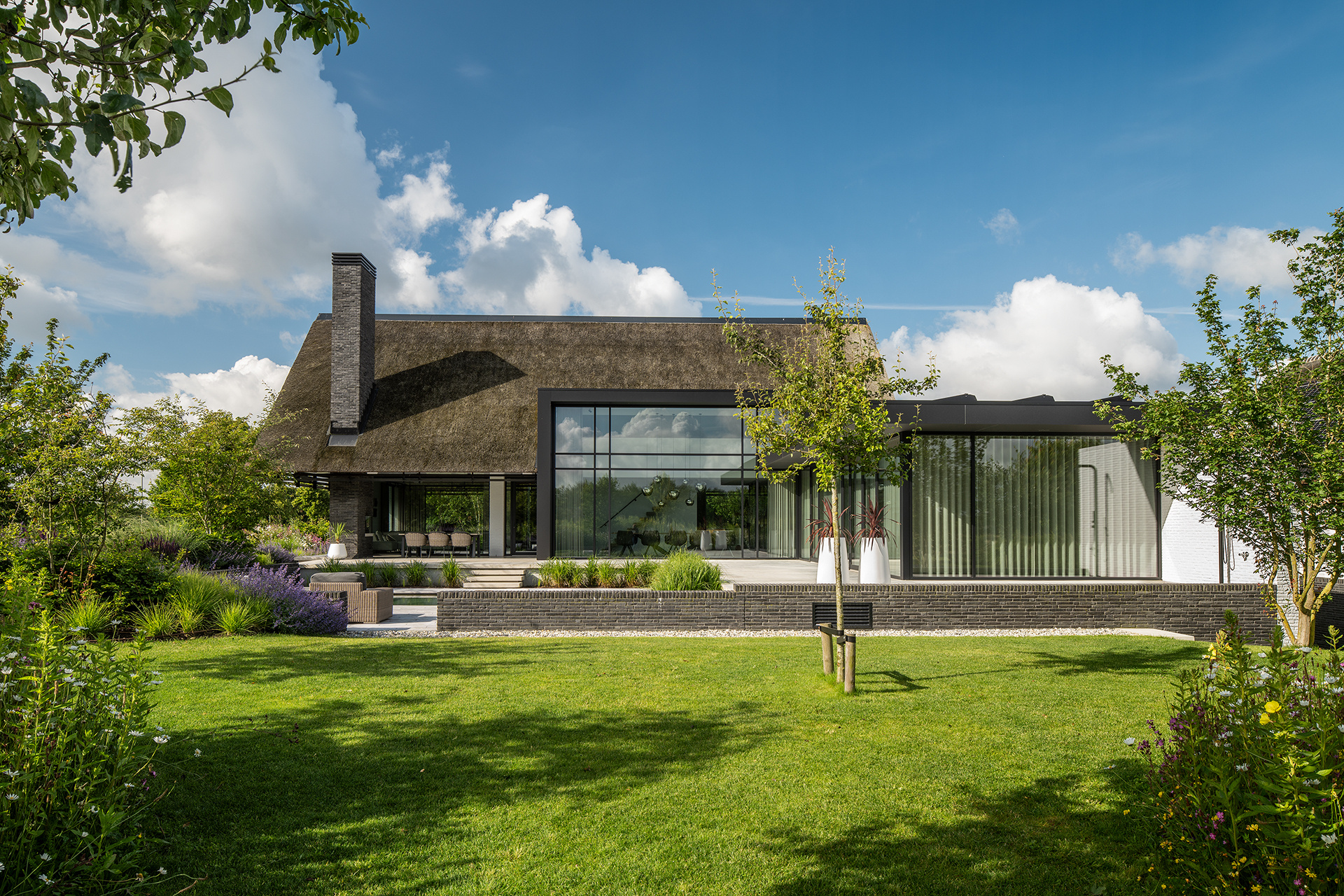
Glass sets the tone before the roof does. Openings run across the house on the upper level, at ground level and along several sides, so the landscape is never far away. The garden room sits slightly apart and is almost entirely glazed, turning the transition to the garden into a place where light, reflections and long views matter. In a thatched roof home like this, the connection with the surroundings is not a gesture at the end of the plan; it is built into the way the rooms are arranged.
thatched roof home as the architectural starting point
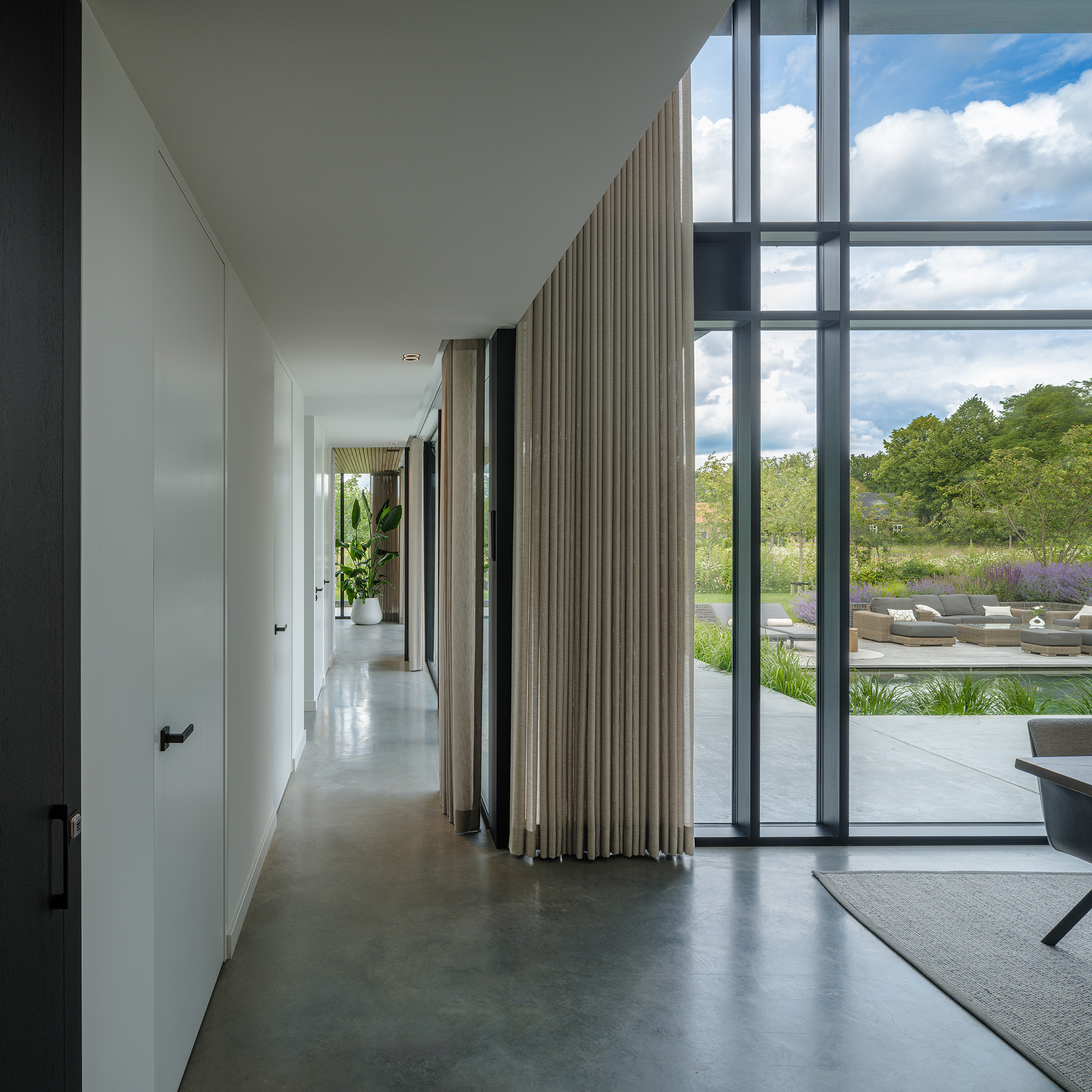
The villa with large windows makes its first move through orientation. From the living room and the main bedroom, both set at the end of the house, the view stretches over the fields toward the owners’ native village. That detail gives the plan an unusual clarity: the important rooms do not just face the garden, they look beyond it. Inside, the broad panes pull daylight deep into the rooms and keep the horizon visible from several positions, even when you move through the house rather than sit still in one place.
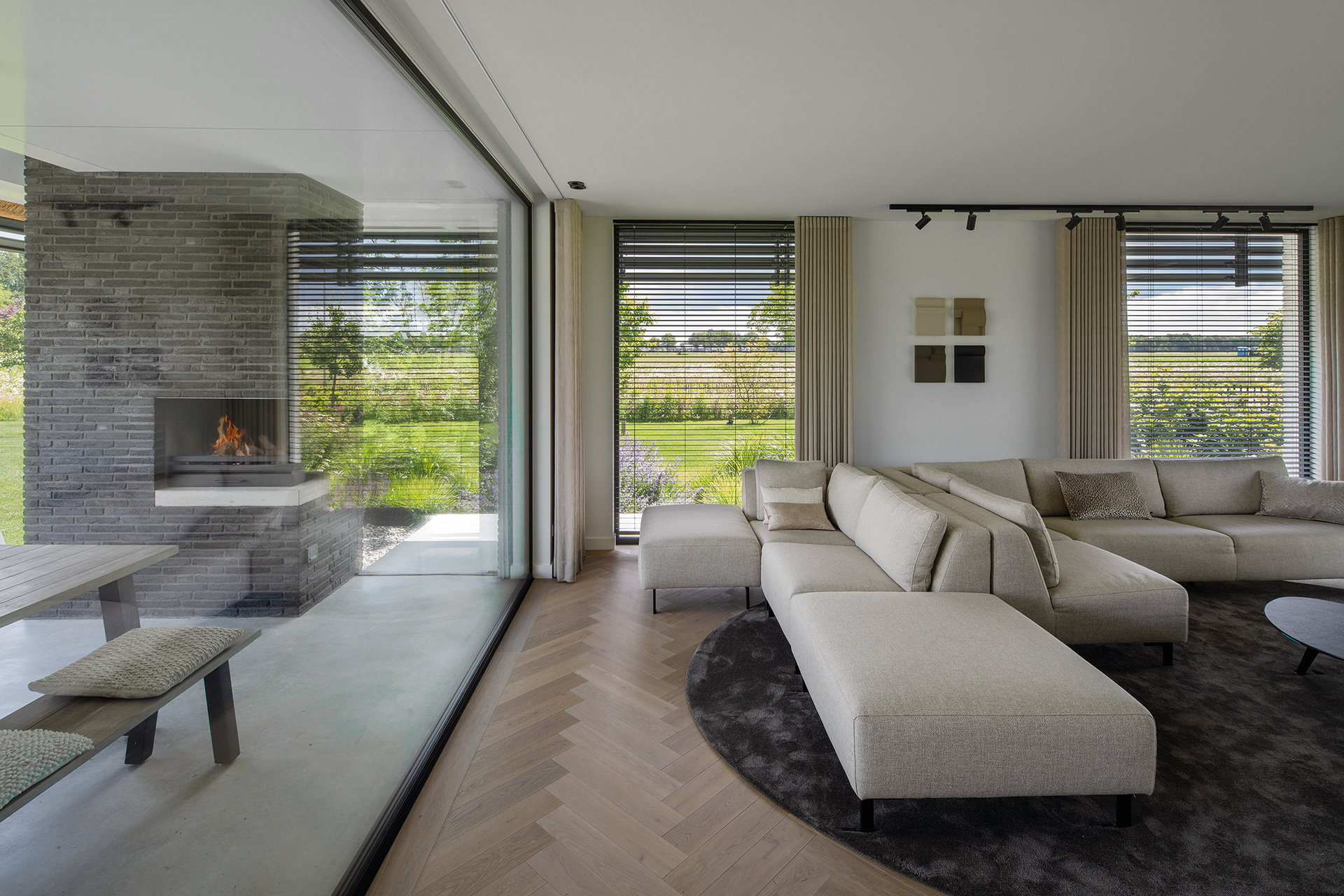
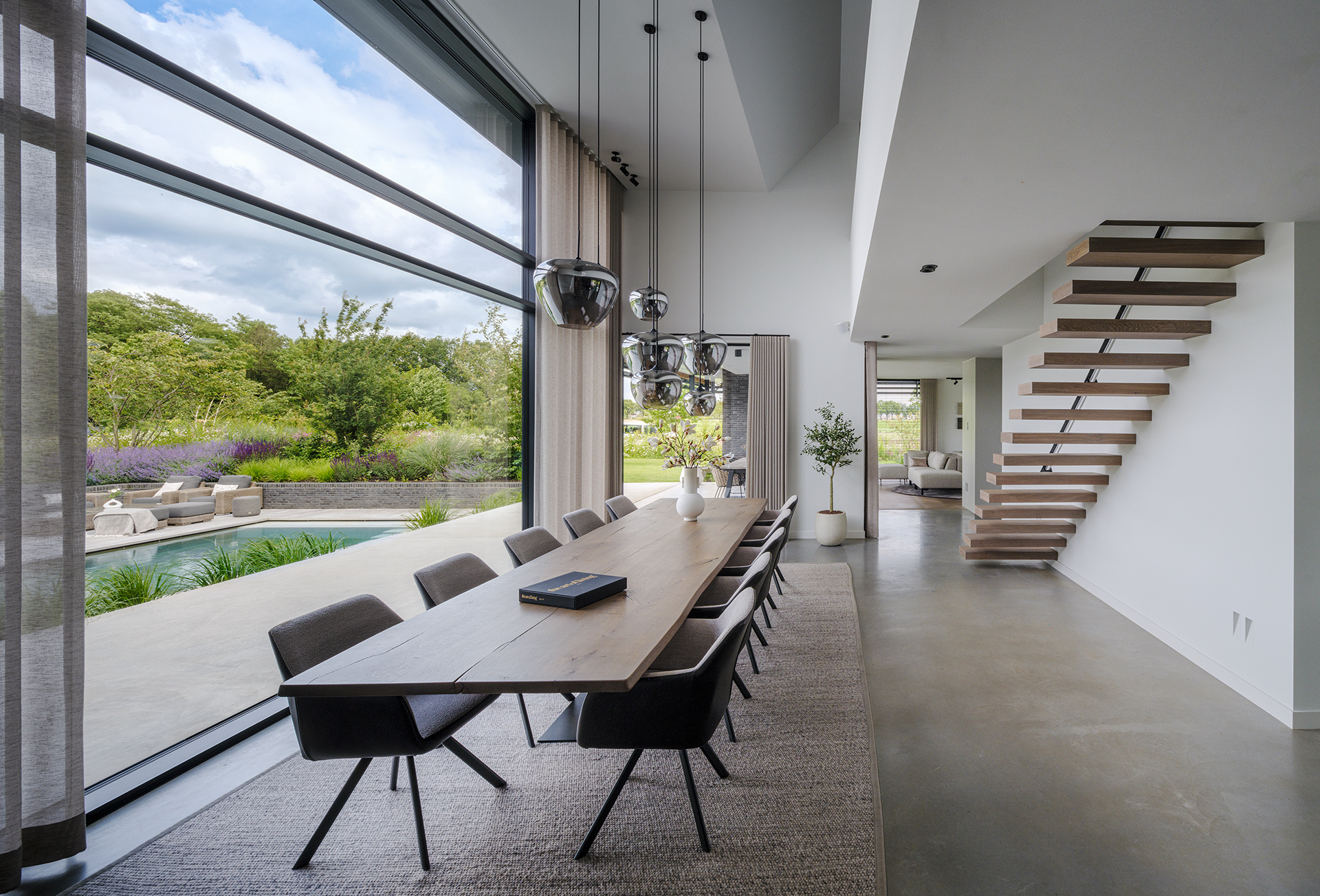
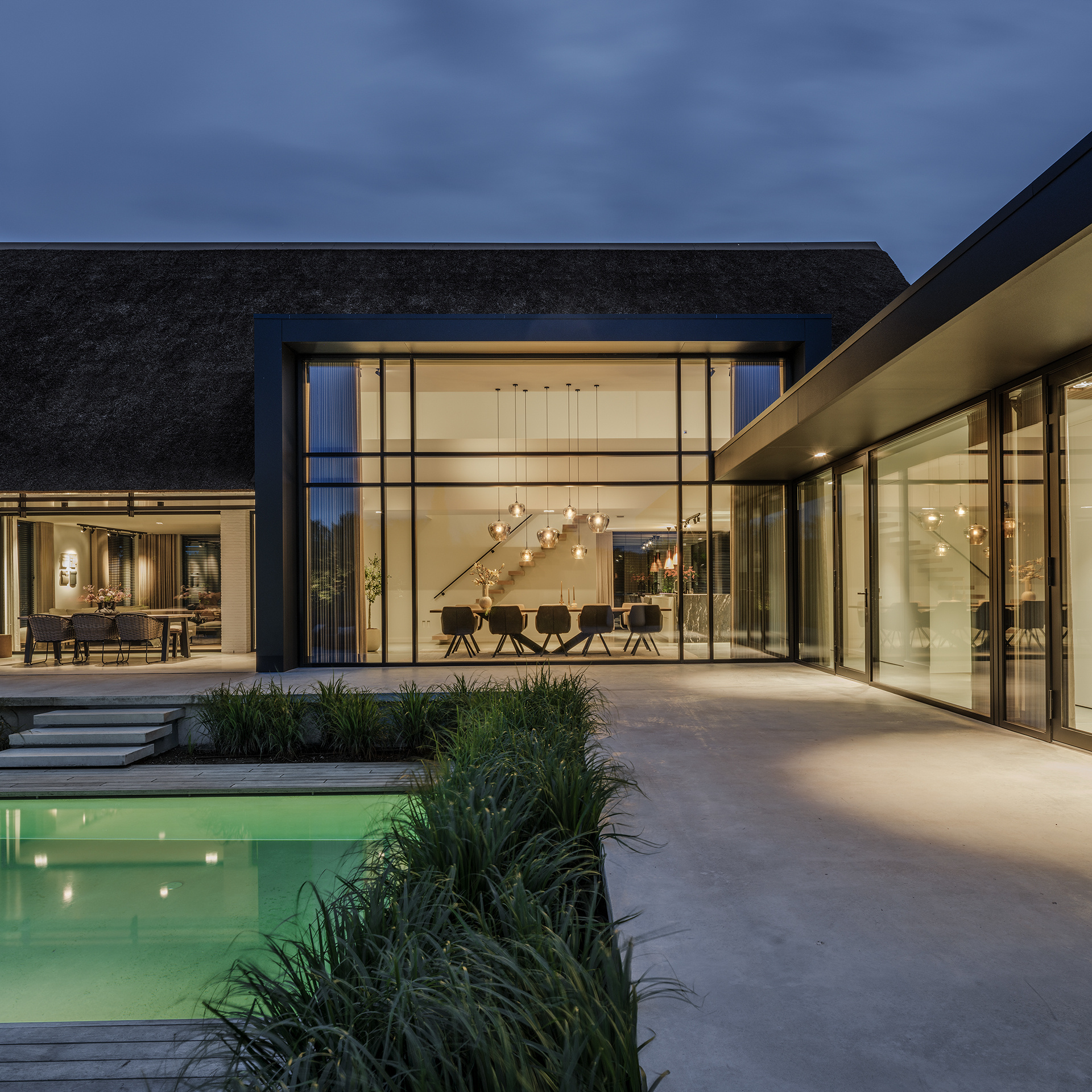
Those indoor-outdoor sightlines are strongest where the house meets the terrace and the garden room. The glazed annex acts as a threshold, not as a closed addition. Its near-full glass enclosure lets the garden remain readable from inside, while the structure itself stays visually light. At moments the frame disappears and the plants, paving and water outside take over. That effect is repeated in the main house, where the windows sit low enough to connect floor, furniture and exterior ground level in a single line of sight.
A thatched roof home built from grounded materials
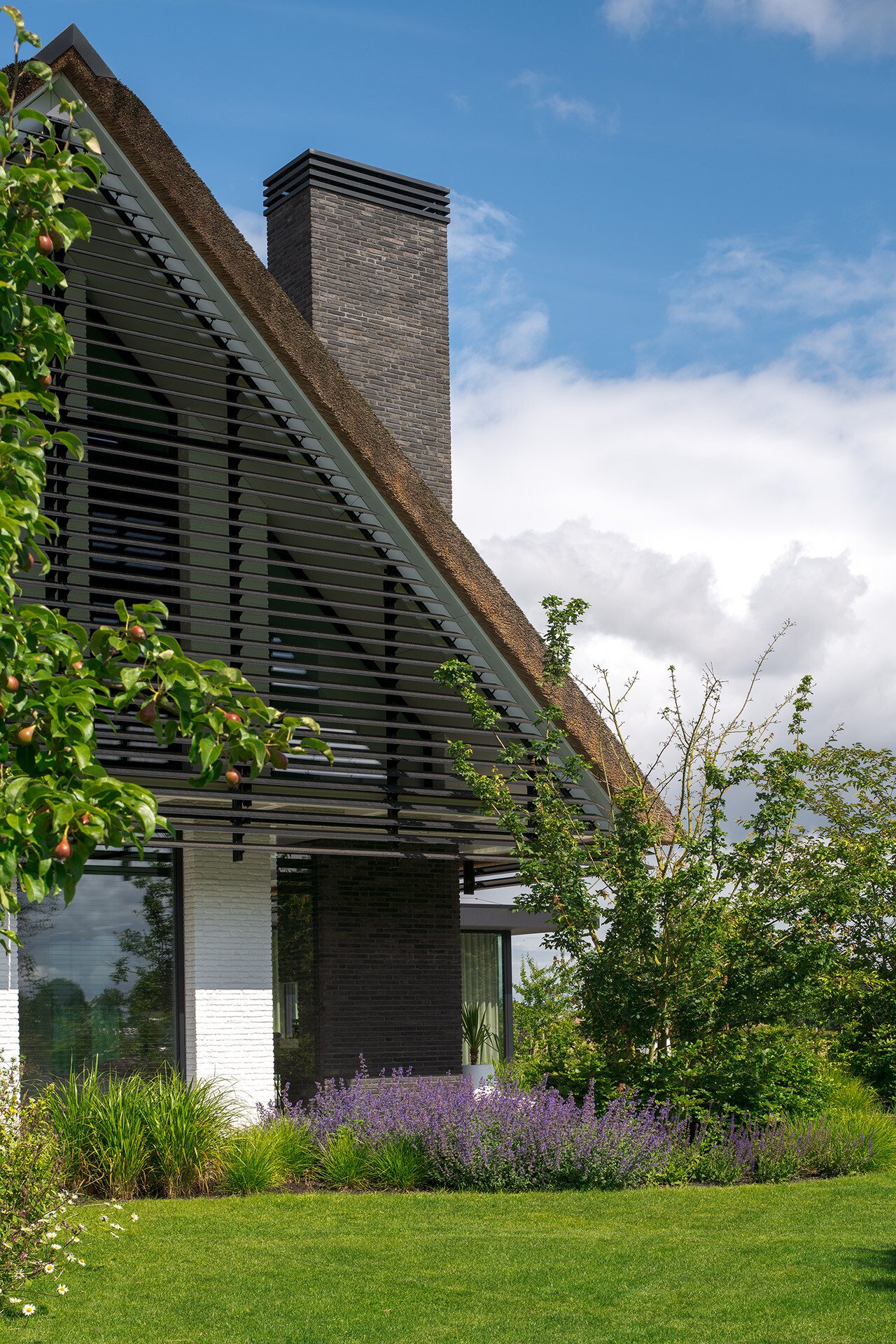
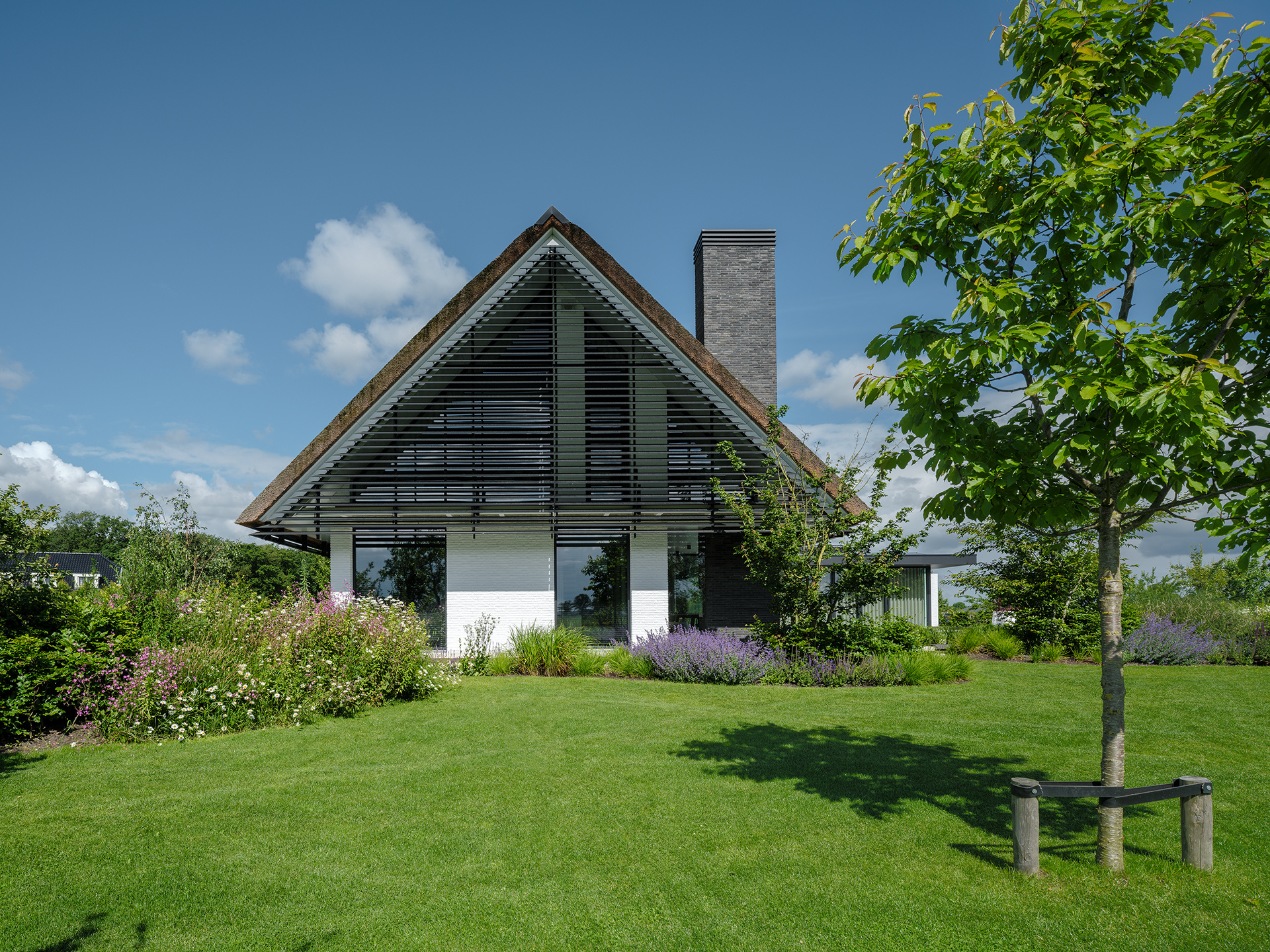
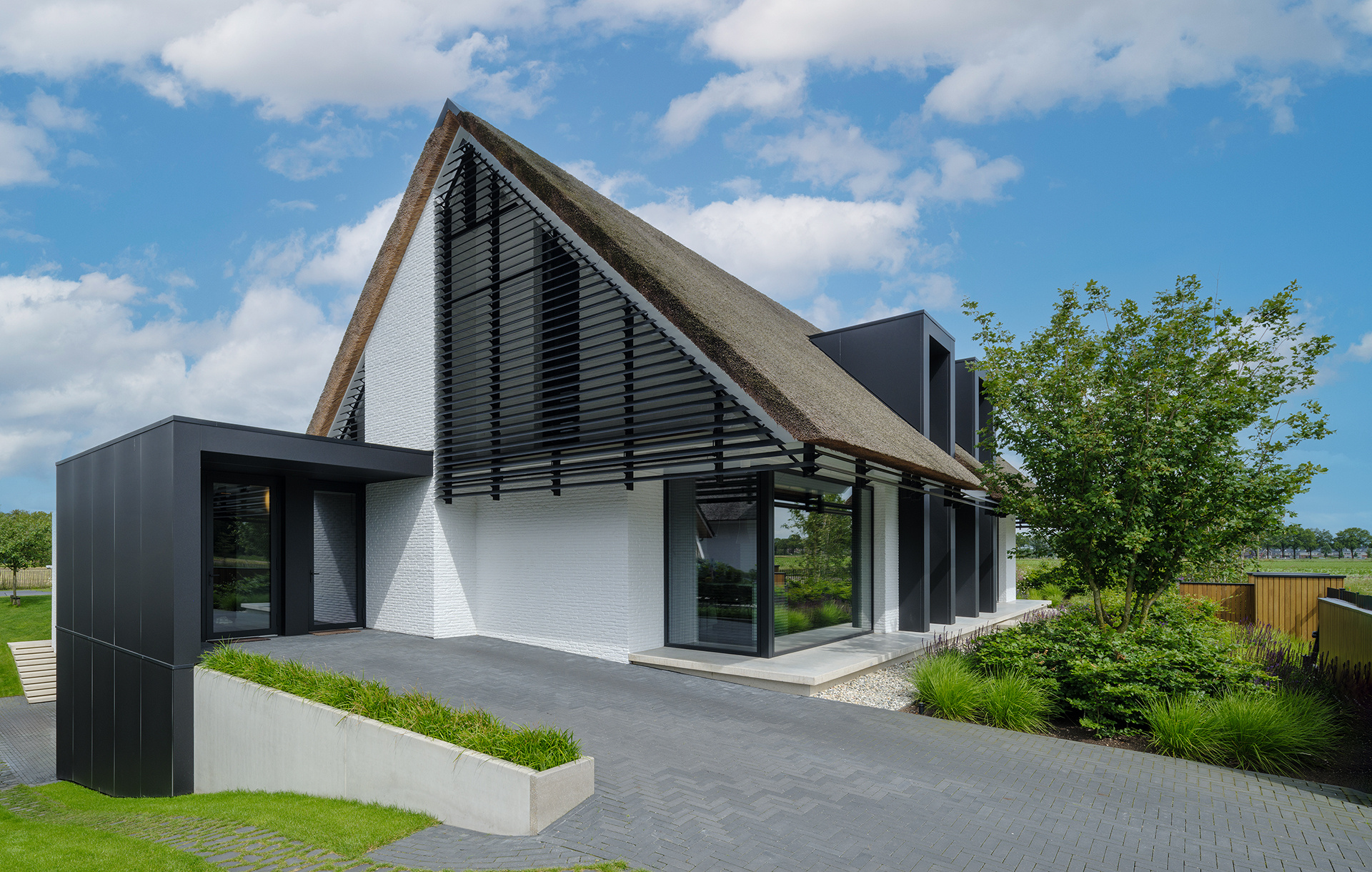
The roof is made by hand in thatch, a material that softens the profile of the house without hiding its scale. It brings a clear texture to the silhouette, especially where it meets the brickwork and the taller masonry parts of the building. The long roofline gives the villa a calm outline, while the material itself keeps the house tied to its setting. In a thatched roof home, the roof can easily become the dominant image; here it works with the rest of the structure instead of floating above it as a separate sign.
The home with natural materials façade follows that same logic. Long-format bricks, coated with a lime wash in the text, give the elevations a weathered grey presence. Against the white wall fields, the brick reads harder and more grounded, yet the contrast stays controlled. Rather than a flat single-tone exterior, the surface changes from one plane to the next. That difference is visible from afar and even more so in close detail, where the masonry, white render and glass meet without competing for attention.
Grey brick, white fields and a clear line of contrast
The façade does not depend on ornament. Its expression comes from the relation between materials: the robust grey brick, the white wall sections and the dark glazing. From certain angles, the house looks almost stratified, with each layer doing a different job. The brick grounds the base and larger wall sections, the white surfaces lighten the composition, and the glass keeps the volume open to the outside. That mix is what gives the modern home with thatched roof and lots of glass its tension.
One of the more striking details appears where the roof edge, chimney and window bands meet. The thatch bends the light, the masonry adds weight, and the glazing cuts through both. This is especially clear at the garden room and along the lower terraces, where the glass enclosure makes the boundary between interior and exterior easier to read. The house never turns into a closed box. Even when the walls are solid, the openings keep the fields and planting in the frame. That makes the thatched roof home part of the architectural character rather than a loose finish.
Rooms arranged around daylight and long views
Inside, the architecture stays measured and quiet. Large panes bring in a steady wash of light, which is picked up by dark built-in storage, pale wall surfaces and stone finishes. The contrast is strongest in the living spaces, where the fireplace sits against a stone surface and the seating area is pulled toward the glass. Rather than facing inward, the room works with the view. The window line becomes part of the furniture arrangement, and the room’s proportions are read through the outside landscape as much as through the interior walls.
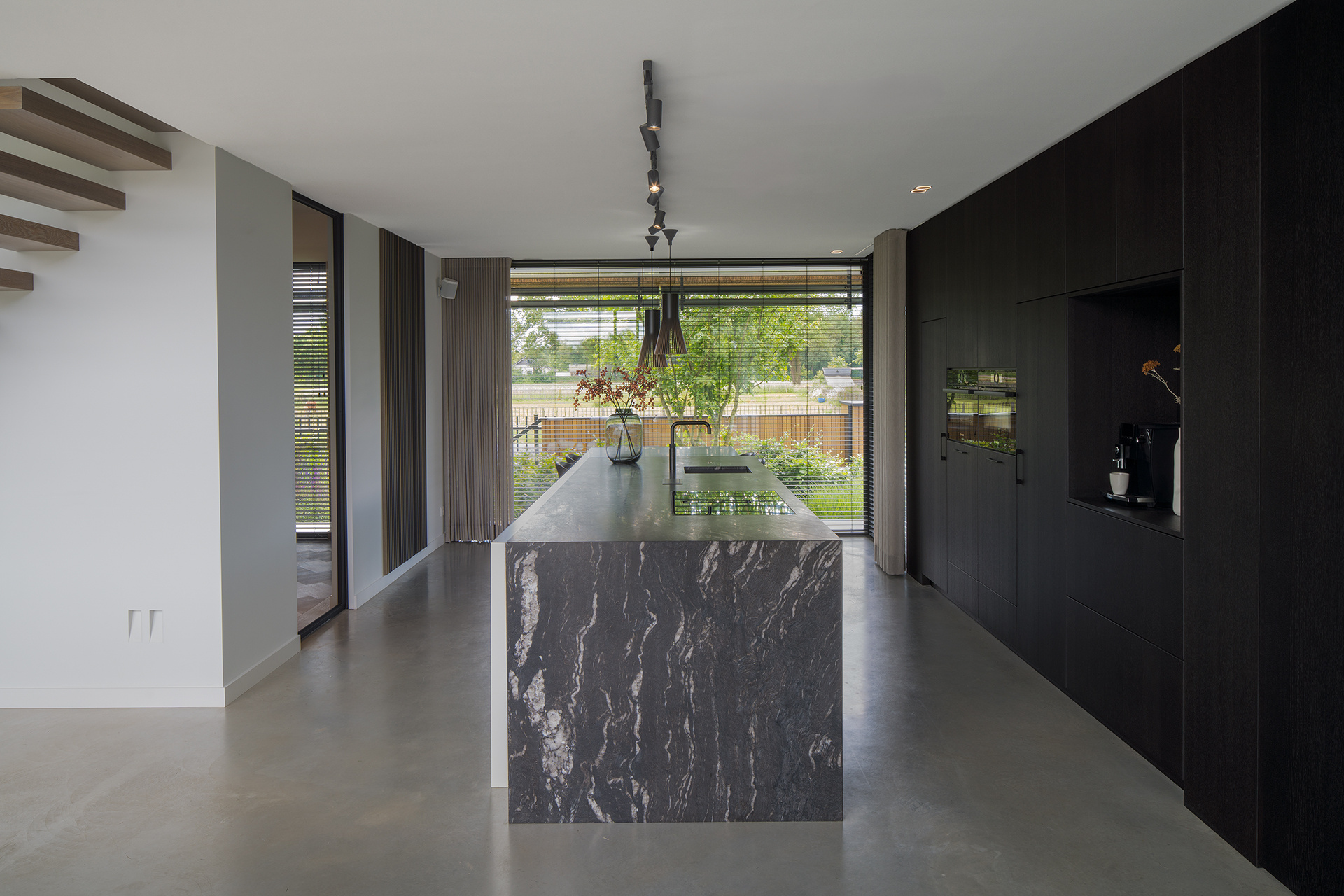
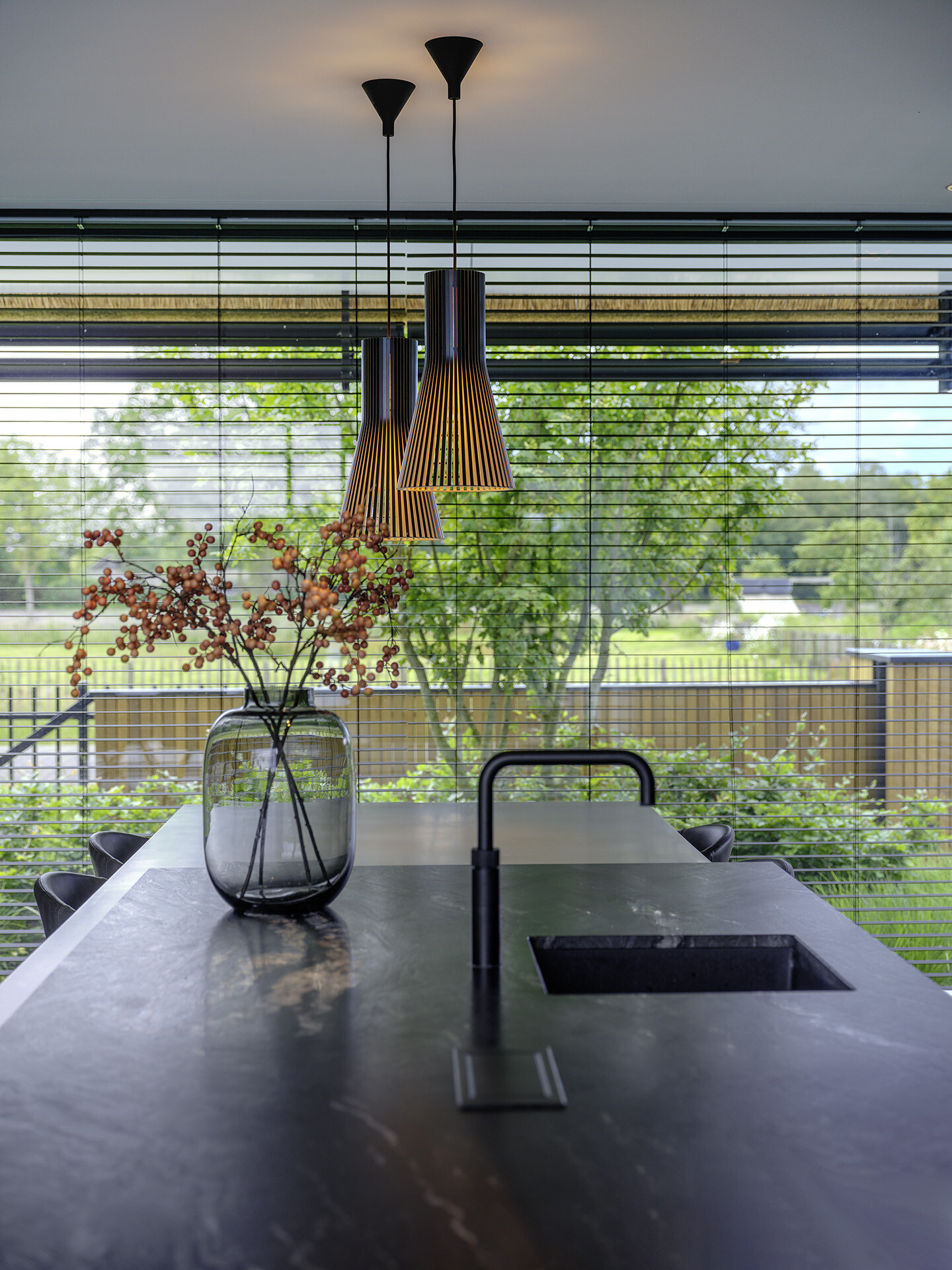
The kitchen and dining area follow the same visual logic. A natural stone worktop appears beneath the broad glazing, so the material of the room echoes the harder textures outside. The long table is placed close to the window wall, where the rhythm of posts and panes marks the edge of the space. Horizontal blinds temper the light without closing off the view completely. The result is a room that can shift from bright to filtered in a matter of minutes, depending on the angle of the sun and the position of the blinds.
Daylight, stone and dark joinery
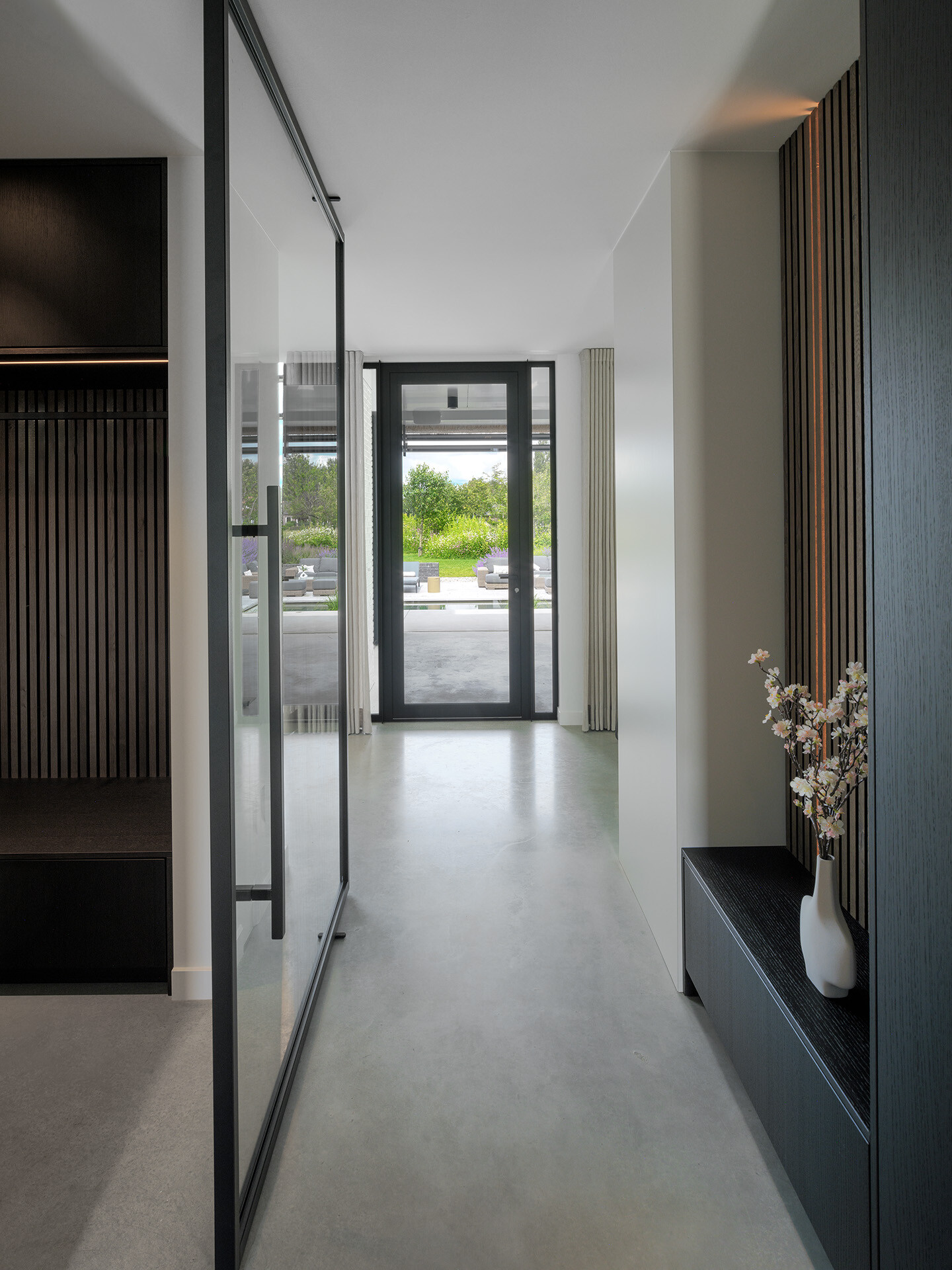
Dark cabinetry gives the interior a clear line, especially in the rooms where the glazing is strongest. It sits against white surfaces and wood flooring, so the eye can read the room in layers: floor, storage, glass, outside. The stone worktop and the stone details in the living area keep the palette from feeling delicate. These are surfaces that can take daylight, shadow and reflection without losing their shape. In the main rooms, the materials do not compete; they hold the view in place.
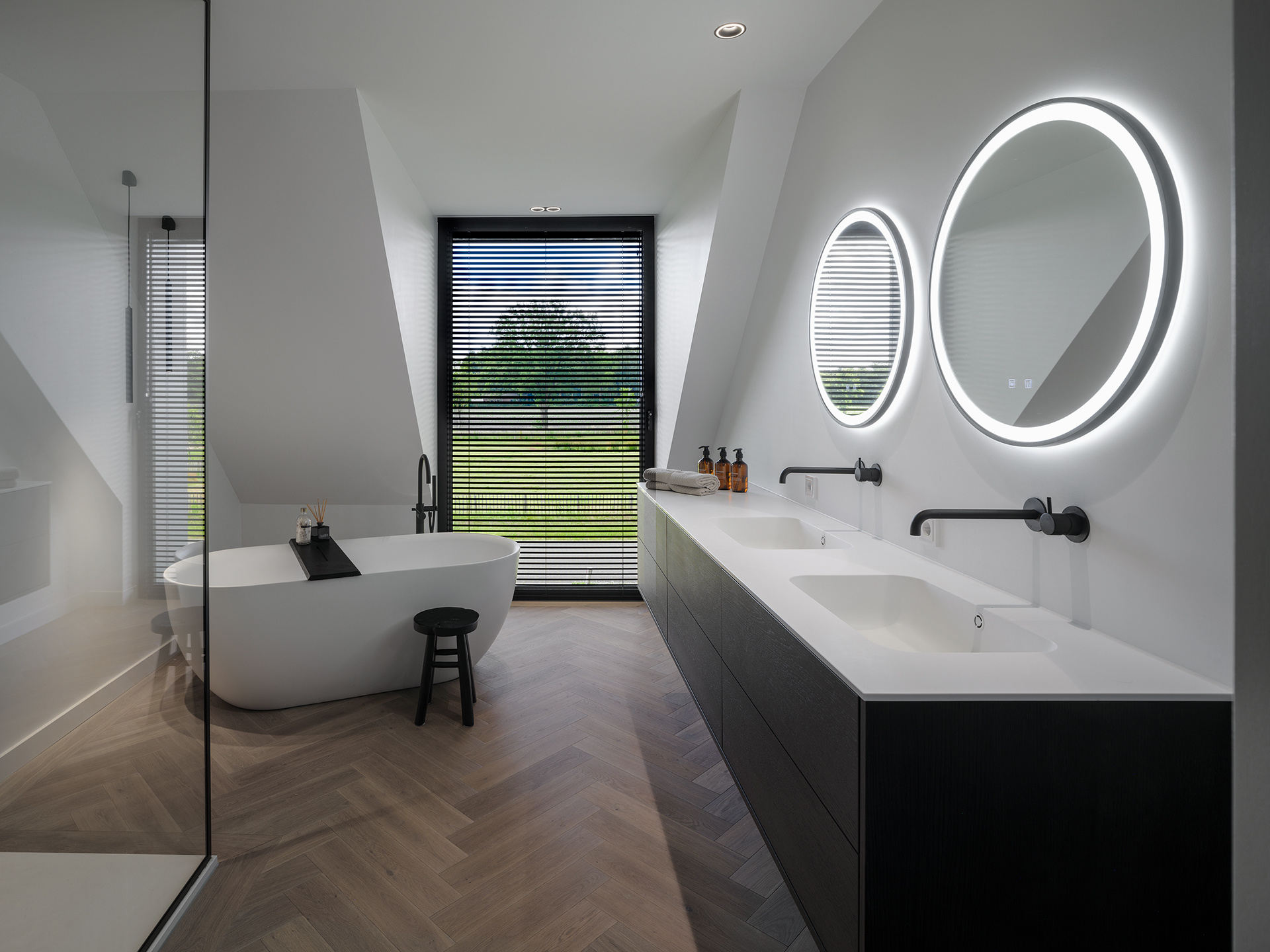
The bathroom continues that restrained approach with a freestanding bathtub, a double wash basin and rounded illuminated elements near the ceiling. Here the large window is filtered by horizontal blinds, which preserves privacy while leaving the room bright. The fixtures are placed with enough space around them that the shapes remain readable. It is a room defined less by decoration than by proportion and light. The glazing, once again, does the quiet work of linking the room to the wider house.
thatched roof home as the architectural starting point
The garden room deserves its own reading because it changes how the house meets the plot. Almost completely glazed, it acts as a transparent buffer between the interior and the terrace. From outside, the room reads as a light insertion beneath the roofline; from inside, it lets the garden remain visible even when the weather shifts. The glass makes the transition precise. You see the terrace edge, the planting and the water beyond without needing to step outside, which is exactly what gives the annex its place in the plan.
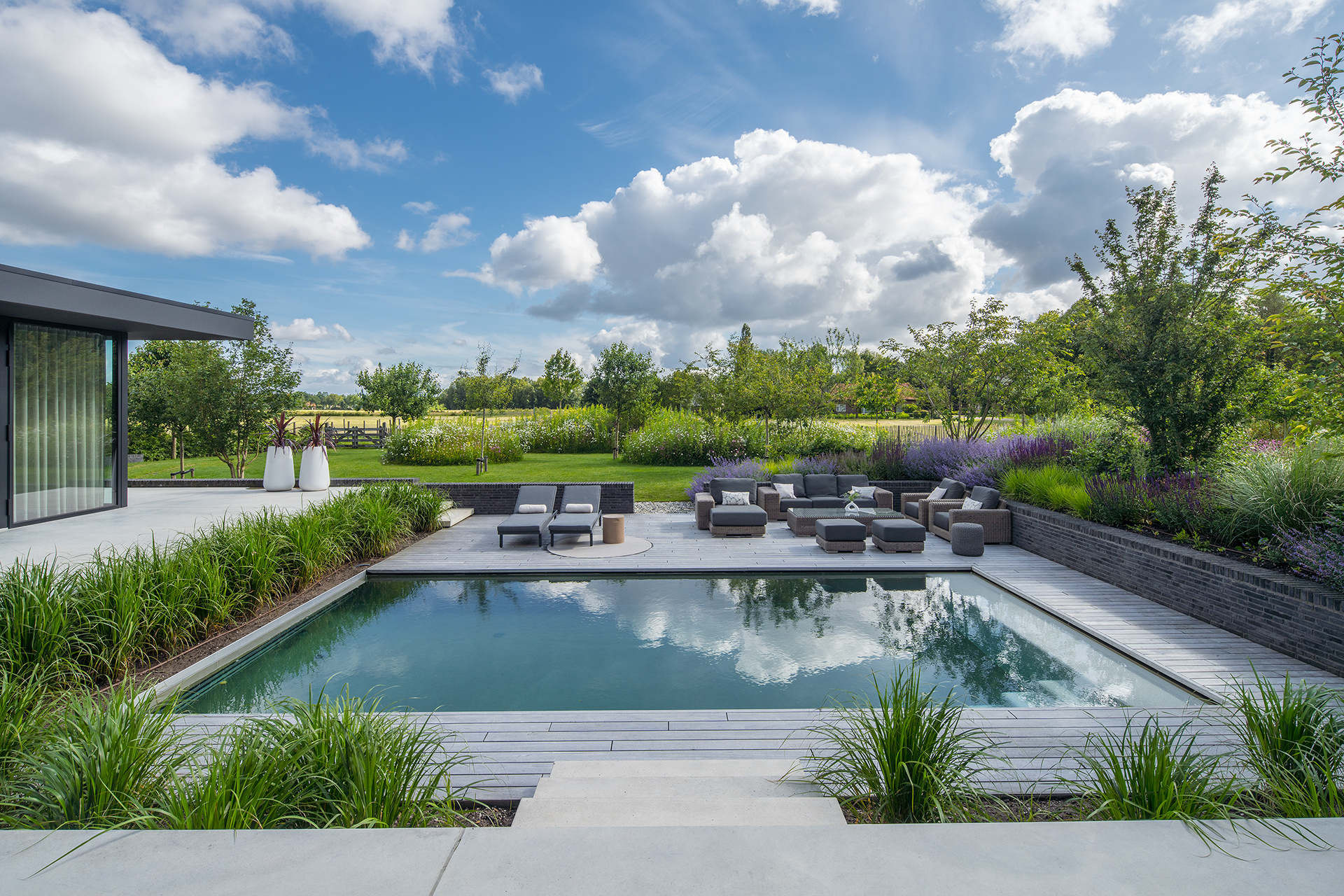
Outside, the swimming pool extends that sense of linear order. Its rectangular shape, hardstone edge and nearby seating area keep the terrace legible, while low grasses and purple planting soften the straight lines. The landscape around it is not overloaded with detail. It relies on repetition, open ground and a few concentrated planting zones. That restraint suits the house well. The roof, the masonry and the glass already do enough work; the garden answers with quiet surfaces, water, grass and controlled views back to the villa.
What stays with you is the way the house keeps turning outward. The windows do not just bring in light; they direct the rooms toward fields, trees, terrace and water. The thatched roof home gains its character from that constant exchange. Materials stay honest and visible, but it is the sightlines that give the project its rhythm. From the living room to the bedroom, from the garden room to the pool edge, the architecture keeps returning to the same idea: living with the landscape in view.
Want to see more of Lenz Architecten? View the page of Lenz Architecten for even more great projects and company information.

.png)
NEW 2026 Jubileum Edition The Best Interior Designers Benelux
Order Now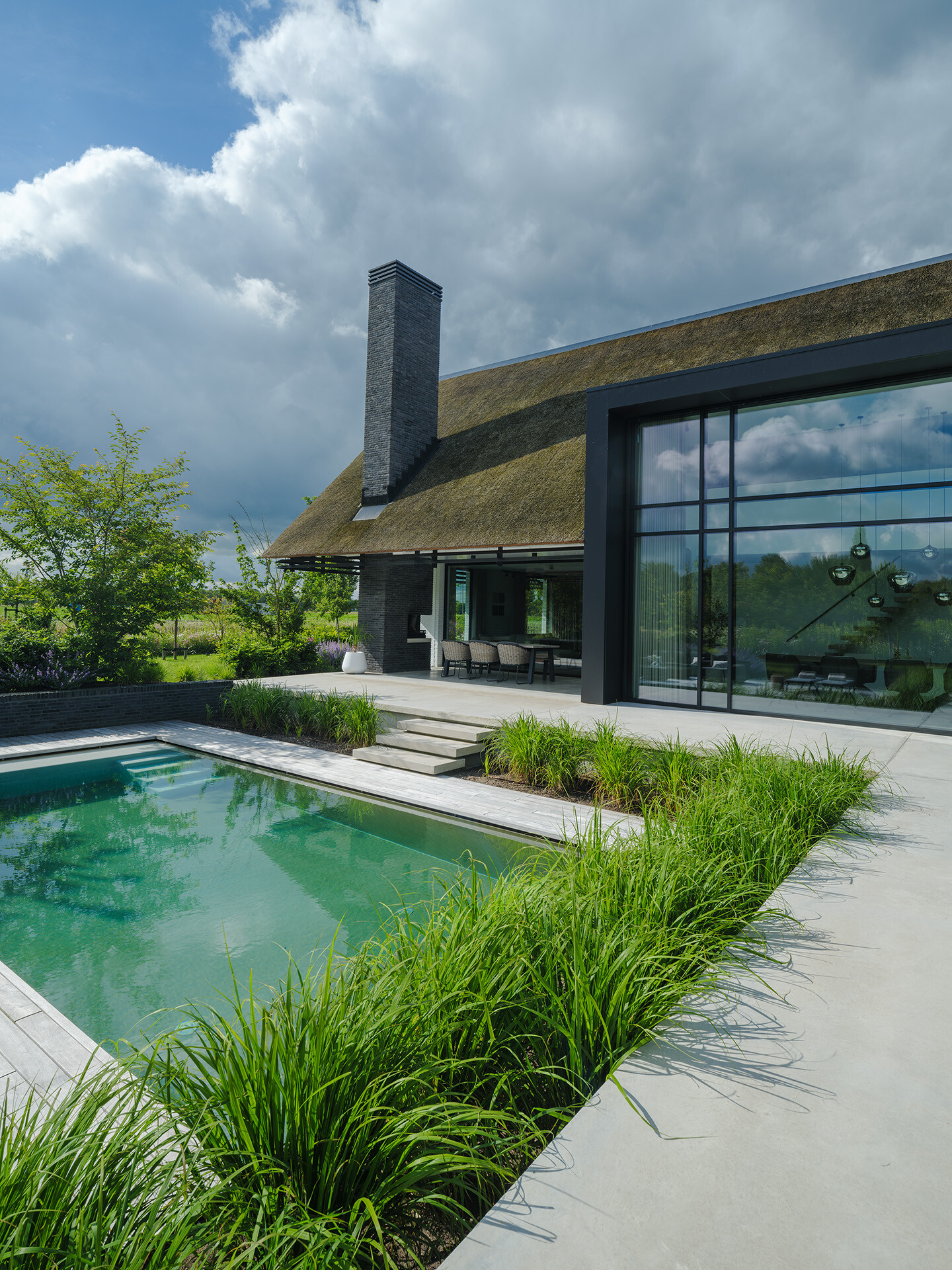
NEW 2026 Jubileum Edition The Best Interior Designers Benelux
Order Now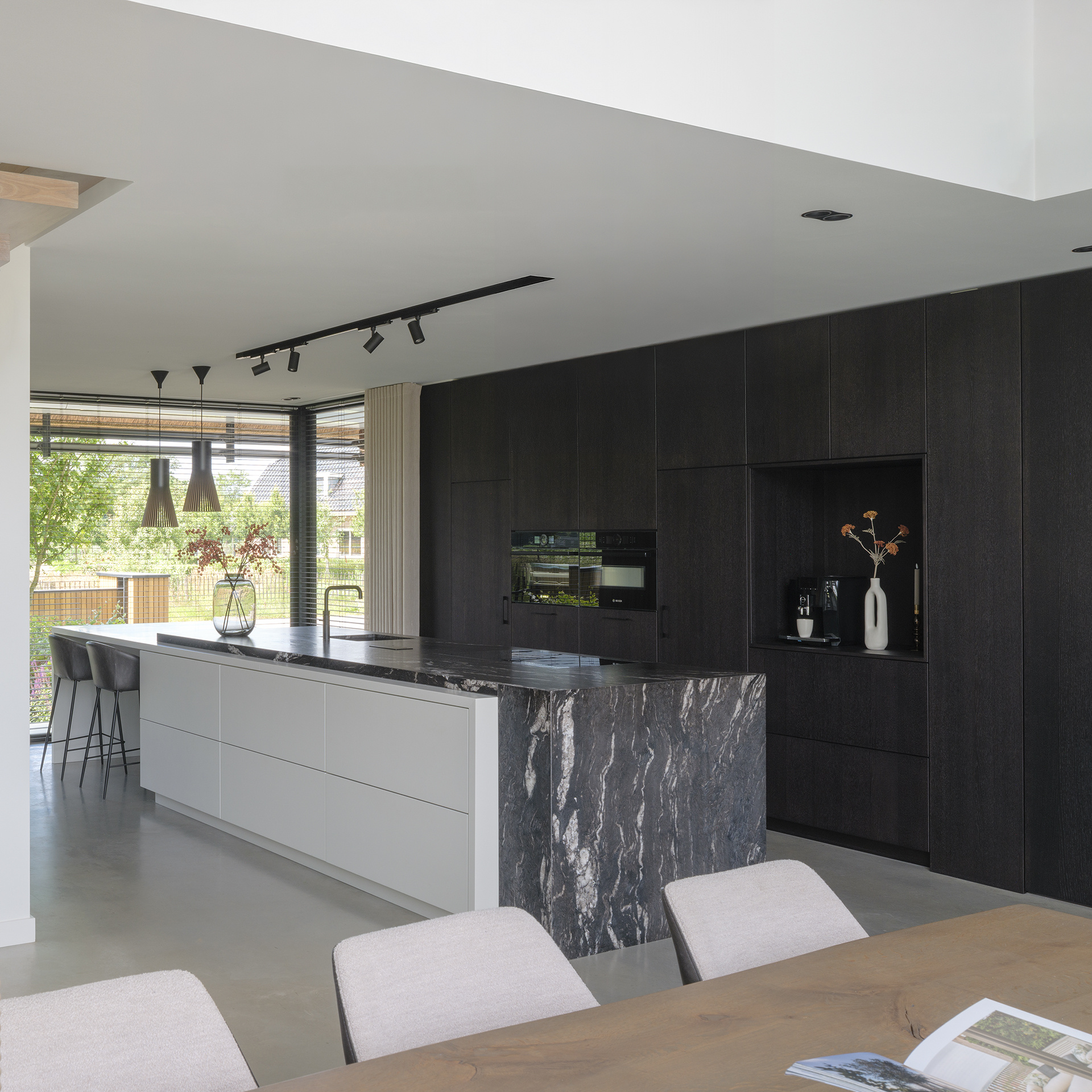
NEW 2026 Jubileum Edition The Best Interior Designers Benelux
Order Now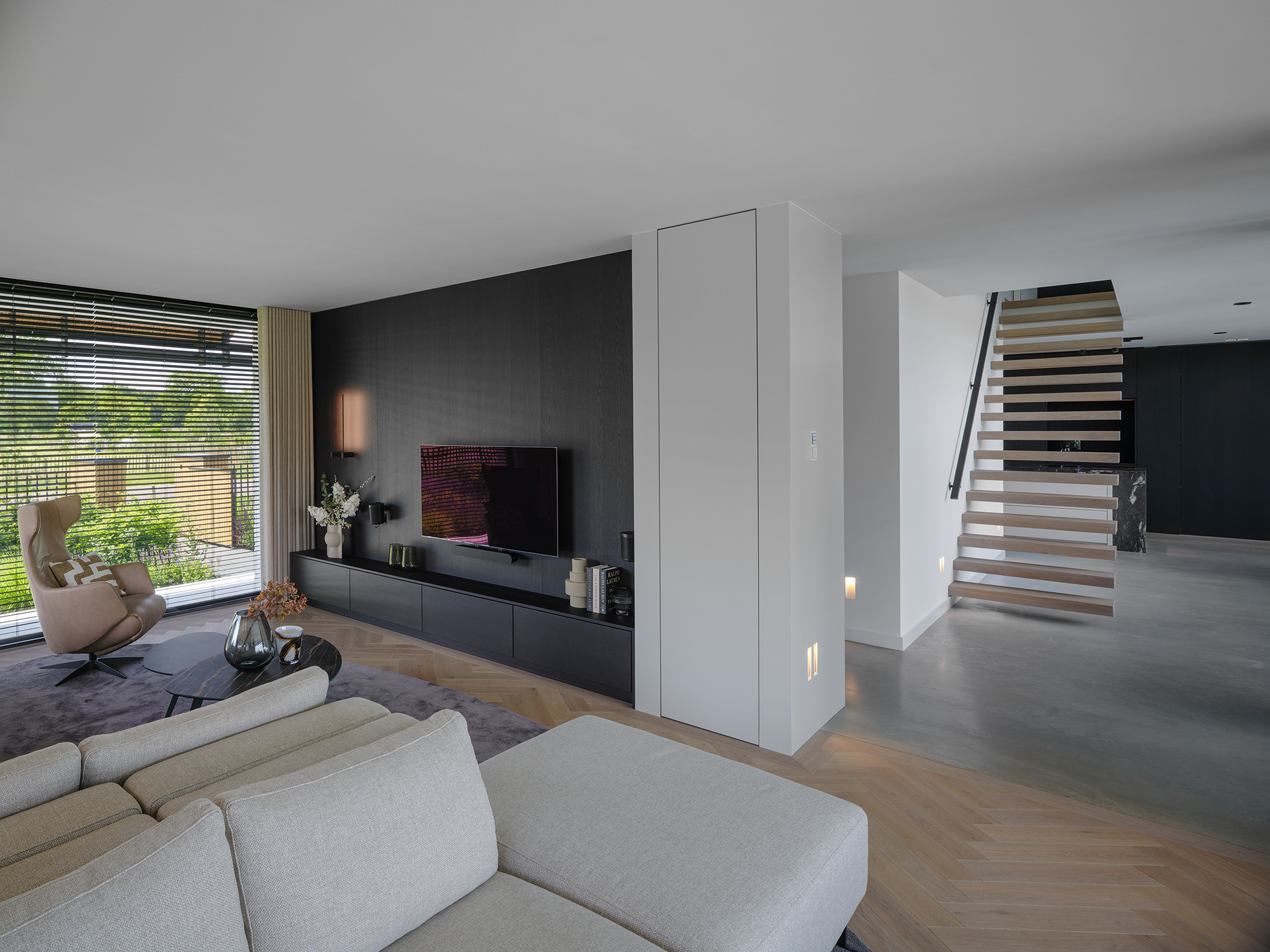
NEW 2026 Jubileum Edition The Best Interior Designers Benelux
Order Now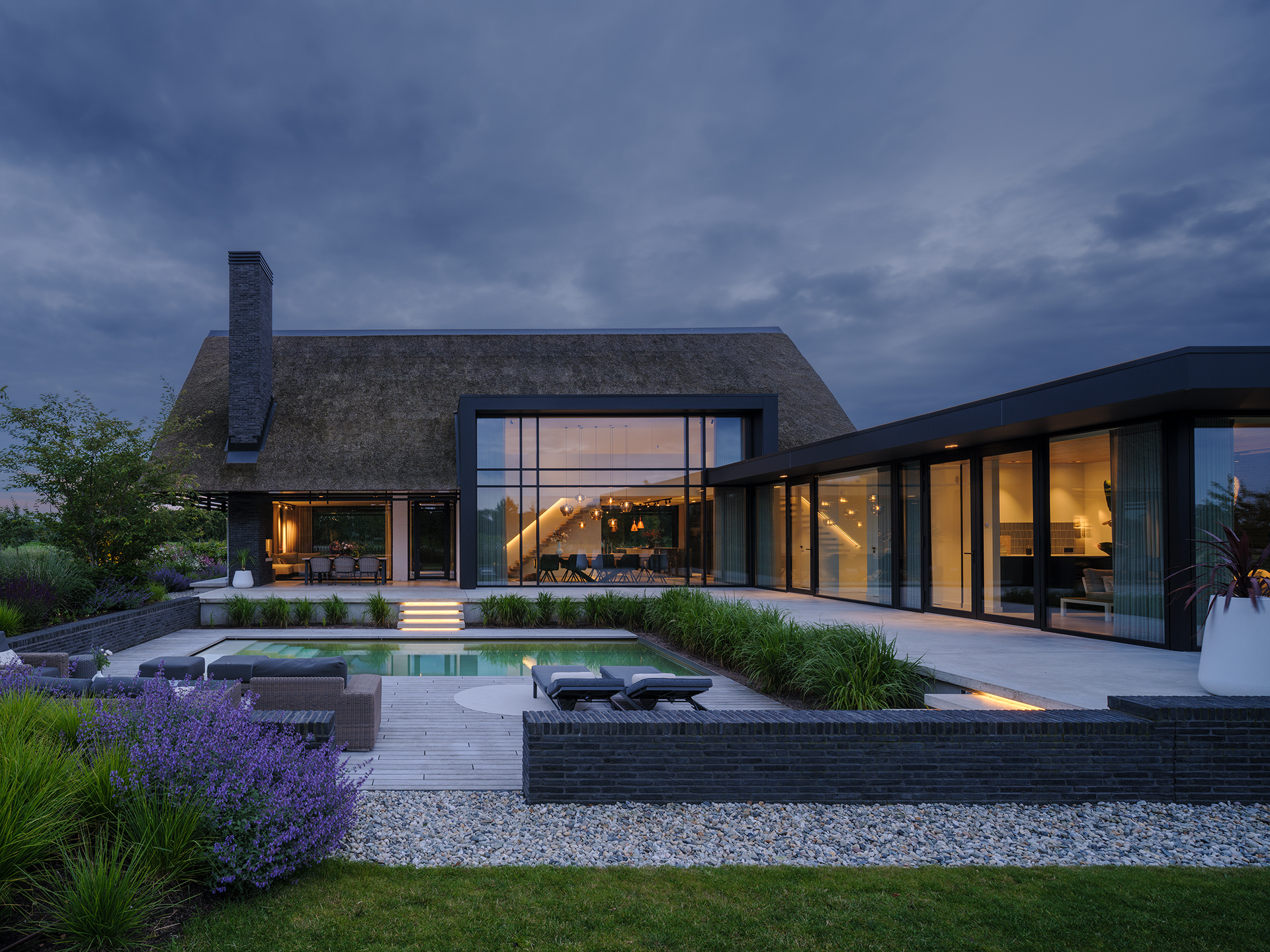
NEW 2026 Jubileum Edition The Best Interior Designers Benelux
Order Now


