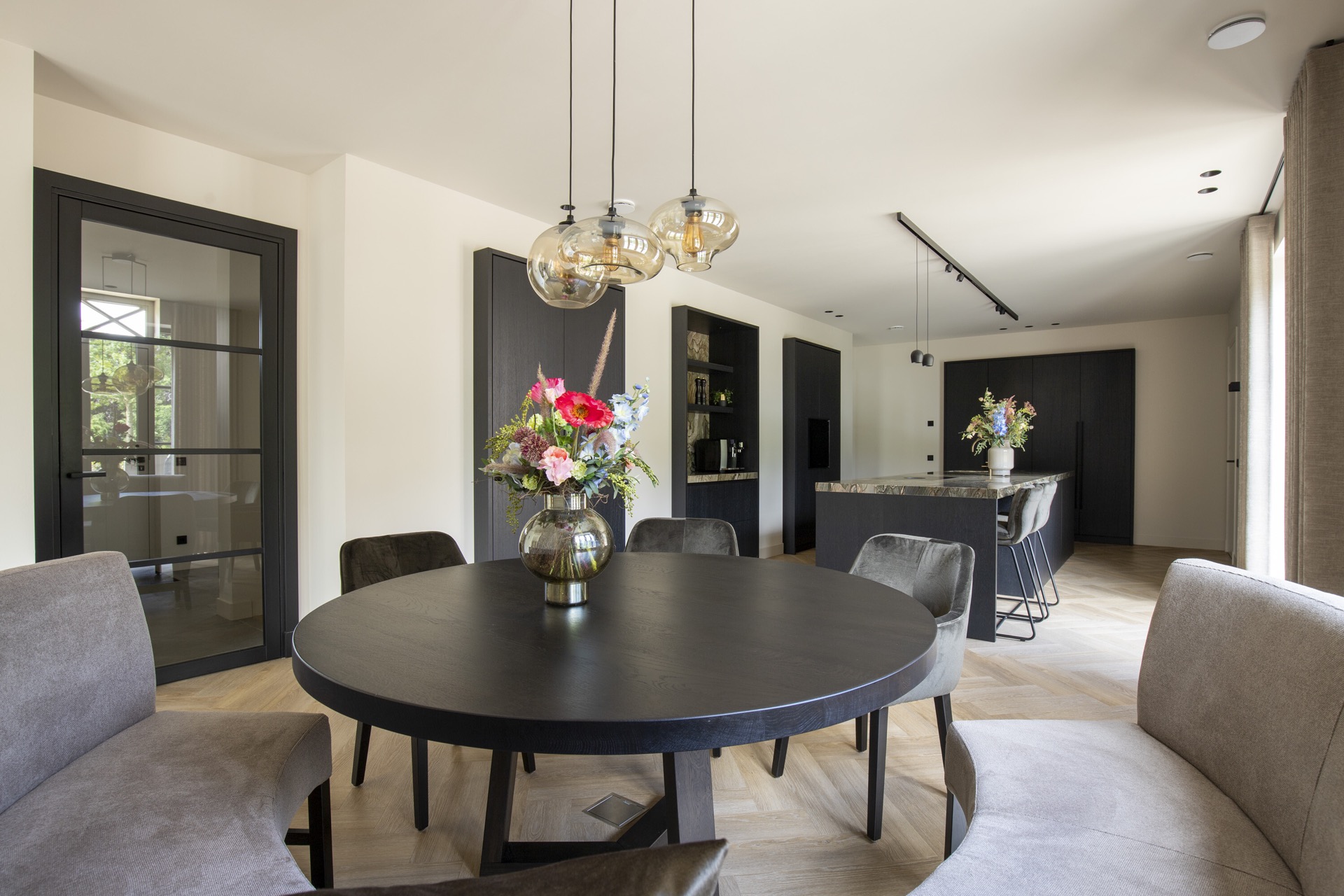





Dark veneer kitchen with central island and natural stone worktop
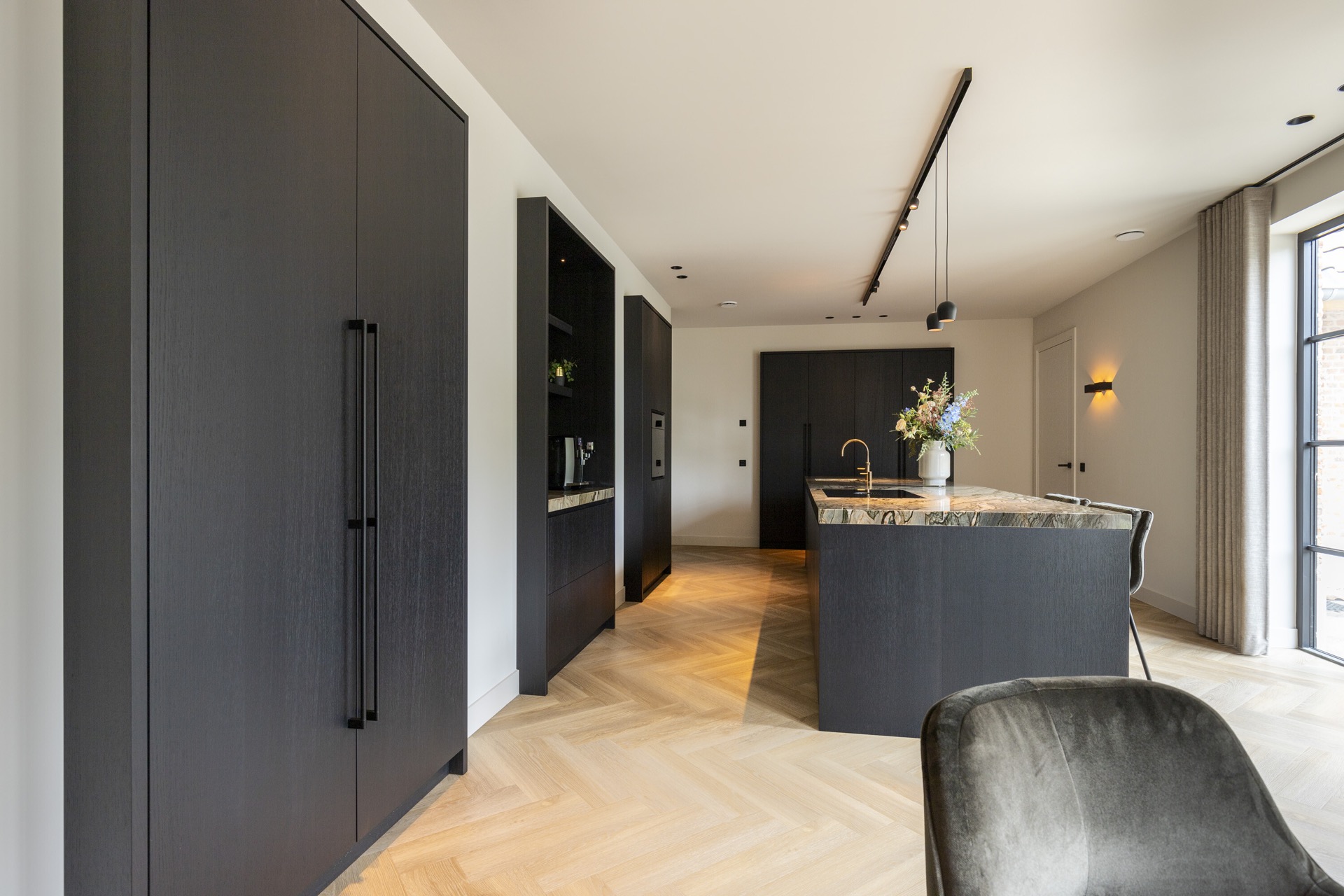
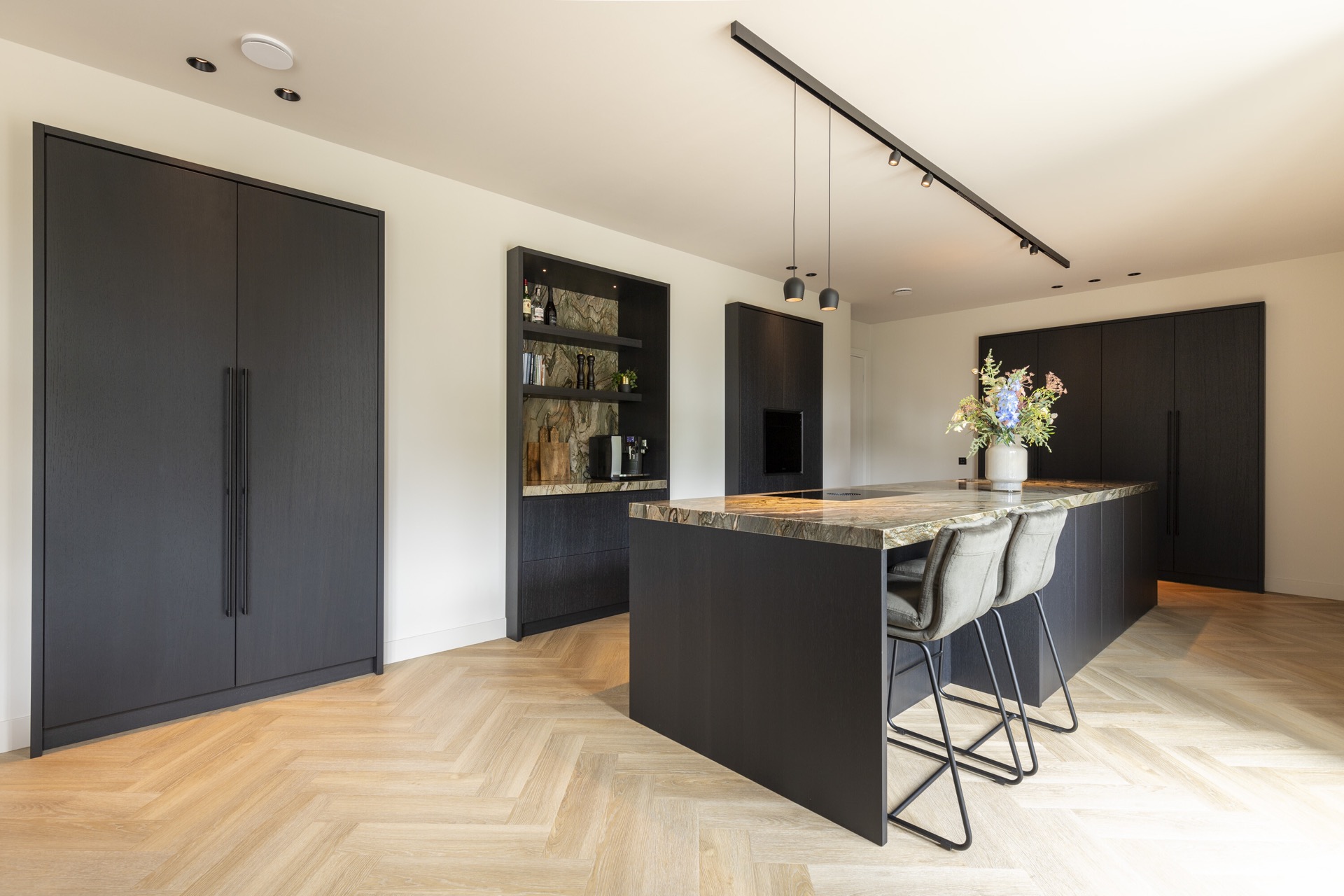
The dark veneer kitchen with island countertop is immediately visible in the way the project is framed. Dark veneer fronts set the tone straight away, with the grain of the Smoke veneer reading softly across the tall cabinets and the island edge. In the middle of the room, a large kitchen island anchors the layout with a natural stone countertop that draws the eye before anything else. The stone continues toward the coffee corner, so the same material line moves through the room instead of stopping at one work zone. Overhead, rail lighting and pendants mark the island as the place where cooking, serving, and sitting all meet.
dark veneer kitchen with island countertop as the architectural starting point
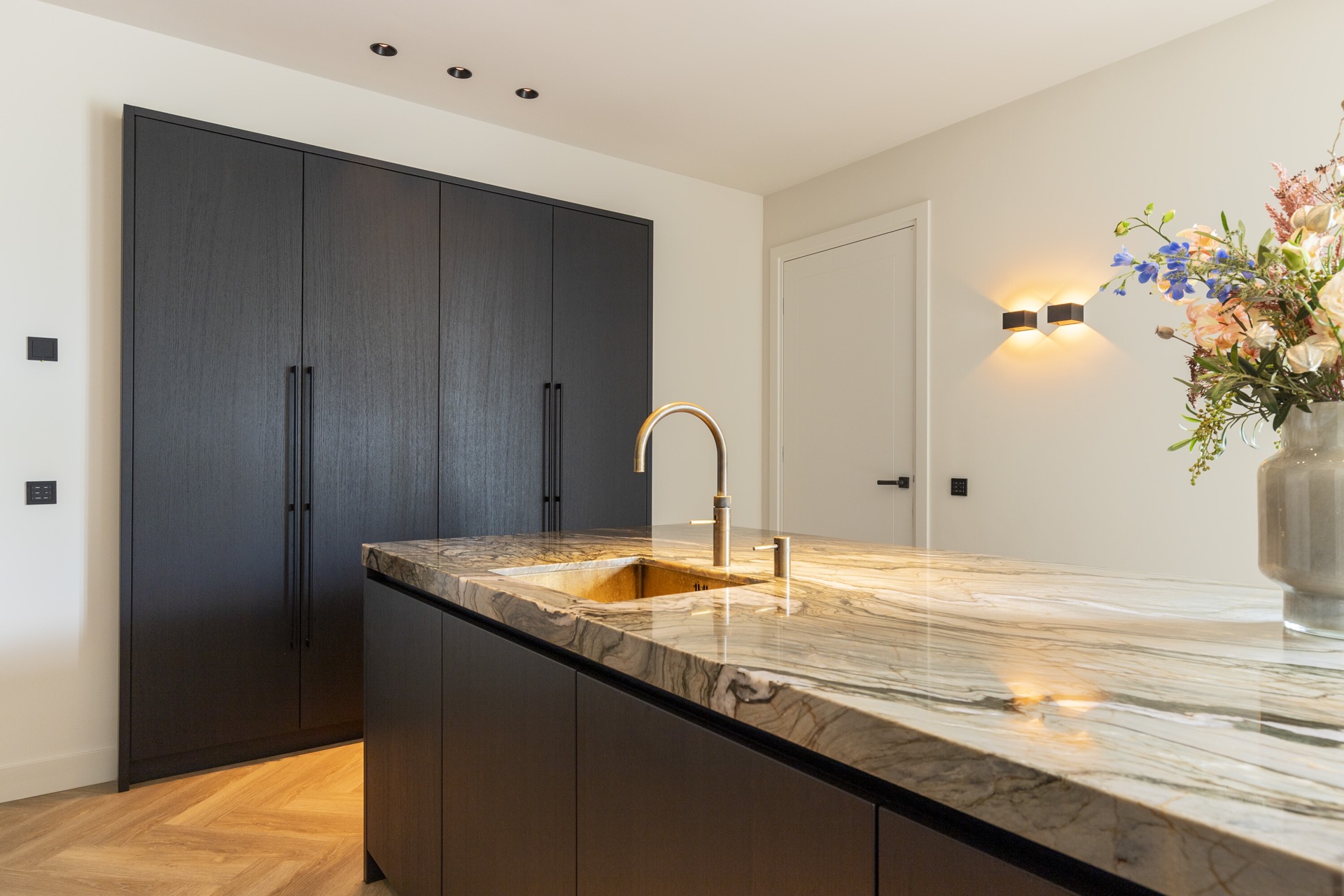
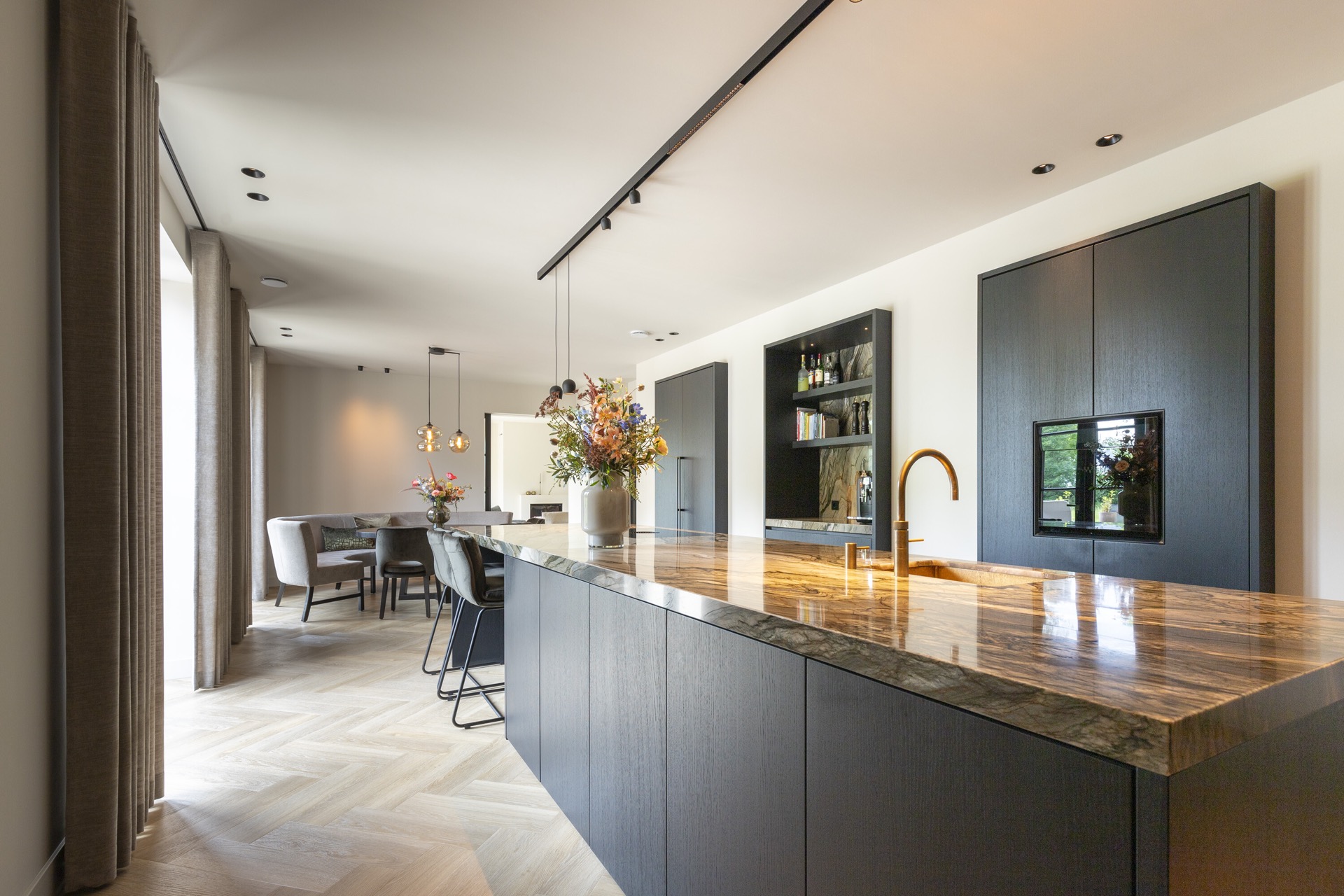
The island is not treated as a separate object. It reaches across the open kitchen and works as a divider, with a seating side that faces the living area. From that angle, the stone top reads as a broad horizontal plane, while the dark cabinetry behind it keeps the room grounded. The integrated sink detail sits inside the countertop, leaving the surface visually calm. Around it, the kitchen keeps its lines strict and the material shift does the talking.
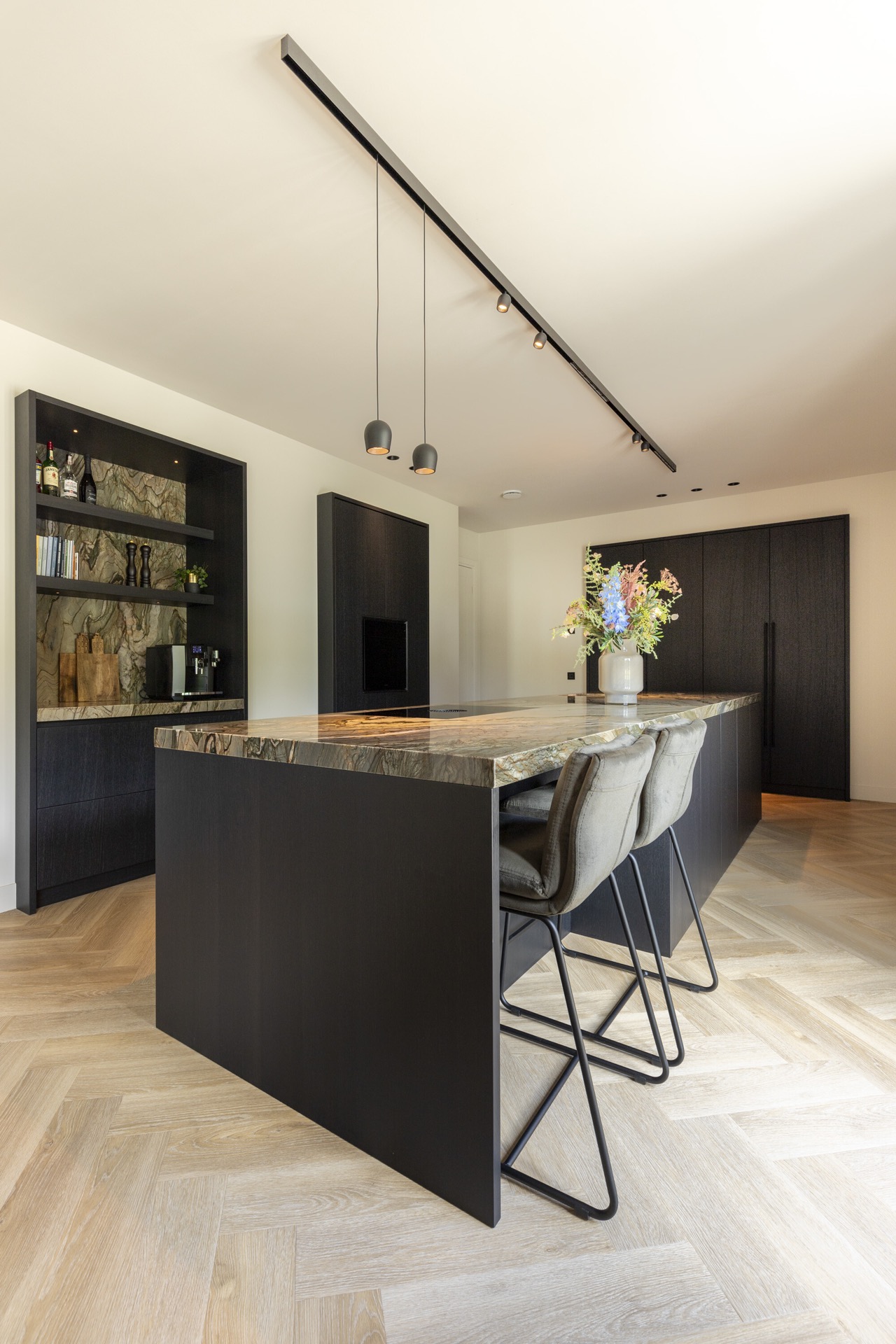
Seen from deeper in the room, the island gives the layout its scale. The bar-side seating is close enough for a quick coffee or a longer pause, and the round dining table nearby extends that social setting without competing with it. The dark veneer kitchen with island countertop keeps the focus on a few clear elements: the stone, the cabinet fronts, and the light above. Nothing needs to be pushed forward. The proportions already do the work.
Smoke veneer against bookmatched stone
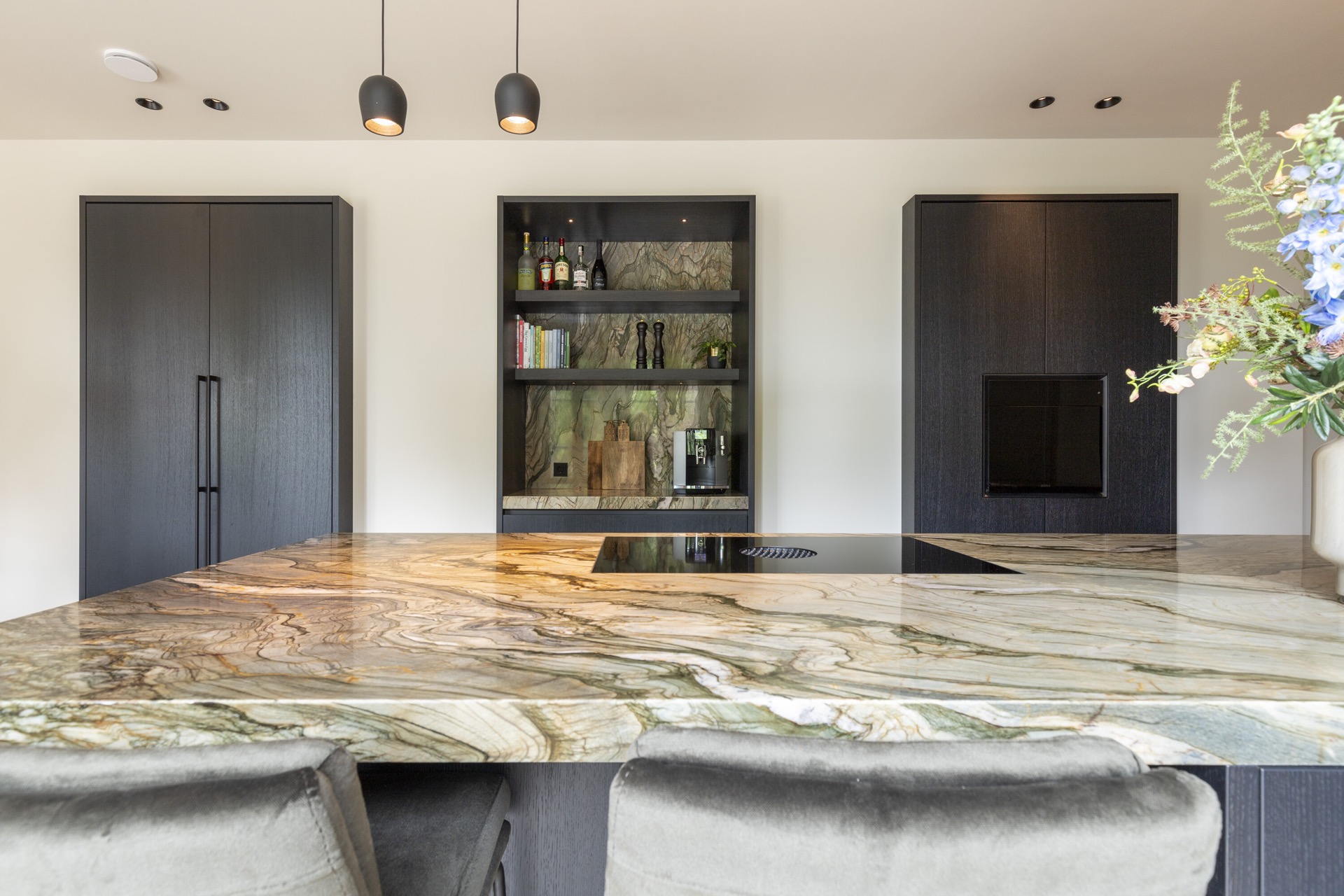
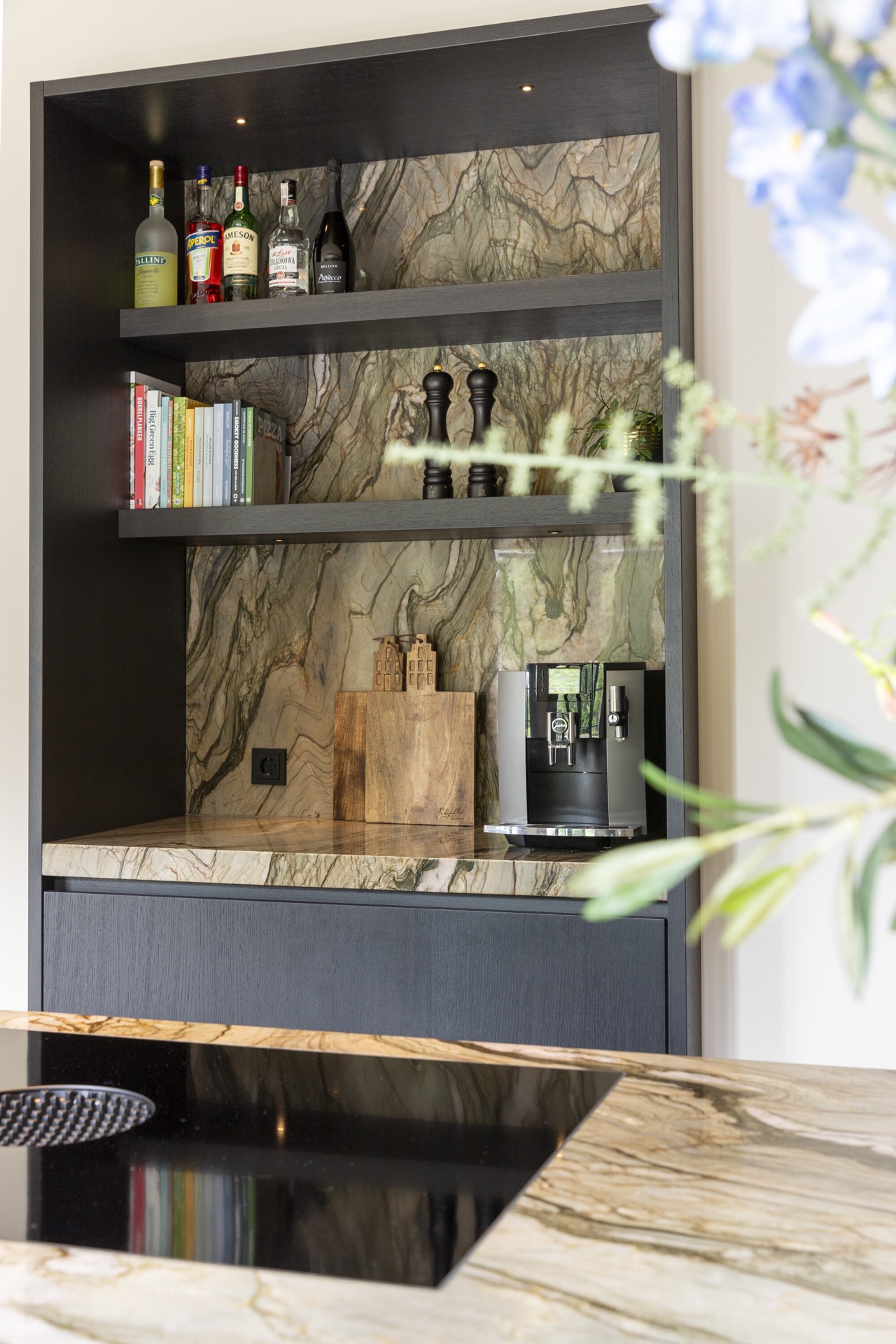
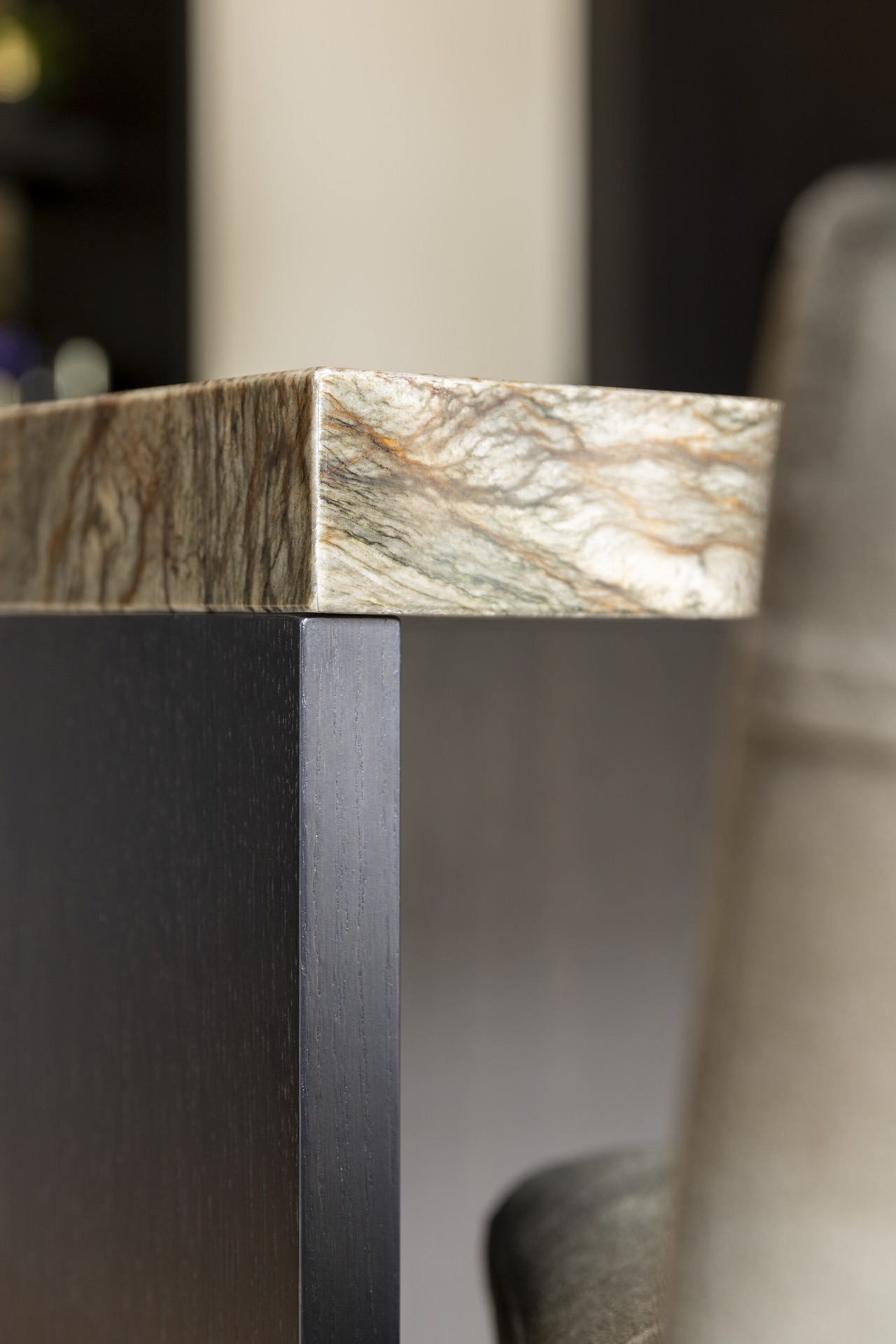
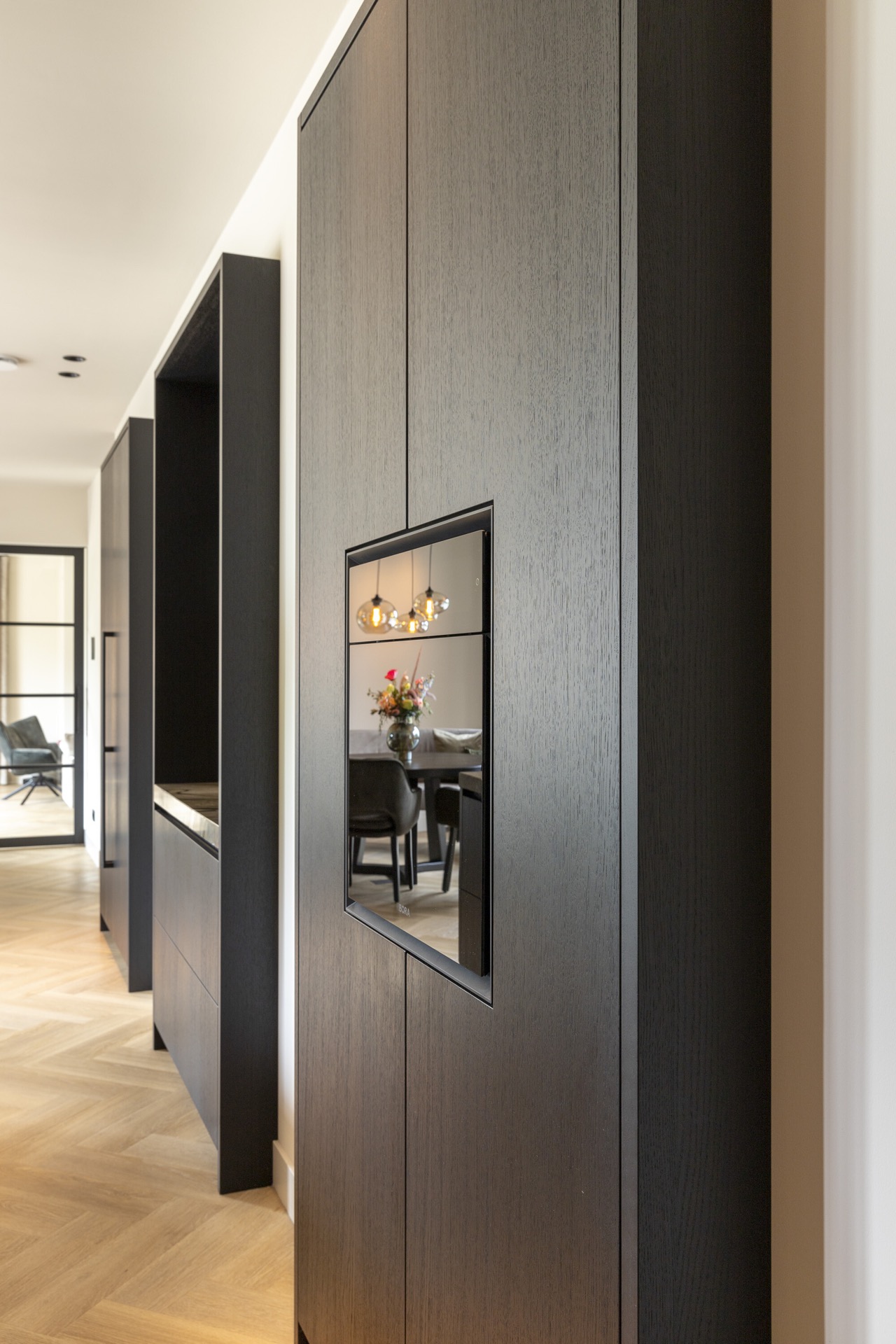
The custom kitchen fronts are finished in Smoke veneer, which gives the tall cabinets and lower runs a restrained, tactile surface. Against that darker wood tone, the natural stone countertop reads with more contrast, especially where the bookmatch look opens the veining across the island. That effect is repeated near the coffee corner, where the stone extends into a niche and keeps the material language consistent across the kitchen. It is a small move, but it changes how the room is read.
Instead of breaking the composition into isolated zones, the stone ties the work areas together. The island top, the coffee corner natural stone, and the visible wall detail all belong to the same sequence. In the images, this is where the project becomes most legible: a dark shell of cabinetry, a strong stone surface, and a measured transition from preparation to serving. The result is not busy. It simply holds several uses within one visual rhythm.
Light placed above the working surface
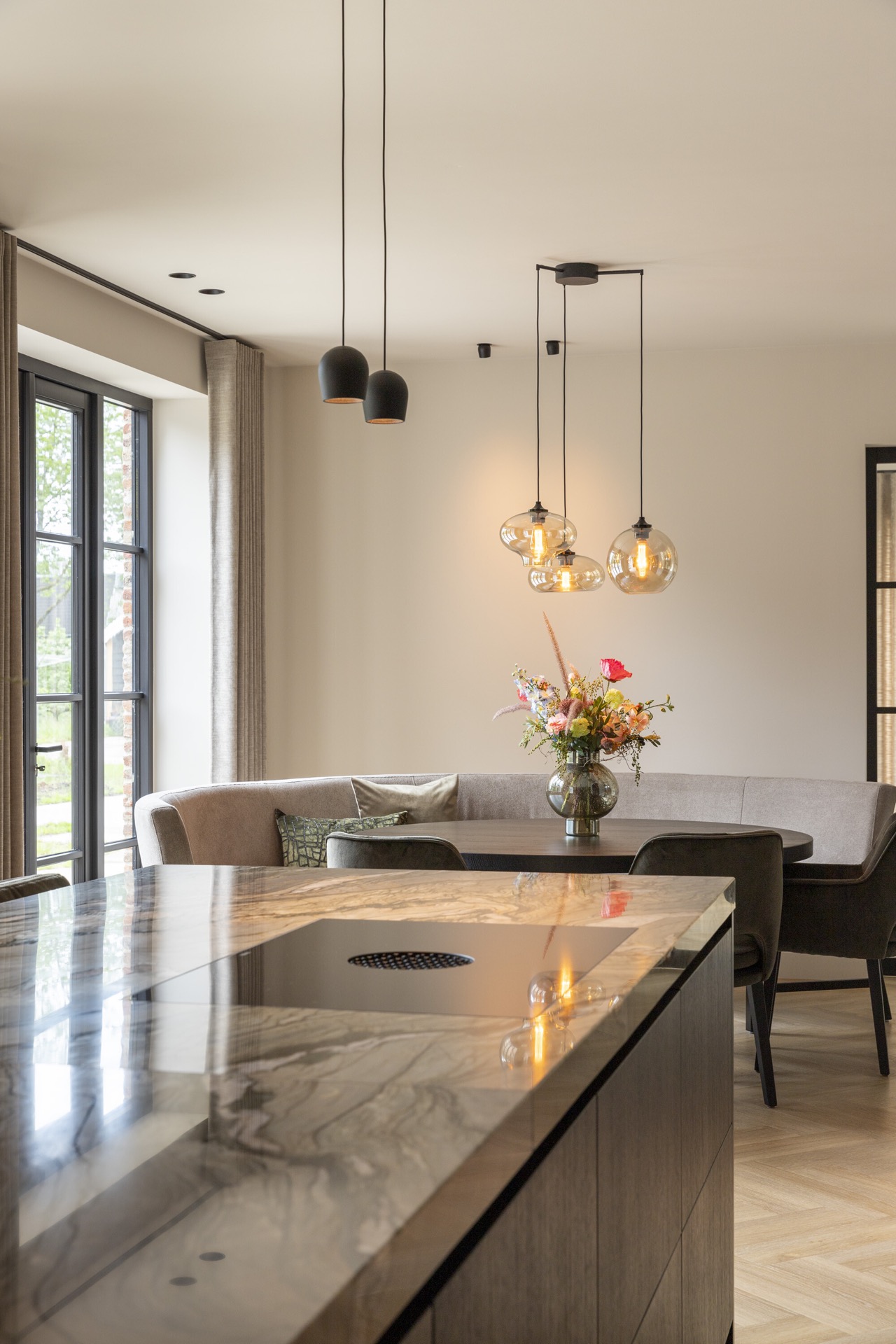
Rail lighting over the island and pendant fixtures above the eating area keep the ceiling active without crowding it. The fittings are slim enough to leave the stone and veneer in view, but they still define the zones below. On the island, that light lands on the countertop, making the veining and the sink detail easier to read. Toward the table, the pendants soften the move from kitchen task to seated moment. The lighting does not decorate the room from the side; it tracks the main route through it. That makes the dark veneer kitchen with island countertop part of the architectural character rather than a loose finish.
Details that stay visible in daily use
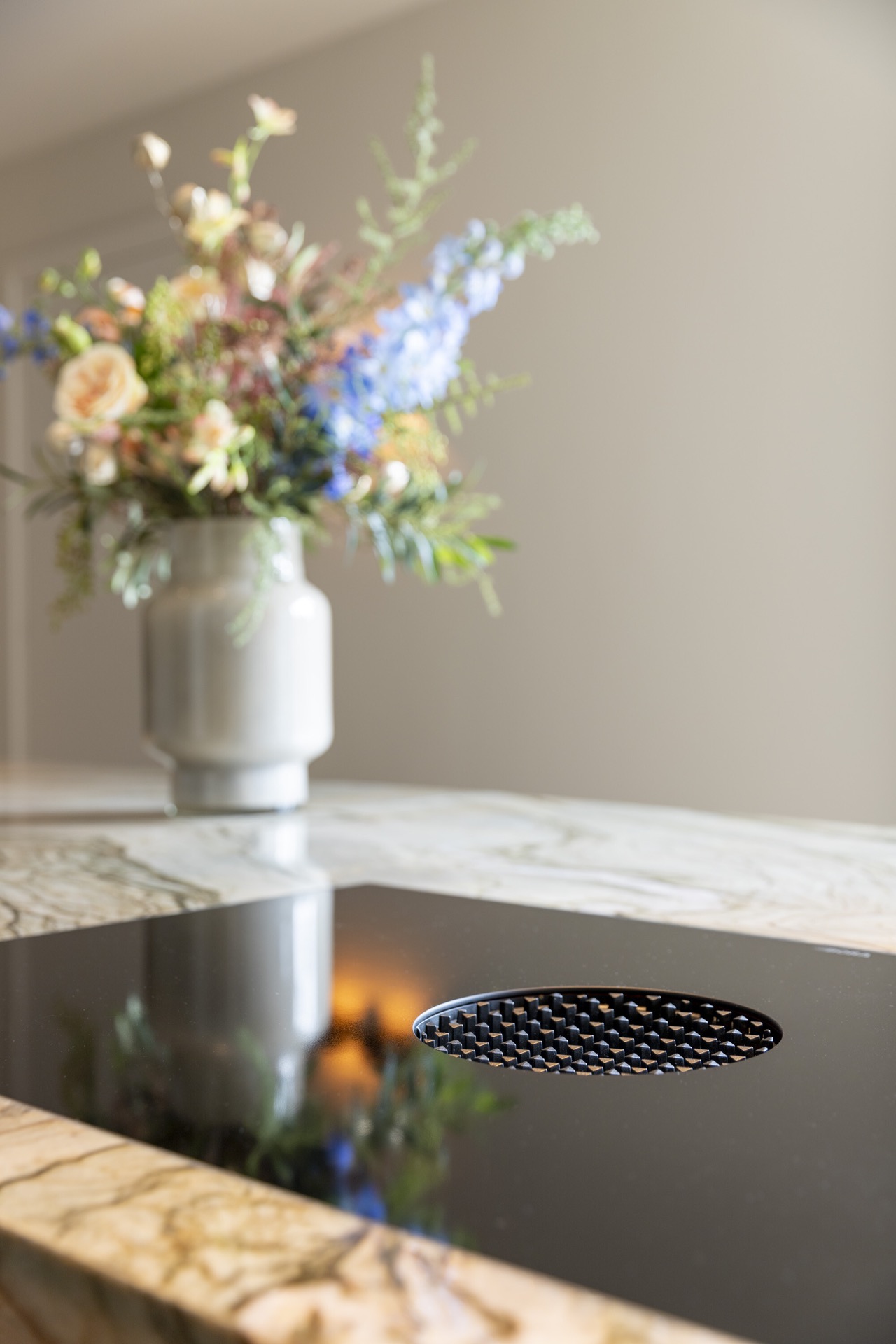
There is a clear emphasis on surfaces that have to work up close. The integrated sink countertop detail keeps the wash area part of the stone plane, and the edge transitions remain tight enough to preserve the island’s long lines. In the background, the dark custom kitchen fronts continue as a steady frame around the work zones. Bora and Miele are mentioned in the source text, but the page’s visual story is carried more by the material contrast than by the appliances themselves. That makes the kitchen read as a composed interior rather than a display of equipment.
The coffee corner natural stone returns in the open niche, where the stone backing pulls the eye away from the main island and then sends it back again. This is one of the quieter parts of the room, yet it helps explain the whole layout. By repeating the stone in a second position, the kitchen avoids a hard stop at the island edge. The material simply continues, and that continuity gives the room a measured, deliberate pace.
How the kitchen meets the living area
From the living side, the island reads like a boundary and a table at once. The seating edge faces outward, while the work side remains hidden enough to keep the room visually tidy. Curtains, a wood floor, and pale walls form the broader setting, but the kitchen’s darker mass gives the space its weight. The contrast is strongest where the island stands between preparation, dining, and the seated area. That is also why the dark veneer kitchen with island countertop feels so settled within the open plan.
The round dining table sits close enough to the island to support the same social use, but its shape loosens the geometry. It interrupts the straight cabinet lines and gives the room a softer landing point. In the photos, the table and the island work as a pair: one linear, one circular. Between them, the stone top, the dark veneer, and the overhead lights create a clear sequence that guides the eye through the space without forcing attention onto any one object for too long.
What the close-ups make clear
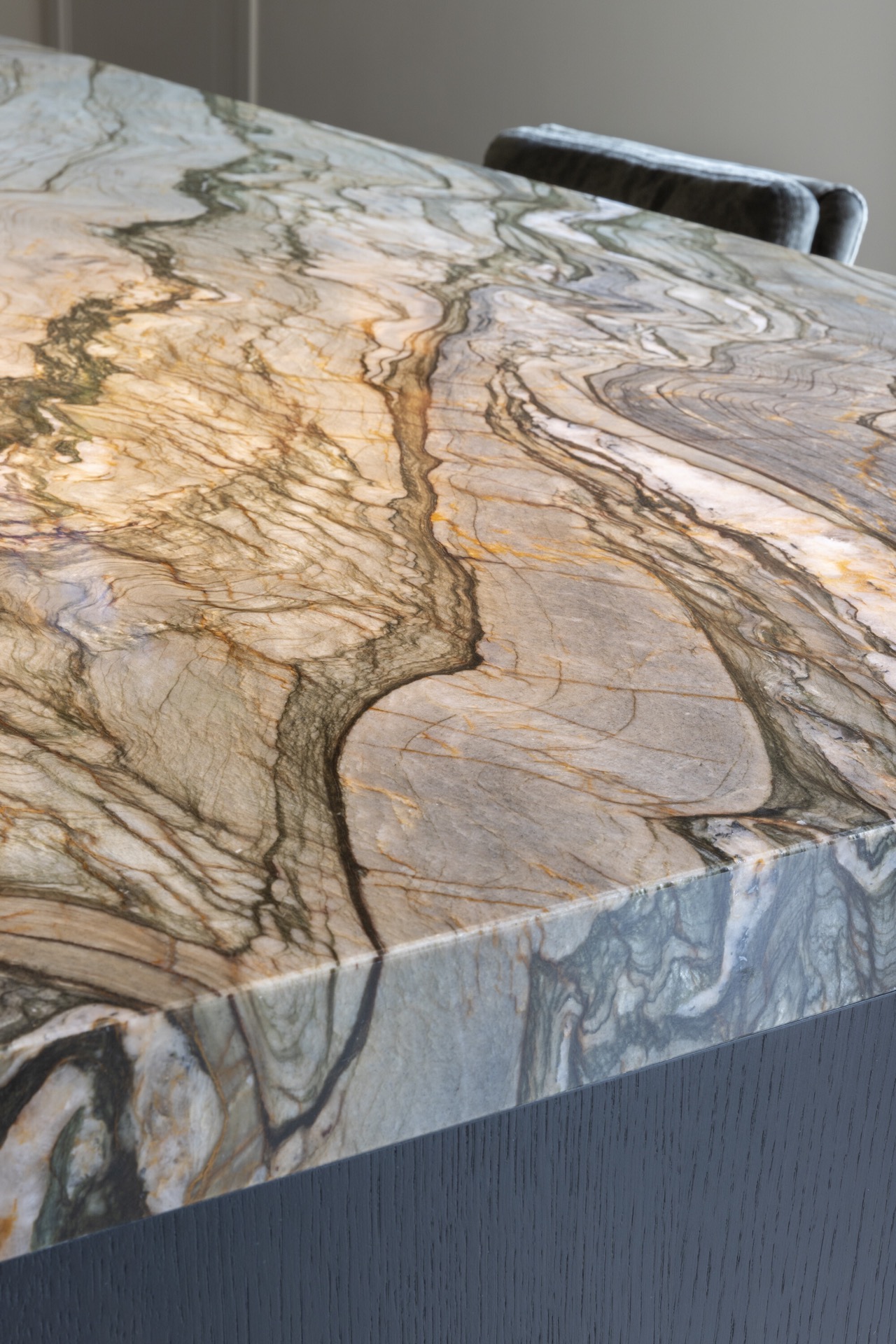
The close views bring the material choices into focus. The stone shows movement in its veining, with warm beige and greenish notes visible across the surface. At the corner where the countertop meets the dark veneer, the join feels precise and measured. Another image isolates the tap and sink zone, where the round spout sits cleanly against the stone. These details matter because they show how the island is finished at hand level, not just how it reads from across the room.
Looked at as a series, the project depends on a few repeated decisions: dark veneer, natural stone, and light positioned over the island and eating zone. That repetition is what holds the room together. The stone appears in the island, then again in the coffee corner; the dark cabinetry frames both; the lighting marks the working and sitting areas. The kitchen does not rely on excess to make an impression. Its strength lies in how each part answers the next, from the first cabinet face to the last stone edge. That makes the dark veneer kitchen with island countertop part of the architectural character rather than a loose finish.
Want to see more of Rhijnart Keukens? View the page of Rhijnart Keukens for even more great projects and company information.


.png)
NEW 2026 Jubileum Edition The Best Interior Designers Benelux
Order Now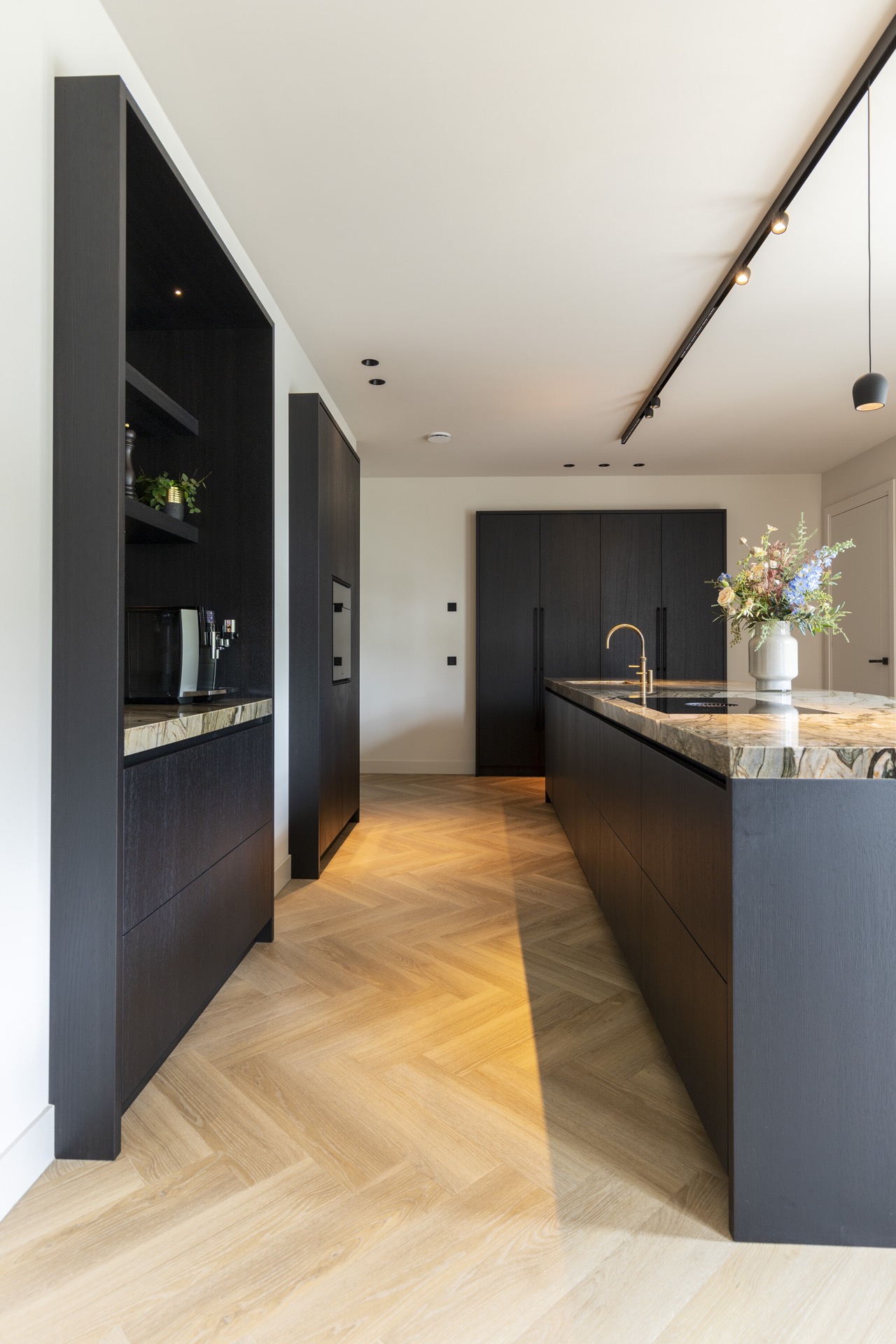
NEW 2026 Jubileum Edition The Best Interior Designers Benelux
Order Now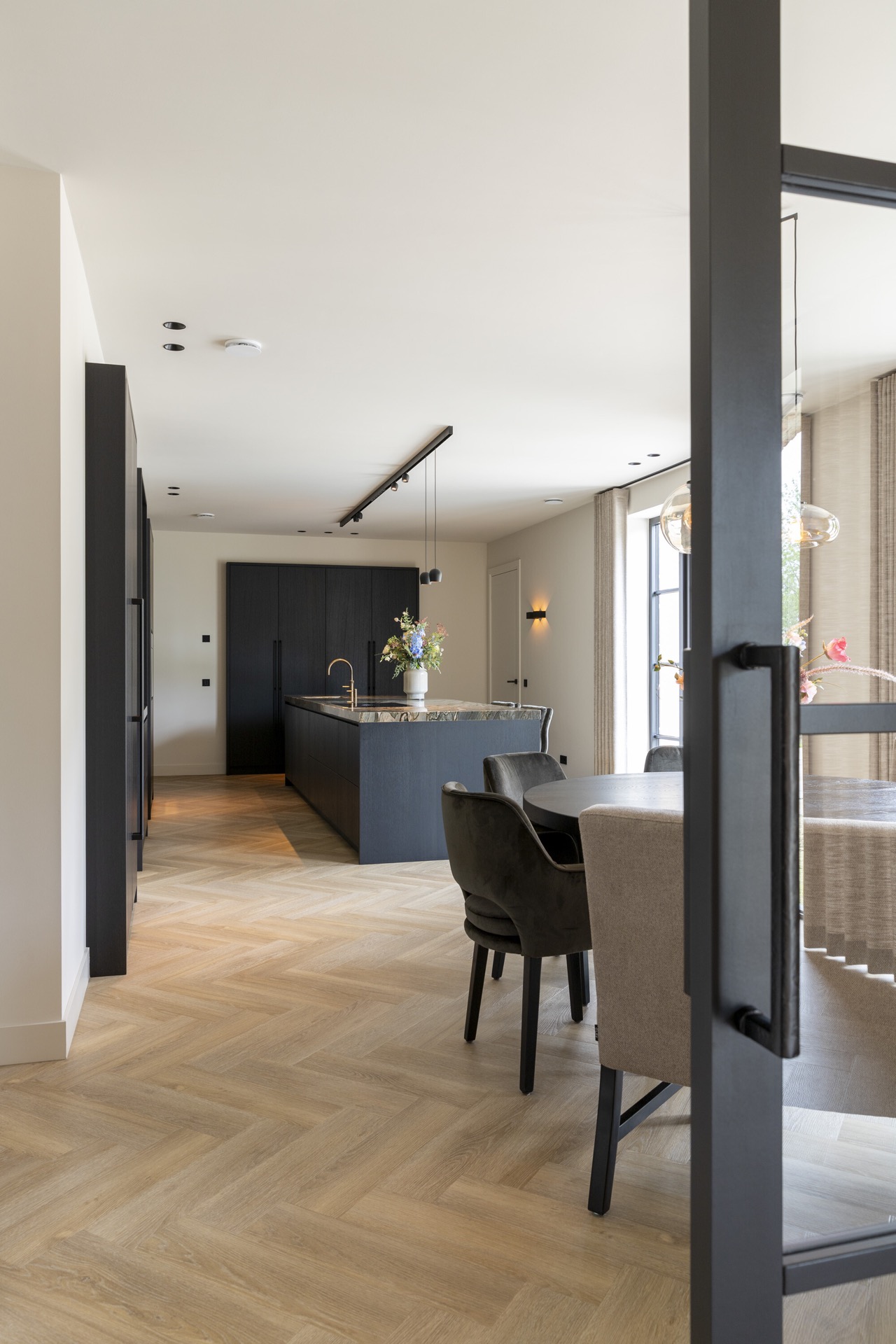
NEW 2026 Jubileum Edition The Best Interior Designers Benelux
Order Now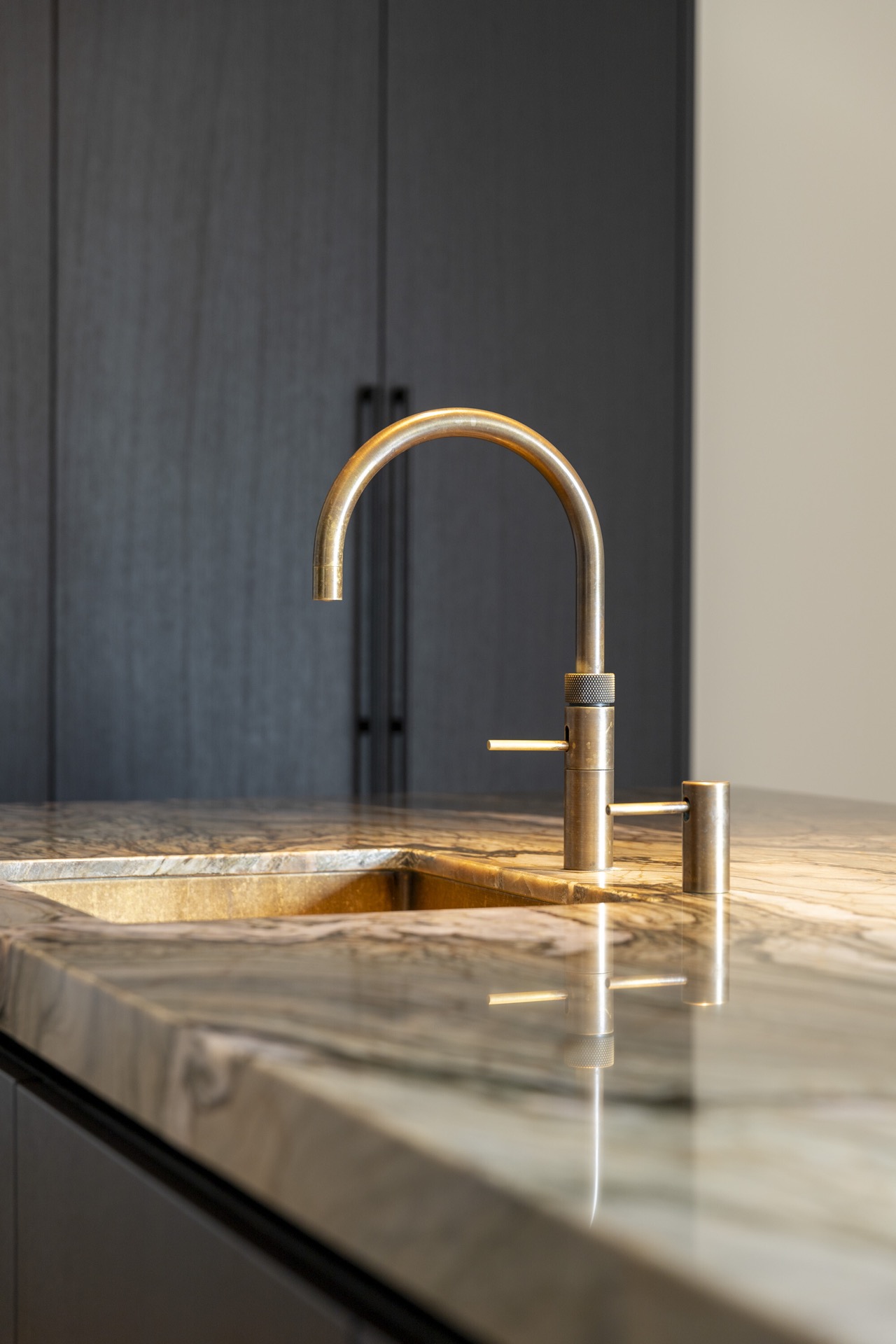
NEW 2026 Jubileum Edition The Best Interior Designers Benelux
Order Now