








Highwater skimmer pool with counter-current swim and polycarbonate cover
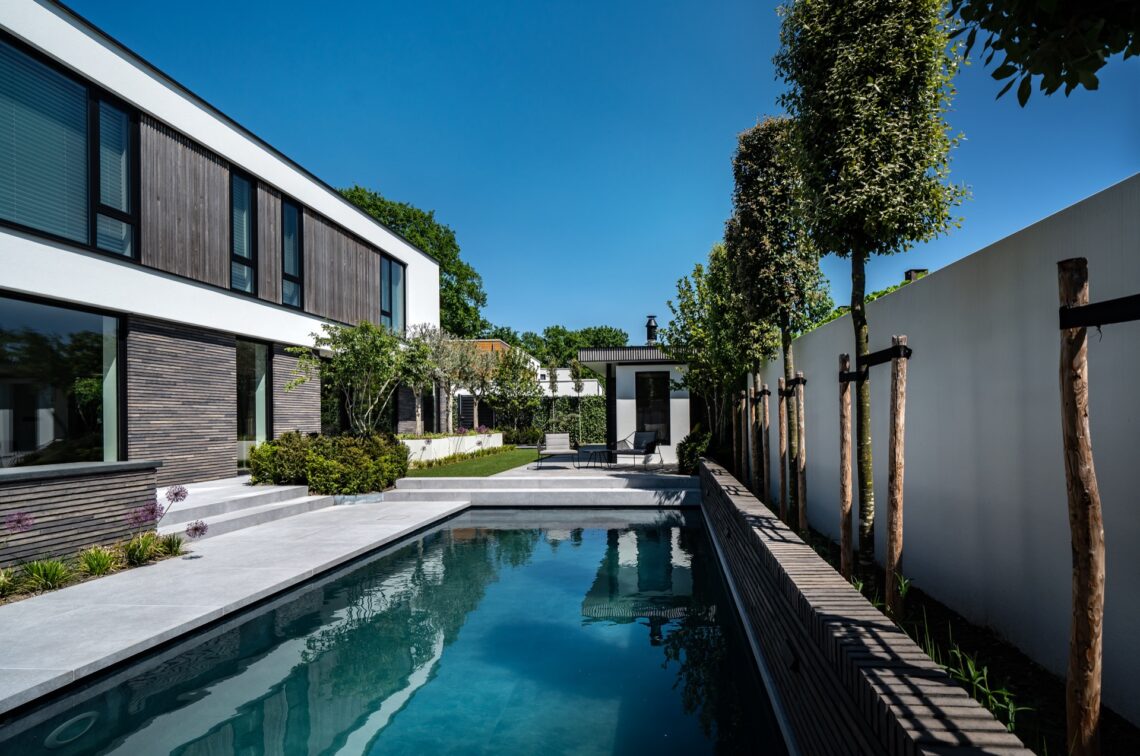
A rectangular highwater skimmer pool sits close to the house, its waterline drawn tight against a light grey edge and the dark frames of the glazed terrace behind it. The pool reads as a clear geometric cut in the garden: blue water, straight coping, and a long side where the surface meets the wall with little visual interruption. From the covered terrace, the view runs through the glass toward the water, so the pool is seen both as a place for swimming and as a measured part of the architecture around it.
highwater skimmer pool as the architectural starting point
At the center of the project is a swim machine for pool use that creates counter-current swimming. The unit allows the pool to support longer training sessions without needing a long basin, which is exactly why this type of installation works in a private garden. The movement of the water is not hidden here; one of the detail views shows the wall inlet and grille, a small but telling feature that makes the technical side visible at the edge of the pool. In the broader garden view, the effect is calmer: a straight run of water held between stone, glass, and planting.
The pool’s proportions are easy to read in the images. A rectangular basin, a light grey rim, and a clean line of paving define the water zone without clutter. The surrounding terrace moves around the pool in broad slabs, and the planting sits back from the edge instead of pressing in on it. That leaves the pool surface open to reflections from the sky and the glass walls nearby. It is a modern backyard pool, but the emphasis is on clarity of use rather than display. You can see where the swimmer would move, where the water would turn, and where the eye is meant to rest.
A polycarbonate pool cover in the final layer
The finishing touch is a polycarbonate pool cover in a dark graphite tone. In the images, that darker line matters because it closes the basin visually when the pool is covered and sharpens the contrast with the pale coping around it. The cover is part of the project’s technical side, but it also shapes the way the pool sits in the garden. Instead of a loose assortment of parts, the edge reads as a deliberate sequence: water, rim, cover, terrace, and then glass. That order is what gives the project its visual discipline.
Seen from the covered terrace, the pool cover belongs to the same quiet language as the rest of the outdoor space. Black framing, glass panels, and recessed ceiling lights set a measured backdrop to the water. The terrace is not treated as a separate room with a different mood; it is a vantage point. Through the large openings, the pool remains visible even when the terrace is in use, and that connection between sheltered space and open water is one of the clearest features in the photo set. The covered terrace glass wall makes that relationship legible.
Detail work at the waterline
Several images focus on the pool edge itself, and those close views are important. The waterline sits neatly against the wall, where the coping, tile frame, and inlet details create a thin band of material around the basin. The wall opening with its grille is small, but it anchors the technical logic of the project. It tells you this is not simply a decorative pool set into a garden; it is a working installation with circulation, return points, and a defined swimming line. The detail photographs keep that from becoming abstract.
In another frame, the blue surface catches moving reflections, while the light grey border stays steady around it. That contrast between motion and stillness is repeated throughout the project. The swimming zone is active by nature, yet the setting around it is restrained: masonry, glass, and carefully kept planting. Even the overhanging terrace roof contributes to that reading, because it gives the pool a clear horizontal line above and a protected viewing point beside it. The result is a backyard composition that feels structured without becoming rigid. That makes the highwater skimmer pool part of the architectural character rather than a loose finish.
From design to maintenance, one continuous line
The project was handled from design through execution and then continued with maintenance and monitoring after completion. That sequence matters because the technical parts of a pool do not end when the last slab is set. The swim system, the cover, and the water edge all need to work together once the pool is in daily use. Here, the project record shows that involvement did not stop at delivery. It extended into the period after installation, which is visible in the confidence of the finished details and in the attention given to the practical components around the basin.
What stands out across the images is the consistency of the physical language: straight edges, transparent walls, and a pool form that stays close to the house. The garden is not crowded with extra gestures. Instead, the water is framed by a terrace, a sheltered sitting area, and restrained planting. That allows the highwater skimmer pool to remain the main element in the composition. The reflections on the surface, the dark window frames, and the precise coping line are enough to carry the whole scene.
highwater skimmer pool as the architectural starting point
From the wider garden angle, the pool reads as part of a composed outdoor sequence rather than a detached object. Green planting softens the perimeter, but the strongest lines remain architectural: the terrace edge, the glazed opening, the pool rim, and the long rectangle of water itself. The blue surface pulls light into the scene, while the darker cover and window profiles hold the composition down visually. It is a practical layout, but also a careful one in the sense that every visible part has a clear job.
That clarity is especially visible where the pool, terrace, and house meet. The covered outdoor area looks onto the water through large glass panes, so the view is open even when the terrace is sheltered. A person standing inside would still read the pool as part of the daily route through the house and garden. The counter-current swimming setup supports the active use of the basin, while the cover and detailing keep the edge visually ordered when the pool is not in use.
Across the full set of images, the project is best understood as a pool with two strong layers: the swimming function and the finished outer shell. One is technical, built around the swim machine and circulation. The other is visual, shaped by the graphite-toned polycarbonate cover, the light edging, and the glazed backdrop. Together they produce a garden scene that is direct, precise, and easy to read from several points in the house. The pool never disappears into the background, but it also does not shout for attention. It simply holds the center of the garden with clear lines and a steady water surface.
That balance is reinforced by the project’s aftercare. Because the same team remained involved for monitoring and maintenance, the installation is presented as an ongoing piece of equipment rather than a finished object left to itself. In a pool like this, the value lies in exactly that continuity: design, execution, and follow-up all aligned around the same basin, the same cover, and the same swimming line. The result is a pool that can be read from the terrace as easily as from the garden path, with the details doing the quiet work of keeping it legible. That makes the highwater skimmer pool part of the architectural character rather than a loose finish.
Want to see more of Zwedak? View the page of Zwedak for even more great projects and company information.



.png)


