




Family living kitchen with island, arched windows and a long work & sink zone
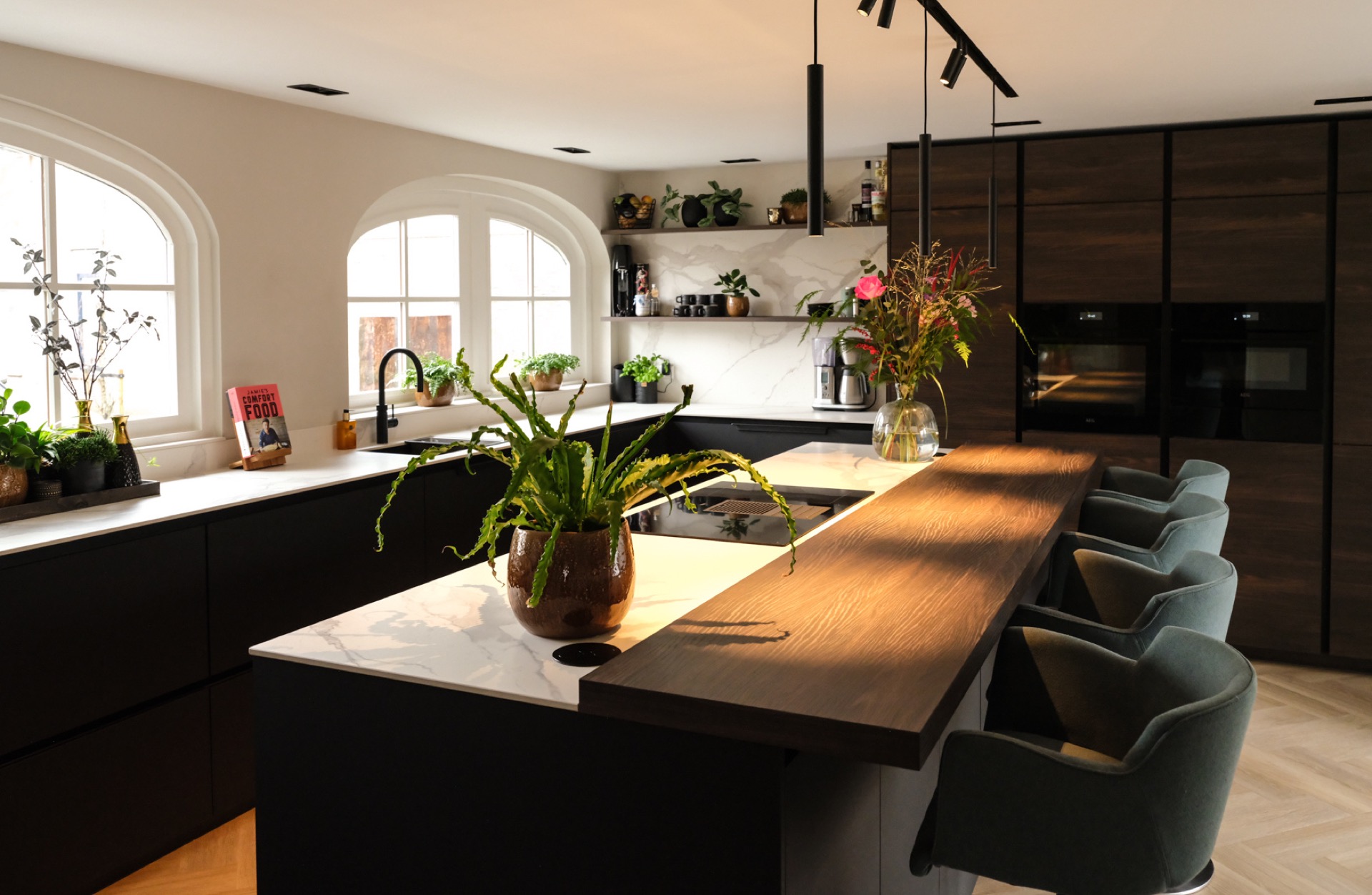
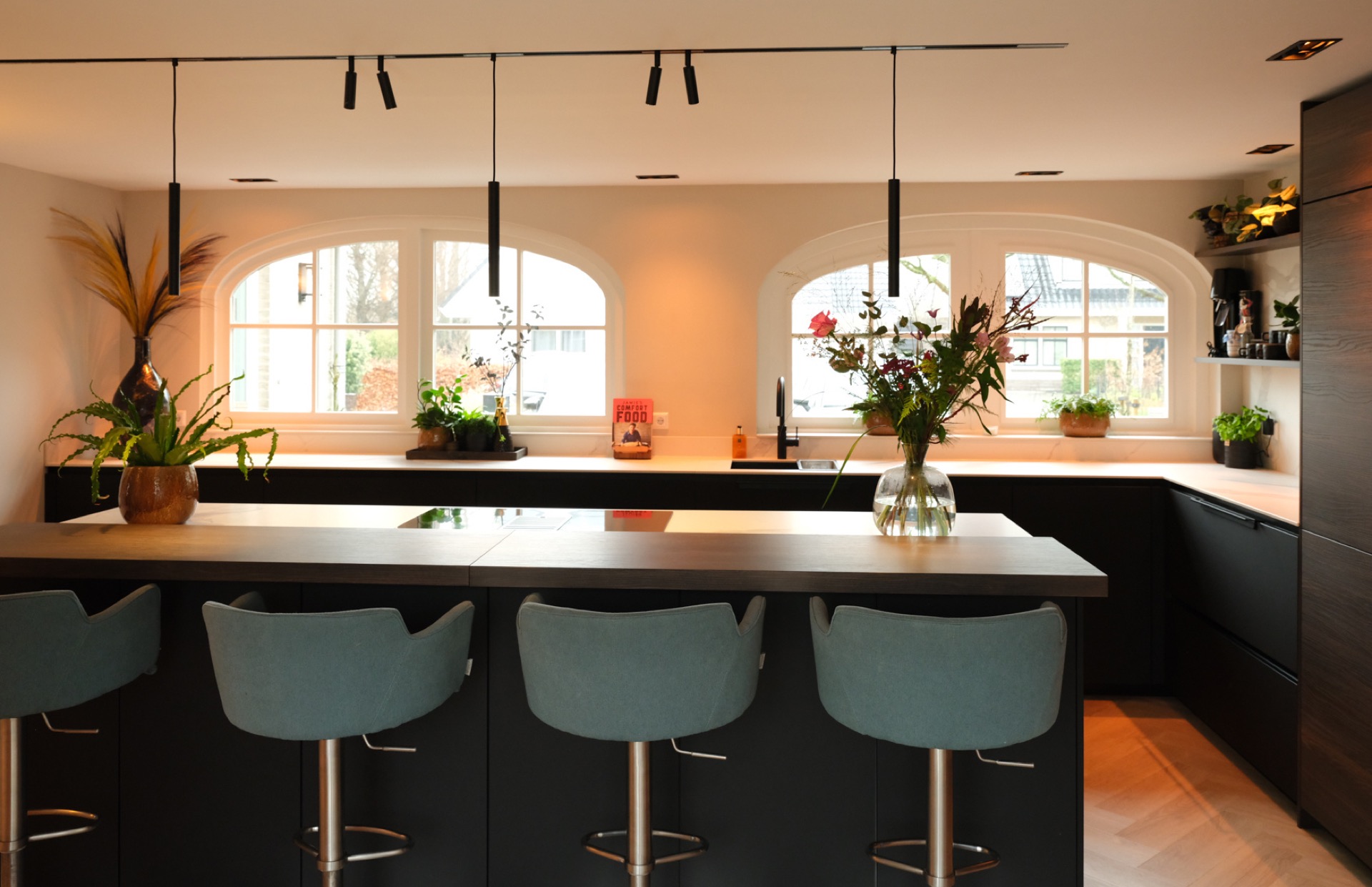
The first thing you notice is the line of arched windows above the work area. Daylight lands across the long sink and prep run, which stretches for about five metres and gives the room its rhythm. This family living kitchen with island was designed as a place to cook, sit, and gather without separating those daily routines. The island stands in the middle of the room like a clear pause point, while the cabinetry and work surfaces keep the surrounding edges busy with practical use.
family living kitchen with island as the architectural starting point
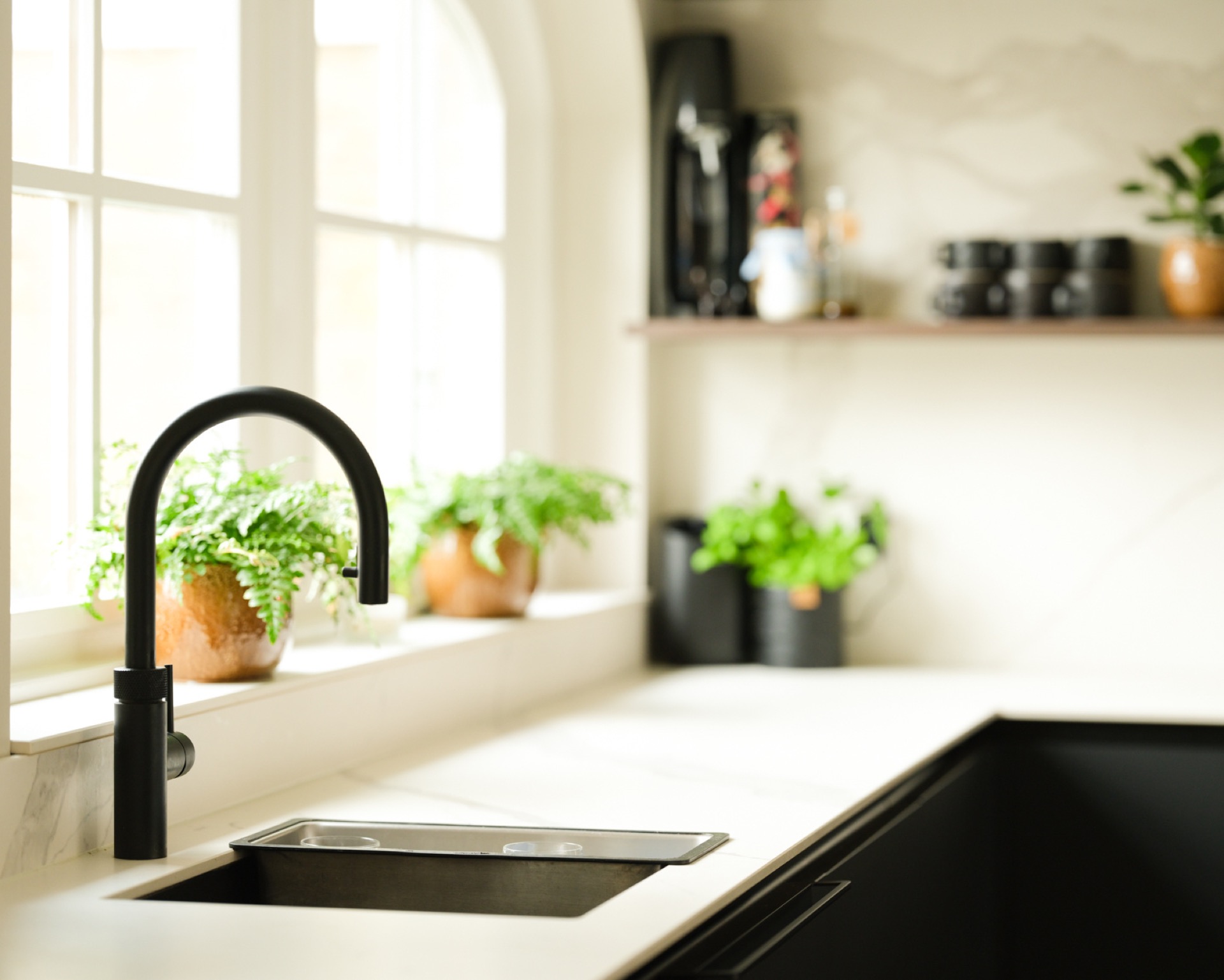
Under the arched windows, the sink area runs in one uninterrupted length. That long work and sink run gives the room space for chopping, washing, and setting things down without crowding the countertop. The arch shape softens the upper line of the room, but the surfaces below stay crisp and direct. A dark kitchen front sits beside warm wood-look cabinetry, so the wall feels composed without becoming flat. The contrast is visible from across the room and helps the working zone read clearly.
Because the windows sit high over the counter, the lower wall can stay focused on function. Taps, sinks, and prep space occupy the full span, and the result is a practical strip that still feels open to the light. The family living kitchen with island gains depth from that arrangement: one side is for work, the center is for gathering, and the view keeps moving between the two. It is a simple layout, but each part has room to breathe.
A kitchen island that anchors daily life
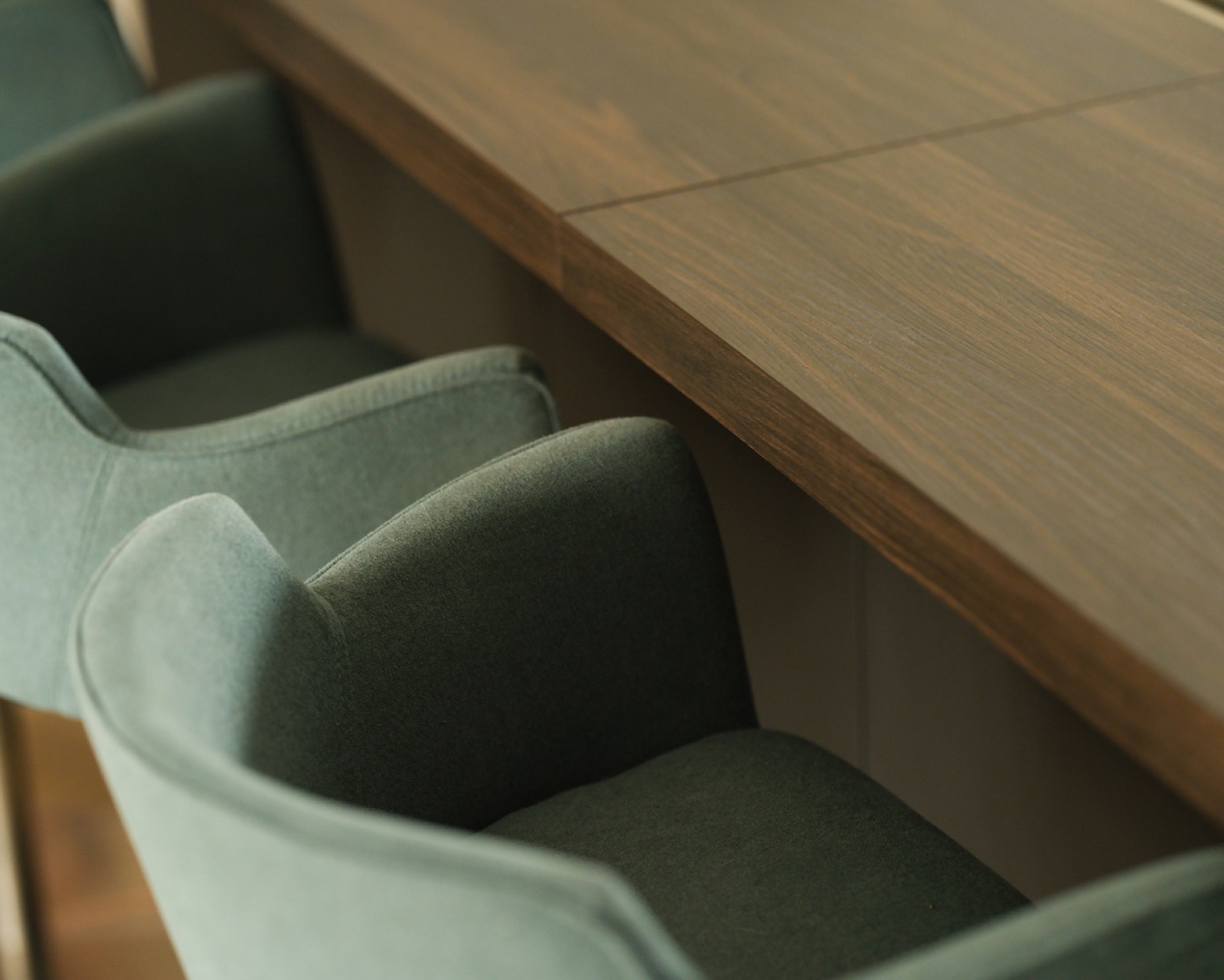
The island forms the visual center of the room. Its dark front gives it a firmer presence, while the warm wood-look bar element eases the shift toward the seating side. Four bar stools line up along that edge, turning the island into a place for breakfast, homework, or a quick meal between activities. The seating is close enough to feel connected to the cooking area, yet set back just enough to keep the working surface clear.
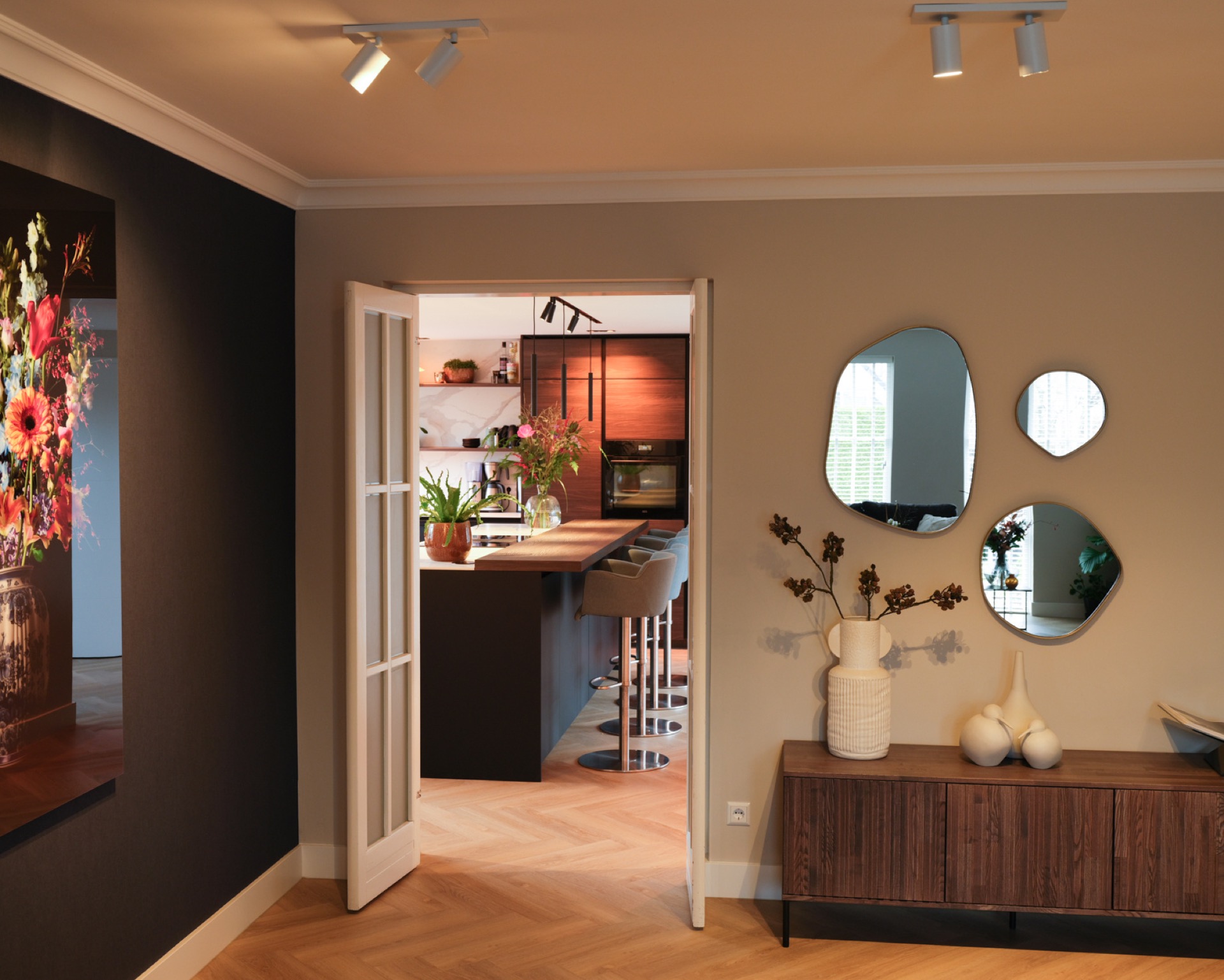
From this angle, the island reads as a meeting point rather than a decorative object. It sits between the long wall run and the open floor, and that position matters. People can gather at the stools while someone else works at the sink or moves toward the coffee corner. In a family living kitchen with island, this kind of arrangement keeps movement easy. The room does not force one use; it allows several at once.
Dark fronts and warm wood-look cabinetry
Material contrast carries the room quietly. The warm wood-look cabinetry softens the darker fronts, which appear in both the wall run and the island details. The notional split between light and dark is not used for decoration alone; it helps define where storage ends and where the social zones begin. The wood tone brings a visible grain effect, while the matte dark surfaces recede and keep the larger pieces from feeling heavy. Together they give the kitchen a measured, grounded look.
That combination also works well against the pale stone-look worktop and the ceramic surfaces. Light reflects differently from each finish, so the kitchen never feels visually static. The island holds its place through the darker face, while the surrounding cabinetry blends into the room with more restraint. In a busy household, those distinctions are useful. You can read where the hands-on work happens and where the seating line begins.
Ceramic backsplash detail that continues behind the shelves
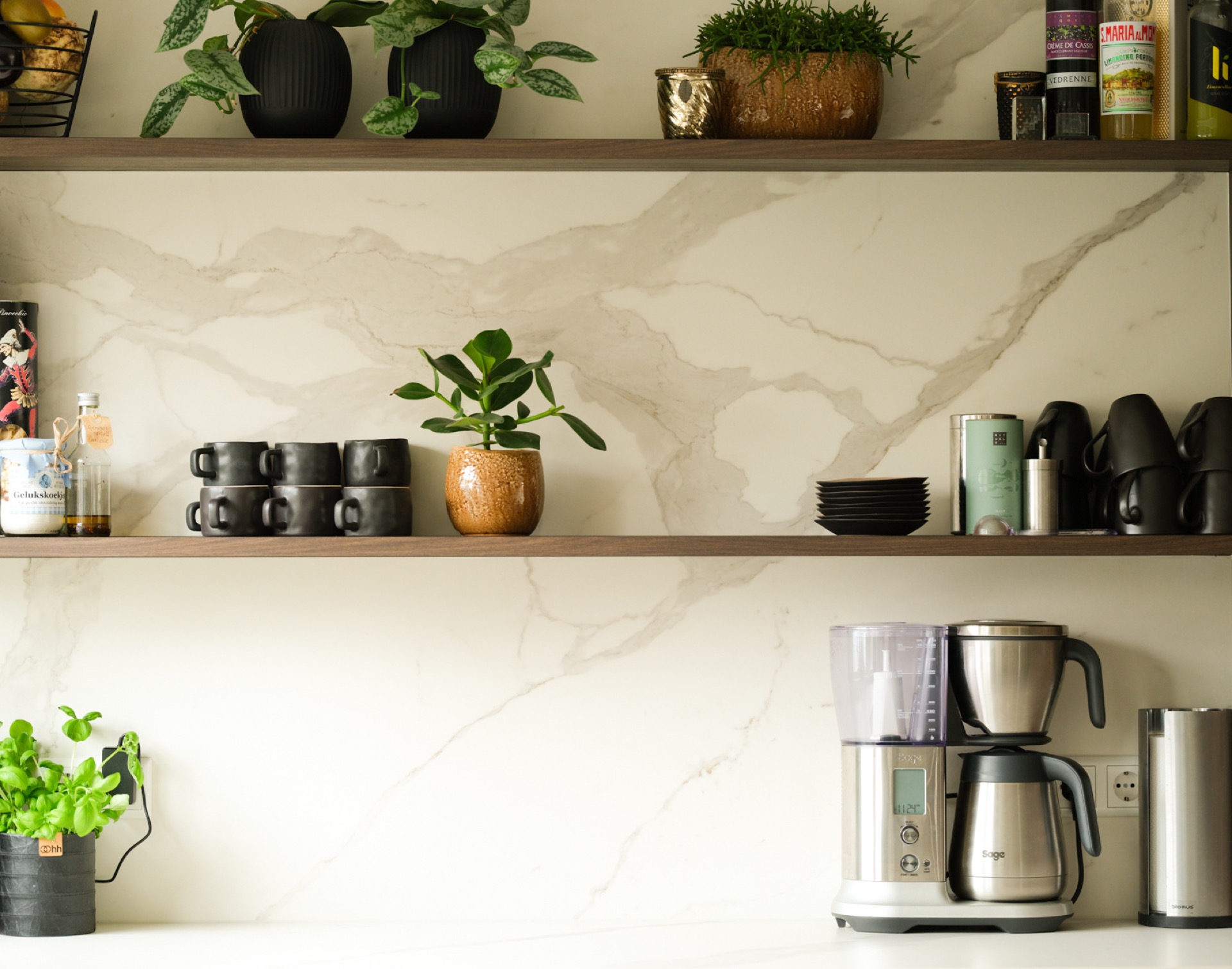
The ceramic backsplash is one of the most convincing details in the room. It carries the same material language as the worktops and continues behind the wall shelves in the coffee corner, so the surface does not break into separate fragments. That uninterrupted run gives the wall more depth, especially where small objects and cups sit in front of it. The shelves remain light in the composition, while the ceramic keeps the background calm and durable in appearance. That makes the family living kitchen with island part of the architectural character rather than a loose finish.
Close up, the surface reads as a light stone or marble-look finish with subtle variation rather than a loud pattern. It frames the black tap, the counter edge, and the shelf line without demanding attention. In a family living kitchen with island, that matters. The background has to stand up to daily use, but it also has to leave space for the rest of the room. Here, the ceramic backsplash does both, and the line behind the shelves makes that especially visible.
A coffee corner with wall shelves
The coffee corner sits to one side of the main work zone and gives the room a slower gesture. Wall shelves keep cups and daily items in view, while the ceramic surface behind them ties the area back to the larger kitchen. It is a small zone, but it changes how the room is used. A kettle, mugs, or a tray can stay in one place, and the counter below remains ready for the next task. The shelves also break up the wall without closing it off.
Because the coffee corner uses the same materials as the rest of the kitchen, it does not feel added on later. The shelves, backsplash, and counter edge sit in the same visual field, so the room keeps moving from one function to another without a hard stop. This is where the family living kitchen with island becomes more than a cooking space. It holds the rituals of the day in a compact zone, with enough structure to keep the surface clear.
Light across the room, from worktop to seating
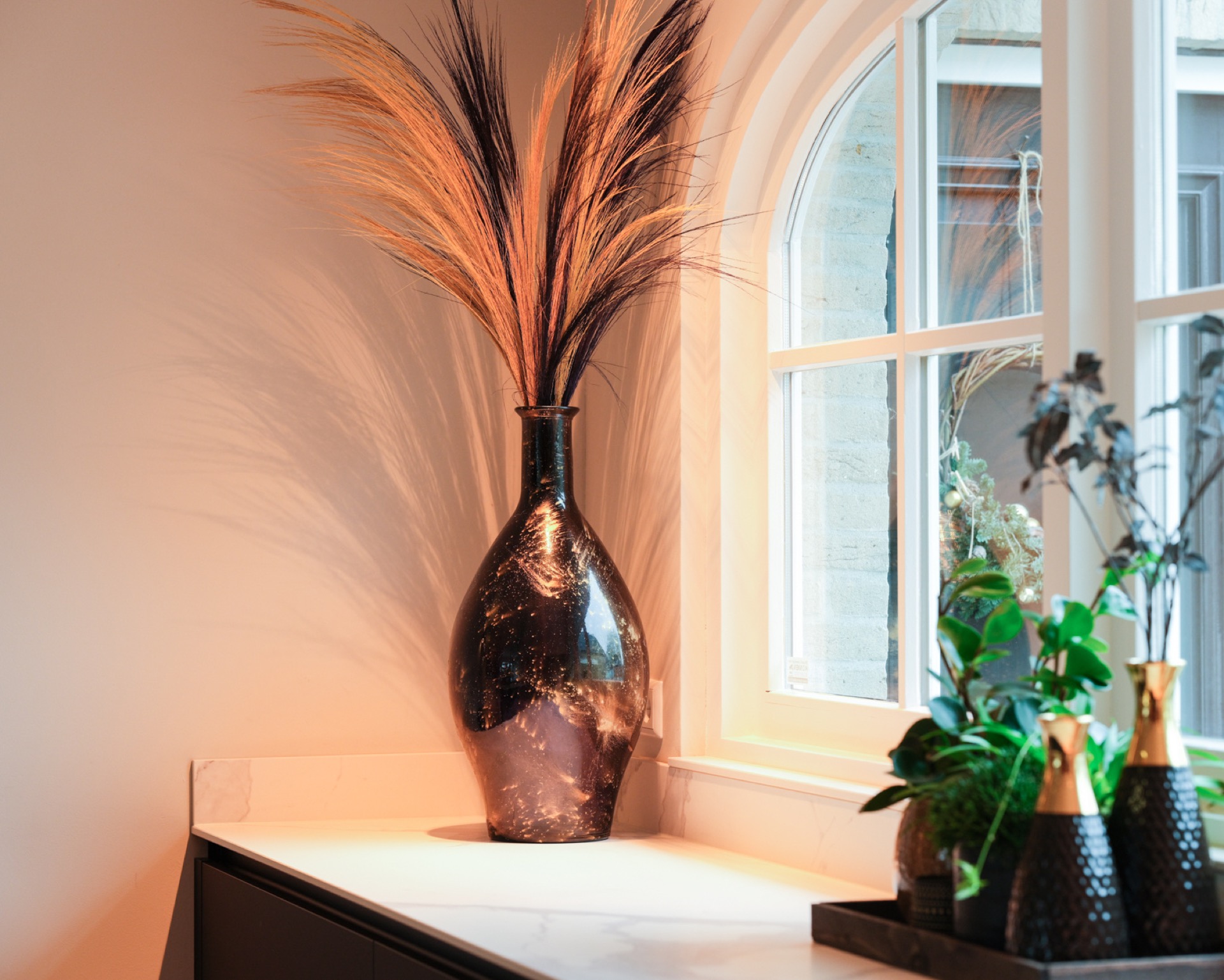
Lighting plays a practical role here, but it also changes how the room is read after daylight falls away. A slim hanging rail with spots runs above the work area, aimed at the long sink and prep zone. That direct light sharpens the surface below and makes the counter easier to use in the evening. Other fittings, including the lighting from Modular and Karizma mentioned in the project, spread the light more broadly so the corners do not disappear into shadow.
The effect is strongest where the island, shelves, and window wall meet. The spots mark the working strip, while the softer ambient light keeps the seating side legible. It means the kitchen can shift from food preparation to a more relaxed evening setting without changing rooms. In a family living kitchen with island, that flexibility is built into the lighting plan itself. The room keeps its edges visible, and the material contrasts remain easy to read.
What gives this kitchen its character is not a single feature but the way the parts line up: arched windows above a long work and sink run, an island set firmly in the middle, a ceramic backsplash that continues behind the shelves, and a coffee corner that occupies its own small niche. The result is a family living kitchen with island that handles movement, seating, and cooking in one clear layout, while the warm wood-look cabinetry and dark fronts keep the composition grounded.
Photography: Hélène de Bruijn That makes the family living kitchen with island part of the architectural character rather than a loose finish.
Want to see more of World of Cooking? View the page of World of Cooking for even more great projects and company information.


.png)