





Invisible ceiling speakers: integrated sound in a contemporary interior
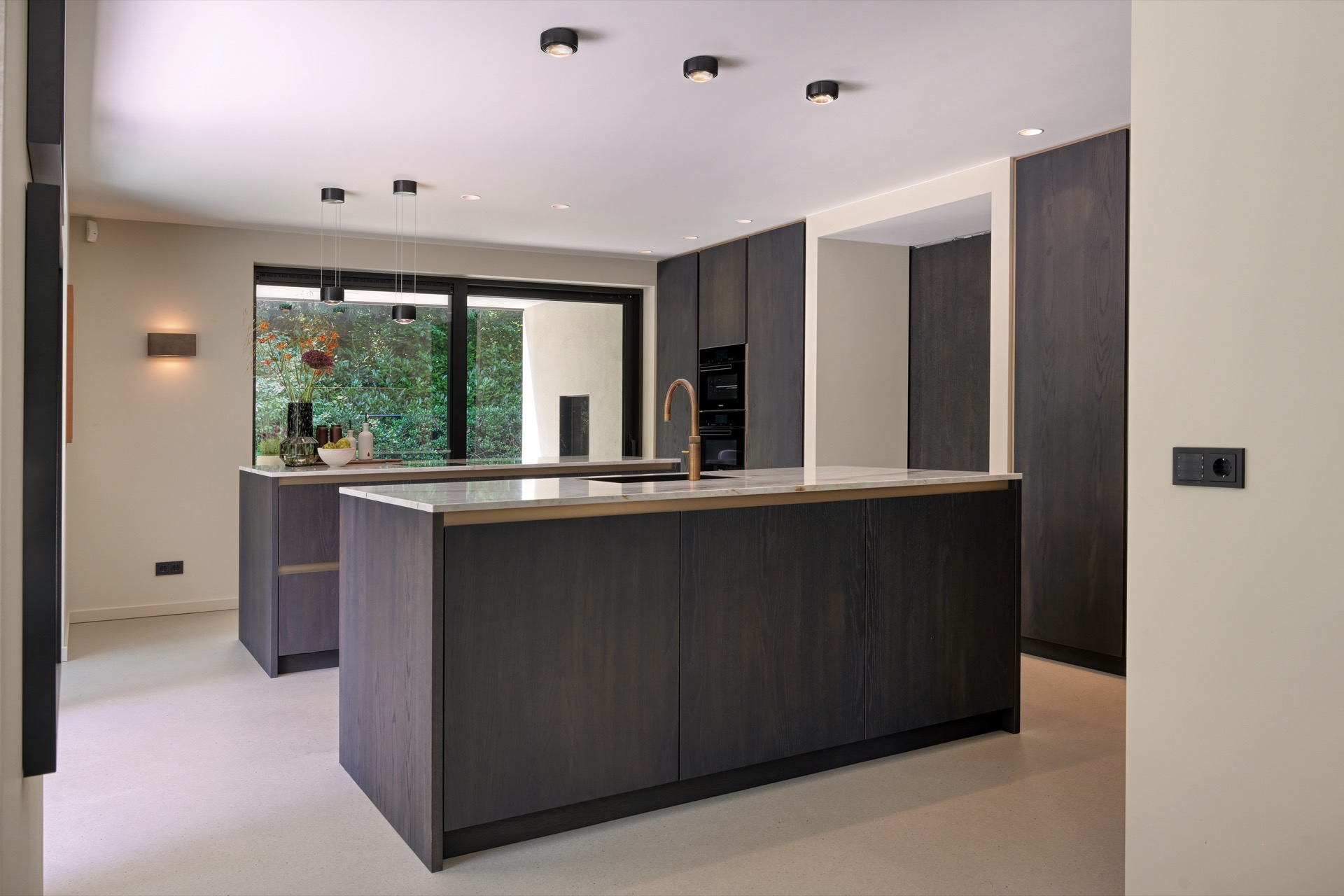
The kitchen opens with a ceiling that reads as one continuous plane, even where the sound is coming from. Invisible ceiling speakers are worked into that surface and finished with acoustic plaster, so the eye stays on the cabinetry, the island line and the light instead of on technical hardware. The result is a design kitchen audio integration that fits the room’s clean geometry rather than interrupting it.
invisible ceiling speakers as the architectural starting point
Dark wood fronts run in long, measured bands beneath a row of ceiling spots above the work zone. That contrast matters: the cabinetry gives the room weight, while the plastered ceiling keeps the upper field quiet. In this setting, the invisible ceiling speakers do not ask for attention. They are part of the overhead surface, finished so that the ceiling stays visually calm and the sound can do the work. For a kitchen, that means music can sit in the room without competing with the lines of the joinery.
Large windows bring in a broad view of greenery, which makes the interior feel even more graphic. The hard edges of the island and the horizontal run of the worktop draw a clear route through the space. Above that route, the acoustic plaster interior softens the ceiling visually and supports the idea that the source should not be seen. It is a practical move, but also a spatial one: the room keeps its clarity while the audio remains fully present.
Acoustic plaster finishing around the ceiling line
The finish around the ceiling is important because it keeps the installation from reading as an add-on. The acoustic plaster interior gives the surface a matte, even texture that works with the recessed lighting and the dark timber below. In the images, the transition between ceiling and wall is crisp rather than decorative. That restraint helps the invisible ceiling speakers sit in the background, where they belong, while the kitchen stays readable as a place for cooking, moving and listening.
The visual language is controlled but not cold. Warm light touches the upper surfaces, and the timber grain adds depth to the cabinetry. Those details support the sound-led brief without turning the kitchen into a technical showcase. This is design kitchen audio integration as a spatial decision: the speakers are placed where the ceiling can absorb them, and the room keeps its material character intact.
Hidden audio in the living room, with visible pieces where they matter
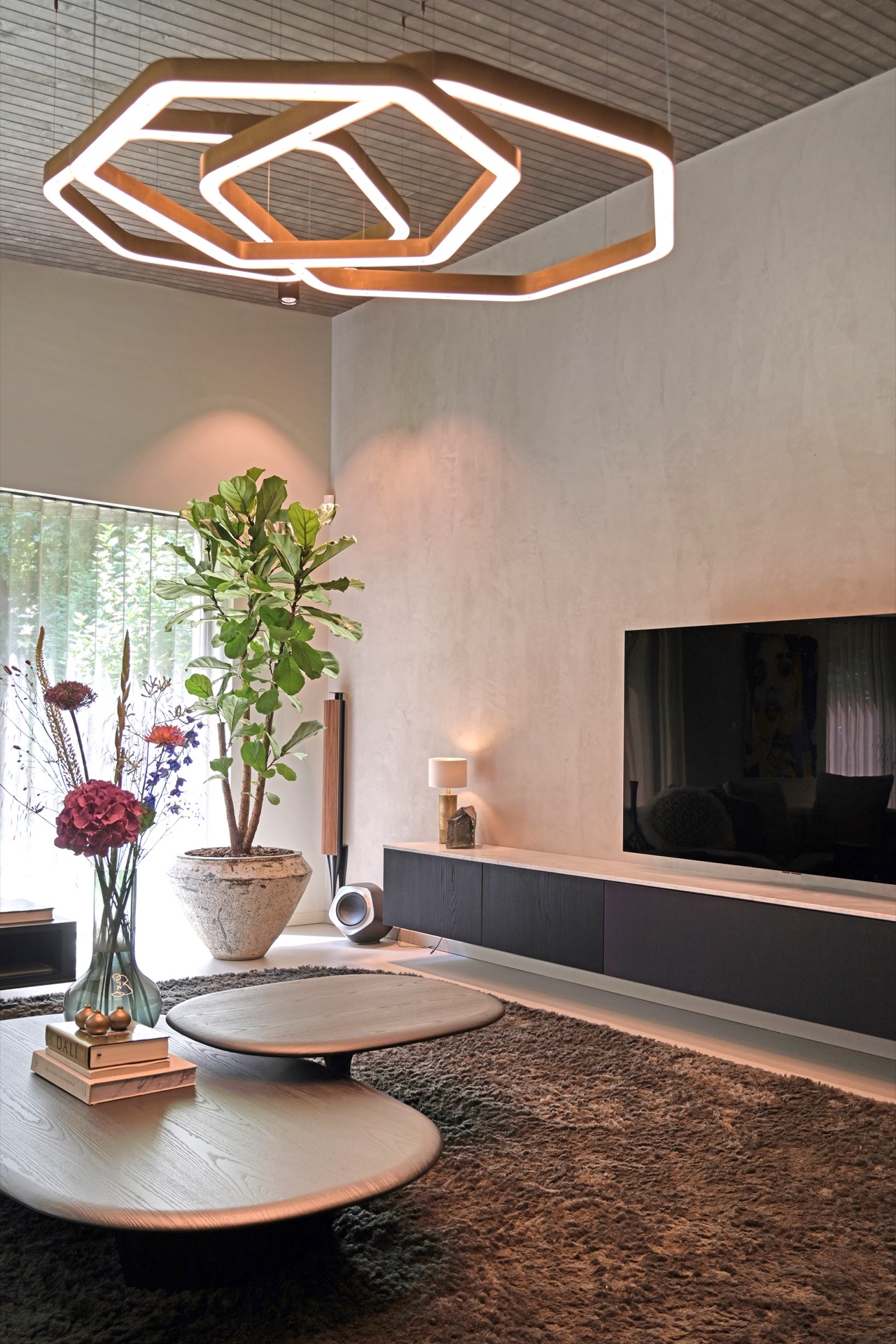
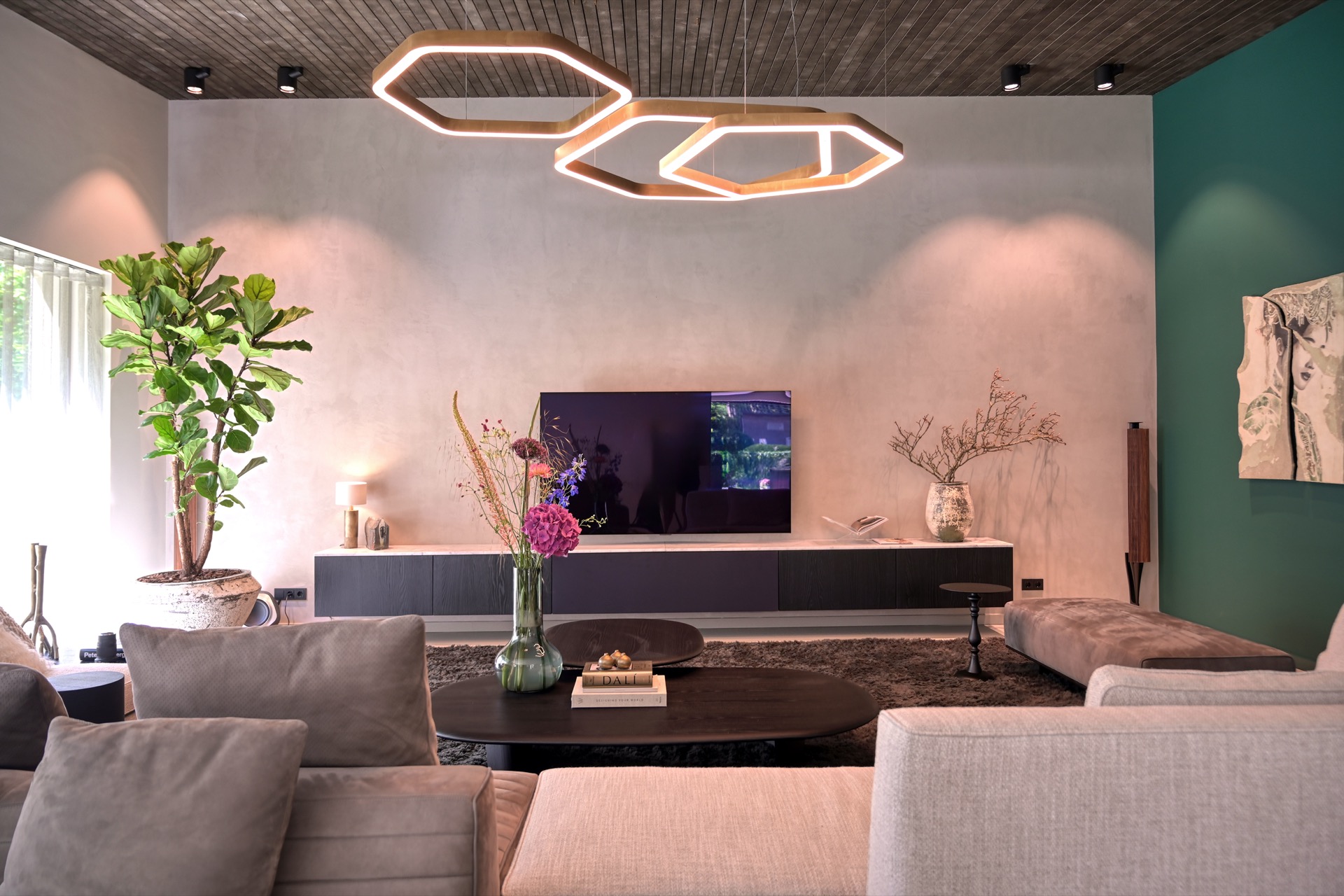
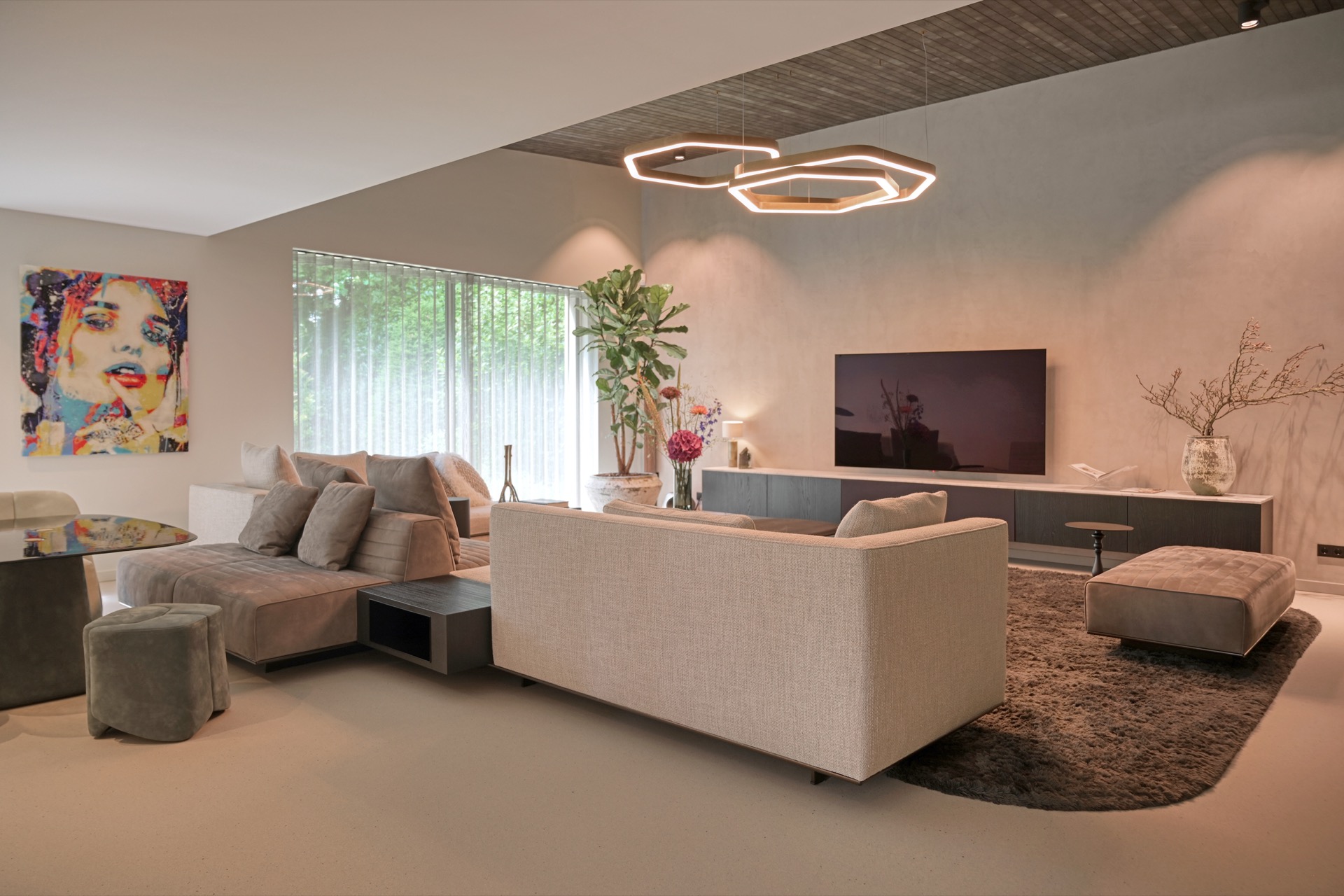
The living room shifts the strategy. Here, hidden audio living room planning is paired with visible elements, so the system can support film, music and conversation in different ways. A center speaker under tv placement sits discreetly below the screen, holding the dialogue line without taking over the wall. Around it, the larger room opens into the corners, where four additional speakers are positioned as part of the broader audio setup.
The tv zone uses low, long cabinet fronts, which stretch the wall horizontally and give the screen a grounded base. A custom tv console audio arrangement like this keeps the equipment close to the architecture of the room. The furniture does not try to hide the screen wall completely; instead, it gives the audio and display elements a clear place to sit. The result is a living area that can switch between viewing and listening without visual clutter. That makes the invisible ceiling speakers part of the architectural character rather than a loose finish.
Dialogue beneath the screen, music in the corners
The center speaker under tv is the quietest gesture in the room, yet it does an important job. It sits beneath the television where the eye already lands, so the front wall stays compact and legible. In the corners, the extra speakers create a second layer. They are more visible, but not dominant, and their placement keeps the living room from feeling fixed to a single listening position. That suits the way the room is described: film one moment, music the next, conversation after that.
Warm geometric ceiling lights draw attention upward and break the larger ceiling plane into smaller figures. Underneath, the sofa, rug and tv furniture hold the room together in a low, horizontal composition. The hidden audio living room approach works because the visible elements are chosen with the same discipline as the invisible ones. Nothing is placed by accident, and nothing needs to shout in order to be noticed.
A room sequence built around sound and surface
What makes the project compelling is the shift between concealment and display. In the kitchen, the invisible ceiling speakers disappear into a plastered surface. In the living room, the audio becomes more legible, with the center speaker under tv and the additional corner units taking their place in the composition. That change is not decorative. It follows the use of each room and lets the sound move with the way people actually occupy the house.
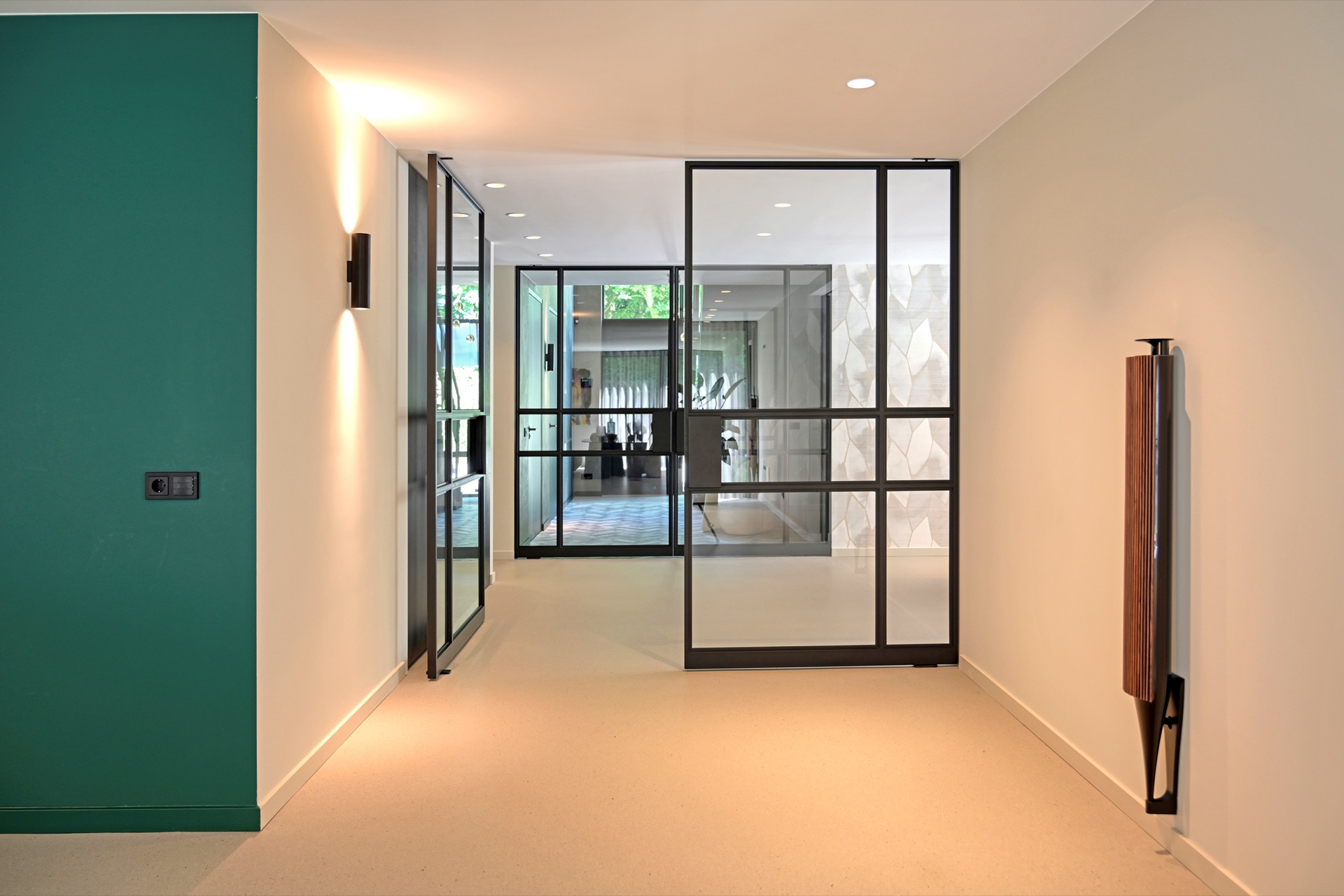
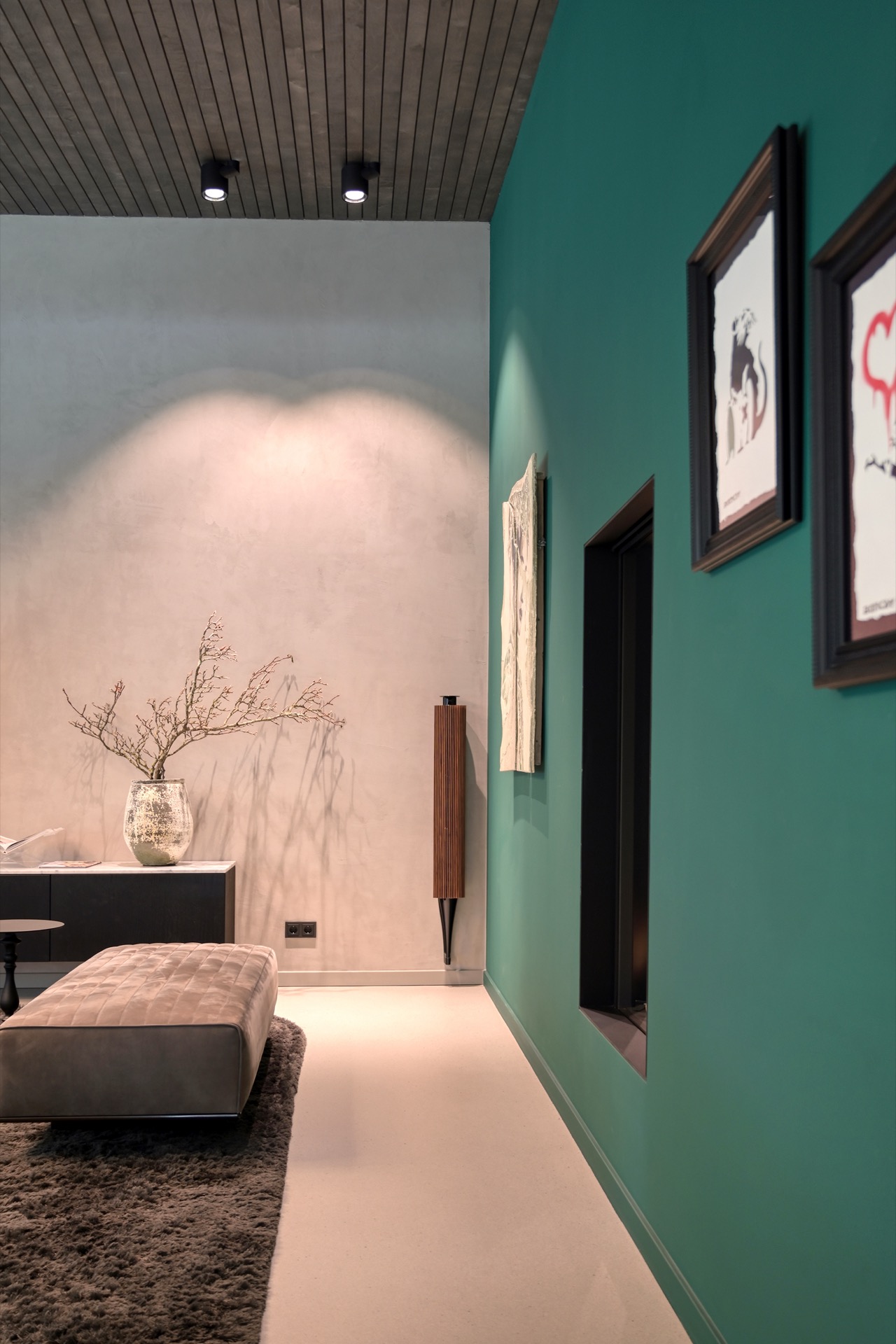
Material choices support that sequence. Fine-textured plaster, dark timber, black frames and recessed light points create a restrained setting for the equipment. A green accent wall appears in the transition areas and a matte wall surface keeps the finish controlled. The whole interior depends on clear edges and measured contrasts, which is why the audio integration works so well here. It never has to fight the room for space; the room is already prepared for it.
Small moves that keep the technology quiet
Looking across the photographs, the strongest details are often the least obvious ones: a recessed spot above the kitchen island, a long run of cabinet fronts in the living room, a flat plaster wall beside a darker accent zone. These are the places where invisible ceiling speakers and hidden audio living room planning become believable. The eye follows the material changes instead of searching for equipment, and that makes the sound feel embedded rather than added later.
Even the more visible components are handled with restraint. The speakers in the living room sit within the broader layout rather than breaking it apart, and the tv wall remains disciplined enough to let the screen, the console and the sound line work together. As a project, it shows how design kitchen audio integration can be extended into the living room without changing the character of the interior. The house keeps its calm surfaces, and the audio finds its place inside them.
Photography: Jaro van Meerten That makes the invisible ceiling speakers part of the architectural character rather than a loose finish.
Want to see more of Bang & Olufsen Henri Tibosch? View the page of Bang & Olufsen Henri Tibosch for even more great projects and company information.


.png)