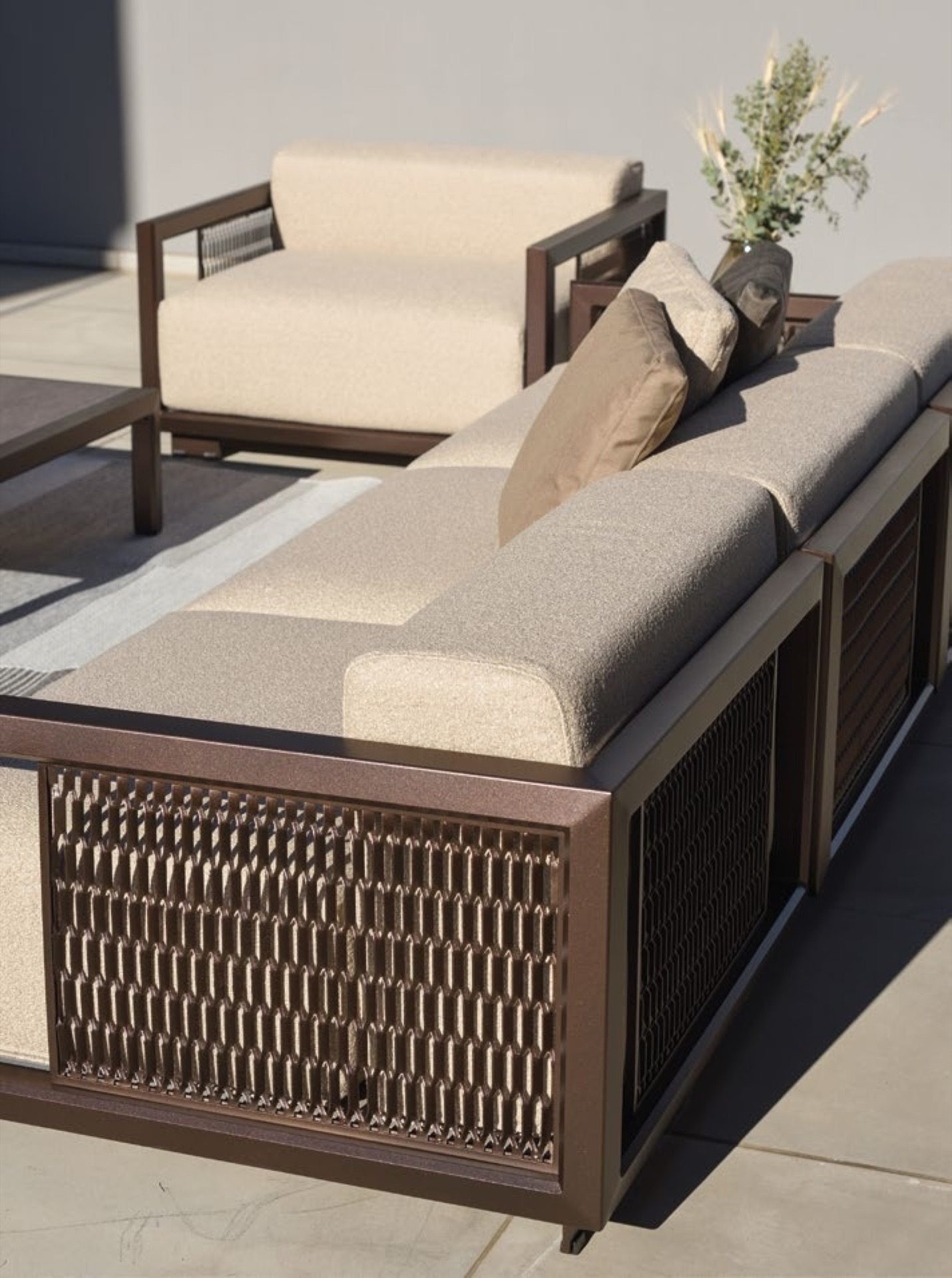






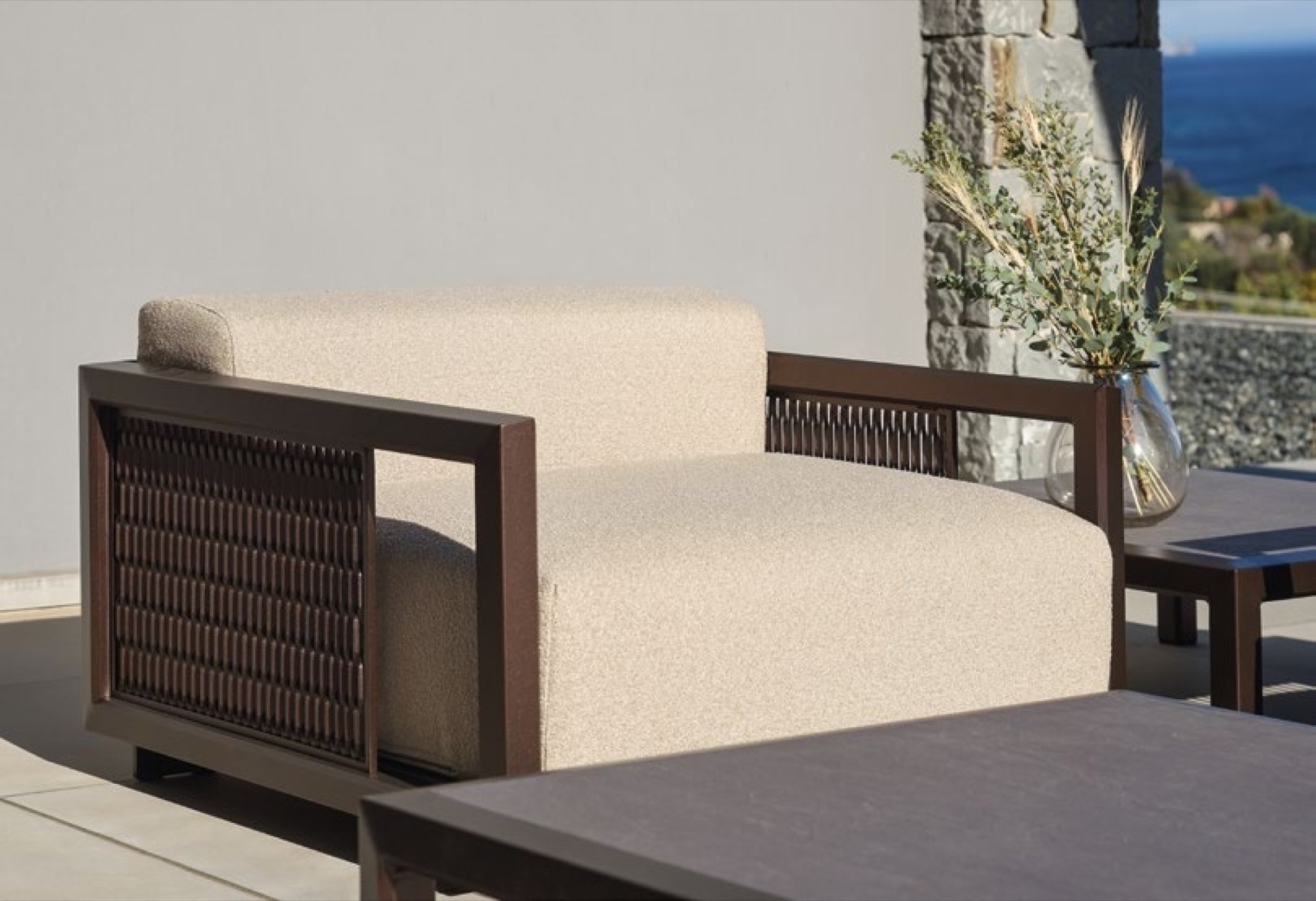
The dark grid catches the light first. In Solis, the existing frame from the Victus collection is extended with a three-dimensional mesh element, and that extra layer changes how the whole setting is read. What might have been a simple frame becomes a surface with depth, where shadow lines shift across the panel and the surrounding terrace. The result is less about decoration than about visual tension: a 3D mesh panel detail for outdoor spaces that introduces texture without overwhelming the scene.
3D mesh panel detail for outdoor spaces as the architectural starting point
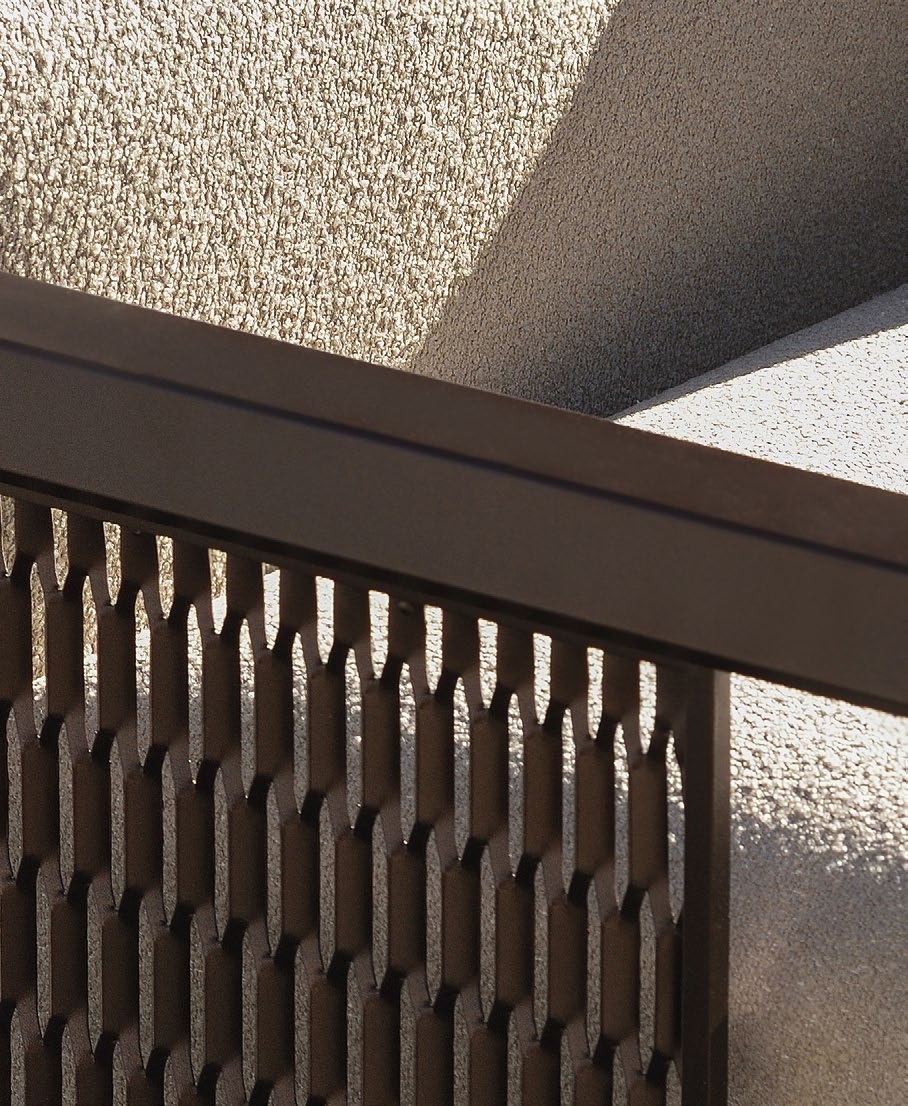
The clearest effect appears in the openwork grid outdoor composition. From a distance, the panel reads as a dark vertical structure; up close, it breaks into small projections and recesses that catch sunlight in uneven bands. That driedimensional mesh look is visible in the close-ups, where the pattern becomes almost architectural on its own. On the terrace, this same structure holds its own beside white plaster, dark grey paving and a stone-like corner, creating a sharper contrast than a flat surface would allow.
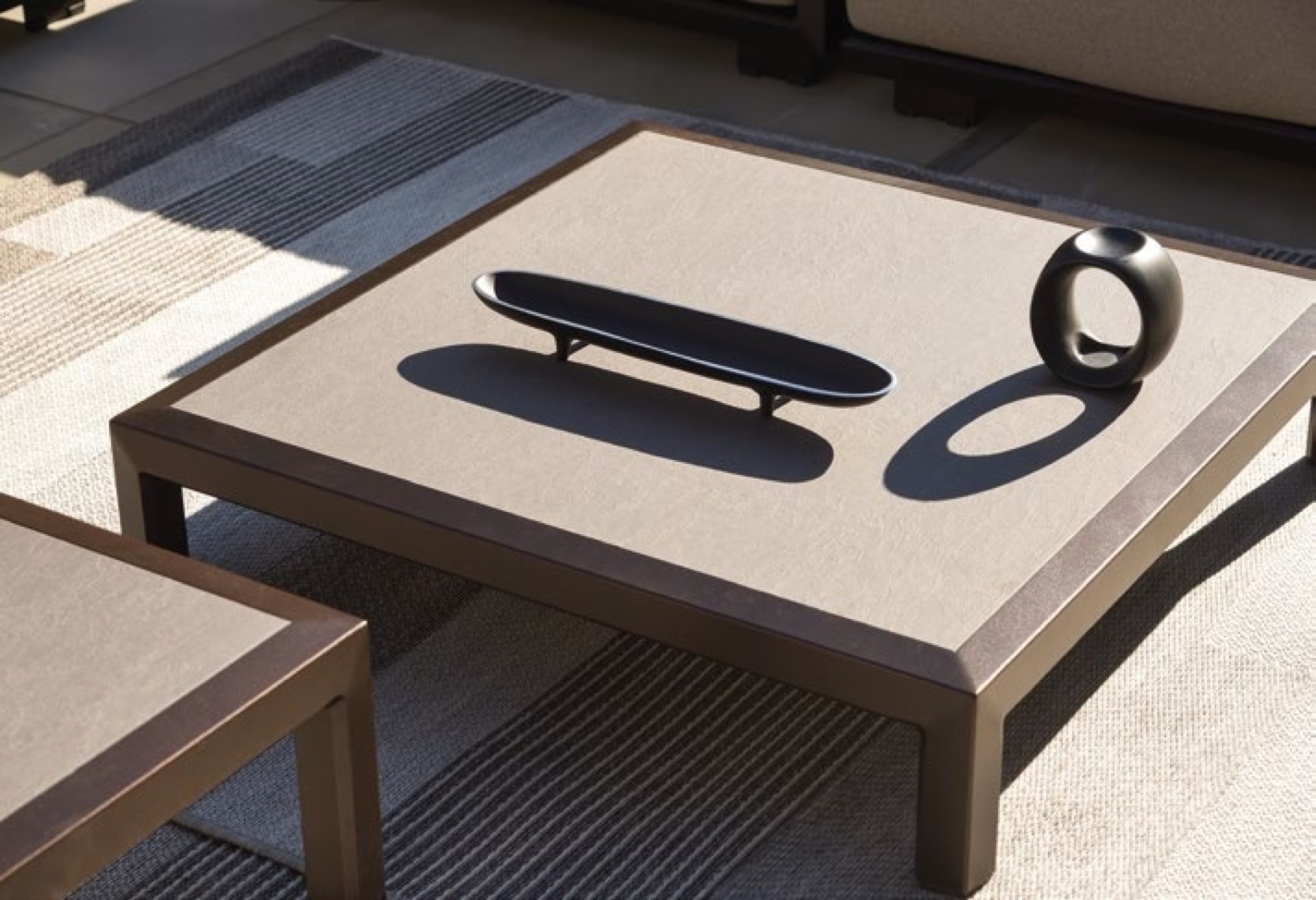
Light does a lot of the work here. It falls across the panel and lands as shadow patterns grid structure on the ground, on the tabletop and across nearby surfaces. The effect is strongest when the sun hits the angle of the mesh, making the vertical rhythm more legible. Instead of a decorative screen that disappears into the background, the panel becomes part of the room’s circulation of light, especially in scenes where the dark frame sits next to pale walls and beige cushions.
A close-up that makes the texture easy to read
The most revealing image is the one that moves in tightly on the dark metal mesh close-up. The openings are not presented as a flat lattice; they have a dimensional profile that gives the panel a more tactile presence. That detail is important for reading the project, because the visual weight comes from relief rather than colour alone. Even when the palette stays restrained — white, anthracite, brown and beige — the structure changes the surface by building small pockets of shadow between the bars.
In the frame of the seating area, the modern terrace mesh feature works with the furniture rather than against it. Beige cushions sit inside a dark outline, and the open vertical grid accents keep the whole composition from looking sealed off. A sofa or daybed line can remain visually open because the panel does not block the view in a solid way. It filters it, which is why the terrace feels layered even in a compact view.
Framing the terrace with vertical rhythm
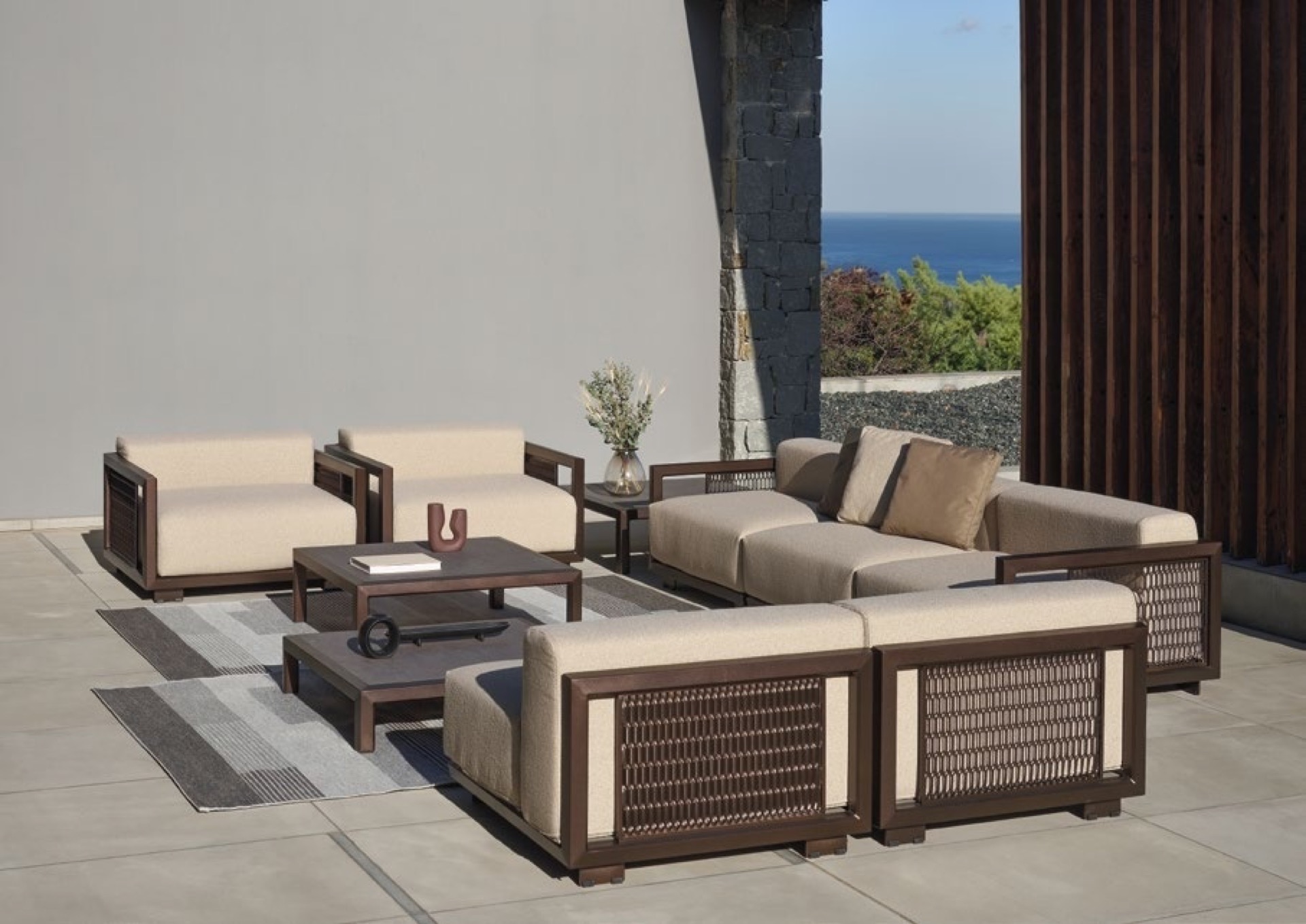
The terrace image shows how the openwork grid outdoor element connects with the rest of the setting. Dark grey tiles run under the seating, while a white rendered wall and a robust stone-like corner give the background a heavier edge. Against that backdrop, the mesh panel creates a thinner, more graphic line. The contrast is not only material; it is spatial. Solid and open surfaces alternate, and the eye moves between them instead of resting on one dominant plane.
The furniture helps make that rhythm visible. Beige seat and back cushions soften the dark frame, but they also expose the geometry around them. The open panel behind or beside the seating reads like a filter, not a barrier. That is where the 3D mesh panel detail for outdoor spaces becomes most convincing: it shows how a relatively small insertion can redraw the balance of a terrace by changing where the eye stops, where it passes through, and where it catches on shadow.
Shadow as part of the composition
Several images show shadow as an active layer, especially on the tabletop. The rectangular coffee table picks up curved and linear shadows from nearby structure, and the dark frame at the legs anchors the pattern. These marks are not incidental. They make the surface feel responsive to the mesh nearby, as if the panel extends its pattern beyond its own edge. That relationship between the panel and the table helps explain why the project is described through optical complexity rather than through size or technical claims.
The openwork grid outdoor element also reads differently depending on the angle. In one view, the verticals appear almost regular; in another, the small protrusions in the structure create a more serrated edge. That shift gives the panel a more lived-in visual depth, even before any furniture or planting enters the frame. It is the kind of detail that changes a terrace photograph from a straightforward exterior shot into a study of lines, offsets and shadow.
The Victus frame, reworked with a second layer
The source text mentions the Victus frame, and Solis uses that base as the starting point for the added element. Rather than replacing the original idea, the project adds a second reading: the frame remains, but the 3D mesh overlay gives it more texture and more visual friction. That is why the openwork grid outdoor composition stands out. It does not depend on scale or ornament. Its value lies in the way it introduces depth to a structure that would otherwise read more plainly.
Seen in context, the mesh sits comfortably among the visible materials in the photographs — plaster, stone, tile and metal. The palette stays measured, which makes the structure itself carry more weight. Dark surfaces hold the edges of the composition together, while pale walls and beige upholstery keep the terrace from going visually flat. The driedimensional mesh look sits right in the middle of that exchange, tightening the relationship between surface, light and frame.
A terrace detail that works from near and far
From farther back, the panel is mostly about silhouette: a dark vertical element set against pale architecture and open air. From closer in, it becomes a study in repetition and relief. That dual reading is useful for understanding the project. A modern terrace mesh feature like this one has to hold up in both views. It needs to make sense as part of the whole setting, and it also needs enough texture to reward a closer look. Solis manages that through the added depth of the mesh itself.
The project’s strongest argument is visible in the way it organizes the terrace without closing it off. The open panel keeps the scene porous, while the mesh creates enough pattern to give the surfaces around it a clear edge. In that sense, the 3D mesh panel detail for outdoor spaces is less an accessory than a framing device. It marks the space, filters the view and turns sunlight into part of the composition.
Want to see more of ? View the page of for even more great projects and company information.
.png)