






Modern stucco villa with an open staircase and open kitchen
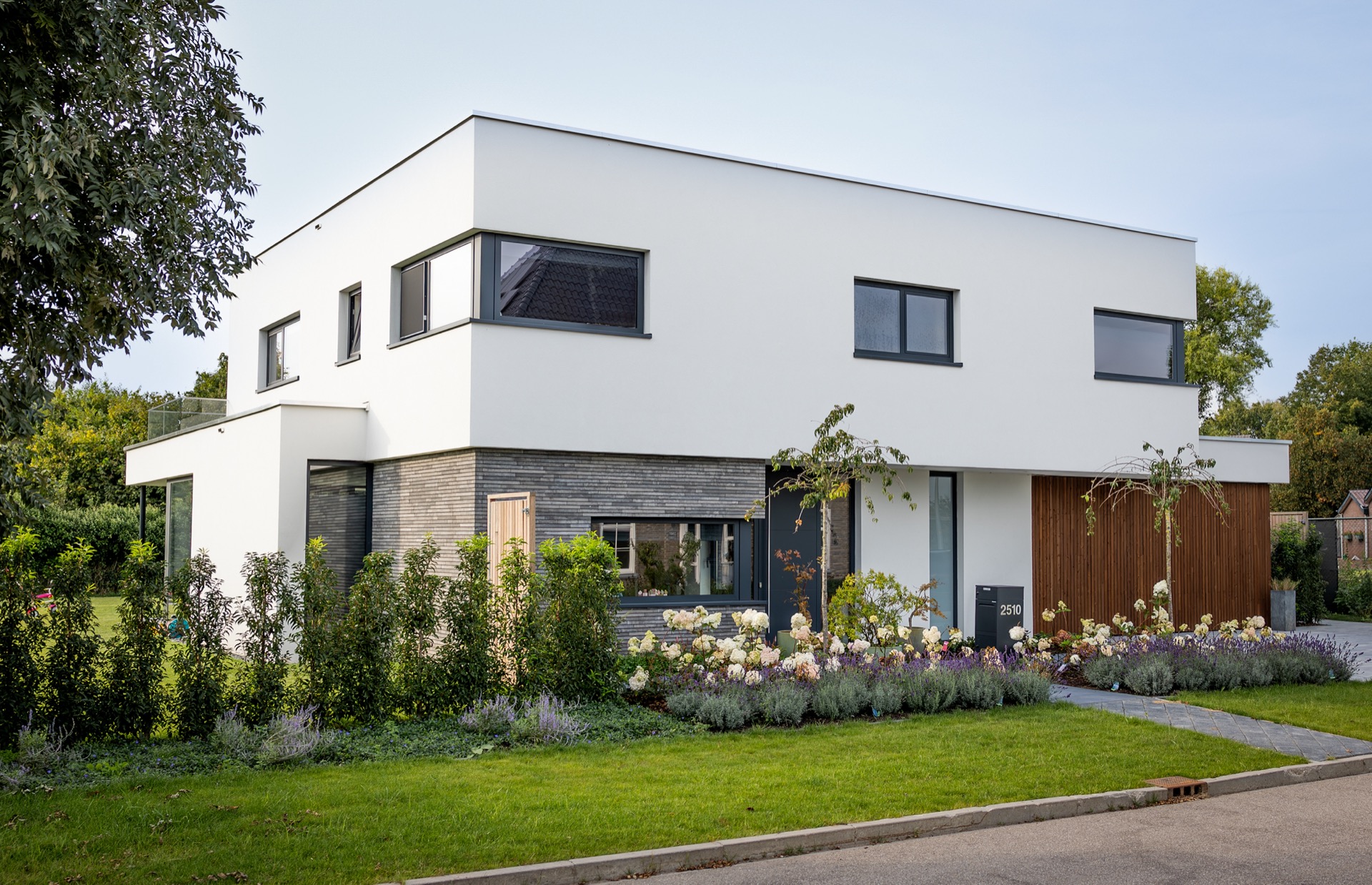
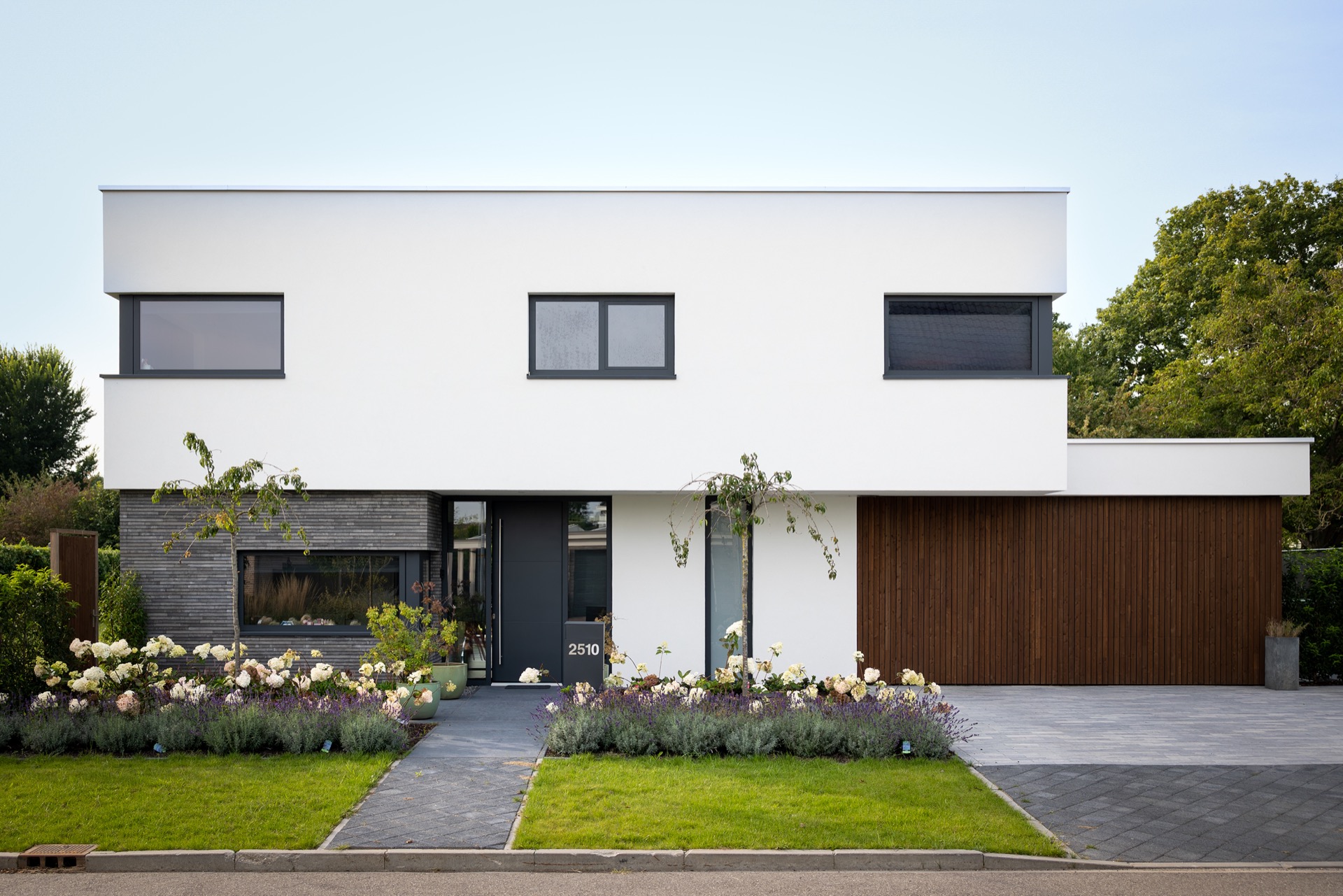
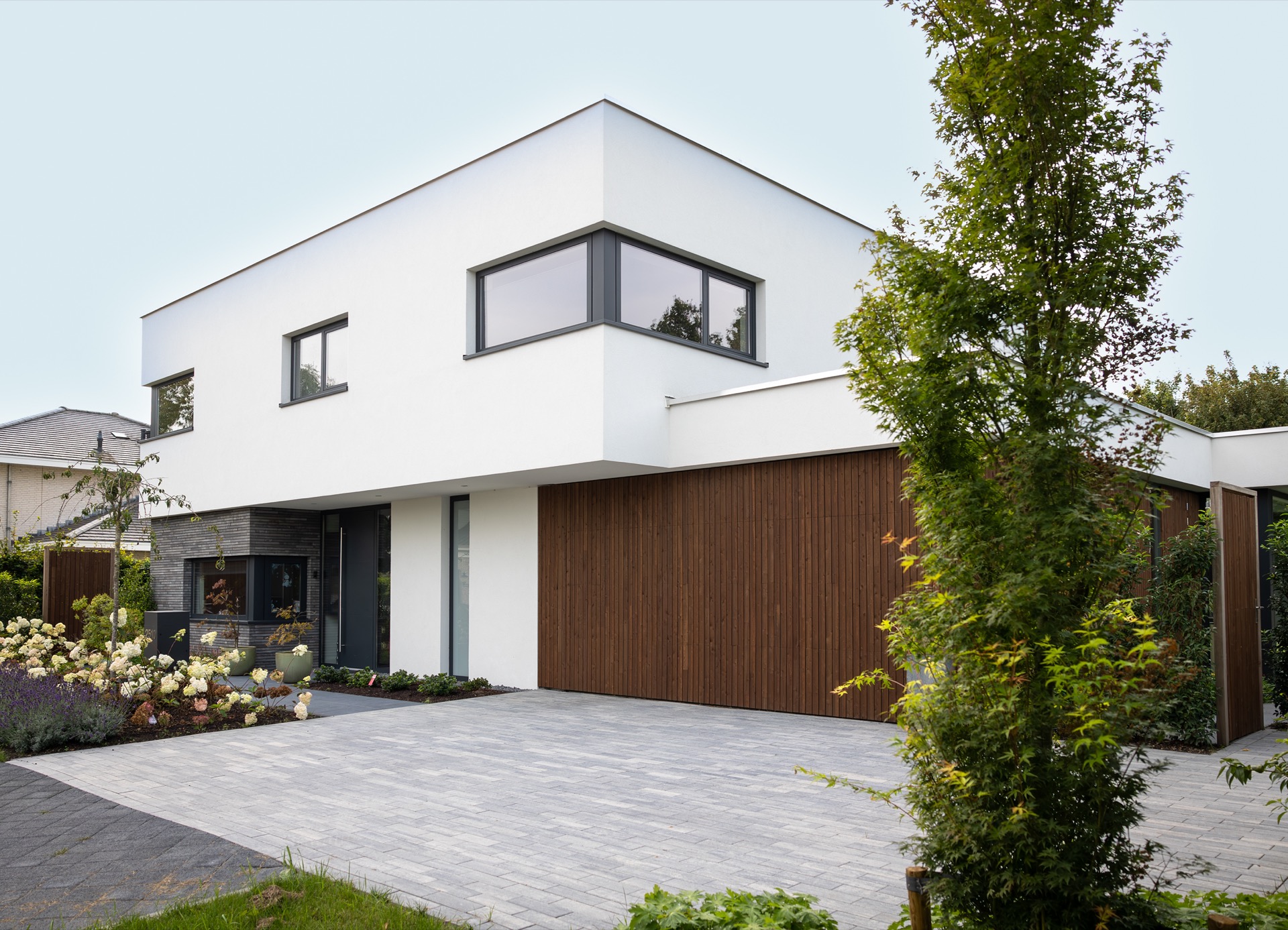
The home renovation is immediately visible in the way the project is framed. A white stucco shell, dark window frames and broad panes set the tone before you reach the entrance. The volume is crisp and direct, with a flat roofline and a clear rhythm between solid wall and glass. Wood appears where the eye needs a pause: in the vertical slats beside the garage and in the cladding that softens one side of the house. The result is a modern villa that reads as composed, but never plain.
home renovation as the architectural starting point
The white stucco facade gives the house its clear outline, while the large windows open up the ground floor and upper level to daylight. Dark frames sharpen the openings and make the glazing stand out against the pale walls. Seen from the front, the house is set back from the street by a neat drive and a strip of lawn, with low planting and paved surfaces guiding the approach. The exterior does not rely on ornament; its strength lies in the way the materials sit against one another.
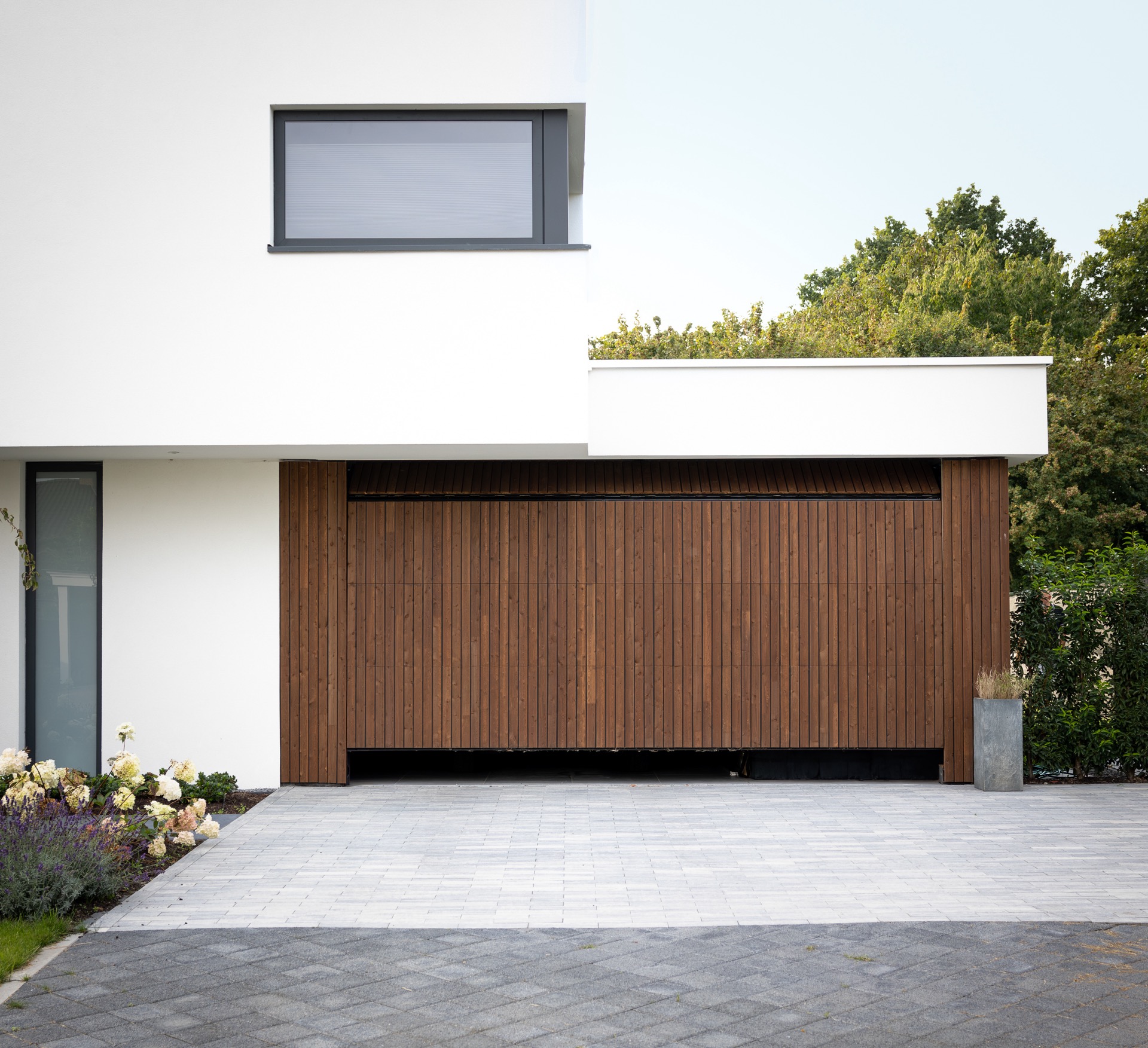
A few steps closer, the wooden elements change the mood of the volume. Vertical slats mark the garage side and return in the cladding along the facade, creating a warmer surface next to the stucco. An overhang cuts across the upper edge and shades the openings below it. That mix of plaster, glass and timber gives the home renovation its character without overcomplicating the building.
An entrance hall built around the staircase
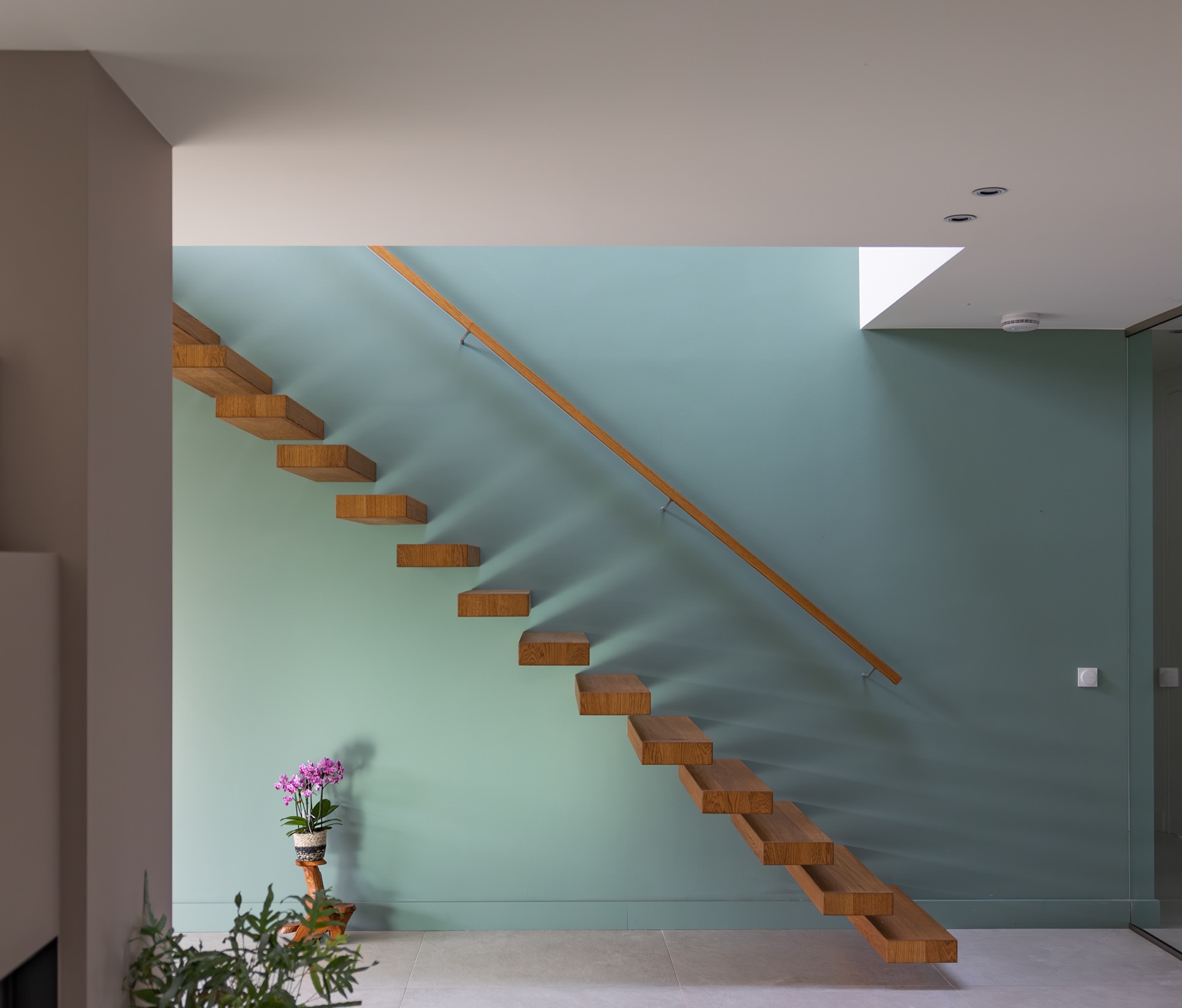
Inside, the entrance hall is shaped around an open staircase that immediately pulls the eye upward. The steps are made of wood, floating beside a light blue-grey wall that makes the structure read clearly. Ceiling spots sit close to the stair run, so the space feels sharp and deliberate even in the softer light of the hall. This is not a hidden circulation route; it is a visible part of the house, placed where it can define the first impression.
Wood, light and a clean line of movement
The staircase works because it leaves space around it. The open side lets the hall breathe, while the wood treads bring a material contrast to the smoother wall finish. The angle of the stair and the plain wall beside it create a strong vertical movement as soon as the front door opens. In a home renovation like this, that one detail does a great deal of work: it ties the entrance together and sets up the rest of the plan without needing extra gesture.
The kitchen opens straight into the living room
The open kitchen sits at the centre of the daily layout and connects directly to the large living room. The passage between the two spaces is immediate, so the kitchen does not read as a separate zone but as part of the same interior sequence. Materials are described as carefully chosen, and the room benefits from that restraint: surfaces stay clear, the sightlines remain open, and the kitchen can anchor the house without interrupting the view beyond it. That makes the home renovation part of the architectural character rather than a loose finish.
Large windows bring daylight deep into both rooms, making the kitchen and living room feel lighter even when the furniture is kept out of focus. The light hits the floor, the wall edges and the openings in the facade, changing the sense of depth as the day moves on. In this home renovation, the window layout is doing more than framing the view; it shapes how the rooms are used, with the living area reading as spacious and connected rather than enclosed.
Daylight across the living zone
From the living room, the glazing makes the house feel open to the outside without turning the interior into a display. The broad panes sit in dark frames, which keeps the composition crisp and prevents the glass from disappearing into the wall. That contrast is visible both inside and out. It also gives the open kitchen to living room arrangement a steady backdrop, so the plan can remain practical while still feeling carefully ordered.
home renovation as the architectural starting point
The indoor garage is integrated into the house rather than treated as an afterthought. Its position supports the compact, functional side of the plan, while the exterior treatment keeps it visually aligned with the rest of the building. The garage volume is marked by timber slats and a door that sits neatly within the facade, so the service function stays present but does not break the overall form. On the drive, this side of the house reads as part of the same architectural language.
That integration matters in a modern villa where the facade is built from just a few materials. Stucco, wood, glass and dark framing repeat across the different volumes, but each one is used with a clear role. The garage is not hidden. It is folded into the geometry of the home, next to the paved approach and the planted edge of the lot, so the practical part of the house remains visually consistent with the rest.
Photography and contributors
Photography – Mariska_fotografie
Contributors:
Buiten stucwerk – M van der Looij afbouw Bergeijk
Kozijnen: Eijkemans aluminiumbouw bv Schijndel That makes the home renovation part of the architectural character rather than a loose finish.
Want to see more of Van Boven Aannemers? View the page of Van Boven Aannemers for even more great projects and company information.


.png)