





Modern home with light interior and natural materials
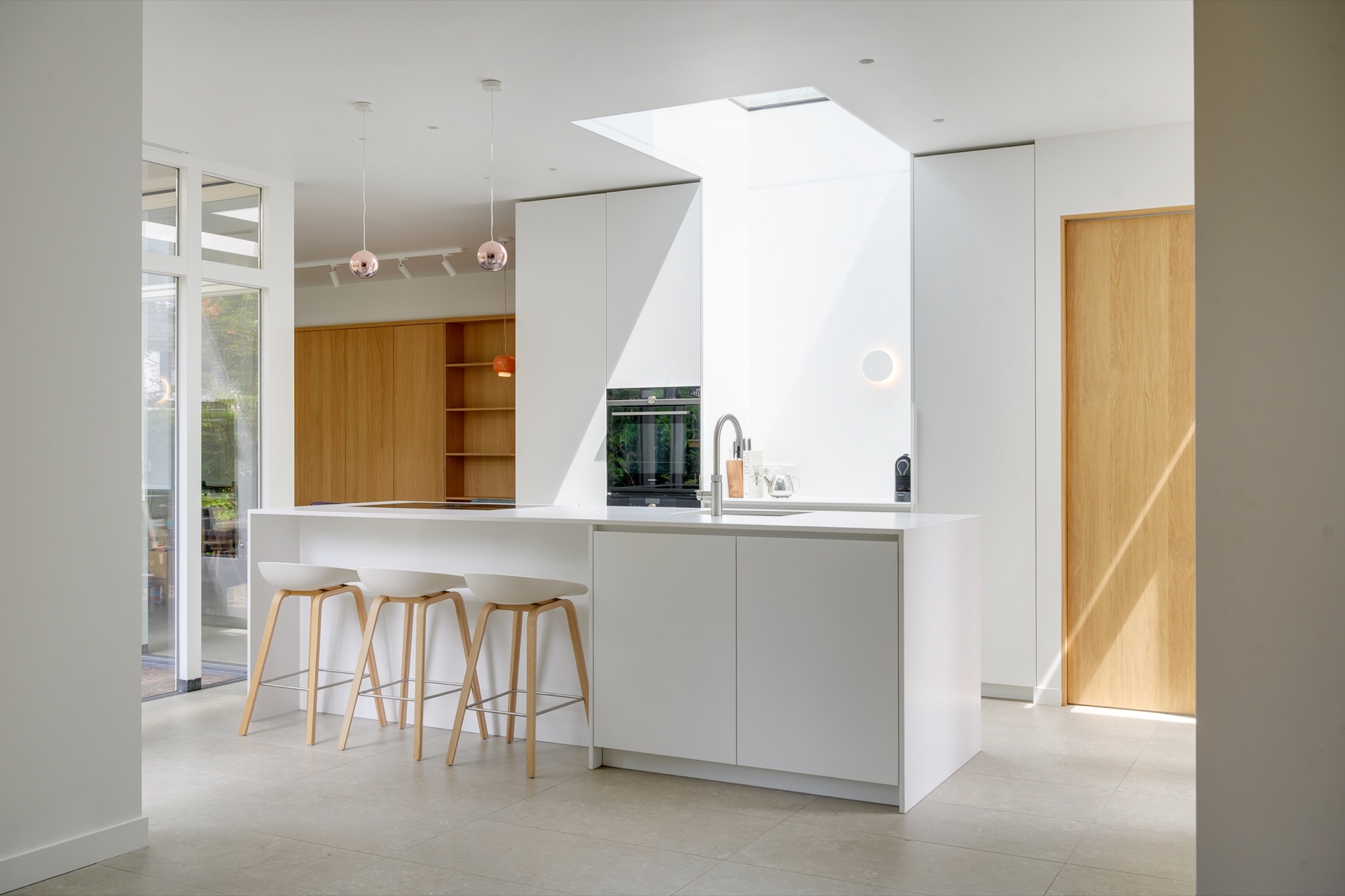
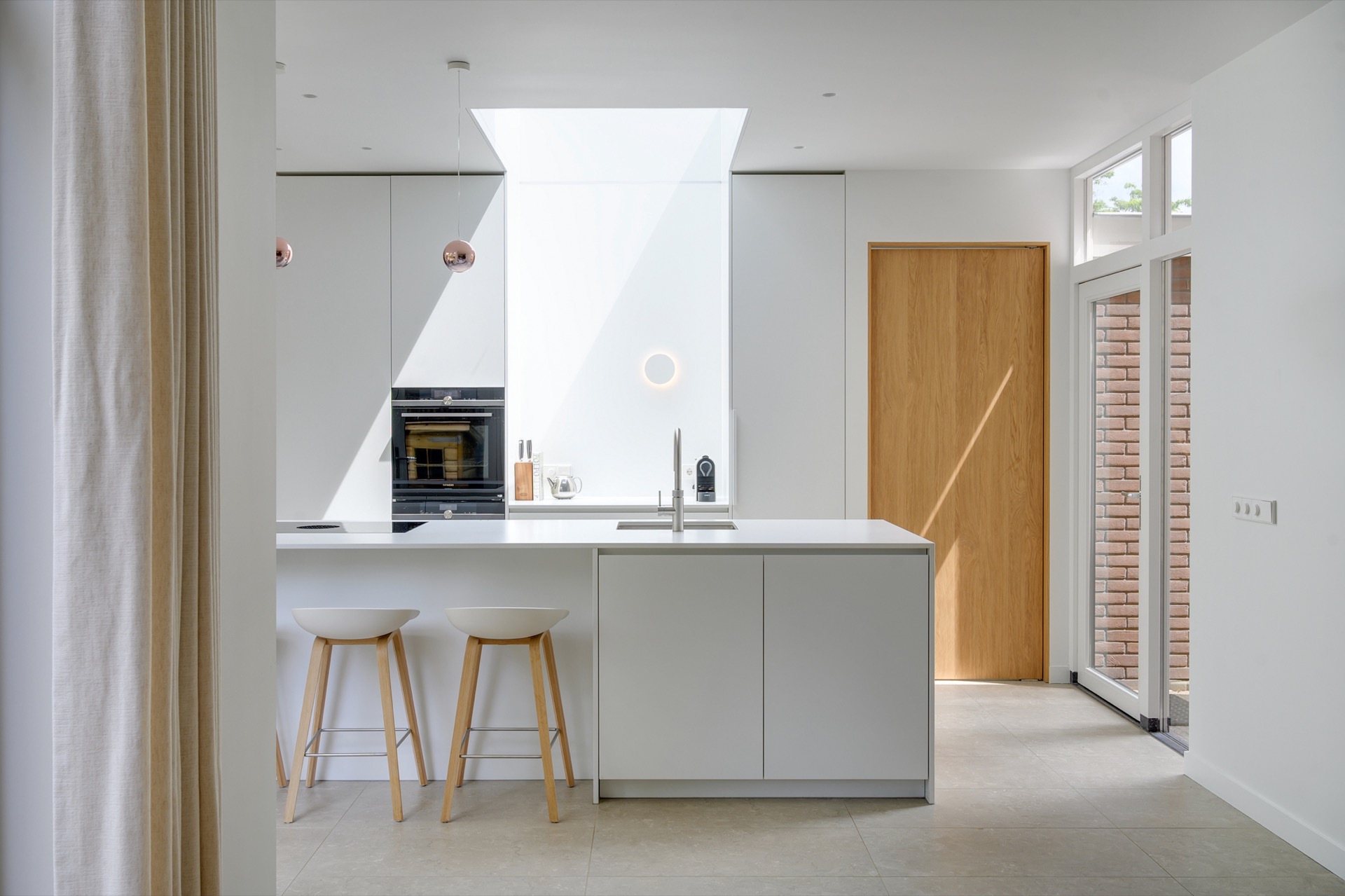
The light interior is immediately visible in the way the project is framed. Sunlight fills the kitchen through a roof lantern extending across a recessed niche housing the coffee machine behind the cooking island. Integrated LED lighting above softly illuminates this nook, providing gentle light even after dusk.
light interior as the architectural starting point
Within the hobby room, an essential steel support column, required by the construction, finds its place cleverly concealed inside bespoke cabinetry. Above this, the steel beam remains hidden behind a plastered band, maintaining clean, uninterrupted sightlines that underscore the room’s spatial clarity.
Expanses of Sand-Colored Ceramic Tiles Ground the Interior
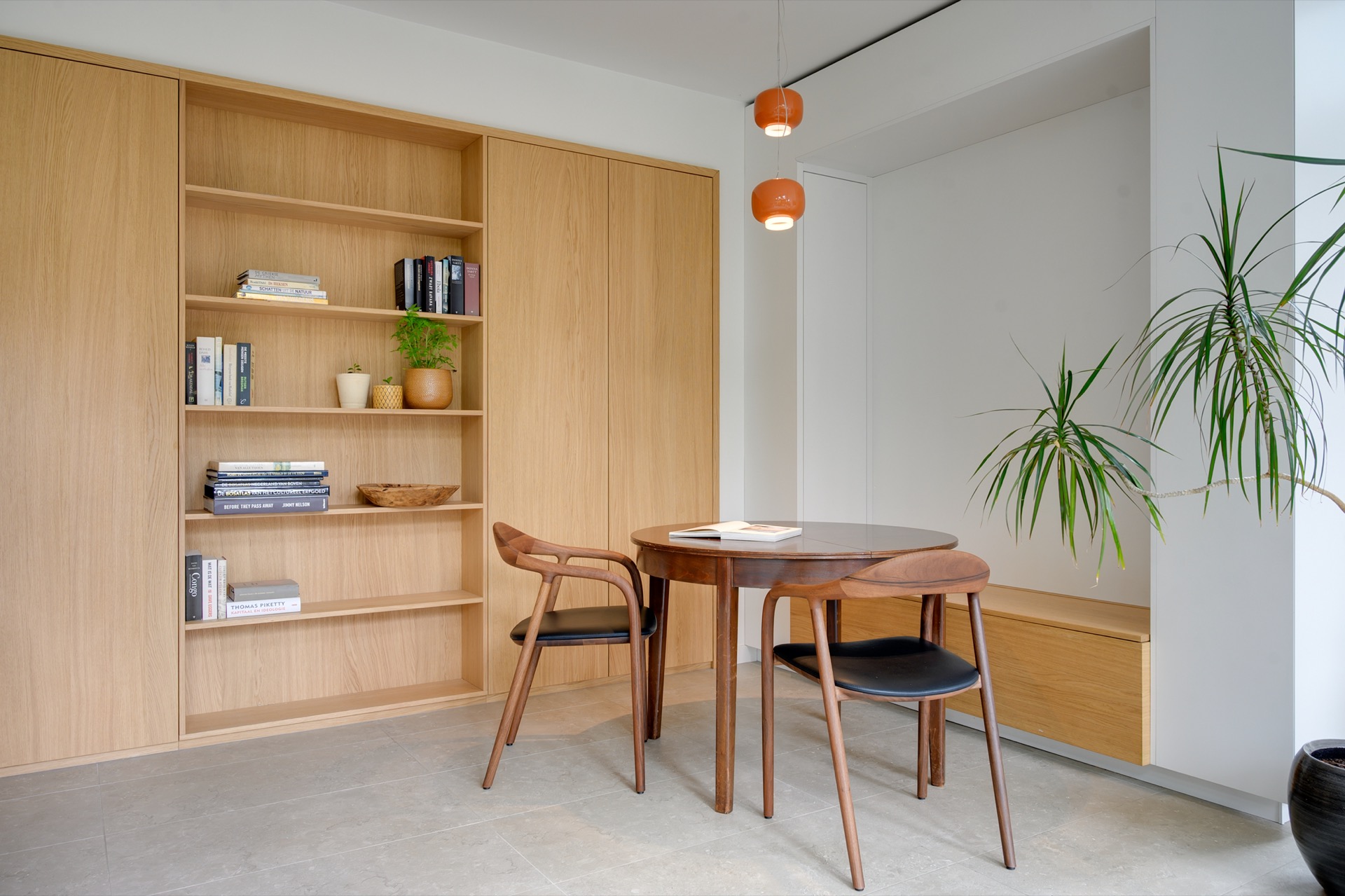
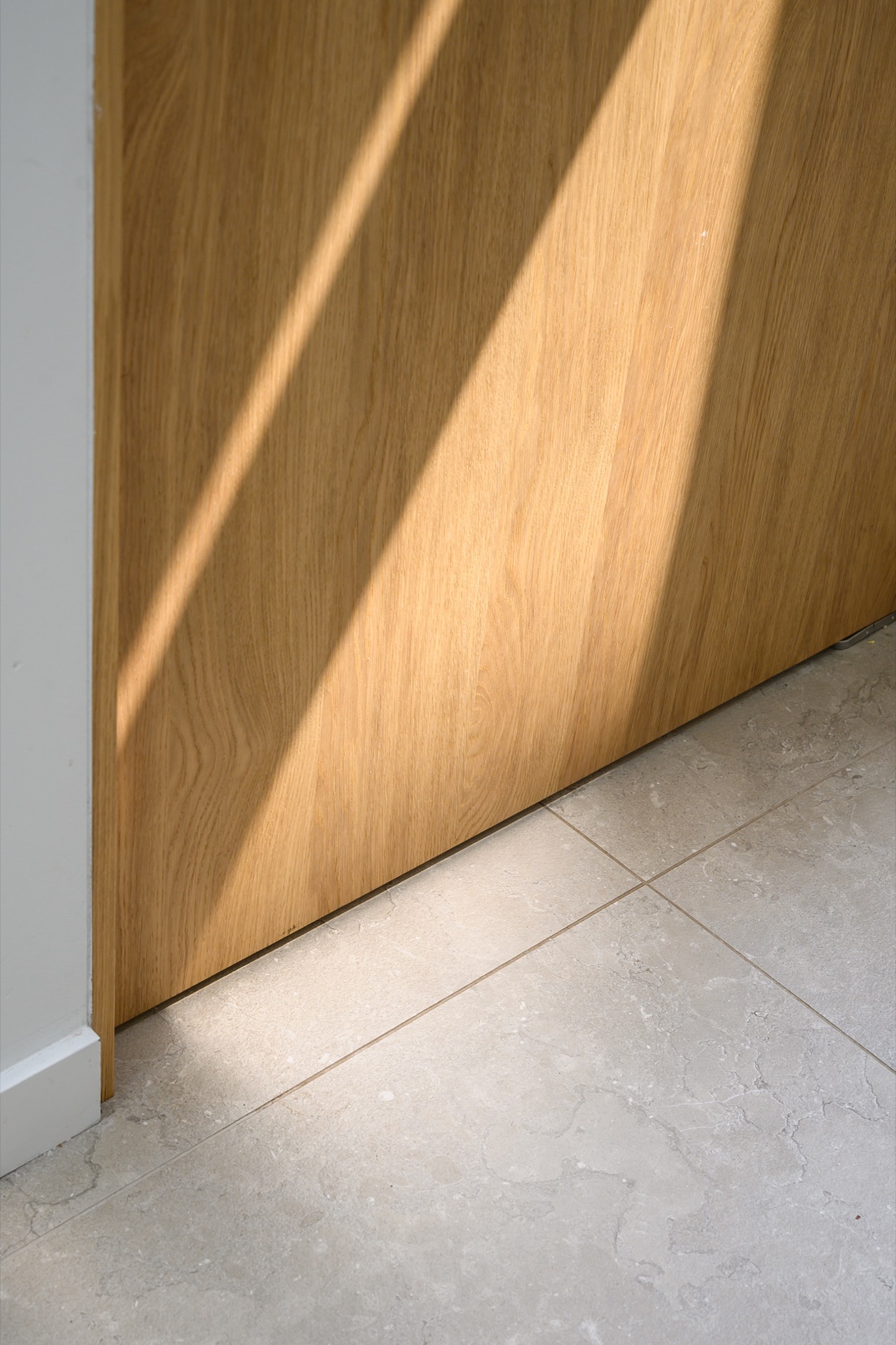
The floor stretches with large-format tiles in muted sand tones, anchoring the light-filled spaces with a tactile surface that contrasts the smooth white furniture. This choice emphasizes a natural color palette while keeping surfaces easy to maintain.
Natural Wood Finishes Bring Texture and Depth
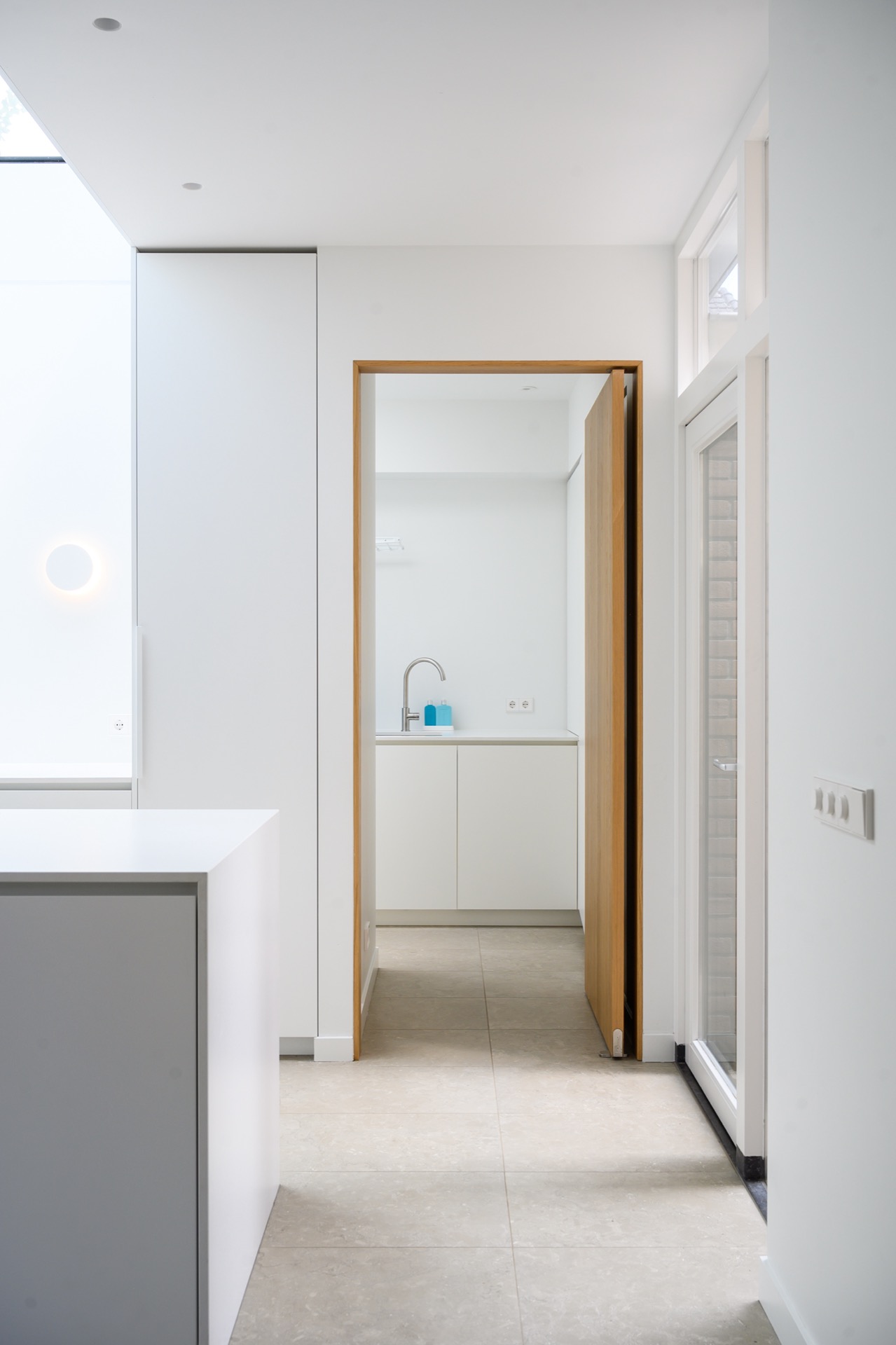
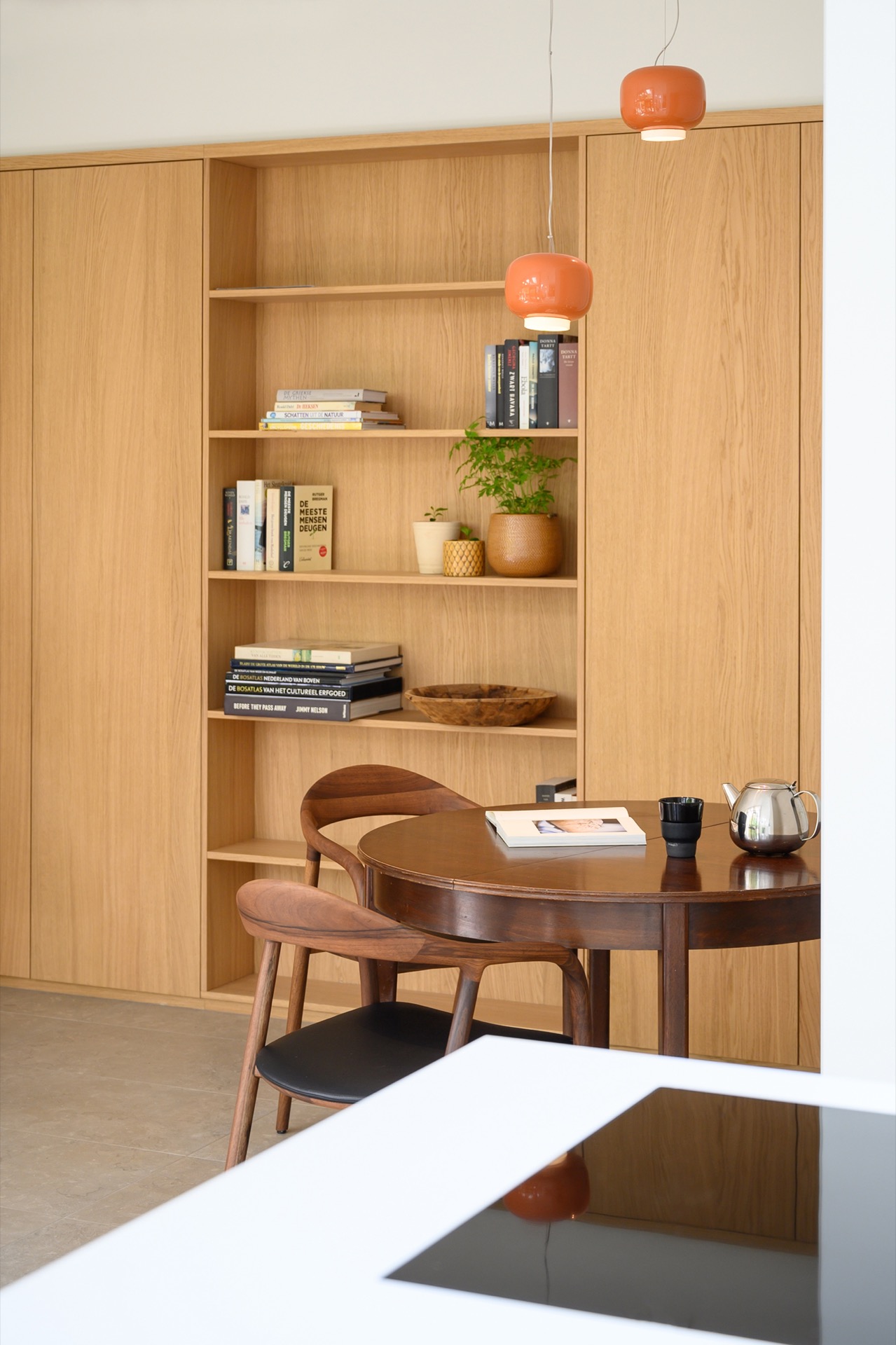
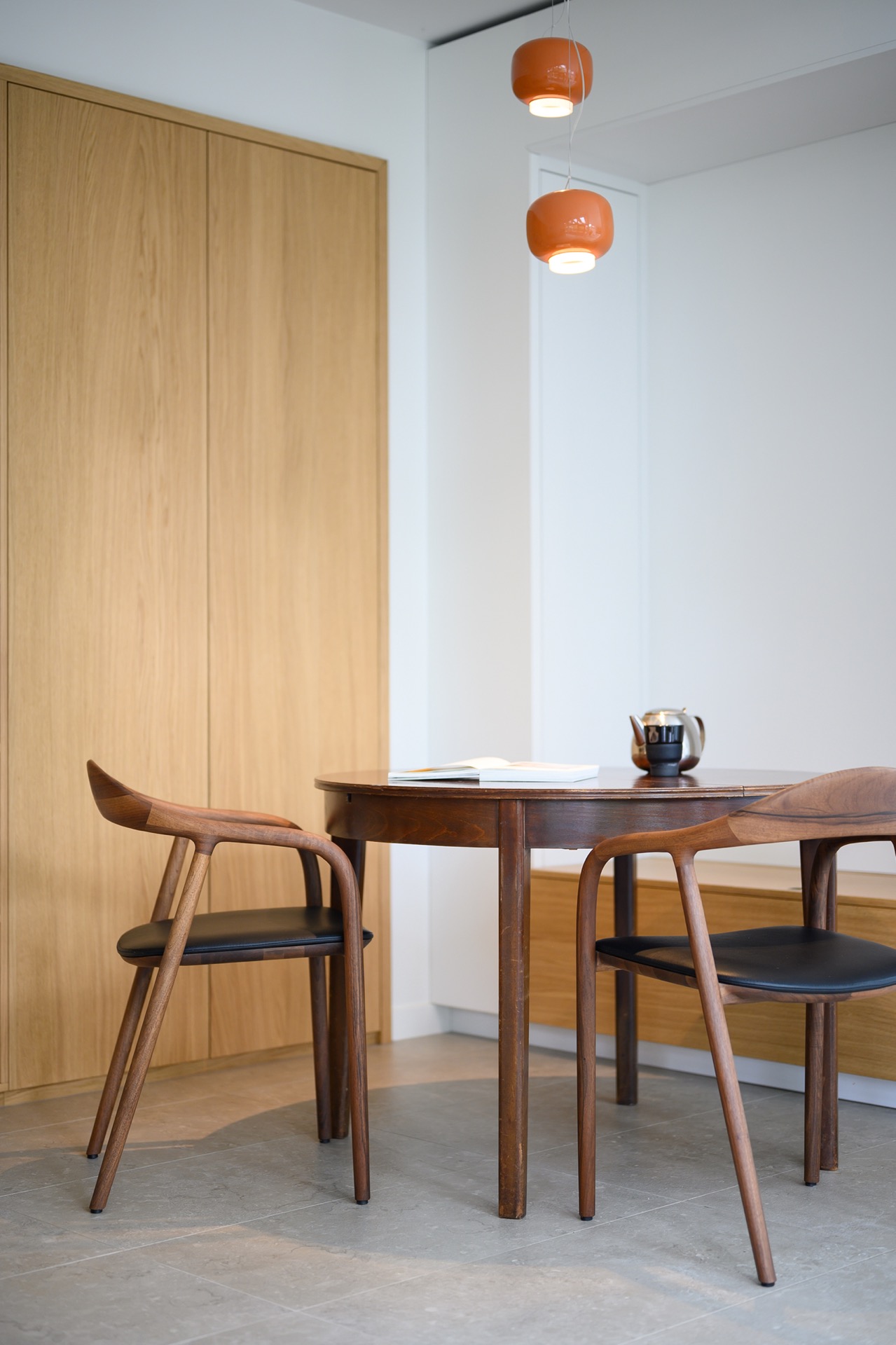
Custom oak cabinetry and door panels link the hobby area to the adjacent utility room, introducing warm, tactile qualities amid the neutral setting. The soft grain of the oak stands out against quieter surfaces, offering visual breaks that enrich each room’s character.
Minimalist Base with Carefully Selected Materials
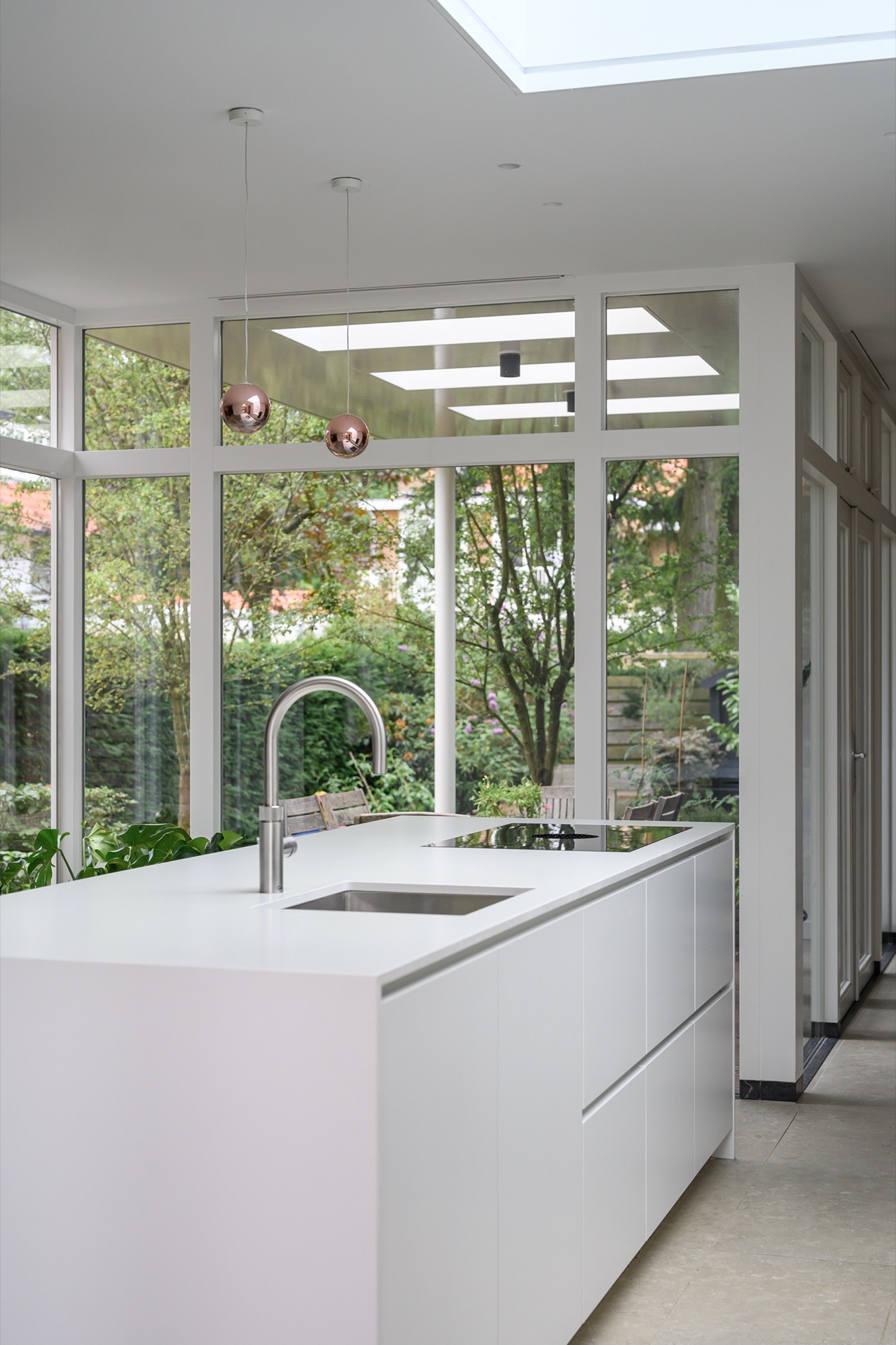
Throughout, a restrained palette of light colors and warm textures prevails. Matte white composite surfaces form the kitchen’s worktop, quietly reflecting natural light without creating glare. The interplay between these materials ensures focus remains on form and function without visual clutter.
Strategic Lighting Enhances Spatial Ambience
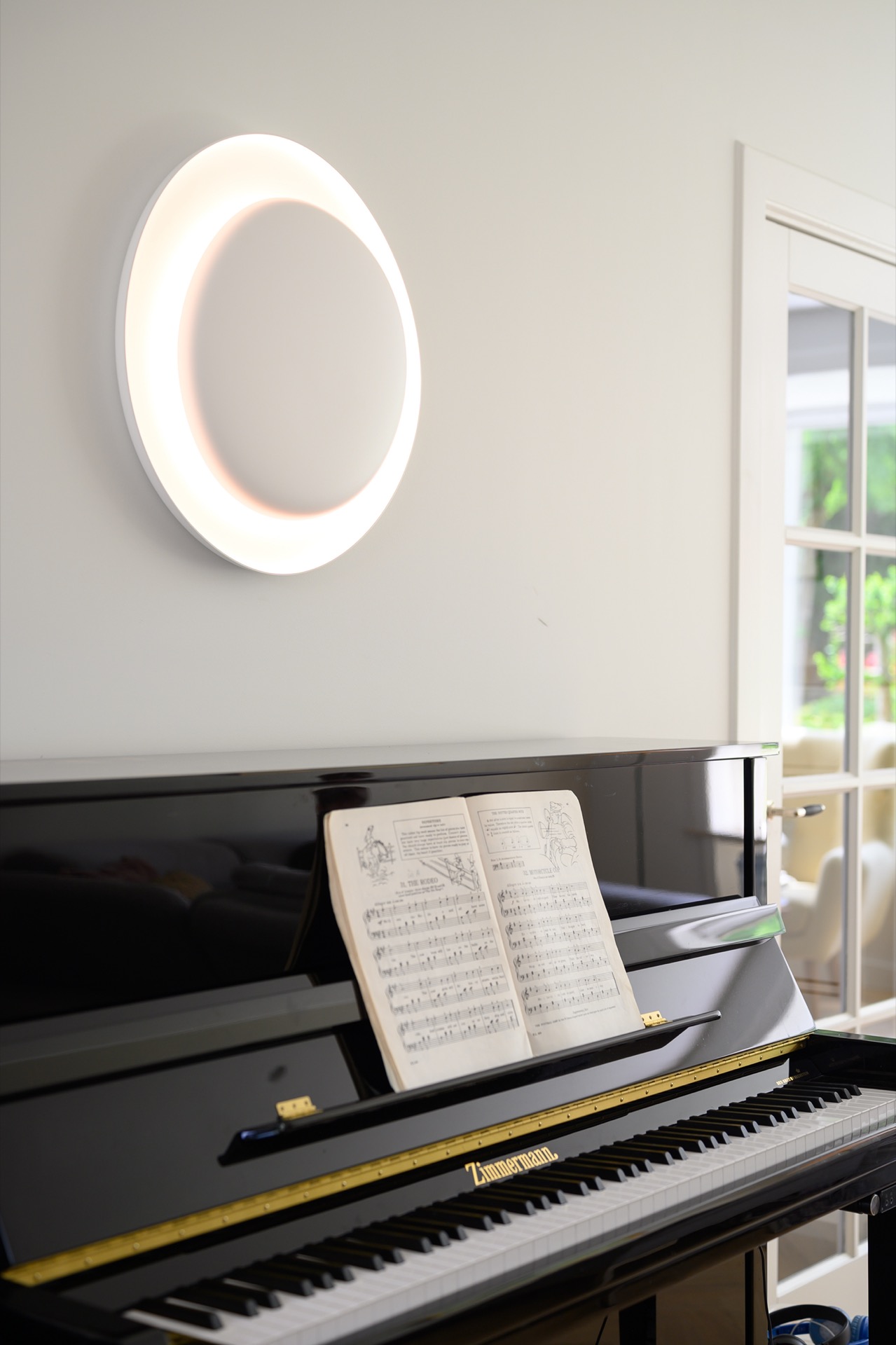
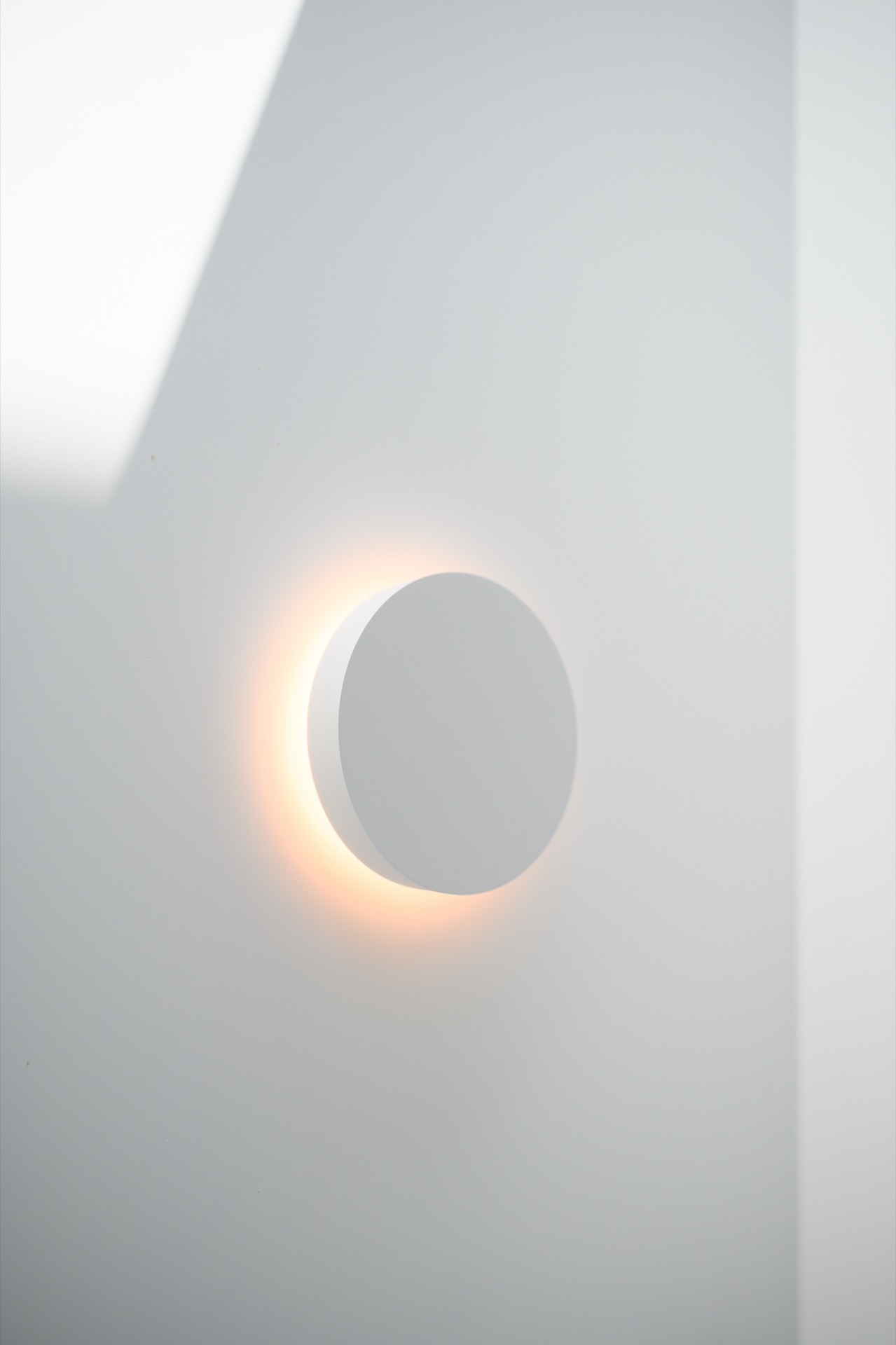
Discrete LED installations are integrated into furniture and architectural details, accentuating important zones and providing subtle layers of illumination. This indirect approach prevents harsh shadows and supports a calm atmosphere across the kitchen and adjoining rooms.
Kitchen Layout and Daylight Connection
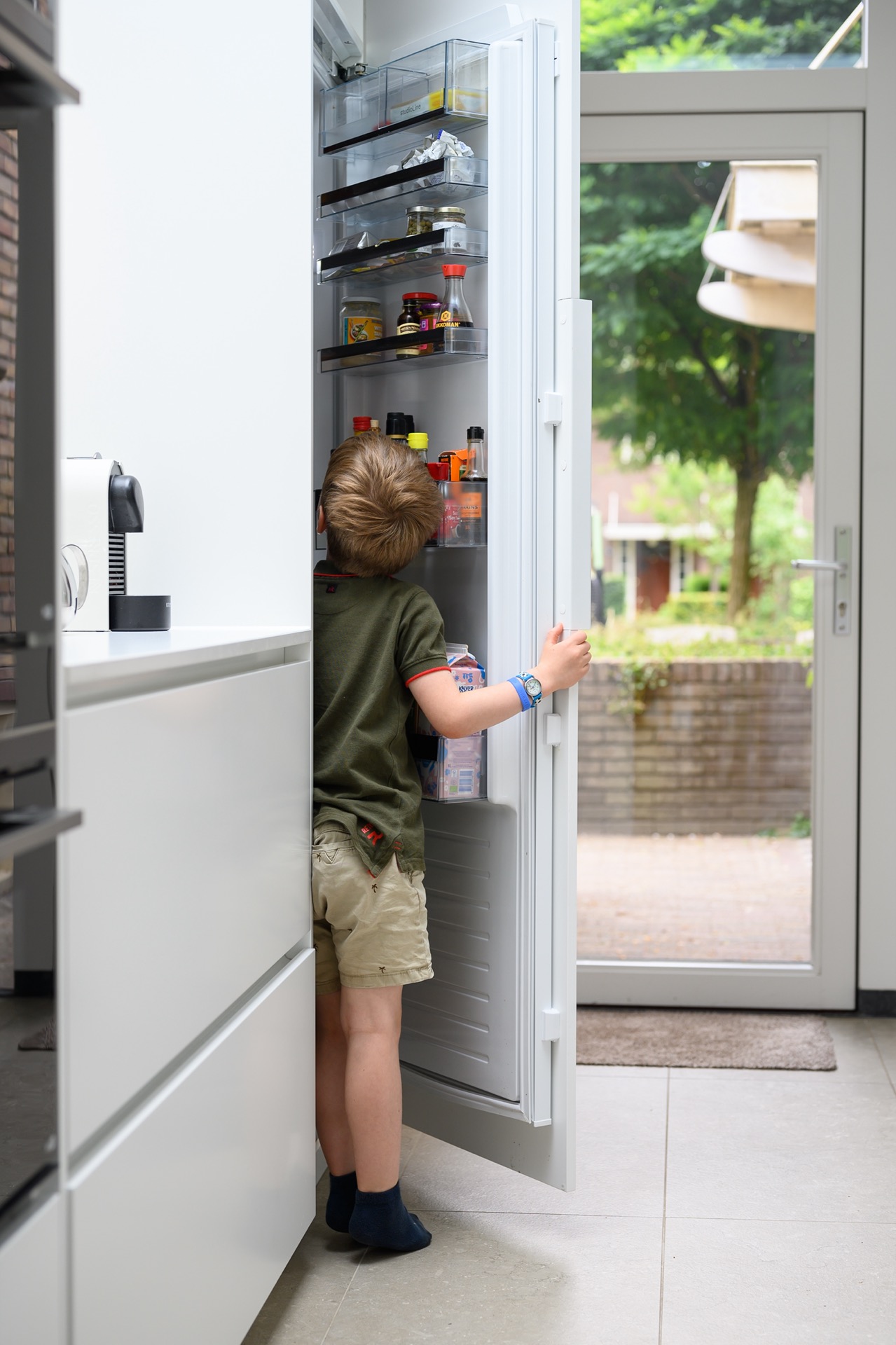
The cooking island forms the centerpiece, supported by ample natural light from the overhead lantern. The flow from cooking to preparation spaces is unobstructed, with the niche for the coffee machine tucked away but easily accessible, contributing to the kitchen’s streamlined functionality. That makes the light interior part of the architectural character rather than a loose finish.
Transitional Zones between Interior Spaces
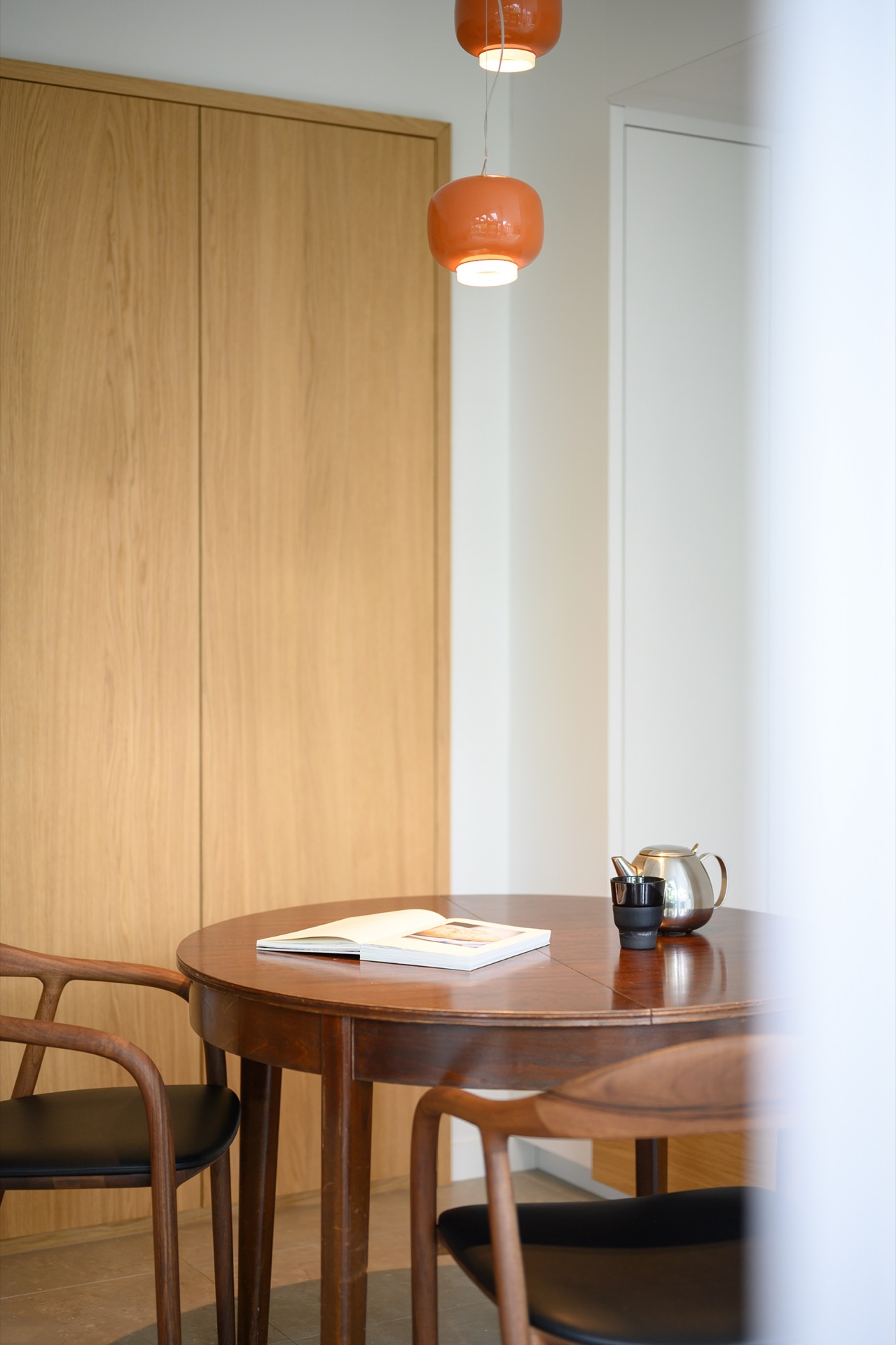
Doors crafted from oak lead to practical areas such as the utility room, marking clear spatial divisions without disrupting the overall material continuity. The natural textures in these doors complement the surrounding furniture and flooring, forming gentle visual transitions between different functions.
Subtle Integration of Structure and Craftsmanship
The visible architectural support—normally a disruptive element—is expertly embedded within tailored joinery. This approach maintains openness while revealing a thoughtful coordination between construction and interior design.
Transforming Functional Areas with Design Considerations
Beyond aesthetics, considered choices play a role in daily usability. The kitchen’s composite countertop and the durable ceramic tile floor support everyday tasks, all while fitting within the minimalist and natural material scheme.
Material Choices Reflect a Respect for Tactility and Light
Wood, ceramic, and composite surfaces compose a triad that responds well to the incoming daylight. The subtle textures and matte finishes absorb and diffuse light, avoiding glare and emphasizing a feeling of spaciousness.
Indoor-outdoor Connections Support a Bright Interior
Generous window openings and the central skylight invite the outside in, filling rooms with a rhythm of shifting light and views. These openings shape the spatial experience, underscoring the light interior concept.
Efficient Use of Modern Fixtures in a Quiet Setting
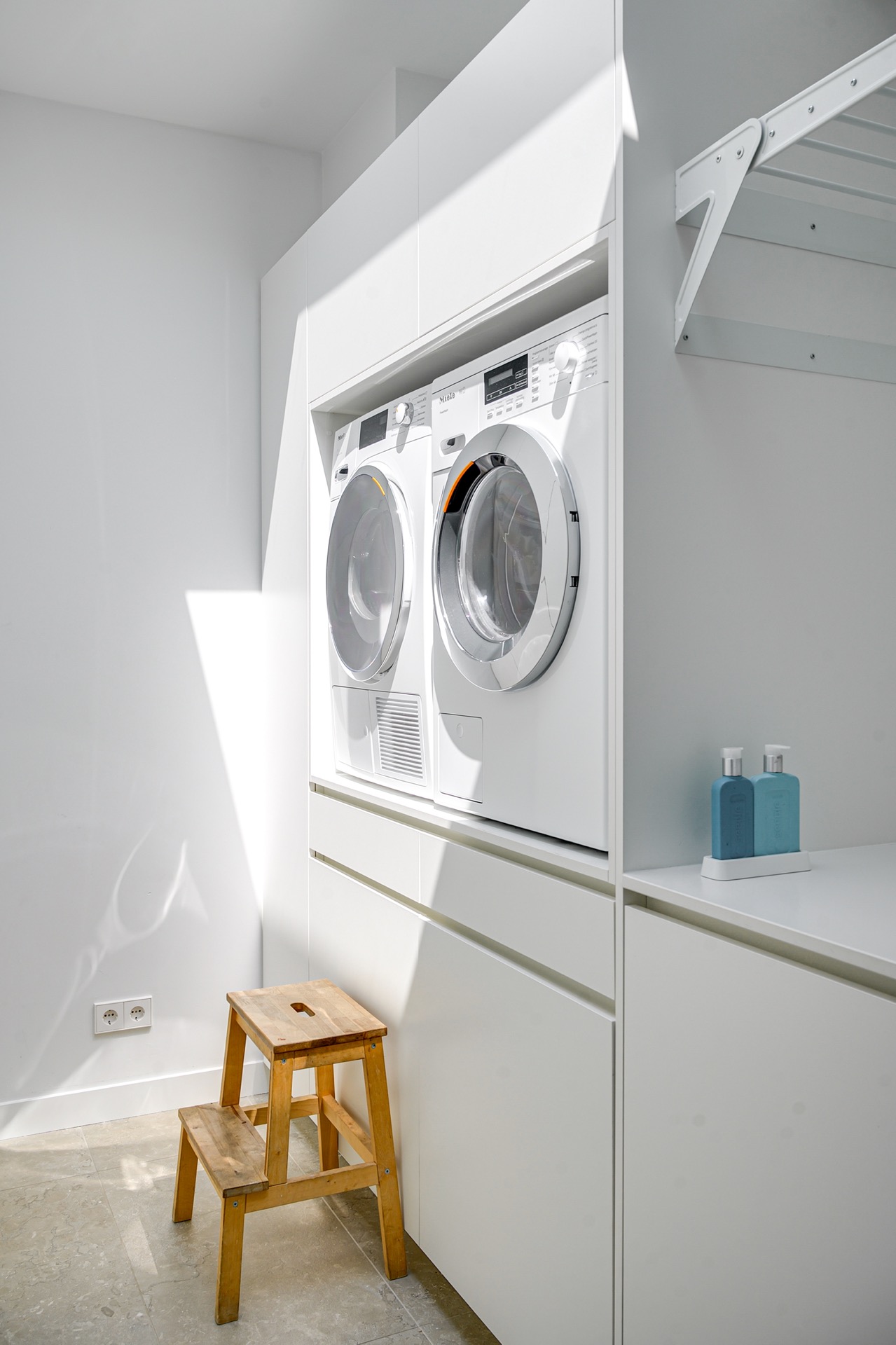
Equipment and lighting sources are selected and installed to support the clean lines and understated materials of the interior. This measured use of technology respects the overall minimalist gesture, contributing functionality without distraction.
Final Thoughts on Spatial Composition
The interplay of light, material, and subtle joinery creates a living environment that is visually light yet texturally rich, with well-defined transitions between open living spaces and functional niches. The design holds attention through quiet details and texture rather than bold statements. That makes the light interior part of the architectural character rather than a loose finish.
Want to see more of Kraal architecten? View the page of Kraal architecten for even more great projects and company information.


.png)