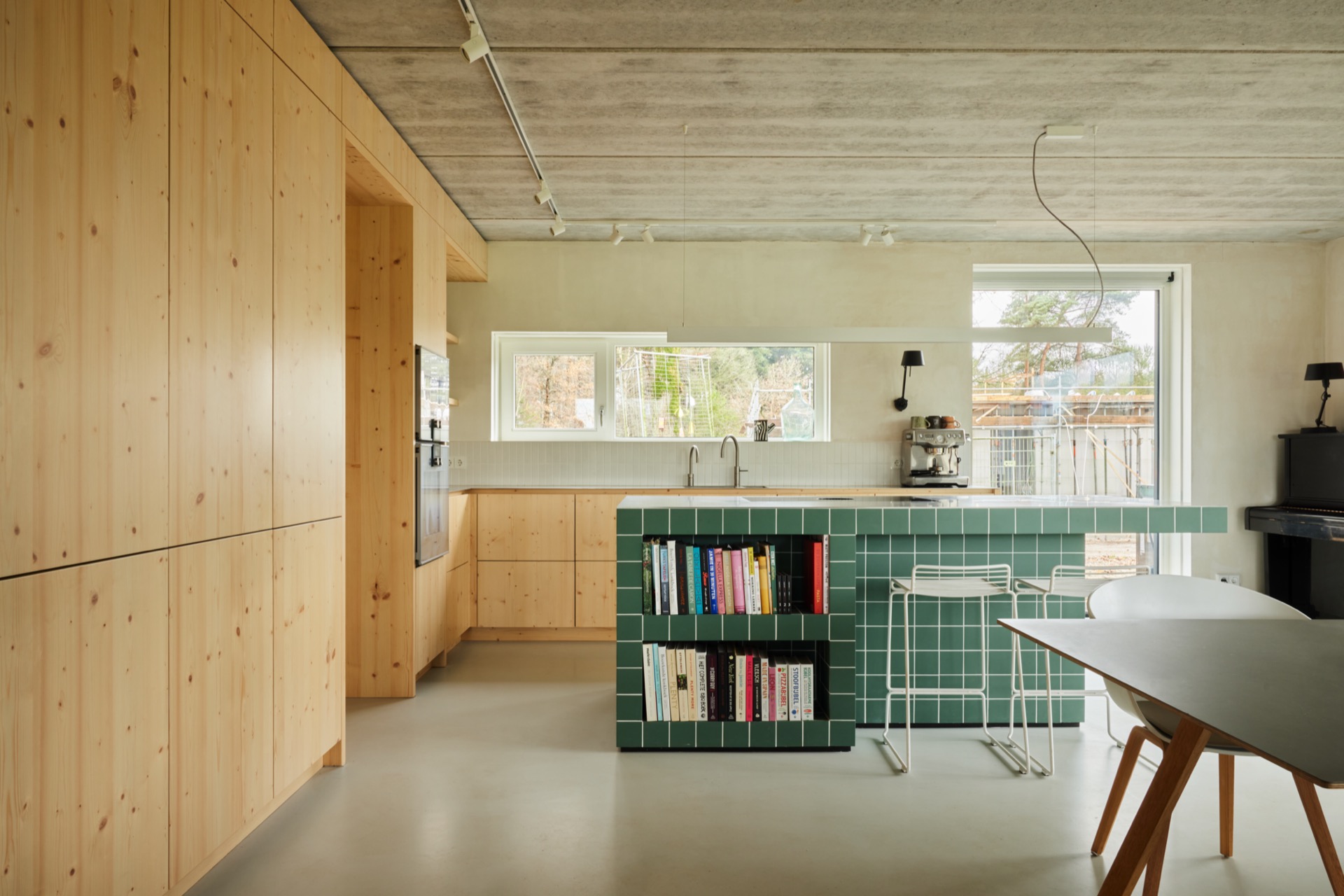






Sleek natural kitchen with green tiles and wood accents
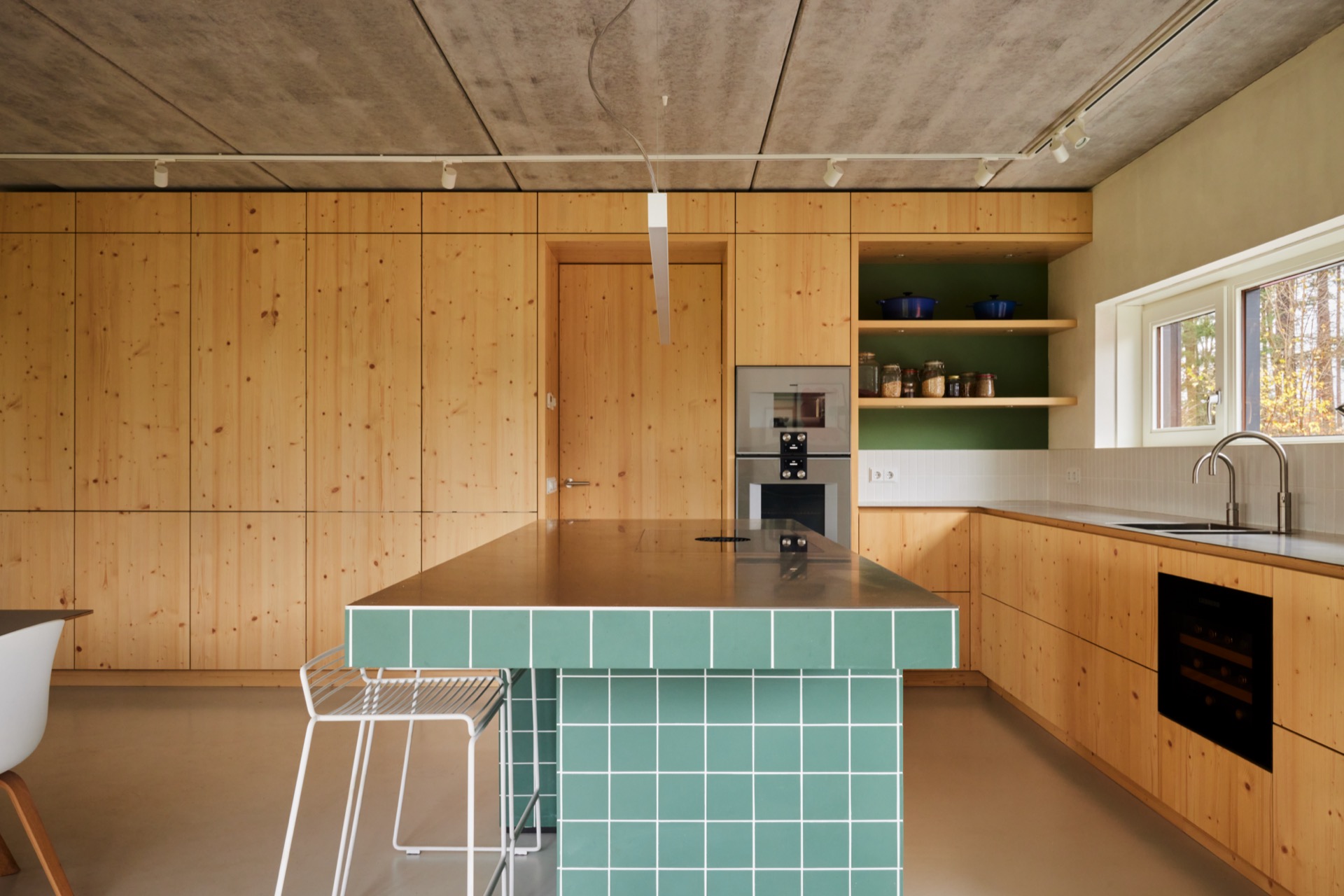
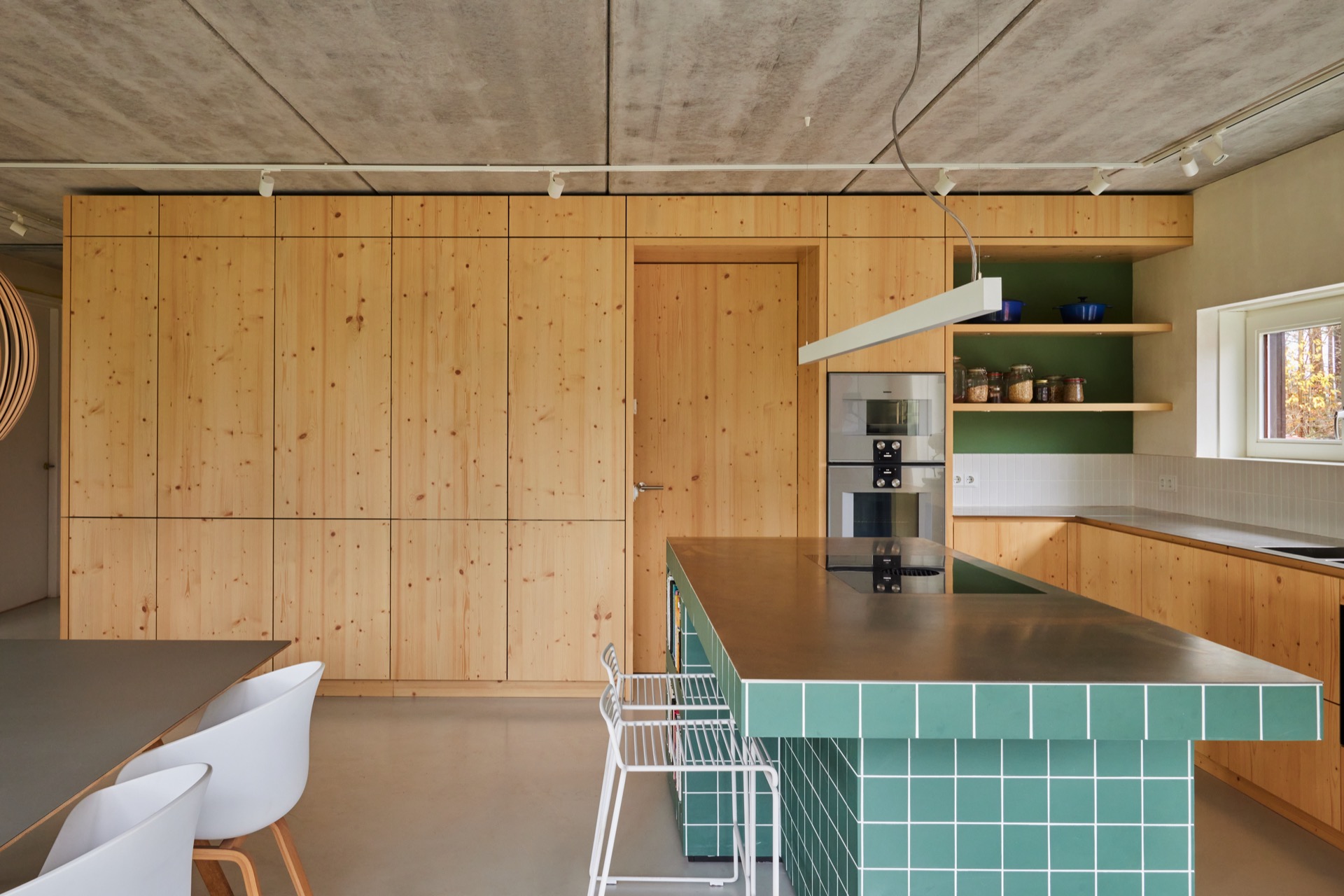
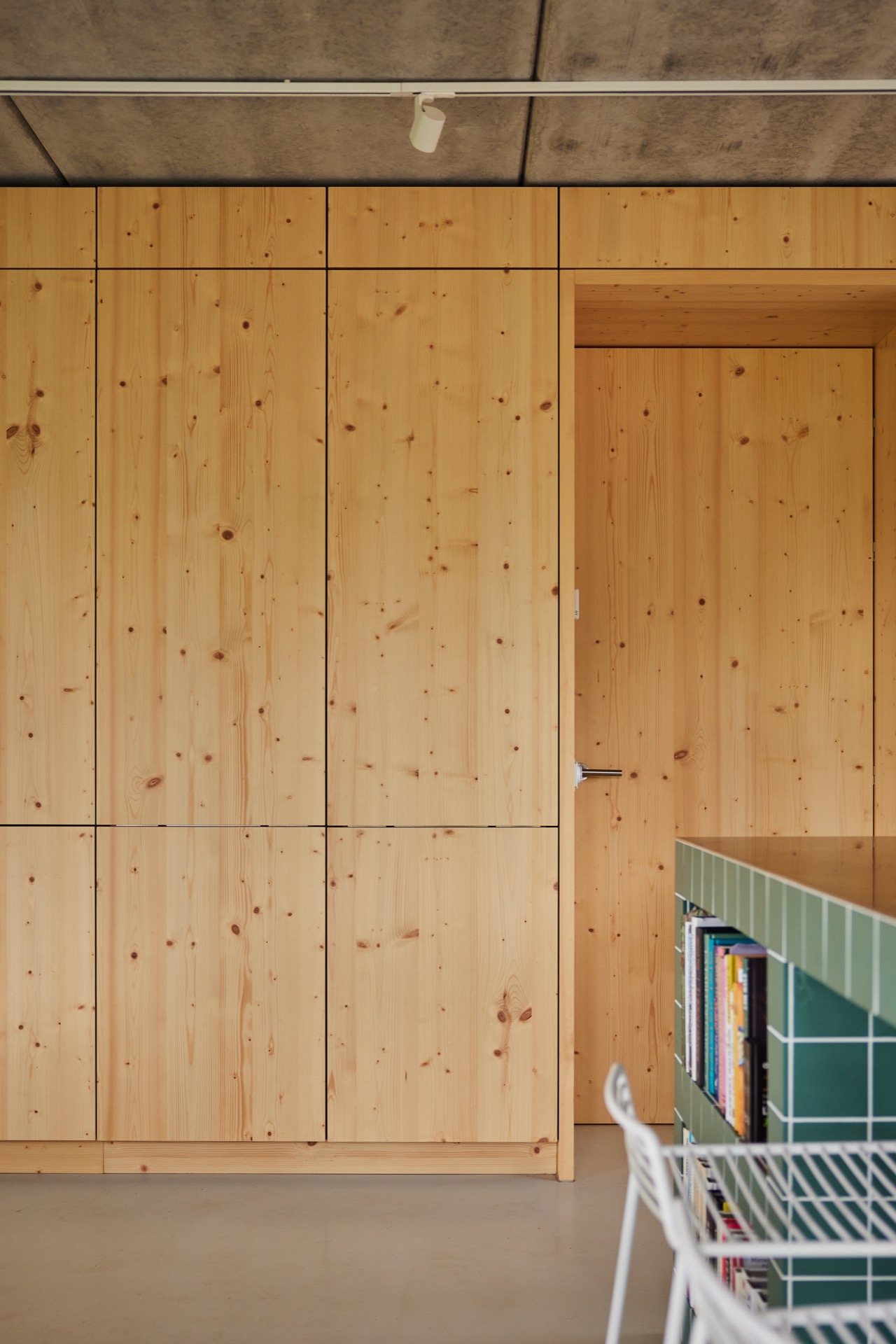
Sleek natural kitchen shapes the way the rooms are organized and described. Light oak veneer cabinetry offers a base of subtle warmth and texture across the kitchen surfaces. The wood’s lightly lacquered finish reflects natural light entering through large windows, amplifying the soft tonal shifts in the grain. This treated oak forms the foundation of a kitchen where natural materials and clean lines meet in deliberate restraint.
Sleek natural kitchen as a spatial starting point
The kitchen doors forego handles for streamlined fronts, employing push-to-open mechanisms that preserve uninterrupted surfaces. Integrated grip profiles subtly run along the edges of cabinets, enhancing visual calm without introducing hardware clutter. These details reinforce the minimalist ethos, allowing the materials to remain the focal point while supporting smooth functionality.
Green Tile Accents Reinforce Natural Themes
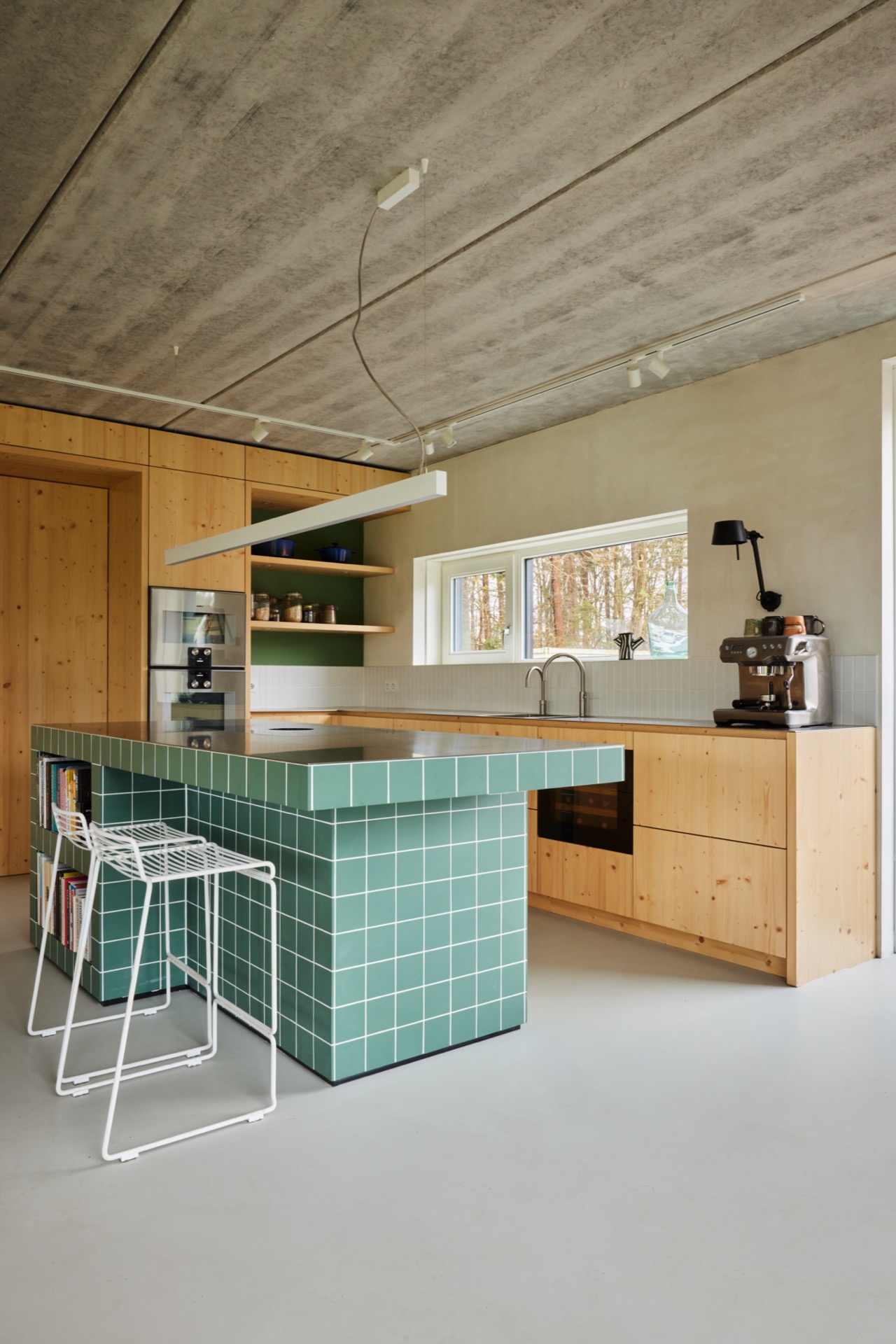
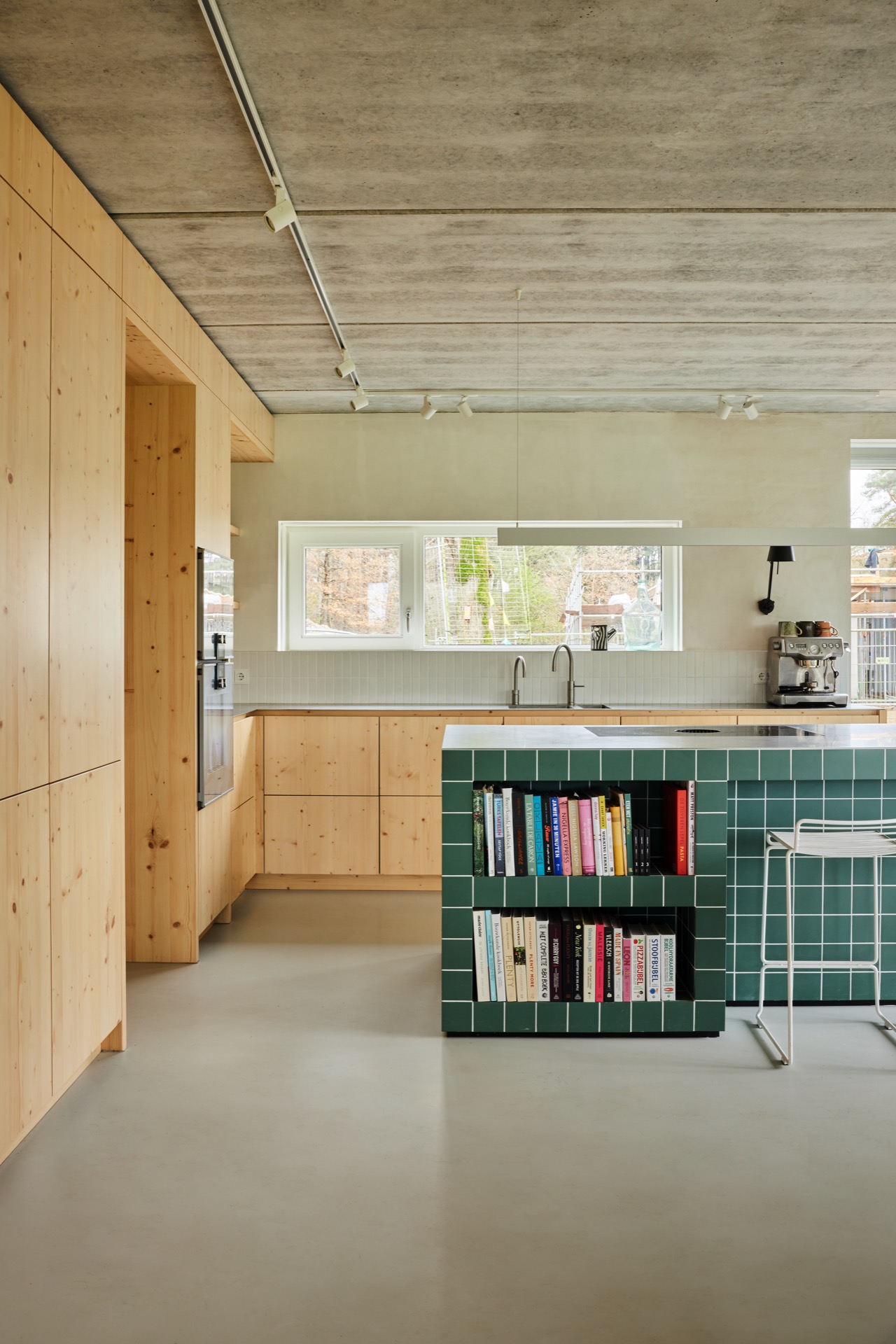
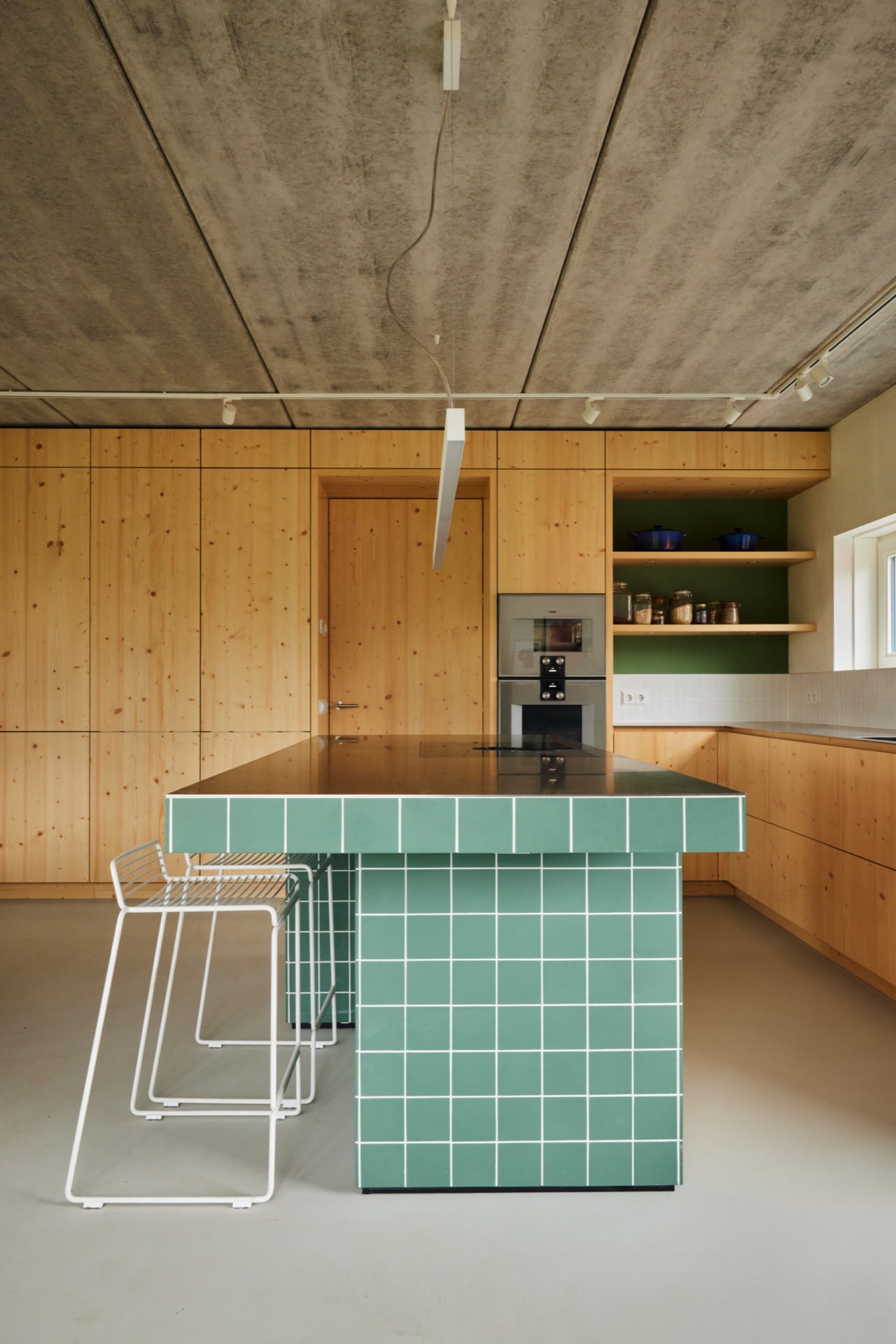
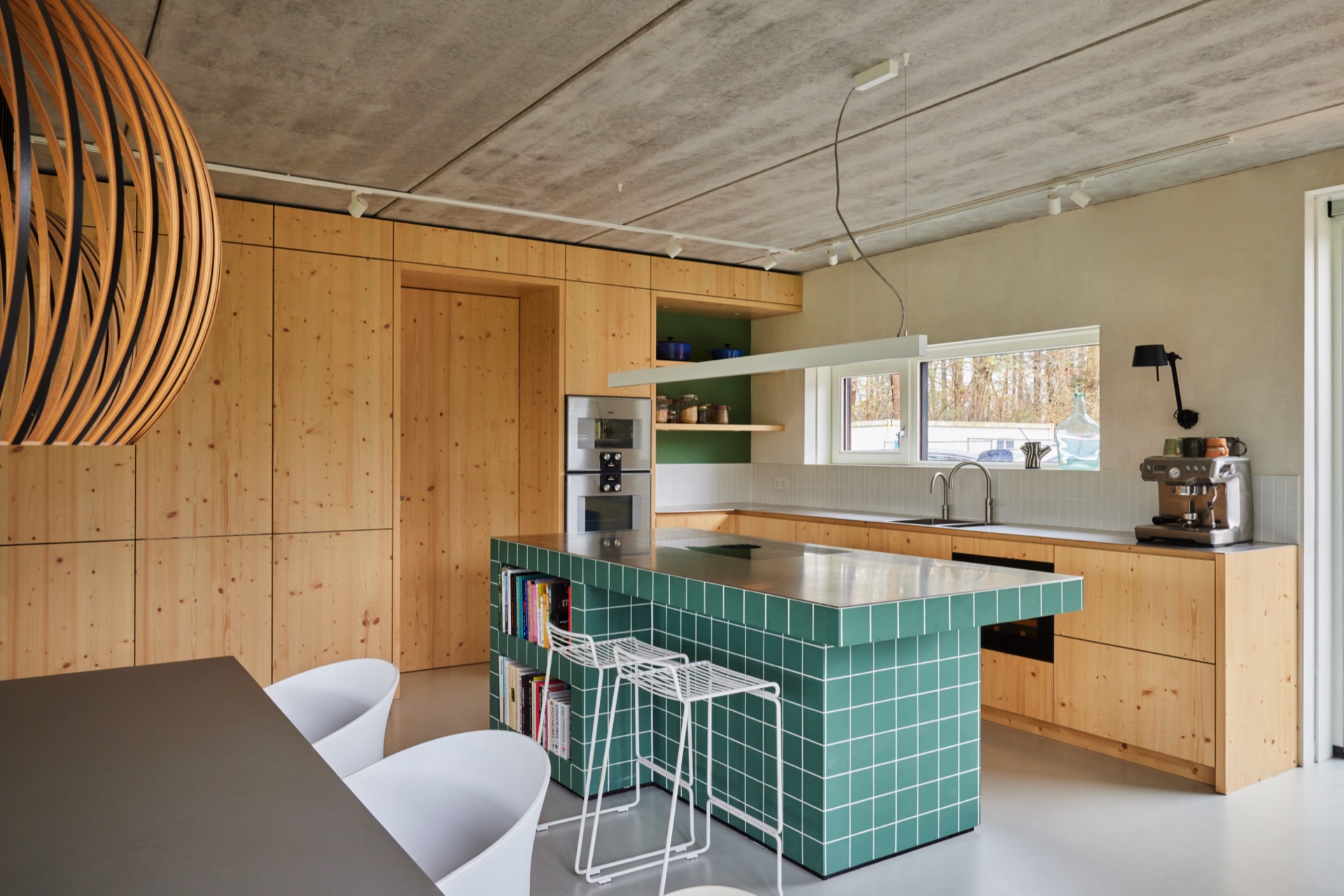
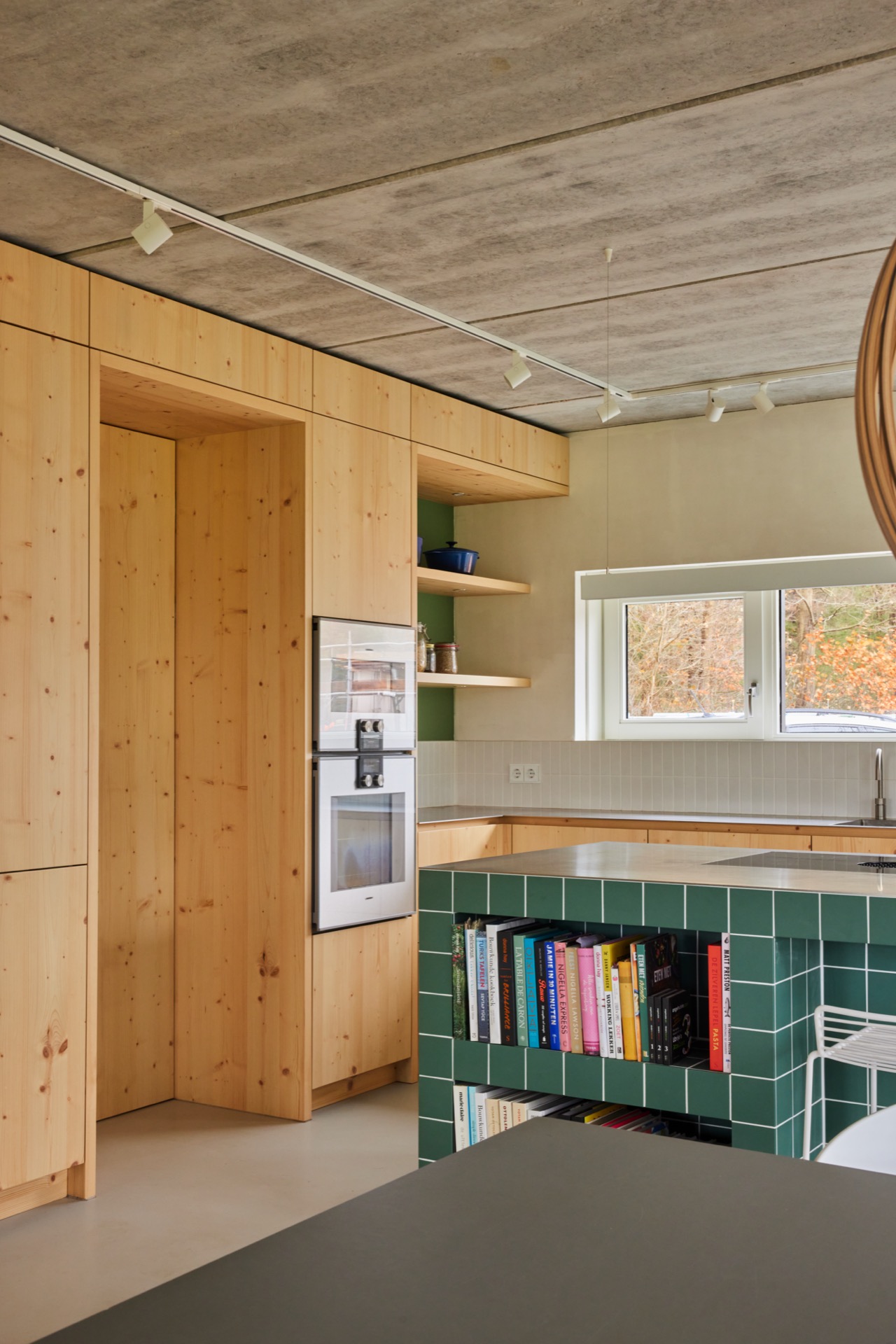
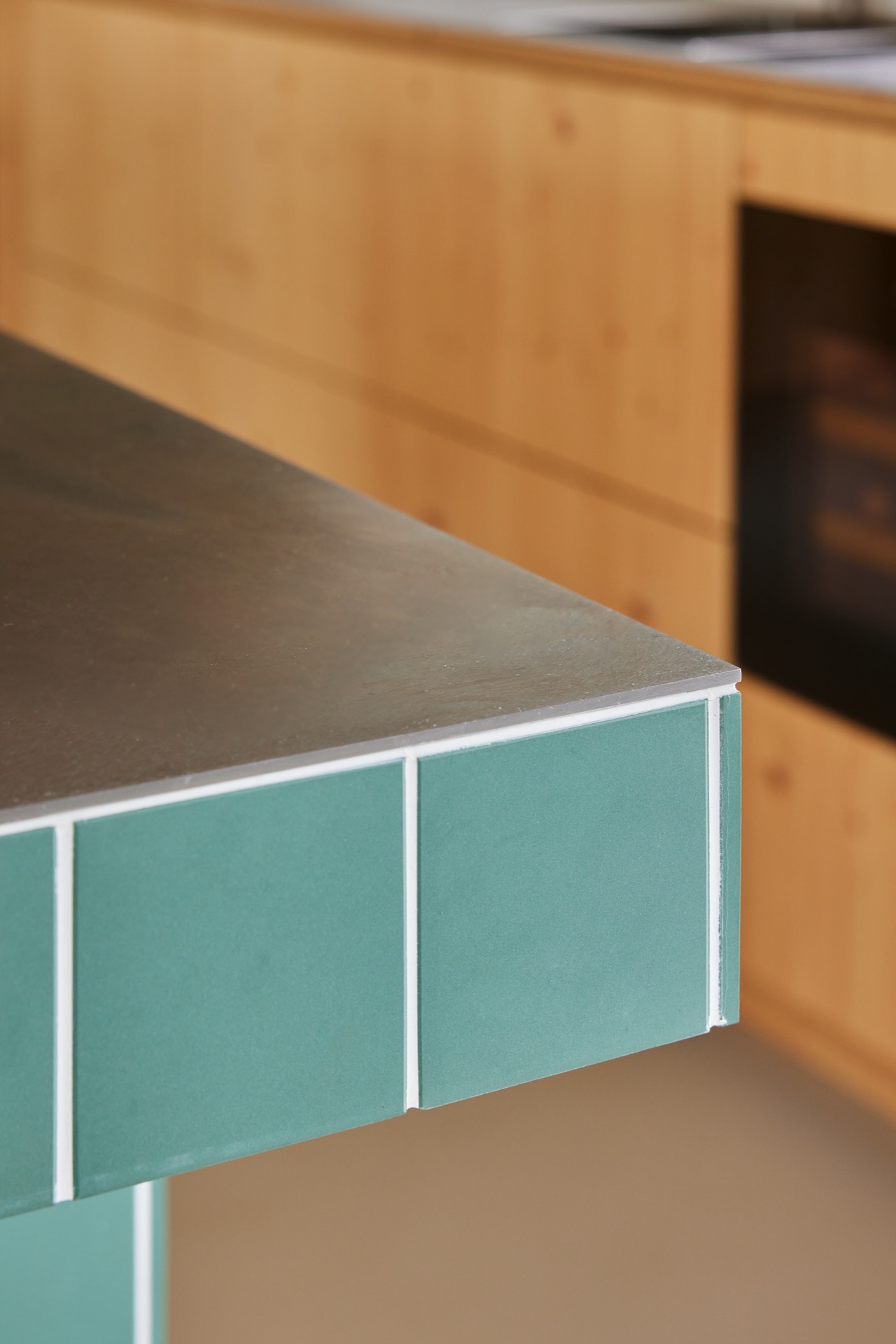
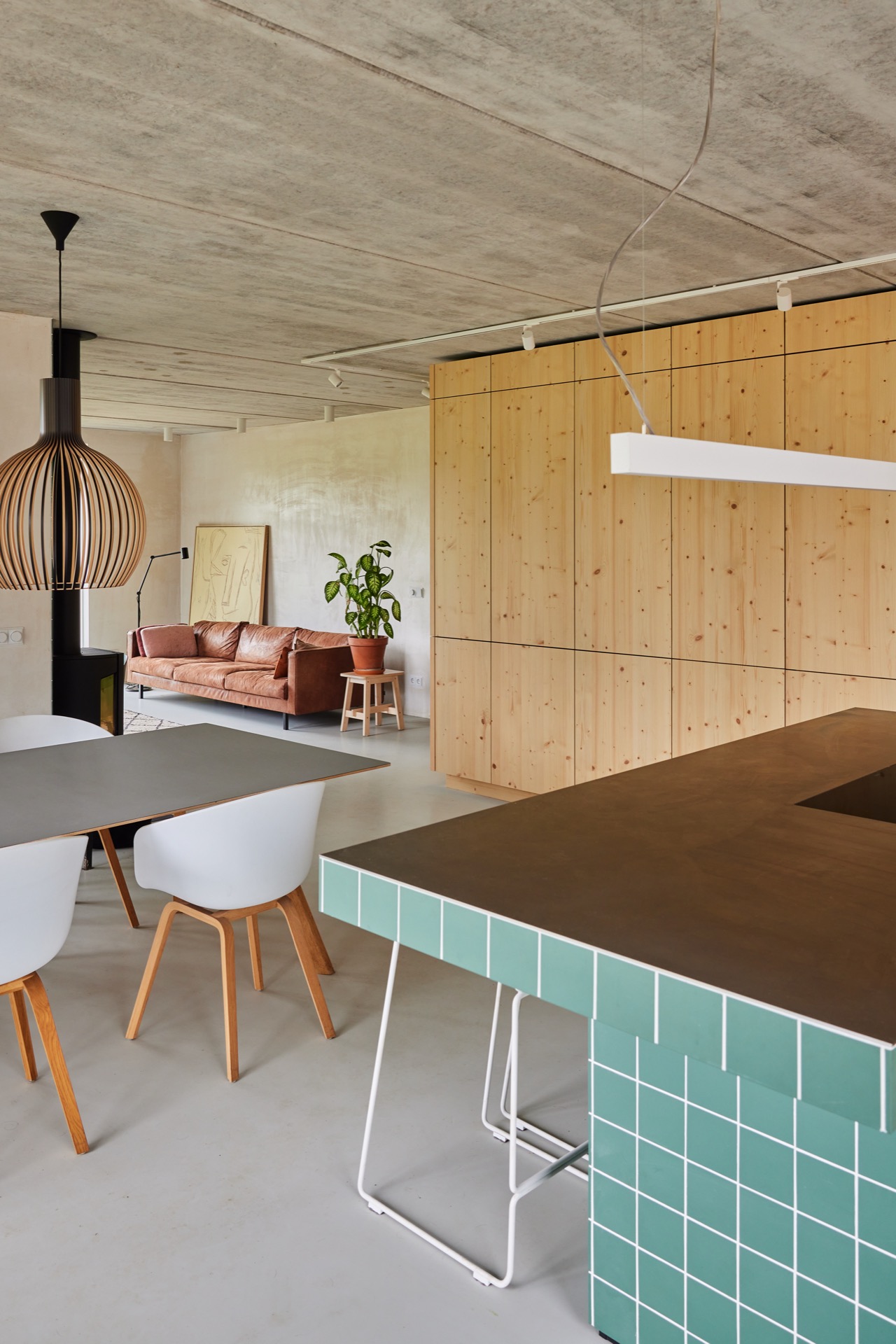
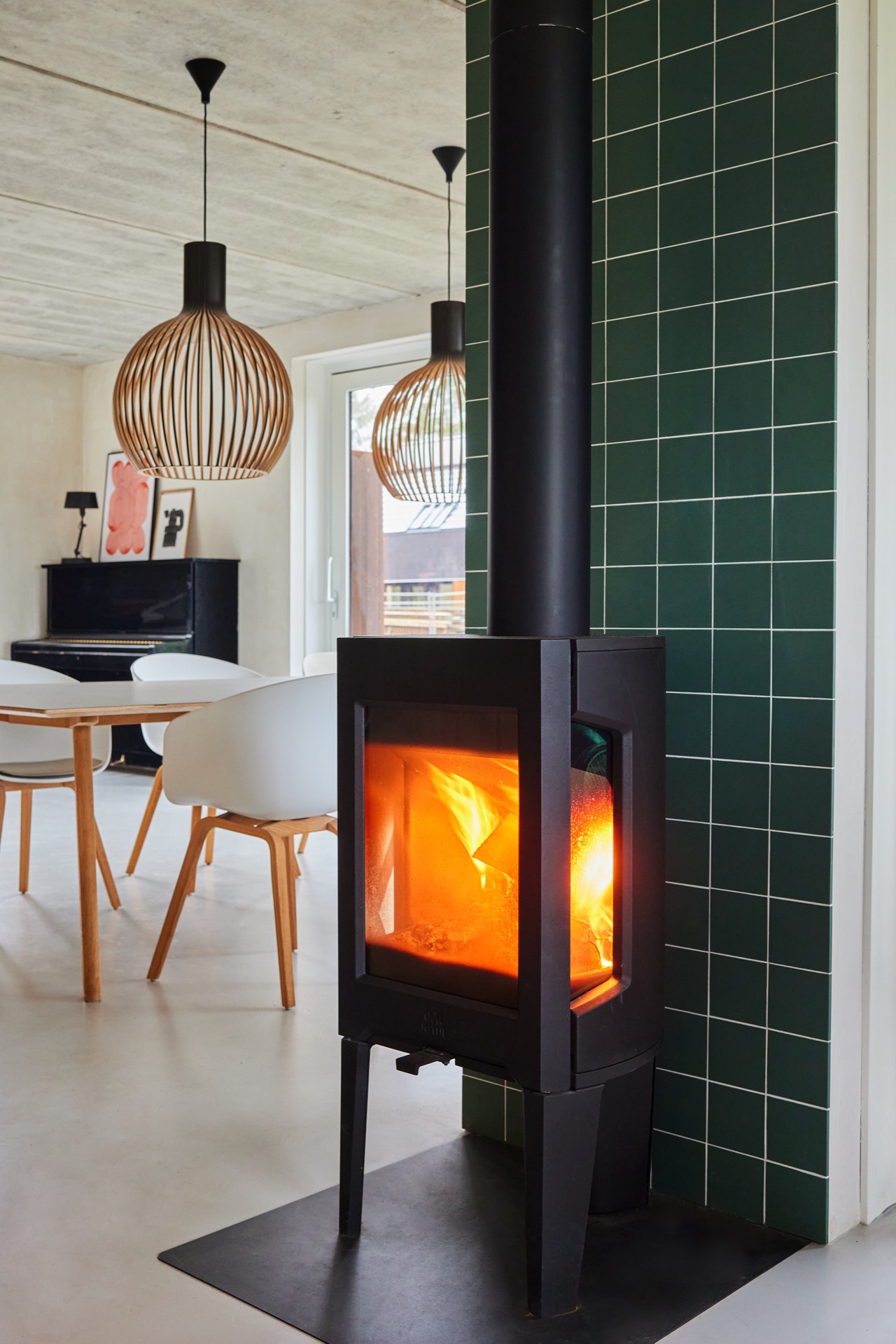
A bar topped with green ceramic tiles punctuates the design, introducing a cool contrast against the warm oak. The tiles extend around the kitchen island, creating a grounding element that ties wood and ceramic into a coherent palette. This vivid yet understated green highlights the connection to nature while adding visual interest through its matte texture and grid layout.
Use of Open Shelving and Wood Panels
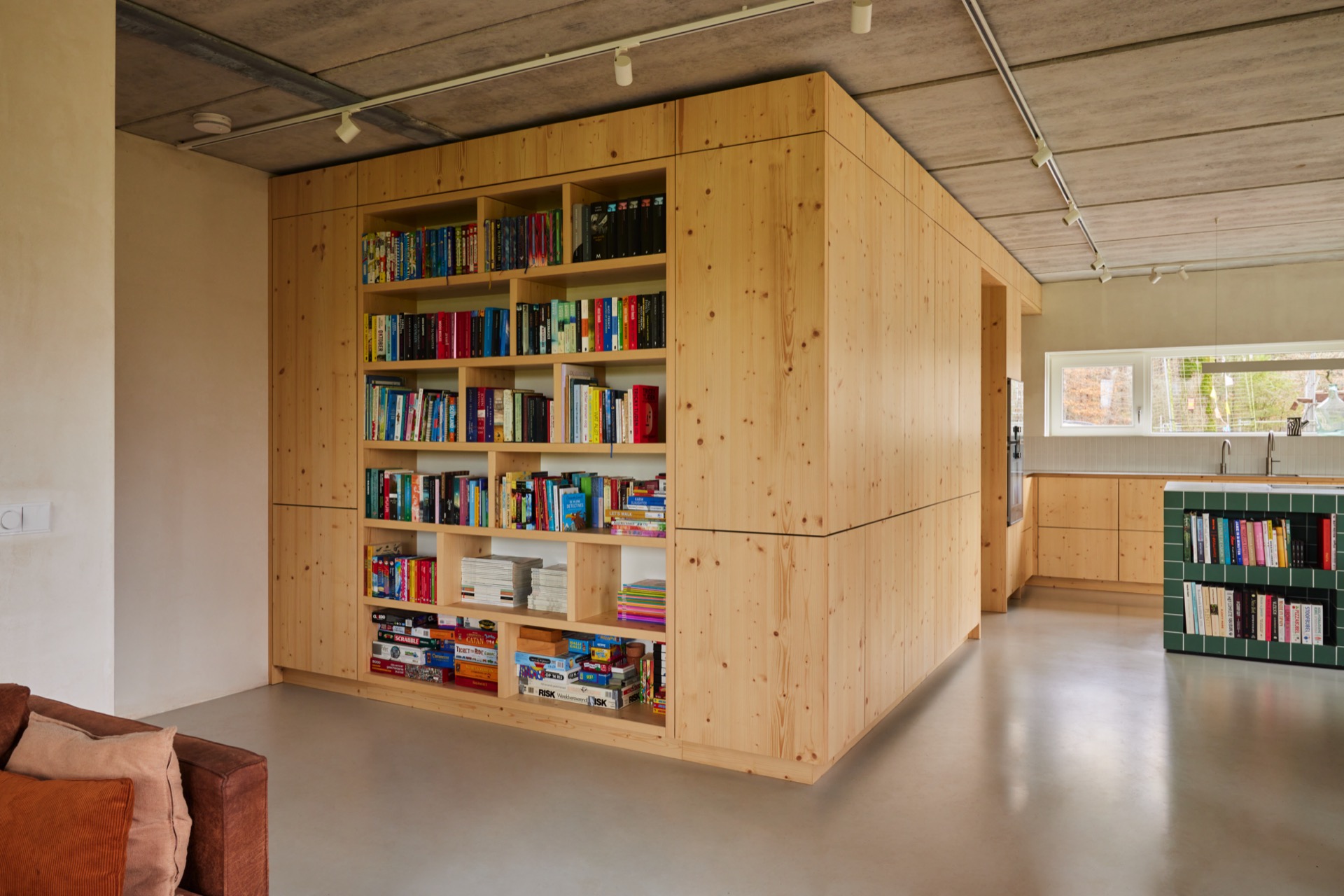
Wooden wall panels extend vertically beside the cabinetry, intersecting with open shelves that host kitchen utensils and curated objects. This layering of solid and void enriches the spatial experience, breaking up the mass of cabinetry with lighter, more accessible storage. The juxtaposition of closed oak fronts with open shelving amplifies the sense of openness and practicality.
Concealed Door and Integrated Storage
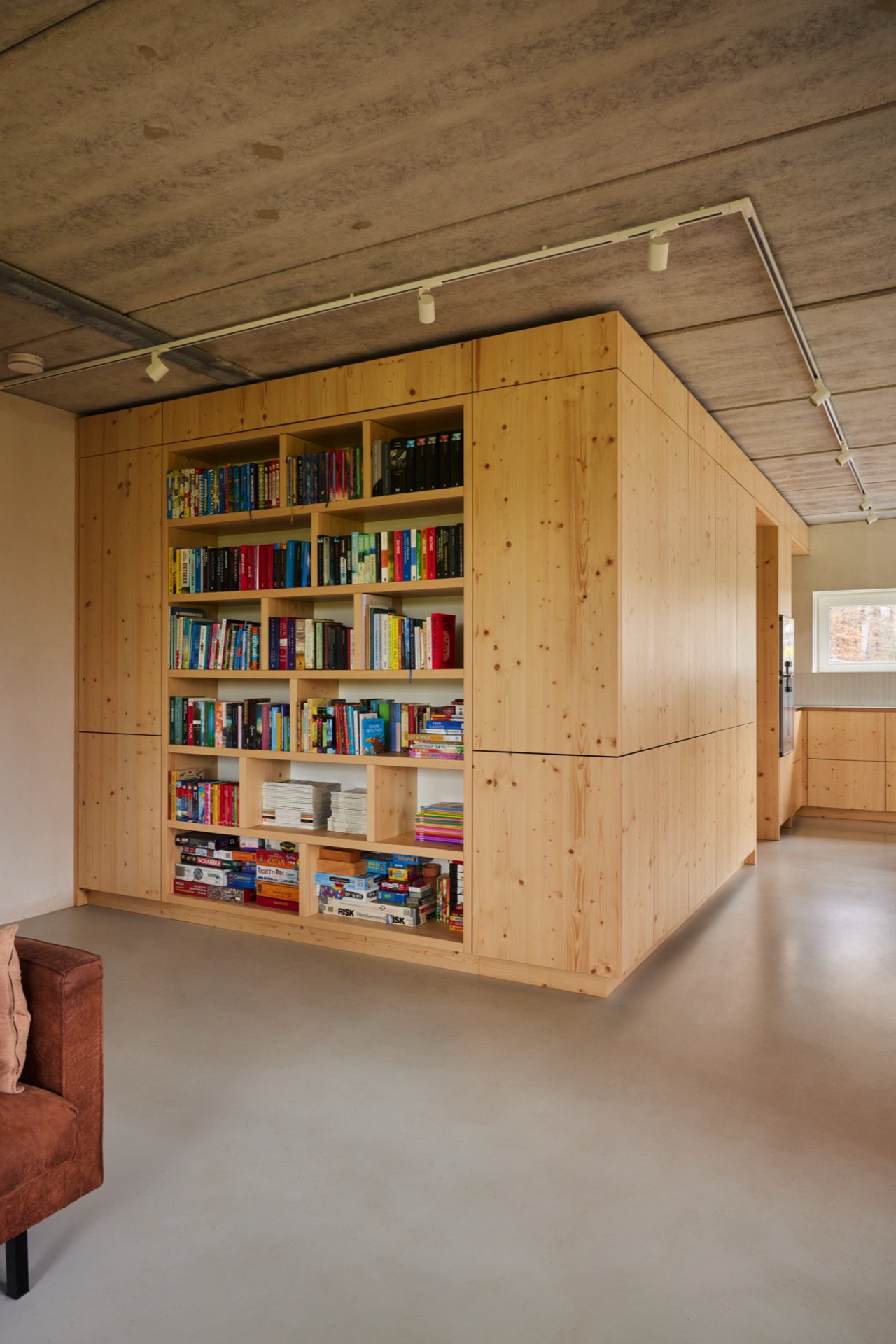
Attention to detail appears around the corner where the wall unit transforms into a bookcase. Beyond this, a concealed door leads discreetly to the utility area, camouflaged within the wooden paneling. This subtle integration avoids visual interruptions, preserving the kitchen’s clean lines and uninterrupted rhythm of natural finishes.
Kitchen Island: Functional and Visual Anchor
The kitchen island doubles as a workspace and social hub, its tiled surface echoing the green tonalities of the adjacent bar. The island includes built-in appliances with flush-mounted ovens and a cooktop, maintaining the linear order of surfaces without interrupting flow. Seating around the island invites casual gatherings, while strategic lighting overhead delineates this zone within the open plan.
Material Palette and Surface Treatments
Besides oak and ceramic tiles, concrete surfaces appear subtly, particularly in the ceiling with an exposed concrete finish and spotlight rails. This juxtaposition of natural wood, matte tiles, and industrial concrete suggests a layered approach to materials, emphasizing texture and restraint. The combination avoids decorative excess in favor of authentic material expression. Sleek natural kitchen remains connected to the layout, materials and daily use of the home.
Lighting and Spatial Ambiance
Track lighting mounted on the concrete ceiling provides targeted illumination, emphasizing work surfaces without overpowering the overall material warmth. Large windows introduce daylight that interacts with the oak and green ceramic surfaces, highlighting their natural hues and tactile qualities. This interplay of light and texture defines the space throughout the day.
Open Layout and Circulation
The kitchen’s open plan allows fluid movement around the island, with clear routes connecting storage, cooking, and seating areas. The extension of cabinetry into adjacent zones maximizes storage while establishing visual continuity. The open shelving and visible grain of wood panels soften transitions between functional zones, linking design with usability.
Details Elevating the Kitchen’s Character
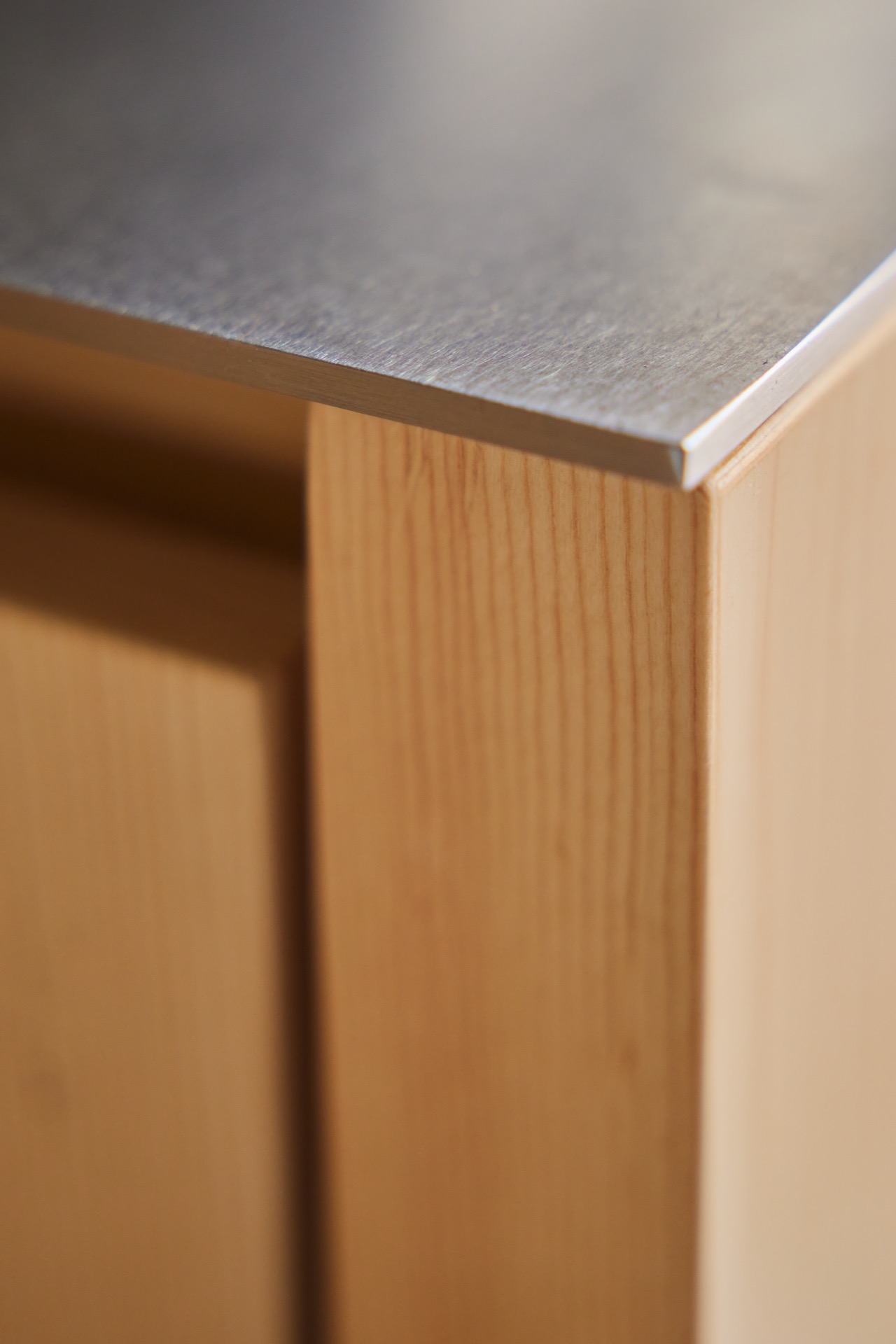
Close inspection reveals precise joinery where the oak veneer meets ceramic tilework, and subtle metal accents framing appliances. The textured green tiles feature a slight variation in tone, introducing depth without disrupting the minimalist framework. These considered details anchor the design in material authenticity.
Functional Surfaces and Durable Materials
Work surfaces employ hard-wearing finishes that complement the natural oak veneer. The ceramic tiles around the bar and island offer resilience against wear, while the lacquered wood shutters provide easy maintenance. This balance ensures the kitchen remains practical while embracing its made-from-nature material intent.
Integration of Appliances Within the Design
Built-in ovens and refrigeration units blend with the cabinetry’s wood facades to reduce visual noise. Their flush installation maintains the straight lines that define the kitchen’s silhouette. Ergonomic placement of appliances supports efficient workflow while keeping the room’s simplicity intact.
Bringing Natural Elements Indoors Subtly
Beyond materials, the color scheme referencing foliage tones with green tiles communicates a quiet nod to the natural environment. The oak finishes and modest tile colors harmonize without overt thematic gestures, allowing the materials’ inherent qualities to shape the kitchen’s identity.
Overall, this kitchen incorporates natural materials combined with clean, minimalist lines to form a space both practical and visually restrained. The use of green ceramic tiles punctuates the wood elements, while spatial flow and concealed details underscore the design’s intent without distracting from the core material palette. Sleek natural kitchen remains connected to the layout, materials and daily use of the home.
Want to see more of Mint Interieur? View the page of Mint Interieur for even more great projects and company information.

.png)
NEW 2026 Jubileum Edition The Best Interior Designers Benelux
Order Now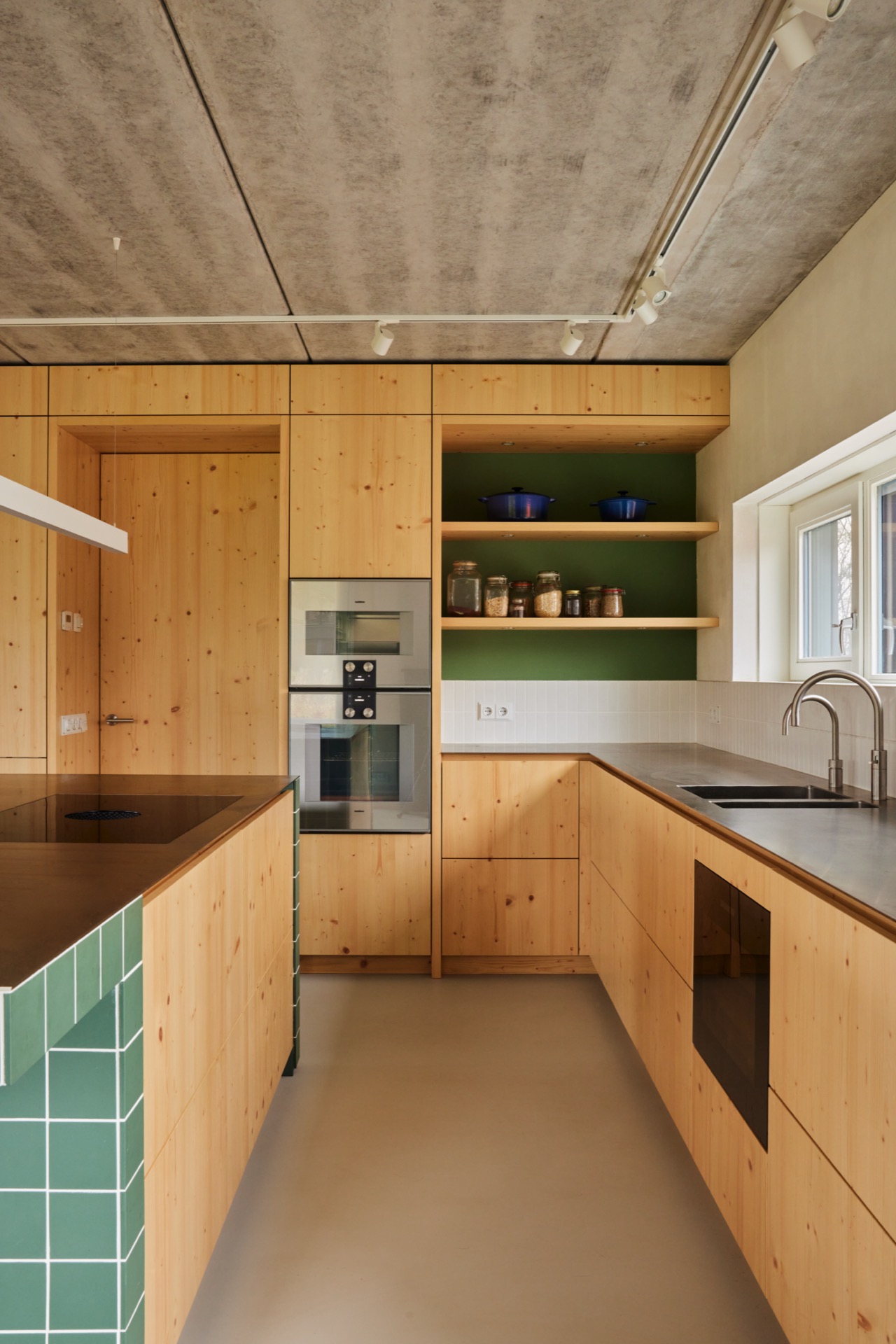
NEW 2026 Jubileum Edition The Best Interior Designers Benelux
Order Now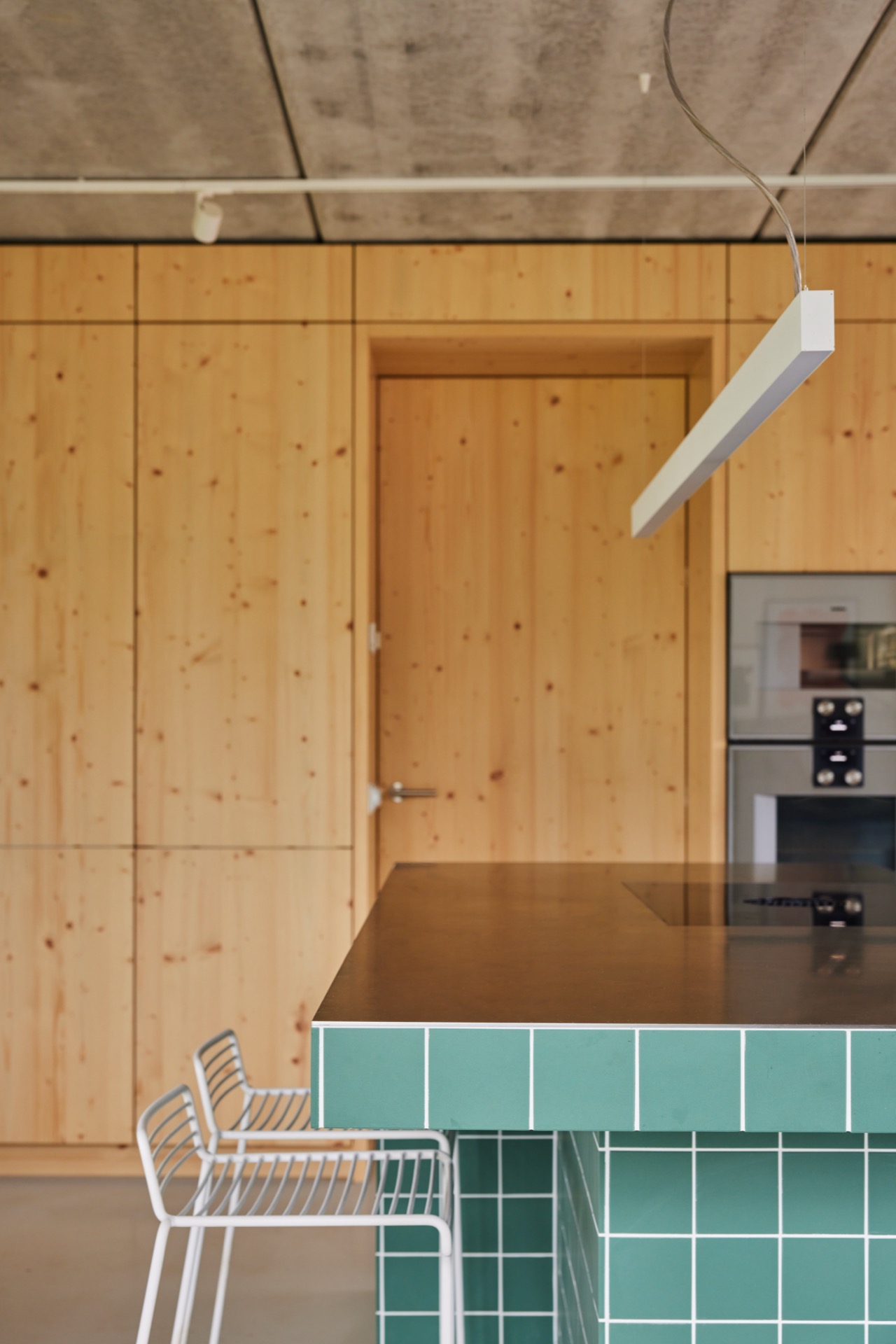
NEW 2026 Jubileum Edition The Best Interior Designers Benelux
Order Now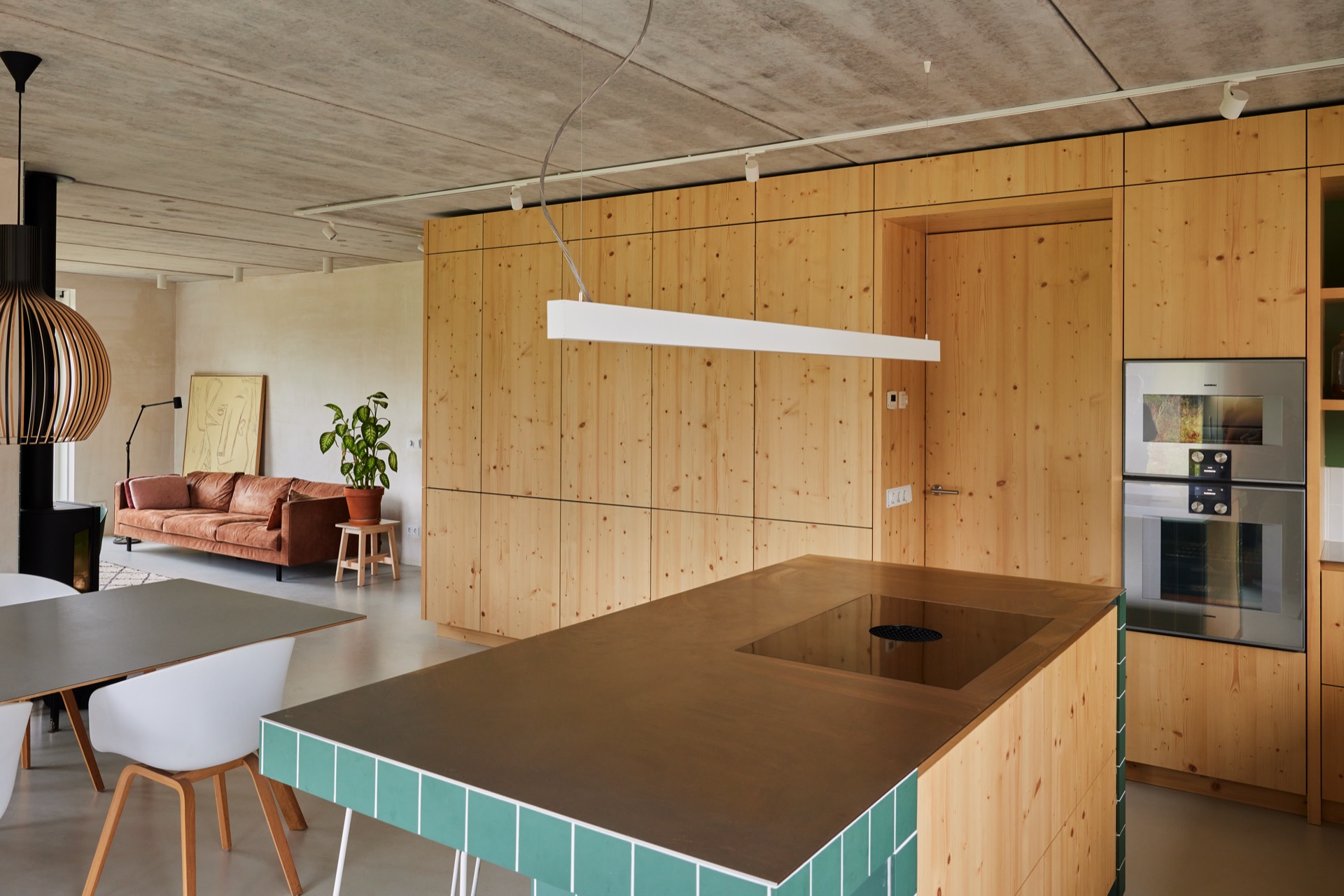
NEW 2026 Jubileum Edition The Best Interior Designers Benelux
Order Now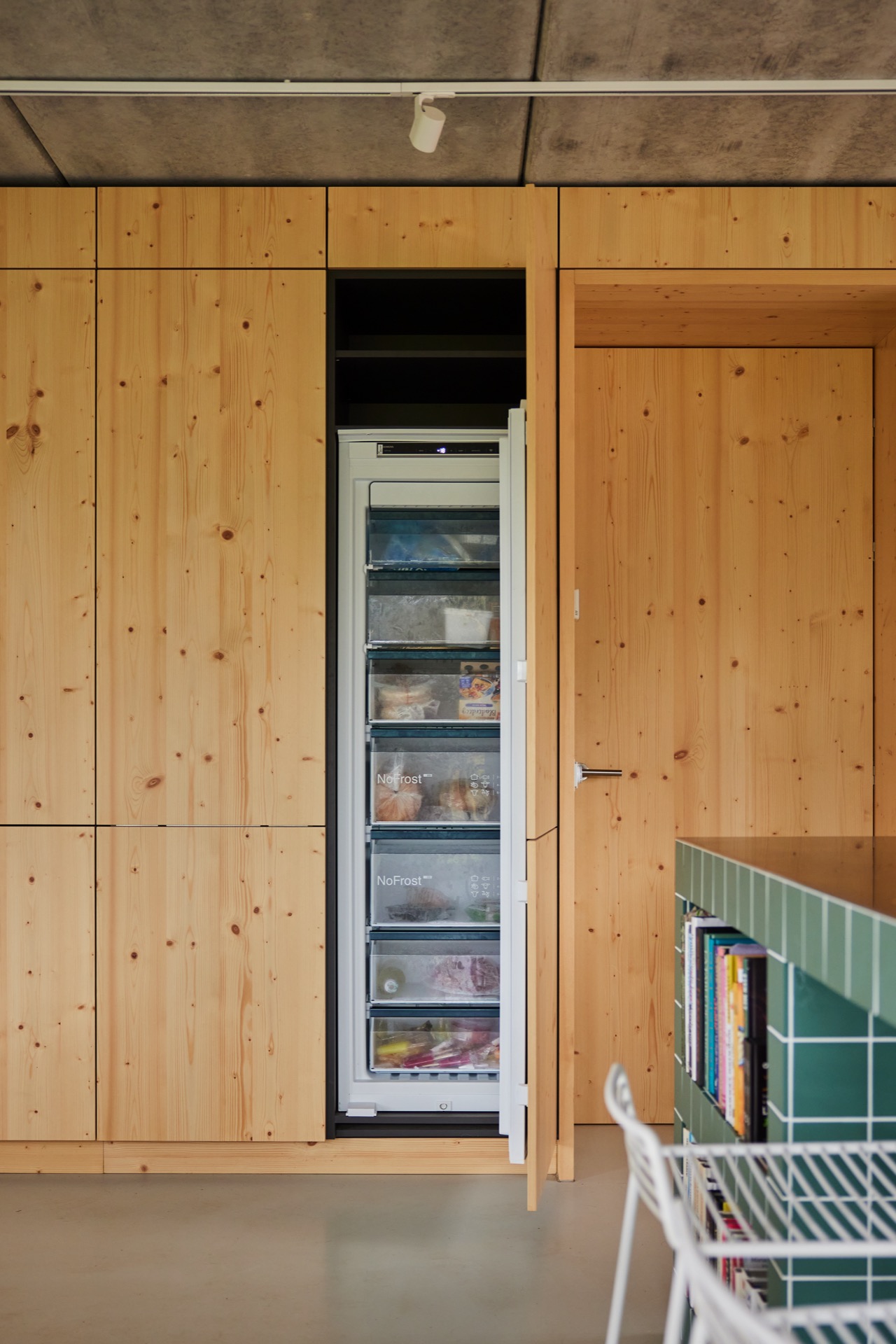
NEW 2026 Jubileum Edition The Best Interior Designers Benelux
Order Now