






Contemporary wooden indoor staircase with minimalist styling
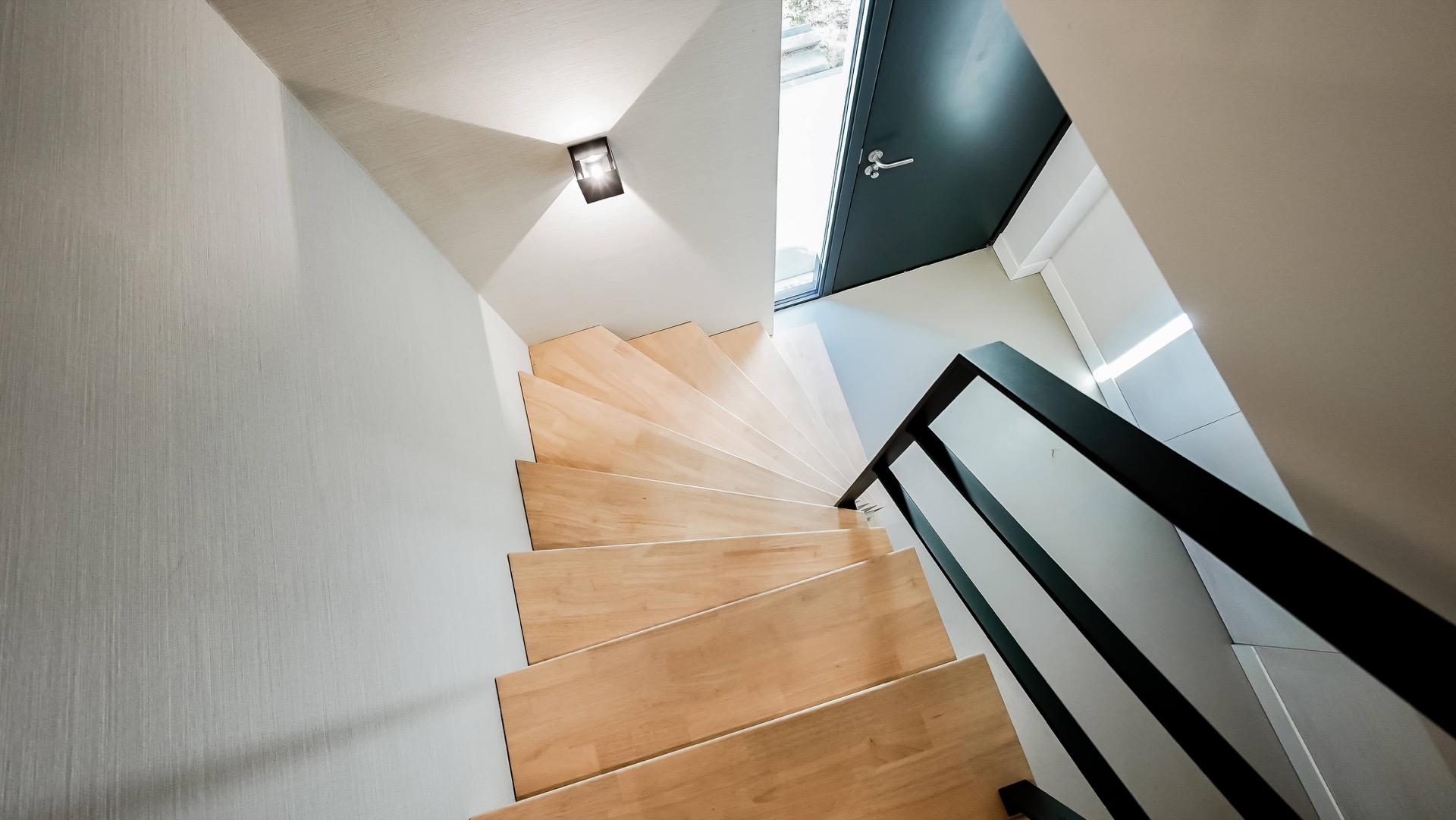
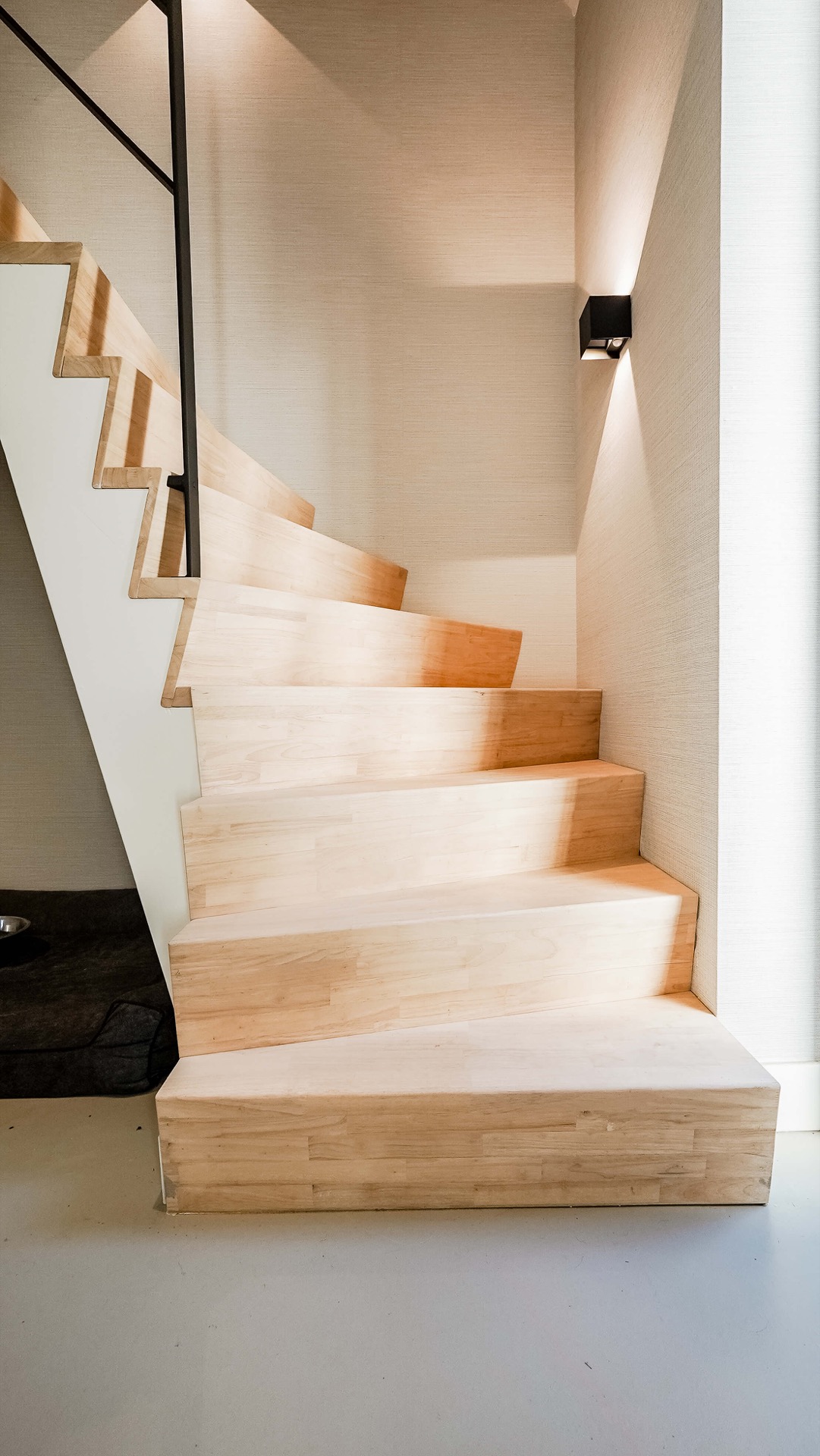
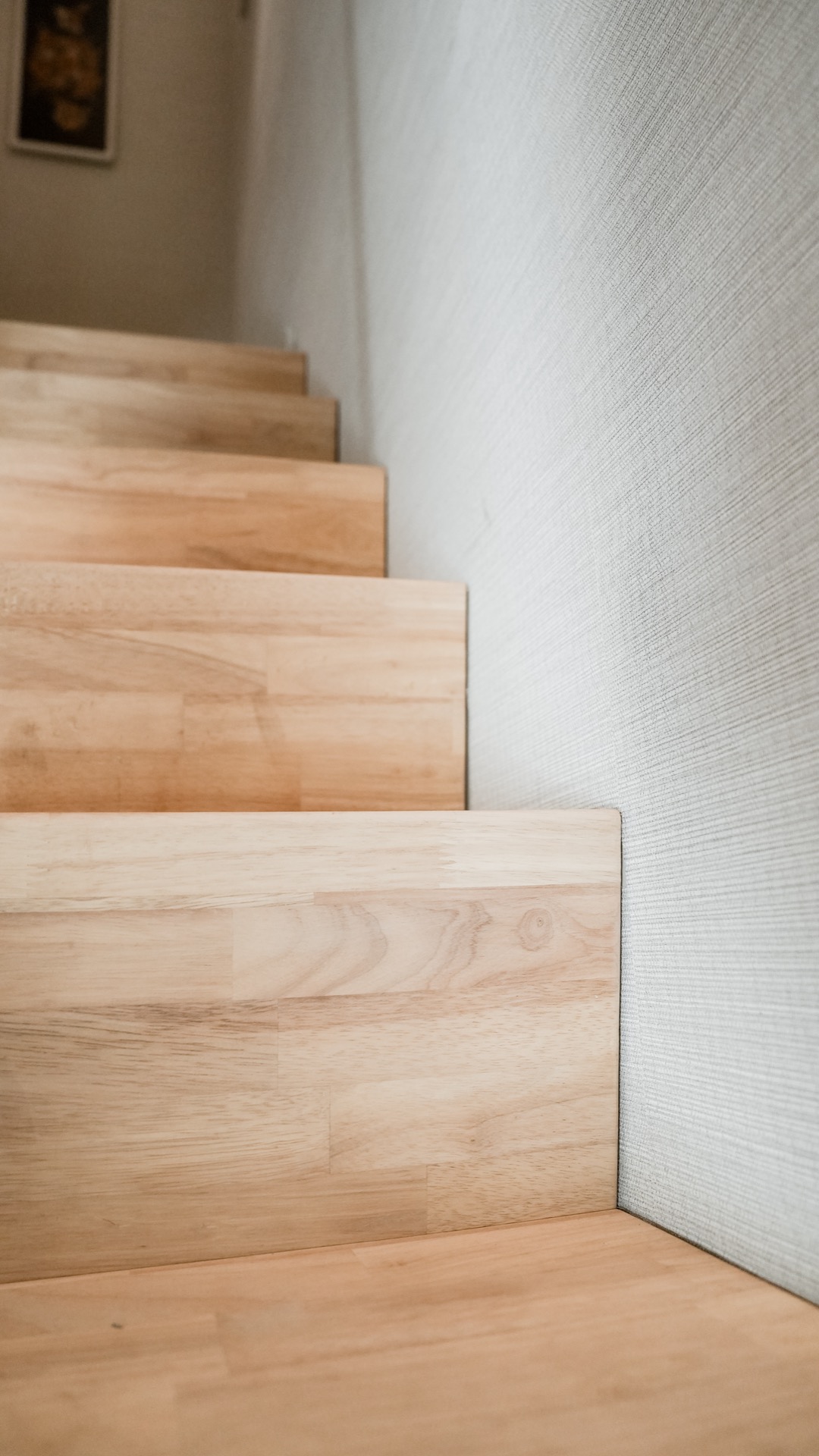
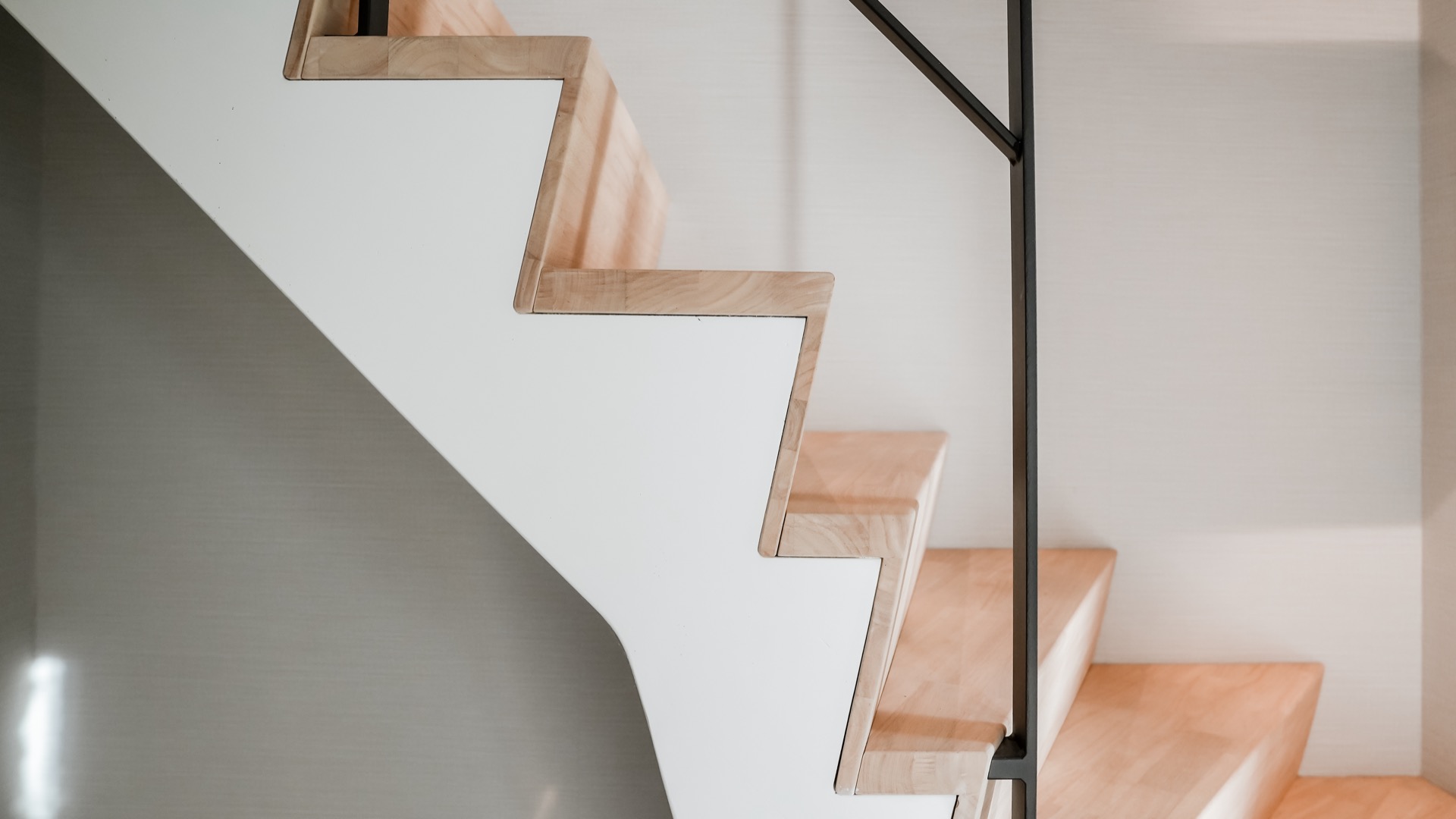
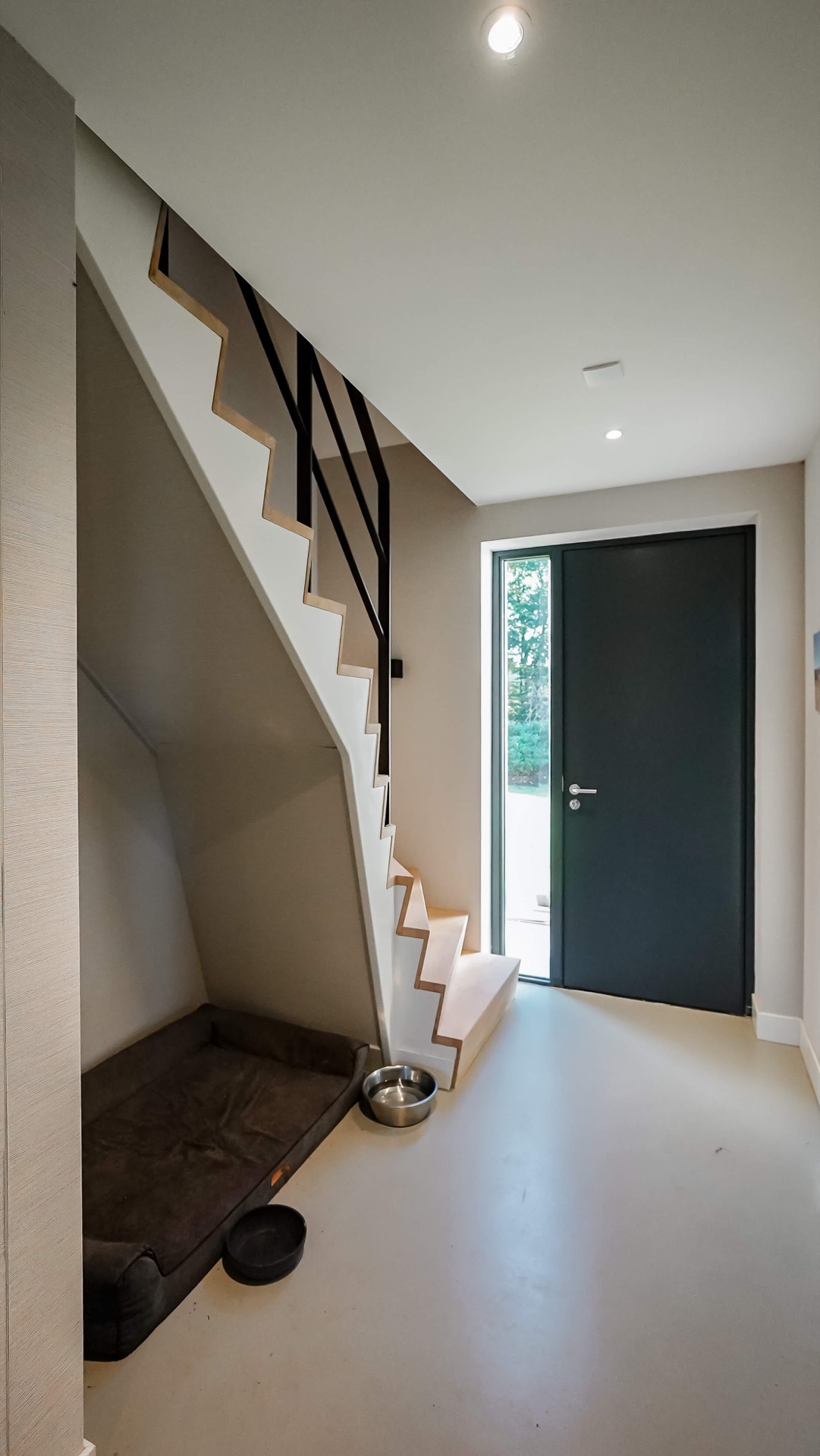
The indoor staircase design is immediately visible in the way the project is framed. The staircase unfurls like a sculptural element within the room, its zigzag silhouette cutting a crisp geometric line through the interior. Constructed from rubberwood, the light-toned treads reveal fine grain patterns that soften the angular form, bringing a natural texture that contrasts with the surrounding planar walls.
indoor staircase design as the architectural starting point
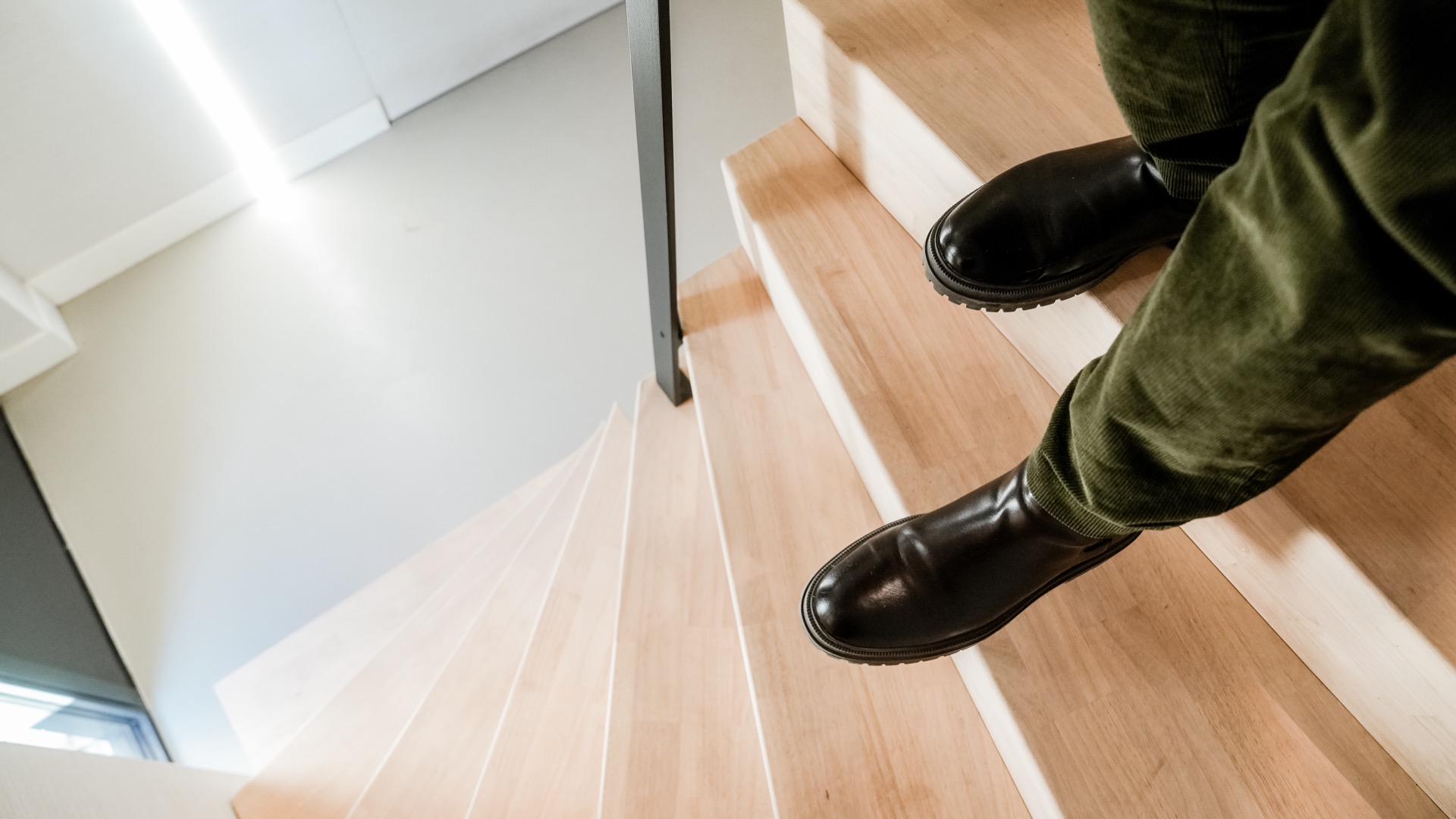
Its distinctive Z configuration extends the stair’s length horizontally before a sharp turn, introducing a subtle rhythm as users ascend. This angled design not only saves floor space but also plays with sight lines, inviting the eye to follow the staircase’s dynamic flow through the room.
Material interplay between wood and metal
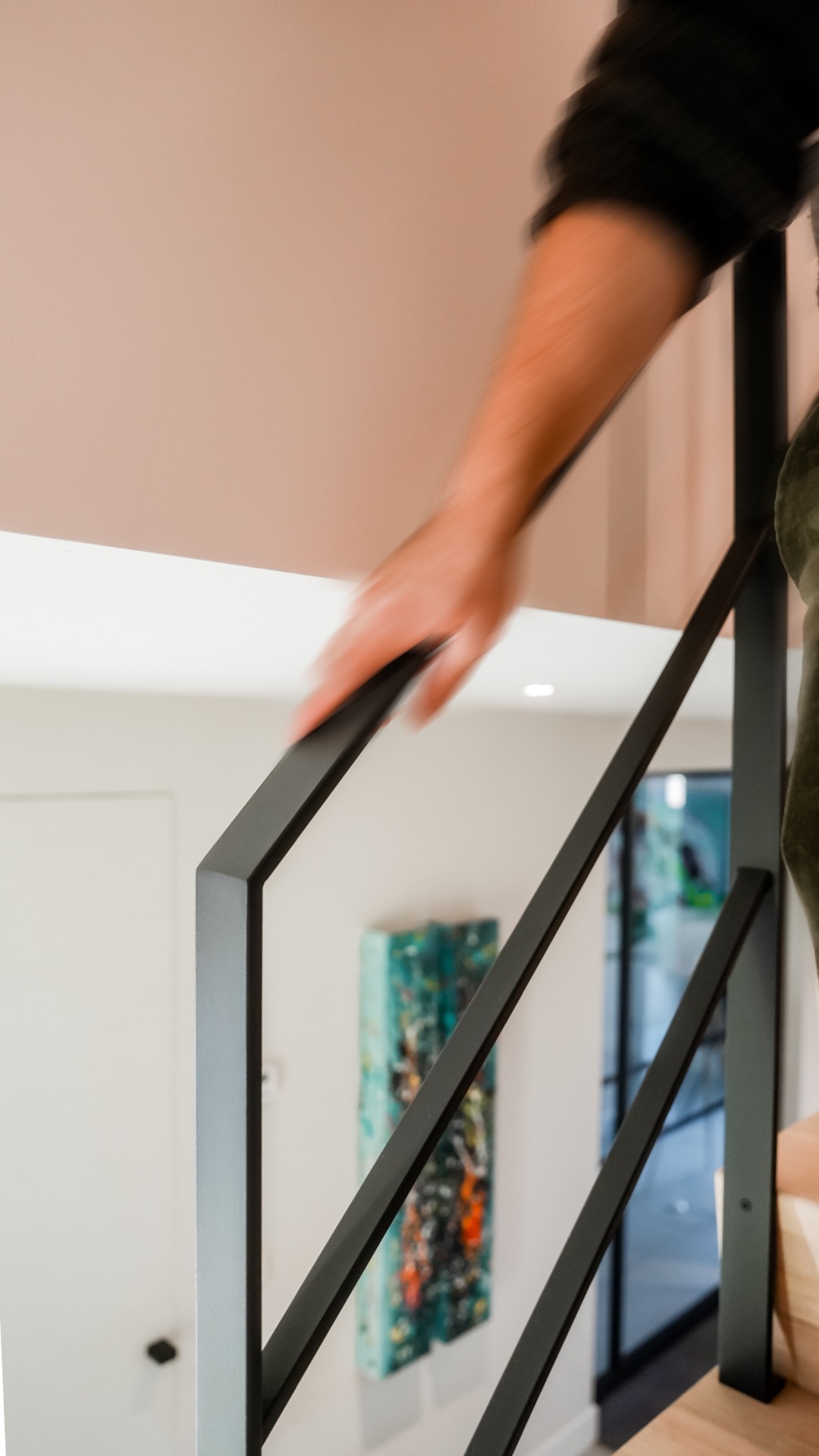
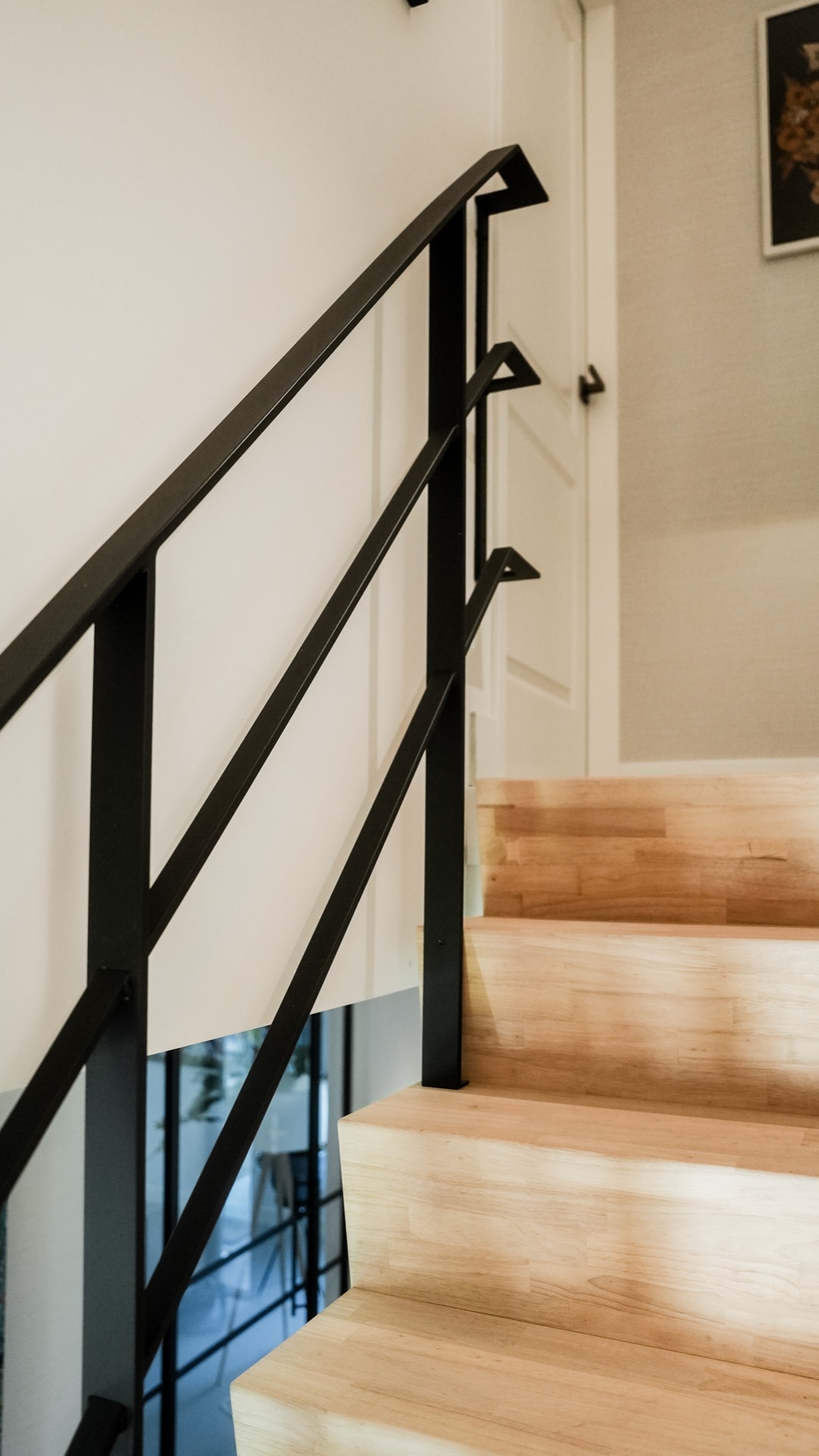
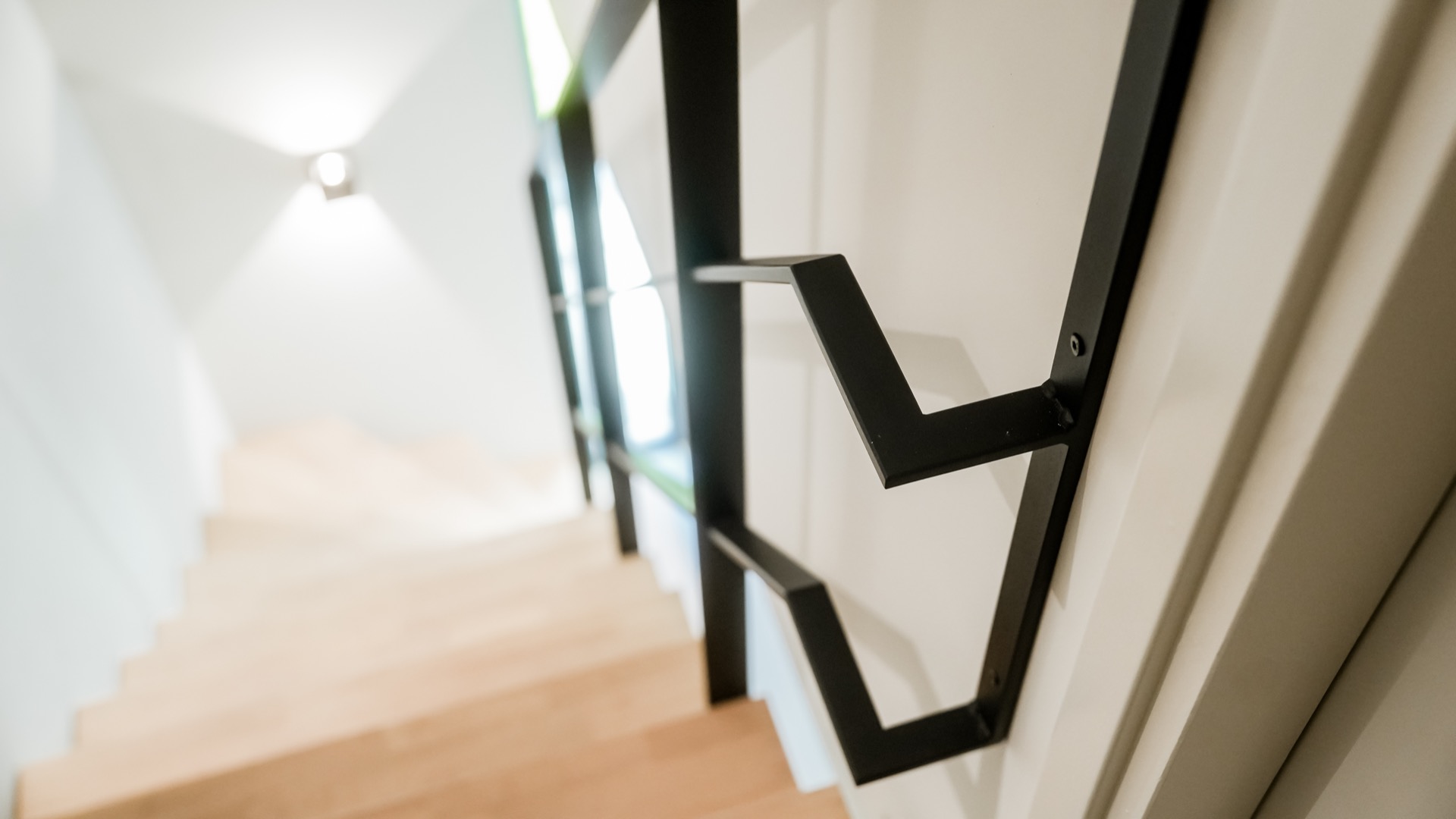
Alongside the wooden steps, a slender, matte-black metal railing traces the staircase’s edge. The railing’s simple, flat strip profile emphasizes linearity and minimalism, its RAL-9005 finish lending a visual anchor that frames the wood while offering tactile guidance.
Textural contrasts and light reflections
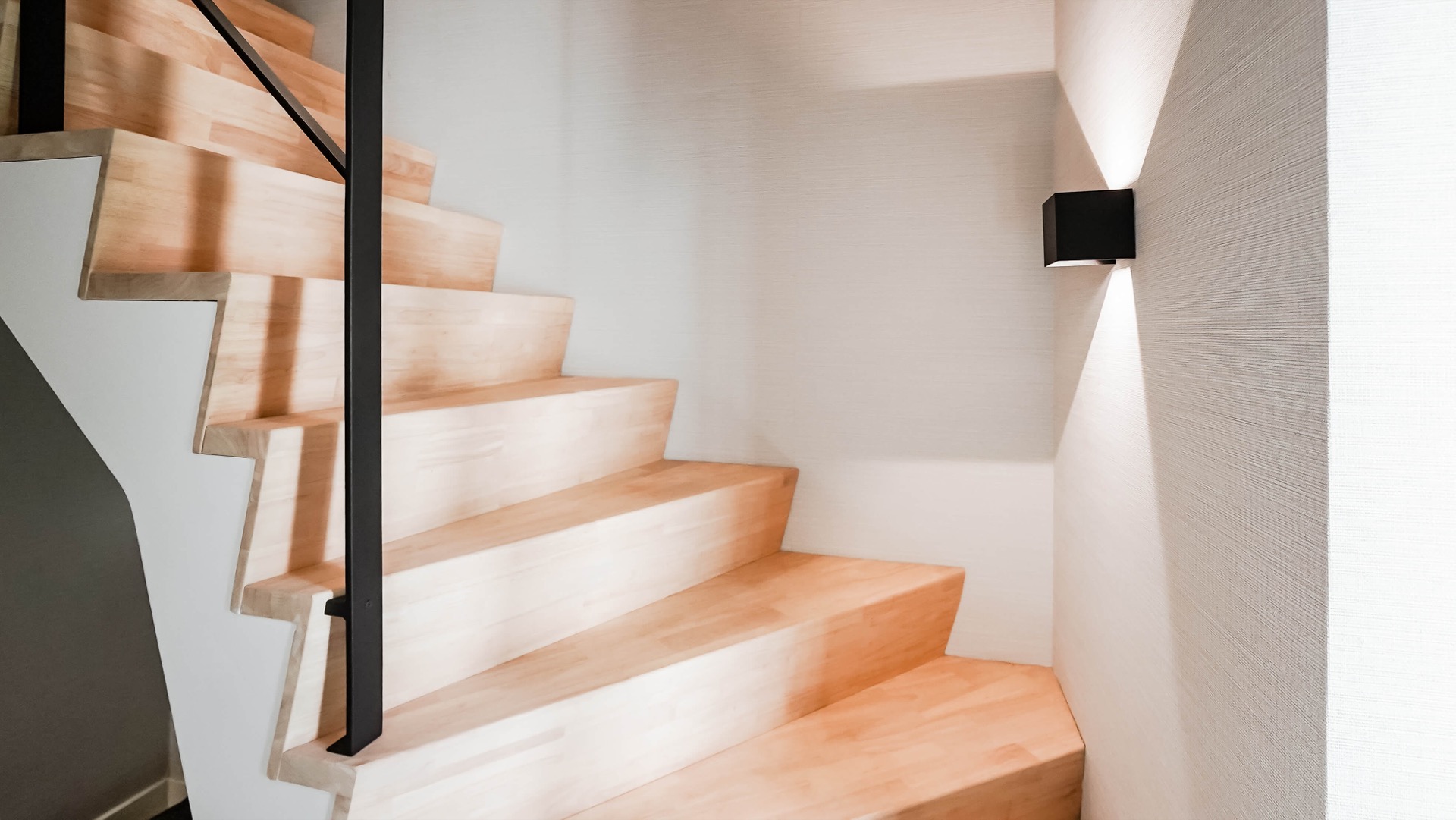
The juxtaposition of the wood’s warmth and the railing’s industrial surface is accentuated by soft ambient lighting. Light falling obliquely across the treads highlights the wood’s grain, while subtle shadows cast by the metal balustrade contribute to a layered spatial composition.
Minimalist approach in form and function
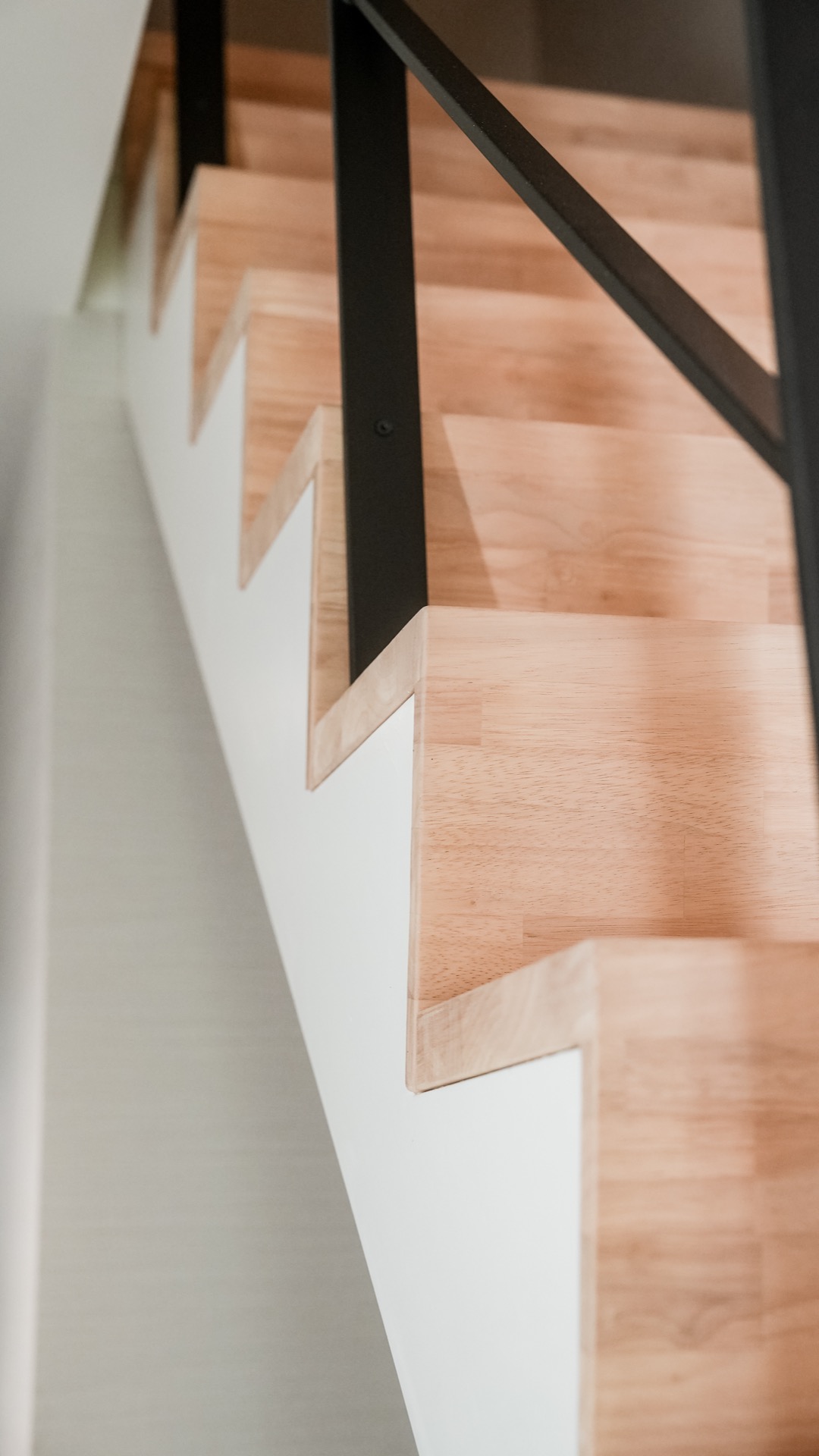
Free of distracting ornamentation, the staircase’s clean lines and unembellished surfaces prioritize clarity. Each step carries a gentle thickness that ensures stability without overwhelming the slender supporting form, echoing minimalist principles that favor function refined into essential expression.
Integration within the interior setting
Set against neutral wall finishes with subtle texture, the staircase stands out without dominating the room. The restrained palette of light woods and black metal aligns with the broader interior scheme, allowing the stairs to act as both a functional connector and a thoughtful design punctuation.
Close-up details highlight craftsmanship
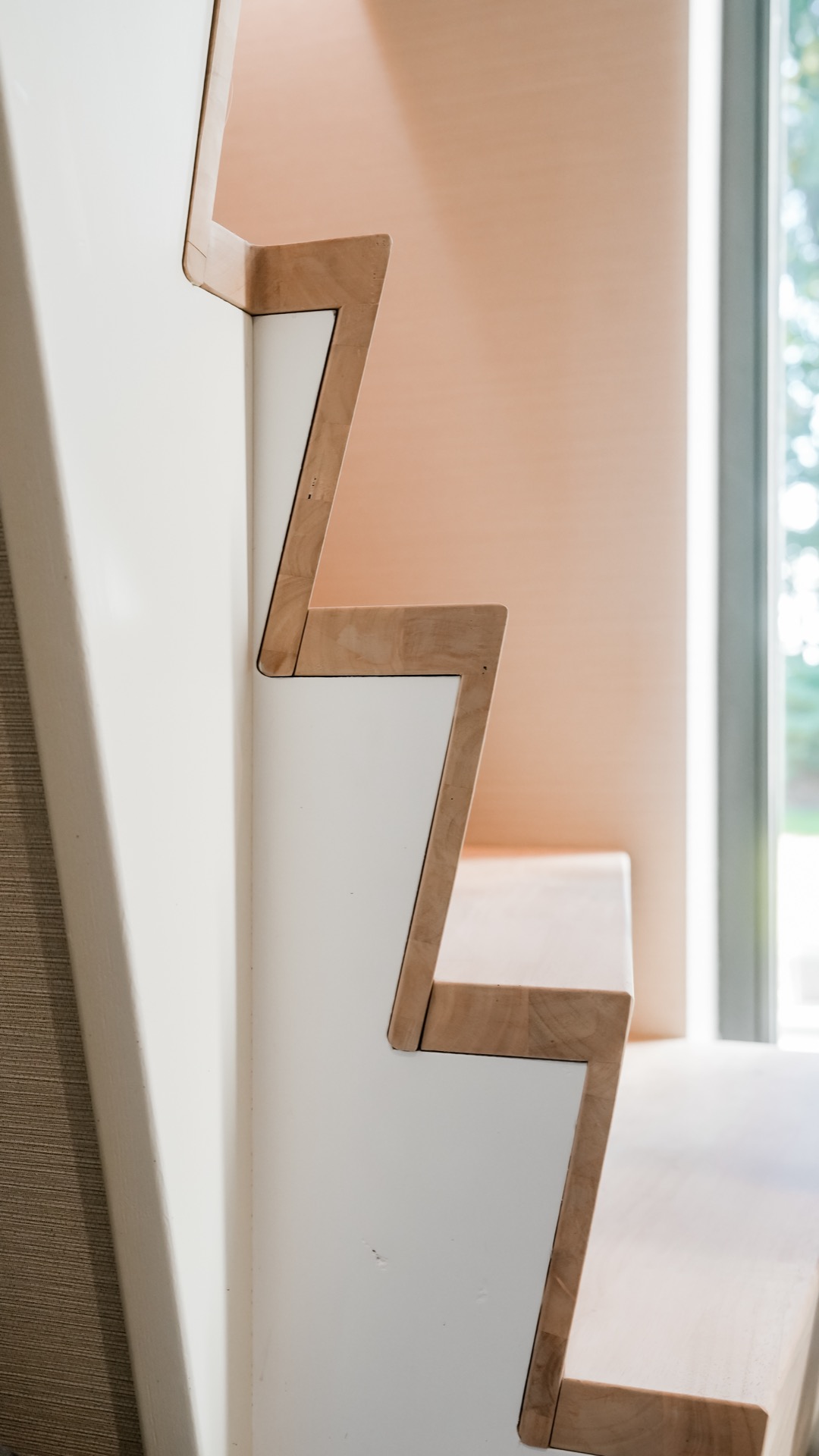
Examining the stair edge reveals precise milling and smooth joinery where each rubberwood tread meets the supporting structure. The matte black railing is seamlessly attached, its discreet fixings maintaining an unobtrusive profile that respects the minimalist aesthetic. That makes the indoor staircase design part of the architectural character rather than a loose finish.
Visual flow and user experience
The transition between levels is accentuated by the tactile qualities of the materials. The wooden surfaces provide a solid footing with a subtle texture, while the cool, smooth metal railing reassures grip, enhancing the tactile experience during movement.
Overall, this indoor staircase design exemplifies how materials and form can combine to create a distinctive but restrained architectural feature. The use of durable wood and minimalist metalwork replies to practical needs while contributing a quietly compelling presence within the interior space.
As an element of interior architecture, the staircase demonstrates that simplicity in design offers spatial and sensory richness through carefully considered contrasts and precise detailing.
Explore other interior stair solutions
Discover design staircases with unique character
Learn more about staircase materials That makes the indoor staircase design part of the architectural character rather than a loose finish.
Want to see more of Stairlux? View the page of Stairlux for even more great projects and company information.

.png)