






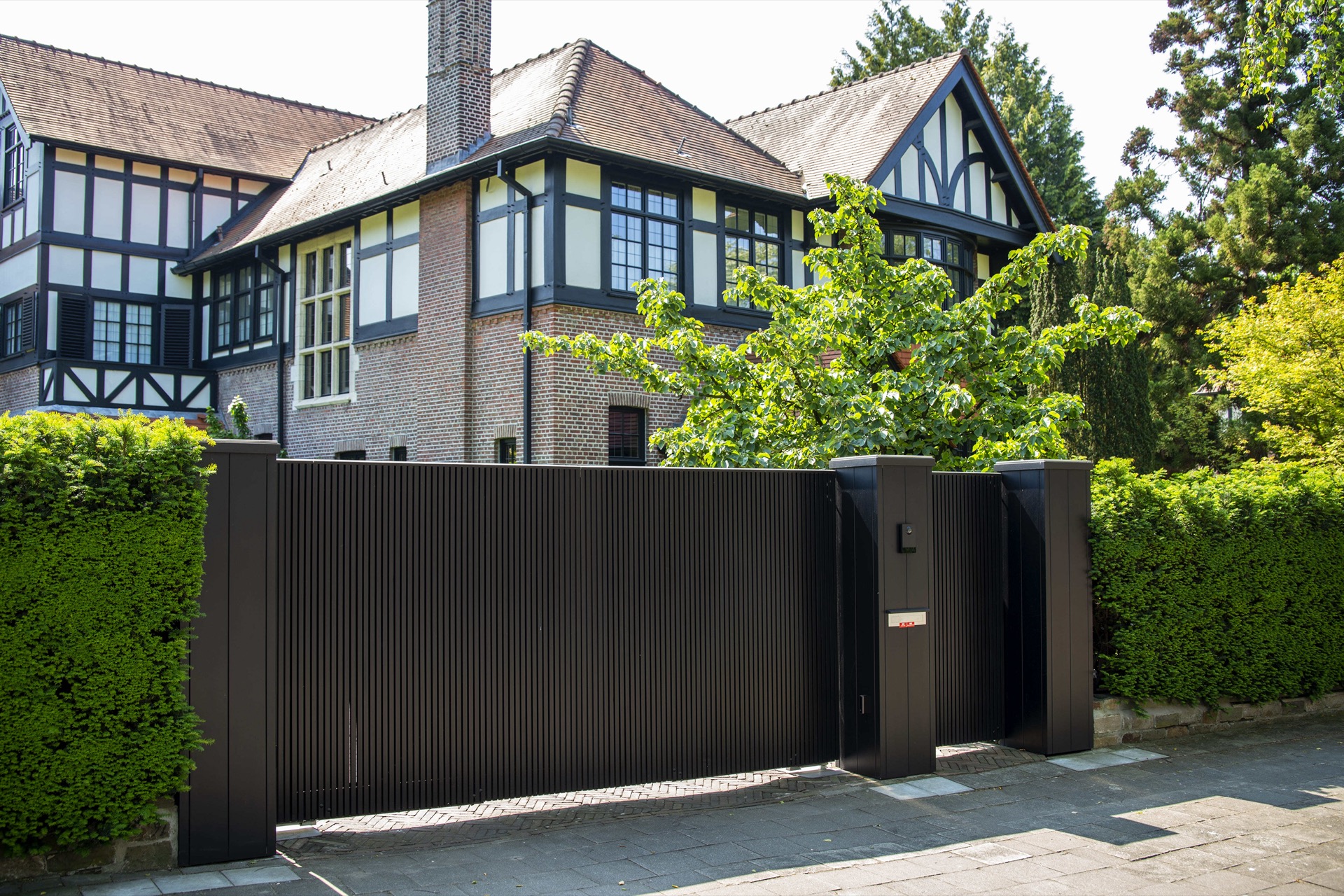
Automatic sliding gate with high-quality materials
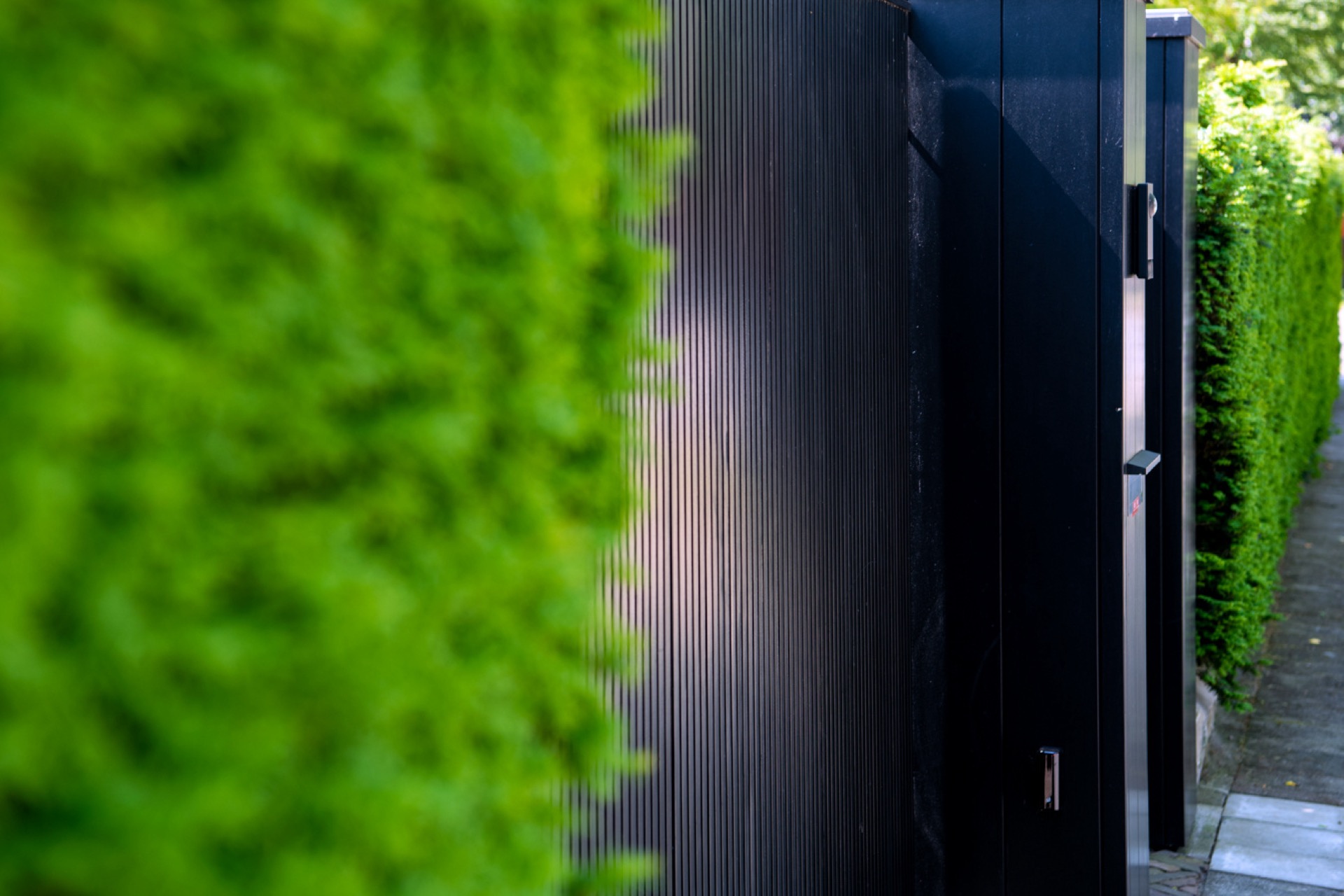
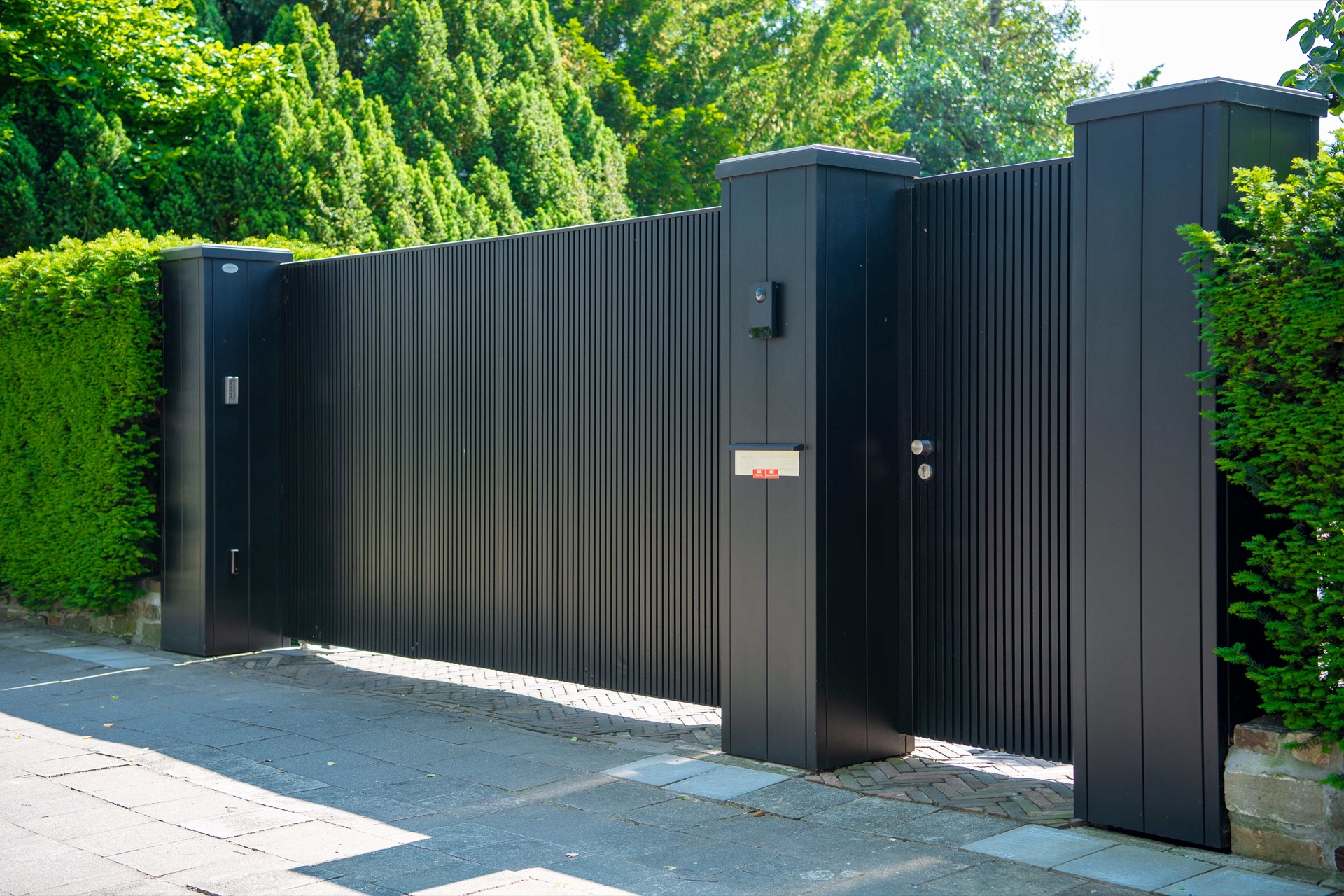
The sliding gate automation is immediately visible in the way the project is framed. Matte black panels rise from fine vertical slats, their slender proportions aligning with the clean lines of the adjacent entrance. The gate slides silently, its movement facilitated by an underground motor concealed beneath the paved path, leaving the surface uncluttered and emphasizing the sleek visual flow.
sliding gate automation as the architectural starting point
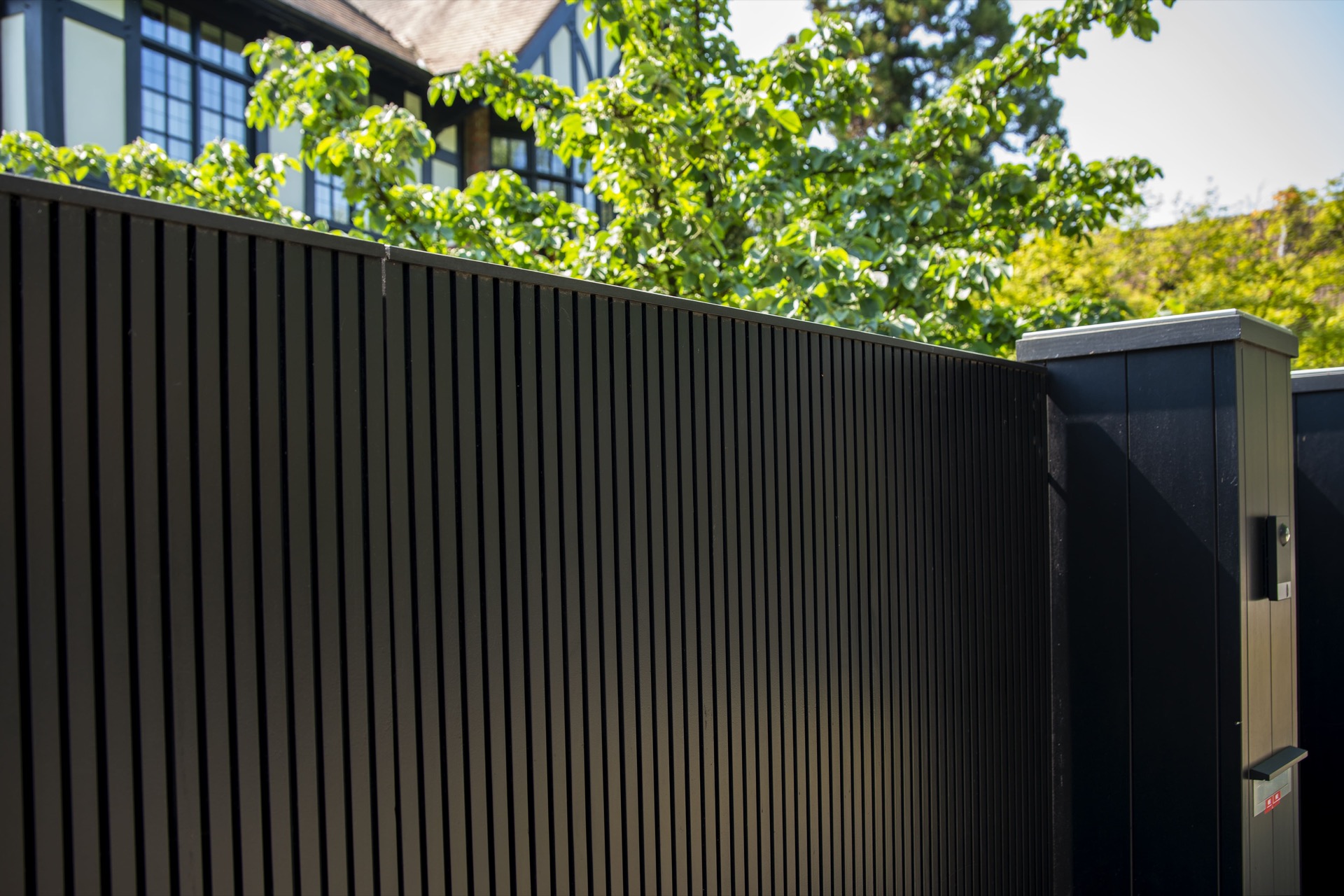
Each slat is formed from Padoek wood, a dense tropical hardwood known for its resilience and resistance to weathering. Its natural reddish hues are subdued beneath a smooth black lacquer, creating a deep, consistent tone that interfaces with various architectural styles. The grain, although subtly visible, adds texture to the gate’s broad surface without disrupting its linear rhythm.
Integration of mechanical elements below ground
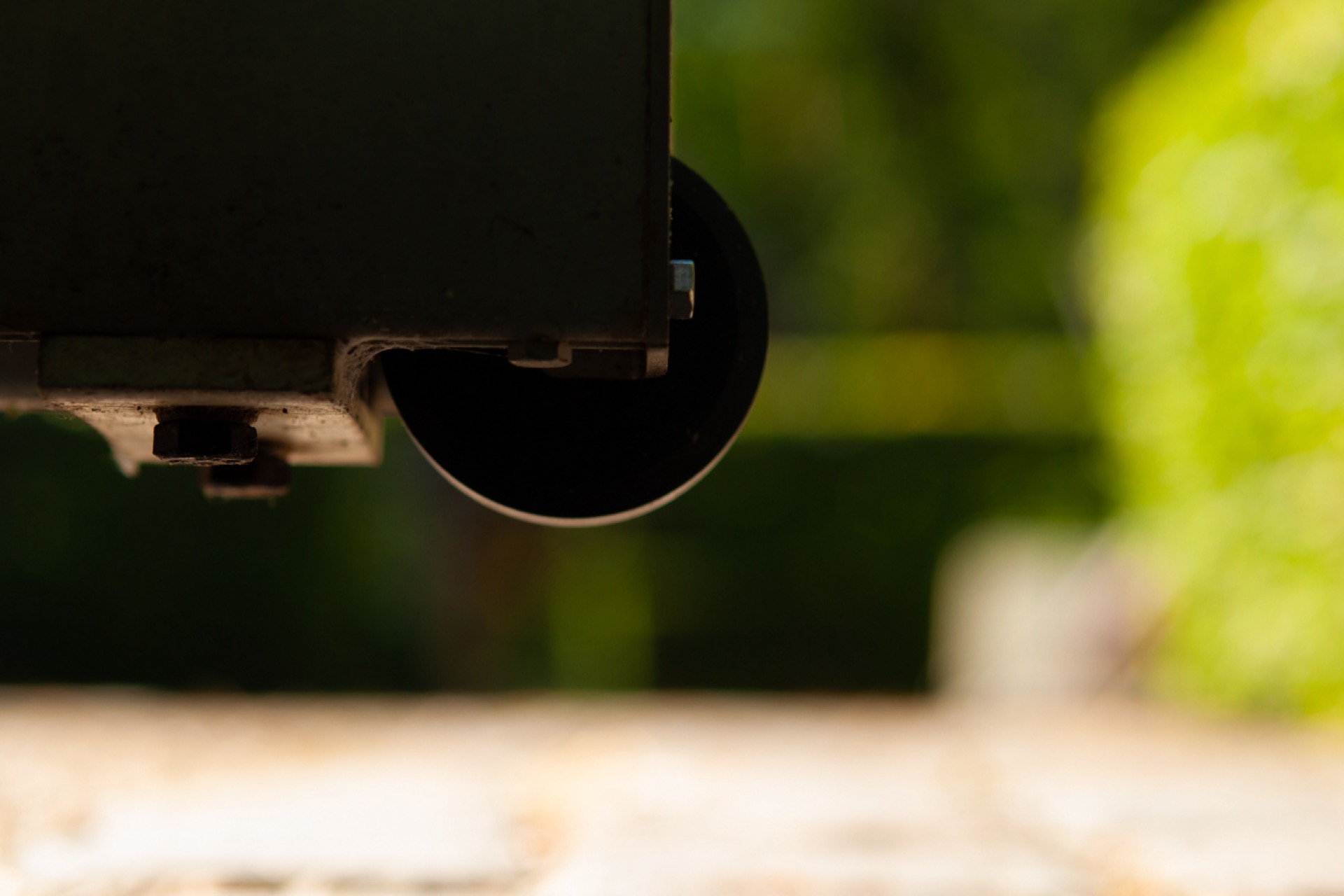
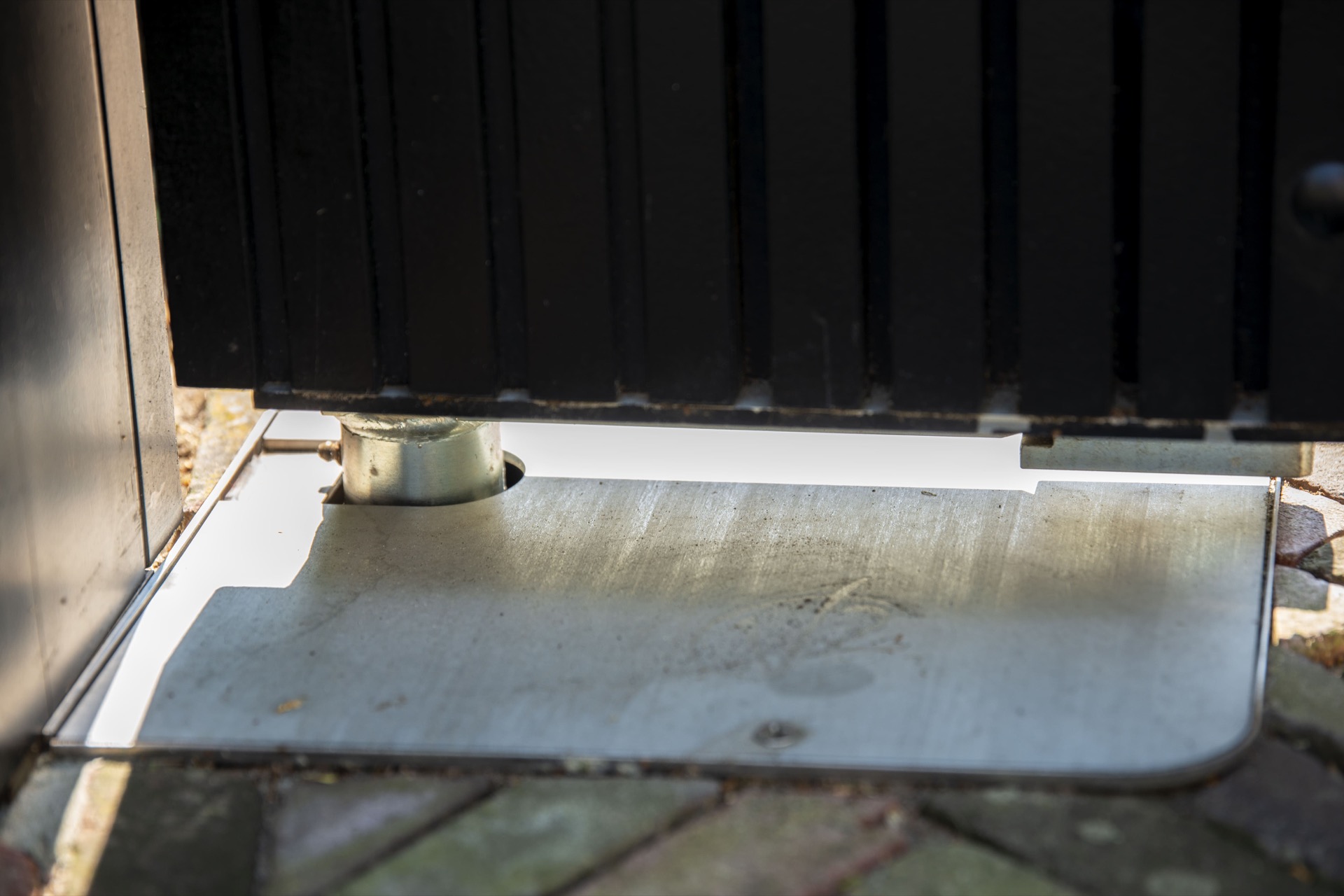
Functionality is embedded beneath the threshold, where a tailored track and motor system enable effortless sliding. This underground installation preserves the gate’s clean silhouette and avoids the intrusion of visible mechanics common in automatic gates. The mechanism’s quiet operation ensures minimal noise disturbance and adds to a sense of refined engineering in the entrance experience.
Access control implemented with visitor interaction in mind
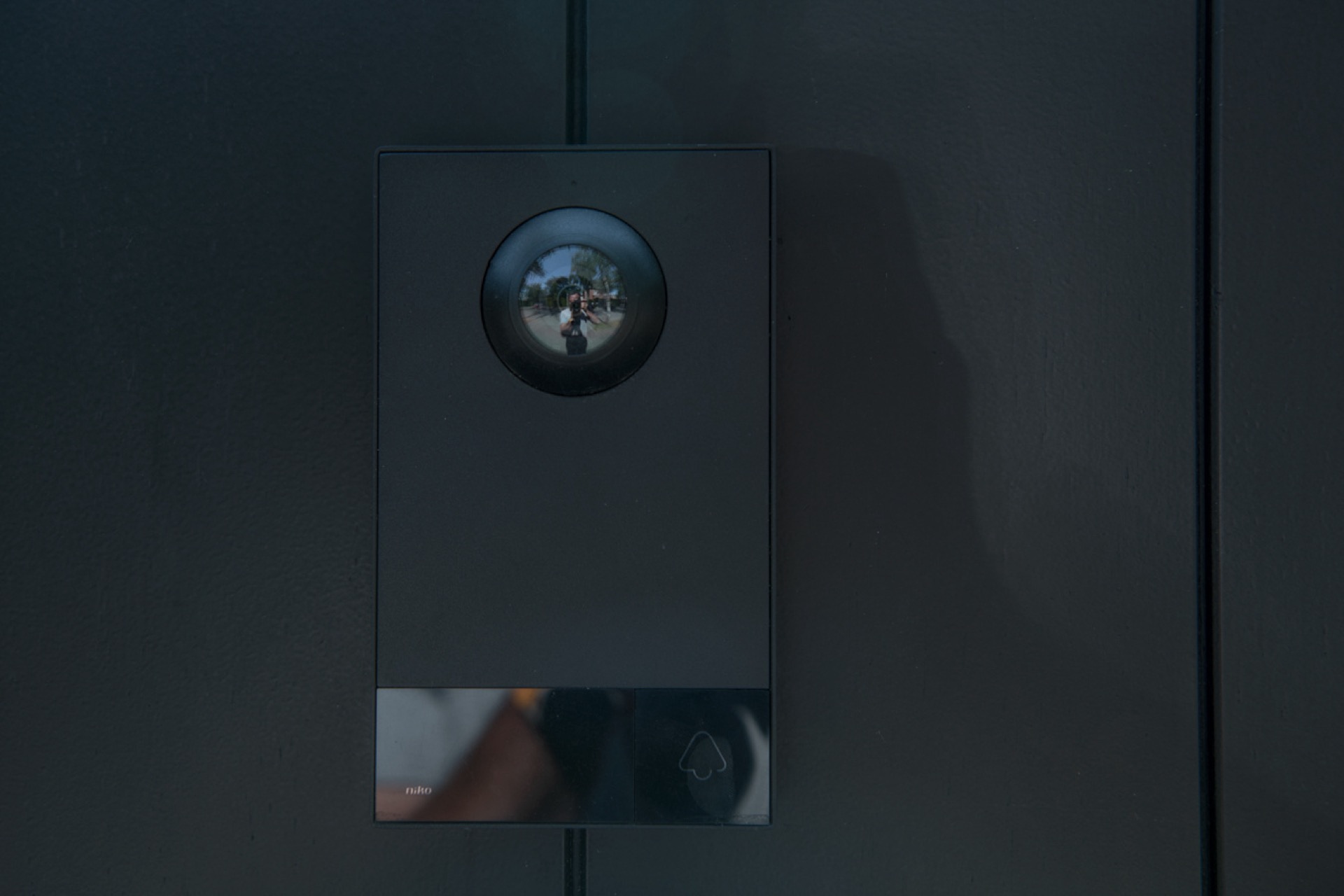
An intercom system, built into one of the gate pillars, provides two-way audio and video communication. This feature supports controlled access without compromising the gate’s aesthetic unity. The placement near the integrated mail slot capitalizes on structural elements to house necessary hardware discreetly and maintains the visual consistency of the gate ensemble.
Handcrafted joinery and finishing techniques
Every joint and surface detail reflects manual craftsmanship. The wood components are precisely aligned, and finishing touches complete the gate with smooth edges and durable paintwork. This approach ensures dimensional stability amid weather changes and emphasizes functional longevity within a meticulously executed design.
Balancing traditional woodworking and innovation
The gate exemplifies a combination of classical wood craftsmanship with current automation technologies. Where traditional carpentry details inform the gate’s composition, contemporary materials and mechanisms provide the operational reliability needed in modern residential applications.
Form follows function in residential security features
Designed to complement a private home’s frontage, the gate not only defines a threshold but also establishes a secure perimeter. Its compact, flat surface, paired with durable materials, forms a barrier that integrates with electronic access control, balancing openness with privacy.
Visual and tactile contrasts in the gate’s design
The slender vertical slats create a rhythmic pattern, breaking up the gate’s mass while allowing strategic glimpses inside. The smooth black paint contrasts with the underlying wood texture, invoking a subtle play of light across the surface during different times of day. This detail enriches the approach experience and adds dimensional interest to the structure. That makes the sliding gate automation part of the architectural character rather than a loose finish.
Functional details refined for everyday use
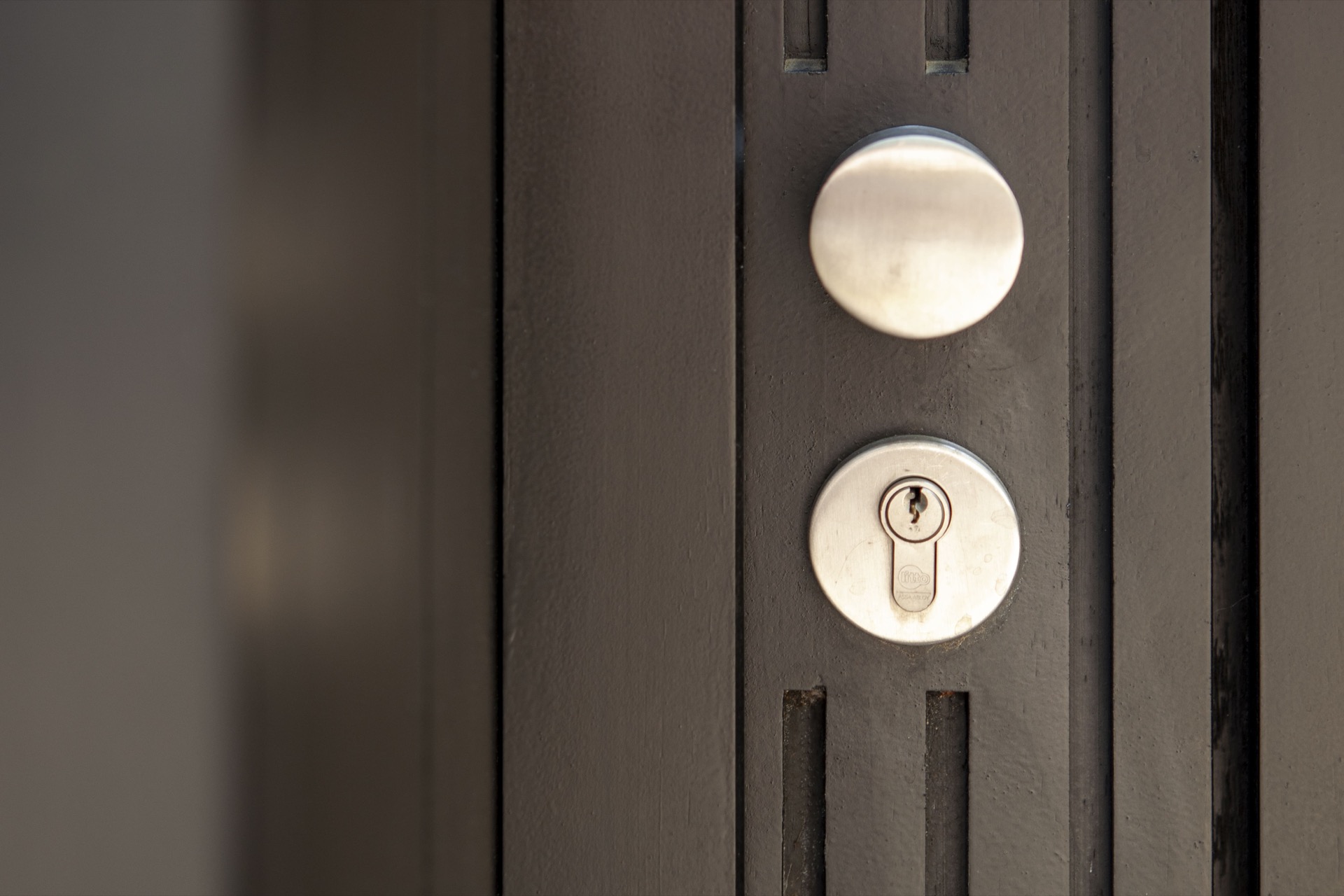
Embedded mailboxes in the gate pillars provide practical convenience without additional structures spoiling the ensemble. The electronic lock mechanisms are recessed and shielded, ensuring efficient use with minimal visual impact. These functional components uphold the gate’s streamlined appearance.
Durability considerations in chosen materials and treatments
Padoek wood’s natural oils contribute to moisture resistance, supported by the applied lacquer that reinforces the surface against UV exposure and wear. The choice of these materials reflects investment in longevity aligned with the expectation of sustained performance in an exterior context.
Coordinated elements within the entrance environment
Black metallic tracks and hinges coordinate with the gate’s wooden elements, creating a coherent presentation. Ground-level rails are mounted flush to pathways, allowing ease of movement for the sliding gate while maintaining surface continuity for pedestrian and vehicle traffic.
Technological components concealed by refined design
Automation technology remains largely out of sight. The underground motor, embedded wiring, and remote-controlled operation are all integrated in ways that preserve the minimalism of the gate. This approach favors a non-intrusive experience, emphasizing physical materials over mechanical necessity.
Adaptability in urban residential settings
The gate’s restrained design suits urban contexts, where space and street-readiness require careful consideration. Its scale and operation suit small to medium driveway widths while enabling smooth transition between public paths and private property.
Subtle interplay between wood and metal finishes
Details such as metal fasteners and motor housing are finished in black tonalities matching the wood’s paint layers. This unified color scheme conceals mixed materials, lending the gate a singular, composed identity without fragmented visual signals.
Practical dimensions aligned with modern requirements
The gate measures adequately to allow standard vehicles, with a height that balances visibility and enclosure. Its proportions correspond with common driveway widths, and the sliding motion optimizes spatial use compared to swinging alternatives. That makes the sliding gate automation part of the architectural character rather than a loose finish.
Want to see more of De Sutter Naturally? View the page of De Sutter Naturally for even more great projects and company information.


.png)