





Elegant kitchen featuring terrazzo countertop and Makus cooktop
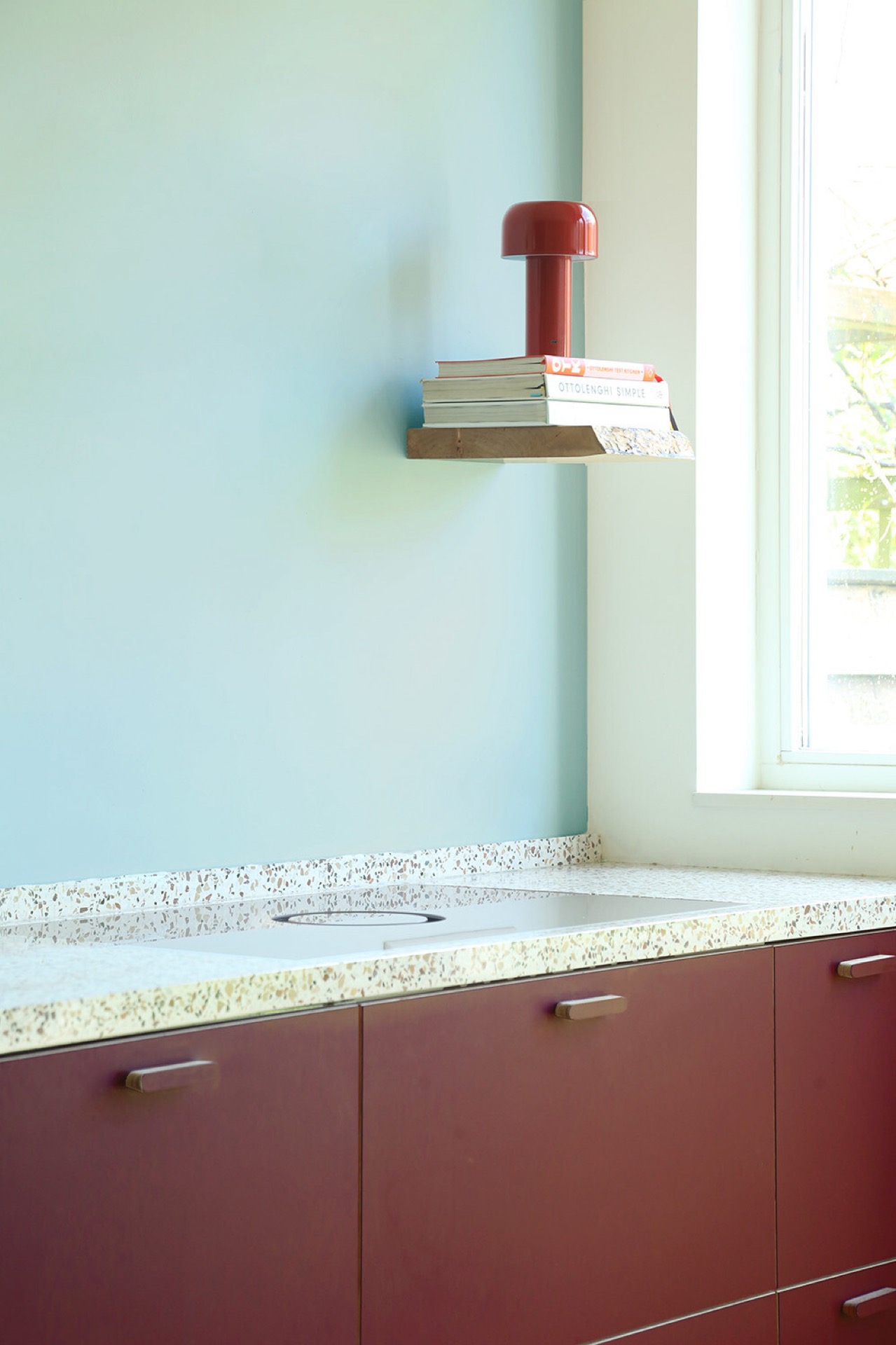
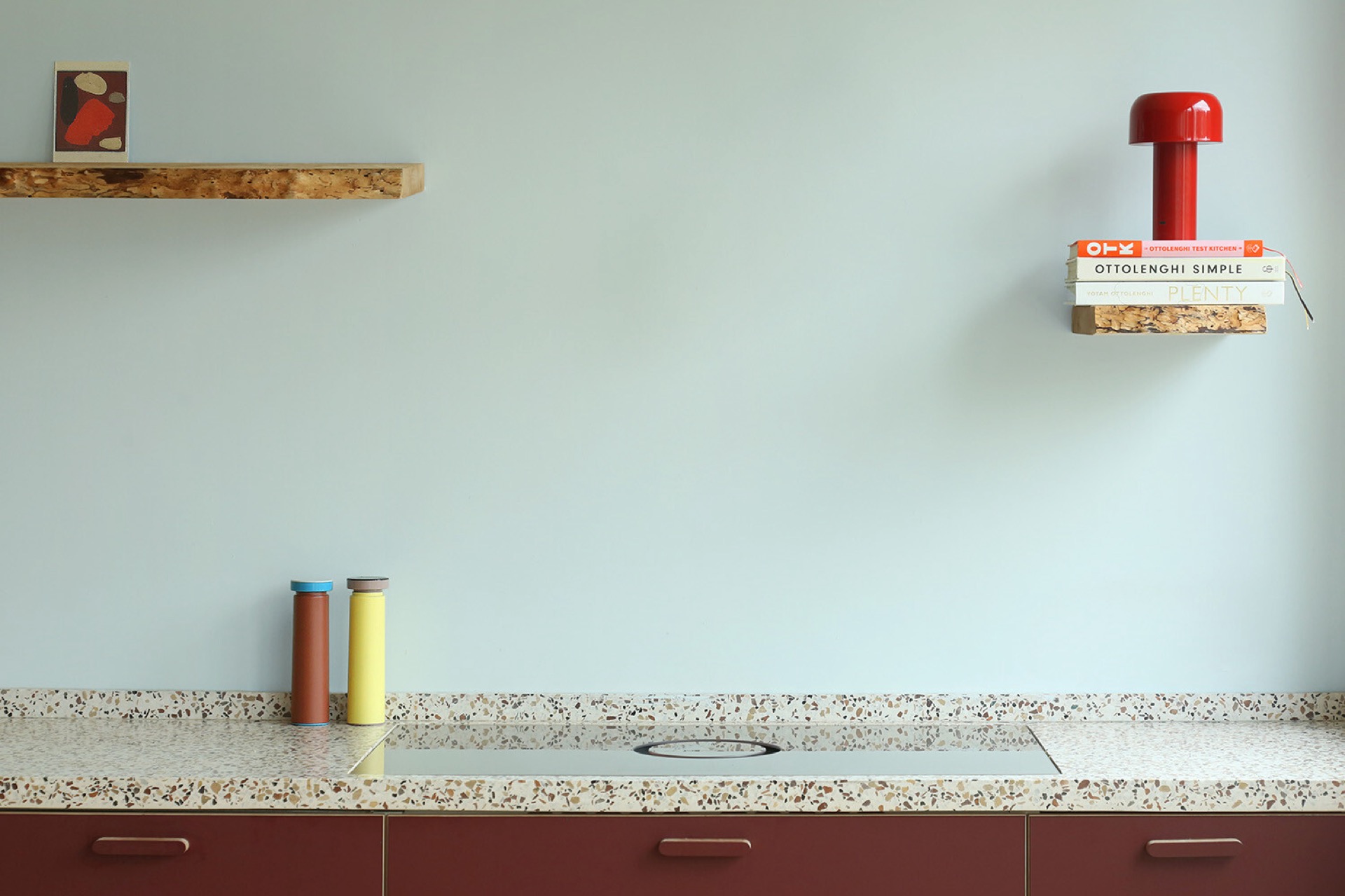
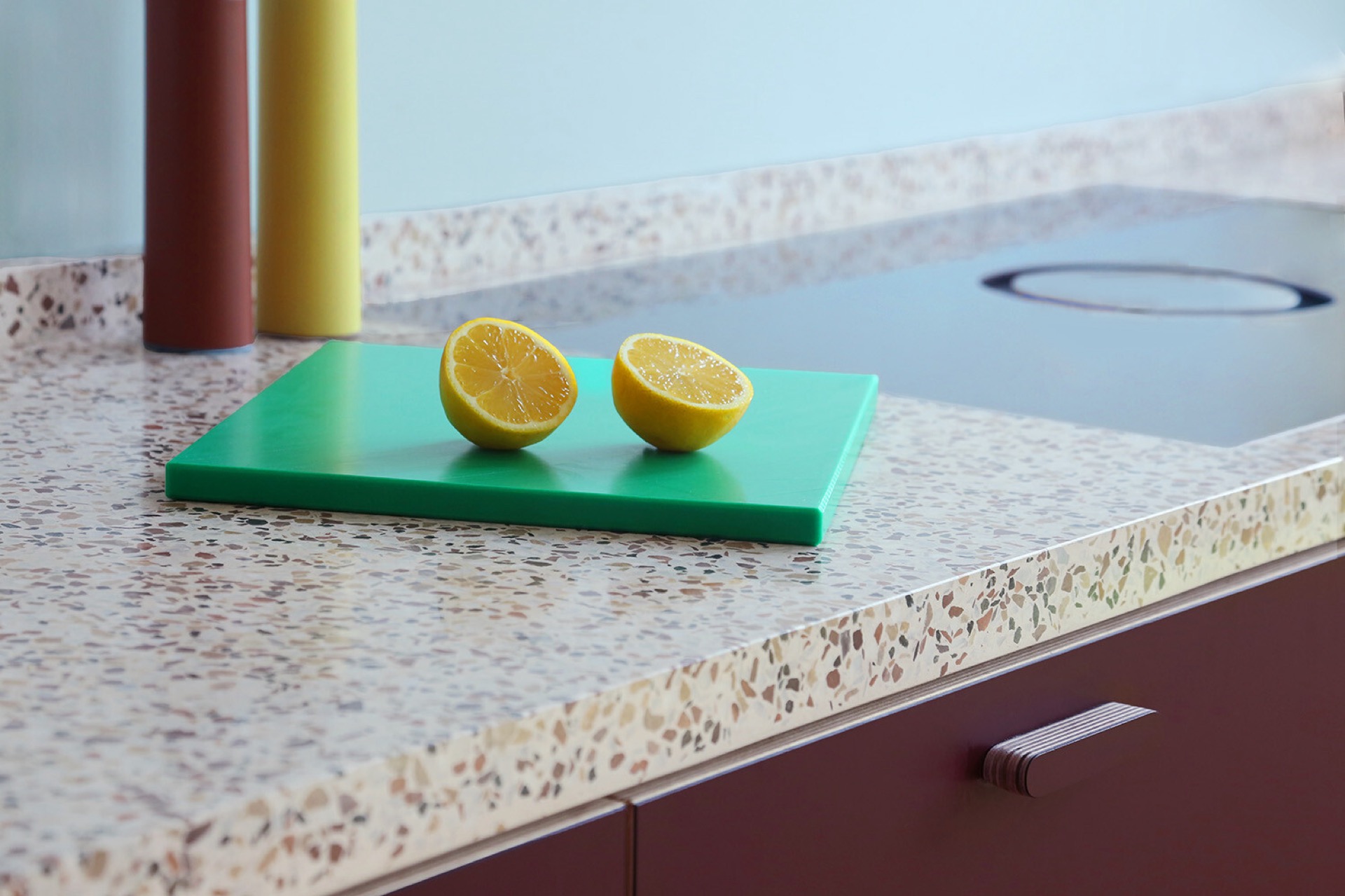
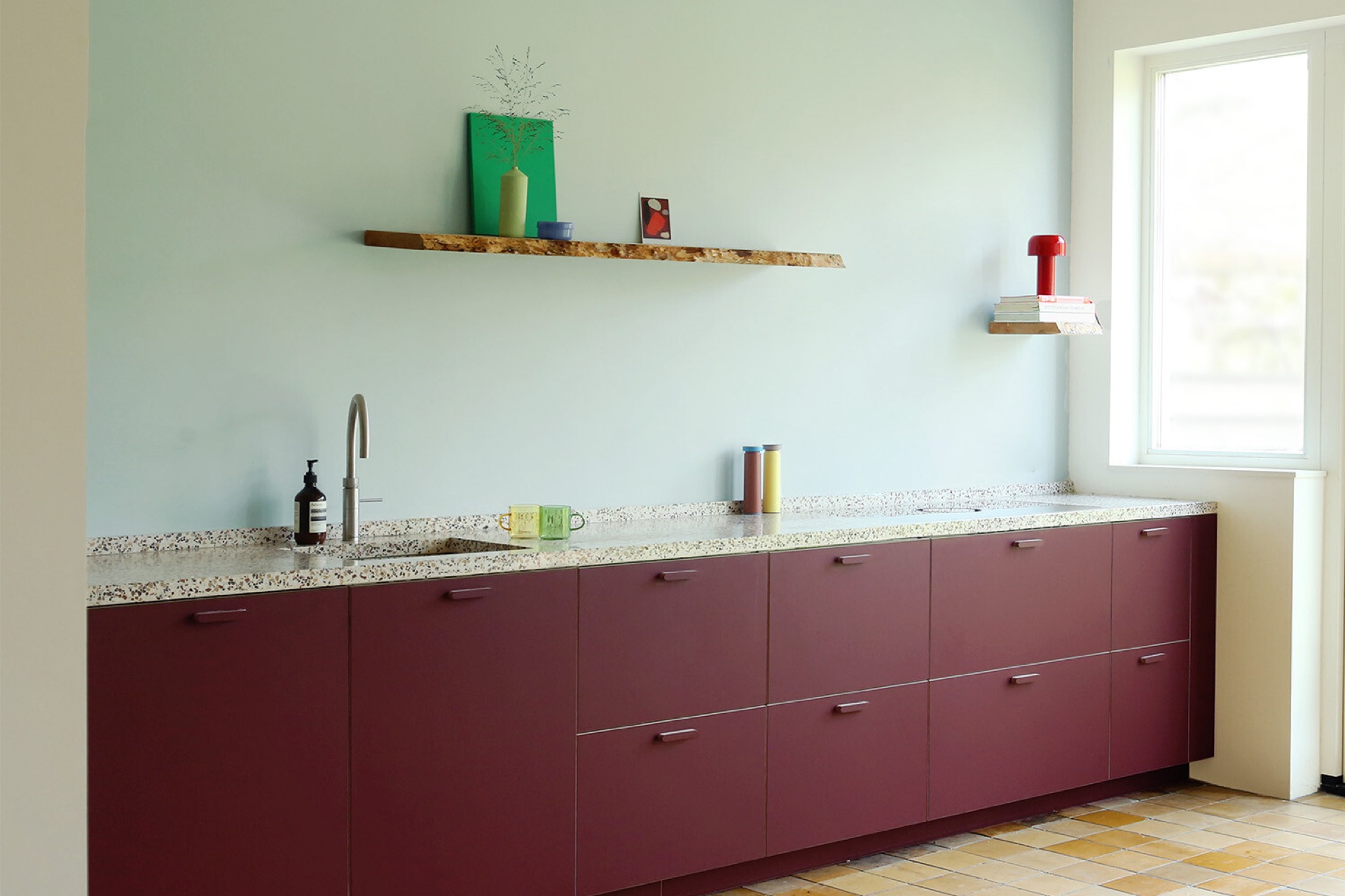
The kitchen ideas is immediately visible in the way the project is framed. The kitchen’s central element is a polished terrazzo countertop, its pale surface punctuated with fine chips that catch the light. This countertop stands out against the deep bordeaux kitchen cabinets, creating a visual anchor in the space. The contrast between the cool, smooth terrazzo and the rich, matte surfaces of the cabinetry directs focus to the material interplay.
kitchen ideas as the architectural starting point
The kitchen avoids excess ornamentation by emphasizing texture and material choices. Solid wood handles break the expanses of color on the cabinetry, their natural grain gently interrupting the uniformity. Floating shelves in warm wood tones echo these accents, adding layers without clutter. Together, these details introduce subtle shifts in color and texture that shape the room’s character.
Innovative cooking surface blending with design
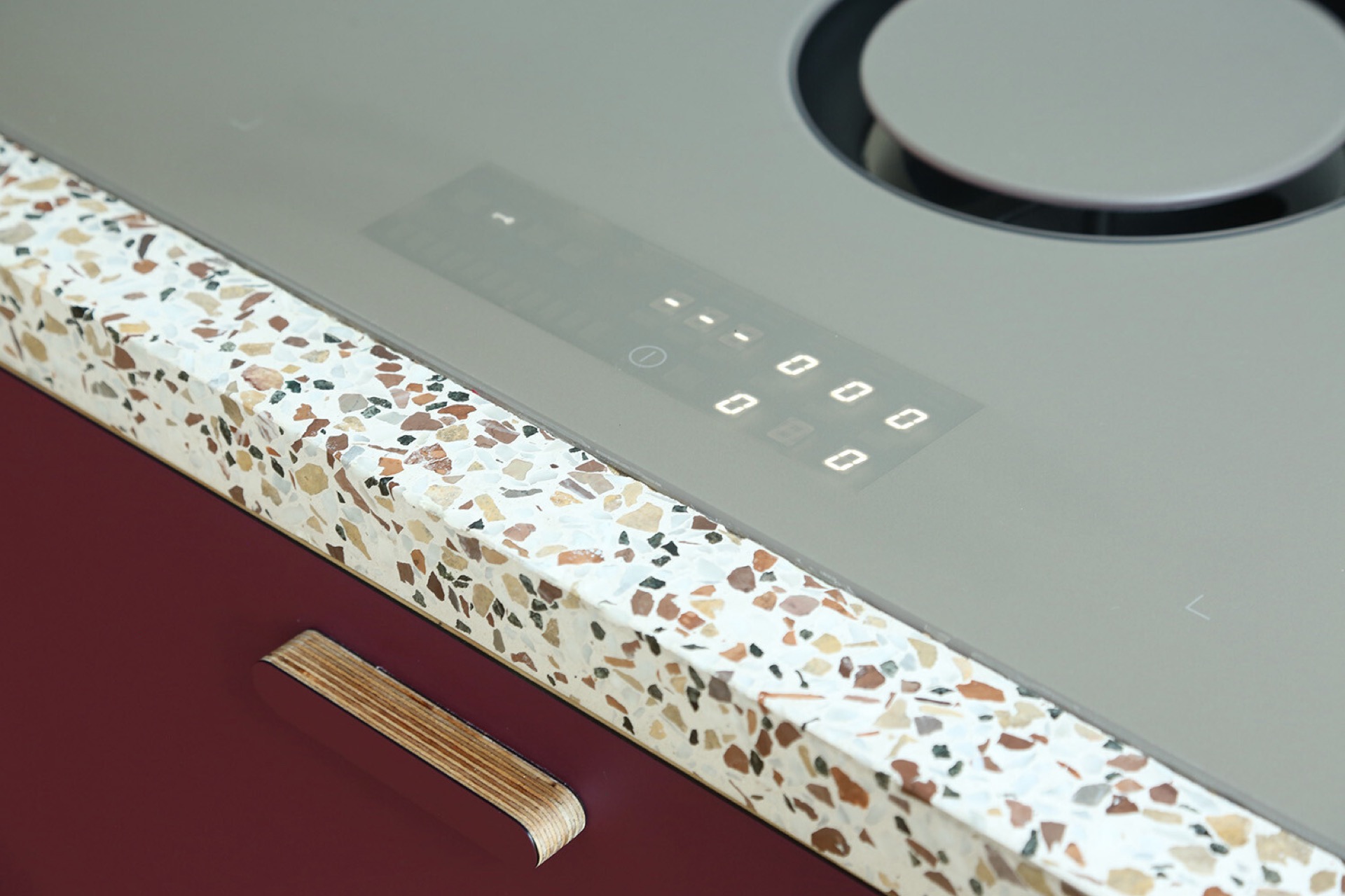
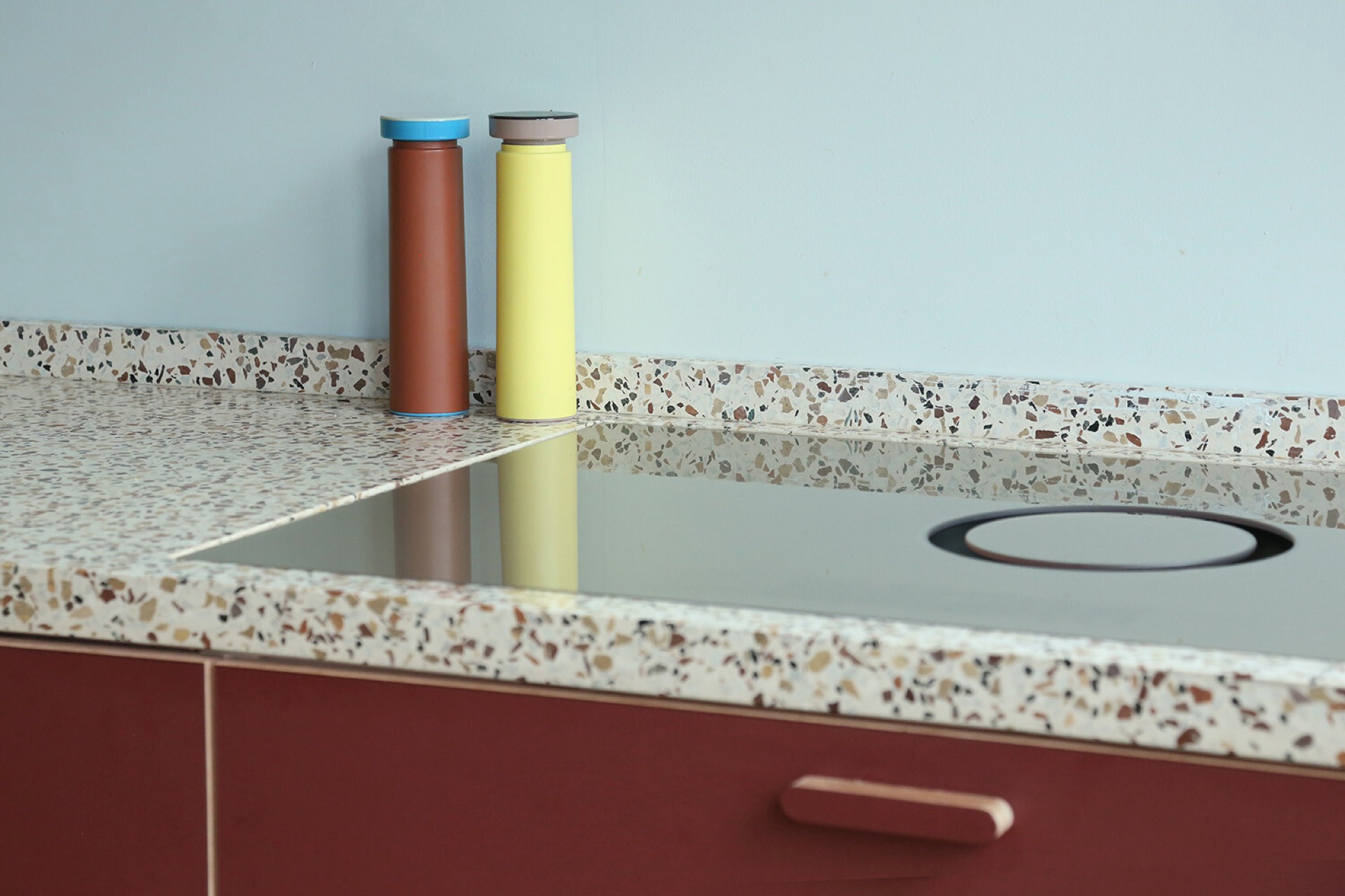
Integrated within the countertop is the Makus cooktop, notable for its nontraditional coloration. Unlike typical black induction surfaces, this cooktop uses a palette of pigments to harmonize with the surrounding materials, offering a softer visual transition. The surface’s warm tint makes technological functionality appear as part of the room’s aesthetics rather than an intrusive element.
Touch control technology in daily use
The cooktop surface features a modern touch control interface that blends into the top without disruptive etchings or highlights. This results in an expansive, uncluttered look where the control panel feels as integrated as the surrounding terrazzo. This detail complements the kitchen’s preference for smooth, continuous surfaces.
Accents that enrich the kitchen story
Small clusters of colorful kitchen accessories punctuate the room’s neutral foundation. Decorative painted barrels and a collection of fresh lemons resting on a wooden board add liveliness to the scene. These carefully selected items avoid creating visual noise and instead introduce a playful, handcrafted dimension to the kitchen environment.
Spatial arrangement and flow
The kitchen’s layout divides the space into distinct zones, separated by the countertop’s length. Opposite sides hold simple cabinetry and open shelving that maintain order and encourage functional use of the area. This configuration offers unrestricted movement between workstations while preserving clear sightlines across the open room. That makes the kitchen ideas part of the architectural character rather than a loose finish.
Water station with minimalist fittings
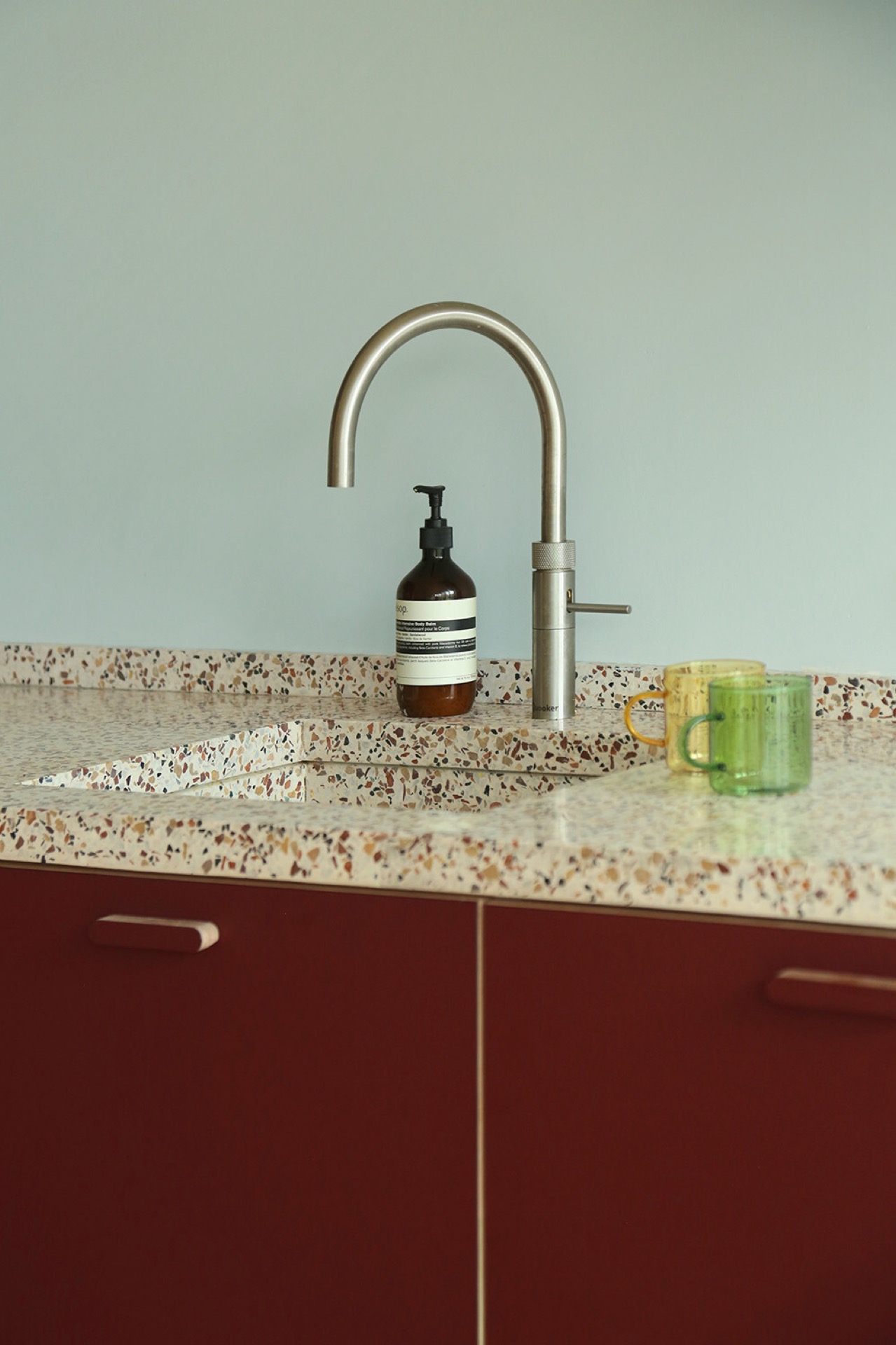
A chrome faucet with a softly curved spout emerges directly from the countertop, positioned next to a streamlined soap dispenser. Their shapes introduce subtle verticality and curvature amid the horizontal surfaces. The faucet’s reflective metal contrasts with the matte textures around it, catching light with each use.
Color composition beyond the cabinets
While bordeaux cabinetry dominates the palette, the colors of smaller elements soften the environment. The gentle hues in the terrazzo incorporate fragmented stones in warm beige and soft gray, linking the cabinetry to subtler tones. This blend prevents the red from overwhelming while sustaining spatial warmth.
Open shelving and display
Floating wooden shelves hover above the counter, their placement aligning with the countertop edges. These shelves hold decorative pieces, balancing function and display without crowding. Their lighter wood tone complements the wooden handles below, reinforcing material consistency across heights.
Light and shadow sculpting the surfaces
The kitchen benefits from indirect natural lighting that moves gradually over the varied surfaces, emphasizing the terrazzo’s glossy facets and bringing out the embossed grain in the wooden handles. Shadows under the floating shelves introduce depth without reducing brightness.
The assemblage of materials and objects creates a measured scene where each element plays a role in the kitchen’s narrative. This approach to design emphasizes observed interaction between materials and details rather than abstract qualities or broad claims. That makes the kitchen ideas part of the architectural character rather than a loose finish.
Want to see more of Pronck? View the page of Pronck for even more great projects and company information.


.png)