




Modern architecture met traditioneel rieten dak
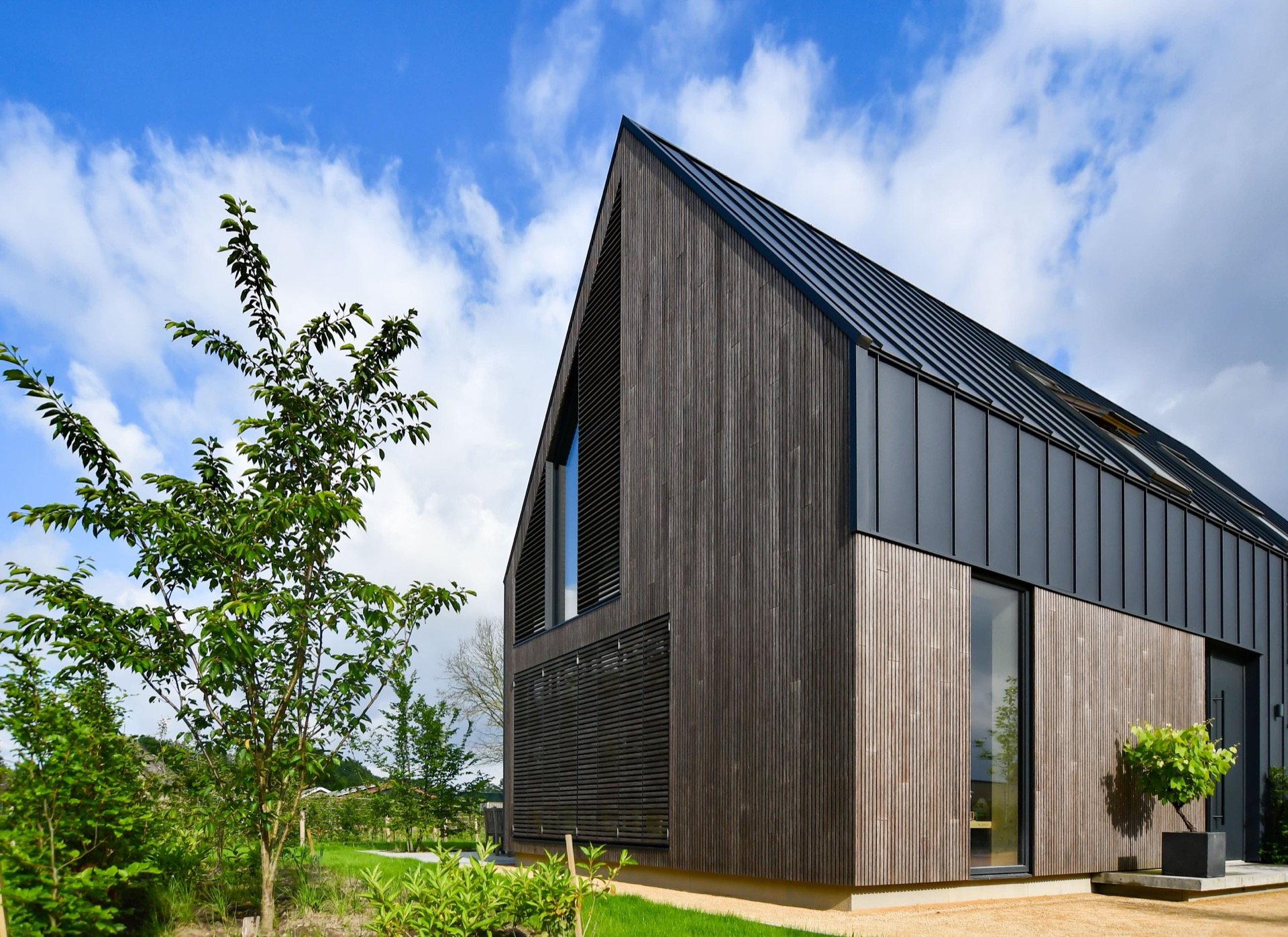
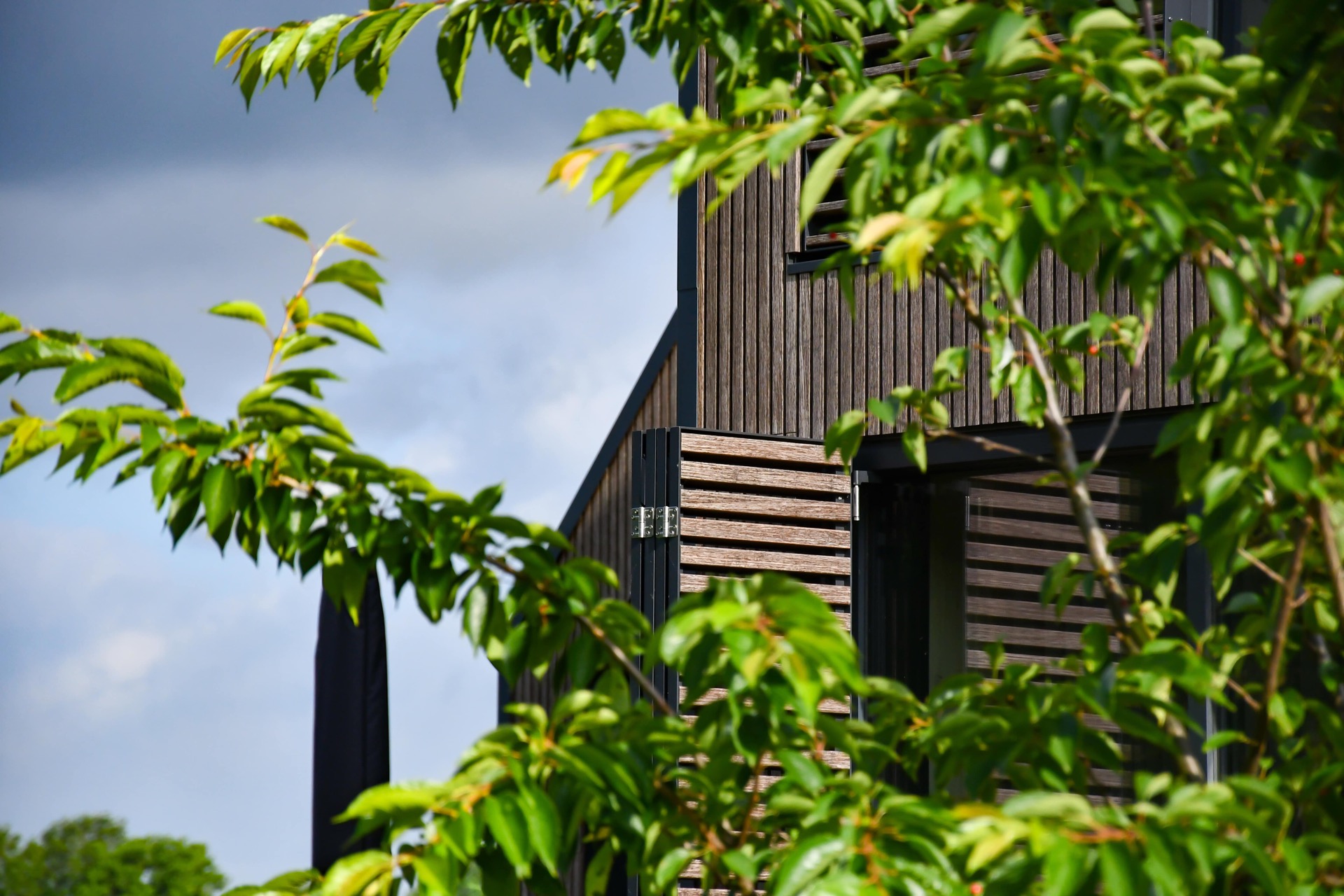
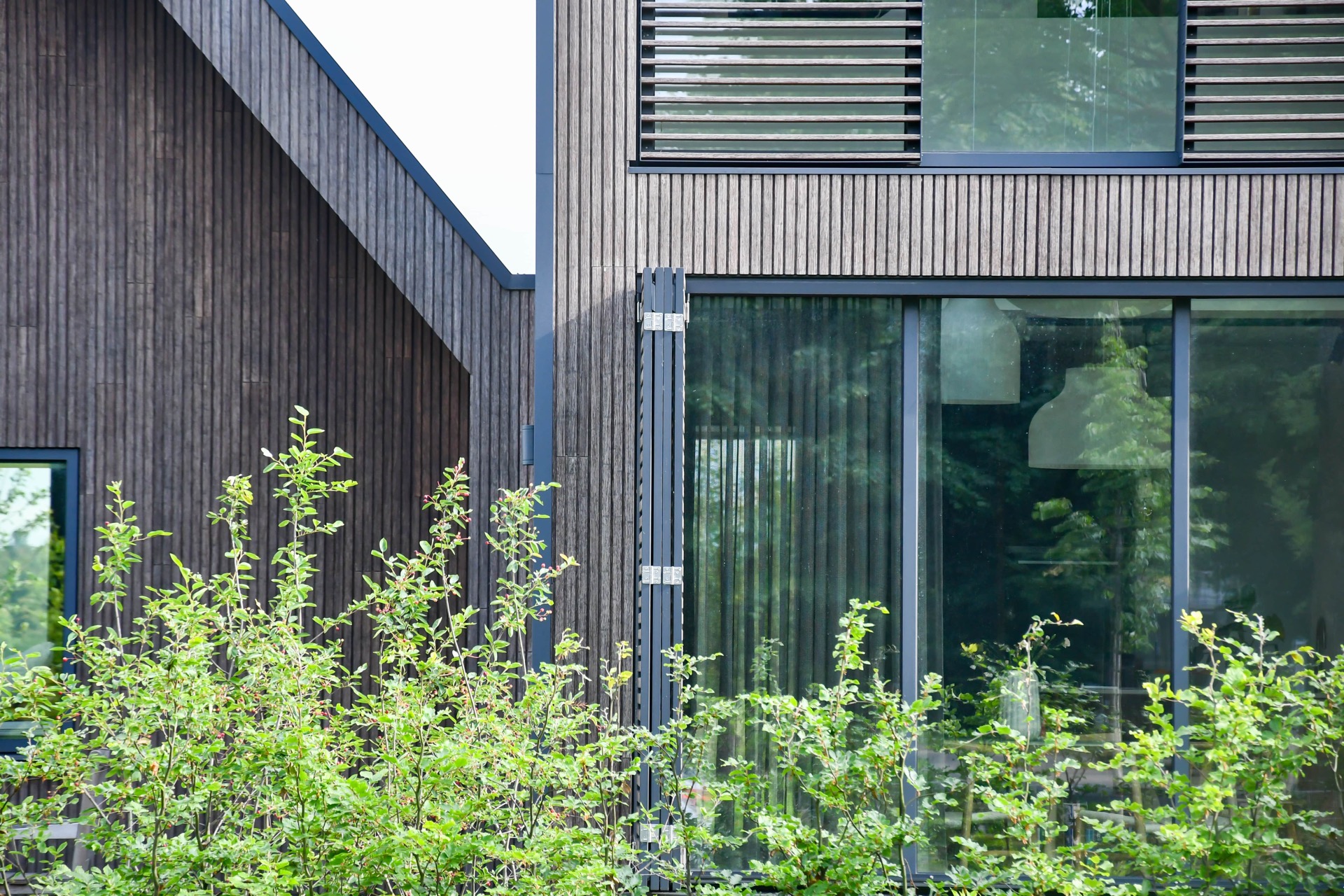
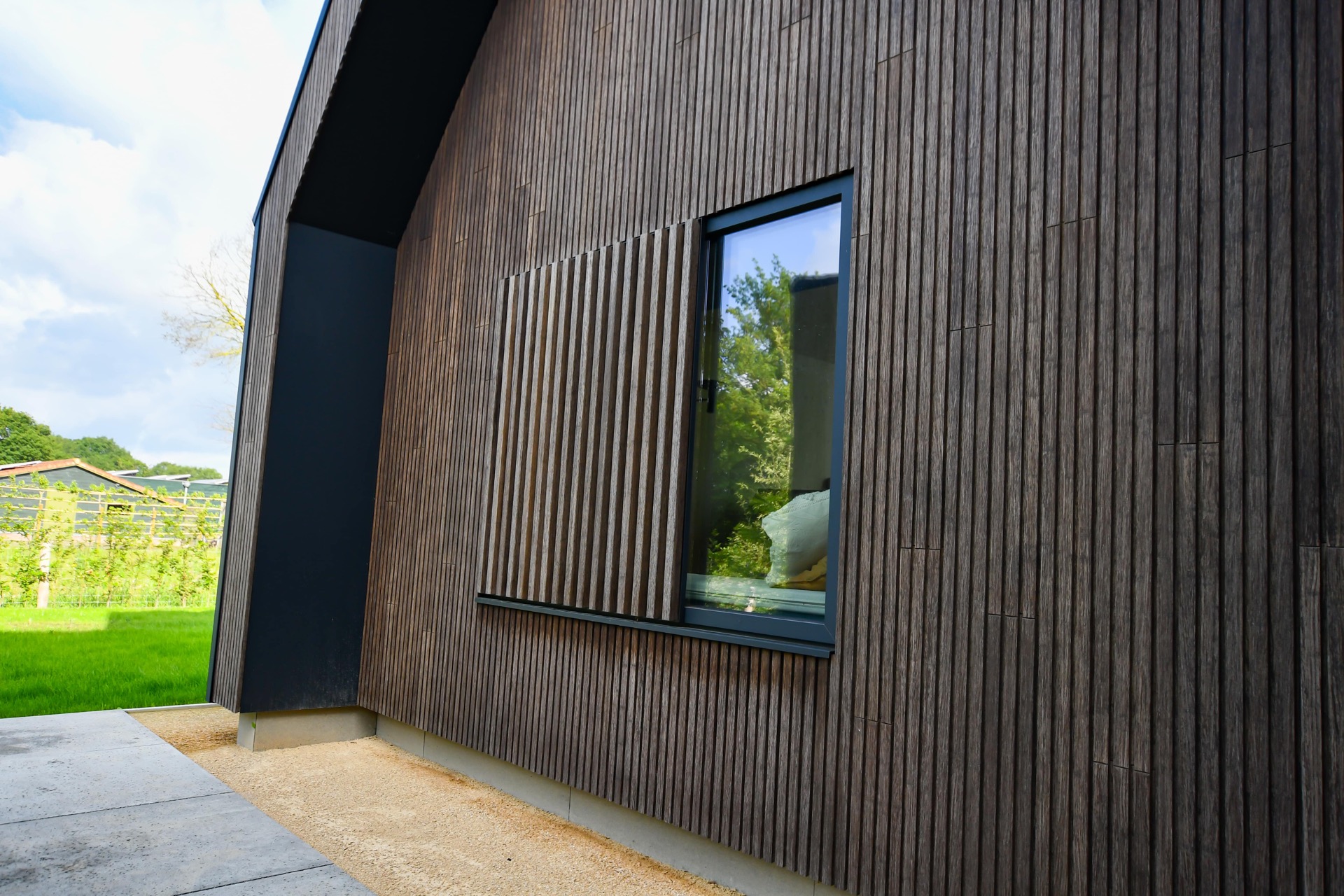
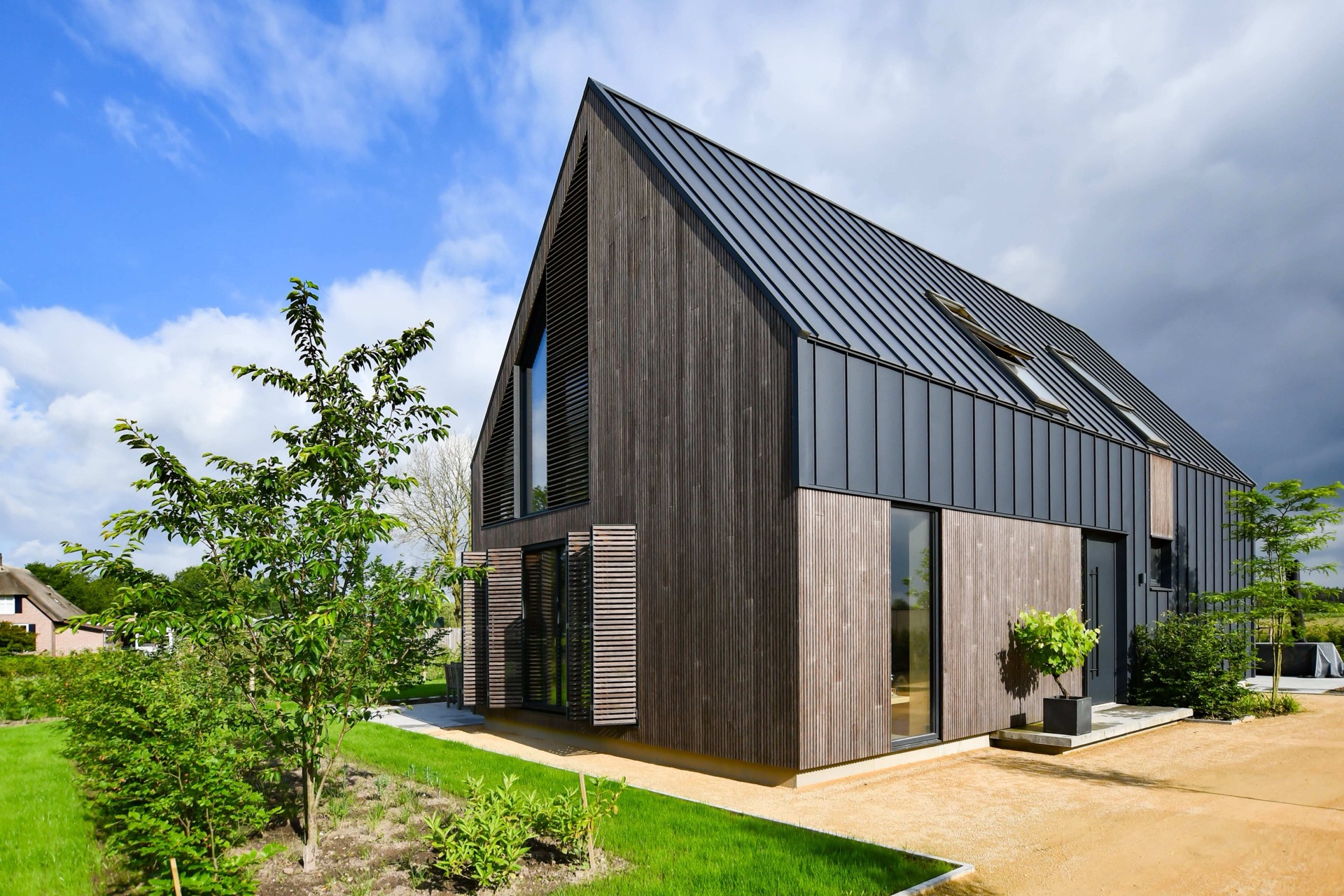
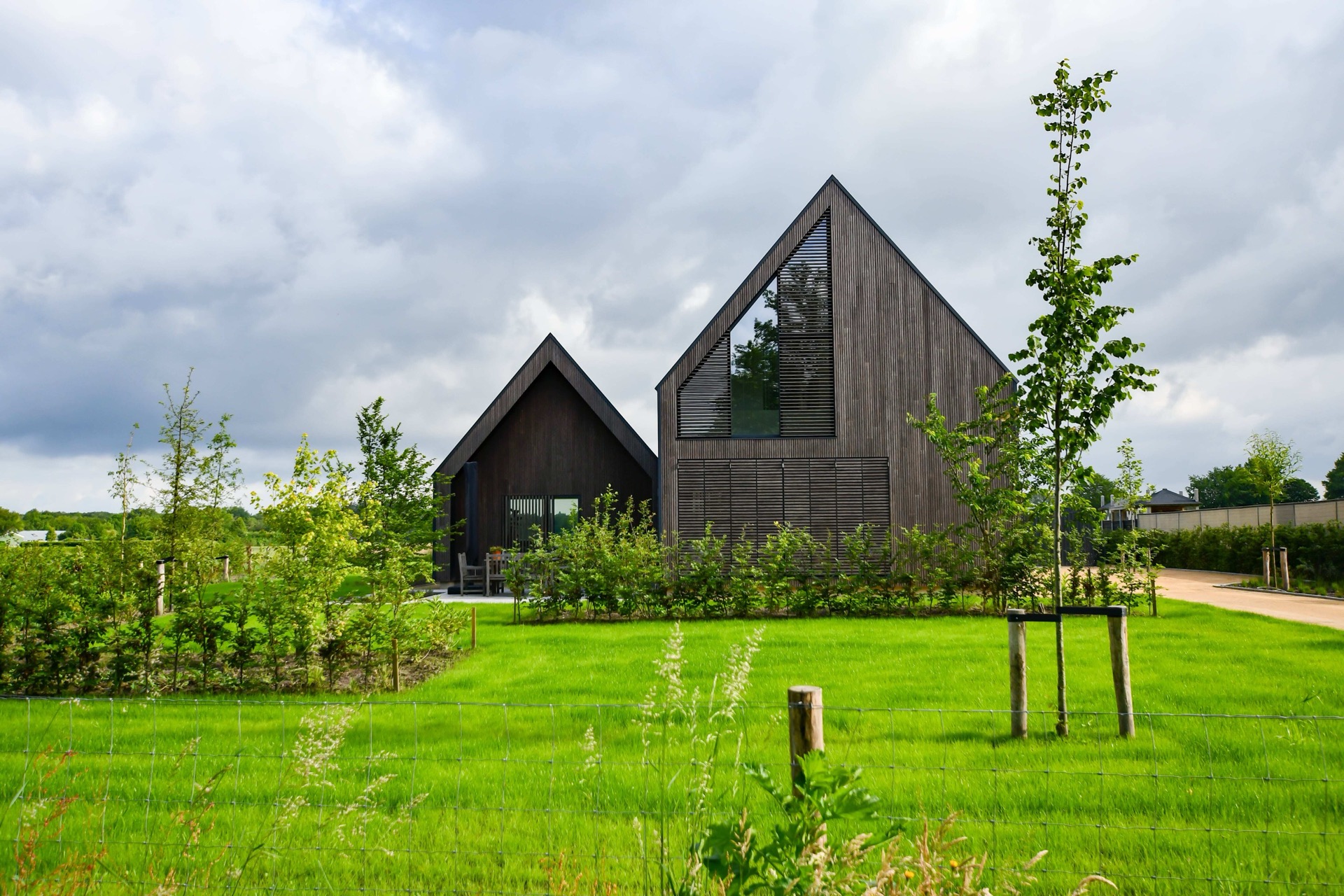
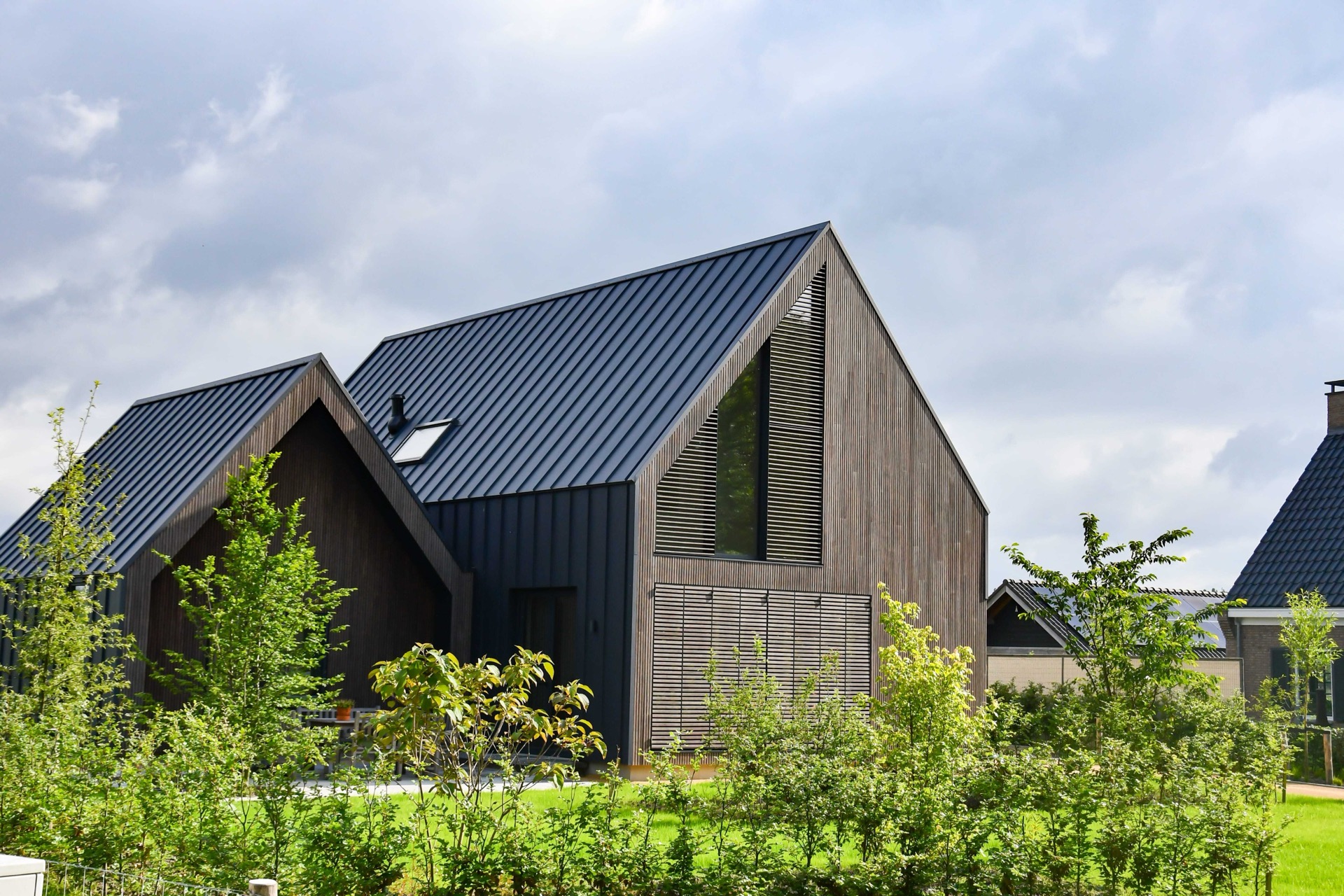
The thatched roof is immediately visible in the way the project is framed. A dark wooden facade punctuated by vertical slats introduces a study in texture and rhythm. The wood’s grain, captured in slender boards, contrasts against large expanses of glass, highlighting the interplay between solid and transparent surfaces. Proportions of the facade emphasize height, where tall, narrow windows stretch from floor to ceiling, framed by wooden shutters designed to integrate seamlessly with the surrounding cladding.
thatched roof as the architectural starting point
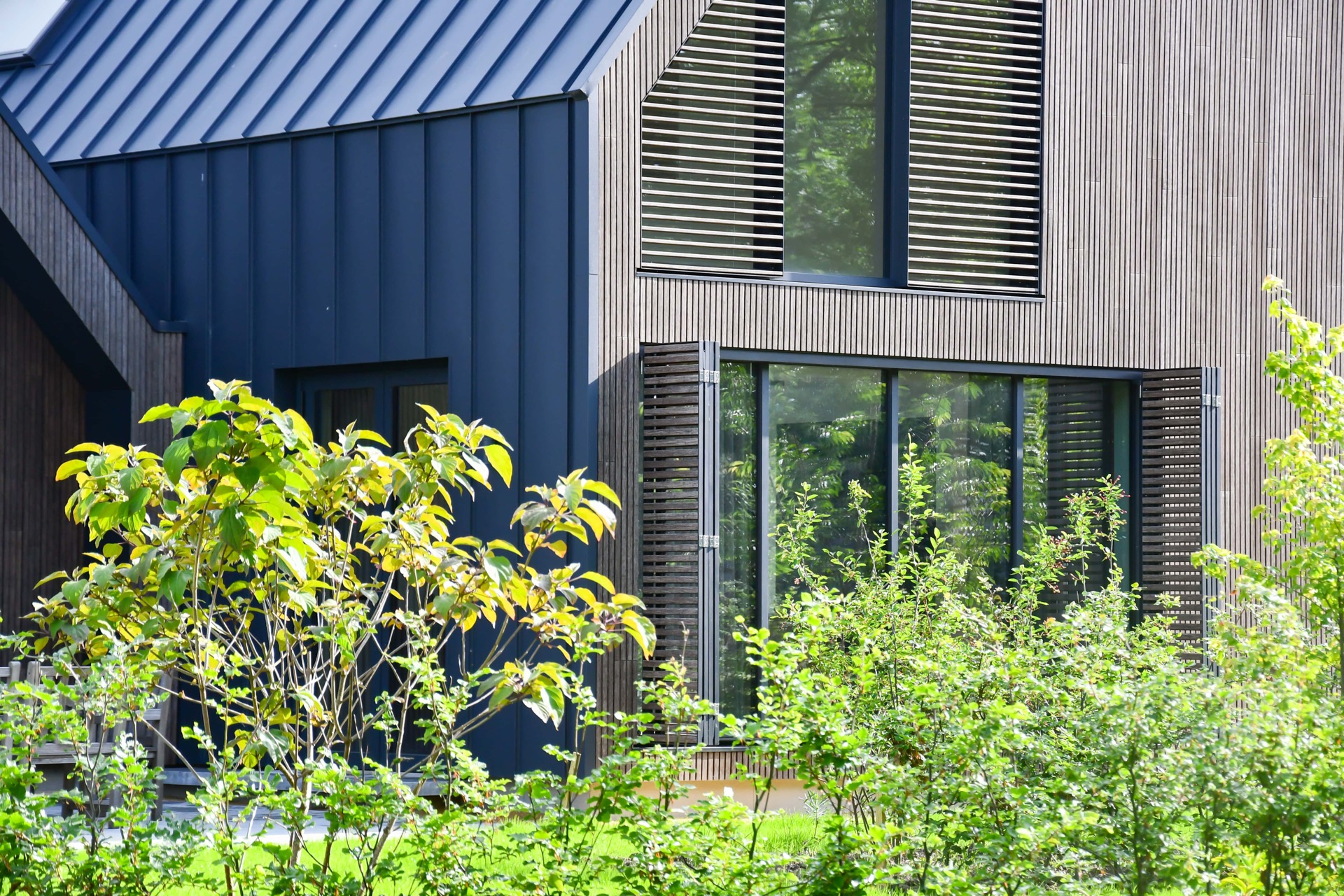
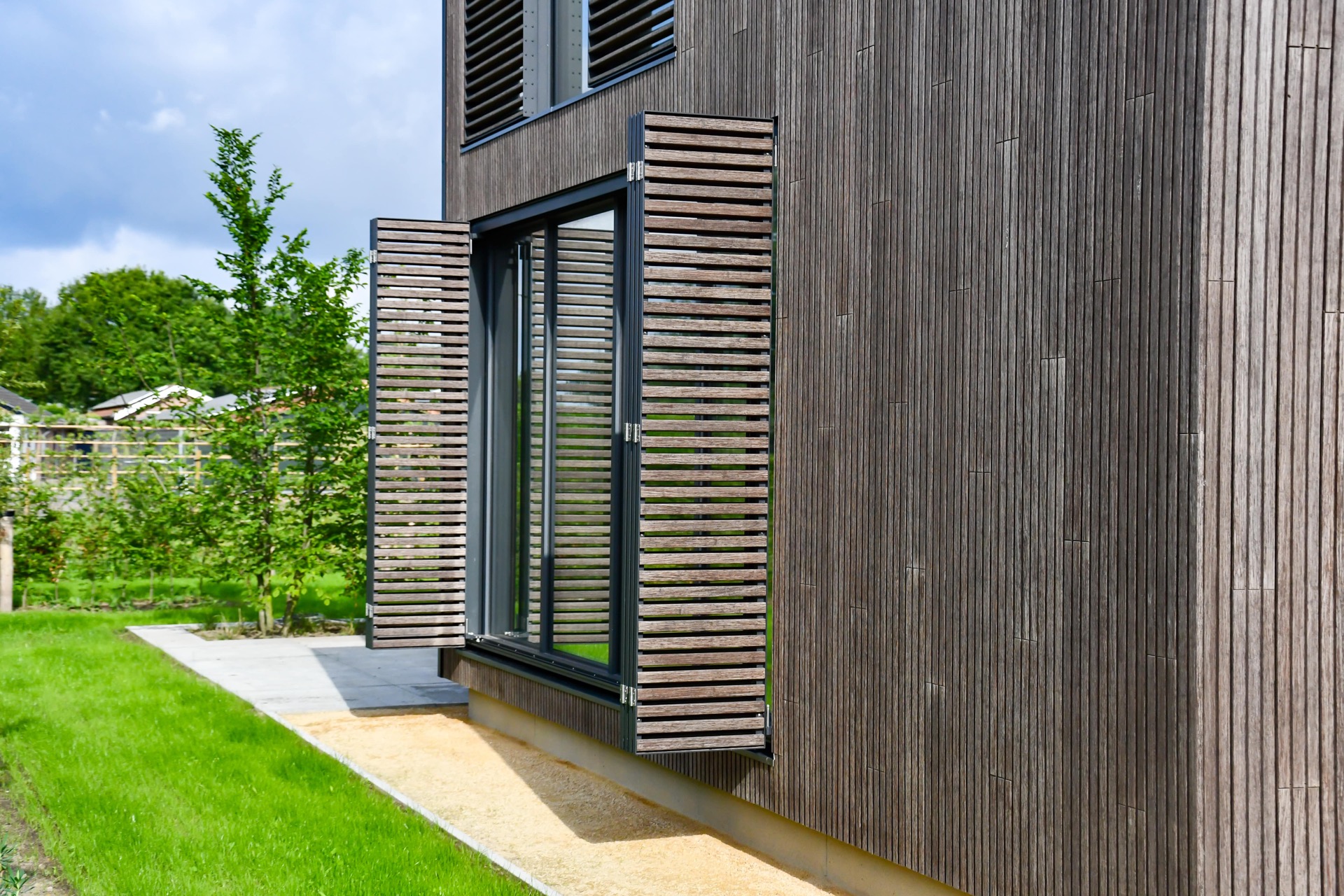
The wooden shutters operate both as protective screens and as distinct design features. Constructed to fold and slide, their timber surfaces align perfectly with the vertical wooden cladding, creating an almost continuous wooden plane when closed. This continuity ties exterior shading to the facade’s structural expression, allowing the shutters to become intrinsic to the building’s architectural language rather than mere accessories.
Vertical Cladding and Material Layering
The arrangement of wood panels follows a strict vertical logic, enhancing the facade’s slender proportions and minimalistic character. The dark tone of the timber contrasts with the raw texture of the exposed concrete plinth supporting the structure. Metal frames accent the windows, introducing a sleek counterpoint that balances the natural warmth of wood and the solidity of concrete, keeping the composition grounded while maintaining a contemporary appeal.
Translating Privacy into Design
When the wooden shutters are closed, they perform as privacy screens, defining the residential interior’s boundaries without resorting to opaque walls. The operation of these shutters allows control over transparency and light, empowering occupants to modulate openness toward the exterior. This mechanism merges climatic considerations with spatial experience, adapting to both the sun’s trajectory and the inhabitant’s desired privacy level.
Integrating Large Windows with Shading
The expansive glass surfaces invite natural light while exposing the interior to view. The shutters mitigate direct sunlight, preventing glare and overheating through adjustable openings. Their wooden surfaces reflect soft light, preventing harsh shadows and contributing to an evenly lit interior atmosphere. This balance of transparency and shelter exemplifies thoughtful contemporary facade design that considers occupant comfort through passive means.
Thatched Roof as a Traditional Counterpoint
Rising above the facade, the thatched roof softens the building’s silhouette. Its textured surface contrasts with the smooth vertical lines below, adding a tactile quality that speaks of local building craftsmanship. The roof’s natural materials subtly modify light reflection while cushioning the building against harsh weather. Seen from the street, the roof’s organic form juxtaposes the linear precision of the facade, marking the dwelling unmistakably within both modern and vernacular architectural realms.
thatched roof as the architectural starting point
A muted palette of wood, glass, and metal defines the composition, each material chosen for its expressive properties and durability. The natural fibers of the thatched roof complement the warmth of the timber cladding, while the metal window frames and concrete base introduce crispness and contrast. This material dialogue enriches the perception of the facade, maintaining visual interest through subtle textures and tonal variations without overcomplication.
Shutters’ Role in Outdoor-Indoor Transition
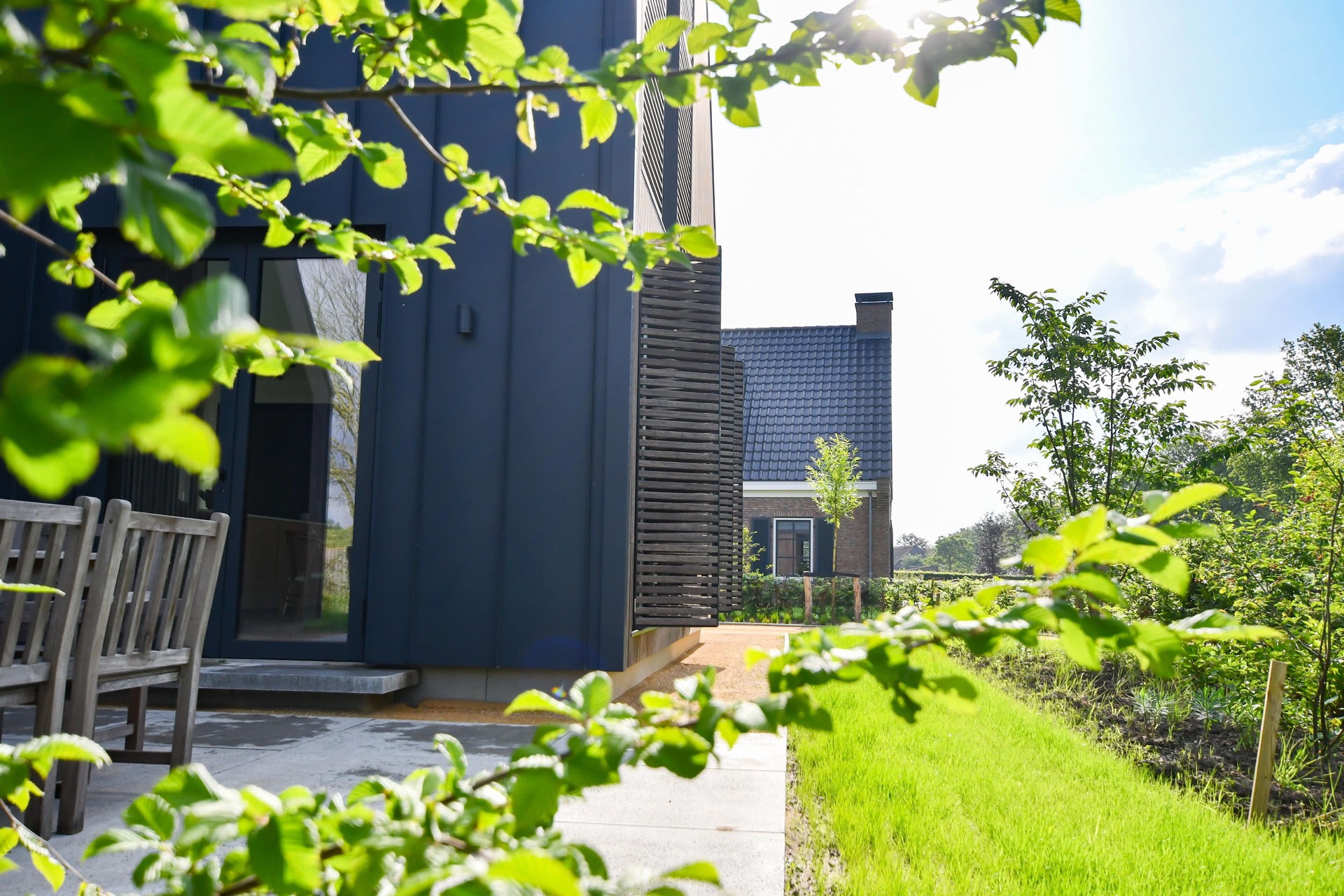
The folding wooden shutters articulate transitions between exterior and interior domains. Their operation not only controls light and privacy but also frames views and porch areas. When open, the shutters add depth to the facade and create dynamic shadow patterns that evolve with the sun’s position, underlining the responsive nature of the facade elements within the architectural composition.
Balancing Transparency and Opacity
The combination of large windows and wooden shutters establishes a flexible interface between inside and outside. Glass surfaces maintain visual openness and connection with the environment, while shutters offer selective enclosure. This adaptability enhances the dwelling’s relationship with its surroundings, allowing it to shift from a transparent exhibition of space to a protected sanctuary in moments of need.
Concrete Plinth and Structural Base
The building rests on a concrete foundation expressed clearly at the facade base. This robust element anchors the otherwise delicate interplay of wood and glass, lending stability and weight to the overall composition. The edge where concrete meets timber marks a visual and structural transition, a clear articulation point in the design logic of materials and massing.
Effect of Verticality on Perception
Vertical cladding strips emphasize the building’s height, guiding the eye upward toward the thatched roof. This directionality creates a sense of elongation despite the solid mass below. The repetition of slender wooden elements produces rhythm and texture, distilling a contemporary character focused on simplicity of form and detail.
Visual Contrast Between Roof and Facade
Where the sharp lines and dark surfaces of the facade meet the soft, textured thatch, a dialogue between precision and nature unfolds. The roof’s uneven, curved profile interrupts the strict geometry below, drawing attention to craftsmanship and material tradition. This contrast encourages viewing the ensemble as a composition of complementary parts rather than a uniform whole.
Large Windows Amplify Natural Light
The arrangement of generous glass panels maximizes daylight penetration into the interior spaces. This openness enhances spatial quality and brings changing exterior light conditions inside, enriching daily experience. The large windows also provide framed views beyond the limits of the facade, connecting occupants with their environment on both practical and sensorial levels.
Overall, the interplay of a traditional thatched roof with a facade composed of vertical wood cladding, metal accents, and expansive glazing demonstrates a specific approach to contemporary facade expression. Here, materiality and form engage in a conversation that acknowledges heritage while embracing modern architectural sensibilities.
Want to see more of Artino? View the page of Artino for even more great projects and company information.

.png)