





Contemporary Home Featuring Unique Thatched Roof and Outdoor Spaces
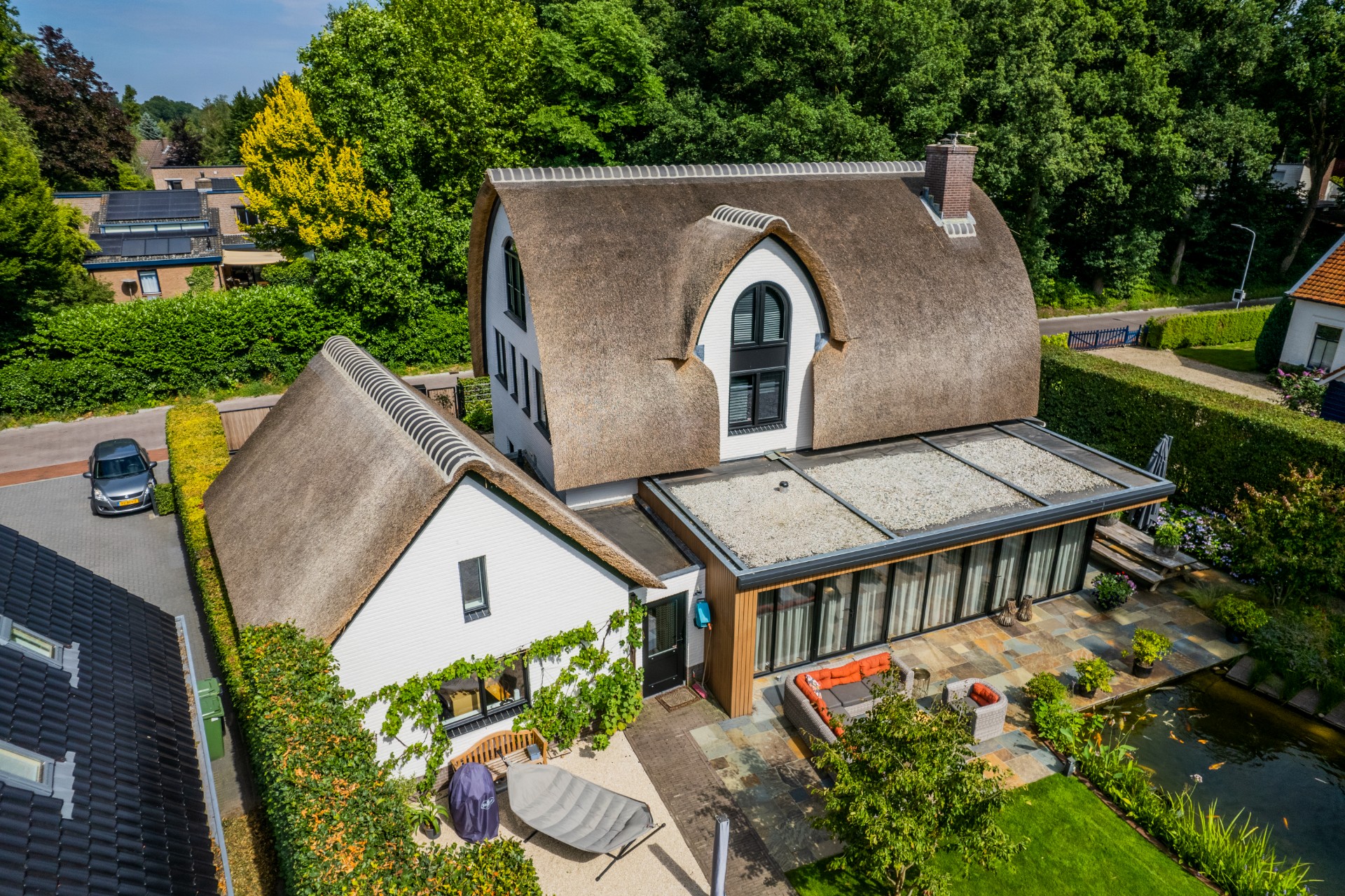
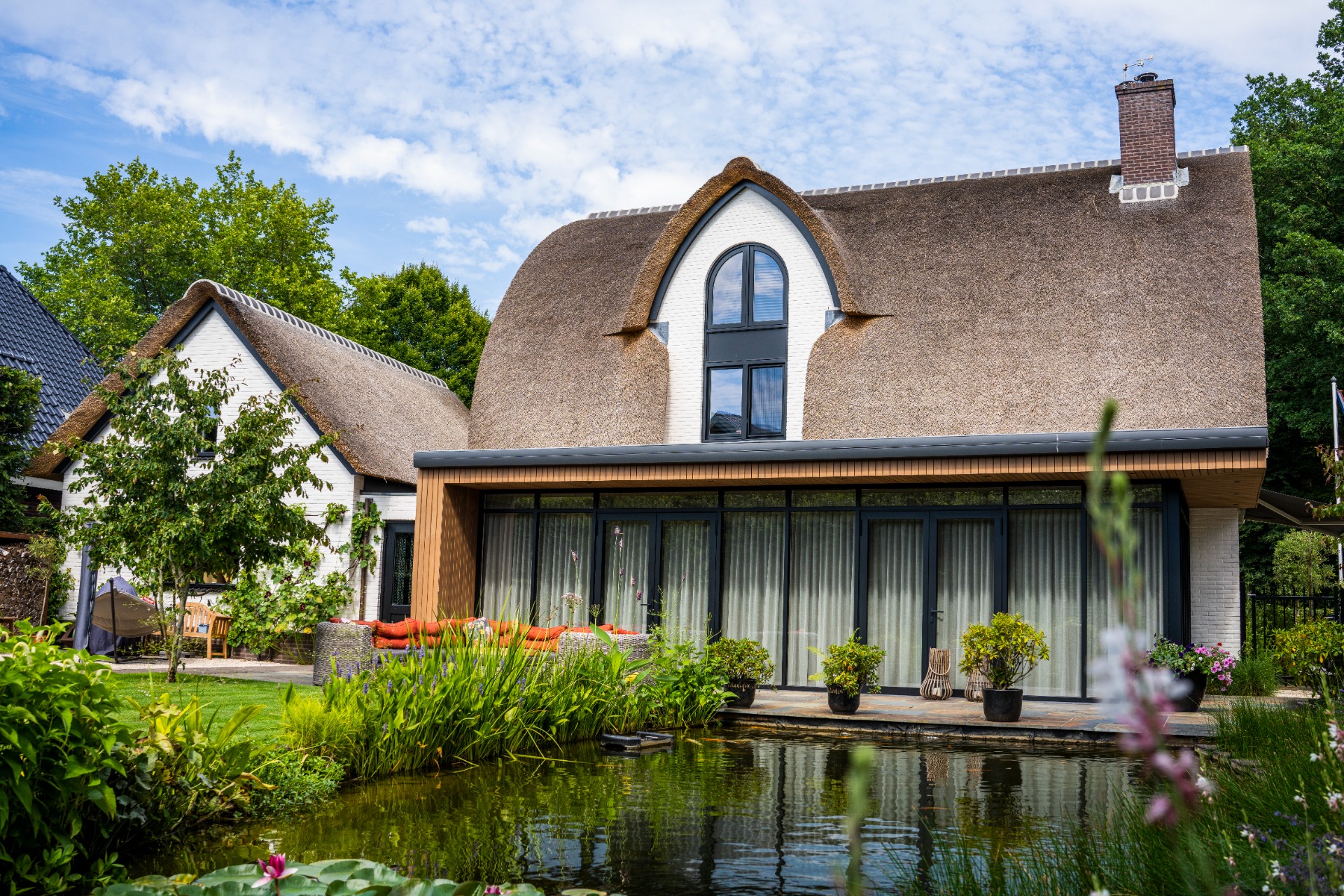
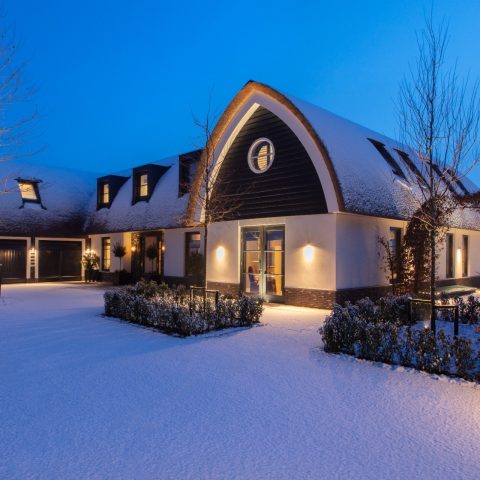
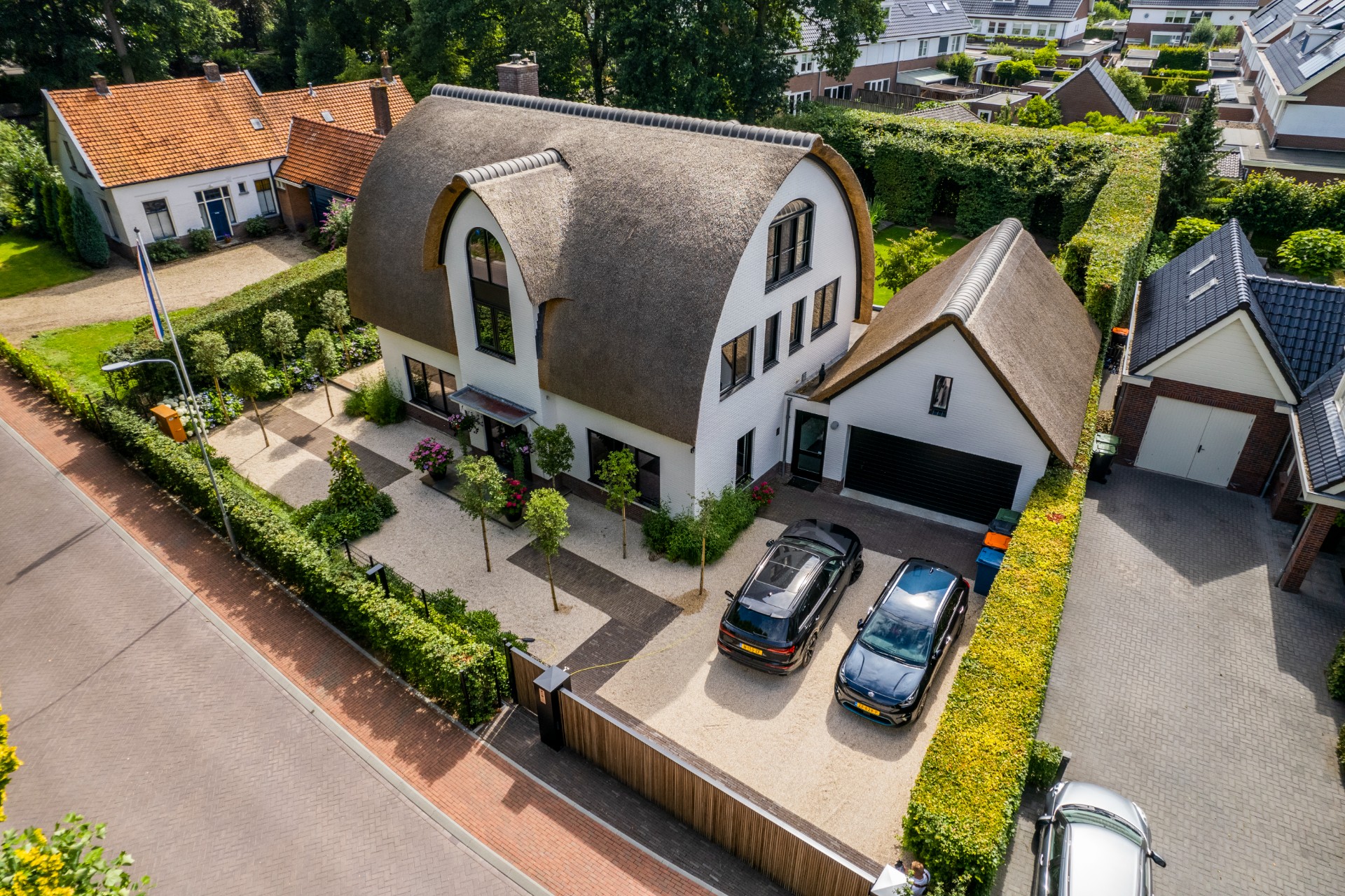
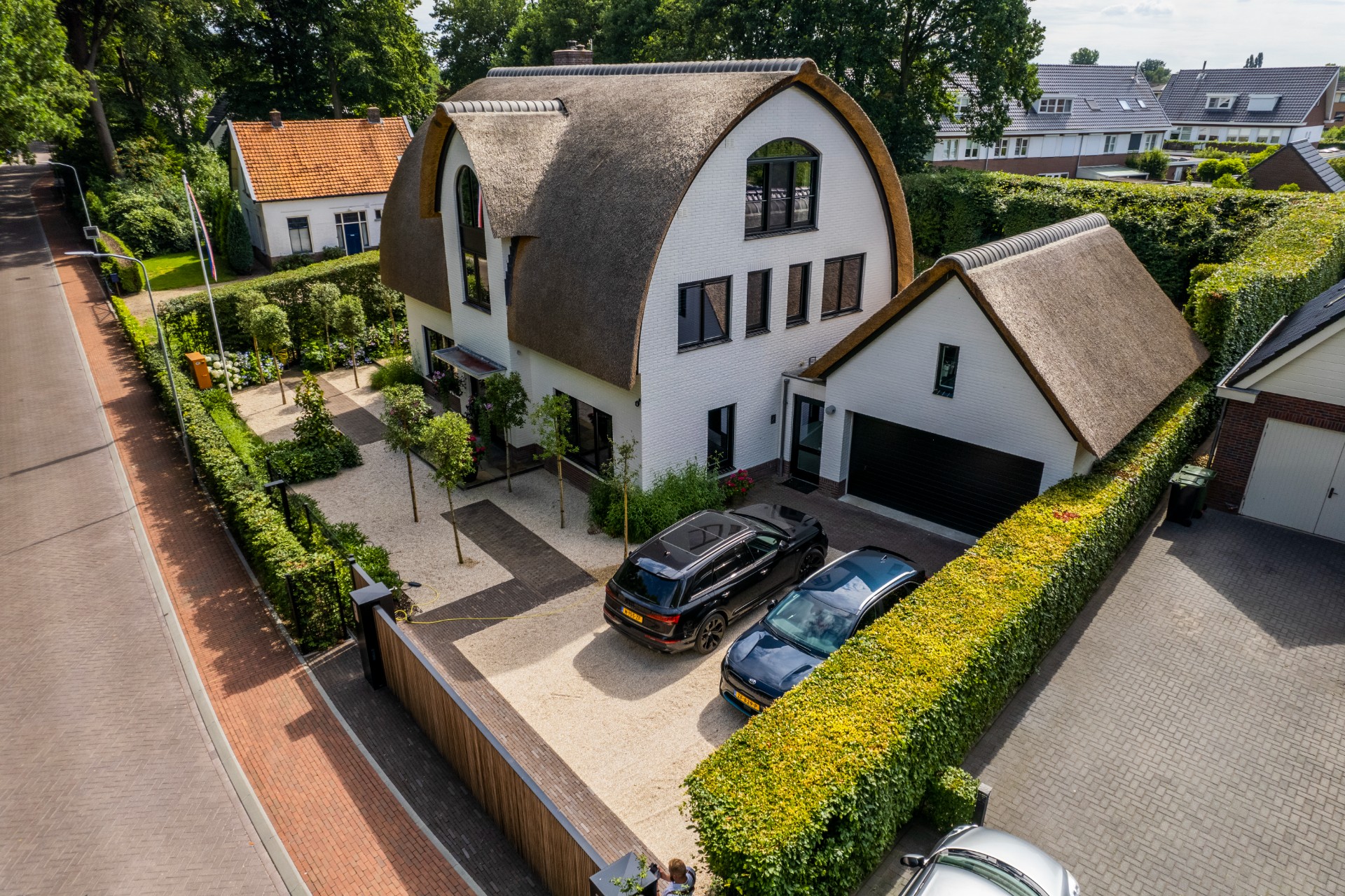
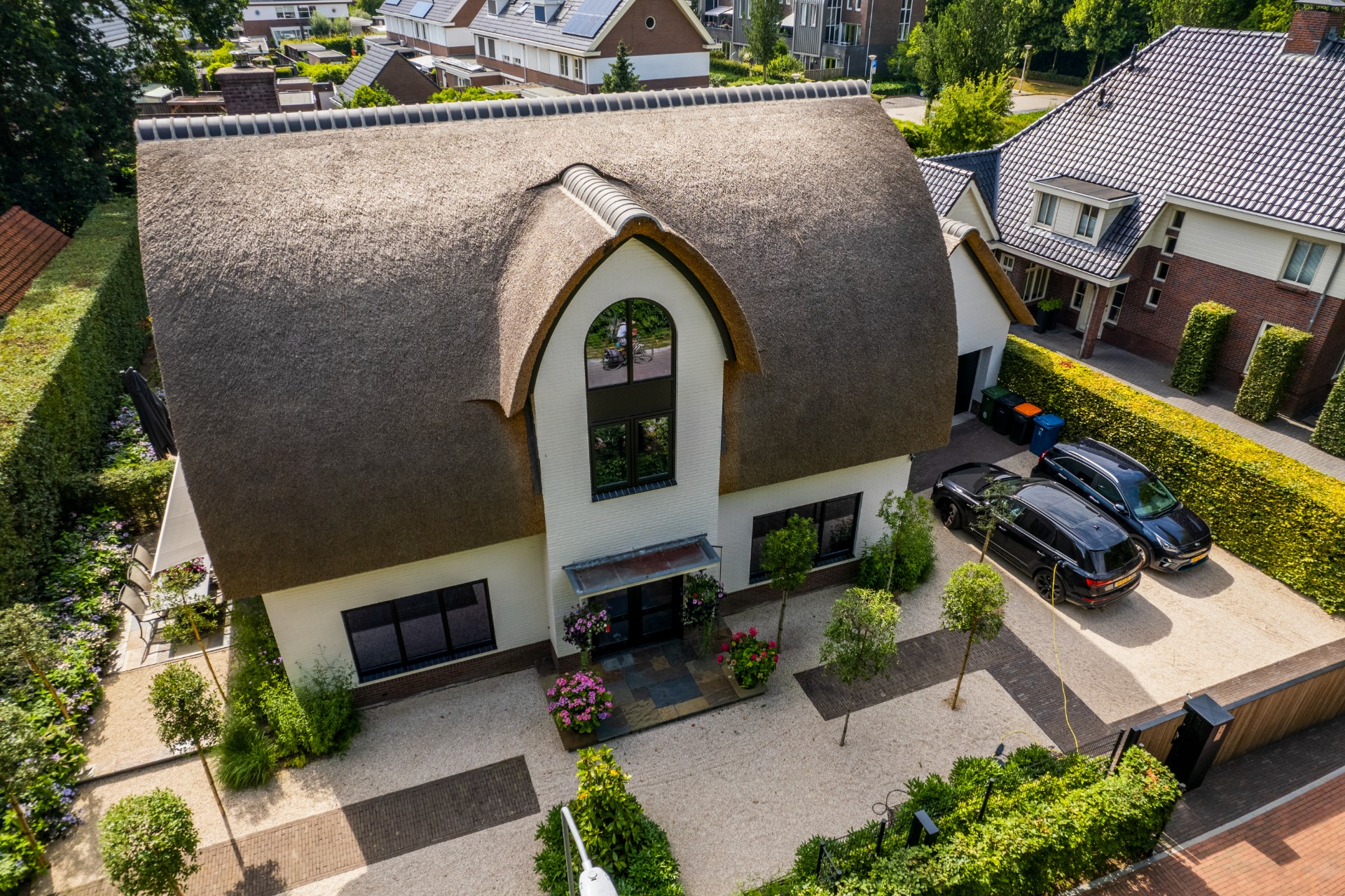
The house with thatched roof is immediately visible in the way the project is framed. A gently rounded thatched roof defines the home’s silhouette with natural reed layers that create subtle play of light and shadow across its textured surface. The roof’s soft curves extend into wide eaves that throw shadows onto the brick walls beneath, adding depth to the building’s natural geometry.
house with thatched roof as the architectural starting point
The walls rise in warm tones of brick, varying from soft ochre to deep terracotta, their rough texture contrasting with the reed’s delicate weave above. Rather than rigid angles, the building’s form follows sweeping arcs that mirror the roof’s curves, grounding the home in a sculptural expression of volume and material.
house with thatched roof as the architectural starting point
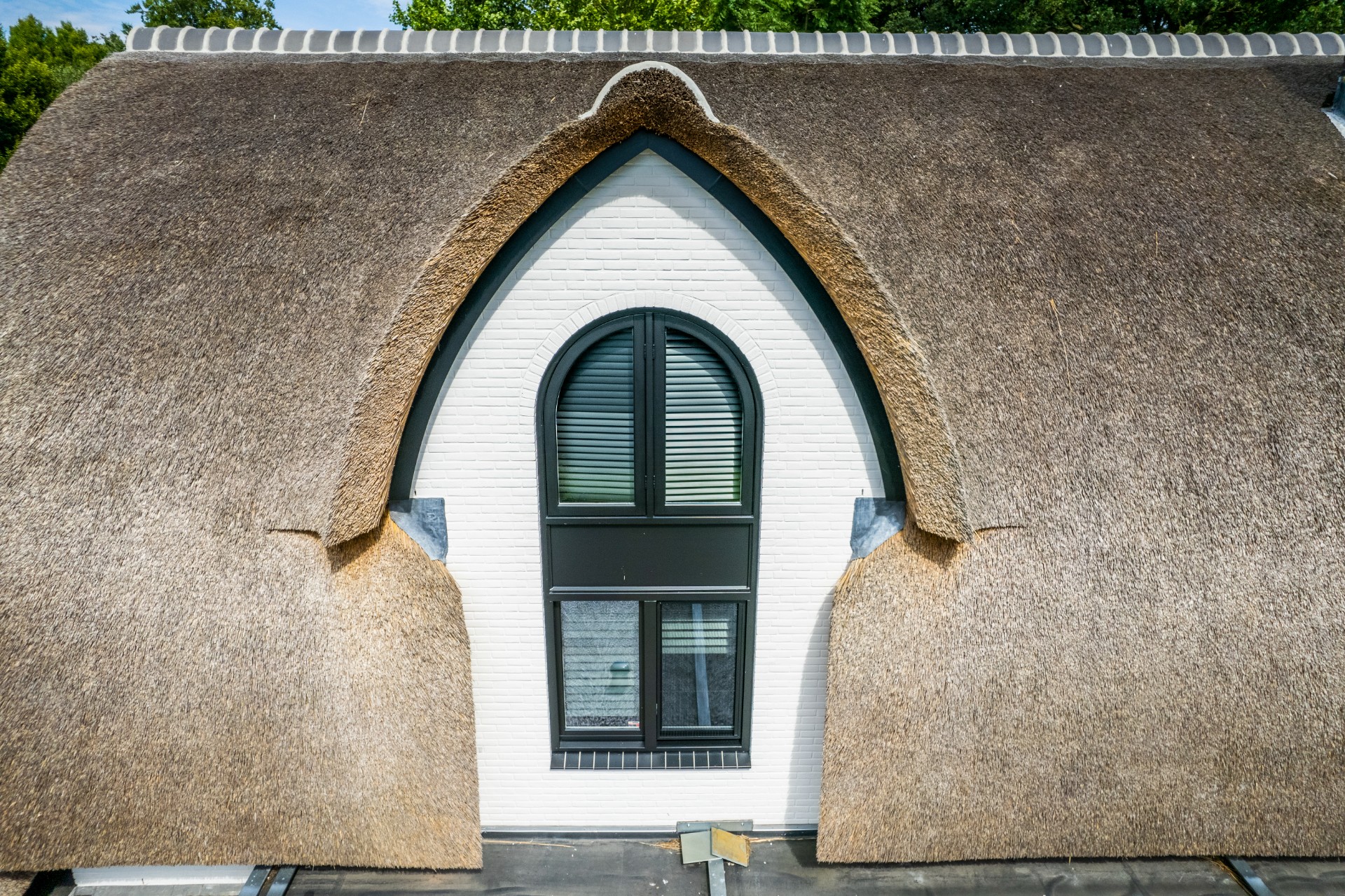
Dark-framed windows punctuate the masonry in a thoughtful rhythm, ranging from tall, slender apertures to broader, almost square shapes. These varied openings channel daylight into interior spaces while framing views of the garden and water features beyond. Their placement softly follows the building’s curves, avoiding sharp interruptions in the architectural flow.
house with thatched roof as the architectural starting point
Inside, views extend outward through the windows to the garden’s gentle planting beds and calm water surfaces. The reflective pool catches fragments of sky and reed roof, merging exterior and interior sights to create layered spatial perceptions that blur the boundary between inside and outside.
Garden Design Echoes Architectural Lines
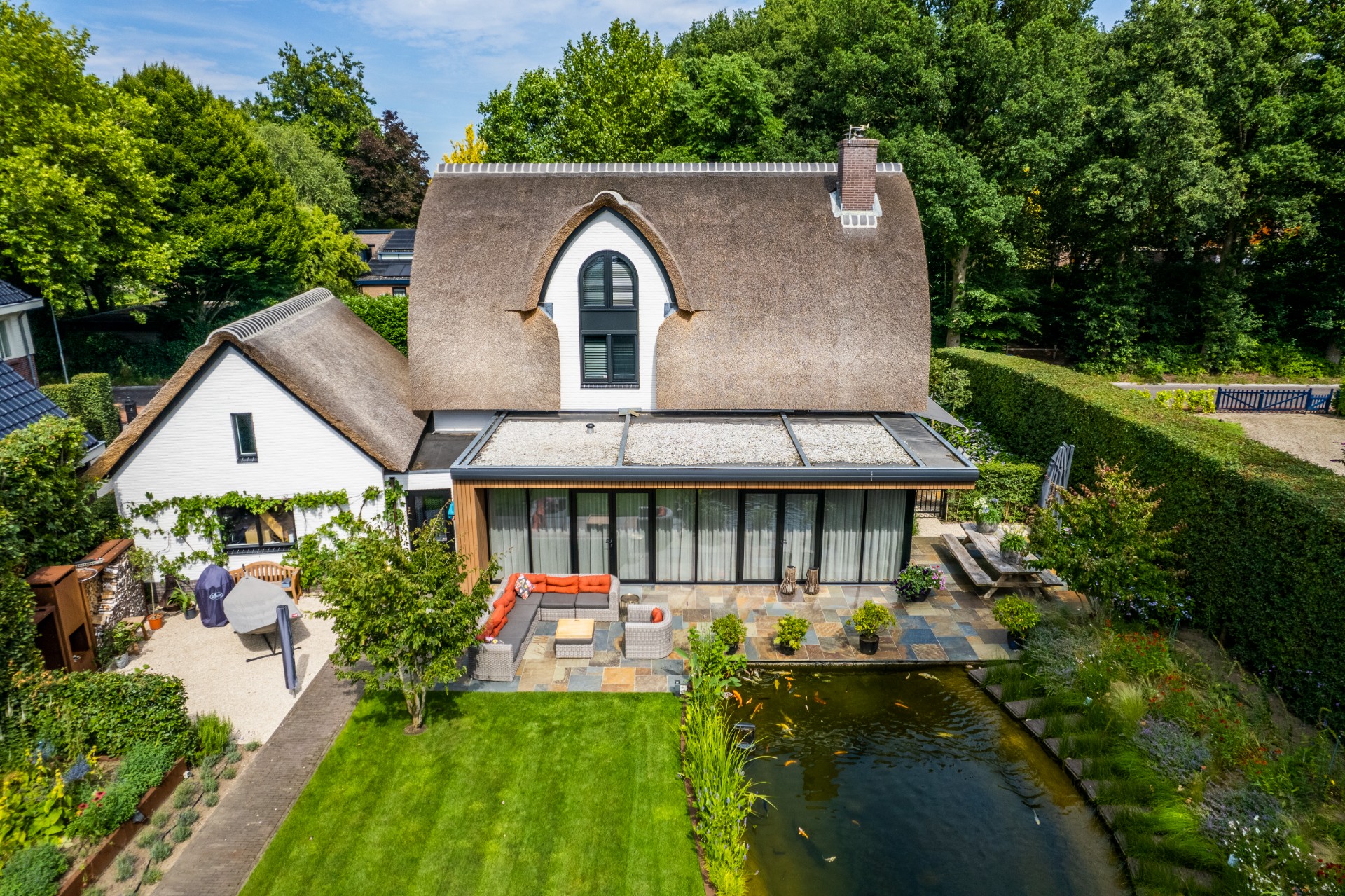
The exterior garden adopts the home’s rounded geometry, with planting beds curving alongside the structure’s edges. A narrow reflecting pool runs parallel to these arcs, its still water surface mirroring both sky and roof form. Smooth lawns transition to shrub clusters arranged to complement the flow of the architecture, knitting house and landscape into a single experience.
Subtle Movement in Water Features Enriches Atmosphere
Small cascades break the pool’s calmness with gentle ripples, scattering light reflections and adding a delicate soundscape to the outdoor space. These moving elements respond to changing daylight and weather, introducing sensory variety as one moves through the garden.
Material Contrast Balances Texture and Warmth
Brick walls provide a solid, tactile base with their coarse surfaces, while the reed roof overlays softness and fine pattern. Wood accents appear sparingly at entrances, seating, and framing details, emphasizing grain and warmth. This controlled use of natural materials reinforces the architectural intent with quiet textural dialogues rather than decoration. That makes the house with thatched roof part of the architectural character rather than a loose finish.
Walkways Guide Movement with Curved Lines
Pathways composed of subdued stone echo the garden’s palette and rounded shapes. Their gentle arcs direct circulation naturally between parking, garden, and patio spaces, maintaining visual coherence without interrupting sightlines or spatial flow.
Progressive Spatial Experience Around the Property
Circulating around the house reveals how roof and walls transition smoothly into landscaped planting zones. Shifting light enhances these junctions, revealing textures and sculptural shaping that unfold progressively, inviting movement through subtle architectural choreography.
Indoor-Outdoor Connection through Large Glazing
Extensive glass sections along exterior walls visually extend living areas toward the garden and water elements. Operable windows and sliding doors provide ventilation and connect interior spaces to adjacent terraces, blurring the threshold between inside and outside environments.
Craftsmanship Maintains Roof’s Shape and Texture
The thatched roof’s gently arched profile relies on traditional layering methods visible in the reed arrangement, highlighting hand-applied craftsmanship. Modern structural elements sustain the form while preserving the tactile patterns and shadows that characterize the surface.
Planting Enhances Seasonal and Spatial Progression
Planting beds move along architectural curves with layered transitions from lawn to shrubs. Microclimates near water and dense vegetation support diverse growth year-round, as seasonal changes alter colors and textures, reinforcing the garden’s evolving relationship with daily life.
Proportions Manage Light and Volume Sensitively
Carefully calibrated roof overhangs, window placements, and garden scale moderate sun exposure and building mass. Deep eaves shield interiors while offering sheltered outdoor spaces. Varied masonry planes and window groupings break down the volume into approachable segments that diffuse light evenly indoors.
Material Integration Defines Architectural Unity
The interplay of curved reed roof, brick cladding, and wood accents forms a cohesive statement. Changing light animates surfaces and volumes, producing subtle spatial dynamics that connect form and setting, shaping the home’s distinct identity. That makes the house with thatched roof part of the architectural character rather than a loose finish.
Want to see more of De Rietdekker? View the page of De Rietdekker for even more great projects and company information.


.png)